Stellar full-length album selection of archival material from Tim Jackiw ranging from timeless late night techno and deep space soundtracks through to electronic jazz and ambient atmospheres. All music sequenced and recorded in Tim's Adelaide-based bedroom studio between 1995 to 1997 using an Amiga 500 interfaced to various analog synthesizers, drum machines and samplers. Limited colour vinyl double pack - big tip!
Поиск:big d records
Все
D. Carbone is back on its homonymous imprint with a Theme Ep 'Back To The Empire Of Hardcore'. After the 2016 Ravers EP, here the artist make a second call to push a movement is coming back on all its power but in a modern key. The EP figure 2 remixes One from the Queen of Techno 'VTSS' and one other from the Hardcore master '14Anger'.
On The A1 the entitled track is a new hardcore wave gem, a robotic voice singing in a subdol way back to empire of Hardcore, lead and sirens create the atmospheres over a marching beat. This track aims to be a classic for the New Hardcore wave.
A2 presents VTSS remix. The queen of Techno after it's debut on REPITCH Recordings with the killer Identity Process EP and the amazing Atlantyda on Monnom Black is ready to show a Techno/EBM remix with its remark bassline, a strong kick and massive voice textures, make it an instant classic!
B1 is the time of French Raver '14Anger' its remix is a mesmerizing of Power and its Hardcore roots are shaped at its best. Percussive synth sequence chosen as the main groove, Melodic bassline is the main focus here till the amazing lead comes in to destroy every dance floor!
To Close, The Vinyl is 'Raver Killer' a powerful doom Techno track. This track is not for the fainted hearts, inspired to the 90's doom rave with modern touch Powerful kick, distorted model D's bassline, hi-pitched voices, and resonant percussions make it a big room track that can't miss in your bag and perfect choice to close this vinyl.
As Digital Bonus ' The Rhythm of Acidcore' is an Hypnotic Acid Banger. Model D bass and 303 acid sequence are the main focus here, accompanied by a smashing beat is the perfect track to stand along this collector EP.
Molécule's new project is inspired by surfing and the sea.
The "field-recording" expert rubbed shoulders with the most frightening wave in the world in Nazaré, Portugal.
An EP composed from the sounds of the ocean,
the fear of surfers of big waves.
... FORTHCOMING! (Inc. Soundfiles)
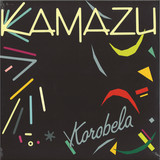
New anthology on Afrosynth Records brings together six songs by South African disco star Kamazu, spanning his career from 1986 to 1997: two of his biggest hits, ‘Korobela’ and ‘Indaba Kabani’, two more obscure songs from his catalogue, ‘Victim’ and ‘Why’, and two tracks from his kwaito comeback, ‘Mjukeit’ and ‘Atikatareni’.
Havazelet's story is both fascinating and mysterious. She was born in Aden, Yemen, in 1936 as Havazelet Damari, she immigrated to Israel when she was 8 years old and grew up in the disadvantaged Ezra neighborhood, in south Tel Aviv. Havazelet discovered her love for singing when she was a teen, when she would sing at feasts and family events. At one of these events she was discovered by an impresario who decided to take her under his wing.
He asked her to change her family name from Damari to Ron, as there was already a young singer called Shoshana Damari in Israel, who was becoming quite popular. In March 1960 Havazelet Ron's only Israeli album, "The Music of the Desert" was released, produced by the "Makolit" label, featuring Yemenite folk songs. Both songs on this 7" are from that album. The identity of the promoter, the album's recording date and location, and the identity of the musicians, could not be found.The album was ahead of it's time in that it introduced an innovative sound, comprised of drums, electric guitar and an organ, making it one of the first albums in Israel to record this type of composition.
... However, it confused the Israeli audience of the time: The vocals were in Yemeni-Arabic, preventing it from being played on the radio, which mainly played Hebrew music, moreover, it was too innovative and far from traditional music for the Yemenite scene. The album fell between the cracks and her big breakthrough to mainstream did not happen.
Following the album's failure, Havazelet left Israel in 1963 and went to Germany, where she performed in festivals, TV shows and recorded several more albums. All of this was made possible by her unique singing talent in five languages - Hebrew, Yemeni-Arabic, German, English and Yiddish, her impressive appearance and remarkable stage charisma. The European audience enjoyed the original music she produced and her Yemenite-style cover versions of Hebrew songs.
In 1968 Havazelet married and a year later retired from the music scene. In 1980 she returned to Israel but she left again four years later, this time to Los Angeles, where she worked as a kindergarten teacher. Havazelet Ron passed away in Los Angeles, in 2013, after a long battle with cancer. In Israel, her name is almost unknown among music lovers in general and among record collectors in particular.
... Medjool's story starts in 2010, at "Samar", it's a Kibbutz in the Arava valley in the far south of Israel, based on a unique, hippic and cooperative community. The band's four members met and lived there after their Military service. Being surrounded by musicians they started jamming together a lot, finding a joint creative language.
... In 2011, three of the band, – Ori, Nur & Aviram, moved to Tel-Aviv, trying their luck in the big city. 'Gilad' joined them in 2013 and the four friends became Medjool. The next three years were hectic with shows all over Israel, from small clubs to big festivals, gathering loyal crowd which followed the band everywhere. Nowadays, the band's members turned their energy to other musical projects, saying "we only took a short break which we're not sure when it'll end".
'Gbells' and 'Savana' are two energetic wild Afrobeat tunes.
The fact that the rhythm section comprises of a double base and percussion, grants 'Medjool' its unique highlife, groove color.
The guitar and saxophone travel through middle eastern to ethiopian melodies, suggesting the listeners the option either dancing or riding a camel in the desert, on your way to a flush oasis.
SOS: This two tracks on the 7", ... which were recorded in 2015, were the only music of 'Medjool', they had recorded professionally !!!!!
A chance meeting in a New York club led to the conception of Mowgan’s debut album, in collaboration with renowned African Benin-born Nigeria raised singer and multi-instrumentalist, Kaleta (Leon Ligan-Majek) an ex Fela Kuti, Sunny Ade, Lauryn Hill cohort who also fronted Akoya Afrobeat Ensemble and presently heads up a 70s style afro funk band called Super Yamba based in NYC.
The Frenchman was working at Lina Frey when he overheard a Beninese salsa singer called Laurent Hounsavi channeling Afro-centric vibes through his performance. He approached the singer and was put in touch with Kaleta, who lives in the Big Apple, too. What happened next was pure magic, as the two men got to work in the studio to bring their two worlds together.
It’s the kind of mystical alchemy that only happens once in a blue moon; Kaleta was given carte blanche over Mowgan’s extensive collection of Africa-inspired electronic instrumentals.
He selected his favourites and performed on each one, delivering an original vocal, and his own guitar licks, over the top. To stir up even more electrifying vibes, Kaleta also invited several of his talented friends to join the recordings sessions - they included vocalists Shade Myers Emmanuel, Justin Masters and Gbenga Wise, Freddie Deboe on sax, Mic Dada assisting Mowgan on synth pads and Takuya Kuroda, the infamous Japanese trumpet player from Kobe who specialises in neo-soul, hip hop and electronica.
The result is ‘Karoussel’, a vibrant, dynamic, soul-enriching hybrid between electronica and deep African musicality that sets the standard for contemporary collaborations between western and African artists, and the first in a series of album projects from Mowgan on his fledgling label Mow Records...
“Osondi owendi. What is cherished by some is despised by others. One man’s meat is another man’s poison. Different strokes for different folks. To each their own. Osondi owendi.
It’s a conventional aphorism in the Igbo language but if you utter the word “osondi owendi” in Nigeria today, the first thing that comes to anybody’s mind is the cucumber-cool highlife music maestro Chief Stephen Osita Osadebe and his legendary album that takes its name from the adage. Released in 1984, Osondi Owendi was instantly received as Osadebe’s magnum opus, the crowning event of an exalted career stretching back to the early years of highlife’s emergence as Nigeria’s predominant popular music.
Stephen Osadebe first appeared on the music scene in 1958 as a spry, twenty-two year-old vocalist in the Empire Rhythm Skies Orchestra, directed by bandleader Steven Amechi. With his dapper suits, urbane Nat King Cole-influenced vocal stylings and jaunty, uptempo, calypso-scented dance tunes, he personified the frisky spirit and anxious aspirations of a young, educated generation that had come of age in the wake of the Second World War, in a Nigeria that was rapidly shaking off British colonization and marching towards an independent future. 1959 would be the year that he truly made his mark in the business with his debut solo single “Lagos Life Na So So Enjoyment.” A giddy exhortation of the music, sex, fun and freedom availed by life in the big city, the song became a sensation and an anthem, and Stephen Osadebe became the leader of his own popular dance band, the Nigerian Sound Makers.
Osadebe would ride this wave of acclaim through most of the nineteen sixties, but a change in direction would be called for at the dawn of the seventies. As Nigeria emerged from a devastating civil war, so did a new generation of youth inspired by rock and funk, confrontational sounds reflective of a more violent, less idealistic era. All of the sudden, the idioms of the post-WWII dance orchestras that nurtured Osadebe’s cohort seemed quaint, the stuff of nostalgia. Osadebe needed to evolve to respond to the new tumultuous, turned-up times.
His response? He cooled it down.
Abetted by a new crop of fire-blooded young players, Osadebe slowed his music to a mellow, meditative tempo, brought forward the lumbering, Afro Cuban-accented bass and percussion, from the rockers he borrowed searing lead lines on the electric guitar. Over this musical bedrock, doesn’t so much as sing as he dreamily muses, coos, sighs aphorisms, words of wisdom and inspiration. “When one listens to my music, all I say appears meaningful,” Osadebe explained his lyrical approach, “at times they are in the form of proverbs which provoke much thought afterwards.” The result is a blend that is both rollicking and soothingly languid. Osadebe christened the style Oyolima—a tranquil, otherworldly state of total relaxation and pleasure. Osondi Owendi represents oyolima at its finest, and possibly Nigerian highlife in epitome.
Osondi owendi. What is cherished by some is despised by others. In some way, the album’s title constitutes a paradox. Because Osondi Owendi is a record that it’s almost impossible to imagine being despised by anybody."
WRWTFWW Records is beyond thrilled to announce the first ever vinyl maxi-single release for "Raum", Grauzone's best-kept secret and underground mega-gem from 1980. The four-track affair includes the full title track sourced from the original reels, as well as a club-ready rework by Naum Gabo (Jonnie Wilkes of Optimo and James Savage) with help from Dennis Young of Liquid Liquid, and an extended edit by legendary Frankfurt DJ Ata (Robert-Johnson club, Playhouse/Klang/Ongaku labels). The 12 inch vinyl is cut at 45rpm and comes with a never-seen cover art by band member Stephan Eicher and a handmade Xerox hype sticker.
Initally released almost 40 years ago on the beloved compilation Swiss Wave - The Album (Off Course Records) alongside the band's massive hit "Eisbär", "Raum" is the biggest Grauzone track people have yet to discover. An über-infectious New York style bassline played by Christian "GT" Trüssel and frantic drumming by Marco Repetto blend with Martin Eicher's hauntingly hopeless lyrics and Claudine Chirac's saxophone escapades to personify post-punk heaven and all its wonderful anomalies. It's disco with an edge, pop filled with fear, it's The Cure infused with proto-techno and Swiss art chic. Or maybe, it's simply one hell of a song that will make you dance and shout. It's good!
Yours Truly is the debut studio album by American singer Ariana Grande. It was released on September 3, 2013, by Republic Records. Incorporating R&B, Yours Truly was influenced by Whitney Houston, Amy Winehouse, Christina Aguilera, and Mariah Carey, amongst Grande’s other idols. Grande describes the album’s first half as a “throwback” to the R&B music of the 1990s, and the second half being “very unique and very special that I’ve sort of written” which is completely original. On the album, Grande co-wrote six out of the twelve tracks and recorded a number of songs on this album over a three-year period. The collaborations are with Big Sean, Mika, and Mac Miller. Occasionally, the album dips into other genres such as adult contemporary music and dance music.
Greg Hates Car Culture was Venetian Snares' first ever vinyl release. Long out of print, it came out in 1999, as the third release on Minneapolis label History Of The Future. Aaron Funk's hallmarks were there from the start. His absurdist sense of humour, the razor sharp edits and his use of odd time-signatures. There is a rawness here, not often captured on later records, where you can imagine Aaron playing live in front of a room full of young breakcore fanatics. Indeed most of the tracks here were recorded live, tweaking his effects and EQ on the fly, to DAT from his Amiga. The album opens with "Personal Discourse", recorded in 1997, which samples Aaron calling into a Dominatrix live on community cable TV, while "Fuck A Stranger In The Ass" samples from the film The Big Lebowski. The track "Aqap" has a different sound to the others having been recorded later, in 1998, on Aaron's first PC.
We have also added three hitherto unreleased 1997 tracks to this reissue. Two of them "Eating America.." and "Punk Kids" appeared on Venetian Snares rare self-released 1998 cassette Spells and the long sought after "Milk" was only passed around by his friends.
Greg Hates Car Culture lets you hear the raw energy of a musician at the birth of his sound.
A Killer Deepfunk/Soul 45 from legendary soul singer Richard Marks. The Limited 500 press nods to the original Tuska Records design, without the $2000 price tag. A big spin on the Deepfunk scene in the early 2000s for DJs like Keb Darge and Ian Wright, it's been a while since i have heard this killer 45 played out. If you feeling this make sure and check out Now-Again records anthology - 'Never Satisfied, The Complete Works 1968-1976'. be quick this will be gone in a flash. No Repress.
- A1: Love Is All We Have Left
- A2: Lights Of Home
- A3: You're The Best Thing About Me
- A4: Get Out Of Your Own Way
- A5: American Soul
- B1: Summer Of Love
- B2: Red Flag Day
- B3: The Showman (Little More Better)
- B4: The Little Things That Give You Away
- C1: Landlady
- C2: The Blackout
- C3: Love Is Bigger Than Anything In Its Way
- C4: 13 (There Is A Light)
- D1: Ordinary Love (Extraordinary Mix)
- D2: Book Of Your Heart
- D3: Lights Of Home (St Peter's String Version)
Deluxe Box Set[41,60 €]
Double cyan blue vinyl in a gatefold sleeve. Two printed inner sleeves and a six panel oversized booklet. Download card enclosed. The vinyl includes the Deluxe track listing - 17 tracks in total.
U2 return with their hotly anticipated new studio album 'Songs of Experience'. The Island Records priority release completes a stellar year for the Dublin band, following their return to stadiums with the critically acclaimed, sold out 'The Joshua Tree Tour 2017' playing to 2.4 million fans in just 51 shows across Europe and North and South America, as well as the successful 30th Anniversary re-issue of 'The Joshua Tree'.
Recorded in Dublin, New York and Los Angeles, Songs of Experience was completed earlier this year with its subject matter influenced by Brendan Kennelly's* advice to Bono, to ...write as if you're dead'. The result is a collection of songs in the form of intimate letters to places and people close to the singer's heart: family, friends, fans and indeed himself.
Songs Of Experience is the companion release to 2014's 'Songs Of Innocence', the two titles drawing inspiration from a collection of poems, Songs of Innocence and Experience, by the 18th century English mystic and poet William Blake.
Produced by Jacknife Lee and Ryan Tedder, with Steve Lillywhite, Andy Barlow and Jolyon Thomas, the album features a cover image by Anton Corbijn of band-members' teenage children Eli Hewson and Sian Evans.
'The Blackout' and 'You're The Best Thing About Me' were the first songs to be made available from the album. 'You're The Best Thing About Me' is the band's first UK Top 20 airplay record in a decade and has also been remixed by Norwegian superstar DJ and producer Kygo.
*Brendan Kennelly - Irish poet, novelist and Professor Emeritus at Trinity College, Dublin.
When it comes to underground New York Disco, Donna McGhee's highly sought-after 1978 LP, "Make It Last Forever," ranks among the best in the genre, thanks to Donna’s singing and the production skills of legendary producers Greg Carmichael and Patrick Adams.
Featuring five songs penned by the producing pair, it's got their quintessential Disco sound of the late 70s topped by Donna McGhee's superb vocals. These have also blessed recordings by The Fatback Band, Phreek, Bumblebee Unlimited and The Universal Robot Band around the same time.
The album has been an elusive affair since it first came out in 1978 and this is one the first times in decades it is widely available in its original form with newly remastered audio. Donna McGhee has been one of the key female singers of the New York disco scene, gracing several cult albums with her superb singing. The Brooklyn native began her career singing Gospel in her grandmother's choir from an early age, honing her skills and making a name for herself locally as a talented singer.
Her first break in the industry came when she was spotted by bass player Johnny Flippin, who invited her to join his band.
The group was none other than The Fatback Band led by drummer Bill Curtis. This was 1975 and the album was "Raising Hell."
McGhee's vocals can be heard throughout the album including the dancefloor classic "(Are You Ready) Do The Bus Stop" and after this initial collaboration, she stayed with the group for a another few years recording “Night Fever” in 1976 and touring with them all around the country. Following an encounter with producer Greg Carmichael, Donna McGhee jumped ship and started working with the prolific producer and his partner Patrick Adams.
A string of collaborations followed with singles and albums that have become the stuff of legend over the years: Donna can indeed be heard singing with Bumblebee Unlimited, Universal robot Band and on Phreek's classic self-titled album from 1978, singing on the track "May My Love Be With You."
In 1978, After Greg Carmichael set up his own label, Red Greg Records, he and Adams decided to get McGhee in the recording studio and produce her first solo album. With the pair playing most of the instruments, they got five tracks out of the session. The result, "Make It Last Forever" is an all-time Adams/Carmichael classic: funky disco arrangements with a touch of synths over a pulsating groove magnified by McGhee's superb sexy singing.
All five tracks have become classics in their own right.
Airplay on Tom Ravenscroft (BBC Radio 6 Music), Re:lax w/ Re:ni, Laksa & Biggabush (NTS), Gage (NTS), From The Depths with Drakeford (NTS)
Premieres of Four Feet and Blasphemy on Trax Mag and Ransom Note
Review on 2 Hungry Ghosts
DJ support from Midland, Bruce, Re:ni, Troy Gunner, Maya Jane Coles, Minor Science, Via Maris, Mosca, Blackdown/Martin Clark, Horse Meat Disco, Tony Thorpe, Daire Carolan (All City Records), Deft, Phototherapy, Shadow Child / Polymod, Lukas Wigflex, Soulphiction/ Jackmate
Voodoo Down Records presents the debut 12" of Melbourne-based techno producer JXTPS, who delivers here three powerful cuts of rolling big-room techno. The EP kicks off with a bang with some breakbeat fills that clear the way for heady hypnotic tension on "Become Nothing". The B-side opens with punchy acid stabs and distorted guitar chords on "Untitled 02", and closes beautifully with a creeping early-morning groover on "Mr. Pink".
- A1: At The Party
- A2: Shingaling Baby
- A3: My Foolish Heart
- A4: Pra Voz Wilma
- A5: I Got My Eye On You
- A6: Got To Make Up Your Mind
- B1: Playing It Cool
- B2: Drown My Heart
- B3: Calypso #10
- B4: Do It To Me
- B5: Asia Minor
• This is Latin Soul from the heart of Spanish Harlem. A non-stop boogaloo party that never lets up with
plenty of cha-cha and funk grooves
• 1966 album sees Rivera making his biggest splash as the bandleader and vocalist
• Album highlights include Includes Do It To Me, At The Party and Drown My Heart
• Boogaloo classic reissued on 180g heavyweight black vinyl with printed inner sleeve, and original artwork
The teen girl falling in love with greasy biker melodrama that set The Shangri-Las on the scene was beaten to the core when English high society child Lynn Ripley -better known as Twinkle- took it to the next level on her own composition "Terry". Penned at the tender age of sixteen, Twinkle's lyrics were found so twisted and bad tasty that the song got the honour of being banned at the BBC thirteen years before the Sex Pistols ran the same luck with "God Save The Queen." A ban that, as you would have guessed, instead of hiding the song from the era's teenage record hunters made it even more coveted. Thus "Terry", Twinkle's first 45 issued on Decca in October 1964, became an instant top 5 hit in the UK and was released successfully worldwide as well as covered by many bands (like Claude François French version or Los Extraños cover sung in Spanish).
The success of "Terry" encouraged Decca to release other comositions by Twinkle, along with her recordings of songs by other songwriters, in 6 singles and one EP published between 1964 and 1966. Another of Twinkle great tunes, "Golden Lights", was covered by big Twinkle fan Morrissey and The Smiths in their 1986 "Ask" 12" EP.
The 14 songs from the Decca 45s are collected in this fatastic LP, housed in an amazing period style sleeve w/backflaps and including a gatefold insert with photos and first hand told liner notes by Twinkle's own sister Dawn James, a music journalist working for New Musical Express back in the 1960s.
It comes in a limited edition of only 500 copies : if you like sixties girl-pop sounds like those of The Shangri-Las, pop stars like France Gall, singer-songwriters like Margo Guryan and Phil Spector-ish productions you must get your copy of Twinkle's "Golden Lights" before it sells-out!
The modern, avant synth/dance-pop frolics of ‘Moi’ catch Steven Warwick (Heatsick) at his impish but droll best for PAN. Returning to PAN six years after his standout Re-Engineering album,
Warwick returns to similar zones of enquiry as 2016’s ‘Nadir’ - the first release under his birth name. With ‘Moi’ (which we definitely hear enunciated with a playful pucker), Warwick further emphasises the personal, playful nature of his work with 10 melodic, danceable and pop-tart arrangements accompanied by a range of vocal personas; from his naturally droll singing voice to more alien and leaned-out styles, plus a guest platitude by Turner Prize nominee, Jo Pryde.
Bubbling up with the pickled 2-step and Lolina-esque lilt of ‘Open Fire Hydrant’, Warwick clearly draws upon a UK dance music heritage - and its Afro-Caribbean and US inspirations - with the
freshest, exceptional style that percolates throughout the album, strongly informing its biggest dancefloor highlights such as the warped trancehall bumps of ‘Salvation’ and the crooked crankshaft of ‘Kaleidoscope’, along with the the brittle boned shimmy of ‘Rush’ and the hard but elegant drive of ’Silhouette.’
But they’re only half the story, which really comes together with contrasts in the fizzy downstroke of ‘Kind of Blue’, on the Black Zone Myth Chant-like psychedelic daze and blunted vocals in
‘Consolatio’, and the album’s standout ‘Danke’, which revolves around Jo Pryde’s gentle utterance of the title weft into ominous ambient clag, connoting a sort of humility that knowingly becomes
both less and more meaningful with each reiteration
- A1: Chicks That Are Into Beefheart (& Jandek) (& Jandek)
- A2: Florida Bat Salad
- A3: Nightmare On Drucker Street
- A4: I Took Too Much Acid In 7Th Grade
- A5: Island Of Tragedy
- A6: Follow Me Down On Instagram
- A7: Seafood Special
- B1: My Mom Was A Hebrew School Teacher
- B2: Massachusetts Is A Magical Place
- B3: The Ridgewood Ripper
- B4: I Don't Want To Listen To Your Tape (Cellar Dweller) (Cellar Dweller)
All Music Written & Recorded by David Drucker at The Skinny Apartment in Ridgewood, Queens, 2017
Featuring Mike Green (Mezzanine Swimmers) on guitars on "I Took Too Much Acid in 7th Grade," Cop Funeral on
electronics on "Seafood Special," Chris “Mr Transylvania” Shields on background vocals on "Massachusetts Is a Magical
Place," Eva “Nighttime” Goodman on violin & backing vocals on "The Ridgewood Ripper"
Painted Faces is the long (strange/trip) running voyage of weirdo David Drucker, began in Florida in 2009 and decamped
to NYC in 2011. It has sometimes been a loose band in the past with a revolving lineup of outsiders and interlopers
(known as The Freak Band), but is usually a solo endeavor, and the bulk of the recordings have been done as such. PF
has always been a home recording solo project, one-man-band style heavy on psychOdelic/outsider
folk/noise/experimental vibes. He started self releasing CD-Rs in the early days and quickly jumped to tapes on a variety
of labels including Already Dead, Lava Church, J&C, Null Zone, Tall Tapes. A "legendary" CD compilation on Gulcher
Records and an LP from Already Dead and Almost Halloween Time in Italy brings us to the here and now. Tales from the
Skinny Apartment is somewhere around the 20th or so Painted Faces release...he has long lost count.
Drucker runs/curates gigs (and records at) the Skinny Apartment, his dwelling place in Ridgewood Queens,
which some folks have called the "realest DIY zone in NYC." He also rips in Dead River Company, Big Hiatus, Shecky,
Canyon River Blues and countless other unknown subterranean improv zoner outfits. "Ripping" involves keeping it
freaky and weird and ripping sets wherever/whenever, i.e. always being down to perform whether in a kitchen or a
packed ballroom....no diva bullshit, just plugging in (or going sans electricity) and playing...always giving it your
all...Ridgewood Rippers are the crew of artists that populate Ridgewood and the loose "scene" around the Skinny
Apartment...much of it is in jest, a self-inflated mythology of nonsense which is pervasive in all rock and roll "scene"
histories. As a student of rock/pop history, Drucker is fascinated by the loose associations that connect folks from
various zones together...i.e. Miles Davis and The Grateful Dead...it's all the same though, the labels and genre
distinctions are completely arbitrary. We're all in this together, now more than ever...to be a "ripper" is simply to
"rip"...no nonsense!
Painted Faces has toured all over the USA and Canada numerous times, spreading the ripper gospels, and is
gearing up for their second European tour. He is known for falling apart on "stage," with performances heavy on humor,
horror, stoned digressions, and cathartic bouts of therapy, part performance art/part standup comedy, eradicating the
lines between performer, performance, and audience one show at a time