Fifth chapter of Disturbo Records, our bigger collaboration so far with great friends and great artists, delivering 8 tracks of pure mayhem. this time out on a double 12" gatefold fully illustrated by our brother in Kota Kinabalu: Mamink aka No Solucion.
All tracks written, arranged and mixed by the artists.
Masters by Exchange.
Search:big m
- M'lover
- Hey Big Star
- Say Yeah
- Can't Let Go, Juno
- Ode To My Next Life
- Who'd You Kill
- Statues In A Gallery
- Why Don't You Answer Me
- Flame On Flame (A Slow Dirge)
- Honeybody
- Comin' To You
- Harpsi Chords
- M'lover (Demo-Arigato Version)
- Hey Big Star (Demo-Arigato Version)
- Say Yeah (Demo-Arigato Version)
- Can't Let Go, Juno (Demo-Arigato Version)
- Ode To My Next Life (Demo-Arigato Version)
- Who'd You Kill (Demo-Arigato Version)
- Statues In A Gallery (Demo-Arigato Version)
- Why Don't You Answer Me (Demo-Arigato Version)
- Flame On Flame (A Slow Dirge) (Demo-Arigato Version)
- Honeybody (Demo-Arigato Version)
Jubiläumsedition inklusive dem Original Sonderlust Album und einer zweiten Disc mit zwei brandneuen, unveröffentlichten B-Seiten und einer ,Demo-arigato"-Version von Sonderlust mit frühen Demos jedes Songs. Die Doppel-LP erscheint auf farbigem Vinyl: "Bone Vinyl" (LP1) und "Gold Vinyl" (LP2). Vor zehn Jahren war Kishi Bashi nach jahrelangen Tourneen zu seinen gefeierten Alben ,151a" und ,Lighght" kreativ und emotional ziemlich ausgelaugt. Die orchestrale Ausgelassenheit, die seinen Sound früher geprägt hatte, begann zu verblassen, was ihn dazu brachte, seinen künstlerischen Zweck zu hinterfragen. Aus dieser Erschöpfung entstand ,Sonderlust" (2016), eine sehr persönliche Neuerfindung, die von Verletzlichkeit, analoger Wärme und spiritueller Ehrlichkeit geprägt ist. Ishibashi verzichtete auf kunstvolle Violinen-Loops und setzte stattdessen auf Vintage-Synthesizer und reduzierte Texturen, wodurch ein Album entstand, das vor souliger, menschlicher Energie nur so sprühte. Songs wie ,Say Yeah", ,Honeybody" und ,Ode to My Next Life" fingen sowohl den Schmerz als auch die Freude der Selbstfindung ein und verankerten seine üppige Fantasie in gelebter Erfahrung. Jetzt, mit seiner Neuauflage zum 10-jährigen Jubiläum, steht Sonderlust als ein entscheidendes Werk da - in dem Kishi Bashis schillernde Verspieltheit der Selbstbeobachtung und Verbundenheit Platz machte. Die Neuauflage zeigt ein überarbeitetes Artwork des ursprünglichen Cover-Künstlers Ssin Kim, das Wachstum und eine neue Perspektive symbolisiert. ,Wenn man jünger ist, kann die Welt überwältigend wirken", reflektiert Ishibashi. ,Mit zunehmendem Alter beginnt man, seinen Platz darin zu sehen." Was als Album über Liebeskummer begann, ist zu einer zeitlosen Meditation über Empathie, Kreativität und die bleibende Schönheit des Menschseins geworden.
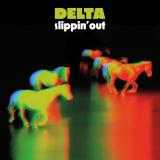
“From Birmingham and centred around the extraordinary songwriting talent of James and Patrick Roberts – initially as The Sea Urchins and since 1993 as Delta – they’ve only just got round to releasing their debut album, Slippin’ Out. It is a work of some beauty”. 9/10 NME ALBUM OF THE MONTH, 2000
“It’s classicist for sure, shot through with the influence of The Beatles, Byrds and Buffalo Springfield. In James’ downright beautiful closing ballad ‘I Want You’ one can also discern the school of ambitious English balladry that peaked in about 1968: The Casuals, Love Affair, Barry Ryan. The impression of accomplished old-schoolery is only furthered by the dizzying string arrangements penned by Louis Clark Jnr, son and namesake of the one-time orchestral chief of Electric Light Orchestra” – Mojo lead review, 2000
Having ended the 90s with the spirited ‘Laughing Mostly’ compilation of singles and demos (Guardian Album Of The Week) Delta finally released their debut studio album of twelve songs in the summer of 2000 on the Dishy Recordings label. Accepting that this might be their sole studio album the band threw everything at these recordings allowing it to exist in its own sphere, unbothered by their contemporary generation and disregarding the idea of even releasing a single.
Recorded at DEP International there was a notable difference to the scruffier, looser charm of their 1990s recordings, a tighter focus developed by having the experienced Lenny Franchi mixing the LP with them. Lenny had been working with a number of Island artists including My Bloody Valentine and Tricky so knew his way around a desk. There was also the question of budget (a few months passed between recording and mixing whilst funds were raised) so every day counted. Ultimately though you can hear the joy in the recordings, even amongst the melancholy and angst. As James recently recalled in an interview in Shindig! Magazine: “It was such a big deal for us. It’s one of my fondest memories doing that record. Everyone was happy. If there’s anything that I’d stand by, I think it would be that”
Louis Clark Jr joined the band towards the end of the ‘90s and brought a classically-trained element to the recordings particularly with his string arrangements. For ‘Cuckoo’, ‘I Want You’ and the prophetic ‘We Come Back’ Louis brought in eight players from the Birmingham Conservatoire; the baroque style is partly why the record often receives comparisons to Love’s ‘Forever Changes’.
On release ‘Slippin’ Out’ was a big favourite with writers at the NME, Mojo and The Guardian again and before long the band were signed to Mercury/Universal for their second studio album ‘Hard Light’, a far more expensive and expansive love affair. It was a temporary palatial home where things quietly fell apart again, but that’s another chapter.
“If long-term memory is nothing more than selective editing and only pop’s most weighty visceral works are built to last then it’s quite possible that in 50 years the Britpop era will be best recollected for the two bands it ostracised. Earlier this year we met Shack and thought their story of mercurial brilliance indicated the biggest music biz oversight of the 90s. We were wrong because we hadn’t met Delta yet. This is richer and more engrossing than anything by Shack”
There’s an alternate reality where everyone makes a living wage and the cleanest buses you’ve ever seen arrive every other minute. Where the most intense songs are about confessing your love to a crush at the apple orchard, and where gentle feelings and chaotic energy are inseparable best friends. This is the timeline where Cootie Catcher is right at home. This Toronto based four-piece exudes both vulnerability and unbridled excitement, creating a sound that hypercharges the open-hearted tenderness of twee pop with spiraling synths and giddy electronics. New album Something We All Got is the clearest and most vibrant reading of Cootie Catcher’s vision yet, with songs of sweetness, nervousness, and expectancy that beam out unguarded.
After releasing music made primarily in basement recording environments, Something We All Got is the band’s first flirtation with studio recording. The edges are still sharp, however, with some parts assembled from time-honored lo-fi methods and fun, personally-sourced samples seeping into the production. The sound is explosive and upbeat, with euphoric guitars, bubbly synth lines, speedy drums both played and programmed, and all other manner of sound constantly colliding. Cootie Catcher has three songwriters, Sophia Chavez, Anita Fowl, and Nolan Jakupovski, all of whom have distinctive voices but still manage to overlap in their writing on shared concerns like navigating the lines of romantic and platonic relationships, their city’s social scenes, and struggles in both the microcosmic experience of playing in a band and the zoomed-out challenges of living through late-stage capitalism.
Joy still touches every surface of Something We All Got. “Quarter Note Rock” bounces around the room in a fit of jangling guitar chords, scratched samples, and interplay between breakbeat loops and somersaulting live drums. It’s a blast of positivity even with lyrics about how disappointing it can be to meet your heroes. A smiling electro pop instrumental supports lyrics about having to step painfully away from an almost realized love on “Gingham Dress,” a song that subverts themes of domesticity as a backdrop for the dashed wilt of hopeless devotion.
Cootie Catcher rolls down hills and jumps through flaming hoops throughout Something We All Got without ever dumbing down the visceral emotions that drive these songs. There’s a palpable tension between the band’s exhilarating sonics and the raw, often uneasy sentiments expressed, but it’s an integral part of what makes them unique. Rather than hide behind the kind of calculated vagueness that plagues so much of the indie rock landscape in the time of cursed algorithms, Cootie Catcher runs full-speed toward every confusion and excitement, fearlessly direct and embracing the reality they’re in.
- 1: Search For The Inner Self
- 2: Precious Is My Love
- 3: A Heart In Love
- 4: The Flower Garden
- 5: It's Bigger Than I
- 1: Strawberries Don't Know Cherries
- 2: We Got Love
- 3: The Season Of Spring
- 4: To Love Somebody
- 5: Only An Illusion
Jon Lucien’s ‘Search For The Inner Self’ was one of the highlights of Paul Weller’s recently complied Ace CD “That Sweet, Sweet Music”. When also issuing it as a single, we included ‘We Got Love’, a track from his self-financed CD “Precious Is Love”, which proved to be as feted a choice as the top side. Due to this and further encouragement from soul fans, DJs and the Lucien family, we licensed the rest of the Beau Ray Fleming produced 1969 recordings for LP and CD reissue. Here is the very start of Lucien’s songwriting creativity − ‘Precious Is My Love’, ‘A Heart In Love’, ‘Flower Garden’ and ‘The Season Of Spring’ are accomplished and captivating creations, equal to his later much-admired work.
- 1: Gasoline
- 2: Pretty Flowers
- 3: Can I Mend It?
- 4: Ring Of Fire
- 5: Demon
- 6: God Knows Why
- 7: Heart In The Mirror
- 8: Worms
- 9: Soul Feeling
- 10: Deja Vu
- 11: Outta Body
Mit The Mirror legt Buck Meek, Gitarrist von Big Thief, sein viertes Soloalbum vor - ein feinfühliges Werk über Sprache, Identität und das ständige Sich-Verändern. Freunde und Weggefährt:innen wie Adrianne Lenker, Jolie Holland oder Tucker Zimmerman wirken mit und hinterlassen ihre Spuren nicht nur musikalisch, sondern auch in den Texten. Meek begreift Songwriting als gemeinschaftlichen Prozess und nutzt den Spiegel als zentrales Bild: nicht zur Selbstbespiegelung, sondern als Gegenüber, das Fragen stellt. Aufgewachsen in einer kunst- und literaturgeprägten Familie in Texas, sammelte Meek früh vielfältige musikalische Erfahrungen - von Blues über Jazz bis Folk. Diese Offenheit prägt auch The Mirror. Gemeinsam mit Produzent James Krivchenia verbindet er die Live-Energie einer Band mit subtilen elektronischen Texturen. Die Aufnahmen entstanden in einem experimentellen, offenen Setting, das Spontaneität über Perfektion stellt. In seinen Songs geht es um Nähe, Verletzlichkeit und die Brüchigkeit von Erinnerung. Wortspiele, Spiegelungen und innere Dialoge machen Sprache selbst zum Thema. Angst und Zweifel erscheinen dabei nicht als Gegenspieler, sondern als Begleiter. The Mirror erklärt nicht - es hört zu, tastet sich vor und lädt dazu ein, dem Unbekannten mit Neugier zu begegnen.
Sicherhe
- Solar Pilgrim
- The Sorcerer
- Little Dog Mind
- Hank & Georgia
- Freed From Doubt
- Rare Feeling V.2
- Black Chair
- Dear Mexico (Thank You For Joyce)
- Good Old Friend
Hier ist "Eine Stimme für das Unsagbare, das gehört werden sollte", ein "Künstler von größter Bedeutung". So beschreibt die Band Big Thief, Freunde und Fans, Twain in einer Ankündigung seines Albums "Rare Feeling". Aufgenommen und co-produziert wurde "Rare Feeling" von Adrian Olsen (Natalie Prass, Foxygen) und Scott McMicken von Dr. Dog. Twain ist das Soloprojekt von Mt. (Mat) Davidson, ein Singer-Songwriter und Multi-Instrumentalist mit einer markanten, einnehmend klaren Stimme. Den größten Teil des letzten Jahrzehnts hat er in Bands wie The Low Anthem und Spirit Family Reunion verbracht Nun aber konzentriert er sich mehr und mehr auf sein Solo-Projekt TWAIN, eines, das seine Wurzeln zwar auch in Indie Folk und Americana hat, aber beherzt, und mit Elementen von Psychedelic Rock, seine ganz eigene Stimme bildet. "Twains unermessliche, suchende Musik beschwört den Cosmic Folk eines Tim Buckley herauf", meinte kürzlich NPR. ,Hier ist die Art von Musik" - urteilt NPR weiter - ,die, wäre sie vor 50 Jahren entstanden, heute ein geschätztes Kultalbum wäre." Es ist ein wirklich besonderes Album, etwas, das man zu finden hofft. Es ist gleichzeitig vertraut, zeitlos und zugänglich, aber es überrollt auch mit seiner eigenen Schönheit und Besinnlichkeit. Und der Albumtitel passt perfekt.
- A1: From Where??? (Intro)
- A2: It's Goin' Down
- A3: The Nod Factor
- A4: Va. In The House
- B1: Tongues Of The Next Shit
- B2: Doin' Time In The Cypha
- B3: Tip Of The Tongue
- B4: Extra Abstract Skillz
- C1: Wmad (Interlude)
- C2: Get Your Groove On
- C3: The Jam
- C4: Move Ya Body
- D1: Street Rules
- D2: All In It
- D3: Unseen World
- D4: Inherit The World
Originally released in 1996 via Big Beat/Atlantic Records, From Where??? is the debut album by Richmond, VA-based emcee Mad Skillz, which features countless classic cuts by some of the best producers in the game (roll call: J Dilla, Shawn J. Period, Buckwild, DJ Clark Kent, Nick Wiz, The Beatnuts & Large Professor). The
album was also praised for its strong lyrical content. Skillz, as we know him, was never short on captivating listeners with his punchlines and wordplay. In 2002, he began his annual “Rap Up” series, incorporating a year’s worth of headlines from the prior year. On From Where??? The singles “The Nod Factor and “Move Ya Body” received steady radio and video airplay while album cuts like “VA. In The House, “Doin Time In
The Cypha,” “The Jam,” and the showstopper “Extra Abstract Skillz” (Featuring Q-Tip & Large Professor) all round out the album with bangers from start to finish. Out of print on vinyl in the United States since its original release, Get On Down is proud to present another underrated Golden Era classic on vinyl. From Where??? is pressed on half-and-half with black splatter-colored vinyl, limited to 1000 copies.
Pioen is the second album by Elisabeth Klinck & Nils Vermeulen, released on blickwinkel. It was recorded in a small chapel of a monastery in the city center of Ghent. A chapel by nature is a place of contemplation and meditation, which automatically had influence on the music. Movements slow down, attention is sharpened and the overwhelming silence of the space becomes part of the music. Sound and silence are meticulously woven into each other. Even when the music grows at times dense and heavy, there is an ever-present sense of closeness and intimacy. This is reinforced by the use of the voice, which naturally appears throughout the album, not as a separate layer but as an extension of the instruments.
The pieces – this time more curated than on their previous album Pair, Paire – arose from hours-long improvisations where sound became space and space became sound. Bringing together violin, double bass and voice, Pioen unfolds as a serene and honest journey, inviting the listener into a state of contemplation.
Elisabeth Klinck is a contemporary violinist, composer and performer based in Brussels, known or her timeless, deep-listening sound worlds. Her album Picture a Frame (2023) and Chronotopia - selected by The Quietus as one of the best albums of 2025 - were released on the Swiss label Hallow Ground. A big part of her work revolves around tactility, fragility, and a very physical approaches to sound.
Nils Vermeulen is a Belgian double bass player active in all varieties of adventurous music. He has played with Paul Lytton, Martin Küchen, Seppe Gebruers, William Parker, John Dikeman, Luis Vicente, among others. He works across many scenes, from free improv to jazz to contemporary classical music, and in many distinct constellations, such as his own groups Kabas and Jukwaa, a Norwegian free jazz trio with Tollef Østvang and Heidi Kvelvane, a string duo with Elisabeth Klinck, and as the double bassplayer of Nemo ensemble. In 2023, he released his debut solo album on Aspen Edities.
2x12"[36,93 €]
Sodom ist eine deutsche Thrash-Metal-Band, die 1981 in Gelsenkirchen gegründet wurde und neben
Kreator, Destruction und Tankard zu den „Big Four“ des deutschen Thrash Metal zählt. In ihrer 43-jährigen
Karriere veröffentlichten sie 18 Studioalben und touren unermüdlich um die Welt, wo sie vor ausverkauften
Festival- und Clubbesuchern eine treue Fangemeinde begeistern. Auch ihr Fanclub, die Sodomaniacs, ist
sehr engagiert. Ihr letztes Studioalbum erreichte Platz 5 der deutschen Charts.
Diese Neuauflage ihres sechsten Albums „Get What You Deserve“ erschien ursprünglich 1994. Es war
nur in limitierter Auflage auf Vinyl erhältlich und ist seit Langem nicht mehr auf CD verfügbar. Das
Originalalbum wurde unter der Aufsicht des ehemaligen Gitarristen Andy Brings remastert, der auch einen
brandneuen Remix des Albums erstellt hat.
Die Triple-CD-Edition enthält das remasterte Studioalbum, einen bisher unveröffentlichten 2026-Remix
des Albums sowie das neue Remaster und den Remix der EP „Aber Bitte Mit Sahne!“.
Dies ist die ultimative, von Fans initiierte Wiederveröffentlichung dieses Crossover-Thrash-Metal-Klassikers
einer der angesehensten Bands des Genres!
Die Doppel-LP-Edition enthält das remasterte Studioalbum und den Remix.
Die Deluxe-Box enthält die 1993 erschienene Vorläufer-EP von „Get What You Deserve“, „Aber Bitte
Mit Sahne!“, sowie einen bisher unveröffentlichten Live-Mitschnitt aus Frischborn, Deutschland (1993).
Die Deluxe-Box enthält das neue Remaster und den Remix von „Get What You Deserve“, die EP „Aber
Bitte Mit Sahne!“, ein 34-seitiges Softcover-Buch mit ausführlichen neuen Liner Notes, Fotos und Erin-
New Zealand–born, Melbourne-based guitarist, producer, songwriter, DJ and recording artist Lance Ferguson returns with a killer follow-up: two new 7" releases from his third instalment of the acclaimed Rare Groove Spectrum series, offering a fresh set of reimagined and reworked classics. From '70s Australian jazz-funk and Latin-fusion to big-band soul and golden-era funk, Ferguson blends crate-digger sensibilities with modern studio craft.
The "Dominoes / Cold Bear" 7" features the exclusive track "Cold Bear", a fiery reinterpretation of The Gaturs' New Orleans funk classic. Sitting alongside it is a fan favourite among modern funk and soul lovers: Jungle's "Dominoes", stripped back, amped up and played live with an unpolished, authentic feel that pays homage to the essence of the original.
- 1: Intro
- 2: I Wanna Be With You (Feat. Marina B)
- 3: Sungalz (Feat. Marina B)
- 4: Rest Easy
- 5: Easy, Easy
- 6: Wake Up (Feat. Marina B)
- 7: When Will I See U (Feat. Kim Foxen)
- 8: It's Not Over (Feat. Shoshy)
- 9: Ah Ha
- 10: The Deep
Brooklyn duo The Still Brothers is a musical project of childhood friends Evan Heinze (The Shacks/Big Crown) and Andrew LeCoche (Ula Ruth). Heinze has toured with the likes of Khraungbin, Lee Fields and Cut Chemist, while LeCoche’s old band once opened for Paul Simon and Edie Brickell. A former student of Madlib’s uncle Jon Faddis, LeCoche has scored music for Netflix and Patagonia and sound design for Twitter, Patron, and Marvel. Signing to Lewis Recordings in 2020 the band’s first single ‘The Deep’ was instantly picked up by Steve Lamacq on BBC 6 Music who regularly plays it to this day. ‘Wake Up’ featuring the vocals of Marina B. spent six weeks on the BBC 6 Music playlist gaining support from Lauren Laverne, Gilles Peterson, Mary Anne Hobbs, Craig Charles, Huey Morgan, Cerys Matthews, Don Letts, Tom Ravenscroft and Guy Garvey. Lockdown didn’t slow down the band’s creativity with many tracks on their self-titled debut EP recorded remotely. Two such tracks were the collaborations with London based singer/songwriter Shauna Kelly aka Shoshy. ‘It’s Not Over’ and ‘Crazy’ were released on 7” and both received BBC radio support. Marina B stepped back on the mic with the upbeat hit ‘I Wanna Be With You’, a dancefloor filler mixed by St. Frances Hotel (producer for Michael Kiwanuka). The b-side ‘Sungalz’ is a hazy dream pop number that started life as an instrumental jam
- B1: Calle
- A1: Overture
- A2: Víctima
- A3: Jaco Y Chofi
- A4: Atlantis
- A5: La Sal No Sala
- A6: Chipi-Chipi
- B2: Love Is Love
- B3: Tema De Amor
- B4: Fax U
- B5: Lament
- B6: Interludio De La Lágrima
- C1: Workin' In The Morning
- C2: Waitin
- C3: Kurosawa
- C4: Chiquilin
- C5: Andan (Excerpt)
- C6: James Brown
- D1: Intraterreno
- D2: No Sugar
- D3: Atlantis (Parte Ii)
- D4: Locomotion
- D5: Andan (Complete)
Carlos Alberto García Moreno, better known by his stage name Charly García, is an Argentine singer-songwriter, multi-instrumentalist, composer and record producer, considered one of the most important rock musicians in Argentine and Latin American music.
Named "the father of rock nacional", he is known for the complexity of his compositions covering genres like folk rock, progressive rock, symphonic rock, jazz, new wave and many others.
a conceptual rock opera featuring experimental passages and two big hits, "Chipi Chipi" and "La Sal No Sala".
La Hija De La Lágrima is available as a limited edition of 1000 individually numbered copies on silver coloured vinyl.
g B1. Calle Taxi
[g] B1. Calle [Taxi]
[g] B1. Calle [Taxi]
Close Proximity lands on Second Sight with a four-track statement that spans the full spectrum of the label’s world. From upfront, peak-time club pressure to 90s-tinged house swing and Balearic-leaning warmth, the EP moves between late-night drive and sunlit release without losing momentum. Tight drums, bold hooks, and a vivid sense of space make it equally built for big systems and repeat listens — a focused package of energy, groove, and atmosphere.
Synthpop, minimal wave, post-punk, goth, new romantic - fans and critics alike have dug deeply into their vintage thesauruses to describe the beguiling work of Nation of Language. And if you can't precisely define the band, that's the point. Frontman Ian Richard Devaney has become prodigious in expanding what synthesizer-driven music can evoke, such that his output is as much an extrasensory journey as it is an all-too-human destination. With that experience in mind, he wrote the band's fourth album - the spectral, spacious Dance Called Memory - in the most humble of ways: chipping away at melancholia by sitting around and strumming his guitar. Nation of Language's first two albums, Introduction, Presence (2020), and A Way Forward (2021), came as pandemic godsends: gorgeous, relatable soundtracks to our collective doldrums. But it was their last LP, Strange Disciple (2023), that catapulted the group from cultural standouts to critical darlings, with the album being named Rough Trade's Album of the Year. With that release, Pitchfork wrote that the band "are learning what it means to get bigger and better." This is Devaney's calling: soulfully translating individual despair into a comforting, collective mourning. The single "Now That You're Gone," which radiates and reverberates with a devastating wistfulness, was inspired by witnessing his godfather's tragic death from ALS, and his parents' role as caretakers for this ailing friend. At its heart, the song is a reflection of how friends can be there for each other, and also highlights a theme throughout the record: the pain and lost promise of friendships that fall apart. On Dance Called Memory, the band once again collaborated with friend and Strange Disciple producer Nick Millhiser (LCD Soundsystem, Holy Ghost!). "What's so great about Nick is his ability to make us feel like we don't need to do what might be expected of us," says synth player Aidan Noell, who, along with bassist Alex MacKay, rounds out the Nation of Language lineup. They imbued Dance Called Memory with a shifted palette - sampling chopped-up drum breaks on "I'm Not Ready for the Change" for a touch of Loveless-era My Bloody Valentine or smashing all of the percussion of "In Another Life" through a synthesizer to cast a shade of early-2000s electronic music. Ultimately, the hope was to weave raw vulnerability and humanity into a synth-heavy album. "There is a dichotomy between the Kraftwerk school of thought and the Brian Eno school of thought, each of which I've been drawn to at different points. I've read about how Kraftwerk wanted to remove all the humanity from their music, but Eno often spoke about wanting to make synthesized music that felt distinctly human," Devaney says. "As much as Kraftwerk is a sonically foundational influence, with this record I leaned much more towards the Eno school of thought. In this era quickly being defined by the rise of AI supplanting human creators I'm focusing more on the human condition, and I need the underlying music to support that_ Instead of hopelessness, I want to leave the listener with a feeling of us really seeing one another, that our individual struggles can actually unite us in empathy."
"deathcrash’s third album, Somersaults, glimmers with an everyday euphoria. The London-based slowcore/ post-rock quartet has always had an affinity for building worlds only to crush them. From their breakout EP, People thought my windows were stars (2021), through two critically acclaimed studio albums, Return (2022) and Less (2023), they have been both the architects and the destroyers, the creationists and the ones manning the flood barrier. But, recorded between Black Box Studio in the Loire Valley and Haggerston’s Holy Mountain, Somersaults is almost joyful.
Its ten tracks are more vocal heavy than any of the band’s catalogue – think Mark Linkous via The Kinks – but lyrically, Somersaults resists revelation. For all its abrasion, phrases appear half-swallowed, broken off at the edge of meaning, consumed by the smaller textures of living. “Thirty, no career, it fucking worries me / And doing the band doesn’t help,” Banks sings in ‘NYC’. But, “This life is the best life,” he finishes in ‘CMC’ on top of the ambient white noise of an office printer, thankful that the band is still there, “still making noise in the doorway.”
Their role as caretakers of Duster, Low and Codeine’s slowcore lineage is all across Somersaults – songs scud to a narcotic crawl, sound monolithic and inwards before spotlighting a crystalline nothing. Cathartic builds are muddied with tenderness, the bass a heavy grounding, the drums an exhausted heartbeat grasping for air. But more so than ever, even the silence feels collaborative – a gesture of communal trust – friends celebrating the room they’ve made for each other’s ghosts, and some of the biggest, brightest songs they’ve made to date."
- 1: O.c. Life
- 2: 10
- 3: Yur 2 Late
- 4: Everyday
- 5: One Shot
- 6: Falling Out
- 7: Surfside
- 8: It's Doing Something
- 9: Fast
- 10: Section 8
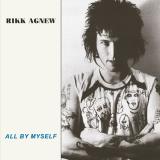
Rikk Agnew's All by Myself is one of those records that feels like a secret you're lucky to stumble upon -- a raw, weird, totally personal snapshot of a restless artist at a pivotal moment. Originally released in 1982 on Frontier Records, the album stands apart from most of what was coming out of Southern California at the time, even though it was born right in the middle of the exploding hardcore punk scene. By 1982, Rikk Agnew was already a big deal underground. As the guitarist for Adolescents, he helped shape the sound of Orange County hardcore with sharp riffs, surf-inflected melodies, and a sense of urgency that became hugely influential. He also played in bands like D.I. and later Christian Death, moving fluidly between hardcore punk, post-punk, and darker, more experimental territory. Agnew wasn't just a fast, aggressive guitarist -- he was a songwriter with range, curiosity, and a strong DIY instinct. All by Myself lives up to its title in the most literal way. Agnew recorded the album largely on his own, playing all the instruments and handling vocals himself. Instead of delivering another straight-up hardcore record, he went inward. The result is a lo-fi, home-recorded collection of songs that blend punk energy with new wave, post-punk, psychedelic touches, and even moments of pop sensitivity. It's rough around the edges, but that's exactly the point -- the album feels intimate, unfiltered, and honest. In the early '80s, Southern California punk was loud, fast, and often confrontational. Bands were pushing against the mainstream and even against each other, racing toward more extreme sounds. While All by Myself shares that DIY spirit, it doesn't fully play by hardcore rules. The tempos shift, the moods wander, and the songs feel more like personal experiments than scene anthems. That made the record a bit of an outlier at the time -- but also what gives it lasting appeal. Frontier Records was the perfect home for a release like this. The label was known for supporting artists who didn't quite fit into neat categories, and All by Myself captured that ethos perfectly. Today, All by Myself is often seen as a cult classic. For fans of early punk, post-punk, or anyone interested in the roots of DIY recording culture, this album is essential listening