The Bees are a textbook case of the chew and spit cycle that was the late 80’s South African music industry. Although their unknown story is likely unique, it is just as likely that it is no different to that of many other young artists who dreamed of getting their music heard at the time.
By 1988, the independent record label was no longer as uncommon as it had been at the beginning of the decade. As the 80s went on, more seasoned A&R reps and Producers that had gained experience and connections from their work under major labels would be trying to cash in on a market they helped create. Without the need of big rooms or expensive recording equipment, the digital advancements allowed many Producers to open or work in smaller studios and promote unknown artists under their own imprints. They would then have their catalogs marketed and distributed by the same major labels they had been working for just years prior. This would open up the possibility of a new era of stars as potential talent no longer had to be pitched to major labels in hopes of them taking a chance on a new signee over their already established artists. With the market growing and a struggle to keep up with the demand for new sounds this agreement would allow the major labels to put new emerging artists or groups on their catalog with little investment and high reward if it happened to be a hit.
ON Records was just one of the independent players at the time. Ronnie Robot had just signed the unlikely trio The Bees in hopes of adding a hit group to his label roster that consisted of solo acts. Despite the debut’s fresh house inspired sound, it failed to catch on was outsold by the bubblegum disco the label was known for. Over the years unsold back stock and promos would build up with the distributor. Luckily this allowed sealed copies from the label’s catalog to survive into the 90s when the distributor’s stock was unloaded and picked up by legendary Johannesburg jazz shop Kohinoor. Here sealed copies of the Bees first attempt sat under appreciated for over 20 years before becoming a hot title after they started circulating online and became club staples. This is how the first album of an unknown group with no success was able to become a collectors item and earn a reissue over 25 years later.
With their first record behind them The Bees were ready move forward and get back into the studio. A suggestion from producers had the trio change camps and go work with the newly formed Creative Sound Recordings, the label that promised “Music for the Future” and ended up being an essential studio in the early years of Kwaito. They would work with producer Chris Ghelakis and guitarist George Vardas, while a young Marvin Moses sat behind the desk. Musically the sophomore album was as good as a follow up as you could get. Building on the first album, Mashonisa delivers catchy melodies backed by heavy drum programming that would score points with any Pantsula. The Black Box inspired “ Never Give Up” was one of two tracks chosen to be pressed as the promo for the album, hoping to trick listeners with their catchy version of the hit( A year later the label would release their first volume of Black Box covers sang by neo soul diva BB, it would be a great seller). The label printed up an unknown amount of these in a last attempt to push the release in Shabeens and on Radio. The cheaper route of flooding the market with promo copies would only pay off 25 years later when unplayed copies started being rediscovered and had survived the years in a quantity that original run of the full album could not. Once again it was clear that with no mainstream appeal, the quality of the music on its own was not enough to garner any success at the time. The album flopped worse than their first and failed to make it past it’s initial run, making it one of the harder titles to get from the CSR catalog.
Mashonisa would be the last attempt from the Bees. They would disappear from the scene as quickly as they appeared. Of the three members it is only known that lead Singer Solomon Phiri continued in music fronting a wave dance group before he mysteriously vanished in 1993, never to be heard from again. Through a combination of luck and circumstance the group, which is unknown in South Africa to even the most plugged in musicians, producers and radio hosts of the time, managed to finally get some of the recognition they deserved 30 years later. Unfortunately this small blip of fame would happen with none of the band members present to give their side of the story, or even aware of how their two albums became popular enough to be printed on different continents in a new millennia. The Bees suffered the same fate as countless other artists of the time, who thanks to emerging independent labels and willing producers were given an opportunity to have a short career, only to be replaced by the meat grinder of the music industry when they failed to produce a hit.
Cerca:big ron
You cannot say Nu Groove without saying Burrell. The seminal New York House label that existed from 1988 until 1992 was at the helm of a sound that was as much traditional as it was transitional. Since the closure of the Paradise Garage in 1987 and before the „NYC House sound“ was well-defined and fenced, Nu Groove was a kaleidoscope and an amalgamation of everything that informed it until then: uptempo r&b, reggae, dub, disco, freestyle, techno, jazz, and the sound that was embossed by Larry Heard in Chicago that was so well picked up in the Big Apple, you name it. Ronald and Rheji Burrell provided its basis, first floor and roof. But that story has already been told by our dear friends from Rush Hour, including its most important chapters. But we are going to tell a new one.
Rheji Burrell presents N.Y. House’N Authority & The Utopia Project. Twelve tracks split over two EPs on Running Back. Named „Out of Body Experience“ and „The ’V’EP“, it features all new music that feels like modern garments cut out of a classic cloth. Almost as if the Nu Groove would have never stopped. And that it is - at the risk of self-praise - all that old or new fans and also we could hope for. Two EPs full of deep-that-doesn’t rhyme-with-sleep house music, has simple, yet clever arrangements, features jazzy sounds, but snappy drums, merry melodies and glossy grooves. An overall joy to listen or dance to. The difference in both EPs is for the Burrell-die-hards and Nu-Groove-scientists to decide.
You cannot say Nu Groove without saying Burrell. The seminal New York House label that existed from 1988 until 1992 was at the helm of a sound that was as much traditional as it was transitional. Since the closure of the Paradise Garage in 1987 and before the „NYC House sound“ was well-defined and fenced, Nu Groove was a kaleidoscope and an amalgamation of everything that informed it until then: uptempo r&b, reggae, dub, disco, freestyle, techno, jazz, and the sound that was embossed by Larry Heard in Chicago that was so well picked up in the Big Apple, you name it. Ronald and Rheji Burrell provided its basis, first floor and roof. But that story has already been told by our dear friends from Rush Hour, including its most important chapters. But we are going to tell a new one.
Rheji Burrell presents N.Y. House’N Authority & The Utopia Project. Twelve tracks split over two EPs on Running Back. Named „Out of Body Experience“ and „The ’V’EP“, it features all new music that feels like modern garments cut out of a classic cloth. Almost as if the Nu Groove would have never stopped. And that it is - at the risk of self-praise - all that old or new fans and also we could hope for. Two EPs full of deep-that-doesn’t rhyme-with-sleep house music, has simple, yet clever arrangements, features jazzy sounds, but snappy drums, merry melodies and glossy grooves. An overall joy to listen or dance to. The difference in both EPs is for the Burrell-die-hards and Nu-Groove-scientists to decide.
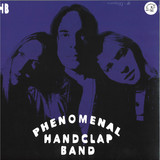
New York’s indie disco funk crew is back with a new album. And it’s the right moment: With new acts like Toro Y Moi, Sault, Parcels, The Internet around… the funky, disco, old school vibe is big in 2020. And The Phenomenal Handclap Band fits perfectly. Probably all these new artists are fans of the Phenomenals. Because The PHB popped up for the first time 10 years ago. Some top knotch musicians from NYC’s funk scene playing dirty discofunk. Some of the bandmembers played in Mark Ronson’s projects and in Amy Winehouse’s backing band. Head of the band: Daniel Collás. Their self-titled debut album on Gomma records 2010 made them many fans in the music scene. A nasty fusion of forward-thinking disco, psychedelic prog rock, and classic soul with a splash of yacht rock. Back then the band took the road, supporting Bryan Ferry and Franz Ferdinand, playing shows at Glastonbury, Wireless, and Latitude… as well as getting praise from Sir Paul McCartney about their album! After the album Collás began to produce other artists in Brooklyn. The band paused. Now they are back. With Daniel Collás in the centre, along with new members multi-instrumentalist Juliet Swango, and vocalist and synthesizer wizard Monika Heidemann. Their sound is still essentially analog dance music, with an emphasis on raw soul, vocal harmonies, African percussion, fuzzy guitars and analog synthesizers.
Following on from Myele Manzanza's acclaimed 2019 jazz album, 'A Love Requited', we have a 2020 addendum to that project; an EP of remixes by a set of diverse musicians from all corners of the globe.
Detroit legend Theo Parrish starts off the proceedings. Theo & Myele have previously worked together on various projects over the years, such as with live outfit, The Unit, whilst Myele's 'Surgery Session' of Theo's track 'Moonlight' was picked up by The Vinyl Factory last Summer as well. On his remix of 'Itaru's Phone Booth', Theo maintains the tempo & structure of the original track, whilst tempering the horns and adding some spaced-out keys & a little low end theory to the equation, making this a flip seasoned with Theo's unique flavour.
Mark de Clive-Lowe follows with the most uptempo track on the EP, a delightful bruk refix of 'Big Deal'. Fellow New Zealander, regular collaborator (notably on Manzanza's sophomore album 'OnePointOne') and hugely respected musician in his own right, MdCL delivers a hefty groove direct for the clubs; heavy drums & sci-fi synths lead the way atop of the original's powerhouse horns, switching up with some MAW-esque 4/4 tribal business to close out.
Cardiff's finest, Earl Jeffers & Don Leisure, aka First Word label-mates Darkhouse Family, kick off the flipside with their take on the appropriately titled 'Family Dynamics'. Fresh from their solo & combined projects (producing for Kamaal Williams, running house label Melange, and creating beat-tapes like Halal Cool J & Shaboo), the duo turn out some punchy boom-bap vibes which pulsate throughout the track, accompanied by some sweet vocal hooks, transposing the original into a plucky heads-down neo-soul tinged stomper.
Borrowed CS is another New Zealand artist that's been bubbling away in the underground NZ electronic scene for several years now, as a DJ and a musician. He ends this selection of remixes, taking the original jazz components of 'Pencarrow' and transforming it into a synth-boogie lead piece of brooding broken beat - a 'Clear Path Depiction' even.
Released on Worldwide Award-winning UK label, First Word Records, the original album was also co-produced by another antipodean label-mate, Ross McHenry, who released a new album recently.
The son of a Congolese master percussionist, Myele Manzanza's roots in jazz and African rhythm are well established. Adding his long-time influences of hip hop and dance music into the mix, this EP exemplifies his approach to fusion, and his persona as an ever-evolving artist, drummer & composer. Since his days as part of Electric Wire Hustle, he had his debut release on BBE, has released three solo albums, and done tours & collabs with folks like Jordan Rakei, Miguel Atwood-Ferguson, Recloose & Amp Fiddler. Since moving to London from New Zealand late last year, he has already shared stages with Hiatus Kaiyote, The Bad Plus & Alfa Mist, rocked The Jazz Cafe & Ronnie Scott's, and ably demonstrated his DJ side-hustle chops at stations like Soho Radio, Worldwide FM & NTS, as well as behind the decks in a few danceries across the capital, and behind his drum kit daily.
Already hard at work on brand new material, expect to catch Myele Manzanza live at various shows & festivals across the UK & Europe this coming Summer.
'A Love Requited - The Remixes' is available on 12" vinyl & all digital outlets from March 6th 2020.
REVE is a new label from Paris. Dedicated to artists from all around the world, genres & areas, respecting the 12' history, its heritage and available as digital too.
This new label brings its first issue with PAUL JOHNSON's cover aka THE P.J. PROJECT of one of considered best LARRY HEARD & ROBERT OWENS track : 'bring down the walls'.
Originally released in 1986 on Trax Records, Paul does the whole track with the last gear generation, 'the best ear of Chicago' goes back to the house roots.
On the other side, one of the few Ron Hardy's protégé : K ALEXI SHELBY interpretation of GLENN UNDERGROUND 'Indians & Bagpipes'. K refreshes this anthem with the highest Chicago Edit level you can aim. Deeply thinked structure. Doubling the bagpipes adding subliminal frequencies, colors wish is refreshing the track. He follows his rules and put his style in it. After playing it for years. It is both "handbanging" as we say here & subtile. Hit.
To conclude this extended play, PROFESSOR INC brings a remix focusing on the filters moves & trackey part of GLENN UNDERGROUND, big sound, infrabass & fatness underground dj tool.
This is how it is, 12' at its best, legit and godness. Mastering by Mathieu Berthet.
You may want to stock up on this one because who know when the pressings may stop.
Havazelet's story is both fascinating and mysterious. She was born in Aden, Yemen, in 1936 as Havazelet Damari, she immigrated to Israel when she was 8 years old and grew up in the disadvantaged Ezra neighborhood, in south Tel Aviv. Havazelet discovered her love for singing when she was a teen, when she would sing at feasts and family events. At one of these events she was discovered by an impresario who decided to take her under his wing.
He asked her to change her family name from Damari to Ron, as there was already a young singer called Shoshana Damari in Israel, who was becoming quite popular. In March 1960 Havazelet Ron's only Israeli album, "The Music of the Desert" was released, produced by the "Makolit" label, featuring Yemenite folk songs. Both songs on this 7" are from that album. The identity of the promoter, the album's recording date and location, and the identity of the musicians, could not be found.The album was ahead of it's time in that it introduced an innovative sound, comprised of drums, electric guitar and an organ, making it one of the first albums in Israel to record this type of composition.
... However, it confused the Israeli audience of the time: The vocals were in Yemeni-Arabic, preventing it from being played on the radio, which mainly played Hebrew music, moreover, it was too innovative and far from traditional music for the Yemenite scene. The album fell between the cracks and her big breakthrough to mainstream did not happen.
Following the album's failure, Havazelet left Israel in 1963 and went to Germany, where she performed in festivals, TV shows and recorded several more albums. All of this was made possible by her unique singing talent in five languages - Hebrew, Yemeni-Arabic, German, English and Yiddish, her impressive appearance and remarkable stage charisma. The European audience enjoyed the original music she produced and her Yemenite-style cover versions of Hebrew songs.
In 1968 Havazelet married and a year later retired from the music scene. In 1980 she returned to Israel but she left again four years later, this time to Los Angeles, where she worked as a kindergarten teacher. Havazelet Ron passed away in Los Angeles, in 2013, after a long battle with cancer. In Israel, her name is almost unknown among music lovers in general and among record collectors in particular.
The band C.R.A.C. was formed in 1974 by bassist/vocalist Rick Cua, drummer Tommy Rozzano, keyboardist Larry Arlotta, and lead singer/percussionist Ricky Chisholm. Their name is an acronym for the founding members' last names. Playing mostly popular covers, the band's main gig was four nights a week at a Syracuse, NY club called Big Daddy's. It didn't take long before Big Daddy's was packed whenever C.R.A.C. was there.
As they gained popularity, a variety of opportunities presented themselves. Soon, they had enough new gigs to leave Big Daddy's and focus on their budding career.
Drawing inspiration from other bands in their genre, their passion for music, and the success of their first radio single, "Of The Lites," they continued to add to their repertoire of songs written by members of the band. Fresh off the high of their radio debut, they added two new members: guitarist Ronnie DeRollo and singer/percussionist Duane "Spoon" Walker. C.R.A.C., or as they became known at this time, CRAC, continued on their upward trajectory as one of New York's premier funk and R&B bands. The band continued to expand throughout the late 70's as their territory moved throughout New York and New England.
The busier the band got, the more their talent grew, and this afforded some members the honour of playing with such well-known artists as Maynard Ferguson, Melba Moore, Sea Level, Duke Jupiter, and The Outlaws.
When acclaimed South African musician Guy Buttery first sought out Dr. Kanada Narahari in late 2016, it was as his patient.
“It was a dark time.” Buttery recalls, “I had been bedridden for months and had been suffering from debilitating bouts of fatigue which no diagnosis or medication could help me get to the bottom of. When I first met Kanada, I was at the stage where even picking up my guitar to make music had become a joyless and taxing exercise.”
As Buttery’s searched for a cure, a family member recommended he see Kanada an Ayurvedic doctor who had relocated to South Africa from India and set up a practice in Durban. It was during this consultation, that the musician first experienced how Narahari infused the healing properties of Indian Classical music into his practice. Rather than treating him with a smorgasbord of pharmaceuticals, Narahari played his sitar and set Buttery on a strict daily diet of Raga’s to fast track his recovery.
Buttery was not only struck by his doctor’s musical talents but by the powerful healing properties inherent in his sitar compositions. When he left Narahari’s doctors room that afternoon, he asserts he was feeling decidedly clearer, lighter and stronger.
“Diving into Kanada’s music was definitely one of the reasons I'm still here today.” he admits. “The consistent tonal centre at the heart of Indian Classical Music, literally became my support pillar over this period. A central core of sorts in which to fall back on, strengthen and discover.”
Narahari as it turned out, was not only a prominent music therapist (and one of the only Ayurvedic doctors practicing in South Africa) but like Buttery, a highly accomplished musician with a devoted following back in his homeland.
Born in a small village along the Western Ghats in Karnataka, India, Narahari, at the age of nine, had enrolled to study Carnatic classical vocal and developed an interest in Hindustani Classical music with a particular passion for the sitar. While Buttery had secured his reputation as one of South Africa’s musical treasures, a multi-instrumentalist who commands sold-out performances both locally and internationally and more recently had been awarded the prestigious 2018 Standard Bank Young Artist for Music.
From this consultation, a friendship developed between the two musicians with Buttery soon inviting Narahari to join him in his studio. But it wasn’t all plain sailing in the beginning. While Buttery and Narahari’s sensibilities were very much aligned, there were a range of cultural and musical influences, nuances and inflections that first needed to be navigated and understood.
“I suppose we had to find a common ground.” Buttery says, before adding, “Which in the end turned out to be pretty "uncommon ground" for the both of us.”
It was after a few intensive sessions together that something exhilarating began to emerge. What began as a few idle improvisations soon evolved into feverish and lengthier jams. Whenever time permitted, the musicians would meet, descending deeper into the emerging sounds, while reimagining the realms that existed between their African and Indian heritages.
Over the next few months, the duo would rack up over fifteen hours of recordings in studio, and it was up to Buttery to shape the material into an album which they collectively titled Nāḍī, which Narahari translates from the Sanskrit as "The Channel" or "An Internal River".
During this period, Narahari bestowed upon Buttery, the moniker Guruji while Guy would refer to him, in affectionate return, as Panditji. Each time the musicians would meet, the studio space would be cleared by an impromptu ritual, with Guruji burning African Imphepho while Panditji would chant a Sanskrit mantra dusting Indian Agarbatti clouds over their instruments.
Once the room had been made hazy with this aromatic alchemy (with the ancestors welcomed in) the musicians would pick up their instruments and plunge into shimmering tides of sound. Reflecting on these sessions, Narahari recalls the immense creative freedom he felt throughout: “Guy and I tried to wander as much as possible, without any speculative, preoccupied ideologies or limitations. Love remained at the forefront of our journey together.”
“Those evenings we spent together in the studio” adds Buttery, “felt incredibly rich with purpose and a profound sense of freedom. While improvising, anything could happen and mostly did.”
On a first listen, the tracks on Nāḍī emerge as salty, humid invocations to the inscrutable depths and misty myths of the Indian ocean-- that vast body of water that stretches between, and laps the shorelines, of the artists’ respective homelands.
When asked to describe the sound him and Narahari refined, Buttery prefers to relay a series of evocative images.
“For me” he explains, “Nāḍī is a lighthouse, a beacon that resides at the bottom of the ocean.” As Buttery envisions it, “what once offered light to guide ships to safety, has been submerged and re-purposed by marine life as a coral-reef temple. Similarly, this sunken lighthouse exists as a concealed cenotaph, memorializing the ancient sea-routes and passages that once connected the two distant lands.”
On paper this may sound obscure but listening to the songs, it serves as an apt metaphor.
Across each meditative movement, listeners are able to relive the journey, immersing themselves in a series of incantations, replete with high dynamics, delicate African-Indian inflections and virtuoso string playing of an entirely new order. Further complimenting the fusion of musical dialects are a range of guest artists including Shane Cooper on bass, Thandi Ntuli on vocals, Chris Letcher on organ, Ronan Skillen on tabla and percussion and Julian Redpath on guitar, synth and backing vocals.
Now like the submerged lighthouse, the recordings stand as a monument, a marker and snapshot of this fortuitous meeting, a tribute to the healing gifts of Guruji and Panditji in performance. It’s a process that already, both musicians look back on with reverence and nostalgia.
Buttery ruminates in closing, that when he first met Kanada his illness correlated with the biggest drought South Africa had experienced in many years “…for whatever reason, whenever we would connect and make music together, the sky would tend to open. Even if it was just a few drops. This went on for months, until finally the drought dissipated and my health had been restored.”
By the time the heavens did open across the East Coast, a deep friendship had been forged and with it abundant musical offerings poured down. A treasured sample of which we able to share in every time we press play and immerse ourselves in the sacrosanct musical universe that is Nāḍī.
Indio & Ronin, famous but top secret Djs and Producers from the world scene, with their first release with a 12" vinyl,
sure to turn on the dance floors! Having found an idea in a debut version full of unexpected riffs and counter riff keeps
the fire lit from the biginning to the end. On side A there is a real killer for more 'fiery tracks, while side B is 'a more' clubs interpretation
while remaining in the same mood. One of the newest releases in the best game at the moment!
Finally, the long awaited follow up to DJ Duke's house classic "Old Skool Deep Sampler Vol 1, which featured homages to Marshall Jefferson (Jefferson), Fingers Inc (Fingers), Larry Heard (Heard) and Ron Trent (Trent). This follow up E.P. (Vol. 2) features another string of worthwhile homages to the late Frankie Knuckles (Knuckles), Farley Jackmaster Funk (Farley), Chip E (Chip E.xtacy) and Boyd Jarvis (Jarvis).
Duke has always respected the pioneers that created the house/club scene and set the grounds for what's become of the biggest music crazes in the world. For example, Boyd Jarvis used to play live on air with Timmy Regisford on NYC radio station 107.5 WBLS using drum machines for the beats and then play keys on top of it. Duke tried to keep the tracks as close to the feeling of these pioneers, selecting the right drum machines, sounds, and overall vibe, but still keep the tracks fresh and not derivative.
- A1: Theme For Us Feat Joshua Idehen & Chip Wickham
- A2: The Socials Feat Soothsayers
- A3: Life Is Valuable Feat James Alexander Bright
- A4: Before
- A5: After Feat And Is Phi
- B1: I Never Feat Madison Mcferrin
- B2: Won’t Get Better Feat Emma-Jean Thackray
- B3: Don’t Stop Here Feat Ego Ella May
- B4: Thru You Feat Georgia Anne Muldrow
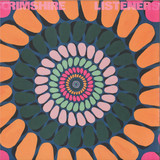
Albert’s Favourites co-founder Adam Scrimshire is set to release his fourth album 'Listeners'. Musically, 'Listeners' draws from Scrimshire's passion for jazz, soul and electronic music of all styles; from an energetic combination of Afrobeat and garage on 'Won't Get Better', to the lushly orchestrated neo-soul of 'Thru You', and the harmonious jazz experimentations of 'I Never'. The album features a host of esteemed guest vocalists and musicians telling their own personal stories, including Georgia Anne Muldrow, Emma-Jean Thackray, Joshua Idehen, Madison McFerrin, Chip Wickham, and James Alexander Bright.
"With this album I wanted to get a more focused sound after six years of relearning and development in the studio. But I also struggled to find my own words, to speak about where I/we are now. So I allowed my collaborators total freedom to tell their own story and as they came back to me, they were telling the same stories I wanted to. It's resulted in some deeply personal confessional pieces: mourning family, collapsing relationships, extremes of self doubt and analysis, trying to balance public and inner persona, and a reminder that life in all forms is important.
It’s called 'Listeners' as I am a listener here, I feel like I've been given these very personal experiences to care for. Listeners because, the travesty of the last few years is that we stopped listening to each other, everyone is shouting at each other and no one is learning. And Listeners because I hope I've made something that is for other people more than I have before. I've tried to craft something warmer and more enjoyable, made for those who give me their time in listening to my music."
- Adam Scrimshire
Since joining the Wah Wah 45s label in 2007, Scrimshire has released three albums of experimental cinematic jazz, and electronic sounds. Following his 2009 debut ‘Along Came The Devil One Night’, his second album ‘The Hollow’ (2011) was a BBC 6 Music Album of the Week, with Gilles Peterson calling it “A late contender for album of the year”.
In the time since the release of his last album ‘Bight’ (“An eclectic range of influences ranging from disco to fusion to more contemporary electronic styles” XLR8R) in 2013, Adam has worked with long-time musical accomplice Dave Koor on new project Modified Man, and launched Albert’s Favourites releasing projects by The Expansions, Hector Plimmer and Jonny Drop. He has continued to gain radio and DJ support for his successful “Scrimshire Edits” series and has produced and mixed records for artist including Stac, Daudi Matsiko, Bastien Keb, Ronin Arkestra, Jonny Drop. He has also continued to develop the Wah Wah 45s label, where he is now a co-owner and director.
Preceded by singles 'Thru You' featuring Georgia Anne Muldrow and 'Life Is Valuable' featuring James Alexander Bright; 'Listeners' is set for release on LP and digital formats via Albert’s Favourites on 19th July 2019.
DJ Support / Press:
Huey Morgan (BBC Radio 6 Music)
Jamie Cullum support on BBC Radio 2
Jamz Supernova on BBC Radio 1Xtra
Thru You Premiered By Mary Anne Hobbs on BBC 6 Music “So Beautiful
Produced in London by Emre Ramazanoglu (Lily Allen, Mark Ronson, Ali Farka Tourè) Portughese soul sister Marta Ren returns with new single "Worth It" on June 07th.
Portuguese soul sister Marta Ren is back. The Porto based soulstress returns with the new single "Worth It" available from June 07th on digital and limited edition 45 vinyl. "Worth it" anticipates the awaited second studio album which is scheduled to be released on Record Kicks at the beginning of 2020. Marta Ren exploded onto the international soul scene with her debut album "Stop Look Listen" in 2016 but she has been around in the Portuguese scene since the mid 90s with The Bombazines. After the release of her acclaimed debut album "Stop Look Listen" Marta has extensively played all over Europe, included on big stages such as Trans Musicales festival in Rennes, Sziget Festival, Eurosonic and Mostly Jazz Funk.
"Worth it" has been mixed and produced in London by hitmaking producer and engineer Emre Ramazanoglu who in his 20 years career has garnered an impressive résumé working closely amongst the others with Mark Ronson, Lily Allen, Kylie Minogue and Noel Gallagher on his latest album "Who Built The Moon?". The result of the collaboration between Emre and Marta is an impressive 60s soul stormer with a rock feel. Marta's powerful voice betrays once more all her passion for the deepest funk and rawest soul of the sixties and early seventies and the result is something that would make the founding JB's soul sisters proud once again. If a good day starts in the morning… welcome back "Marva" Marta Ren!
Led by Saxophonist Rob Mitchell, Abstract Orchestra have been a consistent presence on the u.k. music scene, touring constantly in the promotion of their debut LP "Dilla" and follow up 45 "New Day feat. Illa J", steadily building a loyal and supportive fanbase. Inspired by the legendary live performances of The Roots with Jay-Z and the 40 piece orchestral arrangements by Miguel-Atwood Ferguson of the work of J Dilla, classic arranging techniques underpin modern loop-based structures, breathing new life into familiar material.
The band itself is based on the classic jazz big band instrumentation of saxes, trumpets, and trombones and features the cream of the north of England's jazz scene who collectively have played with Jamiroquai, Corinne Bailey Rae, Mark Ronson, Martha Reeves, John Legend & the Roots, Roots Manuva and Amy Winehouse.
"Madvillain Vol. 2" follows on from the 2018 release "Madvillain vol. 1" and further explores the jazz, TV soundtrack and film score aspect of the original work, combining it with classic big band writing and a focus on improvisation. As with vol 1. there is a strong influence of Quincy Jones, Lalo Schifrin and David Shire(Composer of the soundtrack to The Taking of Pelham 123) on the album, and the arranger Rob Mitchell crafts his own sound that inhabits the space between Madlib's production and Quincy Jones' writing.
As a bonus track to the album, Abstract reworks Dabrye's 'Air' and have included the original vocal of MF DOOM. Dabrye's original is heavily soaked in synths and drum machines, with an almost sci-fi, Blade Runner or Tron-esque sound . Mitchell explores this further and is influenced by Bob Brookmeyer's late work 'Electricity', which explores synths and jazz orchestration.
Madvillain Vol. 2 will build on the success of vol. 1 which received enormous support from Gilles Peterson & Huey Morgan on BBC6 Music as well as numerous airplay on Worlwide FM and Jazz FM, and reviews from soulbag in France and ukvibe, qwest.tv, and vinyl district online.
New York's indie disco freaks Phenomenal Handclap Band is back with a second single on Toy Tonics: Jail. With remixes by Detroit's Waajeed and Marcel Vogel of Lumberjacks in Hell. Including a club edit by Toy Tonics head honcho Kapote. The band was responsible for one of Toy Tonics' biggest tracks in 2018: Judge Not: The Ray Mang version became a hit on open minded dancefloors around the globe: with support from DJ's like DJ Harvey, Cassius and Gilles Peterson (who put it int his - best track of the year' list) but also more house DJ's like Berlin's Keine Musik Crew, Soundstream or Superpitcher. The band's members are kind of heroes to many connoisseurs of the funk/ disco scene. The band leader Daniel Collas was playing keys in Amy Winehouse legendary backing band. Other members are connected to Mark Ronson's crew or San Francisco's Stones Throw universe.. just to give u the bigger picture. With The Phenomenal Handclap Band they blend the unique vibe of 1970ies Power-Soul in the traditon of Charles Stepney and Rotary Connection with today's new disco vibe. Parcels, Toro Y Moi, Roosevelt are not that far. Important fact: All played live, no samples. Mixed by the champs at DFA. The band is part of Toy Tonics's masterplan to expand their dancevibes into more live played scenarios.. stepping out of the strict DJ context. Fun fact Paul McCartney wrote the band a letter saying how much he loved their music when he first heard the band on BBC Radio 1.
Classic Brazilian album from master drummer, Ronald Mesquita, originally released in 1972. Featuring songs by Jorge Ben, Antonio Carlos-Jobim, Gilberto Gil, Edu Lobo and others.
Mesquita is probably most well-known for playing with Luis Carlos Vinhas and his 'Bossa Tres' outfit, along with his own group, 'Ronie E A Central Do Brasil', that he formed after his return from the US in the early 1970s. He also played on several songs on Tenorio Jr.'s 'Embalo' album that Mr Bongo recently reissued.
The killer track 'Balanca Pema' was very big in the Jazz Dance scene in the 90s and also featured on the Mojo compilation 'Dancefloor Jazz Volume Four'.
Madlib sampled 'Balanca Pema' on his Medicine Show Number 2 'Flight to Brazil'.
Official Mr Bongo reissue. Licensed courtesy of Universal Music Group Limited.
Dusty archives, the backrooms of record stores, private reel to reel stashes, master tapes - these are the environs of the Dynamic Range experience.
Dynamic Range is a new label focused on unearthing deep Soul, Funk and Disco jams that continue to resonate with todays dancers and DJ's. Time spent scouring the bowels of the majors and independents has unsurprisingly resulted in numerous gems being added to the DR wants list. High quality, fully licensed reissues are the order of the day, always taken from the correct master source and re-presented to hungry record heads the world over. To repeat, this is a fully legit operation - Avoid the sharks at all costs!
Hot on the heels of DR's maiden release we are pleased to present the evergreen Blue Magic and their anthemic 'Welcome To The Club', apparently a firm fave with Ron Hardy would routinely begin his DJ sets with this wondrous Philly beauty. The record has always been a big influence on the house scene with it finding new fans over and over, and it's easy to see why - brilliant arrangements, musicianship and of course - those voices! Disco bliss. On the flip side is the mighty Tom Moulton's mix of the Blue's 1979 smasher 'Look Me Up', another premium slice of incredible disco soul for the dancers and the lovers. These are the full length versions, pressed across one side each, as it's meant to be, nicely remastered and presented in their entirety.
- A1: Musical Ontology
- A2: Musical Lexicon Chapter 1
- A3: The Serenading Doc
- A4: Nomatopeiareresisticalpabilitilogistically Musical
- B1: Jamaican De Coverley Musical
- B2: Musical Rondeau
- B3: Musical Selenographyseismic Rock
- B4: Autumn Sunshine Musical
- B5: Zulu Warrior Musical
Great return of the classic and pioneer band of the French Funk scene! After a long absence, Malka Family reformed, burned some scenes and composed a new album without changing anything to its magic formula. Recomposed with almost all original
musicians, they come back today with a new album, Le Retour du Kif. At the heart of a still popular and multicultural Marais area in Paris, young musicians gather to jam. This is where Malka Family is formed. Their first self-produced album, Malka On
The Beach, was released in 1991, and gigs were immediately chaining up all over France and Europe, famous for their eccentric costumed performance and after-parties. In 1992,
Warner France signs them for a second album Tous des Oufs, a real P-Funk space opera with guests such as Sidney, Dee Nasty, Marco Prince (FFF), or Juan Rozoff... They will then traveled France, Switzerland, Italy, Holland, Denmark, Namibia, Japan ...
And in 1994, the band becomes independent again and records an EP for Big Cheese Records, titled Fricassee de Funk. After a final tour for the third album, Fotoukonkass (BMG) recorded with Renaud Létang , the band finally broke up. At a time when Daft Punk is using funk artists to support their performance, when Bruno Mars & Mark Ronson's "Uptown Funk" continues to make the crowds dance, it's time for the original funkateers families to come back and teach a lesson to new generations. After the
band reformed and started touring again since 2015, they quickly decided to record a new album and to leave on the roads again...
Tommy Mandel's Mello Magic' on Invisible City Editions is a compilation of personal synth-laden pop songs created between 1980-87 in NYC. BIG BIG TIP!
.
His professional work as a keyboardist and vocalist found him on stage and in the studio with many of the 80s greats from the Clash, Todd Rundgren, B-52s, Violent Femmes, The Ramones, Tina Turner, Mark Ronson, Dire Straits and Bryan Adams. While offstage and out of the major studio sessions, Tommy wrote in little books, made animation films and hooked up a massive amount of synthesizers, sequencers,microphones and recorded songs like diary entries. He self released almost 20 CDs, cassettes and one Self Titled 12' Ep. Each song selected here is stunningly simple, lush, desperate, playful, and harmonic, touching on disparate trangents like Brian Wilson, Egyptian Lover, Michael Shrieve,Holger Czukay, Ariel Pink, YMO, AOR FM West Coast Rock, Arthur Russell, Martin Denny, Peter Gordon, Drexciya, Prince and Private Issued New Age Boogie. Tommy recently jokingly coined his music corporate ambient' and and it all shouldn't work, but somehow he manages to effortlessly make each song a Tommy Mandel song - DIY, homespun,personal, stunning, and not too serious. This is perfect pop, charming, sincere, infectious and the work of a humble, good hearted, romantic savant. Tommy Mandel's Mello Magic' will be out on limited LP Vinyl release and available Spring 2018. Be sure to check his ambient new age LP from his cassette Music For Insomniacs'also out soon on ICE/Intelligent Instruments. Designed by Marko Vuleta-Djukanov. - Sesto F