
quête:bill x
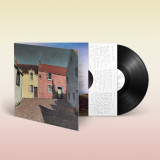
- A1: I Know That It's Like This (Baby) 04:32
- A2: A Bad Wind Blows In My Heart Pt. 3 03:57
- A3: If Tomorrow Starts Without Me 03:06
- A4: We Don't Need Them 04:55
- A5: I Hold Something In My Hand 03:04
- A6: This Can't Go On 04:30
- B1: …And The Sea… 02:10
- B2: Nothing To Be Done 04:02
- B3: It's Today Again 03:33
- B4: Christinha 04:04
- B5: How Beautiful I Am 04:18
- B6: Thankfully For Anthony 04:54
- B7: Nos Da 01:37
13
également disponible
Blue Vinyl[24,58 €]
Bill Ryder-Jones veröffentlicht sein 5. Studioalbum "Iechy Da" am 12. Januar 2024!
Iechyd Da ist das fünfte Studioalbum von Bill Ryder Jones. Es wurde über die letzten Jahren in Bills West Kirby Yawn Studio aufgenommen. Bill setzt sich auf Iechyd Da mit verlorener Liebe, Trauer und seinen persönlichen Dämonen auseinander. Die 13 Tracks reichen von dem zarten Gal Costa-Sampling "I Know That It's Like This (Baby)" über die ausgedehnte Downbeat-Soundlandschaft von "...And The Sea..." bis hin zu der gewaltigen orchestralen Explosion von "This Can't Go On". Umhüllt von Streicherarrangements und überschwänglichen Gesangseinlagen des Chors der Bidston Avenue Primary School ist dies ein Album, das ein überwältigendes Gefühl der Hoffnung ausstrahlt, aber auch die Entschlossenheit, dass die Dinge besser werden können und werden.
Durch seine Liebe zur walisischen Musik (u.a. Gorky's Zygotic Mynci & Super Furry Animals) und die Nähe der Halbinsel The Wirral zur walisischen Grenze war Bill bereits ein Cambrophile (A lover of Wales or Welsh culture). Doch seine Leidenschaft für Cymru vertiefte sich, als er die verlorenen walisischen Wurzeln seiner Familie entdeckte, was ihn dazu veranlasste, Walisischunterricht zu nehmen und schließlich auch zum Albumtitel führte. Wörtlich übersetzt bedeutet "iechyd da" so viel wie "gute Gesundheit" und ist der walisische Ausdruck, mit dem man auf etwas anstößt.
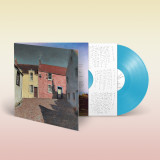
- A1: I Know That It's Like This (Baby) 04:32
- A2: A Bad Wind Blows In My Heart Pt. 3 03:57
- A3: If Tomorrow Starts Without Me 03:06
- A4: We Don't Need Them 04:55
- A5: I Hold Something In My Hand 03:04
- A6: This Can't Go On 04:30
- B1: …And The Sea… 02:10
- B2: Nothing To Be Done 04:02
- B3: It's Today Again 03:33
- B4: Christinha 04:04
- B5: How Beautiful I Am 04:18
- B6: Thankfully For Anthony 04:54
- B7: Nos Da 01:37
13
également disponible
Black Vinyl[23,74 €]
Bill Ryder-Jones veröffentlicht sein 5. Studioalbum "Iechy Da" am 12. Januar 2024!
Iechyd Da ist das fünfte Studioalbum von Bill Ryder Jones. Es wurde über die letzten Jahren in Bills West Kirby Yawn Studio aufgenommen. Bill setzt sich auf Iechyd Da mit verlorener Liebe, Trauer und seinen persönlichen Dämonen auseinander. Die 13 Tracks reichen von dem zarten Gal Costa-Sampling "I Know That It's Like This (Baby)" über die ausgedehnte Downbeat-Soundlandschaft von "...And The Sea..." bis hin zu der gewaltigen orchestralen Explosion von "This Can't Go On". Umhüllt von Streicherarrangements und überschwänglichen Gesangseinlagen des Chors der Bidston Avenue Primary School ist dies ein Album, das ein überwältigendes Gefühl der Hoffnung ausstrahlt, aber auch die Entschlossenheit, dass die Dinge besser werden können und werden.
Durch seine Liebe zur walisischen Musik (u.a. Gorky's Zygotic Mynci & Super Furry Animals) und die Nähe der Halbinsel The Wirral zur walisischen Grenze war Bill bereits ein Cambrophile (A lover of Wales or Welsh culture). Doch seine Leidenschaft für Cymru vertiefte sich, als er die verlorenen walisischen Wurzeln seiner Familie entdeckte, was ihn dazu veranlasste, Walisischunterricht zu nehmen und schließlich auch zum Albumtitel führte. Wörtlich übersetzt bedeutet "iechyd da" so viel wie "gute Gesundheit" und ist der walisische Ausdruck, mit dem man auf etwas anstößt.

14
EASYGOING PORTRAIT OF DOWN-HOME SOUL SINGER COMING INTO HIS OWN AND ESTABLISHING AN INDELIBLE BOND BETWEEN PERFORMER AND AUDIENCE
1/4" / 15 IPS / Dolby A analogue master to DSD 64 to analogue console to lathe
On par with the most treasured concert albums of the 60s and 70s, Bill Withers' transformative Live at Carnegie Hall is a forgotten classic – an easygoing portrait of a down-home soul artist coming into his own in front of an audience eager to share every moment of his brilliance. Soothing with subtlety, charming with calmness, and healing with a vocal timbre as relaxing as his grooves, Withers uses the stage to expand the range of favorites and engage in dialog with the crowd. Distinguished with sonics that restore the performances' balance and improve the sound-staging, this reissue takes you inside the venue.
Moreover, aspects that really make this concert document unique – the energetic crowd, Withers and his band's willingness to extend arrangements, and the undeniable communicative bond between the performer and his fans – are brought into fuller relief. While most live albums give you the sense of what transpired, our reissue allows it to seem that what you're hearing and sensing is happening right now, in the moment. You are as much a participant as listener. For this reason and more, Live at Carnegie Hall ranks with James Brown's Live at the Apollo and B.B. King's Live at the Regal. No small claims, but the proof is in the grooves.
The antithesis of the sweaty R&B shouter that prowls the edge of stages, Withers deals in mellowness and vulnerability, qualities that come to fore. The songs here span soul, blues, and folk and often times, contain elements of all three styles. Live at Carnegie Hall also deals with serious subject matter with unflinching honesty and simple directness. Companionship, poverty, war, maturity, family, and love all crop up within Withers' tunes, yet the messages are never overly cumbersome or preachy. Credit goes to his easygoing style and relatable lyrics, not to mention a tight-as-a-vice band that on this night is simply "on."
"One more time?" Withers asks in response to a request for another stanza during "Use Me," and like the snap of fingers, his musicians are right back on cue, the crowd clapping along on every beat. This classic, as well as the instantly familiar "Ain't No Sunshine," poignant "Grandma's Hands," and all-time favorite "Lean On Me" are delivered with utmost soulfulness, passion, and electricity. Few, if any, live albums demonstrate such a bond between the crowd and artist as Live at Carnegie Hall. You'll definitely want to be there.

- Alpha Futura
- Hell Awaits
- Jordan 3S
- The Ballad Of Billy®
- Know My Name (Ft. Skam2?)
- Canarsie Koresh
- Prophets Of Doom (Ft. Sick Jacken & Immortal Technique)
- The Mandalorian
- Supreme Magnetic (Ft. Vinnie Paz, Lord Goat & Dj Eclipse)
- Higher Power (Ft. Uncle Howie)
- Smarten Up (Ft. Nems)
- Once Upon A Time In Canarsie (Ft. Lord Goat)
- Yallah Yallah (Ft. Ot The Real & Slaine)
- This Is Anger (Ft. Dj Js-1)
- Root For The Villain (Ft. Kool G Rap & Vinnie Paz)
- Sunday At The Tunnel
- Leviathan (Ft. Tragedy Khadafi)
- Chubb Rock (Ft. Lord Goat & Q-Unique)
- Casino (Ft. Tragedy Khadafi & Ransom)
- Willis (Ft. Omb Jaydee, Rittz & Nems)
- The Wrong Place
- Time To Go
- Omega Therion
23
Taking the 2nd half of 2022 to start setting this album up, BILL released singles like "Once Upon A Time In Canarsie", "Leviathan", "Smarten Up", "Root For The Villain", and "Time To Go". The album boasts features from the likes of Vinnie Paz, Kool G Rap, Rittz, Immortal Technique, Nems, Sick Jacken, Slaine, Lord Goat, Tragedy Khadafi, OT The Real, Q-Unique and more.


Big Bill Broonzy was a trailblazing Chicago bluesman steeped in southern traditions, whose songs stretched genres from folk music to hokum and ragtime to country These seminal recordings from his early years highlight his sublime guitar playing and ice cool vocal style which inspired a generation of legendary blues and rock musicians. Includes many of his early masterpieces including 'Saturday Night Rub', 'Brownskin Shuffle' and 'Long Tall Mama' from his first creative wave during the late 1920s/early 1930s. Lovingly remastered using pioneering restoration techniques, this Rough Guide highlights his diverse repertoire from ragtime and hokum to traditional blues and other novelty songs.

Das Tony Bennett Bill Evans Album (1975) bringt zwei Legenden der modernen Musik zusammen. Nur mit Gesang und Klavier, ohne weitere Musiker, wählten die beiden Künstler die Songs aus und erarbeiteten die Arrangements für das erste von zwei gemeinsamen Alben
Im Juni 1975 taten sie sich zusammen. Bennett und Evans wählten die Melodien aus, arbeiteten die Arrangements halb spontan aus und wählten die endgültigen Takes aus, die verwendet werden sollten. Die Musik ist eine der herzlichsten und menschlichsten in diesem selten betretenen Bereich, in dem Jazz und Popmusik verschmelzen.-

Unique blend of rockabilly, R&B, and garage rock from deranged spirit of psychobilly madness

Get ready for psych funk and a cover from far left field. PP12005 has all the makings of an instant classic.
Enter the dark opium den — a release reminiscent of those pioneers of funk, early Parliament and Funkadelic. These found tracks by Bruce Marshall and Bill Thomas were likely recorded around the time of “Osmium” and “Maggot Brain” — in fact, the artists featured here may have been directly influenced by the movement as it was happening, making these discoveries remarkable entries into the history of psych funk.
Where to begin with Bruce Marshall’s Gimme My Wife on the A side? Try to imagine a psychedelic football game, with driving wah wah funk as the halftime show. The frenetic instrumentation is guided by an infectious guitar hook, coupled with a loose chorus of voices and whistle blows. They all come together at the end to chant what sounds like “parrrr-tay,” a foreshadowing of that refrain the Beastie Boys would popularize.
For our EP-exclusive track on the A side, we present to you a haunting cover of the Ides of March song, Vehicle. Bruce Marshall’s version is much more sparse — a psychedelic dirge that’s almost unrecognizable compared to the original. Dark, simmering and sensual, it explodes into a soul-splitting vocal wail as the track reaches its end.
Things get a little more solemn on side B with an instant classic by Bill Thomas, Ease My Mind Pt. 1. A surprising dirge of fuzzy guitar leads into a chorus that sings, like a mantra, “I have seen much trouble...ease my mind.” Things morph into tight horns backed by some prominent organ — in fact, this is one of the tightest horn sections on any of our releases to date.
For the exclusive EP B-side, Bill Thomas and band pick up right where they left off with Ease My Mind Pt. 2 — an extended instrumental of “Ease My Mind Pt. 1.” It kicks off with a drum solo, then throws you into some horn-driven funk, with guitars holding down the background. Sax and organ take turns on the lead in this hot and delicious track that’s ready for your enjoyment.
Funk is alive and well on our fifth release — adding a new dimension to the amazing body of psych funk that’s already out there. Who knows what could have happened had these cuts reached ears during the 70s — but the time for the Marshall-Thomas ship to land is now. Put this on to get your next party going, and it’ll do most of the work for you.

Enter the dark opium den that is PP005 — a release reminiscent of those pioneers of funk, Parliament and Funkadelic. These found tracks by Bruce Marshall and Bill Thomas were likely recorded around the time of “Osmium” and “Maggot Brain” — in fact, the artists featured here may have been directly influenced by the movement as it was happening, making these discoveries remarkable entries into the history of psych funk.
Where to begin with Bruce Marshall’s Gimme My Wife on the A side? Try to imagine a psychedelic football game, with driving wah wah funk as the halftime show. The frenetic instrumentation is guided by an infectious guitar hook, coupled with a loose chorus of voices and whistle blows. They all come together at the end to chant what sounds like “parrrr-tay,” a foreshadowing of that refrain the Beastie Boys would popularize.
Things get a little more solemn on side B with an instant classic by Bill Thomas, Ease My Mind Pt. 1. A surprising dirge of fuzzy guitar leads into a chorus that sings, like a mantra, “I have seen much trouble...ease my mind.” Things morph into tight horns backed by some prominent organ — in fact, this is one of the tightest horn sections on any of our releases to date.
Funk is alive and well on our fifth release — adding a new dimension to the amazing body of psych funk that’s already out there. Who knows what could have happened had these cuts reached ears during the 70s — but the time for the Marshall-Thomas ship to land is now. Put this on to get your next party going, and it’ll do most of the work for you. Get this special, split 7” on limited-run vinyl while you can.


8
Bill Evans and Jim Hall had first recorded together in July of 1959, during the making of John Lewis’ LP Odds Against Tomorrow, and the two musicians also participated on Gunther Schuller’s Jazz Abstractions (recorded in December of 1960). However, those were big band albums and had no space at all for any real interaction between the pianist and guitarist. Undercurrent, presenting them as a duet, was their third studio encounter and one of their most rewarding collaborations. 180-GRAM BLUE COLORED VINYL - THE COMPLETE ALBUM + 2 BONUS TRACKS

180g virgin vinyl limited edition, the complete album + 1 bonus track Big Bill Broonzy was among the finest and most influential of the pre-World War II Chicago bluesmen, bringing the blues to new levels of sophistication. A finger picker and singer without compare, Broonzy combined ragtime and hokum blues with elements of folk, country, and urban sounds in his songs. Big Bill's Blues consists of ten solo recordings made in February 1956 at Philips' studios in Baarn, Holland. Includes the classic "Key to the Highway.
8
Bill Seaman is a musician, media artist and media researcher int the field of interactive and generative music (he calls this recombinant music). He has been working on a series of works that combine elements of ambient, noise, experimental, new classical and more. He describes these works as being alt.genre. He has recorded five solo albums (on Eilean Rec. and Fluid Audio) and a numerous of collaborative albums with some music artists such as Craig Tattersall, John Supko, Offthesky, Rutger Zuydervelt, Stephen Vitiello, between others. Seaman has also often created video works to accompany a number of his solo and collaborative pieces. Seaman is self-taught as a musician and composer, and is a Professor in the Music Department at Duke as well as Art, Arth History & Visual Studies.
Since releasing a track on the RND034873349921 compilation on the Pause_2 label in 2001, Tim Diagram has released over thirty-five albums as a solo artist or as part of collaboration projects. he has appeared on many well-respected labels, such as; False Industries, Static Caravan, Nomadic Kids Republic, Fluid Audio, Time Released Sound, Chemical Tapes – to name but a few. Tim runs the Handstitched* label in the UK which specialises in bespoke, handmade packaging for the more electro-acoustic and drone-like elements of his and other artists work, and he is involved in audio-visual commissions, including art gallery installations and music videos for a global clothing brand. As well as Maps and Diagrams, Tim also records music under the Atlantis name and works in collaboration with Genoveva Kachurkova as Bluhm, with Charles Sage as Hessien, alongside Rob Lyon as Somme & with Arbee under the name Emba.
Stephen Spera is a New York based artist working in sound, photography, and plastic arts. His works have been released on some labels such as Handstitched, Tesselate, and Editions Vaché. In 2020 he began a series of collaborations with Bill Seaman, as the two artists admired each other’s work and found much in common. Their work together was graced with an ease which kept them composing an album- “Architectures of Light” -which was released on Britain’s Handstitched label. The project was very well-received. The two stay in touch and kept working, joined now by Tim Martin whose work as Maps and Diagrams was long-admired by Stephen and Bill. They too found instant understanding of each other’s work, and “ The World was turning Before” is the result of their collaboration. The three artists possess an almost uncanny communication that enables them to work whilst still enjoying each other’s individual voice, and this trio has come together so well that, in Spera’s words, “We no longer know who played what…”

8
Bill Evans spent late 1961 and most of 1962 participating on a variety of recording projects which featured him playing either solo or along with musicians with whom he rarely worked. Empathy was the first of only two albums Evans recorded with drummer Shelly Manne (their second collaboration, A Simple Matter of Conviction, was taped in 1966). It features the pianist and drummer in a trio format, with Monty Budwigon bass, and presents an unusual program, with four out of six tunes Evans would never record again in any format.

8
This release presents the very best performances from the legendary 1961 Village Vanguard sets by the Bill Evans Trio. It would be the last recording by this formation of the group, with Scott LaFaro on bass, and Paul Motian on drums, as LaFaro died ten days later in a car crash, on July 6, 1961, at the age of 25. Evans, who loved LaFaro's playing, would take a long hiatus before forming a new trio.


