vorbestellen08.05.2026
erscheint voraussichtlich am 08.05.2026
26,01 €
erscheint voraussichtlich am 08.05.2026

HOUSE OF COMMANDO, produziert von Oli Rüger & Tobi Wehner und gemastered von Howie Weinberg (bekannt für seine Arbeit mit Nirvana und U2), knüpft nahtlos an das erfolgreiche Debütalbum RED LIGHT HABITS von BIRD'S VIEW an.
Die deutschen Alternative-Rocker BIRD'S VIEW veröffentlichen ihr mit Spannung erwartetes zweites Studioalbum "House of Commando". Der Sound ist dabei eine einzigartige Kombination aus dem Punk von REFUSED, der Intensität von RED FANG und der Atmosphäre der FOO FIGHTERS.
Nachdem BIRD'S VIEW mit ihrem Debüt einen ersten kleinen Erfolg verbuchen konnten und mittlerweile von Wizzard Promotion vertreten werden, haben sie seit dem Release unter anderem mit SOULFLY, SKID ROW & GREEN LUNG getourt. Mit HOUSE OF COMMANDO machen sie nun einen weiteren Schritt in Richtung Rock-Olymp.
Die 11 neuen Tracks auf HOUSE OF COMMANDO hinterlassen bereits beim ersten Hören einen nachhaltigen Eindruck. Zu den Highlights des Albums gehören Stücke wie "Vienna", "Pin Drop“ und "Come Back Home"
erscheint voraussichtlich am 20.09.2024

Harte Gitarren gepaart mit emotionalen Gesangsdarbietungen und pointierter Melancholie: Mit "Red Light Habits" wandeln die aufstrebenden Jungs von BIRD'S VIEW auf den Spuren von Bands wie Foo Fighters und Turnstile.
Das Quartett beeindruckt mit einem Debüt von höchster Qualität, das Alternative-Rock-Liebhaber rund um den Globus begeistern wird.
"Red Light Habits" ist das Debüt der neuen deutschen Überflieger BIRD'S VIEW. Die vierköpfige Rockband ist eine messerscharfe Truppe junger, fesselnder Musiker, die darauf brennt, klangliche und ideologische Grenzen einzureißen! "Red Light Habits" enthält 13 frische Alternative-Rock-Songs bei denen man heraushören kann, wer die Jungs musikalisch geprägt hat. BIRD'S VIEW ist aber auch eine Band, die es trotzdem verstanden hat, dabei unverkennbar zu klingen und ihren ganz eigenen Style in ihr Werk einfließen zu lassen.
Dieses Debutalbum wird mit Sicherheit einigen Staub aufwirbeln und sollte in keiner Plattensammlung fehlen!
erscheint voraussichtlich am 19.05.2023

Harte Gitarren gepaart mit emotionalen Gesangsdarbietungen und pointierter Melancholie: Mit "Red Light Habits" wandeln die aufstrebenden Jungs von BIRD'S VIEW auf den Spuren von Bands wie Foo Fighters und Turnstile.
Das Quartett beeindruckt mit einem Debüt von höchster Qualität, das Alternative-Rock-Liebhaber rund um den Globus begeistern wird.
"Red Light Habits" ist das Debüt der neuen deutschen Überflieger BIRD'S VIEW. Die vierköpfige Rockband ist eine messerscharfe Truppe junger, fesselnder Musiker, die darauf brennt, klangliche und ideologische Grenzen einzureißen! "Red Light Habits" enthält 13 frische Alternative-Rock-Songs bei denen man heraushören kann, wer die Jungs musikalisch geprägt hat. BIRD'S VIEW ist aber auch eine Band, die es trotzdem verstanden hat, dabei unverkennbar zu klingen und ihren ganz eigenen Style in ihr Werk einfließen zu lassen.
Dieses Debutalbum wird mit Sicherheit einigen Staub aufwirbeln und sollte in keiner Plattensammlung fehlen!
erscheint voraussichtlich am 19.05.2023

Shaka is back on Local Talk with a follow-up to "The Riverwalk EP" released back in 2020.
The Bird's Eye View continues on the same deep, soulful and uplifting house tip with waves of ear-pleasing music.
There's a genuine swing to the opening track Short Circuit that is infectious and Shaka really gets to work on those keys.
It brings back memories of those golden years of house music when every track Strictly Rhythm classic was a classic...
The Birds Eye View offers a deeper and jazzier spin on the lush and spiritual house music Shaka flirts with.
If delightfully playful house music is your secret crush then look no further.
Bestelle jetzt und wir bestellen den Artikel für dich beim Lieferanten.

2025 Repress
Midnight In Tokyo 2, the second installment to the compilation series that rounds up hidden gems by Japanese artists that's perfect for listening at night in Tokyo, is here. This time the collection brings together some tasty electric jazz fusion from the '80s , compiled by Dubby, the man behind the online record store Ondas.
The compilation begins with "Hikobae," a dark and slow cosmic jazz by saxophonist Genji Sawai, followed by "Danza Lucumi," an odd Caribbean-style jam by Today's Latin Project, a band fronted by Tadaaki Misago of Tokyo Cuban Boys, with arrangements by Yasuaki Shimizu. "On The Coast" is a soulful and mellow vocal track arranged by Ryuichi Sakamoto, from guitarist Shigeru Suzuki's album White Heat, and fusion boogie cut "In The Hot City" is by Mr. Theodore, which was a one-off project by a mysterious artist.
The melancholic soul jazz number "So Long America" is the title track from the album Yasunori Soryo released in '82, following a stint in America with the band Brown Rice. "Twisty" is a tropical reggae tune from the album Samba Kathy, an underrated classic by Jugando which was released on Trash, a sublabel of one of Japan's finest jazz labels, Trio. "Samarkand" is an electric Latin jazz jam that sounds like something Miles Davis and Santana could have played on, performed by a Latin funk band from Fussa. "Imagery" is a primal African fusion track by Katsutoshi Morizono, a member of the prog rock band Yoninbayashi.
"Windmill" is the most acoustic sounding tune on this compilation, a breezy Brazilian affair with a Hermeto Pascoal feel. "Mystery Of Asian Port" is by the band Parachute, which consisted of Japa-nese fusion giants like Akira Inoue, Tatsuo Hayashi and Masaki Matsubara. The cosmic jazz record sounds like something Daniele Baldelli would play in his sets. "Bay Sky Provincetown 1977" is a classic Japanese fusion tune by guitarist Yuji Toriyama.
The set also features the mellow but danceable "Heatwave" by keyboardist Keiichi Oku, featuring a female vocalist (which some have identified as Rie Ida), and last but not least, closing out the 13 track compilation is "Day Dream At The Bob's Beach," a wonderful urban fusion with a beautiful vibraphone melody, from the Japanese fusion classic album that was a one-off project by studio musicians
Bestelle jetzt und wir bestellen den Artikel für dich beim Lieferanten.

Wendy Eisenberg hat die letzten zehn Jahre als feste Größe der Independent-Musikszene und als Künstlerin von inspirierender Vielseitigkeit verbracht. Als Singer-Songwriterin, Improvisatorin und virtuose Gitarristin sind die Koordinaten ihrer Kunst ständig im Wandel, von Art-Rock über Jazz bis hin zu mitreißender freier Improvisation und ausdrucksstarker Folk-Musik. Mit Höhepunkten wie dem 2020 erschienenen Album Auto" und dem 2024 Free-Jazz-Album Viewfinder" hat sie sich einen Namen als ambitionierte Künstlerin gemacht. Nachdem sie die letzten fünf Jahre damit verbracht hat, in verschiedenen Bands, Genres und kreativen Herausforderungen zu experimentieren, und nach einer Phase der Selbstkonfrontation, die sie mit einem persönlichen Exorzismus vergleicht, hat Eisenberg einen Meilenstein erreicht. Die poetischen und formal gewagten Folksongs von Wendy Eisenberg sind ihre bisher klarste Vision. Die Songs begannen 2020 Gestalt anzunehmen, als Eisenberg aus West-Massachusetts wegzog, wo sie nach ihrem Studium am New England Conservatory in Boston einige Jahre gelebt hatte, und nach Brooklyn zog. Aus Sehnsucht nach der ländlichen Atmosphäre ihres früheren Zuhauses fühlte sich Eisenberg zu den warmen Klängen von Country und Folk hingezogen. Die Songs sind echte Folk-Lieder", sagt Eisenberg über ihr Album. Bei der Produktion geht es weniger darum, zu sehen, was die Gitarre leisten kann, sondern vielmehr darum, die inhärente Fremdartigkeit der Sprachen zu akzeptieren, die sie seit anderthalb Jahrhunderten spricht." Auf Wendy Eisenberg schafft die Künstlerin ihr eigenes Paradigma mit einem eng verbundenen Kreis von langjährigen Freunden und Mitwirkenden, darunter Bassist Trevor Dunn, Schlagzeuger Ryan Sawyer und Co-Produzentin Mari Rubio (more eaze), die für Pedal Steel, Synthesizer und Streicharrangements zuständig war. Die Aufnahmen fanden oft in Eisenbergs Haus statt und verliehen jeder Note eine wunderschöne Ensemble-Textur. Endlich war ich von Menschen umgeben, die mich akzeptierten", sagt Eisenberg. Viele der Songs auf diesem Album sind in diesem neuen Gefühl entstanden. Ich wollte, dass es unglaublich beruhigend wirkt, da es einige massive Veränderungen im Selbstverständnis und Selbstwertgefühl beschreibt. Es geht um Erleichterung."
Bei uns am Lager und sofort versandfertig

Balmat 17 marks both a return and a new frontier. It is the second album on the label from Patricia Wolf, whose 2022 album See-Through is one of the most beloved in Balmat’s catalog; it also marks the first time that Wolf has turned her hand to a film soundtrack. The results are every bit as magical as fans of the Portland, Oregon, composer’s music might expect.
Hrafnamynd—Icelandic for “raven film”—is a new feature-length documentary by experimental filmmaker Edward Pack Davee. Shot on a mix of film and digital formats, and incorporating his father’s Ektachrome slides from the 1970s, the autobiographical film works on multiple levels at once: a reminiscence of his childhood in Iceland, an exploration of landscape and folklore, and a documentary study of the island nation’s ravens—including a talking raven named Krummi.
Wolf is the perfect artist to score such an unusual film. Mixing ambient music and field recording—including extensive experience documenting bird song—Wolf brings an unusually empathic perspective to her music. In the context of Hrafnamynd, her airy melodies, pensive atmospheres, and vivid textures intuitively complement the film’s grainy film stock and blown-out colors. Friends for years, the two artists further bonded when Wolf asked Pack to film music videos for her songs “Woodland Encounter” (from See-Through) and “The Culmination Of” (from I'll Look For You In Others). Pack used Wolf’s previously recorded music as placeholders as he began assembling a rough cut of the film, which made her a natural choice to help him complete his idiosyncratic vision with an all-new, bespoke score.
But Wolf’s soundtrack also indisputably stands alone as a full-length album. Largely created using the UDO Super 6 synthesizer, it features a carefully distilled palette of warm, string-like pads and darkly glistening mallets, rounded out with the very occasional introduction of nylon string guitar. Musically and stylistically, the album’s 11 tracks represent both a continuation of the ruminative sound of See-Through and also an extension into new expressive modes. Few musicians, ambient or otherwise, are as skilled at balancing melody with atmosphere, or at finding ways to eke fresh at finding ways to eke fresh, surprising sounds out of an intentionally reduced toolkit. Meditative, immersive, and emotionally generous Wolf’s Hrafnamynd soundtrack evokes a range of ambient classics from decades past while confidently marking out its own verdant patch of ground.
Artist’s Statement:
Edward and I have been friends for years, but we really started to get to know one another better after I hired him to make music videos for my songs “Woodland Encounter” and “The Culmination Of.” For those projects we got to spend a lot of time hiking in various locations around the Pacific Northwest with his camera, very nice lenses, and tripod. Keeping quiet, hidden, and vigilant we searched for wildlife, good light on the trees, meadows, lakes, rivers, and skies. Edward was already an appreciator of my music and I was already in awe of his filmmaking talents so it felt like a great fit. Although we work in different areas of art our styles compliment one another. We both tend toward slow and careful pacing, with a focus on emotion and introspective reflections on life and the landscapes around us. For this reason, Iknew that I could trust Edward to create videos for my music. We saw so many beautiful and unexpected things on our filming days, but I was moved to tears once I saw how magnificent and poetic it all was. His video work from the cinematography, to the editing, and color correction helped bring my inner vision to life.
A few months after that, Edward surprised me with an invitation to work on the soundtrack for his new film, Hrafnamynd. I enthusiastically said yes. I had always wanted to work on a film, and I knew that his filmmaking style would be inspiring to write music for. I had recently acquired an UDO Super 6 synthesizer but hadn't used it much. I decided that this would be the synth that I'd use for the film. It has the ability to sound very modern, but can also sound so warm and fuzzy, like a synth from the 1970s. It turned out to be the perfect instrument for this project as the film itself straddles time from the ’70s to today.
When Edward sent me the rough cut of the film, he used placeholder music to help give me an idea of the emotion and energy that he was hoping to achieve for each scene. For many of the scenes, Edward used music from my albums as temporary tracks. This told me that he trusted my work and style and therefore I should just trust my intuition with how to proceed. I wanted to make sure that everything that I made was a direct reflection of what was happening on screen, a mirror of its emotion and energy so people could really lock into the film psychologically. This process took my composing to unexpected places—like being led by a strange cat or a raven that seemed to have something to show me. I found that the approach made the music so much more dynamic than my usual style. I really enjoyed being influenced by the action and dialog on the screen. Thankfully, Edward was very happy with the work. I made sure to handle this project with the utmost care because this is about his life and his family, and an exploration of the experiences that made him an artist and filmmaker. While watching the film many times over, I found myself thinking about my own family and my early memories with them and how the place where I grew up has influenced who I have become. I found that his film invites the viewer to reflect on their own lives in a similar way. I hope that this music and film can guide others to contemplate on the history of their beingness and the people and places that shaped them.
Another aspect to this project is the splendor and wonder of Iceland itself. I had the opportunity to visit Iceland for the first time in 2023. I got to play a show there for the Extreme Chill Festival and met many friendly and brilliant Icelanders. I also got to collect field recordings that I used in the film. It's a fascinating place and culture that easily captures the hearts and imaginations of anyone who visits. Whether you spend your time in the city immersed in its impressive arts scene, or venture out into the wilderness to behold its wondrous landscape, it will leave a lasting impression. The soundtrack is also a love letter to Iceland itself.
Bei uns am Lager und sofort versandfertig

Repress! Limited to 100 Copies
Garage Hermétique, returns with a new EP of music from Views, presenting the ‘Kyoto Love’ EP. An alias of Atilla Fidan - producer & live performer, founder of the Berlin label Tape Archive, and also known for releases as Waitress/ASWA - each of the four tracks hits a naturalistic groove driven by vintage Chicago-esque rhythms and warm, acidic tones.
On opening and title-track ‘Kyoto Love’, charming bird song flourishes into a rubbery bassline. ‘Go Well (Part 2)’ embarks on a similar tip, before loosening up into a soaring, somewhat new-age atmosphere, while never sacrificing it’s watertight drums.
On the flip, ‘Kimura’ and ‘Systems (Last Mix)’ move in deeper directions still; The former is a sparkling, detailed cut that rolls out nocturnal dance floor depth, while the latter rounds off the release with transcendent choral breaks.
Bei uns am Lager und sofort versandfertig
Brian d’Souza, better known as Auntie Flo, delivers his brand-new fourth studio album, ‘In My Dreams (I’m A Bird and I’m Free)’, set for release on 21st November. The album, a rich blend of electronic music, live instrumentation, and global influences features collaborations with the likes of Nicola Cruz, Joshua Idehen, Shingai Shoniwa, Yohan Kebede (Kokoroko) and even his Goan Auntie Florie, where the Auntie Flo moniker is derived from. Each track on the album transports you to a different location: Goa, Istanbul, Nairobi, Mexico City, Waiheke Island, Rio De Janeiro, Havana, Seoul are all destinations to nest in across its ten tracks. It will be available in both digital and vinyl formats on his own label, A State of Flo Records.
Auntie Flo’s latest body of work is the culmination of a five-year journey that has seen d’Souza expand both personally and musically. Known for his unique ability to fuse electronic sounds with rhythms and influences from across the globe, d’Souza takes his craft to new heights in this album, offering listeners an intimate look into the experiences, places, and stories that have shaped his artistic evolution. The groundbreaking DJ and producer presents an expansive, deeply personal exploration of global sounds, collaboration, and migration.
Following the success of the Afro-disco single Green City—a dynamic tribute to the legendary Fela Kuti and Luke Una’s ‘track of the year’—In My Dreams (I’m A Bird and I’m Free) ventures further into uncharted musical territory. The album, however, is more than just a continuation of Auntie Flo’s signature sound. It is a reflection of d’Souza’s life and career, capturing his exploration of identity, migration, and cultural fusion. With tracks that draw inspiration from field recordings collected around the world, the album resonates with a profound sense of place and memory.
In My Dreams (I’m A Bird and I’m Free) is not only a reflection of d’Souza’s creative journey but also a commentary on migration—both human and musical. The album draws on the freedom of birds to migrate across borders as a metaphor for artistic and personal freedom, juxtaposed with the challenges that political barriers impose on human migration. As d’Souza explains, “Birds have the freedom to migrate wherever they choose, while humans face constant barriers”.
A State of Flo supports Earth Percent. 10% of the revenue generated from this release will be paid to environmental charities.
Bei uns am Lager und sofort versandfertig

A necessary agitator in the city, Bruno Trigo Gonçalves signs, while Phoebe, some of the most desirable sound infusions of the moment. The founder of Troublemaker Records, collaborator of Rádio Quântica, resident DJ at the “mina” party and also one of the faces behind the Planeta Manas space, has multiplied himself in live performances and brought a handful of news in recent years. “If I was simple in my mind, everything would be fine”, under Rotten Fresh label and “Love is Patient, Love is Kind, Love Will Make you Lose your Mind” by Sweet Love Making, a label that he jointly owns with Bleid , demonstrate Phoebe's bird's-eye view. This vision includes allusions to different languages of dance music, ambient music and other personal cosmologies that define him as an absolutely free producer.
- Horse Meat Disco “BOOOOOOM”
- Alison Swing - “hot tracks!”
- FYI Chris - “bangin - love all these tunes <3”
- Nikola Baytala - “JENSEN INTERCEPTOR REMIX !!! AFTERNOON BLAZE !!!HYPEZONE 5000 !!! BASS IN YOUR FACE !!! DISCOS EXTENDES KILLIN IT !!! SUBWOOFER ALERT !!! ”
- Turbojazz - “Supa cool EP!”
- Daniel ( Happy Endings) “Simply brilliant, every single track.”
- Nita Aviance“oof, Go is just naaaassssttttyyyy! very excited to bring this one to the floor. the whole EP goes off, really, FAB release. thank you for sending!”
Bei uns am Lager und sofort versandfertig

New Parisian label, Disques Messager, presents its new and second release. As its name suggests, the label has a simple leitmotiv: to place itself among the best messengers for rarities and sought-after gems of the international rare groove. A mission which began like fire last year with a 7inch reissue release including two Brazilian Disco bangers by Cristina Camargo. For this second efforts, the label doesn’t deviate from the artistic and quality path taken, however also making quite a U-turn, this time presenting 2 underrated kind of musical UFO, both from the French scene.
Not many info can be found about Yoanson & Karamie, two young artists from the French African diaspora, who randomly met with Nessim Saroussi and his label Ness Music in the late 80s. Nessim himself doesn’t remind much about the 2 guys, except that he quickly offered to produce them, which resulted in their only EP release, Kalimba (1988). Part of this EP, “African Leaders” is a stunning track melting Afro-Tropical percussions, Disco bass, Early-Electro beats and Leftfield vocals in a way that could remind of Doctor L or Arthur Russel productions.
On the contrary, Philippe de Lacroix-Herpin (aka Prof Jah Pinpin) has a long musical career started in the mid-70s and became a renowned saxophonist playing and recording for many famous French acts such as Jean-Jacques Goldman, Alain Chamfort, FFF, or even rap band NTM. In 1994, he moved definitely to the Reunion Island where he quickly launched the Prof Jah Pinpin 4tet, in his own words willing to play “free/funk/jazz/rock/tropical” music… Quite a vast and large musical tag, but which immediately make sense when listening to the surprising “The Final Bird” track. Only released as CD in 1996, this instrumental production has indeed a unique sound and flavor mixing all kinds of elements together (even samples of Weather Report).
Well as you can understand, words are not the best way to describe these 2 hidden treasures, so we strongly recommend the spinning to make your own view!
Bei uns am Lager und sofort versandfertig

A collection of unreleased themes and scores from 18 short animated films from the world famous Zagreb School Of Animated Film. Includes Oscar winning short cartoon Ersatz / Surogat by Dusan Vukotic (1961) and many other jazz, electronica and experimental scores by composer Tomislav Simovic. Coined by the famed film theorist Georges Sadoul at the 1959 Cannes Festival, The Zagreb School of Animated Film(s) or The Zagreb School of Animation, was defined as an artistic and philosophical world-view that set its mark on the history of animation in the 60's and 70's. The key feature of the Zagreb School (not educational facility in any kind), was commitment to stylization in contrast with the Disney-style canon of realistic animation. Among many composers that worked in Zagreb Film productions, the name of Tomislav Simovic (1931 - 2014) stands out. In his oeuvre of 300+ film scores (not counting compositions and arrangements for pop singers and jazz orchestras), many were made exclusively for Zagreb film documentaries, fiction shorts, features and animation. Simovic was particularly adept at writing music for cartoons. He skillfully synchronized movement and sound and mixed different musical genres, although, like his peers at the time, he leaned towards jazz. 'The Zagreb School of Animated Film (Original Soundtracks 1961-1982)' is compiled by Leri Ahel (Mutant Disco Radio Show) and Zeljko Luketic (Electronic Jugoton, Ex-Yu Electronica III). Master tapes were considered lost, now found and restored for this epic 2 x LP release celebrating Yugoslavia's animated art shorts. Double vinyl gatefold with extensive liner notes, photographs from the films and exclusive cover artwork by Dejan Krsic (NEP / Nova Evropa).
Bei uns am Lager und sofort versandfertig

Pauline Hogstrand's music – and Áhkká, in particular – is deeply inspired by both inner and outer influences, by the mystical as well as the rock-solid, by fictitious conversations and the queen mountain of Lappland (Áhkká).
Meaning "the old lady" in Lule Sámi, Áhkká is a barren, wild, exciting, beautiful, and sometimes grumpy mountain regardless of the season. Over the years, the mountain peaks, moss, birch forests, paths, streams, birds and people have shaped the surroundings, and the massif changed them in return - a reflection of a constantly ongoing development and emerging into greatness, surrounding and within. Speaking about why this mountain is so dear to her, the Denmark-based musician shares: "The nature there is harsh and raw and you can easily feel how it's so much bigger than you. Some people might feel overwhelmed or intimidated, but I feel that when acknowledging the greatness and the power nature consists, I can feel one with it. We come from the same source: I am a part of universe, and universe a part of me."
The music appearing on Áhkká (the album) simulates the dualities of ascent and descent, tension and release, inhale and exhale. Through implementing extended structures for analog and digital synthesis and processed acoustic instrumentations – strings, recorder, pipes and field recordings – Hogstrand expertly navigates these dual motions across two side-long pieces.
The opening "Herein" is slow, difficult, at times jagged and unwelcoming; just like climbing up a mountain early in the morning. Hogstrand shares that this piece is "about surrendering and letting go of control", especially during the last 10 minutes of the track which consist almost solely of an insistent and pulsating drone leading you to no man's land. "Magnitude" offers a release, glimpses of beauty, a softer, easier presence; descending, you're able to see beauty where previously you saw obstacles, perhaps the sun is up, breathtaking views in every direction... This piece is "about all that becomes available after letting go. Suddenly sight clears up in front of your eyes," shares the Swedish composer.
The magic ultimately lies in Hogstrand's perception and portrayal of contrasts – she does not view the two as opposites, but as one reality. "One greatness is not compromised by another greatness." In fact, the opposite is true – one without the other loses meaning, depth and context.
Bei uns am Lager und sofort versandfertig

Angelo is an LP, named after a car, featuring nine songs Brijean have crafted and carried with them through a period of profound change, loss, and relocation. It finds percussionist/singer Brijean Murphy and multi-instrumentalist/producer Doug Stuart processing the impossible the only way they know how: through rhythm and movement. The months surrounding the acclaimed release of Feelings, their full-length Ghostly International debut in 2021 which celebrated tender self-reflection and new possibilities, rang bittersweet with the absence of touring and the sudden passing of Murphy’s father and both of Stuart’s parents. In a haze of heartache, the duo left the
Bay Area to be near family, resetting in four cities in under two years. Their to-go rig became their traveling studio and these tracks, along with Angelo, became their few constants. Whereas Feelings formed over collaborative jams with friends, Angelo’s sessions presented Murphy and Stuart a chance to record at their most intimate, “to get us out of our grief and into our bodies,” says Murphy. They explored new moods and styles, reaching for effervescent dance tempos and technicolor backdrops, vibrant hues in contrast to their more somber human experiences. Angelo beams with positivity and creative renewal — a resourceful, collective answer to “what happens now?”
Angelo the car is a 1981 Toyota Celica they got off Craigslist during their first stint in Los Angeles, where Murphy and Stuart have since settled. “Such a bro-y, ‘80s dude car, it’s been super fun to drive around in a new town,” Murphy says. “He’s older than us, he’s a classic, he’s got a story.” It is a spiritual vehicle with a cinematic appeal, first dropping them off in an alleyway for the scene-setting intro, “Which Way To The Club.” The question is quickly resolved by “Take A Trip” as a cruising bassline mingles with crowd sounds, hand-claps, cuíca hiccups, whip-cracks, even a horse neigh. Brijean have found some club on this cross-dimensional trip — the kind of
imagined space or chamber within one’s self capable of “shifting a fraction of who you are,” says Murphy. They wrote the track with the simple intention to be “as free as we could be,” adds Stuart, likening the flip on the B section to a realm unlocked: ”What if the world changed completely? You open the door to a new room.”
Next is “Shy Guy,” a motivational anthem for the wallflowers among us. Murphy sets up the daydream: “We are in junior high, we’re on the dance floor, what’s going down, who is dancing, who is not, how are we gonna make them dance?” The narrator, the MC, hypes up the room as conga-driven rhythms bounce between languid synth and guitar lines. “Show me how to move...I feel something...I know you feel it too,” Murphy sings sweetly, calling back to the opening lines of Feelings, and this time the audience chants it back. It is easy to picture Brijean performing this one — something they only got to do a handful of times until more recently, opening shows for Khruangbin and Washed Out, an experience they found informative. Murphy explains, “It was inspiring to be out there and let loose more. To see how people can expand their expression on stage gave me more liberty with how I viewed my musicianship. My role for so long was to be a backup percussionist, so why would I ever leave the drums, you know? But then after playing all these runs, you see these artists and realize you can, you have permission.”
“Angelo” and “Ooo La La” deliver the danciest stretch in Brijean’s catalog to date. The title track adopts a deep house pulse replete with strings, hi-hats, and kicks. The latter opts for a funkier groove that foregoes verses in favor of warbled hums and extended breakdowns. What follows is perhaps the duo’s dreamiest run, a comedown initiated with the honey-hued interlude “Colors” drifting into “Where Do We Go?”, a tropicália reverie where Murphy contemplates the passage of time and space.
It all culminates in “Caldwell’s Way,” a fond farewell to their Bay Area community — “a part of my life that I knew couldn’t come back,” says Murphy. Above shimmering organ sounds, lush strings, and the birdcall of their former neighborhood, she wistfully articulates the uncertainty of moving on by remembering the characters dear to them. There’s the wisdom of their neighbor, Santos, who refused payment when helping them move out: “I’d rather have 100 friends than 100 dollars.” And the song’s namesake, Benjamin Caldwell Brown, a friend and club night cohort for many years. “I’m only miles away, maybe I’m just feeling lonely,” the line resigns to warm nostalgia, and “Nostalgia” runs the closing credits to this healing and transportive collection.
Bei uns am Lager und sofort versandfertig

Bei uns am Lager und sofort versandfertig

Fans and headz worldwide have been clamoring for a follow- up, but all Emapea wanted to do was just 'zone out.' And that's what happened, with the release of Emapea's twenty song album Zoning Out, Volume 1. Emapea's cuts are meant for the listener to get lost in - but they're not only for chilling, or when deep in thought, but also for getting in that crucial head-nod zone, like when the DJ drops the dopest beat. Expertly crafted and sequenced, the album presents a boom-bap journey that's dreamy and spacey while remaining tough and jazzy. "Check It Out" exemplifies the mood with its smooth drums, chiming keys, subtle sax riffs, and hip hop shout-outs. The vibe expands on "Motion", adding an exotic, worldly flavor to the seductively loping rhythm. And "Classy" features a smokey saloon piano melody that cruises smugly out of jeep-beat speakers.
erscheint voraussichtlich am 25.09.2026
Black Vinyl[27,94 €]
erscheint voraussichtlich am 31.07.2026
Hand Numbered Gold Clout Vinyl[29,62 €]
erscheint voraussichtlich am 31.07.2026

New edition; new cover, black vinyl
Winner of the 2026 César Award for Best Original Music, the Arco soundtrack is composed by Arnaud Toulon.
Blending sweeping orchestral passages with delicate electronic textures, Toulon’s music accompanies Arco’s temporal wanderings in an expansive sonic journey. An immersive, sensitive, and luminous soundtrack that echoes the great works of Joe Hisaishi while asserting a distinctly contemporary identity. Balancing poetry and dramatic tension, the score stands as a fully-fledged experience in its own right, emerging as a striking cinematic work.
Directed by Ugo Bienvenu, Arco won the César Award and the European Film Award for Best Animated Feature in 2026. It also won the Cristal for Best Feature Film at Annecy in 2025, and was presented at the 2025 Cannes Film Festival and selected for the 2026 Oscars.
Film:
Best Animated Film and Best Original Score at the 2026 César Awards / 2026 European Film Awards / 2025 Cristal Award for Best Feature Film at Annecy
Screened at the 2025 Cannes Film Festival
Nominated for the 2026 Academy Awards
Distributed in over 40 countries
VOD already available in France
Music:
Nearly 1.5 million streams
1,000 vinyl records sold
Over 177,000 views on the live session of “Clouds Away” by Arnaud Toulon x November Ultra
CD released in Japan in April 2026
International releases (movie)
2025
October: France + Belgium
December: Netherlands
2026
January: Portugal, Czech Republic, Spain, China
February: Latin America, Taiwan, Turkey, India
March: Greece, South Korea, Italy, Australia, Estonia, UK, Hungary, Romania
April: Latvia, Germany, Hong Kong, Bosnia & Herzegovina, Austria, Poland, Japan, Switzerland
August: Sweden
October: Lithuania
erscheint voraussichtlich am 07.07.2026
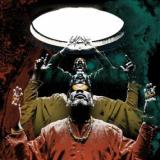
Time To Get On Board A New Black Universal Express.
With each new recording Anthony Joseph presents an imaginative, personal vision of contemporary black culture, and The Ark is yet another compelling album by the award-winning Trinidadian poet and musician. This second part of a sequence of two albums launched with last year’s Rowing Up River To Get Our Names Back, finds Joseph giving full vent to his desire to explore many thought-provoking themes. However, there is a specific thread running through the glorious offering of sounds.
”I was especially interested in the idea of using Afrofuturism as a means of using the future in order to correct the wrongs of the past,” explains Joseph. “And so a lot of lyrics reimage or imagine an alternate black history. At the same time there are elements of autobiography.” The aforesaid cultural phenomenon, a view of the black experience through the prism of science fiction and ancient Egypt and Africa, as mapped out by visionaries from music and literature such as Sun Ra, Parliament-Funkadelic and Octavia E. Butler, has previously inspired Joseph. His 2006 novel The African Origins Of UFOs was a multi-hued work, and the new music shows how Joseph
has, much like all significant artists, gone on to broaden his conceptual palette, creating beguiling new stories and images set to startling rhythms and tones. Tracks such as ‘James’, with its taut, crisp bass and dubbed-up brass, and ‘Transposition Of Space (Glissant)’, a potent evocation of the influential Martiniquan theorist set in a haze of jazz guitar and ambient synthesizers, are marvels of text-sound painting.
As for ‘Baron Samedi’, shaped by a languid, almost wounded guitar line and slow rise of horns that frame Joseph’s journey to the ‘mountain of fire, almost touching the sky’ it is an epic blend of commanding vocal delivery and dramatic sonic tapestry.
Joseph led the Spasm band in the early 2000s and recorded well-received albums such as Bird Head Son and Time, in which songs were largely based on spirituals or chants enhanced by improvisation. But his musical curiosity has naturally led to collaborations, and the new work is produced by Dave Okumu, the prodigiously talented guitarist-vocalist-composer known as the leader of Mercury Music Prize-nominated The Invisible, and who was also a member of the seminal band Jade Fox.
Having first performed together at a show curated by influential saxophonist-flautist Shabaka Hutchings at the storied Total Refreshment Centre In London during lockdown, Joseph and Okumu struck up a rapport that further developed when the former guested on he latter’s album. With the connection made Joseph knew Okumu was the ideal producer for this latest project, which has a freewheeling, almost black psychedelic thing. After sifting through demos and loops the guitarist made on pro-tools the poet started to live with the music. Many months later words began to take shape. Joseph then went into the studio with Okumu’s band and set about creating a magnum opus. Boasting a stellar cast such as vocalist Eska Mtungwazi, trumpeter Byron Wallen and keyboardist Nick Ramm, The Ark is a highly intricate musical mosaic framed by simmering funk grooves, wily jazz improvisation and haunting dub effects. Through the use of many genres the music has simply become its own genre.
The Ark can be perceived as a vessel or means of transport to new worlds, along the lines of Sun Ra’s Ark or Funkadelic’s Mothership, and the material it contains is a unique blend of who Anthony Joseph is and how he sees the world and society in these stimulating, challenging times. “It balances the personal with the universal in a much more vulnerable, accessible way than on previous albums,” Joseph explains.
“It has become less about a personal experience and more about a collective, communal experience in which the artist is conduit, messenger, urban griot.”
erscheint voraussichtlich am 22.05.2026
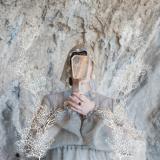
Oceanine, Jolanda Moletta’s third album and her first for Beacon Sound, is a powerful and ethereal statement of artistic community. Expanding on her previous work, each track represents a collaboration with a different female vocalist, with the foundational elements being generated entirely by her own voice. By turns haunting, enchanting, and inspiring, you won’t want to come up for air once you’ve been pulled under. Representing a
musical practice that is distinctly feminist, this is an album with a longer view in mind, to an age when the altars were to goddesses and women were centered as powerful beings representing the earth’s cycles of regeneration and renewal. Oceanine then, in all its beauty, can be viewed as an album of survival. It is deeply transportive, accessing something that lies within all of us. As the late, great Lithuanian folklorist and archaeologist Marija Gimbutas noted, “We must refocus our collective memory. The necessity for this has never been greater as we discover that the path of 'progress' is extinguishing the very conditions for life on earth.”
Jolanda Moletta is a multimedia artist and one-woman electronic choir. She creates wordless compositions through extended vocal techniques, integrating wearable-controlled live processing, alongside symbolic visuals. Moletta considers her performances to be a collective ritual and creates her Sonic & Visual Spells following the cycles of nature and the moon. Jolanda's 2022 critically acclaimed album Nine Spells was released on the Ambientologist label, followed by Night Caves on Whitelabrecs in 2025. Moletta’s artistic practice is a radical and spiritual journey through sound art, ritual, and the symbolic archaeology of the feminine.
Oceanine is inspired by sirens, water nymphs, and the timeless call of the sea. At its core lies Jolanda’s deep, lifelong connection to the Mediterranean Sea and to the ancient and modern myths and folklore that have emerged from its waters. Growing up by the Mar Ligure, Jolanda was surrounded by stories carried by salt, wind, and waves: legends of sirens, echoes of ancient voices, and the sea as both origin and oracle. This intimate relationship with the Mediterranean is not merely a backdrop, but a living source that shapes Oceanine’s emotional, symbolic, and sonic world.
Each track features a different female vocalist, creating a rich tapestry of voices, styles, and perspectives. This artistic choice not only broadens the album’s sonic palette, but also deepens its narrative core: celebrating the power, beauty, and mystique of feminine energy through myth, history, and sound.
The entire album is built exclusively from the human voice, processed and layered, yet always remaining voice, and nothing else. For each piece, Jolanda invited every vocalist involved to contribute a raw stem: a short, unedited melodic fragment of just a few seconds, inspired by the album’s themes. These intimate vocal seeds became the foundation of each track: the guest artists’ voices appear as brief, melodic stems, while the entire surrounding “orchestral” fabric is created solely from Jolanda’s own layered and processed voice. In this way, Jolanda’s voice becomes the Ocean itself, embracing, absorbing, and carrying the sirens’ calls within a vast, immersive soundscape. Every song is a unique expression of the feminine experience, revealing its depth, complexity, and emotional range, echoing the call of the sea and the many faces of the siren archetype.
The figure of the siren has transformed across centuries. In myths of Ancient Greece and Rome, sirens were hybrid beings, part woman, part bird, whose irresistible songs lured sailors to their doom. During the Middle Ages, the image shifted toward the half-woman, half-fish figure, often associated with temptation and danger. Historically, the voice of women has often been feared. Sirens were considered harbingers of misfortune not simply because they seduced or destroyed, but because they were powerful liminal beings.
In Ancient Greek, sirens functioned as psychopomps: figures who existed between worlds and guided souls, especially between life and death. Their songs were believed to carry forbidden knowledge, including prophetic insight and the ability to reveal truths about fate and the future. The danger of the sirens lay in what they revealed: knowledge that humans were not meant, or ready, to hear.
Oceanine confronts this legacy head-on. The voices heard throughout the album are not merely beautiful: they are dark and luminous, wild and enchanting, magical, soothing, dreamy, and at times fractured or distorted. They whisper, lament, beckon, and enchant. Like sirens, they skim the surface of the water and sink into its depths, hovering on the edge between tenderness and danger, vulnerability and power. They rise toward the sky, dissolve into mist, and return as echoes charged with raw, elemental emotion: voices that seduce, warn, mourn, and remember. They refuse to be reduced to decoration.
Alongside the album’s release in May, Oceanine will also unfold as a visual and performative work through a short art film. The film includes a live session recorded inside a sea cave facing the Mar Ligure, the very coastline where Jolanda spent her childhood, dreaming of sirens and listening to the sea as if it were speaking directly to her. This site-specific performance reconnects the music to its place of origin, allowing the voice to resonate within stone, water, and air, and transforming the cave into both a sanctuary and a threshold between myth and reality.
What if the sirens’ songs were considered dangerous because they carried another truth, an ancient truth long forgotten?
Oceanine embraces the idea that we are still deeply woven into myth. Though we may see ourselves as rational and modern beings, our world is saturated with ancient symbols and archetypes, often distorted, simplified, or stripped of their original meaning. And if those symbols are allowed to shift, if the mirror once held by the siren becomes an invitation to look beyond appearances and into what has been obscured, then we may finally uncover a deeper truth and reclaim the voice that was always ours.
Oceanine is not just an album. It is a reclamation, a spell, and a call from the depths.
erscheint voraussichtlich am 01.05.2026

Chalybeate documents a month long stay by Tokyo based producer aus in Ikaho, one of Japan's most established Onsen (hot spring) towns, during autumn 2024.
Working from field-recordings captured inside multiple ryokan baths, aus synthesized the subterranean movement of the onsen's with local details: the bubbling of source water, the hoozuki lantern plants and wind chimes placed at each inn, and the surrounding insects and birds. Rather than portraying Ikaho as a landscape, the recordings trace the town's respiration.
The material was first presented on site as an installation unfolding across eight different baths, where visitors listened while soaking in roten-buro (open air hot baths). The project drew wide attention for proposing listening as a bodily act, inseparable from heat, moisture, and duration.
Chalybeate re constructs that installation as an album. The recordings were left to sit for a year within Ikaho's air and humidity, allowing the sound itself to slowly change. The title refers to Ikaho's iron rich mineral water, known as "Golden Water," which oxidizes upon contact with air and leaves rust colored traces in its baths. Following this process, the album's sound was repeatedly re submerged and re worked, gradually absorbing a corroded texture.
Tape hiss, gentle distortion, and subtle fluctuations rise quietly, like steam.
What remains is not documentation but residue.
Mixing was handed over to Manchester based producer The Humble Bee by Craig Tattersall, known for his work with The Boats and The Remote Viewer, after aus exhausted himself traversing Ikaho's steep stone steps. The exchange mirrors the work itself: from bathtub to hot spring, from sound to something that surrounds the body.
Woodwind like tape noise and the movement of water dissolve into one another.
The music does not arrive all at once. It settles slowly, as if lowering into warm water.
Bestelle jetzt und wir bestellen den Artikel für dich beim Lieferanten.

Cream White Vinyl[25,17 €]
Although they emerged from Melbourne bayside outer suburbs onto the local live scene with their fresh and spirited indie-rock update of the garage-beat sounds of The Easybeats, Kinks and early Beatles only a year or so ago, Gnome actually started out as a bedroom solo project for teenaged singer/songwriter/ guitarist Jay Millar a few years back. Jay, playing everything himself, started recording and releasing a steady succession of material - quite a few albums' worth - on his own Goblin Records label via Bandcamp. Realizing he needed a band to start playing out, Jay approached some like minded players from Frankston's rehearsal hub Singing Bird, and with Jay on lead vocals and lead guitar, Ned Capp on guitar, Olly Katsianis on bass, and Ethan Robins on drums, Gnome became a band.
Early in 2025, the last solo Jay recordings released under the Gnome name caused something of an international underground sensation when the Bandcamp only I Like It EP - four songs of kranked up Kinks-style mono riffage - was posted by a Spanish garage-punk YouTube page and quickly clocked up over 50,000 views.
At the same time, the band quickly began gaining attention on the thriving Frankston scene and around Melbourne. They started breaking out, sharing bills with the likes of Drunk Mums, Skegss, Split System, The Prize, The Unknowns, Cosmic Psychos, Hockey Dad, Guitar Wolf, The 5.6.7.8's, The Breadmakers, Loose Lips, fellow Frankstoners/Singing Bird alumni The Belair Lip Bombs, and, on a quick trip to Sydney, Cammy Cautious & The Wrestlers.
And now, finally, we have The Gnomes' debut album. Twelve killer tracks that combine the best of the '60s with the best of today. Twelve killer tracks that show off assertive and accomplished songwriting, singing and playing and an explosive and authentic swinging group sound. Twelve killers slices of raw rock'n'roll running the gamut from the savage Rhythm & Blues of "Play With You" and “Better With You” to the vibrant beat pop of "I'll Be There" and "I'm Not The One", with forays into the heavy reverb psych of "Stung", the Cavern/Star Club stylings of "Flippin' Stomp" and the first flyte jangle of "Time Will Tell" along the way. There’s more of course, including a new version of that Kinks-style kranker “I Like It” for good measure.
Frankston’s Fab Four are taking their sound to the world. Join them for the ride!
erscheint voraussichtlich am 30.01.2026

Within the world of theatrical archives, there are the known, the unknown, the forgotten, and the lost. Demetrio Stratos' stage compositions for Teatro dell'Elfo's groundbreaking 1979 production Satyricon - directed by future Oscar winner Gabriele Salvatores - represents one such lost artifact now wondrously returned to life. This radical sonic work, integrating extended vocal techniques, Balinese instruments, and pioneering whale song recordings, stands as the final masterpiece of Italy's most visionary vocal experimenter, lost for over four decades until Die Schachtel's extraordinary recovery. As Stratos himself explained: "The musical operation performed on Satyricon is particular: the composer-musician here does not compose, but borrows ready-made music, vivisects it, melts it, intervenes and recomposes it on magnetic tape. The structure of the signifier, from a morphological point of view, presents itself as a conceptual collage." The music is obtained by utilizing compositions and musical elements from David Behrman, Joan La Barbara, Balinese Ketyak, Turkish Nay flute, Yugoslavian bagpipe, Pan flute, and whale song, with synthesizer interventions by Paolo Tofani. It began as part of something known - a wild, immersive theatrical event that inaugurated Teatro dell'Elfo's historic venue in 1979, was almost entirely forgotten, becoming lost and then unknown. The original production marked a radical departure for the company: no longer popular street theatre, but a dark, immersive, sophisticated spectacle that transformed their space into a rough wooden arena with a sand floor. Demetrio Stratos, working with Paolo Tofani (fellow Area member), created an entire sonic universe that subverted every conventional function of stage music. Their composition wasn't accompaniment, but autonomous sonic dramaturgy that integrated extended vocal techniques, archaic electronic elements, Nay flutes, Balinese instruments, and pioneering whale song recordings. The result was a three-dimensional soundscape that enveloped audiences, creating an otherworldly acoustic dimension. Stratos' score even intervened in the actors' vocal delivery, with the recordings capturing both the performance and his coaching sessions with the cast. The production featured young actors destined for fame - Elio De Capitani, Ferdinando Bruni, Cristina Crippa, Corinna Agustoni, Ida Marinelli - guided by Gabriele Salvatores in this adaptation of Petronius' ancient novel. Shortly after the Satyricon performances, Stratos was hospitalized for the condition that would lead to his death at just 33 years old. This work represents his final composition - a haunting farewell from one of Italy's most innovative sound artists. Die Schachtel presents this recovered work in collaboration with Teatro dell'Elfo, pulled from the original magnetic tape and carefully restored. Satyricon '79 is one of the great artifacts of 1970s Italian avant-garde - a wild, grinding sonic expose which sucks the ear into its depths, made in the spirit of collaboration and creative risk-taking. The edition includes critical apparatus with essays, testimonies from protagonists, and period photographic documentation, documenting an unrepeatable moment where theatre, vocal research and sonic experimentation converged. This release marks a poignant moment in experimental music history - Stratos' final work, now rescued from the archives and restored to its rightful place in the canon of Italian avant-garde masterpieces. A true wonder of towering historical importance. As essential as it gets for any fan of experimental music, or the history of the Italian avant-garde. Fully restored and newly mastered from the original analog tapes. Absolutely essential.
erscheint voraussichtlich am 21.11.2025

Black Vinyl[21,64 €]
Although they emerged from Melbourne bayside outer suburbs onto the local live scene with their fresh and spirited indie-rock update of the garage-beat sounds of The Easybeats, Kinks and early Beatles only a year or so ago, Gnome actually started out as a bedroom solo project for teenaged singer/songwriter/ guitarist Jay Millar a few years back. Jay, playing everything himself, started recording and releasing a steady succession of material - quite a few albums' worth - on his own Goblin Records label via Bandcamp. Realizing he needed a band to start playing out, Jay approached some like minded players from Frankston's rehearsal hub Singing Bird, and with Jay on lead vocals and lead guitar, Ned Capp on guitar, Olly Katsianis on bass, and Ethan Robins on drums, Gnome became a band.
Early in 2025, the last solo Jay recordings released under the Gnome name caused something of an international underground sensation when the Bandcamp only I Like It EP - four songs of kranked up Kinks-style mono riffage - was posted by a Spanish garage-punk YouTube page and quickly clocked up over 50,000 views.
At the same time, the band quickly began gaining attention on the thriving Frankston scene and around Melbourne. They started breaking out, sharing bills with the likes of Drunk Mums, Skegss, Split System, The Prize, The Unknowns, Cosmic Psychos, Hockey Dad, Guitar Wolf, The 5.6.7.8's, The Breadmakers, Loose Lips, fellow Frankstoners/Singing Bird alumni The Belair Lip Bombs, and, on a quick trip to Sydney, Cammy Cautious & The Wrestlers.
And now, finally, we have The Gnomes' debut album. Twelve killer tracks that combine the best of the '60s with the best of today. Twelve killer tracks that show off assertive and accomplished songwriting, singing and playing and an explosive and authentic swinging group sound. Twelve killers slices of raw rock'n'roll running the gamut from the savage Rhythm & Blues of "Play With You" and “Better With You” to the vibrant beat pop of "I'll Be There" and "I'm Not The One", with forays into the heavy reverb psych of "Stung", the Cavern/Star Club stylings of "Flippin' Stomp" and the first flyte jangle of "Time Will Tell" along the way. There’s more of course, including a new version of that Kinks-style kranker “I Like It” for good measure.
Frankston’s Fab Four are taking their sound to the world. Join them for the ride!
erscheint voraussichtlich am 07.11.2025

Scintillating, alchemical kosmische; visionary, deep, and luminous; and beautifully sleeved, with gold foiling and silver ink.
Works In Metal fans out a set of acid treatments and finely sharpened blades — cutting, shaping, suspending form. Sounds are melted down and forged as if liquid metal.
The works are paired. Arc’s Blue Flame previews the smoking volatility at the album’s core. Echoes and resonance soften the dissonant, bright textures; all overlaid with Fofana’s signature, percussive kick drums. Welding drills into the discordant thrills and spills of metamorphosis. Sparks fly and the bittersweet arc of change unfolds.
Fofana discreetly folds in text, poetry, and field recordings, spooring their decomposition and recomposition with a prismatic point of view. The coupling Obscure Light (Decomposition) and Obscure Light (Recomposition) marks something new in his music. The pulse is brightly honed, cascading beyond the dancefloor, exultingly eluding musical genre.
Works in Metal is perhaps Fofana’s most narrative album. At its heart is the killer, extended Lure of the Fragment / So Another Sound Suggests Itself. Melodies circle in call-and-response patterns, balancing proximity and distance, signalling the inward gravity required to work with metal. A nested story-line, with birds flying in; an album within an album. Dredging up memories and associations, Fofana filters in selections from his sound-archives. Layered with synths, field recordings become instruments in their own right. The last three minutes proffer precious clarity — a memory, in miniature, flashed onto molten metal.
In 1943 Suzanne Césaire declared that ‘our surrealism will then supply them the leaven from their very depths. It will be time finally to transcend the sordid contemporary antinomies: Whites-Blacks, Europeans-Africans, civilized-savage: the powerful magic of the mahoulis will be recovered, drawn from the very wellsprings of life. Colonial idiocies will be purified by the welding arc’s blue flame. The mettle of our metal, our cutting edge of steel, our unique communions — all will be recovered’. Works in Metal is a tribute to her prophecy; its enactment, sculpted in sound.
Bestelle jetzt und wir bestellen den Artikel für dich beim Lieferanten.

Adhémar’s first solo release on Oslated drives us into the geological matter of the mountains. Composed of an ecosystem of the artist’s own sounds, which unfold organically, “Mountain View” reveals the life of these alpine spaces. Between panoramic views, melting snow, birds chattering the pine trees and the rolling of stones, each detail places us in a different point of view.
On paths, valleys and ridges, a trail through the sounds and memories of the mountains.
12″, 140g, Black Vinyl Limited Edition 200 copies Full Color Printed Sleeve
Produced by Clément Davout aka Adhémar Additional Production by Night Sea Mastered by Mattias Fridell, Sweden Artwork by Clément Davout
Curated by Jongmin Lee
Released by Oslated from Jeju Island, South Korea Distributed by Ready Made, Berlin, Germany Release
Bestelle jetzt und wir bestellen den Artikel für dich beim Lieferanten.

From Japan, Tokio Ono presents a stunning collection of fourth world & ambient dub explorations!
Yokohama multi-instrumentalist Tokio Ono eases into the Accidental Meetings' family with an array of Japanese folk tinged avant-dubs, drenched in beautiful texture.
The elusive artist has spent much of his life in his hometown with a view of the Yokohama waters, before settling into a new environment in Tokyo where Peel gradually took shape. The essence of a given situation emerges as you peel it away, these tracks were inspired by the accumulation of days and flashbacks of memories: layers to peel joyfully from our lives, while offering a slightly shifted and refreshing perspective on one’s surroundings. It's a dreamy journey from open to close, Ono's world engulfs you in a blissful dubbed out wormhole. Featuring a flip from the sound system royalty of Seekers International to top it off, Peel is a unique and exquisite piece of work.
Sleeve artwork created by artist Kana Ueda.
Bestelle jetzt und wir bestellen den Artikel für dich beim Lieferanten.

When the trio of Sontag Shogun gathered at Laura Naukkarinen's home on the Finnish island of Kimitoön in the summer of 2019, they had not the slightest inkling that the world was about to change irretrievably with the onset of a long-predicted pandemic the following year. By the time their collaborative album, Valo Siroutuu ("The Light Scatters"), was released nearly two years later, the intimate and reflective nature of the work they had created together had taken on new meaning, resonating powerfully (and quietly) with a world in which the proverbial cracks in the wall only seem to be widening.
Päiväkahvit completes the story that began with Valo Siroutuu, featuring 9 songs from the original sessions as well as 4 interpretive reworks courtesy of Amulets, Fadi Tabbal, Post-Dukes, and Jeremy Young. Available digitally and in a one-time vinyl pressing of 300 copies, the album flows seamlessly from beginning to end, incorporating field recordings, tape, sublime vocal melodies, and a host of acoustic and electronic instruments. Richly textured and immersive, Päiväkahvit positively crackles with warmth and a sense of creative embrace.
"We invite the listener into the sauna, out to the garden and onto the trampoline, to sit by the water’s edge and to take a coffee in the waning afternoon light, and to stay as long as they like." – Jesse Perlstein
Lau Nau, aka Laura Naukkarinen, is a Finnish composer whose music is imbued with an idiosyncratic, finely honed sound world. Her palette consists of acoustic instruments, singing voice, modular synthesisers, reel-to-reel tape recorders and field recordings. To date Lau Nau has released ten albums on record labels in Europe, the USA and Japan and a large number of collaborative releases. Lau Nau is known for her music to films and multi channel sound installations. She was awarded the Finnish State Prize for the Performing Arts 2021 as a sound designer. She has toured abroad for over 20 years, playing in venues such as Super Deluxe in Tokyo, the Lab & Castro Theatre in San Francisco and Blank Forms & Issue Project Room in New York.
Sontag Shogun is a collaborative trio that makes use of analog sound treatments and nostalgic solo piano compositions in harmony to depict abstract places in our memory. Textures built from organic materials such as sand, slate, boiling water, brush and dried leaves, both produced live in performance and recorded to weathered 1/4" tape warm up the space between lush piano themes. All of which is abstracted coolly in the reflective digital space of treated vocals and a live-processed feed from the piano. Bringing us back, like a faded passing scent or any natural emotive trigger, but to where? The wordless journey there will inevitably be more revealing than the destination itself.
erscheint voraussichtlich am 20.06.2025

TWICE A MAN pflanzten die Saat für "The Coloured Breeze Is a New Dimension" mit dem Song 'Dahlia', einem "neuen" Stück, das sie zur Ergänzung der Albumkompilation "Songs of Future Memories" geschrieben hatten. Drei Jahre lang düngte und hegte das schwedische Dark-Electronic-Trio den Keim, bis er feste Wurzeln in ihrem musikalischen Erbe fand und damit begann, neugierige Ableger in neue fruchtbare Böden jenseits der zuvor errichteten Klanggartenmauern zu senden. "The Coloured Breeze Is a New Dimension" ist ein organisches Gebilde, das etwas Neues schafft, indem es seine musikalische DNA auf verschiedene Weise rekombiniert. Als Ergebnis erblühen die frischen Songs in vielen elektronischen Farbnuancen. TWICE A MAN waren schon immer Vorreiter. In ihrem Heimatland Schweden waren sie die anerkannten Pioniere der elektronischen Musik. Und schon lange bevor es in Mode kam, positionierten sich die Schweden als selbstbewusste Umweltschützer. Musikalisch wurden sie liebevoll mit Bezeichnungen versehen wie: "Ultravox auf Gras - wenn auch melancholisch und ohne zuckriges Pathos" oder "wie ein trauriger Gary Numan, aber mit einem warmen, organischen Touch". In ihrem Sound finden sich auch sanfte Anklänge an TANGERINE DREAM, KLAUS SCHULZE und THE HUMAN LEAGUE neben vielen anderen möglichen Referenzen. Als sich Sänger, Gitarrist und Keyboarder Dan Söderqvist im Jahr 1977 mit dem Synthesizer-Spieler Karl Gasleben zusammenkam, gründete das Duo zunächst COSMIC OVERDOSE, die erste elektronische Band Skandinaviens, aus der dann TWICE A MAN hervorging. Während ihrer bemerkenswerten Karriere veröffentlichten die Schweden zahlreiche Alben, inklusive spezieller Projekte, und zwei Kompilationen. Sie spielten zahllose Konzerte und schufen den Soundtrack für sieben abendfüllende Theateraufführungen im Königlichen Dramatischen Theater in Stockholm, Musik für Filme, Ausstellungen, Tanzaufführungen und sogar Computerspiele. Die Natur spielt auch in den Texten und im Sound von "The Coloured Breeze Is a New Dimension" wieder eine große Rolle. TWICE A MAN haben ein musikalisches Äquivalent dazu geschaffen, Trost in der Natur, Kunst und der Freude an Büchern zu finden, um zumindest für eine Weile den Übeln der modernen Welt zu entkommen.
erscheint voraussichtlich am 13.06.2025

(Standard black vinyl version) With their anticipated new album, Black Flower delves into the transformative power of rhythm and motion.
Each groove, rhythm and pulse channels raw energy, acting as a disruptor that drives transformation. When the mind feels stuck-cemented in patterns, rigid in its views, overwhelmed by obstacles-Kinetic serves as a reminder that the body's motion can be the force to shatter those confines. To move is to adapt, evolve, and transform.
The album embodies a philosophy of flowing with change rather than resisting it, offering a bold, dynamic statement on breaking free from life's limitations. Kinetic is a call to dance through life's chaos and to harness the power of movement as a tool for liberation.
The album showcases Black Flower's signature blend of Ethio-jazz, oriental influences, dub, and afrobeat. The jazz combo, hailed by tastemakers such as Gilles Peterson, The Gaslamp Killer, and Lefto Early Bird, has performed live sessions on BBC Radio 3 and Worldwide FM. Their previous albums earned widespread acclaim, with glowing reviews from prestigious publications such as MOJO, Stereogum, Q Magazine, and Uncut Magazine. The band has toured extensively across Europe, building a strong fanbase.
File under: contemporary Jazz / ethio jazz
Bestelle jetzt und wir bestellen den Artikel für dich beim Lieferanten.

erscheint voraussichtlich am 31.01.2025

erscheint voraussichtlich am 31.01.2025

"Recorded in Jeremy Loops' home studio in Cape Town, South Africa ‘Feathers and Stone’ is an organic response to a world increasingly shaped by digital and artificial sounds, and showcases Jeremy's depth as an artist and a songwriter.
Following on from critically acclaimed albums Trading Change (2014), Critical As Water (2018) and Heard You Got Love (2022), ‘Feathers and Stone’ reflects the balance between heaviness and lightness by mixing both uplifting melodious music with melancholic moments, sophisticated guitar licks and vocal turns. Produced by Will Hicks (Ed Sheeran, Lilly Allen, Bastille), Loops hopes that listeners will feel the depth and honesty in all eleven tracks on the record.
After previous collaborations with industry luminaries like Ed Sheeran, Steve Mac and Edd Holloway, this album includes collaborations with South African choral group and five time Grammy Award Winners, Ladysmith Black Mombazo on the single ‘Coming Home’ and prolific German born folk/pop duo, Amistat on ‘Loveblood’, a powerful and euphoric track which found its feet while they toured through Europe and South Africa with Jeremy.
Previously, Jeremy Loops carved a niche for himself through electrifying live performances, progressing from small bars to selling out 5000-seat arenas globally and earning him accolades and awards at the South African Music Awards and MTV Africa's Best Alternative Artist award and & Best Pop Album."
erscheint voraussichtlich am 31.01.2025

Black Vinyl[25,17 €]
"Recorded in Jeremy Loops' home studio in Cape Town, South Africa ‘Feathers and Stone’ is an organic response to a world increasingly shaped by digital and artificial sounds, and showcases Jeremy's depth as an artist and a songwriter.
Following on from critically acclaimed albums Trading Change (2014), Critical As Water (2018) and Heard You Got Love (2022), ‘Feathers and Stone’ reflects the balance between heaviness and lightness by mixing both uplifting melodious music with melancholic moments, sophisticated guitar licks and vocal turns. Produced by Will Hicks (Ed Sheeran, Lilly Allen, Bastille), Loops hopes that listeners will feel the depth and honesty in all eleven tracks on the record.
After previous collaborations with industry luminaries like Ed Sheeran, Steve Mac and Edd Holloway, this album includes collaborations with South African choral group and five time Grammy Award Winners, Ladysmith Black Mombazo on the single ‘Coming Home’ and prolific German born folk/pop duo, Amistat on ‘Loveblood’, a powerful and euphoric track which found its feet while they toured through Europe and South Africa with Jeremy.
Previously, Jeremy Loops carved a niche for himself through electrifying live performances, progressing from small bars to selling out 5000-seat arenas globally and earning him accolades and awards at the South African Music Awards and MTV Africa's Best Alternative Artist award and & Best Pop Album."
erscheint voraussichtlich am 31.01.2025

With their anticipated new album, Black Flower delves into the transformative power of rhythm and motion. Each groove, rhythm and pulse channels raw energy, acting as a disruptor that drives transformation. When the mind feels stuck-cemented in patterns, rigid in its views, overwhelmed by obstacles-Kinetic serves as a reminder that the body's motion can be the force to shatter those confines. To move is to adapt, evolve, and transform.
The album embodies a philosophy of flowing with change rather than resisting it, offering a bold, dynamic statement on breaking free from life's limitations. Kinetic is a call to dance through life's chaos and to harness the power of movement as a tool for liberation.
The album showcases Black Flower's signature blend of Ethio-jazz, oriental influences, dub, and afrobeat. The jazz combo, hailed by tastemakers such as Gilles Peterson, The Gaslamp Killer, and Lefto Early Bird, has performed live sessions on BBC Radio 3 and Worldwide FM. Their previous albums earned widespread acclaim, with glowing reviews from prestigious publications such as MOJO, Stereogum, Q Magazine, and Uncut Magazine. The band has toured extensively across Europe, building a strong fanbase
Bestelle jetzt und wir bestellen den Artikel für dich beim Lieferanten.

While she was waiting for her last album 'Pripyat' to be released, Catalan composer and producer Marina Herlop was restless. She was concerned about her (by then) uncertain music career, and felt emotionally unmoored. "Some days I used to sit on the balcony of my flat to catch some sun," she explains, "I would close my eyes and start visualizing myself as a gardener, pulling out purple weeds from the soil, every bad memory or emotion I wanted to expulse being one of the plants." As the days dragged on, the fantasy deepened, and Herlop discovered that parts of the garden was withering; the energy she had been putting into the non-musical side of her life had seeped into her creative pasture and poisoned it. She knew what she needed to do to overcome the blight: plant some seeds and tend to her art to help it blossom and bloom once again. 'Nekkuja' is a place for Herlop's warmest, sweetest sentiments to rise to the surface and crack through the topsoil. She describes the record as a way for her to seek and affirm inner light, and it's undoubtedly her brightest, poppiest statement to date. The forward-thinking, experimental touches that nourished 'Pripyat' are still present, but blessed with a level of positivity that's rare to find in a scene so entranced by darkness and melancholy. Skittering fragments of ornate acoustic instrumentation provide a serene welcome to 'Busa', punctuated by precise electronic processes that shuttle the sound towards abstraction and fantasy. Herlop's voice grows over the tangle of sounds from a childish giggle into a layered, matted mantra, sounding passionate, hopeful and full of energy. The vitality spills over into 'Cosset', where she wraps powerful motifs around ricocheting beats and dramatic piano rolls. Herlop's garden opens up dramatically on 'Karada' when bucolic field recordings crack like sunlight over harp plucks and willowy vocals. Her voice seems to bend around the whooshing streams and chittering of birds as if she's singing to the manicured land itself - a utopian paradise that Herlop employs as a metaphor for the creative process. In contrast to the view that an artist is an isolated genius or an idol to be worshipped, Herlop believes that the garden helps us see the process as closer to devotion or perseverance. A gardener brings order to the wild chaos of the outdoors, collaborating with nature to arrange something vibrant and enduring. Blending familiar sounds with fanciful concepts, Herlop traces an imaginary garden, imploring us to wander and wonder. And by the album's billowing final track 'Babel', it's flowered into a flush of pruned vocal phrases and delicately groomed orchestral rushes, painted in orange, green, blue and red.
Bestelle jetzt und wir bestellen den Artikel für dich beim Lieferanten.

Cindy is to release a new six song EP called Swan Lake on 4th October via Tough Love. The title isn't a nod to the folktale or ballet in any real way, but to the fact that it all has ended up in the collective imagination as an object, vaguely recognizable, a little suggestive, and mostly blank. Karina Gill, Cindy's songwriter, likes to make use of that kind of resonance to connect sound and experience. The six songs on this EP continue the stripped-down habits of previous Cindy releases, while adding a few departures and left-turns. Cindy likes to work at the essentials and the elements here say exactly what's needed. In other ways, these songs present a soft filigree that's unusual for their recordings. Oli Lipton (Now, Violent Change) on guitar and Will Smith (Now) on bass play counterpoint melodies to Gill's structures. Staizsh Rodrigues (Children Maybe Later, Almond Joy, Peace Frog) sings vocal harmonies that both offset and deepen Gill's voice and delivery. There are playful drums by Mike Ramos (Tony Jay, Sad Eyed Beatniks) and coolly elaborate guitar lines from Stanley Martinez (Famous Mammals, Violent Change, Non Plus Temps). Gill's songs strike this balance too: almost nonchalant reporting tied up in unexpected knots. A ride in an elevator connects up with questions about peace and/or the nature of things; the title track wonders about associative thinking and associative feeling; The Bell is an account of one of those times when everything makes sense but you can't explain it; and there's the scene of a party viewed with admiration for how friends can love each other. As Gill herself says: "People have told me that they can't quite identify my influences. Me neither. The foundational layers of music of the past and my past have been metabolized like breakfast and turned into more me, sorry to say. But I experience the music of people I'm connected with and it impacts me in the moment. There's the music I'm around - April Magazine, Sad Eyed Beatniks, Violent Change, Katsy Pline, collaborating with Mike on Flowertown - that I can feel a direct line from. Then there's music that is being made far away but feels close, like Lewsberg, specifically, for this EP. "
erscheint voraussichtlich am 04.10.2024

WE ARE WINTER'S BLUE AND RADIANT CHILDREN (WAWBARC) is the new quartet of Mat Ball (BIG|BRAVE), Efrim Manuel Menuck (Godspeed You! Black Emperor, Thee Silver Mt. Zion), and Jonathan Downs and Patch (both Ada). On "NO MORE APOCALYPSE FATHER" they present six modal lullabies drenched in seared distortion, slathered across striding electronic pulses. Ball and Menuck began creating music in and for the bleakest moments of Montréal winters: "We're honoring that idea of winter, when you come inside and your house is warm, a place that only exists because of how cold it is outside," says Menuck. They later recruited Downs and Patch to flesh out their initial ideas. Menuck met them in 2015 when recording Ada's final album at Montréal's Hotel2Tango _ where they reconvened to make this record. "NO MORE APOCALYPSE FATHER" is an album about witnessing bleakness from a place of safety. Carrying newfound descriptive depth, thanks to the quartet's open-ended songs freeing him from writing in meter, Menuck likens his lyrics to photorealism. On opener `Rats and Roses' he sings of an unnamed city struck by an unknown cataclysm, but the details are local: specifically, his neighbors inadvertently poisoning birds when tackling a rat infestation. It's backed by blown out synths and guitars reaching a soaring crescendo. "Seeing things from a distance and not being able to intervene happens a lot on the record," Menuck explains. "If you're a feeling and thinking person, that's just part of the human condition. We watch horror unfolding from afar, unable to do anything concrete to change it." A powerless witness, able to describe but not intervene. `Dangling Blanket From A Balcony (White Phosphorous)' references Michael Jackson holding his child over a hotel balcony in 2002_the bizarre media spectacle still lodged in Menuck's psyche. This and the album's closing track also elegize white phosphorous, a technology of war designed to light up battlefields but capable of inflicting horrific burns on those it touches. Illumination and horror in one, here underpinning scenes picturesque and terrifying. "The last song `(Goodnight) White Phosphorous' is deliberately like a lullaby," says Menuck. "Written from the viewpoint of watching white phosphorous falling outside your window." Scorched and tarnished and laden with harrowing imagery, "NO MORE APOCALYPSE FATHER" is also a record bathed in light: the bewilderment of hopeful spirits witnessing despair, watching a blizzard of distress unfold outside from a place of relative shelter and comfort. You could call that emotional ambivalence, maybe numbness. But those words are too passive for the weight of conflicted feeling resonating through the album. "I never know how I feel on an overcast day when the sun is still bright despite the grayness and the light is very flat. The colours become more saturated, and you see a single flower, say a morning glory, whose colour is so vibrant beneath the gray, I don't know if that's a lovely sensation or a terrible sensation. It's both," says Menuck.
erscheint voraussichtlich am 13.09.2024
