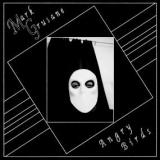
A Chicago legend who paved way in the underground with his Mr. Peabody record shop, the one and only, Mr. Mark Grusane steps up to L.I.E.S. with his "Angry Birds" lp. On this six tracker Grusane locks in and demonstrates an important facet of the Chicago sound that is often overlooked with a nod to the infamous "Reactor" sound pioneered by DJ RUSH. A rare style mostly shunned by jocks (and producers) on the modern floor, this record is full of straight up circle pit rx-7 programmed madness, chaos of the highest order...This is for the ones who know, the ones who have been obsessed, and the ones who need to know...this record sets it all off. Full on referee whistle chippin, neck snappers for those who dare to step into the real jackin zone. Hi octane, full swerve, blowing through red lights all nite long!
Suche:birds of chicago
“We kick the label off with our inaugural release from label head Drum Dance; an eclectic four-tracker opening with ‘Zani!’, an outernational cosmic head-nodder meets Chicago footwork influenced ode to the great Zani Diabaté. Low-slung Latin flavoured boogie number ‘Body Heat’ switches up the tempo but keeps those limbs moving with its percussive four-to-the-floor beat, steamy disco vocals and jazzy keys. 80s jazz Balearic goes to Kingston for a bass-heavy dub makeover on ‘Venus Dub 2’.
Signing things off is ‘Adan On Dòt Soley’, a personal dedication to the beautiful country of Gwadloup. A common farewell in the local tongue, it translates poetically as “until another sun”. The track begins with off-kilter spaced-out synths and emerges into a dubby percussive jam featuring the gorgeous keys of Andy Wileman. Field recordings capturing glimpses of birds singing, waves lapping and the sound of gwo ka on the beach close things out, until another sun.”
Full sleeve artwork printed on reverse board
Mastered and cut by Beau Thomas at Ten Eight Seven Mastering
Pressed and printed by The Vinyl Factory
- A1: Down By The Cove
- A2: Mountain Mover Feat. Alex Cosmo Blake
- A3: Maintaining My Peace Feat. Novelist & Stephanie Cooke
- A4: Tears Feat. Saucy Lady
- B1: Brain Gymnasium
- B2: I Wanna Tell Somebody Feat. Josh Milan
- B3: Ōtaki Feat. Finn Rees
- B4: Love Language Feat. Nathan Haines
- C1: A Deeper Life Feat. Isaac Aesili
- C2: More Time Feat. Lee Pearson Jr. Collective
- C3: Tongariro Crossing Feat. Nathan Haines
- D1: Barefoot On The Tarmac
- D2: Marlboro Sounds
- D3: The Eternal Checkout Feat. Cenk Esen
2025 Repress
“We created a holiday inside our heads.”
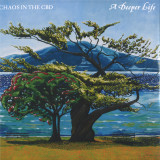
A Deeper Life, Chaos In The CBD’s debut album over 10 years in the making, is nostalgic for the duo’s nature-filled youth, exploring the magical coastline and lush rainforest of New Zealand. “The title refers to our childhood, which was idyllic,” says Ben. “It was just the sun, the sand, the sea, waterfalls, birds and fish…” The album’s blissful setting is also depicted on the album cover: a painting, by a childhood friend, of the beach where they grew up in Devonport.
A Deeper Life whirls that profound love of house music and wide-ranging influences – from Brazilian to R&B, ambient to Italo to deep house and downtempo pop – into a serene, cohesive whole with their signature finesse. The result is an international dance sound that feels unmistakably like Chaos and ebbs and flows from the beach party to the club to the afterhours.
On the album they’ve teamed up with a number of US legends and married their vocals with the UK underground: Josh Milan of house pioneers Blaze brings his soulful vocals to the bossa nova beats of ‘I Wanna Tell Somebody,’ a future jazz-dance anthem. Unheralded Chicago house hero and Larry Heard collaborator Lee Pearson Jr. goes deep over ‘More Time’s broken beat flex. And on ‘Maintaining My Peace’, the brothers have matched veteran house singer-songwriter Stephanie Cooke with UK grime MC Novelist, on a slinky LDN interpretation of LA hip-hop and g-funk.
Also featured on the album are New Zealand jazz artist Nathan Haines, frequent collaborator Isaac Asaeili and more.
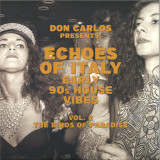
- A1: Montego Bay - Everything (Paradise Mix) 04 59
- A2: Atelier - Got To Live Together (Club Mix) 06 06
- A3: Golem - Music Sensations 04 56
- B1: The True Underground Sound Of Rome Feat. Stefano Di Carlo - Gladiators 05 26
- B2: Eagle Parade - I Believe 04 26
- C1: Dj Le Roi - Bocachica (Detroit Version) 05 28
- C2: Green Baize - Synthetic Rhythm 01 41
- C3: M.c.j. Feat. Sima - Sexitivity (Deep Mix) 05 30
- D1: Kwanzaa Posse Feat. Funk Master Sweat - Wicked Funk (Afro Ambient Mix) 06 31
- D2: Progetto Tribale - The Bird Of Paradise 06 29
- D3: Mbg - The Quite 06 59
Vol 1[28,99 €]
Googling “paradise house”, the first results to pop up are an endless list of European b&b’s with whitewashed lime façades, all of them promising “…an unmatched travel experience a few steps from the sea”. Next, a little further down, are the institutional websites of a few select semi-luxury retirement homes (no photos shown, but lots of stock images of smiling nurses with reassuring looks). To find the “paradise house” we’re after, we have to scroll even further down. Much further down.
It feels like yesterday, and at the same time it seems like a million years ago. The Eighties had just ended, and it was still unclear what to expect from the Nineties. Mobile phones that were not the size of a briefcase and did not cost as much as a car? A frightening economic crisis? The guitar-rock revival?! Certainly, the best place to observe that moment of transition was the dancefloor. Truly epochal transformations were happening there. From America, within a short distance one from the other, two revolutionary new musical styles had arrived: the first one sounded a bit like an “on a budget” version of the best Seventies disco-music – Philly sound made with a set of piano-bar keyboards! – the other was even more sparse, futuristic and extraterrestrial. It was a music with a quite distinct “physical” component, which at the same time, to be fully grasped, seemed to call for the knotty theories of certain French post-modern philosophers: Gilles Deleuze, Félix Guattari, Paul Virilio... Both those genres – we would learn shortly after – were born in the black communities of Chicago and Detroit, although listening to those vinyl 12” (often wrapped in generic white covers, and with little indication in the label) you could not easily guess whether behind them there was a black boy from somewhere in the Usa, or a girl from Berlin, or a pale kid from a Cornish coastal town.
Quickly, similar sounds began to show up from all corners of Europe. A thousand variations of the same intuition: leaner, less lean, happier, slightly less intoxicated, more broken, slower, faster, much faster... Boom! From the dancefloors – the London ones at least, whose chronicles we eagerly read every month in the pages of The Face and i-D – came tales of a new generation of clubbers who had completely stopped “dressing up” to go dancing; of hot tempered hooligans bursting into tears and hugging everyone under the strobe lights as the notes of Strings of Life rose up through the fumes of dry ice (certain “smiling” pills were also involved, sure). At this point, however, we must move on to Switzerland.
In Switzerland, in the quiet and diligent town of Lugano, between the 1980s and 1990s there was a club called “Morandi”. Its hot night was on Wednesdays, when the audience also came from Milan, Como, Varese and Zurich. Legend goes that, one night, none less than Prince and Sheila E were spotted hiding among the sofas, on a day-off of the Italian dates of the Nude Tour… The Wednesday resident and superstar was an Italian dj with an exotic name: Don Carlos. The soundtrack he devised was a mixture of Chicago, Detroit, the most progressive R&B and certain forgotten classics of old disco music: practically, what the Paradise Garage in New York might have sounded like had it not closed in 1987. In between, Don Carlos also managed to squeeze in some tracks he had worked on in his studio on Lago Maggiore. One in particular: a track that was rather slow compared to the BPM in fashion at the time, but which was a perfect bridge between house and R&B. The title was Alone: Don Carlos would explain years later that it had to be intended both in the English meaning of “by itself” and like the Italian word meaning “halo”. That wasn’t the only double entendre about the song, anyway. Its own very deep nature was, indeed, double. On the one hand, Alone was built around an angelic keyboard pattern and a romantic piano riff that took you straight to heaven; on the other, it showcased enough electronic squelches (plus a sax part that sounded like it had been dissolved by acid rain) to pigeonhole the tune into the “junk modernity” section, aka the hallmark of all the most innovative sounds of the time: music that sounded like it was hand-crafted from the scraps of glittering overground pop.
No one knows who was the first to call it “paradise house”, nor when it happened. Alternative definitions on the same topic one happened to hear included “ambient house”, “dream house”, “Mediterranean progressive”… but of course none were as good (and alluring) as “paradise house”. What is certain is that such inclination for sounds that were in equal measure angelic and neurotic, romantic and unaffective, quickly became the trademark of the second generation of Italian house. Music that seemed shyly equidistant from all the rhythmic and electronic revolutions that had happened up to that moment (“Music perfectly adept at going nowhere slowly” as noted by English journalist Craig McLean in a legendary field report for Blah Blah Blah magazine). Music that to a inattentive ear might have sounded as anonymous as a snapshot of a random group of passers-by at 10AM in the centre of any major city, but perfectly described the (slow) awakening in the real world after the universal love binge of the so-called Second Summer of Love.
For a brief but unforgettable season, in Italy “paradise house” was the official soundtrack of interminable weekends spent inside the car, darting from one club to another, cutting the peninsula from North to centre, from East to West coast in pursuit of the latest after-hours disco, trading kilometres per hour with beats per minute: practically, a new New Year’s Eve every Friday and Saturday night. This too was no small transformation, as well as a shock for an adult Italy that was encountering for the first time – thanks to its sons and daughters – the wild side of industrial modernity. The clubbers of the so-called “fuoriorario” scene were the balls gone mad in the pinball machine most feared by newspapers, magazines and TV pundits. What they did each and every weekend, apart from going crazy to the sound of the current white labels, was linking distant geographical points and non-places (thank you Marc Augé!) – old dance halls, farmhouses and business centres – transformed for one night into house music heaven. As Marco D’Eramo wrote in his 1995 essay on Chicago, Il maiale e il grattacielo: “Four-wheeled capitalism distorts our age-old image of the city, it allows the suburbs to be connected to each other, whereas before they were connected only by the centre (…) It makes possible a metropolitan area without a metropolis, without a city centre, without downtown. The periphery is no longer a periphery of any centre, but is self-centred”.
“Paradise house” perfectly understood all of this and turned it into a sort of cyber-blues that didn’t even need words, and unexpectedly brought back a drop of melancholic (post?)-humanity within a world that by then – as we would wholly realise in the decades to come – was fully inhuman and heartless. A world where we were all alone, and surrounded by a sinister yellowish halo, like a neon at the end of its life cycle. But, for one night at least, happy."
In the fall of 2022, celebrated UK chill-out institution Seahawks landed in Los Angeles for the first time in their 15-year history, with plans to record a sweeping new age downtempo "exploration of visionary California."
Instead, they immediately fell ill with flu (Fowler collapsed next to a taco truck; 911 was called), and were bedridden for the better part of a week. Upon recovering, they resituated at the synthesizer sanctuary of Brian Foote (Peak Oil, Kranky, Leech), channeling their post-sickness psychedelia into one of the band's lushest and most elevated creations to date: Time Enough For Love. Inspired by the "groove and mood" of Harry Nilsson demos, as well as its wider 70's wavelength - Rhodes, Wurlitzer, wood paneling - Seahawks transposed their classic post-rave ambient exotica onto a warm and woozy Golden State palette. Buoyed by the liquid touch of English maestro Kenny Dickenson on keys, the results rank high among the duo's smoothest and most multi-sensory voyages. "Sail Across The Moon" delivers on its title, a simmering, phaser-smeared cruise through the beauty of the night. "Messengers" echoes the cosmic lounge of Air's Moon Safari, shuffling, weightless, and ethereal, while "Falling Deep" reaches for the stars, pure cascading bliss, the ecstatic moment writ large.
The album skews steadily more astral as it progresses, drifting towards jazzy, galactic outer reaches. "Like A Grain Of Sand" opens with a spoken sample by the celebrated late American poet Rachel Sherwood ("The children watch, breathless / with the birds / They feel an emanation / from this shuddering place"), before taking flight on a Balearic trip through island house, PM Dawn gold dust, upright bass meditation, and kaleidoscopic light. A remix of the title track by Chicago trio Purelink closes the record in a suitably subdued and skittery state of mind. Time Enough For Love radiates color, complexity, and positivity, infused by the "life enhancing" nature of the band's time in Los Angeles - sunsets, sound systems, and sativa, framed by coastlines and cloudbanks, the city's mystic sprawl glittering beneath purple dusk.
Edwin Birdsong’s self titled album was released in 1978 on Philadelphia International Records at the height of the Disco craze. By this time, Edwin was a major player at PIR and a talented songwriter and producer as well. Birdsong’s vision hits the mark as the album boasts several gems that became dance floor classics, especially in New York, Philadelphia, Chicago, LA and San Francisco. “Cola Bottle Baby”, “Kunta Dance” and “Goldmine” are all hard hitting funks gems that kick in hard and are ready for partying. Daft Punk sampled the hitsong "Cola Bottle Baby" in "Harder, Better, Faster, Stronger". The sexy “Lollipop” is years ahead of its time and the irresistible “Freaky Deaky Sities” and “Phiss-Phizz” both became huge club hits, despite not having charted on any of the Billboard charts. Even though the album missed the charts, it became something of a hot item for disco/soul music collectors. Edwin Birdsong is available as a 45th anniversary limited edition of 750 copies on crystal clear and transparant green marbled vinyl.
- Dialed In
- Missouri Kids Cuss
- From One Primadonna To Another
- Super Illuminary
- Hans Lucas
- Exploration Vs. Solution, Baby
- Sort Of Is A Country In Love
- Jupiter And Io
- I've Got Designs On You
- Last Night, A Dj Saved My Life
- Saint Theresa In Ecstasy
- We Blame Chicago
- Alligator
- A National Car Crash
- Even Time Ghost Can't Stop Wagner
- When Your Luck Runs Out
- Chronological Disorder
- Sequel
- Too Late Or Too Dead
- Silver And Snow
- Night Birds
- My Trip To Venus
- Sink Potemken
- Streamlines And Breadwinners
- From One Prima Donna To Another
- Studio Track Four
- Methodist
- To Everybody: Outtake #1
- To Everybody: Outtake #2
- Harlequin's Chassis
- Eye's On The Road
- Sort Of Is A Country In Love (Physical Only)
- Methodist (Physical Only)
- Hans Lucas (Physical Only)
- A National Car Crash (Physical Only)
- Sweater Queen
- Hey, Citronella!
SUPER ILLUMINARY ORANGE VINYLl[100,80 €]
90 Day Men spent a decade boldly in conflict with the world, catering to no one and careening toward its own abyss. Forged by Midwestern teens amid a late-90s spike in angular indie rock, the band wrote itself into the lexicon of Chicago music history. Eschewing trend and time, 90 Day Men was as ornate as it was alienating, transcending genre and embracing the strange. This 5LP set, remastered by Heba Kadry, collects the band's three studio albums and a previously unreleased 2001 Peel Session, plus EPs, singles, and outtakes, all detailed within a 68-page oral history curated by Joan of Arc's Tim Kinsella.
- Dialed In
- Missouri Kids Cuss
- From One Primadonna To Another
- Super Illuminary
- Hans Lucas
- Exploration Vs. Solution, Baby
- Sort Of Is A Country In Love
- Jupiter And Io
- I've Got Designs On You
- Last Night, A Dj Saved My Life
- Saint Theresa In Ecstasy
- We Blame Chicago
- Alligator
- A National Car Crash
- Even Time Ghost Can't Stop Wagner
- When Your Luck Runs Out
- Chronological Disorder
- Sequel
- Too Late Or Too Dead
- Silver And Snow
- Night Birds
- My Trip To Venus
- Sink Potemken
- Streamlines And Breadwinners
- From One Prima Donna To Another
- Studio Track Four
- Methodist
- To Everybody: Outtake #1
- To Everybody: Outtake #2
- Harlequin's Chassis
- Eye's On The Road
- Sort Of Is A Country In Love (Physical Only)
- Methodist (Physical Only)
- Hans Lucas (Physical Only)
- A National Car Crash (Physical Only)
- Sweater Queen
- Hey, Citronella!
Black Vinyl[86,51 €]
90 Day Men spent a decade boldly in conflict with the world, catering to no one and careening toward its own abyss. Forged by Midwestern teens amid a late-90s spike in angular indie rock, the band wrote itself into the lexicon of Chicago music history. Eschewing trend and time, 90 Day Men was as ornate as it was alienating, transcending genre and embracing the strange. This 5LP set, remastered by Heba Kadry, collects the band's three studio albums and a previously unreleased 2001 Peel Session, plus EPs, singles, and outtakes, all detailed within a 68-page oral history curated by Joan of Arc's Tim Kinsella.
Japan has produced some exceptionally talented jazz drummers and among them is Tatsuya Nakamura, who joins the BBE Music J Jazz Masterclass Series with his album ‘Locus’ from 1984, a session covering several bases, from heavy percussive samba to meditative avant-ambient. This is the album’s first ever reissue, although a track from ‘Locus’, ‘¼ Samba’, was included on J Jazz vol. 3. Nakamura began his drumming career as a teenager, inspired after seeing the documentary film “Jazz on A Summer’s Day” and listening to his idols Art Blakey and Miles Davis. By his early twenties, Nakamura was working with such luminaries as free jazz guitarist Masayuki Takayanagi, pianist Masaru Imada and band leader & composer Mitsuaki Kanno. In the mid-70s, like several other Japanese jazz players, Nakamura decided to make the move to New York where he studied drumming with Roy Haynes, and performed with members of the AACM and players from the loft and free jazz scenes including Richard Davis, George Adams, John Hicks, and Pharaoh Sanders. Returning to Japan, Nakamura continued playing as leader of his Japanese band The Jazz Fellows and in 1979, he went into the studio as leader for the classic “Where Is The Quarter” session featuring Masaru Imada, Hideto Kanai and Kenji Mori. This session includes the original percussion heavy version of ‘¼ Samba’ and was followed by a period back in NYC during which he recorded the funky/free session ‘Rip Off’ in 1980. 1984 saw Nakamura working as leader of a heavy-duty fusion septet and in February of that year he led them in a performance at Audio Technica Hall. The album ‘Locus’ on Sea Horse Records is the label’s one and only release. On ‘Locus’, Nakamura is joined by a stellar line-up. On trumpet is Shinobu Fujimoto and he’s joined by seasoned bass player Hideto Kanai (1931 -2011) who began playing in the mid-1950s, appearing on King Recs All-Star Jazz Series before going on to be a regular fixture on the legendary Three Blind Mice (TBM) label, backing many of its leading artists. He even released his own album on TBM, ‘Ode to Birds’ in 1975. On guitar is Kazumasa Akiyama. Born in Tokyo in 1955, he taught himself guitar at 10 years old and was influenced initially by The Beatles and Ray Charles, and later Jimi Hendrix, Cream, Chicago Blues, and jazz. When he was a student, he got a chance to appear on Sadao Watanabe's radio program ‘My Dear Life’, which led him to join the Isao Suzuki Group and Mikio Masuda Group. Akiyama released his first leader album ‘Dig My Style’ in 1978 and is still an active musician. On keys is the incredible Jun Fukamachi (1946-2010). Born in Harajuku, Tokyo, Fukamachi started playing the piano at the age of three, showing an extraordinary talent, recognised as a child prodigy. He became a professional musician while still in school and released his first album ‘Portrait of a Young Man’ on Polydor in 1971.
"Morphing Chinese traditional music with bass, Chicago footwork and AI-manipulated birdsong. It's quite a feat to sound this ancient and futuristic simultaneously." The Guardian
"The album presents a world where flute and guanzi find common ground with choral vocals, ambient and AI- manipulated birdsongs." Vinyl Factory
"There has never been a record that sounds like this. And, very possibly, never will be again" Bandcamp
'At once fine-grained and expansive, Lee's work combines traditional Chinese music and historical references with wild electronic experimentation" Pitchfork, 7.6
'Island Birdy' samples Bollywood vocals, 'Foreign Flowers' has hints of warped drum & bass and 'Feather Signifier' is steeped in jazz fusion....Lee's most organic work has plenty of diverse influences" Resident Advisor, Album Of The Day
Swirling layers of OST-style sound design, dreamy choir vocals and traditional Chinese folk combine across eight dynamic and transportive tracks on Birdy Island, the latest album by Beijing-based producer/artist, Howie Lee.
On Birdy Island Lee's intricate brand of traditional pan-asian exploration meets experimental bass weight sound via stripped-back UK Grime sonics and ceremonial taoist music.
160-gram heavyweight Vinyl LP with gatefold jacket displaying the painting series that inspired the music, and the story of Newtok. Newtok is a remote Alaska Native village situated on the Ningliq River, near the west coast of Alaska. Although a very remote and quiet place, Newtok has come face-to-face with climate change. Due to a combination of thawing permafrost, low levels of sea ice, and strong storms, the coastal land of Newtok is eroding dramatically. In 2016, Chicago visual artist Jennifer Cronin embarked on a trip to Newtok to document this changing environment. Upon returning, she spent the next several years developing a series of paintings and screen prints titled Seen and Unseen that captured this eroding landscape. In 2019, Cronin and musical Artist Patrick Mitchell (a/k/a Dusty Patches) began discussing the project after Cronin asked him to perform at the Gallery opening for the series. As a result, Mitchell created this album, Newtok - inspired by Cronin's Seen and Unseen series and the story of Newtok, Alaska. Mitchell is a multi-instrumentalist songwriter and producer from Chicago who has led numerous past projects in the Chicago DIY community including De Triomphe, New Color, and Whiskey Wise. He dove headfirst into synths in 2017 and adopted the electronic alias Dusty Patches. Dusty Patches released his debut project Filthy Four Track Machine: Volumes I & II (2018, Sooper Records), largely made with the Teenage Engineering Pocket Operators and OP-1. In 2020, he released Nocturnal Emissions from the Dablatory, his first project fully realized with modular synthesis. In approaching Newtok, Mitchell composed all of the constituent musical elements of the work and then recorded and live mixed the album during a single live performance on modular synthesizer. The album draws heavily on sprawling ambient synths, electric and acoustic post-punk guitar motifs, cryptic vocal sampling, vintage drum machines, and modular patches that often sound like birds or the sea. The subject matter of the album, the complexity of its arrangement, and its execution as a single live recorded performance makes Newtok a unique musical experience. About Newtok, Mitchell says: This record was an exploration of themes. When faced with the immense canvases Jen Cronin produced upon her return from the village of Newtok, one can't help but feel awe. With the sheer size of the works towering above you, you are compelled. There is overwhelming beauty, desolation, a sense of urgency, and a sense that it is, in fact, far too late. These visual themes, and the emotions they evoke, were connected to the sounds and compositions of this record. There is a coldness to the digital soundscape, but organic sounds of nature and humans tether and steer the album through a journey of musical storytelling. Newtok is a journey of musical storytelling about the tragedy of the Anthropocene in the age of climate change. FOR FANS OF: Mother Earth's Plantasia, Black Moth Super Rainbow, Boards of Canada, Bibio
Repressed finally. Sometimes a single is released that reaches such dizzying heights of success that it becomes a pinnacle of the decade they're indelibly tied to. "Groove Is In The Heart" by dance-house trio Deee-Lite is one such single. The infectiously quirky, and eminently danceable track is prominently based around samples of "Bring Down The Birds" by Herbie Hancock, and "Get Up" by Vernon Burch, among many others, (Courtesy of dual producers DJs Dmitry and Towa Tei) paired with top-tier guest contributions from JB's veterans Maceo Parker and Fred Wesley, background vocals from Parliament-Funkadelic's own Bootsy Collins, and even a guest rap from Q-Tip, not to mention frontwoman Lady Miss Kier's own siren-like vocals. All disparate and disconnected elements, but ones that would come together to form dancehall greatness, and chart-topping success worldwide for Deee-Lite. "Groove Is In The Heart" managed to reach #4 on the Billboard Hot 100 chart, but excelled at its best on the Hot Dance Club Play chart, where it reached to the #1 spot. On top of its success in America it was a smash internationally, climbing the heights of the charts in the UK, Canada, Australia, and a variety of other countries. It remained in heavy rotation for much of 1990 on MTV as well. As the decades went on, "Groove Is In The Heart" would be ranked among the greatest dance tracks of all time, as well as one of the greatest songs of the 1990s by VH1, Pitchfork, Buzzfeed, and many more. "Groove Is In The Heart" was a potent single for Deee-Lite to lead with, but the album bearing it was nothing to slouch at either. The group's debut record, 1990's World Clique was released to major commercial and critical success, owing just as much to its addictive hybrid of seductive retro aesthetics, modern dancefloor flair, and esoteric, socially conscious messaging, on the back of celebratory club staples like "Power Of Love", "Good Beat", "E.S.P.", and of course "Groove Is In The Heart." World Clique would reach top 20 charts in the US, UK, and Canada in sales, as well as earn rave reviews from NME, Chicago Sun-Times, Rolling Stone, and Slant Magazine, who called it an "essential pop album." A1. Good Beat A2. Power Of Love A3. Try Me On…I’m Very You A4. Smile On A5. What Is Love? B1. World Clique B2. E.S.P. B3. Groove Is In The Heart B4. Who Was That? B5. Deep Ending
- 01-01: Hail (Ede _ Vietnam)
- 01-02: Celebrating The Festival (Cham Hroi _ Vietnam)
- 01-03: Funeral Music (Krung _ Punong _ Cambodia)
- 01-04: Buffalo Sacrifice (Jarai _ Cambodia)
- 01-05: Kids Routine After School (Krung _ Cambodia)
- 01-06: Duet Gongs (Coho _ Vietnam)
- 01-07: Funeral Music (Churu _ Cambodia)
- 01-08: Ghet Khil (Ede _ Vietnam)
- 01-09: Offering To The Spirits (Punong _ Cambodia)
- 01-10: Sre Don (Ma _ Vietnam)
- 01-11: Preparation For The Buffalo Sacrifice (Vietnam)
- 01-12: Chasing Birds To Protect The Rice Fields (Bahnar _ Vietnam)
- 01-13: Cutting The Bamboo (Mnong Prang _ Vietnam)
- 01-14: Song For A Dead Man (Ede-Bih _ Vietnam)
- 01-15: Harvesting (Mnong _ Vietnam)
- 01-16: Funeral Music (Se Dang _ Vietnam)
- 01-17: Harvesting (Tampuan _ Cambodia)
- 01-18: Buffalo Sacrifice (Jarai _ Vietnam) 01-19. Melody For Funeral Music By Mouth (Tampuan _ Cambodia)
- 01-19: Melody For Funeral Music By Mouth (Tampuan _ Cambodia)
- 01-20: Threshing (Ede-Bih _ Vietnam)
- 01-21: Hail (Ede _ Vietnam)
- 02-01: Rooster Dance (Isneg Grop _ Luzon Philippines)
- 02-02: Music For Funeral Ceremony (Sumba _ Sumba Island Indonesia)
- 02-03: Hedung Dance (Lamaholot _ Solor Island Indonesia)
- 02-04: Gong Music Ensemble (Kenyah _ Borneo Indonesia)
- 02-05: Manang Sirang Ritual (Iban _ Borneo Indonesia)
- 02-06: Tau Todu (Sumba _ Sumba Island Indonesia)
- 02-07: Soka Dance (Lamaholot _ Solor Island Indonesia)
- 02-08: Harvesting (Pagaddot) (Ifugao _ Luzon Philippines)
- 02-09: Tadok (Kalinga _ Luzon Philippines)
- 02-10: Harvesting (Kandingngang) (Sumba _ Sumba Island Indonesia)
- 02-11: Eagle Dance (Turayan) (Kankanaey _ Luzon Philippines)
- 02-12: Cole Oha Ritual (Lamaholot _ Adonara Island Indonesia)
- 02-13: Ritual For Calling Back Spirits (Bissu _ Saluwesi Indonesia)
- 02-14: Ambience_ Rambu Solo (Toraja _ Saluwesi Indonesia)
Gongs have played an integral role in the mythogeography of Asia. This is not music that aligns with national borders or ideas of homogenous populations, let alone racial stereotypes and exotic clichés. What connects all of these tracks is a simultaneous feeling of entrancement and social cohesion. Communal and collaborative, its form is hypnotically repetitious, melodies and rhythms spread out among the players using the technique of hocketing in which a flowing line is distributed among all the musicians. The effect is mesmerising, immediately intoxicating to anybody who loves Chicago footwork, free improvisation, Sun Ra or young hip hop producer Jetsonmade. The music is simple yet mysterious and enveloping, a sound world in which to disappear. A theory exists but this is not explained. - David Toop (extracts from the liner notes)
This project, Massif and Archipelago, is a field recording project initiated by Japanese sound artist Yasuhiro Morinaga, documenting traditional gong music by different Southeast Asian ethnic groups. The project aimed to examine the impact of the natural and social environment on the gong music culture of Southeast Asia. During the project, he visited over 50 different ethnic groups and made hundreds of recordings. This album presents a selection of the unique gong music from different ethnic minorities. The selected music has been divided into two broad sections: one focussing on the music from the Massif, i.e. mainland Southeast Asia (Central Highland of Vietnam and Northeast Cambodia), the other on music from the Archipelago, maritime Southeast Asia (the Luzon Islands of the Philippines, Borneo, Sulawesi, and the Flores Islands of Indonesia).
A guitarist, a composer, a sought-after musical enabler and sideman? Of course, he's all of those things and more, but none of those descriptions really do the seven-time Juno Award-winning musician justice.
Like all of Steve's albums, 'Gone, Long Gone' features brilliant instrumental performances from some of the finest players in roots music. Jeremy Holmes holds everything together on bass with drumming split between Gary Craig and Jay Bellerose (both drummers play together on 'Six Skeletons'), while Kevin McKendree and Chris Gestrin laid down the piano, organ and other keyboards.
Keri Latimer joins in on vocals on two songs, and Steve's old 'Birds of Chicago' band- mate, Allison Russell joined in to sing on a few as did Steve's daughter Casey Dawson. John Prine alumnus Fats Kaplin also dropped in to add some sweet fiddle and mandolin.
'Gone, Long Gone' is just the first of three new albums that Steve created during the lockdown. The next two will come to light over three month intervals throughout 2022. Be on the lookout for a moody, psychedelic pedal steel excursion coming up next!
Am 21. Mai veröffentlicht Allison Russell ihr Solodebüt ”Outside Child” (produziert von Dan Knobler) auf Fantasy Records. Russell, Dichterin, Sängerin, Songwriterin, Multi-Instrumentalistin und Mitbegründerin der Bands Our Native Daughters und Birds of Chicago, offenbart auf dem Album ihre Jugend in allen Einzelheiten. Zur ersten Single Nightflyer gibt es ein unterstützendes Musikvideo, bei dem Silvia Grav Regie führte.
Die Platte enthält Beiträge von vielen der künstlerischen Familienmitglieder, die sie dort gefunden hat, darunter Yola, Erin Rae, The McCrary Sisters, Ruth Moody, Produzent Dan Knobler, Jamie Dick, Joe Pisapia und ihr Partner JT Nero. ”Es ging einfach darum, diese Songs auf die ehrlichste Art und Weise zum Leben und Atmen zu bringen”, sagt Russell. ”Wir haben gelacht, wir haben geweint. Und die Verbundenheit zwischen den Musikern, ich hoffe, die Leute können das auf der Platte hören. Es fühlte sich wie Magie an.”
French Duo "Dub Striker" make their debut on 'Happiness Therapy' with a solid 5-track EP backed by a remix by Chicago based House producer- and Smart Bar resident Garrett David.
'Dub Striker' reignite the French House scene on their latest release with their raw sound influenced by artist like Gerd, Milton Jackson and Fabio Monesi. The opening track to the Birds Of A Feather EP, Wild Rhythm, showcases the duo’s diverse style with this tropical infused track featuring tribal rhythms, light and airy chords and bright melodics. A refreshing opening track that transports you to another place.
The following track is "Mood Pt. 2", a raw loungey house track with Icey high hats, a punchy kick drum and hypnotic chord sequences.
Opening on the flip side of the EP is, Computer Games, with a change of pace from the A side with its pulsating kick drum, floating bassline and spacey chords and melodies. ‘Would You ?’ follows, again showcasing the duos diverse style with this Jazzed up house track with its rhythmic raw percussions, classic house chord progressions, trippy vocals and dissonant synth stabs.
Closing the EP is Garrett David’s take on Wild Rhythm, his interpretation takes you deep into the jungle with this upbeat percussion driven track, with it's soothing bird calls, tropical
melodies and enchanting chords.
The compilation "Celestial Birds" reveals and focuses on the widely unkown electronic compositions of the AACM founder and jazz pianist MUHAL RICHARD ABRAMS. #5 in the Perihel Series, curated by zeitkratzer director REINHOLD FRIEDL.
Anybody interested in jazz knows that Chicago has always been an impressive hot spot for new talents – and still is. One essential landmark in the history and development of jazz was the founding of the AACM (Association for the Advancement of Creative Musicians) in May 1965. This non-profit organization was a melting pot (and starting point) for artists like ANTHONY BRAXTON, ROSCOE MITCHELL, GEORGE LEWIS or LESTER BOWIE and his ART ENSEMBLE OF CHICAGO but one of its actual founding members is known only to the deep connaisseurs: MUHAL RICHARD ABRAMS (1930 – 2017).
The autodidact pianist and composer left music school and university, deciding to learn music by himself.
From 1961 on, the EXPERIMENTAL BAND was his first ensemble, but it soon turned out that ABRAMS' interests went beyond jazz and that he was open to the avant-garde and new music and most of all: electronic music. Which led to a double problem: On the one hand, black musicians had almost no access to the rare electronic music studios located in and funded by universities or broadcasting corporations. On the other hand, there were strong reservations regarding electronic music in the black music community.
In his important book "A Power Stranger Than Itself – The AACM and American Experimental Music" GEORGE LEWIS writes that "the use of electronics … proved controversial and widely misunderstood in a world of jazz in which acoustic instruments became conflated with musical, and eventually, cultural and even racial authenticity." ABRAMS' response was to actually "hide" his electronic pieces on the B-sides of his albums, and this compilation focuses on some of his best electronic experiments: the 22-minute long epic "The Bird Song" from 1968 in its original version incl. the reverb that was removed on the later CD reissue on DELMARK, the synthesizer compositions "Conversations With The Three Of Me" (1989) and "Think All, Focus One"1995) plus " Spihumonesty" (1980) with a 2nd synthesizer played by GEORGE LEWIS and YOUSEF YANCEY on theremin.
"Celestial Birds" casts a new light on the underrated experimenter MUHAL RICHARD ABRAMS, his innovative approach to composition and pieces that lay dormant for way too long!
“Blank Mind founder Sam Purcell returns to Blank Mind following a production mix for Blowing Up the Workshop and SMX collaborations.
'Studio Pads' thumps through at a bossy 117bpm, a sound system march that takes cues from early Chicago house as much as contemporary UK bass. Built on a gnarly two-note main riff, peppered with horn blares, it's minimal and primed for strutting and skanking.
On the B-side, 'Murmur' provides a sweet, pastoral contrast, the warmth of sun on skin. Dropping the tempo, birdsong recordings play back sidechained to a sub bass groove, Detroit chords refract through tight delays, and everything is kept in the pocket by syncopated hi-hats.”
Legacy Chicago craftsman Mark Nelson’s latest offering as Pan. American is less a distillation or divergence than it is a return to his musical and spiritual beginnings. Spare, subdued, and largely acoustic, A Son unfurls like late summer dusk on the edge of town, expansive but intimate.
Motivated by notions of “moving backward” and tracing roots – as well as a couple years of hammered dulcimer lessons – the album’s nine songs were written and recorded in his home in Evanston, Illinois, and honed during a recent solo tour in Europe. The emphasis on uncluttered arrangements and the centrality of the guitar and vocals reveal these songs as the most direct and emotional statement of his career.
Nelson cites everything from June Tabor, The Carter Family, Suicide and Jimmy Reed as oblique inspirations, though his truest muse was creative self-inquiry: “What does music do, Where does music start? How simple can it be? How honest can it be?”
After decades of mining post-rock pathways and latticework electronics in Labradford and early Pan. American, A Son strips away ornament and distraction in favor of a direct gaze into the heart of what is.
- 1: Shine A Little Light
- 2: Eagle Birds
- 3: Lo/Hi
- 4: Walk Across The Water
- 5: Tell Me Lies
- 6: Every Little Thing
- 7: Get Yourself Together
- 8: Sit Around And Miss You
- 9: Go
- 10: Breaking Down
- 11: Under The Gun
- 12: Fire Walk With Me
The Black Keys’ long-awaited ninth studio album, “Let’s Rock”, their first in five years, is a return to the straightforward rock of the singer/guitarist Dan Auerbach and drummer Patrick Carney’s early days as a band. Auerbach says, “When we’re together we are The Black Keys, that’s where that real magic is, and always has been since we were sixteen.” The album includes the hit single ‘Lo/Hi’. The Black Keys’ touring begins in North America in September, with further international dates to be announced soon.
“Let’s Rock” was written, tracked live, and produced by Auerbach and Carney at Easy Eye Sound studio in Nashville and features backing vocals from Leisa Hans and Ashley Wilcoxson. “The record is like a homage to electric guitar,” says Carney. “We took a simple approach and trimmed all the fat like we used to.”
The “Let’s Rock” Tour will hit cities including Chicago, Nashville, New York, Los Angeles, and Austin. Special guests Modest Mouse will provide support on all dates, and Shannon & The Clams, Jimmy “Duck” Holmes, *repeat repeat, and Jessy Wilson will each open select shows on the tour. The band also headlines 2019’s Life Is Beautiful festival in Las Vegas on September 21.
Rolling Stone named ‘Lo/Hi’ a “Song You Need to Know” and said, ‘the Keys have officially returned, louder than ever’ and the New York Times calls the song ‘the kind of garage-boogie stomp that the band never left behind.’ In the words of the NME, ‘It’s the soundtrack to the type of party that doesn’t exist anymore, but one you still wish you were cool enough to get the invite to.’
Formed in Akron, Ohio in 2001, The Black Keys have released eight studio albums: their debut The Big Come Up (2002), followed by Thickfreakness (2003) and Rubber Factory (2004), along with their releases on Nonesuch Records, Magic Potion (2006), Attack & Release (2008), Brothers (2010), El Camino (2011), and, most recently, Turn Blue (2014). The band has won six Grammy Awards and headlined festivals including Coachella, Lollapalooza, and Governors Ball.
Since their last album together, both Auerbach and Carney have been creative forces behind a number of wide-ranging artists:
Dan Auerbach formed the Easy Eye Sound record label, named after his Nashville studio, in 2017, with the release of his second solo album, Waiting on a Song. Since its launch, Easy Eye Sound has become home to a wide range of artists including Yola, Shannon & The Clams, Dee White, Shannon Shaw, Sonny Smith, Robert Finley, and The Gibson Brothers; it also has released the posthumous album by Leo Bud Welch as well as previously unreleased material by Link Wray.
Patrick Carney has produced and recorded new music with artists such as Calvin Johnson, Michelle Branch, Damns of the West, Tobias Jesso, Jr., Jessy Wilson, Tennis, *repeat repeat, Wild Belle, Sad Planets, Turbo Fruits, and more. He also created the theme music for the Netflix TV show BoJack Horseman with his late uncle, Ralph Carney.