Black Truffle is thrilled to present the first vinyl reissue of David Rosenboom’s unique Future Travel, originally released on the short-lived Detroit label Street Records in 1981 and here presented in an expanded edition with an additional LP of wild, previously unheard live and studio material from the same period.
Future Travel emerged from the confluence of two important streams in Rosenboom’s work at this time. First, his exploration of ‘propositional music’, defined as ‘complete cognitive models of music’ that start from the radical question, ‘What is music?’ In this case, the music belongs to the universe of Rosenboom’s In the Beginning (1978-1981), in which proportional relationships determine the material available to the composer in all musical parameters (harmonic relationships, melodic shapes, rhythmic subdivisions, dynamics, and so on). Second, the work documents a key moment in Rosenboom’s long collaboration with synthesizer pioneer Don Buchla. Having played a role in developing concepts for some of the modules of the Buchla 300 Series Electric Music Box (an innovative analogue modular system controlled by micro-processors), Rosenboom went on to write the software for Buchla’s hybrid analogue-digital keyboard synthesiser, the Touché, the instrument heard most prominently here.
In a way that no purely analogue synthesizer could, the 300 Series and Touché allowed Rosenboom to work with the In the Beginning algorithms in real time, the synthesizers becoming ‘intelligent instruments’ that actively collaborate with the performer. Developing the open structures of the electronic pieces from In the Beginning, Future Travel explored the possibilities of simply ‘playing the system’, recording live at Francis Ford Coppola’s Zoetrope studio in San Francisco. Working from loose sketches, Rosenboom added acoustic instruments to the electronic sounds and, on some pieces, the processed voice of Jacqueline Humbert. Like Rosenboom’s collaboration with Humbert on the abstracted synth-chanson of Daytime Viewing, this music set out deliberately to challenge the ‘stratified and illusorily coagulated identities in the musical culture of the time,’ refusing distinctions between ‘serious’ and popular music. But where Daytime Viewing achieves this in part through genre references, Future Travel is bracingly sui generis, existing in a unique universe where radical formalisation à la Xenakis spontaneously gives rise to expressive jazz harmonies and old-timey folk melodies.
The crystalline quality of many of the Touché sounds gives Future Travel a sparkling, immediately enticing surface, its layers of shifting ostinato patterns pulsating outside conventional meter, rippling like waves on the surface of water. On opener ‘Station Oaxaca’, ping-ponging synth arpeggios and hand percussion accompany a sentimental violin melody, abruptly overtaken by layered keyboard runs, before the entry of tinkling marimba-like sounds reframe the scene as sci-fi Martin Denny exotica. ‘Time Arroyo’ begins as an austere study in staccato synth sounds in multiple overlapping tempi, reminiscent of Ligeti’s famous ‘clock’ rhythmic effects. Before long, it opens up into a melodic passage with the gentle heroism of classic Roedelius, which proves to be only a brief interlude before the layers of rhythmically distinct synthesiser patterns begin to build and accelerate into an increasingly dense cacophony. The wildest twists and turns are saved for the epic closer ‘Nova Wind’, where the arrangement focuses on Rosenboom’s virtuoso piano playing, perfectly embodying the project’s radical disregard of stylistic orthodoxies as he moves from hyperactive pointillistic flurries to a kind of space-age gospel.
At several points throughout the record, the distinctive voice of Jacqueline Humbert is heard reading passages from the text component of In the Beginning, a dialogue between The Double (an embodiment of humanity’s timeless desire to replicate itself in spiritual and technological copies) and two Spirit Characters. Fittingly, as all are conceived as embodiments of a future form of techno-human collective consciousness, distinctions between the three characters are not immediately evident in Humbert’s delivery, just as the music blurs the boundaries between intelligent computing and human spontaneity. Adorned with a striking retro-futurist cover (and here accompanied by extensive new liner notes and archival images), Future Travel is a time capsule of radical imaginings at the birth of our digital age, reminding us of utopian possibilities of which our own present seems so often to fall short.
Buscar:birth of f
For fans of: Spectrum / Recurring Era Spacemen 3, Loop, AR Kane, MBV, bdrmm, Cocteau Twins, Telescopes and early 90s Creation records.
Following a series of meditative explorations in the form of the Singularity Zone series of releases, The Oscillation have returned with a new sense of vigour and purpose. Refreshed and re-energized, the result is The Start Of The End, an album that casts more light and shade than ever before to create a mood of hope and re-birth.
At once warm and welcoming, The Start Of The End is an album quite unlike anything that The Oscillation have ever released before. Fuelled by optimism and taking stock of what’s good about life and what needs to be jettisoned, the record is a result of spiritual and physical re-charging and cleansing.
Leaving the claustrophobic environs of the big city for a more bucolic backdrop, the change in location has left a profound mark on Demian Castellanos, the creative force behind The Oscillation. Where the exorcism of dark emotions of previous album Untold Futures left Castellanos wondering if he’d ever make music again, his new surroundings stirred something within him.
“When I made my new home, I allowed myself time to do nothing for a while,” says Castellanos, “and I then started some new songs without worrying about them being on an album. I just wrote with the mindset to put out something positive.”
He continues: “I did a lot of reflecting on the past and really wanted to change something in myself, but not knowing how and thinking that a lot of people must be feeling the same way.”
Recalling the creation of The Start Of The End, Castellanos says, “Writing and recording in an environment where I had little contact with people, no hanging out or partying or even having conversations was very interesting.”
The result is an album that’s recognisably the work of The Oscillation while pointing to a variety of new directions. Be it the celestial majesty of the title track, the melodic infusions that drive opening track ‘War On The Mind’ or the pulsing grooves underpinning ‘Faraway’ and ‘Body Electric’ or even hypnotic repetition at the heart of ‘Mantra’ and ‘The Eternal’, this music brimming with zeal and confidence. And to crown it all, closer ‘Sovereign’ is akin to communing with angels.
The Start Of The End is a line in the sand and one that points to a better tomorrow.
Pure Mania is the debut album by The Vibrators, who have always been considered one of the most important punk pioneers in the UK. The band was formed in 1976 by Ian 'Knox' Carnochan, Pat Collier, John Ellis and John 'Eddie' Edwards. In 1976 they were backed by Sex Pistols producer Chris Spedding, who recommended the band to the successful RAK label. The band had legendary shows on John Peel's BBC Radio 1 and played the pioneering punk venue: London's Roxy Club. The band supported Iggy Pop and Mott the Hoople frontman Ian Hunter. Pure Mania has always been considered a true punk classic that was essential to the birth of the British punk scene. Even the Stiff Little Fingers took their name from a track on the album. The Guinness Encyclopedia of Popular Music also named Pure Mania as one of the 50 greatest punk albums of all time. Pure Mania is available as a limited edition of 1000 individually numbered copies on translucent magenta coloured vinyl.
"What Occurs", is Islands' 10th album. It was recorded, mixed and mastered entirely on Vancouver Island, the birthplace of Islands' songwriter Nick Thorburn and his first record made on the island. The album functions like a collection of short stories, each song telling a different tale: A man steals a billionaire's painting, ("David Geffen's Jackson Pollock"), a woman is terrified of intimacy but great at dancing ("Arachnophobia"), and a lovelorn loser does everything wrong ("Drown A Fish").
Continually in a state of evolution with a future-focused vision, yet ensuring the signature sound that has defined the label and event series for over a decade remains at its core, Enzo Siragusa’s FUSE imprint is once again keeping things moving with new ventures, projects and concepts.
Having previously introduced the label’s collaborative X Series in addition to the launch of sister imprint LOCUS, summer brings a new project for 2024 as the label now presents its new vinyl-focused VA, welcoming four label debuts for the first instalment of the project. First up is Amstedam-based Nachtbraker, whose classy house sound has welcomed releases via Aus Music and Peach Discs, amongst many. His contribution, ‘Banda’, is deep and trippy, balancing light and dark moments via a warping bassline, sweeping pads and slinking drums.
Next, Phone Traxxx member and live wizard Rob Amboule makes his debut on the label following his appearance for the collective’s 15th birthday at fabric. Playful and vibrant, with wicked acid-dipped and funk-fuelled bass licks, ‘Capnhat’ perfectly showcases his sound as he delivers another gem.
On the flip, Melbourne-born, Berlin-based Reflex Blue lands fresh from his second EP on Gene On Earth’s The Sound Of Limousine imprint with the glitchy yet smooth ‘Life’s A Bleep’ - combining spacey tones, skippy drums and sporadic bleeps and lasers. To close, Un_Mute resident Mario Liberti harnesses influences from a classic to deliver a heady dancefloor anthem, fusing hooky vocal samples, murky low-ends and those iconic synth stabs.
- A1: Trust!
- A2: Dirty!
- A3: Nemo!
- A4: End Credits!
- A5: Hazard Duty Pay!
- A6: God Don’t Like Ugly!
- B1: What Kinda Rappin’ Is This?
- B2: Thot’s Prayer!
- B3: Are U Happy?
- B4: Rebound!
- B5: 100
- C1: Og!
- C2: Dikembe!
- C3: Tired, Nervous & Broke!
- C4: Fire
- C5: Nice!
- D1: Bmt!
- D2: The Ghost Of Ranking Dread!
- D3: Dam! Dam! Dam! (Og Mix)
- D4: Untitled
LP! is the fourth studio album from renowned Baltimore rapper JPEGAMFIA. Released on October 22nd, 2021 (his 32nd birthday), the album features guest appearances from DatPiMaa, Kimbra and Tkay Maidza. It received a great critical response from Pitchfork, NME, and more. The album thematically speaks to JPEG’s struggles within the music industry and staying true to his art, and is entirely self-produced like much of his work. JPEGMAFIA has established himself as one of today’s premiere contemporary and experimental hip hop artists, with over 1.5M monthly listeners on Spotify, and 500K+ Instagram followers. His fanbase is dedicated, excited and engaged with everything JPEGMAFIA does.
'The trombonist, in a musical search for the organic origins of life, explores ancestral rhythms and sounds through electro-acoustic landscapes shaped by his modular synth.
Rooted in jazz and Middle-Eastern scales, MŸA revolves around the wordless vocals of the band members and guest singers Lynn Adib and Natacha Atlas.’
Originally issued in 1984, World Shut Your Mouth saw the mercurial leader of The Teardrop Explodes establish himself as a fully-fledged solo artist. This re-issue faithfully replicates the original 1984 Mercury Records UK release and is pressed onto high quality 180g vinyl. When The Teardrop Explodes finally ground to a halt in late 1982, all eyes were on what leader Julian Cope would do next. After retreating to the village of Drayton Bassett in Staffordshire for an extended period, Cope began writing World Shut Your Mouth, his first solo album. Released in March 1984, it is the closest to his old band of all his solo work (Metranil Vavin and Pussyface were both originally intended for the Teardrops), World Shut Your Mouth featured Gary Dwyer on drums, and giving the album its most distinctive sound, Kate St. John on oboe. Beautifully pastoral, it is full of highlights such as Strasbourg, Kolly Kibber's Birthday and the wistful, reflective Head Hang Low. The strange, string-led, schizophrenic, Sunshine Playroom was the album's first single, followed up by 'radio hit' Greatness And Perfection.
Seven fretboard fantasias from California's mysterious mail order mystic. 1973's Guitar Grimoire is a collection of reverberant and original charms establishing Burchette as the white wizard of tremolo theurgy. Warning: Psychic energy shift probable!
- A1: Wonka's Welcome Song
- A2: Augustus Gloop
- A3: Violet Beauregarde
- A4: Veruca Salt
- A5: Mike Teavee
- A6: Main Titles
- B1: Wonka's First Shop
- B2: The Indian Palace
- B3: Wheels In Motion
- B4: Charlie's Birthday Bar
- B5: The Golden Ticket / Factory
- C1: Chocolate Explorers
- C2: Loompa Land
- C3: The Boat Arrives
- C4: The River Cruise
- C5: First Candy
- C6: Up And Out
- C7: The River Cruise - Part 2
- D1: Charlie Declines
- D2: Finale
- D3: End Credit Suite
Tim Burton’s 2005 adaptation of Roald Dahl’s classic children’s book was conceived as long ago as 1991 and was in development for several years before Burton was involved in the production. He immediately brought regular collaborators Johnny Depp and Danny Elfman aboard.
Charlie and the Chocolate Factory represents the first time since The Nightmare Before Christmas that Elfman contributed to a film score using written songs and his vocals. The film was released to critical praise and was a box office success, grossing $475 million worldwide.
The wonderfully quirky melodic score and songs from one of Hollywood’s great composers harks back to Edward Scissorhands, Burtons’ and Elfman’s most personal work, and is a return to the composer’s “vintage” sound from the late 1980s and early 1990s.
First released on vinyl in 2015, this latest edition brings the popular soundtrack back to vinyl on Marshmallow Pink and Chocolate Brown Vinyl.
“It was more fun than I ever had working on a movie. It was so crazy and doing all the vocals was so much fun. I found myself falling into voices, singing vocal mannerisms. I was having such a gas.”
- Danny Elfman
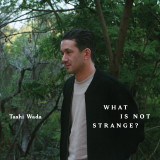
What Is Not Strange? is the first full-length album by Los Angeles-based composer Tashi Wada in over five years, comprising his most far-reaching and impassioned music to date. Written and recorded over a period that encompassed the death of his father and the birth of his daughter, the album sees Wada reflecting inward to explore broad narratives - being alive, mortality, finding one's place in the world - through new modes of ecstatic, song-based expression. While the denser forms, stark contrasts, and overt surreality may carry a different weight than Wada's earlier work, which elicited perceptual effects with minimal means, the heart of What Is Not Strange? is still in experimentation and unforeseen outcomes.
Streng limitierte Neuveröffentlichung auf blauem Vinyl der 1985er Mini-LP der australischen Indie-Rock-Legenden Crime & The City Solution. 'Just South Of Heaven' wurde in der "Londoner Besetzung" mit Simon Bonney, den ehemaligen Birthday-Party-Größen Mick Harvey und Rowland S. Howard, Rowlands Bassisten-Bruder Harry Howard und dem Schlagzeuger Epic Soundtracks (früher bei Swell Maps und Jacobites) aufgenommen. Die Platte präsentierte einen verfeinerten Sound im Vergleich zu ihrer selbstproduzierten EP und wurde zwischen den Hansa Tonstudios in Berlin und The Strongroom in London mit Toningenieur Flood (a-ha, Depeche Mode, Erasure) aufgenommen. In einem Interview mit Uncut erklärte Harry: "Die erste EP, 'The Dangling Man', war ein bisschen roh. Für 'Just South Of Heaven' haben wir versucht, eine elegantere Platte zu machen, und das hat ganz gut funktioniert."
- A1: Happy (Feat Mark Foster)
- A2: Check The Technique (Feat Tony D, Jazzy Jeff, Agent 86)
- A3: 1975 (Feat Diagrams)
- B1: Still Here (Feat Gita Langley)
- B2: Travis
- B3: Dancer (Feat Mel Uye Parker)
- C1: The Ballad Of Roza Shanina (Feat Ed Harcourt)
- C2: Still Life Freefall ( Feat Kate Rogers)
- C3: A2B (Feat Mystro, Masta Ace And Pete Simpson)
- D1: Favourite Game (Feat Jake Emlyn)
- D2: Sweethome
- D3: Mercury Rising
repressed !
'Mercury Rising' is the third studio album to be released by Rae & Christian. The duo weave together exceptional musicianship paired with a British song writing sensibility and the finest elements of studio production. 'Mercury Rising' was created at producer/musician Steve Christian's studio in Yorkshire with additional recording at songwriter/vocalist/DJ Mark Rae's London base. In London a song writing bond was formed with Ed Harcourt and Gita Langley who make excellent contributions with vocals, songs, strings and keys. Sam Genders of Diagrams threads a story of redemption lost on the Ubahn on '1975', Kate Rogers is on imperious form and rising star Jake Emlyn unravels a whole new level of microphone skills on 'Favourite Game'.
The international guests include the one-and-only Jazzy Jeff and Australia's Agent 86 dealing out world class scratch treatments on 'Check The Technique' (Tony D's vocals taken from a session recorded at the birth of Grand Central Records), Brooklyn rapper Masta Ace and Mark Foster of Foster The People, a collaboration born from Mark's L.A. excursion.
'Mercury Rising' is the first new material in many years from R&C. Their 1998 Mercury Music Prize nominated debut 'Northern Sulphuric Soul' ("Vitally fresh and timelessly classic...deserving a place alongside Massive Attack's Blue Lines' Uncut) and 2002's 'Sleepwalking' ("Another triumph, brimming with soulful, languid grooves, deft samples and well-chosen guest singers' Q Magazine) were both released on their Grand Central Records label (Aim, Riton, Boca 45, Only Child), a defining imprint of the late 90s soul/funk/hip-hop/beats scene. Guest vocalists over the two albums included Bobby Womack, Texas, The Congos, The Pharcyde, The Jungle Brothes and Jeru The Damaja.
'When Can' is a journey through the realms of musical serendipity, an ode to the unexpected twists of collaborative intuition. Conceived in the spring of 2012, this masterpiece is the culmination of a decade-long friendship between Reimer Eising aka Kettel, and Lennard van der Last aka Secede, two of the most talented electronic music producers from The Netherlands.
'When Can' is not just a collection of songs; it's a seamless continuum where each track breathes life into the next. As the listener delves into the sonic story, the music leads to uncharted territories, incorporating ambient and cinematic sounds and blending them with reminiscences from Renaissance to Baroque music. Far from a preconceived plan, the album organically unfolded, capturing the essence of the musical exploration from these two brilliant minds.
More than a decade after its birth, Lapsus is proud to release 'When Can' for the first time on vinyl. For this meticulously curated deluxe edition all the tracks have been remastered, and the artwork has been updated by Basora studio. And there's much more inside: two lithographic prints featuring original paintings by Jeroen Advocaat plus an extra 10" including the unreleased tracks 'Zipvanes' –a 10 minutes alternative cut of 'Ringvanes'– and 'Spoonful'.
red LP[26,85 €]
The Dream Of Delphi is an ode to motherhood created in LA, Natasha’s second home, during the Covid-19 pandemic. It’s a sonic archive of a time when Natasha birthed her daughter Delphi earth side. The record weaves together ten song poems, documenting the polarity of navigating both an exterior world that was seemingly turning upside down, whilst also experiencing theprofoundly personal and transformational early moments of mothering Delphi, named after the Greek Oracle, the ancient future teller. The music became Natasha’s sanctuary, born out of stolen trips to the studio, where each track was improvised and completed in a few hours and chronologises her diary like offerings over a period of two years; from “The Midwives Have Left”; to writing a “Letter To My Daughter”; and all the way through to “Waking up”, as well as a cover of her daughter’s favourite song, “Home”.While the storytelling behind Bat For Lashes’ previous albums have traditionally used otherworldly narratives and female lead characters (e.g. ‘Laura’, ‘Daniel’ and ‘The Bride’), for the first ti me, The Dream Of Delphi is about Natasha’s personal experience of the magical and sometimes melancholy intimacy of early motherhood. This record creates a more private form of mythology around the music than her previous work. The Dream Of Delphi touches on more of an instrumental “Bat For Lashes” world, and shows Natasha to be both a confident composer and craftswoman of intimate landscapes. While the music creates a more womb-like, ambient space for the listener, it still leaves ample room for her signature dream pop songwriting to vibrate through. Natasha has worked with Brad Oberhofer, Mary Lattimore and Jack Falby on this record.
black LP[26,85 €]
The Dream Of Delphi is an ode to motherhood created in LA, Natasha’s second home, during the Covid-19 pandemic. It’s a sonic archive of a time when Natasha birthed her daughter Delphi earth side. The record weaves together ten song poems, documenting the polarity of navigating both an exterior world that was seemingly turning upside down, whilst also experiencing theprofoundly personal and transformational early moments of mothering Delphi, named after the Greek Oracle, the ancient future teller. The music became Natasha’s sanctuary, born out of stolen trips to the studio, where each track was improvised and completed in a few hours and chronologises her diary like offerings over a period of two years; from “The Midwives Have Left”; to writing a “Letter To My Daughter”; and all the way through to “Waking up”, as well as a cover of her daughter’s favourite song, “Home”.While the storytelling behind Bat For Lashes’ previous albums have traditionally used otherworldly narratives and female lead characters (e.g. ‘Laura’, ‘Daniel’ and ‘The Bride’), for the first ti me, The Dream Of Delphi is about Natasha’s personal experience of the magical and sometimes melancholy intimacy of early motherhood. This record creates a more private form of mythology around the music than her previous work. The Dream Of Delphi touches on more of an instrumental “Bat For Lashes” world, and shows Natasha to be both a confident composer and craftswoman of intimate landscapes. While the music creates a more womb-like, ambient space for the listener, it still leaves ample room for her signature dream pop songwriting to vibrate through. Natasha has worked with Brad Oberhofer, Mary Lattimore and Jack Falby on this record.
In The Red Records is proud to announce a previously unreleased new album by Brooklyn-born master of minimalism Alan Vega, Insurrection. The eleven songs here showcase the unparalleled vision and uncompromising force from one of the most influential artists of all time. Alan Vega was born in Brooklyn in 1938. He co-founded the legendary New York City punk band Suicide with Martin Rev in 1970. Suicide’s groundbreaking 1977 debut is considered one of the most influential albums of all time. Vega considered his solo records the audio counterpoint to his visual art that reflected the world around him while simultaneously exploring universal themes. It makes his work as relevant today as it was when he created them. It was during his highly experimental period beginning in the late ’80s that he began working with Liz Lamere, who became the most crucial collaborator of his solo career until his death in 2016. Lamere, along with Jared Artaud, resurrected these newly unearthed collection of lost recordings, which they co-produced and mixed. Lamere and Artaud spearhead the Vega Vault project, which aims to bring rare, unreleased and back catalog work spanning Alan Vega and Suicide’s career to the public for the first time. On Insurrection, Lamere says: “Insurrection was created in the time period around 1997/98, after Mutator and prior to Vega’s 1999 release of 2007 and captures the intense energy of NYC in the ’90s rife with crime, killing, hate, fascism, racism, and moral bankruptcy. You can hear the tortured souls floating through this album. Post-Gulf War angst still enveloped Alan. He was having premonitions about a major terror attack in the US, well before 9/11. The upcoming birth of his son raised further awareness of the state of our world. All these emotions are mirrored in the sounds he magnetized. And true to Vega form, there remains hope and empowerment coursing through the tracks. In the almost three decades of going into the studio with Vega, we recorded significantly more material than the seven albums released. Vega’s intention was to experiment with sound which would become the canvas for the poetry that reflected his vision of the universe. Because the goal wasn’t to make albums, he had no timeline or constraints and would freely follow new paths uncovered along the way.”
- A1: To Tomorrow
- A2: Believe In Yourself
- A3: Believe In Yourself (Strings Version)
- A4: A Powerful Enemy Appears
- A5: Difficult Battle
- A6: Crushing Defeat
- A7: Sign Of Victory
- A8: Great Comeback
- A9: Super Saiyan God
- A10: Reconciliation
- A11: Beerus' Planet
- A12: Beerus' Teatime
- A13: Beerus' Madness
- A14: Vegeta's Strength
- B1: Team Dragon's Theme
- B2: What's Taking Goku So Long!?
- B3: Under The Blue Sky
- B4: Higgledy-Piggledy Town
- B5: Scene Of A Party
- B6: A Romantic Night
- B7: Like Those Clouds
- B8: Scene Of A Southern Island
- B9: Fire Dance
- B10: Fate Of The Earth
- B13: I’m The Greatest In The World
- B14: Infinitely Expansive Grand Universe
- C1: Birth Of A God
- C2: Delightful Friends From Pluto
- C3: Incident
- C4: Probing Each Other
- C5: Cha-La Head-Cha-La (Days Of Battle)
- C6: Delightful Days
- C7: Gods Of Destruction Invitational Fighting Tournament
- C8: Champa's Theme
- C9: Chubby Waltz
- C10: Resurrected Frieza
- C11: Frieza's Plot
- C12: Premonition
- C13: Terror Of The Frieza Army
- D1: Fear That Can’t Be Erased
- D2: Into Battle
- D3: A Close Battle
- D4: Frieza's Chosen
- D5: Golden Frieza's Theme
- D6: Tough Opponent
- D7: Time To Fight Back
- D8: Waves Of Battle
- D9: Blue Saiyan
- D10: Regret
- D11: End Of A Desperate Battle
- B11: The Pilaf Gang's Scheme
- D12: Endless Training
- D13: Gods Of Destruction Invitational Fighting Tournament Begins!
- B12: The Pilaf Gang Flees
DRAGONBALL SUPER is a Japanese anime produced by Toei Animation Studios. Scripted by original Dragon Ball author Akira Toriyama, it follows his work and begins shortly after my defeat of Boo in Dragon Ball Z..
"Four years after Boo's death, peace has returned to Earth, and everyone is living in peace.
Goku has become a farmer, and Vegeta spends time with his family. However, the desire to train and grow stronger never leaves them.
Goku goes to train with Master Kaio, who tells him that a powerful enemy has awakened from a 39-year slumber: Beerus, God of Destruction. The latter is looking for a warrior who appeared to him in a dream, the Divine Super Saiyen, against whom he wishes to measure himself."
The anime has been broadcast since 2017 in France on Toonami in a censored version, then in an uncensored version 1 month later. There are 131 episodes and 2 features.
The anime doesn't resume until 2025.
- 1: To Be Chosen
- 2: Child Of Two Worlds
- 3: Take Flight
- 4: A Warrior’s Heart
- 5: Welcome To Hometree
- 6: The Sarentu Moot
- 7: On The Hunt
- 8: First Strike
- 9: Return Of The Sky People
- 10: Across The Boundless Range
- 11: Glade Of Light
- 12: Forest In The Sky
- 13: The Silk Harvest
- 14: Revelations
- 1: First Flight
- 2: Ash On The Winds
- 3: The Lodge
- 4: End Of The Line
- 5: Wind Flutes Call
- 6: Eywa’s Blessing
- 7: Zakru Never Forget A Friend
- 8: Take The Fight To Them
- 9: We Charge As One
- 10: Shadows Of The Past
- 13: The Woods Grow Still
- 14: Flight Of The Kinglor
- 15: New Beginnings
- 16: Going Home
- 17: They Have Made Us Warriors
- 18: The People’s Cry (Main Theme)
- 11: Wild Sky
- 12: Pandora Will Be Free
2LP Soundtrack for UbiSoft video game in the Avatar series on Translucent Blue & Pink Vinyl Set after the events of the first Avatar film, you’ll embark on a journey across the Western Frontier, a never-before-seen continent of Pandora, as you join other Na’vi clans to protect Pandora from the formidable forces of the RDA. Created in collaboration with Disney and James Cameron’s production company, Lightstorm Entertainment, you will experience a first-person open-world action-adventure game exclusively developed to maximize the power of new-gen consoles and PC. Abducted by the human militaristic corporation known as the RDA, you, a Na’vi, were trained and molded to serve their purpose. Fifteen years later, you are free, but find yourself a stranger in your birthplace. Reconnect with your lost heritage, discover what it truly means to be Na’vi, and join other clans to protect Pandora from the RDA.