
Поиск:bla bla
Стили
Все

4
This is the first vinyl release of our label, from the Canary Islands to the world! The founder and Spanish producer Luis Pitti captures in this release some of the sounds and style that marked an era on our beloved island. On this record you will find Oldskool Hardcore sounds, breaks, enveloping pianos, synths and sounds from the 90s fused with a modern and fun touch.
Released in a limited edition by ExperimentalBass Records on 150 gram black viny

- A1: Bennasar's Wood - Namesakes On Businnes
- A2: Luis Pitti - Oriental Connection
- B1: Peejay - Return Of The Hardcore
- B2: Loop - Bouncin Ball (Ez Remix Ft. Bennasar)
released limited edition 150 copies 150 gr colour black

released limited edition 150 copies 150 gr colour black

- Can't We Be Friends
- Isn't This A Lovely Day?
- Moonlight In Vermont
- They Can't Take That Away From Me
- Under A Blanket Of Blue
- Tenderly
- A Foggy Day
- Stars Fell On Alabama
- Cheek To Cheek
- The Nearness Of You
- April In Paris
The complete album - limited edition pressing on 180g crystal clear vinyl
Although both Ella Fitzgerald and Louis Armstrong had met and performed and recorded a number of singles together during 1940s for Decca, they wouldn't be heard on LP together until 1956 when producer Norman Granz paired the two for this first album session, Ella & Louis, which became an immediate hit. Two further sessions under Granz, followed, Ella & Louis Again, and Porgy & Bess. All three albumswere both critically acclaimed and commercial successes - appealing to audiences in and beyond the confines of jazz per se. Ella & Louis features the incredible Oscar Peterson Trio plus legendary drummer Buddy Rich. As one of the most iconic and fascinating jazz albums ever produced, its appeal and commercial sales haven't waned during the sixty-nine years since its first release. "Ella & Louis is one of the very, very few albums to have been issued in this era of the LP flood that is sure to endure for decades." - ***** Nat Hentoff, DownBeat

8
The roots of African music are always open to new possibilities. This is revealed in the music of this unprecedented quartet. Alongside the Malian singer Rokia Traore', Mamah Diabate, Malian griot and djeli ngoni player, has been playing for several years with Stefano Pilia (Afterhours, Massimo Volume). Now, their path intertwines with the artistic and human partnership between Jabel Kanuteh, Gambian griot and kora virtuoso, and percussionist Marco Zanotti(Classical Afrobeat Orchestra, Cucoma Combo). The union of these two pairs develops unusual geographies and architectures, where dual African and Italian identities merge into one universal sensibility. The predominant Malian and Gambian modes chase each other, but all is fused into a broader rhythm factory or embellished by more abstract and liquid experimental digressions. The curiosity and pliability of the individual musicians search for a language that is both current and contemporary, always poised between ancient and modern, landscape and narrative, with jazz, rock and folk influences.

- A1: (Part I)
- B1: Prelude (Part Ii)
- B2: Maiysha
- C1: Interlude
- C2: Theme From Jack Johnson
The capstone of Miles Davis’ electric period, Agharta reigns as a funk-rock fireball — a blazing comet streaked energy and elan, a fearless organism feasting on adventure and freedom, a seven-headed Godzilla stomping its way through Osaka, Japan. Recorded on February 1, 1975 at Osaka Festival Hall at the first of a two-show stand, the double album offers an endless abundance of surprises and shifts — as well as a road-proven ensemble whose chemistry and abilities equal that of any of Davis’ celebrated bands. If the true measure of jazz is the capacity to adapt to the moment and challenge perception, Agharta is consummate.
Sourced from the original master tapes, housed in a Stoughton gatefold jacket, and pressed at Fidelity Record Pressing in California, Mobile Fidelity’s numbered-edition 180g 33RPM 2LP set of this epic live release presents it in audiophile sound on a domestic pressing for the first time. Offering greater degrees of separation, detail, and richness than the compressed CD editions and more clarity, openness, and presence than older vinyl copies, this version of the 1975 release helps bring the concert stage to your home. Just make sure your turntable and speakers are up to the challenge of Davis and Co.’s explosive performances — and producing the decibels they demand.
Teeming with vibrant colors, tones, and pace, Mobile Fidelity’s reissue captures the hear-it-to-believe-it flow, sweep, and moodiness of the music. Though the group honors looseness and freedom with religious verve, the specificity and scale rendered by this remaster allows you to detect methods behind the alleged madness that are often otherwise harder to discern. This insight extends to the understated changes in volume, harmonics, and phrasings. In many ways, you can listen as Davis himself did that early February evening as he helped coordinate the overall direction and decided on whether to blow his wah-wah-wired trumpet or take a turn on the organ.
Tellingly, Agharta would likely never have been made if not for Davis’ ventures overseas and, specifically, to the Land of the Rising Sun. Having for years faced a backlash on his native soil for his choices to experiment and blow past all known borders, Davis was welcomed with open arms in Japan. The concert documented on Agharta — as well as the day’s later show, captured on the equally exciting Pangea — stemmed from a sold-out three-week tour that would ultimately mark Davis’ final public appearances for years, as he soon settled into semi-retirement and nursed the wounds connected to an unprecedented stretch of restless and relentless output.
For all the band-fueled merit of Agharta — and there’s plenty, given the cast of saxophonist Sonny Fortune, bassist Michael Henderson, drummer Al Foster, percussionist James Mtume, and guitarists Reggie Lucas and Pete Cosey seemingly blasts off to outer space and travels distant galaxies by the time this minimally edited record runs its course — Davis’ own playing often remains overlooked. As critics Richard Cook and Brian Morton observed, it is “often fantastically subtle, creating surges and ebbs in a harmonically static line, allowing him to build huge melismatic variations on a single note.” He attacks like a man on a mission, out to prove naysayers wrong and bent on trailblazing another new path forward. Convention and skeptics be damned.
Noisy and furious, dark and discordant, abstract and off-balance, radical and intense, abrasive and atmospheric, strangely beautiful and hypnotically eccentric: Agharta evades simple description, and refuses to be pinned down in any established category — rock, jazz, punk, ambient, prog, avante-garde, or otherwise. Shot through with trench-deep grooves, screaming riffs, scalding solos, and free-improv leads, its cosmic thrust comes on as the equivalent of an animated pointillist painting comprised of millions of textured dots, dashes, and dabs that hold your attention so raptly you want to revisit the ideas again and again.
Always steps ahead of everyone else, Davis knew what he was doing even when Agharta debuted in Japan before later hitting U.S. markets. Though “Maiysha” and “Theme from Jack Johnson” are identified in the track listing, the record contains a number of uncredited references to other Davis works, including a nod to “So What.” This decision to bypass labels only adds to the art of the reveal — the rare black magic in which Agharta expertly deals.


This album is both a musical and political document that tells the story of one of the most brutal massacres that took place in 1976 in a Palestinian refugee camp during the Lebanese Civil War. Pianist Gaetano Liguori, along with Giulio Stocchi and Demetrio Stratos (the legendary singer of the band Area), composed this album, a gut-wrenching blend of free jazz, poetry, and Mediterranean music. The first edition was released in 1978 and, after almost 50 years, unfortunately, nothing seems to have changed. If we call ourselves human, we cannot help but grieve for the suffering of the Palestinian people. This is the third edition of the album, and as with the previous releases, all proceeds will go to charity. This time, we have chosen to donate the funds to UNRWA.

The scottish singer-songwriter and multi-instrumentalist James Yorkston and the english guitarist with a fluid fingerpicking touch, David A. Jaycock, already played together in the first formation of the experimental folk ensemble Big Eyes Family Players. Their encounter with Swedish saxophonist Lina Langendorf gives rise to a little gem of pure acoustic candour, perfectly balanced between chamber avant-garde and neo-folk. As on an endless autumn evening in front of a lake in Finland or Estonia, the trio's nordic soul creates atmospheres that recall hidden nostalgia. In a process of rarefied sound matter, elegiac paintings spring up, moments that flow slowly and silently in a tension that is always suspended and unresolved. Soft, crepuscular passages, at times sharp and cold guitar, but also the velvety breath of the nickelharpa, combine with a saxophone that still blows dramas of distant Norwegian fjords, but can also become more Mediterranean and arabesque. The music becomes like a warm warmth around the fire, reflecting a hidden twilight zone of the soul, in a quiet, gentle whisper between poetic abstraction and arpeggiated themes of more recognisable narrative melody, typical of a certain Northern folklore.
Co-Release with We are busy bodies.

- 1: The Barbarian
- 2: Take A Pebble
- 3: Knife-Edge
- 4: The Three Fates A. Clotho B. Lachesis C. Atropos
- 5: Tank
- 6: Lucky Man
Supergroups existed before Emerson, Lake & Palmer formed in 1970. And, as we all know well, many came after. But few, if any, matched the English trio’s chemistry and its elevated combination of virtuosity, vision, and verve. Having influenced a multitude of followers, ELP’s prowess was obvious from the start. The band’s self-titled debut stands as a towering statement of creative imagination, execution, and discipline more than five decades after its original release.
Mastered at MoFi’s California studio, housed in a Stoughton jacket, and pressed at Fidelity Record Pressing, Mobile Fidelity’s numbered-edition 180g 33RPM LP of Emerson, Lake & Palmer presents the benchmark album in audiophile sound. Clear, dynamic, and balanced, this collectible edition honors the perfectionist approaches that both informed the playing and recording of the record.
Distinguished with black backgrounds, this reissue brings to light the epic scope, tonal depth, and mind-bending degrees of musicianship on display. Aspects — textures, nuances, effects, melodies, tempo changes — that go hand-in-hand with the trio’s compositions and interplay are rendered amid broad soundstages and delivered with pinpoint detail. Whether you’ve owned multiple copies of this touchstone or seeking out your first version, you’ll relish the presence, separation, imaging, and crispness that help make every song come across as if the group has set up shop in your listening space.
Opening the door to the seemingly infinite possibilities of progressive rock while steering clear of excess, Emerson, Lake & Palmer achieved a rare feat in that its complex, cerebral music didn’t prevent it from attaining mainstream success. The gold-certified effort launched the career of a band that would sell tens of millions of records. It also landed a Top 50 single in the form of the ballad “Lucky Man,” whose vocal harmonies, folksy strumming, multi-tracked instrumentation, and breakthrough Moog solo almost feel quaint in the face of the other fare on the album.
Comprised of genre-defying originals and hybrid arrangements of two classical pieces, the album Rolling Stone originally and rightly said is “best heard as a whole” matches outrageous ambition with the otherworldly skills of three musicians who remain among the finest to ever pick up their respective instruments. While Emerson soon drew the lion’s share of headlines for his ability on keys — clavinet, Moog, piano, Hammond organ, and pipe organ included — Greg Lake’s aptitude on guitar and bass, along with well as Carl Palmer’s monster talents behind the kit, created a three-headed hydra that devoured everything in front of it.
That extends to the radical reinterpretation of Bela Bartok’s “The Barbarian” that begins the LP, a performance that in less than four-and-a-half minutes runs the gamut from distorted to churchy to angular and blustery. More classical flourishes, keyboard wizardry, hard-rock heaviness, and gothic signatures emerge throughout “Knife-Edge,” which reimagines music by Leos Janacek and J.S. Bach — and ultimately invites you to explore a cathedral of sound teeming with separate bursts of keys and percussion.
And did someone say “drumming”? Check out Palmer’s monster salvo on “Tank,” a rhythmic showcase that marches out with knee-bent notes and mirror-reflected passages. Or dive into the mythological suite “The Three Fates.” Replete with three parts and Emerson playing the pipe organ at Royal Festival Hall, it shoots off sonic fireworks via sophisticated arpeggios, jazz improvisations, dancing counter-meters, sizzling chords, and a few explosions. Please don’t hold anyone at MoFi responsible if your system cannot handle it; this is heady stuff.
Indeed, everything on Emerson, Lake & Palmer is there for a purpose. Whether you aim to attempt to dissect all of the notes, shifts, and polyrhythmic bluster or just want to absorb this album as one living, breathing organism, this version invites you to do both as many times as you desire.

At the end of the 1980s, Mariolina Zitta approached the world of natural sounds, studying musicology and developing a passion for speleology. Her encounter with Walter Maioli was fundamental, guiding and influencing her definitive research into sound archaeology and the primitive sources of musical acoustic phenomena. In these recordings Mariolina conducts a magical ritual as a cave priestess, celebrating the icons par excellence of the mysteries of the an ancestral enchantment on the border between consciousness and dreams, a symbolic liturgy of primordial reverberations, echoes and whistles. Edition of 200 copies.
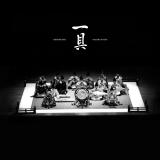
- Kangen, Sandaien Ichigu- I - Hyojo No Choshi
- Kangen, Sandaien Ichigu- Ii - Jo
- Kangen, Sandaien Ichigu- Iii - Ha
- Kangen, Sandaien Ichigu- Iv - Kyu
- Bagaku, Shunnoden Ichigu- I - Ichikotsucho No Choshi
- Bagaku, Shunnoden Ichigu- Ii - Yusei
- Bagaku, Shunnoden Ichigu- Iii - Jo
- Bagaku, Shunnoden Ichigu- Iv - Satto
- Bagaku, Shunnoden Ichigu- V - Juha
- Bagaku, Shunnoden Ichigu- Vi - Tessho
- Bagaku, Shunnoden Ichigu- Vii - Kissho
11
Gagaku is the oldest of the Japanese performing arts, with a history more than a thousand years old. The term refers to Japanese classical music and dance, traditionally performed by families of musicians linked to the ancient Imperial court, and later passed down in Buddhist temple ceremonies and Shinto shrines. Shiba Sukeyasu, founder and director of the Reigakusha ensemble, descends from the Koma clan, whose origins date back to the end of the 10th century. The recordings partly reflect repertoires borrowed from Chinese music between the 5th and 9th centuries. The incredible variety of timbres of the instruments greatly amplifies our exotic imagination: the eternal breath of the flutes (ryuteki and hichiriki) creates a sort of suspension of time, together with the hypnotic and hallucinatory atmosphere of the mouth organs (shō). The meditative tone of the string instruments (bika and koto) that punctuate the voids and silences is impressive, as is the enigmatic percussion section, with the tolling of the gong (shōko) and the calibrated beats of the drums (taiko and kakko).

10
'Fully licensed, all tracks restored & remastered for the 1st time!
'Lots of Loving was the third album, originally released in 1980 by Freedom Sound Record, by legendary and controversial Jamaican deejay and singer Ranking Dread.
'Recorded at Channel One studio, with Barnabas as engineer and produced by Sugar Minott the album featured musicians from the Black Roots Players, Sly & Robbie, Steeely (Steely & Clevie) and many others... Voiced and mixed at King Tubby's Studio!
'One of the most dangerous rub-a-dub deejay lp’s!'

- A1: Secret Harbour
- A2: The Harvest Is Not Here
- A3: Days Of Assembly
- A4: On Sorrow’s Embankment
- A5: The Chalice And The Blade
- B1: When Light Be Gone
- B2: The Great White Hopeless
- B3: My Frail Ambassador
- B4: The Gods Are Slow To Forgive
- B2: Apollo Of Hyperborea
At the end of the project’s 20th anniversary celebrations, ROME tolls in the next era of the band with two fresh and visionary albums: ‘The Hierophant’ and ‘The Tower’. Whatever the great poets have affirmed in their finest moments is the nearest we can come to an authoritative religion or truth. It is in this spirit that ROME welcomes the listener into the temple of ‘The Hierophant’, ROME’s final album of its second decade of existence.
‘The Hierophant’ represents the enigmatic accompanying piece to the more introspective and seclusive recent work (of ‘The Tower’). Starting its journey during ‘Days of Assembly’, from the opening ‘Secret Harbour’ along ‘On Sorrow's Embankment’ to its logical finale in the mythical North with ‘Apollo of Hyperborea’, ‘The Hierophant’ is a spiritual travelogue seeking out the word and world of this ‘My Frail Ambassador’, the proclaimer of the sacred truce, interpreter of the ancestral laws and our guiding light through these darkened times.

- A1: Get Up I Feel Like Being A Sex Machine
- A2: Brother Rapp (Part I & Part Ii)
- A3: Bewildered
- A4: I Got The Feeling
- B1: Give It Up Or Turnit A Loose
- B2: I Don’t Want Nobody To Give Me Nothing
- B3: Licking Stick
- C1: Lowdown Popcorn 9.Spinning Wheel
- C2: If I Ruled The World
- C3: There Was A Time
- C4: It’s A Man’s Man’s Man’s World
- D1: Please, Please, Please
- D2: I Can’t Stand Myself (When You Touch Me)
- D3: Mother Popcorn
James Brown wants to know one thing before he and his band begin Sex Machine. “Can I get into the thing, really?,” he asks. His cohorts enthusiastically respond in the affirmative. And for the next hour and change, Mr. Dynamite gets into it and more, turning in a sweat-soaked, feet-moving, hip-swiveling, emotion-purging, in-the-red, drop-everything-you’re-doing-and-dance performance for the ages. Ranked by Rolling Stone among the 500 Greatest Albums of All Time, the sweeping 1970 effort towers as a testament to Brown’s inimitable legacy as well as the peak powers of his voice, vibrancy, and bands.
Sourced from the original master tapes, pressed at Fidelity Record Pressing, and housed in a Stoughton gatefold jacket, Mobile Fidelity’s numbered-edition 180g 33RPM 2LP set presents Sex Machine in audiophile sound for the first time. It explodes with the energy the lightning-strike music demands. Dynamic, immediate, present, airy: Everything from the brassiness and fluidity of the horns to the snap and decay of the snare to the swell and carry of the organ comes across in full-range perspective.
Then there’s Brown’s superhuman singing, which here emerges with a purity, naturalism, and transparency that ensure you feel everything. Screeching, shouting, pleading, moaning, preaching, stinging, commanding, testifying, crooning, humming: The Godfather of Soul contributes one of the finest vocal performances known to man. This definitive 55th anniversary reissue of Brown’s monster funk statement further exhibits a combination of clarity, solidity, separation, and imaging that helps bring to light what he and his crack ensembles committed to tape. Both in the studio and on the stage.
Just how lifelike does this reissue sound? Senior Mobile Fidelity Sound Lab engineer Krieg Wunderlich, who handled the remaster, notes: “There were some artifacts that sounded a bit like mistracking. But they turned out to be breath blasts on the vocal microphone. That is part of history. JB was workin' hard, and breathin' hard. And there was an edit the timing of that was truly strange. Again, a part of history.”
Originally marketed as a live album, Sex Machine contains six songs recorded in the studio and later overdubbed with canned crowd noise and reverberation. Save for “Low Down Popcorn,” the tracks on the latter half stem from a phenomenal performance captured in October 1969 at Bell Auditorium in Brown’s adopted hometown of Augusta, GA. The special relationship between the singer, the audience, and the location is palpable.
As the 1960s gave way to a new decade, Brown experienced immense success and dealt with unexpected change. Soul Brother Number One soon expanded his idea for an official live album captured in Augusta when the ensemble that backed him on that date morphed into the original version of the world-famous J.B.’s just months after the show. The virtuosic abilities, sticky chemistry, and rhythm-forward nature of the J.B.’s prompted him to book a one-off session in Cincinnati, OH, on a late July night.
Anchored by brothers William “Bootsy” Collins and Phelps “Catfish” Collins, the group — as well as two different drummers — laid down a nearly 11-minute rendition of “Get Up I Feel Like Being Like a Sex Machine” and a thrilling medley of “Bewildered,” “I Got the Feeling,” and “Give It Up or Turnit a Loose.” A pair of then-recent studio singles cut in separate locations in 1969, “Brother Rapp” and “Low Down Popcorn,” each featuring his prior group, took care of the second LP worth of material that complements the originally planned live set.
Complicated? Somewhat. Unusual? Definitely. But just as he elevated the expectations for all present and future R&B artists, Brown not only makes it all work. He makes it positively electrifying.
“Get Up I Feel Like Being Like a Sex Machine” is alone deserving of a dissertation on the art of funk music, seeing it moves up and down akin to an oil derrick, witnesses Brown unleashing a trademark series of grunts, squeaks, and “good god” asides, and glides to a hypnotic groove that won’t quit. Or look to the syncopated rhythms of “Brother Rapp (Part I and Part II),” one of multiple pieces here that signify the point where Brown began viewing every instrument as a percussive tool. Brown closes the three-song medley with his new band with a skedaddling “Give It Up or Turnit a Loose,” which provides jolts on the order of sticking your finger into a socket.
Not that the actual live material falls short in any way. Setting an insistent tempo for the vitality that follows, “I Don’t Want Nobody to Give Me Nothing” positions Brown as a role model, leader, and self-sufficient entrepreneur. All simmer and boil, the short and sweet “Licking Stick” dares you to keep pace. The floating, almost comforting “Spinning Wheel” spotlights the instrumental prowess of Maceo Parker and company, and functions as a seamless segue into the tender, horn-saluted “If I Ruled the World.”
And Brown and his mates still aren’t done. Just try to resist the one-two closing punch of “I Can’t Stand Myself (When You Touch Me)” and “Mother Popcorn.” Mercy.
Ain’t it funky? Sure ‘nuff.


- A1: Talk About It (Instrumental)
- A2: Genocide (Instrumental)
- A3: It's All On Me (Instrumental)
- B1: All In A Day's Work (Instrumental)
- B2: Drakside/Gone (Instrumental)
- B3: Loose Cannons (Instrumental)
- B4: Issues (Instrumental)
- C1: Deep Water (Instrumental)
- C2: One Shot One Kill (Instrumental)
- C3: Just Another Day (Instrumental)
- C4: For The Love Of Money (Instrumental)
- D1: Satisfactioin (Instrumental)
- D2: Animals (Instrumental)
- D3: Medicine Man (Instrumental)
- D4: Talking To My Diary (Instrumental)
Instrumental versions of Dr. Dre's 2015 album, Compton (A Soundtrack by Dr. Dre) released for Record Store Day.

- 1: Protest Song #00
- 2: Sore Throat Syndrome
- 3: Fuck What Fireworks Stand For
- 4: The Ice Age Is Coming
- 5: Please Die!
- 6: The Day The Music Died
- 7: Farewell
- 8: There's A Black Hole In The Shadow Of The Pru
- 9: I’ve Shared Your Lips So Now They Sicken Me
- 10: Hearts
- 11: Dead And Gone
- 12: It's The Limit
American Nightmare's "Year One" collection on 180 gram vinyl for its 25th anniversary. Available again for the first time in decades. Originally released in 2001, the Boston hardcore band’s 25th anniversary release of "Year One" pays tribute to their formative years. This collection unites their first two 7”s, originally released by Bridge 9 Records founder and then-roommate Chris Wrenn, on a 180-gram LP, with all tracks recorded by Kurt Ballou at God City. Originally designed by Jake Bannon (Converge), this edition has been reimagined by Del Jae (Futurismo Records) and singer Wesley Eisold, and comes packaged in a gatefold with an insert of handwritten lyrics and collaged images. "Year One" doesn’t just celebrate a milestone; it reaffirms American Nightmare’s enduring legacy. Their music raised the bar for emotional depth in hardcore, adding a distinctly poetic and existential lyrical approach that set them apart and changed the rules of the scene, paving the way for countless bands that followed

4
Released in limited numbers in tandem with Black Mahogani back in 2004 and never repressed. Black Mahogani II was a departure from Kenny Dixon Jr's usual house based music and featured cuts from Kenny Dixon Jr's late night jazz band sessions
The centrepiece is the eighteen minute 'When She Follows', a deep jazz session skittering live drum rolls into an electric Fender Rhodes, loping acoustic bass and distant saxophone all wrapped up in an amorphous vocal that drifts ever onwards like some epic detroit techno cut replayed by Gil Scott Heron's band in 1970. Incredible music.
'Rectify' follows in a similar mode, jazz in a detroit techno framework, while the final two tracks 'Dirty Little Bonus Beats' and 'When She (Reprise)' are revisions of the main cut, the former altering the bassline, adding vocal sighs and more rhythmic drums, while the latter shifts up the tempo with a wigged out techno synth element.
Stone, cold.
