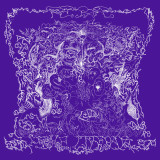
Black Truffle is thrilled to announce a reissue of Chico Mello and Helinho Brandão’s self-titled release from 1984, the first return to vinyl of this classic of Brazilian experimental music with its original cover art and complete track listing. An under-recognised figure whose work inhabits a singular terrain where radical new music techniques and music theatre meet musica popular brasileira, Mello has lived and worked in Berlin since the late 1980s. A student of Dieter Schnebel, Mello played in the 90s iteration of Arnold Dreyblatt’s Orchestra of Excited Strings alongside compatriot Silvia Ocougne, with whom he produced a radical and hilarious deconstruction of MPB classics on Musica Brasileira De(s)composta (an early and rather atypical release on Edition Wandelweiser).
On this release, his only recording predating his move to Europe, Mello works with the alto saxophonist Helinho Brandão, who appears to be otherwise unknown outside Brazil. The record’s six tracks range from solo saxophone improvisation to densely layered ensemble works bridging minimalism, acoustic sound art and a plaintive melodic sensibility that calls up Edu Lobo or Milton Nascimento. Beginning with a dramatic, dissonant wind and string surge from which emerge ominously pounding piano chords, opener ‘Água’ slowly builds in intensity, a halo of clustered vocal harmonies gradually closing in on Brandão’s squealing sax until the piece opens up to reveal a gorgeous passage of melodic singing. The piano accompaniment reduces to tolling bass notes as the voice begins a repeated incantation, suggesting a ritualistic atmosphere reminiscent of parts of Xenakis’ setting of Oresteia. Dissonant, sawing tremolos on the strings climb to a crescendo before disappearing into the sounds of water being poured and splashed into metal vessels, presented not as a field recording but as a percussive element performed by the ensemble. A child’s voice then appears, singing to piano accompaniment the same melody heard earlier in the piece. After a brief solo alto improvisation from Brandão, working with the guttural pops and fleeting melodic gestures of Braxton or Roscoe Mitchell, the remainder of the first side is dedicated to the leisurely unfolding of ‘Baiando’ over the course of twelve minutes. A trio for Brandão on soprano saxophone, Mello on a very period-appropriate phased nylon string guitar and Edu Dequech on bongos, the performance eases its way hypnotically through subtle variations on a set of rhythmic and melodic patterns, almost derailed at points by Brandão’s wild forays into extended technique but held together by Mello’s droning guitar notes.
The second side opens with another multi-part epic for a larger ensemble, ‘Matraca’, which makes use of strings, electric guitars and a wide range of South American percussion instruments. Rasping violin harmonics hover as drum hits, repeated guitar notes and triangle accompany a slowly descending bass glissando. A sudden change in direction introduces a thrumming, incessantly repeated bowed bass tone, beginning a series of episodes of minimalist phasing and pattern variation, the combinations of electric guitars and orchestral instruments giving the ensemble an ad hoc charm like the early Penguin Café Orchestra but with more percussive drive. Eventually the piece is overrun by a cacophony of the titular matracas (a kind of ratchet/cog rattle). Following a lyrical trio improvisation by Mello, Brandão and Gerson Kornin on bass, the final ‘Danca’ focuses entirely on Mello’s layered acoustic guitars and vocals, using this restricted palette to build up a haunting piece of almost orchestral density, reminiscent of the 70s work of Egberto Gismonti in how it thickens a folkish ambience with harmonic sophistication.
Arriving in a starkly beautiful gatefold sleeve and sounding better than ever in its new remaster, one might call the stunning music contained on Chico Mello/Helinho Brandão ahead of its time. But what (other than some of Mello’s own work) produced in the years since its initial release has really touched the organic fusion of minimalism, free improvisation, radical instrumental technique and popular song achieved here? Forty years after its first release, Chico Mello/Helinho Brandão remains music of the future.

Suche:black art music
ohn Fahey’s Takoma label is best known for pushing the envelope when it comes to acoustic guitar playing, but in 1967 it released a record that has become one of the true cult classics of the ‘60s free jazz movement. Charles Martin Simon was an aspiring writer whose artist wife died in 1965. When he tried to pick up the torch and become an artist using her art supplies, he was, in his words, “reduced to nothing,” and thus created an alter ego or “psyche fragmentation,” Charlie Nothing. Under that moniker he became most famous for creating “dingulators,” working guitar sculptures made from parts of American cars; in 1967, though, he recorded The Psychedelic Saxophone of Charlie Nothing/In Eternity with Brother Frederic, an album consisting of two separate saxophone improvisations accompanied only with gong, tabla, and ukelele. Its cover adorned by Nothing’s own hand-drawn art, this record has since become not only something of a “secret handshake” among free jazz fans, but also a classic of outsider art, fitting right next to your Moondog records if not in sound than in spirit. For its first ever reissue in any format, we’ve gone back to the original tapes to present an all-analog release of The Psychedelic Saxophone of Charlie Nothing/In Eternity with Brother Frederic on black vinyl with the original art intact, offering an unfiltered experience of this man’s cracked genius. A memorable look ‘n’ listen to say the least.
- A1: Spoken Introductions By Duke Ellington And Gerry Mulligan
- A2: Hackensack
- A3: Round Midnight
- B1: Now's The Time
- B2: Introduction By Willis Connover
- B3: Ah-Leu-Cha
- C1: Straight, No Chaser
- C2: Fran-Dance
- D1: Two Bass Hit
- D2: Bye Bye Blackbird
- D3: The Theme
- E1: Gingerbread Boy
- E2: All Blues
- F1: Stella By Starlight
- F2: R.j
- F3: Seven Steps To Heaven
- F4: The Theme / Closing Announcement
- F5: Element / Closing Announcement
- G1: Spoken Introduction By Del Shields
- G2: Gingerbread Boy
- G3: Footprints
- H1: Round Midnight
- H2: So What
- H3: The Theme / Closing Announcement
- I1: Miles Runs The Voodoo Down
- I2: Sanctuary
- I3: It's About That Time / The Theme
- J1: Band Warming Up / Voice Over Introduction
- J2: Turnaroundphrase
- J3: Tune In 5
- K1: Ife
- K2: Untitled Original
- K1: Tune In 5
- K2: Mtume
- M1: Directions
- M2: What I Say
- N1: Sanctuary
- N2: It's About That Time
- O1: Bitches Brew
- P1: Funky Tonk
- P2: Sanctuary
Miles Davis' 20-year association as an artist at impresario George Wein's renowned Newport Jazz Festival is a thriving tradition that is celebrated with the release of Miles Davis At Newport 1955-1975: The Bootleg Series Vol. 4.
The 8-LP box set, comprised of live performances by Miles' stellar band lineups in 1955, 1958, 1966, 1967, 1969, 1971, 1973, and 1975, in Newport, Rhode Island, New York City, Berlin, and Switzerland.
The 4th entry in the critically-acclaimed Miles Davis Bootleg Series, contains hours of previously unreleased material. From Miles' debut performance at NJF in 1955 (a hastily arranged jam session featuring Thelonious Monk and Gerry Mulligan, that immediately led to the trumpeter's Columbia signing), to his final public performance of the '70s in 1975, the box set traces the ascendance of Miles' music as the Jazz superstar he has become known to be.
The full-length concert performances alone of Miles' famed ""Kind Of Blue"" Sextet (with Cannonball Adderley, John Coltrane, Bill Evans, Paul Chambers, and Jimmy Cobb), and second great quintet in '66 and '67 (with Wayne Shorter, Herbie Hancock, Ron Carter, and Tony Williams) represent templates that reverberate in jazz and popular music to this day.
- Waldgeist
- Face-Off At Mammoth Mountain
- Wily Stage 1 & Boss (Mega Man)
- Iron Whale (Shovel Knight)
- Ultramarine
- Quick Man Stage (Mega Man 2)
- Wily Stage 1 (Mega Man 2)
- Full Circle
- Needle Man Stage (Mega Man 3)
- Wily Medley (Mega Man 3)
- Mission (Pulstar)
- Ronin
- The Amazing Ryu (Ninja Gaiden)
- The Parasprinter (Ninja Gaiden 2)
- Stage 4-2 & Stage 1-1 (Ninja Gaiden 3)
- Terra Incognita
- Art Thou The Holy One (Panzer Dragoon Saga)
- Atolm Dragon (Panzer Dragoon Saga)
- Quiet & Falling (Celeste)
- Apricot Dreams
- Ultimate Medley (Gimmick!)
- Echoes
Pressed on heavy-weight 3xLP 180g curaçao vinyl GIANTS is an ambitious video game concept album, meticulously crafted over six years by Tokyo-based record label Brave Wave Productions under the direction of Mohammed Taher. The colossal 98-minute album showcases the talents of legendary composers known for their iconic work on series like Mega Man, Ninja Gaiden, Panzer Dragoon, Sonic the Hedgehog, Final Fantasy, among others. The album is a rich tapestry of new, gameinspired compositions from these celebrated artists, paired with innovative remixes from their classic catalogue as reimagined by their contemporaries. A highlight of the album is its emphasis on collaboration, exemplified by original tracks like Ultramarine_the first collaborative effort from Mega Man 2's Takashi Tateishi with Mega Man 3's Harumi Fujita and Sonic Mania's Tee Lopes. Another standout track, Ronin, marks a historic reunion for the Ninja Gaiden composer trio_Keiji Yamagishi, Ryuichi Nitta, and Kaori Nakabai_collaborating for the first time since their work on the NES Ninja Gaiden titles. The collaborative spirit extends to the remixes as well, such as Final Fantasy series composer Yoshitaka Suzuki's cinematic reimagining of Mega Man 2's Wily Stage, featuring Bayonetta co-composer Takahiro Izutani on acoustic guitars and producing, as well as Celeste composer Lena Raine's tranquil rendition of Panzer Dragoon Saga's Art Thou the Holy One, crafted in harmony with original composer Saori Kobayashi. GIANTS transcends traditional boundaries, featuring a diverse array of genres and styles brought to life by over two dozen talented musicians, making it a celebratory anthology of game music's rich history and evolution, led by Brave Wave's in-house rock band Super Strikers and a legion of legendary game composers.
For the very first time on vinyl: the legendary show in its entirety!Live
music is fleeting
You can't touch it, hold it, smell it or taste it, and what you see and hear one
second is gone the next. Live albums, however, are forever. For those in
attendance, they allow the ability to relive an aural moment in time, and for the
rest of us, it's the ultimate souvenir, a time-stamped milestone that captures an
artist/band as they were. In Savatage's case, "Japan Live '94" captures a crucially
mportant and significant tour for a band that, after experiencing gut-wrenching
tragedy and massive personnel changes, was on undeniably shaky ground but
stood tall, nonetheless. It was the first stop on a trip that ultimately forge onward
to Sarajevo and Siberia - a journey that, 30 years later, has no end in sight.
This double LP marks the first time in audio form that the show is available in its
entirety with all 16 songs.
All songs newly mastered for vinyl. With brand new liner notes and enhanced
artwork including rare memorabilia. 2LP 180g Black vinyl
Fera’s trajectory sticks out like a sore thumb, you need to invest time, carefully divided between body & mind, to truly take a deep dive into his audacious output. After the acclaimed ‘Stupidamutaforma’ and ‘Corpo Senza Carne’, Fera is back with ‘Psiche Liberata’, an oblique, imperfect and broken record, in other words, exactly the type of magical voyage you want to be on. The mind, finally liberated.
Fera is Andrea De Franco, electronic composer from Southern Italy now residing in Bologna, also known for his work as visual artist/designer and member of the Undicesimacasa collective. His musical cosmos is profound and imaginative, intergalactic atmospheres that condense fragmented IDM, scintillating textures, distorted synthscapes, crunchy technoid rhythms and swirling abstractions that weave gently, sometimes moody and stark, more often celestial and awe-inspiring.
Mixed in Berlin by Steve Scanu ‘Psiche Liberata’ encapsulates Fera’s dense and intricate thought process in contrast with his simple and direct approach to writing and recording that finds its more natural output in his rapturous live sets where a mono signal runs through a few analog pedals transforming instantly into menacing alien grooves and fluid ecstasis.
Like ‘Psiche Liberata’s artwork, hand-drawn by Fera, every detailed miniature leads to a single cell of sound, tracks collide against each other in a psychotic kaleidoscope where every safe space is confronted with subsequent noise, alterations or interruptions. The black terror of ‘Celestial Anacusma’ is followed by the space-jazz banquet of ‘Milk Tears In The Hug Chamber’ doped up cyber Sun Ra extravaganza featuring Laura Agnusdei and Luigi Monteanni (Artetetra) on saxophones and flutes; ‘Silenzio Solare’ sprinkles Mille Plateaux era minimalism all over hallucinations, while ‘Diluvia’ crosses industrial acid with perpetual motion; title track ‘Psiche Liberata’ murmurs mechanically, a downtempo drifter for the wide-eyed 7AM comedown: ‘Simulacrima’ melts Boards Of Canada’s mellow pastoralism with dystopian meta-level dreamland and ‘Riposa’ showcases an overwhelming melancholy executed with elegance in a slo-mo world where the ineffable transcends notions of ambient and becomes a warm embrace.
Created on a Monotribe, MS20 & Volca Sample/fm, ‘Psiche Liberata’s velvet heaviness was achieved by re-amping many of the instruments through a Leslie Rotary Speaker and a reel-to-reel Telefunken. Fera’s sonic tapestry is in constant flux, underlying themes of love longing and affection run through the record but in a turbulent, volcanic, unleashed fashion, almost on the brink of utter noise or complete silence, reminding us that this is an artist like no other amidst the ever changing electronic scene. These are transmissions from the gutter, where the inevitable meets the unattainable and collapses.
"Fera’s tarnished materials are destined for ruin; “Stupida,” full of longing and regret, sounds like an elegy for a fallen world." Pitchfork
"A cut of dark magic that fits like a glove to overcast days, wild winds and lashing rains. Insistent, the treacle-thick bassline oozes out, soaking the space between the melancholic synth lines." Inverted Audio
"The songs on Stupidamutaforma feel hypnotizing...it establishes De Franco as a composer who uses space and time to create a set of rich, immersive works." Bandcamp 'Album Of The Day'
Meghan Parnell (vocals) and Dave Barnes (guitar) are the founding
members of Bywater Call, a powerhouse seven-piece Southern soul,
roots rock band from Toronto, Canada
The band is completed by Bruce McCarthy on drums, Mike Meusel on Bass,
newest member, John Kervin on Keys, Stephen Dyte on Trumpet and Julian Nalli
on Tenor Sax. Bywater Call has received multiple Independent Blues and
Maple Blues Award nominations including Entertainer, Electric Act and Best
Female Vocalist for the 2024 Awards Season. They have toured extensively in
Europe where shows have been praised by Dutch, German and UK media, with
references to Meghan as one of the best female voices in blues and roots today.
In August 2023, the band participated in Joe Bonamassa's thirdKeeping the Blues
Alive at Sea Mediterranean Cruise alongside headliners Blackberry Smoke and
Christone "Kingfish" Ingram, and were invited to perform at the All-Star Jam on
the mainstage with Bonamassa himself. Guitarist Dave Barnes was also asked to
join legendary blues artist Jimmy Vivino (Conan O'Brien's Basic Cable Band) on
stage. On October 24, 2023, Bywater performed a live stream performance for the
famed German TV show and festival Rockpalast. The band's music is an
exploration of life's highs and lows. From intimate ballads that lay bare the
complexities of human emotion to electrifying anthems that demand to be played
at full volume, their catalogue is a journey through the human experience,
incorporating influences from the likes of The Band, The Wood Brothers, Tedeschi
Trucks Band, Otis Redding, Little Feat, Sly and the Family Stone, among others.
Video Link:
- A1: 100Lbs Of Summer Feat Greentea Peng
- A2: Evil Generation
- A3: Midnight Blues Feat Fifi Rong
- A4: King Of The Animals
- A5: Green Banana Feat Shaun Ryder
- A6: Jesus Life
- B1: I Am A Dubby Feat Marta
- B2: No Illusion
- B3: The Person I Am Feat Rose Waite
- B4: Jah People In Blue Sky Feat Greentea Peng
- B5: Future Of My Music Feat Tricky & Marta
- B6: Goodbye
Record producer, composer, singer, and pioneer of the dub music genre Lee Scratch Perry passed away in August 2021. His influence over popular music since the 1970s is hugely significant, with artists including Bob Marley & The Wailers, The Clash, Beastie Boys, Max Romeo, Junior Murvin and The Orb all enriched by Perry’s legendary touch, innovative studio techniques and production style.
Conceived, written and recorded during the COVID pandemic, ‘King Perry’ was produced by Daniel Boyle, and features guest performances from Greentea Peng, Shaun Ryder, Tricky, Marta, Rose Waite and Fifi Rong. Two tracks were also co-produced with Tricky, who releases Perry’s last recorded performances on his False Idols label.
Over a career spanning six decades, Lee Scratch Perry left the music world with a huge catalogue of albums, productions and appearances that cannot be underestimated. Releases for Island Records, Trojan, Adrian Sherwood’s On-U Sound, Mad Professor’s Ariwa...the list goes on. It was in 2014 that Perry teamed up with UK producer Daniel Boyle, and from this collaboration came the Grammy nominated album ‘Back At The Controls’ and was followed up five years later with the ‘Black Album’.
The ‘King Perry’ album was born out of a request from Perry that he “wanted to do something new, something different but still with a dub framework”. And so, armed with influences as diverse as synthwave, big beat, drum & bass and electronica, Boyle and Perry traded ideas, beats and lyrics in a project that continued to grow as its various guest performers were added, resulting in a kaleidoscopic and engaging melting pot of rhythms, melodies, and voices. Poignantly, closing track ‘Goodbye’ was Perry’s last ever recorded vocal performance.
- A1: Music Of The Earth
- A2: Let’s Sing A Song Of Love
- A3: When I Found You
- B1: Haven’t You Heard (12” Version)
- B2: Givin’ It Up Is Givin’ Up With Dj Rogers
- C1: Forget Me Nots (12” Version)
- C2: Look Up! (Long Version)
- C3: Where There Is Love
- D1: Never Gonna Give You Up (Won’t Let You Be) (Long Version)
- D2: Number One (12” Version)
- E1: All We Need
- E2: Remind Me (Lp Version)
- E3: Settle For My Love
- F1: Feels So Real (Won’t Let Go) (12” Version)
- F2: To Each His Own
Black Vinyl[27,52 €]
Strut present the first definitive retrospective of an icon of 1970s and ‘80s soul, jazz and disco, Patrice Rushen, covering her peerless 6-year career with Elektra / Asylum from 1978 to 1984. Joining Elektra after three albums with jazz label Prestige, Patrice had shown prodigious talent at an early age and had first broken through after winning a competition to perform at the Monterrey Jazz Festival of 1972. By the time of the recordings on this collection, she had become a prolific and in-demand session musician and arranger on the West coast, appearing on over 80 recordings for other artists. She joined the Elektra / Asylum roster in 1978 as they launched a pop / jazz division alongside visionaries like Donald Byrd and Grover Washington, Jr. “The idea was to create music that was good for commercial radio / R&B,” Patrice explains. “We were all making sophisticated dance music, essentially.”
Drawing on some of the leading musicians in L.A. like saxophonist Gerald Albright, drummer “Ndugu” Chancler and bassman Freddie Washington and keeping an open minded approach from her training in classical, jazz and soundtrack scores, Patrice’s music was a different, more intricate proposition to many of the soul artists of the time. “L.A. musicians were not so locked into tradition,” she continues. “None of us were accustomed to limitation and the record label left us to take our own direction.”
Early classics like ‘Music Of The Earth’ and ‘Let’s Sing A Song Of Love’ were among Patrice’s first as a lead vocalist before her ‘Pizzazz’ album landed in 1979, featuring the unique disco of ‘Haven’t You Heard’ and one of her greatest ballads, ‘Settle For My Love’. “Although ballads make you feel more vulnerable as an artist because they are often personal, I think listeners relate to that sincerity,” she reflects. By now, Patrice’s records were supremely arranged and produced as her confidence as an all-round writer, producer, arranger and performer grew. Slick dancefloor anthem ‘Never Gonna Give You Up’ and the ‘Posh’ album in 1980 led to her landmark album ‘Straight From The Heart’ two years later. Receiving little support from her label, Patrice and her production team personally funded a promo campaign for the first single from it, ‘Forget Me Nots’. It went on to peak at no. 23 on the Billboard Hot 100 and the album was later Grammy-nominated, while the track became a timeless anthem and popular sample, inspiring Will Smith’s theme for the film ‘Men In Black’ and George Michael’s ‘Fastlove’.
Patrice’s final album for Elektra, ‘Now’ kept the bar high with sparse, synth-led songs including ‘Feel So Real’ and ‘To Each His Own’. It concluded a golden era creatively for Patrice which remains revered by soul and disco aficionados the world over.
‘Remind Me’ features all of Patrice Rushen’s chart singles, 12” versions and popular sample sources on one album for the first time. Formats included a 3LP set and 1CD fully remastered by The Carvery from the original tapes. Both formats include an exclusive new interview with Patrice Rushen and rare photos.
• First definitive Patrice Rushen compilation released on vinyl since the ‘80s
• Includes all of her chart hits, DJ favourites and sample sources
• Official release featuring full interview with Patrice Rushen about her career and music • Features rare photos from her personal collection + some of the photographers she has worked with during her career
• Fully remastered by The Carvery from the original ¼” tapes
• Start of full Patrice Rushen reissue programme from her Elektra era
Pascal Gaigne, born in France in 1958 and installed in San Sebastian since 1985, is a musician with a vast trajectory composing music for films. He has composed for more than 50 movies, won 16 awards (including a Goya award, Spanish Oscar equivalent) and had 15 nominations. He has worked with some of the most interesting new directors in Spanish cinema (Víctor Erice, Icíar Bolláin, Salvador García Ruíz, Daniel Sánchez Arévalo, Montxo Armendáriz), and foreign directors like France (Le cou de la girafe), Finland (Matka Edeniin) or Cuba (Omerta).
Early in his career, before working in cinema, he collaborated with some of the most interesting artists and voices in the short history of Basque folk music, including well known Amaia Zubiria (check the two records he made with her “Egun Argi Hartan” & “Kolorez eta Ametsez”), as well as Basque traditional chant avant-gardist Beñat Achiary. It is together with Amaia & Beñat that he paired himself up to create “music pour le ballet du Iguzki Hauskara”, an entire album of compositions made for the 80’s French Basque Ballet group “Ekarle”. Originally released on cassette only in 1984, it is now reissued by Hegoa including three unreleased pieces taken from a second album that was never published.
Limited edition of 250 black vinyl LP’s housed in a coloured reverse board cover recreating the original hand painted artwork.
Chicago's Black Diamond debuts on We Jazz Records with their new album Furniture Of the Mind Rearranging on 26th July. Co-led by Artie Black and Hunter Diamond (composers, saxophones, and other woodwinds), Black Diamond appears in both quartet and duo formations. The first three album sides present the quartet, complete with long standing band members Matt Ulery (double bass) and Neil Hemphill (drums), under the heading Furniture Of the Mind. The remaining two tracks on side D fall under the title The Mind Rearranging, with Black and Diamond presenting a meditative duo encounter of two tenor saxophones.
Furniture Of the Mind Rearranging is an assemblage of new compositions and improvisations that develop the band's established sound and exemplify the way in which this band folds into the Chicago creative music community. The quartet traverses their familiar aesthetic ranges between driving off-kilter groove, plaintive minimalism, and intimate chamber music, with the everpresent spirit of small-group jazz and a hovering influence of Chicago’s improvised music culture. And while this collection represents three previous
albums and more than a decade of close kinship and artistic evolution between co-leaders Black and Diamond, neither are too precious about any one element on the album. This is very simply the latest work in what continues to be an expanding body work founded on a guiding principle: cultivation without expectation.
The four sides with two formations flow together in a natural way, forming an idiosyncratic musical entity that is sure to grow with each new spin on the turntable.
- A1: Psycho Killer
- A2: Heaven
- A3: Thank You For Sending Me An Angel
- A4: Found A Job
- A5: Slippery People
- A6: Cities
- B1: Burning Down The House
- B2: Life During Wartime
- B3: Making Flippy Floppy
- B4: Swamp
- C1: What A Day That Was
- C2: This Must Be The Place (Naive Melody) (Naive Melody)
- C3: Once In A Lifetime
- C4: Big Business/I Zimbra
- D1: Genius Of Love
- D2: Girlfriend Is Better
- D3: Take Me To The River
- D4: Crosseyed & Painless
LOS ANGELES—To celebrate the 40th anniversary of the celebrated Talking Heads and Jonathan Demme’s concert film Stop Making Sense, the set will be re-released as a 2LP and 2CD/Blu-ray set this summer.
Released last year, the sold-out Deluxe Edition of the soundtrack will return as a 2-LP black vinyl on Rhino and 2-LP crystal clear vinyl at retail. Both variants feature a 12-page booklet with liner notes from all four band members –Tina Weymouth, David Byrne, Chris Frantz, and Jerry Harrison—and band photos. The 2CD/Blu-ray version includes the entire 28-page booklet from last year’s Deluxe Edition and a Dolby Atmos mix of the complete concert, mixed by Jerry Harrison and E.T. Thorngren, who also mixed the original release. Both will be available on July 26. Pre-order now.
The band appeared together for a sold-out screening and Q&A last night at the Pantages Theater, the same theater at which Stop Making Sense was recorded. They were joined by Blondshell, who performed “Thank You For Sending Me an Angel.” Another special screening with the band will occur in Brooklyn at the King’s Theater on June 13, with the Q&A hosted by Questlove and The Linda Linda’s performing “Found a Job.” The two events cap off a banner year of celebrations for what many consider to be the best concert film of all time.
The inspiration for Stop Making Sense came when director Jonathan Demme saw Talking Heads perform during the band’s 1983 tour for Speaking in Tongues. Afterward, he approached them with the idea of making the show into a concert film. They agreed and worked together over the next few months to finalize the details. Ultimately, Demme filmed three shows at Hollywood’s Pantages Theater in December 1983 to create Stop Making Sense.
The concert film presents a retrospective of the band up to that point, with a performance that weaves together songs from all six of its studio albums. The show progresses methodically, opening with Byrne onstage performing “Psycho Killer” alone with a drum machine. After each song, he’s joined by a new band member until Weymouth, Frantz, and Harrison are all on stage with him. The group continues to grow throughout the concert as members of the stellar touring band are added: keyboardist Bernie Worrell, percussionist Steve Scales, guitarist Alex Weir, and backup singers Lynn Mabry and Ednah Holt.
The band performs 18 songs in Stop Making Sense, including its recent single at the time, “Burning Down The House.” That summer, the song was in heavy rotation on radio and MTV, helping the song become the band’s first top 10 hit in America. It was, however, a different song from Speaking in Tongues that was destined to deliver one of the film’s signature moments. Talking Heads would perform “Girlfriend Is Better” wearing the now iconic, oversized suit inspired by costumes worn in traditional Japanese theater. For good measure, a picture of David Byrne in the suit also graces the album cover.
Stop Making Sense focuses mainly on music by Talking Heads but does include a few songs recorded outside the band: “Genius Of Love” by Tom Tom Club, “What A Day That Was” and “Big Business” from Byrne’s 1981 album, The Catherine Wheel. Limited edition vinyl versions of both of these albums, along with Harrison’s The Red And The Black, were released for this year’s Record Store Day.
When it arrived in September 1984, Stop Making Sense was an artistic and commercial triumph. The film had people dancing in theatre aisles, and the soundtrack sold over two million copies. Just last year, the Library of Congress added Stop Making Sense to the National Film Registry in recognition of its cultural, historical, and aesthetic significance.
Weymouth praises Demme as a collaborator: “…Jonathan was a very enthusiastic, highly adaptive, and imaginative guy who was just as good a listener as he was a talker and collaborator. From the get-go you just got the impression he was as flexible as he was disciplined. Being team players, that boded well for a great relationship and a great film!”
Harrison says the film still holds up today: “To me, Stop Making Sense has remained relevant because the staging and lighting techniques could have been created in a much earlier time period. For example, Vari-Lights, lights with motors to re-aim them, had just come into vogue. Had we used them, there would have been a timestamp on the film, and it eventually would have felt dated...The absence of interviews, combined with the elegant and timeless lighting, created a film that can be watched over and over.”
Byrne says it’s interesting that this album was – for many people – an introduction to Talking Heads. “We had done a live album before this, but coupled with the film, and with the improved mixes and sound quality, this record reached a whole new audience. As often happens, the songs got an added energy when we performed them live and were inspired by having an audience. In many ways, these versions are more exciting than the studio recordings, so maybe that’s why a lot of folks discovered us via this record.”
Frantz recalls the sheer joy surrounding the entire Stop Making Sense experience. “I’m talking about real, conscious, transcendent joy… I’m talking about what the Southern gospel people call ‘getting happy,’ which means ‘to be filled with the Spirit.’ That is what happened to us onstage every night, and from my seat behind the drums, I recognized that this was happening to the audience too. Joy was visible in front of me and all around me every night.”
Over 10 years ago, Leon Michels released his first full length record, Sounding Out The City. It was Michels' first full length record under the moniker El Michels Affair. At the time, the budding retro soul scene consisted of mostly organ quartets a la The Meters and of course, Sharon Jones & The Dap Kings were in the early days of their ascent to world domination. Leon Michels, who was 18 when recording Sounding Out The City began, had just released Thunder Chicken, the first record by his high school band The Mighty Imperials. At the time of SOTC, Michels was just discovering early rocksteady, afrobeat, and 60's garage rock, which inevitably crept its way into the songwriting. He purchased a Tascam 388, an 80's 1/4" reel to reel 8 track intended for home recordings, and began recording music in a 10x10 box with no windows that also doubled as his childhood bedroom. Along with fellow Mighty Imperials Nick Movshon, Homer Steinweiss, and Sean Solomon, and Michael Leonhart, Thomas Brenneck, and some of the musicians from The Dap Kings, Michels recorded the LP over a two year period. Upon it's release, it received some rave reviews and the small deep funk community ate it up, but due to the lack luster promotion and distribution the rest of the world was slow to catch on to the instrumental gems featured on SOTC, which Michels appropriately labelled as "cinematic soul". However, in 2005 it found it's way into the hands of the people who were organizing a series of concerts for Scion that paired bands with MC's. El Michels Affair was contacted about playing one show with Raekwon The Chef of Wu Tang Clan fame. The show was such a success it led to a tour, and then to another set of concerts that featured multiple members of the Wu-Tang Clan. This eventually led to the release of El Michels Affair's second record, "Enter the 37th Chamber" which introduced them to a much larger audience and has been their most successful release to date. Michels has since gone on to produce and co-produce numerous records for powerhouse soul artists like Lee Fields. He shares songwriting credits with Adele, Jay-Z, Ghostface Killah, Aloe Blacc, and has played on records by Ray LaMontagne, Lana Del Rey, The Black Keys and Dr. John.
2024 Reissue
Rare, spiritual and groovy, this is the ultimate live album, the pinnacle of the spiritual jazz scene! Detroit's proud drummer Roy Brooks' epic blackness is back!
Hardcore craftsman artist and drummer, who began his career in the 50s and remained at the forefront of the scene until his death in 2005, starting with the Horace Silver Combo in the early 60s and continuing with bands such as Stanley Turrentine, Youssef Latief and Charles Mingus. Roy Brooks. The drummer, who also played on Detroit's Wenden Harrison albums and was part of Max Roach's renowned M'boom project, recorded this live performance in NYC in November 1973 under the name The Artistic Truth, a group he led in the early '70s. Recorded live in NYC in November 1973 under the name of The Artistic Truth, this album easily surpasses the Baystate release in terms of quality and density. The band featured Reggie Workman (b), Olu Dara (tp), Joe Bonner (p), Cecil Bridgewater (tp), Sonny Fortune (as) and other prominent black musicians, with Eddie Jefferson joining on vocals on two tracks. This is a live document of five songs and 48 minutes of spiritual soul, packed with the raw, unrelenting groove of spiritual jazz from this era
Elusive London trio Ebbb step boldly from the shadows to announce the release of their debut EP ‘All At Once’, out on Ninja Tune. Alongside the news, the band have also released their first official music in the form of double single ‘Himmel’ / ‘Swarm’.
The five-track EP marks the band's first output for new label Ninja Tune — home to trailblazing artists like Young Fathers; Black Country, New Road; and yeule — a fitting platform for their genre-eschewing sound.
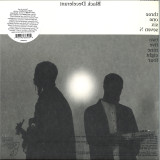
Black Decelerant is the second installment of Reflections, a series showcasing contemporary collaborations orchestrated by RVNG Intl., recently inaugurated by Steve Gunn and David Moore. Black Decelerant, the duo of Khari Lucas, aka Contour, and Omari Jazz, explores jazz traditions, improvising with synthesizers, guitars, and electronics as a practice laid forth by their musical ancestors. This experience allows for sonic meditations on themes such as Black being/nonbeing, mourning/life, expansion/limitation, and the individual/the collective. The two strive to create a sonic surface which can simultaneously allow Black listeners a place to be still, and to serve as a basis for a movement beyond "the moment." The album's ten compositions configure vast, resonant landscapes with signals, weathers and spirits, suspended in memory and distilled in time. The Black Decelerant machine recalibrates archival relics and acoustic impulses into collages of amalgamated timbres, where harmony exists not without discordance. Across the expansive space of the record, cadent storms of modulated sound ascend beside serene melodic spells. Piano keys and bass lines tumble in free fall throughout the release, accompanied on tracks "two" and "eight" by the spectral trumpet improvisations of Jawwaad Taylor. The duo arrived at their name upon reading Aria Dean's Notes on Blacceleration, an article which explores Accelerationism within the context of Black being or non-being as a foundational tenet of capitalism. Coupled with the record's intended effect, "Black Decelerant" references the music being an invitation to slow down, while hinting at the shared politics between themselves and the artists and thinkers who inspire them.
Archeo Recordings' rewarding relationship with Tony Esposito continues on AR027, as the label provide a remastered reissue of his transcendent fusion-pop masterpiece "Pagaia" alongside a trio of brand new reworks from Perugia's mighty Feel Fly. Whether you're looking for cosmic house, mellow acid, trancey techno or dubby downbeat, these remixes have you covered, and the original remains a true work of art. Available in all good record stores on 12th July as a 50 copy super limited edition on Solid Blue Vinyl (including gadget scarf) and limited black vinyl edition.
50 copy Solid Blue Vinyl Edition (including gadget scarf), and also limited black vinyl run "Pagaia" hails from the Neapolitan percussionist's 1982 LP Tamburo, his first release for the brilliant Bubble imprint. Though the album delights and excites from start to finish, dancing through jazz-funk, Mediterranean pop, slow disco and smooth fusion, it's "Pagaia" which is first among equals. Esposito's nuanced hand drums lay the foundation for Claudio Pizzale, Sara Borsarini and Simona Pirone's wordless vocals, a life affirming chorus which carries us onto the swell of bass, piano and horns which drive the track through four and a half minutes of emotional release. Emphatic and expressive, the track transports the listener into a state of body moving rapture, all driven by Tony's rhythmic fluency. The song found its way into Italian living rooms over the credits of TV show Domenica In, and found its way into club culture thanks to fanatical support from the likes of Daniele Baldelli, who even included it on his first official Cosmic compilation.
Following a string of essential releases for the likes of Internasjonal, International Feel and New Interplanetary Melodies, Daniele Tomassini, better known as Feel Fly, now joins the Archeo family with a trio of contemporary club translations of the killer "Pagaia". The Perugian's "Cosmical Remix" extends that familiar introduction into a deep and DJ-friendly blend of drum and voice, awash with airy reverb and augmented by additional percussion, building through the original piano and bass into the churn of a dance floor wormhole. Driven by an unstoppable sequencer throb, the interpretation skirts the dark side of space before landing in the light of the miracle, those heavenly vocals and lush keys leading the way. The "Instrumental Cosmical Remix", not entirely instrumental, but utterly cosmical nonetheless, sees Daniele serve a tense and tracky arrangement of his first rework, perfect for deep space exploration. Stripped of the joyful exuberance of the original, this variation is a complex blend of shadowy trance idents and the mature techno we'd expect from the likes of François K. Not content with soundtracking either side of the peaktime, Feel Fly serves up a third version, following the Compass Point through a musical map of club-dub to turn out an immersive interpolation of deep bass, spring reverb and stabbing keys that sits perfectly beside the Rhythm & Sound catalogue. Each interpretation is an emphatic demonstration of Tomassini's musical talent, production prowess, and stylistic range, and furthermore a fitting tribute to the lasting genius of Esposito's original.
- A1: Psycho Killer
- A2: Heaven
- A3: Thank You For Sending Me An Angel
- A4: Found A Job
- A5: Slippery People
- A6: Cities
- B1: Burning Down The House
- B2: Life During Wartime
- B3: Making Flippy Floppy
- B4: Swamp
- C1: What A Day That Was
- C2: This Must Be The Place (Naive Melody) (Naive Melody)
- C3: Once In A Lifetime
- C4: Big Business/I Zimbra
- D1: Genius Of Love
- D2: Girlfriend Is Better
- D3: Take Me To The River
- D4: Crosseyed & Painless
LOS ANGELES—To celebrate the 40th anniversary of the celebrated Talking Heads and Jonathan Demme’s concert film Stop Making Sense, the set will be re-released as a 2LP and 2CD/Blu-ray set this summer.
Released last year, the sold-out Deluxe Edition of the soundtrack will return as a 2-LP black vinyl on Rhino and 2-LP crystal clear vinyl at retail. Both variants feature a 12-page booklet with liner notes from all four band members –Tina Weymouth, David Byrne, Chris Frantz, and Jerry Harrison—and band photos. The 2CD/Blu-ray version includes the entire 28-page booklet from last year’s Deluxe Edition and a Dolby Atmos mix of the complete concert, mixed by Jerry Harrison and E.T. Thorngren, who also mixed the original release. Both will be available on July 26. Pre-order now.
The band appeared together for a sold-out screening and Q&A last night at the Pantages Theater, the same theater at which Stop Making Sense was recorded. They were joined by Blondshell, who performed “Thank You For Sending Me an Angel.” Another special screening with the band will occur in Brooklyn at the King’s Theater on June 13, with the Q&A hosted by Questlove and The Linda Linda’s performing “Found a Job.” The two events cap off a banner year of celebrations for what many consider to be the best concert film of all time.
The inspiration for Stop Making Sense came when director Jonathan Demme saw Talking Heads perform during the band’s 1983 tour for Speaking in Tongues. Afterward, he approached them with the idea of making the show into a concert film. They agreed and worked together over the next few months to finalize the details. Ultimately, Demme filmed three shows at Hollywood’s Pantages Theater in December 1983 to create Stop Making Sense.
The concert film presents a retrospective of the band up to that point, with a performance that weaves together songs from all six of its studio albums. The show progresses methodically, opening with Byrne onstage performing “Psycho Killer” alone with a drum machine. After each song, he’s joined by a new band member until Weymouth, Frantz, and Harrison are all on stage with him. The group continues to grow throughout the concert as members of the stellar touring band are added: keyboardist Bernie Worrell, percussionist Steve Scales, guitarist Alex Weir, and backup singers Lynn Mabry and Ednah Holt.
The band performs 18 songs in Stop Making Sense, including its recent single at the time, “Burning Down The House.” That summer, the song was in heavy rotation on radio and MTV, helping the song become the band’s first top 10 hit in America. It was, however, a different song from Speaking in Tongues that was destined to deliver one of the film’s signature moments. Talking Heads would perform “Girlfriend Is Better” wearing the now iconic, oversized suit inspired by costumes worn in traditional Japanese theater. For good measure, a picture of David Byrne in the suit also graces the album cover.
Stop Making Sense focuses mainly on music by Talking Heads but does include a few songs recorded outside the band: “Genius Of Love” by Tom Tom Club, “What A Day That Was” and “Big Business” from Byrne’s 1981 album, The Catherine Wheel. Limited edition vinyl versions of both of these albums, along with Harrison’s The Red And The Black, were released for this year’s Record Store Day.
When it arrived in September 1984, Stop Making Sense was an artistic and commercial triumph. The film had people dancing in theatre aisles, and the soundtrack sold over two million copies. Just last year, the Library of Congress added Stop Making Sense to the National Film Registry in recognition of its cultural, historical, and aesthetic significance.
Weymouth praises Demme as a collaborator: “…Jonathan was a very enthusiastic, highly adaptive, and imaginative guy who was just as good a listener as he was a talker and collaborator. From the get-go you just got the impression he was as flexible as he was disciplined. Being team players, that boded well for a great relationship and a great film!”
Harrison says the film still holds up today: “To me, Stop Making Sense has remained relevant because the staging and lighting techniques could have been created in a much earlier time period. For example, Vari-Lights, lights with motors to re-aim them, had just come into vogue. Had we used them, there would have been a timestamp on the film, and it eventually would have felt dated...The absence of interviews, combined with the elegant and timeless lighting, created a film that can be watched over and over.”
Byrne says it’s interesting that this album was – for many people – an introduction to Talking Heads. “We had done a live album before this, but coupled with the film, and with the improved mixes and sound quality, this record reached a whole new audience. As often happens, the songs got an added energy when we performed them live and were inspired by having an audience. In many ways, these versions are more exciting than the studio recordings, so maybe that’s why a lot of folks discovered us via this record.”
Frantz recalls the sheer joy surrounding the entire Stop Making Sense experience. “I’m talking about real, conscious, transcendent joy… I’m talking about what the Southern gospel people call ‘getting happy,’ which means ‘to be filled with the Spirit.’ That is what happened to us onstage every night, and from my seat behind the drums, I recognized that this was happening to the audience too. Joy was visible in front of me and all around me every night.”
Roy Brooks began his career in the 1950s and remained at the forefront of the US jazz scene until his death in 2005, starting with the Horace Silver combo in the early 1960s and continuing with the bands of such eminent artists as Stanley Turrentine, Yusef Lateef and Charles Mingus.
He was also a member of the legendary Detroit spiritual jazz label TRIBE and M'Boom (a cutting-edge project in which all members were percussionists) led by legendary drummer Max Roach, and had a huge impact on the US jazz scene.
Roy Brooks And The Artistic Truth, a spiritual jazz group led by Roy Brooks himself, is a group of highly purified Blackness and sharpened spirituality!
This is the ultimate in spiritual jazz, praised as one of the rarest, most spiritual and grooviest albums of all time, The tension-filled sound with strong black musicians such as Joe Bonner (Piano), Reggie Workman (Bass), Sonny Fortune (Alto Sax) and Cecil Bridgewater (Trumpet) is as "ultimate" as "ETHNIC EXPRESSIONS". A definitive spiritual jazz album!
2024 reissue
"If being the founder and chairman of Third World Press Organisation - the largest independent black-owned publishers - wasn't enough for activist and poet Haki R Madhubuti, he is also credited with a lesser-known yet remarkable music career. As the bandleader of Haki R. Madhubuti and Nation: Afrikan Liberation Arts Ensemble, Madhubuti combined his razor-sharp spoken-word poetry with a band of incredible musicians to create an unforgettable experience of avant-garde and spiritual jazz.