quête:black art

Genres
Tout
Knut Avenstroup Haugen - Dune: Awakening (2x12")
  • A1: Awakening
  • A2: Welcome To Arrakis
  • A3: Breath Of Shai-Hulud
  • A4: Prescience
  • A5: Sayyadina’s Lament
  • A6: Into Arrakeen
  • A7: Transcendence
  • B1: When The Sun Is Low
  • B2: Mirages At Dawn
  • B3: The Prophecy
  • B4: Remnants Of Green
  • B5: Legacy Of The Fremen
  • B6: Spice Dreams
  • C1: Crucible Of Sand
  • C2: Whispers In The Wind
  • C3: Beneath Two Moons
  • C4: Echoes Of The Lost
  • C5: The Mind Killer
  • D1: Dance Of The Blade
  • D2: The Narrow Path
  • D3: Descent
  • D4: Children Of The Tube
  • D5: Shadows’ Womb
  • D6: Memories Of Caladan

Bless the Maker: the Great Houses of Laced Records and Funcom have forged a temporary trade agreement to bring you the expansive soundtrack for ‘Dune: Awakening’ on vinyl.  The hit survival game has garnered critical praise for its incredibly faithful and detailed realisation of the Dune universe - from its sprawling vistas to deep lore and political intrigue. The music is integral in recreating the atmosphere of Arrakis, conjuring not only its striking landscapes but the human experience of life on the planet.  Recorded live at Air Studios in London with The Chamber Orchestra of London, Knut Avenstroup Haugen’s soundtrack conjures a planetary sense of scale.

Arcing strings shimmer and twist weightless in the air like heat rising from the desert floor, while resonant brass evokes dawn stretching out across the sands.  The luscious acoustic instrumentation is enhanced and elevated by rippling electronics, capturing Dune's singular blend of science fiction and spiritual tradition.  Soaring vocal performances from Clara Sorace, Eurielle and Emília Rovira Alegre centre this sense of the sacred, pushing the soundtrack to ecstatic emotional peaks.  Black heavyweight double vinyl.  24 tracks from the acclaimed 2025 survival game.  Widespined outer sleeve  Printed, spined inner sleeves.  Bespoke sleeve artwork by Funcom.

pas en stock

Commandez maintenant et nous commanderons l'article pour vous chez notre fournisseur.

36,93

Last In: 4 months ago
Sam Slater - Lunng LP

Sam Slater

Lunng LP

12inchMBD_LP003V
MT. BRINGS DEATH
05.02.2026
  • 1: Heatsick (Feat. Hilary Jeffery)
  • 2: Plastic Fascist
  • 3: Praya (Feat. Bendik Giske, Maria W.horn)
  • 4: Past Blast
  • 5: Mancini Sighs
  • 6: Black Metal Rewind (Night Drive Astra, 200)
  • 7: Death By Nostalgia, 1688
  • 8: Passengers (Feat. Bendik Giske, Maria W Horn, Adam Betts)

Loaded with tension and anchored by bold textural and stylistic contrasts, Sam Slater’s third solo full-length finds the British sound artist, composer, and engineer grappling with his creative contradictions head-on.

Having spent a life time in bands and producing records, Sam transitioned somewhat by accident through his work with Johan Johansson into working as a composer on high profile projects such as his collaboration with Hildur Guðnadóttir on the Grammy Award-winning Joker and Chernobyl, and with Pulitzer Prize-winning journalist Mstyslav Chernov on the soundtrack to the lauded 2000 Meters to Andriivka. Having a vast set of interests and influences is an asset when helping realise a directors vision for a soundtrack, but one's own musical voice can end up being constrained. In Lunng, Slater has gone back to his wildly divergent range of influences and rather than shy away from the extremes, he's used them to create a singular vision.

Take the opening track “Heatsick”: Slater imagines an extravagant fusion of 2000s drone metal and vintage British brass, welding ear-splitting overdriven drones and blown-out choral vocals to stirring trombone swells from veteran player Hilary Jeffery. On paper, it’s hard to imagine—but Slater’s intentionality conducts these polarizing elements into a surreal blur of sonic extremes, with the guitars’ relative harshness softened by Jeffery’s eerily nostalgic colliery echoes.

His last solo album, I do not wish to be known as a Vandal (Bedroom Community, 2022), showcased this breadth by assembling a team of collaborators including Sam Dunscombe and Yair Elazar Glotman. On this record he’s linking up with acclaimed multi-instrumentalist Maria W. Horn, idiosyncratic sax virtuoso Bendik Giske, versatile percussionist Adam Betts, and the aforementioned Jeffery, Slater ushers these players toward a lattice of calculated confutations.

Working to explore the tension between the divergent practices of his collaborators—Lunng was meant to be challenging. On “Praya”, Giske’s familiar overblown horn phrases are almost vaporized, vanishing among Slater’s weightless synths and Horn’s chillingly hoarse vocals. There are traces of Horn’s Funeral Folk project, but Slater shifts the emphasis, letting her voice brush past the other elements like a hallucination.

Slater’s use of extremes isn’t just in the micro; dynamics drive the album’s overall flow. “Praya” sets the stage for the record’s heaviest, most prickly moment: “Passengers”. Here, Horn’s voice cracks, rasps, and gurgles over serrated synths and Betts’ ritualistic drums. Slater turns an industrial symphony into a folk opera—dark, dramatic, and strangely beautiful—etched with Giske’s fluttering phrases.

But the mood soon shifts. Slater careens toward chaos, unleashing double-time rhythms and piercing textures familiar to anyone with a soft spot for classic black metal. These grotesque incongruities are deliberate; Slater surveys years of musical conflict and leans in, using dissent as fuel to build kinetic energy.

The weight of sentimentality bears down on “Black Metal Rewind (Night Drive Astra, 2006)”, melting teenage memories into hypnagogic ambience—shoegaze dreams whirled with angelic choral delusions. On “Death by Nostalgia, 1688”, he ventures further into polarizing territory, distorting AutoTuned voices with cryptic strings and medieval tonalities, unsettling any stable sense of past or present.

In this record Slater focuses on pure energy, color, and mood. Lunng distills years of listening into a bracing brew—boiling each sound down to its essence, then serving it with unflinching intent.

John Twells, 2025

pré-commande05.02.2026

il devrait être publié sur 05.02.2026

26,01
Various - 20 Years Of Hudd Traxx - 20 Traxx From The Hudd - Curated By Eddie Leader (4x12")

For two decades, Hudd Traxx has stood as a pillar of underground house music – a label defined by longevity, taste, and its ability to bridge the old school with the new. To mark its twentieth anniversary, the revered UK imprint presents ‘20 Traxx From The Hudd’, a specially curated, all-new twenty-track compilation handpicked by label founder Eddie Leader.

The compilation brings together a global, star-studded lineup of artists who embody the Hudd Traxx ethos: soulful, inventive, and uncompromisingly underground. Contributions come from Groove Armada, Seven Davis Jr., Chez Damier, Cinthie, Jovonn, Oliver Dollar and others, offering a snapshot of the label’s wide-ranging influence. From the silky deep house depths of Black Loops’ opener ‘Soul to Soul Communication’, to the unmistakable analog warmth across Cinthie’s ‘Hudd House’, to the raw, stripped-back energy of Seven Davis Jr.’s ‘Infrasound’, the collection captures the many deeper shades of house Hudd Traxx has championed for twenty years.

Founded in 2005, Hudd Traxx has served as a trusted home for pioneering artists such as Nightmares On Wax and Matthew Herbert, guided by Eddie Leader’s consistent curatorial vision and unwavering commitment to craft. As a producer, his releases on Classic, Robsoul, and Balance Alliance have been supported by Laurent Garnier, Josh Wink, Disclosure, and many more. ‘20 Traxx From The Hudd’ isn’t just a celebration of the past; it’s a fervent reminder that Hudd Traxx remains as relevant and vital as ever.

En stock du09.06.2026

49,79

Derniere entrée: 11 jours
Various - Highway of Diamonds - Black America Sings Bob Dylan (2x12")
 
20

Ace’s small but ever-evolving “Black America Sings…” series has been quiet of late, but it springs back into action this month with the 2-LP and CD releases of “Highway Of Diamonds” – a second dip onto the catalogue of Bob Dylan, as reimagined by some of the foremost African-American artists of the 20th century.

From almost the start of his songwriting career, Dylan’s words and music have impacted on black American music, with ‘Blowin’ In The Wind’, speaking to an America that was still mostly segregated and becoming an anthem for all colours and creeds. As Dylan’s own career progressed, so did the number of covers he received, with a significant amount coming from what might be termed ‘non-traditional’ sources such as those heard here.

The 20 songs on “Highway Of Diamonds” continue the story that was told in part on the earlier “How Many Roads” compilation, with an almost entirely different selection of artists lending their voices to some of the best songwriting of the 20th century, and an almost entirely different selection of songs (with the exception of ‘Blowin’ In The Wind’ itself, which provides a common thread linking the story told across the two sets).
Big names from the worlds of soul, gospel and jazz, timeless songs and, for many, new ways of appreciating ever-durable material make “Highway Of Diamonds” as essential a purchase as its predecessor.

As ever, the great audio is complemented by a handsomely illustrated package on both CD and double vinyl, with a plethora of illustrations and in depth song-by-song-and-track-by-track annotation by Ace legend Tony Rounce.

pré-commande30.01.2026

il devrait être publié sur 30.01.2026

31,72
Lucia Cadotsch - Speak Low II

Lucia Cadotsch

Speak Low II

12inchWJLP30P
WE JAZZ
30.01.2026

Berlin-based Swiss vocalist Lucia Cadotsch returns with her celebrated Speak Low trio for their second album, released by We Jazz Records on 27 Nov. "Speak Low II" features Cadotsch on voice, Otis Sandsjö on tenor saxophone and Petter Eldh on double bass, and introduces guest artists Kit Downes on hammond organ and Lucy Railton on cello. "Speak Low II" picks up where their genre-bending and forward-looking debut album left off, introducing new shades into the band's sound and also diving even deeper into the songs they tackle. What makes Speak Low special is their approach to really get to the heart of each composition with seemingly minimal means, yet generating a sound which is both instantly recognisable and remarkably impactful.

"Speak Low II" comes almost five years after the band's lauded debut, and proves the depth of the band's approach right from the start. At the core of the trio's operation is an openness to their love of the music and to their surrounding scene(s). The album comes across as a unified collection of songs made truly theirs and found through listening to records and spending time with their musician friends, often on the road. The highly evolved band sound and the equality of the musicians shines through on the Speak Low sound, as the group uses their 100+ performances together as a vehicle for the development of their music.

"The first album was filled with pretty famous songs, but that was actually not at all intentional" explains Cadotsch. "Those were just my favourite songs of the previous 10 years and we started working on making them ours, musically. We were playing around with concepts for the second album, but soon realised that we just needed to find the right songs and adapt them organically, which comes through in how we interact with the songs and each other. This time around, we wanted to dig deeper and made finished arrangements of around 20 tracks, half of which we ditched in the process. The ones that made the cut have been through a lot and they just felt right for us."

In a way, the Speak Low approach could be described as archaeological. Three music lovers connecting with songs found at various sources, readily throwing away any ideas that don't seem natural to them, and hanging on tight to the ones that do.

Turns out there is a concept to "Speak Low II". It's the band itself, their shared musical development and their love of music.

"Speak Low II" will be available on We Jazz Records on vinyl (PURPLE and BLACK editions), CD and digitally. The vinyl versions come with a heavy duty tip-on sleeve and a printed inner sleeve. CD in digisleeve with no breaking plastic parts.

pas en stock

Commandez maintenant et nous commanderons l'article pour vous chez notre fournisseur.

21,64

Last In: 5 years ago
Various - Nahma: A Gulf Polyphony

Various

Nahma: A Gulf Polyphony

2x12inchFLEE003B
FLEE
30.01.2026

New FLEE publication focused on Arabian Gulf's pearl divers, their culture through their soundscape, traditional songs & rhythms. Including archival recordings and reinterpretations by moderns electronic artists such as Joakim, Tomaga, Ben Bertrand, Conny Frischauf, Hieroglyphic Being .....

Available as 2LP, black vinyls & 2LP+258p book (English & Arabic text) bundle.

The pearls of the Gulf have stoked the imagination and desire of people around the world for centuries, their magnificence matched only by the courage of the divers who found them. This project aims to honor the memory of these valiant free-divers, their culture and their music by the means of a 2XLP compilation with undisclosed original recordings of pearl divers and inspired modern-day compositions by artists like Tomaga, YPY, Ben Betrand, Tarek Yamani or Hieroglyphic Being. Along with that record, a 258 pages long book in Arabic and English is available featuring contributions from regional experts and artists to contextualize the tremendously rich theme that is pearling and its music.

pas en stock

Commandez maintenant et nous commanderons l'article pour vous chez notre fournisseur.

44,08

Last In: 4 months ago
Various - Wizzz! French Psychorama Volume 5 (67-75)

The journey through French-speaking pop archives continues with this fifth volume, packed with fuzz, gimmicks, and dissent. Far from the charts, the selected tracks display a great creative freedom, often backed by corrosive humor. Welcome to the surprising, kaleidoscopic, and colorful world of the late sixties and early seventies, Wizzz!
Born in Montauban, Robert Pico stumbled into music by chance when he met René Vaneste, then artistic director at Pathé-Marconi. René brought him to Paris to record his first 45 RPM EP in 1964. A year later, Pierre Perret introduced him to Vogue, where he recorded his second album with Claude Nougaro’s orchestra. Sylvie Vartan then introduced him to RCA, where he recorded four singles, including the astonishing "Chien Fidèle," a track backed by a hair-rising fuzz guitar. Alongside his solo career, he also composed for other artists like Alain Delon (the song was recorded but remains unreleased), Magali Noël, Bourvil, and Georges Guétary. In the Paris of the sixties, he mingled with Mireille Darc, Elsa Martinelli, Marie Laforêt, France Gall, Françoise Hardy, Petula Clark, Régine, Dani, Serge Gainsbourg, Joe Dassin, Franck Fernandel, Charles Level, and Roland Vincent. Despite his efforts and winning a Grand Prix Sacem for his final record, Robert Pico didn’t achieve the expected success in show business and decided to leave Paris and return to the Southwest, where he devoted himself to writing. He is the author of 23 books (including Delon et Compagnie, Jean-Marc Savary Editions 2025, a memoir about his youth and his many encounters). Today, he is relieved to never have become a celebrity and devotes himself to his work with passion.
In 1969, the Franco-Italian movie Erotissimo was released, directed by Gérard Pirès (who later directed Taxi in 1998, written and produced by Luc Besson). This pop comedy features Annie Girardot, Jean Yanne, Francis Blanche, Serge Gainsbourg, Nicole Croisille, Jacques Martin, and Patrick Topaloff. The soundtrack was written by Michel Polnareff and William Sheller, with lyrics by Jean-Lou Dabadie. "La Femme Faux-cils," performed by Annie Girardot. It recounts the feelings of a rich CEO's wife who seeks to develop her sex appeal under the influence of advertisement and magazines. Groovy, sparkling and light, this track, with ITS lush arrangements humorously critiques consumer society and feminine beauty standards.
“Je suis l’Etat” (1967) is the flagship track of the first EP by singer-songwriter Spauv Georges, aka Georges Larriaga, better known as Jim Larriaga (1941-2022). Born into a family of bakers, the young man was initially planning to become a hairdresser when he discovered English-speaking music through Elvis Presley and the Beatles. After this revelation, he decided he would become a songwriter and gave himself five years to succeed. He recorded his first two EP’s independently for RCA under the pseudonym Spauv Georges; meaning “that poor George”, a nickname given to him by the mother of her friend Jean-Pierre Prévotat (future drummer of the Players, Triangle, or Johnny Hallyday). Portraying a depressed and eccentric young man, Spauv Georges created corrosive and amusing songs that didn’t reach a wide audience, despite a TV appearance with Jean-Christophe Averty.
Supported by his loyal friend and fellow songwriter Jean-Max Rivière, Georges Larriaga met the future singer Carlos in the early '70s, then Sylvie Vartan’s assistant. He wrote songs for Carlos, including the popular "La vie est belle," "Y’a des indiens partout," and "La cantine", which went onto become a huge hit in 1972. He also composed for Claude François (“Anne-Marie”, 1971), Charlotte Julian (“Fleur de province”, 1972), helped launch child singer Roméo (who sold 4 million records), and later wrote the hit "Pas besoin d’éducation sexuelle" (1975) for the young Julie Bataille. In 1971, Jim recorded an album for Disc'Az: “L’univers étrange et fou de Jim Larriaga”, which featured pop gems like “La maison de mon père”.
The story of the song "Zoé" began when Pierre Dorsay, artistic director at Vogue Records, asked Swiss singer and musician Pierre Alain to write a song for a new female singer. The inspiration came when he realized that Zoé (the artist's name) was also the name of France's first atomic battery, created in 1948, which consisted of uranium oxide immersed in heavy water! The lyrics reflect a bubbling energy that must be handled with caution, while the instrumentation echoes this atomic theme, notably with the use of a theremin.
Zoé’s career lasted only as long as a single 45 RPM, but it seems Christine Fontane was the vocalist behind this pseudonym, who is known for several EPs, a good "popcorn" album in 1964, and a handful of children’s singles in the '70s. Regardless, the photograph on the cover is of a different girl entirely.
Later, Pierre Alain continued his career, writing songs for himself, Marie Laforêt, Danièle Licari, Alice Dona, Arlette Zola (3rd place in Eurovision 1982), and achieving multiple gold and platinum records in Canada. Also an inventor with several patents, president of the Romande Academy, and head of the French Alliance in Geneva, he now composes atonal music, books, and poetry. Moreover, he is also the host of "Les Mardis de Pierre Alain" at "Le P'tit Music'Hohl" in Geneva.
Filled with oriental choruses and fuzz guitar, "Fou" is from Jacques Da Sylva's only EP released by Vogue in 1967. Despite the quality of this recording, all traces of this singer disappear after this first effort.
Valentin is a baroque pop singer born in Belgium. He is the songwriter and composer of most of the tracks on his three singles released in the late 60s in Canada. A legend says that he reincarnated himself as Jacky Valentin during the 1970s for a rock'n'roll revival career in Belgium, but his older brother sadly debunked this story. Valentin's first two singles were arranged by Claude Rogen, a Parisian session pianist who had come to Canada to promote the song “Mister A Gogo”, a cover of David Bowie’s “Laughing Gnome”, adapted by singer Delphine, his wife at the time. Far from his usual network, Claude Rogen arranged music for Polydor, including the arrangements for “Je suis un vagabond” in 1969, a jerk tune with string arrangements and a furious optimism.
Jacques Malia wrote, composed, and recorded his only 45 EP for Festival in 1966. “Histoire de gitan” is an incredible beat track with bohemian scat that tells the story of a gypsy musician who came to Paris to make it in the Music-Hall, to no avail. The hero of the song and its author probably shared a similar fate, as Jacques Malia faded into anonymity after this remarkable attempt.
Bernard Jamet recorded two EPs for Barclay in the late sixties and co-wrote several songs with Christine Pilzer, Pascal Danel, and prolific songwriters Michel Delancray and Mya Simile. The track “Raison Légale” (1968), his masterpiece, immerses the listener in a courtroom right when a murderer is being judged, with jerk rhythm and free arrangements. A unique, paranoid, judicial, and psychedelic oddity.
Jean-Pierre Lebrot-Millers started his career in show business in 1967 as a singer and songwriter for the Philips label. After three singles, he wrote several songs of a new kind with his friend Pierre Halioche, in the midst of the sexual liberation movement and the democratization of drugs. With provocative lyrics, “Les filles du hasard” and “Barbara au Chapeau Rose” were released on a Philips singles in 1968. The character of Barbara was inspired by a queen of Parisian nightlife during the psychedelic years: model Charlotte Martin, who dated Eric Clapton from 1965 to 1968, then Jimmy Page from 1970 to 1983. Jean-Claude Petit’s arrangements, with a table-filled intro, soul brass, and Hendrixian guitar, emphasize the flamboyance of a hedonistic and sexy character, whose dog is named Junkie because “Junkie est un nom exquis”! The track was recorded live in three takes with a full orchestra.
Upon its release, the record was censored by Europe 1 and RTL due to its references to drug use. Jean-Pierre Lebrot was then banned from the airwaves and later dismissed by his record label. He changed his artist name to Jean-Pierre Millers, while his companion Pierre Halioche became D. Dolby for a new dreamy composition, “Chilla”, which Jean-Pierre produced himself with arrangements by Jean Musy. Once again, the song was immediately censored everywhere. After this setback, he decided to stop singing and started taking on odd jobs to support his Swedish wife and their son until the day he met Jean-Pierre Martin, then production manager at Decca, who had worked with Manu Dibango. Martin offered Jean-Pierre Lebrot-Millers, then employed at Rank Xerox, the position of artistic director at Decca. He accepted and became, a year later, promotion director (radio, press, TV). He worked on Julio Iglesias’s first album for Decca, which became a massive hit and allowed him to meet Claude Carrère. The latter asked him to write new songs and find their performers, much like a “talent scout.” It’s through him that Jean-Pierre discovered Julie Pietri and Corinne Hermès. He composed “Ma Pompadour” for Ringo, Sheila’s husband, and took the microphone again for the syncope hit “Rendez-Vous” in 1982.
That same year, Jean-Pierre Lebrot-Millers tried to release a track for which he had heavily gone into debt: “Si la vie est un cadeau”. Having recorded it in London, he presented it to numerous professionals, all of whom refused to get involved. The same thing happened with Antenne 2 and the Sacem when he proposed the song as France’s entry for Eurovision. He then met Haïm Saban, who was producing cartoon soundtracks and had just launched the Goldorak theme song. Saban, having listened to the song, declared it had the potential to become a hit. He sent Jean-Pierre and Corinne Hermès to meet the CEO of the Luxembourg radio and television network. The latter received them, asked to hear a verse and chorus a cappella in his office, and immediately hired them to represent Luxembourg at Eurovision 1983. They reworked the arrangements and recorded a new version with Haïm Saban as co-producer. The song ended up winning Eurovision 1983, a great comeback for our hero. He continued producing and hung out with the band Nacash in Belgium when a couple came to introduce their daughter for an impromptu audition in a hotel room. The girl sang “Les démons de minuit” while dancing to a radio cassette. Impressed, he had her take singing lessons for a year and composed a song for her (for which he had the melody and title, but no lyrics). This required him to go on the hunt for a lyricist, who ended up being Guy Carlier. They recorded the song, which was initially a ballad, at Bernard Estardy’s CBE studio, and gave the singer a new name: Melody. They showed the song around their industry network without success. Later, Estardy called Jean-Pierre to suggest changing the rhythm and making it pop-rock. Orlando, Dalida’s brother, liked the result and decided to co-produce the track. “Y’a pas que les grands qui rêvent » became a classic hit. The song has since been covered by Juliette Armanet (as a ballad, like the original) and Valentina.

Born into an aristocratic Breton family, Hervé Mettais-Cartier worked as a DJ at Queen Kiss, a nightclub in Poitiers, where he formed the band Les Concentrés with Michel (an actor) and Christian (a radio technician). Together, they created a repertoire of whimsical songs (“Ma bique est morte”, “J’suis un salaud”, “Fils de dégénéré”...) that they performed on stage dressed in white (in homage to “concentrated milk”). They performed at Bliboquet and Olympia in 1968 for the 10th edition of the “Relais de la chanson Française” organized by L’Humanité-Dimanche and Nous les Garçons et les Filles, sponsored by Pepsi Cola. Winners in the author-composer category, alongside Danish singer Dorte, their visibility allowed them to record a 45, and appear on television in Jean-Christophe Averty’s show. The A-side of the disc features Bruno le ravageur, a casatchok dedicated to Bruno Caquatrix, the director of Olympia, nicknamed in the song “Coq Atroce” or “croque-actrices”. The B-side is dedicated to “Fils de dégénéré”, a quirky tribute to Hervé's aristocratic roots, mixing absurdity with sophisticated vocal harmonies.
After Les Concentrés, Hervé Mettais-Cartier formed the duo La Paire et sa Bêtise with his friend Olivier Robert. They performed in Parisian cabarets and toured with Pierre Vassiliu. In the late 1970s, Hervé began a solo career. He recorded two albums for the Motors label in 1978 and 1979, which did not achieve their anticipated success due to lack of promotion. In 1980, he met Bernadette, with whom he started a family and created a “Chansons à voir” (songs to see) show that he performed until his death at the end of 2024.

Publicité comes from the final EP by the Missiles (Ducretet Thomson, 1966), a disc that also includes “La (nouvelle) guerre de cent ans”, featured on Volume 4 of our Wizzz! series. Please refer to the booklet for the story of the band.

“He’s 1.82 meters tall, 28 years old, weighs 135 kg, is black and Belgian”: this is the description of singer Hegesippe on the back of his sole single (Decca, 1967). He appears on the album cover wearing a Greek toga, like a hippie gag – we are at the end of the year 1967. In “Le crédo d’Hegesippe”, this former bodyguard of Antoine and the Charlots plays the delightful card of the thick brute converted to Flower-Power and non-violence, with arrangements by Jean-Daniel Mercier, aka Paul Mille.
“Ethéro-disco” was released on a promotional record for clients of the Maréchal company (Liège, Belgium) for the New Year 1979. Over a funky rhythm, celebrity impersonations (Brigitte Bardot, Jacques Dutronc, Fernandel…) deliver an enigmatic text about pharmaceutical products like ether, bismuth, and aspartate. The track was composed by Dan Sarravah (responsible for Joanna's “Hold-up inusité” featured on Wizzz! Volume 3) and Tony Talado, who was also a singer (one 45 in 1967), songwriter (with over a dozen credits between 1964 and 1985 in various styles from surf music to disco), author (Devenez Végétarien, Dricot Editions, 1985), ad designer, and psychologist.

Décollez-les is on the A-side of Mamlouk's only single, a pseudonym for Marsel Hurten, who is known for his work on several EPs in the late sixties, as well as composing music for Hervé Vilard’s “Capri, c’est fini”, Claude Channes' “La Haine”, Annie Philippe’s “On m’a toujours dit”, and Nancy Holloway’s “Panne de Cœur”.
This strange song, with Afrobeat horns and absurd dialogues between a chef and his kitchen staff, is the result of a collaboration between Marsel Hurten and one of his neighbors, a photographer from Pavillon-sous-Bois (93), where the musician settled after returning from the Algerian War. A music video was shot to promote the record.
Marsel Hurten was born in Tourcoing (59) into a musical family. At a young age, he joined the brass band founded by his grandfather, playing the piston before studying trumpet at the conservatory, as well as teaching himself how to play the guitar. As an orchestra musician, he toured in France, Belgium, Germany, and England. He released a series of solo 45’s between 1965 and 1968 for the DMF and Az labels before stopping recording to focus on working for other artists (Gilles Olivier, Noëlle Cordier…).
“L’amour nu” (Vogue, 1971) is the work of the short-lived Belgian band Mozaïque. The track, written by singer Jacques Albin, closely resembles another of his compositions, “Carré Blanc”, which he recorded in 1969 for Disc’AZ.
Represented by the Lumi Son micro-label based in Marignane (Côte d'Azur), Jean-Marc Garrigues released two 45 RPMs in the late sixties, defending the French jerk sound. The song “Je dis Non” is a short, joyful ode to youth, pop music, and rebellion.
Songwriter and performer Jacques Penuel released three singles. The first one, “Astronef 328” (Fontana, 1969), features a dizzying series of chords punctuated by sound effects, a sci-fi story, and arrangements by Jean-Claude Vannier.

We would like to sincerely thank Pierre Alain, Moon Blaha, Marsel Hurten, Bastien Larriaga, Jean-Pierre Lebrot-Millers, Bernadette Mettais-Cartier, Robert Pico, Olivier Robert, Claude Rogen, Micky Segura.

pas en stock

Commandez maintenant et nous commanderons l'article pour vous chez notre fournisseur.

23,11

Last In: 4 months ago
The Mars Volta - Noctourniquet

The Mars Volta

Noctourniquet

2x12inch4250795604969
CLOUDS HILL
30.01.2026
  • A1: The Whip Hand
  • A2: Aegis
  • A3: Dyslexicon
  • B1: Empty Vessels Make The Loudest Sound
  • B2: The Malkin Jewel
  • B3: Lapochka
  • C1: In Absentia
  • C2: Imago
  • C3: Molochwalker
  • C4: Trinkets Pale Of Moon
  • D1: Vedamalady
  • D2: Noctourniquet
  • D3: Zed And Two Naughts

Noctourniquet And then everything went black, at least for a while, at least for The Mars Volta. In the months and years following their fifth full-length, Octahedron, Omar kept on at his usual fearsome creative pace. In fact, he ramped up his output considerably, starting up his own Rodriguez Lopez Productions label and releasing a slew of solo albums. It was a practice he’d begun shortly after De-Loused’s release, with his solo debut A Manual Dexterity: Soundtrack Volume One, but as the decade reached its close, Omar grew to rely upon his solo recordings as an outlet for his prolific creativity, these albums often exploring musical pastures far beyond even The Mars Volta’s wide-ranging parameters. Before choosing to release music under his own name, Omar would always play it to Cedric first, to see if the frontman thought it had potential to become Mars Volta music. Shortly after Octahedron’s completion, Cedric flagged one batch of tracks Omar had cut with Deantoni Parks, a brilliant drummer and composer who’d briefly occupied the Mars Volta drumstool in-between Jon Theodore and Thomas Pridgen’s tenures, and whose volcanic creativity and unique, unpredictable approach to rhythm and composition had quickly made him one of Omar’s favourite artistic foils.

As with the music that made up Octahedron, the new tracks Cedric had optioned for The Mars Volta often veered far from the riotous, Grand Guignol visions of their earlier releases. It possessed the punchy, song-based focus of Octahedron, though this was a considerably darker, more menacing strain of pop, with synthesisers figuring heavily in the productions. Cedric took the tracks in 2009 and set about writing songs to the music. But no more new Mars Volta music would be heard until 2012. The years that passed in-between were nonetheless momentous, and busy, witnessing an unexpected reunion of the members of At The Drive-In, and Cedric joining his own side-project, Anywhere. But there wasn’t any sign of life within the Mars Volta until Omar, Cedric and their bandmates took to the road for a series of live shows in the spring of 2011, billed as The Omar Rodriguez-Lopez Group, debuting the songs that would become Noctourniquet. The album followed the next year, and it remains one of The Mars Volta’s finest, its electronic textures staking out unfamiliar but fertile new ground.

An unsettling, subtly turbulent listen, Noctourniquet found Cedric sketching out a story about “some sort of device that stops the darkness from bleeding”, drawing influence variously from the nursery rhyme Solomon Grundy, the Greek myth of Hyacinthus and the song Birth, School, Work, Death by British underground rockers The Godfathers. It was an album of dystopian futurism, signalled by the paranoid cyber-rock of opener The Whip Hand and its unnerving chorus, “That’s when I disconnect from you”. But it was also an album of inspired, unexpected moves and uncanny invention, like how Dyslexicon seemed to eerily evoke Blondie’s Rapture, before rushing headlong into its bruising chorus, tempos shifting restlessly throughout like quaking earth beneath the listener’s feet, or how Aegis put a brave new spin on The Mars Volta’s trademark rewiring of salsa’s overdriven passions, or how Cedric had never sounded as scary as he did on The Malkin Jewel’s mutant burlesque shuffle. Tracks like Molochwalker were sleek and concise in a way The Mars Volta had never really attempted before – which was all part of Omar’s plan.

“It had all been guitar, guitar, guitar, overdubs, everything fighting for space in the same frequency,” he explains. “So for Noctourniquet, it was all about subtracting elements, of sticking to how I made demos.” Deantoni’s presence helped revivify the group, playing against cliché and expectation, and taking each song in unexpected directions. “I’d beatbox a rhythm for him to play, to go with my guitar part, and he’d come back with three or four alternate options. It was so great.” Similarly, Cedric had never sung better than on Noctourniquet, staking out a fearsome spectrum from the chilling Tom Waitsian growl of The Malkin Jewel to the keening, beautiful vocalisation on Vedamalady, rising to match some of Omar’s most deft, most immediately effective and melodic songs yet. Indeed, Noctourniquet is the sound of a band discovering new ways to do familiar things, renewing their commitment to their mission, finding fresh inspiration a decade in, and shaking off any complacency that might have come with ten years of acclaim and success.

pré-commande30.01.2026

il devrait être publié sur 30.01.2026

27,69
GRUPO UM - NINETEEN SEVENTY SEVEN

Grupo um celebrate 50 years with release of lost dictatorship-era album nineteen seventy seven!

First time release - vinyl comes with printed innersleeves

Brazilian avant-jazz vanguardists Grupo Um celebrate their 50th anniversary, sharing a second previously lost 1970s album from the vaults. Nineteen Seventy Seven (titled after the year it was recorded) is another rip-roaring instrumental fusion treasure from the band which spawned from within Hermeto Pascoal’s famed mid-1970s São Paulo collective.

Like their debut album Starting Point, Grupo Um’s Nineteen Seventy Seven was recorded when Brazil's military dictatorship was at its most repressive. “There were no open doors to those who dreamt to be protagonists in creative instrumental music”, remembers drummer Zé Eduardo Nazario, “even popular composers and singers had to submit their songs to censors and many records were banned and confiscated from the stores.”

Just like Hermeto Pascoal's Viajando Com O Som (1977) and Grupo Um's previous album Starting Point (1975), both of which remained unreleased until the 21st century, Zé Eduardo asserts that the 1977 album was flatly 'without any chance to be released at that time."

Recorded at Rogério Duprat’s Vice-Versa Studios in São Paulo, the group were under both time and space restraints, “we chose the small Studio B,” Lelo Nazario recalls, “which had a Tascam (TE AC) 12x8 console and a 4-channel AMPEX AG 440 machine. Therefore, we had to record without overdubs, everything straight to tape.”

Expanding from a trio to a quintet, original Grupo Um members Lelo Nazario (keys), Zé Eduardo Nazario (drums), and Zeca Assumpção (bass) were joined by saxophonist Roberto Sion and percussionist Carlinhos Gonçalves. Carlinhos, Zé and Zeca had already played together in the group Mandala, while brothers Lelo and Zé had just finished a stint backing Hermeto Pascoal during his years in São Paulo.

Lelo was deeply immersed in modular synthesizer experimentation during this period, working extensively with the ARP2600 and EMS Synthi AKS. These electroacoustic explorations formed the sonic foundation for "Mobile/Stabile," one of his first compositions to merge modular synthesis with Brazilian music, a fusion that would ripple throughout the Brazilian jazz scene. The piece premiered at the first São Paulo International Jazz Festival in 1978, performed by Grupo Um with guest trumpeter Márcio Montarroyos. In a shocking moment, festival organizers interrupted the show mid-performance, sparking fierce backlash from both audience members and journalists who denounced the incident as artistic censorship during Brazil's era of political and cultural repression. The version on Nineteen Seventy Seven is the first recording of the composition.

Nineteen Seventy Seven combines Afro-Brazilian rhythm, modular synthesis and a plethora of whistles, percussion and effects pedals. Album opener “Absurdo Mudo” - so titled for the absurd difficulty it poses to the musicians performing it - starts out in a cloud of mysterious dissonance, before the haze breaks for a glorious keyboard and saxophone interplay atop an uptempo samba groove. “Cortejo dos Reis Negros (Version 2)” (Procession of the Black Kings), based on the maracatu rhythm, inverts the traditional jazz song structure by beginning with improvisations, which are followed by the theme and a final coda. “The studio also had two Parasound electronic reverb units,” Lelo notes, “and the timbre is very audible on the soprano sax and percussion.”

Grupo Um’s daring music represents a manifesto of resistance during the dictatorship years, but it’s one which remains just as relevant today. As Lelo puts it: “For me, the aesthetic issue has always been about combining contemporary avant-garde languages with Brazilian music, independent of categories and commercial interests. The result of this fusion takes music to a new level.”

Recording credits (1977)
Recorded at Vice-Versa B Studio, São Paulo, November 9, 1977
Produced by Lelo Nazario and Zé Eduardo Nazario
Engineered by Ricardo “Franja” Carvalheira


Lelo Nazario – Wurlitzer electric piano, acoustic piano, signal generator, percussion

Zé Eduardo Nazario – drums, percussion

Zeca Assumpção – electric bass

Carlinhos Gonçalves – percussion

Roberto Sion – soprano sax, clarinet

Release credits (2025)
Produced by UTOPIA Studio, São Paulo
Project Coordination in Brazil by Irati Antonio (Utopia Studio)
Tape Restoration and Digital Mastering by Lelo Nazario at Utopia Studio, July 2025
Liner Notes by Lelo Nazario and Zé Eduardo Nazario
Photography by Jorge Las Heras, Lelo Nazario, and artists' personal archives
Photo Restoration by Lelo Nazario
Artwork and Design by Alessandro Renaldin

pré-commande30.01.2026

il devrait être publié sur 30.01.2026

23,11
Tobias Jesso Jr. - s h i n e LP
  • 1: Waiting Around
  • 2: Black Magic
  • 3: Bridges
  • 4: Green Eyes
  • 5: Rain
  • 6: I Love You
  • 7: Lullaby

White Vinyl. Shine is the sophomore album from Grammy Award–winning songwriter and artist Tobias Jesso Jr.

pré-commande30.01.2026

il devrait être publié sur 30.01.2026

28,15
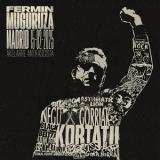
FERMIN MUGURUZA - MADRID 15-02-2025 - AKELARRE ANTIFACISTA LP 3x12"
  • Maputxe
  • Urrun
  • Eguraldi Lainotsua
  • Hay Algo Aquí Que Va Mal
  • Balazalak
  • La Línea Del Frente
  • In-Komunikazioa (Intro Free Nelson Mandela)
  • Desmond Tutu
  • Newroz
  • Azoka Eguna
  • Euskal Herria Jamaika Clash
  • A La Calle + La Familia Iskariote
  • Bizitza Zein Laburra Den
  • Nicaragua Sandinista
  • Dow To The River To Pray
  • Black Is Beltza ·
  • After-Boltxebike
  • Aiako Txikito/Hiri Gerrilaren Dantza
  • Bidasoa Fundamentalista
  • Jon Maia: Versos A Madrid
  • Lehenbiziko Bala
  • Itxoiten
  • Etxerat
  • Zu Atrapatu Arte
  • Kolore Bizia
  • Radio Rahim
  • Dub Manifest
  • Yalah Ramallah
  • (Intro) Gora Herria
  • Sarri, Sarri

The musical legacy of a night that will live on for years - Fermin Muguruza's 40th anniversary roar! Under the title "Akelarre Antifascista" (which literal translation would be "Anti-Fascist Witches' Coven", but loosely translated as Anti-Fascist Celebration), in a reference to the legendary Akelarre, a wild gathering of Basque witches, this album distils all the intensity, sweat and collective excitement of a night when thousands of voices joined together to celebrate not just a career, but a way of seeing art as resistance. On 15th February 2025, Madrid saw more than just a concert: it was a collective ritual, an anti-fascist demonstration in which thousands of voices came together as one to emphasize the tenacity of a voice that never surrendered. Four decades after lighting the fuse of combative rock in Euskal Herria, the Basque Country, Fermin Muguruza chose the capital of Spain, a city that closed its doors to him so many times and that he has described as "the heart of the beast", to make the definitive record of his 40th anniversary tour. The result is "Akelarre Antifascista", a live album that distils the history of a musical and political resistance that has spanned generations, languages and frontiers. The concert, sold out with 15,000 people, was an explosion of energy, memory and future. Right from the first chord, the Sports Palace of Madrid became an open setting, a free territory where bodies, rhythms, languages and flags mixed freely. Triple 180gr vinyl LP in trifold sleeve.

pré-commande30.01.2026

il devrait être publié sur 30.01.2026

54,58
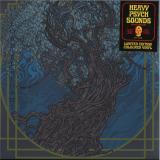
LORD ELEPHANT - ULTRA SOUND
  • Electric Dunes
  • Gigantia
  • Smoke Tower
  • Black River Blues
  • Astral Crypt
  • Mindnight
  • Leave This World With Me
également disponible

OXBLOOD VINYL[23,32 €]


Lord Elephant are back with their second studio album "Ultra Soul", a psyched blend of 70's, 90's and 00's extravaganzas mixed together with the distinctive heavy breath of the band. Blues, doom and sludge are fused again in the strange trademark of the trio, allergic to genre-labels and ready to expand the vision beyond cages! Recorded, mixed and mastered at Studio 73, Ravenna, by Riccardo Pasini (Nero Di Marte, Ephel Duath, Ottone Pesante..) Artwork and Layout by JJ Farfante ArtLab (Melvins, Mudhoney, Ufomammut)

pré-commande30.01.2026

il devrait être publié sur 30.01.2026

23,32
Novembre - The Blue LP

Novembre

The Blue LP

12inchVILELP1323
Peaceville
30.01.2026
  • 1: Anaemia ( 04:36 )
  • 2: Triesteitaliana ( 04:53 )
  • 3: Cobalt Of March ( 06:01 )
  • 4: Bluecracy ( 06:07 )
  • 5: Architheme ( 04:1 )
  • 6: Nascence ( 04:33 )
  • 7: Iridescence ( 05:12 )
  • 8: Sound Odyssey ( 05:32 )
  • 9: Argentic ( 05:28 )
  • 10: Deorbit ( 06:24 )

Then known as Catacomb, their early recordings of unusual gothic doom metal were to quickly gain the band interest. It was around 1993 that the brothers decided that a name change was in order & Novembre was born. Following swiftly on the back of 2006's 'Materia' release - Novembre's first album for their then new label, Peaceville - & in the wake of the great acclaim the band was receiving at the time for its highly captivating blend of atmospheric, emotional & progressive rock/metal, arrived the follow-up opus, 'The Blue', in 2007.

Featuring among the band's strongest compositions to date & with twists of doom/ gothic which brought to mind classic bands such as Opeth, 'The Blue' was a flawlessly executed opus of soaring majestic anthems in the unmistakable Novembre style. 'The Blue' was recorded at Outersound Studios, Italy, by the band & mixed at Finnvox Studios in Finland (Nightwish, Finntroll, HIM). Artwork was created by Travis Smith (Katatonia, Opeth). Following the recent release of the band's stellar 'Words Of Indigo' album, this edition of 'The Blue' is presented on black vinyl with printed inner sleeve featuring lyrics & arrives on the vinyl format for the first time.

pré-commande30.01.2026

il devrait être publié sur 30.01.2026

26,47
Oaagaada - Oag-ada / A Swimming Trip (7")

We Jazz Records continues their 7" series with a new release by Oaagaada, a fresh quartet from the rural parts of Southern Finland. "Oag-ada / A Swimming Trip" appears on 30 October and presents the band's ability to create fiery and flowing jazz music with strong avantgarde leanings. Think Art Ensemble Of Chicago on their groovy mode and add a strong DIY mentality, four people in a room creating music in the now. The lows are low and the highs are high, with the trumpet firmly on the red, adding just the right amount of blurriness into the picture. Perhaps it's not "lo-fi jazz" per se, but rather music which is more concerned with other things than the cleanest of hi-fi imagery. This is "real jazz for real people".

The quartet includes Tuure Tammi (trumpet), Sami Pekkola (sax), Tero Kemppainen (bass) and Simo Laihonen (drums). Laihonen has recently appeared on We Jazz Records with Stanley J. Zappa and previously with Black Motor, and more Oaagaada can be heard on the recent "We Jazz Live Plates" album "Lonna 2019".

True to We Jazz style, the 7" single comes with old school heat-pressed labels and a plain brown paper sleeve.

pas en stock

Commandez maintenant et nous commanderons l'article pour vous chez notre fournisseur.

9,45

Last In: 5 years ago
Derrick Sound - UPLIFTMENT
  • A1: Upliftment - Bugle & Agent Sasco (Assassin)
  • A2: Blessings - Lutan Fyah
  • A3: Jah Is Always So Near - Sizzla
  • A4: Jah Is In Charge - Chezidek
  • A5: Knock Knock - Turbulence
  • A6: Change We Want - Eesah
  • B1: Can’t Break Our Souls - Peetah Morgan
  • B2: Tired Of The Drama - Capleton
  • B3: Bla Bla Bla - Lutan Fyah
  • B4: Rumours Of War - Jah Mason
  • B5: Old School Rule - Luciano
  • B6: Badda We Badda - Brother Culture & Eesah
  • B7: Double Standard - Fantan Mojah

black vinyl All riddims produced by Derrick Sound (Etienne et Nicolas Maître). This album is dedicated to the memory of our friend Chaouki Abbas. All brass instruments are played by Romain Tingueli (saxophone) and Zacharie Ksyk (trumpet and trombone). Featuring artists like Sizzla, Capleton, Peetah Morgan, and Luciano, this album stands as a true tribute to reggae excellence.Side A1.UpliftmentBugle & Agent Sasco (Assassin)2.BlessingsLutan Fyah3.Jah Is Always So NearSizzla4.Jah Is In ChargeChezidek5.Knock KnockTurbulence6.Change we wantEesahSide B1.Can’t Break Our SoulsPeetah Morgan2.Tired Of The DramaCapleton3.Bla Bla BlaLutan Fyah4.Rumours Of WarJah Mason5.Old School RuleLuciano6.Badda We BaddaBrother Culture & Eesah7.Double StandardFantan Mojah

pré-commande30.01.2026

il devrait être publié sur 30.01.2026

22,27
LORD ELEPHANT - ULTRA SOUND

Oxblood Red vinyl, limited to 400 copies. Lord Elephant are back with their second studio album "Ultra Soul", a psyched blend of 70's, 90's and 00's extravaganzas mixed together with the distinctive heavy breath of the band. Blues, doom and sludge are fused again in the strange trademark of the trio, allergic to genre-labels and ready to expand the vision beyond cages! Recorded, mixed and mastered at Studio 73, Ravenna, by Riccardo Pasini (Nero Di Marte, Ephel Duath, Ottone Pesante..) Artwork and Layout by JJ Farfante ArtLab (Melvins, Mudhoney, Ufomammut)

pas en stock

Commandez maintenant et nous commanderons l'article pour vous chez notre fournisseur.

23,32

Last In: 4 months ago
JAMES MATTHEW SEVEN FT. FABIO SANTANNA - JAMES MATTHEW SEVEN
 
2

Beijinho do Brasil announce their second release with the highly anticipated follow-up from LA-based producer and multi-instrumentalist James Matthew Seven, featuring guest vocals on the A-side by Rio de Janeiro's Fabio Santanna.

Recorded in a small studio on the beach in Oaxaca, Mexico, "Feels Good, Do It" brings to mind a lost recording from Marcos Valle's time with Leon Ware. Funky and soulful with warm Fender Rhodes and a horn section reminiscent of Banda Black Rio, the tune is a breezy, mid-tempo ode to embracing life's pleasures. Originally with vocals in English, the track was translated and re-recorded in Rio de Janeiro by Fabio Santanna. Fabio has a long-established reputation in Brazil as a torchbearer of modern funk and boogie, continuing in the lineage of artists like Robson Jorge and Lincoln Olivetti. But with his releases on labels like Onda Boa and Dippin' Records (which sold out nearly instantly), his international reputation is steadily growing. He has a new 7" due out on Dippin' Records on October 10th, pushing his name to the forefront once again, right on time to generate more buzz for our next 45!

About the flip side, "Ilha Racional" (a nod to Tim Maia's Racional era):
I had this dream where I was in a dive bar discotheque somewhere in the Caribbean. A thick cloud of smoke hung in the air as the selector dropped this bass-heavy bop that had the whole crowd vibing. Then, out of nowhere, in walked Tim Maia with a bag of mushrooms. He proceeded to grab the mic and preach about this alien world of rational energy. Shit was bugged out. When I woke up, James Matthew Seven had sent me this track to check out.

pas en stock

Commandez maintenant et nous commanderons l'article pour vous chez notre fournisseur.

11,35

Last In: 4 months ago
Mauricio Fleury - Revoada

Delve into the quirky and psych-tinged world of Brazilian pianist, composer and multi-instrumentalist Mauricio Fleury.

With more than a hint to Brazilian jazz greats like Azymuth, Deodato and CTI Records in their prime, Revoada is a groove based jazz-framed record, primed with other transitory musical vignettes which touches on Turkish psych and soul-jazz born out of the 70's film soundtrack genre.

Revoada is a 6 track album and storyboard of Mauricio's migration and travels through Brazil's geographical oddities , its rural and urban enclaves. Recorded in Brazil, it's the result of numerous treks through funky flea markets, soaking up old vinyls and vintage cultural artefacts combined with a new life led in Berlin since 2022.

Mauricio, as well as a founding member of Bixiga 70 (google Brazilian Afrobeat pioneers), a band he fronted for over 12 years, is also an in-demand collaborator and musician who as a pianist, guitarist and even percussionist has shared stages and studios with the likes of Brazilian greats including Gal Costa, Emicida, Lucas Santtana, João Donato and Liniker.

In 2007 he had a life-changing experience meeting Tony Allen, at the Red Bull Music Academy. After hanging out, chatting music and life, Tony insisted to Mauricio to participate with Tony in a jam with blacktronica and soulful house music pioneers Ron Trent, Theo Parrish and Steve Spacek. Mauricio sums it up, "From that moment on, I was never afraid to collaborate musically with anyone, no matter who's playing. It also brought me to researching the connection between Brazilian music and Afrobeat which is something that still means the world to me".

Another unforgettable session Mauricio undertook happened alongside João Donato and Marcos Valle, playing Donato's classic album Quem É Quem, live, a record seen as a blueprint for second generation bossa nova. Mauricio has worked with Gal Costa on two albums, Estratosférica Ao Vivo and her last studio album A Pele do Futuro. Fabio Sá and Vitor Cabral (bassist and drummer on Revoada) were playing with Gal at her last concerts, including in Berlin in 2022 before she passed.

In contemporary music, Mauricio was part of Toy Selectah and Mexican Institute of Sound's Compass project. He's worked with Colombia's Los Pirañas and has even recorded a mysterious and unreleased album with Quantic.

Revoada shows signature traces of Thelonious Monk, Ramsey Lewis' swinging soul sound, Deodato's drama, and styles from further afield, spreading into Turkish psych and Ethiopian jazz, when the time is right. Each track, led always by Mauricio playing multiple instruments with a choice selection of guests and core members on bass and drums, highlights Fleury's meticulous approach to finding the right timbre, utilising his arsenal of organs and effects pedals to set the mood, taking the listener to a specific place or memory that has shaped him.

A vinyl DJ for over 25 years and someone who is immersed in digger and collector's culture, Mauricio places a lot of emphasis on the importance of the complimentary relationship between two artforms (DJ and composer/producer) in the sense of having a broad repertoire of musical knowledge, references and perhaps predictably, being a Brazilian, understanding the connection between rhythms. This is an impressive debut album that struts itself right into the runout groove.

pas en stock

Commandez maintenant et nous commanderons l'article pour vous chez notre fournisseur.

25,63

Last In: 4 months ago
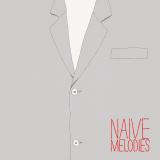
Various - Naive Melodies LP 2x12"

Various

Naive Melodies LP 2x12"

2x12inchBBE424CLP
BBE Music
23.01.2026
  • 1: Psycho Killer
  • 2: Heaven
  • 3: Sugar On My Tounge (Dub)
  • 4: Born Under Punches (The Heat Goes On)
  • 5: Once In A Lifetime
  • 6: I Zimbra
  • 7: The Book I Read
  • 8: Girlfriend Is Better
  • 9: Mind
  • 10: Burning Down The House
  • 1: Uh-Oh Love Comes To Town
  • 2: Seen And Not Seen
  • 3: Road To Nowhere
  • 4: Born Under (More) Punches (The Heat Goes On)
  • 5: Take Me To The River
  • 6: And She Was
  • 7: This Must Be The Place (Naive Melody)
  • 8: Crosseyed And Painless
également disponible

Tape[25,17 €]


Naive Melodies is a bold and visionary tribute to the music of Talking Heads, reinterpreted through the lens of Black musical innovation. Curated by Drew McFadden — the creative mind behind BBE’s acclaimed Modern Love (David Bowie tribute album) — this new collection dives deep into the Afro-diasporic rhythms and experimental soul roots that helped shape Talking Heads’ unmistakable New Wave sound. Inspired by artists like Fela Kuti, Parliament, and Al Green — whose influences loomed large in the band’s rhythmic DNA — Naive Melodies shines a light on the Black music traditions that underpinned their artistry. Far from a conventional tribute, Naive Melodies reframes the band’s catalog through the voices and visions of a new generation of genre-defying artists. These interpretations illuminate the foundational grooves and sonic textures that fueled Talking Heads’ rhythm-forward aesthetic, bringing them full circle with authenticity. “With Naive Melodies, I wanted to spotlight the deep and often overlooked influence of Black music on the sound of Talking Heads, drawing from the rhythmic foundations of Afro-diasporic traditions, soul, gospel, Latin, and spiritual jazz. This project is a chance to reimagine Talking Heads’ legacy through the lens of the very innovations that helped shape it, bringing those influences to the forefront through the voices of today’s most forward-thinking artists.” — Drew McFadden The album features a globally minded lineup, including Liv.e, Bilal, Rogê, Miguel Atwood-Ferguson, Aja Monet, Georgia Anne Muldrow, Theo Croker, Kenny Dope, Rosie Lowe, Pachyman, W.I.T.C.H., and more — spanning Afrobeat, jazz, soul, funk, gospel, dub, electronica, orchestral, and Latin styles. It reflects not only the boundary-pushing ethos of Talking Heads, but also the influence of Black music as a cultural force that helped shape it. This is not just a tribute album — it’s a recontextualization. A cultural conversation. A rhythmic reawakening.

pré-commande23.01.2026

il devrait être publié sur 23.01.2026

32,35
Ronnie Herel - Ronnie Herel Presents Neo Soul Sessions Vol. 2 LP 2x12"
  • A1: Vula – Want Ur Love
  • A2: Terri Walker – Missing You (Ronnie Herel Remix)
  • A3: Lukas Setto – Can You Feel The Love
  • B1: Bon Garcon Ft. Michele Escoffery – Love Is Real
  • B2: Tyler Daley – All I Need
  • B3: Legato – Thug Luv
  • C1: Zoe Kypri – Holding You
  • C2: Vula – Tru Luv
  • C3: Tyler Daley – 4So Long
  • D1: Sebastian Mikael – Next Chapter
  • D2: Anamé Rose – I Am
  • D3: Slakah The Beatchild – The Cure

Blues and Soul Award winner and double MOBO Awards nominee Ronnie Herel is back with his 2nd volume of his excellent compilation series Neo-Soul Sessions. Ronnie, a massively important figure in the UK Black music scene, is a radio presenter with Mi Soul and includes BBC 1xtra in his broadcasting credits. He is a DJ of international renown and was one half of the Quartz production duo which scored memorable hits with Dina Carroll. His undisputed love for and knowledge of the Neo-Soul genre shines through in the Neo-Soul Sessions and this latest, volume 2, is no exception. Featuring tracks from artists such as Vula, Terri Walker, Aname Rose and Slakah the Beatchild, among others, Neo-Soul Sessions volume 2 is a brilliantly curated and pieced together selection of twelve tracks that absolutely nails the beauty of the later releases in the Neo-Soul genre. Played from start to finish the track selection and order is a pre-made DJ set that flows in a way that would soundtrack a dancefloor, a house party and an excellent backdrop of tunes for any time and day of the week. Ronnie's passion for championing independent artists is also evident in his selections here and the compilation serves as a platform for those voices who deserve to break through. The decision to choose six of his favourite tracks to sit alongside six exclusive and unreleased gems means that a light is now shined on every artist featured on the compilation. An absolute must for serious lovers of Neo-Soul, RnB and Black Music, Neo-Soul Sessions volume 2 is released on double vinyl LP and CD formats.

pré-commande23.01.2026

il devrait être publié sur 23.01.2026

35,71
Articles par page:
N/ABPM
Vinyl