In the late 1980s, Klaus Wiese (Popol Vuh) deepened his connection with Tibetan culture. The result is a series of works solely dedicated to the universal purity of the Singing Bowls. Uranus, perhaps the most rigorous of these, is an intense meditation on the trans-personal sphere of the VI chackra. The music becomes like a single harmonic chant, the reflection of a constant flow of divine light, which transforms the psyche and dilates the secret passages of the heart. In the galaxy of pure sound, the accumulated overtones offer the intrepid listener the access to a prismatic, fluoriscence-rich consciousness. The ego thus becomes the sonorous composer of itself, of the vital circle flooded with beneficial acoustic vibrations. In this sense, Uranus, originally published on tape (Aquamarin Verlag/1988), also marks a parallel with the same research by Henry Wolff & Nancy Hennings or Nada Himalaya's Deuter.
First published in 1978 by Cetra, in this work Antonio Infantino continues to express his ritualistic and shamanic relationship with the musical traditions of Southern Italy. The recordings focus on the mystery of death and the sacraments, the light of the spirit and the divine that descends and conquers souls. The phenomenon of Tarantism is still strong, the power of dance as a symbol of transformation and revolt, a therapeutic process of final healing. Folk music celebrates a deep sense of community, the memory of a peasant world that no longer exists but is still alive in the collective memory. Behind the tight and insistent rhythm of the percussion, the voices of the people, the colours of the squares and the scratchy string arrangements always emerge. The magical sound of the bagpipes is lost in the alleys of the villages. Infantino sings of minor cultures, the poor and oppressed classes, who share joys and sorrows, dance and music as secular forms of liberation.
First up the return of Black Blood on vinyl after a hiatus of well over 20 years. This release is a reworking of the EXITUS002 vinyl that came out on that Italian label back in 1999. This one has a bonus track from that period of time too called “Avalanche Of Fear”. Pressed on “Blood Splatter” vinyl and limited to 150 copies. Each sleeve has been hand-painted, stamped and numbered by Black Blood himself (along with a little help from the family). Random copies have limited postcards inside. The sleeves that were hand printed are the same stock of sleeves from 2000 that were used on F.O.S. number 2 & 3. The 2026 mastering has made this release even better than the super-rare original.
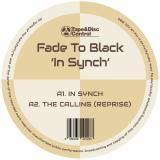
Jay Denham is the US techno mainstay behind Fade To Black and now his 1990 EP 'In Synch' gets reissued as the second outing from the Tape & Disc Control crew. The original often fetches close to three figures on the second-hand market and was an early blueprint for rugged analogue techno with plenty of bounce, not least in the title cut. 'The Calling (reprise)' builds through classic Detroit machine soul with surging chords and feathery light percussion dancing over the groove. 'Insistent Rhythm' has boom and swing in equal measure while 'The Calling' is rich in old school techno funk and plenty of wiggy electronic lines. 36 years old but still utterly futuristic.
DJ Support: Danny Krivit, Brian Tappert, John Morales, Craig Charles, Dr packer and more
Italian producer Corrado Alunni returns to the 7-inch format with a high-caliber double-sider. The A-side, 'Black Pearl', is a masterclass in jazz-funk-house elegance, weaving warm Fender Rhodes melodies with vibrant flute and trumpet solos over a sophisticated, sun-drenched groove. On the flip, 'Turn It On' keeps the energy high with Alunni’s signature blend of infectious Rhodes riffs, chunky basslines, and dancefloor-ready drums. A must-have addition for fans of soulful house and nu-disco lovers alike.
Terrestrial Funk presents a piece of Detroit history. Born and raised in Motor City, Karl Fultz knew at the age of twelve that he wanted to be the most talented and successful DJ in the world. In 1999 he released on Juan Atkins’ Metroplex under the alias People Mover and in 2000 he released as Black Electric on Puzzlebox. Inspired by British synth-pop duo Eurythmics, Fultz says Black Electric was a way to get more women involved in the techno movement. Together alongside vocalists Tiffany Elliott, Kim Glover & Talena Fultz, Black Electric brought sex appeal to the scene. Their first and only release stays in demand and has become inaccessible until now. Terrestrial Funk’s reissue provides two fresh cuts on the new 12”; ‘Purple’ a chugging Detroit acid track describing soul modification to enhance intimacy and a proper bassed out club mix of the nasty electro sex song ‘Work That’, which was only featured as an acapella on the original release. The release also features updated mixes of both the title track and the half-time anthem 'Come To Me' alongside the original y2k mix of 'Colors'. Black Electric stands as a testament to turn of the millennia Detroit and the city’s undying devotion to expand our connection to music.
Īlker Soylu returns with third instalment of his Mastering Black alias, marking a decade of Zwart Goud with a special edition LP titled X - an introspective yet adventurous document that blurs the lines between genres, time, and place.
X is a carefully crafted passage through contrast and cohesion. From dusk-lit highways to underwater reveries, this third chapter from Mastering Black unfolds as both continuation and evolution - a cinematic odyssey of sound sculpted inward and outward for introverts and extroverts, for you and me - for us.
Dewa Alit, master of radical Balinese gamelan, returns to Black Truffle with Baur Bentur. Genetic (2020, BT063) introduced international listeners to the magical sound-world of Alit’s Gamelan Salukat, who perform on instruments tuned to a unique scale derived from modified versions of two traditional Balinese scales. The two pieces heard on Chasing the Phantom (2022, BT093) further demonstrated his radical fusion of tradition and experimentation, with passages where unorthodox techniques make the acoustic ensemble resemble glitching electronics. Baur Bentur now highlights another aspect of Alit’s work, presenting pieces composed in 2024 and 2025 where Gamelan Salukat performs alongside virtuoso pianist Sri Hanuraga. Alit’s music is grounded in deep reflection on the tradition of Balinese gamelan and its place in the contemporary world. His title, ‘Baur Bentur’, which translates as ‘mixing and smashing’, points to his embrace of the intercultural mixture of Eastern and Western elements in the search for innovation. Against the calcification of Balinese music into tourist entertainment, Alit poses his searching, experimental work, which celebrates the communal values and performance practices of traditional gamelan while pushing into startling new directions.
‘Sukat Tacara’ is a study in layered tempos, meters, and polyrhythms, a constantly shifting dialogue between piano and the instruments of Gamelan Salukat. It begins close to a traditional concerto, pairing a brisk sequence of melodic variations from the piano with a spare but propulsive accompaniment of drums and hanging metallophone tones, punctuated by low gong strikes. The piano builds in volume and density across a rapid succession of fragments, at points recalling George Antheil’s ticking wind-up machinery, though Hanuraga’s jazz background shines through in the fluidity with which he navigates the complexities of the score, where chromatic movement co-exists with bluesy phrases. An abrupt change in the piano to patterns of dense clusters introduces a new episode, during which the metallic instruments of the gamelan enter the foreground. The piece dazzles with its inventive rhythms and dynamics, building to a stunning passage featuring the signature heavy muting technique of the Gamelan Salukat metallophones in kinetic patterns that would be at home on a Príncipe release.
The title piece begins at high intensity and rarely lets up, working through bracing unison ensemble melodies and punctuation points where piano and gamelan together seem to become a single, thudding drum. For much of the piece the piano is tightly integrated into the ensemble, the harmonic extensions of the melodic line subsumed into a moving cloud of complex overtones generated by the gamelan instruments. Wildly kinetic on the rhythmic level, the piece swarms with microscopic movements of beating patterns generated by the ‘blend and crush’ of three simultaneous tuning systems: the equal temperament of the piano and the saih cenik (small scale) and saih gede (big scale) used by the gamelan instruments. Accompanied by the composer’s thoughtful liner notes and images of the musicians, Baur Bentur is a stunning next step in Alit’s radical combination of tradition and innovation.
Cold Union emerge with “Lost In Black”, a coldwave signal suspended between haze and motion. An early glimpse of their upcoming album, where restraint becomes atmosphere and every element is reduced to its essential form. Icy guitars drift over deep, driving basslines, while distant, delayed vocals hover in slow, almost spectral, hypnotic atmosphere. There’s a clear understanding of the genre’s lineage here—echoes of classic post-punk codes reinterpreted with patience and intent. Minimal, precise, and emotionally distant, Lost In Black channels the core of post-punk into something colder, sharper, and built for the finest late hours goth parties.
Scaler are the electrifying Bristol-based band hailed as the city’s “next national breakthrough” thanks to their pulverising live show and meticulous, mind-warping sound. Hot off their critically acclaimed sophomore record ‘Endlessly’ which was nominated for an AIM award for ‘Best Independent Album’ comes Reflex. An EP full of kinetic energy satisfying a craving for immediacy within the project. The layers of intricate collaboration of Endlessly are peeled back and the raw energy of SCALER is cast forth. “These songs were made with the four of us in the room together with our machines, reacting to what the others were doing. Trying to capture the feeling of when your body outruns your head, no second guessing or holding back. Together they work as both fight and flight. A chase and a reaction. Instinct not thought. A reflex.
4LP vinyl boxset - pressed on opaque red, green, blue and yellow vinyl housed in printed inner sleeves with disco holes within a hardbound book jacket. The back cover is a Ludo board and the package contains Ludo game pieces, dice and instructions on how to play.
The Best of the Black President is the 13 track guide to Fela Kuti’s massive and manifold creative career. Fela was a musician, arranger, producer, political radical, outlaw and the originator of Afrobeat. This is the first time the complete compilation is available on vinyl. It is a 4 LP set, with updated cover art in a hardbound book jacket and printed inner sleeves. The individual LPs are pressed on red (sides A/B), green (sides C/D), blue (sides E/F) and yellow (sides G/H) vinyl. This edition features a Ludo game board as the back cover and comes with a perforated set of game pieces, dice, and instructions on how to play. Limited edition of 3000 for the world.
The release of this special edition coincides with the 12 episode podcast on the life and legacy of Fela, Fela Kuti: Fear No Man, produced by the Obamas and hosted by Jad Abumrad (Radiolab, Dolly Parton’s America). The series features dozens of interviews including Burna Boy, Paul McCartney, Questlove, Ayo Edebiri, David Byrne, Santigold, and President Obama himself. It was initially released on Audible on 9/15/25 and had a wide release across all podcast platforms on 10/15/25
The experiment aboard orbital station Sequoia-4 began as a routine test of the acoustic array. The team attempted to synchronize an analogue resonator with a quantum audio synthesizer. The two incompatible frequencies were expected to cancel each other out. Instead, the instruments registered a stable wave. It didn’t fade, on the contrary, it did respond to every sound, every movement around it.
At first, they assumed a coding error, but the wave began adapting to the researchers’ voices, shifting its amplitude and rhythm. Within hours, its spectrum started to resemble a heartbeat. The recording was forwarded to the Analysis Division, where it was named Hybrid Dub — a hybrid resonance formed between the machine and the human senses. The phenomenon proved unpredictable: each listener described different effects, from gentle euphoria to vivid recollections of memories that had never occurred.
Even after the system was powered down, a faint signal persisted in the ether — as if the mechanism had learned to breathe on its own. Some claimed that, when replayed, traces of the ocean, rustling leaves, and distant voices could be heard — as though the signal had passed through layers of living matter and remembered them.
The project was shut down, and the archive sealed. Only one line remained in the final report: “The signal wasn’t created — it discovered us.”
With Black Koyo, Mattias De Craene enters a sound world at once intimate and vast. Born from journeys in Morocco and Brussels, the project traces the rhythms, chants, and spirits of the Gnawa tradition, revealing a quiet resonance that echoes De Craene's own search for depth and presence. Guibri, qraqueb, call-and-response chants, saxophone, loops, and electronics come together in a trance-induced dialogue - ritualistic, elemental, and dreamlike - creating a space where listening becomes immersion, tradition meets imagination, and music unfolds as a shared act of reflection and wonder.
About Mattias De Craene
Mattias De Craene's artistic path is marked by rare coherence. As a central voice in Nordmann and MDC III, he developed a physical, rock-inflected jazz language driven by propulsion, volume, and trance-like collective energy. Over time, a period of personal rupture - burnout, tinnitus, depression - shifted his focus inward. The saxophone became a breathing, textural presence, and in his solo work, he weaves saxophone, electronics, loops, and minimal forms into a cinematic, hushed world where repetition, resonance, and silence slow perception. Rooted in ambient and introspection, his music prizes attention over impact, precision over excess - a quiet intensity recognized with a nomination as Musician for the Music Industry Awards (MIA's).
About Black Koyo
Black Koyo is a Brussels-based ensemble and one of the most compelling voices of the Gnawa tradition outside Morocco. Led by maalem Hicham Bilali, the group brings guibri, qrraqueb, and call-and-response chants to life with trance-like intensity and ritual precision. Their music is both rooted and contemporary, weaving earthbound rhythms and vocal invocations into ecstatic, immersive soundscapes, creating a space where ancestral resonance meets present-day imagination.
About Jan Bang
Jan Bang is a pioneering Norwegian producer and musician, celebrated for his mastery of live sampling and his ability to merge electronics with improvisation, rhythm, and texture in real time. He mixed the album and occasionally joins live performances, bringing his signature approach to sound as co-founder of the influential Punkt Festivaland collaborator with artists such as Jon Hassell, David Sylvian, Arve Henriksen, and ECM Records' roster. As a performer and sound architect, Bang creates immersive, trance-like sonic textures where silence and sound carry equal weight. Within Mattias De Craene ftBlack Koyo, his live sampling becomes an organic instrument, weaving saxophone, electronics, and Gnawa rhythms into hypnotic, physically charged soundscapes.
Line-up & credits
Mattias De Craene - sax, electronics | Hicham Bilali - guibri, vocals, qraqueb |Ismael Akhraz - vocals, qraqueb | Marwan Abantor - vocals, qraqueb
All tracks are original gnawa traditionals played by Black Koyo and arranged by Mattias De Craene.
Album produced & recorded by Mattias De Craene in Essaouira, Morocco and hometown Ghent, Belgium 2025.
Text by Hicham Bilali.
Mixed by Jan Bang at Punkt Studio
Mastered by Lieven Van Pee
Artwork by Marina Sviridova
Design by Benoit Van Geel
Manufactured and distributed by N.E.W.S.
Executive production by W.E.R.F. records
Supported by Flemish Government, Jazzlab, nona, HA Concerts, Aubergine artist Management,
KAAP, La Bestia (Wout Van Putten) & mdcmu.sic vzw.
2026 (c) W.E.R.F. records
You can always rely on Burnski and his many labels to keep DJs and dancers well-oiled with plenty of fresh house and garage tackle in various different guises. Constant Black keeps it stripped back with this new one from Rotterdam resident Fabio Santos. 'Midnight Protocol' is an ice-cold stepper, and 'Duster' gets more sleazy and raw with a heavy house foundation. There's wub-wub filth underpinning the garage shuffler 'Breather', old school ragga vibes on 'Request To All Junglist' and 'Conspiracy' is a light-footed hot-stepper with mutant energy. An absolute no-brainer that will become a go-to for months to come.