Damian Wilson and Adam Wakeman's 3rd full-length studio album 'Can
We Leave The Light On
Longer?' containing 10 new songs, features Damian on vocals and acoustic guitar
and Adam on piano, vocals, Hammond organ, acoustic & electric guitars, bass
and percussion. Additional drums and trumpet are provided by Pete Riley and
George Hogg and there's an 18-voices choir.
In line with, perhaps even more than on, their previous albums the songs have a
very personal depth and meaning to Adam and Damian.
Damian is a songwriter and vocalist who's known for his exploration into different
genres and is considered one of the most versatile singers in rock. Adam is best
known as the keyboard and guitar player with Ozzy Osbourne and Black Sabbath,
Adam has also released several albums with his father Rick Wakeman.
Buscar:black key
Indignation Meeting are punky rail fans from Leeds. 15-year-old Peter is the driver - he's the drummer and lead singer, writes most of the songs, and also plays bass and trumpet on the album. The rest of the crew is his dad Michael on guitar, Hugo on bass, and with Keith, Heather and Sally often along for the ride when they play out. Here at DGHQ we've been listening to their self-released debut album Trouble In The Shed since last year and finally spoke with the band and agreed to release it on vinyl for the first time. It was very good timing as they've just been in the studio to finish recording their second album, so we'll be releasing that later in 2024. Welcome on-board! We caught up with Peter to ask as few questions about the band_ Q: "In a week when the Labour Party promised to return the rail network to public ownership, we ask how did your fascination with trains begin?" A: "Honestly, I don't really know - I've just loved them ever since I can remember. It's not like with some people who had a family connection or watched Thomas the Tank Engine; I've just always loved them. I guess it's just a childhood obsession that never went away!" Q: "'Trouble In The Shed' is quickly becoming a firm office favourite here at DG. There's a touch of punk, indie and new wave about it. What would you say are the key influences that make up your musical DNA?" A: "My main influence when this album was released was Blyth Power. They'd been my favourite band for years when this was recorded, so everything on it was influenced by them in some way. They've had so many different musical styles over the years that they kind of conglomerated into this album, to create yet another eclectic mix of songs. The only real exception to that on this album is Electrification - no prizes for guessing the influence there! If you see us live, however, you may notice another influence pervading through our songs. That influence is the anarcho-hippy band 'The Astronauts,' whom I discovered midway through the recording process, and have quickly become one of my all-time favourite bands!" Q: "What's the story behind your song 'Hornby Horrors'?" A: "Hornby Horrors is an interesting one. People who haven't heard it may assume it's about some ill-fated model railway endeavour, but it's actually a tale of corruption in, of all places, the model train company Hornby! This song was the result of several minor scandals at Hornby HQ making their way to the modelling masses, the main ones of which were an ill-fated tier list, which placed retailers in three categories as to whether or not they received Hornby's products, with tier 3 retailers barely getting anything at all. Interestingly, the UK's former biggest retailer, Hatton's Model Railways, was a tier 3 retailer due to their 'competing products' (made by their own small brand Hatton's Originals') and has recently announced closure due to financial hardship. Now as we all know, correlation does not equal causation, but I wonder_" Q: "The album is being released on a specific shade of green vinyl. What's the significance?" A: "The shade of green on the vinyl is very similar to the shade worn by the locomotives from the Great Western Railway in the 1870s - 1940s. Due to this connection, we thought it was only proper we picked this colour, which we have dubbed 'Great Western Green!'" Q: "The album release coincides with an appearance at Rebellion Festival in Blackpool this August. Can you give the readers three reasons why they should come and see your performance?" A: "1 - We like to think we provide something different with our music - it is very obviously punk, but it's a bit more light-hearted than a lot of the political stuff, with nearly all the songs being about some sort of obscure steam loco engine. If you just want something light-hearted to enjoy, we might just be the band for you! 2 - We've got a rather interesting line up - instead of the usual line-ups you see, we've got a 15 year-old singing drummer with his dad on guitar, a newly-turned adult with a massive ginger afro playing the bass, the guitarist from the old anarcho band 'Dog On A Rope' playing some gnarly lead parts, and all topped off with some beautiful backing vocals from the drummer's sister and mother. As Attila the Stockbroker described us, Blyth Power meets the Partridge Family - not to be missed! 3 - Here's something you won't forget in a hurry - as well as his vocals, our 15-year-old frontman Peter plays drums and trumpet at the same time! If that's something you want to see, make sure you get down to see us!"
To this day, jazz pianists are influenced by Bill Evans by his use of impressionist harmony, interpretation of traditional jazz repertoire, and his trademark rhythmically independent, “singing” melodic lines. Evans gained his first spotlight when joining Miles Davis’ sextet during the time Kind of Blue was recorded. After leaving the sextet, Evans began his career as bandleader, which he finished in his last trio with Marc Johnson on bass and Joe LaBarbera on drums. This trio recorded The Brilliant in 1980 live at the Keystone Jazzclub, San Francisco, just before Evans’ passing. The Brilliant is available on black vinyl.
Careening from the Black Sublime of Dadawah to the, er, Foxy Brown of Jennifer Hylton, Dug Out lets off this early~nineties r'n'b~spiced piledriver, recorded by Lloyd Pickout Dennis at Dynamic, with the Firehouse Crew - George programming drums, Danny the bass, and Wrong Move the other keys
- A1: Psycho Killer
- A2: Heaven
- A3: Thank You For Sending Me An Angel
- A4: Found A Job
- A5: Slippery People
- A6: Cities
- B1: Burning Down The House
- B2: Life During Wartime
- B3: Making Flippy Floppy
- B4: Swamp
- C1: What A Day That Was
- C2: This Must Be The Place (Naive Melody) (Naive Melody)
- C3: Once In A Lifetime
- C4: Big Business/I Zimbra
- D1: Genius Of Love
- D2: Girlfriend Is Better
- D3: Take Me To The River
- D4: Crosseyed & Painless
LOS ANGELES—To celebrate the 40th anniversary of the celebrated Talking Heads and Jonathan Demme’s concert film Stop Making Sense, the set will be re-released as a 2LP and 2CD/Blu-ray set this summer.
Released last year, the sold-out Deluxe Edition of the soundtrack will return as a 2-LP black vinyl on Rhino and 2-LP crystal clear vinyl at retail. Both variants feature a 12-page booklet with liner notes from all four band members –Tina Weymouth, David Byrne, Chris Frantz, and Jerry Harrison—and band photos. The 2CD/Blu-ray version includes the entire 28-page booklet from last year’s Deluxe Edition and a Dolby Atmos mix of the complete concert, mixed by Jerry Harrison and E.T. Thorngren, who also mixed the original release. Both will be available on July 26. Pre-order now.
The band appeared together for a sold-out screening and Q&A last night at the Pantages Theater, the same theater at which Stop Making Sense was recorded. They were joined by Blondshell, who performed “Thank You For Sending Me an Angel.” Another special screening with the band will occur in Brooklyn at the King’s Theater on June 13, with the Q&A hosted by Questlove and The Linda Linda’s performing “Found a Job.” The two events cap off a banner year of celebrations for what many consider to be the best concert film of all time.
The inspiration for Stop Making Sense came when director Jonathan Demme saw Talking Heads perform during the band’s 1983 tour for Speaking in Tongues. Afterward, he approached them with the idea of making the show into a concert film. They agreed and worked together over the next few months to finalize the details. Ultimately, Demme filmed three shows at Hollywood’s Pantages Theater in December 1983 to create Stop Making Sense.
The concert film presents a retrospective of the band up to that point, with a performance that weaves together songs from all six of its studio albums. The show progresses methodically, opening with Byrne onstage performing “Psycho Killer” alone with a drum machine. After each song, he’s joined by a new band member until Weymouth, Frantz, and Harrison are all on stage with him. The group continues to grow throughout the concert as members of the stellar touring band are added: keyboardist Bernie Worrell, percussionist Steve Scales, guitarist Alex Weir, and backup singers Lynn Mabry and Ednah Holt.
The band performs 18 songs in Stop Making Sense, including its recent single at the time, “Burning Down The House.” That summer, the song was in heavy rotation on radio and MTV, helping the song become the band’s first top 10 hit in America. It was, however, a different song from Speaking in Tongues that was destined to deliver one of the film’s signature moments. Talking Heads would perform “Girlfriend Is Better” wearing the now iconic, oversized suit inspired by costumes worn in traditional Japanese theater. For good measure, a picture of David Byrne in the suit also graces the album cover.
Stop Making Sense focuses mainly on music by Talking Heads but does include a few songs recorded outside the band: “Genius Of Love” by Tom Tom Club, “What A Day That Was” and “Big Business” from Byrne’s 1981 album, The Catherine Wheel. Limited edition vinyl versions of both of these albums, along with Harrison’s The Red And The Black, were released for this year’s Record Store Day.
When it arrived in September 1984, Stop Making Sense was an artistic and commercial triumph. The film had people dancing in theatre aisles, and the soundtrack sold over two million copies. Just last year, the Library of Congress added Stop Making Sense to the National Film Registry in recognition of its cultural, historical, and aesthetic significance.
Weymouth praises Demme as a collaborator: “…Jonathan was a very enthusiastic, highly adaptive, and imaginative guy who was just as good a listener as he was a talker and collaborator. From the get-go you just got the impression he was as flexible as he was disciplined. Being team players, that boded well for a great relationship and a great film!”
Harrison says the film still holds up today: “To me, Stop Making Sense has remained relevant because the staging and lighting techniques could have been created in a much earlier time period. For example, Vari-Lights, lights with motors to re-aim them, had just come into vogue. Had we used them, there would have been a timestamp on the film, and it eventually would have felt dated...The absence of interviews, combined with the elegant and timeless lighting, created a film that can be watched over and over.”
Byrne says it’s interesting that this album was – for many people – an introduction to Talking Heads. “We had done a live album before this, but coupled with the film, and with the improved mixes and sound quality, this record reached a whole new audience. As often happens, the songs got an added energy when we performed them live and were inspired by having an audience. In many ways, these versions are more exciting than the studio recordings, so maybe that’s why a lot of folks discovered us via this record.”
Frantz recalls the sheer joy surrounding the entire Stop Making Sense experience. “I’m talking about real, conscious, transcendent joy… I’m talking about what the Southern gospel people call ‘getting happy,’ which means ‘to be filled with the Spirit.’ That is what happened to us onstage every night, and from my seat behind the drums, I recognized that this was happening to the audience too. Joy was visible in front of me and all around me every night.”
Over 10 years ago, Leon Michels released his first full length record, Sounding Out The City. It was Michels' first full length record under the moniker El Michels Affair. At the time, the budding retro soul scene consisted of mostly organ quartets a la The Meters and of course, Sharon Jones & The Dap Kings were in the early days of their ascent to world domination. Leon Michels, who was 18 when recording Sounding Out The City began, had just released Thunder Chicken, the first record by his high school band The Mighty Imperials. At the time of SOTC, Michels was just discovering early rocksteady, afrobeat, and 60's garage rock, which inevitably crept its way into the songwriting. He purchased a Tascam 388, an 80's 1/4" reel to reel 8 track intended for home recordings, and began recording music in a 10x10 box with no windows that also doubled as his childhood bedroom. Along with fellow Mighty Imperials Nick Movshon, Homer Steinweiss, and Sean Solomon, and Michael Leonhart, Thomas Brenneck, and some of the musicians from The Dap Kings, Michels recorded the LP over a two year period. Upon it's release, it received some rave reviews and the small deep funk community ate it up, but due to the lack luster promotion and distribution the rest of the world was slow to catch on to the instrumental gems featured on SOTC, which Michels appropriately labelled as "cinematic soul". However, in 2005 it found it's way into the hands of the people who were organizing a series of concerts for Scion that paired bands with MC's. El Michels Affair was contacted about playing one show with Raekwon The Chef of Wu Tang Clan fame. The show was such a success it led to a tour, and then to another set of concerts that featured multiple members of the Wu-Tang Clan. This eventually led to the release of El Michels Affair's second record, "Enter the 37th Chamber" which introduced them to a much larger audience and has been their most successful release to date. Michels has since gone on to produce and co-produce numerous records for powerhouse soul artists like Lee Fields. He shares songwriting credits with Adele, Jay-Z, Ghostface Killah, Aloe Blacc, and has played on records by Ray LaMontagne, Lana Del Rey, The Black Keys and Dr. John.
- A1: Crushed By The Wheels Of Industry
- A2: Who'll Stop The Rain
- A3: Let Me Go
- A4: Key To The World
- B1: Temptation
- B2: Come Live With Me
- B3: Lady Ice And Mr Hex
- B4: We Live So Fast
- B5: The Best Kept Secret
Original members of Sheffield’s Human League, Martyn Ware and Ian Craig Marsh left after the first two albums
and formed Heaven 17 in 1980. Named after a fictional band in Anthony Burgess’s “A Clockwork Orange”, they
recruited Glenn Gregory on vocals (who had been the original choice for lead singer of the Human League).
Released in April 1983, second album “The Luxury Gap” featured the Top 5 hits “Temptation” and “Come Live
With Me”, as well as “Crushed By The Wheels Of Industry” and “Let Me Go”. The album was certified Platinum in
February 1984 for sales of over 300,000.
This new edition has been expertly mastered by Barry Grint at AIR Mastering from the original stereo tapes using
precision half-speed mastering. Half-speed mastering is a vinyl cutting technique that improves groove accuracy
and transient information creating an incredibly detailed stereo image with a natural high frequency response.
Presented in its original sleeve, pressed on 180-gram heavyweight black vinyl, featuring an obi strip and housed
in a poly-lined inner sleeve, with all the lyrics and credits plus photos on the 4-page insert.
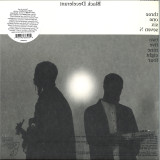
Black Decelerant is the second installment of Reflections, a series showcasing contemporary collaborations orchestrated by RVNG Intl., recently inaugurated by Steve Gunn and David Moore. Black Decelerant, the duo of Khari Lucas, aka Contour, and Omari Jazz, explores jazz traditions, improvising with synthesizers, guitars, and electronics as a practice laid forth by their musical ancestors. This experience allows for sonic meditations on themes such as Black being/nonbeing, mourning/life, expansion/limitation, and the individual/the collective. The two strive to create a sonic surface which can simultaneously allow Black listeners a place to be still, and to serve as a basis for a movement beyond "the moment." The album's ten compositions configure vast, resonant landscapes with signals, weathers and spirits, suspended in memory and distilled in time. The Black Decelerant machine recalibrates archival relics and acoustic impulses into collages of amalgamated timbres, where harmony exists not without discordance. Across the expansive space of the record, cadent storms of modulated sound ascend beside serene melodic spells. Piano keys and bass lines tumble in free fall throughout the release, accompanied on tracks "two" and "eight" by the spectral trumpet improvisations of Jawwaad Taylor. The duo arrived at their name upon reading Aria Dean's Notes on Blacceleration, an article which explores Accelerationism within the context of Black being or non-being as a foundational tenet of capitalism. Coupled with the record's intended effect, "Black Decelerant" references the music being an invitation to slow down, while hinting at the shared politics between themselves and the artists and thinkers who inspire them.
Archeo Recordings' rewarding relationship with Tony Esposito continues on AR027, as the label provide a remastered reissue of his transcendent fusion-pop masterpiece "Pagaia" alongside a trio of brand new reworks from Perugia's mighty Feel Fly. Whether you're looking for cosmic house, mellow acid, trancey techno or dubby downbeat, these remixes have you covered, and the original remains a true work of art. Available in all good record stores on 12th July as a 50 copy super limited edition on Solid Blue Vinyl (including gadget scarf) and limited black vinyl edition.
50 copy Solid Blue Vinyl Edition (including gadget scarf), and also limited black vinyl run "Pagaia" hails from the Neapolitan percussionist's 1982 LP Tamburo, his first release for the brilliant Bubble imprint. Though the album delights and excites from start to finish, dancing through jazz-funk, Mediterranean pop, slow disco and smooth fusion, it's "Pagaia" which is first among equals. Esposito's nuanced hand drums lay the foundation for Claudio Pizzale, Sara Borsarini and Simona Pirone's wordless vocals, a life affirming chorus which carries us onto the swell of bass, piano and horns which drive the track through four and a half minutes of emotional release. Emphatic and expressive, the track transports the listener into a state of body moving rapture, all driven by Tony's rhythmic fluency. The song found its way into Italian living rooms over the credits of TV show Domenica In, and found its way into club culture thanks to fanatical support from the likes of Daniele Baldelli, who even included it on his first official Cosmic compilation.
Following a string of essential releases for the likes of Internasjonal, International Feel and New Interplanetary Melodies, Daniele Tomassini, better known as Feel Fly, now joins the Archeo family with a trio of contemporary club translations of the killer "Pagaia". The Perugian's "Cosmical Remix" extends that familiar introduction into a deep and DJ-friendly blend of drum and voice, awash with airy reverb and augmented by additional percussion, building through the original piano and bass into the churn of a dance floor wormhole. Driven by an unstoppable sequencer throb, the interpretation skirts the dark side of space before landing in the light of the miracle, those heavenly vocals and lush keys leading the way. The "Instrumental Cosmical Remix", not entirely instrumental, but utterly cosmical nonetheless, sees Daniele serve a tense and tracky arrangement of his first rework, perfect for deep space exploration. Stripped of the joyful exuberance of the original, this variation is a complex blend of shadowy trance idents and the mature techno we'd expect from the likes of François K. Not content with soundtracking either side of the peaktime, Feel Fly serves up a third version, following the Compass Point through a musical map of club-dub to turn out an immersive interpolation of deep bass, spring reverb and stabbing keys that sits perfectly beside the Rhythm & Sound catalogue. Each interpretation is an emphatic demonstration of Tomassini's musical talent, production prowess, and stylistic range, and furthermore a fitting tribute to the lasting genius of Esposito's original.
- A1: Psycho Killer
- A2: Heaven
- A3: Thank You For Sending Me An Angel
- A4: Found A Job
- A5: Slippery People
- A6: Cities
- B1: Burning Down The House
- B2: Life During Wartime
- B3: Making Flippy Floppy
- B4: Swamp
- C1: What A Day That Was
- C2: This Must Be The Place (Naive Melody) (Naive Melody)
- C3: Once In A Lifetime
- C4: Big Business/I Zimbra
- D1: Genius Of Love
- D2: Girlfriend Is Better
- D3: Take Me To The River
- D4: Crosseyed & Painless
LOS ANGELES—To celebrate the 40th anniversary of the celebrated Talking Heads and Jonathan Demme’s concert film Stop Making Sense, the set will be re-released as a 2LP and 2CD/Blu-ray set this summer.
Released last year, the sold-out Deluxe Edition of the soundtrack will return as a 2-LP black vinyl on Rhino and 2-LP crystal clear vinyl at retail. Both variants feature a 12-page booklet with liner notes from all four band members –Tina Weymouth, David Byrne, Chris Frantz, and Jerry Harrison—and band photos. The 2CD/Blu-ray version includes the entire 28-page booklet from last year’s Deluxe Edition and a Dolby Atmos mix of the complete concert, mixed by Jerry Harrison and E.T. Thorngren, who also mixed the original release. Both will be available on July 26. Pre-order now.
The band appeared together for a sold-out screening and Q&A last night at the Pantages Theater, the same theater at which Stop Making Sense was recorded. They were joined by Blondshell, who performed “Thank You For Sending Me an Angel.” Another special screening with the band will occur in Brooklyn at the King’s Theater on June 13, with the Q&A hosted by Questlove and The Linda Linda’s performing “Found a Job.” The two events cap off a banner year of celebrations for what many consider to be the best concert film of all time.
The inspiration for Stop Making Sense came when director Jonathan Demme saw Talking Heads perform during the band’s 1983 tour for Speaking in Tongues. Afterward, he approached them with the idea of making the show into a concert film. They agreed and worked together over the next few months to finalize the details. Ultimately, Demme filmed three shows at Hollywood’s Pantages Theater in December 1983 to create Stop Making Sense.
The concert film presents a retrospective of the band up to that point, with a performance that weaves together songs from all six of its studio albums. The show progresses methodically, opening with Byrne onstage performing “Psycho Killer” alone with a drum machine. After each song, he’s joined by a new band member until Weymouth, Frantz, and Harrison are all on stage with him. The group continues to grow throughout the concert as members of the stellar touring band are added: keyboardist Bernie Worrell, percussionist Steve Scales, guitarist Alex Weir, and backup singers Lynn Mabry and Ednah Holt.
The band performs 18 songs in Stop Making Sense, including its recent single at the time, “Burning Down The House.” That summer, the song was in heavy rotation on radio and MTV, helping the song become the band’s first top 10 hit in America. It was, however, a different song from Speaking in Tongues that was destined to deliver one of the film’s signature moments. Talking Heads would perform “Girlfriend Is Better” wearing the now iconic, oversized suit inspired by costumes worn in traditional Japanese theater. For good measure, a picture of David Byrne in the suit also graces the album cover.
Stop Making Sense focuses mainly on music by Talking Heads but does include a few songs recorded outside the band: “Genius Of Love” by Tom Tom Club, “What A Day That Was” and “Big Business” from Byrne’s 1981 album, The Catherine Wheel. Limited edition vinyl versions of both of these albums, along with Harrison’s The Red And The Black, were released for this year’s Record Store Day.
When it arrived in September 1984, Stop Making Sense was an artistic and commercial triumph. The film had people dancing in theatre aisles, and the soundtrack sold over two million copies. Just last year, the Library of Congress added Stop Making Sense to the National Film Registry in recognition of its cultural, historical, and aesthetic significance.
Weymouth praises Demme as a collaborator: “…Jonathan was a very enthusiastic, highly adaptive, and imaginative guy who was just as good a listener as he was a talker and collaborator. From the get-go you just got the impression he was as flexible as he was disciplined. Being team players, that boded well for a great relationship and a great film!”
Harrison says the film still holds up today: “To me, Stop Making Sense has remained relevant because the staging and lighting techniques could have been created in a much earlier time period. For example, Vari-Lights, lights with motors to re-aim them, had just come into vogue. Had we used them, there would have been a timestamp on the film, and it eventually would have felt dated...The absence of interviews, combined with the elegant and timeless lighting, created a film that can be watched over and over.”
Byrne says it’s interesting that this album was – for many people – an introduction to Talking Heads. “We had done a live album before this, but coupled with the film, and with the improved mixes and sound quality, this record reached a whole new audience. As often happens, the songs got an added energy when we performed them live and were inspired by having an audience. In many ways, these versions are more exciting than the studio recordings, so maybe that’s why a lot of folks discovered us via this record.”
Frantz recalls the sheer joy surrounding the entire Stop Making Sense experience. “I’m talking about real, conscious, transcendent joy… I’m talking about what the Southern gospel people call ‘getting happy,’ which means ‘to be filled with the Spirit.’ That is what happened to us onstage every night, and from my seat behind the drums, I recognized that this was happening to the audience too. Joy was visible in front of me and all around me every night.”
This is the first release from "Wenha", the successor label of "Tribe", which was established by Wendel Harrison in the 70's. This album is full of spirituality and blackness, and it retains the philosophy of "Tribe", but it also incorporates the smooth feeling of the early 80's. This is the first release from "Wenha", the successor label of "Tribe". This is the first release from Wendel Harrison's "Wenha" label, the successor to "Tribe" and a collector's item that has always fetched high prices for its original version, but it has been highly acclaimed not only for its rarity but also for its content, which has made many experts in the industry gasp in delight. This is a superb gem that has made many pundits roar not only in terms of rarity but also in terms of content! The players on the side include Phil Ranelin (Trombone), Harold McKinney (Keyboards), Roy Brooks (Percussion), and many other Detroit heavyweights, including Phil Ranelin (Trombone), who founded the Tribe together. The album starts with "Take Time Out" (A1) featuring soulful vocals, followed by the spiritual jazz "Pink Snowballs And Violet Skies" (A3) with its exhilarating bellow, and then the jet-black groove-filled jazz funk number "Where Am I?" (B1) is a truly historical document that beautifully captures the transition from the '70s to the '80s!
For this reissue, the 7inch "No Turnin' Back / Rocket Love" released at the same time on "Wenha" has been added to VINYL as a BONUS DISC, and a bonus track "Patrina's Dance" (B3) has been added to the LP. This is the latest reissue of the album in a completely new guise!
[h] C1. No Turnin' Back [7-inch]
[i] D1. Rocket Love [7-inch]
Following a ten-year hiatus, multi-instrumentalists Rafael Anton Irisarri and Benoît Pioulard return with »How to Color a Thousand Mistakes«, their third LP together as Orcas. Building on the electronic minimalism of »Orcas« (2012) and the Twin Peaks-inspired haze of »Yearling« (2014), the duo have expanded their sound and vision into a full-spectrum ensemble.
In the time since their last major collaboration, Irisarri and Pioulard have done plenty on their own, while also traversing significant life changes: relocation from Seattle to New York, separation and divorce, illness, hospitalizations, and the loss of siblings, parents, and friends. Yet from these tribulations, they gleaned inspiration to reconstruct their lives, creating music with new collaborators and partners. Recorded in a variety of studios and cities including Brooklyn, Cambridge, Oxford, Seattle, and upstate New York, the resulting album, under the tutelage of UK producer James Brown (Arctic Monkeys, Kevin Shields, Nine Inch Nails), is a patiently-crafted beast, equally inspired by impressionism, British new wave, and dream pop.
With Irisarri’s guidance and Brown’s encouragement, Pioulard brings his velvety voice to its harmonized peak on songs like »Wrong Way to Fall« and the Durutti Column-indebted »Fare«. Where his most recent solo albums for Morr Music (»Sylva« and »Eidetic«) navigated foggy forests of ambient pop and stacked tape loops, here his characteristic blur shifts into focus with a unique degree of clarity and confidence. »How fare against balance do I / Navigate my errors?«, Pioulard sings in a heartbreaking tenor, echoing the album’s broader themes of introspection, grief, loss, trial and trauma.
Lead single, »Riptide«, is a summary of Pioulard’s life changes and personal upheavals in the past decade, »flitting eastward toward a yen deep in the past« and learning to glide through the tumult of ocean waves, as a metaphor for the punches one takes in pursuit of grace. Its towering, key-changing midsection arrives with the monumental drumming of Slowdive’s Simon Scott, a long-time friend and cohort who appears on most songs in the set. Scott’s quintessentially English, jazzier approach offers a balance of force and restraint as the backdrop for Irisarri’s majestic guitars, analog synth lines, and Martin Heyne’s Fender Rhodes counterpoints.
Second single, »Next Life«, began as a sketch by Scott, and reached its final form in the hands of Pioulard and Irisarri, at a point that each had endured major concurrent losses, finding a commonality in the need to gaze over the horizon while acknowledging the unavoidable bittersweetness of letting go – not only of people, but of routines, places, and expectations. It’s one of Orcas’ most nuanced pieces, with a mid-tempo, sunset glow that unfolds into a sparkling, slide-guitar finale as it disappears in the rear view.
On third-act highlight, »Bruise«, Scott is doubled on the drum kit by MONO’s Dahm Majuri Cipolla, whose Liebezeit-influenced metronomy anchors a nimble bass groove from Andrew Tasselmyer (of Hotel Neon), and some of the album's most syncopated, spaced-out interplay, courtesy of Puerto Rican guitar player Orlando Méndez (a childhood friend of Irisarri’s). Originally a droney, fingerpicked guitar demo, »Bruise« is the most storied composition here, having gone through almost a dozen versions and lyrical edits, with Brown distilling hours of improvised performances into the final arrangement.
Throughout »How to Color a Thousand Mistakes«, Irisarri uses his deep well of production experience to paint the stereo field with meticulously designed textures, exemplified on the slow burn of »Heaven’s Despite« and the heady rush of »Swells«. As a mixing and mastering engineer with Black Knoll, he has built a client list that reads as a who’s-who of modern, forward-thinking composition, including Temporary Residence, All Saints Records, and Ghostly International, among many others.
As with previous collaborations, Irisarri and Pioulard bring disparate styles and specialties to the table, but with an interpersonal dynamic that transcends friendship into brotherhood, their open-minded workflow and mutual respect are evident at every turn. »How to Color a Thousand Mistakes« brims with tight, complex art rock songwriting, masterful production, and sonic versatility, informed by a plethora of genres and tonal hues. The title might promise answers, but the gravitational center of the album is the dawning realization that, as you reckon with the infinite whims of the cosmos, there could be none.
LIMITED INDIES LOSER EDITION PRESSED ON BLUE TRANSPARENT VINYL! Stella makes her Sub Pop debut with the mesmerizing Up and Away, an old-school pop paean to the pangs and raptures of love. From the Greek folk-inflected get-go, we're swept up in Stella's world - and it's quite the captivating place to be. The singer-songwriter joined forces with artist and producer Tom Calvert (aka Redinho), and it was a match made in Athens; the results are heavenly. Tom caught one of Stella's gigs on a visit to the city. He reached out, they started hanging out, and the pair soon clicked creatively. Both mention chemistry when asked about their collaboration and it's clear, from what we hear, they had it in spades. The meld is seamless. Stella's songs have always riffed on American and Greek mid-century pop but Up and Away doubles down on the vintage aesthetic. Tom says he styled the record "as if it was a rare gem from the '60s found in a box of records in Athens," and Stella notes she was ready for a more "deeply Greek touch - it felt comfortable and right, smoothly fusing with the pop." The bouzouki appears on a full five tracks played by Christos Skondras who, she says, "was brilliant at improvising," while Sofia Labropoulou on the kanun "brought an insane amount of dreaminess to the last two songs. Having these amazing musicians play for Up and Away - I couldn't be more grateful." While not exclusively a confessional artist, Stella is always intimate - when she sings, it's personal. She writes "about things I feel passion for. Stories about me, about others, about all that's there in love and war." Stella was "in a very emotional state at the time, which came through in the lyrics and vocals." And it's true, her honeyed voice - layered in those unmistakable harmonies of hers - thrillingly runs the gamut from tender to terse, by turns bracing and smitten, aching and forlorn. But it's the lyrics that feel key. Across her output, Stella has proven herself a strong storyteller, and Up and Away is no exception (the guise of the medieval bard she assumes on the cover is telling). Past releases have been studded with gem-like vignettes - a diverse array of stories set tightly together to form non-linear narratives unified by emotion. Her latest feels singular in that it seems to trace a longer-form tale across songs, with each track escalating the record's erotic arc. By the end of the album, Up and Away's core concerns are clear: the conflicting and conflicted emotions inherent in love, that live on in ways we can't always understand or control. Love is like this record: when it's over, you still feel it for time to come.
The Diary Of Alicia Keys', released in 2003, was her multi-award winning, multi-million selling, second album. According to The Times, it is the album 'that secures her place in musical history' and is home to the billion streaming 'If I Ain't Got You', as well as the mega-hit 'You Don't Know My Name' and 'Karma'. A x15 trk, double, Black LP Vinyl. Promo & marketing activity across both releases..
Alicia Keys released the Grammy Award winning, 'Girl On Fire' album in 2012. The album's title song and lead single, the universally acclaimed 'Girl On Fire', was a worldwide hit (600m plus streams), and the album also includes 'Fire We Make' (featuring Maxwell), 'New Day' and 'Brand New Me'. A x13 trk, double, Black LP Vinyl.
Emerging from the shadows and plumes of smoke, Chicago, IL ensemble HUNTSMEN are set to make their return in 2024 with their third album, The Dry Land, set to be released via Prosthetic Records on June 7. On their first full-length in four years, HUNTSMEN’s The Dry Land traverses the liminal space between the living and the dead by lifting the veil of the abyss itself. Born of suffering and hardship, The Dry Land unifies the dark and light that resides in all of us through allegories of purgatorial strife and human spirit. Following the release of their sophomore full-length, Mandala of Fear, in 2020 and The Dying Pines EP in 2022 HUNTSMEN’s intervening years between studio albums were marked with devastatingly contrasting highs and lows. Whilst their body of studio work continued to garner acclaim from fans and critics alike, chronic illness would become a recurring uphill battle for the ensemble. As these jarring mixed fortunes reached their apex towards the end of 2022, the band reached towards each other outside of their craft as old friends. Taking stock of four years of tribulations led to a reevaluation of what it is to be creatives and, in turn, ushered in a collective rebirth. Writing sessions saw a number of artistic firsts for HUNTSMEN, most notably with the first full collaborative inclusion of vocalist Aimee Bueno-Knipe. The creative process soon saw HUNTSMEN adding more black metal influences into their Americana and folk tinged doom, evidenced most overtly on tracks such as This, Our Gospel and lead single In Time, All Things. Elsewhere, HUNTSMEN’s knack for finely crafted and richly layered melodies offer moments of resplendence on the slow burning Lean Times and closer The Herbsight. Mirroring the circumstances and environment that led to its creation, The Dry Land’s pacing is one rooted in the art of rise and fall dynamics both musically and lyrically. Tales of escaping religious violence, malevolent apparitions and death incarnate all play key roles throughout the album’s narrative thread. HUNTSMEN treat each tale as both exorcism and exaltation, adding a pervasively unsettling quality to The Dry Land that is sure to stick long after the runtime is over. The Dry Land was recorded and mixed by Pete Grossmann at Bricktop Studios before being placed in the hands of Brad Boatright for mastering, with the resulting sound adding a towering grandiosity to the album whilst simultaneously highlighting HUNTSMEN’s newfound corrosive qualities. The Dry Land’s striking cover art was created by Derek Setzer, depicting an immolating dancer in high contrast black and white amongst rusted gold. Through the fire, HUNTSMEN find themselves reborn on The Dry Land.
Vol 1[14,24 €]
Come Play With Me and Breed Media are excited to present Come Play With Breed, Vol. 2. Featuring D5, Graft, Hannah Rowe and Mica Sefia, the 10” compilation spotlights the Northern Hip Hop and Soul scenes respectively. On the A-side, D5’s upbeat UK Rap opener, “What’s That”, is followed by Graft’s reflective Jazz-influenced Hip Hop track “Vows To The Art.” Hannah Rowe opens the B-side with an addictive fusion ballad for old souls. Finally, Mica Sefia closes the release with a powerful narration on her experiences as a black woman.
Artist Bios:
D5
Hailing from Leeds, West Yorkshire, D5 draws influence from the likes of Drake, Skepta and Brent Faiyaz and his sound flits between moody R&B and upbeat Rap that oozes a calm confidence. Elements of genres such as Garage, UK Rap and US Hip-Hop intertwine neatly to create his signature style. A style that crystalised on his 2020 EP Channel 5. Consisting of 8 songs, all helmed by producer and close friend CSHARP, the project is D5 at his most personal and led to the video for lead single ‘Silence’ premiering on Link Up TV and garnering him his highest streams to date. However, before ‘Channel 5’ D5 had created the EP If Only We Could Go Outside during the height of the pandemic. The track ‘Movies’ received airplay from the esteemed BBC Radio 1 Presenter Melvoin Odoom. With backing from the likes of GRM Daily and DJ Target spinning 2022 single ‘What’s Up’ on BBC Introducing, D5’s star is surely set to rise as he continues to develop his artistry. In addition to this, he has opened up for the likes of Novelist and fellow hometown hero Graft, proving with every successive performance and release that he is worthy of being a headline act.
Graft
Graft, winner of MOBO Unsung and BBC Three's The Rap Game UK, has propelled himself to national recognition for his unwavering sense of self and musical talent. Hailing from the vibrant city of Leeds, Graft’s topical and poetic approach to songwriting takes inspiration from genres such as Hip Hop, Neo-Soul, Jazz and Alternative Rap. This fusion of inspiration has seen him grace the stage at the acclaimed Reading and Leeds Festival, and has collaborated with esteemed brands such as Adidas, Virgin Media, Boohoo and Leeds United. Now with this national acclaim, Graft prepares for the release of his highly anticipated EP, Golden Child.
Hannah Rowe
Hannah Rowe’s emotional range transcends generations; the young singer writes about experiences and shifts in life, offering all listeners a sense of reflection within her rich, authentic, jazz-infused sound. Hannah is backed by a group of highly accomplished musicians who happen to be her adored closest friends. After finding one another at university, Sam Hughes on guitar, Luke Harrison on bass, Owen Moriarty on keys and Charlie Tanner on drums intertwined their varied influences to paint their own alluring and soulful sound - one difficult to define, but has been said to resemble the likes of Raye, Lianne La Havas, Moonchild and Yebba.
Mica Sefia
Liverpool born, Leeds-based future-soul Queen Mica Sefia endorses the interpretive nature of music as an art to be studied and related to by the public. Mica’s own exploration of self-expression solidified her passion in the production of a timeless and authentic style of music. Preferring to keep her lyricisms and narrative open to interpretation, Mica relates to a balanced approach to songwriting, in which her music remains subjective, but retains its emotive sensitivity. Mica’s music leans into the genres of Alt Soul, Rock and Jazz intertwining them to create atmospheric sounds and textured layers.
Fellwarden was a concept forged by The Watcher (Fen, De Arma) back in 2014 to give voice to an epic, exultant form of black metal that nonetheless carries with it echoes of deep lamentation and remembrance. The Watcher’s goal was simple – to tell tales of sacrifice, of long-forgotten heroism and the rearing timelessness of the storm-forged landscape against a backdrop of windswept extreme metal. Fellwarden’s sound is steeped passionate vocals, subtle waves of keyboards, acoustic guitars, booming choirs and powerful riffs, underpinned by a cavernous percussive battery courtesy of Havenless (also of Fen).
After two years of careful crafting, the debut album of Fellwarden ‘Oathbearer’ is now ready to be proudly unleashed by Eisenwald – six stirring hymns of strident ambience and powerfully emotive songwriting. A heavily layered, textured release, ‘Oathbearer’ at once convokes the essence of contemporary acts such as Drudkh and Negura Bunget whilst simultaneously channelling the spirit of the old masters – Summoning, Bathory, Abigor, (early) Emperor and (early) Ulver.
“With their debut record, the merry order of musically miscreants from Los Angeles bring you their eccentric, eclectic, electric Polywave experience” The core members are: Neight Trion (The Black Angels, The Shine Brothers), Rocky (Death Valley Girls), Jay Eraser (Grooms, Roya), Oh-Ra (?) and Malware (Dead Meadow). Recorded and mixed by Jason Simon at Tekeli-li Sound. Mastered by Howie Weinberg "World Destroyers’ Pleasure Club is a musickal order formed during the great plague of the 20’s in Los Angeles in thanks to a constellation of fortuitous alignments. In the midst of the isolation that connected all people across the globe, in that unsettling quiet, a vision was obtained of community, ecstasy and revelry. The vision took on a life of its own as the band found each other and continues to propel the unit forward in their journey toward its realization. When asked to describe their strange, mutant music some fans and even members have found it difficult to do so. For this reason they have chosen the term Polywave as their designated genre which they envision as including other forms of expression besides music, a tendency to be hyper-eclectic and bearing the distinguishing mark of a commitment to continual, intentional self-transformation. WDPC has performed at venues such as Permanent Records Roadhouse, Zebulon, Lodge Room and more, both headlining and supporting artists such as The Intelligence, The Black Lips and The Nude Party. Nicknamed The Mysterious Party Band, they’ve been told they sound like a “Gospel Devo” by DJ Al Lover (Fuzz Club Records), and drawn comparisons to Talking Heads, The Fall, Butthole Surfers and Peter Gabriel. As influences they cite artists as varied as Hailu Mergia, Psychic TV, Scott Walker, Fela Kuti and Red Crayola but these influences don’t necessarily reveal themselves sonically as much as resembling the spirit in which they were conceived. Artist Neight Trion, the principal songwriter, spends as much time on the lyrics as composing the music, aiming for both to be strong enough to stand on their own. Membership includes a revolving and evolving collection of instrumentalists and collaborative mimetic entities but the core members are Neight Trion, singer/keyboards (The Black Angels, The Shine Brothers), Rocky, bass guitar (Death Valley Girls), Jay Eraser, guitar (Grooms, Roya), Oh-Ra, drums (?) and Malware, synth (Dead Meadow). Hailing from all across the US and Europe their operations are based in the Los Angeles area. Armed with their eponymous debut released by Blow Your Mind Records based in Santiago, Chile, they’ll be coming to a town near you and preparing the way for the coming Polywave. This is only the beginning, the first stages of metamorphosis. They invite you to join them in their pursuit of the communal ecstatic experience
- 1: Betty Baker
- 2: Blackberry Blossoms
- 3: Pompey Ran Away
- 4: Cluck Old Hen
- 5: Chimes
- 6: Lost Girl
- 7: Can't Jump Josie
- 8: Red Bird
- 1: Rockingham
- 2: Prettiest Little Girl In The County
- 3: Drunken Hiccups
- 4: Hog Went Through The Fence, Yoke And All
- 5: Polly Put The Kettle On
- 6: Shortening Bread
- 7: Billy In The Lowground
Past collaborators of Decosimo include indie/folk artists Jake Xerxes Fussell, Wye Oak, and Hiss Golden Messenger. Past collaborators of Schrey include experimental/sound artists Alvin Lucier, Gordon Mumma and Yasunao Tone. In April 2021, Joseph Decosimo, Luke Richardson, and Cleek Schrey three of the most compelling interpreters in the American traditional music scene gathered at a cabin in Tennessee to explore their collective repertoire of Old-time fiddle and banjo tunes, gleaned from visits with older players, field recordings, and vintage 78s. Working with fiddle, hardanger d’amore (a fiddle with sympathetic strings), banjos, and a 19th-century pump organ, the trio captured both the sonic details of their instruments and a generous musical interplay rooted in a dozen years of collaboration. Their debut album, Beehive Cathedral, presents resonant, thoughtful, and expansive explorations of Appalachian and American music. The results showcase deep Details study and enveloping, exhilarating performances. A rich vein of stories and relationships to people and places underpin Beehive Cathedral. Much of the album draws on Decosimo’s experiences learning the music of Tennessee’s Cumberland Plateau, where he grew up and worked as a folklorist. A key source of inspiration was fiddler Clyde Davenport (1921-2020), “Clyde was a social and musical trickster who knew hundreds of old tunes and had an uncanny ability to recall each piece in exquisite detail,” says Decosimo. “During my visits, he’d play breathtaking local pieces from his father Will, who was born in 1868. His father had learned some of them from a neighbor who was born in 1829.” "This record expresses some of what we hear in Southern traditional music: the ring of the strings, the buzz of the tunings, the hum of the organ,” explains Schrey. Spending time listening to old recordings and imagining how those sounds were made has made the trio keenly interested in the relationship between physical motion and sound in their source material. The result is a dense layering of sounds and interaction. Of this sonic interplay, Irish fiddle luminary Martin Hayes observes, “The sound of a beehive conveys the idea of a unified harmonious soundscape which is how this recording sounds. Beehive Cathedral is a sonic delight, a beautiful blend of Old-time soundscapes and more. This is a hypnotic recording that is grounded, subtle and refined