February 2014 saw the band release their 'Back To Bagarmossen' EP on London/Stockholm indie label PNKSLM Recordings. The 10' vinyl received huge praise both internationally and at home, even picking up mainstream TV coverage on Sweden's TV4. Following the EP, Les Big Byrd are now preparing to unleash their debut full length release, 'They Worshipped Cats', on Anton Newcombe's A Records ,Anton has co written & plays 2 tracks on the album . They are supporting the Brian Jonestown Massacre on their European tour . When Anton recently visited Stockholm with his band The Brian Jonestown Massacre, the guys accidentally ran into each other at a local record shop, and started talking about music. Anton invited the band down to his studio in Berlin to record and jam for a few days and it was there that a big part of "They Worshipped Cats" was conceived and recorded. Les Big Byrd was formed in Stockholm by Joakim Åhlund and Frans Johansson a couple of years ago. They each eventually joined different rock bands that brought them out of Sweden and into a different world. Frans' band Fireside, got signed by Rick Rubin to his label Def American and Jocke had a taste of international success with 60's-influenced garage-pop outfit Caesars, as well as his other, more electronically flavored project Teddybears. They decided that they still - in spite of everything - had their love for music intact, and the dream in common to get the perfect band together and give it one more shot. They recruited Jocke's former bandmate, drummer Nino Keller and keyboardist Konie and started jamming and rehearsing. Joakim had been running a recording studio in Stockholm, writing and producing for Swedish and international artists, including Robyn and Håkan Hellström, and had also directed music videos for prominent Swedish exports such as Bob Hund, Refused, Broder Daniel and The International Noise Conspiracy. Keyboardist Konie also runs a studio in Stockholm, where he's been recording a number of film scores as well as many of Swedens most interesting black metal acts.
Suche:black label
- A1: Jimmy Carter & Dallas County Green - Travellin
- A2: Mistress Mary - And I Didn't Want You
- A3: Plain Jane - You Can't Make It Alone
- A4: Dan Pavlides - Lily Of The Valley
- A5: Angel Oak - I Saw Her Cry
- B1: Kathy Heidiman - Sleep A Million Years
- B2: Deerfield - Me Lovin' You
- B3: Arrogance - To See Her Smile
- B4: Jeff Cowell - Not Down This Low
- B5: Kenny Knight - Baby's Back
- C1: The Black Canyon Gang - Lonesome City
- C2: Allan Wachs - Mountain Roads
- C3: Mike & Pam Martin - Lonely Entertainer
- C4: Bill Madison - Buffalo Skinners
- D1: White Cloud - All Cried Out
- D2: Ethel Ann Powell - Gentle One
- D3: Sandy Harless - I Knew Her Well
- D4: Fj Mcmahon - The Spirit Of The Golden Juice
- D5: Doug Firebaugh - Alabama Railroad Town
Over 19 tracks, Wayfaring Strangers: Cosmic American Music mines gold from dollar bin country-rock detritus to reconstruct events as seen from the genre's wild west - Americana's vast private press substructure. As progenitor and contemptuous poster boy for the music that came to be Cosmic American, Gram Parsons found himself mired in a recording career spent mostly in scouting the perimeters of chart success. "He hated country-rock," Parsons collaborator Emmylou Harris would later reflect. "He thought that bands like the Eagles were pretty much missing the point." Parsons had been orbiting the idea of Cosmic American Music for some time. In 1968 he'd parted ways with the Byrds and was looking to take air with a new project. "It's basically a Southern soul group playing country and gospel-oriented music with a steel guitar" he told Melody Maker, on the subject of The Flying Burrito Brothers. So it was that when A&M's Burrito Brothers debut The Gilded Palace of Sin made it to shelves in February of 1969, early adherents to the Cosmic American gospel were already echoing its message from areas flanking Gram Parsons' Southern California hills and canyons. There was F.J. McMahon in coastal Santa Barbara, Mistress Mary further inland in Hacienda Heights, and Plain Jane of Albuquerque, New Mexico, each responding by committing their own private readings to tape before day one of the 1970s. Parsons himself might've disdained them, had he even been aware of such minor ripples, shimmering at the edges of his desert oasis. But these were true believers all the same, given over fully to his roots music concept, each filling vinyl grooves with non-rock instrumentation like fiddle, banjo, and pedal steel guitar, the last undoubtedly Cosmic American Music's most distinguishing stringed signifier. Only too predictably, big labels did the grunt work of confining and defining the movement, as ABC, United Artists, RCA, and more played catch-up with Asylum's raptor rock juggernaut, via backwoods crossover also-rans with names like Gladstone, American Flyer, and Silverado. Twang reigned, the shitkickers kicked shit, and the vaguely western-sounding guitar records piled up. Country-rock became "the dominant American rock style of the 1970s," as Peter Doggett's comprehensive Are You Ready for the Country put it much later. Wayfaring Strangers: Cosmic American Music picks up and dusts off golden ingots from the dollar-bin detritus of that domination, to reconstruct events as seen from the genre's real Wild West-America's one-off private press label substructure.
After the incredible interest in the KOSMONAUCI debut album, we created a dedicated version for the Japanese market. "Japan Edition" has an insert translated into Japanese. The vinyl is black (180g). The label also has Japanese markings. Each record also has a special Japanese OBI.
U JAZZ ME is a boutique label rooted in U Know Me Records.
"Sorry, nie tu"is the debut album of the boys band KOSMONAUCI. The album consists of original compositions by the band members that were created over several years and evolved with the artists. The music of the Cosmonauts derives from jazz and improvisation, but over time the musicians have developed many new ways and possibilities to draw from many other, seemingly distant musical genres. Songs characterized by improvisation and rhythm of drum & bass or hip-hop are one of the characteristic features of the album "Sorry, nie tu". The music of the band KOSMONAUCI is stylistically extensive and at the same time very coherent, thanks to the combination of beautiful lyrical melodies with catchy and often surprising polyrhythms or bold improvisations. KOSMONAUCI have been playing together since high school, which can be heard very well in the chemistry of the whole band and the emotions flowing from the album. On March 21, 2024, the premiere of the debut album entitled "Sorry, nie tu" will take place. The album will be released by U Jazz Me, a sublabel of U Know Me Records. It will be the inaugural sublabel album.
KOSMONAUTS– a boys band originating from jazz traditions, which in its musical language draws onhip-hop,drum & bassandimprovisation. The instrumentarium, which includes saxophone (Miłosz Pieczonka), bass (Bartłomiej Lucjan), vibraphone (Tymon Kosma) and percussion (Jan Pieniążek), creates a unique style of the group, balancing between emotional melodies and polyrhythmic structures. The roots of the band's music go back to the jazz traditions of the 1950s to the 1990s. Their current sound, on the other hand, is much more varied by the search for ideas in genres such as hip-hop, drum & bass, alternative pop or the contemporary London Yass scene. KOSMONAUCI have been playing with each other since high school and have known each other since elementary school. They went to school together, to the concerts and grew up together in the field of music as well. The artists have classical and jazz education, which gives them a wide range of possibilities in the field of improvisation, performance and composition. Each of them has an individual style and different inspirations, which find a common denominator in the band, allowing them to create a unique style of playing and sound. Despite the fact that they have been active on the music scene in Poland and abroad since 2018. Their first album is released in 2024. Over the past few years, KOSMONAUCI have had the opportunity to perform at renowned jazz festivals, collaborate with renowned artists and learn from the best artists in Europe. The resultant of all these factors is the band's debut album "Sorry, nie tu", which will be released on the sublabel of the U Know Me label - U Jazz Me.
"Atria" is an exceptionally deep, easy-to-play-on-repeat work from Denver-based FOANS, a continuity of heartbreaking melodic interludes and nostalgic, otherworldly softness. Originally self-released in 2014, "Atria", comprised of 9 tracks simply titled "Diorama", is a plunge into dubby textures, meditative rhythmic cadence, lamenting chords, and shimmering neon pads. While growing to become a household name, especially for fans of 100% SILK and the now sadly defunct Danish label Speaker Footage, FOANS has offered numerous beloved releases over the last decade, showing listeners who stumble across his artistic microcosm that he has his own trademark sound, one that is often very recognizable even in a crowded space; a remnant from his early years as a bedroom producer, Atria shows us that FOANS’ sound has always shimmered, has always moved through heavy emotions and uneasy silliness. It will likely continue to do so for years to come.
Perfect Location Records is honored to commit this stunning work to vinyl for the first time, with a digital remaster for digital collectors as well. The record will be packaged in a black die-cut jacket and include a download code along with a small matte print of the acrylic-on-canvas cover art by painter Andrea Willems.
Limited run of 200 physical copies.
Record includes 2 page insert and download
Flipping rhythms from Guadeloupe, Cuba, Senegal and Puerto Rico, Time Capsule founder Kay Suzuki releases an acid-soaked collection of remixes that transcends time and space.
From the blacked-out basement of Plastic People to the psychedelic dancefloor of Beauty and the Beat, Kay Suzuki’s musical world has been shaped by some of London’s most iconic sound systems. High quality audio, he says, can open portals to new universes. Rhythm is time made plastic and beauty is the space between the beats.
Spanning over fifteen years of music from the prolific DJ, producer, Time Capsule label boss and one time Brilliant Corners sushi chef, this collection of remixes is the logical conclusion of Kay Suzuki’s musical thinking. Drawn to unique percussive or syncopated rhythms, he describes remixes as conversations between the original artist’s sense of time and his own. Weaving broken beat, house and dub influences into rhythms from across the Black Atlantic, these four tracks find each other kinship on the dance floor.
The A-side begins with a dubbed-out rework of the Gwoka celebration rhythm ‘A Ka Titine’ by Guadeloupe’s Gaoulé Mizik that was originally released by Beauty and the Beat in 2022. Layering electronic flares, dub sirens and space echo reverb across the shuffling toumblak beat, Suzuki leans into the track’s creole heritage, turning the track into a sought-after dancefloor jam, played by everyone from Colleen Cosmo Murphy and John Gomez to Yu-Su and Bradley Zero.
Skipping to Puerto Rico, Broki’s ‘Es Que Lo Es’ emerged from a collaboration between Bugz in the Attic’s Afronaut and Seiji and local musicians. Here Suzuki reworks the Afro-Latin percussion into a subtle bruk, conjuring a third space between London and San Juan that remains both of and outside the era in which it was made.
Blackbush Orchestra’s ‘Sortez, Les Filles!’ opens the B-side, taking apart the original and kneading the Senegalese percussion into a chugging Balearic house track, buoyant and full of life. Also first released by Beauty and the Beat, the track features new synth and structural elements that bring out the innate dancefloor potential beneath the surface of the original.
The final track on the collection heads back to the Caribbean and the island of Cuba, where Sunlightsquare a.k.a. Claudio Passavanti worked with vocalist Rene Alvarez and expert in Afro-Cuban percussion, Giovanni Imparato, on ‘Oyelo’. Here, Suzuki strips out the kick completely, leaving an implied rhythm which he calls an “imaginary four-to-the-floor” - a groove that is felt rather than heard, leaving the listener floating in another universe entirely.
- All Black And Hairy
- Tomorrow Is Yesterday
- No Good Woman
- Do Like Me
- Hate
- She's A Cur
- Searching
- She's Gone
- Night Of The Phantom
- Don't Tread On Me
- One Ugly Child
- She Got
- Stoneage Stomp
This record _produced by Bomp's Greg Shaw_ is the result of pure teenage exuberance!! Garage punk at its best that transports you back to either 1984 or 1966! Produced by Greg Shaw, "All Black and Hairy" was originally released in 1984 on his label Bomp!, resulting the only LP ever recorded by the band in their short career. Unavailable for over a decade now we are thrilled to reissue this essential `80s garage gem as part of a series of releases celebrating Bomp! 50th anniversary. Includes a booklet with notes by band member John Hanrattie and rare photos.
Repress!
After a recent excursion on Theo Parrish's Sound Signature label these two pioneering legends of UK music return to Eglo Records for another heavyweight jaunt through broken house and boogie. Ep opener Black Is Key has already been making noise throughout the underground and the rest are set to do the same, another stone cold classic! Artwork by Sassy J.
Cuban music has a new global ambassador: Cimafunk. With a name and image that pays tribute to the Cimarrons – Cubans of African descent that resisted slavery – and music and showmanship that re-embodies funk legends from the last century, the medical-school student turned funk artist has developed into a musical force crafting the sonic future of the island and a global, cultural phenomenon that unites and celebrates blackness across borders, oceans and languages.
After the success of El Alimento, Cimafunk delves even further into his exploration of the intersections between funk and the sounds of the continent and gives us Pa' Tu Cuerpa (Mala Cabeza Records), his most polished and mature production to date. For this occasion, Cimafunk has summoned a constellation of extraordinary artists and musicians.
"Collaboration is something I really enjoy," he confesses. "This album has artists that I had always wanted to work with, of whom I am a fan and of whom I have a lot of influence from them." From the legendary touch of funk master George Clinton, who also appeared on Cimafunk’s last album, to the jazz mastery of top AfroCuban pianist Gonzalo Rubalcaba, through the vibe of Colombian rockstars Monsieur Periné, to the Caribbean rhythms and melodies of Haitian producer Michael Brun, and the youthfulness from Havana’s urban street scene of Cuban newcomer Wampi, each guest works like a piece of clockwork in this masterpiece.
“Cuchi Cuchi” is the track that immediately takes you to the Cimafunk of 2024. Catchy, danceable and super funky, “Cuchi Cuchi,” which is a playful way to say “hooking up,” is a Cuba meets New Orleans mashup ready to explode when performed live. “It’s really funky and you can envision me on stage with my band and feel the way I dress, dance and live life just by playing the track,” says Cimafunk. “My musical director Dr. Zapa is the producer and he’s been with me since the beginning. ‘Cuchi Cuchi’ is Cimafunk & La Tribu after a few years of exploring the world thru festivals, venues, dressing rooms and parties.”
New Orleans – Cimafunk’s new home – jumps out track-after-track on “Pa’ tu cuerpa.” The explosive flow of New Orleans bounce-icon Big Freedia on “Pretty” and the unreplicated, powerful horns of Trombone Shorty on “I don’t care” highlight Cimafunk’s affinity with and full-on embrace of New Orleans music and culture. He’s now a regular performer at the New Orleans Jazz Festival and leads an annual New Orleans – Cuba festival and cultural exchange program, Getting Funky in Havana, that has brought New Orleans top artists and musicians to Cuba to perform for the Cuban people and do work in the schools. The result is a sonic experience as innovative as it is impossible to label; Caribbean but borderless, rooted in Havana but with echoes of Detroit funk and New Orleans bass, horns and street-corner vibes.
- A1: Carl Cox - Ice
- A2: Marc Romboy & André Winter - Blackout
- B1: Rodriguez Jr - Atlantis
- B2: Gui Boratto - Hit The Ground
- C1: Skatman - Closer
- C2: Bawrut - Suspiria
- D1: Johannes Albert - Die Nacht
- D2: Ivory - Be Human
- E1: Waltervelt & Kiko - Random Of Time
- E2: Timo Maas, Cirillo & Francesco Mami - The Vampire
- F1: Josh Wink - Clark Park
- F2: Christopher Coe Feat The Upsetters - Say Something
Celebrating two decades of excellence, Marc Romboy’s Systematic Recordings marks its 20th anniversary with a remarkable triple 12” vinyl release. Featuring an all-star lineup, this collection showcases the imprint’s legacy while pushing the boundaries of electronic music. Kicking off the compilation is none other than Carl Cox with “Ice,” an unexpected electro masterpiece. Combining warm strings and lush chords with a powerful 808-driven beat, the track transports you straight to the golden era of 1984.
Label founder Marc Romboy collaborates with André Winter on “Blackout,” a cutting-edge techno journey packed with innovative and otherworldly soundscapes. Systematic veterans Gui Boratto and Rodriguez Jr. bring their signature touch, while current tastemakers Bawrut, Ivory, and Skatman deliver tracks that resonate with today’s audience. To top it off, acid and house legend Josh Wink contributes “Clark Park,” a standout piece that reinforces his reputation as a true pioneer. This exclusive anniversary release is strictly limited, so don’t miss your chance to own a piece of Systematic history!
- Burnin' For You
- Shooting Shark
- Black Blade
- Train True (Lenny's Song)
- Buck's Boogie
- Godzilla
- Tenderloin
- Sinful Love
- (Don't Fear) The Reaper
- The Alchemist
- I Love The Night
- Joan Crawford
- Cities On Flame With Rock And Roll
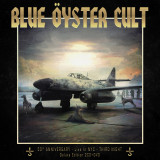
Nach dem triumphalen Erfolg ihrer 50-Jahr-Feier bereiten sich BLUE ÖYSTER CULT auf die Veröffentlichung des mit Spannung erwarteten „50th
Anniversary Live - Third Night“ vor, dem letzten und finalen Teil des Live-Albums zum 50-jährigen Bestehen der Band.
Dieser elektrisierende Auftritt, der das dritte Album der Band „Secret Treaties“ enthält, wird Ende 2024 erscheinen und verspricht eine spektakuläre
Fortsetzung des historischen Drei-Nächte-Auftrittes der Band in der Sony Hall in NYC zu werden.
Im September 2022 begeisterten BLUE ÖYSTER CULT ihre Fans mit einer einzigartigen Trilogie von ausverkauften Shows, die jeweils einem ihrer
ersten drei Alben gewidmet waren.
Gründungsmitglied Albert Bouchard hatte an allen drei Abenden einen besonderen Auftritt und verlieh dem historischen Meilenstein eine
nostalgische Note. Fast drei Stunden lang lieferte die Band an jedem Abend ein fesselndes Set, das sich durch die gesamte erste Albumtrilogie zog und
die Fans mit einer Mischung aus Fan-Favoriten, Deep Cuts und klassischen Hits verwöhnte. Die Atmosphäre war elektrisierend, und das Label
Frontiers hat die Magie eingefangen und veröffentlicht jeden der Abende als individuelles Package.
- A1: Ellen Allien - Kyiv (4 13)
- A2: Andree Bohlin - Revival (Billie Jo Remix) (4 28)
- A3: Sept - Can I Taste The Sin (4 29)
- B1: Dj Physical - Scary Night (4 32)
- B2: Wtchcrft - Unusual Photograph (5 47)
- B3: Rhys Fulber - Running Out Of Sand (5 33)
- C1: Naix - Current-Gen (3 53)
- C2: Lucinee - Turn On (4 40)
- C3: Ayako Mori, Raul Alvarez - Departure To (360 Mix) (5 17)
- D1: Reäkttor - Il Oscuro (Original Mix) (7 40)
- D2: Lady Maru - Don't Cross The Line (4 27)
- D3: Under Black Helmet - Stargazer (4 48)
Für die siebte Ausgabe der beliebten WE ARE NOT ALONE Compilation-Serie kuratieren Ellen Allien und BPitch Berlin eine unübersehbare Sammlung von zwölf neuen Tracks, die den globalen Underground feiert, der das Label seit seiner Gründung beeinflusst hat.
BPitch baut sein grenzenloses Roster weiter aus und bietet ein Spiegelbild der Künstler, die an der WE ARE NOT ALONE-Eventreihe aus der ganzen Welt teilgenommen haben. Diese Veranstaltungen werfen einen kaleidoskopischen Blick auf die elektronische Musik aus aller Welt und vertreten eine Vision von Kultur, die sowohl im Geist als auch im Sound weitreichend und integrativ ist. Mit Beiträgen von aufstrebenden Talenten und etablierten Helden gleichermaßen ist WE ARE NOT ALONE Vol. 7 ein Zeugnis für den Pluralismus eines der beliebtesten Plattenlabels für elektronische Musik und die Familie der Künstler, die es zu dem machen, was es ist.
Die Chronologie von Schnitzlers Solo-Veröffentlichungen in den 70er und vor allem in den 80er Jahren gleicht einem Buch mit sieben Siegeln. In zeitweise sehr kurzen Abständen brachte Schnitzler seine Musik teils auf analogen Kassetten, teils auf LPs heraus, nicht selten als "private releases", das heißt in eigener Regie und ohne Hilfe eines Labels oder professioneller Vertriebe. Das gelbe Album beispielsweise erschien 1981 als LP auf dem Label der Kunstgalerie von René Block in Berlin, nachdem Schnitzler bereits eine Reihe anderer Tonträger auf diversen Labels herausgebracht hatte. Tatsächlich ist die Musik des gelben Albums aber bereits 1974 als "The Black Cassette" in wahrscheinlich sehr geringer Stückzahl von Schnitzler selbst vertrieben worden. Das gelbe Album hat den Untertitel "12 Stücke aus dem Jahr 1974". Schon das deutet auf etwas Neues hin, denn bis dahin gingen Schnitzlers Stücke grundsätzlich über die ganze Platten- bzw. Kassettenseite. Hier versucht er sich nun erstmals an einer kürzeren Form. Außerdem neu: Schnitzler lässt auf mehreren Stücken nicht mehr nur automatische Klangprozesse ablaufen, sondern benutzt seine Keyboards offensichtlich auch, um "mit der Hand" gespielte melodie- ähnliche Improvisationen in seinen musikalischen Kosmos zu integrieren. Die eigentlich so kristalline, anorganische Kunstwelt Schnitz- lers wird damit um ein organisches, fast menschliches Element berei- chert. Durch die Musik des gelben Albums weht ein durchaus laues, freundliches Lüftchen, zum Glück meilenweit entfernt von den senti- mentalen Plattitüden der gebrauchsfertigen Ambient-Musik der 80er. Das gelbe Album ist nicht nur durch und durch freundlich, sondern es dokumentiert auch einen wichtigen Schritt in Schnitzlers musikalischer Entwicklung. Das späte Erscheinen als LP (1981) und die fehlenden diskografischen Angaben ließen diesen Gesichtspunkt etwas in den Hintergrund rücken. Aufmerksamen Hörern und Schnitzler-Kennern war jedoch sofort klar, dass das Album eine besondere Wegmarke darstellte, die einen deutlichen Weg in die Zukunft wies. Schnitzler hatte begonnen, sich aus dem Korsett der orthodoxen Konzeptkunst zu befreien, um in lichte Weiten unentdeckter musikalischer Gebiete vorzustoßen.
Teatro Del Metapresente is the debut album by La Nuit Je Mens, a duo hailing from the Parisian suburbs and southern Italy. Now based in Rome, the two artists have crafted a striking sound that merges their DIY ethos with raw, unfiltered energy.
Driven by synthetic, minimalist rhythms created on a fleet of analog machines, the seven tracks pay homage to the sound of the '80s – yet entirely forward-looking and embracing the dancefloor modernity.
Blending genres such as EBM, synth-pop and minimal-cold-wave, paired with French vocals, the album delves into themes of underground activities, the slow decay of the club scene and the depths of emotional yearning.
Released on the Berlin-Basel-based label Reach Another System, Teatro Del Metapresente follows the previously released 7” and reinforces the duo's own sound and unique identity.
- A1: Escudo Y Espada
- A2: La Misma Luna (Feat. Angélica Garcia)
- A3: De Nuevo Otra Vez
- A4: El Año Del Dragón (Feat. Σtella)
- A5: No Se Puede
- B1: La Catarata
- B2: También
- B3: Espejismo
- B4: Por Qué
- B5: Fe
White Vinyl[21,81 €]
Rafael Cohen’s Spanish-language solo project Las Palabras gives the D.C. punk scene veteran and member of dance-rock group !!! (Chk Chk Chk), the words to reveal himself as a Latin alternative artist and what he calls “a cautious believer”. Fe, Faith his second Las Palabras album, and first on the Barcelona label La Castanya, “deals with what it means to have faith, what it means to have doubts, and what it means to stay open to the idea that something untouchable and unknowable may exist”.
Written and produced by Cohen in his home studio in Brooklyn and mixed by Black Pumas guitarist Adrian Quesada, Fe builds on nylon-string guitar and electric bass with live drums and synthesizers in songs that embrace elements of 70s Brazilian funk and an amalgam of beats from hip hop to bachata, interspersed with contemplative ballads on which Cohen’s voice and guitar can be quiet enough to hear the rumble of a bus going by in the background.
“Fe” is colored by musical influences that include those Brazilian grooves, but also shades of Sade, Sounds of Blackness and eighties electro funk group Zapp. The arrangements spotlight the rhythm section, with drums played by Chris Egan (!!!, Solange, Blood Orange) and featuring Alberto Lopez (LCD Soundsystem, Stanley Clarke) on percussion. Cohen credits Adrian Quesada for the album’s warm, worn-in tone: “He made the beats sound a lot bigger and gave it an ’80s hip hop feel. He really understood the references and brought his background in Latin music to it”
Rafael Cohen’s Spanish-language solo project Las Palabras gives the D.C. punk scene veteran and member of dance-rock group !!! (Chk Chk Chk), the words to reveal himself as a Latin alternative artist and what he calls “a cautious believer”. Fe, Faith his second Las Palabras album, and first on the Barcelona label La Castanya, “deals with what it means to have faith, what it means to have doubts, and what it means to stay open to the idea that something untouchable and unknowable may exist”.
Written and produced by Cohen in his home studio in Brooklyn and mixed by Black Pumas guitarist Adrian Quesada, Fe builds on nylon-string guitar and electric bass with live drums and synthesizers in songs that embrace elements of 70s Brazilian funk and an amalgam of beats from hip hop to bachata, interspersed with contemplative ballads on which Cohen’s voice and guitar can be quiet enough to hear the rumble of a bus going by in the background.
“Fe” is colored by musical influences that include those Brazilian grooves, but also shades of Sade, Sounds of Blackness and eighties electro funk group Zapp. The arrangements spotlight the rhythm section, with drums played by Chris Egan (!!!, Solange, Blood Orange) and featuring Alberto Lopez (LCD Soundsystem, Stanley Clarke) on percussion. Cohen credits Adrian Quesada for the album’s warm, worn-in tone: “He made the beats sound a lot bigger and gave it an ’80s hip hop feel. He really understood the references and brought his background in Latin music to it”
In der Hoffnung, Sun Konkurrenz zu machen, startete Meteor 1952 vielversprechend mit dem in Chicago aufgenommenen R&B-Hit 'I Believe' von Elmore James. Ein zweiter Hit, diesmal im Country-Bereich, 'Daydreamin' von Bud Deckelman Ende 1954, verlieh Meteor jedoch neues Leben und weckte Lesters Interesse an Aufnahmen von Rockabilly-Künstlern, insbesondere jetzt, da der Newcomer Elvis Presley bei Sun seinen Durchbruch hatte. Meteor's Studio war dazu da, seine Geheimnisse zu bewahren, und darin lag die Magie. Niemand wurde jemals bezahlt und niemand wurde zu einer zweiten Session eingeladen. Irgendwann im Sommer 1957 machte Lester Bihari das Licht aus, schloss ab und ging, ohne sich die Mühe zu machen, die Master und irgendwelche Unterlagen mitzunehmen, und machte das Label mit dieser letzten Drehung des Schlüssels zum Mythos. Die unfreiwillige Wahrheit von Meteor Rockabilly ist: Man ließ die Musik für sich selbst sprechen, ungeschönt und frei von kommerziellen Zwängen. Exquisit gemastert aus den besten verfügbaren Quellen und attraktiv verpackt, ist 'Bop Baby Bop - Meteor Rockabilly' ein wichtiges Zeugnis des Nachkriegs-Amerika. Auf Black Vinyl!
- Quality Crayon Wax Ok
- The Order Form
- Shabby Abbott
- World Friction
- Wake Up
- Albert
- Alkaline Loaf In The Area
- Collecting Dust
- Popcorn Boy (Waddle Ya Do?)
- Aerosol Burns
- World Friction (Single Version)
- Wake Up (Ep Version)
- Eagle Bird
- Quality Crayon Wax Ok (Ep Version)
- Bod's Message
- Flora Force
- Eugene
- Tame The Neighbours
- Music Is A Better Noise
- Moon Town
- Fanfare In The Garden
- The Captain
Iconic UK punk band X-Ray Spex co-founder Lora Logic was unexpectedly ousted before the recording of their debut album 'Germ Free Adolescents' in 1977. Undeterred, Lora went on to form and front the post-punk band Essential Logic. With trademark angular sax lines and her unmistakable vocal stylings, she went on to create some of the most liberating and exciting music of the early post-punk era, not only as Essential Logic, but also as a solo artist. 'Beat Rhythm News (Waddle Ya Play?)' is the band's debut studio album. Originally released in December 1979 on the Rough Trade Records label, whose founder Geoff Travis provided enthusiastic encouragement. The album reached number 11 in the UK Indie chart. Lora's solo album 'Pedigree Charm' followed in 1982. Lora and Poly Styrene would later reform X-Ray Spex for the band's sophomore and final studio album 'Conscious Consumer' in 1995. Essential Logic returned from an extended hiatus in 2022 with the 5 x LP boxset 'Logically Yours', including the new studio album 'Land of Kali', co-produced by Lora and Youth (Killing Joke), followed by 2024's remix album thereof - 'Rekalibrated', which enlisted the talents of an ambitious and diverse set, including Grammy Award winner - Dave Audé, Rave-pop legend - Adamski and Scottish Kandy-poppers - bis, amongst others on remixer duties. This 45th Anniversary 'Deluxe' edition compiles the original studio album together with a bonus album containing the complete Essential Logic studio recordings from 1978 - 1983, including the iconic Cells Records debut single 'Aerosol Burns' (1978), the 'Wake Up' EP (1979), included here for the first time on any physical release since its original pressing, together with the non-album b-side 'Flora Force' and 3 post album Rough Trade Records single releases: 'Eugene' (1980), 1981's 'Music Is A Better Noise' and 'Fanfare In The Garden', and their respective b-sides. Repackaged in a high gloss accented, spot varnished sleeve, on 2 x black and white splatter vinyl, foiler stickered, with inner-sleeves including full lyrics and new sleeve notes by Lora. This release also marks the long overdue and highly championed CD debut of the original album and bonus tracks. Following their recent UK tour with fellow punk legends Penetration, featuring Pauline Murray, in November 2024, Essential Logic show no signs of stopping or slowing down as they plan extensive live celebrations of the album throughout 2025 as well as the recording and release of their next studio album. Press Quotes : "Lora's voice is always doing the right, thrilling things...she frets and somersaults in such an intoxicating way" - NME // "A stunning record that remains a benchmark of the punk era" - AllMusic // "Beat Rhythm News suggests an impromptu brainstorming session between Kate Bush, Talking Heads and Captain Beefheart" - Louder Sound // "An intelligent and fluid benchmark for any band willing to dabble in both punk and dance music at the same time" - PopMatters
- A1: Freedom Blues
- A2: Greenwood, Mississippi
- A3: Two-Time Loser
- A4: Dew Drop Inn
- A5: Somebody Saw You
- A6: Spreadin’ Natta, What’s The Matter?
- B1: The Rill Thing
- B2: Lovesick Blues
- B3: I Saw Her Standing There
Rock and Roll Hall of Fame Member Little Richard is a musical institution. The Architect Of Rock ’n’ Roll’s 1970 return. Pressed on opaque pink vinyl. Mastered by Grammy®-winning engineer Michael Graves. Lacquers cut by Jeff Powell at Take Out Vinyl/Sam Phillips Recording Service in Memphis. Packaging contains liner notes from Bill Dahl. Some successful recording artists are lucky to enjoy a lengthy career and perhaps one successful comeback after their popularity wanes over time. Rock ’n’ roll pioneer and absolute legend, Little Richard, achieved several. In the ’50s he racked up a non-stop string of smashes for Specialty Records with producer Bumps Blackwell like the blistering cuts, “Tutti Frutti,” “Long Tall Sally,” and “Rip It Up.” The Georgia Peach was deemed too uninhibited and unpredictable for TV variety shows to present to the nation, but the records were undeniable hits. He was clearly, an artist far ahead of the culture and times. Little Richard returned in 1970 with The Rill Thing and instead of sticking around his adopted home of Los Angeles, Richard set out for Rick Hall’s FAME Recording Studios in Muscle Shoals, Alabama to record the album for Reprise, joined by Bumps, who was now his manager. The opening track, “Freedom Blues,” was released in April of 1970 and hit #28 on the charts. The second cut, “Greenwood Mississippi,” was also released as a single in August and also made a Billboard appearance. The marathon title track (running a whopping 10 minutes and 20 seconds) was an intense funk jam that was captured in one take. The album also featured covers of tunes by The Beatles and Hank Williams—it was a different sound by far than the savagely rocking attack he’d ridden to fame like a rocket at Specialty close to a decade and- a-half earlier, but it was every bit as effective. The Rill Thing bore the slogan “The Little Richard Sound” on its labels. “He was at his peak with his vocals on there,” says guitarist Travis Wammack admiringly. “He was just singing his booty off!” The Rill Thing is back as a 12" long player, and pressed on opaque pink vinyl with a printed inner sleeve that includes liner notes by Bill Dahl.
Sweetheart is the first Cassie Ramone album in ten years, a crowning glory for a singular artist who has forged a unique path through the underground. Breaking out in the late 00s with the revered Vivian Girls, to her current status as a traveler on the
heartworn highway, Cassie Ramone has survived and thrived. Sweetheart is Ramone's greatest recorded statement to date:
focused songwriting shot through with American tragedies, distorted guitars and tear-stained fretboards. Recorded with
collaborator Dylan White in Richmond, VA in the latter's Valley Structures barn studio between December 2023 and March
2024, Sweetheart is Ramone's songwriting rendered direct but with a sweeping cinematic quality. Smeared with reverb and
scintillating like stars in the pitch black night, these songs fulfill the promise of Ramone's songwriting prowess.
Ranging from heart-stealers like I'm Going Home or Joy to the World to the riotous guitar scree of the titular Sweetheart,
Ramone's songwriting here is raw and direct, bolstered by White's perfectly balanced instrumentation. White's work on
Sweetheart blows up Ramone's songs to epic proportions, with waves of shoegazed guitars crashing and cresting with
emotion. As a result, Sweetheart fits effortlessly in with the best of Ramone's work with Vivian Girls and The Babies. With the
emotional vulnerability at its core, Sweetheart is Cassie Ramone emerging as one of the most honest and vital songwriters of
the underground.
Sweetheart, released on White and Ramone's new CD-R Records, builds on Cassie Ramone's legacy as a DIY pioneer. With Vivian Girls, Ramone and her bandmates forged a distinctive sound from 80s Punk, Shoegaze and 60s Girl Groups, delivering it with a dedication to world-building and Do It Yourself pragmatism. CD-Records and this first release are a continuation of Ramone's mission to maintain creative and aesthetic control over her art, communicating directly and honestly. Sweetheart may
also be the best record of her career.
Released on Cassie Ramone and Dylan White's label CD-R Records
"This is the time that we, who have benefitted from the Last Poets shouldbe able to say, 'it's the Last Poets. It's them we should be honouring, because we did not honour them for so many years_"
KRS One wasn't just addressing the hip hop fraternity when he uttered
those words by way of introducing the video for Invocation - a poem
written thirty years ago, around the time of the Last Poets' last significant comeback. He was speaking to everyone who's been affected by the word, sound and power issuing from the most revolutionary poetry ever witnessed, and that the Last Poets had introduced to the world outside of Harlem at the dawn of the seventies.
In 2018 the two remaining Last Poets, Abiodun Oyewole and Umar Bin
Hassan, embarked on another memorable return with an album -
Understand What Black Is - that earned favourable comparison with theirseminal works of the past, whilst showcasing their undimmed passion andlyrical brilliance in an entirely new setting - that of reggae music. Trackslike Rain Of Terror ("America is a terrorist") and How Many Bullets demonstrated that they'd lost none of their fire or anger, and their essential raison d'etre remained the same.
"The Last Poets' mission was to pull the people out of the rubble o f their lives," wrote their biographer Kim Green. "They knew, deep down that poetry could save the people - that if black people could see and hear themselves and their struggles through the spoken word, they would be moved to change."
Several years later and the follow-up is now with us. The project started when Tony Allen, the Nigerian master drummer whose unique polyrhythms had driven much of Fela Kuti's best work, dropped by Prince Fatty's Brighton studio and laid down a selection of drum patterns to die for. That was back in 2019, but then the pandemic struck. Once it had passed, the label booked a studio in Brooklyn, where the two Poets voiced four tracks apiece and breathed fresh energy, fire and outrage into some of the most enduring landmarks of their career. Abiodun, who was one of the original Last Poets who'd gathered in East Harlem's Mount Morris Park to celebrate Malcolm X's birthday in May 1968, chose four poems that first appeared on the group's 1970 debut album, called simply The Last Poets. He'd written When The Revolution Comes aged twenty, whilst living in Jamaica, Queens. "We were getting ready for a revolution," he told Green. "There wasn't any question about whether there was going to be one or not. The truth was many of us still saw ourselves as "niggers" and slaves. This was a mindset that had to change if there was ever to be Black Power." He and writer Amiri Baraka were deep in conversation one day when Baraka became distracted by a pretty girl walking by. "You're a gash man," Abiodun told him. The poem inspired by that incident, Gash Man, is revisited on the new album, and exposes the heartless nature of sexual acts shorn of intimacy or affection. "Instead of the vagina being the entrance to heaven," he says, "it too often becomes a gash, an injury, a wound_" Two Little Boys meanwhile, was inspired after seeing two young boys aged around 11 or 12 "stuffing chicken and cornbread down their tasteless mouths, trying to revive shrinking lungs and a wasted mind." They'd walked into Sylvia's soul food restaurant in Harlem, ordered big meals, then bolted them down and run out the door. No one chased after them, knowing that they probably hadn't eaten in days. Fifty years later and children are still going hungry in major cities across America and elsewhere. Abiodun's poem hasn't lost any relevance at all, and neither has New York, New York, The Big Apple. "Although this was written in 1968, New York hasn't changed a bit," he admits, except "today, people just mistake her sickness for fashion." Umar is originally from Akron, Ohio, but had arrived in Harlem in early 1969 after seeing Abiodun and the other Last Poets at a Black Arts Festival in Cleveland. That's where he first witnessed what Amiri Baraka once called "the rhythmic animation of word, poem, image as word- music" - a creative force that redefined the concept of performance poetry and stripped it bare until it became a howl of rage, hurt and anger, saved from destruction by mockery and love for humanity. When Umar's father, who was a musician, was jailed for armed robbery he took to the streets from an early age where he shined shoes and raised whatever money he could to help feed his eight brothers and sisters. By the time he saw the Last Poets he'd joined the Black United Front and was ready to join the struggle. Once in Harlem, Abiodun asked him what he'd learnt in the few weeks since he'd got there. "Niggers are scared of revolution," Umar replied. "Write it down" urged Abiodun. That poem still gives off searing heat more than fifty years later. In Umar's own words, "it became a prayer, a call to arms, a spiritual pond to bathe and cleanse in because niggers are not just vile and disgusting and shiftless. Niggers are human beings lost in someone else's system of values and morals." And there you have it. It's not just race or religion that hold us back, but an economic system that keeps millions in poverty and living in fear - a system born from political choice and that's now become so entrenched, so bloated on its own success that it's put mankind in mortal danger. It was many black people's acceptance of the status quo that inspired Just Because, which like Niggers Are Scared Of Revolution, was included on that seminal first album. Along with their revolutionary rhetoric, it was the Last Poets' use of the "n word" that proved so shocking, but it would be wrong to suggest that they reclaimed it, since it never belonged to black people in the first place. There's never any hiding place when it comes to the Last Poets. They use words like weapons, and that force all who listen to decide who they are and where they stand. Umar's two remaining tracks find him revisiting poems first unleashed on the Poets' second album This Is Madness! Abiodun had left for North Carolina by then where he became more deeply enmeshed in revolutionary activities and spent almost four years in jail for armed robbery after attempting to seize funds related to the Klu Klux Klan. Meanwhile, the 21 year old Umar was squatting in Brooklyn and had developed close ties with the Dar-ul Islam Movement. A longing for purity and time-honoured spiritual values underpins Related to What, whilst This Is Madness is a call for freedom "by any means necessary," and that paints a feverish landscape peopled by prominent black leaders but that quickly descends into chaos. "All my dreams have been turned into psychedelic nightmares," he wails, over a groove now powered by Tony Allen's ferocious drumming. Those sessions lasted just two days, and we can only imagine the atmosphere in that room as the hip hop godfathers exchanged the conga drums of Harlem for the explosive sounds of authentic Afrobeat. Once they'd finished, the recordings and momentum returned to Prince Fatty's studio, since relocated from Brighton to SE London. This was stage three of the project, and who better to fill out the rhythm tracks than two key musicians from Seun Anikulapo Kuti's band Egypt 80? Enter guitarist Akinola Adio Oyebola and bassist Kunle Justice, who upon hearing Allen's trademark grooves exclaimed, "oh, the Father_ we are home!" Such joy and enthusiasm resulted in the perfect fusion of Nigerian Afrobeat and revolutionary poetry, but the vision for the album wasn't yet complete. He wanted to create a new kind of soundscape - one that reunited the Poets with the progressive jazz movement they'd once shared with musicians like Sun Ra and Pharoah Sanders. It was at that point they recruited exciting jazz talents based in the UK like Joe Armon Jones from Mercury Prize winners Ezra Collective, also widely acclaimed producer/remixer and keyboard player Kaidi Tatham, who's been likened to Herbie Hancock, and British jazz legend Courtney Pine, whose genius on the saxophone and influence on the UK's now vibrant jazz scene is beyond question. The instrumental tracks on Africanism are in many ways as revelatory and exciting as the Last Poets' own. It's important to remember that the kaleidoscope of styles and influences we're presented with here aren't the result of sampling but were played "live" by musicians responding to sounds made by other musicians. That's where the magic comes from, aided by Prince Fatty's peerless mixing which allows us to hear everything with such clarity. Music fans today have grown accustomed to listening to all kinds of different genres. Their tastes have never been so broad or all- encompassing, and so the music on this new Last Poets' album is as groundbreaking as their lyrics, and perfectly suited to the era that we're now living in. John Masouri