quête:black map

Genres
Tout
LDS - Digi Spa EP

Lds

Digi Spa EP

12inchMONNOM033
Monnom Black
21.04.2023

LDS returns to Monnom Black and hits a career high with his new ep, an astonishing take on modern dub techno featuring 6 tracks of futuristic grooves. LDS is an artist that stands at the cutting edge of technology, influenced by artificial intelligence and digital innovation. The ep showcases his unique production aesthetic, complex sound design and nuanced details that place him a cut above the rest. AI was used to create the artwork for the release, merging together the digital and physical realms, moving ever closer to the singularity.

pas en stock

Commandez maintenant et nous commanderons l'article pour vous chez notre fournisseur.

13,40

Last In: 17 months ago
Benoît Pioulard - Eidetic

Benoît Pioulard

Eidetic

12inchMORR198-LP
Morr Music
03.03.2023

American singer-songwriter, poet, and photographer Thomas Meluch, known musically as Benoît Pioulard, returns with his most structured and vocal release to date. Titled »Eidetic,« a word denoting the ability to recall mental images with extraordinarily rich precision, the album presents unprecedented clarity and vitality for Benoît Pioulard. To access its thematic ground, Meluch looked inward with an affinity towards the people he loves during a period marked by his move from Seattle to Brooklyn in 2019. The resulting work engages with the universe's unflinching mortality and, as he says, »the ways it has modified and improved my relationships, especially with family.« Embodied by the creek, leaves, and ferns of the cover photography — taken in Michigan’s Burchfield Park, where he and his dad used to hike and »muse on existence« — the music glistens and unfurls with the flow of life he’s come to know. »Eidetic« is the culmination of Meluch's craft both as a producer and writer. An evocative sonic vocabulary meets deft lyrical introspection, articulated with the nuance, vulnerability, and confidence of a longtime artist hitting a stride.

Meluch has continually refined, redefined, and adjusted the focus of his gentle pop project over the last 20 years. Recorded primarily with guitar, tapes, and voice — and spanning labels with albums for Kranky, Morr Music, Beacon Sound, and Past Inside the Present — his catalog flows seamlessly between ambient improvisation and pop composition. Much like the analog photos that often accompany his releases, songs can feel dreamily softened and distant, and others beautifully vivid and detailed. 2021 full-length »Bloodless« found Meluch deep in droning decay, expressive yet wordless. With »Eidetic,« he swings back to sharpened forms. Lush banks of treated guitar and synth brush against hushed percussion; there is mist in the distance, but everything up close is intricately constructed and radiant. Meluch's voice is notably forward in the mix — a warm and calming tenor, a harmonic coo more than a whisper — ever-observant and actively processing.

To record much of the album, Meluch filled a cabin in rural Maine with his usual setup of simple percussion, a couple of Fender electrics, and a parlor guitar made by his friend who does bespoke luthier work. The modest utility is what he knows best, and here he pushes the output to its most pristine potential.

»Eidetic« opens in a swirl of familiar haze; »Margaret Murie« eases listeners in, as lush and verdant as the landscapes conserved by its famed namesake. With the setting established, Meluch, the narrator, enters the foreground with »Crux,« a tender piece written about finding new motivations in a new city. »We covet this rare green hue / Here at the farthest point from home,« he sings above a reassuring pattern of strums and percussion. Meluch's prose shines on the swiftly-moving »Nameless,« inspired by the neurological effects that came with the antiquated practice of manufacturing mercury mirrors; »folks would slowly go insane while looking into their own reflections every day,« he adds. The idea informs a series of surreal abstractions before everything drops out in the final minute, and we are left free-floating in eerie nothingness.

Across the album, labyrinthine lyrical ponderings scatter with dazzling imagery, artfully blurring scenes from world history with Meluch's more personal, present-day. The propulsive and earnest »Thursday Night« catches his mind overly active and too stoned, riffing on black holes and songwriting itself. »Halve« references the splitting of the atom, what he considers »the beginning of man's downfall,« and the unrealized initiative proposed by the US government that would have created 'nuclear refuges' in its national parks. Meluch's loved ones weave throughout; »Tet« holds his father's experience in Vietnam and its lasting effects. »Lillian Isola« touches on his maternal grandmother's spinal curvature, and »Pastel Dust« navigates the wake of his cat, who died on New Year's Eve 2020.

At first blush, Meluch's atmospheric and melodic sensibilities resonate purely in their own right. Upon closer meditation, his ability to render stories — many of which surround human tragedy, misfortune, and understanding — through the prism of his poetry makes »Eidetic« even more rewarding.

pré-commande03.03.2023

il devrait être publié sur 03.03.2023

24,33
Benoît Pioulard - Eidetic

Benoît Pioulard

Eidetic

12inchMORR198-LPX
Morr Music
03.03.2023

Dark Green Vinyl

American singer-songwriter, poet, and photographer Thomas Meluch, known musically as Benoît Pioulard, returns with his most structured and vocal release to date. Titled »Eidetic,« a word denoting the ability to recall mental images with extraordinarily rich precision, the album presents unprecedented clarity and vitality for Benoît Pioulard. To access its thematic ground, Meluch looked inward with an affinity towards the people he loves during a period marked by his move from Seattle to Brooklyn in 2019. The resulting work engages with the universe's unflinching mortality and, as he says, »the ways it has modified and improved my relationships, especially with family.« Embodied by the creek, leaves, and ferns of the cover photography — taken in Michigan’s Burchfield Park, where he and his dad used to hike and »muse on existence« — the music glistens and unfurls with the flow of life he’s come to know. »Eidetic« is the culmination of Meluch's craft both as a producer and writer. An evocative sonic vocabulary meets deft lyrical introspection, articulated with the nuance, vulnerability, and confidence of a longtime artist hitting a stride.

Meluch has continually refined, redefined, and adjusted the focus of his gentle pop project over the last 20 years. Recorded primarily with guitar, tapes, and voice — and spanning labels with albums for Kranky, Morr Music, Beacon Sound, and Past Inside the Present — his catalog flows seamlessly between ambient improvisation and pop composition. Much like the analog photos that often accompany his releases, songs can feel dreamily softened and distant, and others beautifully vivid and detailed. 2021 full-length »Bloodless« found Meluch deep in droning decay, expressive yet wordless. With »Eidetic,« he swings back to sharpened forms. Lush banks of treated guitar and synth brush against hushed percussion; there is mist in the distance, but everything up close is intricately constructed and radiant. Meluch's voice is notably forward in the mix — a warm and calming tenor, a harmonic coo more than a whisper — ever-observant and actively processing.

To record much of the album, Meluch filled a cabin in rural Maine with his usual setup of simple percussion, a couple of Fender electrics, and a parlor guitar made by his friend who does bespoke luthier work. The modest utility is what he knows best, and here he pushes the output to its most pristine potential.

»Eidetic« opens in a swirl of familiar haze; »Margaret Murie« eases listeners in, as lush and verdant as the landscapes conserved by its famed namesake. With the setting established, Meluch, the narrator, enters the foreground with »Crux,« a tender piece written about finding new motivations in a new city. »We covet this rare green hue / Here at the farthest point from home,« he sings above a reassuring pattern of strums and percussion. Meluch's prose shines on the swiftly-moving »Nameless,« inspired by the neurological effects that came with the antiquated practice of manufacturing mercury mirrors; »folks would slowly go insane while looking into their own reflections every day,« he adds. The idea informs a series of surreal abstractions before everything drops out in the final minute, and we are left free-floating in eerie nothingness.

Across the album, labyrinthine lyrical ponderings scatter with dazzling imagery, artfully blurring scenes from world history with Meluch's more personal, present-day. The propulsive and earnest »Thursday Night« catches his mind overly active and too stoned, riffing on black holes and songwriting itself. »Halve« references the splitting of the atom, what he considers »the beginning of man's downfall,« and the unrealized initiative proposed by the US government that would have created 'nuclear refuges' in its national parks. Meluch's loved ones weave throughout; »Tet« holds his father's experience in Vietnam and its lasting effects. »Lillian Isola« touches on his maternal grandmother's spinal curvature, and »Pastel Dust« navigates the wake of his cat, who died on New Year's Eve 2020.

At first blush, Meluch's atmospheric and melodic sensibilities resonate purely in their own right. Upon closer meditation, his ability to render stories — many of which surround human tragedy, misfortune, and understanding — through the prism of his poetry makes »Eidetic« even more rewarding.

pré-commande03.03.2023

il devrait être publié sur 03.03.2023

24,33
Urusei Yatsura - We Are Urusei Yatsura 2x12"

Remastered reissue of “We Are Urusei Yatsura” (originally released in 1996), with bonus vinyl of unreleased demos and B-sides

Celebrating the 30th Anniversary of the founding of Glasgow “Geek Rock” band Urusei Yatsura
– Double Clear-Vinyl Reissue of 1996 Album
In the days before “landfill” indie, and in rebellion against a developing Britpop orthodoxy, there were some weird but melodic bands coming of age outside London that drew inspiration from the US underground and the sparkly retro-futurism of Japan. Primitive guitar noise with art rock leanings, post punk DIY and fanzine culture. The best known of these bands was maybe Urusei Yatsura; “noisy stars”, named in honour of Rumiko Takahashi, legendary manga creator.

Back in 1996, after several increasingly well-received 7’s, the band travelled to Leamington Spa to record their debut album with John Rivers, producer of Swell Maps and Glasgow scene godparents, The Pastels. The resulting album won the group legions of new fans and gained them their first Independent #1 chart placing, alongside peers Ash and Super Furry Animals.

“These were fertile years in Glasgow, a scene with no name, no single sound, where the magic thread tying everyone together was words and works so personal, they couldn’t be mistaken for anyone else’s. ‘We Are Urusei Yatsura’ is a cascade of ‘why not?’ thinking. The way ‘Phasers on Stun’ spirals into ‘Sola Kola’; the sunburned 23-second improv at the end of ‘Pachinko’; the slack-echoing strings of the outro to ‘Road Song’ sprayed with the shrapnel of toy electronics. Pure pop magic, Ren & Stimpy on upstairs, ray-guns, Ian’s homemade walkie-talkie speaker, a beatbox, all sealed with a “Talking Tina” doll’s emphatic endorsement: “I love it”” – Nick Soulsby

The vinyl-only double LP set comprises the original 1996 album recorded by John Rivers, accompanied with an extra disk of unreleased demos, rare singles and B-sides which have not been available since the 90’s. It documents the time leading up to the release of the LP and the singles that came from it, capturing the development, lost pop moments and essential experiments from the eccentric and joyful Glasgow band. The cover has been completely remixed using archive
photos and artwork from the time, with new interviews and extensive notes. The release marks 30 years since the official birthday of the band, 9/3/93.

“When I drove the transit van that took them down to Leamington Spa to record their first proper LP, there was a sense of quiet, assured anticipation. I couldn’t wait to hear it and when I came back a couple of weeks later to pick them back up, I remember so clearly when they played it from the van’s tape deck. Fergus and Graham were hunched over, focusing intently on what they wanted to change about the mix. The reverb wasn’t right or something. Maybe they didn’t like how high the vocals were in the mix. I said to them, you’re listening to the details, but missing what is most important–this is a fantastic record! It was. It is. It is a fantastic record. They were a brilliant live band and I am so lucky to have been able to have been there to see their formation.” – Alex Kapranos.

pré-commande03.03.2023

il devrait être publié sur 03.03.2023

24,33
Numün - Book of Beyond

Numün

Book of Beyond

12inchSHIMMY2015LPC1
SHIMMY DISC
27.01.2023

Limited Cerulean Blue Vinyl LP. RIYL: Amen Dunes, Adrienne Lenker & North Americans. Numün, the NYC psychedelic instrumental trio Pitchfork dubbed as 'savvy navigators of paths less traveled', is releasing its second album Book of Beyond on the legendary Shimmy Disc label. With this record, the band, which includes Joel Mellin and Christopher Romero of Gamelan Dharma Swara and ambient country pioneer Bob Holmes of SUSS, continues to stretch their exploration of the inner and outer astral worlds of their first release Voyage au Soleil – voted one of the Best Ambient Releases of 2020. Dave Segal of Pitchfork called that album a "blending of the opiated psychedelia of the music territory staked Brightback Morning Light with a loose-limbed minimalism that privileges subtle effects and incremental chord changes" and Chris Ingalis from PopMatters called it "a trippy, ambient ride and ambitious debut that pulls off the neat trick of creating music that evokes space travel while also sounding refreshingly grounded to Earth's atmosphere." The new album, mastered by Kramer (Galaxie 500, Butthole Surfers, Bongwater, Low, Bill Frisell, etc.) features a unique mixture of Eastern and Western musical stylings and instrumentation including Balinese gamelan, gender wayang, and cumbuz (a 12-string fretless banjo) alongside the classic Americana instrumentation of slide guitar, baritone, mandolin and violin. The instrumental music charts new territories as it explores themes that are sometimes deeply personal, spiritual and otherworldly, including new fatherhood, sleep deprivation, loss and rebirth with titles that include Steps, Vespers, Eyes Open & Lullaby. Guests on the album include Trina Basu (Brooklyn Raga Massive), Tori Lo Mellin (Dharma Swara), and Willa Roberts (Black Sea Hotel). With their new album, Book of Beyond, Numün creates music that provides a star map to help us all navigate the inner constellations of our daily lives.

pré-commande27.01.2023

il devrait être publié sur 27.01.2023

28,36
THEY HATE CHANGE - FINALLY, NEW

They Hate Change

FINALLY, NEW

12inchJAGLP411C
JAGJAGUWAR
28.12.2022

If it's really a post-genre world, why does everything sound the same? The two halves of Tampa rap duo They Hate Change_Dre (he/him) and Vonne (they/them)_first came together in front of the apartment complex where they both lived as teens. Dre had just moved down from Rochester, NY; Vonne was trying to sell him bad weed. It was clear from the start that the two listen to music differently from most people_they're sonic omnivores, obsessive deep-divers, lovers of rare and radical sounds. Starting as kids trawling the internet for tracks, they've been collecting music from around the world and across the decades, amassing a shared sonic knowledge so deep that "encyclopedic" barely begins to cover it _ not just the East Coast hip-hop that Dre grew up on, or the hyperlocal bass-music variants like jook (the Gulf Coast's twerkably raunchy answer to house) and crank (think "Miami bass meets NOLA bounce"), but also drum `n' bass, Chicago footwork, post-punk, prog (they're, like, seriously into prog), grime, krautrock, emo, and basically any genre on the map. Once they graduated to DJs on the Tampa DIY scene _ which includes everything from punk rock house parties to the black "teen nights" that pop up in rec centers and ballrooms _ they figured out how to pull all these disparate sounds together into a cohesive style. More importantly, they figured out how to make it something people will actually move to. When they made the transition to rapping and making beats, they brought that pleasure-seeking approach to sonic experimentation with them. "With this album, Vonne says, "it's really like, okay, you know how you talk about the internet breaking down borders? Here's what that actually sounds like. It's not just a hip-hop record with a couple more weird sounds. You want homegrown DIY? This is a record that was written, produced, and recorded in a 150-squarefoot bedroom from the least cool city you could think of." Finally, New is what a truly post-genre musical landscape is supposed to be: building deep connections that transcend outdated distinctions between them, spilling over with the joy of exploration and possibility, and daring other artists to think broader, go deeper, take bigger risks. Let the rest of them keep playing by the old rules_They Hate Change will keep changing the game.

pas en stock

Commandez maintenant et nous commanderons l'article pour vous chez notre fournisseur.

22,06

Last In: 3 years ago
THEY HATE CHANGE - FINALLY, NEW

If it's really a post-genre world, why does everything sound the same? The two halves of Tampa rap duo They Hate Change_Dre (he/him) and Vonne (they/them)_first came together in front of the apartment complex where they both lived as teens. Dre had just moved down from Rochester, NY; Vonne was trying to sell him bad weed. It was clear from the start that the two listen to music differently from most people_they're sonic omnivores, obsessive deep-divers, lovers of rare and radical sounds. Starting as kids trawling the internet for tracks, they've been collecting music from around the world and across the decades, amassing a shared sonic knowledge so deep that "encyclopedic" barely begins to cover it _ not just the East Coast hip-hop that Dre grew up on, or the hyperlocal bass-music variants like jook (the Gulf Coast's twerkably raunchy answer to house) and crank (think "Miami bass meets NOLA bounce"), but also drum `n' bass, Chicago footwork, post-punk, prog (they're, like, seriously into prog), grime, krautrock, emo, and basically any genre on the map. Once they graduated to DJs on the Tampa DIY scene _ which includes everything from punk rock house parties to the black "teen nights" that pop up in rec centers and ballrooms _ they figured out how to pull all these disparate sounds together into a cohesive style. More importantly, they figured out how to make it something people will actually move to. When they made the transition to rapping and making beats, they brought that pleasure-seeking approach to sonic experimentation with them. "With this album, Vonne says, "it's really like, okay, you know how you talk about the internet breaking down borders? Here's what that actually sounds like. It's not just a hip-hop record with a couple more weird sounds. You want homegrown DIY? This is a record that was written, produced, and recorded in a 150-squarefoot bedroom from the least cool city you could think of." Finally, New is what a truly post-genre musical landscape is supposed to be: building deep connections that transcend outdated distinctions between them, spilling over with the joy of exploration and possibility, and daring other artists to think broader, go deeper, take bigger risks. Let the rest of them keep playing by the old rules_They Hate Change will keep changing the game.

pas en stock

Commandez maintenant et nous commanderons l'article pour vous chez notre fournisseur.

20,88

Last In: 3 years ago
Yazzus - BLACK METROPOLIS

Yazzus

BLACK METROPOLIS

12inchTRESOR345
Tresor
21.10.2022

Yazzus follows up her appearance on the Tresor 30 compilation with a new EP named BLACK METROPOLIS.

Within its, at times, rough-hewn textures lies a core
that explores joy and energy within the roots of black techno. In her words: “I want this release to be black and beautiful, to be queer, and playful, a nostalgic nod to the 90s but also reimagining it in the current times.”

The Ghana-born, London-bred, now Berlin-based producer’s research into afro-futurism, envisaging a path forward for science, technology and culture through the black experience, has impressed a deep
vision on this EP. Yazzus sets like a cartographer, using her tracks to explore a technologically advanced world, each representing dierent regions and environments.

Human Error Processor introduces an ear-worming percussion pattern nearly swamped by distorted bass drums and a vocal sample screwed just beyond recognition. Perforated leads with a 150bpm four to the floor stomp, infectious and supercharged. Gluey synth
motions soak in an otherworldliness, where industrious,
mechanical rhythms map out futurist structures in all directions.

Metro City Bay Area exhibits a ghettotech soul, lean and bouncy - this part of the galaxy is an infinite source of fun, with the heart of groove at it’s core. Three Deities brings adventurers of its region towards higher powers, its ravey synths and an engulfing bass provoke a complete NRG release, ascending into a spiritual trance where dense melodies bubble and fizz.

Digital-only track United By Fate meddles busy vocal samples with searching melodies, a fitting end to the kaleidoscopic that is BLACK METROPOLIS.

pas en stock

Commandez maintenant et nous commanderons l'article pour vous chez notre fournisseur.

9,20

Last In: 2 years ago
Lee Tracy & Isaac Manning - Is it What You Want

As the sun sets on a quaint East Nashville house, a young man bares a piece of his soul. Facing the camera, sporting a silky suit jacket/shirt/slacks/fingerless gloves ensemble that announces "singer" before he's even opened his mouth, Lee Tracy Johnson settles onto his stage, the front yard. He sways to the dirge-like drum machine pulse of a synth-soaked slow jam, extends his arms as if gaining his balance, and croons in affecting, fragile earnest, "I need your love… oh baby…"

Dogs in the yard next door begin barking. A mysterious cardboard robot figure, beamed in from galaxies unknown and affixed to a tree, is less vocal. Lee doesn't acknowledge either's presence. He's busy feeling it, arms and hands gesticulating. His voice rises in falsetto over the now-quiet dogs, over the ambient noise from the street that seeps into the handheld camcorder's microphone, over the recording of his own voice played back from a boombox off-camera. After six minutes the single, continuous shot ends. In this intimate creative universe there are no re-takes. There are many more music videos to shoot, and as Lee later puts it, "The first time you do it is actually the best. Because you can never get that again. You expressing yourself from within."

"I Need Your Love" dates from a lost heyday. From some time in the '80s or early '90s, when Lee Tracy (as he was known in performance) and his music partner/producer/manager Isaac Manning committed hours upon hours of their sonic and visual ideas to tape. Embracing drum machines and synthesizers – electronics that made their personal futurism palpable – they recorded exclusively at home, live in a room into a simple cassette deck. Soul, funk, electro and new wave informed their songs, yet Lee and Isaac eschewed the confinement of conventional categories and genres, preferring to let experimentation guide them.

"Anytime somebody put out a new record they had the same instruments or the same sound," explains Isaac. "So I basically wanted to find something that's really gonna stand out away from all of the rest of 'em." Their ethos meant that every idea they came up with was at least worth trying: echoed out half-rapped exhortations over frantic techno-style beats, gospel synth soul, modal electro-funk, oddball pop reinterpretations, emo AOR balladry, nods to Prince and the Fat Boys, or arrangements that might collapse mid-song into a mess of arcade game-ish blips before rallying to reach the finish line. All of it conjoined by consistent tape hiss, and most vitally, Lee's chameleonic voice, which managed to wildly shape shift and still evoke something sincere – whether toggling between falsetto and tenor exalting Jesus's return, or punctuating a melismatic romantic adlib with a succinct, "We all know how it feels to be alone."

"People think we went to a studio," says Isaac derisively. "We never went to no studio. We didn't have the money to go to no studio! We did this stuff at home. I shot videos in my front yard with whatever we could to get things together." Sometimes Isaac would just put on an instrumental record, be it "Planet Rock" or "Don't Cry For Me Argentina" (from Evita), press "record," and let Lee improvise over it, yielding peculiar love songs, would-be patriotic anthems, or Elvis Presley or Marilyn Monroe tributes. Technical limitations and a lack of professional polish never dissuaded them. They believed they were onto something.

"That struggle," Isaac says, "made that sound sound good to me."

In the parlance of modern music criticism Lee and Isaac's dizzying DIY efforts would inevitably be described as "outsider." But "outsider" carries the burden of untold additional layers of meaning if you're Black and from the South, creating on a budget, and trying to get someone, anyone within the country music capital of the world to take your vision seriously. "What category should we put it in?" Isaac asks rhetorically. "I don't know. All I know is feeling. I ain't gonna name it nothing. It's music. If it grabs your soul and touch your heart that's what it basically is supposed to do."

=

Born in 1963, the baby boy of nine siblings, Lee Tracy spent his earliest years living amidst the shotgun houses on Nashville's south side. "We was poor, man!" he says, recalling the outhouse his family used for a bathroom and the blocks of ice they kept in the kitchen to chill perishables. "But I actually don't think I really realized I was in poverty until I got grown and started thinking about it." Lee's mom worked at the Holiday Inn; his dad did whatever he had to do, from selling fruit from a horse drawn cart to bootlegging. "We didn't have much," Lee continues, "but my mother and my father got us the things we needed, the clothes on our back." By the end of the decade with the city's urban renewal programs razing entire neighborhoods to accommodate construction of the Interstate, the family moved to Edgehill Projects. Lee remembers music and art as a constant source of inspiration for he and his brothers and sisters – especially after seeing the Jackson 5 perform on Ed Sullivan. "As a small child I just knew that was what I wanted to do."

His older brother Don began musically mentoring him, introducing Lee to a variety of instruments and sounds. "He would never play one particular type of music, like R&B," says Lee. "I was surrounded by jazz, hard rock and roll, easy listening, gospel, reggae, country music; I mean I was a sponge absorbing all of that." Lee taught himself to play drums by beating on cardboard boxes, gaining a rep around the way for his timekeeping, and his singing voice. Emulating his favorites, Earth Wind & Fire and Cameo, he formed groups with other kids with era-evocative band names like Concept and TNT Connection, and emerged as the leader of disciplined rehearsals. "I made them practice," says Lee. "We practiced and practiced and practiced. Because I wanted that perfection." By high school the most accomplished of these bands would take top prize in a prominent local talent show. It was a big moment for Lee, and he felt ready to take things to the next level. But his band-mates had other ideas.

"I don't know what happened," he says, still miffed at the memory. "It must have blew they mind after we won and people started showing notice, because it's like everybody quit! I was like, where the hell did everybody go?" Lee had always made a point of interrogating prospective musicians about their intentions before joining his groups: were they really serious or just looking for a way to pick up girls? Now he understood even more the importance of finding a collaborator just as committed to the music as he was.

=

Isaac Manning had spent much of his life immersed in music and the arts – singing in the church choir with his family on Nashville's north side, writing, painting, dancing, and working various gigs within the entertainment industry. After serving in the armed forces, in the early '70s he ran The Teenage Place, a music and performance venue that catered to the local youth. But he was forced out of town when word of one of his recreational routines created a stir beyond the safe haven of his bohemian circles.

"I was growing marijuana," Isaac explains. "It wasn't no business, I was smoking it myself… I would put marijuana in scrambled eggs, cornbread and stuff." His weed use originated as a form of self-medication to combat severe tooth pain. But when he began sharing it with some of the other young people he hung out with, some of who just so happened to be the kids of Nashville politicians, the cops came calling. "When I got busted," he remembers, "they were talking about how they were gonna get rid of me because they didn't want me saying nothing about they children because of the politics and stuff. So I got my family, took two raggedy cars, and left Nashville and went to Vegas."

Out in the desert, Isaac happened to meet Chubby Checker of "The Twist" fame while the singer was gigging at The Flamingo. Impressed by Isaac's zeal, Checker invited him to go on the road with him as his tour manager/roadie/valet. The experience gave Isaac a window into a part of the entertainment world he'd never encountered – a glimpse of what a true pop act's audience looked like. "Chubby Checker, none of his shows were played for Black folks," he remembers. "All his gigs were done at high-class white people areas." Returning home after a few years with Chubby, Isaac was properly motivated to make it in Music City. He began writing songs and scouting around Nashville for local talent anywhere he could find it with an expressed goal: "Find someone who can deliver your songs the way you want 'em delivered and make people feel what you want them to feel."

One day while walking through Edgehill Projects Isaac heard someone playing the drums in a way that made him stop and take notice. "The music was so tight, just the drums made me feel like, oh I'm-a find this person," he recalls. "So I circled through the projects until I found who it was.

"That's how I met him – Lee Tracy. When I found him and he started singing and stuff, I said, ohhh, this is somebody different."

=

Theirs was a true complementary partnership: young Lee possessed the raw talent, the older Isaac the belief. "He's really the only one besides my brother and my family that really seen the potential in me," says Lee. "He made me see that I could do it."

Isaac long being a night owl, his house also made for a fertile collaborative environment – a space where there always seemed to be a new piece of his visual art on display: paintings, illustrations, and dolls and figures (including an enigmatic cardboard robot). Lee and Issac would hang out together and talk, listen to music, conjure ideas, and smoke the herb Isaac had resumed growing in his yard. "It got to where I could trust him, he could trust me," Isaac says of their bond. They also worked together for hours on drawings, spreading larges rolls of paper on the walls and sketching faces with abstract patterns and imagery: alien-like beings, tri-horned horse heads, inverted Janus-like characters where one visage blurred into the other.

Soon it became apparent that they didn't need other collaborators; self-sufficiency was the natural way forward. At Isaac's behest Lee, already fed up with dealing with band musicians, began playing around with a poly-sonic Yamaha keyboard at the local music store. "It had everything on it – trumpet, bass, drums, organ," remembers Lee. "And that's when I started recording my own stuff."

The technology afforded Lee the flexibility and independence he craved, setting him on a path other bedroom musicians and producers around the world were simultaneously following through the '80s into the early '90s. Saving up money from day jobs, he eventually supplemented the Yamaha Isaac had gotten him with Roland and Casio drum machines and a Moog. Lee was living in an apartment in Hillside at that point caring for his dad, who'd been partially paralyzed since early in life. In the evenings up in his second floor room, the music put him in a zone where he could tune out everything and lose himself in his ideas.

"Oh I loved it," he recalls. "I would really experiment with the instruments and use a lot of different sound effects. I was looking for something nobody else had. I wanted something totally different. And once I found the sound I was looking for, I would just smoke me a good joint and just let it go, hit the record button." More potent a creative stimulant than even Isaac's weed was the holistic flow and spontaneity of recording. Between sessions at Isaac's place and Lee's apartment, their volume of output quickly ballooned.

"We was always recording," says Lee. "That's why we have so much music. Even when I went to Isaac's and we start creating, I get home, my mind is racing, I gotta start creating, creating, creating. I remember there were times when I took a 90-minute tape from front to back and just filled it up."

"We never practiced," says Isaac. "See, that was just so odd about the whole thing. I could relate to him, and tell him about the songs I had ideas for and everything and stuff. And then he would bring it back or whatever, and we'd get together and put it down." Once the taskmaster hell bent on rehearsing, Lee had flipped a full 180. Perfection was no longer an aspiration, but the enemy of inspiration.

"I seen where practicing and practicing got me," says Lee. "A lot of musicians you get to playing and they gotta stop, they have to analyze the music. But while you analyzing you losing a lot of the greatness of what you creating. Stop analyzing what you play, just play! And it'll all take shape."

=

"I hope you understood the beginning of the record because this was invented from a dream I had today… (You tell me, I'll tell you, we'll figure it out together)" – Lee Tracy and Isaac Manning, "Hope You Understand"

Lee lets loose a maniacal cackle when he acknowledges that the material that he and Isaac recorded was by anyone's estimation pretty out there. It's the same laugh that commences "Hope You Understand" – a chaotic transmission that encapsulates the duality at the heart of their music: a stated desire to reach people and a compulsion to go as leftfield as they saw fit.

"We just did it," says Lee. "We cut the music on and cut loose. I don't sit around and write. I do it by listening, get a feeling, play the music, and the lyrics and stuff just come out of me."

The approach proved adaptable to interpreting other artists' material. While recording a cover of Whitney Houston's pop ballad "Saving All My Love For You," Lee played Whitney's version in his headphones as he laid down his own vocals – partially following the lyrics, partially using them as a departure point. The end result is barely recognizable compared with the original, Lee and Isaac having switched up the time signature and reinvented the melody along the way towards morphing a slick mainstream radio standard into something that sounds solely their own.

"I really used that song to get me started," says Lee. "Then I said, well I need something else, something is missing. Something just came over me. That's when I came up with 'Is It What You Want.'"

The song would become the centerpiece of Lee and Isaac's repertoire. Pushed along by a percolating metronomic Rhythm King style beat somewhere between a military march and a samba, "Is It What You Want" finds Lee pleading the sincerity of his commitment to a potential love interest embellished by vocal tics and hiccups subtlely reminiscent of his childhood hero MJ. Absent chord changes, only synth riffs gliding in and out like apparitions, the song achieves a lingering lo-fi power that leaves you feeling like it's still playing, somewhere, even after the fade out.

"I don't know, it's like a real spiritual song," Lee reflects. "But it's not just spiritual. To me the more I listen to it it's like about everything that you do in your everyday life, period. Is it what you want? Do you want a car or you don't want a car? Do you want Jesus or do you want the Devil? It's basically asking you the question. Can't nobody answer the question but you yourself."

In 1989 Lee won a lawsuit stemming from injuries sustained from a fight he'd gotten into. He took part of the settlement money and with Isaac pressed up "Saving All My Love For You" b/w "Is It What You Want" as a 45 single. Isaac christened the label One Chance Records. "Because that's all we wanted," he says with a laugh, "one chance."

Isaac sent the record out to radio stations and major labels, hoping for it to make enough noise to get picked up nationally. But the response he and Lee were hoping for never materialized. According to Isaac the closest the single got to getting played on the radio is when a disk jock from a local station made a highly unusual announcement on air: "The dude said on the radio, 107.5 – 'We are not gonna play 'Is It What You Want.' We cracked up! Wow, that's deep.

"It was a whole racist thing that was going on," he reflects. "So we just looked over and kept on going. That was it. That was about the way it goes… If you were Black and you were living in Nashville and stuff, that's the way you got treated." Isaac already knew as much from all the times he'd brought he and Lee's tapes (even their cache of country music tunes) over to Music Row to try to drum up interest to no avail.

"Isaac, he really worked his ass off," says Lee. "He probably been to every record place down on Music Row." Nashville's famed recording and music business corridor wasn't but a few blocks from where Lee grew up. Close enough, he remembers, for him to ride his bike along its back alleys and stumble upon the occasional random treasure, like a discarded box of harmonicas. Getting in through the front door, however, still felt a world away.

"I just don't think at the time our music fell into a category for them," he concedes. "It was before its time."

=

Lee stopped making music some time in the latter part of the '90s, around the time his mom passed away and life became increasingly tough to manage. "When my mother died I had a nervous breakdown," he says, "So I shut down for a long time. I was in such a sadness frame of mind. That's why nobody seen me. I had just disappeared off the map." He fell out of touch with Isaac, and in an indication of just how bad things had gotten for him, lost track of all the recordings they'd made together. Music became a distant memory.

Fortunately, Isaac kept the faith. In a self-published collection of his poetry – paeans to some of his favorite entertainment and public figures entitled Friends and Dick Clark – he'd written that he believed "music has a life of its own." But his prescience and presence of mind were truly manifested in the fact that he kept an archive of he and Lee's work. As perfectly imperfect as "Is It What You Want" now sounds in a post-Personal Space world, Lee and Isaac's lone official release was in fact just a taste. The bulk of the Is It What You Want album is culled from the pair's essentially unheard home recordings – complete songs, half-realized experiments, Isaac's blue monologues and pronouncements et al – compiled, mixed and programmed in the loose and impulsive creative spirit of their regular get-togethers from decades ago. The rest of us, it seems, may have finally caught up to them.

On the prospect of at long last reaching a wider audience, Isaac says simply, "I been trying for a long time, it feels good." Ever the survivor, he adds, "The only way I know how to make it to the top is to keep climbing. If one leg break on the ladder, hey, you gotta fix it and keep on going… That's where I be at. I'll kill death to make it out there."

For Lee it all feels akin to a personal resurrection: "It's like I was in a tomb and the tomb was opened and I'm back… Man, it feels so great. I feel like I'm gonna jump out of my skin." Success at this stage of his life, he realizes, probably means something different than what it did back when he was singing and dancing in Isaac's front yard. "What I really mean by 'making it,'" he explains isn't just the music being heard but, "the story being told."

Occasionally Lee will pull up "Is It What You Want" on YouTube on his phone, put on his headphones, and listen. He remembers the first time he heard his recorded voice. How surreal it was, how he thought to himself, "Is that really me?" What would he say to that younger version of himself now?

"I would probably tell myself, hang in there, don't give up. Keep striving for the goal. And everything will work out."

Despite what's printed on the record label, sometimes you do get more than one chance.

pas en stock

Commandez maintenant et nous commanderons l'article pour vous chez notre fournisseur.

11,72

Last In: 3 years ago
ALASKALASKA - Still Life LP

"They push everything right to the brink and then pull back at precisely the right moment" - Pitchfork

"'Growing Up Pains (Unni's Song) gives a tantalising glimpse of where their future could lie. Matching lucid pop elements to daring innovation, ALASKALASKA allow the song to become a portal to their own potential." - Clash

"It’s impossible to walk away without the repeated promise 'I won’t let you down' in 'Growing Up Pains' stuck in your head – and it’s a mantra we should all be following as we as a species continue to fight for our future." - Beats Per Minute

ALASKALASKA announce their superb new album, Still Life, arriving October 14th on Marathon Artists (Lava La Rue, Courtney Barnett, Pond).

'Still Life' finds writers and producers Lucinda Duarte-Holman and Fraser Rieley embrace a more free-form electronica, giving a taste of what's to come with this fantastic new record produced by Jas Shaw (of Simian Mobile Disco)–full of digital sounds, drum machine and synth melodies cunningly sat beside rich, organic, acoustic instrumentation, it's a looping tug of war between existential dread and everyday simple pleasures.

Listen to / watch the video for 'Still Life' (shot by Jacek Zmarz) here: https://youtu.be/TL7s6QJ3ANc

Four seasons of dawn chorus, panoramically framed by fruit trees and more analog synths than can comfortably fit in a cow shed-come-recording studio...the scene is set for the recording of ALASKALASKA’s second album Still Life. Ordinarily located in South East London, writers and producers Fraser Rieley and Lucinda Duarte-Holman were eager to get out of the city. Taking advantage of this rustic countryside scene, they were able to capture something uniquely their own.

Following their debut album in 2019, they resurface into a new era embracing all the things that first put the band on the map, attracting the likes of Tame Impala, Hot Chip, Porches and Nilüfer Yanya for tour support slots. For Rieley and Duarte-Holman, writing began in 2019, pre-lockdown-era, although the subsequent alone together/together alone time added a new spin on ALASKALASKA's process of experimentation and fine-tuning. The band now push their foundational ideas further and explore the freedom of playing with new sounds. Duarte-Holman explains, “...with everything going on at the time, the restrictions led us to try working in a new way. The limitations were different, but meant we were able to adventure into a more electronic soundscape that we're really looking forward to expressing live."

The ‘Still Life’ LP has been pressed on recycled black vinyl to reduce the carbon intensity of the finished product.

pré-commande14.10.2022

il devrait être publié sur 14.10.2022

20,55
YEAH YEAH YEAHS - COOL IT DOWN LP

Man kann es nur als Alchemie bezeichnen, die transformative Magie, die in den besten Momenten der Yeah Yeah Yeahs im Studio passiert, wenn ihre einzigartige Chemie Funken schlägt und sich ein Portal öffnet, aus dem ein Song wie "Maps" oder "Zero" oder die neueste Ergänzung ihres Kanons, "Spitting off the Edge of the World featuring Perfume Genius" - ein epischer Schuss ins Herz purer YYYs-Schönheit und -Power - herauskommt. Mit Cool It Down, ihrem fünften Studioalbum und dem ersten seit Mosquito aus dem Jahr 2013, kehrt das legendäre Trio zurück. Die acht Tracks umfassende Sammlung, die ein Meilenstein in ihrem Katalog sein wird, ist eine fachkundige Destillation ihrer besten Gaben.

pas en stock

Commandez maintenant et nous commanderons l'article pour vous chez notre fournisseur.

22,48

Last In: 3 years ago
YEAH YEAH YEAHS - COOL IT DOWN LP

Man kann es nur als Alchemie bezeichnen, die transformative Magie, die in den besten Momenten der Yeah Yeah Yeahs im Studio passiert, wenn ihre einzigartige Chemie Funken schlägt und sich ein Portal öffnet, aus dem ein Song wie "Maps" oder "Zero" oder die neueste Ergänzung ihres Kanons, "Spitting off the Edge of the World featuring Perfume Genius" - ein epischer Schuss ins Herz purer YYYs-Schönheit und -Power - herauskommt. Mit Cool It Down, ihrem fünften Studioalbum und dem ersten seit Mosquito aus dem Jahr 2013, kehrt das legendäre Trio zurück. Die acht Tracks umfassende Sammlung, die ein Meilenstein in ihrem Katalog sein wird, ist eine fachkundige Destillation ihrer besten Gaben.

pré-commande30.09.2022

il devrait être publié sur 30.09.2022

21,22
YEAH YEAH YEAHS - COOL IT DOWN LP

Man kann es nur als Alchemie bezeichnen, die transformative Magie, die in den besten Momenten der Yeah Yeah Yeahs im Studio passiert, wenn ihre einzigartige Chemie Funken schlägt und sich ein Portal öffnet, aus dem ein Song wie "Maps" oder "Zero" oder die neueste Ergänzung ihres Kanons, "Spitting off the Edge of the World featuring Perfume Genius" - ein epischer Schuss ins Herz purer YYYs-Schönheit und -Power - herauskommt. Mit Cool It Down, ihrem fünften Studioalbum und dem ersten seit Mosquito aus dem Jahr 2013, kehrt das legendäre Trio zurück. Die acht Tracks umfassende Sammlung, die ein Meilenstein in ihrem Katalog sein wird, ist eine fachkundige Destillation ihrer besten Gaben.

pré-commande30.09.2022

il devrait être publié sur 30.09.2022

23,91
Lee Tracy & Isaac Manning - Is it What You Want LP

As the sun sets on a quaint East Nashville house, a young man bares a piece of his soul. Facing the camera, sporting a silky suit jacket/shirt/slacks/fingerless gloves ensemble that announces "singer" before he's even opened his mouth, Lee Tracy Johnson settles onto his stage, the front yard. He sways to the dirge-like drum machine pulse of a synth-soaked slow jam, extends his arms as if gaining his balance, and croons in affecting, fragile earnest, "I need your love… oh baby…"

Dogs in the yard next door begin barking. A mysterious cardboard robot figure, beamed in from galaxies unknown and affixed to a tree, is less vocal. Lee doesn't acknowledge either's presence. He's busy feeling it, arms and hands gesticulating. His voice rises in falsetto over the now-quiet dogs, over the ambient noise from the street that seeps into the handheld camcorder's microphone, over the recording of his own voice played back from a boombox off-camera. After six minutes the single, continuous shot ends. In this intimate creative universe there are no re-takes. There are many more music videos to shoot, and as Lee later puts it, "The first time you do it is actually the best. Because you can never get that again. You expressing yourself from within."

"I Need Your Love" dates from a lost heyday. From some time in the '80s or early '90s, when Lee Tracy (as he was known in performance) and his music partner/producer/manager Isaac Manning committed hours upon hours of their sonic and visual ideas to tape. Embracing drum machines and synthesizers – electronics that made their personal futurism palpable – they recorded exclusively at home, live in a room into a simple cassette deck. Soul, funk, electro and new wave informed their songs, yet Lee and Isaac eschewed the confinement of conventional categories and genres, preferring to let experimentation guide them.

"Anytime somebody put out a new record they had the same instruments or the same sound," explains Isaac. "So I basically wanted to find something that's really gonna stand out away from all of the rest of 'em." Their ethos meant that every idea they came up with was at least worth trying: echoed out half-rapped exhortations over frantic techno-style beats, gospel synth soul, modal electro-funk, oddball pop reinterpretations, emo AOR balladry, nods to Prince and the Fat Boys, or arrangements that might collapse mid-song into a mess of arcade game-ish blips before rallying to reach the finish line. All of it conjoined by consistent tape hiss, and most vitally, Lee's chameleonic voice, which managed to wildly shape shift and still evoke something sincere – whether toggling between falsetto and tenor exalting Jesus's return, or punctuating a melismatic romantic adlib with a succinct, "We all know how it feels to be alone."

"People think we went to a studio," says Isaac derisively. "We never went to no studio. We didn't have the money to go to no studio! We did this stuff at home. I shot videos in my front yard with whatever we could to get things together." Sometimes Isaac would just put on an instrumental record, be it "Planet Rock" or "Don't Cry For Me Argentina" (from Evita), press "record," and let Lee improvise over it, yielding peculiar love songs, would-be patriotic anthems, or Elvis Presley or Marilyn Monroe tributes. Technical limitations and a lack of professional polish never dissuaded them. They believed they were onto something.

"That struggle," Isaac says, "made that sound sound good to me."

In the parlance of modern music criticism Lee and Isaac's dizzying DIY efforts would inevitably be described as "outsider." But "outsider" carries the burden of untold additional layers of meaning if you're Black and from the South, creating on a budget, and trying to get someone, anyone within the country music capital of the world to take your vision seriously. "What category should we put it in?" Isaac asks rhetorically. "I don't know. All I know is feeling. I ain't gonna name it nothing. It's music. If it grabs your soul and touch your heart that's what it basically is supposed to do."

=

Born in 1963, the baby boy of nine siblings, Lee Tracy spent his earliest years living amidst the shotgun houses on Nashville's south side. "We was poor, man!" he says, recalling the outhouse his family used for a bathroom and the blocks of ice they kept in the kitchen to chill perishables. "But I actually don't think I really realized I was in poverty until I got grown and started thinking about it." Lee's mom worked at the Holiday Inn; his dad did whatever he had to do, from selling fruit from a horse drawn cart to bootlegging. "We didn't have much," Lee continues, "but my mother and my father got us the things we needed, the clothes on our back." By the end of the decade with the city's urban renewal programs razing entire neighborhoods to accommodate construction of the Interstate, the family moved to Edgehill Projects. Lee remembers music and art as a constant source of inspiration for he and his brothers and sisters – especially after seeing the Jackson 5 perform on Ed Sullivan. "As a small child I just knew that was what I wanted to do."

His older brother Don began musically mentoring him, introducing Lee to a variety of instruments and sounds. "He would never play one particular type of music, like R&B," says Lee. "I was surrounded by jazz, hard rock and roll, easy listening, gospel, reggae, country music; I mean I was a sponge absorbing all of that." Lee taught himself to play drums by beating on cardboard boxes, gaining a rep around the way for his timekeeping, and his singing voice. Emulating his favorites, Earth Wind & Fire and Cameo, he formed groups with other kids with era-evocative band names like Concept and TNT Connection, and emerged as the leader of disciplined rehearsals. "I made them practice," says Lee. "We practiced and practiced and practiced. Because I wanted that perfection." By high school the most accomplished of these bands would take top prize in a prominent local talent show. It was a big moment for Lee, and he felt ready to take things to the next level. But his band-mates had other ideas.

"I don't know what happened," he says, still miffed at the memory. "It must have blew they mind after we won and people started showing notice, because it's like everybody quit! I was like, where the hell did everybody go?" Lee had always made a point of interrogating prospective musicians about their intentions before joining his groups: were they really serious or just looking for a way to pick up girls? Now he understood even more the importance of finding a collaborator just as committed to the music as he was.

=

Isaac Manning had spent much of his life immersed in music and the arts – singing in the church choir with his family on Nashville's north side, writing, painting, dancing, and working various gigs within the entertainment industry. After serving in the armed forces, in the early '70s he ran The Teenage Place, a music and performance venue that catered to the local youth. But he was forced out of town when word of one of his recreational routines created a stir beyond the safe haven of his bohemian circles.

"I was growing marijuana," Isaac explains. "It wasn't no business, I was smoking it myself… I would put marijuana in scrambled eggs, cornbread and stuff." His weed use originated as a form of self-medication to combat severe tooth pain. But when he began sharing it with some of the other young people he hung out with, some of who just so happened to be the kids of Nashville politicians, the cops came calling. "When I got busted," he remembers, "they were talking about how they were gonna get rid of me because they didn't want me saying nothing about they children because of the politics and stuff. So I got my family, took two raggedy cars, and left Nashville and went to Vegas."

Out in the desert, Isaac happened to meet Chubby Checker of "The Twist" fame while the singer was gigging at The Flamingo. Impressed by Isaac's zeal, Checker invited him to go on the road with him as his tour manager/roadie/valet. The experience gave Isaac a window into a part of the entertainment world he'd never encountered – a glimpse of what a true pop act's audience looked like. "Chubby Checker, none of his shows were played for Black folks," he remembers. "All his gigs were done at high-class white people areas." Returning home after a few years with Chubby, Isaac was properly motivated to make it in Music City. He began writing songs and scouting around Nashville for local talent anywhere he could find it with an expressed goal: "Find someone who can deliver your songs the way you want 'em delivered and make people feel what you want them to feel."

One day while walking through Edgehill Projects Isaac heard someone playing the drums in a way that made him stop and take notice. "The music was so tight, just the drums made me feel like, oh I'm-a find this person," he recalls. "So I circled through the projects until I found who it was.

"That's how I met him – Lee Tracy. When I found him and he started singing and stuff, I said, ohhh, this is somebody different."

=

Theirs was a true complementary partnership: young Lee possessed the raw talent, the older Isaac the belief. "He's really the only one besides my brother and my family that really seen the potential in me," says Lee. "He made me see that I could do it."

Isaac long being a night owl, his house also made for a fertile collaborative environment – a space where there always seemed to be a new piece of his visual art on display: paintings, illustrations, and dolls and figures (including an enigmatic cardboard robot). Lee and Issac would hang out together and talk, listen to music, conjure ideas, and smoke the herb Isaac had resumed growing in his yard. "It got to where I could trust him, he could trust me," Isaac says of their bond. They also worked together for hours on drawings, spreading larges rolls of paper on the walls and sketching faces with abstract patterns and imagery: alien-like beings, tri-horned horse heads, inverted Janus-like characters where one visage blurred into the other.

Soon it became apparent that they didn't need other collaborators; self-sufficiency was the natural way forward. At Isaac's behest Lee, already fed up with dealing with band musicians, began playing around with a poly-sonic Yamaha keyboard at the local music store. "It had everything on it – trumpet, bass, drums, organ," remembers Lee. "And that's when I started recording my own stuff."

The technology afforded Lee the flexibility and independence he craved, setting him on a path other bedroom musicians and producers around the world were simultaneously following through the '80s into the early '90s. Saving up money from day jobs, he eventually supplemented the Yamaha Isaac had gotten him with Roland and Casio drum machines and a Moog. Lee was living in an apartment in Hillside at that point caring for his dad, who'd been partially paralyzed since early in life. In the evenings up in his second floor room, the music put him in a zone where he could tune out everything and lose himself in his ideas.

"Oh I loved it," he recalls. "I would really experiment with the instruments and use a lot of different sound effects. I was looking for something nobody else had. I wanted something totally different. And once I found the sound I was looking for, I would just smoke me a good joint and just let it go, hit the record button." More potent a creative stimulant than even Isaac's weed was the holistic flow and spontaneity of recording. Between sessions at Isaac's place and Lee's apartment, their volume of output quickly ballooned.

"We was always recording," says Lee. "That's why we have so much music. Even when I went to Isaac's and we start creating, I get home, my mind is racing, I gotta start creating, creating, creating. I remember there were times when I took a 90-minute tape from front to back and just filled it up."

"We never practiced," says Isaac. "See, that was just so odd about the whole thing. I could relate to him, and tell him about the songs I had ideas for and everything and stuff. And then he would bring it back or whatever, and we'd get together and put it down." Once the taskmaster hell bent on rehearsing, Lee had flipped a full 180. Perfection was no longer an aspiration, but the enemy of inspiration.

"I seen where practicing and practicing got me," says Lee. "A lot of musicians you get to playing and they gotta stop, they have to analyze the music. But while you analyzing you losing a lot of the greatness of what you creating. Stop analyzing what you play, just play! And it'll all take shape."

=

"I hope you understood the beginning of the record because this was invented from a dream I had today… (You tell me, I'll tell you, we'll figure it out together)" – Lee Tracy and Isaac Manning, "Hope You Understand"

Lee lets loose a maniacal cackle when he acknowledges that the material that he and Isaac recorded was by anyone's estimation pretty out there. It's the same laugh that commences "Hope You Understand" – a chaotic transmission that encapsulates the duality at the heart of their music: a stated desire to reach people and a compulsion to go as leftfield as they saw fit.

"We just did it," says Lee. "We cut the music on and cut loose. I don't sit around and write. I do it by listening, get a feeling, play the music, and the lyrics and stuff just come out of me."

The approach proved adaptable to interpreting other artists' material. While recording a cover of Whitney Houston's pop ballad "Saving All My Love For You," Lee played Whitney's version in his headphones as he laid down his own vocals – partially following the lyrics, partially using them as a departure point. The end result is barely recognizable compared with the original, Lee and Isaac having switched up the time signature and reinvented the melody along the way towards morphing a slick mainstream radio standard into something that sounds solely their own.

"I really used that song to get me started," says Lee. "Then I said, well I need something else, something is missing. Something just came over me. That's when I came up with 'Is It What You Want.'"

The song would become the centerpiece of Lee and Isaac's repertoire. Pushed along by a percolating metronomic Rhythm King style beat somewhere between a military march and a samba, "Is It What You Want" finds Lee pleading the sincerity of his commitment to a potential love interest embellished by vocal tics and hiccups subtlely reminiscent of his childhood hero MJ. Absent chord changes, only synth riffs gliding in and out like apparitions, the song achieves a lingering lo-fi power that leaves you feeling like it's still playing, somewhere, even after the fade out.

"I don't know, it's like a real spiritual song," Lee reflects. "But it's not just spiritual. To me the more I listen to it it's like about everything that you do in your everyday life, period. Is it what you want? Do you want a car or you don't want a car? Do you want Jesus or do you want the Devil? It's basically asking you the question. Can't nobody answer the question but you yourself."

In 1989 Lee won a lawsuit stemming from injuries sustained from a fight he'd gotten into. He took part of the settlement money and with Isaac pressed up "Saving All My Love For You" b/w "Is It What You Want" as a 45 single. Isaac christened the label One Chance Records. "Because that's all we wanted," he says with a laugh, "one chance."

Isaac sent the record out to radio stations and major labels, hoping for it to make enough noise to get picked up nationally. But the response he and Lee were hoping for never materialized. According to Isaac the closest the single got to getting played on the radio is when a disk jock from a local station made a highly unusual announcement on air: "The dude said on the radio, 107.5 – 'We are not gonna play 'Is It What You Want.' We cracked up! Wow, that's deep.

"It was a whole racist thing that was going on," he reflects. "So we just looked over and kept on going. That was it. That was about the way it goes… If you were Black and you were living in Nashville and stuff, that's the way you got treated." Isaac already knew as much from all the times he'd brought he and Lee's tapes (even their cache of country music tunes) over to Music Row to try to drum up interest to no avail.

"Isaac, he really worked his ass off," says Lee. "He probably been to every record place down on Music Row." Nashville's famed recording and music business corridor wasn't but a few blocks from where Lee grew up. Close enough, he remembers, for him to ride his bike along its back alleys and stumble upon the occasional random treasure, like a discarded box of harmonicas. Getting in through the front door, however, still felt a world away.

"I just don't think at the time our music fell into a category for them," he concedes. "It was before its time."

=

Lee stopped making music some time in the latter part of the '90s, around the time his mom passed away and life became increasingly tough to manage. "When my mother died I had a nervous breakdown," he says, "So I shut down for a long time. I was in such a sadness frame of mind. That's why nobody seen me. I had just disappeared off the map." He fell out of touch with Isaac, and in an indication of just how bad things had gotten for him, lost track of all the recordings they'd made together. Music became a distant memory.

Fortunately, Isaac kept the faith. In a self-published collection of his poetry – paeans to some of his favorite entertainment and public figures entitled Friends and Dick Clark – he'd written that he believed "music has a life of its own." But his prescience and presence of mind were truly manifested in the fact that he kept an archive of he and Lee's work. As perfectly imperfect as "Is It What You Want" now sounds in a post-Personal Space world, Lee and Isaac's lone official release was in fact just a taste. The bulk of the Is It What You Want album is culled from the pair's essentially unheard home recordings – complete songs, half-realized experiments, Isaac's blue monologues and pronouncements et al – compiled, mixed and programmed in the loose and impulsive creative spirit of their regular get-togethers from decades ago. The rest of us, it seems, may have finally caught up to them.

On the prospect of at long last reaching a wider audience, Isaac says simply, "I been trying for a long time, it feels good." Ever the survivor, he adds, "The only way I know how to make it to the top is to keep climbing. If one leg break on the ladder, hey, you gotta fix it and keep on going… That's where I be at. I'll kill death to make it out there."

For Lee it all feels akin to a personal resurrection: "It's like I was in a tomb and the tomb was opened and I'm back… Man, it feels so great. I feel like I'm gonna jump out of my skin." Success at this stage of his life, he realizes, probably means something different than what it did back when he was singing and dancing in Isaac's front yard. "What I really mean by 'making it,'" he explains isn't just the music being heard but, "the story being told."

Occasionally Lee will pull up "Is It What You Want" on YouTube on his phone, put on his headphones, and listen. He remembers the first time he heard his recorded voice. How surreal it was, how he thought to himself, "Is that really me?" What would he say to that younger version of himself now?

"I would probably tell myself, hang in there, don't give up. Keep striving for the goal. And everything will work out."

Despite what's printed on the record label, sometimes you do get more than one chance.

pas en stock

Commandez maintenant et nous commanderons l'article pour vous chez notre fournisseur.

23,49

Last In: 3 years ago
STEVE BATES - ALL THE THINGS THAT HAPPEN LP

Musician and sound/video installation artist Steve Batespresents a solo ambient/noise album ofmelodic smear, radiostatic blur, panoramic noise clouds and dissolving tones. Made primarilyunder the self-imposed 'limitation' of a Casio SK-1, this is his first entirely solo full-length albumin almost a decade. All The Things That Happen showcases the more deliberate, intensive, noise-clustered side of Bates' wide-ranging sonic sensibilities and practices. An isolation record (like so many), itcombines an ineffable melancholy with claustrophobictension and simmering political rage.Powerfully composed from layers of glistening distortion-drenched melody, pulsing and droningoscillation, bursts of blown-out chords, sweeps of static and sheets of crackling hiss, Bates hasmade an impressively dynamic, ardent and iridescent noise album of real depth and underlyingdevastation."This was supposed to be an ambient record; quiet, minimal and sad. These tracks all startedoff that way but I kept reaching for more texture and noise. Somehow the noisier the record got,the less sad it was also. I was listening to, and loving, a lot of music by Andrew Chalk and I hadfinished a year-long run of listening to Eno's 1 and 4. I preferOn LandtoMusic for Airportsalthough I love both.On Landjust has a darkness and uncertainty that appeals to me. Addingmore noise also got me excited about ways this material could be played live even though italso felt like that could never happen again.In 2022, I opened for Godspeed You! BlackEmperor in Saskatoon to give it a try and waspleasantly pleased to hear it all live and loud."A fixture of Winnipeg's burgeoning punk and social justice community in the 80s-90s, Batesplayed in hardcore and indie rock bands (Pull My Daisy, Bulletproof Nothing) prior to foundingthe Send + Receivefestival in 1998. A crucial development in putting Winnipeg on the map foravant music and sound art, Bates helmed Send + Receive for seven years, then moved toTiohti:áke/Montréal, became Sound Coordinator at Hexagram (Concordia University), releasedsolowork on Oral and two albums with his Black Seas Ensemble on Dim Coast, and pursuedmyriad other ongoing audio research, installation and collaborative projects. Relocating toTreaty 6/Saskatoon the year before pandemic,All The Things That Happenis Bates' mostrecent purposive and purely 'recorded' work.Thanks for listening.

pré-commande23.09.2022

il devrait être publié sur 23.09.2022

22,48
Joanna Macy & Anita Barrows - Be Earth Now (Selections From Rainer Maria Rilke's 'The Book Of Hours’)

This is a limited edition pressing of 500, 140-gram, black vinyl records in deluxe tip-on “old style” jackets. Exquisitely printed on textured, water color paper. Digital download included. Be Earth Now comprises forty minutes of potent poetic recitation by Joanna Macy and Anita Barrows from their seminal translation of Rainer Maria Rilke’s The Book of Hours. Channeled in a spiritual fervor in 1899, The Books of Hours remains a profound and highly prescient body of work. Rilke’s poems illuminate paths of embodied mysticism, passionately express ecological grief, and reveal the exquisite expanses of the human heart. The Book of Hours, and now Be Earth Now, offer a poetic map for navigating the heartbreak, rage, and soaring love that so many of us feel in these ecologically urgent and socially emergent times. Rilke’s poems surge with passion and pain for a world that was already teetering toward peril at the turn of the last century, due to the rapid industrialization of Europe, and humankind’s increasing alienation from nature. This work flowed through Rilke in a torrent with sometimes as many as five or six poems arriving in a single day, each self-complete and with no need for later revision. While truly mystical poetry, Rilke’s musings on spirituality overtly critique fundamentalism and organized religion. Instead, Rilke extolls what he finds sacred in the mundane and conjures a sense of wonder for both the more-than-human-world and simply for existence itself. So, who better to give voice to these mystic treasures than Joanna Macy and Anita Barrows? Not only because of their enchanted translations, but also because these women are unquestionably two of our righteous elders. Macy and Barrows have worked diligently for many decades, through art, activism, education, psychology, and spiritual practice, to bring some balance back to this world. The same world that Rilke pleaded with his God to sustain for “just a few more hours,” so that we might have time to mend our relationship with the natural world, to cherish and connect with what is good and real, and to possibly even learn to “be earth now.” A1 Anita Barrows Recites Selections from Rainer Maria Rilke's 'The Book of Hours' B1 Joanna Macy Recites Selections from Rainer Maria Rilke's 'The Book of Hours'

pré-commande23.09.2022

il devrait être publié sur 23.09.2022

28,78
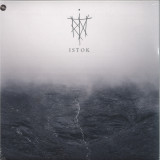
Trna - Istok LP (2x12")

Trna

Istok LP (2x12")

2x12inchCANDLE817175
Spinefarm Records
09.09.2022

THE LONG AWAITED AND CONSTANTLY DELAYED LP VERSIONS ARE FINALLY AVAILABLE-

want to take you on a journey. Not to their Russian homeland, but beyond that, to a place not on any map where the trio’s dreamy “celestial blackgaze” can properly get beneath your skin and into your mind. With their fourth album, Istok, their first for Candlelight Records, they’re pushing even further into the unknown. The band formed in 2013 in Saint Petersburg, following the breakup of similarly blissful-minded outfit, Princ Persii. Though not wanting to limit themselves to a genre, the “celestial blackgaze” fit so well that it stuck – descriptive enough to catch their vibe, loose enough to have no walls. Available across 5 physical formats: CD / double transparent grey vinyl / double metallic ice vinyl / double baby blue vinyl / double black vinyl.

pas en stock

Commandez maintenant et nous commanderons l'article pour vous chez notre fournisseur.

32,56

Last In: 3 years ago
Osees - A Foul Form

Osees

A Foul Form

12inchCF147LP
Castle Face
09.09.2022

"The prolific band returns with a brief and seething left-turn: a furious homage to the scummiest, crustiest hardcore of the early ’80s". (Pitchfork)

"Brain stem cracking scum-punk recorded tersely in the basement of my home. After a notoriously frustrating eon, the knee-jerk song path was aggressive and hooky. This is an homage to the punk bands we grew up on—the weirdos and art freaks that piqued our interests and pointed us on the trail head to here / now. Bad times make for strong music is something I agree with. I would say that is evident by the past few years of output from the underground. Transmissions have been all over the map: scanning…searching...sweeping out in the darkness looking for a foot hold.

OSEES A Foul From represents some of our most savage and primal instincts. Fight or flight. And the importance of a sense of humor in the darkest hour. Nothing wrong with keeping it snappy in the meantime. For fans of Rudimentary Peni, Crass, Bad Brains, Black Flag, Screamers, Abwärts, Stooges and all things aggressively tilted towards your face. You can lean back but don’t flinch…it’s a brief foray into the exhausting pogo pit, so stiffen your back and jerk with your knees. Enjoy." - John Dwyer

pré-commande09.09.2022

il devrait être publié sur 09.09.2022

26,43
Arthur Verocai - Arthur Verocai - 50 Years Edition LP

A complete album masterpiece in every sense of the word, considered by many people to be one of the greatest ever made, regardless of genre.
Recorded at Studio Somil, Rio De Janeiro in 1972, the album was produced, arranged, directed by the self-taught, Arthur Verocai.

Previously he had worked on many records in various capacities, with artists including Jorge Ben, Ivan Lins and Celia, but this album gave him the chance to do his thing in it’s most pure form.

The 29 minute masterpiece, perfect in it’s arrangement and fusion of sonics, epitomises the sound of Brazil at the time; strings, guitars, pianos, break beats, bass lines, synthesizers, vocals from the wonderful Célia, Carlos Dafe and Oberdan (Banda Black Rio), plus percussion from Pedro Santos and Paulo Moura on sax. Bossa nova, samba, jazz, MPB, psychedelics and funk sit side by side effortlessly.

The album transcends the genre of Brazilian music, and infact all genres. Highlighted in part by the number of artists that have sampled from it; MF Doom, Ludacris & Common, Little Brother, Jneiro Jarel aka Dr Who Dat?, Dibiase and Action Bronson amongst others.

The original Continental version of the album now fetch around $2000. Our definitive re-issue is an exact replica of the gatefold original LP and the source master is taken from the Continental tapes, re-mastered in 2012 under Arthur’s supervision.

pas en stock

Commandez maintenant et nous commanderons l'article pour vous chez notre fournisseur.

41,13

Last In: 3 years ago
Thou - A Primer of Holy Words

: Thou have a bit of a reputation for doing Nirvana covers, even releasing of a full album of them titled Blessings of the Highest Order during the height of quarantine. The infamously ravenous Thou fans were stuck in their rooms, drinking every drop and begging for more and just their luck the band decided to release a full-length compilation of their non-Nirvana covers they recorded and released from 2009-2022.

All of the songs on A Primer of Holy Words appeared on limited pressings of various split EPs and benefit compilations. The range of bands being covered is wide: Pearl Jam and Alice in Chains from abandoned tribute projects; Born Against from a small press

pré-commande12.08.2022

il devrait être publié sur 12.08.2022

26,01
Thou - A Primer of Holy Words

: Thou have a bit of a reputation for doing Nirvana covers, even releasing of a full album of them titled Blessings of the Highest Order during the height of quarantine. The infamously ravenous Thou fans were stuck in their rooms, drinking every drop and begging for more and just their luck the band decided to release a full-length compilation of their non-Nirvana covers they recorded and released from 2009-2022.

All of the songs on A Primer of Holy Words appeared on limited pressings of various split EPs and benefit compilations. The range of bands being covered is wide: Pearl Jam and Alice in Chains from abandoned tribute projects; Born Against from a small press

pré-commande12.08.2022

il devrait être publié sur 12.08.2022

26,01
Talisman - Dole Age

Talisman

Dole Age

12inchLANR016
Lantern Rec.
12.08.2022

The city of Bristol has undoubtedly a rich reggae heritage. The criminally neglected Talisman finally benefits of a long overdue release, collecting their first efforts plus a series of extra tracks. You’ll get their first two singles released on Recreational Records - Run Come Girl/Wicked Dem and Dole Age/Free Speech, both released in 1981 – plus a selection of five long lost contribution.

Originally formed in 1977 as Revelation Rockers, a name they soon changed, Talisman were considered the top reggae act in town alongside local contemporaries Black Roots. The band – popular for their intense live shows – opened for such glorious and diverse acts as Burning Spear, The Clash and The Rolling Stones ! This proper release on vinyl allows a new generation of fans to catch with their original style. Talisman certainly shows a different side of the UK reggae flourishing scene – think about Aswad, Steel Pulse and Misty In Roots – putting Bristol back on the map!

pré-commande12.08.2022

il devrait être publié sur 12.08.2022

26,43
Trna - Istok LP (2x12")

Trna

Istok LP (2x12")

2x12inchCANDLE515892
Spinefarm Records
13.05.2022

THE LONG AWAITED AND CONSTANTLY DELAYED LP VERSIONS ARE FINALLY AVAILABLE-

want to take you on a journey. Not to their Russian homeland, but beyond that, to a place not on any map where the trio’s dreamy “celestial blackgaze” can properly get beneath your skin and into your mind. With their fourth album, Istok, their first for Candlelight Records, they’re pushing even further into the unknown. The band formed in 2013 in Saint Petersburg, following the breakup of similarly blissful-minded outfit, Princ Persii. Though not wanting to limit themselves to a genre, the “celestial blackgaze” fit so well that it stuck – descriptive enough to catch their vibe, loose enough to have no walls. Available across 5 physical formats: CD / double transparent grey vinyl / double metallic ice vinyl / double baby blue vinyl / double black vinyl.

pré-commande13.05.2022

il devrait être publié sur 13.05.2022

32,56
Trna - Istok LP (2x12")

Trna

Istok LP (2x12")

2x12inchCANDLE817174
Spinefarm Records
13.05.2022

THE LONG AWAITED AND CONSTANTLY DELAYED LP VERSIONS ARE FINALLY AVAILABLE-

want to take you on a journey. Not to their Russian homeland, but beyond that, to a place not on any map where the trio’s dreamy “celestial blackgaze” can properly get beneath your skin and into your mind. With their fourth album, Istok, their first for Candlelight Records, they’re pushing even further into the unknown. The band formed in 2013 in Saint Petersburg, following the breakup of similarly blissful-minded outfit, Princ Persii. Though not wanting to limit themselves to a genre, the “celestial blackgaze” fit so well that it stuck – descriptive enough to catch their vibe, loose enough to have no walls. Available across 5 physical formats: CD / double transparent grey vinyl / double metallic ice vinyl / double baby blue vinyl / double black vinyl.

pré-commande13.05.2022

il devrait être publié sur 13.05.2022

32,56
Trna - Istok LP (2x12")

Trna

Istok LP (2x12")

2x12inchCANDLE826695
Spinefarm Records
13.05.2022

THE LONG AWAITED AND CONSTANTLY DELAYED LP VERSIONS ARE FINALLY AVAILABLE-

want to take you on a journey. Not to their Russian homeland, but beyond that, to a place not on any map where the trio’s dreamy “celestial blackgaze” can properly get beneath your skin and into your mind. With their fourth album, Istok, their first for Candlelight Records, they’re pushing even further into the unknown. The band formed in 2013 in Saint Petersburg, following the breakup of similarly blissful-minded outfit, Princ Persii. Though not wanting to limit themselves to a genre, the “celestial blackgaze” fit so well that it stuck – descriptive enough to catch their vibe, loose enough to have no walls. Available across 5 physical formats: CD / double transparent grey vinyl / double metallic ice vinyl / double baby blue vinyl / double black vinyl.

pré-commande13.05.2022

il devrait être publié sur 13.05.2022

32,56
Pink Mountaintops - Peacock Pools LP

Das vierte Album von Stephen McBean’s Nebenprojekt von Black Mountain. Die Bandbesetzung wechselt stetig und beinhaltet Mitglieder von Redd Kross, Melvins, Godspeed You Black Emperor, Dead Meadow und Brian Jonestown Massacre.

pré-commande06.05.2022

il devrait être publié sur 06.05.2022

23,49
Pink Mountaintops - Peacock Pools

Das vierte Album von Stephen McBean’s Nebenprojekt von Black Mountain. Die Bandbesetzung wechselt stetig und beinhaltet Mitglieder von Redd Kross, Melvins, Godspeed You Black Emperor, Dead Meadow und Brian Jonestown Massacre.

pré-commande06.05.2022

il devrait être publié sur 06.05.2022

23,49
Original Soundtrack - Chronicles Of Narnia Voyage Of The Dawn Treader LP (2x12")

The Chronicles of Narnia: The Voyage of the Dawn Treader is a 2010 fantasy-adventure film based on The Voyage of the Dawn Treader (1952), the third novel in C. S. Lewis’ fantasy series The Chronicles of Narnia. It is also the third and final installment in the original Chronicles of Narnia film series. Set three years after the events of Prince Caspian, the film follows the two youngest Pevensie children, Edmund and Lucy, as they return to Narnia to join the new king Caspian in his quest to rescue seven lost lords and to save Narnia from a corrupting evil that resides on a dark island.

Composer David Arnold scored the film, with themes composed by Harry Gregson-Williams (who scored the first two films). It was Arnold’s fourth collaboration with director Michael Apted. He created specific themes for the characters The Dawn Treader and Reepicheep, and used themes from the previous films for the opening and closing scenes as well as recurring characters, to ensure that the film is consistent with the franchise. The score was performed by an 87-piece orchestra and a 40-piece choir, resulting in an epic soundtrack with just the right magical touch to compliment this film.

The Original Soundtrack to The Chronicles of Narnia: The Voyage Of The Dawn Treader is available on black vinyl and includes an insert.

pré-commande18.03.2022

il devrait être publié sur 18.03.2022

42,40
Various - MoBlack Sampler Vol. 6

The go-to, chart-topping afro house label MoBlack Records, favoured by the likes of Dixon, Black Coffee and Ame, offers up four classics sure to get any crowd calling for more. This latest EP also includes a Red Zone mix from the legend David Morales.

DJ Support:

Ame, Dixon, Solomun, Black Coffee, Bedouin, Adam Port, Rampa, &ME.

pas en stock

Commandez maintenant et nous commanderons l'article pour vous chez notre fournisseur.

11,35

Last In: 5 months ago
DAN PIU - Mother's Love EP

Black Key return from a four year hiatus in style - with 4 sublime tracks from Australian ultra deep house don Planisphere - aka David Swatten. Following an incredibly well received LP on reissue label For Those That Knoe, Swatten returns with more expansive, smokey and utterly consuming deep house cuts, stamped with his unique sound but offering a different flavour from his Definitive Transmission LP. One which immediately stands out from the crowd. Being only his third release in 20 years, there's an understandable sense of anticipation around Swatten's output. This release undoubtedly puts Black Key firmly back on the map, picking up their deserved reputation for releasing only the very best deep house, aimed well and truly at the heads.

pas en stock

Commandez maintenant et nous commanderons l'article pour vous chez notre fournisseur.

15,08

Last In: 4 years ago
SO SNER - Reime

So Sner

Reime

12inchTAL025LP
TAL
16.02.2022

How can one explain the lasting popularity of the bass clarinet in musical circles from Vienna to Brussels? Perhaps because its frequency range articulates an alternative to conventions of popular music, where "bass" is reserved primarily for rhythmic impulses and the very foundation of the music. Viennese bass clarinetist Susanna Gartmayer's playing can by no means be reduced to just this, rather, it scutinizes the entire sound universe: she can do rhythm and drone, not to mention melody and noise, often all at once. Who would be a more fitting collaborator than Stefan Schneider, with his minimalist rhythms and subtle cosmic exploration?

Together, Schneider and Gartmayer form the project So Sner, which owes its existence to a concert in 2015 at the Approximation Festival in Düsseldorf. Gartmayer's bass clarinet polyphonies so impressed Schneider that he quickly suggested a collaboration. That same year, they began recording the album "Reime" in Kraftwerk's former Kling Klang studio, which in 2015 became workspace and concert venue simply called Elektro Müller. The second part was recorded in the summer of 2020 in Düsseldorf-Kaiserswerth at Stammhaus church, whose interior wood paneling facilitated organic acoustics.

Susanna Gartmayer has been active as a musician and composer in various realms between experimental rock music, improvisation and multimedia sound performance since the early 2000s, releasing the album "Smaller Sad" with Christof Kurzmann and "Black Burst Sound Generator" with Brigitta Bödenauer in 2020. In addition to his solo project Mapstation, Düsseldorf-based musician and producer Stefan Schneider has been pursuing new avenues of experimental music in the here and now for over 20 years, in numerous collaborations with Sofia Jernberg, Krautrock pioneer Hans-Joachim Roedelius, or visual artist Katharina Grosse among others.

So Sner's sound is equally oriented towards experiment and tradition, whose roots can be traced back to the UK of the early 80s: an era in which soul and synth, jazz and industrial, avant-garde and polyrhythm were blended with the help of intellectualism and punk attitude in such a way that manifold sketches of possible music emerged which are only being colorized today. Like So Sner - from the very first stomp to the very last drop.

Olaf Karnik, Cologne, October 2021

pas en stock

Commandez maintenant et nous commanderons l'article pour vous chez notre fournisseur.

19,79

Last In: 4 years ago
Flying Lotus - Yasuke

Flying Lotus

Yasuke

12inchWARPLP334B
WARP
17.12.2021

Yasuke, eine sechs Episoden umfassende Netflix Anime-Serie des in der Bronx geborenen, in Japan lebenden Animationsfilmers, Produzenten und Regisseurs LeSean Thomas (Cannon Busters, Children of Ether, The Boondocks), erzählt die Geschichte eines Samurai-Kriegers afrikanischer Abstammung in einer fantastischen Version des feudalen Japans in einem alternativen Universum voller Magie, Mechs und natürlich dem Schwertkampf.

Für Flying Lotus war es ein Traumprojekt, er beriet bei der Story und arbeitete neben dem renommierten Anime-Schöpfer Studio MAPPA als ausführender Produzent. Die Fähigkeiten des mit dem Grammy ausgezeichneten Produzenten kommen auf dem Album voll zur Geltung, indem er Synthesizer-Melodien, Basslinien und maschinell generierte Drum-Patterns miteinander vermischt und gleichzeitig neues klangliches Terrain erkundet - traditionelle japanische Perkussionsinstrumente wie die Taiko und die Hyoshigi sowie westafrikanische Perkussion, eine Anspielung auf die afro-japanische, feudale und doch futuristische Welt, in der Yasuke lebt. Flying Lotus gewann kürzlich zusammen mit Thundercat einen Grammy für das beste Progressive R&B-Album (It Is What It Is) und erhielt bei den 63. Grammy Awards auch eine Nominierung als Produzent des Jahres.

pré-commande17.12.2021

il devrait être publié sur 17.12.2021

22,31
RIVAL CONSOLES - OVERFLOW 2x12"

RIVAL CONSOLES

OVERFLOW 2x12"

2x12inchERATP147LP
Erased Tapes
10.12.2021

**LIMITED BLACK VINYL** Rival Consoles returns with a resonant
and explorative soundscape of original
music, composed for renowned
choreographer Alexander Whitley’s
contemporary dance production
Overflow.

Exploring themes of the human and emotional
consequences of life surrounded by data, the piece
echoes the concept of social media, advertising,
marketing companies and political factions
exploiting our data to gain wealth, political
advantage and sow division. Key reading for the
project was based around the contemporary
philosophical work Psychopolitics: Neoliberalism
and New Technologies of Power by Byung-Chul
Han.
“The piece opens with Monster which has a kind of
drunken madness to it, highly repetitive to mirror the
repetitive nature of how we as humans engage with
technology such as social media. It’s sometimes
edging towards chaos but yet always returning back
to the same starting point, but eventually giving way
to exhaustion. I wanted to create a bold opening
piece for Overflow,” states West.

I Like features the mapping of data from dancer Tia
Hockey’s personal monologue, which allows chords
to be heard - but only based on the activity of her
voice, drawing attention to things happening behind
the curtain, invisible systems, algorithms.
The album also features the previously released
standalone slice of euphoria, Pulses of Information
— described by UK mag Clash as “typically
entrancing, Pulses of Information seems to
encourage a form of internal dialogue, between our
inner and outer selves.”

Overflow was premiered by the Alexander Whitley
Dance Company in May 2021 at the Sadler’s Wells
in London and is scheduled to tour through theatres
in Europe in spring 2022. The score will be released
by Erased Tapes on limited edition vinyl and CD as
well as digital formats on December 3.

pas en stock

Commandez maintenant et nous commanderons l'article pour vous chez notre fournisseur.

25,84

Last In: 4 months ago
PLANISPHERE - Heart Over Mind EP

Black Key return from a four year hiatus in style, with 4 sublime tracks from Australian ultra deep house don, Planisphere, aka David Swatten. Following an incredibly well received LP on reissue label, For Those That Knoe, Swatten returns here with more expansive, smokey and utterly consuming deep house cuts, stamped with his unique sound but offering a different flavour from his Definitive Transmission LP � one which immediately stands out from the crowd. Being only his third release in 20 years, there's an understandable sense of anticipation around Swatten's output. This release undoubtedly puts Black Key firmly back on the map, picking up their deserved reputation for releasing only the very best deep house, aimed well and truly at the heads.

pas en stock

Commandez maintenant et nous commanderons l'article pour vous chez notre fournisseur.

12,56

Last In: 4 years ago
Jake Kaufman, Manami Matsumae - Shovel Knight - The Definitive Soundtrack
 
34

Shovel Knight began as a modest, yet highly promising Kickstarter project in March 2013. Billed as “a groundbreaking love letter to 8 bits!” by Indie developer Yacht Club Games, this 2D side-scrolling platform game released in June 2014 to universal praise and accolades.

Fans and industry professionals praised Shovel Knight for its charming retro-2D visuals, humorous story, fun characters and strong gameplay design, which all came together to offer a game that is nostalgic yet very modern. The efforts of Yacht Club Games paid off when Shovel Knight was won the prestigious “Best Independent Game” award at The Game Awards 2014. The game’s chiptune soundtrack, composed by Jake Kaufman and Manami Matsumae, is integral to the game’s modern-retro identity and has been similarly praised for its outstanding arrangements, memorable melodies and strong technical composition. This definitive soundtrack contains all music from the original Shovel Knight game released in June 2014, with a vinyl tracklist crafted by Jake Kaufman himself. The package cover and inner-gatefold have been designed exclusively for the soundtrack by Hitoshi Ariga; an interview with co-composer Manami Matsumae; and character artwork from the game.

pré-commande19.11.2021

il devrait être publié sur 19.11.2021

31,89
Robson Banda & The New Black Eagles - Soweto

Nyami Nyami Records are pleased to announce the first ever reissue 100% analog from the original
master tapes of the classic Zimbabwean album Soweto from 1986, with the same tracklist and original
artwork, produced at the peak of jit’s popularity in the mid-1980s. While staying within the chimurenga music
framework pioneered by Thomas Mapfumo and Jonah Sithole, Robson Banda and the New Black Eagles
produced a crisp, precise and exciting sound, emphasising the upbeat dance music favoured on the
dancefloors of independent Zimbabwe’s nightspots and beerhalls. Mbira-based guitar licks bring a nostalgic
feeling to these dance-floor gems championed at the time by legendary English DJ John Peel.

pas en stock

Commandez maintenant et nous commanderons l'article pour vous chez notre fournisseur.

17,77

Last In: 4 years ago
Emerson, Lake & Palmer - Out of This World: Live (1970-1997)
 
55

xe m1 Karn Evil 9 1st Impression, Pt. 2 (Live at the Albert Hall) [2017 - Remaster]
[xf] m2 Tarkus (I. Eruption II. Stones of Years III. Iconoclast) [Live at the Albert Hall] [2017 - Remaster]
[xg] m3 Knife Edge (Live at the Albert Hall) [2017 - Remaster]
[xh] n1 Paper Blood (Live at the Albert Hall) [2017 - Remaster]
[xi] n2 Romeo and Juliet (Live at the Albert Hall) [2017 - Remaster]
[xj] n3 Creole Dance (Live at the Albert Hall) [2017 - Remaster]
[xk] n4 Still... You Turn Me on (Live at the Albert Hall) [2017 - Remaster]
[xl] n5 Lucky Man (Live at the Albert Hall) [2017 - Remaster]
[xm] o1 Black Moon (Live at the Albert Hall) [2017 - Remaster]
[xn] o2 Pirates (Live at the Albert Hall) [2017 - Remaster]
[xo] p1 Finale (Medley) [I. Fanfare for the Common Man II. America III. Rondo] [Live at the Albert Hall] [20

pré-commande29.10.2021

il devrait être publié sur 29.10.2021

158,19
HOWLIN RAIN - THE DHARMA WHEEL

Over nearly 20 years, Howlin Rain may have become the quintessential independent American rock ’n roll band: a steam-spitting Hydra of cranked guitars, kicking asphalt dust through a kaleidoscoping travelogue of desert motels and dives, volleying forth transmissions of sci-fi poetry from the blacktop veins of this cracked and aching country.

Now, in America 2021, capping these strangest and sorest of times, the band returns with The Dharma Wheel, a six-track, 52-minute dive into a joyous fantasy realm of exaggerated present.

“I wanted The Dharma Wheel to be a portal from our everyday world, the one from which you stand on hard ground and hold the album in your hands and peer into the artwork, and into another universe,” says songwriter, guitarist and vocalist, Ethan Miller. “You enter into that universe with your eyes and ears and mind and take a ride through free-form meditation on these ideas — from big, fundamental concepts about our existence right down to the grease that rolls down the arm of a pulp novel killer as he eats a gas station hot dog in an old Dodge in an alleyway.”

Lyrically, Miller has completed his evolution into a mushroom-plucking Whitman of the West, singing outlandish tales in a topographic blend of Humbead’s Revised Map of the World and an inverted U.S. where downtrodden bodhisattvas roam the back streets and moonless country roads.

“Down in Florida swamps, run by nature’s law, standing in the water, Eden gone. Two men loading rifles, beasts making time, they shot a boy from an orange tree and watched the colored birds take flight, watch the colors as they soar and dive.” — ‘Under the Wheels.’

The band, Jeff McElroy (bass, backing vocals), Justin Smith (drums/percussion, backing vocals) and Dan Cervantes (guitar, backing vocals), again sounds hardwired into Miller’s vision, building tracks that swagger and sway in response to his verse. Lending a hand this time around is the legendary Scarlet Rivera (Bob Dylan’s Rolling Thunder Revue) on violin, and the endlessly inventive Adam MacDougall (Chris Robinson Brotherhood, Circles Around the Sun) on keys.

Songs were shaped via the blast furnace of endless gigs, then recorded often mere hours after the band slipped the stage.

“The captured sonic fact about this record is that it’s the sound of a band that rehearsed this material a lot and put a ton of work into its construction and was on the road a lot and recorded on days off in the tour schedule,” Miller says. “In some cases we were on stage on Saturday night playing these songs at quarter-to-2 in the morning and by Noon the next day we were sipping coffee in the studio playing them for the machine.”

Rivera’s violin is the first sound heard as the album dawns on the instrumental “Prelude.” Soon, the band joins, twirling the theme into a psychedelicized awakening. “Don’t Let the Tears” brings the boogie, with MacDougall’s madcap synth work and wah-wah guitars showering 70’s glitter upon a parquet dance floor of the mind. “Under the Wheels” and “Rotoscope” center the album with taut, compositional epics populated by murdering drifters and fuzz pedal explosions. The blue hour comedown of “Annabelle” meditates upon the weariness of lost love, with Rivera again amping the heartache via her violin strings.

“In the evening the trains go by, and shake the dust from dirty walls, sometimes I feel like a spider in an old mason jar, who threatens only convex light from down the hall. I’ve been lost to the world since the photos of the black hole, landed on my desktop screaming, perhaps the all and nothing all-in-one is just too much to take, for particles and matter that never found their way.” — ‘Annabelle’

The record closes with the 16-minute title track, a multi-movement suite which cycles from Crazy Horse-meets-Traffic jams through colossal, mass-moving funk stomp, eventually cresting and washing into a sing-along gospel lament.

The Dharma Wheel is an album of great depth, and one steeped in good vibes: a rich, glistening world of the ultra-vivid. As illustrated in Arik Roper’s cover art, the grand dharmachakra has been set in motion, churning off the California coast.

“We were trying to build a world big enough that the imagination won’t go soft on you after just a few listens and where our love for this music, and music in general — along with a good dose of audacity — create a magic carpet ride through the world of The Dharma Wheel,” Miller continues. “In pursuing that I think we also managed to make a record that has a lot of joy in it: the joy of playing music, the joy of experiencing music, the joy of storytelling and poetry, the kind of singular joy and extended ecstatic moment that only a real ‘band’ can express in just that way.”

And it’s this joy, this exuberance and dedication to the lines of cosmic expression — all centered in the exalted art of the everyday — that constructs the heart of the record. At its core, The Dharma Wheel is the triumph of a working band, a transmission from a never-paused before arriving for our strange, bruised, spectacular now.”

pré-commande22.10.2021

il devrait être publié sur 22.10.2021

39,37
HOWLIN RAIN - THE DHARMA WHEEL

Over nearly 20 years, Howlin Rain may have become the quintessential independent American rock ’n roll band: a steam-spitting Hydra of cranked guitars, kicking asphalt dust through a kaleidoscoping travelogue of desert motels and dives, volleying forth transmissions of sci-fi poetry from the blacktop veins of this cracked and aching country.

Now, in America 2021, capping these strangest and sorest of times, the band returns with The Dharma Wheel, a six-track, 52-minute dive into a joyous fantasy realm of exaggerated present.

“I wanted The Dharma Wheel to be a portal from our everyday world, the one from which you stand on hard ground and hold the album in your hands and peer into the artwork, and into another universe,” says songwriter, guitarist and vocalist, Ethan Miller. “You enter into that universe with your eyes and ears and mind and take a ride through free-form meditation on these ideas — from big, fundamental concepts about our existence right down to the grease that rolls down the arm of a pulp novel killer as he eats a gas station hot dog in an old Dodge in an alleyway.”

Lyrically, Miller has completed his evolution into a mushroom-plucking Whitman of the West, singing outlandish tales in a topographic blend of Humbead’s Revised Map of the World and an inverted U.S. where downtrodden bodhisattvas roam the back streets and moonless country roads.

“Down in Florida swamps, run by nature’s law, standing in the water, Eden gone. Two men loading rifles, beasts making time, they shot a boy from an orange tree and watched the colored birds take flight, watch the colors as they soar and dive.” — ‘Under the Wheels.’

The band, Jeff McElroy (bass, backing vocals), Justin Smith (drums/percussion, backing vocals) and Dan Cervantes (guitar, backing vocals), again sounds hardwired into Miller’s vision, building tracks that swagger and sway in response to his verse. Lending a hand this time around is the legendary Scarlet Rivera (Bob Dylan’s Rolling Thunder Revue) on violin, and the endlessly inventive Adam MacDougall (Chris Robinson Brotherhood, Circles Around the Sun) on keys.

Songs were shaped via the blast furnace of endless gigs, then recorded often mere hours after the band slipped the stage.

“The captured sonic fact about this record is that it’s the sound of a band that rehearsed this material a lot and put a ton of work into its construction and was on the road a lot and recorded on days off in the tour schedule,” Miller says. “In some cases we were on stage on Saturday night playing these songs at quarter-to-2 in the morning and by Noon the next day we were sipping coffee in the studio playing them for the machine.”

Rivera’s violin is the first sound heard as the album dawns on the instrumental “Prelude.” Soon, the band joins, twirling the theme into a psychedelicized awakening. “Don’t Let the Tears” brings the boogie, with MacDougall’s madcap synth work and wah-wah guitars showering 70’s glitter upon a parquet dance floor of the mind. “Under the Wheels” and “Rotoscope” center the album with taut, compositional epics populated by murdering drifters and fuzz pedal explosions. The blue hour comedown of “Annabelle” meditates upon the weariness of lost love, with Rivera again amping the heartache via her violin strings.

“In the evening the trains go by, and shake the dust from dirty walls, sometimes I feel like a spider in an old mason jar, who threatens only convex light from down the hall. I’ve been lost to the world since the photos of the black hole, landed on my desktop screaming, perhaps the all and nothing all-in-one is just too much to take, for particles and matter that never found their way.” — ‘Annabelle’

The record closes with the 16-minute title track, a multi-movement suite which cycles from Crazy Horse-meets-Traffic jams through colossal, mass-moving funk stomp, eventually cresting and washing into a sing-along gospel lament.

The Dharma Wheel is an album of great depth, and one steeped in good vibes: a rich, glistening world of the ultra-vivid. As illustrated in Arik Roper’s cover art, the grand dharmachakra has been set in motion, churning off the California coast.

“We were trying to build a world big enough that the imagination won’t go soft on you after just a few listens and where our love for this music, and music in general — along with a good dose of audacity — create a magic carpet ride through the world of The Dharma Wheel,” Miller continues. “In pursuing that I think we also managed to make a record that has a lot of joy in it: the joy of playing music, the joy of experiencing music, the joy of storytelling and poetry, the kind of singular joy and extended ecstatic moment that only a real ‘band’ can express in just that way.”

And it’s this joy, this exuberance and dedication to the lines of cosmic expression — all centered in the exalted art of the everyday — that constructs the heart of the record. At its core, The Dharma Wheel is the triumph of a working band, a transmission from a never-paused before arriving for our strange, bruised, spectacular now.”

pré-commande22.10.2021

il devrait être publié sur 22.10.2021

45,42
Annea Lockwood - Becoming Air / Into the Vanishing Point

Following on from the acclaimed Tiger Balm / Amazonia Dreaming / Immersion LP (BT028), Black Truffle is thrilled to present two major new instrumental works from legendary sound artist and experimental composer Annea Lockwood. Demonstrating the ever evolving and radically open nature of Lockwood’s practice, these two recent works were developed in close collaboration with their performers. ‘Becoming Air’ (2018), developed with and performed by trumpeter Nate Wooley, uses extended technique and electronics to interfere with Wooley’s virtuosic control over his instrument, pushing him into areas of fluctuating pitch and timbral instability. Motivated by a desire for ‘the letting go of sound to be itself’, ‘Becoming Air’ unfolds as a series of texturally distinct moments separated by pauses, each fixing on a particular approach to the instrument (long tones, upper-register whistles, breathy wooshes) and maintaining it in an essentially static fashion, focussing our attention on subtle changes and variations. Dipping into near-inaudibility in the fragile high tones of its opening section, the piece dramatically increases in volume and intensity in its final third, climaxing with a passage of roaring distortion, where the interaction between feedback and trumpet pitches calls up the shuddering interference effects of Robert Ashley’s Wolfman.

‘Into the Vanishing Point’ (2019) is a collaborative work developed with New York piano and percussion quartet Yarn/Wire, who have performed work by major contemporary composers such as Olivia Block, Catherine Lamb and Klaus Lang. Carrying on the ecological and environmental concerns of some of Lockwood’s previous works, ‘Into the Vanishing Point’ was inspired by a devastating news article on the global collapse of insect populations. Discovering that the four members of Yarn/Wire had also read this text, Lockwood mapped out a loose structure for the piece that would allow the composer and four performers to explore their ‘feelings about what is happening ecologically’. Working with a huge variety of instruments, objects and techniques of sound production, the resulting work is an alluringly lush, organically unfolding tissue of unorthodox textures and haunting tones. Though not intended to sonically represent ecological issues in any direct way, its unique sound world of rubbed piano strings, gently handled objects and chiming pitches often calls up natural images: of insects and frogs, wind rushing through trees, a bird’s wings in flight. Presented in a stunning gatefold cover with liner notes by Lockwood, Wooley and Yarn/Wire, Becoming Air/Into the Vanishing Point is a testament to the generosity and experimentation that continue to characterise the work of this extraordinary artist, active for over fifty years.

pas en stock

Commandez maintenant et nous commanderons l'article pour vous chez notre fournisseur.

21,81

Last In: 4 years ago
Articles par page:
N/ABPM
Vinyl