Carl Finlow keeps on keepin' on. Not only is Finlow one of the most respected names in electro, a producer who boasts a sprawling catalogue that takes in a wide variety of aliases, but he's also spent recent years establishing himself as a mainstay for Sheffield's Central Processing Unit label. Soft Robotics, the new EP from Finlow's Silicon Scally project, is the fifth Silicon Scally release in five years to boast one of CPU's instantly-recognisable black-and-white covers.
The reason that Silicon Scally and CPU keep linking up is simple; they're a perfect fit for one another. Central Processing Unit has established itself as a haven for post-Drexciya producers since launching in 2012, and there are few artists better than Finlow at building on the Detroit group's sound. The union bears fruit once more on Soft Robotics, an EP of lithe machine-funk jams that will both do damage in the dance and also reward more concentrated home listening.
Things begin at a steadier speed than one might expect. Rather than barrelling off with the kind of sinewy roller one associates with the CPU name, Soft Robotics' title-track takes things at mid-pace. The groove reveals itself without hurry, Silicon Scally adding or subtracting elements - twitchy modular loops, pensive pads, the occasional blurt of low-end - atop the chugging bass/drums groove. It's a track which wins you over with guile rather than force.
As the name of subsequent cut 'Jitters' intimates, this one picks things up a little after 'Soft Robotics'. The tempo is higher here, the central beat more nervy. At their cores, though, 'Jitters' and 'Soft Robotics' are kindred spirits. Here, another slyly insistent bit of drum programming comes swirled up with all sorts of extraterrestrial tones, from little nuggets of melody supplied by the keys to electrifying synth stabs and percussive squelches.
Things limber up further still on first B-side 'Spin Ratio'. The track's 808 kicks are punchier than those of the A-side jams, and there's a dizziness to the bass tone which gives 'Spin Ratio' an intriguingly off-kilter feel. Atop the booming beat we find ourselves hypnotised by cells of melody and harmony interlocking or moving apart - particularly the staccato module at the track's heart. Sure enough, 'Spin Ratio' is the Soft Robotics joint which cleaves closest to Drexciya, invoking other Detroit disciples like Jensen Interceptor in the process.
After Soft Robotics picks up speed in the middle, closer 'Super Fluid Tones' brings us back to where we started. This track returns to the more measured delivery of the record's opener - there's a steady pulse to the drums, and once again Silicon Scally packs the mix with so many intriguing whizzes, bangs, blips and blurts that it's impossible not be won over by this tune's construction. 'Soft Robotics' and 'Super Fluid Tones' bookend Soft Robotics very nicely, and Silicon Scally's smart pacing gives the EP a lovely ebb and flow.
The ever-excellent Carl Finlow drops a Silicon Scally release via Central Processing Unit for the fifth year running. Like its predecessors, Soft Robotics is an excellent and deftly-crafted collection of modern machine-funk.
RIYL: Drexciya, Jensen Interceptor, Fleck E.S.C., The Advent
Поиск:black one
Все
- 1: Splitterty Splat
- 2: Wreck And Roll
- 3: You?Re Full Of Shit
- 4: Tidal Wave
- 5: Refrigerator (Alt)
- 6: Cold Meat
- 7: Spinach Blasters
- 8: Jaguar Ride
- 9: Zoot Zoot
- 10: Giganto (Cyclotron)
- 11: Bunnies
- 12: Roll On, Big O
- 13: You Crummy Fags
- 14: No No
- 15: Sewercide (Alt)
- 16: Silver Daggers
- 17: As If I Cared
- 18: Natural Situation
- 19: Cards And Fleurs
- 20: Agitated (Orig)
- 21: Cyclotron
- 22: Black Leather Rock
- 23: Dead Man?S Curve
- 24: Safety Week
- 25: Accident
- 26: Anxiety
- 27: No Nonsense
The electric eels were the first punk band, full stop. They may not have “started” the genre, but they were the first to tick all the boxes. The eels rejected every 1970s rock convention—professionalism, virtuosity, subject matter, image. Dave E.’s caustic vocals, complete with an aggressive lisp and a head full of snot, would become de rigeur a few years after the group disbanded. Meanwhile, the songs’ focus on car crashes, suicide, neuroses, and generally hating people were as far out of the mainstream as possible. The two eels tracks that do approach the subject of romance couch it in terms of not really caring that much about it (“Jaguar Ride”) or placing it in the context of a grisly murder (“Silver Daggers”). Also consider John Morton’s signature guitar sound, a nails-on-chalkboard tone with brutally free soloing inspired more by Albert Ayler than the blues or aspirations to technical facility. Ditto Dave E.’s clarinet playing and affection for lawnmowers and vacuums during live performance. They were notoriously violent not only among themselves, but towards audiences, police, and anyone unfortunate enough to be around them when things went south. Then of course there are the leather jackets, the clothing festooned with rat traps or safety pins. And no bass player, why bother. There is simply no other “proto” band to have had all these pieces in place circa 1973- 1975. Yet it is a mistake to consider the eels exclusively in such a context. Yes, the eels could and did shock anyone who encountered them, but they also had great songs. While both Dave and John were visionary writers, they also had rhythm guitarist Brian McMahon, a melody and riff machine who wrote many of the band’s signature songs. And they were no one-trick pony. Although much of the band’s material is appropriately high-energy, there is also the downer eels—morbid, harmonically risky, and in full existential crisis. Although it’s not a focus of this compilation, the eels also had a penchant for completely free improvisation. Over the last forty plus years, there have been several electric eels compilations. Spin Age Blasters is quite simply the best one ever assembled, every single key track is here in its best version, properly mastered by John Golden, and sequenced with an eye towards both flow between tracks as well as individation between sides. A true monster of an album.
GER Als Night Beats erschafft der in Texas geborene und in LA lebende Künstler Danny Lee Blackwell Musik, wie man ein Puzzle zusammensetzen könnte. Der psychedelische Autorenfilmer aus dem Westen baut sein Werk aus einem Moment, einer Initialzündung, auf, die bestimmte Kriterien erfüllen muss: Sie muss ihm Gänsehaut bereiten. Wenn dieses Gefühl eintritt, verfolgt Blackwell die Idee unermüdlich, bis er einen neuen Song hat; wenn nicht, geht er zum nächsten Moment über, immer auf der Suche nach dem perfekten Molekül eines Songs. Auf seinem sechsten Night Beats-Album "Rajan" zeigt sich der Songwriter von seiner besten Seite und erschafft Werke, die mit fesselnden Melodien und hypnotischen Rhythmen glänzen, aber auch durch subtile handwerkliche Entscheidungen unterstrichen werden, die nur nach unzähligen Stunden im Studio erreicht werden können. Blackwell erschafft ein Werk, das irgendwo zwischen Spaghetti-Western-Filmmusik und Psych-Pop-Opus angesiedelt ist, ein karrierebestimmendes Album, das viel über Danny Lee Blackwells künstlerische Philosophie verrät und gleichzeitig den so wichtigen Hauch des Geheimnisvollen bewahrt. Exklusiv für den Indie-Handel, todesrote LP, handnummeriert mit Poster und DLC.
ENG As Night Beats, Texas-born, LA-based artist Danny Lee Blackwell creates music like one might assemble a puzzle. The Western psychedelic auteur builds his work from one moment, an initial spark, that must fit a certain criteria: it must give him goosebumps. If that sensation arrives, Blackwell will pursue the idea relentlessly until he has a new song; if not, he moves onto the next moment, constantly looking for the perfect molecule of a song. On his sixth Night Beats album, 'Rajan', the songwriter is at his strongest, creating works that shine with captivating melodies and hypnotic rhythms, but are underscored by subtle choices of craftsmanship that can only be achieved after countless hours in the studio. Blackwell creates a work that lands somewhere between Spaghetti Western film score and psych-pop opus, a career-defining album that reveals much about Danny Lee Blackwell's artistic philosophy while keeping that ever crucial air of mystery intact. Indies only LP on 180g 'Dying Red Giant' coloured vinyl, limited to 350 hand-numbered copies, fold-out art poster, download card included.
-15 year anniversary and first time on vinyl with brand new artwork, including previously unseen pieces from the Tame One archive.
-Remixed and remastered audio for a fresh listening experience. -Featuring guest appearances from Sean Price and Del Tha Funky Homosapien - One half of legendary graffiti rap group The Artifacts. -140 gram black vinyl, matte flood jacket with spot uv, 12x12 double sided insert with black poly lined inner sleeves. Rough, rugged and raw. Nothing better describes one's listening experience when they first heard Tame One & Parallel Thoughts, “Ol Jersey Bastard”. It was 15 years ago when Tame One came to "The Paradigm", the recording studio of Freehold's own Parallel Thought. One session turned into two, then quickly turned into three, resulting in a twice-weekly recording ritual that spanned three years. This ritual would give birth not only to this album, but three (Acid Tab Vocab & Parallel Uni-Verses w/ Del Tha Funky Homosapien) instilling a lifelong creative partnership. But let's focus on "Ol Jersey Bastard," Tame One's homage to the almighty and original OL Dirty Bastard. It was not the cleanest record to listen to, but it was true to Tame One's style and vision. He was not constrained by working with a group or having to answer to a label. As a side note, Amalgam Digital, the joke of a label who originally released this album wouldn't let us follow through with our original artwork concept. So the new cover and layout created by close friend Michael Interrante is Tame’s original concept. We also were able to include original scans of unseen artwork, tags & lyrics from Tames archive. This was unfiltered raw hip-hop, showcasing Tame One's unparalleled ability on the mic. Sometimes that called for no hook or maybe a 54 bar verse, traditional song structures were out the window. That being said, coming back to this album all these years later as producers, we wanted to elevate the album's listening experience. We cleaned up the mixes, so you might notice Tame sounds a little clearer, or those beats might knock a bit louder. It was what was needed to further elevate the music while not compromising our and Tame’s vision. Further demonstrating that music is a living, breathing piece of art. Always able to evolve. We hope you enjoy it!
The Tribe co-founder’s debut, lacquered directly from his master tapes in an all analog transfer by Bernie Grundman. The definitive reissue of this Spiritual Jazz album which set the stage for his Vibes from the Tribe The Tribe label, one of the brightest lights of America’s 1970s jazz underground, receives the Now-Again reissue treatment. This is your chance to indulge in the music and story of one of the most meaningful, local movements of the 20th Century Black American experience, one that expanded outwards towards the cosmos.
In the words of the collective themselves, “Music is the healing force of the universe.” Included in an extensive, oversized booklet, Larry Gabriel and Jeff “Chairman” Mao take us through the history of the Tribe, in a compelling story that delves not just into the history of the label and its principals, but into the story of Black American empowerment in the latter half of the 20th Century. The booklet features never-before-seen archival photos and rare ephemera from Tribe’s mid-1970s heyday.
From the opening strains of the politico title-track to the countrified pedal steel guitar on "Man With A Mission," from the anti-establishment anthem "American Jesus," to the heart rending ballad "Struck A Nerve," Bad Religion"s Recipe For Hate is by far their most eclectic album, and one that never ceases to stir up controversy among fans. Graffin, a seething combination of perfect pitch and skeptical emotion, reaffirms his place as one of the best punk rock vocalists on this record. Guest appearances abound, from Eddie Vedder (of Pearl Jam fame) harmonizing on "American Jesus" and "Watch it Die," to Concrete Blonde"s Johnette Napolitano"s stunning vocals on "Struck A Nerve," to Claw Hammer"s John Wahl and Chris Bagarozzi"s searing guitar leads on "Kerosene." As the songwriting team of Graffin/Gurewitz pull back from their more introspective writing that appeared on some of the previous albums, they focus ever more keenly on the events of the day. Recipe For Hate is a scathing commentary on the state of the nation, a social criticism addressing alcoholism, abortion and homelessness. Reissued on limited edition Red w/ black smoke vinyl to celebrate the album"s 30th anniversary!
The year is 1989. Techno’s second generation has begun to permeate the globe leading a young Carl Craig to a tiny village in the countryside of Belgium. It is here, undistracted and determined to break out, that Craig encounters one of the country’s only drum machines, an Alesis controlled midi-808. In a single session he composes and mixes a handful of records that are still to this day regarded as some of his most raw and explosive contributions to the fabric of electronic music history.
Carl revisits this fateful chapter through the lens of a famed cut from his Psyche alias ‘From Beyond’, with a ‘C2 2023 Mix’ and remixes from Seth Troxler, Ataxia and Admn, out July 14 on Planet E Communications.
The Psyche alias, known for early Transmat releases like ‘Crackdown’ and ‘Elements’, embodied a stripped back, less sample based yin attitude to the yang of Carl’s more aggressive 69 and sample-forward BFC and Paperclip People identities. ‘From Beyond’, first released in 1990 via the ‘Crackdown’ 12” on Transmat, offers an eerie glimpse into the simplistic production that came through Carl’s mastery of the 808 and the sonic value of restricting himself to this movement defining tool.
This new ‘From Beyond’ package sees Carl lift and bend the original in his ‘C2 2023 Mix’ alongside a package of remixes from artists near to the hearts of Detroit and the Planet E fold. Seth Troxler brings a subdued acid tinge to the package, while label regular Ataxia pays homage to the source material with a renewed percussive energy, followed by a soulful rework by Admn.
Whether it be through the 30 year repertoire of his seminal Planet E, his Party / After-Party sound and light installation now on display at Los Angeles’ MOCA, or his continuous work as a champion of Black-led creativity, the Carl Craig mission remains the same: to always rep Detroit and be the realest mutha f***a alive.
An incredible 45 of Latin disco – recorded in Peru during the late 70s by funk pioneers Black Sugar, and right up there with the best from New York and LA of that era! It’s taken over four decades 'Baila' to become a winner spin at international events in the soul and disco scenes, a sought-after collector's item and, above all, the dancefloor hit that should have always been. First time reissue. Black Sugar is a Peruvian band, considered a pioneer group in Latin America in mixing funk influences with rock and Latin rhythms. In 1976, following their gig at Coliseo Amauta in Lima, opening the night for the legendary Spanish band Barrabás, they started to show a growing interest in disco music, resulting in some line up changes with members leaving the project due to their lack of interest in the new sound and new ones joining in. Word is that Sono Radio, home to a bunch of local Tamla MoTown releases for the Peruvian market, thought that Black Sugar's prestige, and their credibility in the new orientation towards disco sound, would benefit from seeing their new single pressed with the labels of the famous record company from Detroit. And so it was. Under certain lights and shadows, ‘Baila’ was finally released in Peru only in 1978, sporting the same look as the releases of the likes of Marvin Gaye, Diana Ross, Commodores or Thelma Houston. A clever marketing ploy that however failed in boosting the sales of the single…Only a few original copies have survived to this day, of either the first and the second edition from 1979 released on the US label Libra, and reached the collectors market. It’s now, over four decades later, when the interest on this recording has gone stronger and ‘Baila’ is getting regular spins at international soul/disco scene events, having become a very sought-after collectors item and, on top of that, the dance floor anthem that should have always been. The stunning piano arrangements of the intro, the outstanding brass sections —faithfully copied from the disco recordings coming from the States—, a very catchy chorus… ‘Baila’ has all the necessary ingredients to become an addictive invitation to join the dance floor. On the B side, a cover version of Barry White’s hit ‘Sha La La (Means I Love You)’ —as appeared on the original issue of this record— shows what the interest of the band was at the time. First time reissue. TRACKLIST Side A Baila Side B Sha La La (Means I Love You)
- A1: Zoos Of The World
- A2: The Big Game Hunters See The Cheetah
- A3: Western Dragon (Pt 3)
- A4: Western Dragon (Pt 2)
- A5: Moon Journey
- B1: Music For Advertising #6
- B2: Black Eye (Main Theme)
- B3: Western Dragon (Pt 1)
- B4: Music For Advertising #7
- B5: Captain Dj Disco Ufo (Pt Ii)
- B6: Three Tv Ids
- B7: Music For Advertising #8
- B8: Love Is A Garden
- B9: The D-Bee's Cat Boogie
- B10: Black Eye (End Credits)
red LP[24,79 €]
LP includes Poster.
When Sacred Bones first began their Mort Garson reissue project in 2019 with a proper reissue of Plantasia, the Garson-naissance began in earnest. Soon after, you could hear Mort Garson and his Moogs bubbling up on TV shows, documentaries, podcasts, hip-hop tracks, or anywhere else, the man a cultural phenomenon once more.
Like a perennial that returns with each new spring, the Mort Garson archives have brought to bear yet another awe-inspiring bloom.
Journey to the Moon and Beyond finds even more new facets to the man's sound. There's the soundtrack to the 1974 blaxploitation film Black Eye (starring Fred Williamson) alongside some newly unearthed music for advertising. Just as regal is "Zoos of the World," where Garson soundtracks the wild, preening, slumbering animals from a 1970 National Geographic special of the same name.
The mind reels at just what project would have yielded a scintillating title like "Western Dragon," but these three selections were found on tapes in the archive with no further information. The crown jewel of the set is no doubt Garson's soundtrack to the live broadcast of the 1969 Apollo 11 moon landing, as first heard on CBS News. That's one small step for man, one giant leap for Moogkind. But for decades, this audio was presumed lost, the only trace of it appearing to be from an old YouTube clip. Thankfully, diligent audio archivist Andy Zax came across a copy of the master tape while going through the massive Rod McKuen archive.
So now we get to hear it in all its glory. Across six minutes, Garson conjures broad fantasias, whirring mooncraft sounds, zero-gravity squelches, and twinkling études. It showcases Mort's many moods: sweet, exploratory, whimsical, a little bit corny, weaving it all together in a glorious whole.
Maybe at the time it scanned as crass and opportunistic for Garson to apply his keyboards to subjects like astrological signs, the occult, hippiedom, houseplants, or the moon landing. But more than most other electronic music pioneers of his ilk, Garson foresaw the integration of such electronics into our daily lives, how they would allow us to engage with the world.
- A1: Zoos Of The World
- A2: The Big Game Hunters See The Cheetah
- A3: Western Dragon (Pt 3)
- A4: Western Dragon (Pt 2)
- A5: Moon Journey
- B1: Music For Advertising #6
- B2: Black Eye (Main Theme)
- B3: Western Dragon (Pt 1)
- B4: Music For Advertising #7
- B5: Captain Dj Disco Ufo (Pt Ii)
- B6: Three Tv Ids
- B7: Music For Advertising #8
- B8: Love Is A Garden
- B9: The D-Bee's Cat Boogie
- B10: Black Eye (End Credits)
black LP[21,22 €]
LP includes Poster.
When Sacred Bones first began their Mort Garson reissue project in 2019 with a proper reissue of Plantasia, the Garson-naissance began in earnest. Soon after, you could hear Mort Garson and his Moogs bubbling up on TV shows, documentaries, podcasts, hip-hop tracks, or anywhere else, the man a cultural phenomenon once more.
Like a perennial that returns with each new spring, the Mort Garson archives have brought to bear yet another awe-inspiring bloom.
Journey to the Moon and Beyond finds even more new facets to the man's sound. There's the soundtrack to the 1974 blaxploitation film Black Eye (starring Fred Williamson) alongside some newly unearthed music for advertising. Just as regal is "Zoos of the World," where Garson soundtracks the wild, preening, slumbering animals from a 1970 National Geographic special of the same name.
The mind reels at just what project would have yielded a scintillating title like "Western Dragon," but these three selections were found on tapes in the archive with no further information. The crown jewel of the set is no doubt Garson's soundtrack to the live broadcast of the 1969 Apollo 11 moon landing, as first heard on CBS News. That's one small step for man, one giant leap for Moogkind. But for decades, this audio was presumed lost, the only trace of it appearing to be from an old YouTube clip. Thankfully, diligent audio archivist Andy Zax came across a copy of the master tape while going through the massive Rod McKuen archive.
So now we get to hear it in all its glory. Across six minutes, Garson conjures broad fantasias, whirring mooncraft sounds, zero-gravity squelches, and twinkling études. It showcases Mort's many moods: sweet, exploratory, whimsical, a little bit corny, weaving it all together in a glorious whole.
Maybe at the time it scanned as crass and opportunistic for Garson to apply his keyboards to subjects like astrological signs, the occult, hippiedom, houseplants, or the moon landing. But more than most other electronic music pioneers of his ilk, Garson foresaw the integration of such electronics into our daily lives, how they would allow us to engage with the world.
Eyolf Dale is an exceptional Norwegian pianist and composer whose exceptional nuance and expressive improvisational voice is of ever-growing importance in the European scene. The Wayfarers is his latest album with long-term collaborators Per Zanussi and Audun Kleive . His second trio album, The Wayfarers follows on from the success of Being (2021) as well as an extraordinary body of solo piano work. Evoking a journey through Norway's sublime landscape, The Wayfarers captures the highs and lows, twists and turns of life on the road - expansive, joyful grooves one moment turn to nostalgic solo piano interludes the next. A meeting of nordic folk, classical and jazz influences, Eyolf's music is profoundly lyrical and emotive. This is a beautiful album from one of Europe's finest piano trios.
Renowned agent and jazz pioneer Wim Wigt founded Timeless Records in 1975. This Dutch record label has specialized in bebop, although it also did a sub-series of releases of Dixieland, Swing and Classical recordings. As of today, Timeless Records has, together with its three sub-labels, released over 900 albums. Notable releases include Dizzy Gillespie Meets Phil Woods Quintet, McCoy Tyner's Bon Voyage, Lou Donaldson's Forgotten Man, Eastern Rebellion and albums by the George Adams-Don Pullen Quartet, Chet Baker, Bill Evans, Art Blakey's Jazz Messengers and many more.
To celebrate the legacy of Wim Wigt's Timeless Records, Music On Vinyl is releasing a 45th anniversary jazz series. The series features albums that are part of the Timeless Records legacy and will be released throughout 2021/2022. To kick off this series, Pharoah Sanders' Africa is released on the 19th of November 2021.
Pharoah Sanders possesses one of the most distinctive tenor saxophone sounds in jazz, which has earned him royal status amongst free jazz players, critics and collectors. Harmonically rich and heavy with overtones, his sound can be as raw and abrasive as it is possible for a saxophonist to produce. His 1987 album Africa is soulful but also searching for a strong groove at the same time. The album is recorded with John Hicks, Curtis Lundy and Idris Muhammad and was an explicit tribute to his late mentor John Coltrane, another giant of jazz.
Africa by Pharoah Sanders is available on black vinyl. The album includes an insert with upcoming Timeless Records titles from the Timeless Records 45th Anniversary Jazz series. The sleeve contains liner notes by Kevin Whitehead.
Fonseca is the son of a Senegalese mother and a father from Cape Verde. Hence the Portuguese sounding name: Louis Vera Da Fonseca.
In the 1950s, he founded the group Les Anges Noirs (The Black Angels) in Brussels, named after the Brussels club in the Boomkwekerijstraat, which quickly became very popular in Belgium, Africa, and the West Indies. The famous Manu Dibango was even musical director and pianist there for a period. Manu Dibango would later become one of the emblematic figures of African music. Soon Fonseca was nicknamed “the King of Afro-Cuban rhythm”.
After several great successes from the early sixties to 1968, Fonseca suddenly disappeared from the music scene in the late 60's. Whether he died in 1970, as can be read on some sites, cannot be said with certainty.
The self-titled album Fonseca Et Ses Anges Noirs is available as a limited edition of 500 individually numbered copies on translucent red coloured vinyl and includes an insert.
Repress!
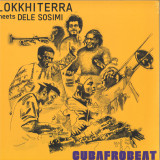
Funkiwala Records presents the third in the series of "Lokkhi Terra meets"albums, with the London fusionistas creating another unique sound-clash, this time with ex-Fela Kuti keyboardist and legendary UK Afro-beat ambassador Dele Sosimi, and members of his critically acclaimed Afro-beat Orchestra.
This particular collaboration has been bubbling away for a few years now, teasing audience expectations with a handful of sold out shows each year in between both bands busy schedules.
Featuring the two pianos of Kishon Khan and Dele Sosimi – Cuban percussionists/vocalists Geraldo De Armas (Yoruba Andabo), Oreste Noda (Ariwo), Javier Camilo (Ibrahim Ferrer) - a horn section led by Justin Thurgur (Bellowhead) featuring Yelfris Valdes (Sierra Maestra) and Graeme Flowers (Kyle Eastwood) to name a few – this is an All-star cast.
Kishon Khan's Lokkhi Terra have over a number of years now been quietly establishing themselves as one of London's more unusual heavyweight outfits, described as "Stunning Headliners… A majestic multi-cultural blend of sounds… effortlessly builds bridges between rolling Indian raga rhythms, Afro-Cuban grooves, Acid Jazz/funk and free flowing improvisation" (Timeout London). Included amongst the band members are London's top Cuban musicians, adding their infectious rich musical history to the city's melting pot.
When the band wanted to explore Cuban links with another of their favourite traditions, Afrobeat, who better to bring in then one of the Afrobeat originators – maestro Dele Sosimi – "Sosimi creates some of the most bewitching grooves in modern African music" E Jazz News.
Bringing together two Yoruba speaking musics - with different accents, from different sides of the Atlantic - Havana meets Lagos in London – A Cuban-Afrobeat-Experience. CUBAFROBEAT.
All About Jazz 4star review
A younger version of London's Grand Union Orchestra, founded by world-jazz pioneer Tony Haynes in 1982, Lokkhi Terra was put together by keyboard player Kishon Khan in 2005. Both ensembles have made a specialism of jazz / South Asian fusion, with Lokkhi Terra also giving as much attention to music from Cuba, where Bangladeshi-born, London-based Khan lived for a while in the early 2000s.
Cubafrobeat, as the title foretells, is a blend of Cuban dance music and Nigerian / Yoruban Afrobeat—a fusion rendered seamless by the synergies existing between Afro-Cuban and Yoruban music, language and mythology. The album is Lokkhi Terra's third and partners the band with the keyboard player and vocalist Dele Sosimi .
A young-going-on-child-prodigy member of Fela Kuti's Egypt 80, Sosimi went on to become musical director of Femi Kuti's Positive Force, before relocating to London and setting up Dele Sosimi's Afrobeat Orchestra, the finest Afrobeat band outside Nigeria, bar none, now with a string of consistently engaging albums under its belt. Cubafrobeat features Sosimi as lead vocalist on all four tracks, and on Fender Rhodes on two of them. His singing plays a prominent role in the Afrobeat Orchestra, but, such is the whirlwind impact of the band in full instrumental flight, that Sosimi is often thought of first and foremost for his keyboard and arranging talents. That may change by the time 2018 is over. Cubafrobeat is the third album in as many months to feature Sosimi as guest vocalist, spotlighting the gravitas, air of mystery, intimacy and ferocity his voice can bring to an occasion.
The first of these albums was the genre-bending spiritual-jazz band Emanative's Earth (Jazzman). One of the stand-out tracks, "Ìyáàmi," features Sosimi making obeisance to the titular Mother Goddesses of the Yoruba spirit worlds. His raw and intense invocations carry the track for nine mesmerising minutes. Otherwordly is not the half of it. Next up was dub / reggae / jazz band Soothsayers' Tradition (Wah Wah 45s), which featured Sosimi as lead vocalist on the compelling "Sleepwalking (Black Man's Cry)." Earth and Tradition are both outstanding albums and have previously been reviewed here.
Cubafrobeat is a total stonking blinder, too. It is an effectively nuanced affair, opening with the fiery "Afro Sambroso" and closing with the relatively reflective "Rumbafro." Sosimi's vocals light up the music, as do the several solos from trumpeters Graeme Flowers and Yelfris Valdes Espinosa and trombonist Justin Thurgur (a member of both Lokkhi Terra and the Afrobeat Orchestra). Sosimi and Kishon Khan's intertwining Fender Rhodes solos on "Cubafro" are also a delight, as is the drum and percussion section throughout.
The sound of summer, for sure, Cubafrobeat has enough depth and variety to make it something for all seasons.
Songlines 4star review
Lokkhi Terra are one of London's most authentic groups. They are a Latin-flavoured collective whose keyboard player and bandleader Kishon Khan segues from percussive montunos to complex Bengali rhythms and back, with jazz chops sparking funky and outward-looking fusions. Their collaboration with Dele Sosimi, Britain's foremost Afrobeat ambassador, has been bubbling for a while; here four tracks at ten minutes see musical conversations that never lose their sense of flow. An extensive line-up of stellar players, including trumpeter Yelfris Valdés, conguero Oreste Noda and trombonist Justin Thurgur, highlights the genre-crossing potential of world traditions. Opener 'Afro Sambroso' showcases batá drums from Gerardo de Armas Sarria before the track links Cuban grooves with Afrobeat. 'Timbafro' crackles and sways via Khan's organ, Sosimi's vocals and Oscar Martinez's timbales. 'Cubafro' features dazzling interplay between Khan, Sosimi and Javier Camillo's Spanish-language vocals. 'Rumbafro' is all rumba choruses, Yoruba vocals and Afrobeat horns. Rooted in their sources, but with musical threads intertwining, separating and reconfiguring – with grooves at a premium – this is a fusion lover's dream
- A1: Honey Dijon & Channel Tres Ft. Sadie Walker - Show Me Some Love (Shake The Earth Remix)
- A2: Honey Dijon Ft. Mike Dunn & Ric Wilson - C's Up (The Southside Remix)
- B1: Honey Dijon Ft. Dope Earth Alien - Its Quiet Now (The Sunlight Remix)
- B2: Honey Dijon Ft. Hadiya George - Not About You (Set You Free Remix)
Critically acclaimed songwriter, fashion mogul and electronic artist Honey Dijon is back with a vinyl package of exclusive remixes from her sophomore album ‘Black Girl Magic’, which saw the trailblazer receive recognition from major international outlets, cementing her as a globally relevant superstar. ‘Slap! EP’ features remixes produced by Honey in collaboration with Classic label boss Luke Solomon; the two previously collaborated on Beyoncé’s chart-topping album ‘Renaissance’, receiving GRAMMY Awards for their musical contributions. Four tracks from ‘Black Girl Magic’ are revisited with a tougher, club-ready approach, adding a hefty weight to the already driving releases; ‘Show Me Some Love’ with Channel Tres featuring Sadie Walker gets a treatment that is sure to Shake The Earth, while Honey’s collaboration with Mike Dunn & Ric Wilson ‘C’s Up’ shows off the sound of The Southside, Chicago, in one pounding re-edit. ‘It’s Quiet Now’, featuring 90s RnB-inspired vocals from Dope Earth Alien, receives a chugging Sunlight Remix while ‘Not About You’ gets a Set You Free Remix, liberating the mind with a relentless four on the floor kick. Made with the club in mind, Honey Dijon and Luke Solomon prove again they are a pairing that can’t be beat.
This new album compiles several songs made in the years following Black To Comm's classic "Alphabet 1968" album. Originally released on the seminal Type label in 2009 (and to be reissued on Cellule 75 this year) "Alphabet 1968" combined the sound of vintage shellac and vinyl loops with broken electronics and field recordings, the press release mentioning disparate influences "ranging from Moondog to Basic Channel by way of Bernard Herrmann". In a beautiful one-page review in The Wire magazine (later reprinted in his book Ghosts Of My Life) Mark Fisher compared Richter's music to JF Sebastian’s miniature automata in Blade Runner ("with their bizarre mixture of the clockwork and the computerised, the antique and the ultramodern, the playful and the sinister"), ETA Hoffmann's inventor-magicians and Auguste Villiers de l'Isle-Adam's 1886 tale of Thomas Edison's (fictitious) construction of an artificial human.
Now titled "Coh Bâle" (inspired by a strange dream) these recordings were supposed to become a follow-up to said album but for reasons unknown it never materialized and the album seemed forever lost. At the time Richter started to dive deeper into several strains of (so-called) world music aka the folk music of Southeast Asia and Eastern Europe as well as liturgical and medieval music, the Kraut-Electronica of Harmonia and several certain Mediterranean experimentalists from the 1980's who started to merge their mostly electronic and field recording based compositions with traditional musics from all over the world by way of new sampling technology.
Many of the songs for the album were recorded while travelling and at various residencies around Europe: a detuned piano in a Thessaloniki basement (Richter played at a children's birthday party there), vintage synthesizers in the GRM studios in Paris, decaying acoustic instruments found in an old Black Forest mansion, childrens' voices at a workshop in Karlsruhe's ZKM Institute; then mixed on headphones in the ICE trains running between these places and his hometown Hamburg.
"Coh Bâle" is taking inspirations from old Nonesuch Explorer and Ocora LP's, Crammed Records, 80s Mediterranean Ambient (Nuno Canavarro, Roberto Musci) combined with the DIY spirit of Deux Filles and Flaming Tunes and the playfulness of Asa Chang & Junray. The songs are both mysterious and transparent, intricate and frugal, vibrant and patient. One of the album's unexpected climaxes is a gorgeous (artificial) berimbau version of the Welsh traditional "Iechyd o Gylch".
No two songs feature the same instrumentation and many acoustic sources (pianos, flutes, wood percussion, viola, tablas, autoharp) were disassembled and later coalesced into new configurations or used as virtual instruments; later combined with samples, field recordings, electronics and (on a few tracks) autotuned vocals reminding of recent works by the likes of Claire Rousay or More Eaze.
We had to wait for a worldwide pandemic for Richter to dig deep into the vaults and finally bring these recordings to light. This is the 2nd release from his archives after the "Diode, Triode" LP which presented Musique Concrète/Acousmatic recordings made at INA/GRM and ZKM. Another massive Double-CD (MM∞XX Vol. 1 & 2) was released last year featuring collaborations with 33 artists such as Andrew Pekler, Richard Youngs, Eric Chenaux, Maja Ratkje, Radwan Ghazi Moumneh of Jerusalem In my Heart, GRM boss François Bonnet (Kassel Jaeger), Felix Kubin, Timo van Luijk (In Camera, Af Ursin), Luke Fowler and many others, showing Richter's versatility and his willingness to reinvent himself for every new release.
Marc Richter is widely known under his Black To Comm moniker, having released (at least) 12 albums under this alias in the last 20 years. He is currently signed to the Thrill Jockey label. Richter composes soundtracks for film and has worked with visual artists such as Mike Kelley and Ho Tzu Nyen. He also records as Jemh Circs and Mouchoir Étanche for his own Cellule 75 label (named in tribute to the late Luc Ferrari).
Bonus 7' - Black Hat Daddy & The Silver Comb Gang by Child Support Instrumental
JEROME BRAILEY funk drummer and former member of George Clinton’s PARLIAMENT FUNKADELIC is most famous for co-writing PARLIAMENT’s 1976 gold hit single “Give Up The Funk (Tear The Roof Of The Sucker)". But thanks to poor management, in 1978 he and several other members mutinied and left the group.
That same year Jerome gathered his own crew, dubbed them MUTINY, and issued two classic funk albums on Columbia Records: “Mutiny On The Mamaship” (1979) and “Funk Plus The One” (1980). A third album entitled “Black Hat Daddy & The Silver Comb Gang” was scheduled for release on Jerome’s own label J.Romeo in 1981 but, due to unforeseen circumstances never saw an official release, although a handful of tracks were included on MUTINY’s 1983 album “A Night Out With The Boys”.
So now, Jerome Brailey & Regrooved Records proudly presents the original mixes and line-up for the true 3rd and unreleased MUTINY album “Black Hat Daddy & The Silver Comb Gang”.
Bonus 7' - Black Hat Daddy & The Silver Comb Gang by Child Support Instrumental
JEROME BRAILEY funk drummer and former member of George Clinton’s PARLIAMENT FUNKADELIC is most famous for co-writing PARLIAMENT’s 1976 gold hit single “Give Up The Funk (Tear The Roof Of The Sucker)". But thanks to poor management, in 1978 he and several other members mutinied and left the group.
That same year Jerome gathered his own crew, dubbed them MUTINY, and issued two classic funk albums on Columbia Records: “Mutiny On The Mamaship” (1979) and “Funk Plus The One” (1980). A third album entitled “Black Hat Daddy & The Silver Comb Gang” was scheduled for release on Jerome’s own label J.Romeo in 1981 but, due to unforeseen circumstances never saw an official release, although a handful of tracks were included on MUTINY’s 1983 album “A Night Out With The Boys”.
So now, Jerome Brailey & Regrooved Records proudly presents the original mixes and line-up for the true 3rd and unreleased MUTINY album “Black Hat Daddy & The Silver Comb Gang”.
JEROME BRAILEY funk drummer and former member of George Clinton’s PARLIAMENT FUNKADELIC is most famous for co-writing PARLIAMENT’s 1976 gold hit single “Give Up The Funk (Tear The Roof Of The Sucker)". But thanks to poor management, in 1978 he and several other members mutinied and left the group.
That same year Jerome gathered his own crew, dubbed them MUTINY, and issued two classic funk albums on Columbia Records: “Mutiny On The Mamaship” (1979) and “Funk Plus The One” (1980). A third album entitled “Black Hat Daddy & The Silver Comb Gang” was scheduled for release on Jerome’s own label J.Romeo in 1981 but, due to unforeseen circumstances never saw an official release, although a handful of tracks were included on MUTINY’s 1983 album “A Night Out With The Boys”.
So now, Jerome Brailey & Regrooved Records proudly presents the original mixes and line-up for the true 3rd and unreleased MUTINY album “Black Hat Daddy & The Silver Comb Gang”.
The Tribe founders’ collaborative debut, remixed from the original mutli-track master tapes under the direction of its creators and lacquered by Bernie Grundman. Phil Ranelin’s side has been pitch-corrected and restored to a suite, as was originally intended. Wendell Harrison’s side contains extended, full versions of two songs. The definitive reissue of this Spiritual Jazz masterpiece. The Tribe label, one of the brightest lights of America’s 1970s jazz underground, receives the Now-Again reissue treatment. This is your chance to indulge in the music and story of one of the most meaningful, local movements of the 20th Century Black American experience, one that expanded outwards towards the cosmos. In the words of the collective themselves, “Music is the healing force of the universe.” Included in an extensive, oversized booklet, Larry Gabriel and Jeff “Chairman” Mao take us through the history of the Tribe, in a compelling story that delves not just into the history of the label and its principals, but into the story of Black American empowerment in the latter half of the 20th Century. The booklet features never-before-seen archival photos and rare ephemera from Tribe’s mid-1970s heyday.