After hosting Farron to perform for a showcase in Matera, South Italy, and following a solid, immediate aural connection with the crew, XCPT now invites the Bavaria-based artist and Shaw Cuts shaolin master to submerse himself in his talent of wielding harmonious synths, championing percussion and corruptive basslines for the label's third release, 'Bistro Baggio'. The release offers three original cuts plus an interpretation of one of the tracks, 'Paneth', by label honcho Nothus, exploring calculated rhythms and sounds that delve into varying atmospheres and transporting you from a blacked-out club to a quaint starlit stream in the woods.
quête:black one
It was chance that brought about the release of One/Three, Dabrye's debut album. Early demos were tucked on the B side of a cassette Tadd Mullinix passed to Sam Valenti in 2000 while working at the Dubplate Pressure record shop in Ann Arbor. Mullinix had spent the late '90s producing jungle, techno, house, hip-hop and more using the All Sound Tracker software as a primary instrument. Each style pulled from a similar sound palette as Mullinix used limitations to define the contours of di-erent musical personalities. Dabrye was his hip-hop wildstyle, a captivating collage of sparse instrumentals inspired by the laid back vibes of midwestern hip-hop and east coast boom bap, the futuristic funk of Umma-era Jay Dee, and the calculated subtlety of Detroit dance music. Released in 2001 as the first in an intended trilogy, One/Three announced Dabrye's arrival with an unavoidable contribution to Detroit hip-hop. Ghostly International is reissuing the album in 2017 for the first time, including a long overdue vinyl edition.
On its release One/Three was the rare album that appealed to both fans of Slum Village's smooth yet rugged hip-hop and enthusiasts of the distinct American IDM released by labels like Schematic. Over the following decade, the inadvertent demo submission turned into a body of work that placed Dabrye alongside innovators such as Prefuse 73 amid the cannon of a new generation of producers. Today, One/Three remains a concise and intriguing study in instrumental hip-hop that helps join the dots between J Dilla and Flying Lotus.
One/Three is a record that says much with little. There are no obvious hip-hop tropes. Instead Mullinix captures the ingenious minimalism of '90s hip-hop instrumentals to build tracks both supple and hard, joyous and melancholy, full of sharply angled rhythms and warm rubbery basslines: 'The Lish' throws a sickly sweet saxophone against digitally fragmented melodies, 'How Many Times (with this)' draws you in with an irresistible, clipped guitar groove, the rhythmic stutter of 'Smoking The Edge' makes your head spin with pleasure. Playing with his inspirations, Mullinix injects omitted downbeats for imagined rhymes and repurposes the intricacy of ragga jungle for breakdowns.
But what really defines One/Three is the rhythmic sensibility and metric modulation of Detroit's school of hip-hop production, which Mullinix was a fervent student of. The beats feel like they're constantly escaping a rigid tempo grid even though they are, in fact, pretty tight. A lot of it is nuance,' Mullinix explains. I've been known to say that I'm not impressed by spectacle. I think that nuance is what really captivates people.'
If you like your beats with a dash of class, do not miss this. An essential purchase of the highest order.' -BBC
- First time all tracks from the original 2001 release appear on vinyl.
- Remastered by Daddy Kev
- Standard weight black vinyl is inserted in to 3.5mm matte finish vinyl jacket.
- Download card includes free download of the Payback EP
A bit of an emotional moment for us - this much needed repress of one of our very favourite slabs of vinyl that have passed through these doors over the years. Exploring the very outer limits of dancehall and techy D&B, both sides writhe and snarl at 90bpm, beating you over the head with pressure cooked kick drums, drop forged snares and, those ugly, ugly mentasms. Upon it's original release, it was a challenging and very rewarding record - one that had DJs scratching their heads, dancers demanding wheelups and, more recently - more than a few emails from people asking if there were any copies left stashed away. Both side's disregard for genres and conventions mean this plate sounds just as fresh now as it did upon it's original release date - arguably it's better stationed for tactical deployment now than it was back in 2013 - The current crop of stripped back dancehall (and halftime D&B that has been undoubtedly informed by it) are in rude health and prime for disruption with this record. That said, regardless of which styles you play - this is one of those wildcard riddims that can be used at peak time to wreak havoc on any dancefloor. Blacklabel, sticker sealed pressure, with a yellow paper insert of the original artwork. One of those records you'll pull off the shelf in years to come, no doubt about it. Edition of 300, with insert and stickered centre labels.
"Real name Takeshi Fukushima, Takecha has been a key figure within Japan's electronic music scene for decades and belongs to the same pioneering crew as Soichi Terada and Shinichiro Yokota. Now in his mid- fifties, 'Deep Soundscapes' is an album encompassing Fukushima's sound with every track written by the producer between 1990 and 2013. Intricate percussion and crystalline chords set the tone in 'Deep Drive' before a funky bassline joins serene synths in 'Midnight Things'. Appearing in Soichi Terada's mix for Resident Advisor (under its promo title 'Deep Loop C'), 'Gradual Atmosphere' is comprised of a galloping beat and saccharine chimes, 'Factory 141' sees Takecha demonstrate a murkier aesthetic, whilst 'Rhodes Detox' is a definitive example of Takecha's flair for expertly balancing elements within his productions. An homage to Shufflepuck Cafe´, an old Mac Plus video game Takecha would play on a black and white 9- inch monitor back in the day, 'Shufflepuck' blends ghostly melodies with clicks, whirrs and pops. 'Calm Imagination' is a poignant affair from start to finish with its hypnotising atmosphere, contrasting to the more up-tempo 'Warm Rondo' with its soulful keys and purring low-end. Tying it all together, 'Genuine Innocence' is a cut that Takecha made two versions of; one with a solo from a pianist and another with more emphasis on the beat, the latter of which appears on this album."
Techno Album of the month March 2018 in Mixmag UK!
Central to the Israeli club scene, Deep'a & Biri have long been defying expectations even within a community they helped construct. Serving as resident DJs, activists and bookers for Tel Aviv's legendary Barzilay Club, the pair helped build a transcendent club scene. Hugely influential artists such as Robert Hood, Derrick May, Rødhad, Ben Klock and Moritz Von Oswald passed through the club, enjoying legendary crowds and what they could surely sense was a genuine air of anarchy, rebellion and unadulterated rave pleasure.
As the duo held down dozens of parties with dozens of DJs, there was no 'eureka' moment for their emerging sound; just a steady stream of brilliant, inspiring electronic music, much of which left an indelible imprint on the pair. Now based in Berlin, for Deep'a & Biri, things are much the same, even if the landscape and the city is different. Always rooted in the fertile ground between machines and emotion, on their second full-length LP, 'Dominance', the duo demonstrate their unique grasp of the sensitive, unfolding relationship between man and machine. Steadfast in their insistence never to remain in one lane in terms of their sound, 'Dominance' flawlessly segues between forcefulness and weightlessness. From beginning to end, this is not a record afraid to show its teeth with an uncompromising, instantly recognisable techno palette that kicks the foundations of any sound system with menace, anger and determination, particularly on tracks such as the dense 'Voltage' and pulsing throughout the more industrial flourishes of 'Ecole De Nancy' and 'Seeking Solace'.
Beyond these grittier, although never mindless, moments of authority, a sense of escapism and curiosity imbues the album. 'Alpha Cephei' offers the first hint of Deep'a & Biri's more wistful concepts, producing a smoke trail of twinkling electronics out of a smudged but distinctive bassline. That understated sense of emotional catharsis carries throughout, to be found between the complex-yet-familiar bells that drive 'Flow Diverter's' rhythm to a Detroit-indebted landscape that will surely instantly elasticate any keen dancers, while 'False Memories' offers big-room techno fulfillment with none of the character or sincerity removed for cheap thrills. Saving the most remarkable moments for last, the pair sign off 'Dominance' with the poignant and purifying 'Astral Trails', fusing an ethereal, ambient landscape with the more pronounced rhythms of their hardware.
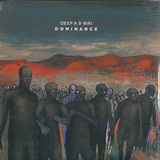
The album's distinctive artwork comes from the studio of Jewish orthodox artist Avraham Guy Barchil, who forged a powerful connection with Deep'a, both was immediately drawn to 'weird atmosphere, amazing technique and emotions involved with his work'. Perhaps one of the most interesting painters from Israel, Avraham is known for his unique perspective, taking his inspiration from the Zohar - the foundational work in the literature of Jewish mystical thought known as Kabbalah. The ambiguous figures represent mystical aspects of the Torah (the five books of Moses), as well as material on mysticism and mythical cosmogony.
Ensuring their natural, conscious touch always remains at the forefront of this unapologetically machine-driven music, Deep'a & Biri have produced an album in the lineage of their heroes and greatest influences. Cerebral yet satisfying, deep yet always engaging, 'Dominance' both reasserts and evolves Deep'a & Biri's forward facing and singular sound.
Mr Bongo brings another Brazilian rarity to the masses with this sublime reissue of Tim Maia's Disco Club. Recorded in 1978, it's a latter-period gem from the larger than life legend, combining the glitz and glamour of disco's heyday with Maia's raw funk and soul roots.
When Maia first heard Little Richard as a teenager, he knew what kind of singer and artist he wanted to be. Five formative years spent in the US, where he ran wild in NYC and joined a
doo-wop group called the Ideals, did little to dampen his enthusiasm for black music.
Stirred by the civil rights movement in the US and driven by a punk spirit, Maia went on to blaze his own trail through the early 70s over the course of four successful albums for Polydor. Moving away from the straight MPB, Tropicalia and international rock dominating the airwaves, his sound represented a new black Brazilian consciousness. When he sang, he could be raspy and defiant one moment ... and then romantic and reflective the next. But always on a groove and with a hook. It was an irresistible combination.
Yet by 1977 he was bankrupt and in limbo having first joined a religious cult called Superior National and then alienated listeners with his first album sung entirely in English. To complicate matters further, Brazil was feeling the Saturday Night Fever. Gloria Gaynor, Chic and Kool & the Gang were dominating the charts and filling hotspots such as New York City Discotheque in Ipanema and Frenetic Dancing Days in the Gávea Mall.
Maia left his usual band and went into the legendary Estudios Level with a mighty ensemble of Rio's finest including Paulinha Braga on drums, Jamil Joanes on bass, Robson Jorge on clarinet, Hyldon De Souza on guitar, Sidinho on percussion, trombonists Edmundo Maciel and Darcy Seixas, and Juarez Assis on tenor sax.
Arranger and keyboardist Lincoln Olivetti was a crucial presence during these sessions. He added that all-important string flourish and brassy joy to the uptempo tracks while giving the
star enough room to express himself. The album kicks off with a trio of floor fillers: the exuberant party starter 'A Fim De Voltar', a sing-a-long anthem in 'Acenda O Farol' and the undeniably funky hit 'Sossego' (file that one next to Fatback).
But then Maia drops it down and gets existential on 'All I Want', questioning the meaning of happiness. He also shows his tender side on slow burners such as 'Murmúrio' (written by the great Cassiano) and 'Pais E Filhos', the latter featuring a supersoft bed of harmonies you can't help but lay down on. But the party ain't over and mid-tempo groover 'Juras' gets the feet moving again before 'Jhony' sends us swaying off into the night.
Maia's appetite for excess would eventually get the better of him. But Disco Club is the sound of an unpredictable genius on top form. Get ready for the time of your life.
Akelarre' is the fourth studio album of Synths Versus Me. Its black (sadness) and white (happiness) design explain the concept and feelings behind it creation, majorly composed and written during the death by sickness of a very close friend of the duo to whom the album is dedicated, it swims between the positive and negative feelings felt by SVM during this hard process suffered. Is remarkable that in this occasion SVM counted with the collaboration of the british band The Underground Youth for a new remixed version of 'The Rules Of Attraction' originally released by TUY back in 2009. This special edition arrives on 2×12 EP format and produced in a ONE-OFF truly limited edition of 200 copies lacquered pressed on 180 gr. high quality black and white vinyl. All tracks have been specially mastered remastered for LONG CUT vinyl by Eric Van Wonterghem
SHE'S GONE' is the very awaited debut of London trio S.A.D. As bandcamp inmediately noticed and announced as one of the top 5 'new and notable' worldwide release of the week, their music is 'dark post-punk with irresistible melodies, big synths washes, and punchy rhythms, designed for the modern goth club dancefloor'. It arrives on 12 Maxi-Single EP format and produced in a ONE-OFF truly limited edition of 300 copies lacquered pressed on 180 gr. high quality solid black vinyl. All tracks have been specially remastered for LONG CUT vinyl by Eric Van Wonterghemand remastered for LONG CUT vinyl by Eric Van Wonterghem
'III' is the third studio album of the Spanish act WE ARE NOT BROTHERS, their style is an amazing mix and match between post-punk (more punk than post) and industrial experimental techno making of them one of the most interesting and suprising proposals in the spaniard electronic scene, prove of that is the high interest of spanish main press on their 'surely not for all but completely new and different' work. 'III' will be presented on 12 EP format and produced in a ONE-OFF truly limited edition of 300 copies lacquered pressed on 180 gr. high quality solid black vinyl. Printed with deluxe silver metalic ink. Includes printed innersleeve. All tracks have been specially mastered.
The fourth installment in John Osborn's DRED RECORDS series will be from fellow UK producer Harsh Puri who goes under the moniker Reformed Society. DRED 004 consists of six tracks in total - three that will appear on the vinyl release, followed by another three that will be digital-only exclusives. Harsh Puri aka Reformed Society debuted in 2015 with this being his sixth consecutive release in order. Harsh's productions caught John's eye, or rather ear, after being sent to him last year and resulted in this release of six solid prime time deep house stompers. Packaged in an understated matte white sleeve with a black and white picture of Brahma (the four headed Hindu god of creation) handstamped on each cover by the label owner himself, this being a continuation of the human skull DRED logo. 'ONE LIFE' opens the 'DIMENSIONS' EP and is the track given to label boss John Osborn for deconstructing and remoulding into his own specific vision - each release will contain a rework from Osborn. If you are familiar with John's previous work you will immediately recognize his characteristic resonating percussion, the tune being a deep house sci-fi storm expedition driven by a full luscious kick covering the tracks of chords from unsettled pads. The EP's title track has ambient sonic rays flowing through it, being aptly named 'DIMENSIONS' - it is also the record's warmest adventure; distorted percussion juggles sparse subaqueous melodic moments, and from here we go into the 12s final moment, 'CHASING TITANOID". Reformed Society goes in with full yet silent force on this one. A warped bassline co-creates the groove with a particularly bouncy beat with sharp strings piercing though.
Part of the current crop of artists spearheading the UK acid revival, Posthuman's output has evolved over the years, encompassing many genres & styles from their early electronica releases, to their later acid & slow-mo techno.
Their debut release in 2000 was a series of hand made CDs simply called "Posthuman" (though better known by the colour of the card inserts - grey, black, blue and brown). The duo then went on to host a number of parties in an abandoned underground train station in London between 2001 and 2004, and founded their own label Seed Records (2) with which they released 3 albums and several other releases of their own and other artists material. They also were the first act on Manchester based imprint Skam's SMAK sublabel.
Doherty left Seed Records to help relaunch UK techno imprint B12 Records in 2006, and started a new label Balkan Vinyl in 2010.
In 2007, Doherty founded London-based acid house retrospective clubnight "I Love Acid", where Posthuman are monthly resident DJs. In 2014 the clubnight launched a vinyl-only label of the same name. He also performs as AGT Rave Cru and as one half of Altern 8 live shows since 2015.
Capra Black remains one of the seminal recordings of jazz's black consciousness movement. A profoundly spiritual effort that channels both the intellectual complexity of the avant-garde as well as the emotional potency of gospel, its focus and assurance belie Billy Harper's inexperience as a leader. Backed by an all-star supporting unit including trombonist Julian Priester and drummer Billy Cobham, Harper's tenor summons the brute force and mystical resolve of John Coltrane but transcends its influences to communicate thoughts and feelings both idiosyncratic and universal. This is music of remarkable corporeal substance that somehow expresses the pure language of the soul.
Mogwai return with their 9th studio album which was recorded with renowned producer Dave Fridmann (Mercury Rev, The Flaming Lip's, Mogwai's Come On Die Young and ROCK ACTION) at his Tarbox Road Studios in New York State.
Every Country's Sun named after a friends lack of knowledge in how the universe works, takes two decades of Mogwai's signature, contrasting sounds and distills it, beautifully, into 56 concise minutes of gracious elegance, hymnal trance-rock, and transcendental euphoria. It will definitely appeal to fans of the band and will gain many new ones along the way.
Boxset includes: White vinyl double LP, 12" black vinyl (containing 6 tracks of album demos), CD, plus a set of Tarbox Road photographic prints - Includes download card redeemable from the label.
For the second release on their Black Series, Ravage invited electronic music veterans Al Matthews and Patrick Walker to team up under their Forward Strategy Group moniker. The last release of these legends was quite a few years ago, but the wait was worth it. Their East Port Rangers EP kicks-off with Nine and One, a hypnotic, heavy-loaded stomper containing some uplifting, loopy vocals. Following is the most minimalistic track of the EP, Lisp Your Way, yet it still has a lot of substantial punch and lash to it.
The B-side starts off with heavy broken beats, combined with a classic rave sound, taking the listener back to the blistering sound of the nineties. Finally, the EP oozes down with the track In Abeyance; a haunting, down-tempo track with a melody to send shivers down your spine, which could be deemed a real creeper.
- 180 GRAM AUDIOPHILE VINYL
- GATEFOLD SLEEVE
- INCLUDES 4 PAGE BOOKLET
- FIRST TIME ON VINYL
- 5TH ANNIVERSARY EDITION
- FEATURING THE HIT-SINGLES HERE'S TO NEVER GROWING UP', ROCK N ROLL' AND LET ME GO'
- LIMITED EDITION OF 3.000 INDIVIDUALLY NUMBERED
COPIES ON SILVER & BLACK MIXED VINYL
Avril Lavigne is the fifth studio album by Avril Lavigne. It was released in 2013.
Lavigne collaborated with numerous producers including Martin Johnson, Peter Svensson, David Hodges, Matt Squire and her then-partner Chad Kroeger. The album features a more pop and upbeat sound combined with power and piano ballads. Avril Lavigne also incorporates electronic music, industrial and punk rock. The album features two vocal collaborations: Kroeger and American industrial metal singer Marilyn Manson.
The album debuted in the Top 5 in album-charts of the US, Canada, Japan, China and many other countries.
Five singles were released from the album. Its lead single Here's To Never Growing Up' peaked at number one on the in Taiwan and The Philippines. Other singles, including the duet with Chad Kroeger Let Me Go', Rock n Roll', Hello Kitty' and Give You What You Like' became succesful international hits.
Avril Lavigne received two award nominations, The Juno Award for best Pop Album and World Music Award for World's Best Album.
2018 marks the 5th Anniversary of Avril Lavigne. The album is now available on vinyl for the first time. This first, limited edition run is pressed on 180 gram silver and black mixed vinyl. Only 3.000 copies are available.
After a more than well-received first release, Black Carpet returns with 4 fresh industrial tinged techno behemoths.
The Amsterdam centred producer Shrouds has been given the honours to do so, with Zhark veteran HUREN on remix duty.
A1: Starts of firing on all cylinders and does not stop doing so. Stomping four-to- the-floor on some serious up-tempo business. Ghostly sounds dominate the breaks, only for a short-lived period, continuing relentlessly with stomping kicks to warrant you a safe but not so sound journey home.
A2: An off-beat Industrial monster, for the dankest of warehouses. Eerie voices and squelching synths at a bonafide break-neck tempo.
B1: Heavily robotized techno with an Industrial swank for those sweaty 5-AM sessions, dancefloor destruction clearly is at mind here. After the second break, vocals intensify and so does all the other mayhem. An absolute monster on the loose.
B2: HUREN showing the more "subtle" aquatic one of the pack. A slow heavy burner, with the dreadest of bass. Something like an old-skool half-step lurcher meeting with a German industrialist over some coffee.
Khan presents: Jammin Unit - Remote Car Babe
Jammin' Unit is not only my brother but one of the most prolific producer of electronic music since the early days of techno. He is one half of legendary electronic super group Air Liquide and made his way into history books with tracks like 'If The Was No Gravity' and 'Revelation' lately featured on Nina Kraviz - Fabric 91 mix.
'Remore Car Babe' was originally released on clear 10' via Temple Records NYC in 1997 and is now remastered by the man himself for our 2018 ears. Re-issued on 12' black vinyl for more gain and better audio quality.
In his own words he describes the 4 track e.p. as: 'The sound was created for headphone listening during remote car racing. Enhancing the feel of speed and aggressiveness was the goal'.
To me it feels like a manga comic strip eched on vinyl. No headphone necessary to go on this speed racing trip of extacy and pounding bliss.
A re-issue I am especially proud of to hear on dance-floors around the globe.
'Don't eat before going to sleep but Do eat before going out!'
Yours sincerely,
Khan (Of Finland)
Southend quartet Ghost Music release their evocative debut album I Was Hoping You'd Pass By Here via Arlen on 19 January. They create careful, considered songs, weaving lo-fi lullabies with gliding guitars and understated arrangements. Influenced by Silver Jews, Flying Nun and K Records, they explore themes of nature, love, loss and a melancholic English romanticism embellished with beautifully spectral melodies and executed with startling subtlety.
Despite this record being their debut, the band has produced a veritable wealth of music over the past 20 years in various guises. Ghost Music revolves around the songwriting partnership of Matt Randall and Lee Hall, who had played together in the 90s with John Peel favourites Beatglider. More recently Randall has received critical acclaim as Plantman, with his three albums Closer to the Snow, Whispering Trees and To The Lighthouse receiving praise from The Guardian, Uncut and Mojo. When Randall and Hall reunited to collaborate on another album together, they brought in the talents of Roy Thirlwall on bass (Melodie Group) and Leighton Jennings on drums (Dark Globes) to complete the band.
The original idea would be that the songs would be 'ghosts' and create 'ghost music' to resurrect and dust off old songs that they had already started. Lee had found the beginnings of 'Home Dog' on a dusty old 4-track and he had recorded 'Strange Love' on his iPhone in 2014, whilst Matt had written 'My Cloud' as far back as 1997 (the night he moved out of his parents' house). As the album began to take shape, the ghostly premise took a back seat, as they began to breathe new life into the songs they found the impetus to write new ones.
Randall explains the songwriting process; 'When we were in Beatglider together and in the past we'd made a 'thing' out of writing long songs with a lot of changes. This time we pared it back a bit and stuck to the melodies more. We really wanted to make a proper guitar record. Lee's my favourite guitarist and it was lovely to see him stretch out on these songs with his diamond fingers.'
Not afraid to wear their influences on their sleeves, Ghost Music's sound is instantly familiar, echoing beloved bands from the 90s such as Pavement ('Home Dog' has a definite 'Range Life' feel), Galaxie 500 ('Blindspot'), Yo La Tengo ('Heart Shaped Holiday' is influenced by the languid YLT songs that peak after a short intro) and even old-school rock'n'roll ('Strange Love' was born out of an appreciation for the instantly engaging opening riff in 50s songs). Yet Ghost Music's work never feels derivative, being instead effortlessly emotive, melancholic and affecting, creating a world of sound that is hugely reassuring and a tonic for the modern age.
Belgian musician Dijf Sanders pens and produces soundtracks for distant, far-flung places that brood with exotica, psychedelia, jazz and electronica. His new album 'JAVA', is a psychedelic and modern search for the sounds of the homonymous Indonesian island. Armed with a set of field recorders, Dijf traveled to every urban and rural corner of Indonesia in the spring of this year. As a contemporary incarnation of ethnomusicologist Alan Lomax, he collected an impressive repertory of recordings, commissioned by the Europalia Arts Festival and KAAP Creative Compass. 'Kacapi', 'Kendang', 'Angklung', 'Calung' or 'Gamelan' are not the names of indigenous tropical diseases by the way, but those of local instruments that Dijf encountered on his adventurous musical quest. For two weeks the American expert ethnographer Palmer Keen stood by Dijf through his total immersion into the island's colourful culture and rich, ceremonial traditions. On his return to Belgium, Dijf headed straight back into the studio with the gathered material and invited some of his musical soulmates to put the icing on the cake. It is no coincidence that the three guests - Nathan Daems, Filip Vandebril and Simon Segers - are all part of Black Flower, a band that famously flirts with Oriental sounds. From hours and hours of field recordings, Dijf distilled ten psychedelic pieces which ride on waves of ecstasy and trance, and bridge the gap between two worlds. Tribal rhythms and warm melodies are fused to a seamless and beautiful musical work in utopia. The Brugge-born, Gentbrugge-based musician is one of those great Flemish talents. In the past, he earned his stripes with Teddiedrum and The Violent Husbands and has produced bands like Kenji Minogue and Blackie & The Oohoos. He has also released music under his own name including the critically acclaimed album 'Moonlit Planetarium'. Welcome to Dijf Sanders' wonderful journey into future exotica.
These rare recordings were recorded as part of the legendary prescription label
album series in the late 1990's that resulted in the album "Astral Disaster".
Coil were invited to record at sun dial's studios beneath the London Bridge Hop Exchange. This studio was originally know as Samurai studios that was originally built and owned by Iron Maiden. The premises in Victorian times was an old debtors prison which had three levels underground, and still had the original chains, manacles and wrought iron doors from the old prison. This caught the attention of John Balance and was very keen to record there.
At Gary Ramon's invitation, Coil spent a number of days recording at the studio during Halloween 1998 and they developed a number of tracks some of which resulted in the "Astral Disaster" album.
For various reasons, some of the unissued material and mixes released on this album were omitted from the original Astral Disaster album, and so now is the opportunity to listen to the "Astral Disaster" sessions.
The album includes previously unissued mixes, and the rare version of "I Don't Want To Be The One" that was only included on the very rare 1999 promo CD only Prescription sampler and the 14 minute track "Cosmic disaster" that was the original working title of the album.
Taken from the master tapes and remastered by Denis Blackham.