Buscar:black point

Estilos
Todo
Cassandra Miller - Traveller Song / Thanksong

Black Truffle is pleased to announce its first release from celebrated London-based Canadian composer Cassandra Miller. Though her body of mature work stretches back almost twenty years, many listeners were introduced to Miller through the success of her astonishing 2015 Duet for Cello and Orchestra, which sets an imperturbable two-note cello part against a series of increasingly dense orchestrations of an Italian folk melody; in 2019, it was selected by The Guardian as one of the ‘best classical music works of the 21st century’. Traveller Song / Thanksong, the first release of her music on vinyl, presents a pair of compositions for voice and ensemble that exemplify Miller’s gently absurd, strikingly beautiful, and utterly unique work.

Like many of Miller’s compositions, these pieces originate in existing music. Traveller Song (2016/2018) begins from a 1950s song of an anonymous Sicilian cart driver recorded by Alan Lomax and Diego Carpitella, which Miller recorded herself singing along to, going on to then record herself singing to her own layered voices. Miller’s untutored voice is an unsteady, wavering wail that has, in her words, ‘more in common with a quasi-shamanistic keening than anything Sicilian’. Heard sometimes alone, sometimes layered, her pre-recorded voice is accompanied by a chamber sextet drawn from London’s Plus-Minus Ensemble. In the first section, Miller’s exposed warble is set to a spare piano accompaniment, somehow both faintly preposterous and magisterial. Following the voice note for note, the piano part often makes use of almost mechanical sequences of parallel chords, reminiscent both of Satie’s Rosicrucian period and the abrupt harmonic movements of a chord organ. The orchestration then opens up to guitar, clarinet, and sliding strings, a delicate environment for Miller’s voice, which, especially when it begins to be layered, generates a powerful sense of intimacy. In its concluding minutes, the folk roots of the original melody return in the form of a glorious full ensemble setting dominated by accordion, clarinet, and strummed guitar. Thanksong begins from recordings of Miller singing along to the third movement of Beethoven’s late quartet in A minor (Op. 132), the ‘holy song of thanks’ the composer wrote to express his gratitude for (temporarily) recovering from illness. Recording herself singing along repeatedly to each of the individual parts of the quartet, Miller created an aural score where each member of the string quartet listens to their own part on headphones, playing by ear. Performed on this recording by Montreal's Quatuor Bozzini, with whom Miller has a decades-long relationship, they are joined by the British soprano Juliet Fraser, who sings material from the Beethoven quartet ‘as slowly and quietly as possible’. The atmosphere of the opening of Beethoven’s Dankgesang, of hushed reawakening and thoughtful reflection, is sustained throughout the fourteen minutes of Miller’s piece, building at points almost to sentimentality before the five individual parts again fall back into a gentle burble of unsynchronised melodic gestures. Like Traveller Song, here the use of the voice is a long way from the mannered performance of much contemporary music, reaching for a human and bodily presence more connected to the reality of the everyday, albeit suffused with wonder. Presented in a stylish sleeve adorned with photography by Lasse Marhaug and liner notes by Cassandra Miller, this is a key release from a major contemporary composer whose work challenges and dazzles in equal measure. .

No en stock

Haga su pedido ahora y le encargaremos el artículo en nuestro proveedor.

20,97

Ültimo hace: 2 Años
WOODS - PERENNIAL LP

Woods

PERENNIAL LP

12inchWOODSIST107LP
Woodsist
15.09.2023

Woods are in bloom again, inviting you to disappear into a new spectrum of colors and sounds and dreams on Perennial. Formed in Brooklyn in 2004, Woods have matured into a true independent institution, above and below the root, reliably emerging every few years with new music that grows towards the latest sky. Operating the Woodsist label since 2006 and curating the beloved homespun Woodsist Festival for the musical universe they’ve built, Perennial is the sound of a band on the edge of their 20th anniversary and still finding bold new ways to sound like (and challenge) themselves. Perennial grew from a bed of guitar/keyboard/drum loops by Woods head-in-chief Jeremy Earl, a form of winter night meditation that evolved into an unexplored mode of collaborative songwriting. With Earl’s starting points, he and bandmates Jarvis Taveniere and John Andrews convened, first at Earl’s house in New York, then at Panoramic House studio in Stinson Beach, California, site of sessions for 2020’s Strange To Explain. With a view of the sparkling Pacific and tape rolling, they began to build, jamming over the loops, switching instruments, and developing a few dozen building blocks. The album’s resulting 11 songs, 4 of them instrumental, are in the classic Woods mode--shimmering, familiar, fractionally unsettling--but with the half-invisible infinity boxes of Earl’s loops burbling beneath each like a mysterious underground source. From source to seed to bloom, each loop unfolds into something unpredictable, from the jeweled pop of the aching “Little Black Flowers” to the ecstatic starlit freak-beat of “Another Side.” They are blossomings both far-out and comforting, like the Mellotronic cloud-hopping of “Between the Past,” or sometimes just plain comforting, like the widescreen snowglobe fantasia of the instrumental “White Winter Melody,” touched by Connor Gallaher’s pedal steel. Woods have long used the studio as a place of songwriting, naming 2007’s At Rear House after their shared dwelling and recording space. But Perennial also carries with it an even longer view of Woods. Emerging from the process alongside the music was Earl’s reflection that “perennial plants and flowers are nature’s loops,” an idea rolling under the album’s lyrics like the loops themselves. It certainly applies to the band, too, who have quietly tended to a long, committed project of being a band in the weird-ass 21st century, both individually and communally. Though separated by coasts, the communal sprit carries through Earl, Taveniere, and Andrews’ collaboration, a living embodiment of the freedoms rediscovered every time a new collectively created piece of music emerges. For nearly two decades, Woods have survived subgenres, anchored in the fertile soil below hashtags like lo-fi and freak-folk and psychedelic and indie, and built a shared history that’s something to marvel at. As the flagship band for Woodsist, they’ve accumulated a striking extended family of collaborators (and Woods alum) that have made the label one of the most dependable imprints in the kaleidoscopic low-key underground. It’s a glow that’s transferred whole to the blissed-out Woodsist Fests held in Accord, New York in recent years, which have folded in a wide range of diverse sounds, from the the jazz cosmoverse of the Sun Ra Arkestra and adventurous legends Yo La Tengo, to a hard-to-even-count family tree of contemporaries, like Kevin Morby (who served a few tours of duty as Woods bassist) and Kurt Vile (who released his 2009 debut on Woodsist), a living community in sound. Perennial carries all of this, shaped by decades, but made in the moment, and here right now. The smell of the flowers doesn’t remain, but sometimes the flowers do. Jesse Jarnow Recorded and mixed by Jarvis Taveniere at Panoramic House in Stinson Beach, CA with additional recording at The Ship in Los Angeles, CA and Cottekill Bird Sanctuary in Stone Ridge, NY. Produced by Jarvis Taveniere and Jeremy Earl. Mastered by Timothy Stollenwerk at Stereophonic Mastering in Portland, OR. Jeremy Earl - vocals, guitars, drums, percussion, sk-5, mellotron, vibraphone, autoharp, loops Jarvis Taveniere - guitar, bass, upright bass, hammond, vocals John Andrews - piano, organs, mellotron, drums, vocals Connor Gallaher - Pedal Steel Kyle Forester - sax, wurlitzer

Reservar15.09.2023

debe ser publicado en 15.09.2023

25,63
WOODS - PERENNIAL LP

Woods

PERENNIAL LP

12inchWOODSIST107LPX
Woodsist
15.09.2023

Woods are in bloom again, inviting you to disappear into a new spectrum of colors and sounds and dreams on Perennial. Formed in Brooklyn in 2004, Woods have matured into a true independent institution, above and below the root, reliably emerging every few years with new music that grows towards the latest sky. Operating the Woodsist label since 2006 and curating the beloved homespun Woodsist Festival for the musical universe they’ve built, Perennial is the sound of a band on the edge of their 20th anniversary and still finding bold new ways to sound like (and challenge) themselves. Perennial grew from a bed of guitar/keyboard/drum loops by Woods head-in-chief Jeremy Earl, a form of winter night meditation that evolved into an unexplored mode of collaborative songwriting. With Earl’s starting points, he and bandmates Jarvis Taveniere and John Andrews convened, first at Earl’s house in New York, then at Panoramic House studio in Stinson Beach, California, site of sessions for 2020’s Strange To Explain. With a view of the sparkling Pacific and tape rolling, they began to build, jamming over the loops, switching instruments, and developing a few dozen building blocks. The album’s resulting 11 songs, 4 of them instrumental, are in the classic Woods mode--shimmering, familiar, fractionally unsettling--but with the half-invisible infinity boxes of Earl’s loops burbling beneath each like a mysterious underground source. From source to seed to bloom, each loop unfolds into something unpredictable, from the jeweled pop of the aching “Little Black Flowers” to the ecstatic starlit freak-beat of “Another Side.” They are blossomings both far-out and comforting, like the Mellotronic cloud-hopping of “Between the Past,” or sometimes just plain comforting, like the widescreen snowglobe fantasia of the instrumental “White Winter Melody,” touched by Connor Gallaher’s pedal steel. Woods have long used the studio as a place of songwriting, naming 2007’s At Rear House after their shared dwelling and recording space. But Perennial also carries with it an even longer view of Woods. Emerging from the process alongside the music was Earl’s reflection that “perennial plants and flowers are nature’s loops,” an idea rolling under the album’s lyrics like the loops themselves. It certainly applies to the band, too, who have quietly tended to a long, committed project of being a band in the weird-ass 21st century, both individually and communally. Though separated by coasts, the communal sprit carries through Earl, Taveniere, and Andrews’ collaboration, a living embodiment of the freedoms rediscovered every time a new collectively created piece of music emerges. For nearly two decades, Woods have survived subgenres, anchored in the fertile soil below hashtags like lo-fi and freak-folk and psychedelic and indie, and built a shared history that’s something to marvel at. As the flagship band for Woodsist, they’ve accumulated a striking extended family of collaborators (and Woods alum) that have made the label one of the most dependable imprints in the kaleidoscopic low-key underground. It’s a glow that’s transferred whole to the blissed-out Woodsist Fests held in Accord, New York in recent years, which have folded in a wide range of diverse sounds, from the the jazz cosmoverse of the Sun Ra Arkestra and adventurous legends Yo La Tengo, to a hard-to-even-count family tree of contemporaries, like Kevin Morby (who served a few tours of duty as Woods bassist) and Kurt Vile (who released his 2009 debut on Woodsist), a living community in sound. Perennial carries all of this, shaped by decades, but made in the moment, and here right now. The smell of the flowers doesn’t remain, but sometimes the flowers do. Jesse Jarnow Recorded and mixed by Jarvis Taveniere at Panoramic House in Stinson Beach, CA with additional recording at The Ship in Los Angeles, CA and Cottekill Bird Sanctuary in Stone Ridge, NY. Produced by Jarvis Taveniere and Jeremy Earl. Mastered by Timothy Stollenwerk at Stereophonic Mastering in Portland, OR. Jeremy Earl - vocals, guitars, drums, percussion, sk-5, mellotron, vibraphone, autoharp, loops Jarvis Taveniere - guitar, bass, upright bass, hammond, vocals John Andrews - piano, organs, mellotron, drums, vocals Connor Gallaher - Pedal Steel Kyle Forester - sax, wurlitzer

Reservar15.09.2023

debe ser publicado en 15.09.2023

27,10
THE BRIAN JONESTOWN MASSACRE - THANK GOD FOR MENTAL ILLNESS

ENG 180 grm classic black vinyl, 2023 repress. At the risk of further labouring a rather obvious point, with Thank God for Mental Illness, their third collection of absolutely stunning music in 1996, the Brian Jonestown Massacre parallels the prolific and effortless brilliance of the Rolling Stones at their fevered late-1960s peak; the sheer scope of their achievements is stunning - rarely are bands quite so productive, or quite so consistently amazing. Thank God is the BJM's down-and-dirty country-blues outing, all 12-odd tracks supposedly recorded on a single July day at a cost of just $17.36 The Brian Jonestown Massacre is a psychedelic rock band originally from San Francisco, California, led by guitarist/singer Anton Newcombe. Since 1995 The Brian Jonestown Massacre has released numerous albums, first for Bomp! Records, the label which gave them their start, and later for TVT and Tee Pee. BJM has been essential in the development of the modern U.S. garage scene, and many LA and SF musicians got their start playing with Newcombe, including Peter Hayes of The Black Rebel Motorcycle Club. Originally Newcombe was heavily influenced by The Rolling Stones' psychedelic phase - the name comes from Stones guitarist Brian Jones combined with a reference to cult leader Jim Jones, but his work in the 2000s has expanded into aesthetic dimensions approximating the UK Shoegazing genre of the 1990s and incorporating influences from world music, especially Middle Eastern and Brazilian music.

Reservar08.09.2023

debe ser publicado en 08.09.2023

28,99
A.R. Kane - A.R. Kive LP 4x12"

A.r. Kane

A.R. Kive LP 4x12"

4x12inchRGIRL133
ROCKET GIRL
08.09.2023

A.R. Kive collates the three most astonishing works from that most miraculous of duos - A.R. Kane - comprising the ‘Up Home’ EP from 1988 that signified the band’s dawning realisation of their own powers and possibilities, their legendary debut LP ‘sixty nine’ (1988) and its kaleidoscopic, prophetic double-LP follow up ‘i’ (1989).

In founder-member Rudy Tambala’s new remastering, the music on these pivotal transmissions from the birth of dream pop, have been reinvigorated and re-infused with a new power, a new depth and intimacy, a new height and immensity. Vivid, timeless and yet always timely whenever they’re recalled, these records still force any listener to realise that despite the habits of retrospective myth-making and the
safe neutering effects of ‘genre’, thirty years have in no way dimmed how resistant and dissident to critical habits of categorisation A.R. Kane always were. Never quite ‘avant-pop’ or ‘shoegaze’ or ‘post-rock’ or any of those sobriquets designed to file and categorise, A.R. Kive is a reminder that those genres had to be coined, had to be invented precisely to contain the astonishing sound of A.R. Kane, because
previous formulations couldn’t come close to their sui generis sound and suggestiveness. This is music that pointed towards futures which a whole generation of artists and sonic explorers would map out. Now beautifully repackaged, remastered and fleshed out with extensive sleeve notes and accompanying materials, ‘A.R. Kive’ reveals that 35 years on it’s still a struggle to defuse the revolutionary and inspirational possibility of A.R. Kane’s music.

A.R. Kane were formed in 1986 by Rudy Tambala and Alex Ayuli, two second-generation immigrants who grew up together in Stratford, East London. From the off the pair were outsiders in the culturally mixed (cockney/Irish/West Indian/Asian) milieu of the East End, with Alex and Rudy’s folks first generation immigrants from Nigeria and Malawi, respectively. The two of them quickly developed and fostered an innate and near-telepathic mutual understanding forged in musical, literary and artistic exploration. Like a lot of second-generation immigrants, they were ferocious autodidacts in all kinds of areas, especially around music and literature. Diving deep into the music of afro-futurist luminaries such as Sun Ra, Miles Davis, Lee Perry and
Hendrix, as well as devouring the explorations of lysergic noise and feedback from contemporaries like Sonic Youth and Butthole Surfers, they also thoroughly immersed themselves in the alternate literary realities of sci-fi and ancient history (the fascination with the arcane that gave the band their name), all to feed their voracious cultural thirsts and intellectual curiosity.

It was seeing the Cocteau Twins performing on Channel 4 show the Tube that spurred A.R. Kane into being - “They had no drummer. They used tapes and technology and Liz Fraser looked completely otherworldly with those big eyes. And the noise coming out of Robin’s guitar! That was the ‘Fuck! We could do that! We could express ourselves like that!’ moment”, recalls Tambala - and through a mix of
confidence, chutzpah, ad hoc almost-mythical live shows and sheer innocent will the duo debuted with the astonishing ‘When You’re Sad’ single for One Little Indian in 1986. Immediately dubbed a ‘black Jesus & Mary Chain’ by a press unsure of WHERE to put a black band clearly immersed in feedback and noise, what was immediately apparent for listeners was just how much more was going on here - a
tapping of dub’s stealth and guile, a resonant umbilicus back to fusion and jazz, the music less a conjuration of past highs than a re-summoning of lost spirits.
The run of singles and EPs that followed picked up increasingly rapt reviews in the press, but it was the ‘Up Home EP’ released in 1988 on their new home, Rough Trade that really suggested something immense was about to break. Simon Reynolds noted the EP was: Their most concentrated slab of iridescent awesomeness and a true pinnacle of an era that abounded with astounding landmarks of guitar-reinvention, A.R. Kane at their most elixir-like.

If anything, the remastered ‘Up Home’ that forms the first part of ‘A.R. Kive’ is even more dazzling, even more startling than it was when it first emerged, and listening now you again wonder not just about how many bands christened ‘shoegaze’ tried to emulate it, but how all of them fell so far short of its lambent, pellucid wonder. This remains intrinsically experimental music but with none of the frowning orthodoxy those words imply. A.R. Kane, thanks to that second generation auto-didacticism were always supremely aware about the interstices of music and magic, but at the same time gloriously free in the way they explored that connection within their own sound, fascinated always with the creation of ‘perfect mistakes’ and the possibilities inherent in informed play.

‘sixty nine’ the group’s debut LP that emerged in 1988 had
critics and listeners struggling to fit language around A.R. Kane’s sound. As a title it was telling - the year of ‘Bitches Brew’, the year of ‘In A Silent Way’, the erotic möbius between two lovers - and as originally coined by the band themselves, ‘dream pop’ (before it became a free-floating signifier of vague import) was entirely apposite for the music A.R. Kane were making. Crafted in a dark small basement studio in which Tambala recalls the duo had “complete freedom - We wanted to go as far out as we could, and in doing so we discovered the point where it stops being music”. There was an irresistibly dreamy, somnambulant, sensual and almost surreal flow to ‘sixty nine’s sound, but also real darkness/dankness, the ruptures of the primordial and the reverberations of the subconscious, within the grooves of remarkable songs like ‘Dizzy’ and ‘Crazy Blue’. Alex’s plangent vocals floated and surged amidst exquisite peals of refracted feedback but crucially there was BASS here, lugubrious and funky and full of dread, sonic pleasure and sonic disturbance crushed together to make music with a center so deep it felt subcutaneous, music constructed from both the accidental and the deliberate, generous enough to dance with both serendipity and chaos. ‘sixty nine’ remains - especially in this remastered iteration - ravishing, revolutionary.

The final part of this ‘A.R. Kive’ contains 1989’s astonishing double-LP ‘i’ which followed up on ‘sixty nine’s promise and saw the duo fully unleash their experimental pop sensibilities over 26 tracks, plunging the A.R. Kane sound into a dazzlingly kaleidoscopic vision of pop experiment and play. Suffused with new digital technologies and combining searingly sweet and danceable pop with perhaps the duo’s strangest and boundary-pushing compositions, the album did exactly what a great double-set should do - indulge the artists sprawling pursuit of their own imaginations but always with a concision and an ear for those moments where pop both transcends and toys with the listeners expectations. Jason Ankeny has noted that “In retrospect, ‘i’ now seems like a crystal ball prophesying virtually every major musical development of the 1990s; from the shimmering techno of ‘A Love from Outer Space’ to the liquid dub of ‘What’s All This Then?’, from the alien drone-pop of ‘Conundrum’ to the sinister shoegazer miasma of ‘Supervixens’ — it’s all here, an underground road map for countless bands to follow.” Perhaps the most overwhelmingly all-encompassing transmission from A.R. Kane, ‘i’ bookended a three year period in which the duo had made some of the most prophetic and revelatory music of the entire decade.

After ‘i’ the duo’s output became more sporadic with Tambala and Ayuli moving in different directions both geographically and musically, with only 1994’s ‘New Clear Child’ a crystalline re-fraction of future and past echoes of jazz, folk and soul, before the duo went their separate ways. Since then, A.R. Kane’s music has endured, not thanks to the usual sepia’d false memories that seem to maintain interest in so much of the musical past, but because those who hear A.R. Kane music and are changed irrevocably, have to share that universe which A.R. Kane opened up, with anyone else who will listen. Far more than other lauded documents of the late 80s it still sounds astonishingly fresh, astonishingly livid and vivid and necessary and NOW.

Reservar08.09.2023

debe ser publicado en 08.09.2023

105,84
Dave Dk - Chicama E.p.

Dave Dk

Chicama E.p.

12inchPAMPA034
PAMPA
08.09.2023

A crackling fire is burning under the bridge. BANG! the brow hits against the steel drum, Hey! I only bowed down! BOING! The elbow jabs into the door of an abandoned ragtop, To lash the laces! CRACK! the knee strikes the rusty trash can, Of my brand new black sneakers! RASP! YAWP! SCREEECH! The gang rabbles on the dancefloor. Metallic sounds blaze out of the speakers. A rustle, a chatter, a rattle, a flapper. Cops troop in gazing in wonder while converting into liquid coppers. A warm kicking bass sets in. A voice from down below. Though, right next to your ear. The floor is demanding a sacrifice. Jog your head, swing your hip. Wave your hands, and shake a leg: Tighten up, and then let go, for this Dance aboulic! Producer and DJ Dave DK with his new »Chicama« EP on Pampa. Three kicking, bumping tracks for all day and all of the night. Euphoric percussive floorkillers with a hint towards an alluring gloominess.

No en stock

Haga su pedido ahora y le encargaremos el artículo en nuestro proveedor.

10,88

Ültimo hace: 6 Meses
Lynyrd Skynyrd - God and Guns

God & Guns is the 13th studio album by the southern rock legends Lynyrd Skynyrd. It features the singles "Still Unbroken" and "Simple Life". "Still Unbroken" was written after the death of original bassist Leon Wilkeson in 2001. It was also the theme song of WWE's Breaking Point PPV event and is featured on WWE SmackDown vs. Raw 2010. "God & Guns" was the last Lynyrd Skynyrd album to feature the band's longtime keyboardist Billy Powell, who died in January 2009. Ean Evans, who had replaced Leon Wilkeson on bass, also passed away before this album came out.

The album's title comes from its track "God & Guns", written by Mark Stephen Jones, Travis Meadows, and Bud Tower, which was later covered by Hank Williams Jr. for his 2016 album It's About Time. The track "Floyd" features a guest performance by none other than Rob Zombie. God & Guns peaked at #18 on the U.S. Billboard pop charts, the band's highest-charting studio album since 1977's Street Survivors.

God & Guns is available on black vinyl and includes a 4-page booklet with lyrics

Reservar08.09.2023

debe ser publicado en 08.09.2023

34,24
Hey Colossus - In Blood	LP

RIYL: PJ Harvey, Sonic Youth, Dead Can Dance, Black Sabbath, Depeche Mode. In Blood is the group’s 14th album and the follow-up to 2020’s critically acclaimed Dances/Curses (Album Of The Year – The Quietus, Top 10 International Albums – Irish Times). It was typical of a band so well-known for stellar live performances to release their most successful album at a time when they were unable to back it up on the road. As was the case for many, lockdown changed the band’s lives in unexpected ways. Some felt a form of cabin fever at not being able to continue to make music (diverting their energies elsewhere - founding Wrong Speed Records for starters) whereas others relished the peace and quiet, perhaps questioning whether they wanted to return to the life they had before. Gigs (so long the lifeblood of the band) were booked, postponed, and cancelled. Things began to unravel and perhaps for the first time since the band formed in 2003 it was hard to see how it could continue. A plan was hatched to attempt to re-energise and reassemble the band: they would begin work on a new album. They would approach this as though a Somerset version of The Desert Sessions – members old and new and guests would contribute as and when time and restrictions allowed. Lyrically, British folk and ghost mythology provided the starting position for the song themes ranging from mutated stories of grief and loss written in the 14th Century (Perle), spiritual reawakening by ancient apparitions (Avalon) to the growth of nature after devastation (Can’t Feel Around Us, Over Cedar Limb), a metaphor also for spirit and body renewal and rebirth after trauma. The results sound free of any genre shackles and it suits Hey Colossus. They have taken the expansive anything-goes approach that made Dances/Curses so successful and fine-tuned and shaped it into an 8-song single album that never treads water or fills time. The prominent vocals steer the listener through the music, defining it as opposed to punctuating it (or being buried by it). The album is a calling card for the band in their 20th anniversary year. As odd and challenging as long-term fans would expect or hope for, but somehow more accessible and to the point than ever before. It is the closest the group have ever come to a pop record, radiating positivity through the murk like a small ray of light in some very dark and very weird times. Music can never entirely negate these feelings but, like the natural world referenced in the lyrics and sleeve, it invisibly bonds people together, lifting us up if we choose to let it.

Reservar08.09.2023

debe ser publicado en 08.09.2023

21,81
Alexandre Bazin - Innervision LP

On this album, his third work published on Umor Rex, the french producer Alexandre Bazin takes what he started in Four Steps (Umor Rex 2022) to the maximum point. However, on Innervision, there is no longer that discreet flirtation towards the dance floor. Instead, the ten cuts that make up the album are influenced by musical research and the UK and Berlin electronic scene. Bazin's new proposal revolves around sound textures, saturations, feedback, autosampling, and cut and tuned sounds, allowing new melodic elements to emerge in the process, akin to a live act. While maintaining his minimalist exploration and obsession with melody and structure, Innervision undoubtedly marks a turning point in Bazin's discography. It is epic, compelling, euphoric, utterly enjoyable, and at times violently beautiful.

The album was composed and mixed by Alexandre Bazin at Château Rouge, Paris, and mastered by Rafael Anton Irisarri at Black Knoll, New York. François Desmoulins played the acoustic drums on Four Steps (Remix). The artwork for the album was created by Daniel Castrejón in Mexico City.

No en stock

Haga su pedido ahora y le encargaremos el artículo en nuestro proveedor.

25,00

Ültimo hace: 2 Años
Graeme Jefferies - Canary in a Coalmine LP

Canary features 10 new songs written, performed, recorded, and mastered by Jefferies during the COVID-19 lockdown. Inspired by Emily Bronte's spiritual beliefs, NZ's most famous racehorse, and the haunting timbre of a meticulouslyrestored Marxophone, Jefferies mesmerizes with perhaps his finest balladry yet. "Where Did We All Go Wrong?" and "Where Do We Run To Now?" wrestle with the challenges presented by pandemic isolation and uncertainty. Jefferies deftly examines the limited choices during lockdown, employing a bit of black humor and finger pointing to stir the soul, and bringing some much-needed levity to this unprecedented time.

Reservar01.09.2023

debe ser publicado en 01.09.2023

26,68
Paul Jackson - Black Octopus LP

Rare Jazz-Funk album from 1978 by Headhunters founder.
Featuring an all-star line-up including Herbie Hancock.
Originally released in 1978 on Tobisha EMI Japan.
First vinyl reissue outside of Japan released in collab w/Totown Records. Comes with double side insert.

Paul Jackson (born in Oakland, California in 1947) needs little introduction. Paul began playing bass at the age of nine and was considered by many of his teachers to be a musical prodigy. Jackson was known as a “Musician’s Musician” and shaped a sound that launched a new direction in contemporary music: the so-called ‘Pulse Playing’, a trademark sound of close-meshed funk grooves combined with sensational rhythms. With this innovative approach, he influenced entire generations of jazz and funk musicians to come. Paul’s compositions were sampled by big acts from the likes of Prince, TLC, Mobb Deep and NWA…just to name a few.

Paul Jackson was a founding member of the Headhunters under Herbie Hancock (THE group responsible for their ground-breaking fusion and jazz-funk compositions that took the world by storm in the 70’s). The solid union between Hancock and Jackson has been especially evident in the many international tours they have made together…not to mention that he participated on most of the Headhunters albums and Herbie’s solo albums.

Paul has also worked as a producer and as a studio/live musician alongside acts such as Santana, Sonny Rollins and The Pointer Sisters. He was a frequent guest performer at renowned international festivals such as the Montreux and Newport events. Jackson’s composing has not gone without recognition and was nominated for Grammy Awards in 1974, 1975 and 1976. Like other highly talented, creatively motivated engineers of music, Paul has expanded his career to other mediums such as playing on blockbuster movie soundtracks such as “Death wish” and “Dirty Harry”.

Paul Jackson also wrote five solo albums worth listening to – including the monster of an album that is known as “Black Octopus” which is considered to be a kind of lost Headhunters album.

His debut album “Black Octopus” saw the light of day in 1978 and is a total piece of art filled with abstract sticky funky grooves, floating electric piano playing, strong thumping bass lines, raw heavy drums and amazing vocal acrobatics (Jackson himself takes vocals in 3 out of 5 songs, and his soulful singing voice strikes an emotional chord that does not go unnoticed).

On “Black Octopus” you’ll also find some of the best all-star musicians from the likes of Alphonse Mouzon (Roy Ayers, Betty Davis, Azar Lawrence)…and last but not least fellow Headhunters Bennie Maupin and Herbie Hancock himself.

With “Black Octopus” Paul Jackson wrote the book on how a jazz-funk-fusion album should sound like. The fact that the album was only distributed in Japan at the time (Jackson resided in Tokyo since the late 70’s, where he passed away in 2021) continues to increase its reputation as an album that is VERY hard to find. This is a must-have gem…not only for fans of jazz, funk and rare grooves, but also for DJs and collectors around the globe.

Reservar31.08.2023

debe ser publicado en 31.08.2023

40,29
El Michels Affair & Black Thought - Hollow Way / I'm Still Somehow

Following up on the incredible success of El Michels & Black Thought's Glorious Game album the duo treat us to another 7" with two of the standouts from the album. The A Side "Hollow Way" is a testament to the chemistry between Leon & Thought. EMA uses his signature sound with a new approach pulling records from his collection and sampling them. The result is a gritty lofi sonic backdrop that Black Thought flexes his lyrical brilliance on weaving a tune about guns and gun violence. The beat change at the end drives the point home, leaving any samples behind and lets the band remind people why they are one of the most in demand acts out there today. The B side "I'm Still Somehow" is a deeply introspective tune that Thought rhymes about vulnerability and overcoming challenges with heavy lines like "a happy black boy is like an alien" and "one crown, who was run down, somehow still standing tall". Michels again takes his ear and sensibility to the sampler, chopping up an old 45 that makes the perfect backdrop for this powerful and timeless song.

Reservar31.08.2023

debe ser publicado en 31.08.2023

11,72
DIEGO GAETA - FEARLESSLY ACCESSING THE DIVINE SPIRIT FROM HERE ON OUT LP

The free folk/jazz sound of modern Los Angeles. Featuring a heavy bunch of musicians and vocalists including Moor Mother.

"Fearlessly Accessing the Divine Spirit From Here on Out" is the vinyl debut from pianist, composer, and producer Diego Gaeta. He has previously released projects as Club Diego and with the trio Human Error Club (whose members Mekala Session and Jesse Justice helped produce this record). He has quickly become a fixture in a number of Los Angeles musical environments, working with Lionmilk, The Pan Afrikan Peoples Arkestra, Carlos Niño, Black Nile among others. This album is a synthesis of these many LA environments, and carries chamber, jazz, ambient, and folk influences, ultimately giving it an uncategorizable feel similar to works by Arthur Verocai or David Axelrod.

Gaeta recorded the initial ideas for the album by himself after experiencing a burst of creativity during the lockdown of 2020, in the aftermath of a season of protests in Los Angeles, on a piano at his home in El Sereno. "I was constantly not in tune with myself, always awaiting outrage and tragedy in a very unstable world. However, hitting the streets in support of various ongoing pandemic community actions felt necessary and it marked a point in time that ushered in large societal changes. The weight of that era made me feel allergic to making art at the time. All of these ideas came after that period, expressing my reflections subconsciously. I remember that the ideas came in a short amount of time, and then they developed."

Once he had created the tracks as Ableton sessions, he realized the gravity and context of how he was processing his ideas so he, as he puts it, "felt like taking them outside the hands of midi and into the hands of friends." Gaeta was able to assemble his dream band, which ended up being a 9-piece ensemble, or a nonet. "I felt that at some point I was channeling the geometrical balance of that nonet...it's almost as if I had a sextet and then the three of the sextet that's not the rhythm section were doubled. It's a really dense sextet, that's how I see it."

The recording process began the following summer in June 2021 as the musicians were all adjusting to the newfound dynamic of getting tested for COVID, waiting a few days, and then meeting up to record. "We were eating Indian food, some of us were smoking, it was a nice memory, but I felt a little stressed, because I was the bandleader, and I felt the emotional weight of my music."

The title track and single, featuring vocals by Jimetta Rose, begins with a speech by Gaeta delivered when playing with Black Nile in 2019 at the Levitt Amphitheatre in MacArthur park. Gaeta provides the following account: "Even though it was in 2019, socio-political tensions and issues were at the forefront for me at that time. I wrote a speech that was intended to be critical of the US but it ended up becoming a collage inspired by different women that had messages of freedom that spoke to me the most. I quoted Nina Simone and Georgia Anne Muldrow, it wasn't something that I read but something that she said "kicking it with consciousness and style" that phrase stuck with me, so I used it in that speech. Although critical, the speech had a positive feeling to it, and it was hopeful. I gave that speech while fireworks were going off."

Moor Mother & Zeroh are found on their respective tracks, Memory Screen & Eccolo - both delivering a distinct, commanding vocal performance. Low Leaf colors the track Soft Spot with harp, a beautiful ballad nestled in the center of the album. Other players include Gregory Uhlmann on guitar, Jon Kaye on violin, Devin Daniels on alto saxophone, Caleb Buchanan on bass, Dante Luna on vibraphone, Patrick Behnke on viola, Bryan Baker on tenor saxophone/flute, and Mekala Session on drums.

"I’d like for us tonight to embody a freedom oriented life. Freedom isn’t just a dream, it’s a place we must all arrive at together, as one by one the people of the Earth help each other to be Free of power, hate, and insecurities. Let’s kick it with consciousness and style. Can y’all dig that? YEAH. I can too. So now we’d like to present to you a spiritual transmission I like to call: 'Fearlessly Accessing the Divine Spirit of Freedom From Here On Out.' YEAH" - Diego Gaeta

No en stock

Haga su pedido ahora y le encargaremos el artículo en nuestro proveedor.

32,35

Ültimo hace: 2 Años
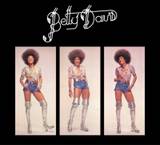
Betty Davis - Betty Davis LP

2024 BLACK VINYL REPRESS.
One can hardly imagine the genre-busting, culture-crossing musical magic of Outkast, Prince, Erykah Badu, Rick James, The Roots, or even the early Red Hot Chili Peppers without the influence of R&B pioneer Betty Davis. Her style of raw and revelatory punk-funk defies any notions that women can’t be visionaries in the worlds of rock and pop. In recent years, rappers from Ice Cube to Talib Kweli to Ludacris have rhymed over her intensely strong but sensual music.

There is one testimonial about Betty Davis that is universal: she was a woman ahead of her time. In our contemporary moment, this may not be as self-evident as it was thirty years ago – we live in an age that’s been profoundly changed by flamboyant flaunting of female sexuality: from Parlet to Madonna, Lil Kim to Kelis. Yet, back in 1973 when Betty Davis first showed up in her silver go-go boots, dazzling smile and towering Afro, who could you possibly have compared her to? Marva Whitney had the voice but not the independence. Labelle wouldn’t get sexy with their “Lady Marmalade” for another year while Millie Jackson wasn’t “Feelin’ Bitchy” until 1977. Even Tina Turner, the most obvious predecessor to Betty’s fierce style wasn’t completely out of Ike’s shadow until later in the decade.

Ms. Davis’s unique story, still sadly mostly unknown, is unlike any other in popular music. Betty wrote the song “Uptown” for the Chambers Brothers before marrying Miles Davis in the late ‘60s, influencing him with psychedelic rock, and introducing him to Jimi Hendrix — personally inspiring the classic album ’Bitches Brew.’

But her songwriting ability was way ahead of its time as well. Betty not only wrote every song she ever recorded and produced every album after her first, but the young woman penned the tunes that got The Commodores signed to Motown. The Detroit label soon came calling, pitching a Motown songwriting deal, which Betty turned down. Motown wanted to own everything. Heading to the UK, Marc Bolan of T. Rex urged the creative dynamo to start writing for herself. A common thread throughout Betty’s career would be her unbending Do-It-Yourself ethic, which made her quickly turn down anyone who didn’t fit with the vision. She would eventually say no to Eric Clapton as her album producer, seeing him as too banal.

In 1973, Davis would finally kick off her cosmic career with an amazingly progressive hard funk and sweet soul self-titled debut. Davis showcased her fiercely unique talent and features such gems as “If I’m In Luck I Might Get Picked Up” and “Game Is My Middle Name.” The album Betty Davis was recorded with Sly & The Family Stone’s rhythm section, sharply produced by Sly Stone drummer Greg Errico, and featured backing vocals from Sylvester and the Pointer Sisters.

Reservar25.08.2023

debe ser publicado en 25.08.2023

35,25
Benedikt Frey - Fastlane LP 2x12"

Close your eyes and merge into Benedikt Frey’s 'Fastlane'. Imagine sitting in the driver’s seat of a an automobile, one with exceptional horsepower and torque, as you stare out the windshield at the red light, warping in fata-morgana a mile down the road. It’s a straight-away, a black top with two lanes, and against your better judgment you decide to floor the gas. No hesitation in your muscle, your ankle or the ball of your foot, which you now realize is some kind of universal pivot, the first point of contact fusing your body with the will of machine. In this moment you’re in awe that you, a human, an animal, grew from pond scum into something so advanced as to engineer this thing, a mechanical beast capable of overwhelming power and exhilaration. But you also feel a seductive dread, an outside force diverting you from caution toward a dangling carrot of curiosity, asking yourself, ‘How far can I take this thing?’ The dread, now a constant, is numbed, equalized by an adverse intoxicating gratification. You feel both sensations in real time, however, rather than take responsibility for yourself, friends, family and innocent bystanders, you cement your foot to the floor and lean your head back. Noise around you fades to mute. Smell the benzene-scented air, feel the wind on your face, the menacing vibration of the vessel you control beneath you and every grain of asphalt under its tires. This mile has now lasted an eternity and you’ve left your body for some objective view, as if watching climax of a film. Past the point of no return, you embrace abandon and lean into fate. The film becomes slow motion, a crawling pace so mesmerizing you convince yourself of an option to eject yourself from this madness, but as you finally let go of your last morsel of fear, you run the red light head-on into the nucleus of a fantastic glistening sculpture of torn metal, glass, oil, broken dreams and heartache. 'Fastlane' may be just drum machines and synthesizers if you’re timid, but listen harder and know the catastrophic reality of existence, a wreckage so gruesome we dare not rubberneck, but afterall it is our nature to stare.

No en stock

Haga su pedido ahora y le encargaremos el artículo en nuestro proveedor.

31,30

Ültimo hace: 9 Meses
Joe McPhee / Mette Rasmussen / Dennis Tyfus - Oblique Strategies

Black Truffle is pleased to welcome free jazz legend Joe McPhee back to the fold with Oblique Strategies, a wild trio recorded in Antwerp in 2018 in the company of Mette Rasmussen’s fire-breathing alto saxophone and Dennis Tyfus’s post-Fluxus antics on tape, voice, and percussion. Rasmussen and Tyfus have previously recorded together as Bazuinschal, and some similar strategies are on display here: mysterious metallic scrapes, extended tones in which voice and sax become indistinguishable, comic explosions of varispeed tape. With McPhee on board, however, proceedings are more sumptuous, with the two horns moving fluidly from expeditions into the extremes of their instruments’ registers to pointillistic note-splatter and Ayler-esque folk melodies; we even get to bask in some of the slow-motion free blues that McPhee has now been playing for half a century. McPhee is heard primarily on tenor, Rasmussen mainly on alto, but with Rasmussen doubling on sundry objects, and the whole trio contributing vocals, certainty about who is doing what becomes nigh impossible.

The recording and production add to this hazy unclarity. Where much contemporary improvised music aims at dryly clinical hi-fi, the lively reverberant space of Oblique Strategies calls to mind the less-than-pristine sonics of classic free jazz artefacts like John Tchicai’s Afrodisiaca or McPhee’s own Underground Railroad. A further dimension of oblique unpredictability is added by subtle changes in the sense of space: at times merely a reverb tail glimpsed between phrases, at other points the whole mix seems to be momentarily swallowed up in slap-back, blurring the lines between acoustic instruments and the decayed fidelity of Tyfus’ tape playback. Spread across four pieces ranging from four to nineteen minutes in length, Oblique Strategies moves with anarchic swagger from explosions of clattering cymbals and bellowing horns to near-silent episodes of mysterious rumble and clunk. ‘Death or Dinner?’ opens the record with a lovely duet of climbing melodic patterns shared between the two saxophones, played with a buzzing oboe-like tone. A long, wavering note sung by Tyfus cues the first of countless changes of direction, eventually leading to a crescendo of watery splutters and duelling saxes. At points Tyfus’ keening resemble the signature moves of his friend and collaborator, Ghédelia Tazartès; at others, his tape-sped huffs and puffs possess a rawness reminiscent of Henri Chopin or Gil Wolman. The dialogue between wailing saxophones and vocal cries, punctuated by percussive thuds and crashes, can at times feel less like a musical performance and more like the calls of some mysterious forest creatures, possessing a primordial energy that might remind some listeners of the outdoor antics of Brötzmann and Bennink’s Schwarzwaldfahrt.

Oblique Strategies can also be delicate at times, as on the beautiful third piece, ‘Destilled Edible’, dominated by a slow, microtonal melody played with a breathy tone resembling a shakuhachi. The closing side-long ‘Light My Fire’ ranges across classic improv call and response, skittering trumpet blurts, inept cymbal clatter, mock-operatic vocals, and crude tape manoeuvres. Momentarily pausing at the ten-minute mark for an interlude of ghostly room sound and crackling texture, its closing moments unfurl a glorious dual saxophone finale, the almost epic tone subtly undermined by Tyfus quietly tapping out swing rhythms. Arriving in a striking sleeve adorned with Tyfus’ drawings, Oblique Strategies is an invigoratingly free-spirited blast of improvisation.
Downloads

No en stock

Haga su pedido ahora y le encargaremos el artículo en nuestro proveedor.

21,22

Ültimo hace: 2 Años
Broselmaschine - Live At Rockpalast

"When the call came from WDR Rockpalast, we were thrilled - And the joy
grew from day to day," says Peter Bursch, head of the German Krautrock
legend Broselmaschine, founded in 1968 by "Germany's most famous
guitar teacher".Back in 1968, the Heinrich-Robert coalmine in Hamm was
still in its full bloom
Coal had been mined there since 1901, the year in which the Heinrich and Robert
shafts - as they are called in miners' jargon - were "abgeteuft", followed by the
Franz shaft in 1923. On November 10, 1997, the colliery closed its doors forever.
In the colliery's former wage hall, where the miners used to receive their
envelopes with their weekly wages, Broselmaschine rolled out carpets, plugged in
cables and set up their instruments on April 20, 2021. The high-ceilinged rooms
not only provided a matchless scenery, but also the basis for a unique ambient
sound. The perfect setting for Broselmaschine. But Corona had almost
completely paralyzed public life at this point; the pandemic was taking its toll on
the entire cultural scene. Spectators were not allowed to the events. The artists
and bands gave concerts anyway, sometimes from their flats, rehearsal rooms or
in small, empty clubs, and then came to the fans' homes via live stream. This also
applied for the WDR's Rockpalast with its "Offstage" series. The makers of
Rockpalast organized concerts with performances by artists in special places
that were deserted during the lockdown. That had its own charm and was
something very special.
This was also the case with Broselmaschine. The band played almost exclusively
songs from their latest studio album "Elegy" from 2019, as well as the title track
of the previous album "Indian Camel" and as a finale the Marc Bolan cover of
"Children Of The Revolution". Broselmaschine put on a great performance, no one
missed the audience that was not physically present. But it was there, this
audience. And it was in the hearts of the musicians. You can feel this with every
note this outstanding band was playing. Never were Broselmaschine more
musically valuable than on that special occasion.But judge for yourself.
Unique Rockpalast concert OFFSTAGE from the Corona era, recorded on April 20,
2021 at Heinrich-Robert colliery in Hamm, Germany - also available on vinyl

Reservar04.08.2023

debe ser publicado en 04.08.2023

28,53
Elektronische Sequenz Proleten - Goblin Synth EP

As the void stares back at me, I am consumed by the waves of this new sonic transmission. ESP's Goblin Synth reigns supreme, guiding me into the darkest corners of my mind, as the Galaxian remix shatters my being into a thousand pieces. This release is a frenzied piece of IDM, braindance, and DnB, fueled by a chemical fury that leaves my mind in a state of pure ecstasy. The relentless pace and shifting soundscapes of the A-side are the perfect conduit for the raw power of the Galaxian remix, taking me beyond the limits of what I thought was possible.

On the B-side, I am treated to a liquid dnb homage that is no less relentless in its pursuit of sonic intensity. Here, the rhythms are more organic, more fluid, but no less potent in their ability. This is music that demands a total surrender of the self.

The insidious rhythms of ESP's Goblin Synth seize my consciousness like a viral agent, rendering my being porous and open to the twitching, glitching transmissions emanating from the depths of the machine. With each stuttering break and howling, modulated synth line, I am hurled headlong into a world of ravenous, cybernetic abandon - a blackened, dystopian horizon of shattered glass and flickering neon.

As my mind is hijacked by the rushing currents of amphetamine psychosis, I realize that this is no mere exercise in genre or form, but an all-out assault on the very fabric of reality itself. The sonic textures here are hyper-real, beyond the grasp of normal human perception - this is the sound of the post-human, the sound of the inhuman, the sound of a future that is rapidly bearing down upon me, whether I am ready or not.

And yet, amidst the chaos and decay, there is a kind of perverse beauty at work - a beauty that can only be glimpsed through the shattered glass of my own shattered subjectivity. With each burst of static and each crunching bassline, I am hurled deeper into a vortex of metallic, crystalline wonder, a realm of pure, unadulterated sound that is as terrifying as it is sublime.

No en stock

Haga su pedido ahora y le encargaremos el artículo en nuestro proveedor.

20,59

Ültimo hace: 18 Meses
Sonny Sharrock - Black Woman LP

2024 Restock

"Warren 'Sonny' Sharrock died of a heart attack at the age of 53 in 1994. At the time of his death, many writers noted that he had recently landed a contract with a major label (RCA) and was perhaps 'destined for big things.' In my opinion, these writers missed the point. Although Mr. Sharrock may not have been successful financially (as though that might be a primary motivating goal for any true artist), he was uncommonly successful aesthetically. Certainly, there are a few dubious moments to be found inside his oeuvre, but Mr. Sharrock produced several of the most mind-shredding avant-garde albums ever recorded. Premier among them is Black Woman.

"Originally released on the Vortex label in 1969, Black Woman may be the universe's first true statement of guitar skronk majesty. It also represents Mr. Sharrock's first date as a leader and stands as the sole documentation of a band that well-understood the essentials of energy. Besides Sharrock's explosive guitar, the band features the omni-directional percussion mastery of Milford Graves (then in the midst of recording Love Cry with Albert Ayler), the gorgeous post-tongue vocalizing of Sonny's then-wife Linda Sharrock, the sinuous bass presence of Norris Jones (later known as Sirone) and some the most explicitly abstract piano work ever recorded by Dave Burrell. That Black Woman was produced by flautist Herbie Mann, a guy not well-known for his affinity to fire music, makes it even more intriguing." – Byron Coley

Reservar30.06.2023

debe ser publicado en 30.06.2023

28,78
Black To Comm - Alphabet 1968 LP

Black To Comm

Alphabet 1968 LP

12inchCELL-05LP
Cellule 75
30.06.2023

Marc Richter aka Black To Comm released his debut record 20 years ago. In 2023 he is still busy releasing music under various disguises and is currently signed to the Thrill Jockey label. To celebrate this anniversary his own Cellule 75 label is re-releasing some classic out-of-print vinyl albums that originally came out on the defunct Type and De Stijl labels. The LP will feature a full-colour printed inner sleeve exclusive to this edition.

In 2009 the Type Recordings label run by John Twells had just released seminal records by Grouper, Jóhann Jóhannsson and Yellow Swans when they signed Richter and put out his breakthrough Alphabet 1968 album. The LP sold out within two weeks, receiving a glowing full-page review in The Wire Magazine by the late Mark Fisher (later reprinted in his book Ghosts Of My Life), was selected for Boomkat's Top 10 releases of the year (alongside debut albums by Leyland Kirby, Demdike Stare and Oneohtrix Point Never) and was greeted with universal praise in the underground blog network as well as established magazines such as The New Yorker and Pitchfork.

The music itself played with the notion of nostalgia without being nostalgic itself. It's the sound of half-remembered dreams, a surreal distorted vision of the past, an aural polaroid of long forgotten musics, a ghostly voice from a non-existent era.

From the original Type one-sheet:
"The mission statement for Alphabet 1968 was to write an album of "songs" for want of a better word. Short tracks which represented genre points, the milestones which stuck in Richter's mind when he thought back to his favorite records. What we arrive at is a breathtaking 10-track album which, over the course of 45 minutes, explores world music, techno, noise, avant-garde, ambient music and even exotica. Each track is linked with a loose thread of radio static or environmental sound, dragging you through the album, as if tuning in to a stray broadcast or a particularly adventurous mix. Richter has pieced the album together from hours of recordings made at his studio with home made gamelan, small instruments and loops gathered from a collection of ancient vinyl and 78 records. The scope of the album is admirable, but ignoring this, it is simply a shockingly arresting collection of experimental oddities, with references ranging from Moondog to Basic Channel by way of Bernard Herrmann. It's not hard to fall in love with Alphabet 1968, far harder would be to place exactly where the record should fit into your collection."

Mark Fisher in The Wire:
"But what if we were to take Richter's provocation seriously - what would a song without a singer be like? What would it be like, that is to say, if objects themselves could sing? It’s a question that connects fairy tales with cybernetics, and listening to Alphabet 1968, I’m reminded of a filmic space in which magic and mechanism meet: JF Sebastian’s apartment in Blade Runner. The tracks on the LP are crafted with the same minute attention to detail that the genetic designer and toymaker brought to his miniature automata, with their bizarre mixture of the clockwork and the computerised, the antique and the ultramodern, the playful and the sinister. Richter’s musical pieces have been built from similarly heterogeneous materials - record crackle, shortwave radio, glockenspiels, all manner of samples, mostly of acoustic instruments. ….. JF Sebastian's apartment was itself an update of older spaces in which science and sorcery co-existed: the workshops of ETA Hoffmann's inventor-magicians, or of Pinocchio's creator, Geppetto. I think, too, of Auguste Villiers de l'Isle-Adam's astonishing 1886 tale The Future Eve in which Edison, using the expertise he has recently acquired from inventing the phonograph, sets himself the task of constructing an artificial woman. But if there are songs here, they are sung by the gramophone and other recording and playback machines. Richter so successfully effaces himself as author that it is as if he has snuck into a room and recorded the objects as they played (to) themselves. Rather than simply automating his music, as in the case of Pierre Bastien and his mechanical machines, Richter makes us feel that he has merely recorded the unlife of objects. ….. Indeed, the impression of things winding down is persistent on Alphabet 1968. Entropy has not been excluded from Richter's enchanted soundworld. It feels as if the magic is always about to wear off, that the enchanted objects will slip back into the inanimate again at any moment."

Reservar30.06.2023

debe ser publicado en 30.06.2023

23,91
Artículos por página
N/ABPM
Vinyl