Buscar:black prince

Estilos
Todo
Marc Romboy - Music Made For Aliens LP 2x12"

It is with a singular pleasure that we welcome Marc Romboy to the ever growing stable of live artists at ASW!

Marc Romboy is an artist renowned within the electronic scene for his eclectic, boundary-pushing approach and decades worth of experience working both behind the scenes and behind the decks.

In recent years he has embraced performing live as another creative outlet and, indeed, creative challenge. As an artist and performer, Marc has always pushed the boundaries of his creativity and this, Marc’s first studio album in 6 years is a true masterwork of techno from one of the masters of the genre.

Growing up in the West of Germany close to the borders of both The Netherlands and Belgium, Marc was always instinctively drawn to music. He would attend the acid house parties prevalent in the area, with an epiphany of sorts on the dancefloor of Front club in Hamburg in 1987. An avid record collector, he would listen to Krautrock, breaks, Italo disco, Chicago house and more, and experienced some of the first all house and techno clubs in Europe; the legendary Roxy club in Amsterdam and Dorian Grey in Frankfurt. Learning to DJ, and later on produce, was a natural step.

He founded the ’Le Petit Prince’ imprint in 1993 as a platform for the music of friends he was playing out, which went on to be named Label Of The Year by various German electronic music publications the following year. Its reputation led Marc into collaborating with other DJs to manage their labels too.

Meanwhile, Marc went on to notch up an impressive discography of EPs, tracks and collaborations, carving his own sound; emotive, versatile, and featuring distinctive basslines.
2004 was a landmark year for the artist, with the beginning of his own, completely self-run label Systematic. Since It's birth, the label has provided a home for productions from the likes of Robert Hood, Kenny Larkin, Omar-S, Terrence Parker, Timo Maas, kINK and many more. It also provided the platform for Marc’s first album, ‘Gemini’ in 2005, followed by four further LPs; 2008’s ‘Contrast’, 2009’s ‘6 Monde’ with Stephan Bodzin (which birthed the pair’s now-legendary track ‘Atlas’), 2013’s ‘Taiyo’ with Ken Ishii, and 2014’s three-disc retrospective compilation ‘Shades’. And his collaborative orchestral LP ‘Voyage de la Planète’, Marc’s forward-thinking last album. Pushing the boundaries between classical and electronic music, it makes for a moving , atmospheric outing for the producer - “I feel like there are still a couple of beautiful sounds to create”.

Marc’s output has been exemplary and with his inspiration rising for performing live he now brings us the wonderful “Music Made for Aliens”. A work of true electronic inspiration. Marc will be performing live at ASW events coming up soon.

No en stock

Haga su pedido ahora y le encargaremos el artículo en nuestro proveedor.

26,26

Ültimo hace: 18 Meses
Various - REGGAY UNDERCOVER – VOL. 1

In the 1950s, Jamaican dancehall regulars were crazy about the haunting sounds of American Rhythm & Blues. But in the mid-1950s, Rock 'n' Roll began to replace RnB in America, and Jamaican dancehall owners like Duke Reid and Clement Dodd turned to local musicians to record their own versions of American RnB.
The trend of covering foreign hits exploded during the Ska heyday of the early 60s and continued through the Rocksteady and Reggay eras. Jamaican musicians have covered virtually every genre of music, from jazz and rock to film scores, television soundtracks, pop, classical music and more. Over the years, they have also recorded many "versions" of already existing covers. Cover of cover of cover…
Admittedly, some of these covers were futile but many were sublime as this new and eclectic collection of Ska, Rocksteady and Reggay nuggets, compiled by the very competent and very charming D.J. Héléa, brilliantly demonstrates. Attention we are here "undercover", there are no well-known covers. Some of the tracks selected are rare, others unknown or forgotten - but all are excellent and blended in an impeccable mix, in line with previous the Harlem Shuffle compilations... All Killer, No Filler!
REGGAY UNDERCOVER is an exciting musical kaleidoscope of Jamaican and Reggae music from the early 60s through to the mid 70s.
We hope you will enjoy listening to this album as much as we had composing it for you.
All aboard for REGGAY UNDERCOVER!

Reservar09.03.2023

debe ser publicado en 09.03.2023

16,54

Ültimo hace: 2026 Años
ORBITAL - OPTICAL DELUSION LP 2x12"

DOUBLE BLACK LP : 2 x 140 G Black Vinyl , Sleeve & 2 x Heavy Weight Printed Inner with UV Gloss Finish

Legendary electronic music duo Orbital return Early 2023 with new album “Optical Delusion”, the Hartnoll brothers first studio album since 2018’s Monster’s Exist. Recorded in Orbital’s Brighton studio, “Optical Delusion” includes contributions from Sleaford Mods, Penelope Isles, Anna B Savage, The Little Pest, Dina Ipavic, Coppe, and perhaps most surprisingly, The Medieval Baebes.
Earlier this year, Orbital celebrated their storied history with “30 Something” which, unlike other Best Of’s, contains reworks, remakes, remixes and re-imaginings of landmark Orbital tracks including “Chime”, “Belfast”, “Halcyon”, “Satan”, and “The Box”

SHORT BIOG:

“A human being experiences himself, his thoughts and feelings as something separate from the rest of humanity – a kind of optical delusion of his consciousness. This delusion is a kind of prison for us, restricting us to our personal desires and to affection for a few persons nearest to us. Our task must be to free ourselves from this prison…”

You many have seen this quote attributed to Albert Einstein on social media, the archetypal Smartest Guy Ever apparently having an out-of-character religious epiphany. It certainly leapt out at Paul Hartnoll of Orbital who spotted it in Michael Pollan’s 2018 book How to Change Your Mind: What the New Science of Psychedelics Teaches Us About Consciousness, Dying, Addiction, Depression and Transcendence.

“As soon as I saw ‘optical delusion’ I thought Oh hey, that’s the album title,” says Paul. “It just seemed to say so much about how people construct their own realities, how we see patterns that aren’t there, how we see what we want to see.

“But it’s actually a misquote. He never quite said that. In the German original what he’s really saying is that human experience is as relative as physics. Wouldn’t it be good if we could accept that, and find a kind of universal theory of everything for the human race? Then you look at everything from history to art to your Twitter feed and you think yeah, that’s what we’re all trying to do all of the time…”

Hence ‘Optical Delusion’, the tenth original Orbital album and the latest in a burst of renewed post-pandemic creativity for two brothers who’ve stayed at the top of their game longer than anyone from the post-1988 Class of Acid House.

Now with ‘Optical Delusion’ the Hartnolls dig deeper into the unquiet psyche of our increasingly surreal and disordered world. Sketched out partly during lockdown but fully recorded in the uncertain After Times, the album summons up conflicting emotions and sometimes beguiling images from years when the science fiction doomsdays that the Hartnolls watched on TV as kids finally came true. There are mesmeric tracks with names like ‘The New Abnormal’ and ‘Requiem For The Pre-Apocalypse’ and ‘Day One’. But there are also straight-up bangers and ethereal cosmic dreams, abstract sound wars and deeply human songs of separation and loss.

And it all starts with a bang. Lead single ‘Dirty Rat’, an outright Fall-meets-Front-242 class rant with vocals by Sleaford Mods mob orator Jason Williamson, harks right back to the Hartnolls’ days of politicised anarcho-squatpunk. It began as a remix swap (Orbital did the Sleafords’ ‘I Don’t Rate You’) and morphed into a comic, brutal, bass-driven harangue not so much against our rulers but at the petty, mean-spirited, frightened, Mail-reading voters who put them there: the people who are “blaming everyone in hospital/blaming everyone at the bottom of the English Channel/blaming everyone who doesn’t look like a fried animal.”

Also key to the album is opening track ‘Ringa Ringa (The Old Pandemic Folk Song)’ which returns to an Orbital truism, that time always becomes a loop. This chugging, cyclical Orbital groove gives way to an unnerving past-meets-present timeslip fit for ‘Sapphire And Steel’ as goth maenads The Mediaeval Baebes materialise to sing ‘Ring O’Roses’ – the innocent nursery rhyme whose roots are in the Black Death.

“I’ve always liked folk music and mediaeval sounds,” says Paul, himself an occasional Morris dancer. “I had the basis of that track and I wanted to spin it off somehow.” Trawling his archives he stumbled on The Mediaeval Baebes’ version of ‘Ring O’Roses’ “and my hackles just went up. I was like, my God, this is the original pandemic folk song.”

?his being Orbital, there are collaborations galore on the album, the roles once played by Alison Goldfrapp, Lady Leshurr or David Gray now filled by new talents. London singer-songwriter Anna B Savage contributes a compellingly fragile, Anohni-like vocal to ‘Home’, in which nature reclaims the scorched and vacant mega-cities. ‘Day One’ is a pulsing techno track featuring the singer Dina Ipavic. Paul got in touch with her after working on a score for a sculpture show of giant robotic installations by his friend Giles Walker during the pandemic. First Paul cut up his own score and Ipavic’s vocals on the track The Crane, which appears on the deluxe version of the album. Then he thought, Why not work with her for real? The result is school of ‘Belfast’, a bassy dreamscape with vocalised clouds billowing above.

The pensive ‘Are You ?live?’ adds to the Orbital product range of existential questions (‘Are We Here?’, ‘Where Is It Going?’) in collaboration Bella Union signings Penelope Isles, AKA brother and sister act Lily and Jack Wolter. “They’re our studio mates, they work upstairs!” says Paul happily. “And they’ve both got amazing voices.”


But Orbital are Orbital and never far from the dancefloor. “Eventually the more abrasive bits came back into the fold…” ‘You Are The Frequency’, first of two tracks to feature mysterious vocalist The Little Pest, surrounds the listener with warped voices ordering you to the dancefloor (Phil: “we wanted the idea that the music is kind of absorbing you”). And the second, the sinister ‘What A Surprise’, traps you in a paranoid electronic hall of mirrors.

In another nod to Orbital’s resurgent past the cover artwork once again comes from fine art painter John Greenwood, creator of fantastical grotesques for the covers of ‘Snivilisation’, ‘In Sides’ and Orbital’s most recent album, 2018’s ‘Monsters Exist’. Orbital had just had a slick Mark Farrow cover for ‘30 Something’ – this is a return to the overripe and bulbous techno-organic constructions that somehow express Orbital’s own uncontrollably fertile sound.

There are gaps in the future that Orbital are desperate to fill too; there will be tours and festivals and rooms and fields full of people. Those long paralysed months when we had little to look forward to but a Zoom DJ set made Paul and Phil appreciate the things that make life worth living.

No en stock

Haga su pedido ahora y le encargaremos el artículo en nuestro proveedor.

31,05

Ültimo hace: 2 Años
ORBITAL - OPTICAL DELUSION 2x12"

2 x Solid White LP, 5mm spine Sleeve UV Gloss Finish, 2x Heavy Weight Printed Inner Sleeve UV Gloss finish, marketing sticker.

Legendary electronic music duo Orbital return Early 2023 with new album “Optical Delusion”, the Hartnoll brothers first studio album since 2018’s Monster’s Exist. Recorded in Orbital’s Brighton studio, “Optical Delusion” includes contributions from Sleaford Mods, Penelope Isles, Anna B Savage, The Little Pest, Dina Ipavic, Coppe, and perhaps most surprisingly, The Medieval Baebes.
Earlier this year, Orbital celebrated their storied history with “30 Something” which, unlike other Best Of’s, contains reworks, remakes, remixes and re-imaginings of landmark Orbital tracks including “Chime”, “Belfast”, “Halcyon”, “Satan”, and “The Box”

SHORT BIOG:

“A human being experiences himself, his thoughts and feelings as something separate from the rest of humanity – a kind of optical delusion of his consciousness. This delusion is a kind of prison for us, restricting us to our personal desires and to affection for a few persons nearest to us. Our task must be to free ourselves from this prison…”

You many have seen this quote attributed to Albert Einstein on social media, the archetypal Smartest Guy Ever apparently having an out-of-character religious epiphany. It certainly leapt out at Paul Hartnoll of Orbital who spotted it in Michael Pollan’s 2018 book How to Change Your Mind: What the New Science of Psychedelics Teaches Us About Consciousness, Dying, Addiction, Depression and Transcendence.

“As soon as I saw ‘optical delusion’ I thought Oh hey, that’s the album title,” says Paul. “It just seemed to say so much about how people construct their own realities, how we see patterns that aren’t there, how we see what we want to see.

“But it’s actually a misquote. He never quite said that. In the German original what he’s really saying is that human experience is as relative as physics. Wouldn’t it be good if we could accept that, and find a kind of universal theory of everything for the human race? Then you look at everything from history to art to your Twitter feed and you think yeah, that’s what we’re all trying to do all of the time…”

Hence ‘Optical Delusion’, the tenth original Orbital album and the latest in a burst of renewed post-pandemic creativity for two brothers who’ve stayed at the top of their game longer than anyone from the post-1988 Class of Acid House.

Now with ‘Optical Delusion’ the Hartnolls dig deeper into the unquiet psyche of our increasingly surreal and disordered world. Sketched out partly during lockdown but fully recorded in the uncertain After Times, the album summons up conflicting emotions and sometimes beguiling images from years when the science fiction doomsdays that the Hartnolls watched on TV as kids finally came true. There are mesmeric tracks with names like ‘The New Abnormal’ and ‘Requiem For The Pre-Apocalypse’ and ‘Day One’. But there are also straight-up bangers and ethereal cosmic dreams, abstract sound wars and deeply human songs of separation and loss.

And it all starts with a bang. Lead single ‘Dirty Rat’, an outright Fall-meets-Front-242 class rant with vocals by Sleaford Mods mob orator Jason Williamson, harks right back to the Hartnolls’ days of politicised anarcho-squatpunk. It began as a remix swap (Orbital did the Sleafords’ ‘I Don’t Rate You’) and morphed into a comic, brutal, bass-driven harangue not so much against our rulers but at the petty, mean-spirited, frightened, Mail-reading voters who put them there: the people who are “blaming everyone in hospital/blaming everyone at the bottom of the English Channel/blaming everyone who doesn’t look like a fried animal.”

Also key to the album is opening track ‘Ringa Ringa (The Old Pandemic Folk Song)’ which returns to an Orbital truism, that time always becomes a loop. This chugging, cyclical Orbital groove gives way to an unnerving past-meets-present timeslip fit for ‘Sapphire And Steel’ as goth maenads The Mediaeval Baebes materialise to sing ‘Ring O’Roses’ – the innocent nursery rhyme whose roots are in the Black Death.

“I’ve always liked folk music and mediaeval sounds,” says Paul, himself an occasional Morris dancer. “I had the basis of that track and I wanted to spin it off somehow.” Trawling his archives he stumbled on The Mediaeval Baebes’ version of ‘Ring O’Roses’ “and my hackles just went up. I was like, my God, this is the original pandemic folk song.”

?his being Orbital, there are collaborations galore on the album, the roles once played by Alison Goldfrapp, Lady Leshurr or David Gray now filled by new talents. London singer-songwriter Anna B Savage contributes a compellingly fragile, Anohni-like vocal to ‘Home’, in which nature reclaims the scorched and vacant mega-cities. ‘Day One’ is a pulsing techno track featuring the singer Dina Ipavic. Paul got in touch with her after working on a score for a sculpture show of giant robotic installations by his friend Giles Walker during the pandemic. First Paul cut up his own score and Ipavic’s vocals on the track The Crane, which appears on the deluxe version of the album. Then he thought, Why not work with her for real? The result is school of ‘Belfast’, a bassy dreamscape with vocalised clouds billowing above.

The pensive ‘Are You ?live?’ adds to the Orbital product range of existential questions (‘Are We Here?’, ‘Where Is It Going?’) in collaboration Bella Union signings Penelope Isles, AKA brother and sister act Lily and Jack Wolter. “They’re our studio mates, they work upstairs!” says Paul happily. “And they’ve both got amazing voices.”


But Orbital are Orbital and never far from the dancefloor. “Eventually the more abrasive bits came back into the fold…” ‘You Are The Frequency’, first of two tracks to feature mysterious vocalist The Little Pest, surrounds the listener with warped voices ordering you to the dancefloor (Phil: “we wanted the idea that the music is kind of absorbing you”). And the second, the sinister ‘What A Surprise’, traps you in a paranoid electronic hall of mirrors.

In another nod to Orbital’s resurgent past the cover artwork once again comes from fine art painter John Greenwood, creator of fantastical grotesques for the covers of ‘Snivilisation’, ‘In Sides’ and Orbital’s most recent album, 2018’s ‘Monsters Exist’. Orbital had just had a slick Mark Farrow cover for ‘30 Something’ – this is a return to the overripe and bulbous techno-organic constructions that somehow express Orbital’s own uncontrollably fertile sound.

There are gaps in the future that Orbital are desperate to fill too; there will be tours and festivals and rooms and fields full of people. Those long paralysed months when we had little to look forward to but a Zoom DJ set made Paul and Phil appreciate the things that make life worth living.

No en stock

Haga su pedido ahora y le encargaremos el artículo en nuestro proveedor.

33,24

Ültimo hace: 2 Años
Funkadelic - One Nation Under A Groove LP 2x12"

Regarded by many as the greatest funk album of all time, ‘One Nation Under A Groove’ was recorded at United Sound in Detroit & included a live track from their concert appearance at the Monroe Civic Center in Louisiana in April 1978. The band’s tenth studio album released during September 1978 was also their most commercial & gave the band their first platinum disc. The iconic title track was an international hit and a US R&B No.1. With lead guitarists Michael Hampton & Eddie Hazel dazzling, the personification of funk Bootsy Collins on bass, Bernie Worrell & Walter “Junie” Morrison’s keyboard wizardry & many more, the album was produced by the genius of George Clinton. Regularly ranked at or near the top of various “best album” lists, ‘One Nation Under A Groove’ is mastered for vinyl in a deluxe facsimile gatefold sleeve with booklet & lyric inner sleeves, all housed in a protective PVC sleeve. The albums’ original bonus songs are now included on a second 12-inch “Special EP” which adds the rare 11-minute “Disco Mix” of ‘One Nation Under A Groove’ to replicate the original first UK pressing from 1978. FUNKADELIC Masterminded by the larger-than-life figure of George Clinton, Funkadelic was a key component of his influential P-Funk empire. Funkadelic’s unique combination of Rock, Psychedelia, R&B & Soul led to the band crossing over to the pop mainstream & gaining a vast international following, becoming one of the most important & influential groups in music. On 6 May 1997, Parliament / Funkadelic were inducted into the Rock & Roll Hall Of Fame by Prince. To commemorate six decades of thrilling & delighting fans, George Clinton returned to the stage in 2022 for a series of concerts. To celebrate, Charly have reissued Funkadelic’s classic four albums ‘Hardcore Jollies’; ‘One Nation Under A Groove’; ‘Uncle Jam Wants You’; & ‘The Electric Spanking Of War Babies’ (originally released by Warner Bros during a golden period for the band between 1976-1981). Each album will be available as deluxe gatefold Digi-Sleeve CDs in PVC wallets + obi-strip & facsimile-edition gatefold LPs on 180-gram black vinyl & limited edition 180-gram colored vinyl + 1970s-style obi-strip in a protective PVC sleeve. “They played a HUGE role in creating the future of music.” PRINCE

No en stock

Haga su pedido ahora y le encargaremos el artículo en nuestro proveedor.

41,98

Ültimo hace: 2 Años
Funkadelic - Uncle Jam Wants You LP

Funkadelic

Uncle Jam Wants You LP

12inchCHLP3371C
CHARLY
09.02.2023

Funkadelic’s eleventh studio LP, released in 1979, was more militant in tone than its predecessor 'One Nation Under A Groove' which described a Funk utopia. In contrast, ‘Uncle Jam Wants You’ stated mandate was to “rescue dance music from the blahs”. The album features a 15-minute version of what was to become the Funkadelic’s last hit single ‘(Not Just) Knee Deep’, an edited version of which made no.1 in the US R&B chart. This was Funkadelic’s first album since 1972 not to feature a cover design by artist Pedro Bell (although he did contribute the interior design). A reference to the “Uncle Sam Wants You!” US Army recruitment poster, the sleeve depicts George Clinton aka Dr Funkenstein in a Huey Newton Black Panthers pose. ‘Uncle Jam Wants You’ and Funkadelic-Parliament had a huge influence on Prince, The Red Hot Chilli Peppers, Bill Laswell, Tupac Shakar, De La Soul and many more across all musical genres. George Clinton’s genius Funk & Style will continue to be an influence for many more years to come... FUNKADELIC Masterminded by the larger-than-life figure of George Clinton, Funkadelic was a key component of his influential P-Funk empire. Funkadelic’s unique combination of Rock, Psychedelia, R&B & Soul led to the band crossing over to the pop mainstream & gaining a vast international following, becoming one of the most important & influential groups in music. On 6 May 1997, Parliament / Funkadelic were inducted into the Rock & Roll Hall Of Fame by Prince. To commemorate six decades of thrilling & delighting fans, George Clinton returned to the stage in 2022 for a series of concerts. To celebrate, Charly have reissued Funkadelic’s classic four albums ‘Hardcore Jollies’; ‘One Nation Under A Groove’; ‘Uncle Jam Wants You’; & ‘The Electric Spanking Of War Babies’ (originally released by Warner Bros during a golden period for the band between 1976-1981). Each album will be available as deluxe gatefold Digi-Sleeve CDs in PVC wallets + obi-strip & facsimile-edition gatefold LPs on 180-gram black vinyl & limited edition 180-gram colored vinyl + 1970s-style obi-strip in a protective PVC sleeve. “They played a HUGE role in creating the future of music.” PRINCE

No en stock

Haga su pedido ahora y le encargaremos el artículo en nuestro proveedor.

32,56

Ültimo hace: 3 Años
Funkadelic - The Electric Spanking Of War Babies LP

Released in 1981& the last in a decade-long run of Top 50 R&B albums, ‘The Electric Spanking Of War Babies’ was the band’s twelfth studio LP & featured several players new to the Funkadelic line-up, notably Sly Stone. With its allusions to the Vietnam War & US imperialism, George Clinton’s project was destined to court controversy from the start, not least for its uncompromising sleeve art which original label Warner Bros. censored. Described by Robert Christgau as “the solidest, weirdest chunk of P-Funk since one nation gathered under a groove” & originally conceived as a double LP, many tracks saw release on Clinton’s later P-Funk projects. Arguably, it is better for having been précised down to a single album while still spawning two hit singles, the title track (US R&B No. 60) & ‘Shockwaves’ (US R&B No.53). FUNKADELIC Masterminded by the larger-than-life figure of George Clinton, Funkadelic was a key component of his influential P-Funk empire. Funkadelic’s unique combination of Rock, Psychedelia, R&B & Soul led to the band crossing over to the pop mainstream & gaining a vast international following, becoming one of the most important & influential groups in music. On 6 May 1997, Parliament / Funkadelic were inducted into the Rock & Roll Hall Of Fame by Prince. To commemorate six decades of thrilling & delighting fans, George Clinton returned to the stage in 2022 for a series of concerts. To celebrate, Charly have reissued Funkadelic’s classic four albums ‘Hardcore Jollies’; ‘One Nation Under A Groove’; ‘Uncle Jam Wants You’; & ‘The Electric Spanking Of War Babies’ (originally released by Warner Bros during a golden period for the band between 1976-1981). Each album will be available as deluxe gatefold Digi-Sleeve CDs in PVC wallets + obi-strip & facsimile-edition gatefold LPs on 180-gram black vinyl & limited edition 180-gram colored vinyl + 1970s-style obi-strip in a protective PVC sleeve. “They played a HUGE role in creating the future of music.” PRINCE

No en stock

Haga su pedido ahora y le encargaremos el artículo en nuestro proveedor.

32,56

Ültimo hace: 3 Años
RODRIGO CAMPOS - BAHIA FANTASTICA LP

Originally released in 2012, the second album by the São Paulo-born composer Rodrigo Campos marks a turning point in both lyrical and aesthetic inspiration. “Bahia Fantástica” is the result of the absorption of a then recent influence of soul music (especially Curtis Mayfield) and is in the middle of this path marked by an unlikely geography in the lyrical part (São Mateus, Bahia, Japan) and by an expansion of sound ( from samba to the indefinable, with a passage through black American music).

The album turns ten years old in 2022 and exudes vitality. The soul reference takes on a different aroma when it passes through the filter of the composer and his band – formed by Kiko Dinucci on guitar, Marcelo Cabral on bass, Maurício Fleury on keyboards, Maurício Takara on drums and Thiago França on sax: it has Brazilian sauce, hints of afrobeat and a very particular seasoning. The lyrics bear the artist's mark: they project scenes in the listener's imagination and design the characters and environments with their own style of subjective chronicle. Bahia is both imaginary and intimate in Rodrigo Campos’s music.

No en stock

Haga su pedido ahora y le encargaremos el artículo en nuestro proveedor.

19,54

Ültimo hace: 3 Años
Funkadelic - One Nation Under A Groove
También disponible

Black Vinyl[41,98 €]


Regarded by many as the greatest funk album of all time, ‘One Nation Under A Groove’ was recorded at United Sound in Detroit & included a live track from their concert appearance at the Monroe Civic Center in Louisiana in April 1978. The band’s tenth studio album released during September 1978 was also their most commercial & gave the band their first platinum disc. The iconic title track was an international hit and a US R&B No.1. With lead guitarists Michael Hampton & Eddie Hazel dazzling, the personification of funk Bootsy Collins on bass, Bernie Worrell & Walter “Junie” Morrison’s keyboard wizardry & many more, the album was produced by the genius of George Clinton. Regularly ranked at or near the top of various “best album” lists, ‘One Nation Under A Groove’ is mastered for vinyl in a deluxe facsimile gatefold sleeve with booklet & lyric inner sleeves, all housed in a protective PVC sleeve. The albums’ original bonus songs are now included on a second 12-inch “Special EP” which adds the rare 11-minute “Disco Mix” of ‘One Nation Under A Groove’ to replicate the original first UK pressing from 1978. FUNKADELIC Masterminded by the larger-than-life figure of George Clinton, Funkadelic was a key component of his influential P-Funk empire. Funkadelic’s unique combination of Rock, Psychedelia, R&B & Soul led to the band crossing over to the pop mainstream & gaining a vast international following, becoming one of the most important & influential groups in music. On 6 May 1997, Parliament / Funkadelic were inducted into the Rock & Roll Hall Of Fame by Prince. To commemorate six decades of thrilling & delighting fans, George Clinton returned to the stage in 2022 for a series of concerts. To celebrate, Charly have reissued Funkadelic’s classic four albums ‘Hardcore Jollies’; ‘One Nation Under A Groove’; ‘Uncle Jam Wants You’; & ‘The Electric Spanking Of War Babies’ (originally released by Warner Bros during a golden period for the band between 1976-1981). Each album will be available as deluxe gatefold Digi-Sleeve CDs in PVC wallets + obi-strip & facsimile-edition gatefold LPs on 180-gram black vinyl & limited edition 180-gram colored vinyl + 1970s-style obi-strip in a protective PVC sleeve. “They played a HUGE role in creating the future of music.” PRINCE

Reservar20.01.2023

debe ser publicado en 20.01.2023

46,01

Ültimo hace: 2026 Años
SLUG - THY SOCIALITE!

Slug

THY SOCIALITE!

12inchADD1001LP
Memphis Industries
20.01.2023

Thy Socialite!, the first release from Field Music"s new record label Daylight Saving Records, is not the sound of Lloyd Webber quivering and sweating in a rotting Berlin flat but instead, a fun, joyous, audacious record of hard rock, glam, and pop that ranges from arena to art school. "I wanted to include a more rockist palette," Black says. "My last album, Higgledypiggledy, had influences including The Cardiacs, Prince and The Residents. For this one I wanted to see what I could get out of less indie audience friendly artists such as Toto, Sweet, Wings, Def Leppard and ZZ Top and merge it with a SLUG sensibility. Due to the more rock approach, I was happy for the album to become a big classic rock unit - pompous even." However, simply a pastiche and nostalgic throwback this isn"t. Despite the playful nods to some of the more grandiose, theatrical and overblown elements of the aforementioned genre, it"s also an album with a contemporary pop edge, slick production and a tangible connection to SLUG"s previous deft mix of indie, rock and art pop. The result of all of this is an album that is fun and unpredictable but also conceptually smart, ambitious and adventurous. A place where classic hard rock and smart art-pop are treated equal, and where taking the piss doesn"t have to equate to being novelty or disposable. It was all part of the challenge that Black set himself from the off when he asked himself "how could I challenge the SLUG listener but bring them on a new fresh journey which will confuse them at first but they will ultimately love?"

Reservar20.01.2023

debe ser publicado en 20.01.2023

19,79

Ültimo hace: 2026 Años
Bear McCreary & Howard Shore - The Lord Of The Rings:  The Rings Of Power Season 1  Original Soundtrack

Bear McCreary, known for his incomparable world-building and use of innovative musical approaches in the worlds of television, film, and video games, will guide audiences through the major events of the Second Age of Middle-earth, as seen in the series. Working out of the iconic Abbey Road Studios as well as AIR Studios and Synchron Stage in Vienna, he has recorded and composed hours of music for the score, weaving together his original themes into a sonic tapestry for a full symphonic orchestra, alongside vibrant folk instruments and choral singers.

“J.R.R.Tolkien’s stunning novels and their film adaptations have had a profound impact on my imagination for nearly my entire life,” McCreary said. “I am honored to compose the music that will help guide audiences through the major events of the Second Age of Middle-earth."

Legendary composer Howard Shore has composed scores for some of the most memorable and world-renowned film and television series. Globally respected for his passion for J.R.R. Tolkien’s work, he is perhaps best known for his work on The Lord of the Rings and The Hobbit film trilogies.

The Season One: Amazon Original Series Soundtrack also includes two performances by The Lord of the Rings: The Rings of Power actors—Sophia Nomvete (Princess Disa) on the track “A Plea to the Rocks” and “This Wandering Day,” sung by Megan Richards (Poppy Proudfellow).

Available on 2 x 140 Gram Black Vinyl

Reservar13.01.2023

debe ser publicado en 13.01.2023

62,98

Ültimo hace: 2026 Años
Funkadelic - Uncle Jam Wants You

Funkadelic

Uncle Jam Wants You

12inchCHLP3371
CHARLY
16.12.2022

Funkadelic’s eleventh studio LP, released in 1979, was more militant in tone than its predecessor 'One Nation Under A Groove' which described a Funk utopia. In contrast, ‘Uncle Jam Wants You’ stated mandate was to “rescue dance music from the blahs”. The album features a 15-minute version of what was to become the Funkadelic’s last hit single ‘(Not Just) Knee Deep’, an edited version of which made no.1 in the US R&B chart. This was Funkadelic’s first album since 1972 not to feature a cover design by artist Pedro Bell (although he did contribute the interior design). A reference to the “Uncle Sam Wants You!” US Army recruitment poster, the sleeve depicts George Clinton aka Dr Funkenstein in a Huey Newton Black Panthers pose. ‘Uncle Jam Wants You’ and Funkadelic-Parliament had a huge influence on Prince, The Red Hot Chilli Peppers, Bill Laswell, Tupac Shakar, De La Soul and many more across all musical genres. George Clinton’s genius Funk & Style will continue to be an influence for many more years to come... FUNKADELIC Masterminded by the larger-than-life figure of George Clinton, Funkadelic was a key component of his influential P-Funk empire. Funkadelic’s unique combination of Rock, Psychedelia, R&B & Soul led to the band crossing over to the pop mainstream & gaining a vast international following, becoming one of the most important & influential groups in music. On 6 May 1997, Parliament / Funkadelic were inducted into the Rock & Roll Hall Of Fame by Prince. To commemorate six decades of thrilling & delighting fans, George Clinton returned to the stage in 2022 for a series of concerts. To celebrate, Charly have reissued Funkadelic’s classic four albums ‘Hardcore Jollies’; ‘One Nation Under A Groove’; ‘Uncle Jam Wants You’; & ‘The Electric Spanking Of War Babies’ (originally released by Warner Bros during a golden period for the band between 1976-1981). Each album will be available as deluxe gatefold Digi-Sleeve CDs in PVC wallets + obi-strip & facsimile-edition gatefold LPs on 180-gram black vinyl & limited edition 180-gram colored vinyl + 1970s-style obi-strip in a protective PVC sleeve. “They played a HUGE role in creating the future of music.” PRINCE

Reservar16.12.2022

debe ser publicado en 16.12.2022

28,53

Ültimo hace: 2026 Años
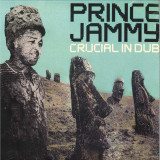
Prince Jammy - Crucial Dub

Prince Jammy

Crucial Dub

12inchVPGSRL5205
Greensleeves
05.12.2022

Das unveröffentlichte Dub-Album aus den 80ern von Lloyd James, 1947 in Montego Bay Jamaika geboren und besser bekannt als Prince Jammy und späterem King Jammy! Hier finden sich unter anderem sehr gesuchte Dub-Versionen zu Black Crucials "Mr Vincent", Junior Reids "Higgler Move" oder Anthony Johnson "Yah Wi Deh". Eine tolle Vinyl Ergänzung zum 4CD Box-Set Vol.6 in der "Evolution Of Dub"-Serie.

No en stock

Haga su pedido ahora y le encargaremos el artículo en nuestro proveedor.

21,30

Ültimo hace: 3 Años
London Music Works & The City of Prague Philharmonic Orchestra - The Essential Disney Collection (2x12")
 
20

Enjoy the major musical themes from Disney movies: from "Frozen" to "The Jungle Book", this collection will take you deep into the marvellous and fantasy worlds imagined by Disney.

No en stock

Haga su pedido ahora y le encargaremos el artículo en nuestro proveedor.

33,15

Ültimo hace: 3 Años
McCarthy - I AM A WALLET 2x12" + 7"

Pressed on Red vinyl and presented in gloss laminated gatefold sleeve.
Double album set contains the original LP plus 13 bonus tracks taken from their first four singles and the re-recorded version of In Purgatory which originally appeared on the PINK compilation E.P “It sells or it smells” plus bonus 7” a reproduction colour vinyl copy of McCarthy’s first 7” “In Purgatory”
All three tracks have been remastered from the original master tape and presented in a wraparound sleeve, just like the incredibly rare “Wall Of Salmon” original.
Also Includes
20 page 12x12” full colour booklet containing all the lyrics and packed full with photos, many previously unpublished. Press clippings and other memorabilia. Introduction by Nicky Wire of the Manic Street Preachers and track by track commentary by Malcolm Eden.
8 x 10 Black & White press photo
Reproduction European Tour poster “The Well Of Loneliness” Promo poster McCarthy sticker
By the time McCarthy appeared on the NME’s C86 cassette they had already been playing together for a couple of years and released two excellent singles. Their debut “In Purgatory” and the indie masterpiece “Red Sleeping Beauty” (both included on this release). The following year McCarthy released the brilliant “Frans Hals” before unleashing their debut album “I Am A Wallet”
Now recognised as an indie pop masterpiece it has gone on to achieve cult status, receiving praise from the likes of Nicky Wire (Manic Street Preachers) as one of the most important albums of the 80s. Known by today's indie acolytes as the band that spawned Tim Gane and Leititia Sadier (who of course went on to form Stereolab).
It’s a seamless album reminiscent of the Byrds. Wonderful, if slightly twee, jangly guitars with complex and rarely rhyming lyrics, Malcolm Eden’s strident left wing political views are manifest on I Am A Wallet. Cloaked in pretty guitar and propulsive drums, Eden sets about attacking the pillars of the day, MPs, Prince Charles, Fleet Street, religion, the response to AIDS and on almost every song, capitalism. The horrors and inequalities of the capitalist system are laid bare for all the see. The system which enables some to get rich at the expense of others is reviled and attacked.

Reservar04.11.2022

debe ser publicado en 04.11.2022

36,93

Ültimo hace: 2026 Años
Various - Blackberry Jam

Various

Blackberry Jam

12inchMOISSWAX005
Moiss Music
02.11.2022

A top value for money opportunity here, as Moiss Music deliver the latest in their sweet and sticky Jam series of various artist 12" line ups, bringing you no less than six bubbling, vivacious disco triumphs from six artists. Khemir's 'Disco Bandit' kicks off proceedings, a production that sounds like it was made by a band of around 45 musicians, a proper cavalcade of strings, brass, brazen disco thump and beautifully bold vocals. Wurzelholz's 'Prince' goes for a bit more economy but with a slinky funk bassline like that - not to mention the occasional exclamation from the purple overlord himself - it's equally devastating in dancefloor terms. Among the other highlights, 'Golden' by I Gemin has the feel of a lost Daft Punk flip tune and Cosmocomics' 'Glamorous Garcon', boasting 70s-style synth bubbles that are as cute as they are retro. Tasty as ever.

No en stock

Haga su pedido ahora y le encargaremos el artículo en nuestro proveedor.

13,57

Ültimo hace: 3 Años
Lee Tracy & Isaac Manning - Is it What You Want

As the sun sets on a quaint East Nashville house, a young man bares a piece of his soul. Facing the camera, sporting a silky suit jacket/shirt/slacks/fingerless gloves ensemble that announces "singer" before he's even opened his mouth, Lee Tracy Johnson settles onto his stage, the front yard. He sways to the dirge-like drum machine pulse of a synth-soaked slow jam, extends his arms as if gaining his balance, and croons in affecting, fragile earnest, "I need your love… oh baby…"

Dogs in the yard next door begin barking. A mysterious cardboard robot figure, beamed in from galaxies unknown and affixed to a tree, is less vocal. Lee doesn't acknowledge either's presence. He's busy feeling it, arms and hands gesticulating. His voice rises in falsetto over the now-quiet dogs, over the ambient noise from the street that seeps into the handheld camcorder's microphone, over the recording of his own voice played back from a boombox off-camera. After six minutes the single, continuous shot ends. In this intimate creative universe there are no re-takes. There are many more music videos to shoot, and as Lee later puts it, "The first time you do it is actually the best. Because you can never get that again. You expressing yourself from within."

"I Need Your Love" dates from a lost heyday. From some time in the '80s or early '90s, when Lee Tracy (as he was known in performance) and his music partner/producer/manager Isaac Manning committed hours upon hours of their sonic and visual ideas to tape. Embracing drum machines and synthesizers – electronics that made their personal futurism palpable – they recorded exclusively at home, live in a room into a simple cassette deck. Soul, funk, electro and new wave informed their songs, yet Lee and Isaac eschewed the confinement of conventional categories and genres, preferring to let experimentation guide them.

"Anytime somebody put out a new record they had the same instruments or the same sound," explains Isaac. "So I basically wanted to find something that's really gonna stand out away from all of the rest of 'em." Their ethos meant that every idea they came up with was at least worth trying: echoed out half-rapped exhortations over frantic techno-style beats, gospel synth soul, modal electro-funk, oddball pop reinterpretations, emo AOR balladry, nods to Prince and the Fat Boys, or arrangements that might collapse mid-song into a mess of arcade game-ish blips before rallying to reach the finish line. All of it conjoined by consistent tape hiss, and most vitally, Lee's chameleonic voice, which managed to wildly shape shift and still evoke something sincere – whether toggling between falsetto and tenor exalting Jesus's return, or punctuating a melismatic romantic adlib with a succinct, "We all know how it feels to be alone."

"People think we went to a studio," says Isaac derisively. "We never went to no studio. We didn't have the money to go to no studio! We did this stuff at home. I shot videos in my front yard with whatever we could to get things together." Sometimes Isaac would just put on an instrumental record, be it "Planet Rock" or "Don't Cry For Me Argentina" (from Evita), press "record," and let Lee improvise over it, yielding peculiar love songs, would-be patriotic anthems, or Elvis Presley or Marilyn Monroe tributes. Technical limitations and a lack of professional polish never dissuaded them. They believed they were onto something.

"That struggle," Isaac says, "made that sound sound good to me."

In the parlance of modern music criticism Lee and Isaac's dizzying DIY efforts would inevitably be described as "outsider." But "outsider" carries the burden of untold additional layers of meaning if you're Black and from the South, creating on a budget, and trying to get someone, anyone within the country music capital of the world to take your vision seriously. "What category should we put it in?" Isaac asks rhetorically. "I don't know. All I know is feeling. I ain't gonna name it nothing. It's music. If it grabs your soul and touch your heart that's what it basically is supposed to do."

=

Born in 1963, the baby boy of nine siblings, Lee Tracy spent his earliest years living amidst the shotgun houses on Nashville's south side. "We was poor, man!" he says, recalling the outhouse his family used for a bathroom and the blocks of ice they kept in the kitchen to chill perishables. "But I actually don't think I really realized I was in poverty until I got grown and started thinking about it." Lee's mom worked at the Holiday Inn; his dad did whatever he had to do, from selling fruit from a horse drawn cart to bootlegging. "We didn't have much," Lee continues, "but my mother and my father got us the things we needed, the clothes on our back." By the end of the decade with the city's urban renewal programs razing entire neighborhoods to accommodate construction of the Interstate, the family moved to Edgehill Projects. Lee remembers music and art as a constant source of inspiration for he and his brothers and sisters – especially after seeing the Jackson 5 perform on Ed Sullivan. "As a small child I just knew that was what I wanted to do."

His older brother Don began musically mentoring him, introducing Lee to a variety of instruments and sounds. "He would never play one particular type of music, like R&B," says Lee. "I was surrounded by jazz, hard rock and roll, easy listening, gospel, reggae, country music; I mean I was a sponge absorbing all of that." Lee taught himself to play drums by beating on cardboard boxes, gaining a rep around the way for his timekeeping, and his singing voice. Emulating his favorites, Earth Wind & Fire and Cameo, he formed groups with other kids with era-evocative band names like Concept and TNT Connection, and emerged as the leader of disciplined rehearsals. "I made them practice," says Lee. "We practiced and practiced and practiced. Because I wanted that perfection." By high school the most accomplished of these bands would take top prize in a prominent local talent show. It was a big moment for Lee, and he felt ready to take things to the next level. But his band-mates had other ideas.

"I don't know what happened," he says, still miffed at the memory. "It must have blew they mind after we won and people started showing notice, because it's like everybody quit! I was like, where the hell did everybody go?" Lee had always made a point of interrogating prospective musicians about their intentions before joining his groups: were they really serious or just looking for a way to pick up girls? Now he understood even more the importance of finding a collaborator just as committed to the music as he was.

=

Isaac Manning had spent much of his life immersed in music and the arts – singing in the church choir with his family on Nashville's north side, writing, painting, dancing, and working various gigs within the entertainment industry. After serving in the armed forces, in the early '70s he ran The Teenage Place, a music and performance venue that catered to the local youth. But he was forced out of town when word of one of his recreational routines created a stir beyond the safe haven of his bohemian circles.

"I was growing marijuana," Isaac explains. "It wasn't no business, I was smoking it myself… I would put marijuana in scrambled eggs, cornbread and stuff." His weed use originated as a form of self-medication to combat severe tooth pain. But when he began sharing it with some of the other young people he hung out with, some of who just so happened to be the kids of Nashville politicians, the cops came calling. "When I got busted," he remembers, "they were talking about how they were gonna get rid of me because they didn't want me saying nothing about they children because of the politics and stuff. So I got my family, took two raggedy cars, and left Nashville and went to Vegas."

Out in the desert, Isaac happened to meet Chubby Checker of "The Twist" fame while the singer was gigging at The Flamingo. Impressed by Isaac's zeal, Checker invited him to go on the road with him as his tour manager/roadie/valet. The experience gave Isaac a window into a part of the entertainment world he'd never encountered – a glimpse of what a true pop act's audience looked like. "Chubby Checker, none of his shows were played for Black folks," he remembers. "All his gigs were done at high-class white people areas." Returning home after a few years with Chubby, Isaac was properly motivated to make it in Music City. He began writing songs and scouting around Nashville for local talent anywhere he could find it with an expressed goal: "Find someone who can deliver your songs the way you want 'em delivered and make people feel what you want them to feel."

One day while walking through Edgehill Projects Isaac heard someone playing the drums in a way that made him stop and take notice. "The music was so tight, just the drums made me feel like, oh I'm-a find this person," he recalls. "So I circled through the projects until I found who it was.

"That's how I met him – Lee Tracy. When I found him and he started singing and stuff, I said, ohhh, this is somebody different."

=

Theirs was a true complementary partnership: young Lee possessed the raw talent, the older Isaac the belief. "He's really the only one besides my brother and my family that really seen the potential in me," says Lee. "He made me see that I could do it."

Isaac long being a night owl, his house also made for a fertile collaborative environment – a space where there always seemed to be a new piece of his visual art on display: paintings, illustrations, and dolls and figures (including an enigmatic cardboard robot). Lee and Issac would hang out together and talk, listen to music, conjure ideas, and smoke the herb Isaac had resumed growing in his yard. "It got to where I could trust him, he could trust me," Isaac says of their bond. They also worked together for hours on drawings, spreading larges rolls of paper on the walls and sketching faces with abstract patterns and imagery: alien-like beings, tri-horned horse heads, inverted Janus-like characters where one visage blurred into the other.

Soon it became apparent that they didn't need other collaborators; self-sufficiency was the natural way forward. At Isaac's behest Lee, already fed up with dealing with band musicians, began playing around with a poly-sonic Yamaha keyboard at the local music store. "It had everything on it – trumpet, bass, drums, organ," remembers Lee. "And that's when I started recording my own stuff."

The technology afforded Lee the flexibility and independence he craved, setting him on a path other bedroom musicians and producers around the world were simultaneously following through the '80s into the early '90s. Saving up money from day jobs, he eventually supplemented the Yamaha Isaac had gotten him with Roland and Casio drum machines and a Moog. Lee was living in an apartment in Hillside at that point caring for his dad, who'd been partially paralyzed since early in life. In the evenings up in his second floor room, the music put him in a zone where he could tune out everything and lose himself in his ideas.

"Oh I loved it," he recalls. "I would really experiment with the instruments and use a lot of different sound effects. I was looking for something nobody else had. I wanted something totally different. And once I found the sound I was looking for, I would just smoke me a good joint and just let it go, hit the record button." More potent a creative stimulant than even Isaac's weed was the holistic flow and spontaneity of recording. Between sessions at Isaac's place and Lee's apartment, their volume of output quickly ballooned.

"We was always recording," says Lee. "That's why we have so much music. Even when I went to Isaac's and we start creating, I get home, my mind is racing, I gotta start creating, creating, creating. I remember there were times when I took a 90-minute tape from front to back and just filled it up."

"We never practiced," says Isaac. "See, that was just so odd about the whole thing. I could relate to him, and tell him about the songs I had ideas for and everything and stuff. And then he would bring it back or whatever, and we'd get together and put it down." Once the taskmaster hell bent on rehearsing, Lee had flipped a full 180. Perfection was no longer an aspiration, but the enemy of inspiration.

"I seen where practicing and practicing got me," says Lee. "A lot of musicians you get to playing and they gotta stop, they have to analyze the music. But while you analyzing you losing a lot of the greatness of what you creating. Stop analyzing what you play, just play! And it'll all take shape."

=

"I hope you understood the beginning of the record because this was invented from a dream I had today… (You tell me, I'll tell you, we'll figure it out together)" – Lee Tracy and Isaac Manning, "Hope You Understand"

Lee lets loose a maniacal cackle when he acknowledges that the material that he and Isaac recorded was by anyone's estimation pretty out there. It's the same laugh that commences "Hope You Understand" – a chaotic transmission that encapsulates the duality at the heart of their music: a stated desire to reach people and a compulsion to go as leftfield as they saw fit.

"We just did it," says Lee. "We cut the music on and cut loose. I don't sit around and write. I do it by listening, get a feeling, play the music, and the lyrics and stuff just come out of me."

The approach proved adaptable to interpreting other artists' material. While recording a cover of Whitney Houston's pop ballad "Saving All My Love For You," Lee played Whitney's version in his headphones as he laid down his own vocals – partially following the lyrics, partially using them as a departure point. The end result is barely recognizable compared with the original, Lee and Isaac having switched up the time signature and reinvented the melody along the way towards morphing a slick mainstream radio standard into something that sounds solely their own.

"I really used that song to get me started," says Lee. "Then I said, well I need something else, something is missing. Something just came over me. That's when I came up with 'Is It What You Want.'"

The song would become the centerpiece of Lee and Isaac's repertoire. Pushed along by a percolating metronomic Rhythm King style beat somewhere between a military march and a samba, "Is It What You Want" finds Lee pleading the sincerity of his commitment to a potential love interest embellished by vocal tics and hiccups subtlely reminiscent of his childhood hero MJ. Absent chord changes, only synth riffs gliding in and out like apparitions, the song achieves a lingering lo-fi power that leaves you feeling like it's still playing, somewhere, even after the fade out.

"I don't know, it's like a real spiritual song," Lee reflects. "But it's not just spiritual. To me the more I listen to it it's like about everything that you do in your everyday life, period. Is it what you want? Do you want a car or you don't want a car? Do you want Jesus or do you want the Devil? It's basically asking you the question. Can't nobody answer the question but you yourself."

In 1989 Lee won a lawsuit stemming from injuries sustained from a fight he'd gotten into. He took part of the settlement money and with Isaac pressed up "Saving All My Love For You" b/w "Is It What You Want" as a 45 single. Isaac christened the label One Chance Records. "Because that's all we wanted," he says with a laugh, "one chance."

Isaac sent the record out to radio stations and major labels, hoping for it to make enough noise to get picked up nationally. But the response he and Lee were hoping for never materialized. According to Isaac the closest the single got to getting played on the radio is when a disk jock from a local station made a highly unusual announcement on air: "The dude said on the radio, 107.5 – 'We are not gonna play 'Is It What You Want.' We cracked up! Wow, that's deep.

"It was a whole racist thing that was going on," he reflects. "So we just looked over and kept on going. That was it. That was about the way it goes… If you were Black and you were living in Nashville and stuff, that's the way you got treated." Isaac already knew as much from all the times he'd brought he and Lee's tapes (even their cache of country music tunes) over to Music Row to try to drum up interest to no avail.

"Isaac, he really worked his ass off," says Lee. "He probably been to every record place down on Music Row." Nashville's famed recording and music business corridor wasn't but a few blocks from where Lee grew up. Close enough, he remembers, for him to ride his bike along its back alleys and stumble upon the occasional random treasure, like a discarded box of harmonicas. Getting in through the front door, however, still felt a world away.

"I just don't think at the time our music fell into a category for them," he concedes. "It was before its time."

=

Lee stopped making music some time in the latter part of the '90s, around the time his mom passed away and life became increasingly tough to manage. "When my mother died I had a nervous breakdown," he says, "So I shut down for a long time. I was in such a sadness frame of mind. That's why nobody seen me. I had just disappeared off the map." He fell out of touch with Isaac, and in an indication of just how bad things had gotten for him, lost track of all the recordings they'd made together. Music became a distant memory.

Fortunately, Isaac kept the faith. In a self-published collection of his poetry – paeans to some of his favorite entertainment and public figures entitled Friends and Dick Clark – he'd written that he believed "music has a life of its own." But his prescience and presence of mind were truly manifested in the fact that he kept an archive of he and Lee's work. As perfectly imperfect as "Is It What You Want" now sounds in a post-Personal Space world, Lee and Isaac's lone official release was in fact just a taste. The bulk of the Is It What You Want album is culled from the pair's essentially unheard home recordings – complete songs, half-realized experiments, Isaac's blue monologues and pronouncements et al – compiled, mixed and programmed in the loose and impulsive creative spirit of their regular get-togethers from decades ago. The rest of us, it seems, may have finally caught up to them.

On the prospect of at long last reaching a wider audience, Isaac says simply, "I been trying for a long time, it feels good." Ever the survivor, he adds, "The only way I know how to make it to the top is to keep climbing. If one leg break on the ladder, hey, you gotta fix it and keep on going… That's where I be at. I'll kill death to make it out there."

For Lee it all feels akin to a personal resurrection: "It's like I was in a tomb and the tomb was opened and I'm back… Man, it feels so great. I feel like I'm gonna jump out of my skin." Success at this stage of his life, he realizes, probably means something different than what it did back when he was singing and dancing in Isaac's front yard. "What I really mean by 'making it,'" he explains isn't just the music being heard but, "the story being told."

Occasionally Lee will pull up "Is It What You Want" on YouTube on his phone, put on his headphones, and listen. He remembers the first time he heard his recorded voice. How surreal it was, how he thought to himself, "Is that really me?" What would he say to that younger version of himself now?

"I would probably tell myself, hang in there, don't give up. Keep striving for the goal. And everything will work out."

Despite what's printed on the record label, sometimes you do get more than one chance.

No en stock

Haga su pedido ahora y le encargaremos el artículo en nuestro proveedor.

11,72

Ültimo hace: 3 Años
Various - Deathloop (Original Soundtrack) 4x12"

The visionaries at Bethesda, Arkane and Laced are bringing the twisted ’60s soundtrack for award-winning looper-shooter DEATHLOOP to wax.

The complete 59-track soundtrack has been specially mastered for vinyl and will be pressed onto heavyweight discs. These will come in spined inner sleeves housed in a rigid board slipcase. Tracklist curation and stunning original sleeve artwork is by the team at Arkane Lyon.

This Standard Edition quadruple LP box set features traditional black discs.

Lead composer Tom Salta has built an enviable credits list, with entries in the Prince of Persia, Tom Clancy and Halo universes to his name. For DEATHLOOP’s original score, he immersed himself in the music of Jimi Hendrix, Pink Floyd, Nelson Riddle and a host of other late-’60s influences. Layers of period-appropriate organs, synths and other instruments (including Rhodes, Wurlitzer and Hammond B3) help maintain the tension as Colt picks off Eternalists from the shadows. As things get dicey, or Julianna intervenes with extreme prejudice, tracks explode into furious guitar and drum grooves that propel the zany, supernaturally enhanced gunplay.

Ross Tregenza’s multi-genre diegetic cues perfectly complement the psycho-sophisticate stylings of Blackreef’s artistically aspirational inhabitants, while songwriter Erich Talaba and singer Jeff Cummings brought to life the vicious visionary Frank Spicer with catchy in-universe songs. Music agency Sencit teamed up with powerful yet soulful vocalists for trailer and credits songs, including Bond-ish banger “Déjà Vu” (featuring FJØRA), “Pitch Black” (featuring Lady Blackbird) and “Down the Rabbit Hole” (featuring Samantha Howard & Haqq.)

Reservar14.10.2022

debe ser publicado en 14.10.2022

92,40

Ültimo hace: 2026 Años
Coil - The New Backwards LP 3x12"

"“The New Backwards” was conceived by Peter “Sleazy” Christopherson in 2007, revisiting stray tracks which hadn’t seemed to gel with the material he had chosen for the more somber “Ape of Naples” from 2005, COIL’s initial posthumous release, a sort of requiem and a kiss-goodbye to his then recently deceased partner John Balance.

Significantly different to its sister release, this album collects the brilliantly chaotic and outrageously rhythmic material from the original sessions for the album that was begun as early as 1993 and had originally been conceptualised as the follow-up to “Love’s Secret Domain”. These songs are as diverse and wild as the places they originated from, partly infamously spawned in Sharon Tate’s former home in the Hollywood Hills, the Nine Inch Nails home base in New Orleans and London’s Swanyard, remixed and restructured with the help of long-term friend Danny Hyde in Thailand, this collection has its own unique flow and an atmosphere not found on any other COIL release.

Both “AYOR” and “Backwards” had by the time the album was first released already become favourites in COIL’s manic live performances. Some of the other tracks had only leaked in demo versions and are here presented updated and polished as Christopherson and Hyde intended them to be heard. It is interesting to consider Balance’s vocal contributions, too. Whilst on the albums COIL did release at the time this material was first put aside (“Black Light District” and “ElpH”) his voice is all but absent, his vocal performances and his lyric writing here are arguably more closely indebted to the previous “Love’s Secret Domain” era, especially the epic “Copacaballa” is noteworthy in that respect.
The New Backwards” effectively became the final official COIL studio release of all new material whilst Peter was still alive and is here presented for the first time fully supervised by Danny Hyde, its co-creator.
The stunning cover uses a detail from artist Ian Johnstone’s “Cubic Raven” painting, licensed from the estate of IJ..

It is high time to rediscover this timeless album with the Infinite Fog release boasting eight further tracks of previously unheard material from the same sessions, rough working stages and surprising remixes which will surely delight the dedicated COIL archaeologists, as they shine yet another light on the creative process and on what could have been.

Recorded at Swanyard, London and at Nothing Studios, New Orleans, 1996.
Thanks to everyone there, especially Trent Reznor who made it all possible.
Written & Produced by Coil & Danny Hyde.
Remixed by Peter Christopherson & Danny Hyde, Bangkok 2007.
For that session Coil were: Peter Christopherson, Jhonn Balance & Drew McDowall.
Mastered by Jessica Thompson.
Front artwork by Ian Johnstone.
Artwork licensed from The Estate of Ian Johnstone.
Layout Cold Graves and Oleg Galay."

Reservar30.09.2022

debe ser publicado en 30.09.2022

86,51

Ültimo hace: 2026 Años
Lugnet - Tales From The Great Beyond

There’s no escaping the motherlode - that eternal continuum of high drama and overheated amp stacks fit to raise the pulse and revivify the spirits. It’s merely an unmistakable band chemistry that transforms base hard rock into gemstones, and this process is an increasingly rare phenomenon in the here and now. Luckily for Stockholm’s alchemists LUGNET, they are one of the few. Here in these steamrollering grooves and strident anthems is just the kind of swagger and bravado on which rock built its foundations in the ‘70s, yet without any of the cliches or the bloated self-importance. The roots of LUGNET may be visible to see, and the primal stomp of early Deep Purple, the apocalyptic sermonising of Black Sabbath and the cinematic majesty of Rainbow can easily be detected in the almighty sturm-und-drang. Yet this sound is delivered with charisma and maverick energy that effortlessly summons fresh vibrant life to a classic form. The spark that lit LUGNET originates in 2009, when Fredrik Jansson-Punkka (also drummer of Angel Witch, and whose storied history includes stints in Witchcraft, Abramis Brama and Count Raven) met bassist Lennart ‘Z’ Zethzon at Sweden Rock Festival and the two first discussed getting together to jam. Three years later this finally came to fruition and guitarists Bonden Jansson and Mackan Holten joined the fray, alongside vocalist Roger Solander. An original plan to play ‘70s blues-rock with Swedish lyrics was ultimately warped and transformed into the monumental attack of 2016’s self-titled debut proper on Pride & Joy Music. The road to ‘Nightwalker’ saw changes afoot in the band, as Solander was replaced by the soulful pipes of Johan Fahlberg, who matches the swashbuckling charm of the Dio/Coverdale tradition with flourishes and personality all his own, whilst Bonden Jansson made way for wunderkind new guitarist Matti Norlin. This was a quantum leap on from the debut, replete with fiery interplay and incisive song writing, from the slow Zeppelin-esque catharsis of ‘Death Laughs At You’ to the monstrous ‘Stargazer’-esque grandeur of the mellotron-assisted finale ‘Kill Us All’. The aftermath saw Lugnet traverse from strength to strength, a notable highlight being packing out their tent at Sweden Rock Festival in 2018 even whilst a certain Birmingham-birthed Prince Of Darkness himself occupied the main stage across the field. Michael Linder (formerly of Troubled Horse) soon replaced Mackan Holten, and this line-up has subsequently amassed enough material for two albums, with all members throwing their hat into the ring song writing-wise. One of these ‘Tales From The Great Beyond’ has already been recorded at SolnaSound Recording with the dream-team of Simon Johansson (Wolf/ Soilwork) and Mike Wead (King Diamond/ Mercyful Fate) at the helm / mixed by Marcus Jidell (Avatarium/ Candlemass). Just like for the debut album, the front cover artwork was designed by Vance Kelly. Whatever the future holds for Lugnet, only a fool would bet on the result not being a spectacular explosion of righteousness. This machine is firing on all cylinders, and rockers of all persuasions would be well advised to get on board or get out of the way. Track listing: Still A Sinner; In Harvest Time; Another World; Out Of My System; Svarv; Eaten Alive; Pale Design; I Can’t Wait; Black Sails; Tåsjö Kyrkmarsch

Reservar29.09.2022

debe ser publicado en 29.09.2022

25,63

Ültimo hace: 2026 Años
Lee Tracy & Isaac Manning - Is it What You Want LP

As the sun sets on a quaint East Nashville house, a young man bares a piece of his soul. Facing the camera, sporting a silky suit jacket/shirt/slacks/fingerless gloves ensemble that announces "singer" before he's even opened his mouth, Lee Tracy Johnson settles onto his stage, the front yard. He sways to the dirge-like drum machine pulse of a synth-soaked slow jam, extends his arms as if gaining his balance, and croons in affecting, fragile earnest, "I need your love… oh baby…"

Dogs in the yard next door begin barking. A mysterious cardboard robot figure, beamed in from galaxies unknown and affixed to a tree, is less vocal. Lee doesn't acknowledge either's presence. He's busy feeling it, arms and hands gesticulating. His voice rises in falsetto over the now-quiet dogs, over the ambient noise from the street that seeps into the handheld camcorder's microphone, over the recording of his own voice played back from a boombox off-camera. After six minutes the single, continuous shot ends. In this intimate creative universe there are no re-takes. There are many more music videos to shoot, and as Lee later puts it, "The first time you do it is actually the best. Because you can never get that again. You expressing yourself from within."

"I Need Your Love" dates from a lost heyday. From some time in the '80s or early '90s, when Lee Tracy (as he was known in performance) and his music partner/producer/manager Isaac Manning committed hours upon hours of their sonic and visual ideas to tape. Embracing drum machines and synthesizers – electronics that made their personal futurism palpable – they recorded exclusively at home, live in a room into a simple cassette deck. Soul, funk, electro and new wave informed their songs, yet Lee and Isaac eschewed the confinement of conventional categories and genres, preferring to let experimentation guide them.

"Anytime somebody put out a new record they had the same instruments or the same sound," explains Isaac. "So I basically wanted to find something that's really gonna stand out away from all of the rest of 'em." Their ethos meant that every idea they came up with was at least worth trying: echoed out half-rapped exhortations over frantic techno-style beats, gospel synth soul, modal electro-funk, oddball pop reinterpretations, emo AOR balladry, nods to Prince and the Fat Boys, or arrangements that might collapse mid-song into a mess of arcade game-ish blips before rallying to reach the finish line. All of it conjoined by consistent tape hiss, and most vitally, Lee's chameleonic voice, which managed to wildly shape shift and still evoke something sincere – whether toggling between falsetto and tenor exalting Jesus's return, or punctuating a melismatic romantic adlib with a succinct, "We all know how it feels to be alone."

"People think we went to a studio," says Isaac derisively. "We never went to no studio. We didn't have the money to go to no studio! We did this stuff at home. I shot videos in my front yard with whatever we could to get things together." Sometimes Isaac would just put on an instrumental record, be it "Planet Rock" or "Don't Cry For Me Argentina" (from Evita), press "record," and let Lee improvise over it, yielding peculiar love songs, would-be patriotic anthems, or Elvis Presley or Marilyn Monroe tributes. Technical limitations and a lack of professional polish never dissuaded them. They believed they were onto something.

"That struggle," Isaac says, "made that sound sound good to me."

In the parlance of modern music criticism Lee and Isaac's dizzying DIY efforts would inevitably be described as "outsider." But "outsider" carries the burden of untold additional layers of meaning if you're Black and from the South, creating on a budget, and trying to get someone, anyone within the country music capital of the world to take your vision seriously. "What category should we put it in?" Isaac asks rhetorically. "I don't know. All I know is feeling. I ain't gonna name it nothing. It's music. If it grabs your soul and touch your heart that's what it basically is supposed to do."

=

Born in 1963, the baby boy of nine siblings, Lee Tracy spent his earliest years living amidst the shotgun houses on Nashville's south side. "We was poor, man!" he says, recalling the outhouse his family used for a bathroom and the blocks of ice they kept in the kitchen to chill perishables. "But I actually don't think I really realized I was in poverty until I got grown and started thinking about it." Lee's mom worked at the Holiday Inn; his dad did whatever he had to do, from selling fruit from a horse drawn cart to bootlegging. "We didn't have much," Lee continues, "but my mother and my father got us the things we needed, the clothes on our back." By the end of the decade with the city's urban renewal programs razing entire neighborhoods to accommodate construction of the Interstate, the family moved to Edgehill Projects. Lee remembers music and art as a constant source of inspiration for he and his brothers and sisters – especially after seeing the Jackson 5 perform on Ed Sullivan. "As a small child I just knew that was what I wanted to do."

His older brother Don began musically mentoring him, introducing Lee to a variety of instruments and sounds. "He would never play one particular type of music, like R&B," says Lee. "I was surrounded by jazz, hard rock and roll, easy listening, gospel, reggae, country music; I mean I was a sponge absorbing all of that." Lee taught himself to play drums by beating on cardboard boxes, gaining a rep around the way for his timekeeping, and his singing voice. Emulating his favorites, Earth Wind & Fire and Cameo, he formed groups with other kids with era-evocative band names like Concept and TNT Connection, and emerged as the leader of disciplined rehearsals. "I made them practice," says Lee. "We practiced and practiced and practiced. Because I wanted that perfection." By high school the most accomplished of these bands would take top prize in a prominent local talent show. It was a big moment for Lee, and he felt ready to take things to the next level. But his band-mates had other ideas.

"I don't know what happened," he says, still miffed at the memory. "It must have blew they mind after we won and people started showing notice, because it's like everybody quit! I was like, where the hell did everybody go?" Lee had always made a point of interrogating prospective musicians about their intentions before joining his groups: were they really serious or just looking for a way to pick up girls? Now he understood even more the importance of finding a collaborator just as committed to the music as he was.

=

Isaac Manning had spent much of his life immersed in music and the arts – singing in the church choir with his family on Nashville's north side, writing, painting, dancing, and working various gigs within the entertainment industry. After serving in the armed forces, in the early '70s he ran The Teenage Place, a music and performance venue that catered to the local youth. But he was forced out of town when word of one of his recreational routines created a stir beyond the safe haven of his bohemian circles.

"I was growing marijuana," Isaac explains. "It wasn't no business, I was smoking it myself… I would put marijuana in scrambled eggs, cornbread and stuff." His weed use originated as a form of self-medication to combat severe tooth pain. But when he began sharing it with some of the other young people he hung out with, some of who just so happened to be the kids of Nashville politicians, the cops came calling. "When I got busted," he remembers, "they were talking about how they were gonna get rid of me because they didn't want me saying nothing about they children because of the politics and stuff. So I got my family, took two raggedy cars, and left Nashville and went to Vegas."

Out in the desert, Isaac happened to meet Chubby Checker of "The Twist" fame while the singer was gigging at The Flamingo. Impressed by Isaac's zeal, Checker invited him to go on the road with him as his tour manager/roadie/valet. The experience gave Isaac a window into a part of the entertainment world he'd never encountered – a glimpse of what a true pop act's audience looked like. "Chubby Checker, none of his shows were played for Black folks," he remembers. "All his gigs were done at high-class white people areas." Returning home after a few years with Chubby, Isaac was properly motivated to make it in Music City. He began writing songs and scouting around Nashville for local talent anywhere he could find it with an expressed goal: "Find someone who can deliver your songs the way you want 'em delivered and make people feel what you want them to feel."

One day while walking through Edgehill Projects Isaac heard someone playing the drums in a way that made him stop and take notice. "The music was so tight, just the drums made me feel like, oh I'm-a find this person," he recalls. "So I circled through the projects until I found who it was.

"That's how I met him – Lee Tracy. When I found him and he started singing and stuff, I said, ohhh, this is somebody different."

=

Theirs was a true complementary partnership: young Lee possessed the raw talent, the older Isaac the belief. "He's really the only one besides my brother and my family that really seen the potential in me," says Lee. "He made me see that I could do it."

Isaac long being a night owl, his house also made for a fertile collaborative environment – a space where there always seemed to be a new piece of his visual art on display: paintings, illustrations, and dolls and figures (including an enigmatic cardboard robot). Lee and Issac would hang out together and talk, listen to music, conjure ideas, and smoke the herb Isaac had resumed growing in his yard. "It got to where I could trust him, he could trust me," Isaac says of their bond. They also worked together for hours on drawings, spreading larges rolls of paper on the walls and sketching faces with abstract patterns and imagery: alien-like beings, tri-horned horse heads, inverted Janus-like characters where one visage blurred into the other.

Soon it became apparent that they didn't need other collaborators; self-sufficiency was the natural way forward. At Isaac's behest Lee, already fed up with dealing with band musicians, began playing around with a poly-sonic Yamaha keyboard at the local music store. "It had everything on it – trumpet, bass, drums, organ," remembers Lee. "And that's when I started recording my own stuff."

The technology afforded Lee the flexibility and independence he craved, setting him on a path other bedroom musicians and producers around the world were simultaneously following through the '80s into the early '90s. Saving up money from day jobs, he eventually supplemented the Yamaha Isaac had gotten him with Roland and Casio drum machines and a Moog. Lee was living in an apartment in Hillside at that point caring for his dad, who'd been partially paralyzed since early in life. In the evenings up in his second floor room, the music put him in a zone where he could tune out everything and lose himself in his ideas.

"Oh I loved it," he recalls. "I would really experiment with the instruments and use a lot of different sound effects. I was looking for something nobody else had. I wanted something totally different. And once I found the sound I was looking for, I would just smoke me a good joint and just let it go, hit the record button." More potent a creative stimulant than even Isaac's weed was the holistic flow and spontaneity of recording. Between sessions at Isaac's place and Lee's apartment, their volume of output quickly ballooned.

"We was always recording," says Lee. "That's why we have so much music. Even when I went to Isaac's and we start creating, I get home, my mind is racing, I gotta start creating, creating, creating. I remember there were times when I took a 90-minute tape from front to back and just filled it up."

"We never practiced," says Isaac. "See, that was just so odd about the whole thing. I could relate to him, and tell him about the songs I had ideas for and everything and stuff. And then he would bring it back or whatever, and we'd get together and put it down." Once the taskmaster hell bent on rehearsing, Lee had flipped a full 180. Perfection was no longer an aspiration, but the enemy of inspiration.

"I seen where practicing and practicing got me," says Lee. "A lot of musicians you get to playing and they gotta stop, they have to analyze the music. But while you analyzing you losing a lot of the greatness of what you creating. Stop analyzing what you play, just play! And it'll all take shape."

=

"I hope you understood the beginning of the record because this was invented from a dream I had today… (You tell me, I'll tell you, we'll figure it out together)" – Lee Tracy and Isaac Manning, "Hope You Understand"

Lee lets loose a maniacal cackle when he acknowledges that the material that he and Isaac recorded was by anyone's estimation pretty out there. It's the same laugh that commences "Hope You Understand" – a chaotic transmission that encapsulates the duality at the heart of their music: a stated desire to reach people and a compulsion to go as leftfield as they saw fit.

"We just did it," says Lee. "We cut the music on and cut loose. I don't sit around and write. I do it by listening, get a feeling, play the music, and the lyrics and stuff just come out of me."

The approach proved adaptable to interpreting other artists' material. While recording a cover of Whitney Houston's pop ballad "Saving All My Love For You," Lee played Whitney's version in his headphones as he laid down his own vocals – partially following the lyrics, partially using them as a departure point. The end result is barely recognizable compared with the original, Lee and Isaac having switched up the time signature and reinvented the melody along the way towards morphing a slick mainstream radio standard into something that sounds solely their own.

"I really used that song to get me started," says Lee. "Then I said, well I need something else, something is missing. Something just came over me. That's when I came up with 'Is It What You Want.'"

The song would become the centerpiece of Lee and Isaac's repertoire. Pushed along by a percolating metronomic Rhythm King style beat somewhere between a military march and a samba, "Is It What You Want" finds Lee pleading the sincerity of his commitment to a potential love interest embellished by vocal tics and hiccups subtlely reminiscent of his childhood hero MJ. Absent chord changes, only synth riffs gliding in and out like apparitions, the song achieves a lingering lo-fi power that leaves you feeling like it's still playing, somewhere, even after the fade out.

"I don't know, it's like a real spiritual song," Lee reflects. "But it's not just spiritual. To me the more I listen to it it's like about everything that you do in your everyday life, period. Is it what you want? Do you want a car or you don't want a car? Do you want Jesus or do you want the Devil? It's basically asking you the question. Can't nobody answer the question but you yourself."

In 1989 Lee won a lawsuit stemming from injuries sustained from a fight he'd gotten into. He took part of the settlement money and with Isaac pressed up "Saving All My Love For You" b/w "Is It What You Want" as a 45 single. Isaac christened the label One Chance Records. "Because that's all we wanted," he says with a laugh, "one chance."

Isaac sent the record out to radio stations and major labels, hoping for it to make enough noise to get picked up nationally. But the response he and Lee were hoping for never materialized. According to Isaac the closest the single got to getting played on the radio is when a disk jock from a local station made a highly unusual announcement on air: "The dude said on the radio, 107.5 – 'We are not gonna play 'Is It What You Want.' We cracked up! Wow, that's deep.

"It was a whole racist thing that was going on," he reflects. "So we just looked over and kept on going. That was it. That was about the way it goes… If you were Black and you were living in Nashville and stuff, that's the way you got treated." Isaac already knew as much from all the times he'd brought he and Lee's tapes (even their cache of country music tunes) over to Music Row to try to drum up interest to no avail.

"Isaac, he really worked his ass off," says Lee. "He probably been to every record place down on Music Row." Nashville's famed recording and music business corridor wasn't but a few blocks from where Lee grew up. Close enough, he remembers, for him to ride his bike along its back alleys and stumble upon the occasional random treasure, like a discarded box of harmonicas. Getting in through the front door, however, still felt a world away.

"I just don't think at the time our music fell into a category for them," he concedes. "It was before its time."

=

Lee stopped making music some time in the latter part of the '90s, around the time his mom passed away and life became increasingly tough to manage. "When my mother died I had a nervous breakdown," he says, "So I shut down for a long time. I was in such a sadness frame of mind. That's why nobody seen me. I had just disappeared off the map." He fell out of touch with Isaac, and in an indication of just how bad things had gotten for him, lost track of all the recordings they'd made together. Music became a distant memory.

Fortunately, Isaac kept the faith. In a self-published collection of his poetry – paeans to some of his favorite entertainment and public figures entitled Friends and Dick Clark – he'd written that he believed "music has a life of its own." But his prescience and presence of mind were truly manifested in the fact that he kept an archive of he and Lee's work. As perfectly imperfect as "Is It What You Want" now sounds in a post-Personal Space world, Lee and Isaac's lone official release was in fact just a taste. The bulk of the Is It What You Want album is culled from the pair's essentially unheard home recordings – complete songs, half-realized experiments, Isaac's blue monologues and pronouncements et al – compiled, mixed and programmed in the loose and impulsive creative spirit of their regular get-togethers from decades ago. The rest of us, it seems, may have finally caught up to them.

On the prospect of at long last reaching a wider audience, Isaac says simply, "I been trying for a long time, it feels good." Ever the survivor, he adds, "The only way I know how to make it to the top is to keep climbing. If one leg break on the ladder, hey, you gotta fix it and keep on going… That's where I be at. I'll kill death to make it out there."

For Lee it all feels akin to a personal resurrection: "It's like I was in a tomb and the tomb was opened and I'm back… Man, it feels so great. I feel like I'm gonna jump out of my skin." Success at this stage of his life, he realizes, probably means something different than what it did back when he was singing and dancing in Isaac's front yard. "What I really mean by 'making it,'" he explains isn't just the music being heard but, "the story being told."

Occasionally Lee will pull up "Is It What You Want" on YouTube on his phone, put on his headphones, and listen. He remembers the first time he heard his recorded voice. How surreal it was, how he thought to himself, "Is that really me?" What would he say to that younger version of himself now?

"I would probably tell myself, hang in there, don't give up. Keep striving for the goal. And everything will work out."

Despite what's printed on the record label, sometimes you do get more than one chance.

No en stock

Haga su pedido ahora y le encargaremos el artículo en nuestro proveedor.

23,49

Ültimo hace: 3 Años
Coil - The New Backwards LP 3x12"

"“The New Backwards” was conceived by Peter “Sleazy” Christopherson in 2007, revisiting stray tracks which hadn’t seemed to gel with the material he had chosen for the more somber “Ape of Naples” from 2005, COIL’s initial posthumous release, a sort of requiem and a kiss-goodbye to his then recently deceased partner John Balance.

Significantly different to its sister release, this album collects the brilliantly chaotic and outrageously rhythmic material from the original sessions for the album that was begun as early as 1993 and had originally been conceptualised as the follow-up to “Love’s Secret Domain”. These songs are as diverse and wild as the places they originated from, partly infamously spawned in Sharon Tate’s former home in the Hollywood Hills, the Nine Inch Nails home base in New Orleans and London’s Swanyard, remixed and restructured with the help of long-term friend Danny Hyde in Thailand, this collection has its own unique flow and an atmosphere not found on any other COIL release.

Both “AYOR” and “Backwards” had by the time the album was first released already become favourites in COIL’s manic live performances. Some of the other tracks had only leaked in demo versions and are here presented updated and polished as Christopherson and Hyde intended them to be heard. It is interesting to consider Balance’s vocal contributions, too. Whilst on the albums COIL did release at the time this material was first put aside (“Black Light District” and “ElpH”) his voice is all but absent, his vocal performances and his lyric writing here are arguably more closely indebted to the previous “Love’s Secret Domain” era, especially the epic “Copacaballa” is noteworthy in that respect.
The New Backwards” effectively became the final official COIL studio release of all new material whilst Peter was still alive and is here presented for the first time fully supervised by Danny Hyde, its co-creator.
The stunning cover uses a detail from artist Ian Johnstone’s “Cubic Raven” painting, licensed from the estate of IJ..

It is high time to rediscover this timeless album with the Infinite Fog release boasting eight further tracks of previously unheard material from the same sessions, rough working stages and surprising remixes which will surely delight the dedicated COIL archaeologists, as they shine yet another light on the creative process and on what could have been.

Recorded at Swanyard, London and at Nothing Studios, New Orleans, 1996.
Thanks to everyone there, especially Trent Reznor who made it all possible.
Written & Produced by Coil & Danny Hyde.
Remixed by Peter Christopherson & Danny Hyde, Bangkok 2007.
For that session Coil were: Peter Christopherson, Jhonn Balance & Drew McDowall.
Mastered by Jessica Thompson.
Front artwork by Ian Johnstone.
Artwork licensed from The Estate of Ian Johnstone.
Layout Cold Graves and Oleg Galay."

No en stock

Haga su pedido ahora y le encargaremos el artículo en nuestro proveedor.

50,38

Ültimo hace: 3 Años
Thee Sacred Souls - Thee Sacred Souls LP

For Thee Sacred Souls, the first time is often the charm. The band’s first club dates led to a record deal with the revered Daptone label; their first singles racked up more than ten million streams in a year and garnered attention from Billboard, Rolling Stone, and KCRW; and their first fans included the likes of Gary Clark Jr., The Black Pumas, Princess Nokia, and Timbaland. Now, the breakout San Diego trio is ready to deliver yet another landmark first with the release of their self-titled debut on Daptone Records.

“Every step of the way has just been so organic,” says drummer Alex Garcia. “Things just seem to happen naturally when the three of us get together.”

Indeed, there’s something inevitable about the sound of Thee Sacred Souls, as if Garcia and his bandmates—bassist Sal Samano and singer Josh Lane—have been playing together for a lifetime already. Produced by Bosco Mann (aka Daptone co-founder Gabriel Roth), Thee Sacred Souls is a warm and textured record, mixing the easygoing grace of sweet ’60s soul with the grit and groove of early ’70s R&B, and the performances are utterly intoxicating, with Lane’s weightless vocals anchored by the rhythm section’s deep pocket and infectious chemistry.

Hints of Chicano, Philly, Chicago, Memphis, and even Panama soul turn up here, and while it’s tempting to toss around labels like “retro” with a deliberately analog collection like this, there’s also something distinctly modern about the band that defies easy categorization, a rawness and a sincerity that transcends time and place.

No en stock

Haga su pedido ahora y le encargaremos el artículo en nuestro proveedor.

22,65

Ültimo hace: 3 Años
Alex Rex - Mouthful Of Earth

Alex Rex

Mouthful Of Earth

12inchNEOLITHIC0008LP
Neolithic
05.08.2022

“Irreverent and playful” MOJO // “...an utterly distinctive, mental world.” The Financial Times // “From keening ballads to haunting waltzes, Paradise has never seemed stranger” Shindig // “There’s a buoyancy to even the most lacerating lines now, a liberating relief in pressing on” Uncut // Way back when, before the pandemic, and before the release of Alex Rex’s last album Paradise escaped the confines of lockdown, Alex Neilson took a break from the road and set about putting together a record of poems extracted from the collapsed goldmine of his brain. Returning to his experimental roots, Mouthful of Earth’s cutting and oft heart-wrenching stanzas are set to music largely from underground legends Alastair Galbraith, Richard Youngs and Alex’s cult experimental drone record Belsayer Time (originally released on Time Lag Records in 2006. This is the first time that this music has ever been made available digitally). And for one track, Alex reunites with ex-Trembling Bells mucker Lavinia Blackwall for some free-form experimental jazz, reminiscent of the more psychedelically unhinged moments of Cammell/Roeg´s Performance soundtrack. To quote Stuart Maconie’s sleeve notes for the record, “One of the first things I learned about Alex’s musical imagination and modus operandi was a joy in collaboration, and Mouthful Of Earth continues in a tradition that has seen him work with many kindred spirits across many genres; Bonnie ‘Prince’ Billy, Current 93, Jandek, Kan Mikami, Shirley Collins, Six Organs of Admittance, Josephine Foster and Baby Dee. The list is disparate and stellar, the results are always interesting and alive.” Continuing in the spirit of collaboration, Mouthful of Earth’s words and music are accompanied by a digital book of drawings by Kent-based visual artist, musician and art psychotherapist, Benjamin Prosser (Insta: @benjaminprosser). These are not so much literal illustrations as reactions. The combination of poems and visuals works a suite of haunted vignettes, dense with bleak humour and hallucinatory images. “The phantom hand of a lover pressed over the mouth of your mother” / “the whole gurning universe” / “the collapsed farmhouse of my mouth”. Mouthful of Earth is both visceral and corporeal, flecked with blood, sweat and beers. Or as Alex puts it "a continuous project of describing the human spirit pushed to the point of crisis”. Mouthful of Earth finds beauty in scarring and peace in torment. It’s both an assault and a balm of sorts. Life, says Neilson “is not a golden arc / It's a bent aerial / connected to a vast and terrible machine/operated by a child”. But listen hard and you will also hear beauty… “The song of yourself, roaring like a cloud, explicable only by light”. With sleeve notes by BBC Radio presenter and author Stuart Maconie, Mouthful of Earth is released on limited edition vinyl (300 copies only) and digitally via Neolithic Recordings. Reminiscent of his early work with Trembling Bells, and again featuring Lavinia Blackwall on vox, the track is a red herring; a nod towards a lighter shade of darkness.

Reservar05.08.2022

debe ser publicado en 05.08.2022

27,10

Ültimo hace: 2026 Años
Alexis Ffrench - Truth LP

Alexis Ffrench

Truth LP

12inch194399666012
Sony Music
01.07.2022

Inspiriert von der Black Lives Matter Bewegung formuliert der britische Pianist und Komponist Alexis Ffrench seine Lebensaufgabe: Mit klassischer Musik möchte er für eine Gesellschaft der Vielfalt, Gleichheit und des gegenseitigen Respekts eintreten. Auf seinem Album "Truth" bringt er seine Vision zum Erklingen. "Was ist meine Aufgabe in der Welt" - diese grundlegende Frage versucht der britische Pianist und Komponist Alexis Ffrench mit seinem Album "Truth" für sich zu beantworten. Die Frage geht für den Sohn jamaikanischer Einwanderer auf den Tod von George Floyd zurück. Schockiert sah Alexis Ffrench das Video von Floyds Ermordung durch einen Polizisten am 25. Mai 2020. Ungläubig und überwältigt setzte er sich an sein Piano und begann zu komponieren. Musik zu schreiben, war der Weg für Alexis Ffrench mit den Bildern umzugehen. "Nach der Trauer kam die Wut, dann die Hilflosigkeit", erklärt er, "Ich fragte mich, wie ich als Musiker an den Protesten teilhaben könne, weil ich in dieser Zeit in der Pandemie isoliert war. Ich begann auf meine eigene, kleine Weise am Klavier. Es war Aktivismus für mich selbst, denn ich musste mich beteiligt fühlen, und es war mir wichtig, mit meiner Musik die Hoffnungen und Ängste zum Ausdruck zu bringen und andere zu ermutigen, ihre eigene Stimme zu erheben." Alexis Ffrench verfolgte die Berichterstattung über die weltweiten Demonstrationen der entstehenden Black Lives Matter Bewegung und untermalte die Szenen protestierender Menschenmassen mit Musik. Das Stück "Walk With Us (For Black Lives Matter)" veröffentlichte er bereits 2020 als Single. Andere Kompositionen aus dieser Zeit bilden die Grundlage für sein Album "Truth".Sein Engagement für mehr Vielfalt und Chancengleichheit durchzieht die Karriere von Alexis Ffrench wie ein roter Faden. Zusammen mit dem Princes Trust unterstützt er ein Programm, das Kindern aus besonders benachteiligten Familien Zugang zu Musikunterricht ermöglicht. Zudem hat Alexis Ffrench, der selbst aus finanziell bescheidenen Verhältnissen kommt, zusammen mit dem Sony Music UK Social Justice Fund ein jährliches Stipendium für People of Color an der Royal Academy of Music ins Leben gerufen. Auch er konnte nur dank eines Stipendiums dort studieren und war damals einer von nur zwei Schwarzen Studierenden in seinem Jahrgang. Alexis Ffrench vergleicht sich jedoch nicht mit einem Politiker, der Kraft seines Amtes Veränderungen herbeiführt. Sein Medium ist die Musik und sein Ziel, Menschen über alle Vorurteile hinweg zusammenzubringen, schlägt sich in seiner ganz eigenen Art des Komponierens nieder. "Meine Kompositionen sind kurz und wie ein Popsong strukturiert, weil ich so mit meinen Melodien die größte Wirkung erzielen kann", erklärt er. Seiner Vision, möglichst viele Menschen mit seiner Musik zu verbinden, ist er seit seinem Sony-Debütalbum im Jahr 2018 in großen Schritten nähergekommen. In Großbritannien ist Alexis Ffrench nicht nur ein Medienstar und kann Top 30 Charts-Erfolge feiern, er ist auch einer der meist-gestreamte Pianisten weltweit. Mit "Truth" hat Alexis Ffrench seine künstlerische Vision nun weiter gefasst. Das Album mag zwar aus Gefühlen der Trauer, Verzweiflung und Wut geboren sein, es ist jedoch von einer ungebrochen positiven Vision für eine Gesellschaft der Gleichheit, Vielfalt und des gegenseitigen Respekts getragen, die Alexis Ffrench mit den sanften Tönen seines Pianos in den Raum malt.

Reservar01.07.2022

debe ser publicado en 01.07.2022

26,43

Ültimo hace: 2026 Años
Prince Lincoln & Royal Rasses - Ride Woith The Rasses LP

'Ride with the Rasses' was an unequivocal statement of Prince Lincoln's
Rastafarian faith and a discernible demonstration that his "determination
(was) inexhaustible"
The LP found favour with listeners worldwide, but, without the extensive,
expensive promotion and publicity a major label could provide, the album went
relatively unheard outside of those who had kept the faith with conscious music
making. This Burning Sounds re- release will, hopefully, secure a long overdue
measure of re-appraisal and positive reassessment.
Vocals – Prince Lincoln Thompson
Album first released 1983
Released on 180 gram RED vinyl
Promotion across social media platforms
Advertising in Riddim, Black Echoes and Record Collector Magazine

Reservar25.06.2022

debe ser publicado en 25.06.2022

21,64

Ültimo hace: 2026 Años
Various - Sub Signals, Vol.2 LP (2x12")
 
18

Sub Signals Vol.2 is a deep dive into underground bass, guided by artist and producer Gaudi. Featuring predominantly unreleased originals and versions by some of the biggest names in the worldwide dub collective, it intricately combines analogue elements with digital grooves to stunning effect.

Much more than just a compilation, the Sub Signals series is a celebration of the evolution of the sound of dub, from its original roots in reggae to its fusion with a much wider spectrum of sounds and influences. Gaudi curated the first volume back in 2006 for the cult Canadian label Interchill, sourcing tracks and dubs from High Tone, Zion Train, Manasseh, Almamegretta, Noiseshaper, Creation Rebel, Greg Hunter, Dubadelic and more.

15 years on, Gaudi has created the second volume, blending contributions by established reggae names Steel Pulse, Dennis Bovell and African Head Charge with next generation dub producers Alpha Steppa, Radikal Guru and Paolo Baldini Dubfiles, headline acts Groove Armada, Dub FX and The Orb with underground artists Deadbeat, Pitch Black and SUBSET, to create a seamless 75 minute mix.
“With Volume 2, I wanted to create a deep vibrational experience by shaping an aural trajectory that encompassed the many aspects of dub and its related sub-frequencies. To achieve my goal, I reached out to the artists I regularly work with to ask for contributions, in some cases digging in their archives to find what I was looking for.”

As a solo artist, Gaudi has recorded over 20 albums, while as a producer he has hundreds of productions under his belt. He has worked with legends of the reggae and electronic music worlds including Lee "Scratch" Perry, Horace Andy, Dub Pistols, Hollie Cook, Youth, Mad Professor, Prince Fatty, Lamb, Trentemøller and Nusrat Fateh Ali Khan.

Dedicated to the sound of dub in its many forms, Gaudi’s latest excursion of his Sub Signals series is pure bass therapy, designed to excite your eardrums and worry your woofers.

No en stock

Haga su pedido ahora y le encargaremos el artículo en nuestro proveedor.

25,17

Ültimo hace: 3 Años
Red Snapper - Everybody Is Somebody LP

Red Snapper's most potent album since Prince Blimey, ‘Everybody Is Somebody’ is a glorious and heady take on the band’s pioneering alternative, trip hip and nu-jazz infused sound… This might just be the best Red Snapper ever!

Red Snapper have produced a gorgeous, eclectic collection of tracks that carry their signature and always-captivating sound into a new realm.

Reservar20.05.2022

debe ser publicado en 20.05.2022

41,60

Ültimo hace: 2026 Años
Devil Master - Ecstasies of Never Ending Night LP

Philadelphia’s DEVIL MASTER’s roots in ritual magick have never been more prominent than on their highly anticipated new album Ecstasies Of Never Ending Night. Recorded live to analog tape by Pete DeBoer (Blood Incantation, Spectral Voice), Ecstasies expands on the warped riffing and dark atmospheres that have already propelled DEVIL MASTER as one of the underground’s most unique and unfettered bands. From the band’s blackened punk maelstrom of “Acid Black Mass” to the spiraling death rock of “Abyss In Vision” and the layers of refined atmosphere on the closer “Never Ending Night”, lead guitarist Darkest Prince of All Rebellion shines across a collection of fiery, tumultuous riffs - Lyrically, vocalist Disembody Through Unparalleled Pleasure laces Ecstasies with life-affirming blasphemy and existential dread. Ecstasies of Never Ending Night witnesses DEVIL MASTER at its core. Vocalist Disembody Through Unparalleled Pleasure has assumed the role of bassist, strengthening the songwriting alongside Darkest Prince and founding member/rhythm guitarist Infernal Moonlight Apparition. Fresh blood was required and found in drummer/keyboardist Festering Terror in Deepest Catacomb (a.k.a. Chris Ulsh of Power Trip and Iron Age). Ecstasies of Never Ending Night proves to be a crucial addition to the pantheon of evil satanic metal. In the end, magick reigns!

Reservar29.04.2022

debe ser publicado en 29.04.2022

23,91

Ültimo hace: 2026 Años
Coil - The New Backwards LP 3x12"

"“The New Backwards” was conceived by Peter “Sleazy” Christopherson in 2007, revisiting stray tracks which hadn’t seemed to gel with the material he had chosen for the more somber “Ape of Naples” from 2005, COIL’s initial posthumous release, a sort of requiem and a kiss-goodbye to his then recently deceased partner John Balance.

Significantly different to its sister release, this album collects the brilliantly chaotic and outrageously rhythmic material from the original sessions for the album that was begun as early as 1993 and had originally been conceptualised as the follow-up to “Love’s Secret Domain”. These songs are as diverse and wild as the places they originated from, partly infamously spawned in Sharon Tate’s former home in the Hollywood Hills, the Nine Inch Nails home base in New Orleans and London’s Swanyard, remixed and restructured with the help of long-term friend Danny Hyde in Thailand, this collection has its own unique flow and an atmosphere not found on any other COIL release.

Both “AYOR” and “Backwards” had by the time the album was first released already become favourites in COIL’s manic live performances. Some of the other tracks had only leaked in demo versions and are here presented updated and polished as Christopherson and Hyde intended them to be heard. It is interesting to consider Balance’s vocal contributions, too. Whilst on the albums COIL did release at the time this material was first put aside (“Black Light District” and “ElpH”) his voice is all but absent, his vocal performances and his lyric writing here are arguably more closely indebted to the previous “Love’s Secret Domain” era, especially the epic “Copacaballa” is noteworthy in that respect.
The New Backwards” effectively became the final official COIL studio release of all new material whilst Peter was still alive and is here presented for the first time fully supervised by Danny Hyde, its co-creator.
The stunning cover uses a detail from artist Ian Johnstone’s “Cubic Raven” painting, licensed from the estate of IJ..

It is high time to rediscover this timeless album with the Infinite Fog release boasting eight further tracks of previously unheard material from the same sessions, rough working stages and surprising remixes which will surely delight the dedicated COIL archaeologists, as they shine yet another light on the creative process and on what could have been.

Recorded at Swanyard, London and at Nothing Studios, New Orleans, 1996.
Thanks to everyone there, especially Trent Reznor who made it all possible.
Written & Produced by Coil & Danny Hyde.
Remixed by Peter Christopherson & Danny Hyde, Bangkok 2007.
For that session Coil were: Peter Christopherson, Jhonn Balance & Drew McDowall.
Mastered by Jessica Thompson.
Front artwork by Ian Johnstone.
Artwork licensed from The Estate of Ian Johnstone.
Layout Cold Graves and Oleg Galay."

Reservar18.04.2022

debe ser publicado en 18.04.2022

54,20

Ültimo hace: 2026 Años
Melvin Ukachi - Ofege As One - I Am Ok

Rare Nigerian Afrobeat-Afropop Album.

First vinyl reissue since 1985.

Solo Album by Ofege Frontman Melvin Ukachi.
First Ever Release Outside Of The African Continent.
180g BLACK vinyl limited to 500 copies (w/obi strip). Non-Returnable.
Melvin Ukachi needs little introduction, the Lagos (Nigeria) based vocalist and bandleader is a living legend. Melvin is known for his fantastic solo albums, his vocals for the afrobeat star-groups M.F.B. and Ozzobia…but his biggest legacy is without a doubt him being the singer and bandleader of Ofege.
Melvin formed Ofege in the early 1970s (when he and the other band members were all still a bunch of teenagers). Due to their vibrant combo of sweet harmonies, hooks & fuzz, Ofege would become one of the most legendary Nigerian groups of all time, with expressive sales and national stardom to follow. At the turn of the century (and because of tracks appearing on various compilations) Ofege would receive international acknowledgment for being the first of their kind and THE ultimate West-African psychedelic funk band!
Melvin Ukachi recorded four milestone albums with Ofege: ‘Try and Love’ (1973) ‘The Last of The Origins’ (1976), ‘Higher Plane Breeze’ (1977) and ‘How Do You Feel’ (1978). When the Ofege story came to an end, Melvin recorded two astonishing solo albums: ‘Evolution-Bring Back The Ofege Beat’ (1981) and ‘I am Ok’ (1985). Both of his solo recordings have now become much sought-after holy grails for collectors and fans alike.
On the album we are presenting you today (I AM OK from 1985) the listener is treated to Ofege’s trademark sound…but we’re also shown a perfect glimpse of the late 70’s afrobeat works combining soul, jazzy rhythms, William Onyeabor style laid back electro funk synths & fluid boogie-danceability. The female backing vocals and handclaps by Princess Bunmi Olajubu (Femi Kuti) also deserve a special mention because they add so much depth and grooves to this amazing record.
Expect some serious local ‘all-star’ guest musicians on this record as well. Next to him playing the synth, Jake Sollo also produced this gem of an album! To top things off the tracks were recorded and mixed at the legendary RAS Studio in Akwa, Nigeria…all slickly engineered by John Malife (Black Children Sledge Funk Band, T-Fire, BLO).
‘I AM OK’ was released on CRS Nigeria in 1985 and is a total Afro-pop-funk classic that begs for a special place in your record collection. It’s tight, funky and Melvin’s soulful vocals are to die for. This record is a monster!
Tracklist:
I'm Ok , I Don't Mind , Come and Dance , We are Fine , Keep on Loving Him , Wanted , I Wanna Hide You

Reservar25.03.2022

debe ser publicado en 25.03.2022

34,45

Ültimo hace: 2026 Años
The Royal Academy Of Fierce - Fashion Queen / Black Pussy’s Revenge

Larry Tee and Radio Slave announce The Royal Acadamy Of Fierce. Featuring Justin Vivien Bond and Tobell von Cartier, ‘Fashion Queen / Black Pussy’s Revenge’ drops in March.

Founded by US icon Larry Tee and Rekids label boss Radio Slave, The Royal Academy Of Fierce is a project inspired by underground drag culture and the unmistakable sound of early nineties New York house. Featuring Broadway star Justin Vivien Bond and drag sensation Tobell von Cartier, the first release from the project channels this raucous energy across a ferocious pair of club-ready tracks.

Best known for writing the smash ‘Supermodel (You Better Work)’ for RuPaul, as well as a discography that includes seminal late 80s house cuts on Funtone and Quark alongside pivotal work with Princess Superstar, Scissor Sisters, Erasure’s Andy Bell, and Peaches, Larry Tee’s rep goes way beyond his coining of the ‘electroclash’ genre in the early 2000s. A literal party starter for decades, nights like Love Machine (NY), Super Electric Party Machine (London) and KRANK (Berlin), Tee’s a genuine cultural institution.

No en stock

Haga su pedido ahora y le encargaremos el artículo en nuestro proveedor.

12,19

Ültimo hace: 3 Años
Paul Desmond - Take Ten

Paul Desmond

Take Ten

12inchLSP-2569
Speakers Corner
20.03.2022

Take Ten was the first small-group jazz album Desmond released as a solo artist under a contract with RCA records. His initial RCA releases were an album featuring him alongside a string orchestra (1961's Desmond Blue), and a small-group session co-lead with Gerry Mulligan (1962's Two of a Mind). With Take Ten, Desmond continued a partnership with guitarist Jim Hall that had begun with the 1959 quartet album First Place Again for Warner Bros. records. In the time between the earlier quartet record with Hall and Take Ten, Desmond (as part of The Dave Brubeck Quartet) had a huge popular hit in 1961 with his composition "Take Five". "Take Five" was recorded in 1959 for the Brubeck Quartet's Time Out album, but only became a hit after the 1961 single release. Take Ten's title track was a 5/4 jazz composition similar to "Take Five" in terms of rhythm, chord structure, and melody.

Reservar20.03.2022

debe ser publicado en 20.03.2022

39,71

Ültimo hace: 2026 Años
Original Soundtrack - Chronicles Of Narnia Voyage Of The Dawn Treader LP (2x12")

The Chronicles of Narnia: The Voyage of the Dawn Treader is a 2010 fantasy-adventure film based on The Voyage of the Dawn Treader (1952), the third novel in C. S. Lewis’ fantasy series The Chronicles of Narnia. It is also the third and final installment in the original Chronicles of Narnia film series. Set three years after the events of Prince Caspian, the film follows the two youngest Pevensie children, Edmund and Lucy, as they return to Narnia to join the new king Caspian in his quest to rescue seven lost lords and to save Narnia from a corrupting evil that resides on a dark island.

Composer David Arnold scored the film, with themes composed by Harry Gregson-Williams (who scored the first two films). It was Arnold’s fourth collaboration with director Michael Apted. He created specific themes for the characters The Dawn Treader and Reepicheep, and used themes from the previous films for the opening and closing scenes as well as recurring characters, to ensure that the film is consistent with the franchise. The score was performed by an 87-piece orchestra and a 40-piece choir, resulting in an epic soundtrack with just the right magical touch to compliment this film.

The Original Soundtrack to The Chronicles of Narnia: The Voyage Of The Dawn Treader is available on black vinyl and includes an insert.

Reservar18.03.2022

debe ser publicado en 18.03.2022

42,40

Ültimo hace: 2026 Años
Projekt Gestalten / The Princess of Death - The Beast Within 2x12"

"The Beast Within" is the new album by Brazilian artist, Diego Garcia; exploring gender identities within contemporary electronic music. The artist uses two of their distinguished artistic identities: The Princess of Death, her feminine identity - where there is an exploration of a more introspective and corrosive textures commonly associated with patriarchal values; and Projekt Gestalten, his masculine identity - where melodic and hypnotic sounds, often associated with matriarchy, are emphasized.

In this project, Diego's aim is to dichotomize their gender identities inspired by a point-and-click adventure game from the 90's called "Gabriel Knight 2 - The Beast Within". The story was written by American game designer, Jane Jensen with original music composed by her husband, Robert Holmes. The protagonist is on the trail of a strange wolf, murderer of a little girl. Gabriel was asked to take care of this evil and suspects that this case is paranormal in nature. Together with his assistant, Grace Nakimura, he discovers the dark truth behind the history of Bavaria. The gameplay alternates between Gabriel and Grace and its storyline is only explored indirectly by Diego - as it is deeply connected with their childhood and formative years and still remains as one of their all-time favorite games.

Just like in the gameplay, Diego alternates between both of their feminine and masculine identities in order to create original pieces of music. As Projekt Gestalten, an array of dance tracks are functionally presented; ranging from melodic and trippy to club-ready driving techno; dissecting a more rational aspect of the game's storyline. In contrast, The Princess of Death goes into an ambient and experimental approach; exploring liturgical themes that includes a dark and dystopian cover of the traditional gospel song "When The Saints Go Marching In", a song that is featured throughout the whole franchise of the game in many different versions. In the end, the gender polarizing concept is extrapolated and both aliases are finally merged into one another; leading to the Gestalt principle, alluded to in Diego's main alias, being fully applied as a whole.

The project's ultimate goal is to challenge preconceived notions of how a specific gender should sound/behave and to explore light/dark, sacred/secular, good/evil, male/female using, as the blueprint, a gender-neutral game where the player is forced to assume a feminine and a masculine role in order to navigate through the story. All of these ideas are perfectly aligned with Diego's own trajectory as an artist and their distinct artistic identities featuring distorted gender values - which comes full circle in this project.

No en stock

Haga su pedido ahora y le encargaremos el artículo en nuestro proveedor.

20,13

Ültimo hace: 4 Años
The Mallory-Hall Band - Song Of Soweto

Outernational Sounds very proudly Presents The Mallory-Hall Band "Song of Soweto" & "The Last Special".
Limited, fully licensed digital and vinyl reissues of two crucial South African sessions led by Charles Mallory and Al Hall, Jnr., featuring Kirk Lightsey, Marshall Royal, Rudolph Johnson, Billy Brooks and more! Essential companion pieces to Kirk Lightsey’s legendary ‘Habiba’.
Featuring tracks:
Song Of Soweto: Side A – ‘Song of Soweto’, ‘Hamba Samba’; Side B – ‘Cape Town Blues’, ‘Moroka Rock’, ‘The African Night’
The Last Special: Side A - ‘The Last Special’, ‘Princess of Joh’Burg’; Side B - ‘Amafu (Clouds)’, ‘Blue Mabone’
Never released outside South Africa, and out of print since 1974, Outernational Sounds presents two long-lost Johannesburg sessions from the Mallory-Hall Band – an all-star review of West Coast jazz stars who toured apartheid South Africa in the mid-1970s.
Sanifu Al Hall, Jnr. is a musician’s musician. During a storied career stretching across six decades, Hall has recorded with the greats of the music including Freddie Hubbard, Doug Carn, and Johnny Hammond, and leads his own Cosmos Dwellerz Arkestra. But until recent years, the only records on which he had appeared as leader were a brace of rich, funky LPs, Song Of Soweto and The Last Special, issued only in South Africa under the moniker of The Mallory-Hall Band (named for Hall and his co-leader, guitarist Charles Mallory – musical director for Martha Reeves and the Vandellas, Mallory was conductor for Dusty Springfield touring bands, and had worked with John Lee Hooker, Stevie Wonder, and many others). Neither LP had any wider release, and both have remained out of print since 1974. How did a young stalwart of the Los Angeles jazz scene end up in a recording studio in apartheid South Africa?
Al Hall, Jnr. and Charles Mallory had arrived in South Africa as part of the touring band for the singer Lovelace Watkins. Sometimes billed as ‘the Black Sinatra’, the Detroit-born Watkins sang standards and ballroom classics on the Las Vegas circuit. He never made it big in the US, but in his 1970s heyday he was a huge star in southern Africa, and 1974 he hired a jazz big band to accompany him on a tour of South Africa – Hall and Mallory were part of the line-up, alongside Mastersounds bassist Monk Montgomery, pianist Kirk Lightsey, tenorist Rudolph Johnson, drummer Billy Brooks, and Marshall Royal, musical director of the Count Basie band. The tour was a huge success, and during downtime from performing, members of the group managed to independently record no fewer than three albums. Lightsey and Johnson’s stunning Habiba was the first (reissued as Outernational Sounds OTR.013), and it was followed by two crucial sessions led by Hall and Mallory – Song of Soweto and The Last Special, issued on the local IRC imprint.
Visiting apartheid South Africa in 1974 was a controversial choice for any artist. Numerous artistic and cultural bodies around the world had already announced that their members would boycott the country in solidarity with the struggle against apartheid, and working in South Africa was severely frowned on by anti-apartheid activists everywhere. For a Black band, touring the country to play to mostly white audiences could have been seen by many both inside and outside South Africa as a questionable decision. ‘It was a batch of mixed reactions when I choose to visit South Africa whilst apartheid policies were in place,’ Hall recalls. ‘To me the choice was a simple one – “I wanna see for myself!” I also wanted to be a part of breaking down racial barriers, having been down some of the same roads in my own country.’
The albums were recorded by a twelve-piece band at Johannesburg’s Video Sounds Studios in December 1974, and feature the legendary pianist Kirk Lightsey, Black Jazz recording artist Rudolph Johnson, and the rest of the touring band. Both records are superbly arranged slabs of peak 1970s funky big band soul jazz, with tasteful Latin inflections and more than a nod to South Africa’s upful township jazz sound. They are the sonic traces left by a seasoned African American band who were touring South Africa in the depths of the apartheid era, and who immediately moved beyond the segregated hotels and ballrooms to build links with local South African players and audiences.
Never previously available outside South Africa, Outernational Sounds’ new editions of Song of Soweto and The Last Special (alongside our edition of Kirk Lightsey’s Habiba) represents the first time these albums have been in print for nearly fifty years. Fully licensed from Gallo Records and pressed at Pallas in Germany from Gallo’s original masters, they feature new sleeve notes from Francis Gooding (The Wire) based on interviews with Al Hall, Jnr., and a reminiscence from pianist Kirk Lightsey.

No en stock

Haga su pedido ahora y le encargaremos el artículo en nuestro proveedor.

20,13

Ültimo hace: 3 Años
Attrition - Death House LP

Old-school industrial live improvisation with overdubs on 4 track portastudio.

Recorded at Black Prince Studio, Coventry, England. 1982.
Influenced by classic zombie films, “Death House” lends truth to that rumor by delivering forty-six minutes of blackened paranoia-inducing ambiance. Split into two sprawling pieces, “Death House” conjures the grim, unsettling atmospheres of such films like “The Last Man On Earth” and the original “Night of the Living Dead” and portrays them
into musical form. Step inside this nightmare Remastered by Martin Bowes at the Cage, Coventry, England. 2020.

These soundtrack recordings were originally issued on cassette on Adventures in Reality, September 1982.

No en stock

Haga su pedido ahora y le encargaremos el artículo en nuestro proveedor.

21,44

Ültimo hace: 4 Años
Bill Callahan & Bonnie 'Prince' Billy - Blind Date Party
 
19
También disponible

Cassette[19,96 €]


The Blind Date Party hosted by Bill Callahan and Bonnie ‘Prince’ Billy
and featuring AZITA, Matt Sweeney, Alasdair Roberts, Matt Kinsey,
Sean O’Hagan, Bill MacKay, George Xylouris, Dead Rider, David Pajo,
Mick Turner, Meg Baird, Ty Segall, Emmett Kelly, Cory Hanson, Six
Organs of Admittance, David Grubbs, Cassie Berman, Cooper Crain and
Sir Richard Bishop happened online in the autumn and winter of 2020 -
2021 but the party planning dated back to the spring of 2020.
 Stuck at home, with no gigs in the foreseeable future, Bill, Bonnie and
Drag City needed an outreach program to keep themselves busy, not to
mention sane. In the absence of any company or anything on the
calendar, playing songs they loved was an idea; playing with people they
loved, the desire. And making it fun - so pairing someone with someone
else having no say in the matter, the essence of the blind date, was the
plan. Favourite songs were chosen; players from around the Drag City
galaxy were messaged. Pretty soon, songs were flying back and forth -
music in the air.
 By autumn, the songs started to appear online: Bill and Bonnie singing a
song by someone they loved and admired; each song cut by another
artist they loved and admired, then sent to Bill and Bonnie to provide the
finishing touches. The spotlight pointed in every direction each week:
toward the singers and writers who’d originally played the songs (Yusuf
Islam, Hank Williams Jr., Dave Rich, The Other Years, Billie Eilish,
Steely Dan, Lou Reed, Bill Callahan, Jerry Jeff Walker, Robert Wyatt,
Lowell George, Johnnie Frierson, Air Supply, Will Oldham, Leonard
Cohen, David Berman, Iggy Pop and John Prine), toward their featured
collaborators, the artists whose artwork adorned each digital single and
videos made by still more collaborators.
 Like the best parties, it turned out to be everything and more than they’d
even hoped for. So many more people were involved in the process that
would on the page here. Suffice to say, making records over the years
has required a broad sense of community and an always-surprising mix
of independence and unity, inspiration and utility. Some of the best
memories are those where as many of our folks as possible were
together in one place at one time. The Blind Date Party was one of
these, maybe the most improbable one yet. It’s for everyone who’s here
and it’s in the name of everyone who’s gone but will never go and will
always live with us here. This album will too.

Reservar10.12.2021

debe ser publicado en 10.12.2021

42,98

Ültimo hace: 2026 Años
Artículos por página
N/ABPM
Vinyl