One of the key 45s in the output of Prince Jazzbo's Ujama label during the digital era of the late 80s - originally reissued via NYC's Deadly Dragon some 15 or so years back - gets a much needed new cut & press via Death Is Not The End's 333 series.
The late Earlando Neil aka Early B first started performing on soundsystems in the late 1970s, often appearing with his young apprentice Wild Apache, later known as Super Cat. It was alongside Cat that he is credited as a key driver behind the popularisation of the King Majesty and Killamanjaro stables in the early 1980s, following which he had a string of hit records for the likes of Harry J's Sunset imprint, Ossie Thomas' Black Solidarity and Jah Thomas' Midnight Rock label amongst many others.
Following a run of stellar LPs in the mid 1980s Early B's output began to wane as the sound of digital production began to take precedence, but not without firing off one the most killer shots ever recorded on a computerized rhythm for Jazzbo's Ujama in 1987. Reportedly the first time around for the hallowed Replay version, Imitator's subject matter takes aim at the new kids on the dancehall block ripping off the veterans, while he simultaneously pays hard-earned dues to the dancehall's foundation deejays such as Jazzbo himself, U-Roy, Big Youth, Dennis Alcapone, King Stitch, Trinity & Dillinger.
Search:black solidarity
Death Is Not The End's 333 sub-label follows the reissue of Devon Russell's Darker Than Blue LP late last year with a first-time reissue of a veritable reggae-dancehall holy grail - Robert Ffrench's 1985 LP 'Wondering'.
Pioneering artist and producer (and cousin of the late, great Pat Kelly) Robert Ffrench was born in central Kingston in 1962, recording his first records in 1979 at the age of 17. Coming out off the back of a slew of roots & early dancehall-style 45s cut with a wide range of producers thoughout the early '80s, the Wondering LP followed closely after two acclaimed LP sets ('Showcase' produced with Lord Koos & 'The Favourite' for Ossie Thomas' Black Solidarity label - plus a split showcase LP with Anthony "Gunshot" Johnson for Jah Thomas' Midnight Rock label).
Ffrench would write and produce the Wondering LP himself in it's entirity, laying down the tracks at Herman Chin-Loy's Aquarius & Michael Carroll's Creative Sounds studios with the help of engineer Christopher Daley. Representing the sound of an artist first confidently sriking out on his own, the album elegantly mixes a classic rub-a-dub & lovers rock-inspired sound with nascent digi-esque flourishes. It boasts an enviable list of contributors too, incl. Sly & Robbie, Dwight Pinkney, Robbie Lyn, Nelson Miller (Burning Spear) and Ronald "Nambo" Robinson among others, with Beres Hammond also providing backing vocals in places.
Following the release of Wondering, Ffrench would continue to write and produce, soon after releasing two further self-produced LPs for Edgar White's Parish label - and founded his own 'France' label in the late 80s, through which his productions would start to hit big, most notably alongside Courtney Melody on 'Modern Girl', and with US rapper Heavy D on the track 'More Love'. Robert's productions released through later label 'Ffrench' would go on to boast the cream of the crop of dancehall artists throughout the 90s and early 2000s, and he is often credited with discovering Buju Banton (producing his first single "Ruler" on the Stamina riddim). Ffrench is still actively producing music of his own to this day, having released singles 'Everyday of My Life' and 'Black Is a Colour' in late 2022 and Feb 2023 respectively, available through all digital platforms now.
333, under exclusive license from Robert Ffrench.
A chance meeting in Mexico City set Points of Inaccessibility into motion. When Ibero-American composer Rafael Anton Irisarri crossed paths with Dutch media artist Jaco Schilp at MUTEK in 2024, a conversation about how technology shapes perception revealed an unexpected common ground. Schilp invited Irisarri to a spring 2025 residency at Uncloud, the Utrecht-based collective he co-founded, where Irisarri's sound began to take form amid an environment shaped by Schilp’s visual research.
The Uncloud studio was located inside the former Pieter Baan Centre, a forensic psychiatric prison where suspects of violent crimes were once confined. Its long history of silence and containment shaped the atmosphere in which the project developed. Within this setting, Irisarri coaxed long bowed-guitar tones through a network of pedals and looping systems. The raw gestures thickened into a vaporous and architectural field of sound. Schilp processed the material through a custom point-cloud software patch that produced images in continuous flux. The visuals flickered, dissolved and reformed like memories that resist coherence, functioning as a digital Rorschach that reflected the observer’s own perception.
Amid these spectral echoes, the project evolved into an examination of how the past persists within present signals. Memory endures as residue and interference, continually shaping perception even when its source has faded.
Schilp’s visual process required a continuous stream of sound in real time. Irisarri improvised throughout the residency, generating material that allowed the visuals to develop in parallel. Once back in his New York studio, he began shaping the recordings by carving pathways through the improvisations and mapping selected passages into MIDI. This process allowed him to build outward from the bowed-guitar material with minimal overdubs, adding Prophet 5 textures, Moog bass and strings that expanded the harmonic field while keeping the original performances at the center. To refine the structure, Abul Mogard provided editorial input, working with Irisarri’s stems to guide transitions and strengthen the overall pacing. The material, originally created under conditions of immediacy and constraint, evolved into a fully realized work through careful revision, patience and sustained reworking.
The title engages the geographic concept of the Poles of Inaccessibility, locations defined solely by their distance from all surrounding points. Irisarri adapts this idea to the conditions of digital life, where new forms of inaccessibility arise through the informational enclosures that structure perception. What appears to be a fully connected network often produces a deeper kind of separation, one shaped by the filtering logic of the systems that mediate experience. In this sense, the digital sphere mirrors its geographic counterpart. We inhabit spaces saturated with signals, yet the possibility of genuine contact becomes increasingly remote.
At its core, Points of Inaccessibility considers what can be understood as the new rituals of capitalist realism. Irisarri uses the term digital shamanism to describe the forms of simulated connection that organize contemporary life. These systems promise comfort through algorithms, influencers and AI interlocutors, yet they often reproduce the same conditions that generate loneliness in the first place. What appears as connection becomes the echo of connection, a sequence of gestures that imitate solidarity while withholding it. Like the geographic poles, these rituals are defined by distance. They pull us into environments where everything is illuminated, yet meaningful proximity becomes increasingly rare. In this sense, the work approaches a hauntology of the present, a reflection on futures that have stalled and intimacies that have been thinned by the algorithmic infrastructures that surround us.
This thematic tension unfolds across the album’s four movements. Faded Ghosts of Clouds introduces the work with textures that rise and dissipate in slow cycles, creating an atmosphere that resists clear definition. Breaking the Unison occupies a pivotal position in the sequence and focuses on the moment when the individual and the system fall out of alignment. Its shifting patterns trace the scattering of signals that once suggested connection, revealing the instability at the heart of contemporary perception. Signals from a Distant Afterglow forms the center of the album and features vocals by Karen Vogt, whose presence enters the sound field like a fragile transmission shaped by distance and delay. The closing piece, Memory Strands, follows motifs that appear, recede and briefly intersect before returning to quiet. Across these movements, the album outlines a landscape in which emergence and disappearance continually inform one another.
Listening to Points of Inaccessibility is an encounter with a sound field that is constantly in flux. Elements surface briefly, shift position and recede, creating a sense of motion that resists stable interpretation. The music moves between closeness and vastness, carrying traces of memory while withholding a clear point of resolution.
The album’s visual identity completes the project’s conceptual arc. In Mexico City, where Irisarri and Schilp first met, Daniel Castrejón transformed stills from Schilp’s point-cloud visuals into the cover image. The final artwork captures a single suspended frame of the digital material, a moment extracted from a field that is normally in constant motion. Its surface recalls the texture and abstraction found in the work of Catalan artist Antoni Tàpies, where material presence and erasure coexist within the same plane.
What emerges is a work that examines the tension between technological systems and human presence. Points of Inaccessibility asks whether connection is still possible within environments shaped by mediation and delay, or whether we have become isolated points within the very networks that promise proximity. What possibilities for relation persist within environments organized by algorithms and interruption? And how are we meant to understand presence when so much of it is constructed at a distance?
Points of Inaccessibility will be released on BioVinyl on February 6, 2026, with audiovisual performances planned throughout 2026.
Mastered by Stephan Mathieu
Artwork by Jaco Schilp
Design and layout by Daniel Castrejón
Artist photo by Iulia Alexandra Magheru.
Released by Hegoa Records and Night School Records.
Greatest Heads is the fourth album by the radical Basque- Berlinesque group Al Karpenter. A deconstruction of structured “rock” music, here Al Karpenter re-imagine “the band” to explore the intersection between Free music, afro-beat, the avant garde and gonzo rock.
If Theodore Adorno wrote “To Write Poetry after Auschwitz is Barbaric” in 1949, Al Karpenter attempts to answer the difficult question today; what kind of music can be done in the face of a genocide? Álvaro Matilla, Marta Sainz, Enrique Zaccagnini & Mattin’s response to the planet’s slipping into a vortex of hate is to create a music ecstatic, a music of protest bursting with multiple musical languages and glossaries, full of overlapping histories and thrilling tensions.
Greatest Heads posits a plurality of musics both in opposition and intertwined: Al Karpenter play rock instruments pulled apart in the studio in post-production. Distorted rhythm chunks bit-crushed and dissipated, segments of freedom oppressed by waves of sound invading from every direction. The interplay between the chief instrumentalists and renowned, storied sound artist Mattin creates something akin to ESP freedom-seekers Cro Magnon playing in Miles Davis’ early 70s groups, The Los Angeles Free Music Society tightening up into a clenched fist of plunderphonics and runaway percussion.
We Are All Karpenters opens Greatest Heads with the most straight-forward song refrain of the record accompanied by a band that soon crash into eruption, imagining Sun City Girls in full free rock mode.
The modulating synth sound soon sucks the band into its wake to create a spine-chilling climax of distorted sound, made fully orgasmic with mastering engineer Rashad Becker’s attention to detail. On Izugarrizko Buruak (Greatest Heads), Matilla intones in Basque over a mangled distorto-beat. A Brand New Astraphobia creates a black space for a heavily processed guitar to blow up before falling to earth at night, a gentle figure serenading the coming end.
On Side B, the band begins by being masticated by a brutal phaser, squelching and stretching the music into new territories. The overt message of Stop The Genocide! is besieged by violence before Worm City aggressively samples the ghosts of soul music, mixing in noise bursts, prepared piano and swiping, abstracted sound. Epic closer Perfect Love feels like a beat poetry performance on a burnt world, still grasping for community, for home, for some sort of human love. A Mad love, then; an angry love fuelled by solidarity and collaboration.
The band’s cascading layers of references and polyglottal musics attempt to create the perfect lover, alive with rage and disorientating ecstasy: Al Karpenter.
- 1: Airport Scene 03:8
- 2: Blackbird 05:15
- 3: Dropouts 02:56
- 4: Free Form Future 02:30
- 5: Higher Path 0:3
- 6: Kill All Indies 04:35
- 7: Naked West 05:14
- 8: Oleo Skull 04:11
- 9: The Cat 05:48
Brazilian Psychedelic Rock Artist Firefriend via Cardinal Fuzz and Little Cloud Records announce a first time vinyl pressing for the classic - “999 to 666 ts Street” Prepare to take the long way through the void — Brazilian sonic architects Firefriend present the searing “999 to 666 TS Street”, a full-length LP that bends time, bleeds color, and dives deeper into the cracked corridors of psychedelic rock. With roots tangled deep in the underground of São Paulo and their eyes forever fixed on the cosmic unknown, Firefriend has carved out a space uniquely their own — a distorted dreamscape where shoegaze meets fuzz, noise folds into melody, and every track is a doorway. “999 to 666 TS Street” is a concept record that navigates a haunted psychogeography: an address etched between realities, where spiritual unrest collides with dystopian daydreams.
A Journey Through Sound and Shadow Drenched in fuzzed-out guitars, whispered vocals, analog synths, and pulsing rhythms, this LP sees the trio — Yury Hermuche (guitar/vocals), Julia Grassetti (bass/vocals), and Cacau Bandeira (drums) — begin to forge the fearless vision they seek. From the opening surge to the final fractured lullaby, “999 to 666 TS Street” is both a destination and a transmission: a call to the wanderers, the outsiders, and the seekers. But Firefriend's mission isn’t just sonic — it’s political.
As proudly left-wing artists with an internationalist vision, the band channels the disillusionment and resistance of a generation watching the world teeter. Their music radiates both critique and hope, connecting the dystopia of late capitalism with a dream of liberation. Whether playing São Paulo basements or European festivals, Firefriend brings an urgent message beneath the haze: solidarity is louder than silence. "This album is a street you can't find on any map — it's the place your mind goes when you turn the lights off," says frontman Yury Hermuche. "It's noise, beauty, and a little bit of danger." "We wanted to build a record that feels like a fever dream on vinyl," adds bassist Julia Grassetti. "Something physical, something that glows in the dark." About Firefriend Known for their hypnotic live shows and cult international following, Firefriend has shared stages with underground legends and graced the grooves of multiple celebrated independent releases.
They’ve become essential listening for fans of Spacemen 3, The Brian Jonestown Massacre, and The Velvet Underground — yet remain wholly, defiantly themselves. “999 to 666 TS Street” marks the start and is another milestone in their prolific catalog, pushing the limits of psychedelic rock while remaining anchored in the beautifully bleak emotionalism that defines their sound. Beneath the distortion lies a worldview — anti-authoritarian, borderless, and defiantly alive.
- A1: Olivia Salvadori, Coby Sey, Kid Million - With All The Senses, Su Di Te M'infrango
- A2: Upsammy - Programming
- A3: Sepehr - Divooneh
- A4: Levente - Read It
- A5: Ece + Stefan - Love Street No 90
- A6: Ben Bertrand - What To Do With My Male Body
- A7: The Spy - Paradox
- A8: Filmmaker - Broken Power Gloves
- A9: Christos Chondropoulos - The Spell
- A10: Zona Utopica Garantita - Loop Kraut
- B1: Christos Chondropoulos - Love Song
- B2: Galina Ozeran - Dvizhenie
- B3: Lamusa Ii - Le Reve (Feat Vittoria Totale)
- B4: Solid Blake - Nyx
- B5: Laurel Halo - Waves Goodbye
- B6: Annavsjune - Mirrormom
- B7: Brainwaltzera - Scratch The Sir Face
- B8: Frank Rodas - Dial Up
- B9: Black Dot - The Rainbow Children
- B10: Anpanman - Adjustic High
- B11: Fluctuosa - Lamponi
In 2022, Osàre! Editions founder Elena Colombi approached artists and musicians with a prompt: Every body, everyone needs love to flourish. In her book The Will to Change, the eminent author and social activist, Bell Hooks, invites men to excavate their innermost selves, challenging the way that patriarchal society limits their capacity for intimacy, tenderness, care and emotion. As hooks lays out, feminist thought and work requires the collective participation of all genders in order to realise a liberated world. How can we imagine cross-gender solidarity through music and art? And how can we tell sonic stories that facilitate our full potential as desiring beings? These are the questions that The Male Body Will Be Next starts out from.
The title of the record draws connections between hooks' writing, a film by Rebecca Salvadori and Peter de Potter's stunning photo series of the same name. In de Potter and Salvadori's depictions, men's bodies appear as vulnerable, naked and exposed.
Divided into two parts, the first instalment of The Male Body Will Be Next hinges on colliding energies – the melding of club dance floors and haunting ambient textures, agile techno and noisy experimentation.
'The sun on my skin… it’s so warm and gentle,’ speak-sings Olivia Salvadori on ‘Su Di Te M’Infrango’, visualising utopias. Laurel Halo crafts a dreamscape spun from golden threads of synth and strings. Pensive and reflective, Ben Bertrand’s bass clarinet roams searchingly, its piercing tonality full of longing. Yet, in between these lucid, cinematic passages and spoken word, The Male Body Will Be Next finds space to dance together. Moving in fervent, rhythmic patterns, Sepehr’s ‘Divooneh’ pivots between tension and release. Filmmaker unleashes a wave of energy and The Spy delivers a potent take on vintage electro, the track title hinting at the double-bind of gendered expectations. Propelled between these eclectic styles, the record encapsulates the full spectrum of sonic expression.
* Brand new recording from the legendary Vivian Jones whose recording career stretches back to the mid-70s before relocating to the UK.
* Vivian Jones has worked with labels such as Freedom Sounds, Jah Shaka, Fashion and Black Solidarity, to name a few.
* Produced by Vinney Ellis, `Return Ticket’ is a one drop roots reggae rhythm backed with fine-tuned dub excursion.
The new album from Lebanese-American musician Solpara, Melancholy Sabotage, marks his full length debut and return to Nicolas Jaar's Other People label. While it was recorded over Covid lockdowns, Jaar had been talking about wanting to back a Solpara full-length since he put out Swing. The album came to life while Solpara was living alone in a Brooklyn loft, collecting unemployment checks and viewing ample free time as the artist residency he'd dreamed of; he'd previously been forced to make music in odd windows between numerous jobs and the unmerciful pace of city life. Free from obligations, he would wake up early to take Arabic lessons online, read Tracey Thorn's autobiography, and skateboard the deserted streets, then come home and design sounds until he had a track that felt like it needed to be released. While this easy going lifestyle was peaceful in many ways, Solpara found more complex inspiration in the emotion that stemmed from participation in Black Lives Matter protests and the 2020 Beirut Port explosion, which rocked all of his extended family members in Lebanon.
Melancholy Sabotage explores the theme of sabotaging melancholy. Echoing sounds from the post-punk, trip-hop, and ambient genres, it is about sabotaging the cycle of melancholy and looking at this process without ignoring the sources that put it into motion. It may be compared to a rattling breaking free from retention, reaching states of dreamy euphoria while simultaneously acknowledging the sources of retention, viewed from above. The sources can be personal, political, or socio-economic. They are to be apprehended post-melancholy, after the sabotaging of the initial cycle of melancholy. In other words, it is about transcending melancholy and understanding where it came from with some distance. It may be beautiful and healthy to feel for a while, but how may one sabotage this cycle when it becomes paralyzing? Ultimately, this album is about feeling melancholy but also resisting it and naming the sources that initiated it.
"Time To Hold Better" points to neglect on both personal and group levels. "This Time Last Year" is a personal time capsule. "We Keep Us Safe" is about solidarity, autonomy, and care witnessed within protest groups. "Melancholy Sabotage" is a sonic exploration of the album concept illustrating anger and sadness, but finally, resistance and liberation from these feelings. "Measures" is a more fluid exploration of the latter after the initial storm has passed. "We Don't Owe" points to bigger bodies inflicting harm on populations that we owe nothing to. "Breaking Points" harkens the times that we may lose focus while pushing to transcend melancholy. "Eviction" is about being pushed out of a space unwillingly while simultaneously being forced to move forward.
Melancholy Sabotage pulls from a range of genres, uniting electronic sounds under the same post-punky glow. It pulls from complex, heavy themes including damage and injustice, presenting Solpara's most moving body of work to date. It highlights the poignance that has always been at the heart of his fluid sound, which caters to dancefloors and avant-garde spaces in equal measure. Working with a mix of dissonant guitars, distorted drum machines, and distant, reverb-washed vocals, Melancholy Sabotage is Solpara's uneasiest outing to date. The record pinpoints the duality at the heart of Solpara's sound, which is as plaintive as it is searing.
Ltd. Purple & Black Splatter Vinyl. It's been four years since Zach Saginaw, aka Shigeto, returned home to Michigan from a stint in Brooklyn, NY, and since then, the multi-faceted musician has become a part of the fabric of Detroit's music scene. While always having a personal approach to his projects, Saginaw's influences for his third album, The New Monday are more about the community of Detroit than anything else. Named after a weekly DJ event called Monday is the New Monday that Saginaw does at the unassuming Motor City Wine with a group of friends, The New Monday is the result of Saginaw diving into the city's deep record culture, where there legacy of artist's of the past help Saginaw embrace his own contributions. "It's focused on a couple things and they all kind of come together to represent dierent things," explains Saginaw. "My time back in Detroit, back living in Michigan and spending time with a lot of kind of original people who have always been here, learning from them, hearing stories from them, being influenced by them, and inspired by them." While, in the past, projects like Lineage or No Better Time Than Now were rooted in strong personal messages, family and relationships respectively, The New Monday represents a communal eort where solidarity is the key. Going for a simplified approach of just trying to make good tracks, The New Monday is diverse in its styles leaning more into a dance music direction - new ground for a Shigeto project. A new air of confidence in Saginaw has expanded his horizons since his return to Detroit, but traces of his past work will continue to be present. "I don't want people to think I'm leaving anything," says Saginaw. "I'm still me. It's a result of me being immersed in the culture, and inevitably making music that is influenced by that culture whether it be house, techno, jazz, rap. It doesn't matter. It's all coming from what I love about Michigan." While The New Monday still features the jazz textures long associated with Shigeto projects, the varied elements that make up the album cohesively come together to show the distinct inspiration that Saginaw has drew from since his return home to Detroit. Like on "Barry White", which features Detroit hip-hop artist ZelooperZ (a member of Danny Brown's Bruiser Brigade crew who Saginaw also has a side project with called ZGTO), Saginaw captures everything he's been doing all on one track. As much as it's hip-hop influenced, it's a mutant that encompasses elements of dance music, jazz, and ambient sounds. Throughout The New Monday, Saginaw poignantly references the musical influences that have either always been with him or newly discovered. It is Saginaw's interpretation of Detroit's rich culture of innovative artistry, but done so with respect for the history and to contribute, not disrupt. "I think over the past four years, I can confidently say that I found my place here," describes Saginaw. "I'm happy here and I feel that I have the respect from the people I need respect from, that I want respect from. It's all of the result of embracing it and embracing, not Detroit, but embracing community, embracing family,
f A2D (FT. ZEELOOPERZ & SILAS GREEN) AAPV
f A2D (FT. ZEELOOPERZ & SILAS GREEN) [AAPV]
Gimp Fist im Doppelpack! Die Alben "ISOLATION" und "UNIFICATION"! Jeweils 15 Songs auf jedem Album und wie nicht anders zu erwarten, liefert die North-East Oi! Division wie gewohnt Songs der Extraklasse ab! Den klassischen UK Skinhead & Punk Sound mit abwechslungsreichen Mischung aus straight forward Punkrock-Hymnen, druckvollen Singalongs und mitreißenden Oi!-Shoutern beherrschen die drei Engländer bis zur Perfektion! Abgerundet durch das ausgeklügelte Songwriting und treffsichere Lyrics von Sänger Jonny Robson hat sich die Band seit 2005 weltweit eine riesige Fangemeinde erspielt. Nicht umsonst sind Gimp Fist auf dem Rebellion-Festival in Blackpool jedes Jahr einer der Headliner und von Craig Charles in seiner BBC Radio 6-Sendung fast in den Punk-Adel erhoben worden. Limitiertes blaues Vinyl mit weißen Spritzern!
- A1: Solomonic Reggae Star - Anti-Apartheid
- A2: Solomonic Reggae Star - Solidarity
- A3: Bunny Wailer - Arab Oil Weapon (12" Disco Mix)
- B1: Bunny Wailer - Love Fire
- B2: Bunny Wailer - Love's Version
- B3: Bunny Wailer - Bright Soul
- C1: Bunny Wailer - Rise & Shine
- C2: Solomonic All Stars - Solomonic Dub
- C3: Bunny Wailer - Riding
- C4: Bunny Wailer - Galang So
- D1: Bunny Wailer - Troubles Is On The Road Again
- D2: Bunny Wailer - Cease Fire
- D3: Bunny Wailer - Rule Dancehall
- D4: Solomonic All Stars - Rule Dancehall (Dub Version)
At the same time that Neville 'Bunny Wailer' Livingston recorded his debut solo long playing masterpiece, 'Blackheart Man', he was also creating a series of singles for his own Solomonic label. These records were every bit as good, at times even better, but they have never been released outside of Jamaica. Until now...,
It is next to impossible to ever overstate the importance of The Wailers to the history of Jamaican music and, as the last surviving member of the group, Bunny Wailer rightly regards himself as the sole keeper of their history ever mindful of the group's exalted position in the story of reggae music and the importance of their legacy. In 2010 Dub Store were proud to be able to work with Bunny on re-releasing a selection of his earliest recordings for the Solomonic label, lovingly restored and presented in reproduction sleeves and labels, on limited edition seven and twelve inch singles. Now, taking another step forward, we are more than proud to present Bunny's timeless music on two beautifully packaged CD's and double LP's. Bunny's first solo album, 'Blackheart Man' originally released in 1976 on his own Solomonic label in Jamaica and on Island in the UK, is one of the undisputed all time classics of Jamaican music and established Bunny Wailer as a highly respected, world renowned artist in his own right. During this period Bunny also produced a series of singles released in Jamaica and the UK in strictly limited quantities without the benefit of international distribution, that are every bit as good and, in some cases, even better than this awesome debut long player. Original copies have subsequently become highly prized, and highly priced, collector's items. "Classic rarities" is an overused and abused term too often employed to describe average records that failed to sell on their initial release but both 'Tread Along' and 'Rise & Shine' are packed from beginning to end with a searing selection of some of the greatest and hardest to find reggae records ever produced. 'Tread Along' opens, naturally enough, with 'Tread Along' from 1969, one of the last singles for The Wailers' own Wail N Soul M label, and runs through the first release on the Solomonic label, 'Searching For Love' also known as 'Search For I', 'Bide Up' released as 1974 drew to a close, a radical reworking of 'Pass It On' and a marked contrast to the version on The Wailers' 'Burnin'', album, 'Life Line' and the prophetic 'Arabs Oil Weapon' kept the pressure on as Bunny began outlining the flawless 'Blackheart Man' album. Each release was a certified classic in its own right. Peter Tosh's melodica version to Bunny's 'Amagideon' ('Armageddon'), the first track on 'Rise & Shine', is followed by 'Love Fire', an update of another Wail N Soul M track, 'Fire Fire'/'Babylon Burning', through to one of the deepest roots records ever created, 'Rise & Shine', on to 'Riding' from the 'Bunny Wailer Sings The Wailers' sessions (but not featured on the album) and a huge hit in the UK in 1981, and closing with 'Rule Dance Hall' from 1985. No idle boast..., The liner notes feature the story of The Wailers, as told to Dub Store by Bunny himself in Kingston in an enlightening 2012 interview, and rarely seen contemporary photographs complete these essential releases. The music of Bunny Wailer was not only a medium for change and protest but also to elucidate and educate and 'Tread Along' and 'Rise & Shine' finally complete the canon of un-compiled Wailers music. "I'm quite satisfied, you know, reggae music is the kind of music that although sometimes you would look at it and say..., boy, it's hard..., then again you look at what it has done for the people of the world you know that that couldn't be locked up in a little place like Jamaica!" Bunny Wailer
With the album "Souvent Fauché Toujours Marteau", Bérurier Noir completed seven years of permanent agitation. More than a title, it's a demand that puts a masterly end to the epic of the herd of rock. The themes dear to Les Bérus blend together in the ultimate uproar: anti-militarism, resistance to drugs, nostalgia for the squats that nurtured a rebellious youth, revolt in the ghetto suburbs, international solidarity... all underlined by a zest of Bérurière madness. The band also experimented with hip hop sounds and surprising, welcome oriental resonances, echoes of folklore from the world zone. However, this album abandons the satirical aspects with which its predecessors were imbued. The tone is no longer one of facetiousness: our two clowns have written their epitaph, and it is resolutely black.
Ils Veulent Nous Tuer is Bérurier Noir's 3rd maxi 45tours, the title of which is borrowed from the slogan of a banner unfurled by the mutineers from the roof of Fresnes prison. It was an apt title for the group, too, since at the time of its release, the political and police authorities decided to destabilise them by associating them with the Black War activists and arresting many of the Bérus' entourage.
It's a dark album, with hard-hitting lyrics rooted in the social reality of the time (1988) and tackling subjects as diverse as the problems of access to food for the precarious (On A Faim !), prison repression (Sur Les Toits), the excesses of marginal youth (Mineurs En Danger) and the omnipresence of the military and police in our daily lives (Et Hop !). The album compo
--
The band's name alone evokes the epic of alternative rock: rebellious and committed.
Born by mistake on a February evening in 1983, Bérurier Noir soon found themselves the driving force behind a vast "Mouv'ment d'la Jeunesse", determined to take control of their lives in the face of a society that was ultra-conservative at the time. Times have hardly changed.
From their first self-produced records distributed by hand to the creation of self-managed labels, from concerts in squats and wild appearances at demonstrations, on the street or in the metro to endless tours, from interviews given to fanzines and free radio stations to unclassifiable appearances in the mainstream media, Bérurier Noir waged the most exciting war of independence in the history of French rock, with just a microphone, a guitar, a drum machine, a few red noses and patched-up theatre masks.
François, Loran and their 'Troupeau d'Rock' gave the last finger to this turbulent, irredeemable raia, committing hara-kiri at the height of their glory, during three final concerts in the heart of Paris in November 1989.
Forty years after its birth, Bérurier Noir's work continues to resonate, whether at demonstrations or free parties, fuelling the hopes of all those who wish to turn this world upside down and build a truly libertarian society based on solidarity and brotherhood.
For those who missed this unprecedented adventure, the Archives de la Zone Mondiale label is bringing you 8 recordings by Bérurier Noir in the form of limited-edition reissues on highly original colour vinyl ("crown" finish), distributed throughout the year.
Repress!
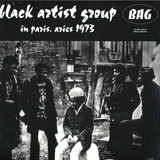
Outstanding free jazz session recorded in 1973 in Paris by Chicago outfit BAG.
It was Lester Bowie, trumpeter with the Art Ensemble of Chicago, who suggested that the Black Artists' Group (BAG) should head for Paris. In 1972 several members of BAG took his advice and flew to France for an extended stay. The following year a concert featuring saxophonist Oliver Lake, trumpeters Baikida Carroll and Floyd LeFlore, drummer Charles Bobo Shaw and trombonist Joseph Bowie (Lester's younger brother) was recorded and subsequently issued as In Paris, Aries 1973, a strictly limited edition LP on the group's own label.
Since the formation of Black Artists' Group in 1968, the home of this multidisciplinary arts collective had been St Louis, Missouri, the city where the Bowie brothers had grown up. It was there that Lester Bowie had started to investigate the expanding horizons of jazz before moving, in 1966, to Chicago where he joined the recently established Association for the Advancement of Creative Musicians (AACM). His close friend Oliver Lake visited Bowie, attended AACM concerts and meetings and was inspired not only by their artistic vision and integrity but also by their efficient organisation. In Chicago musicians were making things happen for themselves, taking control of their own destinies and giving shape to their lives as creative artists.
In June 1969, the Art Ensemble of Chicago had taken their music to France. During the preceding decade Paris had established a reputation for audiences that were unusually well-informed and open-minded, receptive to the uncompromising music of black American innovators such as Cecil Taylor, Ornette Coleman, Albert Ayler and Sun Ra. The city that had nurtured not only Cubism and Surrealism, but also Jean-Luc Godard and contemporary cinema's Nouvelle Vague was well prepared for the sonic collage forms and stylistic dislocations of the Art Ensemble. During that same month violinist Leroy Jenkins, trumpeter Leo Smith and saxophonist Anthony Braxton also arrived in Paris, three further emissaries from the AACM.
The adventure of collective improvisation resonated with the Parisian zeitgeist. Enthusiastic audiences attended their concerts and coverage in the media. In Paris, Aries 1973 offers an isolated and fascinating glimpse into that phase of the group's existence. The album is dedicated to the memory of Kada Kayan, a bassist who had hoped to make the trip from St Louis to France but, tragically, had grown ill and died. His absence adds special poignancy to the sound of the bass when it appears on this recording, played by Baikida Carroll. Listeners keen to hear Kayan himself in the company of Lake, Bowie, Shaw, LeFlore and Carroll should seek out Red, Black and Green by the 10-piece Solidarity Unit, Inc. That album, recorded on 18th September 1970 and dedicated to Jimi Hendrix, who died on that day, features an earlier version of Shaw's composition 'Something to Play On.'
In Paris, Aries 1973 reveals BAG's musical affinities with the Art Ensemble of Chicago. Both groups preserved an independently minded approach to the notion of free jazz and a carefully filtered awareness of pan-African musical practices, while their creative interest in space, mobile structure, chance occurrences and simultaneity also suggests parallels with the concerns of leading experimental composers working at that time. These performances in Paris of Shaw's 'Something to Play On' and Lake's 'Re-Cre-A-Tion,' plus two collective compositions/improvisations, display the dedication to structural fluency and sensitivity to coloration that accompanied BAG's unorthodox group dynamics and their unconventional instrumental combinations. In this case the musicians embrace congas, log drums, marimbas, woodblocks, cowbells and gongs. This is not a showcase for solos, but a shape-shifting and multi-centred statement of togetherness, quest and discovery. Removed from BAG's original multidisciplinary context the music still exudes an exhilarating spirit of collaborative exploration and shared excitement.
Death Is Not The End's 333 sub-label follows the reissue of Devon Russell's Darker Than Blue LP late last year with a first-time reissue of a veritable reggae-dancehall holy grail - Robert Ffrench's 1985 LP 'Wondering'.
Pioneering artist and producer (and cousin of the late, great Pat Kelly) Robert Ffrench was born in central Kingston in 1962, recording his first records in 1979 at the age of 17. Coming out off the back of a slew of roots & early dancehall-style 45s cut with a wide range of producers thoughout the early '80s, the Wondering LP followed closely after two acclaimed LP sets ('Showcase' produced with Lord Koos & 'The Favourite' for Ossie Thomas' Black Solidarity label - plus a split showcase LP with Anthony "Gunshot" Johnson for Jah Thomas' Midnight Rock label).
Ffrench would write and produce the Wondering LP himself in it's entirity, laying down the tracks at Herman Chin-Loy's Aquarius & Michael Carroll's Creative Sounds studios with the help of engineer Christopher Daley. Representing the sound of an artist first confidently sriking out on his own, the album elegantly mixes a classic rub-a-dub & lovers rock-inspired sound with nascent digi-esque flourishes. It boasts an enviable list of contributors too, incl. Sly & Robbie, Dwight Pinkney, Robbie Lyn, Nelson Miller (Burning Spear) and Ronald "Nambo" Robinson among others, with Beres Hammond also providing backing vocals in places.
Following the release of Wondering, Ffrench would continue to write and produce, soon after releasing two further self-produced LPs for Edgar White's Parish label - and founded his own 'France' label in the late 80s, through which his productions would start to hit big, most notably alongside Courtney Melody on 'Modern Girl', and with US rapper Heavy D on the track 'More Love'. Robert's productions released through later label 'Ffrench' would go on to boast the cream of the crop of dancehall artists throughout the 90s and early 2000s, and he is often credited with discovering Buju Banton (producing his first single "Ruler" on the Stamina riddim). Ffrench is still actively producing music of his own to this day, having released singles 'Everyday of My Life' and 'Black Is a Colour' in late 2022 and Feb 2023 respectively, available through all digital platforms now.
333, under exclusive license from Robert Ffrench.
THE SUBWAYS remain one of the most exciting live bands on the current touring circuit, thrilling crowds with their explosive rock sound and wild stage performances.
Back in 2005, with an average age of just 18, Billy, Charlotte and Josh crashed onto the international music scene with their debut album ‘YOUNG FOR ETERNITY’, and their rock-club floor-filling single ‘ROCK & ROLL QUEEN’. The NME proclaimed them “The sexiest thing to sweep rock n roll off its feet in years!”. An appearance on American smash teen drama THE OC and in Guy Ritchie’s London Gangster flick ‘RocknRolla’ has helped make the track a Spotify Rock Playlist mainstay.
The band have released four albums to date. Their sophomore, ‘ALL OR NOTHING’ (2008), was recorded in LA with heavyweight producer Butch Vig and, is “Buoyed with emotional heft and supernova guitar riffs, wired around a maturing song craft” (MOJO). The tracks were written at a time when Billy was battling to save his voice following surgery to remove nodules from his vocal cords. ‘MONEY AND CELEBRITY’ followed in 2011, filled with “brilliantly anarchic punk-pop vignettes; each being a big musical finger that sticks it to financial greed, the mediocre mainstream and the fame fetishists” (ROCKSOUND) and included the Radio 1 A-listed single ‘WE DON’T NEED MONEY TO HAVE A GOOD TIME’. Their self-titled 4th album saw the emergence of singer and songwriter Billy Lunn as a producer, as he took control of engineering and mixing duties and is "On Par with the best things they have ever written... and finds the band energized, focused and battle-ready" Q Magazine.
The global pandemic, though cutting short their 40+ date international ‘Young For Eternity Anniversary Tour’, has kept Billy busy in his newly-established Hertfordshire studio, with Charlotte and Josh in their respective homes focused on remotely recording Album 5. Makeshift under-stair vocal booths were constructed, and the album is now ready for a summer, 2022 release alongside a full European Tour
In April 2021 the band signed to ‘Alcopop’ and released the politically-charged, Black-Lives-Matter-inspired single “Fight”, which they describe as “a letter in two parts: a gesture of solidarity with the Black community and communities of colour as they face their daily oppression at the hands of systemic racism, and a wake-up-call to the white community that such oppressions do in fact exist, and that we must acknowledge these oppressions and fight alongside marginalised communities as allies.”
Heady with hooks and unforgettable melodies, gliding on deeply danceable grooves, always with Air Waves’ innate compassion, concision and uncanny pop sense shining throughout. A masterpiece that’s beautifully simple, instantly accessible and entirely addictive. Featuring Cass Mccombs, Skyler Skjelset (Fleet Foxes, Beach House), Luke Temple, Brian Betancourt (Hospitality, Sam Evian), Rina Mushonga, Frankie Cosmos, Lispector, David Christian, Ethan Sass, and Ben Florencio. ‘The Dance’ has waited three years to see the light of day and it comes to us now, blinking, smiling in the widening light of 2022 feeling more needed and necessary but also more joyous than ever before. It’s both a snapshot of these songs as they were recorded but crucially, in the intervening time those songs have had additional arrangements crafted by Nicole, created remotely and virtually, with a few like-minded collaborators. The result is simultaneously Air Waves freshest, most spontaneous yet finessed album yet. Nicole Schneit released their first independent album in 2009 under the Air Waves moniker, a name inspired by a Guided By Voices song - subsequent albums like 2010’s ‘Dungeon Dots’ (which featured a guest vocal from fellow Brooklynite Sharon Van Etten), 2015’s ‘Parting Glances’ and 2017’s stunning ‘Warrior’ crystallised Schneit’s vision of loose-but-focused, convivial but startling pop. ‘The Dance’ continues that trajectory but finds Schneit opening up their music to a more fluid sense of space and movement, while keeping their lyrical eye between the personal and the political, from the specific to the universal with a haiku-like directness and suggestion. You won’t find a better soundtrack for the solidarity, strength, romance and movement we all need right now than ‘The Dance’ - Air Waves’ best album yet // “There is a rawness, both musical and emotional, proving that the simplest ways to communicate feelings are sometimes the most effective” Pitchfork // “More varied and ambitious than ever” Stereogum // Track List A1 The Roof (feat. Luke Temple & Rina Mushonga) A2 The Dance A3 Star Earring (feat. Lispector) A4 Alien (feat. Cass McCombs) B1 Black Metal Demon (feat. Frankie Cosmos & Merce Lemon) B2 Treehouse B3 Wait B4 The Light B5 Peer Peer
- A1: Desmond Dekker & The Aces – Unity
- A2: The Heptones – Peace And Harmony
- A3: Dennis Brown – Revolution
- A4: Ken Boothe – Freedom Street
- A5: U Roy & The Jamaicans – Peace And Love
- A6: The Maytals – We Shall Overcome
- B1: The Ethiopians – One Heart, One Love
- B2: Delroy Wilson – Conference Table
- B3: The Melodians – Let's Join Hands (Together)
- B4: The Maytones – Black And White
- B5: The Viceroys – We Must Unite
- B6: Nicky Thomas – Love Of The Common People
- C1: Ken Boothe – Freedom Day
- C2: Delroy Wilson – Better Must Come
- C3: Dennis Brown – Equal Rights
- C4: Lee Perry & The Upsetters – Justice To The People
- C5: Danny Ray – White And Wonderful, Black And Beautiful
- C6: Junior Byles – Demonstration
- B1: Bob Andy – Life
- B2: Max Romeo – Don't Be Prejudice
- B3: Sharon Black – Struggling
- B4: Ken Boothe – Is It Because I'm Black?
- B5: Billy Dice & The Untouchables – Unity Is Love
A collection of powerful songs from across the Trojan catalogue, calling for unity and solidarity.
Trojan Records played a pivotal role in bringing Jamaican music to the UK and Europe; not only did it provide comfort and a sense of home for the Caribbean community living in the UK, but it also became an outlet for many thousands of white, working class youths, drawn to the exciting new sounds of reggae. This in turn created a new youth subculture within the UK.
Trojan became more than a music label, it also brought people together through culture, style and fashion. For the first time, people of all races and creeds would unite in the dancehalls, and friendships blossomed because people shared a common love for one thing - the music.
This collection of songs communicates an intergenerational, international story that, on the one hand, elucidates the black experience; on the other, repeats the call for us all to come together in unity.
As the 1970's turned into the 1980's Reggae's beat took another turn,slowing down to allow more space for the music to breathe.
The new sound became Reggae's focus and the Roots Radics one of Jamaica's finest session/backing bands were at the forefront of this radical change.
The Roots Radics were based around the nucleus of Errol'Flabba'Holt(bass),Lincoln Valentine 'Style' Scott(drums) and Eric 'Bingi Bunny'Lamont(guitar).
Holt and Bingi Bunny had previously been involved in the Morwells label set up and had cut some popular tunes such as 'Swine and Dine','They Hold Us Down' and the great 'Kingston Twelve Tuffy'.
Before this Bunny had played for one of the other great Reggae sessions band the Channel One based Revolutionaires.
It was the demise of this legendary band due to Sly and Robbie's commitments to their own Taxi label that led to the formation of the Roots Radics.
The Radics have worked with many different producers over the years including Linval Thompson with the series of alums 'Space Invaders Destroy the World' and 'Win the World Cup'.They also worked as Gregory Isaacs backing band and were responsible for the rhythms that made up his seminal 'Night Nurse' set.
We have caught the Roots Radics for this set cutting rhythms in their favourite environment the famous Channel One Studios.
On this occasion working with producer Ossie Thomasfor his own Black Solidarity label,a match made in Heaven...Enjoy..
Outernational Sounds very proudly Presents The Mallory-Hall Band "Song of Soweto" & "The Last Special".
Limited, fully licensed digital and vinyl reissues of two crucial South African sessions led by Charles Mallory and Al Hall, Jnr., featuring Kirk Lightsey, Marshall Royal, Rudolph Johnson, Billy Brooks and more! Essential companion pieces to Kirk Lightsey’s legendary ‘Habiba’.
Featuring tracks:
Song Of Soweto: Side A – ‘Song of Soweto’, ‘Hamba Samba’; Side B – ‘Cape Town Blues’, ‘Moroka Rock’, ‘The African Night’
The Last Special: Side A - ‘The Last Special’, ‘Princess of Joh’Burg’; Side B - ‘Amafu (Clouds)’, ‘Blue Mabone’
Never released outside South Africa, and out of print since 1974, Outernational Sounds presents two long-lost Johannesburg sessions from the Mallory-Hall Band – an all-star review of West Coast jazz stars who toured apartheid South Africa in the mid-1970s.
Sanifu Al Hall, Jnr. is a musician’s musician. During a storied career stretching across six decades, Hall has recorded with the greats of the music including Freddie Hubbard, Doug Carn, and Johnny Hammond, and leads his own Cosmos Dwellerz Arkestra. But until recent years, the only records on which he had appeared as leader were a brace of rich, funky LPs, Song Of Soweto and The Last Special, issued only in South Africa under the moniker of The Mallory-Hall Band (named for Hall and his co-leader, guitarist Charles Mallory – musical director for Martha Reeves and the Vandellas, Mallory was conductor for Dusty Springfield touring bands, and had worked with John Lee Hooker, Stevie Wonder, and many others). Neither LP had any wider release, and both have remained out of print since 1974. How did a young stalwart of the Los Angeles jazz scene end up in a recording studio in apartheid South Africa?
Al Hall, Jnr. and Charles Mallory had arrived in South Africa as part of the touring band for the singer Lovelace Watkins. Sometimes billed as ‘the Black Sinatra’, the Detroit-born Watkins sang standards and ballroom classics on the Las Vegas circuit. He never made it big in the US, but in his 1970s heyday he was a huge star in southern Africa, and 1974 he hired a jazz big band to accompany him on a tour of South Africa – Hall and Mallory were part of the line-up, alongside Mastersounds bassist Monk Montgomery, pianist Kirk Lightsey, tenorist Rudolph Johnson, drummer Billy Brooks, and Marshall Royal, musical director of the Count Basie band. The tour was a huge success, and during downtime from performing, members of the group managed to independently record no fewer than three albums. Lightsey and Johnson’s stunning Habiba was the first (reissued as Outernational Sounds OTR.013), and it was followed by two crucial sessions led by Hall and Mallory – Song of Soweto and The Last Special, issued on the local IRC imprint.
Visiting apartheid South Africa in 1974 was a controversial choice for any artist. Numerous artistic and cultural bodies around the world had already announced that their members would boycott the country in solidarity with the struggle against apartheid, and working in South Africa was severely frowned on by anti-apartheid activists everywhere. For a Black band, touring the country to play to mostly white audiences could have been seen by many both inside and outside South Africa as a questionable decision. ‘It was a batch of mixed reactions when I choose to visit South Africa whilst apartheid policies were in place,’ Hall recalls. ‘To me the choice was a simple one – “I wanna see for myself!” I also wanted to be a part of breaking down racial barriers, having been down some of the same roads in my own country.’
The albums were recorded by a twelve-piece band at Johannesburg’s Video Sounds Studios in December 1974, and feature the legendary pianist Kirk Lightsey, Black Jazz recording artist Rudolph Johnson, and the rest of the touring band. Both records are superbly arranged slabs of peak 1970s funky big band soul jazz, with tasteful Latin inflections and more than a nod to South Africa’s upful township jazz sound. They are the sonic traces left by a seasoned African American band who were touring South Africa in the depths of the apartheid era, and who immediately moved beyond the segregated hotels and ballrooms to build links with local South African players and audiences.
Never previously available outside South Africa, Outernational Sounds’ new editions of Song of Soweto and The Last Special (alongside our edition of Kirk Lightsey’s Habiba) represents the first time these albums have been in print for nearly fifty years. Fully licensed from Gallo Records and pressed at Pallas in Germany from Gallo’s original masters, they feature new sleeve notes from Francis Gooding (The Wire) based on interviews with Al Hall, Jnr., and a reminiscence from pianist Kirk Lightsey.
Gatefold double LP. Black Vinyl. No DL Code is out in January, 1000 copies available. Since 2006 Maybeshewill have released four full-length albums of towering, cinematic instrumental music. After a decade long career that saw them tour across four continents they bowed out in 2016 with a sold out show at London’s Koko. Having reformed briefly in 2018 at the request of The Cure’s Robert Smith for a show at Meltdown Festival, 2021 sees the band return with their first new material since 2014’s Fair Youth. Having worked on ideas separately in the intervening years, it was the sketches of music that would become ‘No Feeling is Final’ that pulled the band back together. Building on the songs that they felt needed to be heard, together. ‘No Feeling is Final’ was born from a place of weary exasperation. From the knowledge that we’re living in a world hurtling towards self-destruction. We watch as forests burn and seas rise. As the worst tendencies of humanity are championed by those in power; rage, fear, greed and apathy. We see every injustice, every conflict, every catastrophe flash up on our screens. We stay complacent and consume to forget our complicity in the structures and systems that sustain that behaviour. As the world teeters on the edge of disaster, we sigh and keep scrolling, the uneasy feeling in our stomachs eating away at us a little more each day. However easy it would be to switch off and pretend all is lost, there’s no choice but to remain engaged. To set that feeling of hopelessness aside and use the fear and frustration as fuel to make something positive. ‘No Feeling is Final’ is a message of hope and solidarity. It’s a story of growing grassroots movements across the world that are rejecting the doomed futures being sold to us, and imagining new realities based on equality and sustainability. It’s a reckoning with the demons in our histories and a promise to right the wrongs of the past. It’s a plea to take action in shaping the world we leave for future generations. It’s a simple gesture of reassurance to anyone else struggling in these troubled times: “Just keep going. No feeling is final.” Continuing and building on the self-sufficient, do-it-yourself ethos that has been core to their existence, ‘No Feeling is Final’ was once again recorded and produced by bassist Jamie Ward, and released on the bands own Robot Needs Home Collective Label, in collaboration with close friends Wax Bodega (North America), New Noise (Asia) and Birds Robe (Australasia).
Mystery Jets announce that their sixth studio album ‘A Billion Heartbeats’ will be released on 27th September on Caroline International. The band also release ‘Screwdriver’, the first single to be taken from the album.
Screwdriver is an uncompromising look at the rise of the rebranded alt-right in the UK, built around a powerfully positive message: "Fight them with love / then the world will be ours".
Lead singer Blaine Harrison says of the song, “Screwdriver is about the mechanics of intolerance. Looking back at times of economic instability in history, we see how easily deep chasms grow in society and the population seeks change wherever it is most convincingly promised. Conflict arises as cultures and belief systems clash, unwilling to accept one another’s place in society, because we are fed the rhetoric that our neighbours are those responsible for our problems: then inevitably nationalism once more raises its ugly head above the parapet. But whereas political agendas fuel divisiveness, music unites and reminds us of all that we have in common. The message of Screwdriver is not a pessimistic one - because perhaps faced with confrontation we can find understanding, and even maybe learn how to listen to, and love one another.”
Each room of the house in the video is a metaphor for the different sections of society in the UK. It wraps around the narrative of the song, that in order to overcome adversity, you have to “Fight Them With Love”. The visual showcases the song’s inherent message, clashing aggressiveness with tenderness, and culminates in showing after anger, we can always come together through love.
All great albums start from a unique perspective. But try a window on the Strand, in an abandoned office block, overlooking the kind of political upheaval London hasn’t seen in a generation. Blaine Harrison was living as a property guardian right around the corner from Trafalgar Square when he found himself witness to an entire year of protests. Every weekend from January 2017 on, people were marching for a different cause: "In the space of six months it was Black Lives Matter, the huge ‘Our NHS’ march, Unite for Europe," he recalls. "Then the solidarity sleep-out organised by Help Refugees, where we slept in Whitehall for the night... The protestors would wake me up in the morning. I’d just walk down and join in.”
Over the course of that year, Mystery Jets' sixth long-player, A Billion Heartbeats, was born. "This album wasn’t about making pointed opinions,” says Blaine. “It was about being a mirror for what’s going on, reflecting back the way people are feeling.” By turns tender and fierce, abstract and full of classic rock energy, A Billion Heartbeats achieves a balance of passion, fear and hope. Amid the colourful cavalcade of rich harmonies, heavy guitars and rallying cries, the album’s essential message - about personal responsibility, and the power in becoming engaged. In a sense, it's not just their "state of the nation” record but their “state of a generation” record too.
We increasingly hear from musicians that music should be an escape these days - that there’s enough suffering in the world, enough misery on the news, without writings songs about it too. A Billion Heartbeats makes all that sound like a bit of a cop-out. These are songs of protest that get the heart racing in joy; high on hope, and serious in their message. Proof, basically, that music speaks louder than words.
In the afterglow of her acclaimed 2020 album Silver Ladders, Los Angeles-based harpist Mary Lattimore returns with a culminating counterpart release, Collected Pieces: 2015- 2020. The limited-edition LP features new and previously unreleased material, Bandcamp-only singles, and other obscurities alongside standouts from her 2017 tape Collected Pieces. Beyond the vinyl compendium, an expanded tracklist on the cassette/digital version brings more of Lattimore's archives together for the first time. Lattimore has described the process of arranging these releases as akin to "opening a box filled with memories," and here that box continues to populate, accessible for both the artist and fans. Evocative material separated by years, framed as a portrait of an instrumental storyteller who rarely pauses, recording and often sharing music as soon as it strikes her. Seemingly in constant forward motion for the last five years since her Ghostly debut, Lattimore glances back for a breath, inviting new chances to live in these fleeting moments and emotions; all the beauty, sorrow, sunshine, and darkness housed within. Opening the cassette version is "Mary, You Were Wrong," which mirrors an author's bout with a broken heart. "It's about how you have to keep on going even if you make some mistakes," she says. The bittersweet refrain cycles throughout, a little brighter every time, slowly, like the way time tends to heal. Unreleased track "Sleeping Deer" came together during Lattimore's artist residency on a cattle ranch in Wyoming. She remembers, "a small deer whose mother I think had been run over by a car would hang out in the yard. I called him Lollipop and would leave vegetable scraps out." Lollipop returned daily to eat, rest, and wait for more. The music this vision inspired is patient and droning, with light plucks giving way to deeper, vibrating tones, permeating with a sense of anticipation. Next is a newer single, "We Wave From Our Boats," which she improvised after walking her neighborhood during the early days of lockdown in 2020, and shared on her Bandcamp. "I would just wave at neighbors I didn't know in a gesture of solidarity and it reminded me of how you're compelled to wave at people on the other boat when you're on a boat yourself, or on a bridge or something. The pull to wave feels very innate and natural." The heart of the track is a somber loop, over top which Lattimore's synth notes ruminate, each a gentle shimmer of optimism in the most anxious and absurd of days. Also recorded in 2020, "What The Living Do" is inspired by Marie Howe's poem of the same name, which reflects on loss through an appreciation for the mundane messiness of being human. The echoed, slow-marching track has a distant feel to it, as if the listener is outside of it, watching life play out as a film. "Princess Nicotine (1909)" scores actual footage, a dream sequence Lattimore imagined for J. Stuart Blackton's surreal silent film Princess Nicotine; or, the Smoke Fairy. She adopted the same approach for "Polly of the Circus," explaining it was the name of one of the old silent films discovered in permafrost in the Yukon featured in the documentary Dawson City: Frozen Time, "the only copy that survived and it kind of warped in the aging process." A trove of pieces are collected here, most recorded in the moment, just Lattimore and her Lyon and Healy Concert Grand Harp, contact mics, and pedals. Like her most affecting work, these songs showcase Lattimore's gifts as an observer, able to shape her craft around emotional frequencies and scenes. Her power as a musician is rooted in how she sees the world: in vivid detail, profoundly empathic, with deep gratitude for nature and nuance.
New York City 4-piece deliver a modern blues rock masterclass on their feisty debut album.
“A timeless classic rock sound that revels in lean riffs and raw emotion.” – Afropunk
In an age where artistic merit is awarded to those who shout the loudest, Dakota Jones pride themselves on an unwavering ability to leave a lasting impression. Spearheaded by Tristan Carter-Jones fierce and unashamedly uncensored songwriting, the band’s fast-growing reputation as formidable live act has stamped Dakota Jones with the hell-hath-no-fury power of Chaka Khan, the wild spontaneity of Janis Joplin, and the honey-dripping sensuality of Marvin Gaye. Their debut album’s message of proud black heritage and triumphant queerness manifests itself in Carter-Jones’ ability to challenge norms of adulthood and femininity as she takes a deep dive into some of life’s most visceral emotions.
Tristan Carter-Jones: “I’m a black, queer woman expressing myself through love and music. Some folks still find that to be a transgressive act in and of itself. I work to fight that idea. I write a lot about my
Continued over…
sexuality and the ways in which I express it. Songs about sex and love bounce back and forth between songs about heartache, hangovers and self-medication, and the pleasure and pain of truly finding yourself. I don’t think we get to hear these things from a woman’s mouth as often as we should.”
Serving as an instant tone setter, the album opens with the line "Stretch marks from growing pains" with Carter-Jones lamenting the woes of adjusting to adulthood on lead single ‘Did It To Myself’ - her husky and commanding vocal instantly asserting its place in the spotlight. The atmosphere soon turns steamy on the flirtatious title track ‘Blacklight,’ whilst fantasising over a modern-day Bonnie & Clyde love affair the funk-laden ‘We Playin Bad Games’ packs a punch with its tale of free spirits entwined in a haze of late-night revelry.
Elsewhere, stories of caustic heartache twist the knife into wounded blues guitar riffs on ‘Like That’ and ‘Black Magic (That Power)’, in which Carter-Jones’s stoical voice never once faulters as she mourns the memories of a previous flame. Personal prayer ‘Lord Please’ recites empowered words of reassurance, and solidarity in the face of injustice erupts into a rallying cry for change on the classic sounding ‘Noise’ – written as a reaction to the 2016 US election. “I woke up after the election feeling pure panic and fear in my body,” remembers Tristan. “I wanted people in a place of privilege to stand up for what I was feeling, stand up for injustice, stand up for all of the things we need to change as a country. I wanted their rage, and I wanted their noise.”
Finally, the band’s tender tropes of togetherness eventually boil into gritty, guitar-slung balladry on hidden bonus track, ‘California,’ where, knees buckling under the weight of past trials and tribulations, Carter-Jones sets out on one final journey of self-discovery, hastily pulling out from reality and leaving only a dust cloud in her wake.
Production comes courtesy of the Grammy-winning John Wooler, ex Virgin Records A+R and founder of the Blues label Pointblank who has worked with everyone from John Lee Hooker and John Hammond to Isaac Hayes and Van Morrison. The album also features a wealth of hugely talented and accomplished musicians, including backing vocalist Kudisan Kai, former backing vocalist for the likes of Elton John, Chaka Khan, Anita Baker, Natalie Cole, Beck, Sting, Mary J. Blige and Jill Scott. Also present; Grammy winning keyboardist Jon Gilutin, who has spent years working with some of the industry’s most respected and iconic artists including Linda Ronstadt, James Taylor, Lady Gaga, Willie Nelson, Aretha Franklin, Diana Ross, Jackson Browne, Celine Dion, Bonnie Rait and Carole King. You’ll also hear the talents of acclaimed guitarist Michael Toles. Most well-known for being a part of the Stax Records group The Bar Kays, and for his contributions on famous records by Issac Hayes, Al Green, BB King, Johnny Taylor, Rufus Thomas, Albert King to name just a few.
Dakota Jones are a rising funk, soul and blues rock band from Brooklyn, New York City. Comprising of Tristan Carter-Jones (vocals), Scott Kramp (bass) Steve Ross (drums), and acclaimed musician Randy Jacobs (guitar) - former member of Was(Not Was) who has recorded for Seal, Bonnie Raitt, Tears for Fears, Elton John and many others. Though Carter-Jones and Ross first met in 1999 whilst at primary school, the band formed years later following a series of home jam sessions in 2016. The band’s collective alias originates from Carter-Jones’s middle name, ‘Dakota’. Dakota Jones have since released a string of acclaimed singles and EPs as well as received international attention for their track, ‘Have Mercy’ after it featured on Netflix’s 2019 film, Always Be My Maybe starring Ali Wong and Randall Park – and now after years of hard work and determination, the band are finally set to reveal their long awaited debut album. “We’d been regularly releasing EPs, waiting for our chance to come, and wondering what that would look like,” says Carter-Jones. “We didn’t realise until we started making this record that we needed to stop waiting for some break to come along, and just do it ourselves, independently.”
“Black Light really dives into a place of funk soul and everything that comes with it. There’s joy and dancing, sleek guitar licks and funky bass slaps. There’s pain and longing, and there’s the feeling of relief when you come out of that place and find your joy and purpose again. Black Light is my story.”
- A1: All Ausländer Go To Heaven (Reprise) 05 42
- A2: Deutsche Pässe 02 01
- A3: Professional People 01 53
- A4: The Price Of Teilhabe 03 02
- A5: Automobile Love 02 27
- B1: Bürogebäude In Und Um Frankfurt 04 57
- B2: Dark Boys 01 52
- B3: Freizeit ´20 03 15
- B4: The Good Policeman 03 01
- B5: Proposal For A Worker`s Anthem At Dmu2 Daglfing 02 44
- C1: Doggerland 03 43
- C2: All We'll Ever Need 03 18
- C3: In Every City, In Every Aldi The Blood Of My Brothers And Sisters Taints Your Spargel 03 11
- C4: The Crowd 02 12
- C5: Home 02 59
- D1: Soziokultur 02 10
- D2: Transatlantic Ideology 02 58
- D3: Mjunikcentral Is A Dangerous Place, We Need More Guns To Keep You Safe 3 45
- D4: Wohlfahrt 03 45
In view of the immense Black Lives Matter mobilisation in reaction to the murder of George Floyd and the comparatively meagre societal reaction to the attack in Hanau, the question arises: How come our society does not show the same empathy and solidarity towards its own fellow citizens with Kurdish, Turkish, Bulgarian, Bosnian, Afghan migrant backgrounds or members of the Roma and Sinti?
How limited is our postcolonial discourse if we are unable to address the racist exploitation of those who repair our cars, deliver our parcels or harvest our asparagus?
It’s all a sham. Shake it off like a biometric photograph. Shake off that false consciousness. The Black Diaspora is a transatlantic lie invented by music curators and journalists. Embrace this nuanced return to structures and superstructures, to articulations and historical constellations as analytical tools.
Allow me to dampen your expectations. This is not the sound of decolonisation. This is no compilation of BLM protest songs. This is no celebration of Black emancipatory struggles. You will not be able to play this at your hip post-pandemic house party. This will not go down well with your woke friends. This is music for the square in the room. For that reluctant BAME/Person of Color repelled by your fetishisation of the African-American experience.
This is music for gated communities. This is Fehler Kuti singing of class relations, not of identities and positionalities. This is Fehler Kuti resisting.
Listen to these songs of infrastructure and appraisal of the welfare state. Join me in mourning the broken promises of prosperity for all. Send that “Ausländer“ of your mind to heaven. Colonialism fucked you up. Platform Capitalism is keeping you in chains. Are we to unionise all human and non-human workers at Amazon? Will modernity always have that "forever nigger“? What about those dispossessed field hands harvesting your asparagus?
All is lost. The system is rigged. Because all histories, gestures and identities have been absorbed into this late capitalist apparatus we call diversity. It can integrate anything and anyone. It made me. It is the price of the ticket. And it is unable to challenge its own premise of an atomised society. As if you and I had so little in common.
They will try and help you. They will build a museum for your history and a scholarship program for your future. I warn you. Don‘t let them give you a name. Resist appellation. Don’t get that German passport. Don‘t eat asparagus.
Fehler Kuti, Spring 2021
All songs by Julian Warner. Produced by Markus Acher and Tobias Siegert.
Markus Acher – drums, percussion, backing vocals Micha Acher – sousaphone, trumpet Cico Beck – synthesizer Jenny Bohn – backing vocals Pacifico Boy – vocals Katja Kobolt – spoken word Theresa Loibl – bass clarinet, backing vocals Sascha Schwegeler – steeldrum, kalimba, percussion, backing vocals Tobias Siegert – bass, synthesizers, percussion, backing vocals Julian Warner – piano, memotron, vocals
recorded and mixed by Tobias Siegert at Minga Records, july – december 2020 mastered by Moritz Illner at Duophonic
Cover art and photography by Andreas Neumeister. Layout by Sascha Schwegeler.
Fehler Kuti “Professional People” is part of the same multiverse as “The History of the Federal Republic of Germany as told by Fehler Kuti und die Polizei”. A production by Julian Warner. In cooperation with Münchner Kammerspiele. Funded by the Department of Arts and Culture of the City of Munich. Released by Alien Transistor.
To celebrate 20 years of the record label Jamaican Recordings,Jah Floyd has cut a track telling the story of its beginnings and the people involved. The initial meeting of legendary Reggae producer Bunny `Striker’ Lee in Jamaica and the various artists that became part of the labels catalogue. Such greats as Tapper Zukie, Niney The Obsever, Black Solidarity producer Ossie Thomas. Artists and Producers who music helped define the labels sound. A great collection of releases for all involved alongside its other label Kingston Sounds.
What would have been the labels 20th year and Bunny Lee’s 80th birthday celebrations have sadly been curtailed by the sad passing of Mr Lee in late 2020.
But makes this 500 only 7’’ all the more poignant and comes with a dub version as its B-Side,which for the Reggae label Jamaican Recordings the dub versions was its driving force.
As the track says in its lyrics… `Hope you enjoy the ride respect… Jah Floyd’.
- I Remember Clifford (Benny Golson)
- Pandemic Of Ignorance
- (David Helbock)
- Prelude In E-Minor, Op
- 28: No. 4 (Frédéric Chopin)
- Truth (David Helbock)
- Hymn For Sophie Scholl (David Helbock)
- Time After Time (Cyndi Lauper & Rob Hyman)
- Solidarity Rock (David Helbock)
- I Feel Free (Jack Bruce)
- On The Shore (Arne Jansen)
- Korona Solitude #1 (Sebastian Studnitzky)
- Angel Eyes (Matt Dennis)
- Surrounded By The Night (Peter Madsen)
“It was my wish to cool things down a bit,” says David Helbock. The
Austrian-born pianist has formed a new trio with guitarist Arne
Jansen and trumpeter Sebastian Studnitzky and it is clear when he
talks about it how far he has already moved on since his previous
group: “In the Random Control Trio we had a lot of instruments on
the stage, there was a lot of changing from one instrument to
another… and a lot of notes.” And the new group? “It is more about
emotions. And emotions are the most important thing in music.”
There are other differences too. Whereas Helbock’s previous groups
have consisted of musicians from his native Austria, he has now lived
in Berlin for five years, and ‘The New Cool’ presents his first group
formed with players who have also adopted Berlin as their home city.
With Arne Jansen, originally from Kiel, what appeals to Helbock is
that “he is such an unselfish player, very centred and very calm - and
subtle too. With him it’s all about the music.” Studnitzky is originally
from the Black Forest and Helbock liked “his style of playing with that
very airy sound” and the fact the range of timbres and moods he
creates with just one effects device. And how does it work in the
trio? “All three of us are melody players, but we are all capable of
holding back and giving space to the others.”
It would be wrong, however, to see the elegiac feel of much of this
album as a response to the pandemic. Helbock and producer Siggi
Loch were having “a productive and fruitful discussion” about these
ideas a full year before the recording sessions took place at the Emil
Berliner studios in August 2020. Loch has a fascination for the way
cool jazz “turned the wheel around” to connect with a wide audience
and references and connections with the cool jazz movement are
scattered throughout this album. It is also the very first time that
Helbock has included a tune by his teacher for over a decade,
American pianist Peter Madsen, who toured extensively with Stan
Getz and also taught Maria Schneider.
Helbock has been inspired by the innovations and concepts of Lennie
Tristano and his sense of affinity with the Chicago-born genius runs
deep. Tristano once decreed that “the jazz musician’s function is to
feel.” Helbock, Jansen and Studnitzky have taken that maxim to their
hearts.
LP pressed on 180g vinyl with digital download included.
- 1: Prologue: Rain
- 2: A Trail Of Wind And Fire
- 3: Second Born Child
- 4: Tokyo Music Experience
- 5: The Rise And Fall Of The Plague
- 6: Another Year
- 7: Fragments
- 8: The Disappearance Of Dr. Duplicate
- 9: Excerpt Taken From Chapter 3
- 10: Where Is My Dream?
- 11: Part One: The Long Drought
- 12: Part Two: Crossing The Desert
- 13: Epilogue: Big Poisonous Shadows
BLACK vinyl with deluxe origami fold out sleeve & obi strip & DL Card. CD Wallet. The third album from Dutch punk-laced noiseniks adds new maturity and a conceptual feel that pulls the extremes of their sound together. A psyche-fuelled journey into the id punctuated with rhythmic kabuki modal mood swings, thunderstorms, digital beeps, traffic noise, and just plain old beautiful cacophonous reverb-drenched sound when needed. The 'third chapter' refers to the last five years that the Dutch band have spent creating their "difficult" third album. Each song spins a yarn; there are plagues, dreams, wind and fire, 'mythical' characters, and the search for the secret government warehouse. Lead single, Tokyo Music Experience, resonates with a conveyor belt-propelled modal guitar, reflecting the halcyon days of Japanese super-productivity; a mesmerising mantra, infected with news bulletin on-the-hour bleeps underlining its time-sensitive nature; a pristine super-commercial anthem to drive loyalty and reinforce solidarity with the party! Having been described as creating "underground noise with a bracing, warped pop appeal" (Mojo), their new album is a coming-of-age post-classic with a unique worldview - inspired by Van Dyke Parks (Song Cycle) Scott Walker (3 & 4), Moondog (Elpmas), White Noise (An Electric Storm) and Beach Boys (Smile). If their previous effort (Tape Hiss) was their very own sketch of a sketch for an incomplete concept album, a noisy reaction to their previous life, then 'Excerpts From Chapter 3..', with all its interlaced intricacies, is the realisation of their transition from punk-spiked-pop to psyche-pop protagonists. Evolving, testing, infectious...
Created in 2006, Setenta, the Latin Soul Band spreads a unique mix over the world scene. For their fifth album Materia Negra, the Paris-based band returns to its roots: hard Latin funk with plenty of Afro-Latin percussion upfront in the mix contrasted with accents of lush vocal harmony and warm, breezy melody. But at its core, there is something essentially darker, rougher and funkier than their previous releases, especially in the guitar and synth work, bluesy minor key arrangements, and lyrical content. It’s essentially a heavier feel with this record, influenced no doubt on the negative side by the current dark times being experienced across the globe due to the pandemic, subsequent economic downturn and the lack of effective government leadership and global solidarity to deal with the crisis. On the positive tip, the inspiring Black Lives Matter movement and international protests against oppressive governments, systemic racism, corporate greed, global warming and environmental exploitation no doubt have something to do with the serious feel of Materia Negra as well.
Another crucial aspect to this newfound toughness is what band member and Latin Big Note founder and director Osman Jr. states is the group’s desire to address DJs and dancers who appreciate the rawest songs from Setenta’s previous productions. The desire is to leave their mark on the decks and dance floors of the planet with a genre that “we defend by taking the torch extended by our mentors such as Joe Bataan: Latin Funk!” Setenta’s sound has always been soulful, with plenty of tropical Caribbean roots, but this time there is an even stronger Afro-centric theme and gritty psychedelic R&B angle, clothed in galactic, outer-space trappings, bringing to mind another forerunner, Mandrill, as well as the Afro-Futurist mothership vibe of Parliament-Funkadelic.
- non-gatefold sleeve without 7"
Rush Hour announces their second artist compilation Patchwork, curated by one of the label’s most loved family members, Sassy J. The Swiss DJ is the very embodiment of passion and long-standing dedication to the craft of the DJing, but also to the community surrounding the music that she lives and breathes. For the past fourteen years Sassy J has run the Patchwork night in her native Bern and in London, with guests ranging from Theo Parrish and Little Dragon to Floating Points and MF Doom invited to share their respective musical visions. Her collaborative approach stands out in a DJ world that is too often weighted in favour of promoting the individual. This compilation grows out that unique sensitivity, foregrounding a theory of curation that centres on long-term bonds, articulated through Sassy J’s personal relationships with the contributing artists.
Patchwork speaks to the grass roots values that Sassy J espouses, showcasing music by many of the artists that have joined her throughout the years in clubs, on the radio, and at home. It is an expression of Sassy J’s individual musical path that casts its gaze firmly in the future: Patchwork is made up almost entirely of new and unreleased songs that are exclusive to this collection. Patchwork captures a sound that has continued to evolve in its restless search for new musical directions. Across thirteen tracks we find forward thinking electronic music rubbing elbows with cosmic jazz and deep percussion workouts from Brazil and beyond.
There are irresistible calls to the dancefloor: 2000 Black’s UK boogie and the syncopated rhythms of WaH-chU-kU nod to the West London sound, whilst the early rave of Nu Era and Aardvarck’s sub-rattling techno channel the grittier edges of the club experience. We find machine music imbued with humanity in Larry Heard’s deep house classic “Survivor” and in Ron Trent’s WARM project, whose gentle breeze points to a different side of the legendary producer. Patchwork also opens a more immersive listening space in which the radical indie soul of Georgia Anne Muldrow, the ambient spiritual jazz of bandleader Carlos Niño & Friends, and the lament for the Amazon rainforest by Azymuth’s drummer Ivan Conti can channel the overall spirit of group interplay and solidarity. Patchwork also includes Sassy J’s collaboration with veteran producer Alex Attias, marking her own place in a universe that is held together by her singular thread.
"This is the compilation of the year!" - DJ Spinna
We here at L A MISSION like to whip out our politics in public. We kinda get off on it. And so we're especially excited to slip you B EANER' s first solo outing on the label . From track titles to sound samples to magazine articles to packaging, this record / magazine / performance package highlights im/migration, the brown experience, and stripped identity. La Mission knows from brown. The collective is run by a crew of devastatingly handsome deviants whose racial identity is, well...it's complicated. We've lived our lives being neither white enough nor brown enough to fit neatly into racial categories. And so we took some time out from our usual exploits (like our MultiDirectional Playground Tire Swinging' orgies and Elected Candidate/Dead Pig/HungerGames slashfic) to focus on brownness. People started talking about cultural appropriation' when Miley Cyrus started twerking. We couldn't throw shade fast enough. But cooptation and exotification runs rampant in all genres of music-including dance music. We here at La Mission feel pretty fucking awkward about it. We've seen queerofcolor culture turned into whitedudebro business ventures. And as brown folks with stripped and fragmented identities, we're never sure of what culture is ours to use and abuse, anyway. Can we honor our own roots if they're messy and broken When we're inspired' by the music of other cultural groups, is that solidarity or stealing Nothing we have is whole. We can only work with the fragments we have at hand, well aware that there's unfinished business... BLACKMOUTH is the live version of the classic soul/disco sampling house tune. Take the work o f o t h e r s w h o c a m e b e f o r e y o u a n d t u r n i t i n t o a d a n c e a b l e j a m . G O T B L U E S u s e s t h e w o r k o f a b l i n d 1930s blues bongo player to form a weirdo repetitive rhythm tool: another example of using a forgotten artist for one's own gain.