Anne-Marie’s second studio album, ‘Therapy’, is the official follow-up to her multi-platinum and four million-selling 2018 debut, ‘Speak Your Mind’ the UK’s biggest-selling debut release of that year. An artist whose everywoman candour and knock-you-down vocal range has reverberated across the globe, ‘Therapy’ is a collection of songs that embody Anne-Marie’s characterful artistry, self-effacing attitude and beautiful honesty; attributes that have not only catapulted Essex-born Anne-Marie to platinum status in the UK to the USA and everywhere in-between, but ones that have seen her reign supreme a fearless Gen Z role model.
With the full tracklisting yet to be announced, Mind Charity ambassador Anne-Marie is delighted to confirm that ‘Therapy’ will feature her already-released UK Top 3 and Gold-selling ‘Don’t Play’ with KSI and Digital Farm Animals; recent feel-good Nathan Dawe and MoStack collaboration ‘Way Too Long’; as well as Niall Horan collaboration, ‘Our Song’, which the pair wrote with Phil Plested and TMS (Lewis Capaldi), with the latter also on production.
An album of candour and vivacity in equal measure, Anne-Marie wrote ‘Therapy’ with Max Martin (Ariana Grande, Taylor Swift), Kamille (Little Mix, Headie One), MNEK, Raye, TMS, Blake Slatkin (The Kid Laroi, 24kGoldn), Ed Sheeran, Nathan Dawe and Plested (Lewis Capaldi) – production comes from Mojam (Aitch, Fredo), Fred Ball (Rihanna), TMS and Blake Slatkin.
Anne-Marie has become one of the globe’s most successful pop stars since hear breakthrough in 2016. An artist with over five billion streams to her name, in her home market, she has secured 1 x platinum album alongside five Top 10 singles to date. And 2021 has seen her continue her winning streak, too – her January release ‘Don’t Play’ spent twelve weeks inside the Top 10 in the UK’s Official Singles Chart and has subsequently become the biggest song of 2021 so far by a British female artist (OCC). Not to mention her prime time debut as the new, and winning, judge on talent show, The Voice, earlier this year.
Rewind to 2020 and alongside charitable work and recording, Anne-Marie released her first-ever documentary titled ‘How To Be Anne-Marie’, exclusively with YouTube. Shot in her home county of Essex at a time when her years’ plans were turned upside down due to the pandemic, Anne-Marie took us back to where it all began. In the hour-long film, we saw her recounting her difficult school years, the close bonds she shares with her family, fans and friends, as well as the plights of stardom that she candidly spoke about with her peers, Little Mix.
Cerca:blake 9
Here is the the effortless work of a band entirely confident in their own craft - the consolidation of nearly three decades of peerless songwriting and almost telepathic musicianship amongst the band's three founder members: Norman Blake, Raymond McGinley and Gerard Love. Recorded with the band’s soundman David Henderson alongside regular drummer Francis Macdonald and keyboard player Dave McGowan in three distinctly different environments (initially at Vega in rural Provence, then at Raymond’s home in Glasgow before mixing at Clouds Hill in the industrial heart of Hamburg), it’s a record that embraces maturity and experience and hugs them close.
As ever, song-wise the Fanclub present a textbook representation of democracy in action, the record offering four each by Blake, Love and McGinley. From the almighty chime of opener I’m In Love through The First Sight’s ecstatic soul-search and the paean to unerring friendship With You, Here is a a collection of twelve songs about the only things that truly matter - life and love.
Teenage Fanclub will be touring the UK extensively throughout the Autumn, including two London shows – Islington Assembly Hall and Electric Ballroom – both of which sold out within days of going on sale. Glasgow's finest will also be making an exclusive appearance at this year's End Of The Road festival in early September.
Born in Naples, educated in New York and now residing in Paris, drummer Francesco Ciniglio combines spotless drumming facility with substantial compositional flair, and has the capacity to move, reflect and express through his music. An in-demand sideman, Ciniglio has collaborated with Wynton Marsalis, Shai Maestro, Aaron Parks, Dayna Stephens, Seamus Blake and Tony Tixier. Following his debut solo release (‘Wood’, with Parks and Joe Sanders), Ciniglio returns as leader for his Whirlwind debut, ‘The Locomotive Suite’, a set of compositions for sextet that combine a personal metaphor of resilience with snapshots of his formative familial influences. Barcelona-based Raynald Colom (trumpet), fellow Paris emigr e Matt Chalk (alto) and Matteo Pastorino (bass clarinet) take the frontline duties, with Frenchman Alexis Valet on vibraphone and rising star Felix Moseholm on double bass. The suite is a collection of substantial, knotty harmonies, rhythmic shifts and spacious textures. But it also experiments internally, with chordal horn textures giving bass and vibraphone more melodic freedom. The unusual scoring is inspired by the soundworlds of Pat Metheny and Ben van Gelder, bridging the gap between music for large ensemble and harmonically focused trio music. Or, as Ciniglio puts it, it’s all about “finding an ensemble that’s not too big or small.” “This album is all about movement - getting a train here, marching there,” summarises Ciniglio. But it also reflects on people and places, and on the personal growth that helps make ‘The Locomotive’ Suite a significant compositional statement.
Thirty years after his disappearance, Miles Davis, both the man and his character, is still a subject for debate and controversy. And haven’t we heard that before with all artists? But when it comes to the importance of his contribution to music in the 20th century there is only unanimity.
Everyone says, sure, he was the greatest trumpeter. Other opinions are that he left the world of jazz behind him in 1965. It’s also said he was the catalyst of every decade from 1949 to 1989; that he revolutionised jazz, and brought it out of the ghetto; that he buried jazz; that he was the most important musician of his century... Each of those statements has its share of truth. Whichever way
you look at him, he remains a major figure in jazz and in 20th century music overall. Miles surpassed (or at least equalled) the importance of both Louis Armstrong and Duke Ellington for the simple reason that he addressed not only the jazz world but all worlds of music, and that he created (among other things) a fusion of the spheres people knew as jazz, blues, rock and pop, and spoke to every audience, either in turn or collectively.
There was a dinner at the White House during which a perfectly respectable lady, married to a politician no doubt, asked Miles what he did for a living. With some annoyance Miles replied, “Well I’ve changed music five or six times, so I guess that’s what I’ve done ... now tell me what have you done of any importance, other than be white? [...] You tell me what your claim to fame is.” The provocative tone in Miles’ words lifted the veil over his refusal to be hassled, his revulsion against America’s treatment of Black people, and Miles’ awareness of his own importance in the world of music. Even when speaking, Miles maintained the art of synthesis.
In the beginning – this was 1944 – there was a concert in St Louis, Missouri where Miles heard Charlie Parker and Dizzy Gillespie for the first time. “Man, that shit was terrible, I mean Dizzy Gillespie, Charlie ‘Yardbird' Parker, Buddy Anderson, Gene Ammons, Lucky Thompson and Art Blakey, all together in one band [...] that shit was all up in my body and that’s what I wanted to hear [...] and me up there playing with them.1” Miles was 18, he’d been playing trumpet for years and now he knew that this was what he wanted to play, and nothing else: to play with Bird! A year later he’d turned 19 and he was in New York, where he learned it all, up there alongside Bird and Dizzy.
Action/Adventure (A/A) is a pop-punk band hailing from Chicago ready to shatter the decades-long stereotypes of the scene. As a band comprised solely of BIPOC, their mission is to create #PopPunkInColor and ensure pop punk is a genre where everyone is represented on and off stage. Playing collectively together since 2014, the band has gotten the attention of alt scene tastemakers like Alt. Press and Kerrang!, garnered nearly 20k monthly listeners on Spotify, over one million plays on TikTok, and even secured a slot at the final Vans Warped Tour in 2018. The band consists of Adrian Brown (drums), Blake Evaristo (lead vocals), Manny Avila (bass), Oren Trace (guitar), and Brompton Jackson (vocals/guitar). Pulling Focus will be the bands fourth EP joining Going Heal (2018), Last Minute Stuntman (2016), and Ruble Pak (2016). The dynamic five-piece collectively write music that slides along the vast spectrum of pop punk, typically landing in the area of melodic hardcore. Poppy lyrics and melodies bring an air of familiarity that are simultaneously bringing a fresh perspective through a new lens, and gripping riffs and trashing breakdowns that you can nod your head to. A/A has now successfully planted their flag into the national landscape of the pop-punk scene following the release of their powerful 60-second single, “Barricades,” which details the discrimination the band has faced while gigging at pop-punk shows across the country. On a whim at the suggestion of a friend, the band posted the impactful music video for “Barricades” onto TikTok one afternoon with their hashtag #PopPunkInColor, and uninstalled the ap shortly after. By the end of the day, they had over 60k plays #PopPunkInColor. Within three weeks, the guys had over one million plays and an email from their dream label in their inbox.
“TINDOUF” is Savana Funk’s visionary new album. Eight tracks of powerful and psychedelic grooves recorded live on analog tape.
Known for their explosive live sound they have managed to fully capture the gutsy experience and raw energy of their show with a vintage aesthetic and a deep interplay cultivated with over a thousand concerts and countless hours playing together. The original line-up of Aldo Betto on guitar, Blake C. S. Franchetto on bass, and Youssef Ait Bouazza on drums has now expanded to a quartet adding Nicola Peruch on keyboards.
Nicola has worked with the band since their first album and finally become an official member being involved in all the phases of this release, from composing to recording.
The world-renowned trombonist Gianluca Petrella from Bari appears on one of the tracks, an acquaintance made by Savana Funk at the ‘Jova Beach Party' where the band left its mark during their live performances which included jams with Jovanotti in front of tens of thousands of people.
Max Castlunger, a percussionist from South Tyrol, has already been a guest on the band’s first album. Here, he is present on nearly every track, contributing greatly to the album’s soundscape. Furthermore, Elena Majoni is the violinist on the title track.
Blue Lab Beats sind momentan eines der gefragtesten Produktionsduos der Welt und stehen für einen Sound, dem sie selbst den Namen Jazztronica gegeben haben und in dem Elemente von Jazz, Hip-Hop, Soul, Funk, R&B, Boom-Bap und Musik der afrikanischen Diaspora zusammenfließen.
Ihre erste EP bei Blue Note enthält fünf großartige Tracks, darunter den Kracher “Blow You Away (Delilah)”.
Die fröhliche Nummer ist unüberhörbar von westafrikanischem Highlife und Afrobeat inspiriert und featuret den aus Ghana stammenden, aber heute in London ansässigen Sänger Ghetto Boy, der als “Prinz” der dortigen Afrobeat-Szene bezeichnet wird. Ein weiteres Highlight ist der Track “Nights In Havana”, der
Hörer/innen mit souligen Jazzfusion-Klängen und einem Solo des jungen Gitarristen Alex Blake in karibische Gefilde lockt. In der slicken Titelnummer “We Will Rise” setzt sich der Bostoner Saxofonist Braxton
Cook in Szene, der schon mit Rihanna und Solange Knowles auf der Bühne stand. Das letzte Wort auf der
EP hat in “Tempting (Dance 2)” schließlich der momentan omnipräsente Rapper Kojey Radical, der auch
auf dem neuen Album von Sons Of Kemet glänzt
Recorded in 1961, but not released until 1967, The Witch Doctor features one of Art Blakey & The Jazz Messengers’ all-time great line-ups: Wayne Shorter on tenor saxophone, Lee Morgan on trumpet, Bobby Timmons on piano, and Jymie Merritt on bass. Shorter and Morgan each contribute two tunes, with Timmons penning one. Highlights include Morgan’s spectacular 6/8 modal piece “Afrique” and Shorter’s minor masterpiece “Those Who Sit And Wait.” Bobby Timmons brings the deep soul goods on his composition “A Little Busy,” and the album closes with a fleet-footed romp through Clifford Jordan’s tune “Lost and Found.” Blue Note Records’ Tone Poet Audiophile Vinyl Reissue Series is produced by Joe Harley and features all-analog, mastered-from-the-original-master-tapes, 180g audiophile vinyl reissues in deluxe gatefold packaging. Mastering is by Kevin Gray (Cohearent Audio) and vinyl is manufactured at Record Technology Incorporated (RTI).
BLUE NOTE TONE-POET-LP-SERIE (STAFFEL 22)
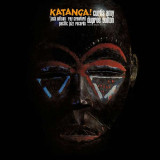
CURTIS AMY & DUPREE BOLTON - Katanga! (1963)
ART BLAKEY & THE JAZZ MESSENGERS - The Witch Doctor (1967)
- audiophiles, rein analoges Mastering von den Original-Analogbändern
- Pressung in 180g-Vinyl
- extra-dicke, laminierte Tip-on-Sleeves
- wattierte Innenhüllen
Billy Harper is one of the great tenor saxophonists in the post-Coltrane mold. Originally from Houston, TX and with a degree from the venerable University of North Texas College of Music, Harper emerged on the New York City jazz scene in the late 1960s performing with Art Blakey, Max Roach, Lee Morgan and others. Known for his soulful and propulsive tone, Harper was already a highly regarded and prolific session man before the release of his debut album as a leader on the cult favorite Strata-East label in 1973.
Recorded in 1975, Black Saint was the second album for Billy Harper as bandleader and is the most acclaimed and fully realized of his long career. The inaugural release of the Italian label Black Saint – to which the album lent its name – is comprised entirely of Harper compositions; the peaceful and subdued opener “Dance, Eternal Spirits, Dance!,” the swinging and fiery “Croquet Ballet” and the side-long epic “Call Of The Wild And Peaceful Heart.” Harper’s group features trumpeter Virgil Jones - a graduate of Roland Kirk’s mid-60s groups and session player for McCoy Tyner, Charles Tolliver and others - along with Joe Bonner on piano, David Friesen on bass and Malcom Pinson on drums.
Black Saint is too melodic and swinging to be free jazz but too forward-thinking to be described as modal post-bop; Harper’s advanced compositional sense and galvanic tenor work make this an album of pure fire music. This is a beautiful album back into print on its original format for the first time in over 40 years.
- A1: Art Blakey Big Band Feat. John Coltrane - Pristine (Take 2)
- A2: Fred Johnson - A Child Runs Free
- A3: George Benson - Along Comes Mary
- A4: Charles Mingus - Boogie Stop Shuffle
- A5: Gordon Beck - The Hustler
- A6: Lorez Alexandria - Send In The Clowns
- B1: Dizzy Gillespie - Chega Dee Saudade (No More Blues) (Take 2)
- B2: Letta Mbulu - What's Wrong With Groovin
- B3: Joe Williams With Thad Jones & The Mel Lewis Orchestra - Get Out Of My Life Woman
- B4: Oscar Brown Jr. - Work Song
- B5: Grant Green - The Final Comedown
- B6: Jeremy Steig - Howling For Judy
This reissue of Cannonball Adderley’s classic 1958 Bluenote album ‘Somethin’ Else’ features Adderley on alto sax, Miles Davis on trumpet, Hank Jones on piano, Sam Jones on bass and Art Blakey on drums.
The bonus Riverside album, ‘Portrait of Cannonball’, recorded in 1958 includes Cannonball Adderley, alto sax; Blue Mitchell, trumpet; Bill Evans, piano; Sam Jones, bass; Philly Joe Jones, drums. The 20-page booklet contains complete information with specially prepared liner notes by Penguin Guide to Jazz’s writer Brian Morton and by France’s prestigious Jazz Magazine. “ ‘Autumn Leaves’ and ‘Love for Sale’ will never mean the same after listening to this album, this masterpiece of the 1950’s which hasn’t aged at all.” Jazz Magazine
- A1: The Mental Traveller Takes Off 00 01:06
- A2: The Mental Traveller Theme (Feat Nardo Says) 00 05:05
- A3: Train Ride (Feat Miles Bonny) 00 03:21
- A4: Seeds Of Labor (Feat Shamir Of Wolm) 00 03:14
- A5: Microsleep 00 03:09
- A6: Longitude (W/ S Fidelity) 00 04:13
- B1: Calmility 00 02:41
- B2: Second Nature Of The Beast (Feat Count Bass D) 00 01:54
- B3: Square (Feat Nardo Says) 00 02:07
- B4: Uncertainty 00 02:58
- B5: Shapes 00 02:33
- B6: Damn It's Sunny (Feat Robot Orchestra) 00 04:33
The Mental Traveller - A Soundtrack by Noa Erni
If music can take our mind to any imaginable place, on endless individual journeys, Noa Erni's "The Mental Traveller" is the infinite soundtrack. A soundtrack for mental wandering and soul searching, a blend of rap, jazz and hip-hop beats. "The Mental Traveller", an album assembled like a literary anthology, offers musical arrangements and unique narratives where epilogue and prologue of each track merge seamlessly. Far beyond the horizon of compiling single tracks, "The Mental Traveller" is a journey of sound and unity. Inspired by David Axelrod and William Blake, Ahmad Jamal and Flying Lotus - just to name a few - this work aims to be a tribute to these legends' legacies of past, present and future, detached from trends, norms and classical narrative structure.
Swiss-born producer and computer conductor Noa Erni has been crafting obscure jazz and hip-hop behind closed curtains (a.k.a. his flat in Berlin, Germany) for years - free from external pressure and as an adjunct to his day jobs as sommelier and co-owner of local fine wine store "Friedenauer Weinhandlung". On April 30th, 2021, Kommerz Records will release Noa Erni's debut album "The Mental Traveller" on 12" vinyl as well as on all digital platforms. The project features internationally renowned artists such as Count Bass D (alternative rap pioneer, who worked with Snoop Dogg, MF Doom (R.I.P.) and Retrogott), Miles Bonny (New Mexico-based singer and trumpeter), S. Fidelity (hip-hop producer signed to German tastemaker label Jakarta Records) and more. Erni's guests meld seamingly with this unapologetic and experimental album showcasing stand out performances on vocals, instruments and production.
While the album sounds like it was played by a jazz outfit with years of stage experience, the truth surprises and is even more exciting: Noa crafted the songs in countless hours of experimenting with a midi keyboard, various instrument plugins and perfected reverb settings. It was not one and the same band but one and the same person. Just a few tracks include actual live instruments: drums by Max von der Goltz on "The Mental Traveller Theme" and "Uncertainty", bass by Roman Klobe on "Longitude" and flugelhorn by Miles Bonny on "Train Ride".
Toronto’s infamous psychedelic multimedia collective, Intersystems, make a surprise return with a new full-length LP, #IV. Coming via Waveshaper Media, #IV is Intersystems’ first new material since 1968! Intersystems’ pioneering avant/electronic music sounded positively alien in the 1960s, and more than 50 years later, this latest body of work sounds just as otherworldly.
When they arrived on the scene in the late 1960s, Intersystems stood out from their peers. Comprised of architect Dik Zander, light sculptor Michael Hayden, poet Blake Parker, and musician John Mills-Cockell (of Syrinx, Kensington Market and more), the group mounted groundbreaking pan-sensory events and released a trilogy of defiantly disorienting records.
Where more conventional purveyors of sonic psychedelia were content with fuzztone guitar and orientalist tropes, Intersystems managed to approximate the full psychedelic experience in all its euphoric wonder and terror. Initially wrangling homespun gadgetry, feverishly spliced-together tapes, and mutant beat poetry, Intersystems were also among the very first to deploy a Moog Synthesizer; their Moog modular system was the first to be imported into Canada. Intersystems’ three vinyl LP recordings, meanwhile, justifiably became coveted collector's items given their scarce quantity and singular unsettling vision.
The reissue of Intersystems’ full discography in 2015 prompted acclaim from a number of major outlets. Among them, PopMatters hailed the set as "one of those great lost recordings (three of 'em actually) that comes from the lysergic era..." Mills-Cockell’s work in Syrinx has also been reissued to great acclaim in recent years.
Fifty-plus years after their 1968 album Free Psychedelic Poster Inside, Hayden and Mills-Cockell decided to revive the long-dormant project with a series of sessions at Hamilton's storied Grant Avenue Studio. The resultant music remains remarkably congruent with the project's original vision while clearly emerging from the present moment. With original poet/lyricist Blake Parker now deceased, Hayden and Mills-Cockell made the counterintuitive (yet strangely apt) decision to render Parker's words electronically. As the computer-synthesized voice alternates between an eerily life-like delivery and slurred cybernetic faltering, it brings a new dystopian tint to the group's anxious surrealism. Taking cues from its predecessor, Free Psychedelic Poster Inside, a modular Moog Synthesizer system is the primary instrument, yet here it offers a dynamic blend of different sonorities: barbed wire basslines, Subotnickesque chirping, gestural plumes of colour and percussive filigree.
While the group cut their teeth in the 1960s, make no mistake these new Intersystems recordings aren't a “comeback" or an attempt to rehash the "good old days". What one hears instead is the sound of Mills-Cockell and Hayden re-energizing the project, bringing with them the myriad experience they’ve accumulated in the intervening 50 years. These aural concoctions—no less perplexing than their 1960s predecessors—build upon the Intersystems foundation but very decidedly reside in the present moment, reminding listeners of just how forward-looking this group was in the first place.
black LP[25,00 €]
“Is that what you wanted, Alfred?” we hear in Miles Davis’ unmistakable rasp at the end of “One for Daddy-O,” making it clear that the legendary (and assertive) trumpeter was not just playing the role of sideman on Somethin’ Else, the sole Blue Note album by Cannonball Adderley.
The alto saxophonist was a member of Davis’ band at the time and the depth of their musical camaraderie lifts this session up to rarefied heights throughout, from the breath-taking performance of “Autumn Leaves” that opens the album to the thrilling call-and-response theme of the title track. Pianist Hank Jones, bassist Sam Jones, and drummer Art Blakey round out the quintet on this timeless classic.
This Blue Note Classic Vinyl Edition is all-analog, mastered by Kevin Gray from the original master tapes, and pressed on 180g vinyl at Optimal.
Recline Music founder Nicco (N.D) returns on the label this April, delivering his grooving single 'Lost Universe', accompanied by a remix from Javonntte. Florence native Nicco (N.D) is a long-standing player within the house music scene. Producing since the late 90s, he has previously performed as a singer and guitarist before joining forces alongside Ivano Coppola to launch their Recline Music imprint. He has worked with DJ T., Oxia, Clarian and many others, whilst releasing over one-hundred tracks and gaining support from Marco Carola, Joris Voorn and Steve Bug.
The remixer of this package is Detroit-based Javonntte. Since the early nineties, he has been producing music and has collaborated with legendary producers including Blake Baxter, Amp Fiddler and Andres in his formative years, whilst his solo releases have landed on Quintessentials, Traxx Underground and Kai Alce's NDATL.
'Lost Universe' is a glistening deep house track that effortlessly combines luscious chords with rising pads and blissful keys to transport listeners on a hypnotic journey. Javonntte's interpretation reveals a feel-good affair, as fathomless bassline sequences fuse with kinetic drum programming and dubby chords - wrapping up this enchanting offering in style.
BEN SIMS: Sweet remix from Javonntte!
DJ BONE: Funky! I love it
STACEY PULLEN: Solid Tracks
SHUR-I-KAN: Javonntte remix is nice and summery!
FRED P: Nice one..
KAI ALCE: Javonntte remix hard, deep & HOT!
PHIL DAIRMOUNT: Javontte remix for me
SPATIAL AWARENESS: Love the OG
TELFORT: Real nice ! :)
BILL BREWSTER: Original's nice.
CRAIG SMITH: Real nice Javonette remix
DIZ: Really Nice!!
FRED EVERYTHING: Very nice Javonntte Remix!
The shadow that Gary Bartz casts over the last six decades of progressive Black music, and his continued dedication to same, makes him a logical and very welcome contributor to the Jazz Is Dead label. An alto saxophonist steeped in the history and tradition of his instrument who is also restlessly experimental and not prone to purism of any kind, he enjoys both the respect and admiration of his peers and the hero worship of several generations after him - including Adrian Younge and Ali Shaheed Muhammad, which inevitably led to Gary Bartz JID 006. A look at his body of work reveals dalliances with bebop, hard bop, free jazz, spiritual jazz, soul jazz, jazz-funk, fusion and acid jazz, all while resolutely remaining unmistakably Gary Bartz. There's early work with Eric Dolphy and McCoy Tyner in Charles Mingus' Jazz Workshop, work with Max Roach and Abbey Lincoln, a stint in Art Blakey's Jazz Messengers, and also one with Miles. There's his groundbreaking and highly influential Ntu Troop albums of the early '70s and his jazz-funk work including two classic albums with the Mizell Brothers, one of which supplied A Tribe Called Quest with a sample that was smooth like butter. And while on the subject of samples, the Bartz catalog has provided hip-hop and other genres with a rich source of them, and artists who have gone to his well when producing beats also include Black Sheep, Jurassic 5, Casual, RPM, Warren G, Photek, Statik Selektah, Chi-Ali, 3rd Bass, Showbiz, ZTrip, Young Disciples, and many others.
Sam Gendel’s new album, DRM, is the follow-up to his Nonesuch debut, Satin Doll, released earlier this year. DRM features Gendel’s solo musical experiments with vintage instruments such as a forty-year-old Electro Harmonix DRM32 drum machine, antique synthesizers, and a sixty-year-old nylon-string guitar — accompanied by his voice. While Satin Doll was a futuristic homage to classic jazz, DRM includes just one cover song: Lil Nas X’s ‘Old Town Road’, which Gendel interprets as an instrumental, playing the melody on an old German analogue synthesizer. The album’s accompanying short films were directed by Marcella Cytrynowicz and filmed at various locations around Gendel’s home state of California during COVID lockdown.
“I’m imagining people listening to DRM and thinking, ‘What the hell is this?’, like they’d just encountered some sailing ship in the sky,” Gendel says of the new work. “I imagine it as if someone many years into the future listened to the popular music of today and then tried to recreate it, without any of the tools or the understanding. Stylistically, it’s not too far from so much contemporary pop-rap music that you hear on the radio. A lot of those electronic backgrounds and instrumentals you hear today are tending towards something really out-there and experimental. It’s rhythmic and pointillistic, collaging different, seemingly unfitting elements together in cool ways. The visuals aren’t necessarily dictated by the music, but they both share the same slightly surreal feel, like I’m a video game character, inhabiting all these different backgrounds,” says Gendel.
Gendel is best known as a world-class saxophonist — it’s the instrument with which he’s led most of his bands, as well as the instrument on which he’s guested with the likes of Vampire Weekend, Ry Cooder, Moses Sumney, Sam Amidon, and Louis Cole’s Knower — but DRM is saxophone-free. “There was no active effort on my part not to include it; it just wasn’t part of the equation when I started recording it,” he says. “I just found a formula, working around this DRM32 drum machine, and rolled with it. I don’t consider myself just a saxophonist, I’m just someone who works in music.”
DRM was recorded in one sixteen-hour session, and then manipulated by Gendel with electronic percussionist Philippe Melanson. It was mixed by Blake Mills, and mastered by Grammy-nominated engineer Mike Bozzi. Gendel’s previous discography includes 2018’s Music for Saxofone & Bass Guitar with bassist Sam Wilkes, 4444, and Satin Doll, which the Los Angeles Times called “a woozy, blissfully twisted album.” He also performs on two other Nonesuch releases this month: Joachim Cooder’s Over That Road I’m Bound and Sam Amidon’s new self-titled album.