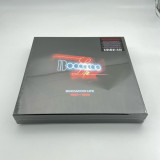
Definitive remastered audiophile edition, restored from the original tapes. Deluxe gatefold sleeve featuring faithfully reproduced original artwork. Comes with an insert featuring exclusive notes by author and jazz specialist Kevin Le Gendre
Relive the timeless brilliance of Paul Bley's 1966 Rome session where bold improvisation, groundbreaking composition and heartfelt tribute redefined the art of jazz trio. BYG Records and Charly Records present the reissue of Ramblin', the seminal jazz album by pianist Paul Bley, originally released in 1969 as part of the iconic Actuel series on BYG Records. This definitive remastered edition invites listeners to experience the unparalleled artistry of Paul Bley's groundbreaking 1966 Rome session in unprecedented clarity. Recorded at Studio RCA in the Eternal City on July 1, 1966, Ramblin' captures Paul Bley alongside the rhythm section of double bassist Mark Levinson and drummer Barry Altschul. Together, the trio carved out a bold statement in the evolving world of jazz. With roots that include collaborations with luminaries such as Charlie Mingus, Art Blakey, Ornette Coleman, Jimmy Giuffre, and Albert Ayler, Paul Bley was a pioneer of improvisational interplay and unorthodox structures that continually pushed the boundaries of the genre. This session brims with vitality and innovation, featurioriginalng compositions such as the introspective 'Touching' and 'Albert's Love Theme', a heartfelt tribute to Albert Ayler. Carla Bley's tender and evocative 'Ida Lupino', written in honour of the trailblazing filmmaker, resonates with even greater poignancy following her passing in October 2023. Meanwhile, the album's title track, Ornette Coleman's exuberant 'Ramblin'' showcases a joyous yet rebellious spirit emblematic of this groundbreaking trio.
Поиск:blake ba
Все
The jazz saxophonist Wayne Shorter, released this "Wayning Moments” LP in 1962. It was recorded earlier, in 1961 during Shorter's early years as a
bandleader before his tenure with Art Blakey's Jazz Messengers and later Miles Davis' Second Great Quintet. This album showcases Shorter's early
compositional voice, blending intricate harmonies with expressive improvisation. His playing is energetic, and the interplay with Freddie Hubbard
creates a rich and engaging dialogue.
Liquid Gold Vinyl[25,84 €]
Lucy Dacus, die als „eine der besten Songwriterinnen ihrer Generation“ (Rolling Stone) gilt, kehrt am
28.3. mit ihrem neuen Album „Forever Is A Feeling“ zurück. Als Bandmitglied der Indie-Supergroup
„Boygenius“ gewann sie mit deren Debütalbum „The Record“ drei GRAMMY® Awards. In ihrem vierten
Soloalbum schreibt Lucy Dacus in ihren Songtexten offen über Sexualität und den Turbulenzen der Liebe.
In 13 Tracks, die von komplexen Instrumentals-Arrangements bis hin zu minimalistischen Sounds reichen,
beschäftigt sich mit dem Thema Vergänglichkeit und dem Gefühl der „Unendlichkeit“. Das Album Cover
ist ein Porträt von Lucy, das von dem Künstler Will St. John gemalt wurde. Außerdem holte sich die
Indie-Rock Sängerin bei „Forever Is A Feeling“ nicht nur kräftige Unterstützung von ihren „Boygenius“
Bandmitgliedern Phoebe Bridgers und Julien Baker, sondern auch von Folk Musiker Hozier, Blake Mills,
Bartees Strange, Madison Cunningham, Collin Pastore, Jake Finch and Melina Duterte.
- A1: Calliope Prelude
- A2: Big Deal
- A3: Ankles
- A4: Limerance
- A5: Modigliani
- A6: Talk
- A7: For Keeps
- B1: Forever Is A Feeling
- B2: Come Out
- B3: Best Guess
- B4: Bullseye (With Hozier)
- B5: Most Wanted Man
- B6: Lost Time
Clear Vinyl[25,63 €]
Lucy Dacus, die als „eine der besten Songwriterinnen ihrer Generation“ (Rolling Stone) gilt, kehrt am 28.3. mit ihrem neuen Album „Forever Is A Feeling“ zurück. Als Bandmitglied der Indie-Supergroup „Boygenius“ gewann sie mit deren Debütalbum „The Record“ drei GRAMMY® Awards. In ihrem vierten Soloalbum schreibt Lucy Dacus in ihren Songtexten offen über Sexualität und den Turbulenzen der Liebe. In 13 Tracks, die von komplexen Instrumentals-Arrangements bis hin zu minimalistischen Sounds reichen, beschäftigt sich mit dem Thema Vergänglichkeit und dem Gefühl der „Unendlichkeit“. Das Album Cover ist ein Porträt von Lucy, das von dem Künstler Will St. John gemalt wurde. Außerdem holte sich die Indie-Rock Sängerin bei „Forever Is A Feeling“ nicht nur kräftige Unterstützung von ihren „Boygenius“ Bandmitgliedern Phoebe Bridgers und Julien Baker, sondern auch von Folk Musiker Hozier, Blake Mills, Bartees Strange, Madison Cunningham, Collin Pastore, Jake Finch and Melina Duterte.
- A1: Disco Hospital
- A2: Teenage Lightning
- A3: Things Happen
- A4: The Snow
- A5: Dark River
- B1: Where Even The Darkness Is Something To See
- B2: Teenage Lightning 2
- B3: Windowpane
- B4: Chaostrophy
- C1: Further Back & Faster
- C2: Titan Arch
- C3: Lorca Not Orca
- C4: Love's Secret Domain
- D1: Disco Hospital (Unedited)
- D2: Teenage Lightning (Gtr)
- D3: Snow (Demonic Apollo A Version)
- D4: Dark River (Alternative Ruff From Point Studio Mix)
- E1: Teenage Lightning (Various)
- E2: Further Back & Faster (Didgeridoo)
- F1: Snow (Demonic Apollo B Version)
- F2: Carvers & Gilders (Chaostrophy) (Chaostrophy)
- F3: The Dark Age Of Love (Balance) (Balance)
- F4: Love's Secret Domain (Early Instrumental)
In 1991 Coil released the third of their early classic full-length albums “Love’s Secret Domain”, seemingly casting aside the gloom
and funereal beauty of its predecessors in favour of a painstakingly multi-layered hallucinogenic electronic beast, which unlike
some of their fellow ex-industrial contemporaries’ releases of the time wasn’t an attempt at easy accessibility or (the-godsforbid) danceability, but a vibrating psychedelic masterpiece unrivalled in their discography and still a landmark album.
To mark its 30 year anniversary Infinite Fog are beyond proud to present an expanded, fully remastered re-release of this fan
favourite available for the first time ever in its entirety on vinyl with 10 rare and mostly unreleased tracks and alternative
versions from the period added as a bonus to a luxurious 3LP/2CD set.
Love’s Secret Domain contains among its many highlights the Lynchian William Blake tribute of its title track and the
intoxicating single “Windowpane”, original versions of the later Coil live staple “Teenage Lightning” and the majestically warped
classicisms of “Chaostrophy”. Marc Almond guests on the typhonian “Titan Arch” and This Heat’s Charles Hayward provides
some amazing drum stylings.
This album is Coil pushing their sound ideas and probably their sanity to their very limits. Beyond the iconic Steven Stapleton
cover art here reproduced in unseen definition the doors of perception still open wide for both long-term Coil aficionados and
new-comers to this supremely innovative release to explore unknown depths. The long-overdue re-release illustrates how far
ahead of the curve Coil were with the sounds on this album, which still sounds as fresh and mind-blowing as it did back in the
early 90s.
Nach einem Jahrzehnt, in dem die Band das Beste aus improvisierten Aufnahmeräumen in Lagerhäusern, Wohnwagen und Lofts gemacht hat, ist „For Melancholy Brunettes (& sad women)“, das vierte Album von Japanese Breakfast, die erste richtige Studioveröffentlichung der Band. Produziert von Grammy-Preisträger Blake Mills, zieht sich Frontfrau und Songschreiberin Michelle Zauner von der hellen Extrovertiertheit des Vorgängers „Jubilee“ zurück, um die dunkleren Wogen zu erforschen, die in ihrem Inneren aufgewühlt sind, das launische, fruchtbare Feld der Melancholie, das seit langem als der psychische Zustand von Dichtern am Rande der Inspiration gilt. Das Ergebnis ist eine künstlerische Absichtserklärung: ein reifes, komplexes, kontemplatives Werk, das den romantischen Nervenkitzel einer Gothic Novel heraufbeschwört. „For Melancholy Brunettes (& sad women)“ folgt einer transformativen Periode in Zauners Leben, in der ihr zweifach GRAMMY-nominiertes Durchbruchsalbum ‚Jubilee‘ und ihre Bestseller-Memoiren ‚Crying In H Mart‘ sie in den kulturellen Mainstream katapultierten und ihre tiefsten künstlerischen Ambitionen erfüllten. Als sie über diesen Erfolg nachdachte, erkannte Zauner die Ironie der Sehnsucht, die so oft Glückseligkeit und Verderben miteinander verbindet. „Ich fühlte mich verführt, das zu bekommen, was ich immer wollte“, sagt sie. „Ich flog zu nah an die Sonne heran, und mir wurde klar, dass ich sterben würde, wenn ich weiterflöge“. Das Schicksal von Ikarus und anderen Verdammten verleiht „For Melancholy Brunettes (& sad women)“ sein beständigstes Thema: die Gefahren des Begehrens. Wie zerstreutes Licht führen seine spektralen Teile die Charaktere des Albums durch Zyklen von Versuchung, Übertretung und Vergeltung. In „Orlando in Love“ - ein Riff auf John Cheevers Riff auf „Orlando Innamorato“, einem unvollendeten Epos, das aus 68 Cantos des Renaissance-Dichters Matteo Maria Boiardo besteht - ist der Held ein gutmütiger Dichter, der sein Winnebago am Meer parkt und dem Ruf einer Sirene zum Opfer fällt, seinem 69. Canto (selbst im erhabenen Reich des klassischen Mythos hat Zauner ein Faible für Anspielungen). „Honey Water“ lotet die stille Wut einer Frau aus, die mit einem untreuen Mann verheiratet ist und zusieht, wie er immer wieder der Lust nachgibt wie ein niederes Insekt, das seinen eigenen Untergang herbeiführt Traurigkeit ist in der Tat die dominierende emotionale Tonart dieser Platte, aber es ist eine Traurigkeit der besonderen Art: die nachdenkliche, vorausschauende Traurigkeit der Melancholie, in der die Erkenntnis des im Wesentlichen tragischen Charakters des Lebens mit Sensibilität für seine flüchtige Schönheit einhergeht. Zauner findet in ihr genügend Raum für Hoffnungsschimmer. Es sind die Tröstungen der Sterblichen, die Dichter vor ihr gerufen haben und die Dichter nach ihr immer wieder neu entdecken werden: Liebe und Arbeit, und obwohl sie sich wie stärkende Vorsätze durch die vielen Episoden des Albums ziehen, erklingen sie am deutlichsten im letzten Song, „Magic Mountain“, einer Auseinandersetzung mit Thomas Manns berühmtem gleichnamigen Roman. Für sie fühlt sich jede Arbeit wie das Erklimmen eines Berges an, aber von der Spitze von „For Melancholy Brunettes (& sad women)“ aus blickt sie in die Zukunft.
- Here Is Someone
- Orlando In Love
- Honey Water
- Mega Circuit
- Little Girl
- Leda
- Picture Window
- Men In Bars
- Winter In La
- Magic Mountain
Nach einem Jahrzehnt, in dem die Band das Beste aus improvisierten Aufnahmeräumen in Lagerhäusern, Wohnwagen und Lofts gemacht hat, ist „For Melancholy Brunettes (& sad women)“, das vierte Album von Japanese Breakfast, die erste richtige Studioveröffentlichung der Band. Produziert von Grammy-Preisträger Blake Mills, zieht sich Frontfrau und Songschreiberin Michelle Zauner von der hellen Extrovertiertheit des Vorgängers „Jubilee“ zurück, um die dunkleren Wogen zu erforschen, die in ihrem Inneren aufgewühlt sind, das launische, fruchtbare Feld der Melancholie, das seit langem als der psychische Zustand von Dichtern am Rande der Inspiration gilt. Das Ergebnis ist eine künstlerische Absichtserklärung: ein reifes, komplexes, kontemplatives Werk, das den romantischen Nervenkitzel einer Gothic Novel heraufbeschwört. „For Melancholy Brunettes (& sad women)“ folgt einer transformativen Periode in Zauners Leben, in der ihr zweifach GRAMMY-nominiertes Durchbruchsalbum ‚Jubilee‘ und ihre Bestseller-Memoiren ‚Crying In H Mart‘ sie in den kulturellen Mainstream katapultierten und ihre tiefsten künstlerischen Ambitionen erfüllten. Als sie über diesen Erfolg nachdachte, erkannte Zauner die Ironie der Sehnsucht, die so oft Glückseligkeit und Verderben miteinander verbindet. „Ich fühlte mich verführt, das zu bekommen, was ich immer wollte“, sagt sie. „Ich flog zu nah an die Sonne heran, und mir wurde klar, dass ich sterben würde, wenn ich weiterflöge“. Das Schicksal von Ikarus und anderen Verdammten verleiht „For Melancholy Brunettes (& sad women)“ sein beständigstes Thema: die Gefahren des Begehrens. Wie zerstreutes Licht führen seine spektralen Teile die Charaktere des Albums durch Zyklen von Versuchung, Übertretung und Vergeltung. In „Orlando in Love“ - ein Riff auf John Cheevers Riff auf „Orlando Innamorato“, einem unvollendeten Epos, das aus 68 Cantos des Renaissance-Dichters Matteo Maria Boiardo besteht - ist der Held ein gutmütiger Dichter, der sein Winnebago am Meer parkt und dem Ruf einer Sirene zum Opfer fällt, seinem 69. Canto (selbst im erhabenen Reich des klassischen Mythos hat Zauner ein Faible für Anspielungen). „Honey Water“ lotet die stille Wut einer Frau aus, die mit einem untreuen Mann verheiratet ist und zusieht, wie er immer wieder der Lust nachgibt wie ein niederes Insekt, das seinen eigenen Untergang herbeiführt Traurigkeit ist in der Tat die dominierende emotionale Tonart dieser Platte, aber es ist eine Traurigkeit der besonderen Art: die nachdenkliche, vorausschauende Traurigkeit der Melancholie, in der die Erkenntnis des im Wesentlichen tragischen Charakters des Lebens mit Sensibilität für seine flüchtige Schönheit einhergeht. Zauner findet in ihr genügend Raum für Hoffnungsschimmer. Es sind die Tröstungen der Sterblichen, die Dichter vor ihr gerufen haben und die Dichter nach ihr immer wieder neu entdecken werden: Liebe und Arbeit, und obwohl sie sich wie stärkende Vorsätze durch die vielen Episoden des Albums ziehen, erklingen sie am deutlichsten im letzten Song, „Magic Mountain“, einer Auseinandersetzung mit Thomas Manns berühmtem gleichnamigen Roman. Für sie fühlt sich jede Arbeit wie das Erklimmen eines Berges an, aber von der Spitze von „For Melancholy Brunettes (& sad women)“ aus blickt sie in die Zukunft.

The debut recording from one of jazz music's most revered pianists! First U.S. vinyl release!
All-analog remastering by Bernie Grundman.
"Byard is absolutely brilliant...highly recommended." - All Music
Originally recorded in 1960, briefly released in Japan in the early ’70s, it wasn’t until 1988 that Jaki Byard’s solo debut, Blues For Smoke, was widely released. Even then it was more of a secret handshake among fans than the catalog cornerstone it should have always been. Now, Candid has finally created the definitive edition of this lost masterpiece for all to experience.
Byard backed generations of jazz icons, including Charles Mingus, Art Blakey, Roland Kirk, and Quincy Jones.
As a bandleader and soloist, he went on to build his own catalog of iconic recordings across three decades while establishing himself as an educator and mentor to the next generation of artists, most notably, Grayson Hugh, Fred Hersch, and Jason Moran. Blues For Smoke is where it all began.
Recorded as a solo-piano showcase for Byard’s incredible gifts as a player, composer, and jazz historian, the exquisitely engineered session is given new life by Bernie Grundman’s sensitive remastering. With this release, Candid is hoping to make Jaki Byard’s very first album the rosetta-stone of jazz piano it was intended to be.
- Dwell Like A Ghost
- My Spirit
- Arise And Shine
- Blue In Green
- Trance Dance
- Search For The New Land
- New Moon
Of all the artists who recorded for the Black Jazz label, keyboardist and composer Doug Carn was the most prolific, releasing four albums for the imprint. 1972’s Spirit of the New Land was his second Black Jazz release, but the first one (of two) to co-feature his wife, vocalist Jean Carn. It’s the most collectible of the bunch, showcasing Carn’s innovative approach of adding lyrics to jazz standards like Miles Davis’ “Blue in Green” and Lee Morgan’s “Search for the New Land,” while originals like “Arise and Shine” and “My Spirit” soar with spiritual fervor on the wings of his wife’s five-octave range.
Along for the ride are a stellar cast of players, including trumpeter Charles Tolliver, co-founder of the Strata-East label; saxophonist George Harper, who played with Herbie Hancock and Jimmy Smith among others; trombonist Garnett Brown, who appears on albums by Roland Kirk, Albert Ayler, and Art Blakey among his hundreds of album credits; tuba player Earl McIntyre, whose discography spans from Carla Bley to the Band; and drummer Alphonse Mouzon, founding member of Weather Report. This beautiful, uplifting album also comes with liner notes by Pat Thomas, author of Listen, Whitey! The Sights and Sounds of Black Power 1965-1975, that feature excerpts from a freewheeling interview conducted with Doug Carn himself. Pressed in blue with black swirl vinyl limited to 750 copies!
- Candyman
- Richland Woman Blues
- Police Dog Blues
- Shake Sugaree
- Vestapol
- Stagolee
- Green Green Rocky Road
- Frankie
- Police Sergeant Blues
- Buck Dancers Choice
- Delia
- Freight Train
Cassette[21,22 €]
Muireann Bradley is a young blues, ragtime, roots and folk guitarist and singer based in Ballybofey in County Donegal Ireland. “This is my first album. Most of these tunes were originally recorded by the great blues men and women who were making records from the 1920s and 1930s right up in some cases to the early 1970s. I have also found inspiration for the renditions recorded here in the playing of some of the musicians who began recording this music in the 1960s and later, and who in some cases learned at the feet of the greats. Many of these guitarists played pivotal roles in the 1960s blues revival and subsequent “rediscovery” of many of the greats of country blues. I grew up steeped in these old blues in the hills overlooking the valley of the River Finn just outside the town of Ballybofey in County Donegal. My father would play this music constantly at home and wherever we went in the car and talk about it endlessly whether anyone was listening or not, telling stories about the lives of these musicians as if they were legend, mythology or the evening news. My father could of course play all this stuff on guitar, I remember watching him when I was very young and thinking “I want to be able to do that”. When I was nine he agreed to teach me and bought me my first little travel guitar. I worked hard to learn how to play but as time wore on I seemed to have less and less time to practice as I became more and more invested in the combat sports I was regularly training and competing in. Then in March 2020 the first Covid lockdowns happened and all contact sports were shut down. I was lost for a while but soon found my way back to the guitar. I was now listening, playing and practicing with a new intensity and focus. In a very serious moment, I wrote out a list of tunes I was going to learn. The first tune on that list was Blind Blake’s “Police Dog Blues”. I’m not sure now how long it took to get that arrangement together but when it was ready we videoed me performing it and posted it on YouTube. It ended up getting a lot of attention, I remember my parents being quite shocked and soon after that Josh Rosenthal got in touch… and here we are! Each individual track on this album was recorded live in the studio and represents one entire take with me singing and backing myself up on guitar simultaneously. Most are either first or second takes. Nothing has been added or taken away, no overdubs or modern recording tricks of any kind have been used at all so at least in some respects this album has been recorded in the same way as those classics of the 1920s and 1930s
It’s written in the Agreement Terms. There’s no getting out alive in Life. And yet, mankind keeps striving for eternal life; through art, through power, through cryogenics, through singularity. In that misguided quest against the inevitable, we all fall into the category of lost travellers. No one is exempt. In that understanding, Confucius MC and producer Bastien Keb offer no misgivings about the destination on the somber “Time Will Come”: Time will come for all of us / try to take your time.
Songs For Lost Travellers is a collaborative album by Con and Bastien Keb that merges unexplored pathways between rap, folk, and jazz into a spiritual triumvirate. Each genre is a balancing force within the record. The result is an album unlike either artist have made previously, possibly unlike any record in existence. Songs For Lost Travellers opens with bedtime stories and fairytales. Both “Tell Me Lies” and “Fairytale” present the creature comforts that trick us into forgetting the truth. Con’s first words spoken are “tell me lies ‘til I swear I can’t remember” over Keb’s lo-fi plucking that feels like it was lifted from a handheld recorder capturing a nursery mobile above a crib. Third track “Time Will Come” resets the album after acknowledging on “Fairytale” there’s “no nourishment in half-truths / no sustenance in eating lies.”
Honest and direct, Con and Keb imbue Songs For Lost Travellers with knowledge and truth from their lived experiences. There is grief hidden in the notes, an inherent sadness that is balanced with an awareness that grief is a protest against the social machinery of remaining numb. The record lingers in a meditative state, unafraid of restlessness and embracing solitude, with the expectation that peace is just as imminent as death.
The production contains a complimentary authenticity. Neither Con nor Keb bothered much with the professional studio in making Songs For Lost Travellers. Instead they opted for the raw state of their home recordings and first takes, matching the intimacy of being alone and reflective in their creative energies. Room static on “Tell Me Lies” makes it feel like you’ve entered their apartments. The immediacy continues on “Gutters,” as Keb plays guitar while watching the tele and Con hums along to the vocal melody in search of the proper pocket for his verse. Someone snaps their finger to mark a cue, but the snap never returns to the mix to keep time.
More drawn to Keb’s recent folk recordings on the Songs For Lilla EP than his funk roots circa Dinking In The Shadows of Zizou or the cinematic soul of The Killing of Eugene Peeps, Con leaned into the spacial freedom he heard in Keb’s lo-fi production cobbled from field recordings and voice notes. Both artists placed their families into the tableau. Con wrote “Little Man” for his son, hoping to add a positive contribution to the canon of parental rap songs. Later, his son appears at the end of “Paramount” to deliver a passage from Kahlil Gibran’s The Prophet. Keb secretly recorded his mum playing saxophone and sampled his cousin playing sax as well. The result is a near-drumless album (save for “Toulouse” and light tapping on “It Would Speak”) in which Keb’s raw production (plus a few sessions with Kofi Flexxx) gave Con a liminal zone, unencumbered by beats per minute, to craft melodies that turn his philosophical rhymes into mantras.
Perhaps there’s a message in the presence of family? It would be one of many. Con and Keb’s reflective, somber approach to Songs For Lost Travellers does not wallow in the mire. Music is action and it’s taking them through a portal to the other side of grief. We are welcome to join (which is also in the fine print of the Agreement Terms), but first there’s a password in the final song, a single request to answer: Tell me what you care about.
Biography by Blake Gillespie
credits
Makin’ Moves kick of 2025 with four hot tracks from Detroit producer Javonntte that will certainly warm you up from your winter slumber !
Detroit native Javonntte Garrett, better known simply as Javonntte.
Javonntte has been producing music and DJing since the early ’90s. Having had a love for music since he was a child growing up, he turned himself into an independent singer, songwriter, producer and even a dancer, where he once toured with Aretha Franklin’s troupe.
Having collaborated with legendary producers Blake Baxter, Amp Fiddler and Andres in his formative years, Garrett has since spread his wings as a solo producer, with a steady string of releases on such labels as Traxx Underground, Quintessentials and Kai Alce’s NDATL.
This fresh four tracker, has been hand selected by us and each track brings something different to the dance floor, from the soulful vibes of WHAT? to the the bouncier and more melodic sounds of Good Vibration and Chicago.
- A1: Like Someone In Love
- A2: Johnny's Blue
- B1: Noise In The Attic
- B2: Sleeping Dancer Sleep On
- B3: Giantis
The 1960 edition of the Art Blakey & The Jazz Messengers was one of the band’s greatest line-ups with the drummer joined by trumpeter Lee Morgan, saxophonist Wayne Shorter, pianist Bobby Timmons and bassist Jymie Merritt. Opening with a sublimely swinging version of the title track, the rest of Like Someone In Love presented originals by Morgan and Shorter. This Blue Note Classic Vinyl Edition is stereo, all-analog, mastered by Kevin Gray from the original master tapes, and pressed on 180g vinyl at Optimal.
- A1: Cheryl
- A2: Ms. B.c
- A3: In Case You Missed It
- B1: Little Man
- B2: Witch Hunt
- B3: Soulful Mister Timmons
Art Blakey, whose career spanned nearly 50 years of Black music history, exemplifies the timeless role of the drums in jazz. This Album of the Year LP, originally released in 1981, features the Jazz Messengers: trumpeter Wynton Marsalis, saxophonists Robert Watson and Bill Pierce, pianist James Williams, and bassist Charles Fambrough, alongside drummer and bandleader Art Blakey.
The album was recorded in Paris, and tracks include “Cheryl” (written by Charlie Parker), “Soulful Mister Timmons,” and “Little Man,” among others. The accompanying liner notes were written by Ted Panken.
Born in Australia and moving to the UK in her early 30s, Peggy O’Keefe became the resident pianist at the Chevalier Casino in Glasgow in 1962. Initially the residency was for six months, which then turned into six years. It was at this point she recorded her 'Mood Chevalier' LP in 1966, a collection of the band’s favourites but the gold is found in her version of 'Cubano Chant', made famous by Art Blakey and then played across jazz dances ever since.
Peggy’s playing was admired by Cleo Laine and Oscar Peterson, and once had a brief, impromptu duet with Frank Sinatra, Peggy and her band showed their true talent with these two versions of jazz favourites.
Hiding in the shadows for nearly 60 years, Now PANORAMA unearth this gem in their trademark 7 inch format, from a Glaswegian restaurant to a dancefloor near you.
PANORAMA Records is an emerging new label based in London, dedicated to rediscovering and showcasing musical gems with a fresh approach. With early support from notable DJs such as Gilles Peterson, Patrick Forge, Rainer Trueby, Mr Bongo DJs and Zag Erlat from My Analog Journal. Their unique take on Jazz and Funk from the further afield has shown they will become trailblazers in the reissue game for a long time.
Today, the Toronto-born-and-raised singer, songwriter, producer, and multi-instrumentalist Charlotte Day Wilson announces her highly-anticipated sophomore album Cyan Blue out May 3rd via Stone Woman Music / XL Recordings
Along with the announcement of her new album comes the release of first single, "I Don"t Love You", a stark and devastatingly beautiful confessional, highlighting Wilson"s immaculate production skills and chill inducing vocals laid atop smooth groove piano chords and soft drums. The track also arrives with a visual directed by Dani Aphrodite featuring layered low fi footage of the artist and producer performing at home, living every day life and having moments of solitude in her car, a theme that comes up throughout the album. Cyan Blue finds Wilson crafting a smoothly woven cyan tapestry of her eternal influences; thumping gospel piano, warm soul basslines, atmospheric electronics, and penetrating R&B melodies. Yet, it possesses a sense of vastness that rings in a new era for Wilson, one in which she"s embracing collaboration and newfound creative openness tinged with wistfulness and yearning and a reflection on youthful innocence. "I want to look through the unjaded eyes of my younger self again," Wilson explains of making Cyan Blue. "Before there wasn"t as much baggage, before so much life was lived. But I also wish that my younger self could see where I am now. It would be nice to be able to impart some of the wisdom and clarity that I have now onto her.
" Working with producers like Leon Thomas (SZA, Ariana Grande, Post Malone), and Jack Rochon (HE.R, Daniel Caesar), Cyan Blue demonstrates Wilson´s sonic expertise while also showcasing the next evolution of her time-bending songwriting. Through 13 hypnotizing tracks, she continues to use music as a vessel for unpacking relationships, which in turn allows her to meet and understand herself in life-spanning, panoramic focus.
But, on Cyan Blue, she challenged herself to kick her perfectionist tendencies. "Before, I was extremely intentional about creating music with a strong foundation, a bed of artistic integrity," Wilson reflects. "But that was a bit stifling, like, "Let me just make a great piece of art that will stand the test of time, no pressure." Now, I think I"m getting out of this frozen state of needing everything to be perfect. I"m more interested in capturing feelings in the moment as they happen and leaving them in that moment."
While this is only her second album, Wilson"s influence in music has made a major mainstream impact. Wilson broke out in 2016 with her critically acclaimed EP, CDW, followed by 2018"s Stone Woman and made her debut studio album an official coming out moment in 2021 with the critically acclaimed, self-released Alpha.
Over the past decade, she´s been sampled by Drake, John Mayer, and James Blake, while Patti Smith has recently praised and covered Wilson´s 2016 breakout single "Work." Additionally, she´s collaborated with artists like Kaytranada, BADBADNOTGOOD, and SG Lewis, demonstrating that there´s no sound Wilson can´t adapt to and sprinkle her cyan-colored magic over.
- A1: Mckennai Beat
- A2: What Wood Feat. Brother Portrait
- A3: Ladybug
- A4: Modern Ifa
- A5: Fm Feat. Max Mckenzie
- A6: Austral Mood
- A7: Slave Cemetery
- A8: Cari And Whales
- B1: Meditation & Heartbreak
- B2: For Nahel Feat. Selina Jones
- B3: Cosmic Psylo
- B4: Norwood Junction
- B5: Ears
- B6: Unrooted Maskossa
- B7: Last Bantu (Outro)
Releasing now for well over a decade - Neue Grafik: known to friends as Fred, has successfully transplanted from Parisian rookie to one- man London Institution. Beginning as a solo producer and DJ,Fred spread his wings upon relocating to South London - at first with his Neue Grafik Ensemble and later with his now iconic twice-weekly Orii Jam - the latter of which has given agency to an entire new generation of musicians; spawning an aesthetic, nurturing a unique sound and becoming a launchpad for countless artists.
Dalston Tape Volume 1 is Fred’s attempt to fall back in love with beatmaking - taking it back to the roots of
where the project began. I say “attempt” because he’s simply learnt too much and made too many friends
along the way to make a mere DIY beat tape. Since his early MPC-led productions on Parisian label, Beat
X Changers, Fred has learnt to play the keys to a concert hall standard, he has become proficient in double bass and built up a dense network of collaborators who he has composed, recorded, engineered and produced for both at home in SE London and in the iconic Total Refreshment Centre Studios in Dalston.
This experience adds unavoidable dimensions to his toolbox - resulting in something more akin to a miniature-magnum-opus than a simple beat-tape.
Yes, we hear the influences of Pete Rock, Mad Lib, J Dilla and Al Dobson Jr but we also hear the musicality of D’Aneglo, James Blake and live contributions from an ever growing army of young graduates of the Orii School.
- Motion (Feat. Jacob Collier And Seamus Blake)
- Chamego No Salao (Feat. Lenine)
- Nosso Amor Vadio (Feat. Zelia Duncan)
- Banzo (Feat. Omar Sosa)
- Hermanos (Feat. Yamandu Costa)
- Onde Nascem As Ondas (Feat. Ed Motta)
- Paisagem (Feat. Anat Cohen)
- Botero (Feat. Eduardo Farias)
- Nosso Valsa (Feat. Leila Pinheiro)
- Catarina E Teresa (Feat. Hermeto Pascoal)
The album "Plural" celebrates the remarkable encounters and partnerships that have shaped Gabriel Grossi"s 25-year career as a harmonica player, composer, arranger, and producer. Featuring 10 of his own compositions, Grossi"s renowned virtuosity flows with deep sensitivity through various genres, reflecting the solid trajectory of one of the greatest instrumentalists and most creative musicians in Brazilian music. Collaborating with prominent names from both the national and international music scenes, "Plural" showcases Grossi"s music without borders, offering the world a glimpse of his extensive career. For this celebration, outstanding guests were invited to join the musical journey. Including Jacob Collier, Ed Motta, Hermeto Pascoal, Seamus Blake, Omar Sosa and others.