Red Marbled Vinyl
Seid gewarnt: Der Eurovision Song Contest ist nicht der Kern der Geschichte von BLIND CHANNEL. Die sechsköpfige Band, die sich ihren Weg in den weltweiten Mainstream erkämpft hat, hat sich schon immer die unterschiedlichsten Einflüsse zu eigen gemacht. Von Nu-Metal-Ikonoklasten bis hin zu Pop- und Hip-Hop-Giganten - alle sind gleichermaßen Bestandteil der DNA von BLIND CHANNEL. Das ist die Basis ihrer Anziehungskraft, sie sind nur daran interessiert, sich selbst treu zu bleiben, während sie fleißig nach Schlüsseln suchen, um die Türen des Erfolgs aufzuschließen. BLIND CHANNEL haben in ihrem Heimatland ihr Äquivalent zur Beatle-Manie gefunden und sind der nächste große Exportschlager, denn seit ihrem Erfolg tauchen in ihrem Fahrwasser immer mehr Bands in Finnland auf. Ihr Hunger ist immer noch ungebremst, und wenn es heißt, groß rauskommen oder nach Hause gehen, dann auf jeden Fall: noch größer. Ihr neues Album "EXIT EMOTIONS" enthält bereits jetzt Klassiker wie "FLATLINE", "HAPPY DOOMSDAY" oder "DEADZONE", das teilweise von dem zeitgenössischen Rockproduzenten Johnny Andrews (Motionless In White, Halestorm, Ice Nine Kills, Three Days Grace) mitgeschrieben und von Zakk Cervini (Limp Bizkit, Blink-182, Machine Gun Kelly, Good Charlotte) gemischt wurde.
Search:blind channel
Surprise Color Edition, with 500 copies on black, 300 on Lime Green vinyl and 199 on XXX on Violet vinyl. "With this album we perfected a style that we now want to grow until we're the biggest band in the world." The third Blind Channel album presented in a definitive edition with gatefold covera and liner notes by James Hickie. Svart Records enters into a vinyl partnership with Ranka Kustannus and will in the future release select albums from their ever growing catalog on vinyl. The co-operation starts with Blind Channel, who've by now become a household name and one of the most important music export items currently out of Finland. Svart Records will release definitive vinyl editions of all three albums Blind Channel released on Ranka - Revolutions, Violent Pop and Blood Brothers. All three shall be presented in a limited edition of 999 copies, split into classic black vinyl and two color editions, which are randomly available to customers. All three feature extensive liner notes and interviews by James Hickie.
Surprise Color Edition, with 500 copies on black, 300 on Magenta vinyl and 199 on Blue vinyl. The second step on the way to world domination - Blind Channel's sophomore album presented in a definitive edition with gatefold covers and liner notes. Svart Records enters into a vinyl partnership with Ranka Kustannus and will in the future release select albums from their ever growing catalog on vinyl. The co-operation starts with Blind Channel, who've by now become a household name and one of the most important music export items currently out of Finland. Svart Records will release definitive vinyl editions of all three albums Blind Channel released on Ranka - Revolutions, Violent Pop and Blood Brothers. All three shall be presented in a limited edition of 999 copies, split into classic black vinyl and two color editions, which are randomly available to customers. All three feature extensive liner notes and interviews by James Hickie.
Surprise Color Edition, with 500 copies on black, 300 on Red vinyl and 199 on Clear vinyl. The baby steps of the Violent Pop Revolution - the Blind Channel debut album presented in a definitive edition with gatefold covers and liner notes. Svart Records enters into a vinyl partnership with Ranka Kustannus and will in the future release select albums from their ever growing catalog on vinyl. The co-operation starts with Blind Channel, who've by now become a household name and one of the most important music export items currently out of Finland. Svart Records will release definitive vinyl editions of all three albums Blind Channel released on Ranka - Revolutions, Violent Pop and Blood Brothers. All three shall be presented in a limited edition of 999 copies, split into classic black vinyl and two color editions, which are randomly available to customers. All three feature extensive liner notes and interviews by James Hickie.
“Rohkea rokan syö", or to loosely translate this Finnish saying: “Fortune Favours The Brave”. Truly, none have been braver than Blind Channel. Focusing intently on their mission to take their brand of infectiously ferocious nu-metal outside of Finland’s linguistic restrictions this bravery is engrained within. “It took me eight years to become an overnight success”, this line, buried away in Blind Channel’s fourth album Lifestyles Of The Sick & Dangerous is where their uncompromising journey finds its continuation. Furiously fighting their way into the worldwide mainstream, the six-piece have always been embracing their influences, from nu-metal iconoclasts to pop and hip-hop behemoths, it’s all a part of Blind Channel’s DNA. That’s the key to their draw, they’re only interested in sticking true to themselves while studiously searching for the keys to unlock the doors of success. Blind Channel knew that they had something to process. Not only the "modern-day misery” plaguing the world, as Joel puts it, but also proving that they could deliver more than the crowd-pleasing anthem of ‘Dark Side’. Lifestyles Of The Sick & Dangerous is a lashing, brutal, bravado and swagger filled, sincere depiction of their lives, backed by their trademark unforgiving “violent pop music”. As well as a winking homage to the Good Charlotte track Lifestyles of the Rich & Famous, it’s most importantly a righteous statement of intent. That this is only the beginning.
- A1: Ride Away
- A2: Pacifying Joint
- A3: What About Us?
- B1: Midnight Aspen
- B2: Assume
- B3: Aspen Reprise
- C1: Blindness
- C2: I Can Hear The Grass Grow
- C3: Bo Demmick
- D1: Youwanner
- D2: Clasp Hands
- D3: Early Days Of Channel Führer
- D4: Breaking The Rules
- D5: Trust In Me
The Fall were an English post-punk band, formed in Manchester in 1976. The band existed in some form ever since, and was essentially built around its founder and only constant member Mark E. Smith. Initially associated with the punk movement of the late 1970s, the group's music went through several stylistic changes over the years, but is often characterised by an abrasive guitar-driven sound and frequent use of repetition, and was always underpinned by Smith's distinctive vocals and often cryptic lyrics. The band was noted for its prolific output: and released over 25 studio albums, and more than triple that counting live albums and other releases. They have never achieved widespread public success beyond a handful of minor hit singles in the late 1980s, but maintained a strong cult following. The band were long-associated with BBC disc jockey John Peel, who championed them from early on in their career and cited The Fall as his favourite band, famously explaining, "They are always different; they are always the same.
"On its Various 2 compilation, Altered Circuits returns with a gripping four-track selection by an equal number of distinct-voiced artists. Perrax En La Calle sees tINI merge sturdy drums, arpeggiated basslines, and ominous synth work. She knows what makes the floor tick blindfolded, and keeps the energy high here, channelling electronic body music and Italo into a contemporary club knockout. Up next is Ionic, a fusion of quirky, pointillist hooks that play call and response, driven by 909 kicks and a sub pattern underneath. Mogwaa spellbinds, and often pulls the rug only to reveal more intricate melodic needlework -- it's done so nimbly and enticingly, there's no way not to get drawn in. On the flip side, rising talent Desiree Falessi joins with the peak time Scandal. Statically-charged basslines mesh with reverb-drenched percussion salvos, and as slinky pads and subtle theme variations emerge, the intensity builds toward a tipping point. Closer Flex features a sharp arpeggiated bassline that funnels through misty, LFO-steered synths, scattered alarm-like melodies, muffled vocals, and gated-reverb snares. When classic high-pass modulation intermezzos are introduced, Monile demonstrates how sparse means, when deployed precisely, can sustain considerable tension."
- A1: Midnight Cowboy
- A2: Herbs &Amp; Wine (Feat Ivar)
- A3: Nothing Is Forever
- B1: Travel Light (Feat Ivar)
- B2: Heat
- B3: Velvet Seas
- C1: Isn&Apos;T It Strange
- C2: All I Need (Feat Iogi)
- C3: Come What May (Feat Ivar)
- D1: Morning Reverie (Feat Berenice Van Leer)
- D2: Real Love
- D3: Ear To The Ground
- D4: Open The Blinds (Feat Ivar &Amp; Berenice Van Leer)
DOUBLE VINYL ALBUM RELEASE
Kraak & Smaak Announce New Album Velvet Seas.
Dutch electronic pioneers Kraak & Smaak return with their highly anticipated seventh studio
album, Velvet Seas. Penned and produced between their hometown of Leiden and the sun-
drenched sprawl of Los Angeles, the album channels a rich seam of West Coast psychedelia,
deep funk roots, and that unmistakable K&S groove, all wrapped in shimmering synths and
electronic soul.
The record captures the essence of the band's genre-defying journey, blending radiant nostalgia
with forward-thinking production. True to form, the Dutch trio have enlisted an eclectic roll-call of
collaborators: from the dreamy stylings of Kosta G (formerly known as PWNT and memebr of Rio Kosta) and Butter Bath to the powerhouse
vocals of Izo FitzRoy, plus contributions from The Undercover Dream Lovers, Kainalu, Iogi, and
longtime live partners IVAR and Berenice van Leer.
With hundreds of millions of streams under their belt and a legacy as industry tastemakers, Kraak
& Smaak are set to take Velvet Seas to the global stage, with a world tour slated for next year.
Red Axes return with LOUD—their most explosive record to date. Blending post-punk grit, indie-rock swagger, and their signature electronic pulse, the duo deliver 13 tracks packed with raw energy, twisted hooks, and fearless experimentation. LOUD is restless, fearless, and wildly diverse - showcasing a band that never stands still.
Following over a decade of groundbreaking releases and genre-defying sets at Coachella, Glastonbury, Sónar, and Berghain, LOUD showcases Red Axes’ ever-evolving sound and genre-defying legacy. Drawing inspiration from acts like Amyl and the Sniffers, Viagra Boys, and The Brian Jonestown Massacre, Red Axes channel their roots in psychedelic rock into something gritty, loud, and deeply addictive.
Lead single Home "La La La” captures the hazy feeling of a night spiralling out—equal parts bliss and breakdown. From distorted riffs to hypnotic grooves, each track pushes Red Axes into thrilling new territory. From the surf-rock energy of “Church Avenue” to the pounding chaos of “Lava Lava,” LOUD spans moods, genres, and states of mind—but always hits hard.
- A1: Graveyard (2 35)
- A2: Dust Devil (2 42)
- A3: Gary Floyd (1 50)
- A4: 1401 (2 31)
- A5: Alcohol (2 45)
- A6: Hey (2 24)
- A7: Negro Observer (3 16)
- B1: Human Cannonball (2 18)
- B2: You Don't Know Me (4 08)
- B3: Some Dispute Over T-Shirt Sales (3 35)
- B4: Bong Song (4 13)
- B5: Blindman (2 39)
- B6: Nee Nee (1 42)
- C1: Too Parter (3 37)
- C2: Dancing Fool (6 02)
- C3: Psy (6 48)
- D1: Booze, Tobacco, Dope, Pussy, Cars (2 06)
- D2: Ghandi (4 11)
- D3: Edgar (2 51)
- D4: Fast Song (1 27)
- D5: The Annoying Song (3 18)
There is kind of a before and after when you wander into a Butthole Surfers show. That is a changing point in your life"" - Richard Linklater
"Butthole Surfers are the greatest live band of my lifetime" - Dean Ween
Live at the Leather Fly documents Butthole Surfers legendary live show. Mixed by guitarist Paul Leary, the album channels their ferocious stage energy into a speaker bursting cacophony across 21 unrelenting songs including fan favorites from "Human Cannoball" to "The Annoying Song".
De:tuned welcomes the Purveyor of Fine Funk, Midwest house and techno originator Dan Curtin, to the label with his first new album in 15 years entitled 'The 4 Lights'. The now Berlin-based DJ and producer channels his inner DC and opens up his soul on this exceptional eight-track LP. Dan showcases his unique take on techno and early 90s influences rise to the surface. The result is an in-depth masterclass of cosmic funk, spaced-out vibes and warm pads that stimulate the mind, while the distinctive groove moves your body. Stay tuned!
A month after the release of his debut album as Tambores En Benirras, 2021’s fabulous Orbe Dotodo, Graham Newby’s life changed forever. After years living with a visual impairment, his sight had deteriorated so much that he was declared “registered blind”. For a man who had spent decades dividing his time between travelling, DJing, running clubs and lengthy sessions in his own studio, it was a genuinely life-changing moment.
It was against this backdrop, and the need to alter his working methods, that Ondas Horizontales, the second Tambores En Benirras album took shape. Inspired by a mixture of daydreaming, visualisation, immersion in other people’s music (escapism that provided mood enhancement, rather than a specific set of ideas) and long periods spent soaking up the sun in Ibiza, the album is the most vividly detailed, sonically colourful, and sun-soaked collection that Newby has released to date.
Newby’s declining sight forced him to stop spending long spells staring at a screen and undoubtedly slowed down the production process. Yet it also allowed him to reconnect with his emotions, appreciate the storytelling and mood-shifting potential of music, and mine mind’s eye memories of places and spaces that have meant much to him over the years.
The results are undeniably stunning. Designed with horizontal listening in mind, the set distils a range of musical and real-life inspirations –or, as he puts it, “ambient soundtracks, cosmic journeys, Balearic rhythms and poolside sessions” – into ten mesmerising and magical tracks; an undulating, slow-motion journey that’s as breath-taking as it is beguiling.
Newby sets the tone with ‘Mi Sueno Vibe En Reverb’, a swelling, slow-burn ambient masterpiece that tiptoes between hope and melancholia, before flitting between imaginary sunset soundtracks (‘Estrellas En Mastella’, where lilting pedal steel sounds, bubbling electronics and shuffling breakbeats catch the ear), kaleidoscopic sun-up beats (the gorgeous warmth of ‘Generadora De Reyos’), enveloping beatless soundscapes (‘Templos Del Sol’, a drowsy drift in becalmed waters under the heat of the mid-afternoon sun), and dubby, loved-up lusciousness (‘Mokono’).
As the album progresses, bobbing and weaving on an ocean of vibrant chords, pulsing melodies and heart-stopping melodies, there’s no sign of Newby’s inspiration waving. ‘Alma Hablando’ channels the spirit of mid-80s ‘worldbeat’ and douses it in layers of Balearic bliss, while ‘Extrensor Entragado’ recalls the head-nodding haziness of his best Gripper productions of old while combining them with the musical equivalent of a humid summer breeze. Then there’s the mood-enhancing joy of the album’s superb title track –a mission statement of sorts – and the life-affirming post trip-hop/Balearic fusion of ‘Un Placer Celestial (Reprise)’, where the influence of his old friend Aim is clearly evident.
A serious sonic step-up from its predecessor and a future Balearic classic in its’ own right, Ondas Horizontales marks the start of a new musical and personal journey for its creator. It is, in his words, not the end of an era, but the start of a new one.
Vargmal Records continues to explore immersive, thought-provoking techno with an abstract spirit by presenting Corners EP from the emergent collaborative UK project Terrain. The Kosovo-based label was launched in 2022 with a considered balance of classic and contemporary techno, featuring Italian techno pioneer Leo Anibaldi and commissioning attendant remixes by contemporary Italian maestro Donato Dozzy.
Continuing the label's embrace of subliminal sounds for adventurous dance floors, Terrain deliver four tracks of snaking, subtle rhythms pivoting away from rigid structures towards a more fluid kind of techno. It's a sound the duo of Joe Baker and Voytek Stanley channeled on their debut release and they expand on the principles from that record in superlative style on Corners.
The EP opens up with the weighted pressure of 'Blind Spot', a dense workout pivoting on a fractured kick punching out underneath interwoven sheets of texture and atmosphere. 'Vintage' develops this theme with dubby chord washes which bloom out over the fine detail of the deceptively complex beat configuration. 'Corners' meanwhile adjusts the temperature from cooly meditative to subtly fierce accents Terrain edge into their sound.
It's an elegant fusion that remains at ease with the overall mood of the EP, but a noticeable shift in energy for the B side. 'Singularity' completes the picture with additional input from Localhost, welcoming layers of noisy melodics which sit comfortably on top of Terrain's dubby pulses. More open and searching than the introspection which holds sway elsewhere, it's a tonal shift that opens the sound of Terrain out and brings a sense of balance to their assured second record.
On April 7th electronic luminary Nathan Fake presents the new longplayer ‘Crystal Vision’ on his own Cambria Instruments imprint, which features collaborations with Clark and Wizard Apprentice.
This is music for music’s sake – recorded without angles, agendas and themes – so Fake was free to simply continue honing his craft and express himself non-literally. Aptly titled, there’s a clarity of execution and ambition, and a peak effectiveness to the record that just sounds right.
Continuing to set a personal bar higher and topping his own best, the mark of master craftsperson is everywhere, but that doesn’t mean it’s polished; There’s plenty of rawness evident, with spiky sonics keeping ears on high alert – full of endorphin-flooded rave energy.
Following a short, scene-setting ‘Arrival’ – a simple major chord arpeggio played on a Jupiter 6 which sounds like curtains opening at dawn, things begin apace with ‘The Grass’, which hurtles like a precision-tuned bullet train through Arctic tundra. The undulating effect of compression is emphasised by the classic techno trope where 2 rhythms jar yet interlock, creating an exquisitely disorientating strobe-like flutter. On the track’s guest, Fake comments, “I fell in love with Wizard Apprentice's ‘I Am Invisible’ and felt our musical styles were similar. Their vocals are smooth and clear and sharp at the same time. They’re like a calm within the storm.”
Inspired by Italo disco but sounding wholly alien and futuristic, ‘Vimana’’s fizzing buzzsaw arpeggiated bassline, popping snares and bright whirling melody are equally an electro trance melange, with an effervescent major chord Arp that kicks in midway.
Reminiscent of what used to be called ‘funky techno’ but with sparklier sounds, ‘Boss Core’ blinds like sunshine bouncing off ice. Using his trusty Boss DR550 drum machine, and inspired by Autechre's ‘Vose In’, the track peaks by reaching that melancholic/euphoric axis for which he is loved.
With chugging slow breakbeats not a million miles from Board Of Canada or trip hop, ‘Crystal Vision’ rolls along, with the melody opening up, revealing more hidden notes as it progresses, building into a fractal, kaleidoscopic mosaic.
An emotional outpouring with serotonin surging through the circuitry, classic breakbeats and layers of lazers, ‘Bibled’ has all the hallmarks of a classic. This is a bonafide festival-set closing, hugging-your-mates, moment – or, with its guitar solo, “a power ballad” – as Nathan calls it.
A minimalistic moment of calm midway through the album, ‘CMD’’s gently comforting dreamscape is conjured with FM stacked and detuned sine waves which are left to breathe, whilst the chunky Chicagoan house jack of ‘Hawk’ brings to mind classic Relief records, but even more detuned and wibbly, and laden with synths.
As the title suggests, ‘Amen 96’ is in Fake’s own words, “me having a go at jungle. I grew up listening to it, and I remember as a teenager it sounded like the most intense and otherworldly music ever. It still does. This track is an experiment to see how my melodic style works against amen breaks”. Closer to the braindance end of the spectrum than ‘proper’ jungle (and all the more interesting for it), Fake channels the spirit of Squarepusher but makes it his own, brimming with melodious twinkle.
A collaboration with Nathan’s close friend and genuine musical hero Clark. ‘Outsider’ finds this dream team alchemising pure gold that’s bigger than the sum of their parts. Skittering, intense, far-reaching end epic, the pair close proceedings on a grandly dramatic note. In 2020 Nathan released the album ‘Blizzards’, which was described by The Quietus as “his best work”, and “his best LP yet” yet by Resident Advisor. The equally well received ‘Blizzards Remixes’ EP which featured Afrodeutsche and Irene Dresel followed in 2021, as did a nationwide UK tour.
An in-demand remixer, Fake has added his magic to tracks by Radiohead, Clark, Perc, Jon Hopkins, GoGo Penguin, Dominik Eulberg, Christian Löffler and Damian Lazarus, working for labels including Ninja Tune, Domino, Warp, Blue Note and Kompakt.
- A1: Creatures Of Chaos
- A2: Break These Chains (Feat. Niko Vilhelm Of Blind Channel)
- A3: Rest In Pieces
- A4: Dead Ringer
- A5: Weirdo (Feat. Lee Jennings Of The Funeral Portrait)
- B1: Banksy
- B2: Love Is A Bitch
- B3: You Want It All
- B4: Bad Things
- B5: I’m Coming For You
Neon Pink Glitter Vinyl[32,35 €]
The strength of Fan Club Orchestra's (FCO) trajectory lies in their nebulous, collaborative, and experimental nature, always with Laurent Baudoux at the centre. With its roots in the DIY impulses of the Brussels art and music scene of the late nineties, Baudoux rallied together a revolving cast of players with an unconventional ensemble of instruments to explore melancholic psychedelia that touched on drone and minimalism as readily as it carved minor pop hits from cracked electronics. Performances were often highly improvisational, aided by the barely controlled chaos that guest collaborators—such as American artist Mike Kelley—would inject into an appearance.
FCO self-released two albums in the early 2000s before finding a home with Sonig, where they released several more records up until their last with the label in 2013. This was a fitting frame as Sonig, like FCO, channelled the fervour and formalism of the experimental music history of the Rhineland, which includes Kraftwerk, krautrock, and key early electronic music studios.
Following an eleven year hiatus, Laurent Baudoux reassembled the group in 2024 and presented a new album with the esteemed Glaswegian label 12th Isle late in that same year. Building on the strength of the new iteration, and with the aim of reappraising some of the rich yet oblique history of the group through this new lens, FCO have remastered and reissued their 2013 album, 'An Insane Portrait'.
The recordings were originally commissioned in 2009 for Fabrizio Terranova's film 'Josée Andrei, An Insane Portrait' about the truly remarkable figure Josée Andrei. Shot in San Francisco, the film is an intimate portrait of Andre. Blind from birth, she is a witch, painter, photographer, tarot reader, and psychology and modern literature graduate.
'An Insane Portrait' captures a stripped-back FCO, with Baudoux working solely with original FCO member Ann Appermans. The configuration of Baudoux's electronics and Appermans' bass guitar yield a tender and preciously melodic suite of instrumentals.
Originally released on vinyl by Sonig in 2013, the remaster will again be presented by the label in a limited cassette edition and in digital formats, each featuring a bonus track that was not included in its original release.
The strength of Fan Club Orchestra's (FCO) trajectory lies in their nebulous, collaborative, and experimental nature, always with Laurent Baudoux at the centre. With its roots in the DIY impulses of the Brussels art and music scene of the late nineties, Baudoux rallied together a revolving cast of players with an unconventional ensemble of instruments to explore melancholic psychedelia that touched on drone and minimalism as readily as it carved minor pop hits from cracked electronics. Performances were often highly improvisational, aided by the barely controlled chaos that guest collaborators—such as American artist Mike Kelley—would inject into an appearance.
FCO self-released two albums in the early 2000s before finding a home with Sonig, where they released several more records up until their last with the label in 2013. This was a fitting frame as Sonig, like FCO, channelled the fervour and formalism of the experimental music history of the Rhineland, which includes Kraftwerk, krautrock, and key early electronic music studios.
Following an eleven year hiatus, Laurent Baudoux reassembled the group in 2024 and presented a new album with the esteemed Glaswegian label 12th Isle late in that same year. Building on the strength of the new iteration, and with the aim of reappraising some of the rich yet oblique history of the group through this new lens, FCO have remastered and reissued their 2013 album, 'An Insane Portrait'.
The recordings were originally commissioned in 2009 for Fabrizio Terranova's film 'Josée Andrei, An Insane Portrait' about the truly remarkable figure Josée Andrei. Shot in San Francisco, the film is an intimate portrait of Andre. Blind from birth, she is a witch, painter, photographer, tarot reader, and psychology and modern literature graduate.
'An Insane Portrait' captures a stripped-back FCO, with Baudoux working solely with original FCO member Ann Appermans. The configuration of Baudoux's electronics and Appermans' bass guitar yield a tender and preciously melodic suite of instrumentals.
Originally released on vinyl by Sonig in 2013, the remaster will again be presented by the label in a limited cassette edition and in digital formats, each featuring a bonus track that was not included in its original release.
- A1: Pharoah Jones
- A2: Ghost Gospel
- A3: Ill Feeling
- A4: Capital Punishment
- A5: Do Not Adjust
- A6: Cool Green Trees
- A7: Chill Scratch
- A8: Poisonous Fumes
- A9: Welcome Aboard The Starship
- B1: Keep On Runnin
- B2: Sounds Impossible
- B3: Painted Faces
- B4: The Knew Style
- B5: Chicken Wing Blues Sauce
- B6: Kool Breeze
- B7: Sexx Bullets
- B8: Soul Child
- B9: Take Off Runnin
- B10: Centurian
- B11: Bozack
- B12: Church
- B13: Splash One
- B14: Hank
- B15: 73 Goatee
"Chasing the funky symphonies that filled my head and my dreams..."
December 25th, 2023 - an Instagram post. Stimulator Jones shared half a dozen FIRE tracks from his beat tape archive. We were immediately drawn to the rough hewn boom bap.
"I'd release that", Rob commented.
Hours of material was shared and the result is this: Cool Green Trees (1999-2005). A collection of beats and loops Stimulator Jones created between the ages of 14-20 at home in his basement, bedroom and computer room in Roanoke, Virginia.
You will not believe the profound soulful genius contained within these naive schoolboy melodies.
December 25th, 1998 - 25 years ago to the day and his much-coveted Yamaha SU10 sampler was finally bestowed upon young Stimmy AKA Sam Lunsford: "I immediately hooked up a CD Walkman to the input jack and looped the beginning two bars of Grover Washington Jr.'s "Mercy Mercy Me". I don't know what exactly was so thrilling about hearing two measures of music repeating over and over but it was so infectious and hypnotizing and enthralling to me. I'll never forget that ecstatic rush of making my first loop - an uncontrollable, gleeful smile plastered all over my face." When you hear the pocket breakbeat symphonies featured here on Cool Green Trees, you'll feel the same sense of frisson.
In the wake of his Stones Throw breakthrough - Exotic Worlds & Master Treasures - Stimulator Jones was pegged by many as a 90s throwback artist. However, he literally IS a 90s artist. He's been recording music most of his life and he's now 40. He created the bulk of Cool Green Trees as a teenager. Everything before 2004 was recorded when Sam was still in school. He was in 8th grade when he made the 1999 tracks - he didn't even have his learner's permit. This album is a snapshot of a young man in a simpler time. Things were still mysterious back then and he was flying blind, relying on his ears and having to figure things out for himself: "I had no road map for becoming a beatmaker. I have been collecting music since I was a kid, I am a lifelong digger and seeker of cool and interesting sounds. I was there in the golden age of Hip Hop, and while I may have been a suburban white kid in Roanoke, Virginia, I was tuned in and I bought so many classic albums when they came out. I was attracted to Hip Hop because of the musical and poetic quality. I was hypnotized by the rhythms, partially because I was a drummer. I didn't brag about collecting my breakbeat records or making beats - it was something I did in isolation. It wasn't something I generally wanted to bring attention to and it didn't really score me any cool points. I certainly wasn't flexing on social media about it."
Hell, he can do that now!
Opener "Pharoah Jones" was inspired by Yesterday's New Quintet and Madlib's ability to capture that classic 70s sound whilst playing all the instruments. Sam created this one stoned afternoon by laying down a 2 bar loop and a shaker loop on his Yamaha SU700 sampler. He hung a microphone from the ceiling and played his Yamaha Stage Custom drum kit over the top before adding ender Rhodes and playing his dad's Selmer tenor sax through an Electro Harmonix Memory Man echo pedal. Yes! Up next, "Ghost Gospel" utilises a dope loop from a gospel record and adds some soul-funk drums overtop, whilst working that filter knob. Says Sam: "The loop reminded me of something Ghostface would rap over. The sample was in 3/4 waltz time but I flipped it for a 4/4 groove, a technique I picked up from RZA. "Ill Feeling" uses sped-up pieces from a dusty old funk record and putting them over a classic NOLA drum loop; gain chopping up a slow, bluesy 3/4 time signature and bending it to a 4/4 groove. Classy shit. "Capital Punishment" features drums tapped in live, inspired by MF Doom's Special Herbs series. "Do Not Adjust" consists loops found on a compilation of 70s French music at Happy's Flea Market, a classic Roanoke digging spot.
The sublime, evocative title track, "Cool Green Trees" was created when Sam was still living at home. He dumped samples off his SU10 into the family desktop and arranged them in a demo version of Pro Tools: "This track was sort of my ode to the DJ Shadow style of sample based production. Super spacey, slow, and moody. The heavily filtered drums were inspired by Alec Empire's 'Low on Ice' album. I later added some scratches and sounds from a Spider Man storybook record." "Chill Scratch" snags the final bit of a bossanova record and pairs it with a drum loop before adding experimental scratching run through an Electro Harmonix Memory Man echo pedal. "Poisonous Fumes" was made using a sampler, mixer and a turntable; a kind of mixtape beat collage with added scratches and sounds from various records. Using dialogue from superhero records was a nod to Madlib. "Welcome Aboard The Starship" is dark, downtempo trip-hop with a spooky bent. Sam paired a slow, hard drum loop with a guitar sample grabbed off a psychedelic rock record. To finish, he added various backwards sounds and weird atmospheric effects and a little scratching. Swoon.
Side B opens with "Keep On Runnin", made on a borrowed Roland SP202 sampler. Having always loved the sound of the Lo-Fi filter on those machines, reminiscent of the Emu SP1200, Sam always imagined Del or another of the Hieroglyphics crew rapping over this beat. You can certainly hear why. "Sounds Impossible" sees Sam experimenting with layering multiple kick samples at different volumes to create patterns similar to those heard by Showbiz and Lord Finesse during their God-level 1995 period. "Painted Faces" was made by chopping up a REDACTED record which he had gotten from Happy's Flea Market and paired it with a REDACTED drum loop. By the time Sam recorded "The Knew Style", he had acquired a shitty old 1960s portable turntable off eBay. It didn't function properly when he bought it but his brother opened it up, cleaned it out and got it working: "I remember he told me that there was a bunch of sand inside of it when he opened it up, as if its previous owner had taken it to the beach. I would take that turntable on my Happy's Flea Market digs so I could preview records...that's how I found this loop."
"Chicken Wing Blues Sauce" loops up a classic blues joint and pairs it with some REDACTED drums. A bit of filtering and arranging et voilà! "Kool Breeze", from 1999, is one of Sam's oldest surviving beats, as is "Sexx Bullets". The Roots sampled the same record, leaving Sam frustrated yet vindicated. "Soul Child" was an early SU10 creation, looping a dusty old Soul Children 45 and pairing it with 70s rock drum loops to great effect. "Take Off Runnin" was another loop found digging with a portable turntable. Paired with some boom bap drums it makes for a hypnotic head-nod groove. "Centurian" was intended to be a little beat interlude a la Pete Rock. The sample is from a sun-dappled soft-psych record and it's paired with a Robin Trower drum loop that just happens to fit perfectly. Sometimes you slap things together kind of haphazardly and magic happens. "Bozack" was the first beat Sam made using Pro Tools, his first foray into using chopped sounds instead of loops, an exciting new world. "Church" is beat interlude using a Phil Upchurch loop with the "Long Red" drums - a favourite break of Dilla et al. Sam was really on a tear in late 2004, probably because he was unemployed and phoneless and able to just make beats all day. He made "Splash One" on a borrowed Yamaha SU700 and again was experimenting with tapping the drums in live with his fingers, instead of using a loop or sequenced pattern. Channeling 9th Wonder, Sam used a water splash sound effect from a Batman record as a percussive element, hence the title (also a 13th Floor Elevators reference). The main loop is a backwards portion of one of his favourite Roy Ayers songs.
"Hank" is another fun little beat interlude thing, created on a borrowed Roland SP202 sampler with the fantastic Lo-Fi effect that resembled the Emu SP1200 at a fraction of the price. "73 goatee", from 99, is another of his oldest surviving beats, created in his bedroom with his Yamaha SU10 and his brother's Vestax MR-300 4-track recorder: "This one will always feel special. I can remember having a feeling all the way back then on the night that I created it that this was a solid beat with a catchy loop. There was something in the Fender Rhodes melody that resonated with me emotionally, and I had never heard a producer sample that portion before. I felt like I had found my own unique sound, my own unique loop. It came from an Ahmad Jamal '73. I actually even recorded myself rapping and scratching over this beat way back then, I still have that version in all its imperfect sloppy glory."
Sam explains just how much these tracks mean to him: "They all have immense historical and sentimental value and I'm proud of them. These beats come from an innocent, simple time when I was just figuring out how to craft these sounds. They're something very personal to me. They are the initial part of a journey that I really was taking *alone*. There was no YouTube. I couldn't Google shit. I didn't even know any other beatmakers, producers or DJs in my town that could teach me anything. It was always just me, alone, in a room with some equipment - chasing the funky symphonies that filled my head and my dreams. What I was doing wasn't cool. Most of my peers thought I was a weirdo and couldn't care less. Creating these sounds was an anti-social endeavour. In a sense, I felt like it was me against the world, and all I had to instruct and assist me were the recordings produced by my heroes - RZA, DJ Premier, Erick Sermon, Beatminerz, Showbiz, Diamond D, Beatnuts, Prince Paul, The Bomb Squad, Pete Rock, Q-Tip, E-Swift, Mista Lawnge, DJ Shadow, Cut Chemist, Peanut Butter Wolf, El-P and so many more...I dedicate this collection to them, and to my older brother Joe who has always been a musical and technical guiding light for me.
This was a time before every kid was a self-described producer and beatmaker, before everyone had a DAW, before Kanye and "chipmunk soul", before Red Bull beat battles, before there was any social media beyond chat rooms and AOL Instant Messenger, before Soundcloud, before SP-404 mania, before lo-fi beats to study to, before Splice, before targeted ads for MIDI chord packs, etc. In 99 when I told people that I had a sampler and made beats I was mostly met with bewildered confusion and indifference. Kids and adults alike would wonder why I got this weird machine for Christmas instead of something worthwhile like a Playstation or a mountain bike or even a guitar for that matter because at least that could be used to make "real music". Back then, sampling was still not widely respected as an art form - it was seen as lazy, talentless and unoriginal at best and outright criminal theft at worst. I had gotten respect for playing drums and guitar and things of that nature but this was a step in the wrong direction in the eyes of many."
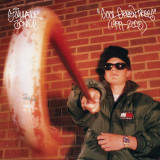
The cover photo is a picture of Sam standing on his back porch in the latter part of 1998, just before he got his first sampler. He was 13 years old, in 8th grade. His dad took the picture with his 35mm film camera: "I actually wanted to be pointing my dad's .22 pistol at the camera lens but he wouldn't let me. He gave me an old walking cane to use instead. The Tommy Hilfiger puffer jacket came from the lost and found at William Fleming High School where my mom worked as a secretary. I was thrilled when she brought it home because we never spent money on expensive name brand clothing like that - we were for the most part strictly a sale rack, bargain bin, thrift store, yard sale, flea market kind of family when it came to clothes. My watch is some cheap off-brand fake gold department store watch." Mastering for this vinyl edition was overseen by Be With regular Simon Francis and it was cut by the esteemed Cicely Balston at Abbey Road Studios to be pressed in the Netherlands by Record Industry.
2025 repress
Wilson Tanner come to shore with a new album of floating melodies, lightly salted. Throwing electroacoustic conventions overboard, Andrew Wilson (Andras) and John Tanner (Eleventeen Eston) recorded this new work aboard a 1950s riverboat with a resourceful array of weatherproof electronic instruments and a long extension lead. These eight compositions pull in a by-catch of maritime folklore; of Siren and Selkie, Seagull and engine oil slick. A change of course from their debut album 69 (Growing Bin Records, 2016), the ambient temperature drops as II casts out to sea in uncertain weather and returns to the safe harbours of Port Phillip Bay.
The seafarers head out to My Gull's poised optimism. The birds watch but do they listen? By the arrival of Loch and Key, the shoreline has dissolved completely, the boat floating in serene infinity as the rest of the world spins. Conditions soon take a treacherous turn on Killcord Pts I-III - a 12 minute odyssey that battens down the hatches as these sailors eye merciless waves and blinding ocean spray, jointly channelling Berlin-school electronics and sea legs. In the aftermath, the waterlogged bleeps of Idle survey the damage as our parched crew sound the distress signal and ultimately descend into delirium.
Known for navigating individual courses as solo musicians, Wilson and Tanner's collective storytelling is saturated in detail, buoying between tension and harmony. II modestly stands as some of both artists' most accomplished material.
Hailing from Naarm/Melbourne, punk trio CLAMM—comprising Jack Summers, Miles Harding, and Stella Rennex—delve into the tumultuous experience of youth striving to lead an authentic and principled life in an increasingly chaotic world. Their music confronts the challenges of navigating entrenched systems of power and oppression while striving to preserve mental well-being and a strong sense of self. Through their raw and visceral sound, CLAMM aspires to foster community, ignite creativity, and provide a channel for catharsis.
Serious Acts continues the band’s signature raw intensity, with frontman Summer’s commanding vocals and incisive lyricism delving deep into the highs and lows of human existence.
Joni Void, the artistic persona of Montréal-based French-British producer Jean Néant (he/them) returns to songcraft on their warmest and most welcoming record yet, where the acclaimed sampledelic sound collagist chills out with an emotionally resonant song cycle tinged by downtempo, lo-fi, avant-pop, and trip-hop. Guests include Haco, Ytamo, Sook-Yin Lee, Pink Navel and N NAO. Every Life Is A Light expands on Void's recent stylistic turn towards more languorous and mellow lo-fi production, foreshadowed by the drifting looseness and ambient bricolage of their preceding experimental sound-art record. This transitional sensibility now shapes more defined song structures and styles, with loops are given time and space to unspool, and rhythms shot through the softer-focus lens of trip-hop and dub. Every Life Is A Light swaps the twitchy insistence of Void's acclaimed early albums for a newfound lightness and suppleness, still imbued with all the restlessness, sonic detailing, and emotional resonance that made their name. The neurotic brokenmachine kinetics of earlier Void, summarized by Sasha Geffen as "drawing despair and wonder from within the vast unfeeling of digital communication" in an 8.0 Pitchfork review, may be chilling out, but Void is becoming an ever better conjurer of hauntological feeling. Every Life Is A Light summons this in a comparatively buoyant, benevolent, head-nodding journey more open to tenderness and modest joys. Perhaps it's the sound of Void at greater peace with themselves and the world, despite the bittersweet cost: even as it channels grief, memorializing comrades and companions recently deceased, this album wants light. Void's raw materials continue to draw heavily from samples (their own Walkman cassette fieldrecordings and songs by others) and from a wide community of musical guests. Vocalists Haco on "Time Zone" and Ytamo on "Cloud Level" help levitate what could be lost tracks from a mid-90s Too Pure Records compilation of skewed-lounge electronica. Canadian musician Sook-Yin Lee sings on lead single "Vertigo," a sinewy 80bpm tape-loop and bassline groove propelled by psychedelically-layered lyrics that eventually turn the song in on itself entirely, like Grace Jones' "Nightclubbing" covered by Animal Collective. One of Void's greatest hip-hop loves is the Ruby Yacht collective; charter member Pink Navel drops some brilliant verses on "Story Board." The album's two minimal tracks, an extended piano loop set to a slow beat and shimmering electronics on "Muffin-A Song For My Cat" and the languid sampled bass riff and breakbeat of "Event Flow," are perhaps most overtly `lofi chill.' Indeed the whole album could be said to sit adjacent to those viral (if not already AI-generated) genre trends, which maybe begs the question on a lot of our minds: can specificity and authenticity of musical materials still be heard, still meaningfully signify substance and difference, still matter? Perhaps a question that fades in comparison to the career break Void could catch by landing on generic streaming playlists. More likely, these tracks remain too off-kilter, too genuinely lo-fi and ineffable, and too disqualified by the status of its peasant rights-holders, to catch the algos. Context remains the poor cousin of content. Meanwhile Void marches on, as a tireless organizer of local music events, bouncing around and often living in DIY venue, depending on the latest apartment eviction. With an ubiquitous polaroid camera in tow, they also document each communal happening with a single shot (and often a blinding flash bulb): a memory and metaphor for lives illuminated preciously, singularly, `imperfectly' in the moment. Dozens of these polaroids adorn the album's back cover and inner sleeve art in grid-like montages, as a fitting analog for the careful construction, grainy intimate materiality, and ephemeral feeling of these songs. Every Life Is A Light is Joni Void's most coherent and congenial record while relinquishing none of their experimentalist acumen as a producer or emotional attunement as a composer. Instead these qualities flourish, on an album that lights a humble flame for the fragile promise of homespun creative collaboration as unalienated labour and therapeutic communion, making an enchantingly idiosyncratic contribution to downtempo sample music along the way. Thanks for listening.
It’s abundantly clear from the first bars of their 5th studio album Through Other Reflection, that this is, and could only ever be, The Soundcarriers. From the enchanting vocal duets of folk-bidden Chanteuses Leonore Wheatley and Dorian Conway; to the precise bass lines of Paul Isherwood and the limber, jazz-cool, Hal Blaine-esque drums of his his co-songwriter Adam Cann; from the fairy-like flutes, 60s-garage guitars and organ sounds pilfered from the archives of exotica - listening to the Soundcarriers resembles a rediscovery of all the most prized, esoteric corners of the 1960s, all bundled up, warped and refracted through the quartet’s astutely modern cultural lens. Channelling Tropicalia, Middle Eastern psychedelic Jazz/Funk, The French Library sounds of Nino Nardini, and a whole host of lavish obscurites beside, Through Other Reflection delivers another sonic adventure from one of the most unique and distinctive voices of British Psychedelia. After an 8 year wait for their album 4 - 2022’s Wilds - it thankfully didn’t take so long for the follow-up this time round. In many ways, this feels like a companion to Wilds; recording again at their Nottingham warehouse studio, Through Other Reflection retains that same organic glow, all the passions and imperfections of a tightly clipped unit jamming out these living, breathing pop-art nuggets as if straight onto the acetate.”We wanted to keep an air of spontaneity with this album and not get too bogged with the recording process”, explains Cann, “It was more a case of getting the songs as tightly written and arranged as possible first so we could get them down quickly in the studio. It always takes longer than you think” Less packed with strident pop hooks as its predecessor however, the music of Through… has been given extra licence to breathe, stretch out, and wander more uncharted terrains. While gleaming psych-pop of tracks like ‘The City Was’, or ‘Already Over’ confidently carry on from where they left off, from the album’s 2nd track ‘Always’, the trip becomes a little less predictable. Starting out as a smoky Procol Harum-meets-French-Psych organ ballad, the music drifts, as if of its own accord into an eerie, garage trance that lingers, cycles, and hypnotises, growing ever stranger, reaching ever-further away from its point of conception. And almost every track on Through Other Reflections holds that outer-body moment, where the band fix themselves on a limber, lysergic groove, lose all grip on time and reality, and melt themselves away into a liquid state of blind euphoria. There are sequences on this record that feel more like rituals than songs, built upon a single hypnotic rhythm which, like the centre of a vortex, pulling everything under its beatific command. Take the finale to ‘What We Found’ for instance, sounding like a ghostly march across the psychedelic moors, or ‘Feel The Way’, where a single athletic drum-loop rises and rises, growing ever more urgent and suspenseful underneath its frantic harpsichords and rasping flutes. Full of such rich stylisms as these, The Soundcarriers showcase themselves as abstract storytellers par excellence by virtue of their textures and arrangements alone. Resembling Romantic composer Maurice Ravel, but if he had just a four-piece rock band at his disposal, Through Other Reflects is rich with detail; there’s shakers, rattles, clarinets, booming drums; there’s synthesiser swarms, chiming xylophones, vintage organs and experimental Cluster & Eno-esque ambiences. Within all this nuance the music flows like some undisclosed narrative swathed in a magnetic secrecy. “It almost comes across like a story in some ways”, says Cann of the album, “the music is quite sectional with elements of exotica and cinematic type layers, it's a good balance of grooves, tunes and weirdness”. No more is this “epic cinematic feel” heard more proudly than on short instrumental ‘Sonya’s Lament” - its innate, hauntological atmospheres befitting a Peter Strickland soundtrack, or the classics of Lex Baxter, the so-called ‘Founder of Exotica’ himself. On the other hand, providing a greasier undercurrent to all these bucolic sounds is a leaning towards a more “direct” lyricism referencing more “external concerns. Laying down the first tracks for the album in the wintry gloom of pre-lockdown 2020, and drawing inspiration from time spent in Berlin, Through Other Reflections returns to some of the post-apocalyptic futurism explored in 2014’s Entropicalia - a loose concept album inspired by J.G Ballard’s The Drowned World. “The songs explore a disillusionment with the way things are going particularly after 40 years of neoliberalism”, says Cann, “They follow that folk-song tradition of wanting to escape to an imagined time, but here it’s more urban than pastoral. The first couple of ideas I came up with when doing some music in Berlin and had some time to wander aimlessly. And think the atmosphere seeped in, particularly on The City Was and Already Over. He continues, “One aspect of the title, ‘Through Other Reflections’ is about synthesis and layers of influence. How things can be filtered through other things and change the perspective. This is something you get in cities as well.” Though, as with everything The Soundcarriers make, “It can mean anything. It also just sounds kind of cool.”
Kool Customer is a collaborative project from B. Bravo and Bay area singer Rojai that brings together the sounds of future funk, 80s boogie, and a little bit of strip club sleaze.
B.Bravo is a 2010 graduate of Red Bull Music Academy with releases on Brownswood, Frite Nite and Ernest Endeavors.
Support from the likes of Benji B (BBC Radio 1), Gilles Peterson, DaM Funk, Sweater Funk Collective .
B. Bravo's shared the stage with artists like Chromeo, Dam-Funk, Flying Lotus and serenaded crowds across the world with his bass heavy outer space boogie and dirty grinding synth grooves at festivals like SXSW, Detroit Electronic Music Festival, and Sonar in Barcelona.
Rojai (pronounced "ROW-JUH") is a San Francisco born singer emerging as a leading voice in the modern funk scene with a vocal range from a raspy, percussive island vibe, to silky r&b.
As a frontman for Kool Customer and Latin-funk outfit Bayonics, Rojai has proven himself adept at crooning on any groove in his soulful timbre.
Being legally blind hasn't slowed down Rojai's ability to write, record and perform. He has channeled his life experience into songwriting and singing, creating music with a spirit and soul that inspires.
Extensive sync history include Awkwafina Is Nora From Queens, Netflix's Fatherhood, as well as 3 unique songs featured on Tyler Perry's Sistas and more
REISSUED!!! Received an 8.1 rating from Pitchfork. "Sadly, many will hear Chris Corsano & Bill Orcutt's latest LP, Made Out of Sound, as 'not-jazz,' though it would be more aptly described as 'not-not-jazz.' In a better world, it would warrant above-the-fold reviews in Downbeat, or an appearance on David Sanborn's late-night show (if someone would only give it back to him). More likely, we can hope for a haiku review on Byron Coley's Twitter timeline to sufficiently connect the various improvised terrains trodden by this long-time duo—but if you've been able to listen past the overmodulated icepick fidelity of Harry Pussy, it should surprise you not an iota that Orcutt's style is rooted as much in the fractal melodies of Trane and Taylor as it is in Delta syrup or Tin Pan Alley glitz. As for Corsano, well, it may seem daft to call this particular record 'jazz' (because duh, it has a drummer), but to me Corsano is beyond jazz, almost beyond music, his ambidextrous, octopoid technique grappling many stylistic levers and spraying a torrent of light from every direction. Corsano's ferocity has elevated many 'mere' improv records to transcendence, but here he's crafted his polyrhythms within more narrative channels, bringing to mind his 'mannered' playing in the lamented Flower-Corsano duo. It's not 'groove' playing precisely, but it follows many grooves simultaneously, much like Orcutt's own melodic musings—which is why they're so naturally lock-in-key here. Which maybe makes it all the more surprising that Made Out of Sound was in fact recorded in different rooms on different coasts at different times, and stitched together by Orcutt on his desktop. Corsano recorded the drums in Ithaca, NY, and (as Orcutt states), 'I didn't edit them at all. I overdubbed two guitar tracks, panned left/right. I'd listen to the drums a couple times, pick a tuning, then improvise a part, thinking of the first track as backing and the second as the 'lead', though those are pretty fluid terms. I was watching the waveforms as I was recording, so I could see when a crescendo was coming or when to bring it down.' Fluidity ties the tracks together. With a little more groove and a little less around-the-beat maneuvering, one could almost hear the boiling harmonic layers as Miles-oid in 'Man Carrying Thing,' but with new-found Sharrockian modalities, Corsano accentuating the tumbling nature of the falling notes. The Sharrock vein continues with 'How to Cook a Wolf,' its Blind Willie-esque melodic simplicity and repetition extrapolated 360-style in a repetitive descending riff that falls into Cippolina-isms (by way of Verlaine ) until the end crashes upon the shore. Much like Orcutt's last solo album, Odds Against Tomorrow, there's a gentler, almost pastoral flow to some tracks ('Some Tennessee Jar,' 'A Port in Air,' 'Thirteen Ways of Looking') that calls to mind the mixolydian swamplands of Lonnie Liston Smith—but unlike Odds , other tracks ('The Thing Itself') smash that same lyricism into overdriven, multi-dimensional melodic clumps that push several vector envelopes at once in an Interstellar Space vein. With the help of Corsano, Orcutt has managed to slither even further out of the noise/improv pigeonhole lazy listeners/writers keep trying to shove him into. Looking at the back cover of Made Out of Sound , we should not see Orcutt hurling a guitar into the air with post-punk bravado, Corsano toiling behind him in the engine room—we should witness an instrument levitating from his hands, rising on invisible major-key tendrils of melody, fired by percussion, spiraling into an invisible event horizon..."—Tom Carter
It’s abundantly clear from the first bars of their 5th studio album Through Other Reflection, that this is, and could only ever be, The Soundcarriers. From the enchanting vocal duets of folk-bidden Chanteuses Leonore Wheatley and Dorian Conway; to the precise bass lines of Paul Isherwood and the limber, jazz-cool, Hal Blaine-esque drums of his his co-songwriter Adam Cann; from the fairy-like flutes, 60s-garage guitars and organ sounds pilfered from the archives of exotica - listening to the Soundcarriers resembles a rediscovery of all the most prized, esoteric corners of the 1960s, all bundled up, warped and refracted through the quartet’s astutely modern cultural lens. Channelling Tropicalia, Middle Eastern psychedelic Jazz/Funk, The French Library sounds of Nino Nardini, and a whole host of lavish obscurites beside, Through Other Reflection delivers another sonic adventure from one of the most unique and distinctive voices of British Psychedelia. After an 8 year wait for their album 4 - 2022’s Wilds - it thankfully didn’t take so long for the follow-up this time round. In many ways, this feels like a companion to Wilds; recording again at their Nottingham warehouse studio, Through Other Reflection retains that same organic glow, all the passions and imperfections of a tightly clipped unit jamming out these living, breathing pop-art nuggets as if straight onto the acetate.”We wanted to keep an air of spontaneity with this album and not get too bogged with the recording process”, explains Cann, “It was more a case of getting the songs as tightly written and arranged as possible first so we could get them down quickly in the studio. It always takes longer than you think” Less packed with strident pop hooks as its predecessor however, the music of Through… has been given extra licence to breathe, stretch out, and wander more uncharted terrains. While gleaming psych-pop of tracks like ‘The City Was’, or ‘Already Over’ confidently carry on from where they left off, from the album’s 2nd track ‘Always’, the trip becomes a little less predictable. Starting out as a smoky Procol Harum-meets-French-Psych organ ballad, the music drifts, as if of its own accord into an eerie, garage trance that lingers, cycles, and hypnotises, growing ever stranger, reaching ever-further away from its point of conception. And almost every track on Through Other Reflections holds that outer-body moment, where the band fix themselves on a limber, lysergic groove, lose all grip on time and reality, and melt themselves away into a liquid state of blind euphoria. There are sequences on this record that feel more like rituals than songs, built upon a single hypnotic rhythm which, like the centre of a vortex, pulling everything under its beatific command. Take the finale to ‘What We Found’ for instance, sounding like a ghostly march across the psychedelic moors, or ‘Feel The Way’, where a single athletic drum-loop rises and rises, growing ever more urgent and suspenseful underneath its frantic harpsichords and rasping flutes. Full of such rich stylisms as these, The Soundcarriers showcase themselves as abstract storytellers par excellence by virtue of their textures and arrangements alone. Resembling Romantic composer Maurice Ravel, but if he had just a four-piece rock band at his disposal, Through Other Reflects is rich with detail; there’s shakers, rattles, clarinets, booming drums; there’s synthesiser swarms, chiming xylophones, vintage organs and experimental Cluster & Eno-esque ambiences. Within all this nuance the music flows like some undisclosed narrative swathed in a magnetic secrecy. “It almost comes across like a story in some ways”, says Cann of the album, “the music is quite sectional with elements of exotica and cinematic type layers, it's a good balance of grooves, tunes and weirdness”. No more is this “epic cinematic feel” heard more proudly than on short instrumental ‘Sonya’s Lament” - its innate, hauntological atmospheres befitting a Peter Strickland soundtrack, or the classics of Lex Baxter, the so-called ‘Founder of Exotica’ himself. On the other hand, providing a greasier undercurrent to all these bucolic sounds is a leaning towards a more “direct” lyricism referencing more “external concerns. Laying down the first tracks for the album in the wintry gloom of pre-lockdown 2020, and drawing inspiration from time spent in Berlin, Through Other Reflections returns to some of the post-apocalyptic futurism explored in 2014’s Entropicalia - a loose concept album inspired by J.G Ballard’s The Drowned World. “The songs explore a disillusionment with the way things are going particularly after 40 years of neoliberalism”, says Cann, “They follow that folk-song tradition of wanting to escape to an imagined time, but here it’s more urban than pastoral. The first couple of ideas I came up with when doing some music in Berlin and had some time to wander aimlessly. And think the atmosphere seeped in, particularly on The City Was and Already Over. He continues, “One aspect of the title, ‘Through Other Reflections’ is about synthesis and layers of influence. How things can be filtered through other things and change the perspective. This is something you get in cities as well.” Though, as with everything The Soundcarriers make, “It can mean anything. It also just sounds kind of cool.”
‘The Oakland band’s wide-ranging debut is a whirlwind of biting critique, nervy post-punk guitars, and absurdist humor. Rarely does a first record speak with such a trenchant voice.’ 7.5 PITCHFORK
‘Post-punk lovers have a new act to follow" - PASTE
Fake Fruit’s visceral indie rock operates so firmly in the present that it’s transportive and unmooring. The Oakland trio’s songs careen with volatile energy and lead singer Ham D’Amato’s lyrics are enveloped with acerbic humor and resonant perceptiveness. Though their new LP Mucho Mistrust is a sly reference to a beloved Blondie lyric, the title encapsulates both the anxieties of daily life, a bloodless music industry, and global capitalism as well as the clear-eyed skepticism needed to rebel against it. Across 12 propulsively unpredictable tracks, the album is both their most collaborative and most immediate yet.
Following the 2021 release of Fake Fruit’s self-titled debut LP, the band’s personal lives hit a turbulent and transformational period. “There were big life changes and I was so close to boiling over,” says D’Amato. “I left a bad relationship, entered a more stable and loving one, got diagnosed with alopecia, and I'm turning 30 soon too.” This personal upheaval was channeled into the explosive lead single “Mucho Mistrust.” The track is simultaneously disorienting and direct, with clanging guitars from Alex Post, off-kilter drums from Miles MacDiarmid, and D’Amato snarling, “How you gonna blame me / when you could’ve done something about it / it’s not right / How you gonna marinate me / in shitty things overnight.” She explains, “This song was a snapshot of how I got through a difficult year.”
Recorded live at the Bay Area’s Atomic Garden studio with producer Jack Shirley (Deafheaven, Home Is Where), the band’s palpable ferocity shines throughout the record. Single “Más o Menos” is searing punk, with buzzsaw guitars and surging bass. It’s a clenched-fist song, one where D’Amato sings, “I decided to assert myself / After I lost all my sense of self.” Later in the track, D’Amato, who is Chicana, sings in Spanish, “¡No me hables! / ¡No escuchare!” While some of these songs deal in heartbreak, they are charged with way bigger themes. “There's also wanting to break up with capitalism and feeling upset about things politically,” says D’Amato.
For the band, these themes are personal. “I'm managing us while I'm in between changing diapers in my day job as a nanny,” says D’Amato. “Everyone in the band still believes in it and is motivated to keep wading through the bullshit.” On this album, they had no choice but to bet on themselves and each other. No track broadcasts their evolution better than the single “Cause of Death,” which morphs from a gorgeous sax-laden banger to something cathartic and anthemic.
As adventurous and righteous as Mucho Mistrust gets, there’s still an inviting core that never takes itself too seriously. From the ripping “Cause of Death,” which self-deprecatingly takes aim at anxiety and indecision, to the searing title track, Fake Fruit imbue their songs with humor and heart. “Our band is fun,” says D’Amato. “My number one coping mechanism for all of life is to joke about it. Even when the album talks about serious things, I am proud of how funny it can be.”
Limitiertes farbiges Vinyl, 2024 Pressung! Valley of Rain ist das Debütalbum von Giant Sand, das 1983 von Howe Gelb (Gesang, Gitarre) und Winston Watson (Schlagzeug), Tommy Larkins (Schlagzeug) und Scott Garber (Bass) aufgenommen und schließlich 1985 veröffentlicht wurde. Zum Zeitpunkt der Aufnahme war Howe Gelb mit den Möglichkeiten von Röhrenverstärkern nicht vertraut und hatte den Großteil des Albums mit einem Roland JC120 in den wunderbaren 8-Spur-Studio The Control Center in Korea Town, Los Angeles zusammen mit Ricky "Mix" Novak produziert. Gesamtkosten der eineinhalbtägigen Aufnahme betrugen $400. Als Enigma Records anbot, das Album zu veröffentlichen, baten sie um weitere 15 Minuten Musik, um es zu einer vollständigen LP zu machen. Ron Goudie wurde dann hinzugezogen, um die zusätzlichen Aufnahmen in einem Studio in Venedig, CA namens Mad Dog mit Eric Westfall Engineering zu überwachen. Es war dort, als Howe sich einen Verstärker auslieh, der im Studio gelagert worden war, dass er das Polster eines Röhrenverstärkers entdeckte und seine Welt sich veränderte. Der Verstärker war ein leicht modifizierter Fender Twin Reverb von Robbie Krieger von The Doors. 30 Jahre später, nachdem die Band auf unbestimmte Zeit eingeschläfert worden war, begannen sich die ersten Songs in die letzten Giant Sand Tourneen einzuschleichen. Irgendwie schien es angebracht, ihnen einen weiteren Versuch mit dem richtigen Verstärker zu geben, nur um zu sehen, was sie hätten sein können. Was die Idee zugänglicher machte, war die Verfügbarkeit der beiden ursprünglichen Schlagzeuger, die in Tucson lebten. Der erste Versuch kam letzten Sommer mit Winston & Tommy und Thoger Lund am Bass, sowie den beiden neuesten Mitgliedern, dem 29-jährigen Gabriel Sullivan und der 23-jährigen Annie Dolan an Doppelhalsgitarren. Das Geräusch war wahnsinnig. Der lustige Teil war Gabriel, der die Session entwickelt und gemischt hat und ihr einen absichtlichen 80er Jahre Produktionssound gab. Howe erklärte ihm später, dass er sich seit den ersten Originalaufnahmen im Krieg mit diesem Produktionstrend befand. So versuchten sie es alle noch einmal zur Weihnachtszeit, diesmal mit einem neu entdeckten Fender 30 Amp, der von 1980 - 1983 in Produktion war. Diese neue Neuaufnahme des ersten Albums klingt jetzt so, wie es hätte klingen sollen. Es wurde für $400 und am selben Tag und in der halben Sessionzeit wie das Original neu gemacht. Scott Garber kam sogar von Austin TX mit seinem Fretless Bass, so dass das Album buchstäblich die ursprüngliche Besetzung für mindestens die Hälfte der Songs zusammen hat. Giant Sand sind an den Anfang zurückgekehrt.
2024 repress!
Blinding double pack of heavily old school influenced bleep, direct from the depths of England by prolific young producer, Tom Carruthers. These are heavily sample based mpc productions that harken to the carefree days when the pills were pure and the music was fresh and never stopped. When house was techno and techno was house, this long player takes the best elements from say Chill Records, early-Warp and the best Nu-Groove creating timeless dance tracks made for the warehouse dj. Essential stuff here. TIP!
- 01: This Is What It Is (To Be Free) (With Bobby Gillespie)
- 02: Los Angeles (With James Murphy)
- 03: Uh Oh (With Arrow De Wilde And Mark Bowen)
- 04: Ghosted At Home (With Bobby Gillespie)
- 05: Train With No Station (With The Edge)
- 06: Bodies (With Lonnie Holley And Mary Lattimore)
- 07: Everything And Nothing
- 08: Travel Channel (With Pan Amsterdam)
- 09: Country Of The Blind (With Bobby Gillespie)
- 10: The Past (Being Eaten)
- 11: We Got To Move (With Isaac Brock)
- 12: Noche Oscura (With The Edge)
- 13: Skins (With James Murphy)
Zwei der berühmtesten und einfallsreichsten Schlagzeuger der Post-Punk-Ära, Lol Tolhurst von The Cure und Budgie von Siouxsie & The Banshees und The Creatures, sowie der herausragende Produzent und Multiinstrumentalist Garret 'Jacknife' Lee, haben eine der unwahrscheinlichsten Alternative-Supergroups gegründet und die letzten vier Jahre damit verbracht, eines der außergewöhnlichsten Alben für das Jahr 2023 aufzunehmen.
Wenn man die Tracklist mit Gastauftritten von unter anderem James Murphy von LCD Soundsystem, Bobby Gillespie, IDLES Gitarrist Mark Bowen und The Edge von U2 durchstöbert, fragt man sich vielleicht zu Recht, was der 13-Track-Longplayer bereithält. Die Antwort: Eine knallharte und zwanghaft forschende 55-minütige elektronische Gehirnwäsche, die auf unvergleichlicher rhythmischer Kompetenz basiert, mit einem Arsenal an Synthesizern, Gitarren, oft überlagert von Streichern und Bläsern der Spitzenklasse, und dann von Lee universell verdreht, manipuliert und meisterhaft geformt.
Run-D.M.C. leaves no doubt about its intent on King of Rock. The New York trio's hard-hitting sophomore album begins with a statement of purpose ("Rock the House") that serves as a stereophonic primer for the title track, a hybrid warning-anthem-theme song that swarms with justified boasts, heavy metal riffs, booming beats, cowbell accents, and dance-worthy grooves. The back-to-back tunes set the tone for a 1985 record that largely established the blueprint for the hip-hop that would follow for the next two decades – and which helped make rap a mainstream currency via the previously off-limits channels of radio, TV, and the national stage. "It's not Michael Jackson/And this is not Thriller," the group broadcasts early on in the record. Truer words – and music recorded with such honesty, pride, rawness, and integrity – have seldom been committed to tape.
Channeling the speed of youth and the heaviness of a fleshy, lived life in equal proportion, Upchuck’s second LP, Bite the Hand That Feeds, is a Trojan Horse par excellence, craftily smuggling in waves of sentimental emotion and clever pop songwriting under a veil of pulsing rhythms and scorching riffs. What binds Upchuck together is a purity of intention, an organic loyalty to a thick knot of uncalculated friendships, struggles, and desires. These are songs about the joy of continuing to live, songs that find each other in the rush of a crushing reality, propelling the listener onward towards a collective release, however brief it may last. Themes of surviving through the night, youth-blinded love, cheap champagne soaked back-alley parties, and chaotic street protests are subsumed under a single unifying thread: the needs we have for one another, our shared hunger for connection. In a world saturated with arbitrary rules and paper-thin moralism, Upchuck offer free¬dom through sensation, a type of unserious transcendence found through the swirl of bodies melting into one another in the passion of dance. With Bite the Hand That Feeds, Upchuck isn’t trying to tell anyone how to live. Rather, they are simply trying to find a way to make life more worth living for both themselves and their friends—if the music compels you to move, you might as well consider yourself their friend too. Shortly after the release of their debut album Sense Yourself, Upchuck absconded to Southern California to record Bite the Hand That Feeds, enlisting the production talents of Ty Segall and the airy reprieve of his secluded Topanga Canyon home studio. Upchuck credits Segall, who recorded the entire record live to tape over the span of five days, with helping to elevate the arrangements of their second record to bold new heights—fans of Segall’s extensive catalog will undoubtedly recognize the shadow of his creative touch in Bite the Hand That Feeds’ commanding, layered drum polyrhythms, tasteful use of oddball effects, and fuzzed out, every-guitar-pushed-into-the-red ethos. All the same, final credit for Upchuck’s evolution from Sense Yourself to Bite the Hand That Feeds must be paid to the band itself. Following the release of their debut LP, Upchuck embarked upon a break-neck string of live shows, touring alongside the likes of Segall’s Fuzz, Amyl and the Sniffers, Negative Approach, OFF!, and Sub¬humans. The razor tight focus of Bite the Hand That Feeds was forged in the fire of these live shows, speaking directly to the power of their in-person presence—these are songs meant to be heard pressed up against a barricade, blasted through dimed guitar amps placed so close to your ears that you can practically reach out and touch them. In its totality, Bite the Hand That Feeds offers a sonic portrait of what it feels like to be young and caught up in the thrill of it all, coursing between ripping dance grooves and thundering dirges, anti-self-serious crowd anthems and charming pop hooks.
- 1: One Step Ahead Sugar Minott
- 2: If You Ask Me To Leon Dinero
- 3: Whatcha Doing (To Me) Charles Bradley
- 4: Icanbecool • Bob & Gene
- 5: Lover Like Me Binky Griptite
- 6: I’d Rather Go Blind The Frightnrs
- 7: I Can’t Stand These Lonely Nights Bob & Gene
- 8: It’s Not What You Know (It’s Who You Know) Bob & Gene
- 9: How Long Do I Have To Wait For You Sharon Jones
- 10: Conscience Is Heavy The Inversions
If youʼre a fan of Daptone Records, chances are youʼve read or heard the name Victor Axelrod, and even if you havenʼt, youʼve heard music from his hand. As a producer, arranger, recording and mixing engineer, and keyboardist, his creativity has extended across more than two decades of the labelʼs releases, even dating to its prehistory with Desco Records.
If You Ask Me To..., the first LP under his name for the label, is a collection of singles released between 2007-2023 as well as unreleased tracks from Sugar Minott and Binky Griptite. The genesis of which came via an 11th hour request from Daptone for a Sharon Jones remix (2007) that resulted in the reggae version of “How Long Do I Have To Wait For You?” found here.
This opened the door to additional explorations of reggae/soul synergies within the catalog, affirming the musical and cultural link between Daptoneʼs core soul sound and Axelrodʼs passion for Jamaican music. While previous projects like Ticklah Vs. Axelrod and Roots Combination (produced under the alias Ticklah) were inspired by the Jamaica of the 1970s and 80s, this set specifically channels an earlier period in the 1960s when Jamaica was both strikingly original in its continuum of genres but also closely and empathetically attuned to Black American music.
Through Axelrodʼs exceptional taste and the notable contributions of guitarist To
- Unblock Obstacles
- Over & Over
- Over & Over Nena
- Bootgirl
- If I'd Known
- Blindfold 2
- Every House Has A Door 3
- Whinny
- Every House Has A Door 4
- Sun Inspector 2
They've crafted a swirling, past- future, future- past, sorta- rock, collage- rock, melange borne from the confined anxiety of the pandemic. It's a full- length undeniably of its moment, rich with musical references while radiating a visionary path forward.
To assemble Giddy Skelter, Kinsella and Pulse aggressively culled their tracklist until they had a lean and impactful 11 songs, unlike anything either musician has released before. Opening track "Unblock Obstacles" chugs along on a three-chord riff and dubbed-out drums before venturing into a hypnotic, feedback-filled drone that channels pre- Loveless My Bloody Valentine. "Over and Over" imagines a world where Slowdive or Lush collaborated with Prefuse 73. On "Nena," one minute features loops of classical piano, the next Spacemen 3-style psychedelic drone, and the next contemporary R&B. The majority of songs on Giddy Skelter foreground Pulse's yearning, ethereal vocals, giving the music a distinctly feminine overtone.
Sometimes the thing that makes great rock n' roll is the ineffable and the intangible, something you can only describe as alchemy; other times it's the rigors of process. On Kinsella and Pulse's Giddy Skelter, it's both -- and it sounds unlike anything else you'll hear this year.
Growing up in South Korea was difficult for the young Sun-Mi Hong, intent on a musical path but experiencing restrictions and negativity. Drumming became a refuge, a place to escape to. It took over her life and became an obsession for her. The sound and energy was a huge inspiration and helped channel the emotions she was feeling. Surrounded by negativity, criticism of her chosen path and pressure to follow a more secure, traditional career, her persistence and resilience prevailed and she made the move, a little over 10 years ago, to study in Amsterdam, an undertaking full of risk, facing a new culture with barriers in spoken and musical language. Step forward a decade and Sun-Mi has built a formidable reputation in her city, in the Netherlands and beyond, and is fast cementing her position as one of the leading up-and-coming talents on the European scene. Sun-Mi’s new record with her long-running quintet, balances meticulously crafted compositions with investigations into the great unknown of improvised music. Each record she’s released with the quintet up until this point, (First, Second and now Third Page: Resonance), chronicles her life as an artist and her unique path to her goal. Drifting between expressions of warmth and appreciation contrasted with moments of pure passion and catharsis, this is an album that cannot be ignored – it demands your attention and your focussed listening unlike anything else you are likely to hear.
Classic 1978 Reggae album re-released on 180 gram vinyl Produced by Linval Thompson
Personnel
Bass: Robbie Shakespeare Bongos: Skully Drums: Sly Dunbar Organ: Ossie Hibbert
Percussion: Sky Juice Piano: Winston Wright Producer: Linval Thompson
Recorded At: Channel One Recording Studio & Harry J’s Recording Studio
Even in trying times, “there is no love without electricity.” Electricity is the fourth and most progressive album from Ibibio Sound Machine, and like all good Afrofuturist stories, it begins with an existential crisis. “It’s darker than anything we’ve done previously,” says Eno Williams, the group’s singer. “That’s because it grew out of the turbulence of the past year. It inhabits an edgier world.”
Electricity was produced by the Grammy Award and Mercury Prize nominated British synthpop group Hot Chip, a collaboration born out of mutual admiration watching each other on festival stages, as well as a shared love of Francis Bebey and Giorgio Moroder. The fruits of their labor reveal a gleaming, supercharged, Afrofuturist blinder. Electricity is the first album Ibibio Sound Machine have made with external producers since the group’s formation in London in 2013 by Williams and saxophonist Max Grunhard. True, 2017’s Uyai featured mixdown guests including Dan Leavers, aka Danalogue, the keyboard jedi in future-jazz trio The Comet Is Coming, but Hot Chip and Ibibio Sound Machine worked together more deeply throughout the process, collaborating fully. Along the way, the team conjured a kaleidoscope of delights that include resonances of Jonzun Crew, Grace Jones, William Onyeabor, Tom Tom Club, Kae Tempest, Keith LeBlanc, The J.B.’s, Jon Hassell’s “Fourth World,” and Bootsy Collins.
The hook of opener “Protection From Evil” has Williams wielding a massive synth line from Hot Chip’s Al Doyle like a spiritual shield against unspecified, malign forces unspecified because Williams is speaking in tongues. Her lyrics are onomatopoeic: their meaning is defined in her energetic delivery. As Electricity takes off, so do Williams’ words towards a brighter future, alternating between English and Ibibio, sometimes within verses, and propelled by Joseph Amoako’s unabating afrobeat. She digs into this sentiment further on single “All That You Want,” coolly assuring her romantic interest while also requesting reciprocity. Meanwhile, Scott Baylis’ playful Juno synth guides the listener’s feet along the dancefloor.
Electricity is a deep and seamless realization of Williams’ and Grunhard’s ambitious founding manifesto to combine the singularly rhythmic character of the Ibibio language which Williams spoke growing up in Nigeria with a range of traditional West African music and more modern electronic sounds. While the band enjoys veering further into electronic territory with the help of mutuals like Hot Chip, Grunhard emphasizes, “For us, it’s not just a matter of embracing new technology. What’s key is to keep the music grounded in African roots.” Ibibio Sound Machine best exemplify this on Electricity’s “Freedom.” That track was inspired by the water-drumming rhythms of Cameroon’s Baka women, which in turn fueled its lyrics, which in turn prompted Hot Chip and Ibibio Sound Machine to layer joyfully kinetic electronic counterparts on top in the studio. As the track culminates with the mantra of “rage, hope, cope, soul,” it’s clear that Ibibio Sound Machine have channelled, harnessed, and distilled these words as guiding principles, both for the album and for the turbulent world that awaits it.
Keeley Forsyth's 2020 debut album found an elemental voice ringing out from beneath the rubble. Understated but devastating, Debris' success led to a transformation as the songs were brought to the stage. An innate performer, Forsyth found herself channelling something she hadn't yet fully come to understand, and it was here that the voice found on Debris began to probe outwards and discover a physical form. It's a form that fully takes shape on her second album Limbs . Anyone who saw Forsyth perform in the brief window after Debris was released and before shows ground to a halt can testify to the show's power. In pin-drop silence, enraptured audiences watched as Forsyth inhabited a new body. No stranger to portraying characters in her career as an actor, this was something different. Limbs is a record of reckoning with that change. After the initial purge of Debris, those feelings of trauma and fear remain but there's also a life to live. "Save me from the chair where sadness lies," she sings on opener 'Fires', wrestling the need to be creative within the routine of daily life.