Search:blu farm

Styles
All
Planning For Burial - It's Closeness, It's Easy
  • 1: You Think
  • 2: Movement Two
  • 3: (blueberry pop)
  • 4: A Flowing Field Of Green
  • 5: With Your Sunglasses On Like A Ghoul
  • 6: Grivo
  • 7: Twenty-Seventh of February
  • 8: Fresh Flowers For All Time
  • 9: Farm Cat, Watching
also available

Ice Blue VInyl[31,05 €]

Cassette[18,45 €]


Planning For Burial is the solo project of Thom Wasluck, emerging from Wilkes-Barre, Pennsylvania. It’s Closeness, It’s Easy is the long-awaited follow-up to 2017’s Below The House. If Below The House was about returning home, following in the footsteps of one’s father and joining a union, and leaving behind youth’s wild days, It’s Closeness, It’s Easy embraces what comes next—the weight of all years, the quiet shifts, the reckoning with what remains. This record is many things. It captures the slow drift of time, the unnoticed shifts in a loved one—the creeping changes in mental health, the quiet pull of addiction, the kind of grief that settles in the bones rather than announces itself.
At its core, It’s Closeness, It’s Easy is about stepping into middle age and taking stock. It confronts the reality of living with the hand that’s been dealt and searching for meaning in what remains. It speaks to loss—the crushing weight of saying goodbye to a beloved 17-year old cat, the slow-motion grief of watching friends self-destruct, the inescapable passage of time as it bears down on aging parents and the self. But it also reflects the warmth of reconnection, the kind of love that never burns out but instead deepens. The feeling of picking up where things left off, untouched by the years in between.

While written over the course of two years, the recording process reflects a sense of immediacy. Rather than assembling songs piece by piece over time, the album took shape in singular, immersive sessions—less an act of construction, more an unveiling of something already waiting to take shape.
Rooted in a staunch DIY ethos, Wasluck handles every aspect of Planning For Burial project himself—recording the music, designing the artwork, and performing live as a one-man band. He books his own tours, ever and independent creative. This hands-on approach has led Planning For Burial to play hundreds of shows solidifying his place in the underground music scene. A defining moment came in 2018 when he performed at the Meltdown Festival in London, curated by Robert Smith of The Cure.

pre-order now30.05.2025

expected to be published on 30.05.2025

31,05 €
Planning For Burial - It's Closeness, It's Easy (TAPE)

Planning For Burial is the solo project of Thom Wasluck, emerging from Wilkes-Barre, Pennsylvania. It’s Closeness, It’s Easy is the long-awaited follow-up to 2017’s Below The House. If Below The House was about returning home, following in the footsteps of one’s father and joining a union, and leaving behind youth’s wild days, It’s Closeness, It’s Easy embraces what comes next—the weight of all years, the quiet shifts, the reckoning with what remains. This record is many things. It captures the slow drift of time, the unnoticed shifts in a loved one—the creeping changes in mental health, the quiet pull of addiction, the kind of grief that settles in the bones rather than announces itself.
At its core, It’s Closeness, It’s Easy is about stepping into middle age and taking stock. It confronts the reality of living with the hand that’s been dealt and searching for meaning in what remains. It speaks to loss—the crushing weight of saying goodbye to a beloved 17-year old cat, the slow-motion grief of watching friends self-destruct, the inescapable passage of time as it bears down on aging parents and the self. But it also reflects the warmth of reconnection, the kind of love that never burns out but instead deepens. The feeling of picking up where things left off, untouched by the years in between.

While written over the course of two years, the recording process reflects a sense of immediacy. Rather than assembling songs piece by piece over time, the album took shape in singular, immersive sessions—less an act of construction, more an unveiling of something already waiting to take shape.
Rooted in a staunch DIY ethos, Wasluck handles every aspect of Planning For Burial project himself—recording the music, designing the artwork, and performing live as a one-man band. He books his own tours, ever and independent creative. This hands-on approach has led Planning For Burial to play hundreds of shows solidifying his place in the underground music scene. A defining moment came in 2018 when he performed at the Meltdown Festival in London, curated by Robert Smith of The Cure.

pre-order now30.05.2025

expected to be published on 30.05.2025

18,45 €
The Curse of K.K. Hammond - Death Roll Blues
  • 1: Swamp Thing
  • 2: Death Roll Blues (feat. David & The Devil)
  • 3: What's The Weatherman Done
  • 4: Anhedonia
  • 5: Mister Apology
  • 6: The Bone Collector
  • 7: In The Dirty South
  • 8: Don't Sell Your Sunshine For A Knife
  • 9: Til Death
  • 10: Momento Mori
  • 11: Swamp Thing Returns

K.K. Hammond is a slide guitar playing songstress living in the backwoods of the UK. She takes her influence from the Delta Blues players of the 1930s, the roots music of Appalachia and its ancestors fusing the vibe of the swamp with a sprinkle of Southern gothic horror, K.K. writes traditionally inspired roots music but twists it her own unique way for an untapped sound that appeals to contemporary music listeners as well as classic blues fans.

K.K's music has garnered critical acclaim worldwide as well as airplay on a multitude of blues radio shows internationally. This includes the Cerys Matthews BBC Radio 2 Blues Show and the award winning Gary Grainger Blues Show.
A video of K.K. playing a slide guitar cover of "Nothing Else Matters" with her good friend Kaspar "Berry" Rapkin accompanying her on banjo was shared by Metallica on their official TikTok and described by them as "Incredible"!

K.K.’s biggest success to date arose from the release of her debut album Death Roll Blues. The vinyl and CD run sold out via pre-order prior to the album's official release date. Upon its release, the album hit the #1 spot in the UK iTunes Blues chart and subsequently bagged another #1 spot in the US iTunes Blues chart. It also exceeded her expectations by breaking into the #12 spot in the mainstream iTunes charts (across all genres) and the #18 spot in the UK iTunes mainstream chart. It was also the #3 best seller of all time for an iTunes Blues album pre-sale. Death Roll Blues also enabled K.K.’s first breakthrough into the Billboard Blues Charts with a #7 position.

K.K.'s has also had some great successes with her self produced and directed music videos. The music video for Heart Shaped Box winning a multitude of awards including wins at the Video Nasties Genre Film Festival, the David Film Festival in Turkey, the Euro Music Video Song awards, the Anatolia Film Festival, The Golden Wheat Awards, as well as K.K. receiving an honorable mention at the London Director Awards.
U.K. born, K.K. took an interest in guitar, Americana and roots Blues from an early age. She spent some years exploring the back roads of the USA eventually settling in the remote, forested English Countryside, where she works her farm. A self-professed hermit living in an isolated spot in the woods, K.K. enjoys exploring the wilderness surrounding her home to seek inspiration for her song writing.

pre-order now23.05.2025

expected to be published on 23.05.2025

27,69 €
FAT FREDDY’S DROP - WAIRUNGA 2x12"

Wairunga finds the Freddy juggernaut digging deep to debut five songs and revisit two classics captured in an outdoor performance sans audience but with wild weather elements playing an important creative role in producing this unique live album.

Recorded in Wairunga, high above Waimarama Beach in New Zealand, it is place etched into the DNA of Fat Freddy’s Drop who’ve roamed here for over 20 years; to party, relax between tours, make a song Wairunga Blues in its honour and even to get married. Farmed by the Parker family for a century, Wairunga is an oasis of green pasture and native tree filled valleys that fall away to the ocean below.

In inimitable Freddy's fashion the new tunes run a gamut of genre busting styles. Coffee Black is layered with cosmic hot buttered soul and cinematic wigged out psyche-blues while Shady continues Freddy's Afro-Acid adventures with Fitchie’s beat-making tapping into a South African township brand of techno Freddys experienced on tour.

Bush Telegraph is a reggae classic featuring MC Slave aka Mark Williams on the mic with freshly minted yum char spiced rhymes of hope. The other new tracks Leave Your Window Open and Dig Deep are loose rhythmic experiments that the band have been working on for a long time. Versions were developed, rehearsed, but then set aside – dismissed, demonised - only to be revived with new energy in some future moment of creative cohesion. The results are loose-limbed; broken and bruised beats smashing into subterranean bass and twisted up melodies.

Bones and Wairunga Blues are the two classics from Freddy's vast back catalogue. Off the Blackbird album, Bones has aged beautifully - like a fine wine - the song’s component parts matured and melded together in harmony and balance. DJ Fitchie rates this 2021 vintage superior to the 2013 original. Wairunga Blues has been a work-in-progress since it was released on Bays in 2015. Kuki dials up some appropriately off-kilter keys to match the wonky-funk laid down by Fitchie’s bass line and the horns. It’s a mighty comeback – and a fitting tribute to this magical place.

out of Stock

Order now and we will order the item for you at our supplier.

Last In: 16 months ago
31,89 €
MICHAEL HURLEY - FATBOY SPRING
  • AUTOMATIC SLIM & THE FATBOYS
  • DRIVIN' WHEEL
  • GHOST WOMAN BLUES
  • LONG LEGS
  • LONG JOHN
  • MOVE IT ON OVER
  • WATCHIN' THE SHOW
  • THE PORTLAND WATER
  • SINGING WATERFALL

A full LP of never before released Hurley recordings from 1972-73! Great early versions of classic Hurley songs such as Automatic Slim & The Fatboys, Drivin' Wheel, Ghost Woman Blues, Watchin' The Show and The Portland Water that come off for the most part better than later releases of these songs.Hurley is backed up by ''The Fatboys'' - not the rotund hip hop crew from the film ''Disorderlies'' but rather a bunch of not so fat nice guys in Vermont who played mostly for the local dairy farmers (Later they were known as ''Sheriff Mocus & the Deranged Cowboys'').A laid back countryish album sure to please the hard core Hurley fan & casual listener too. Deep & breezy. Cover painting by Michael. A co-release with our friends label in San Francisco - Secret Seven.

pre-order now16.05.2025

expected to be published on 16.05.2025

22,27 €
Various - ECHOES OF ITALY – THE BIRDS OF PARADISE – EARLY 90S HOUSE VIBES VOL.2 (2x12")

Googling “paradise house”, the first results to pop up are an endless list of European b&b’s with whitewashed lime façades, all of them promising “…an unmatched travel experience a few steps from the sea”. Next, a little further down, are the institutional websites of a few select semi-luxury retirement homes (no photos shown, but lots of stock images of smiling nurses with reassuring looks). To find the “paradise house” we’re after, we have to scroll even further down. Much further down.

It feels like yesterday, and at the same time it seems like a million years ago. The Eighties had just ended, and it was still unclear what to expect from the Nineties. Mobile phones that were not the size of a briefcase and did not cost as much as a car? A frightening economic crisis? The guitar-rock revival?! Certainly, the best place to observe that moment of transition was the dancefloor. Truly epochal transformations were happening there. From America, within a short distance one from the other, two revolutionary new musical styles had arrived: the first one sounded a bit like an “on a budget” version of the best Seventies disco-music – Philly sound made with a set of piano-bar keyboards! – the other was even more sparse, futuristic and extraterrestrial. It was a music with a quite distinct “physical” component, which at the same time, to be fully grasped, seemed to call for the knotty theories of certain French post-modern philosophers: Gilles Deleuze, Félix Guattari, Paul Virilio... Both those genres – we would learn shortly after – were born in the black communities of Chicago and Detroit, although listening to those vinyl 12” (often wrapped in generic white covers, and with little indication in the label) you could not easily guess whether behind them there was a black boy from somewhere in the Usa, or a girl from Berlin, or a pale kid from a Cornish coastal town.

Quickly, similar sounds began to show up from all corners of Europe. A thousand variations of the same intuition: leaner, less lean, happier, slightly less intoxicated, more broken, slower, faster, much faster... Boom! From the dancefloors – the London ones at least, whose chronicles we eagerly read every month in the pages of The Face and i-D – came tales of a new generation of clubbers who had completely stopped “dressing up” to go dancing; of hot tempered hooligans bursting into tears and hugging everyone under the strobe lights as the notes of Strings of Life rose up through the fumes of dry ice (certain “smiling” pills were also involved, sure). At this point, however, we must move on to Switzerland.

In Switzerland, in the quiet and diligent town of Lugano, between the 1980s and 1990s there was a club called “Morandi”. Its hot night was on Wednesdays, when the audience also came from Milan, Como, Varese and Zurich. Legend goes that, one night, none less than Prince and Sheila E were spotted hiding among the sofas, on a day-off of the Italian dates of the Nude Tour… The Wednesday resident and superstar was an Italian dj with an exotic name: Don Carlos. The soundtrack he devised was a mixture of Chicago, Detroit, the most progressive R&B and certain forgotten classics of old disco music: practically, what the Paradise Garage in New York might have sounded like had it not closed in 1987. In between, Don Carlos also managed to squeeze in some tracks he had worked on in his studio on Lago Maggiore. One in particular: a track that was rather slow compared to the BPM in fashion at the time, but which was a perfect bridge between house and R&B. The title was Alone: Don Carlos would explain years later that it had to be intended both in the English meaning of “by itself” and like the Italian word meaning “halo”. That wasn’t the only double entendre about the song, anyway. Its own very deep nature was, indeed, double. On the one hand, Alone was built around an angelic keyboard pattern and a romantic piano riff that took you straight to heaven; on the other, it showcased enough electronic squelches (plus a sax part that sounded like it had been dissolved by acid rain) to pigeonhole the tune into the “junk modernity” section, aka the hallmark of all the most innovative sounds of the time: music that sounded like it was hand-crafted from the scraps of glittering overground pop.

No one knows who was the first to call it “paradise house”, nor when it happened. Alternative definitions on the same topic one happened to hear included “ambient house”, “dream house”, “Mediterranean progressive”… but of course none were as good (and alluring) as “paradise house”. What is certain is that such inclination for sounds that were in equal measure angelic and neurotic, romantic and unaffective, quickly became the trademark of the second generation of Italian house. Music that seemed shyly equidistant from all the rhythmic and electronic revolutions that had happened up to that moment (“Music perfectly adept at going nowhere slowly” as noted by English journalist Craig McLean in a legendary field report for Blah Blah Blah magazine). Music that to a inattentive ear might have sounded as anonymous as a snapshot of a random group of passers-by at 10AM in the centre of any major city, but perfectly described the (slow) awakening in the real world after the universal love binge of the so-called Second Summer of Love.

For a brief but unforgettable season, in Italy “paradise house” was the official soundtrack of interminable weekends spent inside the car, darting from one club to another, cutting the peninsula from North to centre, from East to West coast in pursuit of the latest after-hours disco, trading kilometres per hour with beats per minute: practically, a new New Year’s Eve every Friday and Saturday night. This too was no small transformation, as well as a shock for an adult Italy that was encountering for the first time – thanks to its sons and daughters – the wild side of industrial modernity. The clubbers of the so-called “fuoriorario” scene were the balls gone mad in the pinball machine most feared by newspapers, magazines and TV pundits. What they did each and every weekend, apart from going crazy to the sound of the current white labels, was linking distant geographical points and non-places (thank you Marc Augé!) – old dance halls, farmhouses and business centres – transformed for one night into house music heaven. As Marco D’Eramo wrote in his 1995 essay on Chicago, Il maiale e il grattacielo: “Four-wheeled capitalism distorts our age-old image of the city, it allows the suburbs to be connected to each other, whereas before they were connected only by the centre (…) It makes possible a metropolitan area without a metropolis, without a city centre, without downtown. The periphery is no longer a periphery of any centre, but is self-centred”.

“Paradise house” perfectly understood all of this and turned it into a sort of cyber-blues that didn’t even need words, and unexpectedly brought back a drop of melancholic (post?)-humanity within a world that by then – as we would wholly realise in the decades to come – was fully inhuman and heartless. A world where we were all alone, and surrounded by a sinister yellowish halo, like a neon at the end of its life cycle. But, for one night at least, happy."

out of Stock

Order now and we will order the item for you at our supplier.

Last In: 3 months ago
28,99 €
Pink Floyd - Animals (2018 Remix) (LP)

(2018 Remix)

30. Juni 2022 – Im Januar 1977 veröffentlichten Pink Floyd ihr zehntes Studioalbum „Animals“. Das Werk eroberte Platz 1 der deutschen Charts, gilt als eines ihrer besten – und es wird nun, 45 Jahre später, als Deluxe Gatefold, CD, LP und Blu-ray wiederveröffentlicht. Zum ersten Mal überhaupt wird das Album in 5.1 Surround-Sound zu hören sein. Die einzelnen Versionen werden ab dem 16. September 2022 erhältlich sein, die Deluxe-Version folgt am 7. Oktober.

Pink Floyd – David Gilmour, Nick Mason, Roger Waters und Richard Wright – nahmen „Animals“ 1976 und Anfang 1977 in den bandeigenen Britannia Row Studios in London auf und produzierten auch selbst.

„Animals 2018 Remix“ wird als CD, LP (mit Klapphüllen-Artwork), Blu-Ray und als Deluxe-Gatefold-Format veröffentlicht. Die Deluxe-Gatefold-Version beinhaltet eine LP, CD, Audio-Blu-Ray, Audio-DVD und ein 32-seitiges Booklet. Die Audio-Blu-Ray und -DVD enthalten den Remix von 2018 in Stereo, in 5.1 Surround (beide von James Guthrie) und den ursprünglichen Stereo-Mix von 1977. Das 32-seitige Booklet gewährt mit selten gezeigten Fotos einen Blick hinter die Kulissen des Shootings für die Plattenhülle sowie Live-Bilder und Memorabilia. Das Album-Artwork wurde für diese Veröffentlichung mit einem zeitgemäßen Motiv neu interpretiert.

„Animals“ ist ein Konzeptalbum, das sich kritisch mit den sozialpolitischen Verhältnissen im Großbritannien der mittleren 1970er-Jahre auseinandersetzt und damit eine Abkehr vom Stil der früheren Arbeiten der Band markierte. Aus einer Ansammlung ursprünglich nicht miteinander zusammenhängender Songs entwickelten Pink Floyd ein Konzept, das den offenkundigen sozialen und moralischen Verfall der Gesellschaft beschreibt. Inspiriert von George Orwells „Farm der Tiere“, verbildlichen sie die menschliche Natur mit einer Analogie zum Tierreich und teilen die Menschen in drei Klassen von Tieren ein: Die Schweine stehen an der Spitze der sozialen Kette, die Schafe tun als hirnlose Herde, was man ihnen sagt, und die Hunde sind die Geschäftsbosse, die sich am Profit und ihrer Macht über andere schamlos bereichern. Seit 1977 ist viel Zeit vergangen – und dann wieder gar nicht, denn die Erzählung des Albums hat als Kommentar auf unsere gesellschaftliche und wirtschaftliche Situation nichts von ihrer Aktualität verloren.

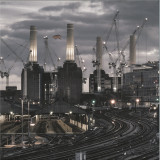
Das berühmte Cover von „Animals“ zeigt ein aufblasbares Schwein (heute bekannt als Algie), das in luftigen Höhen zwischen zwei Schornsteinen der Battersea Power Station in London schwebt. Die Idee für das Cover kam von Roger Waters, die Umsetzung übernahm der langjährigen Kreativpartner der Band, Storm Thorgerson von Hipgnosis Studios. Für die jetzige Neuveröffentlichung wurde das Artwork von Storms Hipgnosis-Partner Aubrey „Po“ Powell für die heutige Zeit neu gestaltet. Basierend auf neuen Aufnahmen des Gebäudes während der jüngsten Umgestaltungsarbeiten (das ehemalige Kraftwerk wird für die kulturelle und gewerbliche Nutzung umgebaut, gestaltet von Frank Gehry und Norman Foster), experimentierte Po mit neuen Blickwinkeln und erschuf einige beeindruckende neue Varianten des berühmten Originals. Po dazu: „Das Original-Albumcover von 1977 ist ikonisch und steht so sehr für sich, dass ich eine Menge Respekt davor hatte, ihm ein Update zu verpassen. Doch Hipgnosis nahm die Gelegenheit zum Anlass, das Motiv neu zu fotografieren und damit eine sich verändernde Welt widerzuspiegeln. Durch den Einsatz moderner digitaler Färbetechniken konnte ich Pink Floyds düstere Botschaft des moralischen Verfalls beibehalten, und auch die Orwellsche Tier-Analogie in Form des Schweins Algie lebt in dem neuen Artwork fort.“

Pink Floyds „Animals 2018 Remix” kann ab jetzt hier vorbestellt werden.

pre-order now28.03.2025

expected to be published on 28.03.2025

27,69 €
Elles Bailey - Shining In the Half Light

Bristol-based singer, songwriter and bandleader, who has powered her way to the-forefront of the British blues and roots scene in recent years, releases 'Shining In The Half Light on "Tidal Wave Splatter" colored vinyl. Crammed with vibrant originals brought to life with her A-list touring band, 'Shining in the Half Light' is Bailey's first full length album recorded in the UK & feature's Joe Wilkins on Guitar, Jonny Henderson on Ivories, Matthew Waer on Bass duties and Matthew Jones on drums. It was recorded in deepest Devon in December 2020 at Middle Farm Studios and produced by Dan Weller. An exciting team of co-writers feature with three credits for Ashton Tucker & Will Edmunds, who both wrote with Elles for 'Road I Call Home', plus she teamed up with longtime guitarist Joe Wilkins to write the slow-flowing, philosophical 'Riding Out The Storm'. Other kindred spirits include guitar maestro Martin Harley, for the gentle and romantic 'Different Kind Of Love' and Matt Owens, co-founder of the hugely successful indie-folk outfit Noah and the Whale, on the aforementioned 'Sunshine City'. The album comes to a striking conclusion with its title track, co-written with Nashville's Craig Lackey, written over Zoom in May 2020.

pre-order now28.03.2025

expected to be published on 28.03.2025

27,19 €
Oracle Sisters - Divinations
  • Riverside
  • Marseille
  • Alouette
  • Blue Left Hand
  • Velveteen
  • Shotguns
  • Rodeo
  • Moon On the Water
  • Talk is Cheap
  • Banshee
  • Divinations

2023 was a whirlwind year for Oracle Sisters. The trio—Julia Johansen, Chris Willatt, and Lewis Lazar—followed the release of their debut album Hydranism with a globe-spanning tour that captivated fans and critics alike. From the highways between Knoxville and Nashville to sold-out clubs in rain-soaked Seattle, and festival stages across the UK, they logged countless hours on the road. Their journey was a tapestry of exhaustion and exhilaration, falling apart, brawls and disputes, love and acceptance. By the year’s end, just two days before Christmas, they found themselves in Tokyo, reflecting on the fleeting nature of time and the fragments of inspiration gathered along the way. It was there the seeds for their next album, Divinations, began to sprout. Composing as a true trio for the first time, Oracle Sisters pieced together sketches formed during stolen moments on tour. These fragments coalesced into Divinations, an album shaped by the band’s nomadic existence. The recording sessions spanned cozy Parisian studios, a barn in northern France, and the storied Valentine Studios in Los Angeles. Their creative process embraced experimentation—swapping primary instruments, playing with toy drum machines, and crafting melodies on quirky tools like the OP-1 and a baby Casio keyboard. This spirit of discovery lent the album a sense of spontaneity and wonder. At its core, Divinations channels mysticism and timeless storytelling. The band’s songwriting draws on diverse influences, from the surrealist poetry of Baudelaire and Rimbaud to the introspective philosophies of Carl Jung. Musically, echoes of Talking Heads, Air, and Leonard Cohen resonate throughout the album and tracks like “Riverside” delve into existential questions— “How far are you going? Is it more than money can buy?” Elsewhere on the album “Marseille,” born in the city that gave the song its name, kicks off as a trance with lyrics that play between the sincere and desperate self-help affirmations, we give ourselves while trying to find a bridge between our individual lives and a universal feeling. Lead-single “Alouette” is Oracle Sisters at their most direct; propelled by a driving bassline and exuberant strings, the track summons the sound of 80’s, 90’s, and early 2000’s rock n roll as they sing about “getting out of dodge, finding a pirate ship and sailing home.” Inspired by the book Caliban and the Witch, “Blue Left Hand” is a lyrical tapestry weaving together history, philosophy, and cultural critique. The lyrics, “It’s in the harbor of every page / It’s in the corner of the playwright’s stage / And every player and every fake / And every witch that we burned at the stake,” reflect on the forces that shaped the capitalist society we know today. Across Divinations’ 11 tracks it’s not only geographic boundaries that were crossed but also the boundaries of time and circumstance. While their work may not consciously reflect specific worldly events, they seek to embrace the universal and offer a space for healing. “Good music would make sense to a farmer in 17th century France as it would to a pastry chef in Slovenia in the 21st century,” shares Lazar. “It’s not written for any temporal powers that be. It’s about expressing our common humanity and taking it from there.” This intuitive approach fuels Oracle Sisters creative process - whether composing in a frozen French farmhouse or performing live with an ever-expanding lineup of collaborators, the band remains committed to exploring the unknown. Through Divinations, they hope to leave listeners feeling transcendent, levitating on waves of intuition and discovery.

pre-order now14.02.2025

expected to be published on 14.02.2025

27,94 €
Various - ECHOES OF ITALY - ARTISTS IN WONDERLAND – EARLY 90S HOUSE VIBES VOL.1 LP 2x12"

Volume 1 of this expertly curated project of 90s Italian House - put together by Don Carlos.

If Paradise was half as nice… by Fabio De Luca.

Googling “paradise house”, the first results to pop up are an endless list of European b&b’s with whitewashed lime façades, all of them promising “…an unmatched travel experience a few steps from the sea”. Next, a little further down, are the institutional websites of a few select semi-luxury retirement homes (no photos shown, but lots of stock images of smiling nurses with reassuring looks). To find the “paradise house” we’re after, we have to scroll even further down. Much further down.

It feels like yesterday, and at the same time it seems like a million years ago. The Eighties had just ended, and it was still unclear what to expect from the Nineties. Mobile phones that were not the size of a briefcase and did not cost as much as a car? A frightening economic crisis? The guitar-rock revival?! Certainly, the best place to observe that moment of transition was the dancefloor. Truly epochal transformations were happening there. From America, within a short distance one from the other, two revolutionary new musical styles had arrived: the first one sounded a bit like an “on a budget” version of the best Seventies disco-music – Philly sound made with a set of piano-bar keyboards! – the other was even more sparse, futuristic and extraterrestrial. It was a music with a quite distinct “physical” component, which at the same time, to be fully grasped, seemed to call for the knotty theories of certain French post-modern philosophers: Gilles Deleuze, Félix Guattari, Paul Virilio... Both those genres – we would learn shortly after – were born in the black communities of Chicago and Detroit, although listening to those vinyl 12” (often wrapped in generic white covers, and with little indication in the label) you could not easily guess whether behind them there was a black boy from somewhere in the Usa, or a girl from Berlin, or a pale kid from a Cornish coastal town.

Quickly, similar sounds began to show up from all corners of Europe. A thousand variations of the same intuition: leaner, less lean, happier, slightly less intoxicated, more broken, slower, faster, much faster... Boom! From the dancefloors – the London ones at least, whose chronicles we eagerly read every month in the pages of The Face and i-D – came tales of a new generation of clubbers who had completely stopped “dressing up” to go dancing; of hot tempered hooligans bursting into tears and hugging everyone under the strobe lights as the notes of Strings of Life rose up through the fumes of dry ice (certain “smiling” pills were also involved, sure). At this point, however, we must move on to Switzerland.

In Switzerland, in the quiet and diligent town of Lugano, between the 1980s and 1990s there was a club called “Morandi”. Its hot night was on Wednesdays, when the audience also came from Milan, Como, Varese and Zurich. Legend goes that, one night, none less than Prince and Sheila E were spotted hiding among the sofas, on a day-off of the Italian dates of the Nude Tour… The Wednesday resident and superstar was an Italian dj with an exotic name: Don Carlos. The soundtrack he devised was a mixture of Chicago, Detroit, the most progressive R&B and certain forgotten classics of old disco music: practically, what the Paradise Garage in New York might have sounded like had it not closed in 1987. In between, Don Carlos also managed to squeeze in some tracks he had worked on in his studio on Lago Maggiore. One in particular: a track that was rather slow compared to the BPM in fashion at the time, but which was a perfect bridge between house and R&B. The title was Alone: Don Carlos would explain years later that it had to be intended both in the English meaning of “by itself” and like the Italian word meaning “halo”. That wasn’t the only double entendre about the song, anyway. Its own very deep nature was, indeed, double. On the one hand, Alone was built around an angelic keyboard pattern and a romantic piano riff that took you straight to heaven; on the other, it showcased enough electronic squelches (plus a sax part that sounded like it had been dissolved by acid rain) to pigeonhole the tune into the “junk modernity” section, aka the hallmark of all the most innovative sounds of the time: music that sounded like it was hand-crafted from the scraps of glittering overground pop.

No one knows who was the first to call it “paradise house”, nor when it happened. Alternative definitions on the same topic one happened to hear included “ambient house”, “dream house”, “Mediterranean progressive”… but of course none were as good (and alluring) as “paradise house”. What is certain is that such inclination for sounds that were in equal measure angelic and neurotic, romantic and unaffective, quickly became the trademark of the second generation of Italian house. Music that seemed shyly equidistant from all the rhythmic and electronic revolutions that had happened up to that moment (“Music perfectly adept at going nowhere slowly” as noted by English journalist Craig McLean in a legendary field report for Blah Blah Blah magazine). Music that to a inattentive ear might have sounded as anonymous as a snapshot of a random group of passers-by at 10AM in the centre of any major city, but perfectly described the (slow) awakening in the real world after the universal love binge of the so-called Second Summer of Love.

For a brief but unforgettable season, in Italy “paradise house” was the official soundtrack of interminable weekends spent inside the car, darting from one club to another, cutting the peninsula from North to centre, from East to West coast in pursuit of the latest after-hours disco, trading kilometres per hour with beats per minute: practically, a new New Year’s Eve every Friday and Saturday night. This too was no small transformation, as well as a shock for an adult Italy that was encountering for the first time – thanks to its sons and daughters – the wild side of industrial modernity. The clubbers of the so-called “fuoriorario” scene were the balls gone mad in the pinball machine most feared by newspapers, magazines and TV pundits. What they did each and every weekend, apart from going crazy to the sound of the current white labels, was linking distant geographical points and non-places (thank you Marc Augé!) – old dance halls, farmhouses and business centres – transformed for one night into house music heaven. As Marco D’Eramo wrote in his 1995 essay on Chicago, Il maiale e il grattacielo: “Four-wheeled capitalism distorts our age-old image of the city, it allows the suburbs to be connected to each other, whereas before they were connected only by the centre (…) It makes possible a metropolitan area without a metropolis, without a city centre, without downtown. The periphery is no longer a periphery of any centre, but is self-centred”.

“Paradise house” perfectly understood all of this and turned it into a sort of cyber-blues that didn’t even need words, and unexpectedly brought back a drop of melancholic (post?)-humanity within a world that by then – as we would wholly realise in the decades to come – was fully inhuman and heartless. A world where we were all alone, and surrounded by a sinister yellowish halo, like a neon at the end of its life cycle. But, for one night at least, happy.

out of Stock

Order now and we will order the item for you at our supplier.

Last In: 74 days ago
28,99 €
Pink Floyd - Animals LP (Deluxe Bosxset)

(2018 Remix)

30. Juni 2022 – Im Januar 1977 veröffentlichten Pink Floyd ihr zehntes Studioalbum „Animals“. Das Werk eroberte Platz 1 der deutschen Charts, gilt als eines ihrer besten – und es wird nun, 45 Jahre später, als Deluxe Gatefold, CD, LP und Blu-ray wiederveröffentlicht. Zum ersten Mal überhaupt wird das Album in 5.1 Surround-Sound zu hören sein. Die einzelnen Versionen werden ab dem 16. September 2022 erhältlich sein, die Deluxe-Version folgt am 7. Oktober.

Pink Floyd – David Gilmour, Nick Mason, Roger Waters und Richard Wright – nahmen „Animals“ 1976 und Anfang 1977 in den bandeigenen Britannia Row Studios in London auf und produzierten auch selbst.

„Animals 2018 Remix“ wird als CD, LP (mit Klapphüllen-Artwork), Blu-Ray und als Deluxe-Gatefold-Format veröffentlicht. Die Deluxe-Gatefold-Version beinhaltet eine LP, CD, Audio-Blu-Ray, Audio-DVD und ein 32-seitiges Booklet. Die Audio-Blu-Ray und -DVD enthalten den Remix von 2018 in Stereo, in 5.1 Surround (beide von James Guthrie) und den ursprünglichen Stereo-Mix von 1977. Das 32-seitige Booklet gewährt mit selten gezeigten Fotos einen Blick hinter die Kulissen des Shootings für die Plattenhülle sowie Live-Bilder und Memorabilia. Das Album-Artwork wurde für diese Veröffentlichung mit einem zeitgemäßen Motiv neu interpretiert.

„Animals“ ist ein Konzeptalbum, das sich kritisch mit den sozialpolitischen Verhältnissen im Großbritannien der mittleren 1970er-Jahre auseinandersetzt und damit eine Abkehr vom Stil der früheren Arbeiten der Band markierte. Aus einer Ansammlung ursprünglich nicht miteinander zusammenhängender Songs entwickelten Pink Floyd ein Konzept, das den offenkundigen sozialen und moralischen Verfall der Gesellschaft beschreibt. Inspiriert von George Orwells „Farm der Tiere“, verbildlichen sie die menschliche Natur mit einer Analogie zum Tierreich und teilen die Menschen in drei Klassen von Tieren ein: Die Schweine stehen an der Spitze der sozialen Kette, die Schafe tun als hirnlose Herde, was man ihnen sagt, und die Hunde sind die Geschäftsbosse, die sich am Profit und ihrer Macht über andere schamlos bereichern. Seit 1977 ist viel Zeit vergangen – und dann wieder gar nicht, denn die Erzählung des Albums hat als Kommentar auf unsere gesellschaftliche und wirtschaftliche Situation nichts von ihrer Aktualität verloren.

Das berühmte Cover von „Animals“ zeigt ein aufblasbares Schwein (heute bekannt als Algie), das in luftigen Höhen zwischen zwei Schornsteinen der Battersea Power Station in London schwebt. Die Idee für das Cover kam von Roger Waters, die Umsetzung übernahm der langjährigen Kreativpartner der Band, Storm Thorgerson von Hipgnosis Studios. Für die jetzige Neuveröffentlichung wurde das Artwork von Storms Hipgnosis-Partner Aubrey „Po“ Powell für die heutige Zeit neu gestaltet. Basierend auf neuen Aufnahmen des Gebäudes während der jüngsten Umgestaltungsarbeiten (das ehemalige Kraftwerk wird für die kulturelle und gewerbliche Nutzung umgebaut, gestaltet von Frank Gehry und Norman Foster), experimentierte Po mit neuen Blickwinkeln und erschuf einige beeindruckende neue Varianten des berühmten Originals. Po dazu: „Das Original-Albumcover von 1977 ist ikonisch und steht so sehr für sich, dass ich eine Menge Respekt davor hatte, ihm ein Update zu verpassen. Doch Hipgnosis nahm die Gelegenheit zum Anlass, das Motiv neu zu fotografieren und damit eine sich verändernde Welt widerzuspiegeln. Durch den Einsatz moderner digitaler Färbetechniken konnte ich Pink Floyds düstere Botschaft des moralischen Verfalls beibehalten, und auch die Orwellsche Tier-Analogie in Form des Schweins Algie lebt in dem neuen Artwork fort.“

Pink Floyds „Animals 2018 Remix” kann ab jetzt hier vorbestellt werden.

out of Stock

Order now and we will order the item for you at our supplier.

Last In: 20 months ago
72,48 €
Timothée Chalamet - A Complete Unknown (Original Motion Picture Soundtrack) (LP)
  • A1: Timothée Chalamet - Highway 61 Revisited 3:44
  • A2: Timothée Chalamet - Mr. Tambourine Man 2:30
  • A3: Timothée Chalamet - I Was Young When I Left Home 2:04
  • A4: Timothée Chalamet & Monica Barbaro - Girl From The North Country 2:05
  • A5: Timothée Chalamet - A Hard Rain's A-Gonna Fall 3:04
  • A6: Edward Norton - Wimoweh (Mbube) 1:51
  • A7: Monica Barbaro - House of the Rising Sun 2:07
  • A8: Timothée Chalamet & Monica Barbaro - Blowin' in the Wind 2:52
  • B1: Timothée Chalamet - Subterranean Homesick Blues 2:26
  • B2: Timothée Chalamet - The Times They Are A-Changin' 3:13
  • B3: Boyd Holbrook - Big River 1:41
  • B4: Timothée Chalamet & Monica Barbaro - Don't Think Twice, It's All Right - 3:07
  • B5: Timothée Chalamet - Maggie's Farm 3:07
  • B6: Timothée Chalamet - It Takes a Lot to Laugh, It Takes a Train to Cry 2:20
  • B7: Timothée Chalamet - Like a Rolling Stone 3:22
  • B8: Timothée Chalamet - It's All Over Now, Baby Blue 2:20
pre-order now24.01.2025

expected to be published on 24.01.2025

24,33 €
Oïmiakon - Comptoir des Vanités LP

Suffocating, the hidden child of Plastikman, Farmer's Manual and Warp. The glitches could just as well be the disgusting sound system of the club crackling under the humidity as a rhythmic pan too well timed to be honest. From durations to sound grain, the gloves are removed. The standards are far behind, the pleasure vibrates from the ears to the lower abdomen. The listener manages to get lost on a straight line, the perfect labyrinth according to Borges, but the exits flash red for those who want to escape. Will Elvis leave the building?.

pre-order now29.11.2024

expected to be published on 29.11.2024

28,36 €
Don Louis - Liquor Talkin

Don Louis

Liquor Talkin

12inchERE1066
EMPIRE
15.11.2024
  • A2: Neon You
  • A3: Liquor Talkin’
  • A4: Mine In My Mind
  • A5: Drunk and Alone
  • A6: Give Me A Song
  • B1: Long Time Comin’
  • B2: Stick to Whiskey
  • B3: Footloose
  • B4: Buckle Bumpin’
  • B5: Tough Pill To Swallow
  • B6: When I’m Gone

Liquor Talkin’ is the debut studio album from Texas-based country artist Don Louis. Born in Irving and raised on a 12-acre farm in Commerce, Texas, Don Louis learned the meaning of work early on. He grew up tending to livestock, singing along to George Strait and Al Green, and playing football. Done was an All-District defensive end for Commerce High School and played on scholarship at Ouachita Baptist and Southern Arkansas. He performed well at NFL combines, but an injury in 2020 changed everything and Don son found himself chasing his other childhood dream - being a professional singer. Don’s mix of Country, Rock, and Rhythm and Blues has been winning over loyal fans from the start. He’s shared the stage with acts such as Dylan Wheeler, and Don’s personality and gritty voice have also earned him a healthy following on Spotify and social media. Ask Don how he’s doing and he’ll often reply, "I'm blessed and highly favored!” That attitude says it all.

pre-order now15.11.2024

expected to be published on 15.11.2024

22,65 €
Fantastic Negrito - Son Of A Broken Man
  • First To Betray Me
  • Runaway From You
  • I Hope Somebody's Loving You
  • Skirty
  • Goddamn Biscuit
  • Living With Strangers
  • Zollifer Files
  • Devil In My Pocket
  • California Loner
  • My Only Friend is You
  • Crooked Road
  • The Children Are Waiting
  • This Little Light of Mine
  • Son of a Broken Man

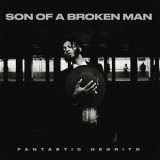
Born Xavier Amin Dphrepaulezz, by now much has been made of Fantastic Negrito's own unique story--his early years growing up in an orthodox Muslim household, the doomed major label deal that turned him off of the music industry altogether, the near-fatal car crash that permanently damaged his guitar playing hand--as well as the remarkable redemption arc that began in 2015, when he won the first ever NPR Tiny Desk Contest. In the years that followed, Negrito would go on to take home three consecutive GRAMMY Awards for Best Contemporary Blues Album, tour with everyone from Sturgill Simpson to Chris Cornell to Bruce Springsteen, collaborate in the studio with the likes of Sting and E-40, launch his own Storefront Records label, perform at Lollapalooza, WOMAD, Glastonbury, Newport Folk, Byron Bay Blues, and nearly every other major festival on the map, and found the Revolution Plantation, an urban farm aimed at youth education and empowerment. Son of a Broken Man sees Fantastic Negrito encapsulating the inimitable elements of his celebrated body of work to date, from hard-hitting distorted guitar riffs to melodic and expressive ballads, all fueled by the unexpected twists that have become his trademark. The album stands as perhaps Fantastic Negrito's most personal thus far, exploring family, deception, and the human desire to hide the true self as he dives deep into one of the oldest conflicts in human history, the struggle between father and son. Beginning at a young age, Negrito was served untruths by his father. A made-up last name, a fabricated ancestry, and a fake Somali accent. Why lie? Why create this false narrative? Those are the questions Negrito had to ask himself and the questions that lie at the heart of Son of a Broken Man.

pre-order now08.11.2024

expected to be published on 08.11.2024

36,09 €
JENNIFER CASTLE - Camelot

Camelot, the legendary seat of King Arthur's court in Early Middle Ages Britain, was probably not a real place. A corruption of the name of a real Romano-Briton city, the word "Camelot" accumulated symbolic, mythic resonances over centuries, until achieving its present usage as a near-synonym of "utopia." In the mid-20th century alone, Camelot inspired an explosion of representations and appropriations, among them the violent, affectless Arthurian court of Robert Bresson's 1974 film Lancelot du Lac and the absurdist iteration of Monty Python's 1975 Holy Grail, both of which feature armored knights erupting into fountains of blood; the mystical Welsh world of novelist John Cowper Powys's profoundly weird 1951 novel Porius, with its Roman cults, wizards and witches, and wanton giants; and the nationalist nostalgia of President John F. Kennedy's White House. Unsurprisingly there are fewer Camelots in more recent memory. Camelot, Canadian songwriter Jennifer Castle's extraordinary, moving 2024 chronicle of the artist in early middle age, charts a realer, more rooted, and more metaphorical place than the fabled Camelot of the Early Middle Ages (or its myriad depictions), but it too is a space more psychic than physical. In Castle's Camelot, the fantastic interpenetrates the mundane, and the Grail, if there is one, distills everyday experience into art and art into faith, subliming terrestrial concerns into sublime celestial prayers to Mother Nature, and to the unfolding process of perfecting imperfection in one's own nature. Co-produced by Jennifer and longtime collaborator Jeff McMurrich, her seventh record is at once her most monumental and unguarded to date, demonstrating a mastery of rendering her verse and melodies alike with crisply poignant economy. For all their pointedly plainspoken lyrical detail and exhilarating full-band musical flourishes, these songs sound inevitable, eternal as morning devotions. "Back in Camelot," she sings on the lilting, vulnerable title track, "I really learned a lot / circles in the crops and / sky-high geometry." The album opens with a candid admission of sleeping "in the unfinished basement," an embarrassing joke that comes true. But the dreamer is redeemed by dreaming, setting sail in her airborne bed above "sirens and desert deities." If she questions her own agency_whether she is "wishing stones were standing" or just "pissing in the wind"_it does not diminish the ineffable existential jolt of such signs and wonders. This abiding tension between belief and doubt, magic and pragmatism, self and other, sacred and profane, and even, arguably, paganism and monotheism, suffuses these ten songs, which limn an interior landscape shot through with sunstriped shadows of "multi-felt dimensions" both mystical and quotidian. The epic scale and transport of "Camelot," with its swooning strings, gives way dramatically to "Some Friends," an acoustic-guitar-and-vocals meditation in miniature on Janus-faced friends and the lunar and solar temperatures of their promises_"bright and beaming verses" versus hot curses_which recalls her minimalist last album, 2020's achingly intimate Monarch Season. (In a symmetrical sequencing gesture, the penultimate track, the incantatory "Earthsong," bookends the central six with a similarly spare solo performance and coiled chord progression, this time an ambiguous appeal to _ a wounded lover? a wounded saint? our wounded planet?) Those whom "Trust" accuses of treacherous oaths spit through "gilded and golden tooth"_cynics, critics, hypocrites, gurus, scientists, doctors, lovers, government, the so-called entertainment industry_sow uncertainty that can infect the artist, as in "Louis": "What's that dance / and can it be done? What's that song / and can it be sung?" Answering affirmatively are "Lucky #8," an irrepressible ode to dancing as a bulwark against the "tidal pools of pain" and the "theory of collapse," and "Full Moon in Leo," which finds the narrator dancing around the house with a broom, wearing nothing but her underwear and "big hair." But the central question remains: who can we trust, and at what cost faith, in art or angels or otherwise? Castle's confidence in her collaborators is the cornerstone of Camelot. Carl Didur (piano and keys), Evan Cartwright (drums and percussion), and steadfast sideman Mike Smith (bass) comprise a rhythm section of exquisite delicacy and depth. This fundamental trio anchors the airiness of regular backing vocalists Victoria Cheong and Isla Craig and frames the guitars of Castle, McMurrich, and Paul Mortimer (and on "Lucky #8," special guest Cass McCombs). Reprising his decennial role on Castle's beloved 2014 Pink City, Owen Pallett arranged the strings for Estonia's FAMES Skopje Studio Orchestra. On the ravishing country-soul ballad "Blowing Kisses"_Pallett's crowning achievement here, which can be heard in its entirety in the penultimate episode of the third season of FX's The Bear_Jennifer contemplates time and presence, love and prayer_and how songwriting and poetry both manifest and limit all four dimensions: "No words to fumble with / I'm not a beggar to language any longer." Such rare moments of speechlessness_"I'm so fucking honoured," she bluntly proclaims_suggest a state "only a god could come up with." (If Camelot affirms Castle as one of the great song-poets of her generation, she is not immune to the despairing linguistic beggary that plagues all writers.) Camelot evinces a thoroughgoing faith not only in the natural world_including human bodies, which can, miraculously, dance and swim and bleed and embrace and birth_but also in our interpretations of and interventions in it: the "charts and diagrams" of "Lucky #8," a daydreamt billboard on Fairfax Ave. in LA in "Full Moon in Leo," the bloody invocations of the organ-stained "Mary Miracle," and all manner of water worship, rivers in particular. (Notably, Jennifer has worked as a farmer and a doula.) The album ends with "Fractal Canyon"'s repeated, exalted insistence that she's "not alone here." But where is here? The word "utopia" itself constitutes a pun, indicating in its ambiguous first syllable both the Greek "eutopia," or "good-place"_the facet most remembered today_and "outopia," or "no-place," a negative, impossible geography of the mind. Utopia, like its metonym Camelot, is imaginary. Or as fellow Canadian songwriter Neil Young once sang, "Everyone knows this is nowhere." "Can you see how I'd be tempted," Castle asks out of nowhere, held in the mystery, "to pretend I'm not alone and let the memory bend?"

pre-order now01.11.2024

expected to be published on 01.11.2024

23,49 €
Jennifer Castle - Camelot	LP

. For Fans Of: The Weather Station, Weyes Blood, Adrianne Lenker, Phoebe Bridgers, Joan Shelley, Lana Del Rey, Cass McCombs, Angel Olsen & Neil Young. Camelot, the legendary seat of King Arthur’s court in Early Middle Ages Britain, was probably not a real place. A corruption of the name of a real Romano-Briton city, the word “Camelot” accumulated symbolic, mythic resonances over centuries, until achieving its present usage as a near-synonym of “utopia.” In the mid-20th century alone, Camelot inspired an explosion of representations and appropriations, among them the violent, affectless Arthurian court of Robert Bresson’s 1974 film Lancelot du Lac and the absurdist iteration of Monty Python’s 1975 Holy Grail, both of which feature armoured knights erupting into fountains of blood; the mystical Welsh world of novelist John Cowper Powys’s profoundly weird 1951 novel Porius, with its Roman cults, wizards and witches, and wanton giants; and the nationalist nostalgia of President John F. Kennedy’s White House. Unsurprisingly there are fewer Camelots in more recent memory. Camelot, Canadian songwriter Jennifer Castle’s extraordinary, moving 2024 chronicle of the artist in early middle age, charts a realer, more rooted, and more metaphorical place than the fabled Camelot of the Early Middle Ages (or its myriad depictions), but it too is a space more psychic than physical. In Castle’s Camelot, the fantastic interpenetrates the mundane, and the Grail, if there is one, distills everyday experience into art and art into faith, subliming terrestrial concerns into sublime celestial prayers to Mother Nature, and to the unfolding process of perfecting imperfection in one’s own nature. Co-produced by Jennifer and longtime collaborator Jeff McMurrich, her seventh record is at once her most monumental and unguarded to date, demonstrating a mastery of rendering her verse and melodies alike with crisply poignant economy. For all their pointedly plainspoken lyrical detail and exhilarating full-band musical flourishes, these songs sound inevitable, eternal as morning devotions. “Back in Camelot,” she sings on the lilting, vulnerable title track, “I really learned a lot / circles in the crops and / sky-high geometry.” The album opens with a candid admission of sleeping “in the unfinished basement,” an embarrassing joke that comes true. But the dreamer is redeemed by dreaming, setting sail in her airborne bed above “sirens and desert deities.” If she questions her own agency whether she is “wishing stones were standing” or just “pissing in the wind” it does not diminish the ineffable existential jolt of such signs and wonders. This abiding tension between belief and doubt, magic and pragmatism, self and other, sacred and profane, and even, arguably, paganism and monotheism, suffuses these ten songs, which limn an interior landscape shot through with sunstriped shadows of “multi-felt dimensions” both mystical and quotidian. The epic scale and transport of “Camelot,” with its swooning strings, gives way dramatically to “Some Friends,” an acoustic-guitar-and-vocals meditation in miniature on Janus-faced friends and the lunar and solar temperatures of their promises—“bright and beaming verses” versus hot curses which recalls her minimalist last album, 2020’s achingly intimate Monarch Season. (In a symmetrical sequencing gesture, the penultimate track, the incantatory “Earthsong,” bookends the central six with a similarly spare solo performance and coiled chord progression, this time an ambiguous appeal to … a wounded lover? a wounded saint? our wounded planet?). Those whom “Trust” accuses of treacherous oaths spit through “gilded and golden tooth” cynics, critics, hypocrites, gurus, scientists, doctors, lovers, government, the so-called entertainment industry sow uncertainty that can infect the artist, as in “Louis”: “What’s that dance / and can it be done? What’s that song / and can it be sung?” Answering affirmatively are “Lucky #8,” an irrepressible ode to dancing as a bulwark against the “tidal pools of pain” and the “theory of collapse,” and “Full Moon in Leo,” which finds the narrator dancing around the house with a broom, wearing nothing but her underwear and “big hair.” But the central question remains: who can we trust, and at what cost faith, in art or angels or otherwise? Castle’s confidence in her collaborators is the cornerstone of Camelot. Carl Didur (piano and keys), Evan Cartwright (drums and percussion), and steadfast sideman Mike Smith (bass) comprise a rhythm section of exquisite delicacy and depth. This fundamental trio anchors the airiness of regular backing vocalists Victoria Cheong and Isla Craig and frames the guitars of Castle, McMurrich, and Paul Mortimer (and on “Lucky #8,” special guest Cass McCombs). Reprising his decennial role on Castle’s beloved 2014 Pink City, Owen Pallett arranged the strings for Estonia’s FAMES Skopje Studio Orchestra. On the ravishing country-soul ballad “Blowing Kisses” Pallett’s crowning achievement here, which can be heard in its entirety in the penultimate episode of the third season of FX’s The Bear Jennifer contemplates time and presence, love and prayer and how songwriting and poetry both manifest and limit all four dimensions: “No words to fumble with / I’m not a beggar to language any longer.” Such rare moments of speechlessness “I’m so fucking honoured,” she bluntly proclaims suggest a state “only a god could come up with.” (If Camelot affirms Castle as one of the great song-poets of her generation, she is not immune to the despairing linguistic beggary that plagues all writers.) Camelot evinces a thoroughgoing faith not only in the natural world including human bodies, which can, miraculously, dance and swim and bleed and embrace and birth but also in our interpretations of and interventions in it: the “charts and diagrams” of “Lucky #8,” a daydreamt billboard on Fairfax Ave. in LA in “Full Moon in Leo,” the bloody invocations of the organ-stained “Mary Miracle,” and all manner of water worship, rivers in particular. (Notably, Jennifer has worked as a farmer and a doula.) The album ends with “Fractal Canyon”s repeated, exalted insistence that she’s “not alone here.” But where is here? The word “utopia” itself constitutes a pun, indicating in its ambiguous first syllable both the Greek “eutopia,” or “good-place” the facet most remembered today and “outopia,” or “no-place,” a negative, impossible geography of the mind. Utopia, like its metonym Camelot, is imaginary

pre-order now01.11.2024

expected to be published on 01.11.2024

28,36 €
Gerry Mulligan - Spring In Stockholm: Live In Sweden, 1959 (LP)

Gerry Mulligan mit der Night Lights Band auf Europatournee 1959. Das großartige Quartett besteht aus Gerry Mulligan am Baritonsaxophon und Klavier, Art Farmer an der Trompete, Bill Crow am Bass und Dave Bailey am Schlagzeug. Die Band war auf dem Höhepunkt ihres Könnens, und diese atemberaubenden Aufnahmen trugen entscheidend dazu bei, Mulligans Band als eine der angesagtesten Bands jener Zeit zu bestätigen.

In Zusammenarbeit mit dem Swedish National Radio Archive und dem Gerry Mulligan Estate ist es uns gelungen, die Original-Masterbänder im Tresor von Sveriges Radio ausfindig zu machen und sie Kevin Gray zur Verfügung zu stellen, der mit seiner gewohnten Magie beim Mastering und Editing diesen bisher unveröffentlichten Aufnahmen eine unglaubliche klangliche Bandbreite verliehen hat. Das neu gestaltete Cover wurde von Two To Tango entworfen, die regelmäßig mit New Land zusammenarbeiten, und bietet einen großartigen modernistischen Look.

Hergestellt bei Pallas und gedruckt auf 180g Vinyl im Reverse-Board-Sleeve, ist dies eine wichtige Ergänzung für jede Sammlung. Der Baritonsaxophonist Gerry Mulligan war eine wahre Ikone des Jazz und von den 1950er Jahren bis zu seinem Tod 1996 eine der herausragenden Persönlichkeiten der Westcoast-Szene. Mulligan, der vom Downbeat Magazine 42 Jahre in Folge zur Nummer eins auf seinem Instrument gewählt wurde, war einer der wichtigsten Musiker seiner Zeit und ein Aushängeschild, das den Sound des Jazz mitgeprägt hat. Gerry Mulligan spielte sowohl in der Miles Davis Formation der Birth Of The Cool-Ära als auch im pianolosen Quartett mit Chet Baker und war immer an vorderster Front, wenn es darum ging, was in Amerikas einzig wahrer Kunstform angesagt war und ist.

pre-order now18.10.2024

expected to be published on 18.10.2024

33,66 €
Pink Floyd - Animals LP

Pink Floyd

Animals LP

12inch0190295600532
Warner Music
27.09.2024

(2018 Remix)

30. Juni 2022 – Im Januar 1977 veröffentlichten Pink Floyd ihr zehntes Studioalbum „Animals“. Das Werk eroberte Platz 1 der deutschen Charts, gilt als eines ihrer besten – und es wird nun, 45 Jahre später, als Deluxe Gatefold, CD, LP und Blu-ray wiederveröffentlicht. Zum ersten Mal überhaupt wird das Album in 5.1 Surround-Sound zu hören sein. Die einzelnen Versionen werden ab dem 16. September 2022 erhältlich sein, die Deluxe-Version folgt am 7. Oktober.

Pink Floyd – David Gilmour, Nick Mason, Roger Waters und Richard Wright – nahmen „Animals“ 1976 und Anfang 1977 in den bandeigenen Britannia Row Studios in London auf und produzierten auch selbst.

„Animals 2018 Remix“ wird als CD, LP (mit Klapphüllen-Artwork), Blu-Ray und als Deluxe-Gatefold-Format veröffentlicht. Die Deluxe-Gatefold-Version beinhaltet eine LP, CD, Audio-Blu-Ray, Audio-DVD und ein 32-seitiges Booklet. Die Audio-Blu-Ray und -DVD enthalten den Remix von 2018 in Stereo, in 5.1 Surround (beide von James Guthrie) und den ursprünglichen Stereo-Mix von 1977. Das 32-seitige Booklet gewährt mit selten gezeigten Fotos einen Blick hinter die Kulissen des Shootings für die Plattenhülle sowie Live-Bilder und Memorabilia. Das Album-Artwork wurde für diese Veröffentlichung mit einem zeitgemäßen Motiv neu interpretiert.

„Animals“ ist ein Konzeptalbum, das sich kritisch mit den sozialpolitischen Verhältnissen im Großbritannien der mittleren 1970er-Jahre auseinandersetzt und damit eine Abkehr vom Stil der früheren Arbeiten der Band markierte. Aus einer Ansammlung ursprünglich nicht miteinander zusammenhängender Songs entwickelten Pink Floyd ein Konzept, das den offenkundigen sozialen und moralischen Verfall der Gesellschaft beschreibt. Inspiriert von George Orwells „Farm der Tiere“, verbildlichen sie die menschliche Natur mit einer Analogie zum Tierreich und teilen die Menschen in drei Klassen von Tieren ein: Die Schweine stehen an der Spitze der sozialen Kette, die Schafe tun als hirnlose Herde, was man ihnen sagt, und die Hunde sind die Geschäftsbosse, die sich am Profit und ihrer Macht über andere schamlos bereichern. Seit 1977 ist viel Zeit vergangen – und dann wieder gar nicht, denn die Erzählung des Albums hat als Kommentar auf unsere gesellschaftliche und wirtschaftliche Situation nichts von ihrer Aktualität verloren.

Das berühmte Cover von „Animals“ zeigt ein aufblasbares Schwein (heute bekannt als Algie), das in luftigen Höhen zwischen zwei Schornsteinen der Battersea Power Station in London schwebt. Die Idee für das Cover kam von Roger Waters, die Umsetzung übernahm der langjährigen Kreativpartner der Band, Storm Thorgerson von Hipgnosis Studios. Für die jetzige Neuveröffentlichung wurde das Artwork von Storms Hipgnosis-Partner Aubrey „Po“ Powell für die heutige Zeit neu gestaltet. Basierend auf neuen Aufnahmen des Gebäudes während der jüngsten Umgestaltungsarbeiten (das ehemalige Kraftwerk wird für die kulturelle und gewerbliche Nutzung umgebaut, gestaltet von Frank Gehry und Norman Foster), experimentierte Po mit neuen Blickwinkeln und erschuf einige beeindruckende neue Varianten des berühmten Originals. Po dazu: „Das Original-Albumcover von 1977 ist ikonisch und steht so sehr für sich, dass ich eine Menge Respekt davor hatte, ihm ein Update zu verpassen. Doch Hipgnosis nahm die Gelegenheit zum Anlass, das Motiv neu zu fotografieren und damit eine sich verändernde Welt widerzuspiegeln. Durch den Einsatz moderner digitaler Färbetechniken konnte ich Pink Floyds düstere Botschaft des moralischen Verfalls beibehalten, und auch die Orwellsche Tier-Analogie in Form des Schweins Algie lebt in dem neuen Artwork fort.“

Pink Floyds „Animals 2018 Remix” kann ab jetzt hier vorbestellt werden.

out of Stock

Order now and we will order the item for you at our supplier.

Last In: 22 months ago
27,31 €
MERCE LEMON - WATCH ME DRIVE THEM DOGS WILD

Within the quiet, cascading corners of Pittsburgh lies a community - essentially one large family - that spans neighborhoods and generations. Upon this foundation, Merce Lemon built her latest album: Watch Me Drive Them Dogs Wild. These are earnest songs, of belonging and longing, in which romantic and familial love rip into and out of themselves in a flurry of reckoning. There is a fierceness, a persistence in this vulnerability, that is matched by the wildness of her band. Merce took a step back from music in 2020, after releasing her debut album Moonth, to reassess. "Music was just something I'd always done, and I didn't want to lose the magic of that - but I was just having less fun." In this time of restless confusion, she got back to her roots. "I got dirty and slept outside most of the summer. I learned a lot about plants and farming, just writing for myself, and in that time I slowly accumulated songs." A creative hunger, supported by her community, had been newly fertilized. From this rediscovery, imbued with the vitality of earth's green magic, Watch Me Drive Them Dogs Wild sprouted forth.

pre-order now27.09.2024

expected to be published on 27.09.2024

21,22 €
MERCE LEMON - WATCH ME DRIVE THEM DOGS WILD

Limited Bubblegum Pink Vinyl. Within the quiet, cascading corners of Pittsburgh lies a community - essentially one large family - that spans neighborhoods and generations. Upon this foundation, Merce Lemon built her latest album: Watch Me Drive Them Dogs Wild. These are earnest songs, of belonging and longing, in which romantic and familial love rip into and out of themselves in a flurry of reckoning. There is a fierceness, a persistence in this vulnerability, that is matched by the wildness of her band. Merce took a step back from music in 2020, after releasing her debut album Moonth, to reassess. "Music was just something I'd always done, and I didn't want to lose the magic of that - but I was just having less fun." In this time of restless confusion, she got back to her roots. "I got dirty and slept outside most of the summer. I learned a lot about plants and farming, just writing for myself, and in that time I slowly accumulated songs." A creative hunger, supported by her community, had been newly fertilized. From this rediscovery, imbued with the vitality of earth's green magic, Watch Me Drive Them Dogs Wild sprouted forth.

pre-order now27.09.2024

expected to be published on 27.09.2024

22,27 €
Bunny Lee + King Tubby - Brass Rockers LP

repress !

“Tubby did three original dub albums, ‘Dub From The Roots’. ‘The Roots of Dub’ and the third is ‘Brass Rockers’ with Tommy McCook ‘pon the flying cymbals. Where he mixed it with the horn going in and out in a dub way and one named ‘Shalom Dub’ you can call Tubby’s too because he mixed the versions as they were off forty fives’’
Bunny ‘Striker‘ Lee

King Tubby and Producer Bunny ‘Striker’ Lee are intertwined in the birth of Dub Music. After discovering a mistake that made a ‘serious joke’ ( more of which later...) they went on to release the first pressings of this new musical genre namely ‘Dub Music’. Tubby’s vast knowledge of electronics and Bunny’s vast catalogue of rhythms would lay the foundations of what today is taken as a standard... the Remix / Version cuts to an existing vocal tune.

Osbourne ‘King Tubby’ Ruddock was born in Kingston, Jamaica on 28th January 1941 and grew up in the High Holborn Street area of downtown Kingston. He studied electronics at Kingston’s National Technical College and also on two correspondence courses from the U.S.A... When he had qualified Tubby began repairing radios and other electrical appliances in a shack in the back yard of his mother’s home. His work in the early days included winding transformers and building amplifiers for Kingston’s Sound Systems. Tubby built his first Sound System in 1957 playing jazz and Rhythm & Blues at local weddings and birthday parties. His reputation as a man who knew and understood both electronics and music grew steadily and as the sixties drew to a close. Tubby purchased his own basic two track equipment. He installed this alongside his dub cutting machine, a home made mixing console and his impressive collection of Jazz albums in the back bedroom of his home at 18 Dromilly Avenue which he christened his music room.

Tubby and Striker were at Treasure Isle Studio’s one day while Ruddy from Spanish Town was working with the engineer Byron Smith....

“Tubby and myself was talking when Ruddy was cutting some dub but Smithy (engineer) made a mistake through we were talking and forgot to put in the voice. It was two track recording in those days. Ruddy said ‘No Man! Make it stay! and so they cut the rhythm. When I went over to Ruddy’s that Saturday night a dance was in progress and when they played the vocal to the tune... then he said we’re going to play ‘Part Two’. They never called it ‘Version’..and then he played the rhythm track. The song was a catchy song and everybody started to sing along and the deejay started to toast so everything went down well. On Monday morning I went up and I said ‘Tubbs the mistake we made was a serious joke.It mash up Spanish Town! The people went wild. So you have to start to do that now ‘cause when the man put on the ‘Part Two’ everyone start singing this song. It played about twenty times. I said you try Tubbs!’...Well the next Saturday night now when Tubby strung up down the farm U Roy said he’s going to play ‘Part Two’ but Tubby did it different now. He started with the voice then dropped it out and let the rhythm run and then he brought in the voice in the middle and from there Tubby started to get really popular.’’
Bunny ‘Striker’ Lee

Dynamic Sounds upgraded to sixteen track recording in 1972 and Tubby purchased, again with the help of a deal brokered by Bunny Lee. The old four track equipment and the MCI console from their Studio B. The four tracks now gave him far wider scope to work with and he began to create a new musical form where the bass and drum parts were brought up while the faders allowed Tubby to ease the vocal and rhythm in and out of the mix. It was only a matter of time before Tubby’s dub plate experiments began to make it on to vinyl and the first ever long playing King Tubby releases would feature a collection of his mixes to a selection of Strikers rhythms. So please sit back and enjoy this historic set of sounds. Lovingly restored and with a few extra gems added to the CD Editions. These releases were the first to carry the name of King Tubby and the first to credit the great musicians that contributed so much to the rhythms that made these albums possible.

out of Stock

Order now and we will order the item for you at our supplier.

Last In: 2 years ago
13,40 €
THE GREAT DYING - A CONSTANT GOODBYE

The music of Will Griffith's The Great Dying is a mix he likes to call dark country. He grew up in Cleveland, Mississippi, where D.I.Y. punk house shows hooked him, and his early bands played The Farmhouse and legendary delta juke joint Po' Monkey's. Songs from The Great Dying's new album, A Constant Goodbye, were born from playing hundreds of shows supporting Bloody Noses & Roses (Dial Back Sound 2018), and it continues where the debut left off. The ballads are still sweet and menaced, the rockers are still hair-raisers, but the new record pushes in new directions, infusing sounds of classic country with faint traces of The Replacements and what was once called "alternative rock." The tracks are layered and varied: wall-of-sound arrangements grind against flange-bass and fiddle, with Griffith's barebones acoustic guitar and vocals at the root, and heartbreak all over. Coming from another artist, this blend of influences would tank, but somehow it suits The Great Dying just fine. Pick any number on the new album-it's a winner.

pre-order now30.08.2024

expected to be published on 30.08.2024

21,22 €
LINDSAY REAMER - NATURAL SCIENCE LP

From 2019 to 2023 Lindsay Reamer worked as a field scientist. With a guitar and a bag of books in tow, she would leave her home in Philadelphia for the postcard scenes of the American landscape to gather data on visitation in National Parks. She counted cars and RVs, surveyed visitors, and made a temporary home for a few weeks at a time wherever she landed. All the while, she collected her own observations like specimens and slowly weaved the songs that would form her debut full-length, `Natural Science.' Recorded throughout 2023 by Lucas Knapp, `Natural Science' paints with a full spectrum. Humor rubs elbows with heartbreak. Acoustic guitars brush up against synthesizers, cradling Reamer as she sings about the American Chestnut tree extinction, employee gossip at a Day's Inn, fishing beside a power plant, turf grass farms, and waking up next to day-old take-out. The indifferent beauty of nature is held up next to the everyday as Reamer does her very best to find clues for navigating the latter by musing upon both. Following the release of her self-produced EP `Lucky' (Dear Life Records) in 2021, Reamer assembled a band with musicians from Philadelphia's vibrant music community and began working her once solo-acoustic songs into full band arrangements. After a brief flirtation with dance music which led to 2022's viral single "Touch Tank," Reamer settled into a sound that lies somewhere in the folkrock-pop matrix, explored with the humor and lightness of songwriters like Sheryl Crow or Melanie. Reamer reflects: "When I heard the songs with the band, I knew it was time to make the record. It felt like something I had been working towards my whole life. I grew up around musicians but I never thought I was good enough to be in a band or even to make my own music. My grandmother Joan gave me voice lessons after school, my mom was an opera singer, and my dad a guitar player. But it wasn't until a few years ago that I realized I could do it. It didn't matter if I could shred on the guitar or something. It was like some illusion shattered." Reamer is a sincere storyteller. The self-doubt and heartbreak expressed in songs like "Spring Song," "Sugar," or "Red Flowers" give way to the triumphant moments of self-acceptance and love in "Lucky," "Necessary," and "Figs and Peaches." `Natural Science' chronicles a path to confidence, an honest reflection of someone with the capacity to hold a deep well of emotion who also makes sure to not take it all too seriously. "Gardens on the land / Castles on the beaches / I trust my hand and / Pluck my figs and peaches," Reamer sings, as she works to reconcile the strange difficulty we have at finding happiness despite the obvious beauty all around us.

pre-order now16.08.2024

expected to be published on 16.08.2024

21,22 €
MARIO RUSCA TRIO - Monochrome Blues LP 2x12"

Mario Rusca is most probably the biggest living Italian jazzman. His major influences are Duke Ellingtons composing abilities and Hampton Hawes' brilliant sound. He immersed himself in the harmonic inventions of the incredible pianists of the 60s and 70s: from Bud Powell to Bobby Timmons, Wynton Kelly and Bill Evans. Mario Rusca has been the house pianist of Capolinea, the most important Italian jazz club of the 70s and 80s. He went on to perform in important national and international settings-representing Italy in the "Piano Solo'' category of the "International Festival of Varsavia" and participating with his quintet at the "International Festival of Montreal". He has collaborated with a multitude of prestigious names: Chet Baker, Tony Scott, Curtis Fuller, Gerry Mulligan, Lou Donaldson, Art Farmer, Bob Berg, Lee Konitz, Dusko Gojkovic, Al Gray, Kay Winding, as well as Stefano Bagnoli, Enrico Rava, Tullio De Piscopo, Kenny Clarke, Stan Getz, Jimmy Owens, Toots Thielemans, Gianni Basso, Pepper Adams, Steve Lacy, Steve Grossman, Franco Ambrosetti, Woody Shaw, and Eddie "Lockjaw" Davis. With Gerry Mulligan, in particular, he toured in 1976 and with Lee Konitz, he recorded Wheres The Blues? at the end of the 90s. In this regard, Suspension in 1975 with Tullio De Piscopo and Recreations in 1976 with the phenomenal Larry Nocella playing saxophone are still very beautiful and modern recordings. As Mario says, "In jazz, you choose the companions that you can dialogue the most with.there needs to be an interplay, there needs a...a way of feeling, which is why you choose musicians because they feel like you, or, if nothing else, they follow you". The chemistry between the three of them is perfectly aligned, synergistic. Tonys drums and Riccardos bass create a soft and essential rhythmic tapestry that never hinder the creative prowess of the band leader. Here Mario Rusca is interpreting the most dynamic jazz standards. Blues for Gwen by McCoy Tyner, Blues Walk by Lou Donaldson, Blue Minor by Sonny Clark, Turnaround by Ornette Coleman, Bass Blues by John Coltrane or even Super Jet by Tadd Dameron. You cant help but imagine yourself on top of a convertible, smiling and carefree, while they travel through the soloist progressions of Turnaround and Super Jet. We need to underline the four originals included in this recording: Blue Dream (for Allerim), Tempo Blues, Double Horn e Monochrome Blues, extremely suggestive compositions, rich of intuitions and which well exhibit Mario Rusca composition skills and his ability to play the blues. MONOCHROME BLUES is a winning trio album which will deeply please the most demanding jazz hears. The musicians Mario Rusca (piano) Riccardo Fioravanti (bass) Tony Arco (drums)

pre-order now05.07.2024

expected to be published on 05.07.2024

38,61 €
UNICORN - BLUE PINE TREES LP

Beginning in the mid-1960s as a covers band, the group that came to be Unicorn soon determined that original material was the way to go, and after being inspired by a Crosby, Stills and Nash album, their particular brand of enlightened folk rock tinged with country shades yielded a contract with Transatlantic for their 1971 debut. Fast forward to 1974 and Blue Pine Trees finds the band at their finest with sweeping harmonies and bluegrass tinges, and with Pink Floyd’s David Gilmour in the producer’s chair, all of their glorious potential is realised on this lost gem of an album that is fully ripe for rediscovery. A truly great work!

pre-order now01.07.2024

expected to be published on 01.07.2024

21,81 €
JOE MCPHEE - TENOR

Joe Mcphee

TENOR

12inchSV187LP
SUPERIOR VIADUCT
28.06.2024

“There are lots of outstanding Joe McPhee LPs. Nation Time being chief among them, but there’s also Pieces Of Light, Oleo and Topology. The Poughkeepsie, New York-based multi-instrumentalist, by now an international star of free music, has amassed a daunting discography, no doubt. If you want to peer deeply into the soul of Joe McPhee, however, there’s no way around it, you need to spend some quality time with Tenor. “Tenor is McPhee’s first solo record. He did not set out to make it. It was an afterthought, quite literally, born of a gathering of friends at the Swiss farmhouse of cellist Michael Overhage. A beautiful meal, some drinks, warm conversation, and ... why not, an impromptu recital. Hat Hut producer Werner X. Uehlinger was there and a year later issued it as McPhee’s third LP for the label (Hat Hut C in their famed letter series). “The existential blues ‘Knox’ sets the stage, indicating that this will not just be a toss-off postprandial singalong. ‘Good-Bye Tom B.’ carries on with aching melancholy, through burred notes and hushed harmonics. The relatively jaunty ‘Sweet Dragon’ is also emotionally loaded with Ayler-esque vibrato, slurs, wipes, and blasts of tone. The side-long title track comes without a theme, as a kind of pure investigation of the horn, its potential, its limits, its expressive capacity. There have been few solo sessions as comprehensive and devastating as this spontaneous after-dinner diversion in rural Switzerland in 1976. We’re very lucky someone pressed record.” —John Corbett (excerpt from the liner notes)

pre-order now28.06.2024

expected to be published on 28.06.2024

27,52 €
COSMIC PSYCHOS - GO THE HACK

Reissue of late-’80s release by lovably manly Australian punk rock trio! Sometime in the winter of 1989-90, I wandered into New York City’s Midnight Records, a store famous for its deep catalog of ’60s garage and psychedelic music, as well as a strong selection of classic punk rock and a cantankerous French owner with ridiculous hair. On this visit, instead of hearing a puny French bootleg of The Standells or the Seeds, as I opened the door I was enveloped in the massive opening chords to the first song on the Cosmic Psychos’ then-new album Go the Hack. “She’s a lost cause / She’s a lost, lost cause!” blasted into the air at maximum volume. In a perfect cinematic moment, the drums announced my entry, the bass dictated my walk, the air became thick with guitar fuzz and wah-wah, and snarled vocals described perfectly a girl’s descent into a cause which was lost. Instead of record shopping, I felt like I’d stepped into a biker movie and was motoring down a long, straight Outback road on a Harley. This was my introduction to the Cosmic Psychos, and I was hooked. I loved that a band could be so powerful, sound so big and unapologetically simple, and incorporate so much of what I loved about music—well, basically the attitudes and sounds of The Stooges and Ramones: setting up songs with a good title or idea, matching it with a massive riff, then running it out with squeals of wah-wah and manly disregard for cleverness or adornment. And they called themselves the Cosmic Psychos! They obviously had no regard for “makin’ it” in those days, when an alternative rock band at least had a chance to sell some records. I was an instant fan. Earlier records proved to be the same formula with even less refinement, and that was definitely a good thing. These were lovably manly Aussies singing about what they knew best: farm equipment, lusting after Elle Macpherson, wishing they were in Van Halen (for the ladies), drinking at the pub, and even more drinking at the pub. Trivia question: In what indie rock song does the lead singer bellow “I love my tractor!”? Answer: None! No scarves or looking like Stevie Nicks straight out of the hairstylist’s for these fellows. They were the real deal before the deal was dealt. And they couldn’t care less. The Psychos enjoyed a long run through the ’80s and ’90s on such Australian labels as What Goes On, Mr Spaceman, Survival and Rattlesnake, as well as American stalwarts Sub Pop and Amphetamine Reptile. Many bands from that era no longer seem vital today, lost in a murk of crisp drums, loud guitars, flannel shirts and shallow aspirations. These first Cosmic Psychos releases are as timeless and necessary as ever—still a bullshit bulldozer, a blurry loud night at the bar, a rollicking time hanging with the guys. The time has come for a new generation to be uplifted by these initial blasts from the Cosmic Psychos. Goner is proud to partner with Melbourne’s esteemed Aarght! Records to bring these platters of primal perfection back into a world that definitely needs them. — Eric Friedl, Oblivians / Goner Records 40th Anniversary tour about to hit UK / EU! Go the Hack!! Essential!!

pre-order now21.06.2024

expected to be published on 21.06.2024

27,10 €
Paul McCartney & Wings - One Hand Clapping LP 2x12"

The wait is over: With the 14th June release of One Hand Clapping, one of the most bootlegged live albums in musical history will finally receive a proper release. In August 1974, when Band on the Run was enjoying a seven-week consecutive #1 stint at the top of the UK album charts, Paul McCartney and Wings headed to Abbey Road Studios for the filming of a video documentary and possible live studio album – One Hand Clapping. Despite overwhelming demand for newly recorded material from the biggest band in the world at that time, One Hand Clapping was never officially released. 2LP- 50 years after their initial recording, the sessions for Wings One Hand Clapping will be released for the very first time. Discs 1 and 2 are newly mixed with 12 tracks that didn’t appear in the original film, including reworked extracts of Beatles classics. The package includes original artwork, plus a TV sales brochure created for the film.

pre-order now14.06.2024

expected to be published on 14.06.2024

37,61 €
Norihito Sumitomo & Chiho Kiyooka - Original Soundtrack (Volume 1) LP 2x12"
 
53

DRAGONBALL SUPER is a Japanese anime produced by Toei Animation Studios. Scripted by original Dragon Ball author Akira Toriyama, it follows his work and begins shortly after my defeat of Boo in Dragon Ball Z..


"Four years after Boo's death, peace has returned to Earth, and everyone is living in peace.
Goku has become a farmer, and Vegeta spends time with his family. However, the desire to train and grow stronger never leaves them.
Goku goes to train with Master Kaio, who tells him that a powerful enemy has awakened from a 39-year slumber: Beerus, God of Destruction. The latter is looking for a warrior who appeared to him in a dream, the Divine Super Saiyen, against whom he wishes to measure himself."

The anime has been broadcast since 2017 in France on Toonami in a censored version, then in an uncensored version 1 month later. There are 131 episodes and 2 features.
The anime doesn't resume until 2025.

pre-order now31.05.2024

expected to be published on 31.05.2024

40,30 €
Cedar Walton - Mobius

Cedar Walton

Mobius

12inchBEWITH150LP
Be With Records
22.04.2024

Don't judge a book by its cover. Judge a record by its cover.

And, perhaps, its title.

Cedar Walton's Mobius is as outrageously, disorientatingly brilliant as the stunning jacket design, featuring the legendary jazz pianist morphing into a mobius strip, set against a beautiful sky filled with cumulus clouds. A proper jazz-funk fusion slapfest, Mobius is a stellar electric set from - essentially - one *hell* of a SUPERBAND.

Yes, in addition to Walton's Fender Rhodes wizardry, Mobius is elevated by Ryo Kawasaki's stinging electric guitar, pristinely clear vocals by Adrienne Albert and Lani Groves, rootsy percussion by Ray Mantilla and Omar Clay, alto and baritone from Charles Davis, trumpet from Roy Burrowes, Gordon Edwards on bass and Frank Foster's tenor sax. Oh and did we mention STEVE GADD ON DRUMS?!?!

Gem after gem of looping, bliss-inducing gold, it's an incredibly revelatory album. It presents a thrilling synthesis of R&B, funk, blues and hard bop (with a hint of rock), all driven by an idiosyncratic electronic keyboard. Walton, a giant in the jazz world, got quite the workout every time he played, from piano to arp synthesizer to clarinet to electric piano to mini-moog and back again.

Mobius was Cedar Walton's debut for RCA in 1975. The versatile artist confirmed his abilities as a player, composer, interpreter and arranger with this stunning record, and his own bright compositions offered a springboard for the improvisations of the different soloists. Coltrane's "Blue Trane" is the first classic to be given the funkafied Mobius treatment, Ryo Kawasaki let loose all over neck-snapping Gadd-drum gold before the horns take a fiery turn and subsequently give way to Cedar's virtuosity. A sparkling b-boy break version of Thelonious Monk's "Off Minor" (featuring an absolutely *fire* solo from Walton) really sets proceedings alight. Of the three original pieces, the shuffling, percussive power of "Soho" is just absolutely mind bending Latin-influenced jazzy soul whilst the mellow vibes of "The Maestro" bring elegant, sumptuous soul. And then there's the effortlessly funky "Road Island Red". Just too, too good.

Cedar Walton was born in Dallas, Texas, on January 17, 1934 and began his professional career in 1959 when he began touring for several years with the J.J. Johnson Quintet. He later joined the Art Farmer-Benny Golson Jazztet and then Art Blakey's Jazz Messengers. Pretty solid credentials, right? While based in New York City, Cedar played with such luminaries as Donald Byrd, Eddie Harris, Blue Mitchell, Kenny Dorham, Lee Morgan, Freddie Hubbard, Jimmy Heath and Milt Jackson. Without question, he was one of the most complete and gifted musicians of his time and Mobius provides proof of that. The fresh, danceable tracks, all firmly rooted in the living tradition of blues and gospel, are skilfully presented by a master who enjoyed keeping abreast of contemporary tastes and was always keen to renew his language.

As the album notes state: “Mobius, which is the theoretical shape of the infinite universe, makes use of the most modern recording techniques and synthesizers. We mastered and mixed so that it’s hotter than the competition, which should help radio play and in-store demonstration.” Indeed. Mobius is really gorgeous mid-70s fusion, ranging from the funky to the ecstatic. It's an absolute MONSTER that will completely blow you away; and, yes, it's as wild and hypnotic as the cover. The audio for Mobius has been carefully remastered by Be With regular Simon Francis, ensuring it sounds better than ever. Cicely Balston's expert skills have made sure nothing is lost in the cut whilst the records have been pressed to the highest possible standard at Record Industry in Holland. The original, iconic sleeve has been restored here at Be With HQ as the finishing touch to this long overdue re-issue.

out of Stock

Order now and we will order the item for you at our supplier.

Last In: 2 years ago
24,79 €
VARIOUS - BROWN ACID: THE EIGHTEENTH TRIP
also available

Coloured[29,83 €]


EIGHTEEN AND I LIKE IT… (MISC. COLOURED VINYL))if you survived trips 1-17 with one tiny speck of psychedelic sunshine intact, Brown Acid The 18th Trip will be your coming of age nightmare. Vintage underground '70s hard rock, coming at you from bizarre angles, local scene wasteland America when everybody was out for themselves and the drugs went bleak. The guitars kill, the attitude is twisted, even the sex is headed down the wrong road. Real people, no compromise, pure and potent. Get stoked, take the 18th Trip and know that the artists will get paid for pulverizing your soul! "People… are you ready?, 'cause the music now is getting so heavy"… Back Jack out of St. Louis, Missouri in 1974 launch our trip with "Bridge Waters Dynamite". It's an invocation to rock flashing on Mark Farner whooping up a Grand Funk crowd, then getting to the point quickly with berserk guitar assaults. Heavy riff with power chord stalks beneath as you take their advice… get loose and blow up the past. Smokin' Buku Band dropped my jaw with the audacious track "Hot Love" coming on like some fractured fever dream burlesque of Led Zep moves out of Hollywood in 1980. Swooping elongated vocals above, a total Zep chord move at the end of each verse. Writer/producer Steve Shauger aka Shag Stevens gets a brilliantly messed up sound quality here, the ideal polar opposite of slick. The extended guitar break is an epitome of serendipitously crude virtuosity, simply outrageous! Coming at you from way outta left field is "Moby Shark" by Atlantis, a hilarious and strange Baltimore pre-punk vibed dose of D.I.Y. meets hard rock. Lon Talbot is the mastermind, the flip side of this impossibly rare Mekon Records label single was featured in an obscure 1978 B-movie titled "The Alien Factor". Follow the lyrics closely, when the ominous jaws jaws jaws start coming after you you you… the song's big hook is so preposterously catchy the shark attack feels like good news. Inquiring minds should know that the band formerly known as Atlantis can now be found by searching for the Lon Talbot Group! Tommy Stuart and the Rubberband's "Peeking Through Your Window" from 1970 opens with a spooky organ riff, slips into a gushy fuzz/organ groove akin to "Mustache In Your Face” by Pretty. The singer creates downright creepy vibes, a stalker peeking through the girl's mind like a peeping Tom at the window up to no good. The lyrics evoke a disturbing scenario. Tommy Stuart also made a strange LP titled Hound Dog Man in 1977 and some terrific rare garage singles under the names Magnificent Seven and The Omen & Their Love in the mid '60s. Nothing better than an angry two chord guitar attack with cowbell to set the stage for this rant about getting "Ripped Off" by love. Taken from their rare 1977 LP on Dynamite Records, Chicago Triangle was Marvey Esparza, Dave Guereca, Jose 'Tarr' Perez and Robert Aguilera. They unleash such strong brain-scrubbing wah wah frenzy in the guitar break here that it seems to perversely mock it's own intensity! Like I said, Brown Acid the 18th Trip comes at you from all kinds of uncanny angles. Damnation of Adam Blessing out of Cleveland, Ohio unleashed a stone killer psychedelic hard rock classic "Cookbook" in the late '60s, this track "Nightmare" from 1973 has them cooking again at full power. A different singer, name change to Damnation and then Glory, unleashing a deadly dose of dark progressive heavy rock drama peaking when spooky 'oooo-wa-oooo' background vocals emerge during a bizarre spoken bit. It unfolds like a mini-epic and includes some remarkably brutal guitar and turbulent organ, too. "Swing your sword, all aboard… bid farewell to the dreamer" Dalquist exclaims. Cynical view of human nature, idealism is over, war is coming, it always does. Opens with a cold menacing riff and atmosphere reminiscent of "Synthezoid Heartbreak" by Maya. Mournful despondent vocals ride an insistent churning groove, gnarly guitar break moves into free noise territory. This rare track is from a local various artists benefit album titled Kangaroo Jam issued for the Waco Family Abuse Center in Texas circa 1980. The Pawnbrokers "Realize" is prime proto heavy rock emerging out of psychedelic garage roots in 1968 Fargo, North Dakota. Unusual arrangement, terrific sustain guitar tones like on the first Blue Cheer LP, even a rip on Hendrix "Manic Depression" with unison voice and guitar ascent near the end. They made three 45s and were active from '65 to '69. Hats off to Blake English, Kent Richey, Paul Rogne and Steve Harrison, you nailed it in just a hair over two minutes! As pure and creative as the original psychedelic garage hard rock gets. Parchment Farm from Union, Missouri gigged with the likes of ZZ Top and Foghat back in the day and unleashed the amazing "Songs Of The Dead" in 1971. Primitive riff/chord pattern dosed with some funky prog moves, sky turning black, 'is this heaven or hell' type disoriented confusion… may as well grab your guitar and sing songs to the dead. Robert 'Ace' Williams on bass, Paul Cockrum on guitar, Gary Reed on keys and Micky Waterman on drums, replacing Mike Dulany (R.I.P.) Cool that they use the Blue Cheer misspelling from Vincebus Eruptum for the band name! Ominous organ, thick minimalist fuzz riff, funky psychedelic wah wah flashes and freaky sex combine in one twisted dance titled "Rockin' Chair" by Brothers Of The Ghetto. Out of Chicago in 1975 with some Santana atmospherics and a delicious fuzz wah screamin' guitar break, the groove is highlighted by an off the wall vocal which sounds eerily detached in a subtly sleazy way. Rene Maxwell is the writer of this hard-rock boogie-down hybrid straight out of the twilight zone. It was issued on Ghetto, a subsidiary of the peculiar Kiderian label that released the Creme Soda LP. Now that your head is totally skewered, go Back Jack and play side one again! (Words by Paul Major)

pre-order now19.04.2024

expected to be published on 19.04.2024

28,15 €
VARIOUS - BROWN ACID: THE EIGHTEENTH TRIP
also available

Black[28,15 €]


EIGHTEEN AND I LIKE IT… (MISC. COLOURED VINYL))if you survived trips 1-17 with one tiny speck of psychedelic sunshine intact, Brown Acid The 18th Trip will be your coming of age nightmare. Vintage underground '70s hard rock, coming at you from bizarre angles, local scene wasteland America when everybody was out for themselves and the drugs went bleak. The guitars kill, the attitude is twisted, even the sex is headed down the wrong road. Real people, no compromise, pure and potent. Get stoked, take the 18th Trip and know that the artists will get paid for pulverizing your soul! "People… are you ready?, 'cause the music now is getting so heavy"… Back Jack out of St. Louis, Missouri in 1974 launch our trip with "Bridge Waters Dynamite". It's an invocation to rock flashing on Mark Farner whooping up a Grand Funk crowd, then getting to the point quickly with berserk guitar assaults. Heavy riff with power chord stalks beneath as you take their advice… get loose and blow up the past. Smokin' Buku Band dropped my jaw with the audacious track "Hot Love" coming on like some fractured fever dream burlesque of Led Zep moves out of Hollywood in 1980. Swooping elongated vocals above, a total Zep chord move at the end of each verse. Writer/producer Steve Shauger aka Shag Stevens gets a brilliantly messed up sound quality here, the ideal polar opposite of slick. The extended guitar break is an epitome of serendipitously crude virtuosity, simply outrageous! Coming at you from way outta left field is "Moby Shark" by Atlantis, a hilarious and strange Baltimore pre-punk vibed dose of D.I.Y. meets hard rock. Lon Talbot is the mastermind, the flip side of this impossibly rare Mekon Records label single was featured in an obscure 1978 B-movie titled "The Alien Factor". Follow the lyrics closely, when the ominous jaws jaws jaws start coming after you you you… the song's big hook is so preposterously catchy the shark attack feels like good news. Inquiring minds should know that the band formerly known as Atlantis can now be found by searching for the Lon Talbot Group! Tommy Stuart and the Rubberband's "Peeking Through Your Window" from 1970 opens with a spooky organ riff, slips into a gushy fuzz/organ groove akin to "Mustache In Your Face” by Pretty. The singer creates downright creepy vibes, a stalker peeking through the girl's mind like a peeping Tom at the window up to no good. The lyrics evoke a disturbing scenario. Tommy Stuart also made a strange LP titled Hound Dog Man in 1977 and some terrific rare garage singles under the names Magnificent Seven and The Omen & Their Love in the mid '60s. Nothing better than an angry two chord guitar attack with cowbell to set the stage for this rant about getting "Ripped Off" by love. Taken from their rare 1977 LP on Dynamite Records, Chicago Triangle was Marvey Esparza, Dave Guereca, Jose 'Tarr' Perez and Robert Aguilera. They unleash such strong brain-scrubbing wah wah frenzy in the guitar break here that it seems to perversely mock it's own intensity! Like I said, Brown Acid the 18th Trip comes at you from all kinds of uncanny angles. Damnation of Adam Blessing out of Cleveland, Ohio unleashed a stone killer psychedelic hard rock classic "Cookbook" in the late '60s, this track "Nightmare" from 1973 has them cooking again at full power. A different singer, name change to Damnation and then Glory, unleashing a deadly dose of dark progressive heavy rock drama peaking when spooky 'oooo-wa-oooo' background vocals emerge during a bizarre spoken bit. It unfolds like a mini-epic and includes some remarkably brutal guitar and turbulent organ, too. "Swing your sword, all aboard… bid farewell to the dreamer" Dalquist exclaims. Cynical view of human nature, idealism is over, war is coming, it always does. Opens with a cold menacing riff and atmosphere reminiscent of "Synthezoid Heartbreak" by Maya. Mournful despondent vocals ride an insistent churning groove, gnarly guitar break moves into free noise territory. This rare track is from a local various artists benefit album titled Kangaroo Jam issued for the Waco Family Abuse Center in Texas circa 1980. The Pawnbrokers "Realize" is prime proto heavy rock emerging out of psychedelic garage roots in 1968 Fargo, North Dakota. Unusual arrangement, terrific sustain guitar tones like on the first Blue Cheer LP, even a rip on Hendrix "Manic Depression" with unison voice and guitar ascent near the end. They made three 45s and were active from '65 to '69. Hats off to Blake English, Kent Richey, Paul Rogne and Steve Harrison, you nailed it in just a hair over two minutes! As pure and creative as the original psychedelic garage hard rock gets. Parchment Farm from Union, Missouri gigged with the likes of ZZ Top and Foghat back in the day and unleashed the amazing "Songs Of The Dead" in 1971. Primitive riff/chord pattern dosed with some funky prog moves, sky turning black, 'is this heaven or hell' type disoriented confusion… may as well grab your guitar and sing songs to the dead. Robert 'Ace' Williams on bass, Paul Cockrum on guitar, Gary Reed on keys and Micky Waterman on drums, replacing Mike Dulany (R.I.P.) Cool that they use the Blue Cheer misspelling from Vincebus Eruptum for the band name! Ominous organ, thick minimalist fuzz riff, funky psychedelic wah wah flashes and freaky sex combine in one twisted dance titled "Rockin' Chair" by Brothers Of The Ghetto. Out of Chicago in 1975 with some Santana atmospherics and a delicious fuzz wah screamin' guitar break, the groove is highlighted by an off the wall vocal which sounds eerily detached in a subtly sleazy way. Rene Maxwell is the writer of this hard-rock boogie-down hybrid straight out of the twilight zone. It was issued on Ghetto, a subsidiary of the peculiar Kiderian label that released the Creme Soda LP. Now that your head is totally skewered, go Back Jack and play side one again! (Words by Paul Major)

pre-order now19.04.2024

expected to be published on 19.04.2024

29,83 €
Jean-Jacques Milteau - Key To The Highway LP

J.J.Milteau gathers around him some talented accomplices, Michael Robinson, Mike Andersen, Harrison Kennedy, Carlton Moody, under the guidance of Johan Dalgaard... to surf on a soundtrack soaked with blues and all the music he has been programming for over twenty years in his show "Bon Temps Rouler". "My whole life has been determined by the purchase of my first harmonica when I was fifteen. For me, it really was The Key To The Highway ...

pre-order now12.04.2024

expected to be published on 12.04.2024

22,06 €
Brother Dege - Aurora LP

Wer sich auf den Weg nach Louisiana macht, kehrt meist nicht auf dem gleichen Weg wieder zurück. Die Songs von BROTHER DEGE atmen die schwüle Luft der sumpfigen Wälder im Mississippi-Delta und beschwören die Geister der Bayous herauf. In den Adern des für den GRAMMY Award nominierten Singer & Songwriter Dege Legg, der seine musikalische Heimat an den Kreuzwegen aus mitreißendem Rock'n'Roll, wortgewandtem American Folk und psychedelischer Glückseligkeit gefunden hat, fließt das heiße Blut seiner Heimat in Form von surrenden Slide-Gitarren, unverfälschtem Gesang und schweißgetränkter Poesie. Mit der Magie des tiefen amerikanischen Südens zieht BROTHER DEGE auf seinem sechsten Album "Aurora" die Hörer in den Banner seiner üppigen musikalischen Welt. Sein Aufstieg fand beinahe im Stillen statt und das, obwohl der Amerikaner zig Millionen Streams generiert hat und seine breite Anerkennung sogar von keinem geringeren als Quentin Tarantino honoriert wurde, der persönlich den Song "Too Old to Die Young" für eine Schlüsselsequenz in seinem Film "Django Unchained" auswählte. Die Musik von Dege Legg lässt kühne Hooks über einer Unterströmung aus bluesiger Verzerrung aufblitzen. Dabei kanalisiert er seine Liebe für die Klassiker der Siebziger und Achtziger in einer höchst individuellen Variante des Southern Rock in den Sound des 21. Jahrhunderts. Aus diesem stilistischen Nebel erwächst eine unvergleichliche Klangvision, die Alt-Americana gleichermaßen Schärfe und Gusto verleiht. Als Dege Legg im Jahr 2004 unter dem Namen BROTHER DEGE mit seinem Debütalbum "Trailerville" in der Szene des Südens aufkreuzte, war sein höchst individueller Sound bereits voll ausgeprägt. Schon der zweite Langspieler "Folk Songs of the American Longhair" brachte gleich mehrere Hymnen hervor, darunter auch "Too Old to Die Young". Dege Legg nutzte diesen Schwung, um gleich eine ganze Reihe von Fan-Favoriten zu veröffentlichen: "How To Kill A Horse" (2013), "Scorched Earth Policy" (2015) und "Farmer's Almanac" (2018). Es lässt sich nicht leugnen, dass BROTHER DEGE stark von der Musik und den Klängen des Deep South der USA beeinflusst ist, gegen die er in seiner wilden Jugend noch rebellierte. Doch obwohl seine Wurzeln stark hervortreten, übersetzt der amerikanische Gitarrist und Sänger die Songs seines neuen Meisterwerks "Aurora" noch einen Schritt weiter in die universelle Sprache des Rock'n'Roll. Aber Vorsicht: Wer sich einfach zurücklehnt, die Augen schließt und dieses wunderbare Album auf sich wirken lässt, könnte in Louisiana aufwachen!

pre-order now15.03.2024

expected to be published on 15.03.2024

29,37 €
Brother Dege - Aurora LP

Wer sich auf den Weg nach Louisiana macht, kehrt meist nicht auf dem gleichen Weg wieder zurück. Die Songs von BROTHER DEGE atmen die schwüle Luft der sumpfigen Wälder im Mississippi-Delta und beschwören die Geister der Bayous herauf. In den Adern des für den GRAMMY Award nominierten Singer & Songwriter Dege Legg, der seine musikalische Heimat an den Kreuzwegen aus mitreißendem Rock'n'Roll, wortgewandtem American Folk und psychedelischer Glückseligkeit gefunden hat, fließt das heiße Blut seiner Heimat in Form von surrenden Slide-Gitarren, unverfälschtem Gesang und schweißgetränkter Poesie. Mit der Magie des tiefen amerikanischen Südens zieht BROTHER DEGE auf seinem sechsten Album "Aurora" die Hörer in den Banner seiner üppigen musikalischen Welt. Sein Aufstieg fand beinahe im Stillen statt und das, obwohl der Amerikaner zig Millionen Streams generiert hat und seine breite Anerkennung sogar von keinem geringeren als Quentin Tarantino honoriert wurde, der persönlich den Song "Too Old to Die Young" für eine Schlüsselsequenz in seinem Film "Django Unchained" auswählte. Die Musik von Dege Legg lässt kühne Hooks über einer Unterströmung aus bluesiger Verzerrung aufblitzen. Dabei kanalisiert er seine Liebe für die Klassiker der Siebziger und Achtziger in einer höchst individuellen Variante des Southern Rock in den Sound des 21. Jahrhunderts. Aus diesem stilistischen Nebel erwächst eine unvergleichliche Klangvision, die Alt-Americana gleichermaßen Schärfe und Gusto verleiht. Als Dege Legg im Jahr 2004 unter dem Namen BROTHER DEGE mit seinem Debütalbum "Trailerville" in der Szene des Südens aufkreuzte, war sein höchst individueller Sound bereits voll ausgeprägt. Schon der zweite Langspieler "Folk Songs of the American Longhair" brachte gleich mehrere Hymnen hervor, darunter auch "Too Old to Die Young". Dege Legg nutzte diesen Schwung, um gleich eine ganze Reihe von Fan-Favoriten zu veröffentlichen: "How To Kill A Horse" (2013), "Scorched Earth Policy" (2015) und "Farmer's Almanac" (2018). Es lässt sich nicht leugnen, dass BROTHER DEGE stark von der Musik und den Klängen des Deep South der USA beeinflusst ist, gegen die er in seiner wilden Jugend noch rebellierte. Doch obwohl seine Wurzeln stark hervortreten, übersetzt der amerikanische Gitarrist und Sänger die Songs seines neuen Meisterwerks "Aurora" noch einen Schritt weiter in die universelle Sprache des Rock'n'Roll. Aber Vorsicht: Wer sich einfach zurücklehnt, die Augen schließt und dieses wunderbare Album auf sich wirken lässt, könnte in Louisiana aufwachen!

pre-order now15.03.2024

expected to be published on 15.03.2024

31,89 €
MISTY - Here Again LP

Misty

Here Again LP

12inchSOMM084
SOMMOR
01.03.2024

First ever vinyl release of the album recorded in 1969/70 by UK prog-psych band Misty. Including their terrific mod-psych “Hot Cinnamon” 45.

A dazzling fusion of classically-inspired progressive rock and song-based psychedelic pop with an organ-based sound, in the vein of Procol Harum and The Nice.

“In October 1969, King Crimson released their debut, In The Court Of The Crimson King, Pink Floyd unleashed Ummagumma and Led Zeppelin put out their second LP. At the same time, Misty were in London’s Regent Sound Studios recording what turned out to be the only album of their career with producer, Adrian Ibbetson, who had cut his teeth as an engineer working with everyone from the Beatles to the Equals.

After only a handful of gigs, Misty signed a deal with Parlophone and began to gather momentum with the release of Hot Cinnamon. Although they received a lot of airplay, the single failed to chart and the band’s hopes of releasing their debut album were dashed. Reluctantly, Misty went their separate ways and the Here Again master tapes sat gathering dust on a shelf until Gelardi came across the original acetate and decided it was time for the album to finally see the light of day.

Bridging late psych and early prog, songs like Life Has Just Begun, Witness For The Resurrection and the title track were played with a perfect mix of high-flying experimentation and virtuosic musicianship. Blurring the fine lines between rock, jazz, classical and chamber pop, Here Again is a transcendent kaleidoscope of colour that is beyond definition.

Maybe you can tell an album is truly timeless when it takes half a century for it to be properly appreciated. Misty were a rare bird, a brilliant, truly original band who should have left an indelible mark instead of joining what now seems like the never-ending line of half-remembered and long-forgotten flotsam and jetsam of the psychedelic era.

Both the first and the final statement from a group who never really got their chance to be heard, Here Again is a slice of pristine psychedelic pop that so embodies the dizzying energy and the progressive spirit of the time, it’s astonishing that it stays afloat under the weight of its own intentions. But float it does, like mist in the air - a half-forgotten diaphanous dream slowly coming back to you after 50 years of silence.” – Jonathan Wingate

pre-order now01.03.2024

expected to be published on 01.03.2024

33,57 €
Items per Page:

Language