Cerca:blu i boy

Generi
Tutto
Lee Tracy & Isaac Manning - Is it What You Want

As the sun sets on a quaint East Nashville house, a young man bares a piece of his soul. Facing the camera, sporting a silky suit jacket/shirt/slacks/fingerless gloves ensemble that announces "singer" before he's even opened his mouth, Lee Tracy Johnson settles onto his stage, the front yard. He sways to the dirge-like drum machine pulse of a synth-soaked slow jam, extends his arms as if gaining his balance, and croons in affecting, fragile earnest, "I need your love… oh baby…"

Dogs in the yard next door begin barking. A mysterious cardboard robot figure, beamed in from galaxies unknown and affixed to a tree, is less vocal. Lee doesn't acknowledge either's presence. He's busy feeling it, arms and hands gesticulating. His voice rises in falsetto over the now-quiet dogs, over the ambient noise from the street that seeps into the handheld camcorder's microphone, over the recording of his own voice played back from a boombox off-camera. After six minutes the single, continuous shot ends. In this intimate creative universe there are no re-takes. There are many more music videos to shoot, and as Lee later puts it, "The first time you do it is actually the best. Because you can never get that again. You expressing yourself from within."

"I Need Your Love" dates from a lost heyday. From some time in the '80s or early '90s, when Lee Tracy (as he was known in performance) and his music partner/producer/manager Isaac Manning committed hours upon hours of their sonic and visual ideas to tape. Embracing drum machines and synthesizers – electronics that made their personal futurism palpable – they recorded exclusively at home, live in a room into a simple cassette deck. Soul, funk, electro and new wave informed their songs, yet Lee and Isaac eschewed the confinement of conventional categories and genres, preferring to let experimentation guide them.

"Anytime somebody put out a new record they had the same instruments or the same sound," explains Isaac. "So I basically wanted to find something that's really gonna stand out away from all of the rest of 'em." Their ethos meant that every idea they came up with was at least worth trying: echoed out half-rapped exhortations over frantic techno-style beats, gospel synth soul, modal electro-funk, oddball pop reinterpretations, emo AOR balladry, nods to Prince and the Fat Boys, or arrangements that might collapse mid-song into a mess of arcade game-ish blips before rallying to reach the finish line. All of it conjoined by consistent tape hiss, and most vitally, Lee's chameleonic voice, which managed to wildly shape shift and still evoke something sincere – whether toggling between falsetto and tenor exalting Jesus's return, or punctuating a melismatic romantic adlib with a succinct, "We all know how it feels to be alone."

"People think we went to a studio," says Isaac derisively. "We never went to no studio. We didn't have the money to go to no studio! We did this stuff at home. I shot videos in my front yard with whatever we could to get things together." Sometimes Isaac would just put on an instrumental record, be it "Planet Rock" or "Don't Cry For Me Argentina" (from Evita), press "record," and let Lee improvise over it, yielding peculiar love songs, would-be patriotic anthems, or Elvis Presley or Marilyn Monroe tributes. Technical limitations and a lack of professional polish never dissuaded them. They believed they were onto something.

"That struggle," Isaac says, "made that sound sound good to me."

In the parlance of modern music criticism Lee and Isaac's dizzying DIY efforts would inevitably be described as "outsider." But "outsider" carries the burden of untold additional layers of meaning if you're Black and from the South, creating on a budget, and trying to get someone, anyone within the country music capital of the world to take your vision seriously. "What category should we put it in?" Isaac asks rhetorically. "I don't know. All I know is feeling. I ain't gonna name it nothing. It's music. If it grabs your soul and touch your heart that's what it basically is supposed to do."

=

Born in 1963, the baby boy of nine siblings, Lee Tracy spent his earliest years living amidst the shotgun houses on Nashville's south side. "We was poor, man!" he says, recalling the outhouse his family used for a bathroom and the blocks of ice they kept in the kitchen to chill perishables. "But I actually don't think I really realized I was in poverty until I got grown and started thinking about it." Lee's mom worked at the Holiday Inn; his dad did whatever he had to do, from selling fruit from a horse drawn cart to bootlegging. "We didn't have much," Lee continues, "but my mother and my father got us the things we needed, the clothes on our back." By the end of the decade with the city's urban renewal programs razing entire neighborhoods to accommodate construction of the Interstate, the family moved to Edgehill Projects. Lee remembers music and art as a constant source of inspiration for he and his brothers and sisters – especially after seeing the Jackson 5 perform on Ed Sullivan. "As a small child I just knew that was what I wanted to do."

His older brother Don began musically mentoring him, introducing Lee to a variety of instruments and sounds. "He would never play one particular type of music, like R&B," says Lee. "I was surrounded by jazz, hard rock and roll, easy listening, gospel, reggae, country music; I mean I was a sponge absorbing all of that." Lee taught himself to play drums by beating on cardboard boxes, gaining a rep around the way for his timekeeping, and his singing voice. Emulating his favorites, Earth Wind & Fire and Cameo, he formed groups with other kids with era-evocative band names like Concept and TNT Connection, and emerged as the leader of disciplined rehearsals. "I made them practice," says Lee. "We practiced and practiced and practiced. Because I wanted that perfection." By high school the most accomplished of these bands would take top prize in a prominent local talent show. It was a big moment for Lee, and he felt ready to take things to the next level. But his band-mates had other ideas.

"I don't know what happened," he says, still miffed at the memory. "It must have blew they mind after we won and people started showing notice, because it's like everybody quit! I was like, where the hell did everybody go?" Lee had always made a point of interrogating prospective musicians about their intentions before joining his groups: were they really serious or just looking for a way to pick up girls? Now he understood even more the importance of finding a collaborator just as committed to the music as he was.

=

Isaac Manning had spent much of his life immersed in music and the arts – singing in the church choir with his family on Nashville's north side, writing, painting, dancing, and working various gigs within the entertainment industry. After serving in the armed forces, in the early '70s he ran The Teenage Place, a music and performance venue that catered to the local youth. But he was forced out of town when word of one of his recreational routines created a stir beyond the safe haven of his bohemian circles.

"I was growing marijuana," Isaac explains. "It wasn't no business, I was smoking it myself… I would put marijuana in scrambled eggs, cornbread and stuff." His weed use originated as a form of self-medication to combat severe tooth pain. But when he began sharing it with some of the other young people he hung out with, some of who just so happened to be the kids of Nashville politicians, the cops came calling. "When I got busted," he remembers, "they were talking about how they were gonna get rid of me because they didn't want me saying nothing about they children because of the politics and stuff. So I got my family, took two raggedy cars, and left Nashville and went to Vegas."

Out in the desert, Isaac happened to meet Chubby Checker of "The Twist" fame while the singer was gigging at The Flamingo. Impressed by Isaac's zeal, Checker invited him to go on the road with him as his tour manager/roadie/valet. The experience gave Isaac a window into a part of the entertainment world he'd never encountered – a glimpse of what a true pop act's audience looked like. "Chubby Checker, none of his shows were played for Black folks," he remembers. "All his gigs were done at high-class white people areas." Returning home after a few years with Chubby, Isaac was properly motivated to make it in Music City. He began writing songs and scouting around Nashville for local talent anywhere he could find it with an expressed goal: "Find someone who can deliver your songs the way you want 'em delivered and make people feel what you want them to feel."

One day while walking through Edgehill Projects Isaac heard someone playing the drums in a way that made him stop and take notice. "The music was so tight, just the drums made me feel like, oh I'm-a find this person," he recalls. "So I circled through the projects until I found who it was.

"That's how I met him – Lee Tracy. When I found him and he started singing and stuff, I said, ohhh, this is somebody different."

=

Theirs was a true complementary partnership: young Lee possessed the raw talent, the older Isaac the belief. "He's really the only one besides my brother and my family that really seen the potential in me," says Lee. "He made me see that I could do it."

Isaac long being a night owl, his house also made for a fertile collaborative environment – a space where there always seemed to be a new piece of his visual art on display: paintings, illustrations, and dolls and figures (including an enigmatic cardboard robot). Lee and Issac would hang out together and talk, listen to music, conjure ideas, and smoke the herb Isaac had resumed growing in his yard. "It got to where I could trust him, he could trust me," Isaac says of their bond. They also worked together for hours on drawings, spreading larges rolls of paper on the walls and sketching faces with abstract patterns and imagery: alien-like beings, tri-horned horse heads, inverted Janus-like characters where one visage blurred into the other.

Soon it became apparent that they didn't need other collaborators; self-sufficiency was the natural way forward. At Isaac's behest Lee, already fed up with dealing with band musicians, began playing around with a poly-sonic Yamaha keyboard at the local music store. "It had everything on it – trumpet, bass, drums, organ," remembers Lee. "And that's when I started recording my own stuff."

The technology afforded Lee the flexibility and independence he craved, setting him on a path other bedroom musicians and producers around the world were simultaneously following through the '80s into the early '90s. Saving up money from day jobs, he eventually supplemented the Yamaha Isaac had gotten him with Roland and Casio drum machines and a Moog. Lee was living in an apartment in Hillside at that point caring for his dad, who'd been partially paralyzed since early in life. In the evenings up in his second floor room, the music put him in a zone where he could tune out everything and lose himself in his ideas.

"Oh I loved it," he recalls. "I would really experiment with the instruments and use a lot of different sound effects. I was looking for something nobody else had. I wanted something totally different. And once I found the sound I was looking for, I would just smoke me a good joint and just let it go, hit the record button." More potent a creative stimulant than even Isaac's weed was the holistic flow and spontaneity of recording. Between sessions at Isaac's place and Lee's apartment, their volume of output quickly ballooned.

"We was always recording," says Lee. "That's why we have so much music. Even when I went to Isaac's and we start creating, I get home, my mind is racing, I gotta start creating, creating, creating. I remember there were times when I took a 90-minute tape from front to back and just filled it up."

"We never practiced," says Isaac. "See, that was just so odd about the whole thing. I could relate to him, and tell him about the songs I had ideas for and everything and stuff. And then he would bring it back or whatever, and we'd get together and put it down." Once the taskmaster hell bent on rehearsing, Lee had flipped a full 180. Perfection was no longer an aspiration, but the enemy of inspiration.

"I seen where practicing and practicing got me," says Lee. "A lot of musicians you get to playing and they gotta stop, they have to analyze the music. But while you analyzing you losing a lot of the greatness of what you creating. Stop analyzing what you play, just play! And it'll all take shape."

=

"I hope you understood the beginning of the record because this was invented from a dream I had today… (You tell me, I'll tell you, we'll figure it out together)" – Lee Tracy and Isaac Manning, "Hope You Understand"

Lee lets loose a maniacal cackle when he acknowledges that the material that he and Isaac recorded was by anyone's estimation pretty out there. It's the same laugh that commences "Hope You Understand" – a chaotic transmission that encapsulates the duality at the heart of their music: a stated desire to reach people and a compulsion to go as leftfield as they saw fit.

"We just did it," says Lee. "We cut the music on and cut loose. I don't sit around and write. I do it by listening, get a feeling, play the music, and the lyrics and stuff just come out of me."

The approach proved adaptable to interpreting other artists' material. While recording a cover of Whitney Houston's pop ballad "Saving All My Love For You," Lee played Whitney's version in his headphones as he laid down his own vocals – partially following the lyrics, partially using them as a departure point. The end result is barely recognizable compared with the original, Lee and Isaac having switched up the time signature and reinvented the melody along the way towards morphing a slick mainstream radio standard into something that sounds solely their own.

"I really used that song to get me started," says Lee. "Then I said, well I need something else, something is missing. Something just came over me. That's when I came up with 'Is It What You Want.'"

The song would become the centerpiece of Lee and Isaac's repertoire. Pushed along by a percolating metronomic Rhythm King style beat somewhere between a military march and a samba, "Is It What You Want" finds Lee pleading the sincerity of his commitment to a potential love interest embellished by vocal tics and hiccups subtlely reminiscent of his childhood hero MJ. Absent chord changes, only synth riffs gliding in and out like apparitions, the song achieves a lingering lo-fi power that leaves you feeling like it's still playing, somewhere, even after the fade out.

"I don't know, it's like a real spiritual song," Lee reflects. "But it's not just spiritual. To me the more I listen to it it's like about everything that you do in your everyday life, period. Is it what you want? Do you want a car or you don't want a car? Do you want Jesus or do you want the Devil? It's basically asking you the question. Can't nobody answer the question but you yourself."

In 1989 Lee won a lawsuit stemming from injuries sustained from a fight he'd gotten into. He took part of the settlement money and with Isaac pressed up "Saving All My Love For You" b/w "Is It What You Want" as a 45 single. Isaac christened the label One Chance Records. "Because that's all we wanted," he says with a laugh, "one chance."

Isaac sent the record out to radio stations and major labels, hoping for it to make enough noise to get picked up nationally. But the response he and Lee were hoping for never materialized. According to Isaac the closest the single got to getting played on the radio is when a disk jock from a local station made a highly unusual announcement on air: "The dude said on the radio, 107.5 – 'We are not gonna play 'Is It What You Want.' We cracked up! Wow, that's deep.

"It was a whole racist thing that was going on," he reflects. "So we just looked over and kept on going. That was it. That was about the way it goes… If you were Black and you were living in Nashville and stuff, that's the way you got treated." Isaac already knew as much from all the times he'd brought he and Lee's tapes (even their cache of country music tunes) over to Music Row to try to drum up interest to no avail.

"Isaac, he really worked his ass off," says Lee. "He probably been to every record place down on Music Row." Nashville's famed recording and music business corridor wasn't but a few blocks from where Lee grew up. Close enough, he remembers, for him to ride his bike along its back alleys and stumble upon the occasional random treasure, like a discarded box of harmonicas. Getting in through the front door, however, still felt a world away.

"I just don't think at the time our music fell into a category for them," he concedes. "It was before its time."

=

Lee stopped making music some time in the latter part of the '90s, around the time his mom passed away and life became increasingly tough to manage. "When my mother died I had a nervous breakdown," he says, "So I shut down for a long time. I was in such a sadness frame of mind. That's why nobody seen me. I had just disappeared off the map." He fell out of touch with Isaac, and in an indication of just how bad things had gotten for him, lost track of all the recordings they'd made together. Music became a distant memory.

Fortunately, Isaac kept the faith. In a self-published collection of his poetry – paeans to some of his favorite entertainment and public figures entitled Friends and Dick Clark – he'd written that he believed "music has a life of its own." But his prescience and presence of mind were truly manifested in the fact that he kept an archive of he and Lee's work. As perfectly imperfect as "Is It What You Want" now sounds in a post-Personal Space world, Lee and Isaac's lone official release was in fact just a taste. The bulk of the Is It What You Want album is culled from the pair's essentially unheard home recordings – complete songs, half-realized experiments, Isaac's blue monologues and pronouncements et al – compiled, mixed and programmed in the loose and impulsive creative spirit of their regular get-togethers from decades ago. The rest of us, it seems, may have finally caught up to them.

On the prospect of at long last reaching a wider audience, Isaac says simply, "I been trying for a long time, it feels good." Ever the survivor, he adds, "The only way I know how to make it to the top is to keep climbing. If one leg break on the ladder, hey, you gotta fix it and keep on going… That's where I be at. I'll kill death to make it out there."

For Lee it all feels akin to a personal resurrection: "It's like I was in a tomb and the tomb was opened and I'm back… Man, it feels so great. I feel like I'm gonna jump out of my skin." Success at this stage of his life, he realizes, probably means something different than what it did back when he was singing and dancing in Isaac's front yard. "What I really mean by 'making it,'" he explains isn't just the music being heard but, "the story being told."

Occasionally Lee will pull up "Is It What You Want" on YouTube on his phone, put on his headphones, and listen. He remembers the first time he heard his recorded voice. How surreal it was, how he thought to himself, "Is that really me?" What would he say to that younger version of himself now?

"I would probably tell myself, hang in there, don't give up. Keep striving for the goal. And everything will work out."

Despite what's printed on the record label, sometimes you do get more than one chance.

non in magazzino

Ordina ora e ordineremo l'articolo per te presso il nostro fornitore.

11,72

Last In: 3 years ago
Various - 60s Jukebox Hits Vol. 2
pre-ordina ora14.10.2022

dovrebbe essere pubblicato su 14.10.2022

14,66
Ara Pacis - Ara Pacis To the Westcoast / My Fate (Revisited)  7"

With "To the Westcoast / My Fate (Revisited)" by Ara Pacis we are proud to officially release two of the most exciting AOR tracks hailing from Germany.

Ara Pacis, a group from the island Föhr in the North Sea, was originally founded in 1971. Initially influenced by blues and classic rock by The Rolling Stones, The Who, and the like, they were also inspired by bands such as Steely Dan as well as the German/British group Lake. However, Ara Pacis created a style of their own when their privately pressed and self-distributed "To the Westcoast" LP was released in 1979. The songs were mainly characterized by two-part guitar riffs by Töns Brautlecht-Deppe and Wolfgang Schiffner, who also were the core songwriters of the band.

The freshly remastered single starts with the title track "To the Westcoast". Due to its sunny and yacht-y vibe it is easily amongst the best and most authentic tunes out of the "Westcoast rock" genre recorded in Germany. With family connections in California, lead singer Töns Brautlecht-Deppe was able to create and capture the feeling of the Pacific sea shore just perfectly.

The single is backed with a revised studio version of "My Fate". Here, lead singer Töns Brautlecht tells his story about getting into playing guitar as a young boy. The track is also featured on the album but the version we present on the 7" vinyl is an unreleased, even quite funky and more powerful take. It was recorded in 1981 at the Rüssl studio in Hamburg where Brautlecht had just started to work as an engineer.

As the "To the Westcoast" LP was released during a time when styles like New Wave, Synth Pop and Punk became popular in Germany and the interest in organic and soulful rock declined, Ara Pacis' debut remained relatively unnoticed until today and even the Krautrock collector's scene does not seem to be fully aware of this hard to find gem yet of which only 1000 copies were originally pressed. The band is still kept in good memory by their fans as a quite legendary live act and although they officially split in 1982, the group still served their fan base with revival concerts in 1990 and 2002 plus a website with full band story and lots of images from the early days.

We hope this single sheds new light on this great band. It is limited to 350 copies and released in a beautiful picture sleeve which shows the original LP artwork.

non in magazzino

Ordina ora e ordineremo l'articolo per te presso il nostro fornitore.

12,23

Last In: 3 years ago

The Ceyleib People - Tanyet

Pressed on blue clear coloured vinyl. Limited edition of 2000 copies worlswide. Originally released in 1968 as an LA studio concept album, this instrumental album is a remarkable fusion of the psychedelic sounds of sitar and mellotron with angular guitar riffs and hard drum breaks. Featuring a lineup of Ry Cooder, Jim Gordon (Joe Cocker, Derek and the Dominos, George Harrison, Traffic, Frank Zappa, Alice Cooper and many more), Mike Deasy (Eddie Cochran, Phil Spector, Everly Brothers, Elvis Presley, The Monkees, The Beach Boys and many more), and The Wrecking Crew (Los Angeles' top studio session musicians). The band recorded only this one album and most of the personnel went on to greater achievements. The quintessence of psychedelic rock in its full-blooming 1968ness. Features original cover artwork by Rick Griffin (Grateful Dead, Jimi Hendrix, Neil Young). Tracks : Leyshem, Zendan, Ceyladd Beyta, Becal, Ddom, Toadda Bb, Dyl, Ralin, Tygstl, Pendyl, Jacayl, Menyatt Dyl Com.

pre-ordina ora14.10.2022

dovrebbe essere pubblicato su 14.10.2022

32,98
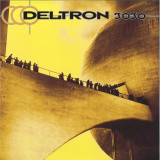
Deltron 3030 - Deltron 3030 LP 2x12"

The super group Deltron 3030 is composed of producer Dan the Automator, rapper Del tha Funkee Homosapien and DJ Kid Koala and sometimes features guest artists who also take on varying futuristic pseudonyms. Originally released in 2000 on the now-defunct 75ARK record label, this hip hop concept album was released the same year as the Gorillaz' first 12" and is on a similar plane. Following the release of Deltron 3030, all three members participated in the Gorillaz' self-titled debut album. With Del aka Deltron Zero on vocals, Dan the Automator aka The Cantankerous Captain Aptos on production, and Kid Koala aka Skiznoid the Boy Wonder on turntables, this album takes the listener on a paranoid journey set in a dystopian year 3030 dealing with viruses, the apocalypse, an oppressive government, and a war waged against a huge company called the Corporate Bank of Time that rules the universe, all to the well-crafted and consistent musical backing of the Automator. Appearances by Damon Albarn (The Gorillaz, Blur), Prince Paul, Peanut Butter Wolf, DJ Money Mark, Paul Barman, Mark Bell (Bjork, production), Sean Lennon, and Mr. Lif compliment Del's vocal style and add the right amount of flavor to this classic period piece.

non in magazzino

Ordina ora e ordineremo l'articolo per te presso il nostro fornitore.

36,93

Last In: 3 years ago
Beck, Jeff and Johnny Depp - 18 LP

Beck,JeffandJohnny Depp

18 LP

12inch0081227881436
Warner Music International
30.09.2022

In a collaboration you might never have expected but somehow makes perfect sense, original Brit blues mastermind Jeff Beck teams up with a little known American by the name of Johnny Depp to render some of the latter's songs alongside some finely selected covers. From The Beach Boys to John Lennon, The Velvet Underground to Killing Joke and more besides, this is the sound of two lifelong music lovers letting it all hang out and playing with the impassioned energy and innocence of youth. More than just a throwaway side project for a global superstar, this is a deeply discerning project which frames Depp's music in a whole new light.

pre-ordina ora30.09.2022

dovrebbe essere pubblicato su 30.09.2022

36,77
SOL MESSIAH - GOD CMPLX LP (2x12")

12" Widespine Gloss Jacket, Full Color Printed Record Sleeves, 1x Red & Black Marbled Vinyl, 1x Blue & Black Marbled Vinyl and Free Digital Download Card. Growing up in his hometown of Atlanta, artist/producer Sol Messiah has always been inundated with the rich and energizing spirit of Hip Hop culture. Breakdancing from a young age eventually led him joining the legendary Rock Steady Crew out of New York City and learning and mastering the skill of DJing. From there, he began taking an interest in production too, which ultimately led him to working alongside legendary Atlanta producer, Dallas Austin. While Sol Messiah's time with Austin created a deep catalog filled with timeless tracks for TLC, Madonna, Boyz II Men and more, he eventually chose to pursue his own path independently and spent years building a stunning catalog of his own, producing popular tracks for Chamillionaire, David Banner, Nappy Roots, Dead Prez and more. Soon, Sol Messiah would embark on a fruitful musical partnership with a fierce lyricist named Sa-Roc. Together, Sa-Roc and Messiah have released over a dozen projects thus far, including Sa-Roc's groundbreaking 2020 debut on Rhymesayers Entertainment, The Sharecropper's Daughter. As a duo, Sa-Roc and Sol Messiah have amassed a global reach, touring internationally and rocking crowds across continents. They have performed at the legendary Jazz Cafe in London, performed live for BBC, and have shared the stage with luminaries such as Common, The Roots and Jay Electronica. On GOD CMPLX, Sol Messiah connects with some of the finest MCs in the game to create an impressive collection of Hip Hop music that's both innovative and inspiring. Featuring guest performances from KXNG Crooked, Sa-Roc, Evidence, Locksmith, Slug (Atmosphere), Murs, Aesop Rock, Baba Zumbi (Zion I), Che Noir, Lyric Jones and more, GOD CMPLX is a powerful and engaging project serving as a testament to Sol Messiah's skills both as a producer as well a visionary.

pre-ordina ora30.09.2022

dovrebbe essere pubblicato su 30.09.2022

27,69
Polly Paulusma - The Pivot On Which The World Turns
disponibile anche

White Vinyl[27,31 €]


Polly Paulusma follows up her critically acclaimed 2021 album 'Invisible
Music' with 'The Pivot On Which The World Turns' out via One Little
Independent folk subsidiary Wild Sound.Affectionately shortened to
'Pivot', the album marks a return to her singular brand of insightful songs
that, in their subject matter, roam around the badlands of love, sex and
parenthood, death and grief, failure and success, violence and healing
Most poignantly the album focuses on the roles of women, in our lives and
across history, from a variety of perspectives.'Pivot' swings from the warm, bluesinspired Americana of 'Back Of Your Hand' and 'Dirty Circus', to the more
traditional folk of 'Brambles and Briars' and 'Robin', as well as poetic, pop
curiosities such as 'Snakeskin' and the effervescent 'Luminary', all of which
combine to make up Polly's most sonically adventurous album to date. As always,
she delights in the telling of stories, with littered spoken word aiding her as she
utilizes infectious melodies and a light delivery to explore her characters.
The product of a decade of writing, she tells us that "the album's title 'The Pivot
On Which The World Turns' is a corruption of a moment in the Russian novel Anna
Karenina by Leo Tolstoy, in which Stepan Arkadyitch knowingly confesses,
"women, my boy, they're the pivot everything turns upon". In context, Stepan and
Levin are discussing romantic relationships, but I saw wider interpretations of this
epithet".
Each track on the LP examines a different aspect of life that women play, and
"charts a development for me through all the roles I pivot on in a day, a week, a
year, a decade". 'Snakeskin' represents the daughter, 'Back Of Your Hand' is the
love interest, 'Dirty Circus' the mother and so on. "I truly believe, having travelled
the last few years, having endured grief and horror and having discovered and
pivoted on all these people that I am capable of being, that by learning how to
love, and re- learning, and learning again, so many of the wartier and knobblier
parts of me can be forgiven, and translated into something better".

pre-ordina ora30.09.2022

dovrebbe essere pubblicato su 30.09.2022

27,31
Polly Paulusma - The Pivot On Which The World Turns
disponibile anche

Black Vinyl[27,31 €]


Polly Paulusma follows up her critically acclaimed 2021 album 'Invisible
Music' with 'The Pivot On Which The World Turns' out via One Little
Independent folk subsidiary Wild Sound.Affectionately shortened to
'Pivot', the album marks a return to her singular brand of insightful songs
that, in their subject matter, roam around the badlands of love, sex and
parenthood, death and grief, failure and success, violence and healing
Most poignantly the album focuses on the roles of women, in our lives and
across history, from a variety of perspectives.'Pivot' swings from the warm, bluesinspired Americana of 'Back Of Your Hand' and 'Dirty Circus', to the more
traditional folk of 'Brambles and Briars' and 'Robin', as well as poetic, pop
curiosities such as 'Snakeskin' and the effervescent 'Luminary', all of which
combine to make up Polly's most sonically adventurous album to date. As always,
she delights in the telling of stories, with littered spoken word aiding her as she
utilizes infectious melodies and a light delivery to explore her characters.
The product of a decade of writing, she tells us that "the album's title 'The Pivot
On Which The World Turns' is a corruption of a moment in the Russian novel Anna
Karenina by Leo Tolstoy, in which Stepan Arkadyitch knowingly confesses,
"women, my boy, they're the pivot everything turns upon". In context, Stepan and
Levin are discussing romantic relationships, but I saw wider interpretations of this
epithet".
Each track on the LP examines a different aspect of life that women play, and
"charts a development for me through all the roles I pivot on in a day, a week, a
year, a decade". 'Snakeskin' represents the daughter, 'Back Of Your Hand' is the
love interest, 'Dirty Circus' the mother and so on. "I truly believe, having travelled
the last few years, having endured grief and horror and having discovered and
pivoted on all these people that I am capable of being, that by learning how to
love, and re- learning, and learning again, so many of the wartier and knobblier
parts of me can be forgiven, and translated into something better".

pre-ordina ora30.09.2022

dovrebbe essere pubblicato su 30.09.2022

27,31
Lee Tracy & Isaac Manning - Is it What You Want LP

As the sun sets on a quaint East Nashville house, a young man bares a piece of his soul. Facing the camera, sporting a silky suit jacket/shirt/slacks/fingerless gloves ensemble that announces "singer" before he's even opened his mouth, Lee Tracy Johnson settles onto his stage, the front yard. He sways to the dirge-like drum machine pulse of a synth-soaked slow jam, extends his arms as if gaining his balance, and croons in affecting, fragile earnest, "I need your love… oh baby…"

Dogs in the yard next door begin barking. A mysterious cardboard robot figure, beamed in from galaxies unknown and affixed to a tree, is less vocal. Lee doesn't acknowledge either's presence. He's busy feeling it, arms and hands gesticulating. His voice rises in falsetto over the now-quiet dogs, over the ambient noise from the street that seeps into the handheld camcorder's microphone, over the recording of his own voice played back from a boombox off-camera. After six minutes the single, continuous shot ends. In this intimate creative universe there are no re-takes. There are many more music videos to shoot, and as Lee later puts it, "The first time you do it is actually the best. Because you can never get that again. You expressing yourself from within."

"I Need Your Love" dates from a lost heyday. From some time in the '80s or early '90s, when Lee Tracy (as he was known in performance) and his music partner/producer/manager Isaac Manning committed hours upon hours of their sonic and visual ideas to tape. Embracing drum machines and synthesizers – electronics that made their personal futurism palpable – they recorded exclusively at home, live in a room into a simple cassette deck. Soul, funk, electro and new wave informed their songs, yet Lee and Isaac eschewed the confinement of conventional categories and genres, preferring to let experimentation guide them.

"Anytime somebody put out a new record they had the same instruments or the same sound," explains Isaac. "So I basically wanted to find something that's really gonna stand out away from all of the rest of 'em." Their ethos meant that every idea they came up with was at least worth trying: echoed out half-rapped exhortations over frantic techno-style beats, gospel synth soul, modal electro-funk, oddball pop reinterpretations, emo AOR balladry, nods to Prince and the Fat Boys, or arrangements that might collapse mid-song into a mess of arcade game-ish blips before rallying to reach the finish line. All of it conjoined by consistent tape hiss, and most vitally, Lee's chameleonic voice, which managed to wildly shape shift and still evoke something sincere – whether toggling between falsetto and tenor exalting Jesus's return, or punctuating a melismatic romantic adlib with a succinct, "We all know how it feels to be alone."

"People think we went to a studio," says Isaac derisively. "We never went to no studio. We didn't have the money to go to no studio! We did this stuff at home. I shot videos in my front yard with whatever we could to get things together." Sometimes Isaac would just put on an instrumental record, be it "Planet Rock" or "Don't Cry For Me Argentina" (from Evita), press "record," and let Lee improvise over it, yielding peculiar love songs, would-be patriotic anthems, or Elvis Presley or Marilyn Monroe tributes. Technical limitations and a lack of professional polish never dissuaded them. They believed they were onto something.

"That struggle," Isaac says, "made that sound sound good to me."

In the parlance of modern music criticism Lee and Isaac's dizzying DIY efforts would inevitably be described as "outsider." But "outsider" carries the burden of untold additional layers of meaning if you're Black and from the South, creating on a budget, and trying to get someone, anyone within the country music capital of the world to take your vision seriously. "What category should we put it in?" Isaac asks rhetorically. "I don't know. All I know is feeling. I ain't gonna name it nothing. It's music. If it grabs your soul and touch your heart that's what it basically is supposed to do."

=

Born in 1963, the baby boy of nine siblings, Lee Tracy spent his earliest years living amidst the shotgun houses on Nashville's south side. "We was poor, man!" he says, recalling the outhouse his family used for a bathroom and the blocks of ice they kept in the kitchen to chill perishables. "But I actually don't think I really realized I was in poverty until I got grown and started thinking about it." Lee's mom worked at the Holiday Inn; his dad did whatever he had to do, from selling fruit from a horse drawn cart to bootlegging. "We didn't have much," Lee continues, "but my mother and my father got us the things we needed, the clothes on our back." By the end of the decade with the city's urban renewal programs razing entire neighborhoods to accommodate construction of the Interstate, the family moved to Edgehill Projects. Lee remembers music and art as a constant source of inspiration for he and his brothers and sisters – especially after seeing the Jackson 5 perform on Ed Sullivan. "As a small child I just knew that was what I wanted to do."

His older brother Don began musically mentoring him, introducing Lee to a variety of instruments and sounds. "He would never play one particular type of music, like R&B," says Lee. "I was surrounded by jazz, hard rock and roll, easy listening, gospel, reggae, country music; I mean I was a sponge absorbing all of that." Lee taught himself to play drums by beating on cardboard boxes, gaining a rep around the way for his timekeeping, and his singing voice. Emulating his favorites, Earth Wind & Fire and Cameo, he formed groups with other kids with era-evocative band names like Concept and TNT Connection, and emerged as the leader of disciplined rehearsals. "I made them practice," says Lee. "We practiced and practiced and practiced. Because I wanted that perfection." By high school the most accomplished of these bands would take top prize in a prominent local talent show. It was a big moment for Lee, and he felt ready to take things to the next level. But his band-mates had other ideas.

"I don't know what happened," he says, still miffed at the memory. "It must have blew they mind after we won and people started showing notice, because it's like everybody quit! I was like, where the hell did everybody go?" Lee had always made a point of interrogating prospective musicians about their intentions before joining his groups: were they really serious or just looking for a way to pick up girls? Now he understood even more the importance of finding a collaborator just as committed to the music as he was.

=

Isaac Manning had spent much of his life immersed in music and the arts – singing in the church choir with his family on Nashville's north side, writing, painting, dancing, and working various gigs within the entertainment industry. After serving in the armed forces, in the early '70s he ran The Teenage Place, a music and performance venue that catered to the local youth. But he was forced out of town when word of one of his recreational routines created a stir beyond the safe haven of his bohemian circles.

"I was growing marijuana," Isaac explains. "It wasn't no business, I was smoking it myself… I would put marijuana in scrambled eggs, cornbread and stuff." His weed use originated as a form of self-medication to combat severe tooth pain. But when he began sharing it with some of the other young people he hung out with, some of who just so happened to be the kids of Nashville politicians, the cops came calling. "When I got busted," he remembers, "they were talking about how they were gonna get rid of me because they didn't want me saying nothing about they children because of the politics and stuff. So I got my family, took two raggedy cars, and left Nashville and went to Vegas."

Out in the desert, Isaac happened to meet Chubby Checker of "The Twist" fame while the singer was gigging at The Flamingo. Impressed by Isaac's zeal, Checker invited him to go on the road with him as his tour manager/roadie/valet. The experience gave Isaac a window into a part of the entertainment world he'd never encountered – a glimpse of what a true pop act's audience looked like. "Chubby Checker, none of his shows were played for Black folks," he remembers. "All his gigs were done at high-class white people areas." Returning home after a few years with Chubby, Isaac was properly motivated to make it in Music City. He began writing songs and scouting around Nashville for local talent anywhere he could find it with an expressed goal: "Find someone who can deliver your songs the way you want 'em delivered and make people feel what you want them to feel."

One day while walking through Edgehill Projects Isaac heard someone playing the drums in a way that made him stop and take notice. "The music was so tight, just the drums made me feel like, oh I'm-a find this person," he recalls. "So I circled through the projects until I found who it was.

"That's how I met him – Lee Tracy. When I found him and he started singing and stuff, I said, ohhh, this is somebody different."

=

Theirs was a true complementary partnership: young Lee possessed the raw talent, the older Isaac the belief. "He's really the only one besides my brother and my family that really seen the potential in me," says Lee. "He made me see that I could do it."

Isaac long being a night owl, his house also made for a fertile collaborative environment – a space where there always seemed to be a new piece of his visual art on display: paintings, illustrations, and dolls and figures (including an enigmatic cardboard robot). Lee and Issac would hang out together and talk, listen to music, conjure ideas, and smoke the herb Isaac had resumed growing in his yard. "It got to where I could trust him, he could trust me," Isaac says of their bond. They also worked together for hours on drawings, spreading larges rolls of paper on the walls and sketching faces with abstract patterns and imagery: alien-like beings, tri-horned horse heads, inverted Janus-like characters where one visage blurred into the other.

Soon it became apparent that they didn't need other collaborators; self-sufficiency was the natural way forward. At Isaac's behest Lee, already fed up with dealing with band musicians, began playing around with a poly-sonic Yamaha keyboard at the local music store. "It had everything on it – trumpet, bass, drums, organ," remembers Lee. "And that's when I started recording my own stuff."

The technology afforded Lee the flexibility and independence he craved, setting him on a path other bedroom musicians and producers around the world were simultaneously following through the '80s into the early '90s. Saving up money from day jobs, he eventually supplemented the Yamaha Isaac had gotten him with Roland and Casio drum machines and a Moog. Lee was living in an apartment in Hillside at that point caring for his dad, who'd been partially paralyzed since early in life. In the evenings up in his second floor room, the music put him in a zone where he could tune out everything and lose himself in his ideas.

"Oh I loved it," he recalls. "I would really experiment with the instruments and use a lot of different sound effects. I was looking for something nobody else had. I wanted something totally different. And once I found the sound I was looking for, I would just smoke me a good joint and just let it go, hit the record button." More potent a creative stimulant than even Isaac's weed was the holistic flow and spontaneity of recording. Between sessions at Isaac's place and Lee's apartment, their volume of output quickly ballooned.

"We was always recording," says Lee. "That's why we have so much music. Even when I went to Isaac's and we start creating, I get home, my mind is racing, I gotta start creating, creating, creating. I remember there were times when I took a 90-minute tape from front to back and just filled it up."

"We never practiced," says Isaac. "See, that was just so odd about the whole thing. I could relate to him, and tell him about the songs I had ideas for and everything and stuff. And then he would bring it back or whatever, and we'd get together and put it down." Once the taskmaster hell bent on rehearsing, Lee had flipped a full 180. Perfection was no longer an aspiration, but the enemy of inspiration.

"I seen where practicing and practicing got me," says Lee. "A lot of musicians you get to playing and they gotta stop, they have to analyze the music. But while you analyzing you losing a lot of the greatness of what you creating. Stop analyzing what you play, just play! And it'll all take shape."

=

"I hope you understood the beginning of the record because this was invented from a dream I had today… (You tell me, I'll tell you, we'll figure it out together)" – Lee Tracy and Isaac Manning, "Hope You Understand"

Lee lets loose a maniacal cackle when he acknowledges that the material that he and Isaac recorded was by anyone's estimation pretty out there. It's the same laugh that commences "Hope You Understand" – a chaotic transmission that encapsulates the duality at the heart of their music: a stated desire to reach people and a compulsion to go as leftfield as they saw fit.

"We just did it," says Lee. "We cut the music on and cut loose. I don't sit around and write. I do it by listening, get a feeling, play the music, and the lyrics and stuff just come out of me."

The approach proved adaptable to interpreting other artists' material. While recording a cover of Whitney Houston's pop ballad "Saving All My Love For You," Lee played Whitney's version in his headphones as he laid down his own vocals – partially following the lyrics, partially using them as a departure point. The end result is barely recognizable compared with the original, Lee and Isaac having switched up the time signature and reinvented the melody along the way towards morphing a slick mainstream radio standard into something that sounds solely their own.

"I really used that song to get me started," says Lee. "Then I said, well I need something else, something is missing. Something just came over me. That's when I came up with 'Is It What You Want.'"

The song would become the centerpiece of Lee and Isaac's repertoire. Pushed along by a percolating metronomic Rhythm King style beat somewhere between a military march and a samba, "Is It What You Want" finds Lee pleading the sincerity of his commitment to a potential love interest embellished by vocal tics and hiccups subtlely reminiscent of his childhood hero MJ. Absent chord changes, only synth riffs gliding in and out like apparitions, the song achieves a lingering lo-fi power that leaves you feeling like it's still playing, somewhere, even after the fade out.

"I don't know, it's like a real spiritual song," Lee reflects. "But it's not just spiritual. To me the more I listen to it it's like about everything that you do in your everyday life, period. Is it what you want? Do you want a car or you don't want a car? Do you want Jesus or do you want the Devil? It's basically asking you the question. Can't nobody answer the question but you yourself."

In 1989 Lee won a lawsuit stemming from injuries sustained from a fight he'd gotten into. He took part of the settlement money and with Isaac pressed up "Saving All My Love For You" b/w "Is It What You Want" as a 45 single. Isaac christened the label One Chance Records. "Because that's all we wanted," he says with a laugh, "one chance."

Isaac sent the record out to radio stations and major labels, hoping for it to make enough noise to get picked up nationally. But the response he and Lee were hoping for never materialized. According to Isaac the closest the single got to getting played on the radio is when a disk jock from a local station made a highly unusual announcement on air: "The dude said on the radio, 107.5 – 'We are not gonna play 'Is It What You Want.' We cracked up! Wow, that's deep.

"It was a whole racist thing that was going on," he reflects. "So we just looked over and kept on going. That was it. That was about the way it goes… If you were Black and you were living in Nashville and stuff, that's the way you got treated." Isaac already knew as much from all the times he'd brought he and Lee's tapes (even their cache of country music tunes) over to Music Row to try to drum up interest to no avail.

"Isaac, he really worked his ass off," says Lee. "He probably been to every record place down on Music Row." Nashville's famed recording and music business corridor wasn't but a few blocks from where Lee grew up. Close enough, he remembers, for him to ride his bike along its back alleys and stumble upon the occasional random treasure, like a discarded box of harmonicas. Getting in through the front door, however, still felt a world away.

"I just don't think at the time our music fell into a category for them," he concedes. "It was before its time."

=

Lee stopped making music some time in the latter part of the '90s, around the time his mom passed away and life became increasingly tough to manage. "When my mother died I had a nervous breakdown," he says, "So I shut down for a long time. I was in such a sadness frame of mind. That's why nobody seen me. I had just disappeared off the map." He fell out of touch with Isaac, and in an indication of just how bad things had gotten for him, lost track of all the recordings they'd made together. Music became a distant memory.

Fortunately, Isaac kept the faith. In a self-published collection of his poetry – paeans to some of his favorite entertainment and public figures entitled Friends and Dick Clark – he'd written that he believed "music has a life of its own." But his prescience and presence of mind were truly manifested in the fact that he kept an archive of he and Lee's work. As perfectly imperfect as "Is It What You Want" now sounds in a post-Personal Space world, Lee and Isaac's lone official release was in fact just a taste. The bulk of the Is It What You Want album is culled from the pair's essentially unheard home recordings – complete songs, half-realized experiments, Isaac's blue monologues and pronouncements et al – compiled, mixed and programmed in the loose and impulsive creative spirit of their regular get-togethers from decades ago. The rest of us, it seems, may have finally caught up to them.

On the prospect of at long last reaching a wider audience, Isaac says simply, "I been trying for a long time, it feels good." Ever the survivor, he adds, "The only way I know how to make it to the top is to keep climbing. If one leg break on the ladder, hey, you gotta fix it and keep on going… That's where I be at. I'll kill death to make it out there."

For Lee it all feels akin to a personal resurrection: "It's like I was in a tomb and the tomb was opened and I'm back… Man, it feels so great. I feel like I'm gonna jump out of my skin." Success at this stage of his life, he realizes, probably means something different than what it did back when he was singing and dancing in Isaac's front yard. "What I really mean by 'making it,'" he explains isn't just the music being heard but, "the story being told."

Occasionally Lee will pull up "Is It What You Want" on YouTube on his phone, put on his headphones, and listen. He remembers the first time he heard his recorded voice. How surreal it was, how he thought to himself, "Is that really me?" What would he say to that younger version of himself now?

"I would probably tell myself, hang in there, don't give up. Keep striving for the goal. And everything will work out."

Despite what's printed on the record label, sometimes you do get more than one chance.

non in magazzino

Ordina ora e ordineremo l'articolo per te presso il nostro fornitore.

23,49

Last In: 3 years ago
MÖTLEY CRÜE - Theatre Of Pain

(Remastered)

1st Time EVER on LP for the 40th Anniversary Remasters
‘Theatre of Pain” is certified 4x platinum in the US and their first top 10 album – making it all the way to #6. Includes the timeless classic, with the record-setting video “Home Sweet Home” and first top 40 hit “Smokin’ In The Boys Room” (#16)

pre-ordina ora23.09.2022

dovrebbe essere pubblicato su 23.09.2022

26,68
Suede - Autofiction LP

Suede

Autofiction LP

12inch4050538703863
BMG Rights Management
16.09.2022

Das 11 Tracks umfassende neunte Studio-Album der
legendären britischen Pop-Band Suede um den
charismatischen Sänger Brett Anderson, wurde von dem
langjährigen Suede-Mitarbeiter Ed Buller produziert, die
Gruppe ging "zurück zu den Grundlagen" und arbeitete in
einem Aufnahmestudio im Londoner Stadtteil Kings Cross
daran. Anlässlich der Ankündigung des Albums hat die
Band den Titelsong "She Still Leads Me On"
veröffentlicht. "Autofiction" ist der Nachfolger des 2018er
Albums "Blue Hour" und erscheint auf CD, LP und streng
limitiertem Box Set incl. LP, CD, Signed Setlist, Stencils,
Poster und Postkarten.

pre-ordina ora16.09.2022

dovrebbe essere pubblicato su 16.09.2022

31,47
Blue - Heart & Soul LP

Blue

Heart & Soul LP

12inch4050538810561
BMG Rights Management
09.09.2022

Blue - also Antony Costa , Duncan James , Lee Ryan
und Simon Webbe -, das ist so ein Name, der einen
automatisch in die Boygroup-Ära transportiert: Sie waren
nicht nur einer der größten und erfolgreichsten Acts jener
Hochphase, sondern vor allem auch einer der besten. Auf
den drei Alben, die ihnen in den Nullerjahren
Spitzenplätze in den Charts (u.a. 3x #1 UK, 1x Top-10
DE) und reichlich Platin bescheren sollten, verschränkten
sie lässigen R&B mit hochauflösender Pop-Perfektion und
emotionalen Balladen, was der im Jahr 2000 gegründeten
Boygroup nicht nur 16 Millionen verkaufte Albumeinheiten
bescherte. Auch zwei BRITs räumten sie ab im
Königreich, wo sie gleich 11 Mal die Topregion der
UK-Singlecharts aufmischen konnten und davon gleich
noch drei Mal die #1 belegten.

Parallel zur Stadiontournee werden Blue im Herbst ihr
sechstes Album Heart & Soul veröffentlichen - ihr erstes
fürs neue Label Tag8 Music/BMG. Der neue Longplayer
unterstreicht und zelebriert all das, was die Band während
ihrer ersten Blütezeit ausmachte, denn er spielt immer
wieder auf die Vergangenheit an, bringt aber auch
kontinuierlich Neues ins Spiel. Ihr Trademark-Sound
schwingt im sorglos-ausgelassenen Titelsong, der von
MNEK (Beyoncé, Little Mix) mitkomponiert wurde,
genauso mit wie in der gefühlvollen Ballade "Magnetic",
bei der die Jungs mal wieder ihr ganzes umwerfendes
Stimmvolumen auspacken dürfen. Mit der Leadsingle
"Haven't Found You Yet" legen Blue einen Instant-Classic
vor, der klanglich eher in Richtung Justin Bieber oder
auch jüngere Coldplay-Hits geht. Man hört, dass sie
unbedingt alles geben wollten für Heart & Soul

pre-ordina ora09.09.2022

dovrebbe essere pubblicato su 09.09.2022

30,63
Various - Minna Miteru 2 2x12"

Various

Minna Miteru 2 2x12"

2x12inchMORR187-2LP
Morr Music
02.09.2022
 
26

Following the »Minna Miteru« compilation, released in 2020, Morr Music announces a sequel, dedicated to Japanese indie music, overflowing with surprises and welcome discoveries. Like its predecessor, »Minna Miteru 2« is compiled by Saya of Tenniscoats, with the support of Markus Acher (The Notwist). It’s also another part of the Minna Miteru universe, alongside retrospective albums by The Andersens (»There Is A Sound«, 2020) and yumbo (»The Fruit Of Errata«, 2021). Taken together, these albums suggest a scene in rude health, sharing a unique vibration.

If its predecessor circled around Tenniscoats and their close friends, the second volume, though featuring a collaboration between Tenniscoats and Deerhoof as oneone, reaches far further afield, drawing from music old and new, far and wide. Consistent across »Minna Miteru 2« is a sense of wonder and a cheerful unpredictability: you never quite know what you’ll hear next. There are some gorgeous indie pop songs here, like Yuko Kono’s »Ginger« or HOSE’s »Baseball«, but there are other sounds too, like Kariu Kenji’s blue-hued electro-pop, or the wheezing pipe-organ ambient of FUJI||||||||||TA: »Minna Miteru 2« hints at new kinds of beauty.

Some of the more widely known names here contribute typically gorgeous melodies – Kama Aina’s »Wedding Song«, from 2005’s »Hawaii Hawaii« CD, is a reflective tune that combines a country-ish lilt with hints of slack-key guitar. Shugo Tokumaru’s »5 A.M.« is a delirious psychedelic pop mantra, drawn from his excellent 2005 album, »L.S.T.«. Many of the revelations, though, come from artists and groups relatively unknown outside Japan. The lovely, disorienting glitch-folk of Wasurerogusa features Aki Tsuyuko, perhaps best known for her albums on Thrill Jockey and Jim O’Rourke’s Moikai label, collaborating with psych-folk legends Eddie Marcon.

There’s also the delightful synth-pop of Jonathan Conditioner; the electronic dreamscape of Chaplin, whose opening »Out Cont« runs along several parallel paths at once; the twinkling, acoustic jangle at the heart of mmm’s luscious »Blue«; and a curious collection of miniatures, from acts like tenshinkun, Daisuke Tanabe and NNMIE, that embrace a childlike curiosity, essaying a kind of toytown pop-tronica.

The twenty-six songs on »Minna Miteru 2« repeatedly catch you unawares, upending your expectations and signaling both the breadth and depth of the Japanese indie underground. It’s a compilation of play and pleasure, but also of bold experiment smuggled into the everyday through pop music’s welcoming moods, magically creating a new world for the listener, spun out of the air and woven in between your ears.

pre-ordina ora02.09.2022

dovrebbe essere pubblicato su 02.09.2022

31,05
Jack Flanagan - Rides The Sky LP

The debut album from Jack Flanagan, currently best known for his work as a member of the Mystery Jets. ‘Jack Rides The Sky’ is a magical coming of age record that comprises of 12 tracks written over the last decade, some finished and some left as initial sketches of ideas. As brutally honest as it is escapist and romantic, ‘Jack Rides The Sky’ is a body of work that signals the arrival of a unique, poetic talent finally stepping out on his own and releasing the extraordinary songs that have been parked on his laptop for the last 10 years.

pre-ordina ora02.09.2022

dovrebbe essere pubblicato su 02.09.2022

26,26
LIMEY AND THE YANKS - LOVE CAN'T BE A ONE WAY DEAL / GUARANTEED LOV

Highlights: Limey and the Yanks' A-side 'Love Can't Be A One Way Deal' is a garage song with a sound pitched somewhere between the Beau Brummels and the Beach Boys. 'Guaranteed Love', on the flipside, is an outstanding bluesy number with a stinging fuzz guitar, a concise harp solo and a rousing Bo Diddley-fied groove that has made its way to various compilations since the early 80s and now gets reissued for the first time on a 7" single. This release includes notes by Mike Stax (Ugly Things Magazine) Details: In California in the mid-sixties, with the British Invasion raging, having an authentic Englishman as the lead singer of your band was an ace in the hole that gave you an edge over the competition. Such was the case with Limey & the Yanks a quintet from Buena Park in Southern California's Orange County. Limey was young Steve Cook, and his Yanks by 1965 were guitarists Gregg DeLorto and Tim Gunne, bass player Bob Batman and drummer Wes Hunsinger. With his blonde Keith Relf-style hair, Steve was a striking front man who fortunately also possessed a decent voice, and with his father managing the group they were soon making waves throughout the area. A victory at a Battle of the Bands at the Hollywood Palladium put them on the map in Los Angeles, attracting the attention of producer Gary Paxton. By this time Wally Downing had joined on lead guitar, replacing Gregg DeLorto who had defected to the Spats. Paxton produced their debut single in late 1965, and it was released in January of the following year on his Starburst label. Paxton's business partner in Starburst was Lloyd Johnson, and the single's A-side was written by Lloyd's son Ken, who also recorded for Starburst with his group Ken & the Forth sic Dimension. Paxton had already produced a version of 'Love Can't Be A One Way Deal,' a couple of years earlier with the Rev-Lons, a girl group from Bakersfield, but the version by Limey & the Yanks took a completely different approach, turning it into a lovelorn garage number with a sound pitched somewhere between the Beau Brummels and the Beach Boys, with bright harmonies, mournful harmonica and a melodic twangy guitar solo. Swinging on a guitar hook based on Bobby Parker's 'Watch Your Step,' 'Guaranteed Love,' took a bluesier approach with a confident Limey vocal, stinging fuzz guitar, a concise harp solo and a rousing Bo Diddley-fied groove. The single was not a hit, but it added heft to the group's growing reputation. A second single, 'Out of Sight, Out of Mind,' was released in October, but it would be the group's last, although they did continue, through several lineup changes, into 1967. Limey's legacy lives on_

non in magazzino

Ordina ora e ordineremo l'articolo per te presso il nostro fornitore.

17,86

Last In: 3 years ago
Southside Johnny & Asbury Jukes - I Don’t Wanna Go Home - Live LP
pre-ordina ora26.08.2022

dovrebbe essere pubblicato su 26.08.2022

20,55
Various - Todo Muere SBXV

Sacred Bones is an independent record label and publishing company based in Brooklyn, NY that started over 15 years ago in the basement of a record store and has gone on to become a critically respected label that is synonymous with forward-thinking music and culture and won the 2020 Libera Award for Label of the Year. With over 300 releases under our belt, we’ve had the distinct pleasure to work with legendary artists the likes of Mort Garson, Patti Smith, Trent Reznor, and the late Genesis P-Orridge, as well as fostered the respective music careers of film directors David Lynch, John Carpenter, and Jim Jarmusch. We’ve also released career-defining albums by newer artists like Zola Jesus, SPELLLING, Molchat Doma, Marissa Nadler, Amen Dunes, and Jenny Hval, all while retaining our cult underground through smaller curated releases from some of the best punk and experimental artists.

pre-ordina ora20.08.2022

dovrebbe essere pubblicato su 20.08.2022

27,94
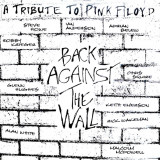
Various - Back Against The Wall (A Tribute To Pink Floyd) LP (2x12")
pre-ordina ora15.08.2022

dovrebbe essere pubblicato su 15.08.2022

22,48
Articoli per pagina:
N/ABPM
Vinyl