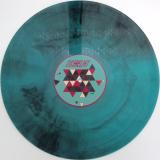
The choice of the title “Unwanted” creates a striking contrast with the elaborate variant designation of the pressing and immediately distinguishes the LP as a physical release; Arising Empire is handling the release, keeping Thrown in the label’s roster.
Musically, “Unwanted” continues the uncompromising direction Thrown already showcased with their 2026 singles: advance releases such as “critic” and “rehearsed” highlight the concise, hard-hitting song structures defined by distinctive riffs, forceful breakdowns and intense choruses. On the LP, Thrown brings these approaches together into a cohesive sequence of tracks that combine immediate aggression with catchy songwriting moments. The “Unwanted” LP on White Grey Blue Splatter vinyl thus rounds out the band’s current chapter of recorded output and underscores Thrown’s profile within the metal scene, while the singles already preview the album’s sonic character.
Over 10 years ago, Leon Michels released his first full length record, Sounding Out The City. It was Michels' first full length record under the moniker El Michels Affair. At the time, the budding retro soul scene consisted of mostly organ quartets a la The Meters and of course, Sharon Jones & The Dap Kings were in the early days of their ascent to world domination. Leon Michels, who was 18 when recording Sounding Out The City began, had just released Thunder Chicken, the first record by his high school band The Mighty Imperials. At the time of SOTC, Michels was just discovering early rocksteady, afrobeat, and 60's garage rock, which inevitably crept its way into the songwriting. He purchased a Tascam 388, an 80's 1/4" reel to reel 8 track intended for home recordings, and began recording music in a 10x10 box with no windows that also doubled as his childhood bedroom. Along with fellow Mighty Imperials Nick Movshon, Homer Steinweiss, and Sean Solomon, and Michael Leonhart, Thomas Brenneck, and some of the musicians from The Dap Kings, Michels recorded the LP over a two year period. Upon it's release, it received some rave reviews and the small deep funk community ate it up, but due to the lack luster promotion and distribution the rest of the world was slow to catch on to the instrumental gems featured on SOTC, which Michels appropriately labelled as "cinematic soul". However, in 2005 it found it's way into the hands of the people who were organizing a series of concerts for Scion that paired bands with MC's. El Michels Affair was contacted about playing one show with Raekwon The Chef of Wu Tang Clan fame. The show was such a success it led to a tour, and then to another set of concerts that featured multiple members of the Wu-Tang Clan. This eventually led to the release of El Michels Affair's second record, "Enter the 37th Chamber" which introduced them to a much larger audience and has been their most successful release to date. Michels has since gone on to produce and co-produce numerous records for powerhouse soul artists like Lee Fields. He shares songwriting credits with Adele, Jay-Z, Ghostface Killah, Aloe Blacc, and has played on records by Ray LaMontagne, Lana Del Rey, The Black Keys and Dr. John.
East London's Rupert Ellis looks out into the stars on this astral-leaning tech house outing for the fledgling Ebullience label. There is plenty of bounce to the circular drums of 'The Beams', with fizzing rush of crystalline synth and sugar chords all getting you up on your toes. 'Deeper Blue' is a silky sound with a subtly optimistic feel in the chords and dreamy melodies, complemented by a spoken word that adds to the escapism. Lewis Taylor remixes 'The Beams' with a little more drive but still keeps things decidedly warm and soft-edged. Classy cruisers all round.
A two-way Italian/Mexican stand-off here, as Saint Wax founder Gledd (real name Eduardo Barbi) and Kaninchenbau label chief The Funk District (Fernando Mendoza) deliver their first joint EP since 2022. The latter steps up first with two solo workouts- the Clavinet-splashed nu-disco-goes-bluesy deep house shuffle of 'The River Bends Back' and the Rhodes rich deep house disco of 'Got To Be Alright' - before the duo combine on two collaborative cuts. 'I Said' is a gospel-powered slab of ever-building disco-house hedonism, while 'Down The Middle' is deeper, more bass-heavy and topped off with classic soul vocal samples. Gledd then takes over, following the infectious piano house bounce of 'I Said' with the colourful, acid-flecked excellence of 'Blessin'.
Bassist, composer and arranger Bill Lee (who is the father of celebrated Director Spike Lee) helmed numerous Strata-East projects, but this is the one that most stands apart. The Descendants of Mike and Phoebe is a one-off 1974 album uniting Lee with his siblings Cliff Lee, Grace Lee Mims and Consuela Lee Moorhead under a name that pays honour to their enslaved ancestors. Elements of jazz, gospel, soul and blues are threaded into a work of complexity but spirituality, with nimble, dancing grooves next to more pensive explorations. It's a sought-after rarity from the label's catalogue that has been freshly remastered for this reissue. Essential Strata-East history.
What is an edit? A correction, a confession, a DJ tool, a mild act of vandalism—or simply the result of listening to somebody else’s record and thinking: very good, but what if this bit went on a little longer?
For his contribution to the Running Back Mastermix series, Gilles Aiken aka Edward opens a folder that has apparently been filling up for quite some time.
The Giegling resident’s thirteen edits reach back through years of DJing, collecting and producing. Made for sets rather than release schedules, they form something like a musical autobiography told through other people’s records: Carl Craig, Roman Flügel, Motohiko Hamase, Kirk Degiorgio, Aubrey, Sven Väth, Michael Rother and more.
From Japanese ambient jazz and Detroit techno to dub techno, house, trance and kosmische music, these are not attempts to improve records that didn’t need improving. They are the small interventions that happen after living with music for a long time: a rhythm exposed, an entrance moved, a passage extended, the unnecessary made necessary.
“These records mean a lot to me,” says Edward. “They consist of edits I’ve gathered over the years, some of them going way back. In a way, they reflect my musical journey. All of these artists have been a huge influence on me as a producer and DJ.”
Usually, such edits remain on hard drives, USB sticks and in vaguely labelled folders. This time permissions were requested, publishers located and, somewhere, presumably, a spreadsheet became very important.
Miraculously, everybody said yes.
Thirteen thank-you notes to the music that helped make Edward Edward. Naturally, they require three records.
Mastermixed accordingly.
Also available on cassette,
What is an edit? A correction, a confession, a DJ tool, a mild act of vandalism—or simply the result of listening to somebody else’s record and thinking: very good, but what if this bit went on a little longer?
For his contribution to the Running Back Mastermix series, Gilles Aiken aka Edward opens a folder that has apparently been filling up for quite some time.
The Giegling resident’s thirteen edits reach back through years of DJing, collecting and producing. Made for sets rather than release schedules, they form something like a musical autobiography told through other people’s records: Carl Craig, Roman Flügel, Motohiko Hamase, Kirk Degiorgio, Aubrey, Sven Väth, Michael Rother and more.
From Japanese ambient jazz and Detroit techno to dub techno, house, trance and kosmische music, these are not attempts to improve records that didn’t need improving. They are the small interventions that happen after living with music for a long time: a rhythm exposed, an entrance moved, a passage extended, the unnecessary made necessary.
“These records mean a lot to me,” says Edward. “They consist of edits I’ve gathered over the years, some of them going way back. In a way, they reflect my musical journey. All of these artists have been a huge influence on me as a producer and DJ.”
Usually, such edits remain on hard drives, USB sticks and in vaguely labelled folders. This time permissions were requested, publishers located and, somewhere, presumably, a spreadsheet became very important.
Miraculously, everybody said yes.
Thirteen thank-you notes to the music that helped make Edward Edward. Naturally, they require three records.
Mastermixed accordingly.
Also available on cassette,
Ghost Dubs, real name Michael Fiedler, aka Jah Schulz, announces a rebirth with 'Damaged', his first album for The Bug's PRESSURE label..
Having recently dropped two criminally overlooked, experimental dub LPs, with his 'Dub Over Science' series, the German producer/bass specialist, now stretches his own parameters of outwardness still further, with these twelve fresh explorations of dub deviance. For those who feel the fusion of dub techno and ambient drone had creatively ended with the demise of the short lived, Berlin based Chain Reaction label. Ghost Dubs now upgrades, and extends that legendary blueprint's abstract methodology even further and deeper, floating away upon a wonderfully warm sea of hiss and static bliss. This is dub so atomized that it disintegrates within your eardrums. Its music, where the machines take over and virtually all traces of humanity are erased. But thankfully, the warmest soul still oozes seductively from the pores of Fiedler's robo riddims. Relentlessly hypnotic, seriously sedated, 'Damaged' celebrates the point of departure within it's mesmerising low end grooves. Album opener 'Chemical', provides an opiated slo-mo skank, which sounds like Plastikman's 'Consumed' era pulsations drenched heavily in sub aquatic fx. A triumph of surface noise surfing and sub woofer testing relentlessness, it provides the perfect intro to this compellingly immersive album. For batty shakers and headtrippers alike, there's added thrills aplenty, as Ghost Dub's richter scale tremor rhythms remain impressively massive, and the atmospheric depths of 'Damaged' appear tantalisingly oceanic. Throughout the duration of the dreamy selection, there is an obsessive balance of bewitching ambience and heavyweight bassbin shaking. The lead single 'Thin Line' itself provides a missing link between African Headcharge's early percussive body probes and Rhythm & Sound's addictive radiance, with the slightest hint of Burial's doomed romantic hauntology added for good taste. Alternately, and no less gracefully, 'Dub Lobotomy' bizarrely resembles Miles Davis 'Get Up with it' chopped, screwed, and relocated to a futuristic Kingston Town. Impressive indeed, Fiedler's mastery of live dubbing on his mixing desk shines accross the duration, and gives the album an improvised edge, and sense of peripheral chaos. Elsewhere, spooked steppars('Hot Wired'), haunting house ('True to life') and 4th World psychogeography('Undone'), combine to ensure there is a forever changing mixture of flavours percolating within the admirable consistancy of the overall sound.
With a tip of the cap, and nod of the head to Pole('Second Thoughts'), its no surprise then that PRESSURE would then turn to the great, Berlin based producer Stefan Betke, to master/cut this collection at his infamous Scape mastering room. And a fine job he did too, as high quality sound and levels are definitely maintained throughout.
If you like your melodies submerged, your dub narcotic, your basslines obese, and your beats evaporating, 'Damaged' provides the perfect prescription and entry point into Ghost Dub's spectral soundworld.
Bill Withers was a modest, gentle, and yet towering musical figure responsible for some of the most important, universally known soul hits ever written. It’s no wonder that “Just the Two of Us” and “Ain’t No Sunshine” won him two Grammy awards and undoubtedly played a huge role in getting him inducted into both the Songwriters and Rock and Roll Hall of Fame.
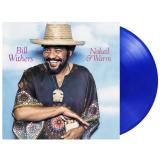
Naked & Warm is Withers' fifth studio album, released in 1976. A year earlier, the Sussex label—home to Bill's first four landmark albums—ceased operations. Withers then signed with the mighty Columbia Records, which would remain his home until the end of his recording career. While Naked & Warm retains Bill's unique, earthy approach to soul that made him Sussex's biggest star, it's clear that musically too, he was in transition; the first half of the album is full of synthesized jazz-funk vamps, while "City Of The Angels" is an almost 11 minutes long cosmic funk excursion combining biting Rhodes chords with swirling synth pads and Dorothy Ashby's spiritual harp work. All in all, Naked & Warm might be one of Bill's most underrated records, simply because his previous work for Sussex was just that impactful.
Naked & Warm is available as a 50th anniversary edition of 1500 individually numbered copies on blue vinyl and includes a 4-page booklet featuring lyrics and new liner notes written by Marcia Withers.
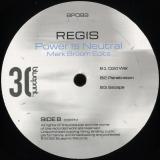
Following his recent appearance on Blueprint, Mark Broom returns to the label with a unique project, revisiting the work of techno pioneer Regis. Entitled "Power Is Neutral", the release sees Broom rework a selection of seminal Regis recordings originally released on Downwards Records across the albums Gymnastics (1996), Delivered Into The Hands Of Indifference (1998) and Penetration (2001).
Known as one of the key architects of the Birmingham techno sound, Regis (Karl O'Connor) helped shape British techno through his work as co-founder of Downwards Records and a catalogue that continues to influence generations of artists.
For Mark Broom, few artists embody British rave culture quite like Regis. Drawing on source material that has long stood as a cornerstone of UK techno, Broom approaches these edits with both respect and imagination. As Regis puts it, "Mark Broom is like some modern day Bagpuss... he has fired up his techno mouseorgan and polished old relics to make them all shiny and new."
Power Is Neutral delivers six expertly crafted reinterpretations that bridge the raw energy of Regis' original works with Broom's unmistakable contemporary dancefloor sensibility, bringing these timeless tracks to a new generation of listeners.
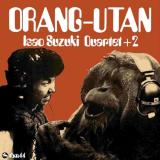
180g vinyl LP with original obi strip and liner notes reproduction, remastered and cut by Bernie Grundman, pressed and printed in Japan
Sony Japan is pleased to present Isao Suzuki's fourth album off the Three Blind Mice label, "Orangutan". The 1975 free jazz album features acclaimed saxophonist Mori Kenji and guitarist Kazumi Watanabe, and remains undiminished by the years.
Hot on the heels of the massive Grant Dell release, GEMS Delivers another slice of underground house excellence, continuing its relentless journey of showcasing both timeless and forward-thinking underground house music with a powerful new release from Gideon Jackson.
A 3 track EP featuring Helpless (Original Mix) — The standout cut from Gideon’s Outa The Blue EP (1996), capturing the raw, hypnotic energy of the era. Helpless (Freeform Mix) — A previously unreleased 1996 remix, unearthed from the vaults yet sounding as fresh and relevant as ever. Sales In the Wind — A brand new production (2025), proving Gideon remains at the top of his game with a refined yet unmistakable sound.
true underground figure, Gideon Jackson has been deeply embedded in the scene since the formative days of tech house. Renowned for his vinyl-driven approach to house and techno, Gideon blends styles seamlessly, creating a distinctive and instantly recognisable sound.
Widely regarded as one of the key pioneers of the London tech house movement, his productions helped define the genre’s early blueprint — fusing bass-heavy rhythms with hypnotic grooves. His work has appeared on respected labels including Loaded, Pagan, and his own imprint Outa The Blue.
After stepping away from the spotlight, Gideon resurfaced in 2017 with a standout podcast for Strange, reaffirming his influence and deep-rooted musical identity.
His long-awaited return to the decks came in October 2025 at Archivio presents Wiggle in New York, followed by a November appearance at Wiggle at Gaffe — marking a powerful resurgence for one of the scene’s original innovators.
Mutual Rytm welcomes new school tastemakers Klint and Hemka to sub-label Versus for imprint’s second drop. SHDW’s Mutual Rytm welcomes back two standout label alumnus for the second edition of Versus, a newly-launched conceptual sub-label focused around two artists whose sound works individually and in unity. Hemka made an impressive and well-received debut with her full solo EP back in 2025, while Klint appeared on ‘Federation of Rytm IV’. Both artists hail from France, and have crafted a well-earned reputation for their own distinctive approaches to sound design - pairing locked in grooves with cosmic synth escapes. Across the EP, each artist delivers three individual takes on techno to make for an essential collection of high-end cuts, exploring the label’s ethos of creative symbiosis between two artists on one shared release. Klint’s tracks lean towards minimal yet highly effective, dance floor-focused DJ tools, starting with the lithe, stripped back menace of ‘Prism’, before the sparse eeriness of ‘Dobermann’ keeps you looking over your shoulder while remaining trapped in the groove. Third cut ‘Romance’ is more bold and muscular, with contoured drums and icy pads ramping up the tension and energy. Hemka then dives deeper into a hypnotic and anthemic direction while introducing her own voice into the mix. ‘Leave It’ is textured, percussive deep techno with shadowy whispers, while ‘Breathe’ has a dark, grinning undercurrent and scintillating snares fluttering over the drums. ‘Mindness’ then pairs spoken word atmospherics with taught drum pressure and an ethereal backlit glow. In addition, Klint's digital only cuts ‘1112’ and ‘Blue’ marry minimal synths with meticulously defined drums that hit hard, while Hemka's ‘Push’ is an anxious percussive trip, contrasting with the introspective emotional core of ‘Live To Tell’.
With RST001, RELIKT unveils a special Various Artists EP capturing the label’s raw, unfiltered essence.
This “Best Of” compilation brings together standout cuts from the ultra‑limited RELIKT LIMITED CUTZ series — originally released in micro‑runs of just 50 copies and long considered collector gems.
For the first time, these tracks are available in a wider but still exclusive edition: 250 copies, pressed on heavy 180g vinyl in a striking blue‑black color blend. Vinyl‑only, no digital formats — a true collector’s piece that preserves the spirit of the originals while giving them the presence they deserve.
On RST001, character‑driven grooves, organic club energy, and the unmistakable signature of the RELIKT artists collide. Each track represents a fragment of the label’s story — uncompromising, studio‑pure, and now finally accessible beyond the inner circle.
An EP for lovers of rare pressings, dedicated vinyl heads, and everyone who appreciates the original RELIKT sound.
SKYLAX RECORDS proudly unveils the final chapter in its monumental 4-part saga — SKYLAX BLACK 4: Enlightenment Theory. This visionary series, bringing together two of France’s most iconic electronic artists — ARNAUD REBOTINI and ACID WASHED — was never just a collection of records. It was a journey through the deepest layers of the underground — a conceptual project where each release was a coded message, each track a fragment of a greater whole. On the A-side, Enlightenment Theory explodes with fierce urgency — an anthem forged in the spirit of Underground Resistance, echoing the soulful intensity of early ’90s Detroit without imitation. It’s bold, emotional, and militantly underground — a future classic cloaked in defiance and elegance. On the B-side: B1. Space Is The Place channels the weightless gravity of dub techno at its purest — all echo chambers and endless delay, a direct line to the Berlin school of Basic Channel, Maurizio, and Deepchord. B2. Beyond Current Biological Constraints closes the chapter in deep space — an electro masterwork evoking Drexciya, full of aquatic melancholy and cybernetic funk. It’s not retro — it’s timeless. With this last installment, the puzzle is complete. The meaning is revealed: R.A.V.E. — four records forming one powerful word. One timeless idea. A tribute to everything this culture stands for: raw energy, emotional truth, sonic innovation, and spiritual depth. This project could only be born on SKYLAX RECORDS — a label that has always stood apart. Uncompromising. Devoted to physical formats. Fiercely loyal to the culture. While others chase trends, SKYLAX continues to chart a different course — one rooted in the sacred codes of house, techno, electro, and beyond. It is no exaggeration to say that SKYLAX is one of the last true purist strongholds of underground music — and this series, with its layered meanings and fearless artistry, is proof. From Redshifts to Blueshifts to Artificial Darwinism then Vision Quest, every chapter has pointed toward this moment. Now, with Enlightenment Theory, the full vision is revealed. RAVE is not just a word — it is the truth. A philosophy. A myth reborn. The circle is complete. The message endures. The legacy lives on.
Marc Cotterell shows his A&R class here with another brilliantly assembled various artists EP on his Plastik People label, which is essential for fans of timeless house and garage fusions. The record kicks off with Deep South Soul's 'Harmonica Man' as remixed by Mellow Man and it has a touch of the bluesy Saint Germain to its lithe deep house and spoken words. Mellow Man then drops the 90s-coded 'So Deep', with warm organ chords and bubbly drums that have a New York swagger to them. Manhattan Project turns up the heat with a raw, hardcore garage-house swinger in the form of 'Turn That Up' and Reign Of Rhythm layers up neat stabs and leggy kick drums on the sleazy 'Cum Inside'. Essential and effective house.
Prepare yourselves for an electrifying journey as Temudo makes his mark on Sciahri's label Sublunar, with a mesmerizing EP that encapsulates the essence of the artist's multifaceted techno mastery.
Hailing from Portugal and renowned as the co-owner of Hayes, Temudo has left an indelible mark on the techno landscape, affiliating with illustrious labels such as Klockworks and Blueprint. With a distinctive sonic signature, this EP, unveils the various dimensions of Temudo's sonic vision.
The sonic odyssey commences with 'U where my first second choice,' a pulsating blend of energy and hypnotic allure. Transitioning seamlessly into 'Asset 2,' the track resonates with an authentic, relentless stomping groove that is nothing short of captivating.
On the flip side, the EP unveils the warmer and groovier sounds of '2029' alongside the minimalistic and unforgettable tones of 'Affection.' These tracks beckon listeners to transcend to an alternate dimension, where the boundaries of techno are pushed to their limits.
Formed in 1969, Soul Media set out with a clear mission to fuse jazz and rock. That approach took a decisive next step with In The Groove, recorded in 1973. Here, the sharpness of jazz is brought to the forefront, rock elements are dissolved and refined to give a cutting edge, and funk is injected to add drive, elasticity, and physical force. The result is a body of music that transcends existing genre labels—jazz-rock, jazz-funk, or fusion—and stands instead as something simply, undeniably cool: strong yet sophisticated.
This album is often described as Soul Media’s response to The Crusaders, a band that saxophonist Jiro Inagaki was paying close attention to at the time. The aim hit its mark. With In The Groove, Soul Media acquired a “refined black feeling”, setting them firmly on the path toward their ultimate destination: Funky Stuff.