Miles Davis created just one studio album with his original sextet: Milestones. And he made every moment count. Pairing with Cannonball Adderley, John Coltrane, Red Garland, Paul Chambers, and Philly Joe Jones, Davis not only laid the groundwork for the modalism that immediately followed but tailored a genuine modern-jazz masterwork laden with performances among the most explosive of his distinguished career. Sandwiched between the more famous 'Round About Midnight and the epochal Kind of Blue, Milestones remains a seminal work of art.
Sourced from the original master tapes and pressed on dead-quiet SuperVinyl, Mobile Fidelity's numbered-edition 180g LP grants each musician their own space amid broad soundstages. Afforded the benefits of a nearly non-existent noise floor and supreme groove definition, this vinyl reissue doubles as a time machine back to the February-March 1958 recording sessions.
Colors, shapes, and dimensions appear in the manner that resembles what you'd glean from behind a studio control room's window. Davis' burnished trumpet is rendered in three-dimensional perspective and seemingly coaxes the band to play with unburdened zest. Coltrane's trademark saxophone teems with lifelike tonality and images with specificity; his solos work in tandem with and against the driving rhythms. Garland's swaggering piano lines? Visualize the keys as he hits full stride, the chords and fills slithering around skeletal frameworks.
Inducted into the Grammy Hall of Fame and selected as a "Core Collection" record by the Penguin Guide to Jazz, Milestones is as famous for its title track – widely considered ground zero for modalism and bolstered by Jones' hallmark "Philly Lick" rim shot – as the players that produced it. The launching pad for many of Davis' improvisational flights, the album teases the explorations Coltrane would soon chase. Davis' own solo work broaches territories that far exceed what he had done in his bop-rooted past. Every song is a highlight.
Take the bravado "Dr. Jackle," featuring a hot-foot pace and bebop strains, or "Sid's Ahead," which continues the album's blues theme while juggling edgy harmonics and inside-out structures. On "Billy Boy," distinguished with an arco bass solo from Chambers, Garland gets a turn in the spotlight and channels the openness practised by one of his heroes, Ahmad Jamal. Even more instructive is the band's reading of Dizzy Gillespie's "Two Bass Hit." Three years removed from the version Davis and company recorded for the trumpeter's Columbia debut, this interpretation demonstrates the extent to which the group had jelled in a relatively short amount of time.
Then there's "Straight, No Chaser," the definitive rendition of Thelonious Monk's signature piece. Coltrane's marbled playing pulls at the tune's borders, Adderley takes liberty with solos, and Davis dances around his mates, at one point quoting "When the Saints Go Marching In" while demonstrating his knowledge of tradition and casting an eye towards the future.
About that future. Garland already had one foot out the door during the Milestones sessions to the extent Davis spells him on "Sid's Ahead." Jones would stick around for a bit longer but soon plot his exit. History proves Davis navigated the changes with visionary aplomb. Yet the chemistry, excitement, and beauty the sextet achieves on Milestones cannot be overstated. This reissue helps put the album in proper perspective – and presents the music the fidelity it deserves.
Suche:blue man group
- Rain And Snow- J. Obray Ramsey
- Mama Tried- Merle Haggard
- Iko Iko- Dixie Cups
- Samson And Delilah- Rev. Gary Davis
- Big Railroad Blues- Cannon's Jug Stomp
- El Paso- Marty Robbins
- It's All Over Now, Baby Blue- Bob Dylan
- Spoonful- Charlie Patton
- The Red Rooster- Howlin' Wolf
- The Promised Land- Chuck Berry
- Don't Ease Me In- Henry Thomas
- Big Boss Man- Jimmy Reed
- Turn On Your Love Light-Bobby "Blue" Bland
In their long career The Grateful Dead have been inspired by a stunning variety of American musical artists and traditions from blues to country to rock to folk - some of the most exciting and moving music ever recorded. Here are the original versions of The Dead's best loved cover tunes that surprise and delight with their musical depth, originality, and feeling. This collection has been lovingly compiled by a group of Dead insiders including Henry Kaiser, David Gans, and others with the enthusiastic support of The Dead itself. There are extensive notes included that give an overview detailing how the band came to cover each of these tunes and when they first played them in concert. The distinctive Robert Crumb cover artwork is an instant attraction and add to the collectability of this release.
"The recordings that make up Afro Blue Impressions were acquired by jazz impresario/auteur Norman Granz during the tours he produced for many jazz artists during the 1960s, though they weren't issued until 1973. Recorded at shows in Berlin and Stockholm, the John Coltrane Quartet -- with pianist McCoy Tyner, bassist Jimmy Garrison, and drummer Elvin Jones -- is in tremendous form here, using a familiar repertoire in order to expand upon the group's own building blocks in creating the new post-harmonic system that the saxophonist was developing. Reissued on vinyl by Craft Recordings, released as part of the Craft Jazz Essentials series. "
Navy blue vinyl. For fans of Triumph, Rik Emmett, and Classic Rock! Rik Emmett is best known as the guitarist/vocalist for the legendary Canadian hard rock band Triumph. Between its 16 albums and DVDs, they have received 18 gold and nine platinum awards in Canada and the United States. They were nominated for multiple Juno Awards, including the 'Group of the Year Award' in 1979, 1985, 1986, and 1987. It was inducted into the Canadian Music Industry Hall of Fame in 2007, into the Canadian Music Hall of Fame in 2008, and into Canada's Walk of Fame in 2019. Their classic Allied Forces sold over a million copies in the US, while attaining the highest chart positions any Triumph album would attain: No. 23 in the US and No. 13 in Canada. It included the songs "Fight the Good Fight" and "Magic Power". "Magic Power" reached #8 on the Billboard Mainstream Top Rock Tracks chart and #51 on the Hot 100, while "Fight the Good Fight" went to #18 on the Top Rock Tracks chart. "Diamonds" is a brand-new compilation featuring Rik's favorite rock tracks from his Duke Street years. Newly remastered in 2023 at Iguana Studios in Toronto ON with the most up-to-date technology, every track brims with a new crisp presence. Tracks from Absolutely, Ipso Facto and The Spiral Notebook never sounded so good!
First official vinyl reissue of this sought-after psychedelic folk-rock / Americana / SSW album from 1976.
Major Arcana was a group led by counter-culture Milwaukee icon JIM Spencer, featuring a revolving cast of musicians / collaborators. The core of the band was Jim Spencer (guitar, vocals); Randall Dubis (electric guitar); Michael Burdecki (bass, slide guitar) and Jim Kitchen (percussion, harmonica). They were helped in the studio by some friends / musicians like Sigmund Snopek III and Barry Patton among many others.
Released on Jim Spencer’s own private label (A Major Label, home also to Anonymous of “Inside The Shadow” fame), the album opens with the terrific psych-folk of “Western Wind” and closes with an acid-folk rendition of “Greensleeves”. In between, you’ll also find some blues rock, SSW ballads, jazzy bits…
File next to groups like Pearls Before Swine or Bermuda Triangle.
Recorded in London in September 1979 with Jean Paul Florens on guitar, Henri Florens on piano, Jim Richardson on bass and Tony Mann on drums, this album features the only studio version of Round' Midnight by Chet Baker. It also includes 2 alternative versions of My Funny Valentine, entirely instrumental and very intimate. The version of "All Blues" (Miles Davis) features Rachel Gould on vocals. Hardly available since 1979, this vinyl edition, mastered in Paris at MB Mastering for sumptuous listening
Autumn 1904 is a post-punk indie-rock band formed in 1982 in Edinburgh, Scotland by Allan Dumbreck (keyboards) and Ross Thom (guitar). The band originally became a five-piece (Billy Bowie – bass, Keith Falconer – drums, Billy Leslie – vocals) but grew to a seven piece in early 1983 (taking on two female backing vocalists, Indira Sharma and Lisa Cameron). Autumn 1904 were part of the DIY indie-rock movement in Edinburgh in the early to mid 1980’s kicked off by The Shop Assistants, they worked alongside The Wild Indians, Finitribe (originally Gallery Macabre) and Goodbye Mr MacKenzie, often performing together or attending each other’s shows.
In February 1984 the band performed at the John Peel Roadshow at Edinburgh University and afterwards were invited to record a BBC Radio 1 session which was broadcast three times on the Peel show. They were immediately courted by 11 major record and publishing companies. In March 1984 their song “I heard Catherine Sing” featured on the Deadbeat magazine compilation album “Deadbeat 1”. Internal tensions and health issues over the summer of 1984 held up development and caused Sharma and Cameron to leave the band.
The band first split in January 1985 with Thom, Bowie and Falconer going on to form The Crows with former members of First Priority, including future Glasgow Cathouse / Garage promoter Donald McLeod MBE. Dumbreck and Leslie reformed the band and performed throughout 1985 sometimes including Shirley Manson, then working with Goodbye Mr MacKenzie and later with Garbage. This line-up lasted until November 1985 when the band split again. Dumbreck went on to work with Scottish groups The Big Dish, Horse and Thrum. Later working extensively in music education setting up the music department at UWS where Jim Prime (Deacon Blue) and Paul McGeechan (Love and Money) became lecturing staff.
The line-up at the time of the Peel session was Dumbreck, Thom, Bowie, Falconer, Leslie and backing vocalists Indira Sharma and Lisa Cameron.
In May 2021, the original five members agreed to re-master / re-record the original material from their studio recordings for release. Work began with producer Liam McCluskey (Gun, King King, Twin Atlantic). Approaching Ian Smith in 2022 at independent record label Last Night from Glasgow for advice, he offered to release the album on the label. The final masters include Tippi from label-mates The Hedrons on vocals and a number of fresh recordings of material written in 1982-83 but never previously recorded.
"L’Affiche Rouge” is a ""hymn"" that Léo Ferré composed from Aragon's poem in praise of Missak Manouchian and his group of resistance fighters of the 2nd World War. Released to coincide with the occasion of the entry into the Pantheon of Missak Manouchain on February 21, 2024. For the first times in stereo and very limited 12”
With a second track being a version by Feu! Chatterton recorded Live
Limited to 50 in the UK.Reviews in London Macadam, R2,
Ads - R2 and London Macadam"
- Chance Is Her Opera
- Heatwave Pavement
- Green Ray
- Orange Zero
- Late July
- Darkness-Blue Glow
- Mono Valley
- Coastal Lagoon
- Alkaline Eye
- 3: Am Walking Smoking Talking
- Three Fires
- Disc 2
- She Smiled Mandarine Like
- Under The 3000 Foot Red Ceiling
- Orange Zero (Single)
- Chance Is Her Opera (Demo)
- Late July (Demo)
- Alkaline Eyed (Demo)
- She Smiled Mandarine Like (Demo)
World Of Echo are proud to announce the long-awaited reissue, on 17th February, of the self-titled debut album by Bristol’s Movietone. Originally released in 1995 by Planet Records and reissued on CD in 2003 by The Pastels’ Geographic Music imprint, this is the first time Movietone has been reissued on vinyl. An expanded double-LP edition, it includes the extra tracks from the 2003 CD (their first two singles, and an unreleased demo of “Chance Is Her Opera”), and adds three more unearthed gems: demos of “Alkaline Eye” and “She Smiled Mandarine Like”, and an early take of “Late July”, recorded in a garden by Dave Pearce (Flying Saucer Attack) in 1993. Taken together, this is the definitive collection of music from the first phase of one of Bristol’s most remarkable groups.
Movietone was the cumulation of a series of events, explorations, and discoveries, starting at secondary school – the group’s core membership of Kate Wright, Rachel Brook, Matt Elliott and Matt Jones met at Cotham School in Bristol. As for many other groups, their early years were all about experimenting, and finding ways to ‘make do’, a DIY sensibility that would inform Movietone through their decade-long lifespan. From formative rehearsals in a shed in the garden of Brook’s family home, to recording early material to four-track in Redland Library, and on into the Whitehouse and Mr Grin’s studio sessions for their debut album, Movietone’s music fell together in a creatively unpredictable, yet conceptually rigorous manner.
By the time they released Movietone, they’d found a home with Bristol’s Planet, run by author Richard King and James Webster, who had both released their first two singles, “She Smiled Mandarine Like” and “Mono Valley”. There was other music happening around them in Bristol, too, from the Jones brothers’ avant-rock outfit Crescent (who were Movietone’s closest conspirators), through Elliott’s jungle/electronica project Third Eye Foundation, and Brook and Elliott’s membership of Flying Saucer Attack. A closely knit community, Movietone are the centre of this nestling architecture of groups.
The vision in the music, mostly, belongs to Wright, but Movietone ran in democratic creative consort. Listening back to Movietone, you can hear this democracy in action through the wildness of the music, which is balanced by the poetics of Wright’s lyrics and melodies. Full of half-captured memories and entangled abstractions, there’s an elliptical, ruminative quality to much of the writing here that shows the deep influence of the Beat Generation writers, along with a twilight environment captured in the songs that’s pure third-album Velvets, Galaxie 500, early Tindersticks, Codeine. Unpredictable interventions – the crashing glass in “Mono Valley”, the sudden explosions of “Orange Zero” – point towards the noise blowouts of My Bloody Valentine, the unpredictability of Sonic Youth; Wright’s understated vocal cadence suggest a deep, embodied understanding of John Cage’s Indeterminacy.
Movietone would go on to make three fantastic albums for Domino – Night & Day (1997), The Blossom Filled Streets (2000) and The Sand & The Stars (2003) – and their Peel Sessions were released early in 2022 by Textile. Still held in high regard by artists like Steven R. Smith, and The Pastels, whose Stephen McRobbie once described them as “one of the great unknown English groups,” it’s an absolute thrill to listen to Movietone anew – still inspired, still seductive, still magic, still mysterious.
The first revolutionary fracture in The Fall was the sudden departure of guitarist Martin Bramah. Commonly understood as the only viable challenger to Mark E Smith's dominance of the band, Bramah was The Fall's first singer and primary songwriter at the start. His subsequent group, Blue Orchids, was originally a reconstitution of the first recorded line-up of The Fall, without Mark, but with another slightly later Fall member, Eric McGann. After slight revisions in the lineup, Blue Orchids created a singular sound of maniacally aberrant psych on two thrilling singles - "The Flood" and "Work" - before recording one of the most imperfectly perfect debuts in what could no longer really be called 'rock and roll'. 'The Greatest Hit (Money Mountain)' eschews the frenetic energy of those singles to present itself as the greatest 'morning after the trip' albums ever - Martin and Una's wonderful explanations of the experiential backdrop to "Sun Connection" take up nearly as much space as those of all the other songs combined! Without exception, the songs are brilliant, majestic and memorable . . . plus it's possible that more covers of songs from 'The Greatest Hit' have been recorded by bands of credibility and renown than from any single Fall LP (although we're counting!), with near-contemporaneous versions arising from Fish & Roses, Slovenly, Dustdevils and Aztec Camera and many others since. Never reissued on vinyl since its 1982 release, due to objections from the WB Yeats estate for the album's musical interpretation of the author's "Mad As The Mist And Snow" (now in public domain!), this deluxe edition includes a bonus album with two unreleased pre-album demos, two further demos released only on long out-of-print cassette compilations from more than forty years ago, and scorching live set featuring several of their early songs, extensive liner notes from Martin Bramah and Una Baines, a reproduction of the original lyric fold-over booklet and (with the 2LP version), a download card. The original artwork for the album and booklet have been restored painstakingly, and as Bramah himself says, "It's better than the original." Four decades later, we're ecstatic to make this classic available again. Tiny Global Production's first album, "Awefull", is also available. A companion to this release, it contains the band's first two 7" singles, the album's four-song follow-up 12" 'Agents Of Change', and two unheard demos.
David Nance & Mowed Sound, the first album by Nance to be released on Third Man Records, cuts deep. Memories sprout back, like the sounds of a great rock song blasting from the neighbor’s truck as it revs away into the night. There is a definite connection to the past, but the swinging guitar boogie and snarled blues you might expect from Nance and company sounds leaner and completely hypnotic. What remains are 10 tracks from a well oiled group so rhythmically together that the songs on the album seem as connected as links in a chain.
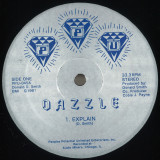
Dazzle rolled deep. Very deep. In the 1980s, it wasn't unusual for the Milwaukee-based group to show up at various Midwest night clubs in a caravan of 30-40 cars and vans. Their live following was hard won over a career that spanned 20+ years, many line up changes, and a handful of project names. Friends, family, and fans made the journey with them weekend after weekend, a testimony to both the musical prowess of the group and the tight-knit community that they emerged from.
Donald Smith, band leader, was there the whole time - joined by many of his siblings and friends - first as founder of the Ghetto Players, a early 70's nine-piece which also included siblings Michael, Ronald, and Charles. They played hard funk in the style of early Kool and the Gang, and although they sadly left no recordings, the strength of their live act managed to catch the eye of local Milwaukee R&B music entrepreneur Cobie Joe Payne. Cobie had made a couple of records locally in the early/mid 70s as a singer, including the impossibly weird and amazing rare afro-blues-funk 45 "Sweet Thing", but had never enjoyed national success. When the Ghetto Players disbanded in the early-mid 70s, Donald soon put together a new group, C on the Funk (the 'C' referring to lead vocalist and sibling Charles), under Payne's tutelage. Sister Lorrie Smith came in as the drummer, the line-up being fleshed out by brothers David and Melvin Johnson, and friend Robert Mitchell. After a few years as a strictly live attraction, they drove to Chicago and produced a single, "In the Disco" / "A Place" for Payne's small record label Sweet Thang Records in 1980. Lacking the financial backing needed to supply the local R&B disk jockey's "promotional fees" , this single sadly languished in obscurity, gathering dust inside the local tavern jukeboxes and manilla promo envelopes that comprised Payne's DIY distribution network.
C on the Funk were traveling the Mid West extensively at this point, and making some important friends on the road. Ike Wiley Jr. of the Dazz Band/Kinsman Dazz took particular interest and the band was re-christened Dazzle, partially as a tie-in with Dazz, partially to embrace the new sounds that would distinguish the 70s disco scene from what record collectors and DJs would now refer to as the "Boogie" era. There no doubt was a stigma attached to the word "Disco" as the eighties began, and as we see in this collection C On the Funk's "In the Disco" is remixed and transformed into the psychedelic synth instrumental of Dazzle's "Disco's Out", a title which embodies both the next-step approach Smith and company were pushing for, and humorously comments on the state of black dance music in the early 1980s. The Dazzle recording, done in Chicago in 1982, updated the sound and featured an expanded line up, most notably a second synth player (Charles Washington), and a percussionist/second lead vocalist (Greg McDonald). The added synth textures and deep percussive grooves give the Dazzle recordings an elegant late night vibe that resonate just as well in a good pair of headphones as they do on the dance floor. The trance inducing cough syrup-warble of "Explain" may best exemplify this here. Sadly, a pressing flaw in the 12" halted production and promotion, and the EP and the songs within were lost to the ages. The group, having done a much better line in the live music business, followed that path instead all the way to the early 90s. --bio provided by andy noble
- A1: Delroy Wilson – I Don't Know Why
- A2: Basil Daley – Hold Me Baby
- A3: Myrna Hague – Touch Me Baby
- A4: John Holt & The Paragons – Darling, I Need Your Loving
- A5: The Sharks – How Could I Live (1St Cut)
- B1: The Mad Lads – Ten To One
- B2: Jackie Mittoo – Reggae Magic (2Nd Cut)
- B3: Larry & Alvin – Your Love
- B4: Freddy & Jenny – Too Long Will Be Too Late
- B5: Alton Ellis – Let Him Try
- C1: Albert Tomlinson – Don't Wait For Me
- C2: Horace Andy – Got To Be Sure
- C3: Carlton & His Shoes – Never Give Your Heart Away
- C4: The Heptones – Ready To Learn
- D1: Bob & Marcia – Really Together (No Strings)
- D2: Ernest Wilson – Undying Love
- D3: Bob Marley & The Wailers – I'm Still Waiting (1St Cut)
- D4: Doreen Schaeffer – We're All Alone
Lovingly compiled, this album features only the finest Lovers from Jamaica’s finest label. From Blues parties in London, Birmingham, Bristol etc Lovers Rock quickly became one of the UK’s finest-ever musical movements.
Sweet harmonies, soulful reggae, love songs – the key ingredients of Lovers Rock - were all based on the revival of many of the classic Rocksteady harmony groups of the late 60's and early 70's, such as The Heptones, Carlton and The Shoes, Larry & Alvin, The Paragons, that Clement "Sir Coxsone" Dodd’s Studio One and rival Duke Reid’s Treasure Isle label produced hit after hit with as they fought for dominance in the dancehalls of Kingston.
As well as these classic harmony groups, this album also features fine contributions from many of the reggae greats – Horace Andy, Alton Ellis, Bob Marley and The Wailers, Delroy Wilson – All artists who became stars at the legendary Studio One Records which Chris Blackwell, founder of Island Records, describes as "The University of Reggae".
- A1: The Cyclones With Count Ossie – Meditation
- A2: Cornell Campbell – Natty Don't Go
- A3: Freddie Mcgregor – Africa Here I Come
- A4: Bunnie & Skitter – Lumumbo
- B1: Willie Williams – Addis A Baba
- B2: L Crosdale – Set Me Free
- B3: Leroy Wallace – Far Beyond
- B4: Lennie Hibbert – More Creation
- C1: Alton Ellis – Blackish White
- C2: Winston Jarrett – Fear Not
- C3: Devon Russell – Drum Song
- C4: The Gaylads – Africa
- D1: Black Brothers – School Children
- D2: Linton Cooper – You'll Get Your Pay
- D3: Sound Dimension – Congo Rock
- D4: Zoot Simms – African Challenge
This is the new 20th anniversary edition of one of Soul Jazz Records’ classic Studio One releases, now available as a one-off special blue vinyl very limited-edition pressing (2000 copies worldwide).
Studio One Roots set the standard for Soul Jazz Records’ long-standing series of Studio One collections and features many of the classic artists from Clement 'Sir Coxsone’ Dodd’s mighty roster of reggae. This album includes Freddie McGregor, Willie Williams, Cornell Campbell, Alton Ellis, Devon Russell alongside some of the defining crack-session men groups of Jamaican reggae history – The Sound Dimension, Brentford All-Stars, The Skatalites, New Establishment and more. As ever the album is filled with a mixture of
seminal cuts and super-rarities from the vast vaults of 13 Brentford Road.
Stand-out tracks include Alton Ellis’s Blackish White, a surreal and powerful Afro-centric dream, Count Ossie Nyabinghi and Rastafarian drummers genre-defying interpretation of Booker
T and The MGs ‘Meditation’, Willie Williams awe-inspiring versioning of the Skatalites seminal Rastafari anthem Addis Ababa and many, many more.
This album has been fully digitally remastered, analog cut and packaged complete with the following: Original sleevenotes by Lloyd Bradley (author of When Reggae Was King),
compiled by Mark Ainley (Hones Jons), high-quality Soul Jazz mastering, wicked images of Count Ossie and the Mystic Revelation of Rastafari on the cover, and a rare image of Clement Dodd and musicians inside the studio at Studio One on the full colour inner
sleeves.
“The music of this compilation is of a rare, rare beauty and is essential to anyone's reggae collection” All Music
An autumnal treasure, East Village’s Drop Out has spent the past thirty years finding new ears to bewitch and new hearts to melt. The only album from this British four-piece, recorded and released in the early nineties, it’s long been considered one of the hidden jewels of its time, and is talked of with hushed reverence by people who know. Bob Stanley of Saint Etienne once called it “an elegy for a particular brand of eighties guitar music, sweet minor chords and Dylanesque lyrics”, which captures what makes it so special; in summarising its era, though, it also effortlessly transcends it.
Like all great guitar gangs, East Village fell together as a four-piece; having relocated from High Wycombe to London in mid ‘80s, brothers Martin and Paul Kelly on bass and guitar, set on forming a group together, were joined by John Wood (guitar) and Spencer Smith (drums). Wood and the Kellys shared writing and vocal duties; it was an ideal combination, and one of the many charms of East Village is their various song writing voices, a tip of the hat, seemingly, to the 60s folk-rock groups who influenced them.
Originally influenced by garage-rock and freakbeat, the band eventually came through via the same scene as groups like Felt, The Go-Betweens, The Weather Prophets, and Primal Scream. They’d formed as Episode Four, releasing an EP, Strike Up Matches, in 1986, which has gone on to become one of most sought after releases of the C86 era. Their first two singles as East Village, ‘Cubans In The Bluefields’ (1987) and ‘Back Between Places’ (1988), were released on Jeff Barrett’s Sub Aqua label.
When it came time to record Drop Out, East Village found a supporter in Bob Stanley, who bankrolled the album sessions until Barrett re-signed the band to his new imprint Heavenly Recordings in 1990. The album that took shape is dusky, heartfelt, lamplit, full of chiming minor chords, close harmonies, rattling organs, all buoyed by a rhythm section that moves as one, steady and elegant. There’s melancholy here, certainly, on songs like ‘What Kind Of Friend Is This’, but also pleasure and freedom, on ‘When I Wake Tomorrow’ and ‘Silver Train’. The group were obsessed with Dylan’s Eat The Document at the time, and the album’s rich with references to the film; Drop Out’s character is also somehow close to the thin wild mercury sound of Blonde On Blonde, and the lambent light of the Byrds’ Notorious Byrd Brothers.
In one of life’s gentler surprises, ‘Silver Train’ became an unexpected radio hit in Australia when released there as a single in 1993. The story of East Village seems marked by such unexpected turns and surprising events. None was more surprising for their fans at the time, though, than their onstage split in 1991, leaving an unreleased album in the can. Encouraged by Jeff Barrett the band revisited the tapes two years on and while mixing the album for its posthumous release in 1993 invited Debsey Wykes (Dolly Mixture, Coming Up Roses, Saint Etienne, Birdie) to sing the quietly devastating album closer, “Everybody Knows”, a perfect, sad-eyed sign-off.
Listening now to Drop Out, its timelessness is clear. It could have been recorded by young folk-pop hopefuls in the late sixties, taking their shot at the big time; but it could just as easily have been recorded yesterday, by a group that’s both reverent to music’s past, but forward looking in spirit and temperament. It’s that kind of album. Drop Out’s pop poetry is fully formed, with a singular charm that takes in wistfulness, romance, and good times, and a clutch of deeply moving songs that are overflowing with melody and gracefulness. It’s pretty much everything you’d want from a guitar pop record.
It's also an album that’s slowly accrued its own legend. From its stunning cover art, photographed by Juergen Teller originally for a Katherine Hammett campaign, to the ten perfectly formed songs within, Drop Out’s significance in the scheme of things is such that, a decade ago, it was given a rare 10/10 rating in Uncut magazine, who called the album “the lost classic of its era”. Drop Out comes round every decade or so, each edition introducing new fans to its understated beauty, and this latest reissue is its most elegant and deluxe yet.
The 30th anniversary edition of Drop Out lands in two formats: an LP with tip-on style jacket and four-page insert, designed to partner with the 2019 vinyl reissue of their singles and rarities compilation, Hot Rod Hotel; and a double CD, featuring an extra disc compiling the group’s early singles and alternative versions. This CD edition previously has only been available in Japan, though it now features a new, superior mix of their second single, ‘Back Between Places’. Both feature new, typically eloquent liner notes from writer Jon Savage.
The members of East Village have all gone on to do inspired things: Martin Kelly joined Jeff Barrett at Heavenly and has managed label mainstays Saint Etienne since 1993; Paul Kelly formed Birdie with Debsey Wykes, and is now a renowned film director and graphic designer; both Paul and Spencer Smith played in Saint Etienne’s live band; John Wood moved to China to teach, and released a lovely, understated folk album, Quiet Storm, in Japan in 2006. But with the hazy perfection of Drop Out, they’ve all already etched their names in the firmament.
Super Funky Forest Green and Blue Splatter Vinyl.
After the fall of the Deep City label, Rocketeers bandleader Frank Williams set up shop under the name of his twin daughters Saadia and Giwada and got to work reinventing the Miami Sound. Tracked between 1968-1970, this LP gathers 15 of Saadia's funkiest and deeply soulful moments, featuring Pearl Dowell, Joey Gilmore, Little Beaver, Frank Williams' Rocketeers, Robert Moore, Brother Williams, and Sam Baker. Your next sample, first dance, workout jam or closing credits is buried in here somewhere.
Van Halen did more than announce to the world the earthshaking arrival of a revolutionary guitarist. Performed by an enterprising California quartet that took its name from two of its principal members, the 1978 debut ripped headlines away from punk, injected fresh energy into a then-moribund rock 'n' roll scene, reimagined how heavy music and throwback pop could coexist, and invited everyone to experience the top-down pleasures of a beach-front Saturday night every day of the week no matter where they lived. Painstakingly restored by Mobile Fidelity Sound Lab, and the first of a multi-album series in an exciting partnership between the famous reissue label and Van Halen, Van Halen delivers feel-good thrills and hormonally charged desires like never before.
Limited to 12,000 numbered copies, pressed on dead-quiet MoFi SuperVinyl at RTI, and mastered from the original analogue master tapes, Mobile Fidelity's ultra-hi-fi UltraDisc One-Step 180g 45RPM 2LP collector's edition pays tribute to the record's merit and allows fans to experience Van Halen's original blend of raw power, Hollywood flair, and vaudeville fun for generations to come. Playing with reference-setting sonics that elevate a 10-times-platinum landmark whose importance cannot be quantitatively measured, this definitive version provides a clear, clean, transparent, balanced, and turn-the-volume-up-to-11 view of an album that birthed entirely new styles. Since MoFi's unique SuperVinyl compound allows you to crank the decibels to your wildest desires without risking noise-floor interference, prepare to not only hear but feel Van Halen in your chest, no fifth-row concert seat necessary.
The premium packaging and gorgeous presentation of the UD1S Van Halen pressing befit its extremely select status. Housed in a deluxe box, it features special foil-stamped jackets and faithful-to-the-original graphics that illuminate the splendor of the recording. No expense has been spared. Aurally and visually, this UD1S reissue exists as a curatorial artefact meant to be preserved, touched, and examined. It is made for discerning listeners that prize sound quality and production, and who desire to fully immerse themselves in the art – and everything involved with the album, from the iconic cover art to the meticulous finishes and, yes, of course, Eddie Van Halen's pioneering fretwork and his brother Alex's double-bass percussion.
Indeed, could a piece of music that transformed how countless guitarists approached their instrument be more fittingly named than "Eruption"? Likely not, and in just 102 seconds, Eddie Van Halen rewrote, reimagined, and reconfigured a vocabulary last significantly updated a decade earlier by fellow six-string wizard Jimi Hendrix. Akin to the Washington State legend, Eddie Van Halen developed his own techniques and tones all the while making his seismic accomplishments seem effortless. Devoid of the pretence, ego, and showiness that infected many of his imitators, the Dutch native sticks to a straightforward approach that underlines the authority, prowess, and visionary scope of his playing and then-unheard-of finger-tapping skills. Throughout Van Halen, he establishes himself as an instant idol – a savant whose otherworldly combination of breadth, poise, feel, speed, force, and melody seems beamed in from another galaxy.
As does nearly every song on the record, whose cohesiveness and dynamic put into perspective the advanced chemistry and one-for-all spirit the youthful band had out of the gates. Having paid its dues for years in bars and clubs – going as far as recording a 24-track demo for Kiss bassist Gene Simmons at Village Recorders only to be spurned by management companies that felt its music wouldn't go anywhere – Van Halen finally got a deserved break when Warner Bros. executives signed the group in 1977. The subsequent recording sessions further testify on behalf of the band's synergy and alignment. Completed in just a few weeks with producer Ted Templeman, Van Halen was primarily cut live in the studio with minimal overdubs and edits. The explosiveness, energy, and electricity remain definitive, and as heard on this UD1S set, put the group on a private stage – humming amplifiers, Frankenstrat guitar, bright spotlights, sweaty headbands, and then some.
Van Halen yielded just one hit in the form of a Top 40 single (a breathless cover of the Kinks' "You Really Got Me") but practically every song on the revered LP has become a staple. Named the 202nd Greatest Album of All Time by Rolling Stone and considered by countless experts as one of the best debuts in history, the record displays what can happen with four distinct talents gel and strive for the same purposes. In Van Halen's case, the latter almost always involved partying, freedom, sex, and, in the immortal words of singer David Lee Roth, living "life like there's no tomorrow." The celebration manifests from the opening notes of the strutting "Runnin' with the Devil" – announced with the blare of droning car horns, Michael Anthony's robust bass line, and Alex Van Halen's thumping drumming – and continues through the conclusion of the white-hot "On Fire," goosed by Eddie Van Halen's race-track-ready lines, Roth's flamboyant deliveries, and the rhythm section's cat-like pounce.
Picking out individual highlights on Van Halen is akin to trying to count all the stars in a clear nighttime desert sky: There are far too many to identify, once you see one you notice another dozen you didn't spot before, and the cluster is best enjoyed as a whole. What's evident over repeat listens is the sheer diversity, a fact that's often overlooked: The high harmonies and background funk of "Jamie's Cryin'"; the insistent cane-and-a-tophat shuffle and doo-wop shoo-bop vocal break on "I'm the One"; the throwback acoustic blues that spreads into fast-paced, single-entendre wildfire on the Roth-led standout interpretation of John Brim's "Ice Cream Man." Like the man says, on Van Halen, all the flavours are guaranteed to satisfy.
More About Mobile Fidelity UltraDisc One-Step and Why It Is Superior
Instead of utilizing the industry-standard three-step lacquer process, Mobile Fidelity Sound Lab's new UltraDisc One-Step (UD1S) uses only one step, bypassing two processes of generational loss. While three-step processing is designed for optimum yield and efficiency, UD1S is created for the ultimate in sound quality. Just as Mobile Fidelity pioneered the UHQR (Ultra High-Quality Record) with JVC in the 1980s, UD1S again represents another state-of-the-art advance in the record-manufacturing process. MFSL engineers begin with the original master recordings, painstakingly transfer them to DSD 256, and meticulously cut a set of lacquers. These lacquers are used to create a very fragile, pristine UD1S stamper called a "convert." Delicate "converts" are then formed into the actual record stampers, producing a final product that literally and figuratively brings you closer to the music. By skipping the additional steps of pulling another positive and an additional negative, as done in the three-step process used in standard pressings, UD1S produces a final LP with the lowest noise floor possible today. The removal of the additional two steps of generational loss in the plating process reveals tremendous amounts of extra musical detail and dynamics, which are otherwise lost due to the standard copying process. Every conceivable aspect of vinyl production is optimized to produce the most perfect record album available today.
MoFi SuperVinyl
Developed by NEOTECH and RTI, MoFi SuperVinyl is the most exacting-to-specification vinyl compound ever devised. Analogue lovers have never seen (or heard) anything like it. Extraordinarily expensive and extremely painstaking to produce, the special proprietary compound addresses two specific areas of improvement: noise floor reduction and enhanced groove definition. The vinyl composition features a new carbonless dye (hold the disc up to the light and see) and produces the world's quietest surfaces. This high-definition formula also allows for the creation of cleaner grooves that are indistinguishable from the original lacquer. MoFi SuperVinyl provides the closest approximation of what the label's engineers hear in the mastering lab.
Recorded August, 1965, Copenhagen, Denmark.
Original LP issue: OKTAV – OKLP 111
Sahib Shihab (Edmund Gregory) played with many of jazz’s finest musicians. Shortly after he became one of the first jazz players to change their names due to an Islamic conversion, he joined Thelonious Monk for his Blue Note sessions. He also played with Art Blakey, Dizzy Gillespie, Oscar Pettiforn and Quincy Jones. A unique musician, he was at home in every musical style, from the experimentalism of Thelonious Monk to the more direct hard bop of Art Blakey. Sahib Shihab’s distinctive sound was rooted in his modernist compositions and arrangements, complemented by an intense, soulful playing style.
In 1959 he toured Europe with Quincy Jones after getting fed up with racial politics in USA and ultimately settled in Scandinavia. He worked for Copenhagen Polytechnic and wrote scores for television, cinema and theatre. He remained there until 1973. During this period, he recorded several albums as leader for European labels such as Vogue, Storyville and Futura.
In 1961 he joined The Kenny Clarke-Francy Boland Big Band and remained a key figure in the band for the 12 years it ran. He married a Danish lady and raised a family in Europe, although he remained a conscious African-American still sensitive to racial issues.
This record, on the Danish Oktav label, his second as a leader and also his rarest is a true masterpiece !!!
Black Truffle is pleased to announce the first LP documenting master khene player Sombat Simla, the label’s first collaboration with Japanese sound artist, field recordist, and researcher Yasuhiro Morinaga. Simla is known in Thailand as one of the greatest living players of the khene, the ancient bamboo mouth organ particularly associated with Laos but found throughout East and Southeast Asia. His virtuosic and endlessly inventive renditions of traditional and popular songs have earned him the title ‘the god of khene’, and he is known for his innovative techniques and ability to mimic other instruments and non-musical sound, including, as a writer for the Bangkok Post describes, ‘the sound of a train journey, complete with traffic crossings and the call of barbecue chicken vendors’. Aided by a group of Thai friends, in 2018 Morinaga travelled to the Maha Sarakham province in the Isan region, arranging to meet Simla in a remote spot surrounded by rice fields. Then and there, Morinaga recorded the solo performances heard on the LP’s first side. At Morinaga’s request, Simla began with a rendition of the train song ‘Lot Fay Tay Lang’. Beginning with long tones that seem to mimic a train horn, the performance soon moves into a rapid chugging rhythm, interrupted at points by vocal exclamations and the remarkable timbre Simla produces by singing through the khene. To listeners unfamiliar with Thai music, the pentatonic scales and rhythmic chug of many of the pieces can have surprising echoes of the rawest American blues. The range of Simla’s performance is astonishing, moving from compulsive rhythmic workouts on single chords and rapid-fire runs of single notes to gentle sing-song melodies, and using a fascinating array of techniques, including a rapid tremolo that sometimes sounds almost electronic. Later the same day, Morinaga followed Simla to a cattle shed where he met percussionist Mali Moodsansee to play some molam (folk songs found in Isan and neighbouring Laos), with Pattardon Ekchatree joining in on cymbal. At times, these molam songs have a wistful, romantic character quite different from the solo pieces. Backed up by the propulsive hand drums, Simla again dazzles with his melodic fluidity, rhythmic drive, and wild displays of unorthodox technique. As Morinaga writes, ‘It felt like they had been playing together so long that their breathing was perfectly in sync, and it was like listening to the precision of James Brown’s funk’. Accompanied by extensive liner notes by Morinaga detailing the day of recording, this is a stunning document of a master musician, seamlessly integrating tradition and innovation.