Поиск:blue man group

Стили
Все
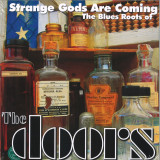
Various - Strange Gods Are Coming: The Blues Roots Of The Doors LP

The Doors Californian kings of psychedelic-blues rock not only stood heads and shoulders above the peace and love hippy explosion of the sixties, but they were also proud to wear their influences on their sleeves by forwarding to the future by reconstructing the past.
The early live shows of the band performed in 1967 at the likes of the legendary Matrix Club in San Francisco would feature the group playing two sets, both featuring a mix of band originals and Blues covers done The Doors way.
Material such as 'I'm a King Bee' by Slim Harpo,'Who do you Love' by Bo Diddley,'Money (Thats what I want)' by Barrett Strong (a song that would stay in the live set for the duration of the bands life) and at The Winterland Ballroom over the Christmas festivites'Mannish Boy' by Muddy Waters were rolled out to an adoring local fanbase.
The classic 'Backdoor Man' by Howlin Wolf would also find a place on the group's debut album.
With all of the members of The Doors being long time blues fans more material was being worked up during rehearsals and added to the live shows along with new songs from The Doors forthcoming albums.
The Doors walked it like they talked it and sadly we will never see the likes of them again...a wonderful mixture of Blues and Psychedelic rock,they proved that in order to meet the future you must never forget the past..NO LIMITS,NO LAWS.................

нет на складе

Закажите сейчас, и мы закажем товар для вас у нашего поставщика.

13,87

Последний логин: 13 мес. назад
Various - Let There Be Rockanaroll,the Rockanaroots Of Ac/dc LP

Rock and Rock roots, deep down under You'd better believe it! The roots of Australian rockers AC/DC lie in the whirlwind of original fifties rock and roll.
In the early days the group would cut their teeth on the club circuit with a live set that would include a handful of band originals,a few Rolling Stones numbers plus many crowd pleasing Rock and Roll classics.
The Sydney club and bar scene was rough so you had to get the punters on your side.
With their original singer Dave Evans at the helm the group who play residencies at the likes of the New Hampton Court Hotel in Sydney entertaining with their own brand of loud guitar takes of 'Carol' and 'Bye Bye Johnny'by Chuck Berry,'Tutti Frutti'by Little Richard,as well as rocking standards like 'Shake,rattle and roll' and 'Blue Suede Shoes'.
Cranking out cover versions didn't die even when the group composed more original material,a version of 'School Days' by Chuck Berry would appear on their second album' TNT',whilst 'Baby Please Don't Go' would be pulled from their original 1975 debut album'High Voltage' and issued as a single in America.
These roots are the reason that AC/DC have become one of the best loved bands on the planet who never fail to deliver the goods everytime.......

нет на складе

Закажите сейчас, и мы закажем товар для вас у нашего поставщика.

13,87

Последний логин: 13 мес. назад
Krauss, Alison & Union Station - Arcadia  LP

"For nearly four decades, Alison Krauss & Union Station have upheld their legacy as one of the most influential and widely celebrated acts in bluegrass and roots music. Krauss is a 27-time Grammy winner and was inducted into the Bluegrass Music Hall of Fame in 2021. Known for an immaculately crafted but endlessly surprising sound that transcends the boundaries of roots, country, rock & roll, and pop, Alison Krauss & Union Station are making their long-awaited return with Arcadia – their first LP since the 2011 masterpiece Paper Airplane—a critically lauded, multiple Grammy Award winning LP that debuted at #1 on the Billboard Country, Bluegrass, and Folk Album charts. This spring, they will embark on a 73-date tour of North America, their first since 2015.

Arcadia was produced by Alison Krauss & Union Station with additional production by 10-time Grammy winning producer Gary Paczosa, who has worked extensively with the band. The players – Alison Krauss (fiddle, lead vocal), Jerry Douglas (Dobro, lap steel, vocals), Ron Block (banjo, guitar, vocals), Barry Bales (bass, vocals), and welcoming highly acclaimed and celebrated tenor vocalist Russell Moore (guitar, mandolin, lead vocal) as the newest member – are five distinct personalities, each of whom also enjoys a flourishing solo career. But when they come together, they transform into a peerless group of musicians who share a singular focus."

Сделать предзаказ28.03.2025

он должен быть опубликован на 28.03.2025

31,51
TRIO DA KALI - BAGOLA

Trio Da Kali

BAGOLA

12inchTDKONEV25
One World Records
28.03.2025
  • Bagola
  • Dadunkan
  • Cela Sigui
  • Tulunke
  • Orpaillage
  • Dissa
  • Wara
  • Nana Triban
  • Fakoly
  • Latege
  • Deme

In their new album Bagola, Trio Da Kali present newly composed songs accompanied on balafon and ngoniba, that provide a rich accompaniment to the spectacular voice of Hawa Kasse Mady Diabaté. She inherits her singing style from her father, the late Kasse Mady Diabaté, who was widely recognized as one of Africa"s all-time greatest singers and won a Grammy nomination in 2004. Hawa"s voice has an exquisite purity and expressiveness, with a wide emotional range. She is equally at home in the lively, 9/8 rhythms of the title track Bagola, a light-hearted critique of men in Malian society, to the soulful Orpaillage, a song that laments the destruction of land from gold-panning. Orpaillage was in fact composed on the spot in the studio, reflecting the creative chemistry between these three musicians. The musical director of the trio is balafon (xylophone) player Lassana Diabaté, born in Guinea into a well-known family of balafon musicians. His remarkable dexterity on the balafon earned him a place in Toumani Diabaté"s Symmetric Orchestra, and later on in the group Afrocubism (featuring Eliades Ochoa). He has collaborated with many musicians, including bluesman Taj Mahal on the album Kulanjan. With two balafons of 22 rosewood keys each, tuned to play chromatic scales, Lassana Diabaté achieves a perfect balance of rhythm, melody, harmony and virtuosic embellishment. David Harrington, leader of Kronos Quartet, compares him to none other than JS Bach. Underpinning the balafon with compulsive groove, is the large ngoniba, played with brilliant musicality by Madou Kouyaté (son of Bassekou Kouyaté and member of his group Ngoniba). Madou, the youngest member of Trio Da Kali, also adds rich harmonies with his deep breathy voice to the songs. Trio Da Kali were founded in 2013 under the initiative of the Aga Khan Music Programme, with the help of three-times Grammy-nominated music producer Lucy Durán. The Trio first rose to international fame with their sublime album Ladilikan (World Circuit Records 2017), featuring an unprecedented and multi-award-winning collaboration with Kronos Quartet, the legendary classical string quartet from San Francisco. Bagola is a showcase of Trio Da Kali"s entrancing and unique sound, only equaled by their magical performances on stage.

Сделать предзаказ28.03.2025

он должен быть опубликован на 28.03.2025

23,49
DJ MEHDI - Espion EP (LP)

Dj Mehdi

Espion EP (LP)

12inchBEC5615472
Because Music
28.03.2025

KEY POINTS

• Collector Crystal Clear LP deluxe packaged – the very First reissue of the cult 11 track EP – Street Album from year 2000 by DJ Mehdi collecting his Espionnage adventures

• “DJ MEHDI : Made in France” : an Arte 6 episode exclusive serie about DJ Mehdi from September 12th ! DJ Mehdi was the one building bridges between french hip hop and electro, and becoming a key composer,producer and DJ. He was a game changer in himself, helping both french rap & electro scenes to rise in the late 90’s & early 200’s . 13 years after DJ Mehdi’s sudden death, his long-time friend and Director Thibaut de Longeville imagined & directed the serie, with archives materials & exclusive interviews and words from big names from Rap & Electro about their collaborations & relationships with DJ Mehdi.

SHORT BIOG

“Rather than a compilation, this record is a summary of what Espionnage has done in the past two years, from the rap 12”s, the instrumental 12”s to the remixes I was given the opportunity to do. The members of The Espionnage Sound System, Yvan from Double Pact included (even if he only appears here on the interlude betweeen “Camille Groult Starr (rmx)” and “Si Tu Savais (rmx)”), have been essential to the label’s development as a whole. The Chronowax Distribution staff has been equally vital to a structure primarily dedicated to independent vinyl production. By the way, I have to thank Ulysse Genet who, on top of lending his name to a track title, suggested the name “Espionnage” instead of “Le Cirque Disques” (which was my initial idea) and drew the first logo. Many thanks to my team : Olivier Rosset, Charlotte Dutoit, Thibaut de Longeville, Alexander Wise, the 360 Creative & Marketing teams, as well as X2N, Tom Kan, DJ Gilb’R, Roulé, Crydamoure, Benoît Blue Boy and his daughters Ludella and Amadine ; who have all contributed on one level or another to what this record is. Of course I can’t forget my family: the Essadis, Faveris, Gassamas, Majira (and their many relations) as well as my other family, the 113 Clan and the whole African Mafia and most particularly my group, Idéal J, for the respect and freedom with which they’ve let me express the somewhat unusual ideas I had about all of this”.
Peace, DJ Mehdi, NYC, March 29th 2000.

нет на складе

Закажите сейчас, и мы закажем товар для вас у нашего поставщика.

24,79

Последний логин: 13 мес. назад
Collage - Mit den Puppen tanzen
 
4
также имеющийся в продаже

Blue Vinyl[17,61 €]


We are thrilled to announce another underground gem on our label. This time, it's Collage's incredible 4-track EP "Mit den Puppen tanzen" (Dancing With The Puppets). Originally released in 1984 on the small FMusic label, the 12" EP is a true highlight in German Electro and NDW history, becoming a sought-after item among collectors. It features intense lyrics by singer Katrin A. Kunze, with music composed by Markus Kammann and Jürgen Grah.

Kammann and Grah, both originally from Solingen - a small city near Wuppertal - had previously collaborated on the new wave project Schwarze Bewegung with a different singer. Their self-titled LP was released in 1982 on Bacillus/Bellaphon. During this period, the electro sound pioneered by Kraftwerk evolved into electro-funk, sparked by the release of Afrika Bambaataa's groundbreaking track "Planet Rock", which achieved global acclaim. The iconic Roland TR-808 drum machine, masterfully employed by Arthur Baker's production team, revolutionized dance music with further hits like "Looking for the Perfect Beat" and collaborations with Planet Patrol. Markus Kammann cites these tracks, along with black music as a whole, as key influences on his work. In contrast, much of the electronic music emerging from Germany at the time rather leaned towards the styles of artists like Klaus Schulze and Tangerine Dream. Kammann's influences are evident in Collage's EP, which incorporates elements of early electronic hip-hop, such as the scratching sounds in the title track (created with tape rather than turntables) and short rap segments in "Niemals zurück".

By this time, Kammann and Grah had acquired their own Roland 808 as well as a JUNO-60 keyboard. Grah, originally a drummer, played keyboards and vibraphone, while Kammann, primarily a guitarist, also played bass. All the lyrics on the EP were written and performed by Kathrin A. Kunze, who hailed from Cuxhaven, a northern German city. She moved to Wuppertal around 1983 to study literature, and the group Collage was born.

Through Uwe Bauer, drummer of Fehlfarben, and their manager Horst Lüdge (of Profil), Collage connected with Werner Lambertz, a legendary sound technician from Düsseldorf. Lambertz's state-of-the-art studio featured custom-built sequencers capable of triggering the JUNO-60, as well as expensive equipment like a vocoder. Over the course of a week, the group completed all four tracks.

The EP's hard yet playful electro beats were complemented by Kunze's distinctive performance and introspective lyrics, which lent the songs a uniquely German and wavy touch. Her subtle songwriting conveyed a sense of paranoia and sorrow, as seen in lines like "Ich glaub mir selber nicht. Wer hält denn schon, was er verspricht?" ("I don't believe myself. Who stays true to their word, anyway?").

Unfortunately, the EP was never properly promoted and was distributed solely through the independent market via EFA. Despite this, Collage continued working on new material and pre-recorded an album that garnered label's attention. Polydor expressed interest but proposed using the compositions for a solo project with singer Inga Humpe (of Neonbabies), who was already signed to their roster. This would have required replacing Kunze as the vocalist, an idea the group firmly rejected. As a result, the album was never released. In 1987, Kammann, Grah, and Kunze launched another project called Cold End, which released another brilliant and highly sought-after 12" single, Metropolitan Jungle, originally issued on Tam Tam and recently re-released.

The first-ever reissue of "Mit den Puppen tanzen" is limited to only 400 copies - 200 on classic black vinyl and 200 on blue transparent vinyl. The cover art remains true to the original 12" release, designed by the aforementioned Uwe Bauer (aka Bimbo Art). This reissue is a must-have for DJs and collectors alike

нет на складе

Закажите сейчас, и мы закажем товар для вас у нашего поставщика.

16,77

Последний логин: 13 мес. назад
Collage - Mit den Puppen tanzen
 
4
также имеющийся в продаже

Black Vinyl[16,77 €]


We are thrilled to announce another underground gem on our label. This time, it's Collage's incredible 4-track EP "Mit den Puppen tanzen" (Dancing With The Puppets). Originally released in 1984 on the small FMusic label, the 12" EP is a true highlight in German Electro and NDW history, becoming a sought-after item among collectors. It features intense lyrics by singer Katrin A. Kunze, with music composed by Markus Kammann and Jürgen Grah.

Kammann and Grah, both originally from Solingen - a small city near Wuppertal - had previously collaborated on the new wave project Schwarze Bewegung with a different singer. Their self-titled LP was released in 1982 on Bacillus/Bellaphon. During this period, the electro sound pioneered by Kraftwerk evolved into electro-funk, sparked by the release of Afrika Bambaataa's groundbreaking track "Planet Rock", which achieved global acclaim. The iconic Roland TR-808 drum machine, masterfully employed by Arthur Baker's production team, revolutionized dance music with further hits like "Looking for the Perfect Beat" and collaborations with Planet Patrol. Markus Kammann cites these tracks, along with black music as a whole, as key influences on his work. In contrast, much of the electronic music emerging from Germany at the time rather leaned towards the styles of artists like Klaus Schulze and Tangerine Dream. Kammann's influences are evident in Collage's EP, which incorporates elements of early electronic hip-hop, such as the scratching sounds in the title track (created with tape rather than turntables) and short rap segments in "Niemals zurück".

By this time, Kammann and Grah had acquired their own Roland 808 as well as a JUNO-60 keyboard. Grah, originally a drummer, played keyboards and vibraphone, while Kammann, primarily a guitarist, also played bass. All the lyrics on the EP were written and performed by Kathrin A. Kunze, who hailed from Cuxhaven, a northern German city. She moved to Wuppertal around 1983 to study literature, and the group Collage was born.

Through Uwe Bauer, drummer of Fehlfarben, and their manager Horst Lüdge (of Profil), Collage connected with Werner Lambertz, a legendary sound technician from Düsseldorf. Lambertz's state-of-the-art studio featured custom-built sequencers capable of triggering the JUNO-60, as well as expensive equipment like a vocoder. Over the course of a week, the group completed all four tracks.

The EP's hard yet playful electro beats were complemented by Kunze's distinctive performance and introspective lyrics, which lent the songs a uniquely German and wavy touch. Her subtle songwriting conveyed a sense of paranoia and sorrow, as seen in lines like "Ich glaub mir selber nicht. Wer hält denn schon, was er verspricht?" ("I don't believe myself. Who stays true to their word, anyway?").

Unfortunately, the EP was never properly promoted and was distributed solely through the independent market via EFA. Despite this, Collage continued working on new material and pre-recorded an album that garnered label's attention. Polydor expressed interest but proposed using the compositions for a solo project with singer Inga Humpe (of Neonbabies), who was already signed to their roster. This would have required replacing Kunze as the vocalist, an idea the group firmly rejected. As a result, the album was never released. In 1987, Kammann, Grah, and Kunze launched another project called Cold End, which released another brilliant and highly sought-after 12" single, Metropolitan Jungle, originally issued on Tam Tam and recently re-released.

The first-ever reissue of "Mit den Puppen tanzen" is limited to only 400 copies - 200 on classic black vinyl and 200 on blue transparent vinyl. The cover art remains true to the original 12" release, designed by the aforementioned Uwe Bauer (aka Bimbo Art). This reissue is a must-have for DJs and collectors alike

нет на складе

Закажите сейчас, и мы закажем товар для вас у нашего поставщика.

17,61

Последний логин: 12 мес. назад
The Seldom Scene - Remains to be Scene
  • Last Of The Steam-Powered Trains
  • Crossroads
  • A Good Time Man Like Me Ain't Got No Business (Singin' The Blues)
  • Hard Travelin
  • Farewell, Angelina
  • Walking Down The Line
  • Lonesome Day
  • I Could Cry
  • White Line
  • Show Me The Way
  • To Go Home
  • The Story Of My Life

Since 1972, the group has remained quintessential bearers of the tradition, releasing
nearly two dozen albums that cast a wide net for inspiration and repertoire. Remains
to Be Scene is no exception, delivering stirring takes on bluegrass standards and
providing their signature interpretations on deep cuts from the likes of The Kinks, Bob
Dylan, and Jim Croce. The album is the first to be released since the passing of
founding member and trailblazing banjo player Ben Eldridge, who contributes
impassioned liner notes to the release. Beneath the album's title lies a plain truth:
more than fifty years in, The Seldom Scene are looking ever forward.
Original Seldom Scene are Bluegrass Hall of Fame inductees
"It goes without saying (but I'll say it anyway), the Seldom Scene is one of the most
influential and durable bands in modern bluegrass history." - Bluegrass Unlimited

Сделать предзаказ14.03.2025

он должен быть опубликован на 14.03.2025

25,63
Various - Midnight In Tokyo Vol.4  (LP2x12")

compiled by tsunaki kadowaki
artwork by yoshirotten
mastering by kuniyuki takahashi

Tsunaki Kadowaki, a staff member at Kyoto’s record store Meditations, the supervisor of "New Age Music Disc Guide", and the founder of Sad Disco, curates the fourth installment of "Midnight in Tokyo" themed around Ambient Kayō.

The Midnight in Tokyo series by Studio Mule focuses on Japanese music, serving as a soundtrack for Tokyo nights—whether for home listening, club play, or as a driving BGM, transcending location and space. After a six-year hiatus, the fourth volume takes "Ambient Kayō" as its new perspective, compiling genre-defying tracks released between 1977 and 1999 to explore the intersection of Japanese ambient and pop music.

For this long-awaited fourth installment, selections were made regardless of record label status (major or independent), era, format (vinyl or CD), original release price, or prior reissues. Instead, the focus was on music that deeply moves the listener, is open-minded and evocative, brims with inspiration and spiritual insight, and embodies the "utagokoro" (singing heart) of Japanese artists.

Opening the compilation is "Umi e Kinasai" by Yōsui Inoue, a legendary Japanese singer-songwriter whose works have recently gained renewed interest as hidden gems of Walearic and ambient pop

Composed and arranged by Katsu Hoshi—who is also known for his arrangements on Inoue’s masterpiece Ice World—the track features renowned players such as Masayoshi Takanaka, Hiroki Inui, and Shigeru Inoue. The song embodies a yearning for Balearic horizons, tinged with youthful vibrancy and sentimentality.

Next, "Oritatamu Umi", compiled from Keiko Nosaka, a 20-string koto player, and George Murasaki, a pioneer of Okinawan rock, is an instrumental track from their album "Niraikanai Requiem 1945". As the title suggests, it carries themes of requiem and remembrance, conveying poetic lyricism even without words. Blending Ryukyuan/Okinawan harmonies and indigenous elements, it unfolds as an intimate and nostalgic piece of progressive rock.

Also featured is "Natsu no Kowareru Koro" by Higurashi, a folk-rock band led by Seiichi Takeda, formerly a guitarist of The Remainders of The Clover, the predecessor of RC Succession. Like the opening track "Umi e Kinasai", this song was also produced by Katsu Hoshi. It stands as a folk/new music piece that takes a step into an "otherworldly" realm, recommended for fans of Twin Cosmos and Masumi Hara.

From the enigmatic Blue, the only work left by the mysterious composer S.R. Kinoshita, comes "Mangrove", a hidden treasure of Japan's ambient/new age scene from the CD era. With an oriental and enigmatic atmosphere, the track evokes a mystical world of deep, uncharted jungles, unfolding as an otherworldly New Age Kayō.

"Yaponesia Sakura", selected from Rehabilual’s sole album New Child, is a masterpiece of Japanese new age music. Produced by Swami Dhyan Akamo, a disciple of Indian meditation teacher Osho and a renowned balafon player, the track features Michio Ogawa (Chakra) and Atsuo Fujimoto (Colored Music). Their collective artistry creates an exquisite spiritual ambient pop sound.

"Asa no Hitoshizuku", the opening folk song from Sachiko Kanenobu’s album Sachiko, is also included. Known for her legendary folk album Misora, produced by Haruomi Hosono, Kanenobu’s fourth album after resuming her career was inspired by her experiences living in San Francisco and revolves around the theme of "love." This track carries the same intimate poetic world as Misora, imbued with a pure, crystalline innocence.

From the synth-pop band E.S. Island, known for the Haruomi Hosono-produced *Teku Teku Mami", comes "Yume Fūrin ", selected from their long-lost new age classic Nanpū from Hachijo. Created while the band’s core duo was living in Hachijō Island, the album aimed to sonically capture "the high and happy vibrations of everyday island life." This track offers a dynamic, tribal-infused New Age Kayō experience.

Dubbed "the world's first Min’yō House Mix" "Esashi Oiwake (Maeuta) " comes from Kanazawa Akiko HOUSE MIX Ⅰ, a collaboration between Japanese house music pioneer Soichi Terada and Akiko Kanazawa, a renowned min’yō singer. Through the prism of club music, Hokkaido's Esashi Oiwake, one of Japan’s most iconic folk songs, is transformed into a futuristic ambient pop piece with intricate sound design.

The compilation also includes "Sweet Ong Choh", a track from Voice From Asia, a group active between 1989 and 1992 featuring vocal artist Shizuru Ohtaka. Taken from their imaginative minimal work Voice From Asia, released under Aoyama Spiral’s music label Newsic, the song presents a tranquil, tribal-minimal soundscape enriched by ethnic instruments.

Hailed by Haruomi Hosono as having “a shaman residing in her voice,” singer-songwriter Nami Hōdatsu also appears in the selection. Known for her collaborations with Henry Kawahara, her debut album featured "Asa-Hikari-Ame-Yume", a track that now stands as a precursor to modern vocaloid/synthesized vocal music—a hidden gem of post-choir aesthetics that deserves rediscovery.

Likewise, "Tennessee Waltz", from Naomi Akimoto’s album One Night Stand, supported by members of Mariah, serves as another early prototype of vocaloid/synthesized vocal music. The track weaves fragmented vocal samples, pastoral yet sweetly minimal synth sounds, and mechanical beats into a strikingly unconventional piece in the history of Japanese music.

Closing the compilation is "Heaven Electric", a track from Nav Katze’s album Gentle & Elegance, which featured remixes by Autechre, Seefeel, and Sun Electric. Merging elements of IDM, ambient techno, and chillout, the song embodies an optimism reminiscent of space music while seamlessly blending a mystical Japanese aesthetic—an ambient pop masterpiece.

---

The album presents 12 exquisite pop tracks infused with an ambient feeling, resonating deeply with the evolving landscape of the mid-2020s—a time of post-hyperpop and Y2K revival.

Tsunaki Kadowaki (Compiler)

Born in 1993 in Yonago, Tottori, Tsunaki Kadowaki is a staff member and buyer at Kyoto’s Meditations record store. He is the editor of New Age Music Disc Guide (DU BOOKS) and a contributor to Music Magazine, Record Collectors' Magazine, ele-king, and more. Kadowaki has written liner notes for multiple Japanese releases (Brian Eno, Masahiro Sugaya etc.) and runs the Sad Disco music label under Disk Union. He also curates Spotify’s official New Age Music playlist and performed as a DJ at YCAM’s Audio Base Camp #3 in 2024.
нет на складе

Закажите сейчас, и мы закажем товар для вас у нашего поставщика.

25,17

Последний логин: 9 мес. назад
Various - Akasaka Soul Funk 1969-1977

Various

Akasaka Soul Funk 1969-1977

12inch180GWALP07
180g
11.03.2025

At the start of the 60s, a new wave of gospel-influenced jazz started to emerge, with hits such as Art Blakey & The Jazz Messengers' "Moanin'" and Cannonball Adderley's "Work Song" epitomizing this evolution in the genre. The terms "soul jazz" and "funky jazz" were coined as a way to describe this new sound that was making an impact in the US and also on the other sides of the Atlantic and Pacific oceans.

In 1964, Ray Charles made his first visit to Japan. Then, in 1968, Martha & The Vandellas and Stevie Wonder set foot in the country, followed by Sam & Dave in 1969, Ike & Tina Turner in 1970, and B.B. King in 1971. The TV show "Soul Train" also began airing in Japan in the early 1970s. A watershed moment happened in 1973 when Sammy Davis Jr. was cast in a TV commercial for Suntory whisky — and the influence of the US Black entertainment world had really landed, with soul, jazz, and funk artists becoming household names.

Nippon Columbia played a pivotal role during this turning point. The company had contracts with Buddah Records and Blue Thumb Records, releasing notable works by artists such as Gladys Knight & The Pips, Curtis Mayfield, The Crusaders, and The Pointer Sisters. At the same time, the label was also releasing several Japanese soul, jazz, and funk projects under the lead of music director Jiro Inagaki. Inagaki, a saxophonist who began his professional career in the early 1950s, honed his skills at U.S. military camps, where he shared his love of music with the Black servicemen. In the 1960s, he played with drummer Hideo Shiraki's band, which was widely considered to be Japan's representative group of the funky jazz movement. Later, Inagaki went on to pursue more cutting-edge sounds with his Soul Media project, including being a pioneering figure in the "jazz rock" genre. By working closely with Inagaki and his various musical projects, Nippon Columbia really placed the company at the center of an exciting and important period in Japanese music.

In 1965, Nippon Columbia opened a recording studio in Tokyo's Akasaka neighborhood. Akasaka was also home to the first ever discotheque in Japan, the legendary MUGEN, which ran from 1968 to 1987 and where many acts performed, including Con Funk Shun, the Bar-Kays, Ike & Tina Turner, B.B. King, Sam & Dave, Three Degrees, and Edwin Starr, as well as many local Japanese singers and musicians. This melting pot of creativity in the area led to the recording of many singles and albums by Japanese artists that were infused with the sounds of soul and funk. Most of these recordings were not available outside of Japan and remain rare and unknown musical gems. The selection you are holding in your hands is an explosive collection of 10 essential tracks released by the legendary Nippon Columbia label between 1969 and 1977, capturing the raw, unapparelled energy that was flowing through the air of the Akasaka streets at this electrifying time. Enjoy!

---

180GWALP07 - Manufactured and distributed by 180g.

нет на складе

Закажите сейчас, и мы закажем товар для вас у нашего поставщика.

28,99

Последний логин: 3 мес. назад
Julie Driscoll, Brian Auger & The Trinity - Streetnoise LP 2x12"
  • A1: Tropic Of Capricorn
  • A2: Czechoslovakia
  • A3: Take Me To The Water
  • A4: A Word About Colour
  • B1: Light My Fire
  • B2: Indian Rope Man
  • B3: When I Was A Young Girl
  • B4: Flesh Failures (Let The Sunshine In)
  • C1: Ellis Island
  • C2: In Search Of The Sun
  • C3: Finally Found You Out
  • C4: Looking In The Eye Of The World
  • D1: Vauxhall To Lambeth Bridge
  • D2: All Blues
  • D3: I’ve Got Life
  • D4: Save The Country

Brian Auger’s Streetnoise, recorded in 1969 with Julie Driscoll and The Trinity, stands as a landmark of late 1960s eclecticism, where the boundaries of jazz, rock, folk, and soul blur into a cohesive, genre-defying masterpiece.

Auger was moving The Trinity on from their R&B, jazz beginnings and for Streetnoise, together with Driscoll, delivered a record that channelled their mutually progressive vision. Julie's haunting vocal performances were the perfect counterpoint to Auger’s innovative instrumentation, creating a sound that was both avant-garde yet deeply soulful. “We aimed to challenge expectations, ” Auger recalls. “Every track was a canvas to experiment and push the envelope.”

The album’s gatefold sleeve design, created by Ralph Steadman, inspired by William Hogarth's 18th-century satirical etchings, was as groundbreaking as its music. This was not just a cover, it was a bold statement about art and society, perfectly mirroring the music’s blend of historical reverence and forward-thinking innovation.

Musically, Streetnoise is a kaleidoscope of styles including jazz and R&B, fusion, folk, rock and gospel flourishes. "Ellis Island, " and “Finally Found You Out” are both intense instrumentals that embody the intense fusion of jazz and rock the group was known for. "Indian Rope Man" is one of the standout tracks. A cover of Richie Havens' original, that inspired The Charlatans ‘Indian Rope’ and All Blues, a bold reinterpretation of Miles Davis’ iconic Kind of Blue masterpiece, on which Driscoll's vocal performance may be the highlight. "Flesh Failures (Let the Sunshine In)" is a hauntingly beautiful cover of the finale from the musical Hair. Auger's own compositions from the opening instrumental 'Tropic Of Capricorn', to the introspective solo piano and vocal Looking In The Eye Of The World' display Brian's multiple talents.

Celebrated for its fearless creativity across all 16 tracks, the album is testament to Brian Auger and Julie Driscoll’s visionary artistry. It remains a must-listen for anyone exploring the dynamic intersections of jazz, rock, and soul. The album’s reputation has only grown with time, cementing its legacy as a cornerstone of experimental music.

Streetnoise; A wholly unique album from an equally unique group

Сделать предзаказ07.03.2025

он должен быть опубликован на 07.03.2025

25,42
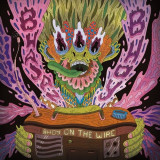
BHAJAN BHOY - BHOY ON THE WIRE
  • A1: The Milkman (Blackburn)
  • A2: Campus Blues (Lancaster)
  • A3: Castle Bandstand (Clitheroe)
  • B1: What Lurks Behind Those Illuminations? (Blackpool)
  • B2: Pass The Sushi Pon The Lef? Hand Side (Burnley)
  • B3: Caribbean Club (Preston)

Ajay Saggar is BHAJAN BHOY. "With BHAJAN BHOY, Saggar synthesizes all of the stylistic approaches he’s explored over the years, swirling them into an intoxicating musical blend, with an earthy spirituality. Even the project’s name reflects the dual aspects of Saggar’s upbringing coming together in harmony. In Hindi, a “bhajan” is a devotional song, sung in the mandir, or temple, while “bhoy” is a Scottish and Irish derivation for a young man. There’s a searching quality to Bhajan Bhoy, as if Saggar is still hunting for transcendence with each track, whether through an expansive drone, an orchestral facility on the piano, or an electronics-augmented raga that threatens to dip into noise” (Erick Bradshaw / writer and WFMU DJ). This album presents a rich and varied set of compositions that showcase Saggar’s skills as an incredibly talented and accomplished composer and musician. With each and every Bhajan Bhoy LP, you are are carried to a higher place. With ‘Bhoy On The Wire’, the 35 minutes laid out unfolds like a cosmic tapestry, an extraordinary exploration that shimmers and reverberates with newfound vibrancy. The songs were broadcast as part of a session on Steve Barker’s “On The Wire” radio show in April 2024. They were a gift to Steve and his team for 40 years of broadcasting. “On The Wire” is simply the greatest radio show in the world. As Ajay explains in his own words : “In September 1984, I started a degree course at the University of Lancaster. On a wet and soggy Sunday afternoon towards the end of September, I sat in my room staring out at the grey Lancashire landscape, and decided to alleviate the boredom by seeing if there was anything to listen to on the radio. Most of the stations I tuned into were as dull as the weather outside. However, as I neared the end of the FM dial (and was about to give up hope), I chanced upon a station where I was taken by the music being played. That show was “On The Wire”, introduced by Steve Barker. From there on in, every Sunday, between 2-5pm, I tuned into Radio Lancashire to listen. Steve’s shows had an incredible and wide reaching selection of music and genres, that thrilled your ears and left you wanting more. Tied to that, his deep knowledge of the material he played helped the listener dig into the sounds even more, and also left you in admiration of this trait. In 1985, I started putting on DIY shows in Lancaster (inviting the likes of Bog-Shed, bIG fLAME, The Membranes, The Wedding Present, etc etc) and Steve was kind enough to mention the shows on-air, which helped in getting people from different parts of the county to come to the shows. At the tail-end of 1985, he invited me to the studio to come and hang out. When in 1988, the group I was in, Dandelion Adventure, released our first (demo) cassette, it was Steve, who not only played tracks off it, but invited the group to the studio for an interview. Now if you’re a young band, that is a massive thrill! And in 1990, when Dandelion Adventure did a John Peel session, I actually used “On The Wire” jingles (that Steve had put on a cassette and given to me a few years before) on the track “All the World’s A Lounge”. Since then, the show has been a mainstay for me, and so many others around the world, to get turned onto incredible sounds from around the world. And over the course of 40 years, Steve has always supported my music. These six tracks are a 40th birthday gift to the “On The Wire” team (Steve, Michael “Fenny” Fenton (an absolutely critical part of the show), and Jim Ingham (engineer who keeps the technical side of things going)) for sharing so much amazing music, and making the world a better place. They were originally broadcast as an exclusive session in April 2024 on “On The Wire", and are here for your listening pleasure. Music like shower”. Artwork by Jake Blanchard

Сделать предзаказ07.03.2025

он должен быть опубликован на 07.03.2025

27,10
299 - THE 299 GAME

299

THE 299 GAME

12inchPNKSLM90
PNKSLM
07.03.2025
  • 1: True Blue You
  • 1: 2Sugar And Spice
  • 1: 3Truth Or Consequence
  • 1: 4A Short Goodbye
  • 1: 5Picking Through The Scraps
  • 1: 6Blue Island
  • 1: 7Get Wet
  • 1: 8You Know Those Things You Wished For?
  • 1: 9It's Not The Time
  • 1: 0Watertown

The 299 Game is the debut lp from 299, a collection of ten songs with an overarching sense of Lynchian weirdness is offset by songs that ring with crisp melodies and compositional nous. 299 is the solo recording project of Welsh multi-instrumentalist and producer Gavin Fitzjohn (who has worked with the likes of Manic Street Preachers, Gruff Rhys, James Dean Bradfield, Paolo Nutini and more), with 299 coming to life a few years ago while Fitzjohn was making his way across the US. Intoxicating, dangerous in its allure, there are flecks of '60s vocal groups and Tom Waits-style melancholia tied up in Fitzjohn's deliberate American drawl.

Сделать предзаказ07.03.2025

он должен быть опубликован на 07.03.2025

22,65
Various - Studio One Showcase 45 LP 2x12"
  • Freddie Mcgregor - Beat Down Babylon (2.44)
  • Cornel Campbell - No Man's Land (2.54)
  • Judah Eskender Tafari - Danger In Your Eyes (2.54)
  • Tony & Howie - Fun It Up (2.45)
  • Liberation Group - Namibia (3.44)
  • Winston Francis - Love Me Today, Not Tomorrow (2.44)
  • Roland Alphonso - Jah Shakey (2.07)
  • Joe Higgs - Dinah (3.15)
  • Brown Eagle - Natural Living (3.29)
  • Freddie Mckay - So Long, Farewell (2.40)
  • Jackie Mittoo - Mixing (2.07)
  • The Heptones - How Can I Leave You (3.11)
  • The Skatalites - Sudden Destruction (2.39)
  • Lone Ranger - Dance A Fe Cork (3.19)
  • Horace Andy - Mamie Blue (3.13)
  • Johnny Osbourne - Run Up Your Mouth (3.10)
  • Bob Marley And The Wailers - One Love (3.00)
  • The Cables - What Am I To Do (4.49)

Soul Jazz Records' Studio One Showcase 45 features a roll call of classic Studio One
reggae legends including Horace Andy, Cornell Campbell, Bob Marley and The
Wailers, Jackie Mittoo, The Heptones, The Skatalites and more – seminal reggae
artists who all launched their careers at the legendary Studio One label.
The album was previously only ever released as a long-deleted limited-edition
seven-inch box set for Record Store Day. This album has now been expanded into a
super double-vinyl album edition as well as first time on CD, with both featuring a
massive eight bonus tracks of wicked Studio One classics and rarities. The album
also comes with newly commissioned sleeve and track notes by Noel Hawks.
Featuring seminal cuts like Bob Marley and The Wailer's original version of 'One
Love', Freddie McGregor's take on the classic 'Beat Down Babylon', Judah Eskender
Tafari's re-version of 'Danger In Your Eyes' plus more from The Skatalites, Lone
Ranger, Johnny Osbourne and more!

Сделать предзаказ28.02.2025

он должен быть опубликован на 28.02.2025

28,78
Da Lench Mob - Guerillas In Tha Mist
  • A1: Capital Punishment In America
  • A2: Buck Tha Devil
  • A3: Lost In Tha System
  • A4: You & Your Heroes
  • A5: All On My Nut Sac (Feat. Ice Cube)
  • A6: Guerillas In Tha Mist
  • B1: Lenchmob Also In Tha Group
  • B2: Ain't Got No Class (Feat. B-Real)
  • B3: Freedom Got An A.k
  • B4: Ankle Blues
  • B5: Who Ya Gonna Shoot Wit That
  • B6: Lord Have Mercy
  • B7: Inside Tha Head Of A Black Man

Possessing lyrics heavily focused on political and social justice, inspired heavily by West Coast gang culture and Islam, Da Lench Mob made waves throughout the hip-hop scene when they first appeared on the track "Rolling With Da Lench Mob", off Ice Cube's famed 1990 solo record AmeriKKKa's Most Wanted. Initially, the titular "Lench Mob" of the track namesake referred to Ice Cube as well as the other participating rappers, but J-Dee, Shorty, and T-Bone would adopt the name for their own in time. Their standout appearance on the Ice Cube track would earn the trio critical interest, (as well as shout-outs on Ice Cube's 1991 follow-up Death Certificate) and generate palpable anticipation for a studio album of their own. Guerillas In Tha Mist, their 1992 debut record, was recorded in the wake of the Rodney King riots, taking its name from infamous comments made during the riots. The record was uncompromising and confrontational in its depictions of urban decay and an unjust system wreaking havoc on an economically disadvantaged Black population. It was starkly realistic (bordering on abrasive) in the content of tracks like the armed revolution-advocating "Freedom Got An A.K.", the kill-your-idols style of "You And Your Heroes", and the anti-pusher anthem "All On My Nut Sac." These harsh manifestos were made all the more smooth via Ice Cube's jazzy G-funk and Bomb Squad-influenced production, which sampled heavily from classic songs by Parliament, Kool & The Gang, The Incredible Bongo Band, and even Vangelis. Cube himself would make guest appearances throughout the record, as well as an appearance by B-Real of Cypress Hill on the track "Ain't Got No Class." Guerillas In Tha Mist was a Billboard success upon its release, reaching #24 on the Billboard 200, and rendering rap radio hits out of its title track and "Freedom Got An A.K.", but Da Lench Mob would fall into obscurity over the years, eventually going their separate ways after creative differences, financial rifts, and the life conviction of rapper J-Dee for suspected murder in 1993. Despite their loss of commercial fortunes, Guerillas In Tha Mist would develop a strong reputation as an unheralded gem among hip-hop heads, and would be considered one of the great lesser-known releases of the era among critics (in 2018 Complex would declare the title track as one of the 100 Best L.A. Rap Songs). Decades after its initial release, and in tribute to the memory of Da Lench Mob member Shorty, who passed in 2019, Get On Down now presents an exclusive LP reissue of Guerillas In Tha Mist, which previously was only released officially on wax in Europe. The LP is pressed on a deluxe Green and Orange Splatter-colored vinyl, and features remastered audio and a painstakingly recreated full color jacket.

Сделать предзаказ14.02.2025

он должен быть опубликован на 14.02.2025

28,99
Various - ECHOES OF ITALY - ARTISTS IN WONDERLAND – EARLY 90S HOUSE VIBES VOL.1 LP 2x12"

Volume 1 of this expertly curated project of 90s Italian House - put together by Don Carlos.

If Paradise was half as nice… by Fabio De Luca.

Googling “paradise house”, the first results to pop up are an endless list of European b&b’s with whitewashed lime façades, all of them promising “…an unmatched travel experience a few steps from the sea”. Next, a little further down, are the institutional websites of a few select semi-luxury retirement homes (no photos shown, but lots of stock images of smiling nurses with reassuring looks). To find the “paradise house” we’re after, we have to scroll even further down. Much further down.

It feels like yesterday, and at the same time it seems like a million years ago. The Eighties had just ended, and it was still unclear what to expect from the Nineties. Mobile phones that were not the size of a briefcase and did not cost as much as a car? A frightening economic crisis? The guitar-rock revival?! Certainly, the best place to observe that moment of transition was the dancefloor. Truly epochal transformations were happening there. From America, within a short distance one from the other, two revolutionary new musical styles had arrived: the first one sounded a bit like an “on a budget” version of the best Seventies disco-music – Philly sound made with a set of piano-bar keyboards! – the other was even more sparse, futuristic and extraterrestrial. It was a music with a quite distinct “physical” component, which at the same time, to be fully grasped, seemed to call for the knotty theories of certain French post-modern philosophers: Gilles Deleuze, Félix Guattari, Paul Virilio... Both those genres – we would learn shortly after – were born in the black communities of Chicago and Detroit, although listening to those vinyl 12” (often wrapped in generic white covers, and with little indication in the label) you could not easily guess whether behind them there was a black boy from somewhere in the Usa, or a girl from Berlin, or a pale kid from a Cornish coastal town.

Quickly, similar sounds began to show up from all corners of Europe. A thousand variations of the same intuition: leaner, less lean, happier, slightly less intoxicated, more broken, slower, faster, much faster... Boom! From the dancefloors – the London ones at least, whose chronicles we eagerly read every month in the pages of The Face and i-D – came tales of a new generation of clubbers who had completely stopped “dressing up” to go dancing; of hot tempered hooligans bursting into tears and hugging everyone under the strobe lights as the notes of Strings of Life rose up through the fumes of dry ice (certain “smiling” pills were also involved, sure). At this point, however, we must move on to Switzerland.

In Switzerland, in the quiet and diligent town of Lugano, between the 1980s and 1990s there was a club called “Morandi”. Its hot night was on Wednesdays, when the audience also came from Milan, Como, Varese and Zurich. Legend goes that, one night, none less than Prince and Sheila E were spotted hiding among the sofas, on a day-off of the Italian dates of the Nude Tour… The Wednesday resident and superstar was an Italian dj with an exotic name: Don Carlos. The soundtrack he devised was a mixture of Chicago, Detroit, the most progressive R&B and certain forgotten classics of old disco music: practically, what the Paradise Garage in New York might have sounded like had it not closed in 1987. In between, Don Carlos also managed to squeeze in some tracks he had worked on in his studio on Lago Maggiore. One in particular: a track that was rather slow compared to the BPM in fashion at the time, but which was a perfect bridge between house and R&B. The title was Alone: Don Carlos would explain years later that it had to be intended both in the English meaning of “by itself” and like the Italian word meaning “halo”. That wasn’t the only double entendre about the song, anyway. Its own very deep nature was, indeed, double. On the one hand, Alone was built around an angelic keyboard pattern and a romantic piano riff that took you straight to heaven; on the other, it showcased enough electronic squelches (plus a sax part that sounded like it had been dissolved by acid rain) to pigeonhole the tune into the “junk modernity” section, aka the hallmark of all the most innovative sounds of the time: music that sounded like it was hand-crafted from the scraps of glittering overground pop.

No one knows who was the first to call it “paradise house”, nor when it happened. Alternative definitions on the same topic one happened to hear included “ambient house”, “dream house”, “Mediterranean progressive”… but of course none were as good (and alluring) as “paradise house”. What is certain is that such inclination for sounds that were in equal measure angelic and neurotic, romantic and unaffective, quickly became the trademark of the second generation of Italian house. Music that seemed shyly equidistant from all the rhythmic and electronic revolutions that had happened up to that moment (“Music perfectly adept at going nowhere slowly” as noted by English journalist Craig McLean in a legendary field report for Blah Blah Blah magazine). Music that to a inattentive ear might have sounded as anonymous as a snapshot of a random group of passers-by at 10AM in the centre of any major city, but perfectly described the (slow) awakening in the real world after the universal love binge of the so-called Second Summer of Love.

For a brief but unforgettable season, in Italy “paradise house” was the official soundtrack of interminable weekends spent inside the car, darting from one club to another, cutting the peninsula from North to centre, from East to West coast in pursuit of the latest after-hours disco, trading kilometres per hour with beats per minute: practically, a new New Year’s Eve every Friday and Saturday night. This too was no small transformation, as well as a shock for an adult Italy that was encountering for the first time – thanks to its sons and daughters – the wild side of industrial modernity. The clubbers of the so-called “fuoriorario” scene were the balls gone mad in the pinball machine most feared by newspapers, magazines and TV pundits. What they did each and every weekend, apart from going crazy to the sound of the current white labels, was linking distant geographical points and non-places (thank you Marc Augé!) – old dance halls, farmhouses and business centres – transformed for one night into house music heaven. As Marco D’Eramo wrote in his 1995 essay on Chicago, Il maiale e il grattacielo: “Four-wheeled capitalism distorts our age-old image of the city, it allows the suburbs to be connected to each other, whereas before they were connected only by the centre (…) It makes possible a metropolitan area without a metropolis, without a city centre, without downtown. The periphery is no longer a periphery of any centre, but is self-centred”.

“Paradise house” perfectly understood all of this and turned it into a sort of cyber-blues that didn’t even need words, and unexpectedly brought back a drop of melancholic (post?)-humanity within a world that by then – as we would wholly realise in the decades to come – was fully inhuman and heartless. A world where we were all alone, and surrounded by a sinister yellowish halo, like a neon at the end of its life cycle. But, for one night at least, happy.

нет на складе

Закажите сейчас, и мы закажем товар для вас у нашего поставщика.

28,99
Miles Davis - Birth Of The Blue LP
  • A1: On Green Dolphin Street
  • A2: Fran-Dance
  • B1: Stella By Starlight
  • B2: Love For Sale

Mastered by Matthew Lutthans at The Mastering Lab from a new 30 ips quarter-inch stereo master tape transferred from the original 3-track session tapes. Plated and pressed at Quality Record Pressings for flawless production and superior fidelity! Stoughton Printing Old Style tip-on gatefold heavyweight jacket with scuff-resistant matte finish.

Miles Davis's Kind of Blue was the number-one jazz album in history. It totaled five songs. There are four more songs from that same historic group, recorded in the same time period and at the same studio. And here they are. These songs deserve to stand on their own with artwork to highlight the quality of the music and that matches the time period of the recording. This is a rare opportunity to have a smash follow-up to what many consider the greatest jazz record ever!

Through the years, these four remarkable performances — all from a single recording session in 1958 and all exemplary of the sound of Miles Davis' legend-loaded sextet of that year — have not been served well. They have been largely treated as add-ons for other compilations. Now, for the first time, Analogue Productions, the audiophile in-house reissue label of Acoustic Sounds, Inc., together with Quality Record Prssings, has deservedly given these tracks a stellar stand-alone release for jazz fans to savor!

The once-in-a-generation lineup that recorded these tunes is the very same that would be immortalized for the enduring classic they would record almost a year later, Kind of Blue. Davis played trumpet sublime with his ensemble sextet featuring pianist Bill Evans, drummer Jimmy Cobb, bassist Paul Chambers, and saxophonists John Coltrane and Julian "Cannonball" Adderley.

Undervalued since their recording, the tunes on this album reflect historial and musical significance. They offer early glimpses into the modal jazz that Kind of Blue would bring to the forefront. Using modes common in modern classical music, rather than the chords of popular songs, Miles had begun to experiment with the new approach on the Milestones recording sessions previously.

Analogue Productions is proud to present Birth of the Blue in an exclusive first-of-its-kind stand-alone release that reflects our reputation for meticulous production, capturing authentic sound with clarity, depth and fidelity that exceeds the audiophile standard.

For this release, we started with the original 3-track recording session tapes that were mixed down to a brand-new 30 ips quarter-inch stereo master tape by senior mastering engineer Vic Anesini at Battery Studios. From that stereo master tape, Matthew Lutthans at The Mastering Lab cut the lacquers at 33 1/3 RPM utilizing the legendary Doug Sax's custom all-tube system and cutting lathe. The lacquers were plated and pressed on 180-gram vinyl at Quality Record Pressings. Lastly, the Stoughton Printing tip-on gatefold jacket with a deluxe scuff-resistant matte finish is the highest quality available. The artwork has an incredible spot-on look to a 1959 Columbia records release!

Features:


• Pioneering Ensemble: Captured the same rare and short-lived alignment of jazz legends including Miles Davis, John Coltrane, Cannonball Adderley, Bill Evans, Paul Chambers, and Jimmy Cobb, as heard on the historic Kind of Blue.


• Innovative Sound: The session represented a crucial transition in jazz, blending elements of hard bop with early modal jazz influences, showcasing the ensemble's experimentation and forward-thinking approach.


• Undervalued Legacy: Despite its historical and musical significance, the session's recordings have been historically overlooked, often relegated to being add-ons in compilations rather than recognized as standalone masterpieces.


• Modal Jazz Precursor: Offered early glimpses into the modal jazz that would later be fully realized in Davis's groundbreaking album "Kind of Blue," laying the groundwork for future jazz innovation.


• Impact on Artists: Served as a critical point of development and confidence for the musicians involved, particularly Bill Evans, who noted the significant impact of this experience on his own identity and style.


• Historical Context: Occurred at a peak moment in Miles Davis's career, following his signing with Columbia Records and his critical and commercial successes with albums such as ‘Round About Midnight and Miles Ahead.


• Revealed backstory: Extensive liner notes by the Grammy Award-winning author Ashley Kahn, who also penned the estential book, Kind Of Blue — The Making Of The Miles Davis Masterpiece

Сделать предзаказ31.01.2025

он должен быть опубликован на 31.01.2025

57,94
Miles Davis - Dark Magus: Live At Carnegie Hall LP 2x12"
  • Dark Magus - Moja
  • Dark Magus - Wili
  • Dark Magus - Tatu
  • Dark Magus - Nne

It’s safe to assume no one in the audience at Carnegie Hall on March 30, 1974 anticipated what Miles Davis would play at the concert documented on Dark Magus: Live at Carnegie Hall. Recorded near the tail end of his electric period, the double album remains the darkest, most ferocious statement of Davis’ career — a visionary effort that foresaw developments in jungle, noise-rock, funk, and drum ‘n’ bass.

Initially issued in Japan in 1977, Dark Magus waited two decades for U.S. release. Now, more than 50 years after Davis and his ensemble blew minds at the famous New York venue, it gets its first-ever domestic issue on vinyl — and on a definitive-sounding pressing at that.

Mastered at Mobile Fidelity's California studio, housed in a Stoughton gatefold jacket, and pressed at Fidelity Record Pressing, this numbered-edition 180g 33RPM 2LP set of Dark Magus invites you to pull up a seat and wrap your head around an exhilarating performance that simultaneously functions as an audition, experiment, release, and magnificent explosion of jazz-rock fusion. We hope your turntable and speakers are up to the challenge.

This collectible reissue presents the improvisational magic that unfolded onstage — the skronking tonalities, wah-wah-pedal bluster, acid-washed effects, furious drumming, run-the-voodoo-down grooves, menacing riffs, crashing cymbals —with incredible detail, color, and pace. It also captures the band’s unbelievable energy, rendering both instruments and on-the-fly changes with revealing depth, definition, and dynamics. At its core, MoFi’s audiophile set takes you deep into the boundless mystery, promise, and uncertainty of Davis and company’s efforts like never before.

The story behind Dark Magus is nearly as unbelievable as the spur-of-the-moment compositions that resulted when Davis brought drummer Al Foster, bassist Michael Henderson, percussionist James Mtume, horn virtuoso Dave Liebman, and guitarists Pete Cosey and Reggie Lucas together, and, in a new twist for the concert’s second half, added guitarist Dominique Gaumont and tenor saxophonist Azar Lawrence to mix. That the latter two instrumentalists had never seen each other until that night adds to Davis’ legend — and penchant for bold, unorthodox moves.

Ditto Davis’ own actions that spring evening, which reportedly included showing up to the show an hour late and taking the stage with his back facing the crowd. The strategy worked. Davis inspired the group to play in a bold manner that few, if any, had heard before. Dark Magus is a rhythmic bonanza. Rooted in Afro-centrist techniques, avante-garde sensibilities, and exploratory moods, the songs eschew set arrangements and solos, and, for the most part, melodic devices.

For Davis, Dark Magus represented a personal triumph amid a period marked by health issues, addictions, and critical decline. The latter slight would be corrected, but not until decades later when Dark Magus saw Stateside release in 1997 via a CD reissue. Of course, the free-form patterns, unpredictable passages, dense structures, and distorted blues that course through the songs — titled after Swahili numerals — are not for everyone. And certainly not for the fainthearted. Though Dark Magus contains majestic moments marked by quiet restraint and something on the level of balladry, its rich and radical concoction of tormented thwacks, thumps, cracks, clatters, wails, bleeps, burbles, stomps, and enigmatic beats remains its adventurous heart and soul.

Primal and enigmatic, fierce and jagged, forceful and revolutionary, jolting and terrifying, Dark Magus seemingly attacks from any and all directions. Turn it up loud and let the prophetic brilliance of this inimitable and relentlessly funky album wash over you.

Сделать предзаказ31.01.2025

он должен быть опубликован на 31.01.2025

90,71
BOILERMAKER - NOT ENOUGH TIME TO GET ANYTHING HALFWAY DONE LP 4x12"
  • Roller Rink Skate Date
  • Hill
  • Switch
  • Ladyfinger
  • Lot 235
  • Crispin Glover Weekend
  • Slingshot
  • Alone
  • Trunk
  • Dark Island
  • Iris
  • Backseat Boat
  • Slow Down
  • Jingle Dell
  • Last Good Growth
  • Shepherd
  • Five Lined Skink
  • Phil The Water Sweep
  • Pathos Delay
  • Breach
  • Norman
  • Midnight Manager
  • Last Stop On The Way To Vegas
  • Last On The Drive
  • 1: 0/98
  • Sunset Ridge
  • From Phoenix At Four
  • Tumbleweed
  • Here Comes Rolling
  • Thinner Runs Through Her
  • Bluebird
  • Used To Be
  • Beseme Mucho You Fucker
  • Drained Nonsense
  • Mobile Home
  • Why Is Grandma On The Roof?
  • Slow Down
  • Sleeping Arms
  • Switch _91X
  • Slingshot
  • Trunk (Live At Che Fest)
также имеющийся в продаже

Color Vinyl[77,94 €]


From the frayed loop of San Diego's white belt `90s scene, Boilermaker provided a subtle counterpoint to the Gravityobsessed post-hardcore landscape. They called it Leucadia-core, a hybrid of major chord riffs, emotive yelps, angular bass chug, and pounding rhythms, building and releasing with the Swami tides. NotEnough Time To Get Anything Halfway Done compiles the trio of Terrin Durfey, Tim Semple, and Richard Sanderson complete discography_three albums, singles, and rarities_into a 41-song/ 4xLP box set, with annotation and illustration in the accompanying 24-page book. Surfs down. Hang zero.

Сделать предзаказ24.01.2025

он должен быть опубликован на 24.01.2025

71,85
BOILERMAKER - NOT ENOUGH TIME TO GET ANYTHING HALFWAY DONE LP 4x12"

From the frayed loop of San Diego's white belt `90s scene, Boilermaker provided a subtle counterpoint to the Gravityobsessed post-hardcore landscape. They called it Leucadia-core, a hybrid of major chord riffs, emotive yelps, angular bass chug, and pounding rhythms, building and releasing with the Swami tides. NotEnough Time To Get Anything Halfway Done compiles the trio of Terrin Durfey, Tim Semple, and Richard Sanderson complete discography_three albums, singles, and rarities_into a 41-song/ 4xLP box set, with annotation and illustration in the accompanying 24-page book. Surfs down. Hang zero.

Сделать предзаказ24.01.2025

он должен быть опубликован на 24.01.2025

77,94
Продуктов на странице:
N/ABPM
Vinyl