Gary Moore is acknowledged as one of the finest musicians in blues-rock history, with a career stretching back into the sixties and with huge success as a member on Thin Lizzy and with his own solo career.
“Bad For You Baby”, released in 2008, is the last studio album by the Northern Irish guitarist before his sudden death in 2011. Like on the preceding albums, Moore has combined his own soulful creations with unique interpretations of blues greats.
quête:blue on blue
With “Close As You Get”, originally released in 2007, Gary Moore continues the musical journey he started with his highly successful album “Old New Ballads Blues” by mixing reinterpretations of Blues classics such as ‘Have You Heard?’ by John Mayall or ‘Thirty Days’ by Chuck Berry with own compositions.
Being out of print on vinyl for a while, “Close As You Get” is now available again: as a heavyweight double vinyl edition.
- 01: Son Of A Gun
- 02: Rory Rides Me Raw
- 03: You Think You're A Man
- 04: Dying For It
- 05: Molly's Lips
- 06: Teenage Superstars
- 07: Jesus Wants Me For A Sunbeam
- 08: Sex Sux (Amen)
- 09: Slushy
- 10: Monsterpussy
- 11: Bitch
- 12: No Hope
- 13: Oliver Twisted
- 14: The Day I Was A Horse
- 15: Dum-Dum
- 16: Hairy
- 17: Lovecraft
- 18: Dying For It (The Blues)
- 19: Let's Get Ugly
- 01: Sex Sux (Amen)
- 02: Slushy
- 03: Monsterpussy
- 04: Bitch
- 05: No Hope
- 06: Oliver Twisted
- 07: The Day I Was A Horse
- 08: Dum-Dum
- 09: Hairy
- 10: Lovecraft
- 11: Dying For It (The Blues)
- 12: Let's Get Ugly
silver & gold 2x12"[32,56 €]
The Vaselines have long been celebrated by musicians and music enthusiasts across genres and across the globe, including super-fan Kurt Cobain. Emerging in the mid-eighties under the wing of The Pastels' Stephen McRobbie, The Vaselines came to define the sly wit and irresistible pop hooks of the era's Scottish indie scene. Sub Pop's remastered reintroduction of The Way of The Vaselines is an opportunity for those already familiar with the Scottish band's brief career to delve deeper into their body of work, while those new to their music can experience firsthand why so many hold them in such high regard. Originally mastered from a cassette tape (and since remastered on much better equipment in the new millennium), The Way of The Vaselines compiles the band's two EPs (Son of a Gun and Dying for It) and their sole LP release (Dum-Dum). This 2023 edition is the first ever vinyl release of The Way of The Vaselines, which originally came out on CD in 1992.
- 01: Son Of A Gun
- 02: Rory Rides Me Raw
- 03: You Think You're A Man
- 04: Dying For It
- 05: Molly's Lips
- 06: Teenage Superstars
- 07: Jesus Wants Me For A Sunbeam
- 08: Sex Sux (Amen)
- 09: Slushy
- 10: Monsterpussy
- 11: Bitch
- 12: No Hope
- 13: Oliver Twisted
- 14: The Day I Was A Horse
- 15: Dum-Dum
- 16: Hairy
- 17: Lovecraft
- 18: Dying For It (The Blues)
- 19: Let's Get Ugly
- 01: Sex Sux (Amen)
- 02: Slushy
- 03: Monsterpussy
- 04: Bitch
- 05: No Hope
- 08: Dum-Dum
- 09: Hairy
- 10: Lovecraft
- 11: Dying For It (The Blues)
- 12: Let's Get Ugly
- 06: Oliver Twisted
- 07: The Day I Was A Horse
black 2x12"[30,46 €]
The Vaselines have long been celebrated by musicians and music enthusiasts across genres and across the globe, including super-fan Kurt Cobain. Emerging in the mid-eighties under the wing of The Pastels' Stephen McRobbie, The Vaselines came to define the sly wit and irresistible pop hooks of the era's Scottish indie scene. Sub Pop's remastered reintroduction of The Way of The Vaselines is an opportunity for those already familiar with the Scottish band's brief career to delve deeper into their body of work, while those new to their music can experience firsthand why so many hold them in such high regard. Originally mastered from a cassette tape (and since remastered on much better equipment in the new millennium), The Way of The Vaselines compiles the band's two EPs (Son of a Gun and Dying for It) and their sole LP release (Dum-Dum). This 2023 edition is the first ever vinyl release of The Way of The Vaselines, which originally came out on CD in 1992.
Japanese jazz is sadly one of best-kept secret. But, it would be stupid to not discover "Green Caterpillar" by Masaru Imada trio + 2. Led by Masaru Imada and his Fender Rhodes, the record opens with " A Green Caterpillar", a 11 minutes piece whose the groove is somewhat reminiscent of Marc Moulin and his Placebo band. "A Straight Flash" continues along this line, while on "Blue Impulse" and "Spanish Flower" Masaru Imada uses the piano in a much more modal style.
Described as a musician's musician, Allen's sound is built on a foundation of pop, rock, Americana, Roots and Blues influences. Jon Allen has a soulful, whiskeysoaked voice and a striking gift for melody. He has never been content to be pigeonholed, as demonstrated by the eclecticism of his albums to date.Of the album Jon writes ''The last few years have felt like a pressure cooker slowly increasing to boiling point. There is sense of threat and a feeling of impending doom. Living in a large urban centre during a global pandemic brought out a sense of paranoia. We became more aware of our need for space, our need for silence and to be close to nature to get above the noise of a city. I'm absorbing all the time and everything from the famous Will Smith slap to missing people inspired the songs. How close are we all to the tipping point? What are we likely to do in heat of the moment? What will stress do to us when pushed? But light
follows dark, and there are the moments of simplicity and you can count your blessings for the simple things life has to offer".
United by a shared love of performing bluesy, soulful music in the most intimate and acoustic of settings, Blicher Hemmer Gadd's hard- swinging 4th album recreates the excitement and energy of the late- night sets they've performed around the world together. The album also features two special songs that were recorded during lockdown in Michael's studio in Copenhagen.
Formed after a chance encounter more than 11 years ago, they continue with this joyful project, which has flourished despite the 3,000+ miles, 40+ years and 3 busy touring schedules which separate them.
After decades performing stadiums with the likes of Eric Clapton, James Taylor and Steely Dan, Gadd relishes the opportunity to rediscover the sound and feel of playing almost acoustically "This is honest Music" he says, "no one plays like this anymore."
"It's bluesy, swinging and soulful jazz played by exceptional musicians" - Rhythm Magazine
The album has been produced together with Brinkmann (Germany), one of the world's leading producers of hi- end turntables. To deliver the highest possible sound quality, on both LP and CD the record has been mastered using MQA technology and converted to analog with a Brinkmann Audio Nyquist Mk II Streaming Digital- to- Analog Converter. The MQA Master has been directly fed from the DAC into the cutting machine. A Brinkmann Audio Bardo direct drive turntable is employed for quality control.
Recorded in 1995 and 1996, mostly in John Fahey"s room at a Salem, Oregon boardinghouse, the performances on Proofs and Refutations prefigure the ornery turn of the page that marked Fahey"s final years, drawing another enigmatic rabbit from his seemingly bottomless musical hat. Cloaked in the language of dogma - what is he proving? refuting? - this is Fahey dancing a jig in the Duchampian gap, jester cap bells a-jingling. True believers? He"s got something for you: an uncompromising vision that you can sneer at ("guy can"t play anymore and refuses to concede!") or embrace as evidence of his genius ("the reinventor does it again!"). Skeptics? He"s there with you, too: sending up the fallacy of certitudes altogether. Institutions, systems, accepted wisdoms. Heroes. Alternative facts, indeed. Right out of the gate, Fahey re-materializes before us, somewhere between Oracle of Delphi and Clown Prince at Olympus. Mounting a thundering dialectic from on high, "All the Rains" resembles nothing else in his extensive discography - betraying roots in everything from Dada to Episcopal liturgical chant - and contains nary a plucked guitar note. You can"t fool him! When the lap steel of yore appears on "F for Fake," it serves more as soundbed for an extended sequence of vocal improvisations, running the gamut from wordless Bashoian caterwauling to free-form (but decidedly fake) Tuvan, even revealing a burnished falsetto in the process. Fahey takes on a different kind of provocation in the two acoustic guitar-based tracks closing Side 1 - "Morning" parts 1 and 2 - the first of 4 recordings in this session that have him wrestling with the ghost of Skip James, perhaps Fahey"s effort to wrench the "bitter, hateful old creep" (his words) back into the grave. Anchoring Side 2 is the two-part "Evening, Not Night," the second half of his extended cathexis on James (and the latter"s avowed castration complex - another story for another day, perhaps). Bit of a chill in the air - where"s the impish Fahey from earlier? Unmistakably working through some psychic wounds here, we might think: the unheimlich rendered in glistening viscera. Or is he playing with our notions of authenticity, of his reputation as troubadour of raw emotional states, a pilgrim of the ominous, the simmering unconscious? These cards are kept decidedly close to the vest. The opening and closing pieces again feature Fahey"s guitar as drone soundbed - employing distortion, oscillation, and an altogether absurd quotient of reverb to create texture and harmonics that are - if we wanna go there - not dissimilar to the sustained tonic clusters of Tibetan singing bowls, the hurdy gurdy, Hindustani classical music, or La Monte freaking Young. Portions of this material appeared on obscure late "90s vinyl in the 7" or double-78 rpm format, but as a "session" it has lain dormant more than a quarter century now. Taken together, we can now see these tracks as secret blueprints to latter-day Fahey provocations, several years prior to records like 1997"s City of Refuge and Womblife.
- 1: Hello
- 2: A Love From Outer Space
- 3: Crack Up
- 4: Timewind
- 5: What's All This Then?
- 6: Snow Joke
- 7: Off Into Space
- 8: And I Say
- 9: Yeti
- 10: Conundrum
- 11: Honeysuckleswallow
- 12: Long Body
- 13: In A Circle
- 14: Fast Ka
- 15: Miles Apart
- 16: Pop
- 17: Mars
- 18: Spook
- 19: Sugarwings
- 20: Back Home
- 21: Down
- 22: Supervixens
- 23: Insect Love
- 24: Sorry
- 25: Catch My Drift
- 26: Challenge
A.R. Kive collates the three most astonishing works from that most miraculous of duos - A.R. Kane - comprising the ‘Up Home’ EP from 1988 that signified the band’s dawning realisation of their own powers and possibilities, their legendary debut LP ‘sixty nine’ (1988) and its kaleidoscopic, prophetic double-LP follow up ‘i’ (1989).
In founder-member Rudy Tambala’s new remastering, the music on these pivotal transmissions from the birth of dream pop, have been reinvigorated and re-infused with a new power, a new depth and intimacy, a new height and immensity. Vivid, timeless and yet always timely whenever they’re recalled, these records still force any listener to realise that despite the habits of retrospective myth-making and the
safe neutering effects of ‘genre’, thirty years have in no way dimmed how resistant and dissident to critical habits of categorisation A.R. Kane always were. Never quite ‘avant-pop’ or ‘shoegaze’ or ‘post-rock’ or any of those sobriquets designed to file and categorise, A.R. Kive is a reminder that those genres had to be coined, had to be invented precisely to contain the astonishing sound of A.R. Kane, because
previous formulations couldn’t come close to their sui generis sound and suggestiveness. This is music that pointed towards futures which a whole generation of artists and sonic explorers would map out. Now beautifully repackaged, remastered and fleshed out with extensive sleeve notes and accompanying materials, ‘A.R. Kive’ reveals that 35 years on it’s still a struggle to defuse the revolutionary and inspirational possibility of A.R. Kane’s music.
A.R. Kane were formed in 1986 by Rudy Tambala and Alex Ayuli, two second-generation immigrants who grew up together in Stratford, East London. From the off the pair were outsiders in the culturally mixed (cockney/Irish/West Indian/Asian) milieu of the East End, with Alex and Rudy’s folks first generation immigrants from Nigeria and Malawi, respectively. The two of them quickly developed and fostered an innate and near-telepathic mutual understanding forged in musical, literary and artistic exploration. Like a lot of second-generation immigrants, they were ferocious autodidacts in all kinds of areas, especially around music and literature. Diving deep into the music of afro-futurist luminaries such as Sun Ra, Miles Davis, Lee Perry and
Hendrix, as well as devouring the explorations of lysergic noise and feedback from contemporaries like Sonic Youth and Butthole Surfers, they also thoroughly immersed themselves in the alternate literary realities of sci-fi and ancient history (the fascination with the arcane that gave the band their name), all to feed their voracious cultural thirsts and intellectual curiosity.
It was seeing the Cocteau Twins performing on Channel 4 show the Tube that spurred A.R. Kane into being - “They had no drummer. They used tapes and technology and Liz Fraser looked completely otherworldly with those big eyes. And the noise coming out of Robin’s guitar! That was the ‘Fuck! We could do that! We could express ourselves like that!’ moment”, recalls Tambala - and through a mix of
confidence, chutzpah, ad hoc almost-mythical live shows and sheer innocent will the duo debuted with the astonishing ‘When You’re Sad’ single for One Little Indian in 1986. Immediately dubbed a ‘black Jesus & Mary Chain’ by a press unsure of WHERE to put a black band clearly immersed in feedback and noise, what was immediately apparent for listeners was just how much more was going on here - a
tapping of dub’s stealth and guile, a resonant umbilicus back to fusion and jazz, the music less a conjuration of past highs than a re-summoning of lost spirits.
The run of singles and EPs that followed picked up increasingly rapt reviews in the press, but it was the ‘Up Home EP’ released in 1988 on their new home, Rough Trade that really suggested something immense was about to break. Simon Reynolds noted the EP was: Their most concentrated slab of iridescent awesomeness and a true pinnacle of an era that abounded with astounding landmarks of guitar-reinvention, A.R. Kane at their most elixir-like.
If anything, the remastered ‘Up Home’ that forms the first part of ‘A.R. Kive’ is even more dazzling, even more startling than it was when it first emerged, and listening now you again wonder not just about how many bands christened ‘shoegaze’ tried to emulate it, but how all of them fell so far short of its lambent, pellucid wonder. This remains intrinsically experimental music but with none of the frowning orthodoxy those words imply. A.R. Kane, thanks to that second generation auto-didacticism were always supremely aware about the interstices of music and magic, but at the same time gloriously free in the way they explored that connection within their own sound, fascinated always with the creation of ‘perfect mistakes’ and the possibilities inherent in informed play.
‘sixty nine’ the group’s debut LP that emerged in 1988 had
critics and listeners struggling to fit language around A.R. Kane’s sound. As a title it was telling - the year of ‘Bitches Brew’, the year of ‘In A Silent Way’, the erotic möbius between two lovers - and as originally coined by the band themselves, ‘dream pop’ (before it became a free-floating signifier of vague import) was entirely apposite for the music A.R. Kane were making. Crafted in a dark small basement studio in which Tambala recalls the duo had “complete freedom - We wanted to go as far out as we could, and in doing so we discovered the point where it stops being music”. There was an irresistibly dreamy, somnambulant, sensual and almost surreal flow to ‘sixty nine’s sound, but also real darkness/dankness, the ruptures of the primordial and the reverberations of the subconscious, within the grooves of remarkable songs like ‘Dizzy’ and ‘Crazy Blue’. Alex’s plangent vocals floated and surged amidst exquisite peals of refracted feedback but crucially there was BASS here, lugubrious and funky and full of dread, sonic pleasure and sonic disturbance crushed together to make music with a center so deep it felt subcutaneous, music constructed from both the accidental and the deliberate, generous enough to dance with both serendipity and chaos. ‘sixty nine’ remains - especially in this remastered iteration - ravishing, revolutionary.
The final part of this ‘A.R. Kive’ contains 1989’s astonishing double-LP ‘i’ which followed up on ‘sixty nine’s promise and saw the duo fully unleash their experimental pop sensibilities over 26 tracks, plunging the A.R. Kane sound into a dazzlingly kaleidoscopic vision of pop experiment and play. Suffused with new digital technologies and combining searingly sweet and danceable pop with perhaps the duo’s strangest and boundary-pushing compositions, the album did exactly what a great double-set should do - indulge the artists sprawling pursuit of their own imaginations but always with a concision and an ear for those moments where pop both transcends and toys with the listeners expectations. Jason Ankeny has noted that “In retrospect, ‘i’ now seems like a crystal ball prophesying virtually every major musical development of the 1990s; from the shimmering techno of ‘A Love from Outer Space’ to the liquid dub of ‘What’s All This Then?’, from the alien drone-pop of ‘Conundrum’ to the sinister shoegazer miasma of ‘Supervixens’ — it’s all here, an underground road map for countless bands to follow.” Perhaps the most overwhelmingly all-encompassing transmission from A.R. Kane, ‘i’ bookended a three year period in which the duo had made some of the most prophetic and revelatory music of the entire decade.
After ‘i’ the duo’s output became more sporadic with Tambala and Ayuli moving in different directions both geographically and musically, with only 1994’s ‘New Clear Child’ a crystalline re-fraction of future and past echoes of jazz, folk and soul, before the duo went their separate ways. Since then, A.R. Kane’s music has endured, not thanks to the usual sepia’d false memories that seem to maintain interest in so much of the musical past, but because those who hear A.R. Kane music and are changed irrevocably, have to share that universe which A.R. Kane opened up, with anyone else who will listen. Far more than other lauded documents of the late 80s it still sounds astonishingly fresh, astonishingly livid and vivid and necessary and NOW.
After the thematic albums 'True' (2012 inspired by Berlin and David Bowie).
'Desire' (2015, an instrumental opera about longing), 'Goldbrun' (2017 a homage to Europe and Honing's interest in European art music) and 'Bluebeard' (2020, a dark album mainly inspired by the 300-year-old fairy tale of the same name), there is now 'Heaven on my mind'.An album on which the quartet's now decade- long existence undoubtedly pays off. Not only is the almost telepathic way the band members communicate with each other an important feature; this fifth quartet album also clearly shows Honing's love for Charles Lloyd, Pharoah Sanders and the freer acoustic jazz that emerged along with the 1960s hippie movement.
ANTI- Records is honored to share a never-before-heard album by Mark Linkous of Sparklehorse titled Bird Machine. Originally recorded in 2010 and mixed by Mark Hamilton (who also worked on It"s A Wonderful Life), Mark"s brother Matt notes "great care has been taken to archive and preserve Mark"s music.
We are very thankful for Mark and the beauty he brought to this world." Sparklehorse was an American indie rock band formed by singer-songwriter and multi-instrumentalist Mark Linkous in the mid-1990s.
Born on September 9, 1962, in Arlington, Virginia, Linkous began playing music as a teenager. Described as an artist who "compelled listeners to heed the beauty of darkness" by Pitchfork, Sparklehorse released many influential records, including the renowned albumsn Vivadixiesubmarinetransmissionplot and Good Morning Spider in the "90s, It"s A Wonderful Life and Dreamt for Light Years in the Belly of a Mountain in the early aughts, and a collaborative album Dark Night of the Soul released in 2010.
Throughout his career Mark collaborated with thought provoking artists like Vic Chesnutt, Daniel Johnston, Tom Waits, Danger Mouse, and David Lynch.
While Mark recorded in various studios, collaborating with other musicians and producers, he did much of his work in his home studio, Static King, often playing and recording everything on his own. He was "very much kind of a working-class guy with a very poetic sensibility, who was drawn to artists like himself, who worked in isolation," said NPR Fresh Air"s Ken Tucker.
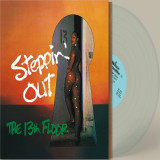
Originally released on Blue Candle Records in 1977, Steppin' Out by the 13th Floor is a true treasure that deserves a cherished place in the collection of every soul and funk connoisseur. This long-awaited reissue brings back the original magic, preserving the essence and impact it had on the music scene.
Its profound influence on bands like the Red Hot Chili Peppers is undeniable, solidifying its status as an essential gem in the annals of musical history. Now, with this reissue, you have the opportunity to experience the same captivating rhythms and infectious melodies that captivated audiences decades ago.
Are you ready to awaken your boogie spirit and infuse your living room with the long-lost spark of the mid-seventies? Brace yourself for an immersive experience as you surrender to the timeless grooves and soulful vibes that will transport you to a bygone era of musical
enchantment. Allow the music to ignite your soul, reigniting the vibrant energy of the past and instilling in you an irresistible urge to groove like never before.
This song, co- written and produced by Jamie Safir (Kylie, Birdy, Will Young) is from the brand-new collection 'Greek Street Friday' released later this year on all formats. With an ace band, which includes drummer Ian Thomas (George Michael, Van Morrison, Celine Dion) and guitarist David Preston (Melody Gardot, Curtis Stigers), this collection will also feature, on a beautiful new take of Rickie Lee Jones' 'Blinded By The Hunt', the world-renowned saxophonist Iain Ballamy (Everything But The Girl, Hermeto Pascoal, Loose Tubes). 'To Be Held' is a lullaby for our times. The title, inspired by a Truman Capote interview, with Dick Cavett, expands into a beautiful tribute to lost friends, the power of connections, imperfections and navigates the strangeness and beauty of being alive 'on this beaten-up planet of ours'.
Ian Shaw is back with force and with 'the quirks and character tics of every day living, . . . brought into euphoric focus Shaw tours his smart and soulful show' (The Guardian)
Gilberto With Turrentine is an album by Brazilian samba and bossa nova singer Astrud Gilberto and American saxophonist Stanley Turrentine. It features performances recorded in 1971, originally released at CTI Records by Creed Taylor. The album can be described as a blend of jazz, pop, and tropicalia. It was arranged by Eumir Deodato and features appearances by A-list jazz performers including Airto Moreira, Ron Carter, Sam Brown, Hubert Laws, and Toots Thielemans.
Astrud Gilberto gained international fame in the mid-1960s following her recording of the famous bossa nova song "The Girl from Ipanema", while Stanley Turrentine was known for his distinctive work as a jazz musician and his earthy blues style.
Gilberto With Turrentine is available as a limited edition of 1500 individually numbered copies on translucent green coloured vinyl, housed in a gatefold sleeve.
Ltd grey vinyl LP! Manchester's/Berlin's The Underground Youth have built an impressive back catalogue of seven full-length albums. Now again their highly sought-after album Mademoiselle is being given a physical release by Fuzz Club. The story of Mademoiselle is a testament to the power of great music being able to reach an audience, regardless of the fact the artist might be unsigned, underground and almost unheard of. Originally released in 2010 and only available online, Mademoiselle has piled up millions of views on YouTube, and saw The Underground Youth acquire a cult following at a ferocious pace. The album has continued to endear audiences with its bluesy psychedelic-leaning, based on beautifully crafted lyricism and a sculpted sound. Layers of reverb-drenched, folk-indebted guitars and forlorn vocals bleed over hypnotising, monolithic drums to create a record that is 46 minutes of lethargic, lo-fi psych mastery.
The song and production background began when the band created a roadhouse in rural Australia, performing an unannounced month-long residency in the small Victorian town of Campbells Creek, whilst working on their sixth record. The atmosphere of the live performance is recreated with pedal steel and crooning vocals and harmonies. The song lyrics reminisce of a romance still as alive as a blue flame."We had talked about this for years" Sam Bentley explains, "We were drawn to the idea of holding up in a town somewhere and playing the evenings as a house band. The Roadhouse became this place for us."Expanding their line-up, the five members of The Paper Kites recruited three extra musicians to make up their roadhouse band, including multi-instrumentalist Matt Dixon - who's weeping pedal steel features on the track - as well as Hannah Cameron and Chris Panousakis.
- You’re Killing Me
- Box Elder
- Maybe Maybe
- She Believes
- Price Yeah!
- Forklift
- Spizzle Trunk
- Recorder Grot
- Internal K-Dart
- Perfect Depth
- Recorder Grot (Rally)
- Heckler Spray
- From Now On
- Angel Carver Blues/Mellow
- Jazz Docent
- Drive-By-Fader
- Debris Slide
- Home
- Krell Vid-User
- Summer Babe
- Mercy Snack: The
- Laundromat
- Baptist Blacktick
- My First Mine
- My Radio
The first Matador pressing of Pavement’s ‘Westing (By Musket And Sextant)’, the compilation of Pavement’s early work from 1989-1993.
The new pressing coincides with this year’s release of the ‘Terror Twilight: Farewell Horizontal’ 4LP box set and a 30th Anniversary vinyl edition of ‘Slanted & Enchanted’.
Pavement begin several months of touring by headlining Primavera Sound Barcelona, before continuing onto sold-out tour dates in North
America and Europe
- A1: Road To Fame
- A2: Funky Dreamer
- A3: Sitting In My Sofa
- A4: Wooden House In Sweden
- A5: Art Of Love
- B1: My Baby Blue
- B2: Groovy Sunshine
- B3: Chill Out Man
- B4: Impression
- B5: You Are A Star
- C1: Beautiful Loser
- C2: Why Is Everybody In Such A Hurry
- C3: Green Village
- C4: Pass It On
- C5: Be The One You Are
- D1: Bright Side Of The Sun
- D2: Everybody's Looking For You
- D3: Happy Blues Man
- D4: Musk Malone
- D5: Mig
- D6: Mikkel Brygger
Swirl Vinyl[46,64 €]
Formed in the late 70's, the duo is still grooving at their studio in Vesterbro, Copenhagen.
Laid Back gained their first international major break through in the 80's with Sunshine Reggae and White Horse. The dualism and originality of the two songs has left a worldwide and everlasting reputation of their music. The 3rd evergreen from their hand was made in 1990 named Bakerman altogether with a music video by Lars Von Trier.
More recently, the two members has co-founded their own record company, Brother Music, which has released Laid Back singles such as Cocaine Cool, remixes from Soul Clap, and latest the mini-album Cosyland and the chill out album, Cosmic Vibes.
In 2013 they released the double album Uptimistic Music.
ENG 180 grm classic black vinyl, 2023 repress. At the risk of further labouring a rather obvious point, with Thank God for Mental Illness, their third collection of absolutely stunning music in 1996, the Brian Jonestown Massacre parallels the prolific and effortless brilliance of the Rolling Stones at their fevered late-1960s peak; the sheer scope of their achievements is stunning - rarely are bands quite so productive, or quite so consistently amazing. Thank God is the BJM's down-and-dirty country-blues outing, all 12-odd tracks supposedly recorded on a single July day at a cost of just $17.36 The Brian Jonestown Massacre is a psychedelic rock band originally from San Francisco, California, led by guitarist/singer Anton Newcombe. Since 1995 The Brian Jonestown Massacre has released numerous albums, first for Bomp! Records, the label which gave them their start, and later for TVT and Tee Pee. BJM has been essential in the development of the modern U.S. garage scene, and many LA and SF musicians got their start playing with Newcombe, including Peter Hayes of The Black Rebel Motorcycle Club. Originally Newcombe was heavily influenced by The Rolling Stones' psychedelic phase - the name comes from Stones guitarist Brian Jones combined with a reference to cult leader Jim Jones, but his work in the 2000s has expanded into aesthetic dimensions approximating the UK Shoegazing genre of the 1990s and incorporating influences from world music, especially Middle Eastern and Brazilian music.
It's full of moments that can be heartbreaking (as on the AMA UK 2023 Awardwinning single 'Car Crash'), deeply romantic and genuinely uplifting. These are songs imbued with the virtues of forerunners that inspired Hannah as both an artist and a producer, from Wanda Jackson to the Shangri-Las, and that exude the atmospheric allure of true, original Americana noir. The common link is a voice that's at times delicate and restrained, and at others powerful and stirring.