Alfredo "El Inca" Linares is one of the best and most beloved musicians in the history of salsa. Fans love his piano playing because of his authentic Cuban feel and 'swing' combined with progressive arrangements and uncompromising phrasing. "Lo Que Tengo" is full of rock solid dance floor killers and no filler, recorded in 1980 with some of the cream of the crop of contemporary Venezuelan salsa musicians (members of Mango, Madera, El Trabuco Venezolano, Los Dementes, Los Melódicos, Dimensión Latina, Guaco, and La Salsa Mayor) and launched there on the indie label A.L.G. Records as ¡Con Todo!, and then a year later on the much larger Velvet Records with a different cover. This a classic Alfredo Linares album, but with the updated studio sound of 1980s Caracas. With five perfectly paced salsas, one funky cha cha chá, a steamy bolero and a dance-friendly Latin jazz number to top it off, there is something for everybody on this record. Thankfully today's generation can now enjoy this rarity at a fraction of the cost of an original copy. Presented in its original artwork and pressed on 180g vinyl. Good to know: Alfredo "El Inca" Linares is one of the best and most beloved musicians in the history of salsa. Fans love his piano playing because of his authentic Cuban feel and 'swing' combined with progressive arrangements and uncompromising phrasing that puts one in mind of Eddie Palmieri. As a composer, arranger and band-leader Linares is highly respected as well. Ever since the 1960s in Lima Peru when his career began, his records have always been on point, being super tight, sharp, and hard as hell, what salseros call salsa brava con afinque. It's no surprise that Lo Que Tengo is exactly that: full of rock solid dance floor killers and no filler, played with verve and flair. Unlike some of his other records that were patched together from various sessions made in different studios (sometimes even in several countries!), this album has the advantage of being produced, recorded and mixed by Alfredo Linares all in one studio and block of time, and backed by hand-picked seasoned professionals who Linares had already played with, both in the studio and on stage, lending it a consistency and sonic integrity that is excitingly manifest in every groove. The album was recorded in 1980 in Caracas with some of the cream of the crop of contemporary Venezuelan salsa musicians (members of Mango, Madera, El Trabuco Venezolano, Los Dementes, Los Melódicos, Dimensión Latina, Guaco, and La Salsa Mayor) and launched there on the indie label A.L.G. Records as ¡Con Todo!, and then a year later on the much larger Velvet Records with a different cover. The LP was also released in Colombia (INS, 1982) and the US (Gallo, 1984), both editions utilizing the Velvet Records cover. During this time Linares had been in Venezuela for some five years and was under contract with a nightclub in Caracas. Through being on the salsa scene there he became friends with the band Mango and even guested on an album with them in 1976. After the contract was up Linares was a free agent again and he was able to draw on his friendship with Mango and assemble a band to back him, first for the Colombian/Venezuelan production Salsa de Verdad (Fonodisco, 1976) and then again with ¡Con Todo! / Lo Que Tengo. One of the distinctive aspects of Alfredo Linares tunes is the 'break' (la cierre)-there are always plenty of dramatic hand-clapping breakdowns followed by an infectious tumbao (sustained vamp) section that sends shivers up the spine and makes the dancers go crazy. In addition, Linares always lets his musicians stretch out, especially in the percussion section. Again, Lo Que Tengo is no exception: there are so many examples of typical arrangements here that one could call this a classic Alfredo Linares album, but with the updated studio sound of 1980s Caracas, which was awash in petro-dollars at the time and so had the latest equipment and a strong consumer base for the salsa market. The album's title tune (originally credited on the Venezuelan edition as 'Lo que tengo que crear'-'What I Have To Create') is by Mango's timbalero José "Cheo" Navarro and sums up Linares' central career philosophy: the musician lives every day to create music, to spread joy and create a party, without complications, wherever he goes. With five perfectly paced salsas, one funky cha cha chá, a steamy bolero and a dance-friendly Latin jazz number to top it off (note the bluesy piano solo from Linares and the sublime vibes of Mango's Freddy Roldán), there is something for everybody on this record. Thankfully today's generation can now enjoy this rarity at a fraction of the cost of an original copy.
Cerca:blue production
light blue vinyl + purple vinyl
French ROD imprint returns with the second chapter of his "Rave Encounter" trilogy, featuring four original and exclusive bangers packed in another collectible 2x10''!
Frankfurt legend Marc Acardipane (The Mover - Planet Phuture) engages hostilities on a side with an hardcore ode to the label. Powerful breakbeat rhythms melt with hitting lines turn this "Rave Or Die" cut into a true underground and future classic anthem. Insane!
On the flip, German J. Lindenthal & R. Russino from Mental Fear Productions go dark with implacable "Constant Sorrow", a hypnotic yet doom-like song that fits pretty well to this odd period we are all living at the moment.
On the C-side, Scottish Dave Tarrida (boss of Sativae) signs his second contribution to ROD. Punishing "Rave Death Cult" skilfully combines bleepy tones to raging spirit for the greatest happiness of your neighbours!
Last but not the least, ROD mastermind Umwelt concludes the compilation in apotheosis with the rollin' "Chaos & Mayhem", a tense, brutal and oldschool masterpiece full of early 90's sounds.
If you enjoyed the first opus of "Rave Encounter", you'll 100% dig this brain-melting new release that goes further into murky industrial rave waters.
Light Blue Marbled Vinyl
Memento’s label honcho Idriss D is back at the production duties with
a mesmerising super single featuring a shattering remix by the
Norwegian infamous wonder known as Dj Sotofett.
“Lunatic” symbolises Idriss D natural inclination for an incessant
sonic exploration, which on this esoteric cur, has brought him to the
darkest and the most hectic jungle territories; drawing from the early
nineties British tradition but with a long sight into the contemporary
climate, these heavy rattling beats and scattered vocals will simply
leave you speechless.
On the flip side , Dj Sotofett is just condensed cutting edge music
technology wisdom; the straight deep beat and the charming arpeggios transform the original mayhem into a late night anthem.
The splendid picture on the release cover has been taken by Ismail
Zaidy of L4artiste, which is also responsible for the astonishing
video teaser, while the artwork has been as usual an graphic affair of Boogie.
One thing hip-hop has never been great at – and certainly something for which it has zero reputation – is nuanced emotion. Enter Large Professor and ‘Looking at the Front Door’, the group’s first single on Wild Pitch Records and the lead out for their stunning ‘Breaking Atoms’ album.
Wrapped around a loop from Donald Byrd’s Blue Note classic ‘Think Twice’, bolstered by the infectious chorus of ‘Chick A Boom’ by The Pazant Brothers and Beaufort Express, it’s a melancholy tale of love gone wrong. It was a brave choice of lead single in the 1990 hip-hop landscape, plucked from an album full of genuine head-nodders and standout tracks. It was also the right choice – a piece of production perfection laced with romantic honesty.
The B-side also strikes a different tack, a tale of a brother who “doesn’t fight, his brain is his left and right.” Using a solid foundation of drums from Funkadelic’s ‘You’ll Like It Too’ (most famously used on Eric B & Rakim’s ‘I Know You Got Soul’), Large Pro weaves his tale of an ambitious, studious man over an original organ line (by JD Drumsticks) that wouldn’t sound out of place at a hockey rink. The theme is sledgehammer subtle – don’t sell drugs, stay in school – but delivered with the lightness of touch that would be Main Source’s signature.
This is the first official UK release, and the first time both sides have been together on a 7”.
The eighteenth release on Second Circle is the label's second exploration into an artists archival works; this time presenting a selection of four early tracks by theatre, film and music producer Can Oral under his Khan alias.
Can moved to Williamsburg, New York in the early 90's along with good friend and fellow musician Jimi Tenor. Born in Germany of Turkish-Finnish parents, he would frantically start buying equipment (such as a TR808, TB303 and Korg Polysix) from junk shops across New York, becoming greatly prolific in his recordings which he would work on throughout the night. During the daytime though, Can set up and ran the now defunct Temple Records, a seminal Soho record store, and later label, largely importing Techno and Acid from Europe. Though a small store, Temple Records would count musicians and DJs such as Björk, Tricky, Dee-Lite, Josh Wink and Joey Beltram among its regular customers. Also he would host many such guests to play live or DJ at his weekly Techno party “Killer” which was held at Save The Robots in New York’s East Village.
Can Oral's nightly studio sessions eventually led to an almost inexhaustible discography with over a dozen monikers each representing a different aspect of his productions. SC018 focuses then on his early electronic works as Khan.
Named after the color painted studio where the EP was produced between 1993-1996, 'Blue Box Sessions' is a collection of four analogue machine driven cuts, covering different tempos and ethos within electronic music. Initially live recorded to an old DAT recorder, and without any overdubs, SC018 is a lost and found artefact to Khan's unquestioned raw talent and timeless relevance.
Created in 2006, Setenta, the Latin Soul Band spreads a unique mix over the world scene. For their fifth album Materia Negra, the Paris-based band returns to its roots: hard Latin funk with plenty of Afro-Latin percussion upfront in the mix contrasted with accents of lush vocal harmony and warm, breezy melody. But at its core, there is something essentially darker, rougher and funkier than their previous releases, especially in the guitar and synth work, bluesy minor key arrangements, and lyrical content. It’s essentially a heavier feel with this record, influenced no doubt on the negative side by the current dark times being experienced across the globe due to the pandemic, subsequent economic downturn and the lack of effective government leadership and global solidarity to deal with the crisis. On the positive tip, the inspiring Black Lives Matter movement and international protests against oppressive governments, systemic racism, corporate greed, global warming and environmental exploitation no doubt have something to do with the serious feel of Materia Negra as well.
Another crucial aspect to this newfound toughness is what band member and Latin Big Note founder and director Osman Jr. states is the group’s desire to address DJs and dancers who appreciate the rawest songs from Setenta’s previous productions. The desire is to leave their mark on the decks and dance floors of the planet with a genre that “we defend by taking the torch extended by our mentors such as Joe Bataan: Latin Funk!” Setenta’s sound has always been soulful, with plenty of tropical Caribbean roots, but this time there is an even stronger Afro-centric theme and gritty psychedelic R&B angle, clothed in galactic, outer-space trappings, bringing to mind another forerunner, Mandrill, as well as the Afro-Futurist mothership vibe of Parliament-Funkadelic.
- A1: Is He Trying To Tell Us Something? (Instrumental)
- A2: Rhapsody In Green
- A3: Baroque No 2
- A4: This Is My Beloved
- A5: Music For Advertising #1
- A6: Music For Advertising #2
- A7: Music For Advertising #3
- A8: Killers Of The Wild
- A9: Realizations Of An Aeropolis
- A10: Music For Advertising #4
- A11: Music For Advertising #5
- A12: Z Theme From "Music For Sensuous Lovers" (Part 1 - Instrumental)
- A13: The Blobs Son Of Blob Theme
- B1: Cathedral Of Pleasure
- B2: Ode To An African Violet
- B3: The Time Zone Space Walker
- B4: Dragonfly
- B5: The Lords Of Percussion Geisha Girl
- B6: The Electric Blues Society Our Day Will Come
BLACK VINYL[21,97 €]
Mort Garson’s road to cool cultural caché and the sublimity of Plantasia meant a decades’ long journey through an underworld of sophisticated, international, string-laced dreck (i.e., your great-grandparents’ record collection) to arrive at Music from Patch Cord Productions, this set of queasy-listening you now hold.
Music from Patch Cord Productions shows that Garson’s knack was to exist in both worlds, super-commercial and waaay out. He cut delirious minute-long blasts for commercials (as to whether or not they were actually ever aired remains unknown) and spacecraft-hovering études. Were there really account managers out there in the early ’70s that gave the greenlight to these commercial compositions which seemed to anticipate everyone from John Carpenter to Suicide? What were these campaigns actually for, Soylent Green? Regardless, Mort’s jingle work laid the groundwork for the future. As Robert Moog himself noted: “The jingles were important because they domesticated the sound.” Via Garson’s wizardry, the synthesizer transcended novelty to ubiquity and dominance.
Other curios and questions abound. How did Garson’s arrangement work for Arthur Prysock’s satiny body worship album This Is My Beloved transmogrify into the body-snatcher pulses of “This is My Beloved”? Are the two pieces even related? What is the IATA code for the airport of “Realizations of an Aeropolis”? What denomination is the “Cathedral of Pleasure”? If “Son of Blob” sounds like a hallucinatory melted ice cream truck theme, what on earth does Blob’s father sound like? Every sound wrangled out of that Moog by Garson pushes things further and further out.
Of course, these are all questions that may never get answers, as Garson wasn’t the most organized modern day composer, busy as he was conjuring strange new realms with his circuit boards and synths. He worked and wrote right up until his death in 2008, his daughter and Sacred Bones still going through all of the material left behind. He wouldn’t live to see it, but his renaissance was just around the corner, the seeds that had been scattered in record bins around the world suddenly coming to bear fruit. Take a bite!
Reissue of this mesmerizing record including an unreleased alternate mix of "Subterranean Zappa Blues". Hypnotic rhythms made of slow minimal beats, industrial textures, intoxicating drones and repetitive voices that seem to merge from dreams. Everything built by two of the most brilliant industrial music minds: Steven Stapleton and Colin Potter.
"This album arrived somewhere after a dream meeting of several individuals, Graham Bond, Joe Meek, Jacques Berrocal and myself. After a few beers and a heated disscussion of puncture repair we all lay down in a circle and point our penises at Venus, telepathic messages are sent out to Colin saying he can use the two golden microphones. He did, and here we are." Steven Stapleton, 17.1.94.
Rock 'n Roll Station began life with Steven Stapleton asking engineer Colin Potter to remix some of the more rhythmic elements of 'Colder Still' from 1992's Thunder Perfect Mind. As Potter gradually warped these sections into weirder and weirder pieces, a new album began to emerge. Potter himself explained it to David Keenan in England’s Hidden Reverse: “What I sometimes did in the studio was to ‘over-use’ effects and processors to totally mutate a piece into something completely different” while Stapleton observed how “it was almost as though telepathic messages were sent over to Colin. We’d started an album together at IC Studio that was never finished. He then sent me some vague mixes, which were just what I had in mind. So, from that basis, I started putting the album together.”
Potter would quickly become a key player in Nurse With Wound’s productions, a position he continues to fulfil to this day. He was first credited as a member on 1992’s Thunder Perfect Mind, a tour-de-force of cold, at times hostile, machined atmospheres, but considers Rock ‘N Roll Station from the following year to still be his favourite.
Building on percussion and drone elements, Stapleton and Potter throw in a huge range of bizarre and atmospheric elements: didgeridoos, chanting voices, and their usual selection of unidentifiable sounds.
Its strong focus on rhythm was erroneously surmised by some as an attempt to join the then rising electronic dance music scene. But it was Stapleton’s recent obsession with the music of ‘King of the Mambo’ Pérez Prado that was beating at the heart of Rock N’ Roll Station’s heady rhythms.
The album’s title alluded to two specifically rock-related stations of influence: the song of the same name by Jac Berrocal, of which a surprisingly straight cover opens the album in homage; and the tragic life of the Sixties British R&B organist Graham Bond who influenced bands such as Deep Purple and Cream. Beset by mental health problems (at one point believing he was the son of Aleister Crowley), Bond died under a train at a Tube station in 1989 and it is this tragic scene that Rock ‘n Roll Station’s closing track, ‘Finsbury Park, May 8th, 1:35 PM (I'll See You In Another World)’, sets in sound.
Having established himself in the UK's contemporary Jazz funk scene with a slew of high calibre releases, Dr Rubberfunk holds a reputation for quality productions surgically delivered by an accomplished multi-instrumentalist and producer.
After being hounded to join the roster in his early career, he signed to Jalapeno Records in 2008, and the years since have seen him release multiple albums, produce label artists, such as Izo FitzRoy, and be regularly called upon to bring his flair to remixes across the roster.
In 2018 he stepped back into the limelight to release a series of limited 7" singles, winning praise from fans throughout the 45s scene. This wide-ranging support led to the release of his LP 'My Life at 45' in early 2020, garnering critical acclaim from the likes of Bandcamp, BBC 6Music, Fatboy Slim and Blues & Soul Magazine, to name a few.
Now, and not a moment too soon, Dr Rubberfunk brings us a pair of outstanding beat treats from his back catalogue, pressed to 7" vinyl for the very first time. Featuring 2 tracks originally written for the 2006 Red Bull Beat Battle at the behest of Rocksteady Crew legend Mr. Wiggles, 'Come Back Breaker' & 'Beats Working' have become firm favourites with breaking crews worldwide.
Drawing on his continued influences from the sample-based collages of early cut and paste pioneers, 'Come Back Breaker' and 'Beats Working' suitably highlight the lessons learnt from that era. Coupled with the good doctor's signature drums and rolling basslines, spoken words snippets and needle-drop samples get the party started and carry it on well past bedtime.
Following the well received inclusion of Bonus Beats on all of the 'My Life At 45' series 45s, and upholding the noble drum-a-pella tradition, Dr Rubberfunk went back to his original session recordings to bring you 'Drums Working' - grab yourself two copies and keep the beats working for days!
Sutja Gutierrez is back on Lumière Noire. The finesse of his productions and his implacable stage performances have given him a special place within the Parisian label. In 2017, he released the EP "The Legend of Time" and one year later, he appeared on the compilation From Above with his track "Allodoxaphobia". He comes back here with an LP entitled PHYLAX SOCIETY, which confirms that Sutja Gutierrez is indeed an artist in his own right. Phylax means guardian in Latin, and the album’s title is directly inspired by the “Phylax Society”, a group of people who, in the late 19th century, wanted to create the ultimate canine breed, but who due their lack of consensus failed and dissolved. Later on, an ex-member eventually bred the very first German Shepherd. On this heartfelt record, as emotional as it is catchy, the artist deals with the feelings that come after the loss of a loved one, chiefly nostalgia and melancholia. The result is an ardent record where crooning is sincere and never a posture. The artist’s lo-fi psychedelic pop trademark oozes in every track of this album. Many of these songs feature his vocals, often doused in ethereal echoes or even shrewdly chopped and distorted in a way that reminds us of the great musique concrete experiments of the past. A DIY approach sometimes indebted to punk and post-punk music, all mixed with a vast variety of traditional pop instruments such as guitar, bass, electric keyboards and real drums, but also drum machines, synth bleeps, found sounds and other strange but fascinating samples. EMPTY FLOWER POTS, which was released as a single ahead of the LP, is definitely one of the album’s standout tracks. This catchy mid-tempo song is the perfect entry point into Sutja’s finely twisted world. A world in which you can find that particular balance between nostalgia and optimism. Oh, life is great, what is life? Life is death. . he sings. It is one of those songs that stays in your head for a while. Do not let the idea of alternative pop fool you, it is quite impossible to listen to any of these songs without reacting in some way or another through moving, dancing or thinking, regardless of the tempo or meaning. I’M DIGGIN’ might be the perfect example of this. Deceptively simple and far removed from dance music, this rock-infused number will not only have you singing along instantly, but you will also find yourself dancing and responding accordingly to the energetic mantra of this song... I'm digging for the truth, I am so diggin' into it. Truly, the dance floor is never too far, sometimes quite blatantly and sometimes in a more oblique fashion. Another case in point is PHYLAX SOCIETY, the eponym track which closes the album, a song in two parts, where a slo-mo club groove carries Sutja’s trademark singing to yet another level of uniqueness, with his surreal soundscapes, twisted melodies and everyday life sounds. An ode to humanity and an homage to the ones who are risking their lives every day in the mediterranean sea. It is rare to encounter an album which is immediately satisfying on one hand but also reveals more and more beautiful secrets with each listen. PHYLAX SOCIETY is clearly one of those special albums.
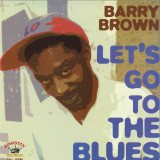
Barry Brown one of reggaes vastly overlooked talents. His militant conscious style has over time lost none of its appeal. Truly one of the sweetest roots vocalists to come out of Jamaica.
Born in 1962, Kingston, Jamaica, he cut his musical teeth working under producer Bunny Lee. Their first release was a track called ‘Girl You’re Always on my Mind’, although a minor hit, Bunny Lee saw his potential and was rewarded with his 1979 cut ‘Step it up Youthman’ which became a hit and has become a roots classic, leading to an album of the same name. The late 70’s was a great period in Barry Brown’s career and its from this period that we have culled this set of tracks. Straight from the master tapes some of his finest moments and some unreleased gems that we believe should be heard. A great set from his timeless 'Trying Youthman' a tail of struggling times in the heart of Kingston Jamaica.
His rastafarian inspired chants 'Stop Them Jah Jah','Give Thanx and Praise','Natty Rootsman' and 'Lead Us Jah’ work alongside socially charged cuts as 'Politician', 'Big Big Pollution' and 'Mr Money Man'. As with all his tales and inspired lyrics they are put across in such a tuneful way that like all the best songs that carry a message can be remembered also through the strength of the song.
As with many of his artists Bunny Lee encouraged him to go into self-production, and after a time spent with producer Linval Thompson ‘Separation’, and Sugar Minott ‘Things & Time’, he did just that and produced his first release ‘Cool Pon Your Corner’ in 1980 followed in 1981 by ‘Problems Get You Down’.
We hope this release will find a place in your collection and remind us of the talent of Mr Barry Brown. If somewhat overlooked, but certainly now not forgotten. Let’s celebrate with the man and go to the blues one more time....
“Easy rider, come and take me higher”. When the world seemingly crumbles around, music can provide an escape few other mediums can. For their debut self-titled LP, Velour effortlessly levitate you above the madness below, each track taking a new turn, cruising over hazy flecked skylines, bustling walkways and bleary eyed bedlam. A trajectory that takes in all of jazz’s vibrancies, blending elements of neo soul, broken beat and hip hop coupled with a much-needed sense of hope across nine deep, soul-searching tracks released via WOLF Music Recordings.
A style and sound taking influence from genres and moods, environments and experiences, Essen-based Velour stretch their legs for this, their first full length album. From the off, they nestle you under their wing with the rustling sax washes of opener ‘CLP’ before diving into an epic slo-mo burner, swooping down into the chaos as singer, Eva Czaya, wistfully narrates the scenes beneath.
Unafraid to shift pace within songs, the likes of ‘Pose’, sauntering from soulful summer groove into woozy late night affair, and ‘Tom's Garage’, that progresses from roadside recounting to grungy basement blowout, finished with a sample of jazz-tinged dusty beats, show that accomplished and adept heads rest on the shoulders of these relative newcomers.
WOLF Music mainstay Mr Fries continues to head up production for Velour, his trademark touch capturing the intimacy of Velour’s sound presenting it in a way that’s considered yet raw - nothing feeling rushed, nor cluttered. A separation and space that gives each element the room it deserves to breathe, with short interludes and skits providing the perfect bridge between tracks, guiding you through smokey jazz bars and twilight whisperings.
Moving through the album, Czaya at points wanders in a serene spoken dialogue, at others letting her voice loose, but always with an ethereal demeanour that comes off with natural ease. One of many highlights, ‘Anthony Davis’ shows off this celestial prowess whilst perfectly embodying Velour’s dream-like escapism. A pent up release of creativity, as moody bass tones mix with deft keys, rolling snares sit behind swirling saxophones.
The journey ends with ‘Luminate’, a transcendent closer laced with space-echoed vocals that reverberate around over-driven Rhodes and feverish drums. Cymbals crash, as modulated synths rise, building and building before easing you off into the night and on your way to a parallel universe.
As a body of work, ‘Velour’ is a shining example of the freedom, energy and enthusiasm of the new school of jazz that’s been captivating minds the world over. An instant on repeat staple - let go, feel the flow, it’s what we need in a time like this.
- A1: Is He Trying To Tell Us Something? (Instrumental)
- A2: Rhapsody In Green
- A3: Baroque No 2
- A4: This Is My Beloved
- A5: Music For Advertising #1
- A6: Music For Advertising #2
- A7: Music For Advertising #3
- A8: Killers Of The Wild
- A9: Realizations Of An Aeropolis
- A10: Music For Advertising #4
- A11: Music For Advertising #5
- A12: Z Theme From "Music For Sensuous Lovers" (Part 1 - Instrumental)
- A13: The Blobs Son Of Blob Theme
- B1: Cathedral Of Pleasure
- B2: Ode To An African Violet
- B3: The Time Zone Space Walker
- B4: Dragonfly
- B5: The Lords Of Percussion Geisha Girl
- B6: The Electric Blues Society Our Day Will Come
PURPLE VINYL[23,66 €]
Mort Garson’s road to cool cultural caché and the sublimity of Plantasia meant a decades’ long journey through an underworld of sophisticated, international, string-laced dreck (i.e., your great-grandparents’ record collection) to arrive at Music from Patch Cord Productions, this set of queasy-listening you now hold.
Music from Patch Cord Productions shows that Garson’s knack was to exist in both worlds, super-commercial and waaay out. He cut delirious minute-long blasts for commercials (as to whether or not they were actually ever aired remains unknown) and spacecraft-hovering études. Were there really account managers out there in the early ’70s that gave the greenlight to these commercial compositions which seemed to anticipate everyone from John Carpenter to Suicide? What were these campaigns actually for, Soylent Green? Regardless, Mort’s jingle work laid the groundwork for the future. As Robert Moog himself noted: “The jingles were important because they domesticated the sound.” Via Garson’s wizardry, the synthesizer transcended novelty to ubiquity and dominance.
Other curios and questions abound. How did Garson’s arrangement work for Arthur Prysock’s satiny body worship album This Is My Beloved transmogrify into the body-snatcher pulses of “This is My Beloved”? Are the two pieces even related? What is the IATA code for the airport of “Realizations of an Aeropolis”? What denomination is the “Cathedral of Pleasure”? If “Son of Blob” sounds like a hallucinatory melted ice cream truck theme, what on earth does Blob’s father sound like? Every sound wrangled out of that Moog by Garson pushes things further and further out.
Of course, these are all questions that may never get answers, as Garson wasn’t the most organized modern day composer, busy as he was conjuring strange new realms with his circuit boards and synths. He worked and wrote right up until his death in 2008, his daughter and Sacred Bones still going through all of the material left behind. He wouldn’t live to see it, but his renaissance was just around the corner, the seeds that had been scattered in record bins around the world suddenly coming to bear fruit. Take a bite!
- A1: Le Grand Néon À Roulettes
- A2: Deviationist Muzak (Version 2)
- A3: Dancing Le Mômo
- A4: Unicazzz
- A5: L’horizon Perdu Du Cornet À Gidouille
- A6: Leviens Vendledi
- B1: Roll Over Fuzmanchu
- B2: Stigmates De La Ligne Crade
- B3: Flip-Side Of Sophism
- B4: Last Ghost Train To Nothing
- B5: Sardana Dels Desemparats (Version 7)
- B6: Vals Burlesco (Version 4)
- C1: Coucher De Soleil Sur L’adriatique
- C2: Des Rails En Mou De Veau
- C3: Despintura Fonica
- C4: Evaporisme Sonor
- C5: Ze Orthopedic Doo-Wop
- C6: Alzina Muntanera
- D1: Élévation De Marie-Madeleine
- D2: Don’t Touch My Blue Oyster Shoes (Version 2)
- D3: (Mc) 5 Pianos In Detroit
- D4: No Sympathy For Symphony
- D5: Le Cut-Up Populaire
- D6: Ha Passat Un Angel (Version 3)
Le nouvel album de Pascal Comelade, dont la réalisation court sur 3 ans , expose avec frénésie ses éternelles obsessions pour la Muzak dégénérée, la répétition combinée aux rhizomes, les guitares bruitistes,les trompettes en plastique, les boites de conserves,les pianos désaccordés (qui sonnent comme un orchestre),l’auto-réduction de jouets sonores, les orgues à piles et à distorsion intégrée,les déviations chromatiques, la mélodie degenre, le Riff conducteur et le grand trémolométaphysique. On y retrouve entre autre Richard Pinhas (pionnier de l’électronique en France et compagnon de route depuis 1974, des figures historiques du Bel Canto Orquestra, et pour la 1ère fois en 45 ans de production : la présence d’un quatuor à cordes et d’ un « assez long solo de piano ».
Pascal Comelade has been working for 3 years to achieve his brand new album. Not only it features all of his musical obsessions & trademarks , some long time partners and friends such as Richard Pinhas & members of his former backing band Bel Canto Orquestra but for the very time in 45 years, ladies and gentlemen there is “quite a long piano solo” and a string quartet in the album.
Gitkin's music exists somewhere between primal, rootsy memory and distant exotic yearning — A dusty bordertown where the familiar blends imperceptibly into the enchantingly foreign.
After a long and fruitful run as a bandleader with relentlessly touring party-rockers Pimps Of Joytime and a Grammy-nominated country blues collaboration with Cedric Burnside, multi-instrumentalist Brian J set out to "explore tonalities I'd never messed with," as he puts it. It was a release from "having to write lyrics or involve my voice," he notes, and so the (mostly) instrumental sound of Gitkin came into being.
Reviews of Gitkin's first LP grappled with descriptors, tagging it vaguely as "cinematic" and comparing it favorably with Khruangbin. True, the music is largely wordless, emotionally evocative, and guitar driven. But it possesses an alluring alchemy all its own.
Gitkin's first release, 2018's well-received Five Star Motel, amply demonstrated his ease with earthy funk and comfortably-cut rhythm. On his new full-length release Safe Passage, the itinerant guitar slinger broadens his already rich palette with melodies informed by Greek and Middle Eastern modalities, Peruvian Chicha and Tuareg Saharan guitar styles. No gimmick, this juxtaposition of gut-bucket blues and funk low-end with unexpectedly twisting lead phrases highlights the intense flavors found in each savory ingredient.
Recorded at his home studio in New Orleans, Safe Passage showcases a new batch of immediately engaging, repeatedly satisfying cuts, ranging from surf exotica ("Cat Nip") to raunchy roadhouse stompers ("Fools Gold" and "The Drive") to dreamy vocal cuts "Foot Steps" and "Hold On" to the floating finale of "Safe Passage."
Gitkin's production radiates character and warmth, leaning on soft-focus vintage mics, dubby spring reverbs and the quirks of a tape console. Further enhancing the intimate vibe are guests like veteran Chauncey Yearwood (congas) and New Orleans local "Spug" Smith, who provides a sousaphone low-end on the cumbia-not-cumbia "Spug Life." Carol C lends her striking voice to three tracks, including the strutting single "De La."
Safe Passage will be released by Wonderwheel on September 18th, 2020 and will be available on vinyl, CD and digitally.
MD Records, a small independent label started in 2018, are pleased to present the debut single from “Lost in Rio” on the new MD Gold series imprint.
Their debut single which will be out in August, ‘Little Piece of Heaven’ is a festival summer feel good slice of Latin pop featuring energetic musicianship and the vocals talents of Highland based Miss T.It is also something the guys are, rightly, very proud of.
The vinyl release of this single is presented as a double A side as both sides are phenomenal, with the remix bringing a NYC disco mix, designed purely for dancefloors with thumping bass, chic style guitars and soaring strings, think Studio 54 and the heady crossover soul of Philly meeting the early disco of New York.
Early plays by several funk and soul radio stations (Totally Wired Radio and FACE radio) has attracted interest from DJs keen to feedback with so many positive vibes and offers to collaborate on future songs.
Who Are Lost In Rio:
The band herald from the Highlands of Scotland. Inverness provides the base for a collection of musicians that have made their home here, whether they originated from Manchester, Melbourne, Malaysia or indeed the Highlands! The band has taken the funk and soul sound from their former incarnation, The Leonard Jones Potential (LJP) who were BBC6 Craig Charles Funk & Soul Show favourites with whom they undertook several live interviews on the show with Craig and also a popular live session as well as a number of joint live dates at Kendal Calling Festival, Inverness and Aberdeen. The guys were also asked to undertake some prestigious live work with world renowned DJ Carl Cox, on the bill at his personal request and alongside other acts such as Brand New Heavies, Danny Rampling, Gilles Peterson and of course, Carl himself.
The songwriting team behind all this - Anthony, Andy, Neil and Ruairi quickly set up Lost in Rio upon the demise of The LJP and began collaborating with a number of singers and a rapper (MC Butterscotch). They developed their sound into a smaller, tighter, groove based soul vibe.
From 2017 the grouped honed their sound with a number of live appearances across the Highlands including festivals and supporting acts such as Smoove and Turrell. Utilising guitars, bass, drums, Hammond and percussion, the guys set about leaning on key influences - Acid Jazz Corduroy and Brand New Heavies, dynamite disco guys Chic, Northern Soul, rare soul and a whole plethora of funky hip hop acts - The Allergies, The Herbaliser and Tribe called Quest to write a lot of new tunes. Latin influence comes to the fore in much of the groups new sound, particularly highlighting the impressive skills of Aussie percussionist Andy Pearce.
Live, the band have a good reputation and have been much sought after by promoters. Audiences have loved the tight rhythmic groove that these guys produce, meaning gigs are full of dancing and long encores. Recently the guys have been concentrating on driving up the already high standard of songwriting and production. This hard working band has plenty of material they are eager to share with those ears who are partial to quality funk, soul and pop and are looking for the right partners to work with and spread the message. Future releases will seek to exploit the wordsmith alacrity of MC Butterscotch who as well as Lost in Rio, also features as part of Scottish award winning hip hop act, Spring Break.
MD Records specialise in Unreleased soul and funk on its Yellow Series, contemporary soul and funk artists on the Gold Series, re-issue soul and funk on the Black Series and Missouri Soul and Blues via its Blue Lotus UK imprint.
Award-winning International DJ and Producers The Prototypes release their third album ‘Ten Thousand Feet & Rising’. The Brighton based Drum & Bass duo were previously signed to tastemaker label ‘Viper Recordings,’ home to Matrix and Futurebound.
The Prototypes’ potent, hard-hitting production and broadsword body of work on seminal labels such as UKF, Viper Recordings, Shogun Audio, Ram Records, Technique Recordings and Formation. Anthems that have been supported across the entire D’N’B scene such as ‘Pale Blue Dot’, ‘Pop It Off’ and ‘Kill The Silence’.
Their expansive and versatile remixes of acts ranging from Ed Sheeran to Avicii to Friction by way of their sought-after bootlegs of Fisher and Knife Party and unreleased dubplate remixes of Bad Company and Pendulum. Not to mention their extraordinary debut album ‘City Of Gold’ that exploded in 2015, took them around the world several times over and elevated them to headline status.
‘Shadows’ is the first single from the new album, which they explain as ”a throwback to the Hardcore scene from the late 90s, with a piano line influenced by pivotal names through the history of the UK’s rave scene such as Vibes & Wishdokta, DJ Dougal, Slipmatt, and Nookie, to which we added a straight up banger of a bassline”.
Featuring Ulta Music’s singer Lily McKenzie, known for her collaborations with industry heavyweights including Giggs, Conducta and Wiley, as well as featuring on Crazy Cousinz’s 2017 smash hit, ‘No Way’, alongside Yxng Bane and Mr Eazi signed to Ultra Music.
Previously supported by the likes of Zane Lowe, Annie Mac, Andy C, Roni Size, Friction, J Majik & Wickaman, Pendulum, DJ Fresh plus many more.
Between Christmas 2000 and New Year 2001 producers Ekkehard Ehlers and Stephan Mathieu recorded an album of warm, soft, delicately crackling electronic music in the space of that week. It was christened with the ambivalent title "Heroin" and was released on CD via the label Brombron in 2001 and later in 2003 re-issued on Kit Clayton's Orthlorng Musork on double-LP with remixes the pair had commissioned as expansions.
17 years later Heroin sees its first vinyl release to include all 13 tracks from the original CD track-list on this LP + 12“ set. The centerpiece "Herz" finally receives its long deserved vinyl treatment (side C, at 45rpm) and on the flip side Thomas Brinkmann contributes a mirror in a magnificent remix of that very piece on side D.
Ehlers and Mathieu were both highly prolific solo artists during the period 2000-2004, and in just two years after the initial release of "Heroin" each had produced over half a dozen new solo recordings: among them the serial masterpiece Ehlers' "Plays" (Cornelius Cardew, Hurbert Fichte, John Cassavetes, Albert Ayler, Robert Johnson) released as 5 stunning LPs in a series on Staubgold, while Mathieu's 'Full Swing Edits' spread over five 10" records plus his album 'FrequencyLib' on Mille Plateaux, 'Die Entdeckung des Wetters' on Lucky Kitchen and ‘The Sad Mac’ on Atsushi Sasaki’s Headz label were greeted to critical acclaim.
Both artists were expanding their conceptual sonic approaches in the glow of developing laptop technologies which would to these times in 2020 seem quite primitive, but these two in that period used the state-of-the-art to aid and abet their conceptual visions, while at times the duo used unorthodox experimentation - yet always had a distinctively melodic and musical form at its heart and soul.
Ehlers can be seen as a conceptualist, as a meta-musician who interrogates the mediums and methods of sound production - reflecting on the conditions and possibilities of improvisation (e.g. "Plays Albert Ayler") and exploits ideas of mutation and distortion of popular aesthetics played out within a ghostly form of divine pop beauty in his project März.
Mathieu, originally a drummer and co-founder of what has come to be known as the Berlin 'Echtzeitmusik' scene. His approach could be similarly described as working a critical analyst and researcher: Subtly and precisely working in the realm of processing as a method of intervening in melodious/harmonic analog sound sources.
Ehlers and Mathieu may not think too much about their singular productions and publications outcomes, but instead concentrate on the process and musical personality that characterizes their gesture- style itself stays in the background - and they usher a music from small minimal sound sources coaching a patient music of slow intervention - much like a refraction of light than a concrete painting or a blurred photograph - beatus accident.
And indeed, "Heroin" is an album that embraces the happy accident being made up of reduced, often very catchy and very direct micro hooks which seem laser-guided into a space accepting obvious melodic beauty in what feels like an observation of musics unfolding and revealing it's DNA, embed with for a kind of yearning for innocence and naiveté - as if Satie were on the jukebox in "The Crying of Lot 49". Not to say the music is "reduced", but rather: 'restricted' and born from acceptance of limitations, and the artists allowing the sounds to just "be.." with some incremental degrees of coercion.
The album not only sounds like that of 2 producers who are both dreamers and scientists, but that Ehlers and Mathieu chose to work with these means in a dialogue together to reduce pop music to its musical/tonal core, it is not Pop music anymore, rather a ghostly pointilistic itteration of song. "Heroin" is located at this transition, around that point at which tracks, that were or could have become pop compositions, irrevocably slip into a static harmonic nirvana. We are invited to follow the arch of Heroin in a slow-motion morphine musical haze.
Heroin sounded timeless when originally released and proof is that it remains so, one wishes that Ehlers and Mathieu would convene again for a week, a month or an entire year to continue this process of slow rumination, picking affectionately over the sounds they both love - and then maybe when everything is condensed, evaporated they would write more songs with those sonic refractive elements that remain.
180g black vinyl Star Birth and downloadcode for "Star Birth" and "Star Death". Gatefold.
'Star Birth' is a flung fisherman's net, mighty in scope, irrevocable as looking up from the stone floor of a cathedral – there is space, yet there is profound intimacy from the immediacy of the lyrics, our thoughts rattling around like panicky goldfish. Race has taken aspects of areas
previously explored, and made a quantum leap into the unknowable. With opening track Can't Make This Up, the gauntlet is flung down – 'what is need, what is greed / it's a new crush, the brain trust/ hive mind rewrite rewind/ falsehood streaming'
'Star Birth' is international maverick and music icon Hugo Race's 15th album with his band of True Spirits. It's a double album and the twin album's name is 'Star Death'. Star Birth was recorded during Australia's bushfire summer apocalypse of 2019 and mixed as the 2020 covid-19 pandemic hit. When the stars align it all makes sense, Hugo explains, adding that one oceanic evening while writing the album a bright star exploded right before his eyes, the sign of a sudden end and a new beginning...
Hugo's writes of trials, tribulations, hopes, fears, heartaches, loves, losses, highs and lows – 'everyday I die a little bit more, in a thousand ways I fight my little wars – and he sings with exquisite pathos and depth, like he's singing just for you about the times in which we live –
political disasters, our planet, the absence and the presence of spiritual values, broken promises, cracked hearts and if any of it really matters anyway. With hell raising lyrics like,Expendable, you'd have to wonder if anyone of us will make it through alive – 'hey sister, are
we all expendable? nobody wins, but so many of you think they do / don't try to fool yourself people, deep down you know the truth - everybody gets their one hot shot but no one's bullet proof'. But then The Rapture reminds us that there will always be stars dying in the glory of
new life – 'give us this day comfort and bread / implant in us the living word / empower us with divine love and deliver us from evil / for you are the one true light / the power and the glory / forever /amen'
Hugo's True Spirit deliver a lush, sonic love letter of rock, electronica and dramatic orchestration, based in blues, hypnotic repetition and sonic exhilaration. Michelangelo Russo is a huge part of this atmosphere; his approach to music is that of an artist with a palette of
mysterious implements and machinery, but the entire band and production is incredible from start to finish. Star Birth is 48 minutes of mind expanding, mind blowing, heel tapping tunes, with its sister album 'Star Death', a dub version of remixes that will send you searching for
your own exploding star somewhere in the sky…
Fragile X is an exciting new collaboration between vocalist Inga Schunn and producer Dylan Chase.
The group began in 2019 when Schunn posted an iPhone voice recording on Facebook in which she sang an acapella in her native German. Her friend Chase, who was recording and releasing at that time as Caffeine Worldwide, heard the 30-second clip and immediately asked Schunn, at that time only an acquaintance, if she might like to record something. Neither of them realised at the time that the first sessions would lead to a debut 4-track EP that capably references as many styles as most full-length albums from established artists, while also setting a blueprint for a project that could go anywhere from here.
The opening track alone, 'Lifetime', opens with a woozy blend of UKG rhythms and Royksopp synths, before giving way to Schunn's sedate rendition of Daniel Johnston's 'Some Things Last A Long Time'...basically the years 1990-2002 distilled into 5 furious minutes of 5am energy.
Across the whole release, Chase's productions show the same cinematic flair that made his previous releases on French Press Lounge, Third Try and Human Concrete Block must-haves for your late-night record bag.
A2 'Prix' with the kind of R&S attitude that would make forebears like LFO or Lone proud, could be the soundtrack for an illegal outback rave or a sunset drive over a Big Sur overpass.
The album closer, 'Fragile X Theme,†sounds something like if late 90's Bjork was commissioned to soundtrack the movie Hackers with Akai samplers on loan from the Hartnoll brothers.
The whole release may be overshadowed by the B1, 'Karaoke Girl', a track Schunn and Chase wrote in Mexico City in 2019 after a rough night at a Zona Rosa karaoke bar.
Opening with dripping synths as soft and inviting as the last drink before sunrise, Schunn tells a story of a woman who overstays her invite at an intimate birthday party between friends, taking the mic from the birthday girl and singing "Seal, Rush and Kate Bush" with a "death grip on the mic."
It's a bizarre, vivid song for such new artists to have come up with, and the lyrics are underpinned by Chase's equally adventurous combination of Nordic disco elements with heavily treated bursts of Japanese koto.
The Lifetime EP's title is a reference to the laborious process that it took to make the record, with multiple recording sessions across two countries followed by endless edits and a Covid 19 related vinyl slowdown bringing its release to a crawl.
The record itself is a fast-paced, dopamine rush debut that we are proud to share with you as both the culmination of a long process, and the beginning of a strange new story.