Austin, Texas-based singer-songwriter and former frontman of The Ugly Americans and The Scabs, Bob Schneider has become one of the most celebrated musicians in the live music capital. Combined with his scruffy good looks and diverse musicals styles, Schneider's talent has defied genres. Combing elements of funk, country, rock, and folk with the more traditional singer/songwriter aesthetic, Schneider draws inspiration from the '70s with a modern twist reminiscent of Beck. His powerful lyrics tackle tough subjects about alienation, drug addiction, and lost romance. Schneider has won more than 59 Austin Music Awards including Best Album, Best Songwriter, Best Musician, and Best Male Vocals making him the most decorated artist in Austin music history. Schneider's fan base reaches far beyond the city limits of Austin. He started gaining national recognition when released 2001's Lonelyland, his major-label debut for Universal Records, followed by 2004's I'm Good Now. Since leaving Universal, Schneider went on to release more award-winning albums under Vanguard and began releasing "side projects" on his label, Shockorama Records. He has released more than a dozen albums and doesn't plan on slowing down anytime soon. Schneider and his team will be releasing a new record 'In A Roomful Of Blood with A Sleeping Tiger' dropping in August 2021 as well numbers live shows all throughout Texas.
Search:blue room project
Repress !
Where We're Calling From
The Liminal Zone: Reflections on Duval Timothy’s Sen Am
Lamin Fofana
Sen Am is an enduring and tender album, rich and beguiling and generous in a quiet way. Over the last few years, I find myself returning to it, listening and absorbing, reflecting on the voices and working through the multiple layers of feelings and themes it announces with confidence and equanimity. Notions of care and contradiction, expressions of joy and desire and the underlying feeling of unease and turmoil; there is an urgent appeal to the listener for generosity, to strengthen our capacity to hear multiple voices simultaneously, to exist in multiple places at once.
Duval Timothy’s music was dropped into our world from another realm sometime in the spring of 2017. We received the call and we answered it. The rhythm and spirit was transmitted via London’s NTS Radio on the Do!! You!!! Breakfast Show with Charlie Bones and a short while later we were listening to the first vinyl edition of Sen Am in our living room in Berlin. The record got a lot of plays (at home and at some shows, before and after performances). It was like sunlight filtering through a cracked window and remaining there for a moment, dancing. Blue music emanating from a liminal zone, an in-between space, somewhere on the outskirts of Freetown, or rural Sierra Leone, or the outer edges of South London, or Bath, UK, or some undisclosed orbit, unfixed location. The music is soaked in diasporic experiences. It refuses to settle but still invites us to enter and stay awhile in that zone, where multiple forms exist (all) together with jazz, hip-hop, various strands of expressive electronics and experimental music all breathing together and moving around. It is a portal to a place of possibilities, a space for building and repairing possible and lost connections. But life in that liminal zone is precarious; it is life under duress; under pressure – not merely the pressure to produce a presentable, categorizable, and salable body of work, but the pressure that compels us to experiment and create new concepts and things that will help us imagine a different existence, a way out of the turbulence.
Freetown is a marvellous and sometimes sad place. It is one of those unmistakable locations inscribed diasporic memory; a place that touches you, a place that holds you and demands you bear witness: witness to pain, poverty, joy and desire. You remember the voices and the eyes of people even in momentary encounters. In Sen Am, you hear not only Duval’s recollections and sounds of Freetown, you hear family and friendship, people coming together and forming bonds, creating surrogate families. Forging community wherever you go is a practice, and community is at the core of this music. It’s in all the voices, from Emmerson and 6pac to Aminata and Aruna. It opens up a space for Black voices, for Sierra Leonean voices, and those voices extend through the succeeding projects, the 2 Sim EP and the album Help, and all that radiates from Duval’s Carrying Colour imprint.
Thank you for the invitation to write about the album Sen Am, on the occasion of its re-release which also coincides with the release of the exquisite double 7” Smɔl Smɔl with cktrl — a wonderful piece which calls on the listener to play both records at the same time to hear the music or play them separately and hear different versions. Duval is strengthening us, encouraging us to feel comfortable with discomfort, with incompleteness, with the hard-to-understand. This is a beautiful thing.
A deep dive into the one of most collectable jazz catalogues in the world, a selection of some of the rarest and most sought-after recordings from the 60s and 70s, a time when British jazz began to find its own identity. Drawn from the iconic labels of Decca, Deram, Argo, EMI Columbia/Lansdowne Series, Fontana, Mercury, & Philips. A figure in British modern jazz for over half a century, Don Rendell was both active protagonist and key witness to the main developments in the music from its rise out of tiny clubs and back rooms on up to the most prestigious national stages. From his earliest performances in London’s West End and his work of the 50s and 60s — most not ably with the Don Rendell-Ian Carr Quintet — to the lower profile work of the 70s and 80s, his quite assurance and consistent performance marked him out as a highly respected figure among his peers. He is one of a handful of British artists to feature on Blue Note Records and appeared on some of the most distinctive and characterful British jazz albums by the likes of Michael Garrick, Stan Tracey, Amancio D’Silva, and Neil Ardley. Even though Rendell eschewed much of the free and electric fusion styles that came to the fore in the late 60s, in the main sticking to an acoustic sound with melody and rhythm at its heart, he similarly bridled at any notion that he was merely a ‘bopper’, a description he positively hated. In many ways, Space Walk was as much a valedictory as transitionary album for Rendell. It was his last for Denis Preston, the fabled producer behind Lansdowne Studios, described by Neil Ardley as a ‘rare Diaghilev like figure’ who steered many of the key figures of the British jazz scene into the studio when nobody else would record them. It was also Rendell’s final project for EMI Columbia and his last as a leader for a major record label. After Space Walk, Rendell would record for smaller, independent labels like Spotlite. But as much as the album is a farewell to one chapter, it also marked the way forward to the next..
Lucky Brown is the alias and stage persona of American composer Joel Ricci, who conducts myriad combinations of musicians drawn from his Seattle Washington based Westsound Recording Collective in dynamic and spiritual public and private happenings. Via his dozens of self-produced experimental deep funk vinyl singles released by Tramp Records over the past 13 years, he has been hailed by music mavens worldwide as a deep funk pioneer.
Deep Blues EP Some Kinda Blues by the Mosquito Hawks is the fruit of a one-off early morning session in a practice room at the Seattle Drum School in 2010 featuring luminaries from the Seattle funk community including fiery guitar phenom Jabrille "Jimmy James" Williams of Delvon Lamarr Organ Trio renown, versatile drummer Jens Gunnoe and dynamic bass player Bob Lovelace. Rounding out the horn section is longtime friend and collaborator Thomas Deakin, who's singular tenor tone will be familiar to owners of the Space Dream and Mystery Road records. A tantalizing glimpse of the session was released by Tramp as a single under the name T.D. & The Jimmy James 3 on the extremely limited edition Mosquitohawk imprint, but this EP offers us time to appreciate the transformative alchemy of the session in its entirety. The new EP makes room for highlights that just couldn't have been contained on one 45, such as the remaining 7 minutes of brutal jamming of Mosquito Eater, the New Orleans street party shout of Hydrangea and the exalted kind of blues of Some Kinda Blues.
On this album, Ricci proves once again that he has developed his own trademark production and sound whose depth and honesty form a basis from which his work will ever remain timeless. Although this is just a 5-track EP we truly hope that the Mosquito Hawks gets at least as much attention as all of Ricci's other marvelous projects he did for Tramp during the past 15 years.
Wah Wah 45s make a welcome return to the world of re-issues. Having started out over two decades ago releasing dance floor funk from Benny Poole, Cheyenne Fowler and The Googie Rene Combo, and later re-releasing obscure Kompa-funk from Haitian pianist Henri Pierre Noel, they now turn their attention to an overlooked early 90s acoustic soul gem.
About thirty years ago, music teacher and budding producer Alex Boyesen found himself working as part of the Haringey Music Workshop - a community programme and outreach project funded by the local council in Haringey, North London (coincidentally the area in which the Wah Wah head office is now based!).
"Anyone could come and get lessons for free - ranging from piano, sax, guitar, drums, bass, singing and workshops including choral, jazz band and more." Alex Boyesen
It was during that time that Alex came across a young Sam Edwards.
"One day I went into one of the rehearsal rooms and there, by herself, was this girl playing a piano and singing. It was the most incredible voice I had ever heard."
Before long, the pair were playing all over London as a duo with Alex on guitar and Sam on vocals.
"Sam had never had professional training, she was simply an utter natural."
The Haringey Music workshop was connected with other projects in the borough, in particular a community project called the Selby Centre. Here they ran training programs for young people and one of these was a music business course. The idea was that they found an artist, recorded them and then promoted them. One way or the other they ended up picking Alex and Sam to be on their roster.
"My good friend Nixon Rosembert was brought in to oversee the recordings and they hired the Islington Music Workshop to do the recording. We got musicians from the Haringey Music Workshop to play on the sessions and spent a day recording two songs -American CarsandLife. The training workshop had created a label called Progression Music and out the record went."
Three decades later and out of the blue Alex started to get interest again in the record he'd almost forgotten about all those years ago. It had become something of a sought after gem on Discogs, and there seemed to be an interest in that 'acoustic soul' sound once again.
"I got three people asking if they could re-release it and finally here we are with Wah Wah 45s doing the business after all these years."
It was Hospital Records and Wah Wah 45s founder, Chris Goss, who first brought the idea of releasing this record to the table.
"This is a really special record for me, picked up 30 years ago, from a young James Lavelle at Honest Jon's in Ladbroke Grove. Sam Edwards would go on to perform and write songs with North London's Izit, the acid jazz collective fronted by Tony Colman - with whom I have built a music company, these past 25 years. Alex Boyeson worked with Tony at the Haringey Arts Project, who produced a one-off vinyl release of Alex's two compositions back in 1991. Thanks to Alex and Tony, we have been able to clean-up the original audio, uncover photos and lyric sheets to present, with real love and affection, these two lost gems from a bygone era." Chris Goss, Feb 2021.
The project was then expanded by Dom Servini, who got heavy disco legend Ashley Beedle and co-label owner and erstwhile producer Adam Scrimshire in to take on remix duties.
"When approached by Dom Servini to reworkAmerican CarsI had no idea about the history of the original song. After a good listen myself and studio partner Darren Morris set to work and all I can say that it was a lovely experience keeping the vibe of the original but giving it a spaced out feel in true Afrikanz On Marz fashion." Ashley Beedle, Feb 2021.
"Remixing without multi-tracks always brings a bunch of challenges, getting the balance between the bass and drums in the original and what you want to do with your own version. The song really dictates certain things to you.
But it was such a pleasure to explore that with this beautiful song and vocal performance. So many ways to approach it. I just wanted to draw out more of the melancholy in the original and make it an absorbing experience." Adam Scrimshire, Feb 2021.
Perhaps the last word should be given to Alex himself, who's very much enjoying the new lease of life that his music with Sam is getting.
"As I write this we are trying to locate her, she's somewhere singing something, that's all she ever did. Thanks for being part of my life Sam and I am so glad that this small bit of that time is being remembered." Alex Boyesen, Feb 2021.
- A1: Children Of Zeus - Fear Of A Flat Planet (Feat Layfullstop)
- A2: Ladi6 - Ikarus
- A3: Creative Principle - Caught In The Middle
- A4: Bosq Ft Induce - Step Into Midnight (Disco Stepper)
- B1: Massimo Vanoni - Exciting Groove
- B2: Nightmares On Wax - Good Ship (Feat Steve Spacek)
- B3: Dim Zach - Innocence
- B4: Ladi6 - Royal Blue (Silent Jay, Sensible J And Leigh Fisher Remix)
- C1: Chieftain - Out Of My Life (Instrumental)
- C2: Steve Cobby - Lefthanded Books Feat Danielle Moore
- C3: Soulphiction Presents Sbm - Gotta Have It
- D2: Nightmares On Wax - Look Up (Feat Andrew Ashong& Sadie Walker)
- D3: Fat Freddy's Drop - Russia (Nightmares On Wax Remix)
*Repress*
The iconic album series Back to Mine returns in 2019, to mark it's 20th anniversary, with the indomitable Nightmares on Wax, to share his personal collection of music for after hours grooving. The series was renowned for its eclectic selection and selectors which includes some of the biggest names in electronic and pop music, from the likes of Faithless to Pet Shop Boys, Groove Armada to New Order.
Building on Back To Mine's heritage for quality this edition comes as limited edition heavyweight vinyl and extra thick cardboard sleeve with full coloured bespoke artwork, commissioned from illustrator Rich Fairhead, depicting the artist's influences along side personal sleeve notes form Nightmares On Wax.
The collection includes three exclusive tracks, one new track from Nightmares on Wax, along with a remix from the man himself of seminal band Fat Freddy's Drop and brand new project Creative Principle. The album is impeccably mixed and blended, as you'd expect from a DJ and collector of George's pedigree. His selection includes a strong representation from his roots in Northern England. Opening with respected Manchester soul duo Children of Zeus, Hull's Steve Cobby provides his own 'Lefthanded Books' featuring Crazy P's Danielle Moore and also introduces his chuggy-disco project Chieftain. There's also room for the recent Nightmares on Wax recent single 'Look Up'. Moving internationally; there's Greek producer Dim Zach who doffs a cap to Imagination on the synth-heavy 'Innocence', US-born/Colombian based Afro/Latin/disco/funk producer Bosq, Italy's Massimo Vanoni with the slo-mo funk 'Exciting Groove', the deep and jazzy 'Gotta Have It' by Berlin's SoulPhiction side project SBM and two tracks by New Zealander Ladi6.
This first re-instalment of Back to Mine is a triumphant return for the iconic and music loved series. Nightmares on Wax delivers an incredible selection of tracks that gives the listener a real insight into the artists personal and extensive taste. To coincide with the series release, Nightmares on Wax will embark on extensive Back to Mine worldwide DJ tour which sees the producer touch down in various cities across Europe and USA, including six dates in the UK.
'I always hoped that when the time was right I would be asked to do a Back To Mine release and so when the call came there was absolutely no hesitation'. - Nightmares on Wax.
Legendary pedal steel player Susan Alcorn presents her music as curated and arranged by cellist and composer Janel Leppin. This recording is from a live performance from her residency at Issue Project Room in July 2012. Leppin’s arrangements and curation emotes the brilliance, transparency and resonance of the pedal steel guitar. Through this ensemble, the mastery of Susan Alcorn's compositions shine.
Susan Alcorn has taken the pedal steel guitar far beyond its traditional role in country music. Having first paid her dues in Texas country & western bands, she began to expand the vocabulary of her instrument through her study of 20th century classical music, visionary jazz, and world musics. Struck by the music of Messiaen she began transcribing classical music from recordings and scores on her instrument. Soon, she began to combine the techniques of country-western pedal steel with her own extended techniques to form a personal style influenced by free jazz, avant-garde classical music, Indian ragas, Indigenous traditions, and various folk musics of the world. By the early 1990s her music began to show an influence of the holistic and feminist “deep listening” philosophies of Pauline Oliveros. As her records gained a cult following she moved to Baltimore, MD. She performs internationally and is a key figure in the free improv scene in the US.
Janel Leppin is a core member of the Washington, D.C. experimental, jazz, punk and improvisational scenes and is a celebrated visual artist as a weaver. DownBeat Magazine describes her as “An absolute virtuoso”, NPR Music says “instrumental intimacy swept up in arrangements that cluster around her voice, as delicate and as imposing as a sheet of falling ice.”. Janel leads and writes for her free jazz sextet, Ensemble Volcanic Ash “a rarity..ahhh-vant garde at it’s finest." -Capital Bop. Leppin and Alcorn also recorded the composition “Thick Tarragon” by Eyvind Kang from the album Visible Breath on Ideologic Organ. Leppin appears as a string arranger on many recordings on labels from Dischord Records to Sacred Bones.
Wisconsin musician Jon Mueller is inquisitive. Open to pushing his
experience and his limits, he’s demonstrated the many sides of himself both as a solo performer and as a key member in mind-bending projects like Mind Over Mirrors, Volcano Choir, and Death Blues, or by running his shop of curiosities Within Things.
On his new four-piece collection Family Secret, the experimental musician maintains a meticulous, sustained tension, re-engaging with a technique he developed as an adolescent - reframing the environs of creation, and naturally altering his perception, through changes in light and space - while also considering the role of family and divorce.
Gentle, metallic bellows fade in and shifting timbres immerse the listener, each wave of sound folding atop the previous. Mueller has created a room, or at least an enclosure.
'Leone' is the first meeting of electric guitarists Loren Connors and Oren Ambarchi. It's somewhat surprising it's taken this long as these two are connected by ongoing collaborators, like Jim O'Rourke and Keiji Haino. Connors, for more than 40 years, developed an iconic sound tethered to radical permutations of the blues. Ambarchi's own multi-decade transfiguration of the guitar inhabits a rarefied realm of abstracted tones and dissonance pitched between improvisation and composition. This album, like its title, is a sum of parts: solo performances by Connors and Ambarchi bookend a duo. On 'Lorn,' Connors unravels an aggressive ternary form, with an opening section wrapped in distortion and extreme phasing that contrasts against ghostly, distant single notes. Ambarchi's 'Nor,' supplants a guitar performance with melodic, shifting organ-like tones that are swallowed into a fluttering, glitchy squall. On 'Ronnel,' the duo, each audio landscape created by the two slowly rotates and overlaps the other, as if each is drawing the others' portrait on opposite sides of a translucent sheet. Recorded November 2017 by Bob Bellerue at the Issue Project Room. Mixed and mastered by Joe Talia and cut by Carl Saff. Cover illustration by Marissa Huber. Edition of 500; includes download.
Technically, Syrup are a hip-hop group with unmistakable leanings towards soul and jazz. The group consists of an MC (Turt), a pianist/singer (C.Tappin) and a beatmaker (Twit One).
Their music is rooted in the tradition of collectives like Native Tongues and Soulquarians, and they have come up with a pretty appropriate term to describe their sound, which is "cool bap". But if we put formalities aside and look at the bigger picture, Syrup are also a perfect example of how music can connect people beyond national borders, language and tradition. And furthermore, how Afro-American culture has influenced not only the musical taste but the views and opinion-making of generations of young people worldwide. The sheer existence of Syrup is also a big fat "Fuck Brexit!" which makes the group even more likeable. The story of Syrup begins in 2015 when Twit One is booked to play a dj gig in Bristol. Twit One is a producer, DJ, radio host, record friend and former bass-player from Cologne (where he also co-owns the Groove Attack Record Store). He is a member of a small group of pioneering producers, who during the 2010s laid the foundation for the European beat-scene as we know it today. Inspired by the likes of Dilla and Madlib these guys made it look cool to not be the rapper. And they recorded some pretty dope music, too, which we had the honour to release via Melting Pot Music as the "Hi-Hat Club" series (a title that Twit came up with). During that night in Bristol, Twit got acquainted with two young men by the name of Turt and C.Tappin. Two childhood friends who had moved from London to Bristol for their studies and had been avid fans of Twit's music for some time. "Back in Cologne, Twit told me about these MCs from Bristol with whom he might record some tracks" Olski remembers, "Needless to say that I never heard about them again until summer 2017 when the annual Radio Love Love boat party was about to happen and Turt and Tappin were actually coming over for the first time, to party and to rock the mic. A couple of months later we released "Hay Luv" a new Twit album that featured Turt and Tappin on two songs. On their next visit, the two were accompanied by Turt's brother Slim, a very talented beatmaker and one half of Summers Sons. We spent some quality time while mastering the 'Undertones' EP (including remixes by Twit One, FloFilz and Cap Kendricks) and shooting the album cover at the Groove Attack record store basement. Since then we released two more album by Summers Sons ("Uhuru" - a joint project with Tappin and "The Rain"), C.Tappin's debut EP "Ashes To Ashes" (with remixes by Reginald Omas Mamode IV, Hulk Hodn & Slim) and a KOOP beat tape by Slim. During the same time, Twit recorded two albums: "Dispo To Dispo" as Flatpocket (a project with Lazy Jones) and "Two", the long awaited follow up to the very first Hi-Hat Club album as Testiculo Y Uno (with Hulk Hodn)." In 2018, Turt and Tappin moved back to London (the Lightworks headquarter is now located in Streatham). They toured with Children of Zeus and shared stages with artists like Melodiesinfonie and FloFilz. But it wasn't until Brexit before the long talked about super group finally became a reality. At the final recording sessions in September 2019 we already knew that the next Eurostar ride would be a different one. Now with Covid-19 we have no clue when all three members of the group will be in the same room again – let alone rock a stage together. But fortunately, we were sitting on a big pile of great singles that we released over the summer months. The album "Rosy Lee" will follow in late September.
Fusing dexterous hand-percussion, hypnotic guitar riffs & soaring melodies, Waaju rise from London’s rich cultural palette with their latest album ‘Grown’, proving UK Jazz doesn’t have to sound the way we expect it to. Led by drummer and percussionist Ben Brown (Alfa Mist, Dizraeli, Ashley Henry), the band comprises percussionist Ernesto Marichales (Jordan Rakei, Sigala), guitarist Tal Janes (Nubiyan Twist, Bahla), Sam Rapley (Fabled, Maria Chiara Argiro) and Joe Downard (China Moses, Judi Jackson), each with their own strong presence on the UK’s extensive music scene. Waaju’s refined and divergent sound connects the dots between the likes of Ali Farka Touré, Alain Peters, Los Muñequitos de Matanzas, Oscar D’Leon and Beth Carvalho. Waaju formed as a means of exploring music’s hidden connections, from trance-inducing Moroccan Gnawa to Caribbean carnival music, and embracing them to reflect different shades of London’s own musical culture. It was the band’s love for Mali’s folk music – and Ali Farka Touré’s stylistic prowess in particular – that first set the project in motion. London’s Jazz Cafe invited Waaju to reinterpret classic tracks from Farka Touré’s catalogue to sold-out audiences in 2018 and 2019. According to Brown: “Ali’s one of the best. He has such a unique sound. His playing is so gnarly. His spirit and attitude are things I always think of when making music.” Waaju (meaning ‘to urge, inspire or influence to take action’ in Malian language Bambara) blends pulsing Latin polyrhythms, psychedelic Malian blues licks and cinematic textures. Following the group’s 2018 self-titled debut record, Grown presents a group more unified and distinctive-sounding than ever with six fresh, bold compositions. The record begins with Moleman, a potent reminder of the intricacy and energy Waaju’s become known for. Gritty, clattering metal defines the landscape for sizzling builds, hinting at rave culture styles like Bashment and Jungle. Listening Glasses follows and it’s clear why this is the album’s lead single – its Afrobeat-like energy and joyful interplay between guitar and tenor sax lies somewhere between Tony Allen’s grooves, Chimurenga guitar and Headhunters’ funk. On late night jam Rollando, Joe Downard’s skulking bass frequencies rule and wonkiness reaches new heights as heavy dub grooves almost tear themselves apart. Time’s Got a Hold was co-written by Waaju and Jordan Rakei for a show together in November 2018. Kicking off side B, this version features special guest vocalist Will Heard over bouncing triplets evocative of 1970’s Sega from La Reunion. A kind of looseness found only at night, the quiet drive of Wassoulou is sparse yet purposeful. Pulling back the tempo and dimming the lights, cavernous percussion fills each corner of the room, springing back as spectral reverbs. The title and final track shows the many dynamic sides of the outfit’s far-reaching sound, with its expansive harmonies and explosive psychedelia, spanning Yoruba Andabo to Hendrix, signing off an exciting and energetic second LP from Waaju at their most scintillating.
Italian producer Clap! Clap! returns to Bristol's Black Acre with his third album, ‘Liquid Portraits’. Born and bred in Florence, Cristiano
Crisci’s musical career extends back to the mid-90s where he started out as a rapper, before picking up a saxophone and exploring
both jazz and jazz/punk fusion with Trio Cane, and then returning to his electronic roots with A Smile For Timbuctu project - a
collaborative effort that released four albums and performed across Europe. By 2008, Crisci decided to strike it out on his own as Digi
G’Alessio, channeling the same hip-hop meets electronic music energies as those animating the nascent Los Angeles beat scene for a
string of EPs and albums. Soon Crisci hit upon a new formula when he started combining samples from the African continent with
energetic drum programming. The results led to the birth of Clap! Clap! in 2013, which has since been recognised and supported by the
likes of Paul Simon and Gilles Peterson. The stripped-back, high-energy yet inventive sound caught the attention of Black Acre with
whom Crisci has been working with ever since, including his first and second albums ‘Tayi Bebba’ and ‘A Thousand Skies’. Returning
to Black Acre, Clap! Clap!’s third album once again deploys his inimitable technique in fine style, however with new eyes as this new
project signifies a definite shift in his work having spent the last few years learning the art of mixing which has lead to some
breakthroughs: “In recent years I’ve spent a lot of time studying essential mixing techniques. I then built an acoustic-treated room and
set up my new studio. I started to convert digital into analogue and vice versa with good converters and achieved sounds that I’ve
never heard before from my speakers. This had a huge positive impact on my mixes and result on my music.” Entitled ‘Liquid Portraits’, the album - as the name suggests - is a collection of sonic paintings, an attempt at capturing furtive, subconscious memories through sound. The tracks reference trips Crisci took and people he met – from southern Italy to Hokkaido via the Kif Mountains of Morocco – as well as more abstract ideas of loss, calmness, and childhood. Having been approached by Paul Simon to work on his 2016 album ‘Stranger To Stranger’ after Simon discovered ‘Tayi Bebba’ through his son, Clap! Clap! is no stranger to collaborations and this album features a small cast of talents, such as south Italy percussionist Domenico Candellori (‘Southern Dub’), Belgian artist Martha Da’ro (‘Moving On’) and harpist Kety Fusco (‘Rising Fire’)
Following a successful EP in 2019, featuring remixes from Osunla
& Pocz, Olindo Records are proud to present “Wono”, the debut collaborative album from Koichi Sak& Afla Sackey.
The album is a deep exploration of Koichi's love of both electronic and West African music, in close collaboration with Ghana-born master percussionist, singer, band leader, teacher and songwriter, Afla Sackey.
Featuring 7 tracks ranging from the meditative “Yamb”, which features master kora player Kadialy Kouyate, to the acid infused, slow house workout of “Niege”. Passing through a contemporary highlife take on advance single “Suolo” and an album version of the previously released “Jingo”.
Koichi Sakai is a London-based producer and DJ, a well-known head in London music circles thanks to his role in co-founding the legendary Afrobeat Vibration nights alongside Dele Sosimi. He has previously recorded and released music with Kay Suzuki as Afrobuddha, and they recorded a set together for Boiler Room.
Afla Sackey is leader of 10-piece afro funk and highlife orchestra, Afrik Bawantu, and the man who the likes of Kokoroko call when they need some extra power on the percussion or a singer to lead their Church of Sound tribute to Ebo Taylor.
Koichi Sakai & Afla Sackey’s first collaborative project on Olindo Records, the “Wono” EP released late last year, received widespread support, particular from Gilles Peterson on BBC Radio 6 Music, Defected Radio, Mafalda, Hector Plimmer & Zakia (NTS), Tony Minvielle (Jazz FM), Tim Garcia (Música Macondo/Jazz FM), Music is my Sanctuary, TwistedSoul, Mari* & Papaoul (Worldwide FM), Alan McKinnon and DJ Harv.
We still have copies of Koichi Sakai’s Wono ep OR004 and Betsayda Machado LP ORLP003 should you like more.
Following on from the release of FBA21 Collected Works 1996 -2017, which was released November 2017 Matthew Puffett decided to wrap up the project, with a handpicked selection of artists to remix key tracks from the compilation. Amongst these figures are some significant influences on Puffett`s early years The set includes Kirk Degiorgio, whose reworking of 'Cross Dissolve' reimagines the track in full machine mode, serving up a slab of driving techno for the main room. A fan since the early 90s, Kirk and Matt have been in contact over the years, culminating to this powerful re-creation. Steven Rutter (B12) has also reworked 'Cross Dissolve', but in contrast to Degiorgio, Rutter's mix brings out an almost abstracted, ambient mood, a characteristically expressive and textured piece from one of the leading figures in UK electronica. Hardway Bros, Sean Johnston (Andy Weatherall's partner in 'A Love From Outer Space) tackles 'Mourning', a piece of melancholic euphoria. In typical Johnston style, Sean slows it all down, bringing it to a mid-tempo Balearic vibe. A big influence on Matthew in the 1990s, Lee Grainge used to work at the infamous Fat Cat records. A renowned arbiter of sounds, Grainge turned Matt onto countless records from Detroit and beyond, which was crucial in shaping FBA's sound. Here, he remixes 'Diagram', in a manner reminiscent of classic dub techno, Basic Channel. Another influence on FBA's sound is former Eevo Lute Muzique boss from Eindhoven, Stefan Robbers. FBA recorded a mini album for EevoNext in 2009, and the pair team up again here to reinvent 'Machines Can Help'.
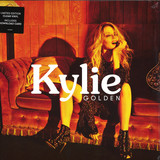
Limited Edition Clear Vinyl
Includes 12' Vinyl and Deluxe CD album, 30 page hard back book
Now that I've been to Nashville,' Kylie Minogue says with audible affection, I understand. It's like some sort of musical ley-line...'
Golden, Kylie's fourteenth studio album, is the result of an intensive working trip to the home of Country music, a city whose influence lingered on long after the pop legend and her team returned to London to finish the record: We definitely brought a bit of Nashville back with us,' she states. The album is a vibrant hybrid, blending Kylie's familiar pop-dance sound with an unmistakeable Tennessee twang. It was Jamie Nelson, Kylie's long-serving A&R man, who first came up with the concept of incorporating a Country element' into Kylie's tried-and-trusted style. That idea sat there for a little while, with Minogue and her team initially unsure about how to bring it to life. Then, when Grammy-winning songwriter Amy Wadge's publisher suggested Kylie should come over to collaborate in Nashville, a city Kylie had previously never visited, something clicked. You know when you're so excited about something,' she recalls, that you repeat it an octave higher and double the decibels I was like that. 'Nashville! Yes! Of course I would!'. I hoped it would help the album to reveal itself. I thought 'If I don't get it in Nashville, I'm not going to get it anywhere.''
Kylie's Nashville trip involved working alongside two key writers, both with homes in the city. One was British-born songwriter Steve McEwan (whose credits include huge Country hits for Keith Urban, Kenny Chesney and Carrie Underwood), and the other was the aforementioned Amy Wadge, another Brit (best known for her mega-selling work with Ed Sheeran). It was then a truly international project: Golden was mainly created with African-German producer Sky Adams and a list of contributors including Jesse Frasure, Eg White, Jon Green, Biff Stannard, Samuel Dixon, Danny Shah and Lindsay Rimes, and there's a duet with English singer Jack Savoretti.
However, the album's agenda-setting lead single Dancing was, significantly, first demoed with Nathan Chapman, the man who guided Taylor Swift's transition from Country starlet to Pop megastar. If anyone knows how to mix those two genres, Chapman does. Nathan was the only actual Nashvillean I worked with. He's got a huge studio in his house, which is probably due to his success with Taylor... there's plenty of platinum discs of her, and others on his walls.' There's something of the spirit of Peggy Lee's Is That All There Is, of Dylan Thomas' Do Not Go Gentle Into That Good Night, even of Liza Minnelli's Cabaret about Dancing, a song which not only opens the album but sets out its stall, providing a microcosm of what is to come. You've got the lyrical edge, that Country feel, mixed with some sampling of the voice and electronic elements, so it does what it says on the label. And I love that it's called 'Dancing', it's immediately accessible and seemingly so obvious, but there's depth within the song.'
The experience of simply being in Nashville was an overwhelming one, before Kylie had even arrived. Once I knew I was going to Nashville, people talked about the place with such enthusiasm. They said without doubt I would love it and, I would come back with songs. They were sending lists of restaurants, coffee shops and bars. It really was a beautiful and genuine response and it felt like I was about to have a life changing experience and in a way, I did.' The reality came as something of a surprise, when she found a far more modern metropolis than the vintage one she'd envisaged. I thought it would be like New Orleans: little houses and bars, with music spilling out onto the street. It reminded me more of Melbourne: apartment blocks going up everywhere! The main strip, Broadway, where the honky tonk bars are, that's where the street was filled with music and it was just amazing.' Mainly, Minogue remembers the heat and humidity. It was 100 degrees. It was like it was raining with no rain.' She also relished the chance to wander around unrecognised, visit a few venerable music bars and soak in the atmosphere. I didn't get to the Grand Ole Opry or the music museums but I managed to go to a couple of the institutions there like The Bluebird Cafe and The Listening Room, and just by being there, through some kind of osmosis, you get this rejuvenated respect for The Song, and the writing of The Song. There's no hoo-hah around it. There's a singer-songwriter there, talking about the song and singing the song, to an audience who are there to listen. Although, I have to confess I was guilty of starting to clap too soon during a long pause at the end of one of the songs. The guy made a bit of a joke out of it and got a laugh from it, but I thought 'Of all people in the audience, no...''
It's probably no coincidence, therefore, that every track on Golden is a Kylie co-write, making it arguably her most personal album to date. The end of 2016 was not a good time for me,' she says, referring to well-documented personal upheavals, so when I started working on the album in 2017, it was, in many ways, a great escape. Making this album was a kind of saviour. I'd been through some turmoil and was quite fragile when I started work on it, but being able to express myself in the studio made quick work of regaining my sense of self. Writing about various aspects of my life, the highs and lows, with a real sense of knowing and of truth. And irony. And joy!'
The songwriting process allowed Kylie to get a few things out of her system. Initially, she admits, it was cathartic, but it also wasn't very good. I think I was writing too literally. But I reached a point where I was writing about the bigger-picture, and that was a breakthrough. It made way for songs like Stop Me From Falling and One Last Kiss. It also meant I had enough distance to write an autobiographical song, like A Lifetime To Repair, with a certain amount of humour. The countdown in that song: 'Six-five-four-three, too many times...'. I don't know if that will be a single, but I can just imagine a girl with framed pictures of past boyfriends, and kind of going 'Oh god, when am I going to get this right'' When she listens back to Golden, Kylie can vividly hear the Nashville in it. It is, she'll agree, probably the first time that a Kylie album has sounded like the place it was made. You wouldn't normally relate my songs to the cities. Can't Get You Out Of My Head sounds more like Outer Space than London. But Shelby '68, for example, was written in London but it was done with Nashville in mind. It's about my Dad's car, and my brother recorded Dad driving it! I don't think I'd have written a number of the songs, including Shelby '68 and Radio On without having had that Nashville experience.'
The latter, she says, is about music being the one to save you.' Throwing herself into the making of the record, she says, crystallised that idea. If there's one love that will always be there for you, it's music. Well, it is for me, anyway.' That song, in particular, carries nostalgic echoes of the golden age of Country, as heard through Medium Wave transistors and tinny home stereos in the distant past. Like any child of the Seventies, Kylie had a basic grounding in Country music, mainly absorbed from older family members. My Step-Grandfather was born in Kentucky and though he lived most of his adult life in Australia, he never stopped listening to his beloved Country artists.' If there's any classic Country singer whose imprint can be heard on Golden, it's Dolly Parton.
Kylie saw Dolly live for the first time at the end of 2016, at the Hollywood Bowl. It was like seeing the light,' she beams. It was incredible. Everyone, whether they know it or not, is a Dolly Parton fan. When I was in Nashville, I did pick up a T-shirt that said 'What Would Dolly Do' Maybe that should be my mantra.' And, whether consciously or otherwise, there's a timbre and trill to Kylie's vocals on Radio On that is distinctly Parton-esque. My delivery is quite different on this album,' she says. A lot of things are 'sung' less. The first time I did that was with Where The Wild Roses Grow. On the day I met Nick Cave, when I recorded my vocals, he said 'Just sing it less. Talk it through, tell the story.' This album wasn't quite to that extreme, but a lot of the songs were done in fewer takes, to just capture the moment and keep imperfections that add to the song. I remember on my last album, a lot of producers were trying to take out literally every vibrato they heard. And that's not natural to my voice. I mean, I can make myself sound like a robot, but it's nice to sound like a human!' Working within the Country genre also gave Kylie permission to write in the Nashville vernacular. Because we were going there, I wasn't afraid to have lines like 'When he's fallen off the wagon we'd still dance to our favourite slow song', 'Ten sheets to the wind, I was all confused', 'I'll take the ride if it's your rodeo'. The challenge of bringing a Country element to the album made the process feel very fresh to me, kind of like starting over. I started to look at writing a different way, singing a different way.'
If ever Kylie lost confidence in the Country-Pop concept, and found herself pondering This is great, but back in the real world - my real world - how will this work', Jamie Nelson was there to badger her into sticking to the path. We found a way to make it a hybrid with what we'll call my 'usual' sound. It had to stay 'pop' enough to stay authentic to me, but country enough to be a new sound for this album. The closer we zoomed in, and the more we honed it, I knew Jamie was right. We sacrificed good songs that weren't right for this album, because we wanted it to be as cohesive as possible. The songs that were hitting the mark were these ones, so we decided to be strong, and that's how we wrapped up the album. What he said, that stuck with me, was that 'I'd hate to get to the end of this and really wish we'd gone for it.'' Having worked with Kylie for so long, Nelson was able to put this latest shift of direction into perspective. He said 'You've traditionally done it throughout your career. You had your PWL time, then you did a complete turn when you went to deConstruction, then another complete turn with Spinning Around, and R&B dance-pop, and then another turn with Can't Get You Out Of My Head, icy synth-pop, and this is another one.' He was right. It felt like the right time to have a change sonically. New label, new stories to tell, and a new decade almost upon me.'
Kylie Minogue will, it's scarcely believable, turn 50 this year. This looming milestone is partly behind the album's title, and title track. I had this line that I wanted to use: 'We're not young, we're not old, we're golden' because I'm asked so often about being my age in this industry. This year, I'll be 50. And I get it, I get the interest, but I don't know how to answer it. And that line, for my personal satisfaction, says it as succinctly as possible. We can't be anyone else, we can't be younger or older than we are, we can only be ourselves. We're golden. And the album title, Golden, reflects all of this. I liked the idea of everyone being golden, shining in their own way. The sun shines in daylight, the moon shines in darkness. Wherever we are in life, we are still golden.' One of the album's shiniest moments is Raining Glitter, an exuberant banger which ventures closest to Kylie's traditional dance-pop comfort zone. Eg White, who is one of the producers and writers and a great character, was talking about disco one day. I said 'I love disco, but you know the brief.' We needed to be going down the Country lane, so to speak. But we managed to bring them both together. When I wrote it, I was thinking about the Jacksons video for Can You Feel It where they're sprinkling glitter over everyone. And I think there's a Donna Summer record that's got that feel to it. I think that's my job: I basically leave a trail of glitter after every show I do anyway.'
Kylie is looking forward to the challenge of incorporating the Golden material into her live shows. Mixing these songs in with my existing catalogue is going to be fun. And it could be fun to do some of those songs with just a guitar. It'll make my acoustic set interesting...'Her incredibly loyal fans - to whom one Golden song, Sincerely Yours, is intended as a love letter' - will, she believes, have no problem with her latest stylistic shift. My audience have been with me on the journey, so I shouldn't be afraid that they won't come with me on this part. I've had fun with it, and I'm sure they will too.'
The time spent making Golden has, Kylie says, been a time of creative and personal renewal. I've met some amazing people, truly inspiring writers and musicians. My passion for music has never gone away, but it's got bigger and stronger.' And if there's an overriding theme to the record, it is one of acceptance. We're all human and it's OK to make mistakes, get it wrong, to want to run, to want to belong, to love, to dream. To be ourselves.'
I was able to both lose and find myself whilst making this album.'