Originally released as a hand-numbered CD on New Year's Eve of 2004, Last Light captures Tor Lundvall 's hushed songcraft at its most ghostly and grayscale, stripped bare like branches bracing for winter. Initially conceived of as "a piano album with sparse electronics" (with the working title November), Lundvall's palette steadily expanded, incorporating synthesizer, samples, bass, metronomes, and his signature spectral vocals. A journal entry from the spring of 2002 proved formative to his evolving vision: "I remember watching the blueish-grey light shimmering outside and hearing distant sounds echoing far away, eventually sinking into silence and stillness." The album's 12 tracks are steeped in this sense of autumnal transience, of bearing witness to what fades. The music moves in whispered swells, between dirge, drift, and devotional. Synths chime like slow-tolling bells; percussion shuffles and shivers, icy and isolated; bass traces a low-lidded plod - it's a mode both austere and seductive, lulling the listener into its landscapes of deepening dusk. Lyrically, Lundvall's language skews observational and depressive ("through lace curtains / grey light falls / dark clouds gather / in my soul" ), with each song like a gauzy glimpse into a different tableau framing winter's descent: rust - colored leaves, frozen ponds, cold crescent moons. Lundvall has long considered Last Light a "personal favorite" in his discography, and it's easy to hear why. In texture, finesse, and pacing, it vividly evokes the rare mood of fragile, frosty pastoral noir depicted in his iconic oil paintings. His is an art of the half-seen and half-remembered, of fleeting figures, shapes and shadows, and gathering darkness. Of all that disappears, and the ghosts that never leave: "So I wait / as the years / slowly drain the magic and the light / and the girl / I never loved / haunts me through the dark roads of my life."
Cerca:blue room
Repress!
Wallace has been something of a behind the scenes phenomenon. Having just two official releases at the time of writing, alongside a few white-labels on his own ‘Tartan’ imprint - The man known as Wallace has somehow worked his way into the record bags of the worlds biggest DJ’s: Gilles Peterson, Hunee, Moxie, Ruf Dug, Gideon and beyond.
It’s only a matter of time before the wider dance music community catches on - and I wouldn’t be surprised if - by the time this record hits the shelves - WALLACE- MANIA is in full effect. An artist like this only comes along once in a blue moon.
Wallace has been quietly perfecting his craft for the last decade, and has a deep understanding of club dynamics that can’t be taught. Bradley Zero himself has been playing 4/5 Wallace tracks per set within
the last year alone! Luckily for you, the secret is out, and we, for one - cannot wait!
- A1: Call Off The Search
- A2: Crawling Up A Hill
- A3: The Closest Thing To Crazy
- A4: My Aphrodisiac Is You
- A5: Learnin' The Blues
- A6: Blame It On The Moon
- B1: Belfast (Penguins And Cats)
- B2: I Think It's Going To Rain Today
- B3: Mockingbird Song
- B4: Tiger In The Night
- B5: Faraway Voice
- B6: Lilac Wine
- C1: Call Off The Search (Demo)
- C2: Tiger In The Night (Demo)
- C3: Faraway Voice (Demo)
- C4: I Think It's Going To Rain Today(Demo)
- C5: My Aphrodisiac Is You (Demo)
- C6: September Song (Demo)
- C7: It Seemed Like A Good Idea At The Time (Demo)
- D1: Downstairs To The Sun
- D2: Shirt Of A Ghost
- D3: Deep Purple
- D4: Turn To Tell
- D5: Jack's Room
- D6: Anniversary Song (Live)
1LP[24,75 €]
Katie Meluas Debütalbum "Call Off The Search" machte sie sofort zu einem außergewöhnlichen neuen Talent. Das Album, welches dieses Jahr sein 20-jähriges Jubiläum feiert, zeigt ihren einzigartigen Gesangsstil, der Jazz-, Blues- und Folk-Einflüsse mit zeitgenössischer Pop-Sensibilität vermischt. Das Album wurde von Mike Batt mitgeschrieben und produziert, der eine zentrale Rolle bei der Entwicklung des prächtigen und anspruchsvollen Klangs des Albums spielte. Das zentrale Thema von "Call Off The Search" ist die Liebe und die Selbstfindung, ausgedrückt durch eine Sammlung von gefühlvollen und introspektiven Songs, darunter die Leadsingle "The Closest Thing to Crazy", die mit ihrer gefühlvollen Performance und der fesselnden Melodie das Publikum weltweit sofort in ihren Bann zog. Von Kritikern und Zuhörern wurde das Album für seinen reifen und gefühlvollen Sound gelobt, vor allem wenn man bedenkt, dass Katie Melua zum Zeitpunkt der Veröffentlichung erst 19 Jahre alt war. Call Off The Search" fand bei einem breiten Publikum Anklang, wurde ein kommerzieller Erfolg und zu einem der meistverkauften Alben des Jahres 2003.
Diese Neuauflage zum 20-jährigen Jubiläum wurde in den Metropolis Studios in London neu gemastert und enthält B-Seiten sowie sieben bisher unveröffentlichte und unverfälschte Demos, die Katie und Mike Batt 2002 aufgenommen haben. Die von Pete Paphides verfassten Liner Notes enthalten Beiträge aus einem neuen Interview mit Katie.
- A1: You May Be Right (Glass Houses (1980))
- A2: Sometimes A Fantasy (Glass Houses (1980))
- A3: Don’t Ask Me Why (Glass Houses (1980))
- A4: It’s Still Rock And Roll To Me (Glass Houses (1980))
- A5: All For Leyna (Glass Houses (1980))
- B1: I Don’t Want To Be Alone (Glass Houses (1980))
- B2: Sleeping With The Television On (Glass Houses (1980))
- B3: C’etait Toi (You Were The One) (Glass Houses (1980))
- B4: Close To The Borderline (Glass Houses (1980))
- B5: Through The Long Night (Glass Houses (1980))
- A1: Allentown (The Nylon Curtain (1982))
- A2: Laura (The Nylon Curtain (1982))
- A3: Pressure (The Nylon Curtain (1982))
- A4: Goodnight Saigon (The Nylon Curtain (1982))
- B1: She’s Right On Time (The Nylon Curtain (1982))
- B2: A Room Of Our Own (The Nylon Curtain (1982))
- B3: Surprises (The Nylon Curtain (1982))
- B4: Scandinavian Skies (The Nylon Curtain (1982))
- B5: Where’s The Orchestra (The Nylon Curtain (1982))
- A1: Easy Money (An Innocent Man (1983))
- A2: An Innocent Man (An Innocent Man (1983))
- A3: The Longest Time (An Innocent Man (1983))
- A4: This Night (An Innocent Man (1983))
- A5: Tell Her About It (An Innocent Man (1983))
- B1: Uptown Girl (An Innocent Man (1983))
- B2: Careless Talk (An Innocent Man (1983))
- B3: Christie Lee (An Innocent Man (1983))
- B4: Leave A Tender Moment Alone (An Innocent Man (1983))
- B5: Keeping The Faith (An Innocent Man (1983))
- A1: Running On Ice (The Bridge (1986))
- A2: This Is The Time (The Bridge (1986))
- A3: Modern Woman (The Bridge (1986))
- A4: Baby Grand (Duet With Ray Charles) (The Bridge (1986))
- B1: Big Man On Mulberry Street (The Bridge (1986))
- B2: Temptation (The Bridge (1986))
- B3: Code Of Silence (The Bridge (1986))
- B4: Getting Closer (The Bridge (1986))
- A1: That’s Not Her Style (Storm Front (1989))
- A2: We Didn’t Start The Fire (Storm Front (1989))
- A3: The Downeaster ‘Alexa’ (Storm Front (1989))
- A4: I Go To Extremes (Storm Front (1989))
- A5: Shameless (Storm Front (1989))
- B1: Storm Front (Storm Front (1989))
- B2: Leningrad (Storm Front (1989))
- B3: State Of Grace (Storm Front (1989))
- B4: When In Rome (Storm Front (1989))
- B5: And So It Goes (Storm Front (1989))
- A1: No Man’s Land (River Of Dreams (1993))
- A2: The Great Wall Of China (River Of Dreams (1993))
- A3: Blonde Over Blue (River Of Dreams (1993))
- A4: A Minor Variation (River Of Dreams (1993))
- A5: Shades Of Grey (River Of Dreams (1993))
- B1: All About Soul (River Of Dreams (1993))
- B2: Lullabye (Goodnight, My Angel) (River Of Dreams (1993))
- B3: The River Of Dreams (River Of Dreams (1993))
- B4: Two Thousand Years (River Of Dreams (1993))
- B5: Famous Last Words (River Of Dreams (1993))
- A1: Reverie ("Villa D'este") (Fantasies & Delusions (2001))
- A2: Waltz #1 ("Nunley's Carousel") (Fantasies & Delusions (2001))
- B1: Aria ("Grand Canal") (Fantasies & Delusions (2001))
- B2: Invention In C Minor (Fantasies & Delusions (2001))
- B3: Soliloquy ("On A Separation") (Fantasies & Delusions (2001))
- C1: Suite For Piano ("Star-Crossed"): I. Innamorato (Fantasies & Delusions (2001))
- C2: Suite For Piano ("Star-Crossed"): Ii. Sorbetto (Fantasies & Delusions (2001))
- C3: Suite For Piano ("Star-Crossed"): Iii. Delusion (Fantasies & Delusions (2001))
- D1: Opus 5. Waltz #2 ("Steinway Hall") (Fantasies & Delusions (2001))
- D2: Opus 9. Waltz #3 ("For Lola") (Fantasies & Delusions (2001))
- D3: Opus 4. Fantasy ("Film Noir") (Fantasies & Delusions (2001))
- D4: Opus 10. Air ("Dublinesque") (Fantasies & Delusions (2001))
- A1: Allentown (Live From Long Island (1982))
- A2: My Life (Live From Long Island (1982))
- A3: Prelude/Angry Young Man (Live From Long Island (1982))
- B1: Piano Man (Live From Long Island (1982))
- B2: Don’t Ask Me Why (Live From Long Island (1982))
- B3: The Stranger (Live From Long Island (1982))
- C1: Scandinavian Skies (Live From Long Island (1982))
- C2: Movin’ Out (Anthony’s Song) (Live From Long Island (1982))
- C3: She’s Always A Woman (Live From Long Island (1982))
- C4: Pressure (Live From Long Island (1982))
- D1: Scenes From An Italian Restaurant (Live From Long Island (1982))
- D2: Just The Way You Are (Live From Long Island (1982))
- D3: Goodnight Saigon (Live From Long Island (1982))
- E1: Stilleto (Live From Long Island (1982))
- E2: Band Intro (Live From Long Island (1982))
- E3: Until The Night (Live From Long Island (1982))
- E4: It’s Still Rock N Roll To Me (Live From Long Island (1982))
- F1: Sometimes A Fantasy (Live From Long Island (1982))
- F2: Big Shot (Live From Long Island (1982))
- F3: You May Be Right (Live From Long Island (1982))
- F4: Only The Good Die Young (Live From Long Island (1982))
- F5: Souvenir (Live From Long Island (1982))
Today we announce The Vinyl Collection, Vol. 2, an 11-LP boxset to follow 2021’s Vol. 1, which includes the remainder of Billy’s catalogue: Glass Houses, The Nylon Curtain, An Innocent Man, The Bridge, Storm Front, River of Dreams. It exclusively features Fantasies & Delusions & Live from Long Island on vinyl for the first time. The boxset includes a 60+ page booklet that highlights the era through photos, quotes, and an essay by Rob Tannenbaum. All albums remastered from original sources at Sterling Sound.
The last twelve months have been a whirlwind for Henry Counsell and Louis Curran, the men who make up Joy (Anonymous). Having established themselves during the Covid-19 era by playing impromptu meet-ups on London’s South Bank, they have graduated to bigger venues, travelled to far-flung locales and recorded their second album, Cult Classics, while maintaining the spontaneous energy and irrepressible joy that made their name. Their music revels in the euphoria of being alive and all the feelings, good or bad, that come with it. It invites us into a community, draws us close and promises the night of our lives.
Recorded over the course of a year, the blueprint for Cult Classics was laid down over a two-week span at Imogen Heap’s Round House in east London. Joy (Anonymous) invited friends old and new to visit - they’d record live instruments in jam sessions upstairs and then retreat to a second room to flip and loop and generally mess with the sounds, moulding them into sizzling dance tracks. “Loads of people were coming up to me like ‘I thought this was going to be a dance record?’” Louis says, remembering the quietly beautiful music they’d be recording. “I’d be like, don’t worry about that, just keep playing.” He’d send it back to people later and they’d be floored - “That was my bit and you’ve made it... jungle!”
It was an organic and creatively fulfilling approach, one that didn’t allow any of the music to get stale or stagnate. As they built the tracks from the sounds they’d collected, Joy (Anonymous) would weave the new songs into their famously improvised live sets, testing them, refining them, taking note of the audiences’ reactions. In a year punctuated by a lot of travel, they’d also incorporate the voices of people they met along the way - “Beazley’s Poem”, which opens the record, features the words of a man who was working security at a Fred Again show at New York’s Terminal Five. “He was basically doing the opposite of his job and being a hype man, climbing on the fence and ramping up the crowd - we ended up hanging out with him - like, who’s this legend?” Louis explains. “He just speaks really amazingly about his life, all these amazing thoughts and opinions - he started jumping on the mic when we were playing, preaching these amazing messages to the crowd, like that we all need to be nicer to each other. The first time we played the record in its entirety, he introduced us and that’s the recording we’ve used.”
Joy (Anonymous) remain dedicated to the spirit of spontaneity. They shut a street down with a surprise waterside party in New York. On a trip to Copenhagen they played an impromptu set in a cafe, which turned into a house party and a night-long good time. In Lithuania, they ended up playing in a decommissioned prison. It’s harder, perhaps, to keep that spirit alive now that they are operating more within the confines of the music industry but they will keep lugging their kit to wherever the party calls for as long as they can. “I think if we lose that, we’ve kind of lost what makes us us,” Henry says.
Bursting with multi-genre reference points and disparate influences, Cult Classics is very much a dance album. The samples we made ourselves or we took from music that is quite different to dance music, but we definitely wanted to shout out a lot of the dance influences that we love,” Henry says. They listened to a lot of Daft Punk and Basement Jaxx as well as The Prodigy (“more rage stuff”), taking songwriting tips from their dance forebears, but also recording bits that felt more like jazz and motown (see: A Place I Belong and the lovely album closer, You’re In Or You’re Out). Emir Taha’s gentle classical guitar runs like a thread throughout Cult Classics, washing into the undertones of the record, tying it all together.
The album follows the beat of a night out, from frenetic, sweaty movement to the gentler winding down as the dawn breaks. At times it is euphoric, celebratory and pure, whirling fun, at others it seeks the joy in the darker emotions that life throws our way. 404 is designed to encapsulate everything about the Joy (Anonymous) journey so far. Skittering beats and ghostly vocals give way to vibrating house chords: sirens blare as we approach a dubstep drop. It’s dramatic and wild, ratcheting up, seeming to settle then hitting you with an intense and frantic breakdown before the ghostly vocal returns to lull us back into the world. It has the feel of a hungry cat playing with a mouse, toying with it before letting it get away.
What sounds like someone playing the spoons on playful, housey How We End Up Here is actually Louis’ restless habit of clicking his rings on everything, one of a myriad of calling cards and easter eggs that day one fans will recognise. They rework Miley Cyrus and Swae Lee’s Party Up The Street into a French-electro-inspired future classic, adding a note of melancholy to a tune that you can imagine hearing blaring from every car on a summer drive. The lyrics on Cult Classic are generally reassuring, inspirational, originally drawn from Henry in stream-of-consciousness freestyles. You’re fine the way you are, they seem to say - the repeated “No need to try” of A Place I Belong, the assurance that “It’s in me all the time” on In Me All The Time. Even the summery but regretful Did You Wrong hints at the growth that is possible from less than ideal behaviour. For Joy (Anonymous), joy isn’t about just being “happy” all the time - it’s about relishing every element of your being.
The name ‘Joy (Anonymous)’ is taken from the work Henry did with Alcoholics Anonymous groups: it is a way to build a community around sharing joy. Their impromptu live sets are known as ‘meetings’; they encourage fans to share moments of joy to their website. They care deeply about the scene they’ve come up in and are determined not to leave it behind. Every show is another chance to reach out and connect with people who love to come together and revel in music as loud as it can go.
Support slots for Fred Again and The Streets, wild B2Bs with Fred and Skrillex, and a set at Four Tet’s Finsbury Park all-dayer this summer have given the duo the opportunity to live out childhood dreams and introduced their infectious live shows to new audiences at huge venues.
With an album as assured and joyful as Cult Classics on the horizon (and a killer collab with The Blessed Madonna coming up), they’re only going to reach higher heights. But the essence of Joy (Anonymous) remains on the South Bank. Between shows at Ally Pally in September, they dragged their camping chairs and gear back down to the banks of the Thames: and it just felt right.
- A1: You May Be Right (Glass Houses (1980))
- A2: Sometimes A Fantasy (Glass Houses (1980))
- A3: Don’t Ask Me Why (Glass Houses (1980))
- A4: It’s Still Rock And Roll To Me (Glass Houses (1980))
- A5: All For Leyna (Glass Houses (1980))
- B1: I Don’t Want To Be Alone (Glass Houses (1980))
- B2: Sleeping With The Television On (Glass Houses (1980))
- B3: C’etait Toi (You Were The One) (Glass Houses (1980))
- B4: Close To The Borderline (Glass Houses (1980))
- B5: Through The Long Night (Glass Houses (1980))
- A1: Allentown (The Nylon Curtain (1982))
- A2: Laura (The Nylon Curtain (1982))
- A3: Pressure (The Nylon Curtain (1982))
- A4: Goodnight Saigon (The Nylon Curtain (1982))
- B1: She’s Right On Time (The Nylon Curtain (1982))
- B2: A Room Of Our Own (The Nylon Curtain (1982))
- B3: Surprises (The Nylon Curtain (1982))
- B4: Scandinavian Skies (The Nylon Curtain (1982))
- B5: Where’s The Orchestra (The Nylon Curtain (1982))
- A1: Easy Money (An Innocent Man (1983))
- A2: An Innocent Man (An Innocent Man (1983))
- A3: The Longest Time (An Innocent Man (1983))
- A4: This Night (An Innocent Man (1983))
- A5: Tell Her About It (An Innocent Man (1983))
- B3: Christie Lee (An Innocent Man (1983))
- B4: Leave A Tender Moment Alone (An Innocent Man (1983))
- B5: Keeping The Faith (An Innocent Man (1983))
- A1: Running On Ice (The Bridge (1986))
- A2: This Is The Time (The Bridge (1986))
- A3: Modern Woman (The Bridge (1986))
- A4: Baby Grand (Duet With Ray Charles) (The Bridge (1986))
- B1: Big Man On Mulberry Street (The Bridge (1986))
- B2: Temptation (The Bridge (1986))
- B3: Code Of Silence (The Bridge (1986))
- B4: Getting Closer (The Bridge (1986))
- A1: That’s Not Her Style (Storm Front (1989))
- A2: We Didn’t Start The Fire (Storm Front (1989))
- A3: The Downeaster ‘Alexa’ (Storm Front (1989))
- A4: I Go To Extremes (Storm Front (1989))
- A5: Shameless (Storm Front (1989))
- B1: Storm Front (Storm Front (1989))
- B2: Leningrad (Storm Front (1989))
- B3: State Of Grace (Storm Front (1989))
- B4: When In Rome (Storm Front (1989))
- B5: And So It Goes (Storm Front (1989))
- A1: No Man’s Land (River Of Dreams (1993))
- A2: The Great Wall Of China (River Of Dreams (1993))
- A3: Blonde Over Blue (River Of Dreams (1993))
- A4: A Minor Variation (River Of Dreams (1993))
- A5: Shades Of Grey (River Of Dreams (1993))
- B1: Uptown Girl (An Innocent Man (1983))
- B1: All About Soul (River Of Dreams (1993))
- B2: Lullabye (Goodnight, My Angel) (River Of Dreams (1993))
- B3: The River Of Dreams (River Of Dreams (1993))
- B4: Two Thousand Years (River Of Dreams (1993))
- B5: Famous Last Words (River Of Dreams (1993))
- A1: Reverie ("Villa D'este") (Fantasies & Delusions (2001))
- A2: Waltz #1 ("Nunley's Carousel") (Fantasies & Delusions (2001))
- B1: Aria ("Grand Canal") (Fantasies & Delusions (2001))
- B2: Invention In C Minor (Fantasies & Delusions (2001))
- B3: Soliloquy ("On A Separation") (Fantasies & Delusions (2001))
- C1: Suite For Piano ("Star-Crossed"): I. Innamorato (Fantasies & Delusions (2001))
- C2: Suite For Piano ("Star-Crossed"): Ii. Sorbetto (Fantasies & Delusions (2001))
- C3: Suite For Piano ("Star-Crossed"): Iii. Delusion (Fantasies & Delusions (2001))
- D1: Opus 5. Waltz #2 ("Steinway Hall") (Fantasies & Delusions (2001))
- D2: Opus 9. Waltz #3 ("For Lola") (Fantasies & Delusions (2001))
- D3: Opus 4. Fantasy ("Film Noir") (Fantasies & Delusions (2001))
- D4: Opus 10. Air ("Dublinesque") (Fantasies & Delusions (2001))
- A1: Allentown (Live From Long Island (1982))
- A2: My Life (Live From Long Island (1982))
- A3: Prelude/Angry Young Man (Live From Long Island (1982))
- B1: Piano Man (Live From Long Island (1982))
- B2: Don’t Ask Me Why (Live From Long Island (1982))
- B3: The Stranger (Live From Long Island (1982))
- C1: Scandinavian Skies (Live From Long Island (1982))
- C2: Movin’ Out (Anthony’s Song) (Live From Long Island (1982))
- C3: She’s Always A Woman (Live From Long Island (1982))
- B2: Careless Talk (An Innocent Man (1983))
- C4: Pressure (Live From Long Island (1982))
- D1: Scenes From An Italian Restaurant (Live From Long Island (1982))
- D2: Just The Way You Are (Live From Long Island (1982))
- D3: Goodnight Saigon (Live From Long Island (1982))
- E1: Stilleto (Live From Long Island (1982))
- E2: Band Intro (Live From Long Island (1982))
- E3: Until The Night (Live From Long Island (1982))
- E4: It’s Still Rock N Roll To Me (Live From Long Island (1982))
- F1: Sometimes A Fantasy (Live From Long Island (1982))
- F2: Big Shot (Live From Long Island (1982))
- F3: You May Be Right (Live From Long Island (1982))
- F4: Only The Good Die Young (Live From Long Island (1982))
- F5: Souvenir (Live From Long Island (1982))
"The Vinyl Collection, Volume 2" vereint Billy Joels monumental erfolgreiche Alben aus dem späteren Teil seiner Karriere: "Glass Houses" (1980), "The Nylon Curtain" (1982), "An Innocent Man" (1983), "The Bridge" (1986) und "Storm Front" (1989), "River of Dreams" (1993). Außerdem gibt es 2 Titel zum ersten Mal auf Vinyl: die Doppel-LP "Fantasies & Delusions" und die 3er-LP "Live from Long Island" aus dem Jahr 1982. Alle Songs stammen von den Original-Album-Mastern, Zudem ist ein über 60-seitiges Booklet mit Billys persönlichen Anmerkungen und einem Essay von Rob Tannenbaum enthalten
Neo Noir Swing! The modern Les Paul from the Dark Side! PO and his band catapult you right into a ball room filled with misfits and goons and smack you with 12 songs including the terrific cover version of Niagara's 80's disco hit L'amour a la plage Pierre Omer was born in London of an Indian father and a Swiss mother. He is a founder member of the legendary Swiss funeral Rock'n'Roll band The Dead Brothers (guitars and accordion). In 2009 he started several solo projects along with Robert Butler (the Shit, the Miracle Workers), Roland Bucher and Christian Aregger (Blind Butcher) in 2013 the Swing Revue was born, along with: Pierre Omer: vocals, guitar Julien Israelian: drums, Géraldine Schenkel: Fender Rhodes, Christoph Gantert: vocals, trumpet, and the one and only Lalla Morte: Sings Fakir and Dances. They played many shows and festivals such as: Binic Folk Blues Festival, Montreux Jazz Festival, Buskers Bern, Festival Les Athénéennes, Pod'Ring Biel, Vinelz, Le Cirque Electric Paris etc. This new album is recorded by the band itself in true DIY-style - Pierre already produced some Voodoo Rhythm Records (mama rosin) in the past - and was mixed in Berlin's Big Snuff Studio with Nene Baratto (movie star junkies, black lips, Heat, Jimi Tenor, King khan, Black Mass Rising. The whole album Stands out with Pierre's amazing song writing skills, the lazy laid back dark vocal and his irritating guitar playing, along with Christop Gantert's devil possessed trumpet playing. The Music of the swing era of the 30's and 40's, combined with a garage spirit and an eye for everything else make for a special album. Classic black vinyl with dlc and printed inlay, CD as gatefold wallet with 12page booklet.
Jake Muir's latest set of soft-focus, sensual electro-concrète, dissolves X-rated gay sleaze flick soundtracks into a shimmering suite of subdued orchestral flourishes and surreal cosmic psychedelia.
Back in 2020, Muir put together a 90-minute mix for Honey Soundsystem, blending tracks from Kelman Duran, DJ Olive, Daniel Lanois and Terre Thaemlitz with obliquely camp dialog samples from vintage gay porn. The idea was to represent queer sexuality in a looser, more experimental manner, grazing the super-sensory pleasure of the bathhouse experience and the illicit joy of cruising without getting too self-serious while doing it. The mix was so popular that Muir followed it up with a weightless sequel two years later, and began developing the concept into a proper album, using more samples of music and dialogue, eventually performing the piece at the esteemed GRM as part of their FOCUS #4 concerts alongside work by Eliane Radigue, Folke Rabe and Chris Watson.
Bathhouse Blues is split into two side-long pieces that wash and ripple with nervous tension and discreet salaciousness. Opening with a familiar theatre sting, there are echoes here of kosmische and experimental electronics on 'Cruisin’ 87', fashioned into puddles of syrupy, back-room ambience. Occasionally we hear lascivious words thru the fog, men mumbling to each other before sex. "That's beautiful," a voice mutters over a dusky cricket chirp on 'Pipe Dream'. "It is," another replies.
Muir's sonic treatment is suitably explicit, like a 1950s Hollywood jump-cut to a train going into a tunnel; he takes the whole-body, mutual release of queer sex and interprets it with heady gestures, peppering jazzy rhythmic frostings into basins of skewered drone and gurgling synths. His sound is coloured by the pleasure of physical touch, a mussy flux of high frequency scrapes and caresses juxtaposed with woozy, dubbed-out fondles and thrusts. Who said the GRM was buttoned up?
Repress!
In the mid-1970s, a force of nature swept across the continental United States, cutting across all strata of race and class, rooting in our minds, our homes, our culture. It wasn’t The Exorcist, Goodbye Yellow Brick Road, or even bell-bottoms, but instead a book called The Secret Life of Plants. The work of occultist/former OSS agent Peter Tompkins and former CIA agent/dowsing enthusiast Christopher Bird, the books shot up the bestseller charts and spread like kudzu across the landscape, becoming a phenomenon. Seemingly overnight, the indoor plant business was in full bloom and photosynthetic eukaryotes of every genus were hanging off walls, lording over bookshelves, and basking on sunny window ledges. The science behind Secret Life was specious: plants can hear our prayers, they’re lie detectors, they’re telepathic, able to predict natural disasters and receive signals from distant galaxies. But that didn’t stop millions from buying and nurturing their new plants.
Perhaps the craziest claim of the book was that plants also dug music. And whether you purchased a snake plant, asparagus fern, peace lily, or what have you from Mother Earth on Melrose Avenue in Los Angeles (or bought a Simmons mattress from Sears), you also took home Plantasia, an album recorded especially for them. Subtitled “warm earth music for plants…and the people that love them,” it was full of bucolic, charming, stoner-friendly, decidedly unscientific tunes enacted on the new-fangled device called the Moog. Plants date back from the dawn of time, but apparently they loved the Moog, never mind that the synthesizer had been on the market for just a few years. Most of all, the plants loved the ditties made by composer Mort Garson.
Few characters in early electronic music can be both fearless pioneers and cheesy trend-chasers, but Garson embraced both extremes, and has been unheralded as a result. When one writer rhetorically asked: “How was Garson’s music so ubiquitous while the man remained so under the radar?” the answer was simple. Well before Brian Eno did it, Garson was making discreet music, both the man and his music as inconspicuous as a Chlorophytumcomosum. Julliard-educated and active as a session player in the post-war era, Garson wrote lounge hits, scored plush arrangements for Doris Day, and garlanded weeping countrypolitan strings around Glen Campbell’s “By the Time I Get to Phoenix.” He could render the Beatles and Simon & Garfunkel alike into easy listening and also dreamed up his own ditties. “An idear” as Garson himself would drawl it out. “I live with it, I walk it, I sing it.”
But as his daughter Day Darmet recalls: “When my dad found the synthesizer, he realized he didn’t want to do pop music anymore.” Garson encountered Robert Moog and his new device at the Audio Engineering Society’s West Coast convention in 1967 and immediately began tinkering with the device. With the Moog, those idears could be transformed. “He constantly had a song he was humming,” Darmet says. “At the table he was constantly tapping.” Which is to say that Mort pulled his melodies out of thin air, just like any household plant would.
The Plantae kingdom grew to its height by 1976, from DC Comics’ mossy superhero Swamp Thing to Stevie Wonder’s own herbal meditation, Journey Through the Secret Life of Plants. Nefarious manifestations of human-plant interaction also abounded, be it the grotesque pods in Invasion of the Body Snatchers or the pothead paranoia of the US Government spraying Mexican marijuana fields with the herbicide paraquat (which led to the rise in homegrown pot by the 1980s). And then there’s the warm, leafy embrace of Plantasia itself.
“My mom had a lot of plants,” Darmet says. “She didn’t believe in organized religion, she believed the earth was the best thing in the whole world. Whatever created us was incredible.” And she also knew when her husband had a good song, shouting from another room when she heard him humming a good idear. Novel as it might seem, Plantasia is simply full of good tunes.
Garson may have given the album away to new plant and bed owners, but a decade later a new generation could hear his music in another surreptitious way. Millions of kids bought The Legend of Zelda for their Nintendo Entertainment System back in 1986 and one distinct 8-bit tune bears more than a passing resemblance to album highlight “Concerto for Philodendron and Pothos.” Garson was never properly credited for it, but he nevertheless subliminally slipped into a new generations’ head, helping kids and plants alike grow.
Hearing Plantasia in the 21st century, it seems less an ode to our photosynthesizing friends by Garson and more an homage to his wife, the one with the green thumb that made everything flower around him. “My dad would be totally pleased to know that people are really interested in this music that had no popularity at the time,” Darmet says of Plantasia’snew renaissance. “He would be fascinated by the fact that people are finally understanding and appreciating this part of his musical career that he got no admiration for back then.” Garson seems to be everywhere again, even if he’s not really noticed, just like a houseplant.
In addition to boasting one of Reid Miles’ greatest album cover designs, Hank Mobley’s 1963 album No Room for Squares is a marvel for the music alone. Standing as one of the tenor saxophonist’s finest Blue Note entries the album features two different quintet line-ups performing a set of 6 compelling original tunes by Mobley and Lee Morgan. This Blue Note Classic Vinyl Edition is stereo, all-analog, mastered by Kevin Gray from the original master tapes, and pressed on 180g vinyl at Optimal.
- Push (Remastered)
- Rain (Remastered)
- Speak For Yourself (Remastered)
- Look For The Good In Others And They'll See The Good In You (Remastered)
- Wet Blanket (Remastered)
- Ghosts (Remastered)
- Dan Destiny And The Silver Dawn (Remastered)
- Night Of Chill Blue (Remastered)
- 16: Heart-Throbs (Remastered)
- Brave Words (Remastered)
- Dark Carnival (Remastered)
- Creep (Remastered)
- The Oncoming Day (Remastered)
- I Think I'd Thought I'd Nothing Else To Think About (Remastered)
- House With A Hundred Rooms (Remastered)
- Party In My Heart (Remastered)
- Living In A Jungle (Remastered)
- Rain (Alternate Instrumental Version - Remastered)
Pearl Vinyl[33,57 €]
The songwriter that helped kick off indie rock as we know it" NPR… // Remixed and remastered under the supervision of Martin Phillipps, this expanded edition of The Chills’ debut album is reissued for the first time in over 35 years. The newly mixed edition features additional rarities and unreleased tracks from The Chills vaults, along with brand new reimagined artwork by Martin Phillipps and a host of additional liner notes. Originally produced by Mayo Thompson (Pere Ubu/Red Krayola) and featuring standout tracks ‘Wet Blanket’, ‘Night Of Chills Blue’, this extended 18-track edition includes much-lauded tracks from the era, such as ‘House With A Hundred Rooms’ and the awesome ‘Party In My Heart’. Part of the 80s extraordinarily vibrant and innovative independent music scene in New Zealand, The Chills became flag bearers, taking the Dunedin sound, as championed by the Flying Nun label, to the world. Long recognised as one of New Zealand's most influential bands, Brave Words is a shining example of their unique sound and has been praised as a masterpiece by critics and fans alike. “‘Brave Words’ may well be The Chills' finest album
Mint Vinyl[33,57 €]
The songwriter that helped kick off indie rock as we know it" NPR… // Remixed and remastered under the supervision of Martin Phillipps, this expanded edition of The Chills’ debut album is reissued for the first time in over 35 years. The newly mixed edition features additional rarities and unreleased tracks from The Chills vaults, along with brand new reimagined artwork by Martin Phillipps and a host of additional liner notes. Originally produced by Mayo Thompson (Pere Ubu/Red Krayola) and featuring standout tracks ‘Wet Blanket’, ‘Night Of Chills Blue’, this extended 18-track edition includes much-lauded tracks from the era, such as ‘House With A Hundred Rooms’ and the awesome ‘Party In My Heart’. Part of the 80s extraordinarily vibrant and innovative independent music scene in New Zealand, The Chills became flag bearers, taking the Dunedin sound, as championed by the Flying Nun label, to the world. Long recognised as one of New Zealand's most influential bands, Brave Words is a shining example of their unique sound and has been praised as a masterpiece by critics and fans alike. “‘Brave Words’ may well be The Chills' finest album
Recital publishes the first vinyl edition of Let the Darkness Fall, a forgotten corner from the vast discography of Suzanne Langille & Loren Connors. Joined here by David Daniell and Andrew Burnes (of the Atlanta-based group San Agustin), Darkness was recorded in the summer of 1998 on a Tascam Porta-5 in Loren and Suzanne’s Brooklyn living room, and issued the following year as a limited CD by Secretly Canadian.
The tender gloom of Let the Darkness Fall sounds like a broadcast of some private séance. The trio of guitarists here show a beautiful restraint, hovering just underneath vocalist Suzanne Langille’s ephemeral poetry. Once they hit RECORD, the sensitivity of the players melded this quartet into a sole-entity; finishing each other’s phrases in slow motion. Suzanne’s gentle voice glows through the wispy guitar shadows with a quiet determination. One could almost imagine her building a nest out of the guitar lines she’s gathered.
This collection of musicians is a precursor to the band Haunted House, a wild sort of jam-band playing the blues without playing structure. Recital continues the series of Loren Connors-related editions, stretching from his art books Wildweeds & Night of Rain, to his masterpiece solo LPs Airs & Lullaby. And Recital is equally thrilled to highlight Suzanne Langille’s mystifying command of voice and word and the intricate guitar work of Andrew Burnes and David Daniell. Come revisit the mist that filled that living room 25 years ago.
Prolific songwriter and guitar virtuoso David
Tattersall presents 11 new songs on themes of
memory, dreams, loneliness and love, featuring
nylon string guitar improvisations in the vein of
gypsy jazz legend Django Reinhardt.
The David Tattersall Group are old friends who
rehearsed together for months in a small, smoky,
sweaty room, before recording the album on a
huge red boat moored on the River Thames, all
vintage microphones and wooden walls inside.
Friendship is a vital part of the record’s magic.
Stylistic influences include Ronnie Lane, after
whom one song is named, and the nylon-string
guitar work of Jonathan Richman and Willie
Nelson. A pastoral mood prevails, with swells of
melancholic violin and Spaghetti Western
harmonica, backed by honky-tonk piano and the
dry drum sounds of Neil Young’s ‘Harvest’ period,
while the golden voice of Holly Holden adds a
touch of glamour to proceedings.
David’s process includes much musical
improvisation and stream of consciousness writing,
but his end goal is to couple classic songwriting
with the collective chemistry of musicians playing
live in the studio. His lyrical influences include Tom
Verlaine, John Cooper Clarke and the New York
School of Poets, particularly James Schuyler.
Pressed on 140g white vinyl with OBI strip.
Includes digital download code
'Last January, Benjamin Biolay gave a concert event in his hometown, with the orchestra National de Lyon and in the incredible room which is the Auditorium of Lyon. This timeless concert is now available in CD book and double vinyl. You will re-discover his greatest titles such as "La Superbe", "Comment est ta peine?", "Ton Héritage", or "Lyon presqu'île" in the new symphonic version.Reviews and Ads – R2, Mojo and London Macadam
The most potent memories I have of music are from my early childhood listening to the oldie's station, riding in the back of my Pops' 1975 Cadillac Seville to work alongside him moving plants in Sacramento at the now long gone Capitol Nursery during white hot summer afternoons, and then the drives back home in the purple twilights and oily blue-oranged nights. I'm talkin' The Temptations, War, Earth Wind and Fire, Al Green, Sly and the Family Stone, The Delfonics, Stevie Wonder, Chaka Khan...soul music. I loved the melodrama of it all. The world outside refracted and transmuted through the crackling speakers past Pops' thumping thumb and my tiny whirring mind and left whatever road behind us fundamentally changed in our wake. Through the years other sounds too left its imprint well before I picked up a guitar. Rap, Punk, hardcore, dub, R&B--and a little later in middle school, blues, folk and country. But those early Cadillac memories always remained the bedrock. With folk and blues music, I fell in love with the immediacy of it and found the acoustic guitar economical for all the solitary roaming of my early 20's. All the while I knew that one day, when I had something I felt like I could add, I wanted to incorporate the sound of those early Cadillac memories. But only after I felt established as a songwriter in its most simple form, banging on a wooden guitar and yodeling up some melody did I feel comfortable exploring other sounds and only recently did I find the time and space to do that. The pandemic trapped all the world in their rooms. While recording my last record in the height of it and at the behest of my friend and You, Yeah, You producer Brad Cook and his friend Justin Vernon, I bought my first keyboard. A Roland Juno DS. I started tinkering on it throughout the past couple of years and as I became more stationary started writing songs on different instruments that I accumulated. Layering sounds on garageband in my apartment writing bass and horn parts, making drum loops, adding synth... I became pretty obsessive with the endless possibilities it brought and got quicker and quicker at making songs that way. It was just so fun and limitless.
- A1: Baby 00 04:32
- A2: Smoke Gets In Your Eyes 00 03:01
- A3: All The World Is Green 00 04:58
- A4: I'm So Lonesome I Could Cry 00 03:34
- A5: I'd Rather Go Blind 00 03:32
- A6: Amsterdam 00 05:12
- B1: Head In The Clouds 00 03:49
- B2: My Babe 00 02:30
- B3: Naked 00 03:58
- B4: Hang Me 00 04:15
- B5: When Did You Leave Heaven 00 02:58
- B6: End Of The Line 00 01:41
2023 Repress
Since Jesper Munk's debut album in 2013 the German singer-songwriter has made a name for himself as multi-instrumentalist , "in the paths of Jack White and Dan Auerbach," as the Rolling Stone Magazine puts it, playing music that ranges from Blues and Soul to heartfelt Pop and indulging Jazz, all this with a very unique, post-Punk
edge. His new album Taped Heart Sounds offers an evolution of Munk's sound: warm, gentle and soft vibes that go deep. "If there is a way to give you a hug in form of an album, this is how I'd attempt to do so," says Munk.
Recorded in an offbeat band room in Berlin with The Cassette Heads, the album brings together classics reaching from Blues to Rock'n Roll. Twelve songs of legendary artists who have influenced and inspired Munk since his early days, including Tom Waits, JJ Cale, Etta James, Hank Williams, Willie Dixon, Jacques Brel, and Mocky.
The entire album was recorded with a Tascam Portastudio 8-Track Cassette Recorder which brought an original and authentic sound to each song: "The technical limitations immediately liberated all other aspects of the recording," Munk says. "It shows how much of making music is just listening and without a screen to catch your eye, you really have no choice but to do so." All Songs face realness and live from these volatile moments that reveal vulnerability and musical generosity. The outcome of this analogue experiment is a very personal album, both inspiring and consoling.
Taped Heart Sounds courageously opens with Donnie & Joe Emerson's Baby; a song so iconic that it actually cannot be enhanced. However, Munk's interpretation stands out and has a presence that gives the song a life of its own - made for walking. Smoke Gets in Your Eyes, All the World Is Green, I'd Rather Go Blind, Head in the Clouds - what follows is a journey through Blues and Soul that is so vital and "now" that End of the Line may be the final track but certainly not the end of the story.
The album wouldn't be what it is without collaboration and partnership. Munk's special thanks go to his fans who helped to crowd-fund the recording. "On top of having had a real fun learning experience it all felt like a community project with real support from friends, the Cassette Heads, incredibly inspiring guests, and from Miles Deico, a wonderfully open and able engineer," so Munk about the making of the album.
Taped Heart Sounds is Jesper Munk's 4th album, following acclaimed debut album For in My Way it Lies (2013), CLAIM (2016), and Favourite Stranger (2018). Released via Billbrook Records, Hamburg-based Distributor Wordandsound's new label, the album is available for pre-order now - for purchase on vinyl and CD. The first single 'Baby' is going to be released on November 19, 2021.
- 1: Nick Cave- City In Pain
- 1: 2Hugo Race- I'm Going Upstairs
- 1: 3Steve Wynn- From Death To Texas
- 1: 4Mark Lanegan & Isobel Campbell- The Breaking Hands
- 1: 5The Amber Lights- The Jungle Book
- 1: 6Bertrand Cantat, Pascal Humbert, Warren Ellis, Cypress
- 1: 7Thalia Zedek & Chris Brokaw- Zonar Roze
- 1: 8Cypress Grove- L.a. County Jail Blues
- 1: 9Barry Adamson- I Wanna Be You
- 2: 1Mick Harvey- Sonny Boy
- 2: Vertical Smile- Book Of Love
- 2: 3Astro-Unicorn- Body And Soul
- 2: 4Lydia Lunch- The Brink
- 2: 5Nick Cave & Deborah Harry- The Breaking Hands
- 2: 6Tex Perkins & Lydia Lunch- In My Room
- 2: 7Tav Falco's Panther Burns- The Jungle Book
- 2: 8Mick Harvey- St. Mark's Place
- 2: 9The Jim Jones Revue- Ain't My Problem Baby
Nach dem erfolgreichen 2009er-Debüt "We Are Only Riders" legt das Jeffrey Lee Pierce Sessions Project ein zweites Album mit zuvor unveröffentlichten Vorlagen des Gun-Club-Sängers Jeffrey Lee Pierce (1958 - 1996) vor, wiederum eingespielt von befreundeten Artists und Weggefährt*innen. Ausgangspunkt für viele Songs war eine Musikkassette mit Songideen von Pierce, die Cypress Grove, ein Musiker aus der späten Gun-Club-Phase, zufällig beim Aufräumen fand. Wie im von Pierce so geliebten Jazz, spielte beim Sessions Project jeder bei jedem, interpretierte oder bearbeitete man gemeinsam textliche und melodische Fragmente. Auf "The Journey Is Long" trifft sich ein Who"s who des Indie-Adels: Nick Cave, Mick Harvey, Debbie Harry & Chris Stein, Lydia Lunch, Kid Congo Powers, Tav Falco"s Panther Burns, Mark Lanegan & Isobel Campbell, Steve Wynn, Warren Ellis, Barry Adamson, Thalia Zedek & Chris Brokaw, Hugo Race und viele andere.
Dan Auerbach’s debut solo album, Keep It Hid, returns to physical formats, with the seminal 2009 collection being reissued on vinyl and CD via Easy Eye Sound - the label that Keep It Hid first inspired him to create. The fourteen-song debut marked Auerbach’s first major work outside of The Black Keys, helping to establish his multifaceted career as a Grammy®-winning producer, mentor to emerging talent and founder of Easy Eye Sound, which is now Billboard’s reigning Blues Label Of The Year. Keep It Hid was originally recorded by Auerbach as he was building his first home studio in Akron, Ohio - a precursor to his Easy Eye Sound Studio in Nashville, where Auerbach now records and produces most of the label’s current releases. Inspired by trips to many of his all-time favorite rooms - from Suma Recording in Cleveland to Robin Hood in Texas to Toe Rag in London - Auerbach discovered a passion for studio work that remains at the center of his musical world nearly fifteen years on. Also tapping into his love of record-collecting and crate-digging more than ever before, Keep It Hid was inspired by forgotten 60s psych rock, obscure British power-pop, bluegrass family bands and even the lyricism of his own father, Chuck Auerbach (Dan would go onto produce Chuck’s debut album, Remember Me, in 2018). The album was hailed as “intimate and thrilling” by NPR’s Fresh Air upon its original release, with reviewer Ken Tucker adding it “sounds like a clearing of the throat and mind.”
Ed Sheeran’s brand-new album Autumn Variations will be available for pre-order on the 24th August at 5pm before a worldwide release on the 29th September. It will be available to stream on all platforms as well as purchase physically as a CD or various limited Vinyl editions.
Ed Sheeran is an era-defining artist who has sold over 52 million albums and 150 million singles across the world. Through his fusion of thought-provoking songwriting, universal pop and multi-genre influence, his rich tapestry is not only perfectly suited to his audience but it’s something that transcends generations.
Since surfacing on the UK circuit in 2010 with his ‘No.5 Collaborations Project’ – an eight-track EP featuring his favourite grime artists of the time – the Suffolk-raised recording artist has resonated with fans across the world through his peerless songcraft and versatility. And now, with six consecutive UK No.1 albums to his name – ‘+’ (2011), ‘x’ (2014), ‘÷’ (2017), ‘No.6 Collaborations Project’ (2019), ‘=’ (2021) and ‘-‘ (2023) – Sheeran continues to reaffirm his status as one of the most in-demand pop stars on the planet.
Prior to the release of ‘=’ (October 2021) – an album that’s now surpassed five million global sales - Sheeran secured two UK No.1 singles in the UK with ‘Bad Habits’ and ‘Shivers’, which sat atop the UK’s Official Singles Chart for a combined total of 15 weeks. Moreover, the LP saw him take home 2 x EMA’s for ‘Best Artist’ and ‘Best Song’; an American Music Award for ‘Favourite Male Pop Artist’; British GQ’s ‘Solo Artist of the Year’; 4 x Los40 Awards; a BRIT Award for ‘Songwriter of the Year’ alongside a nomination for ‘Song of the Year’ at the 2022 GRAMMY’s.
Sheeran’s most recent album, Subtract, secured Ed his sixth No.1 album. Produced by Aaron Dessner, the album was anchored in his love of singer/songwriter compositions and written against a backdrop of personal grief and hope. Ed’s most critically-acclaimed album to date, it housed the heart wrenching UK No.1 single ‘Eyes Closed’ – a song about his late friend, Jamal Edwards.
But it’s not just his recorded music that’s seen the former Glastonbury headliner become one of the sought-after artists of the 21st century. Possessing a mystical ability to turn 90,000 capacity venues into the pub back-rooms that he first started playing in, Ed made history in 2015 after becoming the first-ever artist to play Wembley Stadium solo - without a band, just with his guitar and loop pedal - over three, consecutive sold out nights. Move forward to the summer of 2019 and Ed would re-enter history books after the completion of his mammoth two-year Divide tour, officially becoming the most-attended tour of all time after it culminated with special homecoming shows in Ipswich, Suffolk. Beginning last summer, Ed is currently travelling the world on his ‘+ - = ÷ x Tour’ (pronounced ‘The Mathematics Tour’), which saw him return to Wembley Stadium for a five-night run last June.
Ed Sheeran, who was awarded an MBE for his services to music and charity in 2017, is the proud recipient of 1 x IFPI Award (best-selling global artist of 2017); 4 x Grammys; 4 x Ivor Novello’s; 7 x BRIT Awards (including two consecutive wins for ‘Global Success’ in 2018 and 2019); 7 x Billboard Awards + more. Moreover, to this day, his blockbusting third studio album ‘÷’ remains the fastest-selling album, ever, by a male artist in the UK, while the LP’s lead single, ‘Shape of You’, maintains its status as the most-streamed song in Spotify’s history.
At the end of 2019, Sheeran was presented with the Official Chart Company’s first-ever ‘No.1 Artist of the Decade’ award following a host of accomplishments in his native UK including the most No.1’s across the UK’s Official Singles and Albums chart from the years 2010-2019. Most recently, Ed scored two more feats with the OCC after becoming the first British Solo Artist to claim 52 weeks – an entire year – at No.1 on the Official UK Singles Chart, with only Elvis Presley and The Beatles achieving more overall weeks at the top, as well as becoming the first-ever artist with four albums spending an entire year or more in the UK Top 10.
Colour in colour vinyl, transparent and red with blue splatter. Limited to 200 copies. "I had just got off the road and went right into the studio out in the desert at Rancho de La Luna. I was living in the house just behind at the time making sessions super convenient. I was set to record with my band the Bros in a couple weeks but I decided to go into the Rancho early and get some sounds. Tony and I ended up recording a bunch of songs that I was writing on the fly. A week later the Bros showed up and we recorded another batch of songs with the band playing live in the front room. After we wrapped I combined both my solo session and the Bros session and released in as one record called Saved By Magic on my label Duna records. That was 2005. Now I'm rereleasing this record on HPS and I've decided to separate the two sessions into their original bodies of work. My solo session and the Bros session. I mostly did this because I feel the Bros deserve to have something of their own as they were a magical band. I also just thought it would be cool. I call both records Saved By Magic Again." New album cover by Maarten Donders. Remastered by John McBain !!
- Streaming
- Temporal Logistics
- Story Mode
- Mod12
- Quaternion Blues
- Satin Room
- Grandfather Clock
- Tiny Cat
- Flowers In The Wind
- Some Kind Of Forever
- Easy
Some Kind Of Forever is Euglossine's brand new full-length, out March 2022 on sound as language. Where previous Euglossine releases were a complex balance of jazz fusion, sound design, and computer music, Some Kind Of Forever sees the artist pulling back and searching for simplicity. On this album, Whitehill immerses himself in the light and delicate. Some Kind Of Forever is Whitehill's most refined and restrained work to date. Influenced by the early ECM catalog, decades of groovy/weird library music, and domestic golden-hued psychedelia, Some Kind Of Forever's subtle, meditative jazz floats by ever so softly. The album's rich and open instrumentals are pristinely constructed yet always playful. Whitehill moves deliberately as he carefully peels back the layers to create something magical and tender. Some Kind Of Forever is an instant timeless classic and the warm, gentle breeze we all need right now.
- A1: Kaoru Inoue ‘Em Paz’
- A2: Gabby And Lopez ‘Drive From Miracles ‘ (Kaoru Inoue Remix)
- A3: Inner Science ‘Alight’
- B1: Aquarium ‘Rainy Night In Shibuya (外神田Deepspace Slow Down Mix)
- B2: Naohito Uchiyama ‘Shugetsu’
- B3: Keta Ra ‘Equals’
- C1: Yuu Udagawa ‘Infinite Possibility’
- C2: Noah ‘Gemini ― Mysterious Lot ‘
- C3: Sauce81 ‘Sign Of Secret Love’
- C4: Keita Sano ‘Tai + Dai’
- D1: Waltz ‘Folkesta’
- D2: Kuniyuki ‘ Free’
- D3: Ken Ishii Presents Metropolitan Harmonic Formulas
Vol. 2[29,20 €]
Still on and about after years of the most intense crate digging, gem mining, desperate head-scratching and avid schooling, thirsty as ever for the next musical thrill to wrap our ears and brains around, here comes the fruit of our life-long love story with Japanese electronics, Denshi Ongaku No Bigaku Vol. 1 and Vol.2. From the soul-fulfilling first crush felt upon hearing the iconic soundtrack of ‘Merry Christmas Mr. Lawrence’ by Ryuichi Sakamoto onto our release of Inner Science ‘Cosmo Tracks’, through the life-affirming sets of Laurent Garnier at Dijon’s seminal club, l’An-fer, which have at all times nurtured and expanded our taste for Easternmost delicacies, the influence of Japanese music on our vision and endeavours was paramount to the development of our catalogue, whether directly or indirectly.
This first volume gets the ball rolling with a fine assortment of mostly ambient, electronica and deep house-focussed joints. Draped in organic membranes and ASMR-like synth tapestries, K. Inoue’s nu-agey opener ‘Em Paz’ takes us on a ride across the most serene dreamscapes. Jazzing up these lush and oneiric coastal vibes, Gabby & Lopez ‘Drive form the Miracle’ merges a sense of Californian psychedelia with a straight out hard-bop swing. No stranger to our catalogue, Inner Science returns to serve up a crystalline slice of laid-back house on a mystique-imbued tip he holds the secret to. Flip it over and here comes Aquarium with the splendidly immersive ‘Rainy Night in Shibuya’, which very much feels like wandering amidst its neon-upholstered streets and swarming hallways in a bubble of your own.
Naohito Uchiyama treats us to a synth-drenched nocturnal ballad with the ‘80s-inflected vibes of ’Shugetsu’, whereas Keta Ra cuts a path of ethereal sublimation via the mischievously fun and bouncy balearic lounge of ‘equals’. Masterly crafted by Yuu Udagawa, ‘Infinite Possibility’ eases us in a realm where weightless pop and low-slung abstract hip-hop combine to further exhilarating effect. All in harp-driven brittleness and velveteen sub-bass stealth, Noah ‘Gemini - Mysterious Lot’ has us drifting to a lavishly orchestrated headspace, laying down an impressive work on textures and arrangements. All in on the sedated drip-tease flex, Sauce81 ’Sign of Secret Love’ is a blast of freaky hedonism, just as ready to cast its hypnotic spell down the sweatbox as it was upon its original release ten years ago.
Languid jacking house tune ’Tai+Dai’ from Keita Sano blows the winds of discoid luvin’ across the room with its impeccable balance of sharp, glimmering synthwork and driving bass onslaughts from the depths. An odd slice of reshuffled folk music, Waltz ‘Folkesta’ makes for some eerie invitation of sorts, enchanting and spookily haunting in equal measure. Back to a fevered, hip-swaying mindset, Kuniyuki hi-NRG jazz number ‘Free’ is an absolute wonder of piano and drums-driven boogie, cut from the same cloth as some of Blue Note’s finest Cuban jazz classics. Rounding off the package, Japanese legend Ken Ishii’s version of Larry Heard’s house Hall-of-Famer ‘Can You Feel It’ is pure bliss in a can, tailored to turn any crowd into a shapeless cloud of balmy euphoria and universal love, whatever the place or time.
- A1: Seiji Ono - Celebrate Your Life
- A2: Uyama Hiroto - Compass
- A3: J A.k.a.m - Pray
- B1: Yuu Udagawa - We Float
- B2: Jazztronik - Neon Forest (Vinyl Only)
- B3: Brisa - State Of Mind
- C1: Ryoma Takemasa - Deepn’(The Backwoods Remix)
- C2: The Backwoods - Cloud Nine
- D1: 909 State - Ratatatam (Hiroshi Watanabe Instrumental Remix)
- D2: Tomi Chair - Remorse (Satoshi Fumi Mix)
Vol. 1[28,53 €]
Still on and about after years of the most intense crate digging, gem mining, desperate head-scratching and avid schooling, thirsty as ever for the next musical thrill to wrap our ears and brains around, here comes the fruit of our life-long love story with Japanese electronics, Denshi Ongaku No Bigaku Vol. 1 and Vol.2. From the soul-fulfilling first crush felt upon hearing the iconic soundtrack of ‘Merry Christmas Mr. Lawrence’ by Ryuichi Sakamoto onto our release of Inner Science ‘Cosmo Tracks’, through the life-affirming sets of Laurent Garnier at Dijon’s seminal club, l’An-fer, which have at all times nurtured and expanded our taste for Easternmost delicacies, the influence of Japanese music on our vision and endeavours was paramount to the development of our catalogue, whether directly or indirectly.
This first volume gets the ball rolling with a fine assortment of mostly ambient, electronica and deep house-focussed joints. Draped in organic membranes and ASMR-like synth tapestries, K. Inoue’s nu-agey opener ‘Em Paz’ takes us on a ride across the most serene dreamscapes. Jazzing up these lush and oneiric coastal vibes, Gabby & Lopez ‘Drive form the Miracle’ merges a sense of Californian psychedelia with a straight out hard-bop swing. No stranger to our catalogue, Inner Science returns to serve up a crystalline slice of laid-back house on a mystique-imbued tip he holds the secret to. Flip it over and here comes Aquarium with the splendidly immersive ‘Rainy Night in Shibuya’, which very much feels like wandering amidst its neon-upholstered streets and swarming hallways in a bubble of your own.
Naohito Uchiyama treats us to a synth-drenched nocturnal ballad with the ‘80s-inflected vibes of ’Shugetsu’, whereas Keta Ra cuts a path of ethereal sublimation via the mischievously fun and bouncy balearic lounge of ‘equals’. Masterly crafted by Yuu Udagawa, ‘Infinite Possibility’ eases us in a realm where weightless pop and low-slung abstract hip-hop combine to further exhilarating effect. All in harp-driven brittleness and velveteen sub-bass stealth, Noah ‘Gemini - Mysterious Lot’ has us drifting to a lavishly orchestrated headspace, laying down an impressive work on textures and arrangements. All in on the sedated drip-tease flex, Sauce81 ’Sign of Secret Love’ is a blast of freaky hedonism, just as ready to cast its hypnotic spell down the sweatbox as it was upon its original release ten years ago.
Languid jacking house tune ’Tai+Dai’ from Keita Sano blows the winds of discoid luvin’ across the room with its impeccable balance of sharp, glimmering synthwork and driving bass onslaughts from the depths. An odd slice of reshuffled folk music, Waltz ‘Folkesta’ makes for some eerie invitation of sorts, enchanting and spookily haunting in equal measure. Back to a fevered, hip-swaying mindset, Kuniyuki hi-NRG jazz number ‘Free’ is an absolute wonder of piano and drums-driven boogie, cut from the same cloth as some of Blue Note’s finest Cuban jazz classics. Rounding off the package, Japanese legend Ken Ishii’s version of Larry Heard’s house Hall-of-Famer ‘Can You Feel It’ is pure bliss in a can, tailored to turn any crowd into a shapeless cloud of balmy euphoria and universal love, whatever the place or time.
Recorded in 1995 and 1996, mostly in John Fahey"s room at a Salem, Oregon boardinghouse, the performances on Proofs and Refutations prefigure the ornery turn of the page that marked Fahey"s final years, drawing another enigmatic rabbit from his seemingly bottomless musical hat. Cloaked in the language of dogma - what is he proving? refuting? - this is Fahey dancing a jig in the Duchampian gap, jester cap bells a-jingling. True believers? He"s got something for you: an uncompromising vision that you can sneer at ("guy can"t play anymore and refuses to concede!") or embrace as evidence of his genius ("the reinventor does it again!"). Skeptics? He"s there with you, too: sending up the fallacy of certitudes altogether. Institutions, systems, accepted wisdoms. Heroes. Alternative facts, indeed. Right out of the gate, Fahey re-materializes before us, somewhere between Oracle of Delphi and Clown Prince at Olympus. Mounting a thundering dialectic from on high, "All the Rains" resembles nothing else in his extensive discography - betraying roots in everything from Dada to Episcopal liturgical chant - and contains nary a plucked guitar note. You can"t fool him! When the lap steel of yore appears on "F for Fake," it serves more as soundbed for an extended sequence of vocal improvisations, running the gamut from wordless Bashoian caterwauling to free-form (but decidedly fake) Tuvan, even revealing a burnished falsetto in the process. Fahey takes on a different kind of provocation in the two acoustic guitar-based tracks closing Side 1 - "Morning" parts 1 and 2 - the first of 4 recordings in this session that have him wrestling with the ghost of Skip James, perhaps Fahey"s effort to wrench the "bitter, hateful old creep" (his words) back into the grave. Anchoring Side 2 is the two-part "Evening, Not Night," the second half of his extended cathexis on James (and the latter"s avowed castration complex - another story for another day, perhaps). Bit of a chill in the air - where"s the impish Fahey from earlier? Unmistakably working through some psychic wounds here, we might think: the unheimlich rendered in glistening viscera. Or is he playing with our notions of authenticity, of his reputation as troubadour of raw emotional states, a pilgrim of the ominous, the simmering unconscious? These cards are kept decidedly close to the vest. The opening and closing pieces again feature Fahey"s guitar as drone soundbed - employing distortion, oscillation, and an altogether absurd quotient of reverb to create texture and harmonics that are - if we wanna go there - not dissimilar to the sustained tonic clusters of Tibetan singing bowls, the hurdy gurdy, Hindustani classical music, or La Monte freaking Young. Portions of this material appeared on obscure late "90s vinyl in the 7" or double-78 rpm format, but as a "session" it has lain dormant more than a quarter century now. Taken together, we can now see these tracks as secret blueprints to latter-day Fahey provocations, several years prior to records like 1997"s City of Refuge and Womblife.
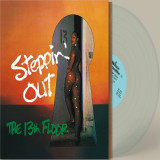
Originally released on Blue Candle Records in 1977, Steppin' Out by the 13th Floor is a true treasure that deserves a cherished place in the collection of every soul and funk connoisseur. This long-awaited reissue brings back the original magic, preserving the essence and impact it had on the music scene.
Its profound influence on bands like the Red Hot Chili Peppers is undeniable, solidifying its status as an essential gem in the annals of musical history. Now, with this reissue, you have the opportunity to experience the same captivating rhythms and infectious melodies that captivated audiences decades ago.
Are you ready to awaken your boogie spirit and infuse your living room with the long-lost spark of the mid-seventies? Brace yourself for an immersive experience as you surrender to the timeless grooves and soulful vibes that will transport you to a bygone era of musical
enchantment. Allow the music to ignite your soul, reigniting the vibrant energy of the past and instilling in you an irresistible urge to groove like never before.
2023 Repress Blue Vinyl
- Eagerly anticipated follow up to 2014 debut - number 7 in Mojo's best albums of the year.
- LP jacket is gloss laminate with front & back folds on the outside.The back panel is uncoated/matt varnish - 300 gsm card and 180g vinyl. Digital Download included.
- EU tour coming in April with Summer festivals later in 2017.
Sometimes it can take years to find your calling. Not so, for wanderer Julie Byrne, whose power of lyrical expression and melodic nous seems inborn. But often, what comes naturally demonstrates against speed. Julie's second album Not Even Happiness has taken time to evolve, but as it spans recollections of bustling roadside diners, the stars over the high desert, the aching weariness of change, the wildflowers on the coast of California and the irresolvable mysteries of love. Her new album archives a vivid world that would've otherwise been lost to the road and in doing so, Byrne exhibits her extraordinarily innate musicality.
In fact, some of the album's songs took two years of fine tuning to get where they needed to be. And if you were to ask her why the follow up to 2014's Rooms With Walls And Windows has taken so long, you'd only be greeted with a bemused smile as though it's the strangest question she's ever been asked, Writing comes from a natural process of change and growth. It took me up to this point to have the capacity to express my experience of the time in my life that these songs came from.'
Having counted Buffalo, Pittsburgh, Pennsylvania, Northampton, Massachusetts, Chicago, Illinois, Seattle, New Orleans as her home in recent years. For now, Julie has settled in New York City where she moonlights as a seasonal urban park ranger in Manhattan. Whether witnessing the Pacific Northwest for the first time ('Melting Grid'), the morning sky in Colorado after staying up through the night at a house party in the mountains of Boulder ('Natural Blue'), recording the passage of freight trains on the outskirts of Buffalo, New York ('Interlude'), or a journey fragrant with rose water, reading Frank O'Hara aloud from the passengers seat during a drive through the desert of Utah into the rainforest of Washington State ('All The Land Glimmered Beneath'), Not Even Happiness is Julie's beguilingly ode to the fringes of life.
Self-taught on the guitar after picking it up when her father became ill and could no longer play the instrument himself, Julie readily admits she can't read music and doesn't even listen to it all that much - the first vinyl she owned was indeed, her own. Recorded with producer Eric Littmann (Phantom Posse), Julie laid down the new album in her childhood home in western New York state and offers an altogether bigger picture to its predecessor through a wider, yet subtle, exploration of instruments and atmospherics, Not Even Happiness reveals an artist who has grown in confidence over time.
Byrne's debut album was released back in January 2014 on Chicago based DIY label Orindal after initially being as two separate cassettes releases. Rooms With Walls and Windows went onto become a true modern-day word of mouth success story (it would have to be for an artist who shuns all forms of social media) and ended the year being voted number 7 in Mojo magazine's best albums of the year, with the Huffington Post calling it "2014's Great American Album". A collection of hushed intimate front porch psych-folk songs, that unknowingly recalled the greats, but felt very much for our time. It saw her travel to Europe over two summers playing the Green Man festival and End Of The Road, as well as lesser trodden tour paths around Europe.
Julie Byrne will take the songs from Not Even Happiness (the first release on a new record label Basin Rock, based in the Lancashire / Yorkshire border town of Todmorden) on the road throughout 2017.
- Rainy Day Women #12 & 35
- Pledging My Time
- Visions Of Johanna
- One Of Must Know (Sooner Or Later)
- I Want You
- Stuck Inside Of Mobile With The Memphis Blues Again
- Leopard-Skin Pill-Box Hat
- Just Like A Woman
- Most Likely You Go Your Way (And I'll Go Mine)
- Temporary Like Achilles
- Absolutely Sweet Marie
- 4: Th Time Around
- Obviously 5 Believers
- Sad Eyed Lady Of The Lowlands
Blonde on Blonde: A double album that transcends time, defies space, suspends reality, and looks through the human soul and tells the listener characteristics about themselves they didn't know. Professor Sean Wilentz, historian-in-residence for Bob Dylan's Web site, comes as close to summing up its brilliance in his superb Bob Dylan In America as any who've tried: "The songs are rich meditations on desire, frailty, promises, boredom, hurt, envy, connections, missed connections, paranoia, and transcendent beauty – in short, the lures and snare of love, stock themes of rock and pop music, but written with a powerful literary imagination and played out in a pop netherworld." No lie.
As part of its Bob Dylan catalogue restoration series, we are thoroughly humbled to have the privilege of mastering the iconic LP from the master tapes and pressing it on 45RPM LPs at RTI. We feel that the end result is the very finest, most transparent edition of Blonde on Blonde ever produced. Forever renowned for what the Bard deemed "that thin, that wild mercury sound," the album's famed aural character lives and breathes on this superb version, with wider and deeper grooves affording playback of previously buried information and lifelike presentation of the studio sessions.
Prized for a unique sound that cultural critic Greil Marcus tagged "the most glamorous record imaginable; listening you can see the chequered jester's suit Dylan had worn on stage for the nine previous, furious months," Blonde on Blonde is to music, production, prose, and performance as what hydrogen is to water. The secret to its inimitable aural character partially stems from Dylan's request in Nashville to producer Bob Johnston to remove the baffles from the studio room, allowing the musicians to interact as well as the music to assume a more organic quality that drifts from one microphone to another.
The story of Blonde on Blonde is almost as compelling as the music within. Dylan, frustrated with how initial attempts fared in New York, relocating to Tennessee and pairing with Nashville's top session players as well as members of what would become the Band, feverishly chasing perfectionism while also arriving at an on-the-fly feel that remains a reference point for recorded music. The Bard sweated over lyrics, demanded his band get the exact sounds he heard in his head, and limited most takes to a handful at most. A majority of songs were recorded long after midnight, the post-A.M. vibe reflected in the nocturnal aura, woozy optimism, inversion of intervals, and spiritual soulfulness of the playing.
A bit of blues here, a bit of rock there, and maybe even a little jazzy improvisation, with numerous inspirations from the folk music of various cultures, and the never absent, albeit not always conscious Turkish modes and vaguely reminisced melodies.
A songwriter accompanied by a team of marvellous musicians who left an important imprint on the Turkish music scene since the 80s. Bülent Somay, an academic, writer, translator, political activist, educator and musician, is a former member of the Turkish Jazz-rock-fusion group Mozaik. He rolls up his sleeves and dusts off some old songs that were never published before with 'a little help from his friends'.
Charlie Hunter’s 1995 Blue Note debut Bing Bing Bing! was a groove-heavy tour-de-force that announced the arrival of a virtuosic new guitarist on the scene. Hunter’s unique concept on his 8-string guitar allowed him to lay down a bass line and play chords as well as a melodic line at the same time, producing music that was at once impressive and irrepressible. With his powerful trio featuring tenor saxophonist Dave Ellis and drummer Jay Lane plus contributions from trombonist Jeff Cressman, Ben Goldberg, pedal steel guitarist David Phillips, and percussionist Scott Roberts, Hunter delivered a 10-song set of propulsive originals including “Greasy Granny” and “Fistful of Haggis” plus an unforgettable cover of Nirvana’s “Come As You Are.” Hunter would go on to record six more excellent albums for Blue Note, and also gain notice for playing on D’Angelo’s 2000 neo-soul masterpiece Voodoo.
- A1: California Girls
- A2: I Get Around
- A3: Surfin' Safari
- A4: Surfin' Usa
- A5: Fun, Fun, Fun
- A6: Surfer Girl
- A7: Don't Worry Baby
- A8: Little Deuce Coupe
- B1: Shut Down
- B2: Help Me, Rhonda
- B3: E True To Your School (Single Version)
- B4: When I Grow Up (To Be A Man) (To Be A Man)
- B5: In My Room
- B6: God Only Knows
- B7: Loop John B
- B8: Couldn't It Be Nice
- C1: Getcha Back
- C2: Come Go With Me
- C3: Rock & Roll Music
- C4: Dance, Dance, Dance
- C5: Barbara Ann
- C6: Do You Wanna Dance?
- C7: Heroes & Villains
- C8: Good Timin
- D1: Kokomo
- D2: Do It Again
- D3: Wild Honey
- D4: Darlin
- D5: I Can Hear Music
- D6: Good Vibrations
- E1: All Summer Long
- E2: Good To My Baby
- E3: This Whole World
- E4: All I Wanna Do
- E5: Disney Girls
- E6: Kiss Me, Baby
- E7: Let The Wind Blow
- E8: Forever
- F1: Sail On Sailor
- F2: Long Promised Road
- F3: Cotton Fields (The Cotton Song) (The Cotton Song)
- F4: Pom Pom Play Girl
- F5: Wind Chimes (Smile Version)
- F6: I Went To Sleep
- F7: Farmer's Daughter
- G1: Let Us Go On This Way
- G2: You Need A Mess Of Help To Stand Alone
- G3: The Night Was So Young
- G4: Marcella
- G5: You're So Good To Me
- G6: Aren't You Glad
- G7: Baby Blue
- H1: It's About Time
- H2: Do You Like Worms (Roll Plymouth Rock) (Roll Plymouth Rock)
- H3: Surf's Up
- H4: Add Some Music To Your Day
- H5: It's Ok
- H6: Goin' On
- H7: San Miguel
- I1: The Warmth Of The Sun
- I2: Everyone's In Love With You
- I3: All This Is That
- I4: California Saga (On My Way To Sunny California-I-A) (On My Way To Sunny California-I-A)
- I5: Feel Flows
- I6: Wendy
- I7: Girl Don't Tell Me
- J1: Let Him Run Wild
- J2: All I Want To Do (Alternate Take)
- J3: Susie Cincinnati
- J4: Vegetables
- J5: Time To Get Alone
- J6: Where I Belong
- J7: I Just Wasn't Made For These Times
- K1: Little Bird
- K2: Til I Die
- K3: (Wouldn't It Be Nice To) Live Again (Wouldn't It Be Nice To)
- K4: Friends
- K5: Devoted To You (Unplugged Version)
- K6: Can't Wait Too Long
- K7: California Feelin
Double LP[41,13 €]
Black Vinyl[9,12 €]
Blue Vinyl[10,29 €]
Black Vinyl[34,24 €]
Translucent Blue vinyl[35,92 €]
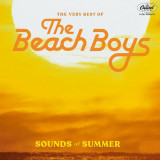
"To kick off the yearlong celebration and provide the perfect summer soundtrack, Capitol Records and UMe will release a newly remastered and expanded edition of The Beach Boys career-spanning greatest hits collection, Sounds Of Summer: The Very Best Of The Beach Boys, on June 17. Originally released in 2003, the album soared to no. 16 in the US and stayed on the chart for 104 weeks. Now certified 4x platinum for sales of nearly four and a half million albums, the collection has been updated in both number of songs and audio quality, expanding the original 30-track best of with 50 more of the band’s most beloved songs for a total of 80 tracks that span their earliest hits to deeper fan-favorite cuts and from their 1962 debut album, Surfin’ Safari through to 1989’s Still Cruisin’.
Assembled by Mark Linett and Alan Boyd, the team behind 2013's GRAMMY® Award-winning SMiLE Sessions and last year’s acclaimed boxed set, Feel Flows – The Sunflower and Surf's Up Sessions 1969-1971, Sounds Of Summer features nearly every US Top 40 hit of The Beach Boys’ incredible career, including “California Girls,” “I Get Around,” “Surfer Girl,” “Surfin’ U.S.A.,” “Fun, Fun, Fun,” “God Only Knows,” “Good Vibrations,” “Be True To Your School,” “Wouldn’t It Be Nice,” “Kokomo,” “Barbara Ann,” “Help Me, Rhonda,” “In My Room,” and many others. Fifty additional tracks showcase a broad mix of songs from across their wide-ranging catalog with some of the many highlights including “All Summer Long,” “Disney Girls,” “Forever,” “Feel Flows,” “Friends,” “Roll Plymouth Rock,” “Sail on Sailor,” “Surf’s Up,” and “Wind Chimes.”
The collection boasts 24 new mixes including two first-time stereo mixes, plus 22 new-and-improved stereo mixes, which in some cases feature the latest in digital stereo extraction technology, allowing for the team to separate the original mono backing tracks for the first time.
The expanded edition of Sounds Of Summer will be available in a variety of formats, including a 3CD softpack, and as a Super Deluxe Edition 6LP vinyl boxed set on 180-gram black vinyl in two options – a standard set or a numbered, limited edition version featuring a rainbow foil slipcase and four collectible lithographs. Both versions will feature color printed sleeves that replicate the original “Capitol Catalog” sleeves that highlight the entire Beach Boys discography, and all formats will include a booklet with new liner notes and updated photos. The original 30-track version will also be available in its newly remastered and upgraded form on single CD or double gatefold LP on standard weight vinyl or as a higher-end limited edition numbered version pressed on 180-gram vinyl with a tip-on jacket and a lithograph. "
The tenor sax master attacks five standards and in the process produces some of
his most intense performances on record. Taped at the Van Gelder Studio in one
marathon session on July 8th 1965, this electrifying Impulse! Records debut also
featured Ray Bryant on piano and Mickey Roker on drums.
Black Truffle is pleased to welcome free jazz legend Joe McPhee back to the fold with Oblique Strategies, a wild trio recorded in Antwerp in 2018 in the company of Mette Rasmussen’s fire-breathing alto saxophone and Dennis Tyfus’s post-Fluxus antics on tape, voice, and percussion. Rasmussen and Tyfus have previously recorded together as Bazuinschal, and some similar strategies are on display here: mysterious metallic scrapes, extended tones in which voice and sax become indistinguishable, comic explosions of varispeed tape. With McPhee on board, however, proceedings are more sumptuous, with the two horns moving fluidly from expeditions into the extremes of their instruments’ registers to pointillistic note-splatter and Ayler-esque folk melodies; we even get to bask in some of the slow-motion free blues that McPhee has now been playing for half a century. McPhee is heard primarily on tenor, Rasmussen mainly on alto, but with Rasmussen doubling on sundry objects, and the whole trio contributing vocals, certainty about who is doing what becomes nigh impossible.
The recording and production add to this hazy unclarity. Where much contemporary improvised music aims at dryly clinical hi-fi, the lively reverberant space of Oblique Strategies calls to mind the less-than-pristine sonics of classic free jazz artefacts like John Tchicai’s Afrodisiaca or McPhee’s own Underground Railroad. A further dimension of oblique unpredictability is added by subtle changes in the sense of space: at times merely a reverb tail glimpsed between phrases, at other points the whole mix seems to be momentarily swallowed up in slap-back, blurring the lines between acoustic instruments and the decayed fidelity of Tyfus’ tape playback. Spread across four pieces ranging from four to nineteen minutes in length, Oblique Strategies moves with anarchic swagger from explosions of clattering cymbals and bellowing horns to near-silent episodes of mysterious rumble and clunk. ‘Death or Dinner?’ opens the record with a lovely duet of climbing melodic patterns shared between the two saxophones, played with a buzzing oboe-like tone. A long, wavering note sung by Tyfus cues the first of countless changes of direction, eventually leading to a crescendo of watery splutters and duelling saxes. At points Tyfus’ keening resemble the signature moves of his friend and collaborator, Ghédelia Tazartès; at others, his tape-sped huffs and puffs possess a rawness reminiscent of Henri Chopin or Gil Wolman. The dialogue between wailing saxophones and vocal cries, punctuated by percussive thuds and crashes, can at times feel less like a musical performance and more like the calls of some mysterious forest creatures, possessing a primordial energy that might remind some listeners of the outdoor antics of Brötzmann and Bennink’s Schwarzwaldfahrt.
Oblique Strategies can also be delicate at times, as on the beautiful third piece, ‘Destilled Edible’, dominated by a slow, microtonal melody played with a breathy tone resembling a shakuhachi. The closing side-long ‘Light My Fire’ ranges across classic improv call and response, skittering trumpet blurts, inept cymbal clatter, mock-operatic vocals, and crude tape manoeuvres. Momentarily pausing at the ten-minute mark for an interlude of ghostly room sound and crackling texture, its closing moments unfurl a glorious dual saxophone finale, the almost epic tone subtly undermined by Tyfus quietly tapping out swing rhythms. Arriving in a striking sleeve adorned with Tyfus’ drawings, Oblique Strategies is an invigoratingly free-spirited blast of improvisation.
Downloads
How sad, if timely: this stunning reissue of the 1994 live album arrived in the very week that trumpeter Masekela passed away. One of the most successful ambassadors ever for African music, his fusing of the continent's rhythms and instruments with contemporary jazz and rock proved irresistible. Nearly every one of you has heard him, thanks to guess spots with The Byrds and Paul Simon. His breakthough hit from 1968 — the infectious "Grazing In The Grass" — is here, along with another 11 tracks recorded at Blues Alley, the U.S. club that gave us Eva Cassidy. Notably, despite its early-1990s origins, this is all-analogue." — Sound Quality = 90% - Ken Kessler, HiFi News, May 2018
"...Hope is one of those intensely visceral, large as life, and immediately present recordings that will make pretty much any system sound at least very good, and will cause better ones to raise goose bumps." - Wayne Garcia, The Absolute Sound, August 2008
"...The high quality original mix plus Analogue Productions' superb mastering has resulted in a terrific, very transparent sonic with great impact." - John Henry, Audiophile Audition
What more can be captured from the masterpiece that the late trumpet great Hugh Masekela left devoted fans, the effervescent Hope. Now cut at 45 RPM and spread over four 200-gram premium LPs, you're about to discover the answer to that question. The eight sides of vinyl reduce distortion and high frequency loss as the wider-spaced grooves let your stereo cartridge track more accurately. And this set is plated and pressed at Quality Record Pressings, Acoustic Sounds' own industry-lauded LP manufacturer. Virtually silent surfaces coupled with sharp delineation of musical detail are QRP pressing hallmarks.
Two Stoughton Printing old-style tip-on gatefold jackets house the four LPs, which are contained in a custom-designed slipcase reproducing the original artwork.
A longtime audiophile demonstration disc. Hope will show off your system's dynamic range as well as any record ever released. Hugh Masekela, the outstanding South African trumpeter, assembled a seven-piece group and recorded this great set live at Washington, D.C.'s Blues Alley. The songs stretch over a period of nearly five decades and serve as an informal guided tour of Masekela's life. The songs are honest and bare, and as for the sound — WOW!
Unlike a prior 45 RPM version that included seven songs, this 45 RPM reissue contains the full program as originally recorded with all 12 tracks included! Plus, as an added bonus, we've included a special insert — featuring an exclusive interview with Grammy/Emmy Award-winning engineer David Hewitt, who recorded Hope originally.
"Hugh's record is right up near the top for a lot of reasons," Hewitt says.
Hewitt and his team were afforded the time they needed, and they pulled out all the stops to pull off what's now recognized as an all-time great recording. They used better-quality microphones, they were mic-ing the room for ambient sound, and Masekela was performing for a sophisticated and appreciative audience.
"We used stuff from our stash of mics as opposed to what you'd find typically at a jazz club. We actually had control via the record label and producers, so we could take our time. We had the ability to mic the room for abient sound. ... you've got people that actually know and appreciate the music and respond accordingly. What you've got there is all the right stuff at the right time and the right people, and then something magical happens."
Listen to that magic unfold — put on this Analogue Productions 45 RPM 4LP reissue of Hope, and be transported.
Miles Davis created just one studio album with his original sextet: Milestones. And he made every moment count. Pairing with Cannonball Adderley, John Coltrane, Red Garland, Paul Chambers, and Philly Joe Jones, Davis not only laid the groundwork for the modalism that immediately followed but tailored a genuine modern-jazz masterwork laden with performances among the most explosive of his distinguished career. Sandwiched between the more famous 'Round About Midnight and the epochal Kind of Blue, Milestones remains a seminal work of art.
Sourced from the original master tapes and pressed on dead-quiet SuperVinyl, Mobile Fidelity's numbered-edition 180g LP grants each musician their own space amid broad soundstages. Afforded the benefits of a nearly non-existent noise floor and supreme groove definition, this vinyl reissue doubles as a time machine back to the February-March 1958 recording sessions.
Colors, shapes, and dimensions appear in the manner that resembles what you'd glean from behind a studio control room's window. Davis' burnished trumpet is rendered in three-dimensional perspective and seemingly coaxes the band to play with unburdened zest. Coltrane's trademark saxophone teems with lifelike tonality and images with specificity; his solos work in tandem with and against the driving rhythms. Garland's swaggering piano lines? Visualize the keys as he hits full stride, the chords and fills slithering around skeletal frameworks.
Inducted into the Grammy Hall of Fame and selected as a "Core Collection" record by the Penguin Guide to Jazz, Milestones is as famous for its title track – widely considered ground zero for modalism and bolstered by Jones' hallmark "Philly Lick" rim shot – as the players that produced it. The launching pad for many of Davis' improvisational flights, the album teases the explorations Coltrane would soon chase. Davis' own solo work broaches territories that far exceed what he had done in his bop-rooted past. Every song is a highlight.
Take the bravado "Dr. Jackle," featuring a hot-foot pace and bebop strains, or "Sid's Ahead," which continues the album's blues theme while juggling edgy harmonics and inside-out structures. On "Billy Boy," distinguished with an arco bass solo from Chambers, Garland gets a turn in the spotlight and channels the openness practised by one of his heroes, Ahmad Jamal. Even more instructive is the band's reading of Dizzy Gillespie's "Two Bass Hit." Three years removed from the version Davis and company recorded for the trumpeter's Columbia debut, this interpretation demonstrates the extent to which the group had jelled in a relatively short amount of time.
Then there's "Straight, No Chaser," the definitive rendition of Thelonious Monk's signature piece. Coltrane's marbled playing pulls at the tune's borders, Adderley takes liberty with solos, and Davis dances around his mates, at one point quoting "When the Saints Go Marching In" while demonstrating his knowledge of tradition and casting an eye towards the future.
About that future. Garland already had one foot out the door during the Milestones sessions to the extent Davis spells him on "Sid's Ahead." Jones would stick around for a bit longer but soon plot his exit. History proves Davis navigated the changes with visionary aplomb. Yet the chemistry, excitement, and beauty the sextet achieves on Milestones cannot be overstated. This reissue helps put the album in proper perspective – and presents the music the fidelity it deserves.

- A1: Aida Bossa-Azúcar - El Loro Y La Lora
- A2: Lagos Thugs-Innocent Blood
- A3: Djingo Typical Band -Vini Ouais
- A4: Lindigo-Domoun
- B1: Lass-Senegal
- B2: Joojo Addison-Guy Man
- B3: La Boa-Vuelo Antillano
- B4: Voilaaa-Water No Get Enemy
- C1: Umalali - Mérua
- C2: Luizga & Izem - Yemamaya
- C3: Blue Bird - Foefoeroemang
- C4: Poirier - Pourquoi Faire Aujourd’hui
- D1: Kaleta & Super Yamba Band - Jibiti-Bosq Rmx
- D2: Ezra Collective - Lady
- D3: Joskar & Flamzy - Faroter
- D4: Dowdelin - I Like To Move It
New one from French DJ / compiler, GUTS.
The label say "We've been waiting for it! GUTS' Straight From The Decks compilation is back, with Volume 3 still packed the classic tracks played in his DJ set. Musical discoveries from all over the world. Different genres, different cultures. GUTS invites you to follow him on his musical journey from your living room or your local club!"
- 1: Frownland
- 2: The Dust Blows Forward 'N The Dust Blows Back
- 3: Dachau Blues
- 4: Ella Guru
- 5: Hair Pie: Bake 1
- 6: Moonlight On Vermont
- 7: Pachuco Cadaver
- 8: Bills Corpse
- 9: Sweet Sweet Bulbs
- 10: Neon Meate Dream Of A Octafish
- 11: China Pig
- 12: My Human Gets Me Blues
- 13: Dali's Car
- 14: Hair Pie: Bake 2
- 15: Pena
- 16: Well
- 17: When Big Joan Sets Up
- 18: Fallin' Ditch
- 19: Sugar 'N Spikes
- 20: Ant Man Bee
- 21: Orange Claw Hammer
- 22: Wild Life
- 23: She's Too Much For My Mirror
- 24: Hobo Chang Ba
- 25: The Blimp (Mousetrapreplica)
- 26: Steal Softly Thru Snow
- 27: Old Fart At Play
- 28: Veteran's Day Poppy
Trout Mask Replica is a touchstone in the history of recorded music. The mix of dada absurdist blues and previously unexplored experimental avenues has long been praised as one of the greatest albums of all time. As so eloquently put by John Peel, "If there has been anything in the history of popular music which could be described as a work of art in a way that people who are involved in other areas of art would understand, then Trout Mask Replica is probably that work.” In full partnership with the Zappa Family Trust and to celebrate the relaunch of the seminal Bizarre label imprint, Third Man Records is proud to announce Captain Beefheart and the Magic Band's Trout Mask Replica. Out of print on vinyl for nearly ten years, this remaster was helmed by industry legend Bob Ludwig and cut by the estimable Chris Bellman at Bernie Grundman Mastering. Utilizing crystalline-quality safety masters kept in the Zappa family vault for decades by the trustworthy Joe Travers, the audio here is positively glorious. Every last skronk breathes full life into the room. Every twisted guitar figure uncurls onto paths previously unpaved. Every last bark and howl shines resolute through the vast emptiness of your mind. Previous countless Trout Mask Replica repressings used scans of scans of scans of the cover image, but the original Cal Schenkel cover photo has been tracked down and reproduced here at its clearest — its resolution from the original release in 1969. If you’ve only ever seen a jpg online or fuzzy, smeared-looking CD issues from the 90’s, be prepared to be wowed by the fully engaging spectrum this iconic image casts. This 2xLP is pressed on heavyweight 180-gram black vinyl for that full-on frenetic feeling.
Incredible jazz / prog / folk score to groundbreaking tattoo film by maverick filmmaker. Unreleased until now, so don’t go saying it’s a reissue because it isn’t, but I’m sure some people will because they always do.
John Samson (1946 - 2004) was a truly great documentary maker. He must be as I’ve been obsessed with his work for many years. Educated first at Glasgow School Of Art (circa 1963) and then finally in the art of film making at The National Film And Television School in Beaconsfield - he headed there in its opening year of 1971 having made a short film that got him a scholarship.
It was at the NFTS that Samson met Mike Wallington, who was to become his right hand man and eventual producer; together as a quite brilliant team they made a handful of inspiring, entertaining and hugely prescient films about important, overlooked, unseen and marginal fringes in society. Tattoo (1975) Exploring the rather clandestine world of tattooing in the UK. Dressing For Pleasure (1977) Exploring the rather clandestine world of festish in the UK. Brittania (1979) A film about railway enthusiasts and a steam train restoration.
Arrows (1979) The life of dart player Eric Bristow. Drag Ball (1981) An unreleased film about the annual Porchester Hall Drag Ball. The Skin Horse (1983) BAFTA winning film about The Outsiders Club, a dating agency for disabled people. The subject matter in all films was always unusual for the time, and Samson managed to navigate his way with compassion, interest and subtlety, immersing himself in the chosen scene and producing moving, fascinating and sometimes darkly amusing situations. His documentaries also do not rely on traditional voiceovers, with stories, facts and narrative threads being dictated by the subjects.
I’ve tried for a long time to find the music for a couple of his early films (there was actually an original 7” for Arrows) - so far this is the only unreleased soundtrack I have found. This one was written by Steve Jolliffe, who met Samson at the NFTS. Joliffe was the resident composer and had a room at the college complex where he could work on scores for the fledgling film makers. Jolliffe was and still is a multi-instrumentalist and prolific composer who had met Edgar Froese at the Berlin Konservatorium in the late 1960s and played in an early incarnation of Tangerine Dream. He toured with blues rock outfit Steamhammer, before hanging out at the NFTS, making this recording (and many others) and eventually rejoining Tangerine Dream in the late 1970s. Jolliffe still writes, records and releases today and once i had made contact with him we traced the original Tattoo master tape to a box at his brother’s house. Musically it’s charming, slightly folky, a touch baroque, there’s a whiff of prog too, and it perfectly suited this early documentary about the art and desire of tattoos. I only wish it was longer. But the film is only 16 minutes long. Seek it out if you can. Try and find all the Samson films, they really are a joy.
As well as featuring intimate footage of tattooed people, the film also includes a rare and very early interview with Alan Oversby (better known as Mr Sebastian), a seminal character in the development of tattoos and body modifications worldwide - it was he who eventually was to tattoo and pierce Genesis P-Orridge.
The images for this vinyl release were all found in Mike Wallington’s Tattoo documentary research folder from 1974, and were photos sent in to Mike and John by people who wanted to feature in the film. Most answered an advert in Time Out, and others included people from my home town of Aldershot where tattooist Bill Skuse and his wife, Rusty (the most tattooed woman in Britain at the time, and featured in the film) were based. His parlour was situated at the back of the arcade where we all used to lose all our pocket money in the slot machines.
The Musicians:
Steve Jolliffe - keyboards, flute, sax Geoff Jolliffe - bass guitar Julian Furniss - guitar Mick Kirby - drums
Alabama native Drayton Farley has as honest a voice as you're likely to hear in this burgeoning scene of country, folk, roots, and Americana music we're all wrapped up in. With songs and lyrics pulled from real life experience, there's a grounded feeling to his stories, a confessional quality that rings true to those who know. His voice fills the room like cigarette smoke, curling into every corner of you, with a fine grit rasp that smooths out every rough edge. It lingers hours, days, after you've left the bar - turns of phrase that tumble around your mind, bittersweet and familiar. He sings as deeply about the love he holds as the love he's lost and there's something so broken-in and comfortable about that Southern inflection that every song feels like coming home. Sharing stages with musicians on the rise such as Zach Bryan, Arlo McKinley and Mike and the Moonpies, Drayton has quickly gained a loyal fan base. Twenty on High, Drayton's first release with Thirty Tigers, was produced by Sadler Vaden (Morgan Wade) and recorded with Chad Gamble, Jimbo Hart, Sadler Vaden, Peter Levin, Kristin Weber and Katie Crutchfield at Nashville's Sound Emporium Studios. “Lyrics that are immediately reminiscent of the humor and subtlety of John Prine, the directness and honesty of Bob Dylan, and the everyman gravity of Pete Seeger, Farley firmly establishes himself as one of the great American voices in folk and Americana music.” - Americana Highways