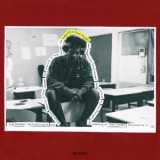
A song is a song until it isn't, until it's pushed to its limits and beyond to become harder, faster and more dissonant. The music on Oneida's 17th full-length album, Expensive Air, all started as tightly structured, melodic rock songs _ very much in line with the non-stop bangers of Success from 2022 _ but along the way, they changed. Bobby Matador sketched the structures of these songs from his home base in Boston, then sent the demos to Oneida's New York contingent: Kid Millions, Hanoi Jane, Shahin Motia and Barry London. "We were working out the songs in New York without Bobby. We would start out riding the riffs, and then Shahin and Jane would add wild, out-of-tune licks," said Kid Millions. "It seemed so perfect." Oneida has long straddled gray-area boundaries between the NYC punk/psych/rock world and the art/experimental world, playing at gritty rock clubs and elevated cultural institutions, including the Guggenheim, MoMA PS1, ICA London, MassMOCA and the Knoxville Museum of Art. The band has been known for extended live improvisational performances, collaborating onstage with Mike Watt, members of Flaming Lips, Portishead, Boredoms, Yo La Tengo, Dead C, Godspeed You! Black Emperor, and many others. Oneida's members juggle a wide variety of other music projects. Drummer Kid Millions has played with Spiritualized, Royal Trux and Boredoms and releases solo compositions under his own name and as Man Forever. Shahin Motia founded noise - punk's Ex-Models and currently plays in Knyfe Hits. Kid and Fat Bobby perform and release music as People of the North, and Bobby's outside projects New Pope and Nurse & Soldier each released new albums in 2023. Oneida's previous album, Success, came after a four-year hiatus, unleashing the band's pent up creative energy in a set of catchy, accessible, nearly poppy songs. Song structure remained important in the run up towards Expensive Air, but so was the instinctual, improvisatory interplay that has always been a part of Oneida's process. The band had been playing live together for two years, sharpening its attack and pushing its songs to go harder, faster and wilder. Oneida recorded Expensive Air in three sessions scattered across 2023, convening at Colin Marston's Menegroth The Thousand Caves studio in Woodhaven, Queens, whenever they had a few songs ready. Marston and the band mixed the album in February 2024 at Menegroth. The new album expands on what Oneida achieved with Success, but also pushes past it, laying down irresistible song structures then blowing them to psychedelic bits. "I found myself thinking about this record as a darker, looser, louder, counterpart to Success," Bobby explains. "Both records charge forward from the jump and mix the elliptical with the blunt, and longing with self-mockery. But Success is like laughing in a car gunning carelessly through an ice storm, and Expensive Air is how you laugh at yourself as the car spins into the ditch, or a tree. Same trip, but a little closer to the bone."
quête:bobby would
- Mary Ann Fisher - Put On My Shoes
- Billy Hambric - Flaming Mamie
- Ernie And Jean Terrell - Love Me Baby So
- Titus Turner - Soulville
- The Ramrods - Soultrain - Part 1
- Johnny Jones - I Find No Fault (In My Baby's Love)
- Joe Haywood - I Cross My Heart (And Hope To Die)
- Lee Moses - Time And Place
- Side B
- Tommy Duncan - Let Me Take You Out
- Tiny Tim Harris - Don't Say
- Jim & Lee - Let Go, Baby
- The Carlettes - Lost Without Your Love
- The Victones - My Baby Changes
- Willie Hightower - Nobody But You
- Three Shades Of Soul - Being In Love
- Lee Moses - I Can't Take No Chances
BOBBY ROBINSON was more than a fixture in hisNew York community, he had been an essential part of its lifeblood for over 60 years. Had he just been the proprietor of the first record store (and reputedly the first black-owned business) on 125th Street, he would have been important enough, but he also had an ear for talent, recording landmark music across four decades, always at home with the music of his neighbourhood, be it doo-wop, R&B, soul or even rap.
He was an entrepreneur involved in over a dozen different labels, sometimes on his own, sometimes with a partner, often with his brother Danny, and he was behind records that became internationally famous by Gladys Knight, King Curtis, Elmore James, Lee Dorsey, Wilbert Harrison and Grandmaster Flash. He made many more that were simply good, and this compilation takes aim at the great work he did as a soul and R&B producer during the 1960s and early 70s. It’s an introduction that shows the quality that he created had depth beyond the headline names.
- Born In The U.s.a - Jason Isbell & Amanda Shires
- Cover Me - Apache Relay
- Darlington County - Quaker City Night Hawks
- Working On The Highway - Blitzen Trapper
- Downbound Train - Joe Pug
- I'm On Fire - Low
- No Surrender - Holly Williams
- Bobby Jean - Ryan Culwell
- I'm Goin' Down - Trampled By Turtles
- Glory Days - Justin Townes Earle
- Dancing In The Dark - Nicole Atkins
- My Hometown - North Mississippi Allstars
"2024 marks the 40th anniversary of Bruce Springsteen's 'Born In The U.S.A.' Although it would become his biggest selling album with seven top 10 singles on the Billboard Hot 100, Luther Dickinson of North Mississippi Allstars says ""any of those songs could be played with acoustic guitar alone and still be great."" Taking this idea as its premise, 'Dead Man's Town: A Tribute to Born in the U.S.A' strips the album's twelve indelible originals to the core, with contributions from Jason Isbell & Amanda Shires, Low, Nicole Atkins, Justin Townes Earle, Blitzen Trapper, Joe Pug, Trampled by Turtles, and more. Rolling Stone premiered Jason Isbell and Amanda Shires' Dave Cobb-produced cover of ""Born I n The U.S.A,"" saying these artists are ""reimagining 'Born in the U.S.A. with a reduced approach more influenced by that of the acoustic, ""Nebraska.""
Isbell says of his cover, """"Born In The U.S.A."" is one of my favorites because so many people have seemingly misunderstood the lyrical content and the song's overall tone. When you listen to the demo, the dark, minor key arrangement makes it clear that this is not strictly a song of celebration. We wanted to stay true to that version."" Amanda Shires adds, ""I love that the song paints a picture of struggle in the face of the American dream, and the irony in the chorus is delivered with such force that it nearly transcends irony altogether."""
A tribute to one of the greatest songwriters & artists of our time! Features newly recorded covers from Keith Richards, Joan Jett and the Blackhearts, Rufus Wainwright, Lucinda Williams, Maxim Ludwig & Angel Olsen, Rickie Lee Jones, Mary Gauthier, Bobby Rush, Automatic, The Afghan Whigs, and Rosanne Cash. Special Record Store Day Edition pressed on Silver Nugget vinyl and housed in a silver laminated jacket Booklet features liner notes by compilation producer & former Lou Reed publicist Bill Bentley, featuring photos by Mick Rock and Timothy Greenfield-Sanders. "To me, Lou stood out. The real deal! Something important to American music and to ALL MUSIC! I miss him and his dog." - Keith Richards "Lou seemed fearless to me, like he'd rather die than be a people-pleaser. I took inspiration from that." - Rosanne Cash "Lou Reed is my earliest influence, my introduction to punk rock, and the soundtrack to the beginning of my romance with Maxim." - Angel Olsen "Lou Reed has been gone now for many years. He's one of the few people whom I miss as much now as when he left. There are so many instances where I wonder what he would say or what he would think. His general aura would always lend something really unique to the room. Thank God he left his great music and recordings. His personality is sorely missed. Love you, Lou." - Rufus Wainwright // It goes without saying that the legendary Lou Reed was a true rock 'n' roll pioneer. From The Velvet Underground's debut in 1967 all the way through the end of his days, Reed sang truth from his heart. He lived life to the limit-and then some. The Power of the Heart is a tribute to Reed's freedom of expression with covers spanning his ground-breaking years with the Velvets into his majestic solo career. Each track is a glorious extension of the Rock 'n' Roll Animal's soul, ever adventurous and avant-garde. The Power of the Heart: A Tribute to Lou Reed kicks off with a legend in his own right, Keith Richards, reimagining the Velvets' classic, "I'm Waiting for the Man." Richards' rendition instantly invites you on board this unforgettable ride. In stark contrast, "Perfect Day" is somehow even more melancholy than the original given the Rufus Wainwright treatment, featuring sparse fingerpicking and gentle harmonies. Joan Jett and the Blackhearts deliver a version of "I'm So Free" that would have even Lou rockin' in his grave. It's thrilling to hear these songs reinterpreted and sung by such heavyweights; you can even hear as Lucinda Williams channels the spirit of Lou with her take on "Legendary Hearts." Other notable tracks include a punk-drunk, loved-up duet by real-life lovers Angel Olsen & Maxim Ludwig with "I Can't Stand It," and Rickie Lee Jones' reimagining of "Walk on the Wild Side," both whimsical and enticing with her whispery vocals, stripped-down percussion, and a piano fit for a late-night lounge. This tribute album truly defies genre, but its throughline, in the end, is its heart: a deeply thoughtful collection of songs that shaped a generation, each paying homage to a man whose body of work still sings.
Bobby Hutcherson’s 1968 album Total Eclipse was the vibraphonist’s first recording to feature saxophonist Harold Land who would become a key collaborator for years to come. Rounding out the band were pianist Chick Corea, bassist Reggie Johnson, and drummer Joe Chambers on this impassioned post-bop set. This stereo Tone Poet Vinyl Edition was produced by Joe Harley, mastered by Kevin Gray from the original analog master tapes, pressed on 180g vinyl at RTI, and packaged in a deluxe gatefold tip-on jacket.
Janis Joplin wouldn't be denied on Pearl. The powerhouse vocalist had kicked her addictions, teamed with a stupendous band, and partnered with a producer that knew how to best showcase her voice on record. She came to the sessions with an armload of astonishing songs, and a burst of creative energy that mirrored her rejuvenated emotional state and undeniable spirit. You can hear it on every note of the 1971 record. Ranked #135 on Rolling Stone's 500 Greatest Albums of All Time list, Pearl sold more than four million copies and stands as the first female rock superstar's definitive studio work.
Mastered from the original master tapes, cut at 45RPM, and pressed on dead-quiet vinyl at RTI, the iconic audiophile label's reissue takes Joplin and Co.'s stupendous performances to newly transcendent levels. Boasting a fidelity that further magnifies the singer's passion and producer Paul A. Rothchild's clear production, this pressing benefits from increased spaciousness, dynamics, and openness afforded by the wider grooves. Joplin's husky, strong, and penetrating singing has never sounded so vibrant or made deeper connections. Warm, organic, and free of any artificial ceilings, this version lets you step into Sunset Sound Recorders with the performers, such is the degree of realism and authenticity. Indeed, few, if any words, describe Joplin better than "authentic," and her spirit comes to life on this 2LP set in positively transcendent fashion. Like its headliner, this pressing leaves it all on the floor.
While Joplin's electrifying vocal prowess is universally lauded – she's recognized as the greatest white female blues singer the world has ever seen – her mix of compassion, confidence, and charm play as large a role in attracting listeners and keeping them ensnared more than four decades after her tragic death. And on Pearl, she burrows into deeper stylistic veins, teasing out sides of her persona and craft she'd never previously displayed. Her signature desperation, sadness, and vulnerability remain – the harrowing, lonely wail that begins her soul-ravishing take on Jerry Ragovoy's "Cry Baby," underlined with a Wall of Sound-like piano accompaniment, could only come from a person severely scarred by loss and disappointment – yet Joplin also reveals a sense of humour and beatnik innocence that helped propel the album to the top of the charts for nine straight weeks.
Playfully introduced as "a song of great social and political import," the acapella "Mercedes Benz" reflects Joplin's throaty timbre as well as her enhanced, sunnier mood. Similarly, her definitive read of Kris Kristofferson's "Me and Bobby McGee" signals a laidback demeanour and a move into country strains, with the delivery as natural, carefree, and loving as any in the rock canon. As she does throughout the record, Joplin invests her all in the narrative so that there's no line between the performer and the song. She makes everything on Pearl feel autobiographical, and by extension, gut-wrenchingly honest, and devastatingly intimate. Joplin achieved these feats often during her brief career, yet there are differences on Pearl, chiefly among them her balance of impeccable timing and raw emotion. Heart-aching anthems such as "A Woman Left Lonely" offer both grit and control, subtlety and attack, resulting in cathartic releases distinguished with originality, personality, and instinctual passion.
Pearl remains Joplin's finest hour, with credit also owed to the Full Tilt Boogie Band – the only group she ever considered to be her own – as well as the Doors alum that sat behind the boards. Joplin and Rothchild both admitted to sharing a common bond and understanding, with the latter inheriting the role of teacher and Joplin, a willing student ready to discover how she could use her voice in new, more expressive ways. The fruits of the pair's labours fill Pearl, be it the guardedly optimistic "Get It While You Can" or assertive, fleet-footed "Move Over."
Experienced in the new light brought to fore by this definitive Mobile Fidelity edition, Joplin's swan song is no longer about a masterpiece that its creator never lived to see finished. Rather, it's about a once-in-a-lifetime vocalist realizing mammoth potential and wringing passion out of every note. It's not a tragedy, but a triumph. Get it while you can.
Studio One was founded by Clement "Coxsone" Dodd1 in 1954, and the first recordings were cut in 1963 on Brentford Road in Kingston.1[2] Amongst its earliest records were "Easy Snappin" by Theophilus Beckford, backed by Clue J & His Blues Blasters, and "This Man is Back" by trombonist Don Drummond. Dodd had previously issued music on a series of other labels, including World Disc, and had run Sir Coxsone the Downbeat, one of the largest and most reputable sound systems in the Kingston ghettos.
In the early 1960s, the house band providing backing for the vocalists were the Skatalites[3] (1964–65), whose members (including Roland Alphonso, Don Drummond, Tommy McCook, Jackie Mittoo, Lester Sterling and Lloyd Brevett) were recruited from the Kingston jazz scene by Dodd. The Skatalites split up in 1965 after Drummond was jailed for murder, and Dodd formed new house band the Soul Brothers (1965–66), later named the Soul Vendors (1967) and Sound Dimension (1967-). From 1965 to 1968 they played 9 a.m. to 5 p.m., 5 days a week, 12 rhythms a day (about 60 rhythms a week) with Jackie Mittoo as music director, Brian Atkinson (1965–1968) on bass, Hux Brown on guitar, Harry Haughton (guitar), Joe Isaacs on drums (1966–1968), Denzel Laing on percussion, and on horns (some initially and some throughout): Roland Alphonso, Dennis 'Ska' Campbell, Bobby Ellis, Lester Sterling, among others on horns during the era of Rock Steady. Headley Bennett, Ernest Ranglin, Vin Gordon and Leroy Sibbles were included among a fluid line-up, to record tracks directed by Jackie Mittoo at Studio One from 1966-1968.
During the night hours at Studio One from 1965-1968, singers like Bob Marley, Burning Spear, The Heptones, The Ethiopians, Ken Boothe, Rita Marley, Marcia Griffiths, Judy Mowatt, Alton Ellis, Delroy Wilson, Bunny Wailer[4] and Johnny Nash, among others, would put on headphones to sing lyrics to original tracks recorded by the Soul Brothers earlier each day. These seminal recordings included "Real Rock" (by Sound Dimension), "Heavy Rock", "Jamaica Underground", "Wakie Wakie", "Lemon Tree", "Hot Shot", "I'm Still In Love With You", "Dancing Mood", and "Creation Rebel".
Jackie Mittoo, Joe Isaacs, and Brian Atkinson left Studio One in 1968, recorded drums and bass for Desmond Dekker's and Toots' biggest hits at other Kingston studios, then moved to Canada. Hux Brown stayed in Jamaica to record on the soundtrack The Harder They Come, The Harder They Fall, and toured in Nigeria with Toots and the Maytals and Fela Kuti. The Soul Brothers (a.k.a. Sound Dimension) formed the basis of reggae music in the late 1960s, being versioned and re-versioned time after time over decades by musicians like Shaggy, Sean Paul, Snoop Lion, The Clash, String Cheese Incident, UB40, Sublime, and countless other Billboard originals and remakes trying to emulate their original Rock Steady sound at Coxsone's Studio One.
The label and studio were closed when Dodd relocated to New York City in the 1980s.
Studio One was founded by Clement "Coxsone" Dodd1 in 1954, and the first recordings were cut in 1963 on Brentford Road in Kingston.1[2] Amongst its earliest records were "Easy Snappin" by Theophilus Beckford, backed by Clue J & His Blues Blasters, and "This Man is Back" by trombonist Don Drummond. Dodd had previously issued music on a series of other labels, including World Disc, and had run Sir Coxsone the Downbeat, one of the largest and most reputable sound systems in the Kingston ghettos.
In the early 1960s, the house band providing backing for the vocalists were the Skatalites[3] (1964–65), whose members (including Roland Alphonso, Don Drummond, Tommy McCook, Jackie Mittoo, Lester Sterling and Lloyd Brevett) were recruited from the Kingston jazz scene by Dodd. The Skatalites split up in 1965 after Drummond was jailed for murder, and Dodd formed new house band the Soul Brothers (1965–66), later named the Soul Vendors (1967) and Sound Dimension (1967-). From 1965 to 1968 they played 9 a.m. to 5 p.m., 5 days a week, 12 rhythms a day (about 60 rhythms a week) with Jackie Mittoo as music director, Brian Atkinson (1965–1968) on bass, Hux Brown on guitar, Harry Haughton (guitar), Joe Isaacs on drums (1966–1968), Denzel Laing on percussion, and on horns (some initially and some throughout): Roland Alphonso, Dennis 'Ska' Campbell, Bobby Ellis, Lester Sterling, among others on horns during the era of Rock Steady. Headley Bennett, Ernest Ranglin, Vin Gordon and Leroy Sibbles were included among a fluid line-up, to record tracks directed by Jackie Mittoo at Studio One from 1966-1968.
During the night hours at Studio One from 1965-1968, singers like Bob Marley, Burning Spear, The Heptones, The Ethiopians, Ken Boothe, Rita Marley, Marcia Griffiths, Judy Mowatt, Alton Ellis, Delroy Wilson, Bunny Wailer[4] and Johnny Nash, among others, would put on headphones to sing lyrics to original tracks recorded by the Soul Brothers earlier each day. These seminal recordings included "Real Rock" (by Sound Dimension), "Heavy Rock", "Jamaica Underground", "Wakie Wakie", "Lemon Tree", "Hot Shot", "I'm Still In Love With You", "Dancing Mood", and "Creation Rebel".
Jackie Mittoo, Joe Isaacs, and Brian Atkinson left Studio One in 1968, recorded drums and bass for Desmond Dekker's and Toots' biggest hits at other Kingston studios, then moved to Canada. Hux Brown stayed in Jamaica to record on the soundtrack The Harder They Come, The Harder They Fall, and toured in Nigeria with Toots and the Maytals and Fela Kuti. The Soul Brothers (a.k.a. Sound Dimension) formed the basis of reggae music in the late 1960s, being versioned and re-versioned time after time over decades by musicians like Shaggy, Sean Paul, Snoop Lion, The Clash, String Cheese Incident, UB40, Sublime, and countless other Billboard originals and remakes trying to emulate their original Rock Steady sound at Coxsone's Studio One.
The label and studio were closed when Dodd relocated to New York City in the 1980s.
Cam Cameron appears to be another one of those performers from an infinite list of Black American artists that cut a solitary 45 single and then disappear into obscurity never to be seen or heard from again. Couple this with the passing of any of the relevant protagonists from the time along with any of the surviving ones ever diminishing memories and the job of collating events and artists back stories from over 50 years ago becomes that much harder.
Cam Cameron appears to be one of those artists (although our investigations are ongoing). Therefore, from the information currently gleaned, the artist Cam Cameron was none other than Alvin Cameron the writer of the featured song “You Say”, with Cam being a kind of nickname. The string arrangements on both “They Say” and “I’m A Lonely Man” were provided by the late John Andrew Cameron a hugely respected arranger, producer and songwriter within the Chicago music scene of the 1960’s and early 70’s, more often credited as Johnny Cameron. Johnny’s credits can be found on many recordings of the time often working with fellow Chicago music scene producer Clarence Johnson, some of the highlights from this liaison being the song “I Really Love You” recorded by both Jimmy Burns (Erica) and Bobby James (Karol) and the girl group, ‘The Lovelites’, on their acclaimed album “With Love From The Lovelites” (Uni). Johnny’s involvement with the Scott Brothers goes as far back as 1965 when he provided the musical arrangements on The Howard Scott penned song “I’ve Got To Get Over” recorded by Syl Johnson for the TMP-Ting label. Although they share the same surname, Alvin (Cam) Cameron is believed to be of no relation to Johnny Cameron.
“You Say” would gain a release on the independent Capri label owned by Sephus Howard Scott who together with brother Walter Scott composed the 45’s flipside “I’m A Lonely Man”. Howard also featured as one of the songs producers alongside the mysterious Edgar Mullins (a name which has been found on a couple of other tape boxes, the investigations continue).
Musical accompaniment was provided by The Scott Brothers Band, with both songs being recorded at RCA Victor’s Chicago number 2 Recording Studio at 445 North Lake Shore Drive, in the Navy Pier section. on the 10th of August 1967 and released on Capri Records during the month of February 1968.
Cameron’s “You Say” was another 45 that was first introduced to UK Soul Collectors via those much lamented and fondly remembered soul packs, always regarded as a quality collector’s 45 the only regular turntable action remembered was provided by Northampton’s very own discerning DJ Cliff Steele at venues such as ‘Detroit Academicals’, ‘Bretby Country Club’ and later ‘Albrighton’ during the leaner days of the UK Rare Soul Scene?! Hopefully a wider appreciation of both sides of this soulful Windy City 45 beckons! The second release in Soul Junction’s Capri series.
Delasi, the Koforidua-based producer, singer and rapper has released his new single ‘Amplifier’ featuring Nii Noi Nortey.
Prophetic, spiritual and frenetic, ‘Amplifier’ is Delasi’s testimony in musical form. A manifestation of Delasi emerging triumphant after many years in limbo as he searched for a long-awaited breakthrough in the music industry.
Produced by Delasi himself alongside Morgan Greenstreet, ‘Amplifier’ is underpinned by the texture of coastal rhythms indigenous to Accra and tightly ornamented with bustling drum breaks, electronic synth lines and jazz sensibilities.
Veteran Ghanaian multi-instrumentalist and sound designer Nii Noi Nortey appears on the track to deliver an explosive and rhythmically intense saxophone performance throughout as it tastefully builds to an emphatic crescendo.
Self-described as a prayer, the track’s maximalist and percussive instrumentation is cleverly juxtaposed with minimal lyrics where Delasi’s faint vocal repeats a series of repeated phrases like evoking the mood and semblance of a meditative chant and religious experience. Harkening to the work of afrofuturistic jazz musicians like Sun Ra and Pharaoh Sanders.
Speaking on the track’s meaning, Delasi said: “‘Amplifier’ is my prayer and like with other songs of mine it can scare me because I write things and then it’ll manifest in exact detail. The song is basically outlining how hard I’ve worked and how I need an amplifier to have my desires fulfilled. It's like a mantra and that’s why it's not so lyrical”.
‘Amplifier’ marks Delasi’s first release as a lead artist since his 2015 self-released project ‘#thoughtjourney’ which garnered support and praise from Rolling Stone, BBC6 Music, Worldwide FM, KCRW, Afropop Worldwide, Deutschlandfunk Kultur, NRK and legendary French DJ/Producer Laurent Garnier. Additionally parlaying into touring and festival gigs across Nairobi, Berlin, Morocco, Denmark and Sweden.
Delasi is an artist that has been quietly prolific for over a decade. Honing his musicianship exploring sonic possibilities with Ableton and Teenage Engineering. Eventually entrenching himself in the Ghanaian rap scene via collaborations with Hammer of The Last Two, Reggie Rockstone and Yaw P with whom he would release a joint project ‘Imperfections: The Break Up Vol 1’ in 2013.
He was musically raised on a diet heavily influenced by his father who exposed him to the sounds of Marvin Gaye, Bob Marley & The Wailers, Bobby McFerrin, Jim Reeves and Billy Ocean alongside the soundtracks for movies like Doctor Zhivago, The Sound of Music and La Bamba. Delasi’s own tastes would be heavily informed by linchpins of US Hip-Hop like Wu-Tang Clan, Nas, Onyx and M.O.P in addition to alternative R&B artists Frank Ocean and James Blake.
After many years of operating as a proudly independent and self-contained artist, Delasi has now partnered with Gilles Peterson’s Brownswood Recordings. One of the world’s leading indie labels, famed for their instrumental role in breaking the likes of KOKOROKO, Yussef Dayes, Swindle, Joe-Armon Jones, Shabaka And The Ancestors, Zara McFarlane and Ghostpoet.
With Delasi now being granted resources to give his music the grand and worthy footing, he is now on the cusp of the artistic breakthrough that was long out of reach. Speaking further on how the deal with Brownswood inspired the new single, Delasi said:
“The music I’ve created this go round is so strong that I can’t handle it all by myself. Though I had a lot of fun doing it all by myself with ‘#thoughtjourney’, this time around I needed it to be with a home who could properly amplify it.”
- A1: Roscoe Robinson - You Don't Move Me No More
- A2: Lamp Sisters - No Cure For The Blues
- A3: Lh & The Memphis Sounds - Out Of Control
- A4: Marvin Preyer - Climbing Up To Love
- A5: Oscar Toney Jr - A Love That Never Grows Cold
- A6: Lee Rogers - The Same Things That Make You Laugh (Make You Cry) (Make You Cry)
- A7: Shortkuts - Your Eyes May Shine (Feat Eddie Harrison)
- A8: Bobby Womack - Take Me
- B1: James Fry - Tumblin' Down
- B2: Joe Simon - Looking Back
- B3: Lc Cooke - Half A Man
- B4: Masqueraders - Sweet Lovin' Woman
- B5: Bart Jackson - Dancing Man
- B6: Homer Banks - Foolish Hearts Break Fast
- B7: Double Soul - I Can't Use You
- B8: Terry Felton - I Don't Want To Have To Wait
- B9: Ted Ford - You're Gonna Need Me
Most southern soul fans will tell you that that the music produced in Memphis in 1967 and 1968 was the pinnacle of quality. So following on from our look at the River City’s soul output in 1967, we now turn our attention to an album covering the next year. As before, the singers here are a heady mixture of local Tennessee talent and welcome soulful guests who journeyed down south hoping that a little of the famous Memphis magic would rub off on their songs. There are soul genres to suit all tastes here – from the deepest ballads to upbeat tracks that will rock your socks off. Soul doesn’t get much better than the artists and their tunes on this LP!
‘Demos/sketches/interludes from the hinterland between records. Drum machines and single take vocal sketches tied together with downtime synth experiments and recordings of local disappearing areas.’ True as it is, Jabu’s strap-line is a somewhat understated take on what also proved to be a transformative experience for them. The follow-up record to their 2020 sophomore LP ‘Sweet Company’ (and the ensuing ‘Versions’), ‘Boiling Wells’ weaves a smudged, group -mind spell. Originally released earlier this year without fanfare as a digital-only release, it now receives the proper release attention it deserves, issued in a neatly packaged vinyl edition of 300 copies. Dreamlike, woozy, raw and in dub, the album documents a blossoming process, and encapsulates a fragment in time - holed up in the country, soaking up the atmosphere in collective isolation, creatively embracing the limitations of a small recording set-up, and finding a new way to work as a band. “My mum had gone away so we’d decided to take the mixing desk and a couple of drum machines out to her house and set it up in the front room. We did it a couple of times to get the bulk of the tunes on 'Boiling Wells' done, one in summer and one boozy one around Christmas. I think we all immediately enjoyed working that way, sat around all together, more of an immediate thing. Jas started to play a lot more guitar, her and Al would write lyrics on the fly or be programming a drum beat in or something. We were all switching around and getting ideas down really quickly, not worrying too much if they were good or not. The music was limited by the stuff we had there, I didn’t bring a big desk so we only had six channels or so, and everything was basically just recorded in as a stereo take so we were more or less stuck with it after we’d laid it down - which was nice too. I don’t think we would’ve changed them anyway; it was the sound of the room and of us doing it together in the moment that was really important.” There has always been a collaborative heart to Jabu, though its nature has shifted and morphed over time. In their earliest incarnation, in after-school jams, Alex Rendall would rap over Amos Childs’ beats, but by the time they began releasing music in 2012, Al had found his singing voice – a sweet, soulful counterpoint to Amos’ increasingly dub-wise, experimental backing. Both are founder members of Bristol’s Young Echo, a collective of friends and musicians first operating loosely together on radio shows, artistic collaborations and events, and later on, running a record label. As expansive as their original remit was, Young Echo has steadily evolved since featuring in The Wire’s 2013 cover feature on Bristol’s new school of post-dubstep bass music. Of late, Seb (aka Vessel) has been working with violinist Rakhi Singh on string arrangements for Jabu, and the upcoming residency at Bermondsey’s MOT will showcase relative newcomers Birthmark and Intel Mercenary alongside the regular crew. Jabu’s debut album proper, ‘Sleep Heavy’, arrived in 2017 courtesy of Blackest Ever Black. A sublime, focused meditation on grief and loss written largely by Amos and Al, it marked the debut of Jasmine Butt (aka Guest), adding a further layer of vocal texture to their palette. ‘Sweet Company’, their first album written as a trio (released via their own do you have peace? label), drifted into lighter, more ethereal introspection. Featuring guest appearances by Sunun and Daniela Dyson, remixes by Equiknoxx’s Time Cow and Young Echo ‘s Ossia teased out the inherent pop and dub sensibilities respectively. Recent times have also seen remixes by kindred spirits Seekers International and Jay Glass Dubs, and a collaboration with the renowned T.S. Eliot Prize-winning dub Poet and musician Roger Robinson on a pair of plaintive, aching 7” singles. Jabu’s broad raft of inspirations can be experienced first -hand on their monthly NTS Radio show ‘Music 4 Lovers’, co -hosted by long-time friend and soul afficionado Andy Payback. A celebration of the endless tapestry of interrelated musical connections, it runs parallel to Jabu’s own reinterpretation of their influences. For ‘Boiling Wells’, Amos remembers a diet of “A.R. Kane, Cocteau Twins, DJ Screw, Southern/Memphis rap mixtapes, early 90’s jungle, Karen Dalton, Sybille Baier, Vashti Bunyan, Svitlana Nianio, a lot of soul, Armand Hammer & Alchemist, Grouper, Bobby Caldwell. Jazz was a constant, Japanese, Polish, Latin, American…”. And from those diverse strands, something new and singular has formed, to line up alongside them. ‘Boiling Wells (Demos ‘19-’22)’ is released by UK newcomer Six of Swords in a limited vinyl edition of 300 copies, pressed on black vinyl housed in full colour 270 gsm matt varnish sleeve and black paper inner, with full download coupon
- I Feel Free (Ft. Deborah Bonham, Bernie Marsden And Malcolm
- White Room (Ft. Pete Brown, Malcolm Bruce And Clem Clempson)
- Theme For An Imaginary Western (Ft. Pete Brown, Malcolm Bruc
- We're Going Wrong (Ft. Malcolm Bruce And Clem Clempson)
- Sunshine Of Your Love (Ft. Ginger Baker, Joe Bonamassa, Malc
- Deserted Cities Of The Heart (Ft. Joe Bonamassa, Bernie Mars
- Sweet Wine (Ft. Ginger Baker,Nathan James,Pee Wee Ellis,Bern
- Tales Of Brave Ulysses (Ft. Ginger Baker, Nathan James, Pee
- Crossroads (Ft. Ginger Baker, Bernie Marsden, Joe Bonamassa
- Take It Back (Ft. Maggie Bell, Bernie Marsden And Malcolm Br
- Spoonful (Ft. Bobby Rush, Bernie Marsden And Malcolm Bruce)
- Sitting On Top Of The World (Ft. Bobby Rush, Maggie Bell, Be
- Badge (Ft. Deborah Bonham, Bernie Marsden And Malcolm Bruce)
- Politician (Ft. Pete Brown, Bernie Marsden And Malcolm Bruce
- Born Under A Bad Sign (Ft. Paul Rodgers, Bernie Marsden And
Heavenly Cream 'An Acoustic Tribute To Cream' features Ginger Baker, Cream lyricist the late Pete Brown, Free front man Paul Rodgers, Bernie Marsden, Joe Bonamassa, Bobby Rush, Malcolm Bruce (son of Jack Bruce), Debra Bonham, Maggie Bell and others.
For a band that only existed for two and a half years, the influence and fame of Cream seems to have only grown and grown over the decades.
One of the highlights of this project was the participation of Cream's original drummer Ginger Baker. It turned out, sadly, that these were the last recording sessions he ever did.
Another big plus was getting the great Bobby Rush. The 85 year old blues/ funk master verve and energy is spectacular.
Joe Bonamassa didn't quite realize that we were all- acoustic, but plugged in for his slide work on "Sunshine" to great effect.
The powerful vocals of Deborah Bonham gracefully shook the walls of Abbey Road studios when she came in to lay down a couple of tracks. Her husband Peter Bullick also added to the mix, displaying his guitar finesse with great ease.
Maggie Bell's performances were a welcome reminder that she is still one of the greatest British blues/ soul artists of our time. And multi- instrumentalist and singer Malcolm Bruce, who played on every track, did some magical work that his late father Jack would surely have been very proud of.
If that wasn't enough, the phenomenal voice of Paul Rodgers puts the sweetest icing on this fine collection of tracks with his unmistakable presence.
In 2006 Cream won the Lifetime Achievement Award at the Grammys. Features Joe Bonamassa 3 times Grammy Nominee, Bobby Rush 2 time Grammy Winner, Son Of Jack Bruce, Malcolm Bruce, plays on every track.
Produced by Rob Cass, also producer of Silver Rails, Jack Bruce's final album.
- A1: Whitney Houston I Believe In You And Me 4 00
- A2: Whitney Houston Step By Step 4 12
- A3: Whitney Houston With The Georgia Mass Choir Joy 3 15
- A4: Whitney Houston With The Georgia Mass Choir Hold On, Help Is On The Way 3 08
- A5: Whitney Houston With The Georgia Mass Choir I Go To The Rock 4 05
- B1: Whitney Houston With The Georgia Mass Choir I Love The Lord 4 56
- B2: Whitney Houston Featuring Bobby Brown, Faith Evans Somebody Bigger Than You And I 4 41
- B3: Whitney Houston You Were Loved 4 10
- B4: Whitney Houston My Heart Is Calling 4 14
- C1: Whitney Houston I Believe In You And Me 3 52
- C2: Whitney Houston Step By Step 4 32
- C3: Whitney Houston Featuring The Nativity Choir From Who Would Imagine A King - (From "The Preacher's Wife") 3 30
- D1: Whitney Houston With Shirley Caesar And The Georgi He's All Over Me 3 53
- D2: Cissy Houston With Hezekiah Walker And The Love Fe The Lord Is My Shepherd 4 23
- D3: Whitney Houston With The Georgia Mass Choir Joy To The World 4 41
Black Vinyl[29,37 €]
Available for the first time on vinyl, Whitney Houston's The Preacher's Wife: Original Soundtrack Album is the best-selling gospel album of all time. Released on November 26, 1996, the album features songs performed and produced by Houston, who also starred in the film. From the moment you press play, your heart will move to soul-stirring vocals like the hauntingly beautiful "I Believe In You and Me," and the spiritual "Joy To The World," "I Love The Lord," and "Step By Step." The album features guest artists including Shirley Caesar, the Georgia Mass Choir, and Houston's mother, the legendary Cissy Houston. This 2LP vinyl features a new essay by producer Mervyn Warren and fan testimonials of love.
- A1: Whitney Houston I Believe In You And Me 4:00
- A2: Whitney Houston Step By Step 4:12
- A3: Whitney Houston With The Georgia Mass Choir Joy 3:15
- A4: Whitney Houston With The Georgia Mass Choir Hold On, Help Is On The Way 3:08
- A5: Whitney Houston With The Georgia Mass Choir I Go To The Rock 4:05
- B1: Whitney Houston With The Georgia Mass Choir I Love The Lord 4:56
- B2: Whitney Houston Featuring Bobby Brown, Faith Evans Somebody Bigger Than You And I 4:41
- B3: Whitney Houston You Were Loved 4:10
- B4: Whitney Houston My Heart Is Calling 4:14
- C1: Whitney Houston I Believe In You And Me 3:52
- C2: Whitney Houston Step By Step 4:32
- C3: Whitney Houston Featuring The Nativity Choir From Who Would Imagine A King - (From "The Preacher's Wife") 3:30
- D1: Whitney Houston With Shirley Caesar And The Georgi He's All Over Me 3:53
- D2: Cissy Houston With Hezekiah Walker And The Love Fe The Lord Is My Shepherd 4:23
- D3: Whitney Houston With The Georgia Mass Choir Joy To The World 4:41
Yellow Vinyl[25,17 €]
Available for the first time on vinyl, Whitney Houston's The Preacher's Wife: Original Soundtrack Album is the best-selling gospel album of all time. Released on November 26, 1996, the album features songs performed and produced by Houston, who also starred in the film. From the moment you press play, your heart will move to soul-stirring vocals like the hauntingly beautiful "I Believe In You and Me," and the spiritual "Joy To The World," "I Love The Lord," and "Step By Step." The album features guest artists including Shirley Caesar, the Georgia Mass Choir, and Houston's mother, the legendary Cissy Houston. This 2LP vinyl features a new essay by producer Mervyn Warren and fan testimonials of love.
“A piece of music never truly comes to An end. Revisiting a theme illustrates this idea that life goes on.” These are the words of Wayne Shorter, uttered in 2018 upon the release of Emanon, his final opus. On this record, the octogenarian uses dusky hues to shade in the passions of his youth - drawing and science-fiction, as well as the causes he has defended all his life - the fight against ecological upheaval and structural racism. This sentiment did not fail to resonate with Julien Lourau, who has reached a stage in life where he has begun to look back over certain pages written by the man he has always considered one of the masters of his trade. Five years later, this Parisian native has also chosen to revisit his glory days, offering reworked versions of specific tracks composed by his titular elder throughout the 80s. “When I play this music, I find myself back in my teenage bedroom. These are my standards, and they remind me of autumn in Rambouillet.” At that time, after practising his scales, Julien would also play Dungeons & dragons, and immerse himself in SF as well as heroic fantasy - epic influences which are not without a certain connection to the dreamworlds Shorter conjured up, as another fan of landscapes beyond the grasp of reality.
This album features four themes taken from Atlantis, which came out in 1985, and two from Joy Ryder, released three years later. To these, he has added a composition penned at around the same time for Sportin’ Life, the penultimate LP by Weather Report. This is rounded off by a tune taken
from Native Dancer, the record which, ten years earlier, in 1975, brought together this saxophonist who learnt his trade alongside Art Blakey, before joining Miles’ second quintet, and Brazilian Milton Nascimento.
“Between Native Dancer and Atlantis, Shorter did not release anything under his own name, but he took the time and care to really perfect his writing. Upon his return, he injected a very Brazilian form of subtlety into his compositions, especially rhythmically. And from a harmonic point of view, these themes are extremely sophisticated, and reveal truly singular colours. In fact, he decided to display the score as if it constituted the liner notes of Atlantis.”
Julien Lourau is a fan of every Wayne Shorter era, from his Blue Note days, where Mr Gone defined the bases of a truly unique repertoire, all the way to his final quartet - a reference like no other. He decided to focus on this “highly electric” period, which is not necessarily Shorter’s best known, nor his most widely appreciated - despite being a unanimous reference, Shorter has nonetheless never had a direct descendent. In Lourau’s line of sight there lies a desire to focus on typically South American tonic accents which characterise this repertoire, twinned with the ambition to switch up their actual sound “by attempting to open up onto a production highly influenced by eighties fusion". However, he admits that modifying the structures of these most unique of worlds constituted a fresh challenge. “There’s this labyrinthine harmonic system where you’ve no idea how it holds together, but where it’s actually impossible to touch the slightest element without the whole edifice wavering. It is in fact a very difficult thing to achieve!”
In order to successfully transcribe all this creativity free of obstacles, Julien Lourau once again called upon the help of Mathieu Debordes. From January 2023 onwards, Mathieu endeavoured to break down all the musical elements, on paper, before creating any actual music. The record was therefore constructed on the faith of these scores, without necessarily transiting through a creative residency - just two live gigs, to make sure the setup worked. Besides Mathieu Debordes and his synthesisers, Julien Lourau has assembled an ad hoc team by his side. On the bass, according to the track, we can hear erstwhile companion Sylvain Daniel or a new acolyte on the fretless bass, Joan Eche Puig.
Stéphane Edouard, on percussion, even dives headfirst into an unlikely proto-rap of sorts, on Pearl On The Half Shell (where, on the original version, Bobby McFerrin adjusted his interventions in a rather madcap style). Aesthete and drummer Jim Hart as well as pianist Leo Jassef also figure on this release - both were present on previous project devoted to label
CTI. “At sixteen, I wanted to sound like Michael Brecker rather than Ben Webster - that was equated with modernity in those days”, adds Julien with a smile, as for him, all this rings out a little like a logical next step, a joyful immersion into the fountain of youth. And if, for this record, he plays the soprano more than ever, the saxophone Shorter set in his sights on, he never tries to replicate an unattainable ideal note by note. What would be the point?
“Wayne Shorter is not just a saxophonist’s saxophonist. In fact, I don’t know a single person who has risen to challenge of his solos. I have not done it myself either, but on the other hand, I have retained a lot of his phraseology. His way of approaching the instrument reveals a more evanescent language, a work on colour and shape. Keeping this in mind has allowed me to gravitate towards certain elements, that in hindsight, I find echoes of in my work, even in Groove Gang.” Shorter etches out these phrases, creating a groove within which Lourau had traced subtle punctuation, managing, from a highly written base, to create fresh apertures, promises of a great escape. Emblematic of this standpoint, his regal version of Ponte de Areia, originally a wonderful dialogue between Milton Nascimento and Wayne Shorter. Here, the Frenchman takes liberties with the original melodies, without ever growing distant from the original spirit, extending one section with delicacy, offering a rubato development and then a groove “like a little suite”. Julien Lourau also renews with an accomplice from last century, Magic Malik, who lends his high-pitched vocals to the track. Though they had not recorded together for more than twenty years, the two of them got on as if they had only ceased collaborating yesterday, everything flowed naturally. The track was wrapped up in just one take, much like other themes, such as opener Who Goes There where the flautist deploys smooth, enchanted and smoky wisps.
Fundamentally, reflecting of the sleeve which features a child playing with a ball, image that could symbolise the sun just as much as the moon, Julien Lourau manages to translate the ambiguous candour which characterizes Shorter’s work - solar and crepuscular at the same time, that of a visionary and poet definitively situated outside of all chronology, but with whom Julien shares surprising and ‘timely’ coincidences. Shorter was born August 25, 1933, the same day as Julien’s father, “if we take time zones into account”, and who died on Lourau’s birthday, March 2, 2023. Should we take this as a random fact? Or could we not see here the sign of a destiny connecting the agnostic Frenchman to the man who, as a fervent Buddhist, believed in the transmission of his spiritual flow ?
Reggie Soul real name Reginald Stone is just one of many illusive recording artists who had a very limited recording career for a handful of small independent Chicago labels then disappeared into obscurity, Reggie reputedly left Chicago in the mid 1970’s for the lone star state of Texas never to be seen or heard from again!
Reggie’s recording legacy is the sum total of 3, 45 singles two of which he recorded under the supervision of respected Chicago songwriter and producer Clarence Johnson., firstly the funk outing “I Got Jody” backed with the soulful “I Feel So Bad” for Red Balloon Records, “I Feel So Bad” was composed by Lee Sain who recorded his own version under the title of “Baby Don’t Leave Me” for the Broach label. Reggie Soul’s “I Got Jody” also came out as a B-side on Nation Time Records, the A-side was a version of the James Brown song “Soul Walkin’ but this side was credited under the mis-credited artist name of Reggie Smith?
Finally, Reggie’s third release “My World Of Ecstasy/Mighty Good Loving” was released on the Scott Brothers own Capri Records label in 1968. Both sides of the 45 were written by Reggie with Charles and Walter Scott, arrangements were provided by John Jackson and Bill McFarland who provided the horn section to many of the Scott’s future productions. The Scott Brothers of which there were several (all musicians) had begun their own careers during the late 1950’s recording under the group name of The Masquerades on the Formal label. Often referred to as The Scott Brothers Orchestra with Howard Sephus Scott at the head of their growing musical dynasty they formed their own company Capri Productions circa 1968, their initial recording productions were Fred Johnson (Shi-Lush Records) and the aforementioned Reggie Soul & The Soul Swingers. The Scott’s were also the house band in one of Chicago’s Southside’s most popular night clubs ‘The Bonanza Lounge on 7641, South Halsted. The Scott’s often used the Bonanza as a source of finding future artists for their labels, such as The Soul Majestics, Judson Moore, Bobby Jones & Duke Turner amongst others, they even recorded a live performance on The Bonanza Lounges’ resident comedian Randolph Browner which gained a release on the Shi-Lush label.
“My World Of Ecstasy” like several Capri 45 releases were heavily imported into the UK, often sold in soul packs before finding favour with aficionados of the Crossover Scene in the late 1980’s with it’s popularity still remaining high to the present day.
Soul Junction through their licensing deal with Scot-Tees Publishing would like to present the first release of their Capri Records series.
- A1: I Still Can't Believe You're Gone – Willie Nelson
- A2: Love Sick - Bob Dylan
- A3: We Had It All - Donnie Fritts
- A4: Magnolia - J.j. Cale
- A5: In The Rain - The Dramatics *
- B1: By The Time I Get To Phoenix – Nick Cave & The Bad Seeds
- B2: I Don't Want To Talk About It - Crazy Horse
- B3: Dark End Of The Street - Ry Cooder
- B4: Kind Woman - Percy Sledge
- B5: Wait And See - Lee Hazlewood
- C1: Strong As Death (Sweet As Love) - Al Green
- C2: Shades Of A Blue Orphanage - Thin Lizzy
- C3: Heart Like A Wheel - Kate & Anna Mcgarrigle
- C4: When My Mind's Gone - Mott The Hoople
- D1: I'll Be Long Gone - Boz Scaggs
- D2: The Coldest Days Of My Life Pt 1 – The Chi-Lites
- D3: Roll Um Easy - Little Feat
- D4: Brokedown Palace - Grateful Dead
- D5: I Feel Like Going Home - Charlie Rich
Following on from the Primal Scream frontman’s brilliantly-received previous release for Ace, ‘Sunday Mornin’ Comin’ Down’ (accolades included being short-listed for Rough Trade’s compilation of the year), Bobby Gillespie brings us another slice of the music that soundtracks his life. And in this case, it’s his touring life. Drawing on the experience of ‘the way that the noise and clamour of the road can tire you out, wear you down and frazzle your nerves to shattered fragments of jangled exhaustion’, these are the records Bobby turns to for solace, for comfort, for empathy and for resourcefulness.
The compilation features an introduction from the man himself, talking us through his personal choices as though he’s sitting cross-legged on the carpet going through records with you in his lounge. Also long-time cohort of the band, Kris Needs has written extensive liner-notes, serving up an intensive track by track insight and analysis.
Titled after and kicking off with the Willie Nelson track of the same name, ‘I Still Can’t Believe You’re Gone’ leads us through a darker and deeper exploration than its predecessor, featuring Nick Cave’s funereal version of ‘By The Time I Get To Phoenix’ and Ry Cooder’s sparse and beautiful reworking of ‘Dark End Of The Street’. And we get there via such greats as Bob Dylan, JJ Cale, Donnie Fritts, Crazy Horse, Lee Hazlewood, Al Green, Thin Lizzy and so many more.
In Bobby’s own words: ‘These songs are soul savers to soothe frayed and battered nerves and to ease and settle the heart. They work on me like medicine every time. I would like to share this wonderful music that has given me strength, joy and inspiration over the years with you the listener, so that you too might get the same feelings of protection and inspiration that I do whenever I listen to these songs. We're all travellers on some kind of road through this life, and we all need respite from time-to-time - the music on this compilation is soul food of the highest order - I hope you enjoy it.’.
Johnnie Taylor was an accomplished soul artist despite having little instrumental skill and he rarely wrote any of his own material. He was known variously as the ‘Blues Wailer’ and the ‘Philosopher Of Soul’ and recorded over 30 albums and 120 singles throughout a career that cemented his status as one of the leading male soul vocalists during the late sixties and throughout the seventies.
He started his recording career mid-50s with the doo-wop group The Five Echoes and gospel groups The Highway Q.C.’s and then in 1957, The Soul Stirrers, replacing Sam Cooke who had left the group for a solo career. Taylor followed that path a few years later signing for Cooke’s SAR label. and had a minor hit in 1962 with “Rome Wasn’t Built In A Day”.
in 1964 he moved to Stax Records where he started as a blues artist enjoying many fruitful years, most notably with “Who’s Making Love” selling more than a million copies. Following the unfortunate demise of Stax in 1976 he moved to Columbia Records where he went platinum with the hit “Disco Lady” (ironically not a disco track at all) and the album from which it came ‘Eargasm’ (1976) was a commercial peak he would never scale again. However, he continued with many collectable releases before moving to Beverly Glen Music in the early eighties and then Malaco Records in 1984, where his style became the more soul-blues based sound that was synonymous with the label. He remained with them until he died of a heart attack in Dallas aged 66 in 2000.
“Let’s Get Back On” Track comes from the CD ‘Gotta Get The Groove Back’ (1999) produced (and co-written with Charlie Brooks) by Frederick Knight, who also used the same backing track some 7 years later with his production of the David Sea track “Stay In My Arms” which was a modern soul favourite and will help to register the significance of this earlier production. It is now available as a vinyl release for the first time. It was taken from his final album although Malaco released ‘There’s No Good In Goodbye’ posthumously in 2003.
Robert Calvin Brooks, known professionally as Bobby “Blue” Bland spent his early career in Memphis, developing a sound that mixed gospel with blues and R&B and was known as the ‘Lion Of The Blues ‘and the ‘Sinatra Of The Blues’. His father abandoned the family not long after his birth and he acquired his name from his stepfather, Leroy Bland. His formative musical years were centered around the Beale Street scene and he was scouted by Ike Turner for Modern Records.
His progress was interrupted by a two year stint in the US Army and when he returned to Memphis he signed for Duke Records, run by Don Robey. Bland was illiterate and Robey helped him sign his contract which only gave him half a cent per record sold instead of the industry standard of 2 cents. He had his first hit in 1957 and continued a successful run of R&B chart entries without breaking through into the mainstream markets and was ranked number 13 of the all time chart-topping artists in Joel Whitburn’s “Top R&B/Hip-Hop Singles: 1942-1995”.
Duke Records sold out to ABC and with them he managed to return to the R&B charts but he still couldn’t succeed in the pop charts. In 1985 Bland signed for Malaco who were specialists in the Southern black music sound and he recorded many albums and toured for them, frequently with B.B. King, and was inducted into the ‘Rock And Roll Hall Of Fame’ in 1992.
Whilst “Heart Open Up Again” was a vinyl release in 1985 it was not chosen to be the single release from the Tommy Couch & Wolf Stephenson produced album Members Only (1985). This beautiful ballad, penned by George Jackson/Robert Miller/Michael Wooten, was never before released as a single and is a fabulous pairing with the topside – two of the best from two of the all-time greats.
Lucky number 17? You better believe it. We here at Brown Acid have been scouring the highways and byways of America for even more hidden stashes of psych/garage/proto-punk madness from the so-called Aquarian Age. There’s no flower power here, though—just acid casualties, rock stompers and major freakouts. As always, the songs have been officially licensed, and all the artists get paid. Kicking off this trip, Grapple’s “Ethereal Genesis” is a heavy psych gem from 1969 written by J. Bruce Svoboda, a.k.a. Jay Bruce, formerly of The Hangmen and The Five Canadians (who were actually the same San Antonio band). The latter’s 1966 garage favorite “Writing on the Wall” has been endlessly covered, but Grapple were never heard from again. With a guitar riff that blatantly rips off Sabbath’s “Black Sabbath,” Image’s mostly instrumental lysergic obscurity “Witchcraft ’71” (originally unveiled that very year) also boasts a horror-movie organ intro, a voodoo drum break and some championship chanting. Private press heads might recall late Image drummer John Beke from his ’80s reemergence with country rockers Crossfyre. Stone Hedge were a seven-piece rock band out of Michigan with a penchant for Creedence and anthropomorphism. “Smokey Bear” is their 1972 tribute to the official mascot of the U.S. Forest Services—not to mention the A side of their sole single—and it recalls the kind of organ-drenched swamp jam that soundtracked many a Burt Reynolds flick back in the day. If you think being a Southern rock band from Milwaukee doesn’t make much sense, that’s probably why Crossfire changed their sound along with their name—to Bad Boy—after signing with United Artists. Bad Boy’s severely underappreciated second album, Back To Back, is a 1978 hard rock jewel, but you can hear their boogie-woogie roots on this rare 1975 single. With a band name like Primevil and song title like “Too Dead To Live,” you probably expect some gnarly proto-metal riffage. Instead, you a get a harmonica-drenched, soul-infused rock rave-up from 1972. Primevil would release their sole LP two years later: Entitled Smokin’ Bats at Campton’s, it’s a reference to their trusty singer, harp player (and bat smoker?), Dave Campton. Brown Acid regulars already know Pegasus from their appearance with “The Sorcerer” on our Seventh Trip. “Ready to Rave” is the flipside to that 1972 single, in which they explain how they like their whiskey cold and their women hot. It’s another killer glimpse of what might have been if these one-and-done Baltimore hard rockers had been able to keep it together. One of two obscure singles released by Texas musician Bobby Mabe in 1969 (the other appears under the name The Outcasts), “I’m Lonely” delivers a heavy dose of vocal soul to the otherwise psych-garage presentation. Fans of fellow Houstonians the Moving Sidewalks—whom Bobby and his Outcasts may well have gigged with—will especially dig this one. Cedar Rapids, Iowa, may not be known as a cultural mecca, but they did give us Truth & Janey. This deadly hard rock trio delivered their holy grail full-length, No Rest for the Wicked, back in 1976. “Around and Around” is a Chuck Berry cover that originally appeared on a 1973 single the band released under the earlier name Truth. Originally released in 1973, “High School Letter” is the debut single from San Diego rock squad Glory. This infectious bonehead cruncher features future Beat Farmer Jerry Raney and the original rhythm section of Iron Butterfly in bassist Greg Willis and drummer Jack Pinney. Glory is what they got up to after their former bandmates left for L.A.’s garden of Eden. “Jack the Ripper” is a mercilessly bootlegged Cleveland classic from 1978 with a serrated punk edge and vocals that recall Mick Blood of Aussie savages the Lime Spiders. Or maybe it’s the other way around—the Lime Spiders formed the year after Strychnine carved off this lethal paean to the infamous Whitechapel slasher of olde.
- If You Took A Survey
- I Get My Groove From You
- Make Sure You Can Handle It
- Everything Good To You (Don’t Have To Be Good For You)
- How Do You Spell Love
- Recipe For Peace
- Quiet! Do Not Disturb
- She Don’t Have To See You (To See Through You)
- Right On Jody
- I Just Loved You Because I Wanted To
- One Ounce Of Prevention
- This Whole Funky World Is A Ghetto
Classic Soul album! If this 1972 record for the Paula Records was the sum total of Dallas, Texas soul man, Bobby Patterson’s career, then he would still be a cult figure among R&B fans.
This is a stone soul masterpiece, full of grit and groove with a breathtaking stylistic breadth from funky soul to romantic soul balladry.
Re-issued for the first time on virgin black vinyl
Every soul-searcher needs this one.
Bobby Caldwell's second album, Cat In The Hat, from 1980, is one of his greatest moments and another masterwork of soulful sophistication. Featuring the eternal "Open Your Eyes", brilliantly sampled by J Dilla for Common's "The Light", it's about as essential as records get. Like its eponymous predecessor, it's been out of print for far too long. To finally release the hugely-anticipated reissue is one of our sincerely proudest moments.
Whilst Ned Doheny is known in Japan as "Mr California", native New Yorker Bobby Caldwell has always been "Mr AOR" to his Far-Eastern friends. His distinct charm is an irresistible blend of soul, jazz, and pop influences. He possessed phenomenal songwriting prowess, smooth vocal performances, was both a great soul guitarist and dextrous keyboard player and known for genius chord progressions. It all added up to a multi-layered brilliance entering the studio, and the singular sound he landed on was laced with soulful, sweeping strings and funky horns, touching lightly on disco, while allowing his supple voice to carry the stunning tracks he'd crafted.
Right from the off, it's easy to tell that Cat In The Hat is a deeply special record. It's fantastically produced and incredibly well-rounded, carving its own lane with deep soul, warm jazz and a stunning vocal delivery that really helped Bobby reach out to some big new audiences at the time. Goosebumps at the ready for the rolling power-piano funk of "Coming Down From Love", opening up the album with a track as good as anything Steely Dan or The Doobies ever crafted, with a vocal performance from the heavens. Pumping AOR wonder "Wrong Or Right" is up there with the slick, classy rhythms of prime Ned Doheny whilst the cool, skipping soul of guitar-drenched "To Know What You've Got" is a funky ballad par excellence, with elemental traces of "What A Fool Believes". No bad thing. Closing out Side A, the folk-funk of "You Promised Me" is a bright, soulful strut with a wonderful vocal coda that just builds. Sensational.
The delicate bounce and falsetto self-harmonising of "It's Over" offers a truly delightful introduction to Side B, and serves as a great precursor to what follows. Bobby's dynamite "Open Your Eyes" is likely the reason you're all here. As if he needed it, the eternal J Dilla further immortalised Caldwell in the hip-hop canon with his production of Common’s epochal “The Light,” which heavily samples the magical “Open Your Eyes.” On a post paying tribute to Bobby in March 2023, Questlove claimed that he "got word Brother Bobby loved it". Bobby's original has seen new life even more recently from the likes of Dwele and Kendrick Lamar and deservingly so, as its insistent drums and staccato piano created a modern-soul classic. You'd think that would be hard to follow, wouldn't you? Not so, when you're Bobby Caldwell. Indeed, the horn-drenched stepper "Mother Of Creation" is absolutely ace, and, whisper it, possibly the album's finest track, all funky piano and guitars with horn lines to die for. Exquisite ballad "I Don't Want To Lose Your Love" rounds out the album beautifully.
Bobby sadly passed away on 23rd March 2023, after a long struggle with mitochondrial damage and oxidative stress, due to an adverse effect from a fluoroquinolone antibiotic. The reissue of Cat In The Hat will be available on vinyl across the globe, ensuring that fans of his incomparable talent - and soul music enthusiasts worldwide - can radiate in the deep beauty of this seminal album. Meticulously remastered and cut by both Simon Francis and Cicely Balston respectively, it has been pressed to the highest possibly quality at Record Industry in Holland.
- A1: Makin' Moves
- A2: Bad Ones (Feat. Dinco D & Charlie Brown)
- A3: Outside The Box
- A4: Support Groups
- A5: The Fat Lacing
- A6: How I Feel (Feat. Makeba Mooncycle)
- B1: Drums And Bars (Feat. John Jigg$)
- B2: Funky All-Stars (Feat. Bobby J Fromrockaway)
- B3: Different Build
- B4: 23 Followers
- B5: The Crop Report
- B6: Three Sixty Five
The Good People, consisting of producer Saint and lyricist Emskee, hail from Brooklyn, New York. The dynamic duo brings a fresh take on the nostalgic elements of East Coast hip-hop. The Good People are coming off of two acclaimed albums, each showcasing their soulful instrumentals and flawless lyricism. In 2019, the duo dropped Good For Nuthin’ featuring Large Professor, Lilí Fame, Sadat X, Napoleon Da Legend, Cella Dwellas, G-Roc and Red Alert. They followed up with The Greater Good in 2021 featuring Lords of the Underground, Shabaam Sahdeeq, Craig G, Rasheed Chappell, DJ C-Reality, DJ Ace, Tone Spliff, Mikey D, Skanks the Rap Martyr, John Jigg$, DJ Eclipse, Rockwelz, Mouf and Nam Nitty. Now, The Good People bring you the new limited edition run of A Good Year. In 2022 they dropped a new single digitally every month which would become the tracklist for the new album. The new 12-track album features Dinco D, Charlie Brown, Makeba Mooncycle, John Jigg$ and Bobby J From Rockaway and is the perfect addition to their growing catalog
First Word Records is very proud to welcome Ruby Wood to the label, with her debut solo EP 'Sincerely'.
Ruby is a vocalist & songwriter hailing from Huddersfield, West Yorkshire. Her soulful yet distinctive voice has enabled her to front numerous projects; perhaps best known as lead vocalist of the critically acclaimed Submotion Orchestra, since 2009.
She also toured as lead vocalist for Bonobo's live band, for Nubiyan Twist, and with hugely successful 1940's-esque vocal trio, The Sugar Sisters. There have also been features for dance outfits such as GLXY & Franky Wah, additionally to writing & recording for the likes of Krept & Konan, Alfa Mist, Roska, Hemai, Barney Artist and XOA, to name just a few.
In 2021, Ruby was awarded a DYCP Arts Council grant to fund her own creative project, which was taken as an opportunity to go back to the drawing board creatively, spending time working out how her own music would sound and what messages she wanted to convey.
After initial sketches on her Native Instruments Maschine, she began to work with fellow Submotion Orchestra member, Chris 'Fatty' Hargreaves; a long time friend and collaborator, and a revered musician in his own right, with his low-end theory science triumphantly stamped across his other projects, such as Pengshui and Outlook Orchestra. Ruby and Chris began bouncing ideas back and forth, and gradually this solo project started to take shape and form the bulk of this debut EP.
In Ruby's words "After years of working in big projects with lots of people, I often struggled to feel like my voice was being heard. Branching out on my own is an opportunity for me to make music that I would actually listen to myself! This process has been healing for me, and I'm so proud of myself for continuing to learn and develop my craft, whilst learning how to produce songs from scratch.
Becoming a mother also changed me for the better, and provided me with a wealth of experiences and challenges that have gone on to fuel my lyrics. I've grown a lot, and this EP gives a snippet of my life thus far".
'Sincerely' is comprised of five tracks, firmly based in the realms of hip hop soul and neo soul sonically, with an unashamedly '90s R&B vibe throughout. Throughout the EP, Ruby's story tells tales of motherhood, relationships, commitment, independence and inspirations. Further collaborations on the set come from vocalist Isaac Malibu (on 'Mr. Unavailable'), wind player Arran Kent (on 'My Favourite Song'), and assistance on a couple of beats from acclaimed hip hop producer, Pitch 92 and San Diego's Martel Howard, along with more Submotion alumni, Danny Templeman, Dom Howard and Bobby Beddoe and the debut performance from Ruby's daughter, Amber!
A truly triumphant body of work, this is just the start of a new chapter for Ruby Wood.
In loving memory of Darrell - you will be missed. "On Wednesday the 15th of June we lost our best friend, our Bobby. Words can’t describe how shocked and heartbroken we are. The joy, or what he would call ‘hot sauce’, that he brought to our lives has left a massive hole in our hearts. This is a photo taken at our last show on Saturday night. After we finished our set, he said “that was fucken sick, I think that was the best show we have ever played.” Darrell, we will love you forever." Love always, Greg & Steph x Eora/Sydney 3-piece Display Homes are back with new music! The asymmetric guitars, bass grooves and dynamic drums we’ve come to love on their previous two EPs are all there brighter than ever on forthcoming debut album What If You’re Right & They’re Wrong?. It’s raw but sharp, minimalist and danceable. Their pop sensibilities make it accessible while their post-punk leanings make it exciting. We’re calling it now as one of our favourite albums of the year! When I put this on I listen all the way through. The other day two times in a row. Unbelievably catchy. I will love this even years and years from now, for sure. Can’t pick a favorite song. This sounds like it could have been released in any of the last 5-6 decades. Solid, tight songs that warm the soul. I’m picking up on a wide diversity of sounds, from The Pixies to Blondie. Really glad to have stumbled across these guys! Extremely catchy, every song is a bop.
- 1: Left Here
- 2: Simple Human
- 3: River Wide Ocean Deep
- 4: Another Perfect Day
- 5: Heal Me
- 6: Sequence #7
- 7: Crawl
- 8: A Handful Of Doubt
- 9: Stranger (With A Familiar Face)
- 10: Wish
- 11: Simple Human (Bobby Jarzombek Drum Demo 2004)
- 12: Another Perfect Day (Bobby Jarzombek Drum Demo 2004)
- 13: Wish (Hideous Mix 2023)
Seminal progressive rock icons, FATES WARNING, back from a four-year recording hiatus, return to form with 2004's highly anticipated studio release "FWX". In 2003 fans of progressive rock & metal were treated to a U.S. TOUR that took almost fifteen years to come together. When DREAM THEATER, QUEENSRYCHE and FATES WARNING hit the road in the summer of 2003, both the members of Fates and the fans in attendance were in for the surprise of a lifetime. As far as Jim Matheos, Ray Alder and journeyman bassist Joey Vera were concerned, FATES WARNING would be the opening act on a national tour that would shine the spotlight squarely on co-headliners Dream Theater and Queensryche. Much to the band's delight, they were able to reach a whole new and very appreciative audience. Accolades for the band reached fever pitch during the tour with new fans embracing the band on every tour stop. This excitement has rejuvenated FATES WARNING and you can clearly hear it on "FWX", as the return of the more aggressive side of Fates has breathed new life into the recording of "FWX". Produced by guitarist Jim Matheos and vocalist Ray Alder, "FWX" is the best of FATES WARNING flexing their creativity combined with a new sense of purpose and drive.
In collaboration with Timmion Records, Daptone is proud to present My Echo, Shadow and Me, the debut album from the soulful Chicano brother, Johnny Benavidez. Hailing from San Diego (via El Paso, TX), Johnny's desire to sing was influenced by his grandfather, John Lorenzo Guzman, who as a teen in the early sixties spent some time harmonising with groups in El Paso, most notably Sonny Powell and the Night Dreamers. When he was 13, Johnny was given a record player and a box filled with R&B, Doo-Wop, and Soul 45s that he studied obsessively, employing the harmonies and melodies therein to cultivatehis own unique voice. After a chance encounter with the legendary Dimas Garza, Johnny's career began to blossom and soon he would find himself singing alongside stars like Eugene Pitt and Archie Bell, garnering the interest of Timmion Records..
Backed by the incomparable Cold Diamond & Mink (Bobby Oroza, Pratt & Moody) two incredibly successful singles were cut and plans for a full length were struck, culminating in 11 original songs penned by Benavidez. From the uplifting bounce of the title track, the doo-wop dinged "Dedicated to You", the Latin flare of "Uncle Sam," to the Sweet Soul masterpiece "Somebody Cares" (licensed and released on a Penrose Records 45), My Echo, Shadow and Me is not only an aweinspiring display of Jonny's versatility as an artist but also serves as a window into the eclectic array of soulful sounds that inspired him to fall in love with music and become a singer. A must have for fans of Daptone, Timmion, Penrose, et al.
I Shall Die Here / Earth Triumphant is an expanded edition of the fourth full-length album by The Body, first released to widespread acclaim, and terror, in 2014. Sharing their moribund vision with Bobby Krlic, aka The Haxan Cloak, the tried and true sound of The Body is shred to pieces on I Shall Die Here, mutilated by process and re-animated in a spectral state by the collaboration.
This double album set is expanded with the previously unreleased Earth Triumphant, a full-length companion album that would become I Shall Die Here, showcasing The Body's brutality in its most primal form. With both albums revisited by The Body and Seth Manchester at Machines With Magnets and remastered by Matt Colton at Metropolis Studios, this is the definitive edition of a shocking classic of unbridled bleakness and innovation. Formed by drummer Lee Buford and guitarist Chip King in Little Rock, Arkansas in 1999, The Body soon relocated to Providence, Rhode Island. The duo remained in Providence for a decade before moving west to their current home of Portland, Oregon. Their debut self-titled album (Moganano, 2003) and on the widely-acclaimed, classification curtailing of All the Waters of the Earth Turn to Blood (At A Loss, 2011) readied the band for even more experimentations. The employment of the Assembly of Light Choir's classical chorales on All the Waters, alongside more industrial music techniques such as vocal sampling and drum programming, prompted RVNG to inquire with King and Buford which darker corners of the electronic universe they were presumably interested in exploring.
The undertaking of I Shall Die Here was aided by Seth Manchester and Keith Souza, The Body's long standing engineer and creative collaborator, and noted producer Bobby Krlic. Krlic's own work as The Haxan Cloak struck a similarly despairing chord to The Body with the celebrated Excavation (Tri Angle, 2013), itself a minimalist evocation of the afterlife. I Shall Die Here shares similar nether space with the morbidly deviating darkness of Excavation, but remains sculpturally frozen in a sort of earthen purgatory.
The Body's musical approach, engraved by Buford's colossal beats and King's mad howl and bass-bladed guitar dirge, became something even more terrifying with Krlic's post-mortem ambiences serving as both baseline and outer limit. I Shall Die Here sonically serrates the remains of metal's already unidentifiable corpse and splays it amid tormented voices in shadow. This expanded edition gives us a window into the creation of a classic with the inclusion of its in utero twin, Earth Triumphant. Recorded as a nearly finished album by Buford and King before The Haxan Cloak's transformation, it stands as a raw statement of intent, the original DNA for what would soon mutate into something wholly new.
Fans of I Shall Die Here will find familiar sonic fragments in a more primitive state - like seeing an out-of-context photograph of a family member taken well before you knew them - but the album stands on its own in its minimalist brutality, a natural bridge to what The Body was soon to become. The Body's I Shall Die Here / Earth Triumphant will be released in digital and vinyl formats on June 30, 2023. On behalf of The Body, The Haxan Cloak, and RVNG Intl., a portion of the proceeds from this release will benefit Intransitive, an organization that works to advance the cause of Trans liberation in Arkansas through art, education, advocacy, organizing and culture in order to create effective systemic change and on-the-ground impact.
I Shall Die Here / Earth Triumphant is an expanded edition of the fourth full-length album by The Body, first released to widespread acclaim, and terror, in 2014. Sharing their moribund vision with Bobby Krlic, aka The Haxan Cloak, the tried and true sound of The Body is shred to pieces on I Shall Die Here, mutilated by process and re-animated in a spectral state by the collaboration.
This double album set is expanded with the previously unreleased Earth Triumphant, a full-length companion album that would become I Shall Die Here, showcasing The Body's brutality in its most primal form. With both albums revisited by The Body and Seth Manchester at Machines With Magnets and remastered by Matt Colton at Metropolis Studios, this is the definitive edition of a shocking classic of unbridled bleakness and innovation. Formed by drummer Lee Buford and guitarist Chip King in Little Rock, Arkansas in 1999, The Body soon relocated to Providence, Rhode Island. The duo remained in Providence for a decade before moving west to their current home of Portland, Oregon. Their debut self-titled album (Moganano, 2003) and on the widely-acclaimed, classification curtailing of All the Waters of the Earth Turn to Blood (At A Loss, 2011) readied the band for even more experimentations. The employment of the Assembly of Light Choir's classical chorales on All the Waters, alongside more industrial music techniques such as vocal sampling and drum programming, prompted RVNG to inquire with King and Buford which darker corners of the electronic universe they were presumably interested in exploring.
The undertaking of I Shall Die Here was aided by Seth Manchester and Keith Souza, The Body's long standing engineer and creative collaborator, and noted producer Bobby Krlic. Krlic's own work as The Haxan Cloak struck a similarly despairing chord to The Body with the celebrated Excavation (Tri Angle, 2013), itself a minimalist evocation of the afterlife. I Shall Die Here shares similar nether space with the morbidly deviating darkness of Excavation, but remains sculpturally frozen in a sort of earthen purgatory.
The Body's musical approach, engraved by Buford's colossal beats and King's mad howl and bass-bladed guitar dirge, became something even more terrifying with Krlic's post-mortem ambiences serving as both baseline and outer limit. I Shall Die Here sonically serrates the remains of metal's already unidentifiable corpse and splays it amid tormented voices in shadow. This expanded edition gives us a window into the creation of a classic with the inclusion of its in utero twin, Earth Triumphant. Recorded as a nearly finished album by Buford and King before The Haxan Cloak's transformation, it stands as a raw statement of intent, the original DNA for what would soon mutate into something wholly new.
Fans of I Shall Die Here will find familiar sonic fragments in a more primitive state - like seeing an out-of-context photograph of a family member taken well before you knew them - but the album stands on its own in its minimalist brutality, a natural bridge to what The Body was soon to become. The Body's I Shall Die Here / Earth Triumphant will be released in digital and vinyl formats on June 30, 2023. On behalf of The Body, The Haxan Cloak, and RVNG Intl., a portion of the proceeds from this release will benefit Intransitive, an organization that works to advance the cause of Trans liberation in Arkansas through art, education, advocacy, organizing and culture in order to create effective systemic change and on-the-ground impact.
In collaboration with Timmion Records, Daptone is proud to present My Echo, Shadow and Me, the debut album from the soulful Chicano brother, Johnny Benavidez. Hailing from San Diego (via El Paso, TX), Johnny's desire to sing was influenced by his grandfather, John Lorenzo Guzman, who as a teen in the early sixties spent some time harmonising with groups in El Paso, most notably Sonny Powell and the Night Dreamers. When he was 13, Johnny was given a record player and a box filled with R&B, Doo-Wop, and Soul 45s that he studied obsessively, employing the harmonies and melodies therein to cultivatehis own unique voice. After a chance encounter with the legendary Dimas Garza, Johnny's career began to blossom and soon he would find himself singing alongside stars like Eugene Pitt and Archie Bell, garnering the interest of Timmion Records..
Backed by the incomparable Cold Diamond & Mink (Bobby Oroza, Pratt & Moody) two incredibly successful singles were cut and plans for a full length were struck, culminating in 11 original songs penned by Benavidez. From the uplifting bounce of the title track, the doo-wop dinged "Dedicated to You", the Latin flare of "Uncle Sam," to the Sweet Soul masterpiece "Somebody Cares" (licensed and released on a Penrose Records 45), My Echo, Shadow and Me is not only an aweinspiring display of Jonny's versatility as an artist but also serves as a window into the eclectic array of soulful sounds that inspired him to fall in love with music and become a singer. A must have for fans of Daptone, Timmion, Penrose, et al.
Urban Desire is Genya Ravan creating music on her terms after artistically successful work with producers Richard Perry, Jimmy Miller, and Jim Price, along with the three strong albums she recorded with Ten Wheel Drive. As producer of the prototypical punk band the Dead Boys and their classic single "Sonic Reducer," Ravan was an essential part of the new wave explosion of the '70s, which was a blend of punk rock and power pop. Urban Desire is the quintessential new wave album, and though it caused a stir, it has never fully been recognized as the groundbreaking work it is. A driving cover of the Supremes hit "Back in My Arms Again" has guitarists Conrad Taylor and Ritchie Fliegler fragmenting Deep Purple's "My Woman from Tokyo" riff under Ravan's brilliant New York party atmosphere. That comes right after her duet with Lou Reed, a tune called "Aye Co'lorado," one of the album's highlights written by Ravan and keyboard player Charlie Giordano. Classic girl group vocals, blues sensibilities, and the hard edge of underground rock & roll are the ingredients that propel "Jerry's Pigeons" and "Cornered," while a John Cale signature tune, "Darling, I Need You," becomes a barroom brawl -- and that's thanks to the band assembled for this: Bobby Chen on drums, Don Nossov on bass, along with the aforementioned Fliegler, Taylor, and Giordano. Ravan's harp playing pushes "Messin Around," which keeps up the intensity -- and volume. Joe Droukas, who would author the successful "Junkman" duet with Ian Hunter on Ravan's next outing, ...And I Mean It, brings the disc to a close with his third composition on Urban Desire, a tune called "Shadowboxing." Genya gets mellow with this performance, which feels like Ten Wheel Drive meets the Rolling Stones at the "Memory Motel." A bit of a different groove from the equally profound ...And I Mean It, which was released a year later. -Joe Viglione, AllMusic
Donovan Woods’ album is a study in contrasts, as one would expect from its name: Both Ways. That push-and-pull, especially in relationships, has long been Woods’ stock in trade. As the lead track of Both Ways, “Good Lover” unfolds with acoustic instruments and Woods’ quietly compelling delivery -- not what a listener might expect from the title alone. That masterful perspective has led to nominations for the Polaris Prize and the Juno Awards. In addition, his single “What Kind of Love Is That?” climbed to No. 1 on the CBC Top 20 Chart, while his catalog has accrued over 45 million streams. Woods is also a notable songwriter in Nashville with credits by Billy Currington, Charles Kelley, Tim McGraw and Charlie Worsham. NPR Music stated, "There are very few writers who can make you laugh and break your heart in the same song.” No Depression noted that Woods’ style is “as fresh and captivating as any out there.” Asked if he writes differently for himself than he does for other artists, Woods replies, “I used to think that there was a difference. I know now there's no difference. You just try to write the best thing. Everything I wrote where I said, ‘This is mine and I’m going to put it out’ – every song like that gets recorded by somebody else. I know now that I just try and write a song that I would want to do.”
Carole King’s The Legendary Demos will be released April 24th, 2012 via Hear Music / Concord Music Group. A previously unreleased collection of 13 history-making Carole King recordings of some of her most celebrated songs, The Legendary Demos traces King's journey from her days as an Aldon staff writer in the 1960's, where she crafted hit after hit for other artists, to the dawn of her own triumphant solo career in the 1970's, and contains her original recordings of future standards like "(You Make Me Feel Like) A Natural Woman," "It's Too Late," and "You've Got A Friend." Featuring liner notes by acclaimed author and Rolling Stone contributing editor David Browne, the collection brings to light a heretofore missing link in the chain of King's career. Fittingly, The Legendary Demos serves as a companion to King’s long-awaited memoir, A Natural Woman, which is being released April 10th, 2012 via Grand Central Publishing.
Aldon Music used these demos—short for “demonstration records”—to pitch King's material to other artists, from Gene Pitney and Bobby Vee to Aretha Franklin and the Monkees. While the recordings have long been coveted and collected within the industry, they have never before been released to the public.
Whether it was a potential single for the Monkees or a solo performer like Pitney, King’s demos were remarkable in their completeness. “When she sat down to the piano and played a demo of one of her songs, the whole arrangement appeared right in front of your eyes magically,” recalls Brooks Arthur, who engineered a number of these efficient sessions for King at one of several midtown Manhattan studios. “A lot of the smarter producers would adhere to Carole’s demos. If you stuck to that, you’d come home a winner.”
King and then-husband / songwriting partner Gerry Goffin signed with Aldon Music in 1959, and anyone who listened to the radio during the first half of the ‘60s will recognize the songs of teen passion and devastating heartbreak heard in King’s original recordings. “Take Good Care of My Baby” was a No. 1 hit for Bobby Vee in 1961. Goffin’s gift for tapping into teen anguish—in this case, hiding behind a stoic public face—was never conveyed better than in “Crying in the Rain,” which the Everly Brothers took into the top 10 in early 1962. “Just Once in My Life” was the Righteous Brothers’ follow-up to their still-spine-tingling “You’ve Lost That Lovin’ Feelin’,” and King’s demo reveals how she and Goffin were instantly able to tap into the duo’s (and producer Phil Spector’s) dramatic, impassioned sound.
Like many of their fellow songwriters at the time, King and Goffin wrote songs for Don Kirshner’s TV show about a fictional, Beatles-derived pop band that debuted in September 1966. The Monkees turned out to be more credible singers (and musicians) than anyone initially expected, as their high-charting 1967 version of King and Goffin's “Pleasant Valley Sunday” revealed. The Monkees also cut “So Goes Love,” a dreamier ballad heard here, but the track didn’t make their first album and wasn’t released until long after they’d disbanded.
The Legendary Demos includes early takes of six tracks that formed the basis for King’s world-wide solo breakthrough Tapestry. King and lyricist Toni Stern’s ever-poignant “It’s Too Late” is here, along with King’s own “Way Over Yonder,” “Beautiful” and “Tapestry,” all three bursting with the artistic and spiritual renewal infusing King’s life during this period.
Among the collection’s numerous gems is the original 1967 demo for Goffin, King, and producer Jerry Wexler’s “(You Make Me Feel Like) A Natural Woman,” a song that would later appear on Tapestry and of course be famously cut by Aretha Franklin later that same year. King’s version offers several different takes from the Franklin and Tapestry versions. Her delivery in the opening lines is looser (check out the way she stretches out “Lord” in “Lord, it made me feel so tired”), and the bridge is even more imbued with palpable romantic and sexual heat.
And finally, there’s King’s initial take on “You’ve Got a Friend,” a classic entry in the Great American Rock Songbook. Milling around in the Troubadour balcony during soundcheck, her friend James Taylor heard King perform the song on a bare stage and was immediately taken with it; his own version, a massive hit, would arrive the following year.
The Mellophonia label offshoot Fusion Sequence won us over with its well-presented and great-sounding first EP, and now a quick follow-up does the same. This one is another various artists affair that starts with some nice futuristic robot disco from Vanity Project. There is more organic and lush Balearic from Bobby Bricks and Pacific Coliseum follows that spine-tingling Ibiza sunset vibe. On the flip side, there is everything from late-night electronic house to lazy disco via Sorcerer's blissed out 'Just For Love' which would entrance any dance floor. There's as much quality as there is variation on this one, which makes it a useful EP indeed.
- A1: The First Noel
- A2: The Christmas Song (Chestnuts Roasting On An Open Fire) (Chestnuts Roasting On An Open Fire)
- A3: Little Drummer Boy (Feat Bobby Kristina Brown)
- A4: One Wish (For Christmas) (For Christmas)
- A5: Cantique De Noel (O Holy Night) (O Holy Night)
- A6: I'll Be Home For Christmas
- B1: Deck The Halls/Silent Night
- B2: Have Yourself A Merry Little Christmas
- B3: O Come O Come Emmanuel
- B4: Who Would Imagine A King
- B5: Joy To The World
- B6: Do You Hear What I Hear? (With Pentatonix)
- 1: Winston Jarrett - Poor Mi Isrealites
- 2: The Flames - Scare Him
- 3: The Meditators- Give Me True Love
- 4: The Helpers - Help
- 5: Jackie Mittoo - Night Doctor
- 6: Lloyd Robinson - Run For Rescue
- 7: The Meditators - Tomorrow When Youre Gone
- 8: W Wellington - Too Many Miles
- 9: Lloyd Robinson - Double Crosser
- 10: The Helpers - Sweet Talking
- 11: Winston Jarrett - Just Cant Satisfy
- 12: The Gladiators - Jane
Studio One was founded by Clement "Coxsone" Dodd1 in 1954, and the first recordings were cut in 1963 on Brentford Road in Kingston.12 Amongst its earliest records were "Easy Snappin" by Theophilus Beckford, backed by Clue J & His Blues Blasters, and "This Man is Back" by trombonist Don Drummond. Dodd had previously issued music on a series of other labels, including World Disc, and had run Sir Coxsone the Downbeat, one of the largest and most reputable sound systems in the Kingston ghettos.
In the early 1960s, the house band providing backing for the vocalists were the Skatalites[3] (1964–65), whose members (including Roland Alphonso, Don Drummond, Tommy McCook, Jackie Mittoo, Lester Sterling and Lloyd Brevett) were recruited from the Kingston jazz scene by Dodd. The Skatalites split up in 1965 after Drummond was jailed for murder, and Dodd formed new house band the Soul Brothers (1965–66), later named the Soul Vendors (1967) and Sound Dimension (1967-). From 1965 to 1968 they played 9 a.m. to 5 p.m., 5 days a week, 12 rhythms a day (about 60 rhythms a week) with Jackie Mittoo as music director, Brian Atkinson (1965–1968) on bass, Hux Brown on guitar, Harry Haughton (guitar), Joe Isaacs on drums (1966–1968), Denzel Laing on percussion, and on horns (some initially and some throughout): Roland Alphonso, Dennis 'Ska' Campbell, Bobby Ellis, Lester Sterling, among others on horns during the era of Rock Steady. Headley Bennett, Ernest Ranglin, Vin Gordon and Leroy Sibbles were included among a fluid line-up, to record tracks directed by Jackie Mittoo at Studio One from 1966-1968.
During the night hours at Studio One from 1965-1968, singers like Bob Marley, Burning Spear, The Heptones, The Ethiopians, Ken Boothe, Rita Marley, Marcia Griffiths, Judy Mowatt, Alton Ellis, Delroy Wilson, Bunny Wailer[4] and Johnny Nash, among others, would put on headphones to sing lyrics to original tracks recorded by the Soul Brothers earlier each day. These seminal recordings included "Real Rock" (by Sound Dimension), "Heavy Rock", "Jamaica Underground", "Wakie Wakie", "Lemon Tree", "Hot Shot", "I'm Still In Love With You", "Dancing Mood", and "Creation Rebel".
Jackie Mittoo, Joe Isaacs, and Brian Atkinson left Studio One in 1968, recorded drums and bass for Desmond Dekker's and Toots' biggest hits at other Kingston studios, then moved to Canada. Hux Brown stayed in Jamaica to record on the soundtrack The Harder They Come, The Harder They Fall, and toured in Nigeria with Toots and the Maytals and Fela Kuti. The Soul Brothers (a.k.a. Sound Dimension) formed the basis of reggae music in the late 1960s, being versioned and re-versioned time after time over decades by musicians like Shaggy, Sean Paul, Snoop Lion, The Clash, String Cheese Incident, UB40, Sublime, and countless other Billboard originals and remakes trying to emulate their original Rock Steady sound at Coxsone's Studio One.
The label and studio were closed when Dodd relocated to New York City in the 1980s.
Studio One was founded by Clement "Coxsone" Dodd1 in 1954, and the first recordings were cut in 1963 on Brentford Road in Kingston.[1][2] Amongst its earliest records were "Easy Snappin" by Theophilus Beckford, backed by Clue J & His Blues Blasters, and "This Man is Back" by trombonist Don Drummond. Dodd had previously issued music on a series of other labels, including World Disc, and had run Sir Coxsone the Downbeat, one
of the largest and most reputable sound systems in the Kingston ghettos.
In the early 1960s, the house band providing backing for the vocalists were the Skatalites[3] (1964–65), whose members (including Roland Alphonso, Don Drummond, Tommy McCook, Jackie Mittoo, Lester Sterling and Lloyd Brevett) were recruited from the Kingston jazz scene by Dodd. The Skatalites split up in 1965 after Drummond was jailed for murder, and Dodd formed new house band the Soul Brothers (1965–66), later named the Soul Vendors (1967) and Sound Dimension (1967-). From 1965 to 1968 they played 9 a.m. to 5 p.m., 5 days a week, 12 rhythms a day (about 60 rhythms a week) with Jackie Mittoo as music director, Brian Atkinson (1965–1968) on bass, Hux Brown on guitar, Harry Haughton (guitar), Joe Isaacs on drums (1966–1968), Denzel Laing on percussion, and on horns (some initially and some throughout): Roland Alphonso, Dennis 'Ska' Campbell, Bobby Ellis, Lester Sterling, among others on horns during the era of Rock Steady. Headley Bennett, Ernest Ranglin, Vin Gordon and Leroy Sibbles were included among a fluid line-up, to record tracks directed by Jackie Mittoo at Studio One from 1966-1968.
During the night hours at Studio One from 1965-1968, singers like Bob Marley, Burning Spear, The Heptones, The Ethiopians, Ken Boothe, Rita Marley, Marcia Griffiths, Judy Mowatt, Alton Ellis, Delroy Wilson, Bunny Wailer[4] and Johnny Nash, among others, would put on headphones to sing lyrics to original tracks recorded by the Soul Brothers earlier each day. These seminal recordings included "Real Rock" (by Sound Dimension), "Heavy Rock", "Jamaica Underground", "Wakie Wakie", "Lemon Tree", "Hot Shot", "I'm Still In Love With You", "Dancing Mood", and "Creation Rebel".
Jackie Mittoo, Joe Isaacs, and Brian Atkinson left Studio One in 1968, recorded drums and bass for Desmond Dekker's and Toots' biggest hits at other Kingston studios, then moved to Canada. Hux Brown stayed in Jamaica to record on the soundtrack The Harder They Come, The Harder They Fall, and toured in Nigeria with Toots and the Maytals and Fela Kuti. The Soul Brothers (a.k.a. Sound Dimension) formed the basis of reggae music in the late 1960s, being versioned and re-versioned time after time over decades by musicians like Shaggy, Sean Paul, Snoop Lion, The Clash, String Cheese Incident, UB40, Sublime, and countless other Billboard originals and remakes trying to emulate their original Rock Steady sound at Coxsone's Studio One.
- A1: Logic System - Unit
- A2: Kraftwerk - Computerwelt (2009 Remastered
- B1: Whodini - Magic's Wand
- B2: Rocker's Revenger - Walking On Sunshine (Feat Donnie Calvin
- C1: Klein & Mbo - Dirty Talk (European Connection
- D1: Liaisons Dangereuses - Los Niños Del Parque
- D2: Yello - Bostich
- E1: The The - Giant
- F1: The Residents - Kaw-Liga
- G1: Clan Of Xymox - Stranger
- G2: A Split - Second - Flesh
- H1: Severed Heads - Dead Eyes Opened
- H2: The Weathermen - Poison!
- I1: New Order - Blue Monday
- J1: Anne Clark - Our Darkness
- J2: 16 Bit - Where Are You?
- K1: Phuture - We Are Phuture
- K2: Model 500 - No Ufo's (Vocal
- L1: Frankie Knuckles Feat Jamie Principle - Your Love
- L2: Quest - Mind Games (Street Mix
- M1: Jasper Van't Hof - Pili Pili
- N1: Guem Et Zaka Percussion - Le Serpent
- N2: Hugh Masekela - Don't Go Lose It Baby
- O1: Sly & Robbie - Make 'Em Move
- Q1: The Ecstasy Club - Jesus Loves The Acid
- R1: Foremost Poets - Reason To Be Dismal?
- S1: Lhasa - The Attic
- S2: A Guy Called Gerald - Voodoo Ray
- T1: M/A/R/R/S - Pump Up The Volume - Usa 12" Mix
- T2: Bobby Konders - Nervous Acid
- U1: Meat Beat Manifesto - Helter Skelter
- V1: Raze - Break 4 Love
- W1: Sueño Latino With Manuel Goettsching Performing E2-E4 - Sueño Latino (Paradise Version
- X1: Off - Electrica Salsa
- O2: Brian Eno - David Byrne - Help Me Somebody
- P1: Primal Scream - Loaded (Andy Weatherall Mix
For this uniquely personal retrospective spread over twelve vinyl discs, Sven Väth takes us back to the early days of his DJ career. On What I Used To Play we meet great pioneers of electronic music, gifted percussionists, obscure wave bands, and innovative producers of a bygone 'new electronic' era. Rough beats and irresistible grooves from the identification stage of house, techno, and acid remind us not just how far electronic music has evolved over the past four decades, but how great it was to dance to EBM, techno, and house for the very first time.
If there is one protagonist of the electronic music scene who has remained curious, innovative and at the very cutting edge of music for over four decades, it's Sven Väth. His multi-layered artist albums and Sound of the Season mix compilations have been defining the genre for over two decades, and even today, he is constantly on the lookout for the next top tune to add to the highlights of his next set. At least, that's the case when he's not producing them himself as an artist or remixer. "Actually, it's always been part of my DNA to think ahead," and nothing had been further from his mind than looking back at his past, but when in spring of 2020 the international DJ circuit had to be scaled down to virtually zero, the 'restless traveler' suddenly had time. Time to stop and reflect on "how it actually was back then, at the very beginning of my career..."
"It was a great trip and with every track, beautiful memories came flooding back".
In the London apartment, he had just moved into, Sven has set up a "little music room", where he cocooned himself for several days, "to look way back for the first time and review my musical journey through the eighties, so to speak."
The interim result was six thematically oriented playlists with a grand total of 120 tracks from 'early 80s' to 'Balearic late 80s', together with excursions into afrobeat, European new wave, and EBM sounds and a few epochal techno/house tracks from the USA in between. From these 'Best of Sven Väth's favorites', the project What I Used To Play crystallized. Sven remembers how the Cocoon team reacted to his proposal: "They found the idea of making a compilation out of it MEGA from the beginning and everyone said 'Sven, go for it', but then, of course, the work really started, namely, to clear the rights and to get clean sounding masters of the up to 40-year-old tracks. There was also disappointment, of course. We couldn't clear certain titles because the rights holders in the USA had fallen out with each other or simply disappeared from the scene. In short, it wasn't easy, but now I can safely say we got the most important tracks."
Finally, after two years of research, curation, design, and administrative fine-tuning, the "little retrospective" from 1981 to 1990 is available. The exquisitely packaged, and three-kilo heavy box set is not only physically impressive, WIUTP is also the definitive record of Sven Väth's musical development. On each of the twenty-four sides of vinyl, you can trace track by track, what influenced him during which phase, and how he took off as a DJ from his parents' Queen's Pub straight into the spotlight at Dorian Gray. There and at Vogue (later OMEN), Sven became the style-defining player in the DJ booth that he still is today.
1981 - 1990: Future Sounds of Now
In the early eighties, the crowd in clubs like Vogue and Dorian Gray danced to what nowadays we call 'dance classics' - mainly disco, funk, soul, and chart pop. It was up to a new generation of DJs, including Sven Väth, the youngest protagonist in the Rhine-Main area at the time, to create their own club-ready music mix. Good new tracks and potential floor-fillers were rarities that had to be sought out and found, in order to prove oneself worthy.
Without MP3s, internet streaming, or other digital download possibilities, music didn't just gravitate to the DJ, instead, it had to be tracked down. In well-stocked record stores in Frankfurt and Wiesbaden or even in Amsterdam, London, or New York, Sven and friends sourced the material for countless magical nights. On WIUTP we can follow Sven's very personal journey through this wild, innovative era in which synth-pop, funk, hip-hop, and disco were successively replaced as 'club music' by house, techno, acid, and breakbeat. By the end of the decade, it was clear to see that these once exotic 'fringe' phenomena would soon become 'mass' phenomena.
Early 80s
Dirty Talk by the Italian-American duo Klein & M.B.O. represents the most innovative phase of the Italo-disco genre in the early eighties like no other track. Mario Boncaldo (I) and Tony Carrasco relied entirely on the original synthetic drum and percussion sounds of the Roland TR-808, coupled with the raunchy vocals of Rossana Casale and guitar accents of Davide Piatto. Of course, other tracks from this period were also influential in style, most notably Unit by Logic System, which worked as the perfect soundtrack to the laser lighting system at the legendary Dorian Gray club. With stomping beats and robotic rap interludes, Bostich by Yello also belongs on Sven's eternal playlist - after all, it caught the attention of Afrikaa Bambaataa, who invited the Swiss duo to perform at the Roxy in New York in 1983.
EBM Wave - Mid 80s
From today's point of view, the almost ten-minute-long, downtempo track Giant by Matt Johnson's band project The The, would probably not be considered an obvious club classic. However, a closer (re)listen reveals the rhythmic intricacies of the percussion overdubs by JG Thirlwell (aka Foetus) on Johnson's composition, and it becomes clear why this exceptional piece of music is one of Sven's absolute favorites. Other classics from this phase include Kaw-Liga by the mysterious The Residents, the hypnotic-synthetic Our Darkness by Anne Clark (and David Harrow), and last but not least, the somber, monotonous anthem Where Are You? by 16Bit, one of Sven Väth's projects together with Michael Münzing, Luca Anzilotti from 1986.
US House - Late 80s
You certainly can't talk about Chicago house without mentioning Frankie Knuckles. The resident DJ at the Warehouse not only gave the name to an entire genre, but also produced epochal floor fillers on the Trax label like the timeless Your Love, sung (and moaned) by Jamie Principle. Acid house protagonists Phuture also hail from Chicago, and on We Are Phuture (also released on Trax) we hear the chirping acid sounds of the legendary Roland TB-303 in full effect. Another featured classic is No UFO's by Detroit's Model 500 aka Juan Atkins, who is rightly considered the 'Godfather of Techno' even if the genre-defining track from 1985 still breathes with the spirit of hip-hop and electro from the first breakdance era.
Afrobeat
Le Serpent, by Algerian-born Abdelmadjid Guemguem, is a track that sounds completely different from everything else on WIUTP. Made in 1978, it's a monumental, rousing groove created without bass or synths, just with five congas! Even though Guem sadly passed away in 2021, his immortal, acoustic beats are understood all over the world and will continue to enrich many thousands of DJ sets for years to come. Another classic that not only Sven appreciates beyond measure is Hugh Masekela's Don't Go Lose it, Baby. In addition to being one of the most important jazz pioneers, the trumpeter and freedom fighter from Johannesburg was very experimental, integrating electronic sounds into his music in later years, in a similar vein to Miles Davis and Herbie Hancock. Dutch jazz pianist Jasper van't Hof's afrobeat project Pili Pili has also aged well. The trance-like, almost sixteen-minute-long track of the same name, manages to fill a whole side on the seventh of twelve vinyl discs in the WIUTP box.
UK-US-Euro - Late 80s
Time for a change of scene, in the truest sense of the word, and from a musical perspective, this section is like landing on another planet. First up is Andrew Weatherall's classic remix of Primal Scream's Loaded, featuring the iconic Peter Fonda sample (lifted from the 1966 biker film Wild Angels) that came to personify the mood triggered by the British Second Summer of Love in the late eighties: "We wanna be free to do what we wanna do, and we wanna get loaded...". This period also saw the emergence of M/A/R/R/S whose only single, 1987's Pump Up The Volume, became a club classic with support from DJ legend CJ Mackintosh. In this most eclectic of sections, we also encounter New York house and reggae producer Bobby Konders and his seminal Nervous Acid.
Balearic - Late 80s
Those who know him, know that Sven had already lost his heart to the 'magic island' of Ibiza as a teenager, so with that in mind, the WIUTP project couldn't end without a Balearic chapter. Inspired by Manuel Göttsching's E2-E4, the immortal, eponymously titled Sueño Latino belongs in there without question. Equally popular on the island was, and still is Break 4 Love by Raze, which thinking about it, would also fit perfectly into the house chapter. Last, but not least, there's an overdue reunion with Sven Väth himself, in his role as frontman of the successful Frankfurt trio OFF. Together with Michael Münzing and Luca Anzilotti (later of Snap!) this 'Organization For Fun' created the off-the-wall club hit Electric Salsa in 1986 which incidentally turned into an international chart smash, putting Sven in the enviable position of having to decide between pop stardom and a DJ career. Well, we all know how that decision turned out and the rest, as they say, is history. A not insignificant part of his story is What I Used To Play. Enjoy!