Since first splashing on to the Southern California circuit in the mid-aughts, Geneva Jacuzzi (née Garvin) quickly cemented herself as the queen of the Los Angeles underground. Her immersive and unhinged multimedia performances are the stuff of legend, a psychotropic gallery of masks, costumes, confrontation, and massive art installations. Jacuzzi’s recordings are equally revered, catchy hooks and cryptic moods dusted in 4-track grit. The arrival of her third official full-length, and Dais Records debut, is cause for such celebration. Triple Fire vividly expands and crystallizes Jacuzzi’s signature fusion of midnight melody and mutant aerobics across a 12-track hit parade of wildcard synth-pop and sly post-apocalyptic camp. Her enthusiasm for the album is as bold as her body of work: “Halfway through, we started calling this the record of the prophecy, the record that’s going to save mankind.”
Opener “Laps of Luxury” sets the template – a strobe-lit dreamer’s delight of swaggering synth bass, Haçienda drum machinery, and sultry vocal spellcasting (“Tragic mysteries I’ve known for centuries / I burned all memories and turned to fantasy”). The collection burns through shades of sardonic strut (“Art Is Dangerous,” “Nu2U,” “Keep It Secret”), coldwave kiss off (“Speed Of Light,” co-produced by Andrew Clinco of Drab Majesty), retro-futurist body music (“Dry,” “Scene Ballerina,” “Bow Tie Eater”), and cheeky glitterball pop (“Take It Or Leave It,” “Heart Full Of Poison” co-produced by Roderick Edens and Andrew Briggs). She likens the eclectic spectrum of moods to the continuum of human emotions: “Funny, sexy, sad, scary, witty, hopeful, menacing. Eventually it deconstructs, turns into a party, and then ends sweet and soft.”
Taken as a whole, Triple Fire comes as close as any document yet to capturing Jacuzzi’s kaleidoscopic alchemy of pop sugar and chaos energy, flickering between icy and ironic, chic and surreal, hungry and heartsick. Hers is a muse as rare as it is regenerative, forever reborn at the precipice of the next chorus: “Someone said that Alcatraz had fallen into the sea / Almost sounded like an angel calling me in a dream / I felt an electric shock when I picked up the microphone.”
Поиск:body electric
Все
Since first splashing on to the Southern California circuit in the mid-aughts, Geneva Jacuzzi (née Garvin) quickly cemented herself as the queen of the Los Angeles underground. Her immersive and unhinged multimedia performances are the stuff of legend, a psychotropic gallery of masks, costumes, confrontation, and massive art installations. Jacuzzi’s recordings are equally revered, catchy hooks and cryptic moods dusted in 4-track grit. The arrival of her third official full-length, and Dais Records debut, is cause for such celebration. Triple Fire vividly expands and crystallizes Jacuzzi’s signature fusion of midnight melody and mutant aerobics across a 12-track hit parade of wildcard synth-pop and sly post-apocalyptic camp. Her enthusiasm for the album is as bold as her body of work: “Halfway through, we started calling this the record of the prophecy, the record that’s going to save mankind.”
Opener “Laps of Luxury” sets the template – a strobe-lit dreamer’s delight of swaggering synth bass, Haçienda drum machinery, and sultry vocal spellcasting (“Tragic mysteries I’ve known for centuries / I burned all memories and turned to fantasy”). The collection burns through shades of sardonic strut (“Art Is Dangerous,” “Nu2U,” “Keep It Secret”), coldwave kiss off (“Speed Of Light,” co-produced by Andrew Clinco of Drab Majesty), retro-futurist body music (“Dry,” “Scene Ballerina,” “Bow Tie Eater”), and cheeky glitterball pop (“Take It Or Leave It,” “Heart Full Of Poison” co-produced by Roderick Edens and Andrew Briggs). She likens the eclectic spectrum of moods to the continuum of human emotions: “Funny, sexy, sad, scary, witty, hopeful, menacing. Eventually it deconstructs, turns into a party, and then ends sweet and soft.”
Taken as a whole, Triple Fire comes as close as any document yet to capturing Jacuzzi’s kaleidoscopic alchemy of pop sugar and chaos energy, flickering between icy and ironic, chic and surreal, hungry and heartsick. Hers is a muse as rare as it is regenerative, forever reborn at the precipice of the next chorus: “Someone said that Alcatraz had fallen into the sea / Almost sounded like an angel calling me in a dream / I felt an electric shock when I picked up the microphone.”
To experience Justin R. Cruz Gallego's pulverizing Sub Pop debut is to get burned down to ashes and burst forth, born anew. Grim Iconic...(Sadistic Mantra), the Tacoma-based artist's second album, is driven by opposing forces: noisy abstractions and tightly structured beats, anguish and dissolution at the outside world and empowerment within, apathy and catharsis. Grim Iconic...(Sadistic Mantra) weds scouring electronics to hooky songs and Gallego's powerful drumming in a way that feels visceral and new. It's his most personal statement to date, at once playful and intent, driven and combustible, total fucking chaos mixed into glints of broken-glass beauty. Born in Tucson, Arizona, Gallego experienced culture shock as a child after relocating to the frigid climes of the Pacific Northwest. He found solace in the Seattle punk scene centered around Iron Lung Records and has since remained a fixture in the underground community. "I see this record as first and foremost a musical statement," Gallego says. "I grew up in punk and DIY subcultures, but before that I had Latin music playing in the background through my childhood and every phase of adolescence. It was surprisingly natural to incorporate. I realized I wanted to go deeper into these rhythms. I wanted to make a record that felt as experimental as much as it felt from the perspective of a Latino. When I got a glimmer of that possibility, it felt exciting." Lead single "Dogear" is a face-melting party starter that sounds like someone forced Talking Heads and Rudimentary Peni to share a practice space. "I wanted a song that felt playful in the way it attempted to be dissonant without taking itself too seriously," Gallego says. "Cholla Beat" is even more ambitious, an anthemic mix of WAR and Wire led by unruly synthesizers spiraling down a labyrinth of production. Gallego's influences for the album are vast, ranging from British documentary filmmaker Adam Curtis to electric Miles Davis to audio miscreants like Demdike Stare and Oneohtrix Point Never. But it's Gallego's assured sonic vision that resounds the loudest. And, while J.R.C.G. is a solo project, conceived and executed primarily in Gallego's home studio, he found strength in opening the project to others, starting with Seth Manchester as co-producer. Manchester's penchant for bone-rattling frequencies, as seen in his production work with The Body, Battles, and Mdou Moctar, made him a natural fit for Gallego. Together, they retained the intimacy of Gallego's home recordings while taking advantage of the hi-fi stylings of his Machines With Magnets Studio in Rhode Island. The closing song, "World i," offers a glimpse into the live experience of Grim Iconic...(Sadistic Mantra), with upwards of seven band members blasting off. The album features a fascinating mix of supporting players, many of whom cycle through J.R.C.G.'s live lineup: Morgan Henderson (The Blood Brothers, Fleet Foxes), Jason Clackley (Dreamdecay, The Exquisites), Jon Scheid (Dreamdecay, U Sco), Erica Miller (Casual Hex, Big Bite), Veronica Dye (Terminator) Phil Cleary (U Sco), and Alex Gaziano (Dreamdecay, Kidcrash, Science Amplification). Taken as a whole, G.I.S.M. is a whirlwind of sound, pummeling, and cleansing. It's a sweaty, thrilling aural adventure and, like a great basement show, it'll leave you breathless, exhausted, and wanting to repeat it all over again. As any good mantra should.
Animals on Psychedelics welcomes Swiss/Tunisian producer Ish for its 9th release, with another suitably lysergic 3 track EP.
A1 kicks off with vintage Sci-fi mind exploration samples and quickly evolves into a pulsating and accelerated acid trance rumpus, with the sample weaving its way around the tracks main goan filtered synths and throbbing bass, for a perfect, reflective end of night closer.
Still keeping things pacey and sci-fi, B1 guides us into more traditional trance territory, with lighter 808 kick drums and a progressive arpeggiated synth line that links up with his paranoid friend half way through for some machine talk , before metallic bass and electric guitar mates comes barging in to abruptly end all chat.
B2 continues the trip and lands us on an unexplored planet deep in the outer universe. Pensive, melancholic and breaksy IDM frequencies transmit through our vessels radio, whilst a woman reminds us that we still have our 'Body's' as we float in space.
Emerging Belgian DJ/producer STEYA shares her debut EP on IMF, becoming just the ninth artist to release a full body of work on Marcel Fengler's influential label.
The Berlin-based artist has stamped herself as one to watch since breaking through in 2022, a regular at RSO Berlin and Grelle Forelle in Vienna, she's also played Tomorrowland, Exhale, Rex Club andBasement in NYC.
Her first forays into production reinforced her quality, with 'Neon Reecho' featuring on RAW's Third Eye compilation in 2021, followed by the release of 'Elysian' on BCCO's second V/A as well as the excellent 'Prototype X' on the '10 Years of IMF' that dropped in 2022, followed by a standout contribution to the label's new HARDPROOF V/A series in 2023 with 'Trigger Me'.
Her debut EP crystalises 20 years of devotion to techno, presenting abroad palette of sonic influences formed since her early days as araver in Antwerp. At the same time, it continues the label's philosophy of pairing a next generation artist with one of the greats of the genre, with STEYA's hero Rolando featuring on her 'Dopamine EP' with a remix of the incandescent 'Things You Never Said'. Growing up in Belgium where the 'Knights of the Jaguar' was a staple childhood anthem, it was "one of her biggest wishes to have him as a remixer".
An EP borne through two years of dedicated studio time, 'Dopamine EP' kicks off with the electric title track, a gritty tribal outing marked by dynamic shifts in tempo throughout. 'Fast Life' is a slick bass-led cut with plenty of bottom-end kick before a punchy synth melody get sadded to the brew. Swedish producer Hertz - a favourite of STEYA's ("I've played one of his tracks in every set since the beginning of my career") joins the project to re-work the title track, upping the energy ofthe original. 'Things You Never Said' begins life centred around energetic rolling grooves, before warm synth rushes give it a distinct Motor City vibe. Rolando fittingly steps up for remix duties to close out the EP, delivering a masterclass in deep simmering techno, extending the original by two minutes.
"It's a big honour to release my debut EP on such an amazing label like IMF, which is very close to my heart. I poured my heart and soul into this project. It showcases the artistic direction I've developed overthe last few years and is an important milestone in my artist journey." - STEYA
"After experiencing many of her stunning DJ sets, it's wonderful to seeher thriving also as a producer. What really excites me is witnessing her continuous growth, always fuelled by her deep passion for music. So, I'm thrilled to release STEYA's debut EP on IMF, featuring three original dancefloor anthems and two stellar remixes by Rolando and Hertz." - Marcel Fengler
Girl On Fire features powerful anthems and intimate ballads, led by Keys' signature soulful voice and personable and relatable lyrics. Keys collaborated with acclaimed and emerging talents, including longtime song writing partner, Krucial, Grammy Award-winner Babyface, renowned writer and vocalist Jeff Bhasker, critically-acclaimed artist Gary Clarke Jr., up and comers, Pop and Oak, as well as emerging talent from the U.K., Emeli Sandé and Jamie XX, among others. The songs on Girl On Fire are anchored by Key's powerful vocals and trademark piano, but are sonically broadened by heavy drums, electric sounds, reggae and future soul, which gives the album an evolved, modern-day feel while simultaneously sounding like a classic body of timeless music. The album features an inspirational mix of the rich sounds Keys discovered while recording and travelling the world, particularly time she spent in London and Jamaica, layered within her New York City roots.
For fans of: Spectrum / Recurring Era Spacemen 3, Loop, AR Kane, MBV, bdrmm, Cocteau Twins, Telescopes and early 90s Creation records.
Following a series of meditative explorations in the form of the Singularity Zone series of releases, The Oscillation have returned with a new sense of vigour and purpose. Refreshed and re-energized, the result is The Start Of The End, an album that casts more light and shade than ever before to create a mood of hope and re-birth.
At once warm and welcoming, The Start Of The End is an album quite unlike anything that The Oscillation have ever released before. Fuelled by optimism and taking stock of what’s good about life and what needs to be jettisoned, the record is a result of spiritual and physical re-charging and cleansing.
Leaving the claustrophobic environs of the big city for a more bucolic backdrop, the change in location has left a profound mark on Demian Castellanos, the creative force behind The Oscillation. Where the exorcism of dark emotions of previous album Untold Futures left Castellanos wondering if he’d ever make music again, his new surroundings stirred something within him.
“When I made my new home, I allowed myself time to do nothing for a while,” says Castellanos, “and I then started some new songs without worrying about them being on an album. I just wrote with the mindset to put out something positive.”
He continues: “I did a lot of reflecting on the past and really wanted to change something in myself, but not knowing how and thinking that a lot of people must be feeling the same way.”
Recalling the creation of The Start Of The End, Castellanos says, “Writing and recording in an environment where I had little contact with people, no hanging out or partying or even having conversations was very interesting.”
The result is an album that’s recognisably the work of The Oscillation while pointing to a variety of new directions. Be it the celestial majesty of the title track, the melodic infusions that drive opening track ‘War On The Mind’ or the pulsing grooves underpinning ‘Faraway’ and ‘Body Electric’ or even hypnotic repetition at the heart of ‘Mantra’ and ‘The Eternal’, this music brimming with zeal and confidence. And to crown it all, closer ‘Sovereign’ is akin to communing with angels.
The Start Of The End is a line in the sand and one that points to a better tomorrow.
We're old and familiar friends. These compositions represent the thing that happens when we get together. They aren't representative of one individual, one moment in time, or one chain of decisions. Some are ancient refrains, beginning life as habits and warm-ups, in-jokes; others are distilled jams; more still are refined from MIDI sketches and ideas whistled into voice notes. On whatever terms these elements become something we're happy to stand in front of you and play, to put on record, so be it.” So ANTA describe the process behind 2024's Organesson. Characteristic of the Bristolian Sci-Prog quartet, the record weaves together mesmerising, muscular riffs in insanely loud compositions that extend well into excess. Less typical is the polarisation at play, where granular polymeters will yield in an instant to passages of one or two-note simplicity. The record strides from one raging refrain to the next, lurching between devastation, joy, chaos, and stirring the themes accumulated along the way in exposition. “It comes down to those precious sweaty hours” the group suggest, “in which we get to vibrate these sounds into your face and chest, and you can dance and laugh with us. This is the stuff we remember and plan for, the moments we talk about the most when writing these songs.” ANTA's live shows, ceaseless onslaughts of deafening riffs, have been notable for maintaining the same intense energy among festival crowds or to three people in a basement. Walls of amps going full-pelt. Pounding, ornate drums and metals, wherein drummer James King is relentless in discovering strange and mighty rhythms. Full-drawbar organs, electric pianos, piercing synths from keys-man Alex Bertram-Powell. Joe Garcia's growling bass that strides rather than walks. Ben Harris' all-encompassing, dizzying guitars. Hypnotic, communal, compelling, indefinite energy. Organesson is the latest effort to put this feeling on record.
Good Looks write kindhearted and cathartic rock songs about the persistence required to make it through hard times. In April 2022, the Austin, Texas quartet released their critically acclaimed debut `Bummer Year'. Immediately after their triumphant hometown record release show, lead guitarist Jake Ames was hit by a car crossing the street, fracturing his skull and tailbone. Thankfully, Ames made a full recovery. The traumatic accident strengthened the bond that built their electric new album `Lived Here For A While'. Out May 3 via Keeled Scales, it's fearlessly direct music that captures the fullthroated intensity of their galvanizing live show. Reinvigorated, Good Looks tracked `Lived Here for a While' at Texas' Dandy Sounds with producer/engineer Dan Duszynski (of Loma and Cross Record) the following summer. Though Ames had to relearn some of his parts, his palpably energetic performances elevated the entire record. On the LP, the band trades the Americana sound that colored in the lines of `Bummer Year' for clanging post-punk guitars and expansive indie rock. Lyrically, the songs on this album are healing meditations on family dysfunction, new relationships, and how a home can become unrecognizable. Lyricist Tyler Jordan's songs explore how relationships can crumble irrevocably but also how those partnerships can be centering, hopeful, and exciting. In another horrific accident in July 2023, their tour van was rearended by a speeding car, causing their van, instruments, merch, and records, to go up in flames. Thankfully, none of the band members suffered serious injuries. This resilience is essential to Good Looks and why the songs on `Lived Here For A While' resonate so profoundly.
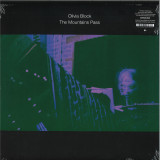
Black Truffle is pleased to announce The Mountains Pass, a major new work from Olivia Block. A key player in Chicago’s vibrant experimental music scene since the late 1990s, Block has developed an extensive body of work grounded in a personalised, at times emotive approach to the studio-based practices of the musique concrète tradition, while also encompassing improvisation, orchestral pieces, sound installations, and a sustained engagement with the piano. On The Mountains Pass, recorded by Greg Norman at Steve Albini’s Electrical Audio and meticulously edited and constructed over the course of three years, Block pushes into new terrain, introducing her singing voice and drums played by Jon Mueller into flowing assemblages that move seamlessly from ruminative organ tones and fragmented piano airs to explosions of sizzling synths and thundering percussion. Like many of Block’s past works, which include, for example, a sculptural installation using the sound of oyster beds, The Mountains Pass draws inspiration from nature and the animal world. Time spent in a particular mountain range in Northern New Mexico informs this suite of pieces, whose lyrics and titles refer particularly to animal life in the area. Beginning with bursts of white noise and delicate synthetic pops and squeaks, opener ‘Northward’ very soon reveals the special direction the album will take, as lyrical piano lines are joined by Block’s fragile voice, singing words written from the perspective of f2754, an endangered Mexican gray wolf who wandered more than five hundred miles from Arizona to New Mexico in 2022. The fragment of song quickly breaks off, leaving us with a ghostly electronic hum. ‘The Hermit’s Peak’ follows, one of two epic pieces at the album’s core. Beginning with chiming, almost harpsichord-like tones, it moves through episodes of spacious, ruminative piano, Jon Mueller’s sparkling cymbals, stuttering cut-up piano sounds, and a climax of keening organ and trumpet tones (performed by Thomas Madeja). Continuing the exploration of vintage keyboard and synth tones heard on Block’s Innocent Passage in the Territorial Sea (Room 40, 2021), the music sometimes suggests the great outer-limits works of 70s Italian prog figures like Franco Battiato or Arturo Stalteri in the languorous drift of synthesizer, organ, and piano tones and the meticulous yet organic flow of its construction. ‘Violet-Green’ opens the second side with another epic journey, its lyrical content concerning ‘a mysterious bird die-off and a forest fire’. Block’s crystalline voice and rich piano chords at times call up the restrained chamber songs of Janet Sherbourne, but fragmented and threaded through passages of woozy pitch-bent keyboards, hypnotic distant thuds, tinkling bells, and searing distorted synth tones. On ‘f2754’, the freedom of the roaming wolf surges through dense layers of rapid keyboard attacks and long organ tones over a propulsive drum performance straight out of Animal Magnetism-era Arnold Dreyblatt. This distinctive sound world is then reencountered in a darkened mirror image in the uneasy, metallic shimmer of the closing ‘Ungulates’, named in reference to a heard of elk roaming through the mountains. Like Battiato’s Clic or Gastr del Sol’s Upgrade & Afterlife, The Mountains Pass inhabits the underexplored terrain where the beauty of song coexists with a radical formal openness, illuminating the deep musicality and warmth that have been present in Block’s work all along.
“My heart is loud,” Julia Holter sings on her sixth album Something in the Room She Moves, following an inner pulse. The Los Angeles songwriter’s past work has often explored memory and dreamlike future, but her latest album resides more in presence: “There’s a corporeal focus, inspired by the complexity and transformability of our bodies,” Holter says. Her production choices and arrangements form a continuum of fretless electric bass pitches in counterpoint with gliding vocal melodies, while glissing Yamaha CS-60 lines entwine warm winds and reeds. “I was trying to create a world that’s fluid-sounding, waterlike, evoking the body’s internal sound world,” Holter says of her flowing harmonic universe.
“What is delicious and what is omniscient?” she sings on “Spinning”, the album’s incantatory centerpiece. “What is the circular magic I’m visiting?” Or as Holter put it: “It’s about being in the passionate state of making something: being in that moment, and what is that moment?” She found it anew on Something in the Room She Moves, singing in somatic frequencies.
“My heart is loud,” Julia Holter sings on her sixth album Something in the Room She Moves, following an inner pulse. The Los Angeles songwriter’s past work has often explored memory and dreamlike future, but her latest album resides more in presence: “There’s a corporeal focus, inspired by the complexity and transformability of our bodies,” Holter says. Her production choices and arrangements form a continuum of fretless electric bass pitches in counterpoint with gliding vocal melodies, while glissing Yamaha CS-60 lines entwine warm winds and reeds. “I was trying to create a world that’s fluid-sounding, waterlike, evoking the body’s internal sound world,” Holter says of her flowing harmonic universe.
“What is delicious and what is omniscient?” she sings on “Spinning”, the album’s incantatory centerpiece. “What is the circular magic I’m visiting?” Or as Holter put it: “It’s about being in the passionate state of making something: being in that moment, and what is that moment?” She found it anew on Something in the Room She Moves, singing in somatic frequencies.
- A1: Diane Charlemagne (Feat Iman Houssein)
- A2: Love Supreme (Part 1 And 2)
- A3: The Elegance Of A Dancing Body
- A4: The Birth Of A New You (Feat Pierre Spataro)
- A5: Electric (Feat Aint About Me)
- B1: I Sing To Find Peace Of Mind (Feat Simbad)
- B2: Live In Darkness And Wait For Brighter Days
- B3: I Feel The Pain But Can't Describe It (Feat Aint About Me)
- B4: One Day You Smile, One Day You Cry (Feat Pierre Spataro)
- B5: The Soundtrack To A Beautiful Sunset On Your Way Home
Revered DJ and radio veteran Lefto Early bird has announced his album Motherless Father which will be released on 8th March.
Your favourite DJ’s favourite DJ presents his 10-track album; "This record feels like the starting point of a new era, which I’m sure a lot of people can relate to what I mean; the tracks I recorded, the ones I’m singing over and the guests i invited have been my way to deal with the pandemic, the motherless child that I am and the father that I am. I call this record a deep pre-club record, one that will give you the energy to go out there and party but with a feeling of letting go of everything."
Albert Hammond is one of the most prolific, versatile songwriters and performers of his or any generation. His earliest solo hits include “It Never Rains in Southern California” and “The Free Electric Band.” His contributions to popular music (writing and and/or contributing to hit songs by Tina Turner, Whitney Houston, Willie Nelson and Julio Iglesias, Diana Ross, Starship, The Hollies, Joe Cocker, Johnny Cash, Aretha Franklin) cross genres and generations. Body of Work is an all-new, original, and essential addition to this iconic canon. Written during a time of tumultuous change, Body of Work is the moment a master songsmith takes a step back to reflect on the world, “This is the first step I had to take and the album is what I discovered about me and all of us once I started here,” says Albert. “I can feel the discomfort and impatience in it. That’s just the honest feeling when the world changes for you from oasis to desert, from beauty to chaos… freedom to fences.” From gutsy opener “Don’t Bother Me Babe” through the wistful “Looking Back” and closing with the reflective “Goodbye LA,” Body of Work is an album for the ages, crafted with 50 years of words, experience, and wisdom.
Psychedelic Anxiety, as a mood, goes something like this: overwhelming, existential, vertigoic, arising when we stare into the void. This metaphysical unease also serves as the title for Brooklyn-based musician Frances Chang’s second album, and as a feeling it’s present throughout, charged by all things occultish. Recorded by Chang and engineer Andrea Schiavelli, featuring a cast of revered NYC DIY players, including Schiavelli (Eyes of Love) and Liza Winter (Birthing Hips), Psychedelic Anxiety relishes in the refining of aesthetic, in the electricity of improvisation, in balancing bleakness with humor. It embodies an idiosyncratic genre Chang calls slacker prog — offbeat, but brimming with spiritual and emotional resonance. The record infuses artifacts of the mundane with otherworldliness— even the love songs live more in the realm of fantasy (or horror) than the romantic. The psychic twin and mirror image of Chang’s 2022 debut full-length Support Your Local Nihilist, Psychedelic Anxiety by comparison is less urgent, leaving space for more nuance and storytelling. Together, these albums represent a new cycle of creativity for Chang, a reset to zero. “Eye Land,” captures Chang on a tour around the Irish and English countryside, in a moment of major life change. “Lying around your spare room,” she sings, “Sky is cloudy here in June.” Around her, guitar sputters and stops. Vocals branch off like vines on the side of an old house. It is a profoundly lovely song, a freaky miniature in the way that a Broadcast song is a freaky miniature. “Darkside” opens up with a particularly memorable narrative moment. “Last night I saw Parasite,” sings Chang, describing how she saw it alone, how regular life that week was acute, weird, intense. How she found comfort in resignation. After all: Psychedelic Anxiety is a serene, bizarre record full of alien sounds and big introspection.
- A1: Jericho 2:04
- A2: When They Ring The Golden Bell 2:33
- A3: Two Little Fishes, Five Loaves Of Bread 2:36
- A4: Beams Of Heaven 3:26
- A5: Cain't No Grave Hold My Body Down 2:40
- A6: All Alone 2:39
- B1: Up Above My Head There's Music In The Air 2:28
- B2: I Shall Know Him 2:30
- B3: Fly Away 2:27
- B4: How About You 3:33
- B5: Precious Memories 2:42
- B6 99: 1/2 Won't Do 1:59
Hailed as the ‘Godmother of rock ‘n’ roll,’ the pioneering singer and guitarist Sister Rosetta Tharpe was the first major gospel star, her skills on electric guitar and blend of the sacred and secular a major influence on Little Richard, Jerry Lee Lewis, Johnny Cash and Elvis, as well as Eric Clapton, Keith Richards, and Jeff Beck. She began recording in the 1930s and Gospel Train, her first for Mercury, was a dynamite comeback, recorded in 1956 with quartet the Harmonizing Four, its popularity leading to a four-month UK tour. It’s a killer set from start to finish and required listening for lovers of rock, blues, and gospel. Get it and be awed!
- Benzedrine
- Pink Lightning
- Beautiful Boy
- Knees
- Rollin', Rollin', Rollin
- Jane Greer With A Gun
- Monkey
- Git Paid
- In Some Dreams
- Drinkin' 'Bout You
- None Of Us Became Anything
- Bacall
- January
- Sit N Squirm
- Howlin' Heart
- Ketamine
- With Half Your Heart
- True Love Waits
- Lil Dead Eye-D
- Gene
- Love
- Inchyra Blue
- The Beach
- Pineapple
- Sandra's Stuff
- Postcard
- Further 2 Fall
- Disappeared Planets
- Estonia
- Sister Wives
- Everytime
"Richard Edwards is in the pocket. He’s been there for several albums now: 2017’s Lemon Cotton Candy Sunset, 2020’s The Soft Ache & the Moon, and 2022’s Ghost Electricity/Vampire Draw. Just as the Margot records defined his twenties, this “Beach Bum” era, as he calls it, may well define his thirties. That era is expanded in Two Sad Little Islands Drift Together, Two Lonely Little Monkeys Find A Tree: Rare and Unreleased 2015-2023.
Beginning with Lemon Cotton Candy Sunset, Richard has been steering his ongoing body of work toward capturing a feeling of being at sea. Life can find us at sea in any number of ways–in a marriage or partnership, or in longing for one; in parenting, and its ceaseless wonders and worries; in bodies and minds that confound understanding (whether just our own, or also that of professionals); in our rotting world, which we’ve fucked up beyond all repair.
“What does that sound like, though?” you may ask. Like Mike Bloom’s cascading fingerpicking in “Lil Dead Eye-d (b.),” or the tranquilizing combination of Dave Palmer’s piano and Perla Batalla’s multi-tracked vocals on “Love (b.)” Like the L.A. based Section Quartet on “True Love Waits,” or the triumphantly stoned Velvet Ocean jam-session that is “Jane Greer With A Gun.” Like Richard’s use of melody and imagery on “Pink Lightning (b.)” and lead single “Benzedrine,” where he is masterfully accompanied by Erin Rae (on the former) and Maria Taylor (on the latter).
Unlike Richard’s past archival releases which have often featured home demo recordings, everything on Two Sad Little Islands has been produced in-studio. With this 3-LP vinyl set, Richard presents just over two hours of material that once again makes his case as one of the “most underrated songwriters of our time” (LA Review of Books)."
- Derived From The Trout Mask In A Tentative Manner 04:55
- The Dissolution Of Time 08:57
- Abdication 05:02
- The Alphabet Of Steps 06:23
- Les Cycles Extatiques 06:52
- The Geometry Of Rhythmics 05:26
- At The Margin Of Moments 06:37
- Through The Deserts Of Postmodernity 09:36
- Stereometry Of Moving Bodies 06:27
- Suspecting Metaphysical Symbols 07:28
After two years, Carl and Andreas present their second album, and once again, it opens up a wide associative space for us. What strikes us initially is the uncommon instrumentation: a church organ, harpsichord, glass tubes, and more. Like their first album (The Aporias of Futurism), it is mysterious and dark. But it also carries a strong touch of rebellion and adrenaline, sometimes quite pointedly. The pieces are now shorter and feature intricate yet irresistible rhythms. The impact is immediate, yet it maintains a sense of solemnity and ceremony. The Apollonian complexity of the rhythms and subtle melodic interweavings is transformed into a Dionysian, ecstatic, hypnotic, and at times tribal context. "Music for Unknown Rituals" oscillates between primitive instincts and avant-garde intrigues.
The process began in Döblitz, a small village on the Saale river in Germany, inside an old church that houses an organ built in 1886 by Johann Adolph Ibach. Carl and Andreas gained access and secluded themselves there for a few days, accompanied by the organ, an instrument made of glass tubes, and a set of modular synthesizers. After recording the basic tracks in Döblitz, the work continued in Munich and Berlin. Carl played electric guitars, harpsichord, bass, metallophone, xylophone, Indian harmonium, and various percussive instruments. Andreas added layers of electronic sounds, noises, and atmospheric drones. He also created percussive structures extracted and derived from recorded material of technical and industrial noises, which contrasted with the acoustic drums played by Carl. The antithetical approach continues with the dichotomous arrangement of the instruments, often panned hard left and right in the stereo field, creating an antiphonic communication. Some parts, especially the use of the electric guitar, evoke memories of the psychedelic sixties. However, this is anything but a nostalgic album—these musical references are merely remnants, set pieces, and fragments used from a contemporary, post-modern, post-youth-cultural, and post-romantic perspective.
Although Andreas and Carl continue on their chosen path of composing music with an almost literary narrative structure, this album is conceptually and formally completely different from their first effort. If “The Aporias of Futurism” was a revolutionary manifesto (in a pataphysical sense), "Music for Unknown Rituals" is more like the implementation in action; it is the practical application of the previous statement. To put it another way, if "The Aporias of Futurism” was the conceptual manifesto of a dark utopia of modernity, "Music for Unknown Rituals" is the staging of free will surrendering to the myths and catharsis of a Greek tragedy. And in response to this, the artwork features a leitmotif of histrionics with hands, the hands being the first and intuitive part of the body to express something: a ritual, a prayer, a defeat...
— Andreas Gerth is one half of Driftmachine, and Carl Osterhelt is part of F.S.K and collaborates with Hans-Joachim Irmler of Faust. Both became connected through their participation in the Tied & Tickled Trio.
Both sides contain a mix of the following tracks:
A1 Off– Electrica Salsa
A2 J.J. Bronson– Jack Your Body
A3 Cruisin' Gang– America
A4 Solid Strangers– Vision
A5 Les Lee San Francisco– Love Can't Turn Around
A6 MC Miker G. & DJ Sven– Celebration
A7 Albert One– For Your Love
A8 Charly Danone– You Can Do It
A9 Fancy– Lady Of Ice
A10 Max-Him– Melanie
A11 Daydream (2)– In The Night
B1 Off– Electrica Salsa
B2 J.J. Bronson– Jack Your Body
B3 Cruisin' Gang– America
B4 Solid Strangers– Vision
B5 Les Lee San Francisco– Love Can't Turn Around
B6 MC Miker G. & DJ Sven– Celebration
B7 Albert One– For Your Love
B8 Charly Danone– You Can Do It
B9 Fancy– Lady Of Ice
B10 Max-Him– Melanie
B11 Daydream (2)– In The Night
New York-based label Kindergarten Records is thrilled to unveil Ayesha’s debut album, ‘Rhythm is Memory’ – 10 boundary-pushing tracks, a shape-shifting percussive journey with electric moments.
While intended for maximum dancefloor impact, Ayesha’s first LP is also conceptually thought-provoking and playful, exploring how bodies store and channel creative knowledge.
A self-taught producer, Ayesha relies on her instincts to make music: sensing what her body wants to feel and hear. To her, essential to building a groove is channeling what is already inside us –
memories – whether they are based on lived experience or coded in the body: culturally, ancestrally, or intergenerationally. The result is this Indian-American producer’s distinct rhythmic voice, with its
many configurations boldly expressed across her debut album.
Kindergarten first released Ayesha’s material in 2020 with her ‘Natural Phenomena’ EP, a four-track journey which she described as “an undulating love letter to nature and the dancefloor, a space
where her biophilia collides with her yearning for the dancefloor.” Subsequently, she continued to build upon her luminous, scintillating sound with a contribution to ‘Fluo II’ titled “Aspara Dub”, followed
by “Varanasi” and “Downpour” on ‘Ether’, a split release with Sha Ru in 2021. With each release, Ayesha's sound evolved, adding shades, layers, and perpetual rhythmic nuance to a mind palace of
dancefloor possibilities.
That is why her and Kindergarten are a perfect match -- driven by their mutual fascination with exploratory sonics and a shared commitment to the community that inspires them. Kindergarten
Records has shaped itself into a trailblazing label, uniting a diverse and innovative collective of local and international producers, while embodying a strong familial atmosphere.This debut LP represents
a significant step-up for both the artist and the imprint, as they strive harmoniously towards a shared goal: delivering a sonic experience full of colorful, otherworldly bass-fueled expansion.
‘Rhythm is Memory’ captures Ayesha’s signature love for driving techno and organic percussion, while at moments veering into newer electro territory while keeping it psychedelic, spacious, dubby, and
always playful. This feels intuitively right for a producer at a crossroads in her career. All tracks intricately weave together pulsing drum grooves, slinky synths, nuanced melodies, and delightfully
unexpected twists. No single genre can do justice to describing this project as Ayesha delicately nods to many, reveling in the spaces between.
Undoubtedly, across A and B sides, 'Rhythm is Memory' imparts the joy of sonic experimentation to listeners and dancers. Ayesha invites us into her creative process and its steady evolution – rooted in
many days and nights of exploration, reflection, and repetition. "The ritual practice of cultivating and tending a garden is what comes to mind if I were to visualize this record. Beautiful things can emerge
from care and consistent attention," says Ayesha. While she refers to her specific experience making 'Rhythm is Memory,' this powerful album culminates a decade of working in nightlife for Ayesha – a
project slated to leave an indelible mark on the underground. To mark this impressive milestone in their catalog, Kindergarten Records is proud to return to pressing vinyl after a hiatus since 2020,
recognizing the significance of putting out a physical release to behold such a moment in both the label's and the artist's trajectory.