Repress!
DJ Sneak started releasing music around 30 years ago, whilst Hard Times was also knocking out records at the same time from the likes of Masters At Work, Todd Terry and Roger Sanchez. Sneak has played for the legendary club night many times, but this is his first outing on the label. Sneak delivers 4 peak time classic cuts reminiscent of his early work, which fits in perfectly with the equally longstanding Hard Times label.
Search:body of work
Mayday is the third LP by Montreal-based artist, Myriam Gendron. It follows her earlier, critically acclaimed albums, Not So Deep As A Well (2014) and Ma délire - Songs of love, lost & found (2021). Myriam began exploring the complex folk traditions of Quebec (and beyond), with Ma délire, which combines traditional and original songs with arrangements that make space for avant-garde musical interludes by such folks as guitarist Bill Nace (Body/Head) and renowned jazz percussionist Chris Corsano. Mayday presents an even more syncretic fusion of the elements Myriam uses to create her sound. Most of the songs are original, sung in both English and French, and they blend traditional and avant elements with abandon. She is often accompanied on this album by the guitarist Marisa Anderson and drummer Jim White (Dirty Three, Xylouris White), whose work provides a quietly aggressive sort of free-rock base. Additional players include Montreal bassist Cédric Dind-Lavoie, Bill Nace and saxophonist Zoh Amba. Mayday is a thoroughly thrilling effort that manages to create new vistas of sound while maintaining a feel that is both intimate and familiar. The music here certainly possesses a richly serious tone, but Myriam Gendron (like Leonard Cohen) is able to infuse her darkness with a subtle, powerful light that reminds us that even the most pitch-black night is but a transitional state. Beautiful work.
- A1: Goldne Abendsonne, Wie Bist Du So Schön
- A2: Aprilnacht
- A3: Urin Deiner Blüten 1
- A4: Mutter Maria Zwischen Den Himmeln
- A5: Requiem Für Eine Ringelnatter
- A6: Urin Deiner Blüten 2
- B1: Apfelbaum, Kuh Und Backofen
- B2: Nie Kann Ohne Wonne, Deinen Glanz Ich Sehn
- B3: Requiem Für Ein Schwalbennest
- B4: Morgensonne
- B5: Afra Altar Maidbronx
Originally released on tape by SicSic in 2014, Aprilnacht commemorates a decade of music from Brannten Schnüre and marked the spring in a tetralogy of albums about the four seasons when it came out. Back then the Würzburg-based project consisted solely of Christian Schoppik, who later welcomed Katie Rich to take over the vocals. He used to perform as Agnes Beil, but dropped the name when, while making this album realized his music was becoming "much gentler and more fragile". Aprilnacht already captured the particular musical ideas that Schoppik would thoroughly keep exploring, delving deeper and deeper into the use and manipulation of samplers from sources so diverging as to wander between the five continents to post-war German family television and cult cinema. Heir of the ritualistic intensity of Coil, of the intricate sampler assemblies of Ghédalia Tazartès', and of the dusty, dismal old ballads from around the world, Brannten Schnüre manages to make these paths cross in a territory that is as inherent as it is uncanny; sieged by the past and intimate as a hearth. An organic approach to folk, ambient, and sound collage, where ethereal yet thoroughly textured pieces coalesce in enthralling, delicate, and innermost musical rituals.
The album cover paintings reveal the temper: dreary old towns where shadows come to dim the slow passage of crepuscular colors, a soft area of reanimation where wind and light come close and foresee the night of spring. Aprilnacht was inspired by the stories of German philosopher and writer Friedrich Alfred Schmid Noerr, whose work exhaustively examines the conflict between paganism and Christianity, safeguarding myth in a way that Schoppik describes as boldly modern, humorous and unpredictable in its variations of the Germanic folklore motifs. "I wanted to do the same with the music," he states, and the music here could as well be suitable for a night when household deities welcome wandering will-o'-the-wisps, water nymphs, and gyrovagues to discuss Perchta's leadership of The Wild Hunt, but this album is not a folk tale, it's not an elegy to worlds already gone, hidden in years; it's an intersection of routes that open mysteriously before our ears like a congregation of vapors. Aprilnacht is a gathering of voices; "There are too many children, and none of them keeps quiet," reads the last verse of «Requiem für eine Ringelnatter.»
Sensuality drips over the music to celebrate both the voluptuousness and tragic quality of nature; "It's raining on me, urine from your flowers," Schoppik sings in «Urin deiner Blüten» and later on, faced with a snake's erotic features, as if he wanted to be embraced by it: "Your quick, sharp tongue and your warm venom; that's what the pond is missing." Orality is where this profusion of contents thrives. When the voices get closer and condense, the words reveal the saliva employed to pronounce them; we feel the mouth and the tongue, but when breath envelops them in sorrow and softens their edges, they sound distant, diffused in the atmosphere, letting go of the body that held them. These two vocal facets oscillate permanently and interact naturally with the fertile assembly of samplers and instruments that develop throughout the album, which condense and disperse impersonating each other, interweaving to search for a specific syntax. Tangled whisperings of enigmatic phrases, timid voices that stick out to check the scene but hide away quickly, shivering trance chants and monastic ambiances, distant screams and clamors in between chaos and warfare swirl until bursting into subtle songs where even Mother Mary comes forth softly. Soothed by foggy atmospheres and crackling punctuations, these voices shape a vulnerable crowd, an occasion of fragility. Along this swarm of songs thrown into thin air, accordions sound like heavy-breathing lungs; clarinets sigh like curtains shaking; violin solos wander around like bees; Gjallarhorns cries distend like fleeing cattle; glockenspiels evoke remote music boxes and inherited toys; backward emanations emerge like slender waves retreating. On the banks of stretching loops and ember textures is where the songs slowly nest, collecting the words to find their tone.
A poem by Jorge Teillier says, "To talk with the dead you have to choose words that they recognize as easily as their hands recognized the fur of their dogs in the dark. To talk with the dead you have to know how to wait: they are fearful like the first steps of a child. But if we are patient one day they will answer us with a flame that suddenly revives in the fireplace." This may be Brannten Schnüre's main purpose: To find the voice to speak to those of whom we were a vision. Not in mourning, but acknowledging the obscure and volatile nature of spring's regenerative force, searching for the treasure of balance, as evidenced in the lyrics of «Requiem für ein Schwalbennest,» "Its nest was destroyed so many times before it was finished, and despite that, the shallow builds as if it is infatuated." The same idea is here in the words of Schmid Noerr, who made poetry an act of resistance to the horror of Nazism; "Since having seen the ability of a brilliant spirit to die, with a calm mouth that everyone saw, health is true again and we affirm it, even if rivers of blood flow." And as we call for the dusk's kindness, waiting to return home and eat with our kin by the stove, our ears become used to the games of the night. We feel like we're rowing on wetlands, while the "moon musick" keeps us vigilant against the slightest movement of water or sweet moan because eeriness here is imperative for survival. Do not succumb to the insipid howl of death, for nothing may last but mutability. You see, the rock has moved a little during the night; the rest is just wind fleeing from the void.
The Baby Seals debut album, "Chaos," is a sonic exploration that blends heavy guitars, a pop edge, and a punk rock garage spirit with a heavy attack. The band, comprised of Amy "Amos" Devine on drums and backing vocals, Kate Shore on bass and backing vocals, and Kerry Devine on guitar and lead vocals, delivers a raw and energetic collection that captures the essence of their live performances. Recorded in March 2023 in Thaxted, just outside of Essex, "Chaos" embodies the DIY ethos that has defined The Baby Seals' approach to music. Working with engineer Joe in a secluded outhouse surrounded by fields, the band laid down the tracks live over a day, capturing the unfiltered essence of their sound. Joe's extensive collection of homemade pedals added a unique touch to the recording, while Benny T's mixing expertise brought the album to its final form. The decision to minimise post-production sets "Chaos" apart from previous recordings, reflecting the band's commitment to authenticity and a desire to showcase their growth and maturity. On Chaos Kerry says: “Chaos is the next phase in life for us lasses in the band - babies and mid-life responsibilities. The album definitely is about how we feel and experience the world around us in our 30s and 40s. Someone who heard the album recently said it's like the The Baby Seals have grown up and I liked that because that's what I feel likes happened to me in the last two years… The album definitely has Themes: inclusivity, gender inequality, the mental load, the motherload, power, body positivity, challenging taboos, liberation. The importance of what to take seriously and what not to take seriously. Title track, Chaos is one of the songs on the album which I'd written after a series of events including watching an interview with the late writer Benjamin Zephaniah who said the only way to liberation for all was to tear big governments down and to believe in your community. The cover photo by Jeff Pitcher sums us up and hopefully gives you a feeling of what the album sounds like. Album design was created by Igor Prato Luna, he just seemed to understand what we are about. He referenced loads of wonderful album cover, poster and flyer artwork from the 60s - 90s, and even some fabulous sci-fi artwork from the 1920s and those incredible 1950s sci-fi pulp book covers. Nothing was referenced too heavily, though, and Igor definitely made it his own
A tribute to one of the greatest songwriters & artists of our time! Features newly recorded covers from Keith Richards, Joan Jett and the Blackhearts, Rufus Wainwright, Lucinda Williams, Maxim Ludwig & Angel Olsen, Rickie Lee Jones, Mary Gauthier, Bobby Rush, Automatic, The Afghan Whigs, and Rosanne Cash. Special Record Store Day Edition pressed on Silver Nugget vinyl and housed in a silver laminated jacket Booklet features liner notes by compilation producer & former Lou Reed publicist Bill Bentley, featuring photos by Mick Rock and Timothy Greenfield-Sanders. "To me, Lou stood out. The real deal! Something important to American music and to ALL MUSIC! I miss him and his dog." - Keith Richards "Lou seemed fearless to me, like he'd rather die than be a people-pleaser. I took inspiration from that." - Rosanne Cash "Lou Reed is my earliest influence, my introduction to punk rock, and the soundtrack to the beginning of my romance with Maxim." - Angel Olsen "Lou Reed has been gone now for many years. He's one of the few people whom I miss as much now as when he left. There are so many instances where I wonder what he would say or what he would think. His general aura would always lend something really unique to the room. Thank God he left his great music and recordings. His personality is sorely missed. Love you, Lou." - Rufus Wainwright // It goes without saying that the legendary Lou Reed was a true rock 'n' roll pioneer. From The Velvet Underground's debut in 1967 all the way through the end of his days, Reed sang truth from his heart. He lived life to the limit-and then some. The Power of the Heart is a tribute to Reed's freedom of expression with covers spanning his ground-breaking years with the Velvets into his majestic solo career. Each track is a glorious extension of the Rock 'n' Roll Animal's soul, ever adventurous and avant-garde. The Power of the Heart: A Tribute to Lou Reed kicks off with a legend in his own right, Keith Richards, reimagining the Velvets' classic, "I'm Waiting for the Man." Richards' rendition instantly invites you on board this unforgettable ride. In stark contrast, "Perfect Day" is somehow even more melancholy than the original given the Rufus Wainwright treatment, featuring sparse fingerpicking and gentle harmonies. Joan Jett and the Blackhearts deliver a version of "I'm So Free" that would have even Lou rockin' in his grave. It's thrilling to hear these songs reinterpreted and sung by such heavyweights; you can even hear as Lucinda Williams channels the spirit of Lou with her take on "Legendary Hearts." Other notable tracks include a punk-drunk, loved-up duet by real-life lovers Angel Olsen & Maxim Ludwig with "I Can't Stand It," and Rickie Lee Jones' reimagining of "Walk on the Wild Side," both whimsical and enticing with her whispery vocals, stripped-down percussion, and a piano fit for a late-night lounge. This tribute album truly defies genre, but its throughline, in the end, is its heart: a deeply thoughtful collection of songs that shaped a generation, each paying homage to a man whose body of work still sings.
Pieces of debris washed up on a coastline shrouded in mist. Gratification comes from an eternal search for solace. Locked away at the top of a lighthouse somewhere on an unnamed isle, Grady Steele broadcasts to those within the beacon’s reach. A soundsystem built of driftwood and salvaged car stereos is pieced together with precision and laboriously dragged to the top of the obelisk. A timeless fugue state spent playing arpeggios on a Spanish guitar, the PA system ebbing out phasing loops across benevolent waters. Layering, occasionally faulting, stopping, recording, starting again. The phosphorescent glow atop the obelisk is ever-present.
Perhaps the first release on Archaic Vaults to feature (at least prominent) use of the guitar, these six compositions feel sketch-like and yet burned into the retina, like that of a passing car’s headlights leaving an impressionistic imprint of the source material. To mention this is Grady Steele’s debut release is not to imply he is new to working with sound, having been the proprietor of one of London’s most important soundsystems for the last decade. An obsession with fidelity can be heard and and at times deliberately perverted amongst the body of work. The warm and melancholic tones of the Spanish guitar evident in almost all songs are juxtaposed with various collaged material, including what sounds like hastily captured iPhone recordings and drum machines neglected at the back of the studio, dragged out for one or two stubborn, lurching takes and then once more committed to storage. The 90s voice-imitator pads glowing with undulance are reminiscent of John T. Gast’s early studio takes, and the synergy and precision in guitar layering could lend a clue as to what Fuck Buttons would have sounded like had they sold off their studio equipment for a couple of wooden 12-stringers. Stare long enough at those Windows 95 screensaver-esque rolling hills, and one might witness some miniscule movement in the growth.
Music composed and arranged by Grady Steele Painting by Antoine Larrera Mastered by Owen Pratt Design by Severin Black
Black Vinyl[25,17 €]
The Swedish quartet Goran Kajfes Tropiques present Tell Us, an album consisting of three long pieces composed by the group, is "slow music" to the bone, a deep body of work utilising the language of jazz as its core mode of communication but echoing way beyond. The quartet is expanded with strings, adding wings to the music and helping it lift off the ground in a personal, highly engaging manner.
- A1: Magic Momentum
- A2: Rockets To Mars
- A3: The News These Days
- A4: Life (Skit)
- A5: Love Vibration
- B1: Original Flow
- B2: Hold On
- B3: Surviver (Skit)
- B4: Tatamaka Pt.1
- B5: Tatamaka Pt.2
- C1: Time (Skit)
- C2: Time
- C3: Jinja (Skit)
- C4: Kochirakoso
- C5: Our Tactus
- C6: Nah Personal
- D1: No Chains
- D2: Push Comes To Shove
- D3: We No Let Y'all In
- D4: Mexico (Skit)
- D5: Future For Our Children
We Release JAZZ is very happy to announce an exciting new body of work by Joseph Deenmamode aka Mo Kolours. The singular musical spirit’s new 21-track album Original Flow is available as a double LP housed in a heavy 350gsm sleeve with original artwork by Mo Kolours himself and the classic WRJ obi strip, as well as in digipack CD and digital formats.
A catalog of critically acclaimed records, including his self-titled debut (2014), ‘Texture Like Like Sun’ (2015), 2018 album ‘Inner Symbols’ and three companion EPs, established Deenmamode as a prodigious musician and vocalist. Pitchfork extolled his “hypnotic, tribal-infused dance grooves”, DJ Mag appreciated the “colourful celebration of soundsystem culture”, and Resident Advisor advocated that “no one sounds quite like Mo Kolours”. Musical analogies were drawn by The Guardian as “The best album Curtis Mayfield never made with A Tribe Called Quest and Lee Perry” and Mojo as “like Marvin Gaye produced by J Dilla”.
Five years ago, Deenmamode moved to the Japanese countryside. Far away from familiarity, he contemplated his place and further questioned his identity. “I had none of my ‘own’ people around. I had time to really find what makes me tick musically. Japan has helped me go back to those subconscious leanings, really go deep, and reflect the aspects that make up my story”.
The tracks on ‘Original Flow’ have been constructed from sessions, improvisations and soundbites captured around the world during this time; collecting contributions from musicians including Deenamode’s brothers Reginald Omas Mamode and Jeen Bassa plus Andrew Ashong, Charles Bullen, Dwaye Kilvington, Eddie Hick, Stefan Asanovic, Myele Manzanza, Ross Hughes, and Tom Dreissler. Deenamode says “I’m proud of this album’s creative process. Coming from a tradition of scouring through hours of records, I wanted to create my own samples, to find that perfect loop that no other producer could put their hands on. I decided to invite a group of friends and acquaintances, who also happen to be incredible musicians, to a studio in Crystal Palace to improvise based on some loose ideas I had. We spent all day, and recorded everything”.
‘Original Flow’ is an album of UK street-soul nouveau, future indigenous jazz fusion, Rasta Segga, Nyahbinghi jazz, Malagasy Hebrew hip hop. While retaining a spirit of exploration and improvisation, it sees Deenmamode grow and flex beyond beat tape brevity, expanding composition and stretching his musical muscle to play live with other musicians. Themes of empowerment, overcoming adversity, and mental liberation coexist with notes from ancient history, futurism, and science, as well as musings on family and togetherness.
‘Magik Momentum’ springs from a discussion that features at the start of the song, an inspiring mentor answering a question from Deenmamode about improvisation and what role it plays in life when planning and manifesting the future. ‘Rockets to Mars’ questions the lack of care for the billions of people with nothing, while governments plan to explore space. “This sparked a comparison in my mind to a Sonny Okuson song that I would reference when performing. Okuson’s song talked of the lack of resources in many communities in the world, while governments go to the moon”.
He says the music behind ‘The News These Days’ is “possibly my favourite on the album”. Looped like he would a late sixty jazz-fusion sample, there was nothing added and the track was complete within a matter of minutes. “It was the first and best moment from the entire Crystal Palace session”, he adds. The album’s contrasting title track with minimal instrumentation played solo by Deenamode. While frustratingly searching for gems in past recordings, he thought in a burst of ego, “I don’t need no-one else to make a dope beat!” picked up his ravanne, (the traditional frame drum of his fathers home-land of Mauritius), pressed record, and started to play. He says, “In my thoughts were the rhythms of the Nubians in Upper-Egypt and Sudan, the swing of the huge drums played by Mauritanian women, of-course the Sega beat of Mauritius, and the ever inspiring beat of James Yancey”.
Driven by UK broken beat, Cuban congas, Nigerian and Mauritian inflections, ‘Love Vibration’ follows the concept that all emotions carry a vibratory frequency and pays homage to the frequency of creation and the power of love. The two part ‘Tatamaka’ tells of the history of Deenmamode’s ancestors, the maroons of Mauritius. “We are people who managed to run from our oppressors and find refuge in a corner of the island called ‘Le Morne’ where they could not reach us. One bloody day they came in numbers to re-capture, to revenge. Many of us chose to jump to our deaths, rather than be taken back into subjugation. The poem by Creole Richard Sedley Assonne says; “there were hundreds of them, but my people, the maroons chose the kiss of death over the chains of slavery”. Tatamaka was the name of a famed maroon leader who was murdered for claiming his, and our people’s freedom. The song is the imagined journey of escape and freedom by an ancestor of the maroons of Le Morne”.
Born in the west midlands and raised on the traditional sega music of his father’s Indian Ocean homeland of Mauritius alongside records by the likes of Jimi Hendrix, Santana and Michael Jackson; his influences expanded with late 90s jungle and drum and bass nights in Bristol, experiments at art college in Camberwell, and the rich culture of Peckham, “at the time we called it the Afro Quarters of London” says Deenmamode, adding hip hop, dub, soul and soundsystem styles to his individual sound.
He explains, “I love drum music, from hand-drums to 808s. I love music from the ancient past, heritage music, indigenous music, traditional music passed down from the beginning of time. Music from the body, hand claps, grunts and foot stomps. Music with audible depth, busy, bustling, highly charged. Music from the soul, the music from beyond. I love music from the islands and the mountains. The music of the streets, hustle music, alleyway beats. Club music”.
He describes the creative process as thinking in images. “The visual world and the world of sound seem to intermingle in my thought process. When I play the drum with my eyes closed, a world of imagery dances and moves with beat. Improvised drumming feels like I am listening to what I want to hear, rather than trying to play what I want to hear. Following the rhythm and finding new pathways to walk within the patterns is what I experience. In this way I often feel I am just a listener, instead of the player”.
Original Flow is pressed on biovinyl, a sustainable alternative to traditional vinyl. Biovinyl replaces petroleum in S-PVC by recycling used cooking oil or industrial waste gases, resulting in 100% CO2 savings in bio-based S-PVC production. Furthermore, it is 100% recyclable and reusable, embracing the circular economy ideology.
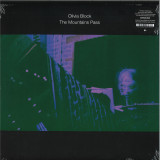
Black Truffle is pleased to announce The Mountains Pass, a major new work from Olivia Block. A key player in Chicago’s vibrant experimental music scene since the late 1990s, Block has developed an extensive body of work grounded in a personalised, at times emotive approach to the studio-based practices of the musique concrète tradition, while also encompassing improvisation, orchestral pieces, sound installations, and a sustained engagement with the piano. On The Mountains Pass, recorded by Greg Norman at Steve Albini’s Electrical Audio and meticulously edited and constructed over the course of three years, Block pushes into new terrain, introducing her singing voice and drums played by Jon Mueller into flowing assemblages that move seamlessly from ruminative organ tones and fragmented piano airs to explosions of sizzling synths and thundering percussion. Like many of Block’s past works, which include, for example, a sculptural installation using the sound of oyster beds, The Mountains Pass draws inspiration from nature and the animal world. Time spent in a particular mountain range in Northern New Mexico informs this suite of pieces, whose lyrics and titles refer particularly to animal life in the area. Beginning with bursts of white noise and delicate synthetic pops and squeaks, opener ‘Northward’ very soon reveals the special direction the album will take, as lyrical piano lines are joined by Block’s fragile voice, singing words written from the perspective of f2754, an endangered Mexican gray wolf who wandered more than five hundred miles from Arizona to New Mexico in 2022. The fragment of song quickly breaks off, leaving us with a ghostly electronic hum. ‘The Hermit’s Peak’ follows, one of two epic pieces at the album’s core. Beginning with chiming, almost harpsichord-like tones, it moves through episodes of spacious, ruminative piano, Jon Mueller’s sparkling cymbals, stuttering cut-up piano sounds, and a climax of keening organ and trumpet tones (performed by Thomas Madeja). Continuing the exploration of vintage keyboard and synth tones heard on Block’s Innocent Passage in the Territorial Sea (Room 40, 2021), the music sometimes suggests the great outer-limits works of 70s Italian prog figures like Franco Battiato or Arturo Stalteri in the languorous drift of synthesizer, organ, and piano tones and the meticulous yet organic flow of its construction. ‘Violet-Green’ opens the second side with another epic journey, its lyrical content concerning ‘a mysterious bird die-off and a forest fire’. Block’s crystalline voice and rich piano chords at times call up the restrained chamber songs of Janet Sherbourne, but fragmented and threaded through passages of woozy pitch-bent keyboards, hypnotic distant thuds, tinkling bells, and searing distorted synth tones. On ‘f2754’, the freedom of the roaming wolf surges through dense layers of rapid keyboard attacks and long organ tones over a propulsive drum performance straight out of Animal Magnetism-era Arnold Dreyblatt. This distinctive sound world is then reencountered in a darkened mirror image in the uneasy, metallic shimmer of the closing ‘Ungulates’, named in reference to a heard of elk roaming through the mountains. Like Battiato’s Clic or Gastr del Sol’s Upgrade & Afterlife, The Mountains Pass inhabits the underexplored terrain where the beauty of song coexists with a radical formal openness, illuminating the deep musicality and warmth that have been present in Block’s work all along.
‘Landmass’ Turtle’s first artist album since 2017’s ‘Human’. To be released on 24 March 2023, it is his third official album having also released the acclaimed ‘Who Knows’ EP in 2013.
‘Landmass’ is a beautiful body of work that flows naturally as one piece of music and is inspired by the sparse surroundings of Jon’s studio in Argyll, Scotland, an area he moved to to try and escape the noise of the city and a move that has directly impacted on his creative process.
Jon Cooper… “Since I started producing music I have never gone into a track with any preconceived ideas, I let the music develop in its own way so my direct surroundings have always played a huge part in how it sounds and the hustle of the city was something I felt I needed to get away from. This was a cathartic experience in making it - it's a real outpouring of love for the Scottish countryside and the beauty I’m lucky enough to live in and see every day!”
Jon’s musical journey is one of experimentation and passion. A regular of the electronic scene in Glasgow in the late 90's/early 2000’s, he started to experiment with DJing and music production more for his mates entertainment than with any aspiration of a career as one of the most understated electronic artists Scotland has produced.
Book[57,94 €]
Here In, Absence" ("Here, In Absence" for the book) is the result of the dialogue between the Finnish photographer Mikael Siirilä and the music artists The Humble Bee & Offthesky initiated by IIKKI, between March 2023 and January 2024.
After a first release in 2019 on IIKKI ("All Other Voices Gone, Only Yours Remains"), a second one in 2020 on LAAPS ("We Were The Hum Of Dreams"), Craig Tattersall (The Humble Bee) and Jason Corder (Offthesky) come back with a third stunning out-of-time beauty, paired with the Mikael Siirilä photography works.
Craig Tattersall is a former member of The Remote Viewer and Famous Boyfriend bandmate Andrew Johnson. Tattersall's music can be found these days more often under his alias The Humble Bee; as a founder member of The Boats; and in his collaborative works with the likes of Bill Seaman in The Seaman And The Tattered Sail. He has run the wonderful label Cotton Goods from 2008 to 2015 and since 2009 he has recorded 16 solo albums on his moniker The Humble Bee and almost the same under his name on some collaborations.
Jason Corder is experimental-ambient multimedia artist based in Denver, CO. He has been producing music, video art, audio software, and the occasional interactive sound sculpture, for over 20 years. He teaches private courses on generative music and occasionally lectures on various sound design topics at Denver University. He currently is the Audio Director at the Denver based videogame studio Dire Wolf. Over the years, he has worked with labels such as Home Normal, 12k's term, Facture, LAAPS and more. Over the years he has performed at Mutek, Decibel, Communikey and other festivals, sharing the bill with likeminded artists Pole, Matmos, William Basinski, and more.
Mikael Siirilä: "I am a darkroom artist (b. 1978) based in Helsinki, Finland. My small individual photographs examine the themes of absence, presence and outsiderhood. My characters appear immersed in their inner worlds and moments of being: simultaneously absent and intensely present. The pictures also reveal the outsider’s gaze, lost in observation and reflection. My pictures are true observations captured with minimal interaction with the subjects. Their origin is in the act of looking, and they feel causally connected to the world. The craft of printmaking is inseparable from my artistic expression. I work solely with black & white film and the darkroom. The slow, contemplative process lends the pictures a calmness. I make physical pictures I want to stare at, feel and become lost in. Again and again."
Fine Art Book, Ltd. to 500 copies:
Hardcover book printed on Munken Lynx 150g/m2 // 80 pages, 18cm x 24cm, 51 photos // Logo and slot embossed // Selective UV varnish // Visible seam and cutting cover pages // Hand-numbered, hand-stamped.
- 01: What Seed Quests For A Coralline Mud Slump
- 02: Where The Body&Apos;S Distant Arrivals
- 03: Bake Airwaves Into Symbols?
- 04: Like Aurochs Who Fraternized With Syntax Of The Riverbed
- 05: We Stop Short, Frothy, Outdoing The Grass
- 06: Rake A Song-Gush From The Outcrop
- 07: Or The Noun Of Naïve Particles
- 08: Leeching Off The Glow-Work Of Organ Rooms
- 09: We Go Candied In The Marrow
- 10: Grow Dream-Bark, A Tree
Music is a form of world building. I love to develop sonic characters and set them into fictional ecosystems with unique textures, acoustics and atmospheres. Each song forms a different landscape, through which a vocal character guides us and tries to tell us its stories." — Ludwig Berger
Ludwig Berger's 'fictional' debut album "Garden Ediacara" unfolds as a musical eco-fiction, guiding listeners through a speculative ecosystem with synthesized vocals. Infused with storytelling techniques from sci-fi and fantasy, the album intertwines melodic songwriting with electroacoustic sound design. Inspired by hydrofeminism and eco-fiction novels, such as "A Door Into Ocean" by Joan Slonczewski, the album delves into the geological period of Ediacara around 600 million years ago — an era so remote it resonates as a glimpse into a possible future. The Ediacaran period was characterised by a peaceful and thriving ecosystem inhabited by soft-bodied creatures without eyes and bones, which were completely wiped out through the appearance of a new species. "Garden of Ediacara" alludes to this period, celebrating both the pleasures of biodiversity as well as mourning its inevitable loss. The narrative unfolds as an exploration of growth and interconnection in the shadow of a coming extinction. The track titles, written by Daisy Lafarge, reveal themselves as a cohesive poem and contribute to the album's narrative.
Informed by his practice of field recording that focusses on intimate encounters with plants, animals and geological phenomena, as well as his studies in electroacoustic composition, Berger expands his palette for his debut in 'fictional' music. The album prominently features a post-human, non-binary death metal voice synthesizer, physical modeling instruments, and microscopic field recordings of plants, insects, as well as aquatic and geological life. With impressionistic strokes, Ludwig Berger crafts vibrant worlds using glassy timbres and more-than-human voices, guiding listeners through emotionally ambiguous terrain, seamlessly oscillating between moments of intimacy and irritation, melancholy and playfulness.
Ludwig Berger is a landscape sound artist, educator and musician. In his compositions, installations and performances, he enables intimate and playful sonic encounters with plants, animals, buildings and geological entities. He is founder and curator of the label Vertical Music, which releases field recordings and experimental music. Berger holds degrees in electroacoustic composition, as well as musicology, art history and literature. As a sound researcher and teacher at the Institute for Landscape Architecture at ETH Zurich from 2015-2022, he studied the sonic dimension of Japanese gardens, alpine glaciers and urban landscapes, which among other things led to the release of the acclaimed album trilogy 'Melting Landscapes', 'Dammed Landscapes' and 'Buried Landscapes'.
The artist Mau Mau has a body of work which stretches back to the 1990s. His street art has chronicled the evolving nature of UK counter-culture and larger world themes which have impacted it. Aside from walls, barns, boats and an array of other interesting places to paint, his work has appeared on prints, canvases, magazines, clothing and record covers and in exhibition spaces for over 25 years.
Talking Out of My Art is a chronological journey through Mau Mau’s artwork and features high-quality, full-colour photos of his most iconic artworks and an in-depth exploration of his life, influences, and artistic journey. Scroll down the page for an eight page preview.
The book is 245mm x 245mm, and the 240 pages are printed and bound on heavyweight 150gsm paper with a hardback cover
Recorded at British Grove and Abbey Road studios, Daphne Guinness’s fourth
album, Sleep, is unlike anything Guinness has produced before. Contemplative, self-
reflective, and personal, it represents her most beguiling body of work to-date; a
sleek sophisticated experience enhanced by an array of esoteric creative touches,
complementing its dancefloor rush.
Mixed by Ricky Damian, known for his work with Lady Gaga, Adele, Georgia Smith,
Dua Lipa, her creative connections include long standing collaborator Malcolm
Doherty and Tony Visconti (who scored the album’s strings).
The album’s scale is further amplified by collaborators, including Guy Pratt (Madonna, Michael Jackson) and Rob Shirakbari (Burt Bacharach, Dionne Warwick), plus a 34-piece string section.
The scope of her associations extends far beyond the core album. Daphne collaborated with Nick Knight of SHOWStudio for the video to early single ‘Hip Neck Spine’, and with the iconic filmmaker and photographer, David LaChapelle for the current single ‘Volcano’.
New Jackson marks his long awaited follow-up to 2017’s From Night To Night with its successor OOPS!... POP for long-time collaborators Permanent Vacation. A concise triumph in techno pop, its 9 tracks elevate his signature electronic sounds into anthemic new heights.
David Kitt is a prolific sonic polymath who’s enjoyed a colourful career making whatever he likes.
While releasing music under a vast array of aliases and collaborations for close to two and a half decades, New Jackson has remained his irregular home since 2011 for when ‘at one with the machines’. It offers a kaleidoscopic window into his love of dance music, and on his debut album under the alias From Night To Night (released in 2017 on Dublin’s All City label) he unfurled his singular vision; a dilated suite of nocturnal soul coaxed from his beloved electronic equipment with songwriter’s nous, sonically etched as blunted whispers coalesced from the dusky billows of Dublin bay. Further EPs and singles followed, alongside a beloved live show he toured globally, plus detours with his critically-lauded Garies duo (with Lumigraph) and a David Kitt solo album.
In the time since his New Jackson debut, he’s slowly distilled his studio methodology to help mine the true core of his musical self. Within this experimentation, he has stumbled upon the bounty that is OOPS!... POP, his most direct and euphoric body of work to date. Recorded across the span of five years and three different countries, Kitt has managed to transform his beloved alias into a leaner beast, tightening the screws around arrangements and songwriting to inspire an album sonically effortless in demeanour and spontaneously playful in structure and form. Aided by a stacked cast of collaborators including Rita Lynn, Donnacha Costello, Riche “Jape” Egan, Yenkee, Kean Kavanagh, Margie Jean Lewis, Meg Cronin and Fehdah, it bears the hallmarks of the studio albums of yesteryear in its dynamism and gratification while drawing on his rich bouquet of influences across a century of recorded music.
Opener SI SI SI lulls you in with its smothered vocoder’d croons and patient groove, BURNT DEEP next yields a surprising deep house turn, lit gently with casual hedonism. LIKE rewires the playbook entirely, shuffling along its minimal 80’s boogie groove with a cheeky grin, before lead single OUT OF REACH further mines the golden pastures with its glorious stuttering techno power-pop fit with that anthemic chorus. DAY IN SHOCK digi-dubs around the wonderful vocal turn of Fehdah in purest heads-down manner, then THE OK HOLE and STROBE both descend the psychedelic wormhole of anaesthetised breaks and electro with its entranced dancefloor gaze. I WANNA BE ADORED, the Madchester anthem from The Stone Roses, is then surprisingly reimagined as a lost kraut-pop robo sung classic while WITH THE NIGHT AT OUR FEET is our climactic conclusion, a mechanised symphony of dual proportions; a humane core of angelic harmonies chugging along in electro rhythm before soaring strings take us on our way.
New Jackson’s oeuvre, indeed David Kitt’s musical world, is vast; OOPS!... POP then might just be his opus across it all, a towering achievement of soaring catharsis in melody and song that soundtracks the most direct transmissions from his heart to yours
A Chaos Of Flowers is an album that builds on their ferocious 2023 album nature morte. BIG|BRAVE"s music has been described as massive minimalism. Their fusillades of textural distortion and feedback emphasize their music"s frayed edges as much as its all-encompassing weight. The potency of the trio"s work is their singular artistry combining elements of traditional folk techniques and a modern deconstruction of guitar music. Gain, feedback, and amplitude are essential. For A Chaos Of Flowers guitarist/vocalist Robin Wattie drew heavily on the poems of artists whom Wattie found kinship in, their words resonant with experiences of those often sidelined by cultural norms. "I discovered that most poems from folk traditions or in the public domain seem to be by men - to which I could not quite relate. In my search, I rediscovered some of my favorite works and poets," says Wattie. Guitarist Mathieu Ball and drummer Tasy Hudson help Wattie shape poetry into pieces as dense and impenetrable as they are vulnerable. BIG|BRAVE achieve their colossal sound through minimalist approaches, a deft understanding of dynamics and an inventive employment of percussion and distortion. The trio reconceptualize what it is to be heavy or minimal, challenging perceptions with their illumination of painfully overlooked perspectives. Guest guitarist Marisa Anderson lends earthen, blues-inflected atmospheres to the album, where guitarist Tashi Dorji and saxophonist Patrick Shiroishi amplify the squall. Working closely with frequent collaborator and producer/engineer Seth Manchester, the internal tumult of Wattie"s voice rings out in warbles, haunting echoes, and unearthly harmonies across bold immense walls of distortion. BIG|BRAVE have collaborated with metal monsters The Body on a previous Thrill Jockey release, Leaving None But Small Birds, and have toured internationally with bands like SUMAC, Godspeed You! Black Emperor, SUNN O))), and Lingua Ignota. As they continue to ascend in their journey as pioneers in the contemporary metal scene, it"s safe to say that BIG|BRAVE are here to stay.
Nia Archives is the star at the forefront of the latest era of jungle. Since her emergence in 2020, her collagist soundscapes have helped bring the sound to a new generation of clubgoers (though fair warning: don’t call her a “revivalist” – she’s the first to point out that the scene never went away). So when it comes to talk of the 24-year-old producer, DJ, singer and songwriter’s much-anticipated debut album, the odds are you’re thinking of a full-length record of weightless jungle tracks with basslines so intense they’ll leave your ears ringing.
But the reality of the Bradford-born, Leeds-raised artist’s first ever album – while very much replete with that exquisite jungle sound she does so well – is also doing something a little different. On the thrilling and freeing Silence Is Loud, Nia Archives is looking to make music for beyond the rave. As she explains: “I think music can be experienced in different ways, and there’s different kinds of music for different scenarios. Say you’re at a festival listening to music with thousands of other people, that can feel really uniting. But then you might listen to an album on your own in the bus, or in a taxi; and this project is definitely more a record to sit and listen to than a collection of club tracks.” Nia is intent that Silence Is Loud is taken in as a full body of work of something “more song-focussed, putting interesting sounds on jungle.” It means that this is a record which finds gloomy Britpop, warm Motown, soaring indie, a love for Kings of Leon’s Aha Shake Heartbreak, skittering IDM, Madchester, classic rock, old skool hardcore and more, woven and fused into her ragga and junglist tapestry, all layered with feeling, imbued with her songwriterly lyricism about loneliness, relationships, family, navigating her 20s, and the intense potential power of silence.
The vast sonic palette on Silence Is Loud comes down to Nia’s broad array of influences through her life. With her Jamaican heritage, Nia remembers hearing jungle as a child via her nana, as well as at Bradford Carnival, where she was drawn to the soundsystem culture, dancing carefree on the floats in the parade. The first album she ever bought was Rihanna’s debut, Music of the Sun, and she also went to Pentecostal church back then, and was obsessed with gospel. Aged 16, she moved to Manchester, where she didn’t really know anybody: and so, her solution to meeting people was going out. “Partying was a huge part of my life,” she says, “They used to do little freestyle cyphers at the house parties and I would join in – that’s kind of how I got into singing.” She had found music boring at school, but in meeting all these new people she became interested in making her own music as a hobby. “I was making boom-bap kind of stuff which I didn’t really like in the end,” she laughs, “My lyrics are quite deep, so on a hip-hop beat it all sounds really depressing. I wanted people to dance to my music.” And so she began experimenting with faster tempos alongside that melancholy songwriting, teaching herself how to make beats on Logic: “It’s all been a lot of trial and error, really.”
Nia went to study music in London, and was also interested in visual art, making collages and VHS: “Before the music, I was trying to make a visual archive of my life and the people around me,” she explains, “And then my music was like my diary, and a sonic archive, as well.” Hence, she paired the word “archives” with her middle name, Nia. To this day, in her spare time she’s working on pulling together a documentary on the global nature of the jungle scene.
Back on those first two EPs, Headz Gone West (2021) and Forbidden Feelingz (2022), she honed that junglist sound, painting it with new flecks of colour and vibrance. It was only after she started releasing work that she realised pursuing music could be a viable life path for her. The decision has been paying off ever since. Nia Archives placed third in the prestigious BBC Sound Poll for 2023, alongside garnering a nomination for the Brit Awards’ Rising Star prize, plus wins at the DJ Mag, NME, the MOBOs and Artist and Manager Awards. She has also toured the world – be it North America, Europe or Asia – and even opened a show in London as part of a little something called Beyoncé’s Renaissance World Tour. She’s renowned as a party-starter in her own right, too, with takeovers at Glastonbury, Warehouse Project and her own Bad Gyalz day event. She’s done official remixes for the likes of Jorja Smith, had a huge summer hit with her Yeah Yeah Yeahs rework ‘Off Wiv Ya Headz’, and worked with brands like Corteiz, Nike, Flannels, Burberry, FIFA and Apple. In just three years, it’s fair to say that Nia Archives has become a need-to-know name in dance music.
But Nia is not interested in being one fixed thing. Building on the terrain from her third EP, Sunrise Bang Ur Head Against Tha Wall, the universe of Silence Is Loud is not totally unfamiliar territory; but it’s still emblematic of a bolder scope than we’ve heard from the artist before. Working with Ethan P. Flynn (the songwriter and producer known for his work with FKA twigs and David Byrne), the resulting record is an impressive feat of deftly-sculpted textures; sometimes big and euphoric, like the wobbly, lusty bass of ‘Forbidden Feelingz’, or elsewhere notably gentle and quiet – see: the gorgeous, surprisingly drumless ‘Silence Is Loud (Reprise)’, a heartfelt number that sits somewhere in the school of Adele. “I really sharpened my songwriting skill on this project,” Nia says, “I was really intentional about what I was writing about, and I really loved co-producing with Ethan. His process is so different to anyone I’ve worked with before, and he’s got a kind of DIY set-up like me.” Flynn’s flat overlooks the Barbican, adding that unquantifiable futurist urban quality that the area holds to the music. The pair enjoyed the collaborative process so much that the album was done within three and a half months.
Perhaps this is why Silence Is Loud maintains an exuberant immediacy while still being sleek and spacious, interspersed with flourishes of metallic beats, lush melody and topped with her sugary but powerful vocal, floating over it all. There is an intimacy to the record, perhaps in part due to Nia writing most of her lyrics while sitting in bed in her flat in Bow (once a bedroom producer, always a bedroom producer). You can hear it on the refrain for lead single ‘Crowded Roomz’, which finds rippling guitar lines cutting taut through the beats as Nia refrains: “I feel so lonely crowded rooms.” The song is an examination of life on tour, constantly surrounded by people, but not necessarily those she can be herself around; more than that, the track is exemplary in the category of sad bangers.
Silence Is Loud often finds itself in that push and pull between melancholy and euphoria. There’s a celebration of her unconditional love for her younger brother (the title track), a rumination of an evening with an Irish boy she met by Temple Bar (‘Cards On The Table), or a letter to herself on the light and airy ‘Unfinished Business’, even coming to terms with a lover having a past they haven’t quite processed yet (“nobody comes with a clean slate”). The latter was recorded the week after a music festival, and accordingly captures Nia’s vocal in its not quite healed, husky state.
Nia’s work is always a snapshot of where she’s at when she’s making it. This might not be the debut album you were expecting, but that’s what makes Silence Is Loud so special. Nia Archives has learned the rules of her sound, and is unafraid to break them, pushing jungle and herself into new, unchartered territories that, in turn, go some way to map the history of the greats of British dance music. More than that, it plants her firmly in that lineage.

With time, we come to understand the way the joy of connection is mirrored by the void of loss, how the constancy of love is matched only by the impermanence of life, the simple idea that we could not create light if we did not risk the dark - we'd never need to. So it is with METZ, a band once known for blowing out eardrums with songs of joyous rage who have, over their past few records, begun exploring ways to turn abrasiveness into atmospherics, the evolution of their sound not only a reflection of the maturing of the band themselves but also of a changed world that demands nuance and compassion to comprehend and to survive. It was a journey already underway on 2020's Atlas Vending, but one that reaches new heights on Up On Gravity Hill, where the Canadian trio creates a kaleidoscopic sonic world as tender as it is dark, aided once again by engineer Seth Manchester (Mdou Moctar, Lingua Ignota, Battles, The Body). Deep, detailed, and unyieldingly personal, it is not only METZ's most powerful record to date but also their most beautiful. Still three punks from Ontario at heart, guitarist and vocalist Alex Edkins, drummer Hayden Menzies, and bassist Chris Slorach waste no time as opener "No Reservation/Love Comes Crashing" sweeps in like a wave, sonically and thematically setting the scene for the record to come. A dynamic song about feeling suspended in stasis, layers of dissonance melt into a restlessly heady outro marked by escalating crescendos of shimmering noise that reach for the stars - and is that a violin quivering brightly beneath those elegant swells of guitar, those charging drum fills, those intricate bass lines? It is indeed, courtesy of composer Owen Pallett; his presence an immediate indicator that METZ are thinking more cinematically than ever before. The change is partially inspired by Edkins' work as a scorer for film and television and his pop-leaning solo project, Weird Nightmare, where, he says, he learned to write more intuitively, letting his emotions lead the way. But make no mistake: Up On Gravity Hill is a total band effort, the work of three musicians who have been playing together for over a decade, with all the trust that entails. For those who believe in the power of the rock band to exemplify the highest resonance of human connection, there is much on Up On Gravity Hill to lift the spirit, a puzzle worth repeated listening to unlock or just to get lost in again and again. Rather than the music being flattened into a single plane, the band explores "the space above the cymbals," resulting in some of the most spacious, sympathetic, and accessible songs - could we call them pop? - of their career. If this seems contradictory, well, METZ has always been something of a contradiction. "We've never been heavy enough for metal or hardcore purists, but we're way too heavy for indie rock. We just don't have a lane - and that's okay. We exist outside the lines of delineation. I think this record is even more like that," says Edkins.
- A1: Sebb Junior Feat. Paula – All Of My Life (Kaidi Tatham Remix)
- A2: The Realm X Atjazz X Kelli Sae – On The Road (Kaidi Tatham Remix)
- A3: Reel People Feat. Mica Paris – I Want To Thank You (Kaidi Tatham Remix)
- A4: Daz-I-Kue Feat. Hadiya George – Pedigree (Kaidi Tatham Remix)
- A5: Eric Ericksson & Reel People Feat. Debra Debs – Don’t Hold Back On Love (Kaidi Tatham Remix)
- B1: Reel People Feat. Eric Roberson – Save A Lil Love (Kaidi Tatham Remix)
- B2: Aaries – Don’t Give It Up (Kaidi Tatham Remix)
- B3: Monkey Brothers Feat. Shaun Escoffery – Losin’ My Head (Kaidi Tatham Remix)
- B4: Sebb Junior Feat. Muhsinah – Special (Kaidi Tatham Remix)
- B5: Tony Momrelle – Fly (Kaidi Tatham Remix)
Reel People Music breathes new life into its gleaming vault of back catalogue classics with brand new series Fusion Moves. The series will offer talented music-makers the opportunity to remix and reinterpret label releases of their choosing, kicking off with soulful progressive Kaidi Tatham in the hot seat.
Tatham’s modus operandi is clear from the get-go. Opening selection Sebb Junior feat. Paula’s All Of My Life flows dreamily upon that trademark Tatham mix of organic beats, polished horns and immersive keys. As Paula rightly sings, “the beautiful can happen.” And keep happening…. Reel People feat. Mica Paris’ reworked I Want To Thank You gains elegant funk and boogie bounce, a bubblin b-line and those upweighted backing vocals adding new urgency and depth, whilst some extended bass-end manoeuvrings on the collective’s 2020 hit Save a Lil Love provide a hugely effective counterpoint to Eric Roberson’s super-smooth vocals.
Tatham switches things up for his re-take of The Realm x Atjazz x Kelli Sae’s deep afro-house burner On The Road, adding wonderfully carefree jazz-funk flow ‘n’ feeling replete with sweet synth solos and guitar licks. The snappy syncopated rhythms propelling Daz-I-Kue feat. Hadiya George’s Pedigree and Monkey Brothers feat. Sean Escoffery’s stunning Losin’ My Head align to the rich broken beat heritage for which most admirers associate him but, true to form, he continues to glide compellingly between mood and moves….
From the loose bass-guitar groove of Eric Ericksson & Reel People feat. Debra Debs’ Don’t Hold Back On Love and sultry strut and swagger of AAries’ Don’t Give It Up to Sebb Junior feat. Muhsinah’s infectiously jammin’ Special – lovingly framed by nimble jazz-piano play – and the liberatingly upbeat dressing applied to Tony Momrelle’s seminal Fly, Tatham’s sonic upholstery right across Fusion Moves is as skilful as it is impactful. One expert body of work built upon another.
Expect to hear further Fusion Moves in the coming months. Fresh twists on quality songs and sounds. Always with soulful authenticity at the heart.
Joséphine Baker, chanteuse, dancer and star of cabaret, movies, musical hall and jazz was an electrifying personality. She was also one of the bravest and most inspiring women of the 20th century who took an unwavering stance against racism and intolerance. American born, she was fêted in France where she lived for most of her extraordinary life. This compilation features examples of her finest works in Dis-Moi Joséphine, La Petite Tonkinoise, J’ai Deux Amours and thirteen more tracks which celebrate her unique body of work.
"Very Best Of Josephine Baker" includes the following tracks: "Dis-Moi Joséphine?", "Ni Toi Ni Moi", "De Temps En Temps", "La Conga Blicoti" and more.