In search of the sublime, contemporary electronic musician Steve Hauschildt has designed grids and panoramas of sound across multiple releases through the rise and dissolution of his former band, Emeralds, an American touchstone of 2000s home-recorded psychedelic noise music. Consistent with his solo work is Hauschildt's ability to coil his craft in precise, varied, and distinctly physical forms. Gently spinning arpeggios converse with post-industrial decay. Sonic bers sway like pendulums from static melancholy to motorik bliss. Dissolvi, the artist's rst full-length with Ghostly International, engages sublimation from an ontological perspective: by dissociating the self. Hauschildt steps out from the singular path, for the rst time in a traditional studio, to compose and arrange contributions from friends. As a result, his most collaborative work to date extends a vast, vibrating framework in which to consider the state of being.
The album's title — a reference to cupio dissolvi, the Latin phrase meaning "I wish to be dissolved" — needn't be taken one-dimensionally or as purely solipsistic. It does, however, serve an apt reference. Physiological phenomena are of interest to Hauschildt. These back-of-mind ruminations nd their way out. Songs are cerebral in orientation, but beyond explanation, the music is truly visceral.
Involuntary eye movement inspires the serene, sanguine-nearing-suspicious "Saccade." Hauschildt feathers soft percussion beneath the echoed refrains of Los Angeles musician Julianna Barwick, together shaping a svelte suggestion of the anxieties brought about by modern-day surveillance; if everyone is being watched constantly, there is no individual, no self, only a broadly monitored and clumsily cataloged populous. The work of Chicago poet Carl Sandburg comes to mind: 'I am the people—the mob—the crowd—the mass.' The individual dissolves into the taxonomic crowd.
Minimalist techno impulses provide a stylistic through-line for Dissolvi. Understated synth phrases and drum grooves take hold in selective moments, like synchronistic structures onto which nebulous mists, like the rapturous voice of Gabrielle Herbst aka GABI on "Syncope," cling to and cloud, producing a dazzling rift in consciousness. The 7-minute centerpiece "Alienself" reiterates this creative logic, burbling like an amorphous body of water on a low-gravity planet, on the verge of dissolving, but never fully dematerializing.
The album was constructed in Chicago (where Hauschildt now resides) and partially in New York. "Much of it was recorded in a windowless studio which removed elemental or seasonal references to time in the music," says Hauschildt. "The focus this time was on mixing the album and incorporating a broader set of instrumentation. I describe my compositional approach as being quasi-generative." Embracing new methods and philosophical curiosities, and in turn, expanding the range of his repertoire, Hauschildt proposes a fascinating and profoundly rich experience in listening, being, and deliquescing.
quête:body of work
Patterns Of Consciousness is the powerful second full length from analog synth composer Caterina Barbieri. Highly recommended to fans of Alessandro Cortini and Eleh, Barbieri can be seen/heard/felt live at major electronic music events across Europe and beyond.Gorgeous high resolution analog textures and algorithmic melodies unfold under Barbieri's careful control, exploring the basic nature of sound and consciousness. These pieces are minimal in arrangement but maximal in presence asserting Barbieri as a unique voice in contemporary electronic music composition."Patterns Of Consciousness finds Caterina Barbieri at her best, elegantly moving between melodically pleasant yet twisted sequences and comforting, reassuring sonic spaces. Every piece, while given a singular identity, is part of the bigger picture: a work of art that will push you, pull you, and then eventually leave you with your back against the wall once you get to the last track. " Alessandro Cortini (Nine Inch Nails)"A pattern creates a certain state of consciousness. Once it is created, the pattern stands as an object exactly like the sound waves which generate it. We are at the same time inside and outside of the object. While being it, we observe it. Over time we become familiar with the inner structure of the pattern. We decode its gravitational centres, where our psychomotor attentionis attracted, where everything seems to be drawn. When a change in the pattern occurs it causes a perturbation of the previously established field of forces. This causes consciousness to fracture, potentially unfolding layers of perceptions we weren't aware of or simply suggesting that we access only a fraction of our psychic potential.The layered nature of consciousness and the relativity of perception are some of the biggest secrets we can experience through sound." Caterina Barbieri
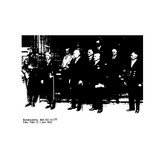
- A1: Franz Von Papen
- A2: Konstantin Freiherr Von Neurath
- A3: Wilhelm Freiherr Von Gayl
- A4: Johann Ludwig Graf Schwerin Von Krosigk
- A5: Hermann Warmbold
- A6: Hugo Schäffer
- B1: Franz Gürtner
- B2: Kurt Von Schleicher
- B3: Paul Freiherr Von Eltz-Rübenach
- B4: Magnus Freiherr Von Braun
- B5: Franz Bracht
- B6: Johannes Popitz
- B7: (Bonuswitz)
Shortly before the turn of the year 2017/18, my friend Jan Müller wrote me an e-mail: »Dear Martin, I'll send you the new album of my band ›Dirty Dishes‹ now. The album is titled ›Kabinett Von Papen‹. It is a concept album, which has the third-last government cabinet of the Weimar Republic as a subject. So, please tell me how you see it - whatever your verdict, I'll use it as an incentive to put my mind and body in the service of global pop culture even more so in the future«.
Dirty Dishes is founded in 2005 by Jan »Rasmus Engler« Müller (Tocotronic) and Rasmus »Jan Müller« Engler (MHerrenmagazin, Little Whirls, Ludger) when the two are bored during recording sessions for the second album of their group Das Bierbeben. Immediately, they write two pieces of music (»Bon Giorno«, which has alcohol and drug abuse as a subject, as well as »Drink a Coke«, a Brigitte-Mira-dedicated anthem for the caffeine-containing soft drink), which are released in the same year as a single under the title »Hurra...! Endlich Ferien!« on the label K.i.N.d.V. Two years later, the duo releases their debut album »Tea Is Not Our Cup of Coffee«. Here one can hear the first experimental and more conceptual works such as »Dirty Dishes as Goofy as Asterix«. The following albums (»Mit uns nicht!«, 2009, and »Von der raffinierten Kunst, jemanden in einen Tümpel zu stoßen«, 2013) juxtapose song and experiment. The first pure concept album, including now-permanent members ALEXANDER (Schrottgrenze, Station 17), Guido vom Flockenberg (Back On The Road), Isabella Stellmann (pedagogue) and Zopfus (ByteFM), is »Der Egel vom Tegel - Die kleine Rock-Operette der Dirty Dishes« (2010), followed by »Round about Ignaz Kiechle«(2013). The latter brings together songs that deal with significant events in the life of former Agriculture Minister Kiechle and were recorded freely improvised in just one recording session.
On the now-available »Kabinett Von Papen«, composed in monastic retreat, each piece is named after a minister from Papen's presidential cabinet (1.6.1932-3.12.1932) and represents them tonally and/or lyrically succinct.
It is said that every generation casts its mind back to a previous era in times of crisis; the resources that will allow us to decode the questions of our moment may lie in the myths of another era.
Le Renard Bleu, the new musical and cinematic collaboration between Lafawndah and composer Midori Takada, and filmmakers Partel Oliva, takes a cross- generational echo as ground zero for recovering a crucial myth for uncertain times: the blue fox.
As transmitted by Takada, the fox appears in both ancient Senegalese and Japanese folktales as the trickster archetype; belonging both to the heavens and to the earth, the fox is the agent of chaotic good, shaking the world up when its energy has become stagnant. Above all else, the fox is famous for its cunning nature.
Renard Bleu marks the first new music released by Takada in nearly twenty years; it would be difficult to overstate the importance of her return to the public eye. Her first solo record, 1983's Through the Looking Glass, has been rediscovered and heralded as a lost classic; the influence of her percussion trio, the Mkwaju Ensemble, continues to permeate and inspire a new generation entranced by its lucid beauty, playfulness, and sensual patience. Takada has performed in numerous film score orchestras, including the ensemble for Akira Kurasawa's Dreams, coincidentally a key influence on Renard Bleu.
In the ensuing years, Takada has worked closely with theater group the Suzuki Company of Toga on productions of Electra and King Lear, an experience, she says, that allowed her to pursue 'a unity of music, body and space.' Recent live solo performances have evinced the depths of her exploration of all three.
Equally, it is Lafawndah's freedom of tone, decentralized maps of ancient and modern music cultures, and alloying of devotional intensity with modern songcraft casts her as a distinct relative of Midori Takada's.
Over the course of two EPs, self- directed music videos, and countless live performances, Lafawndah has drawn out an uncompromising exploration of how theater, situational intervention, and choreography can amplify the affective palate of forward pop music. One can trace the influence of artists such as Meredith Monk, Carlos Sara, and Andy Kaufman as much as musical antecedents AR Rahmann, Missy Elliott, or Geinoh Yamashirogumi.
It is in a mutual commitment to this unity that Lafawndah, Takada and Partel Oliva find fertile aesthetic common ground.
The music of Renard Bleu originated in Takada's preoccupation with the legend of the fox; after constructing a vivid instrumental composition dramatizing the spirit animal's journeys through waterphone, bells, marimba and various forms of drums, Lafawndah responded - in her inimitable mix of fairytale and undertow-- with melodies and lyrics capturing a dialogue between her and the fox himself. Eventually, the duo met in Tokyo for a week of communing with the material at Avaco Creative Studios, where new elements were composed on site.
Created in partnership with KENZO and premiered today via their channels, it was Partel Oliva who imagined a contemporary cinematic frame for the myth of the fox to re- appear, creating a hybrid of choreography and narrative around Takada and Lafawndah's performance of their joint composition (also titled Le Renard Bleu.) Returning to film in Japan for the third time, Partel Oliva's moving image work (Club Ark Eternal, The Pike and the Shield) has set the standard for and revolutionized the fashion art film. Their deployment of original music, dance, and a highly stylized mis en scene coalesces here in the casting of Los Angeles krump artist Qwenga as the eponymous fox, stalking the halls of the ancient Noh theater in which Takada and Lafawnda's performance takes place.
Why call up the myth of the fox now In Le Renard Bleu, Lafawndah and Takada's collapsing of distance between generations, styles, and milieus intimates that the relationship to time must be shaken. The future lies in fragments in the past; to remember is to recover it; the fox rises to thicken the plot.
Bergsonist is the moniker of Moroccon born and NYC based Selwa Abd. 'Solyaris' follows the self-released '' and a prolific slew of releases for labels such as Styles upon Styles, Borft, and Angoisse amongst others. For Selwa her uncompromising & otherworldly, hypno technoid creations aim to capture a given moment in time, contextualising her often direct, hugely affective, & unpolished approach to production.
Selwa describes 'Solyaris' as 'an ode to the present broken education system that allowed me to sustain my dreams in NewYork', explaining, 'As an immigrant from Morrocco, I felt always fearful of the future, pressured to succeed at school. The only way I was able to channel all that anxiety was through music'.
There's a undeniable physicality to Bergsonist's work, and the idea of expunging anxiousness into her music is felt from the oft as 'Solyaris' strides into vision with it's quickening roaring pulse and scrambled explorative electronic probes. This sense of anxiety eases as layers of rhythm build - heads begin to turn down and lush minimalist swathes eventually envelope bodies in calm unity, Anxiety diverted.
'Conflict in Yeman' opens with a gambit of off-kilter percussive experiments & electronics, conveying a sense of determined urgency. Things grow more & more intricate & immediate as we progress - layers of disruption weave around a reoccurring 140BPM shuffle, anchoring Selwa's constant explorative concrete diversions.
'Former Alien who has been naturalized by a U.S Citizen' brings things down a notch - skittering drums linger below a truly haunting whispered melody, occasionally broken down by collapsed rewinds and thunderously raw in the red beat grit - to dizzying effect. Whereas previously 'Solyaris' had taken its cues from Drexciyan Detroit Electro 'Former Alien...' stands closer to a Fantastic Damage era EL-P instrumental rather than anything aimed at the floor.
The EP rolls out with 'Fidel Gastro', a structured & focused piece of Machine Funk & end of days drop cues, conjuring an effective mix of both euphoria & imminent dread.
Bergsonist cuts a unique figure for electronic music in 2018 as someone explicitly exploring the relationship between head & body music. Although undeniably more than oft aimed at the dancefloor, Selwa's work also holds an equal respect and understanding of the head & heart. From her politically loaded Track titles, to her ideologically aligned guise of 'Bergsonist', to most significantly - her music's ability to elicit a spectrum of finely tuned emotional responses within the confines of each track
Kevin Murning is a musician, producer and DJ from Cape Town, South Africa. He describes his music as fake jazz, probably because he dropped out of jazz school. At 23 years old, Kevin's music is youthful yet precise and his debut EP offers an intriguing cross-section into his varied musical experience to date. The release comes out via Cape Town based imprint, Quit Safari, home to some of SA's most exciting producers.
Kevin's debut comes in the form of a 5-track EP called Mode's Arp. Comprised of 3 originals and 2 remixes, the release serves as a dual functional one with tracks for home and club use. Taking 2 years to fully complete, Mode's Arp is a wonderfully considered body of work and speaks volumes about Kevin's talent and his ability to create music that is beautiful and banging. Both Kevin and Quit Safari label head, Zanasi Wifi, are on remix duty for the EP, taking the originals and recontextualising them into high octane percussive workouts.
DJ support already includes The Maghreban, Turbojazz, Severino, Laurent Garnier, Mystic Bill, Edmondson and more.
French by way of Berlin DJ/producer La Fraicheur finally delivers with a first 9-track album, 'Self-Fulfilling Prophecy', her first release on the InFiné label. This remarkably dense, dancefloor-oriented album oscillates
between techno, ambient and electronic music, a mesmeric yet pounding effort that gets the body and the mind moving.
For over a decade now, first in Paris, then Montreal and now in Berlin, La Fraicheur has been brewing her own blend of Deep House & Techno beats, making a name for herself with her signature sound of emotionally charged
Techno sets. Marathon DJ, she is a resident in Berlin's renowned Wilde Renate and part of the Female:Pressure network. She can go on for countless hours, running the gamut from classics to new songs released only two hours earlier.
Expanding her craft by producing her own music ranging from ravy epic Tech-House to dark pumping Electro, spacious open air Deep House to melancholic Electronica, she spent the summer of 2017 doing an artist residency with the Berlin-Detroit Connection (organisation founded by Mike Banks (UR) and Dimitri Hegemann (Tresor) at the Underground Resistance HQ in Detroit, working on her first solo album. 'I want to use moments of dancing to stimulate a bit of political awakening' she says, and, speaking of her album in particular, (on which are scattered various samples of politically explicit content (for example, excerpts from aninterview with Angela Davis). While 'Self Fulfilling Prophecy' clearly aspires to raise awareness, it does so subtly, without ever relegating music to the second class. This is neither 'ready-to-think' or 'ready-to-dance', but an assembly of sophisticated rhythms, sounds and words that it are up to each listener to interpret in their own way. La Fraicheur does not seek to deliver a message, or impose a discourse, but to distil an idea and suggest a relationship to the world - a report to the world based on the affirmation of self and acceptance of others in all their differences.
incl. download card]
There is something to be majestic about stalwarts of a certain flock coming together to be creative. The harder side of Drum & Bass didn't have it's own power formation until today. It's as of this day that Czech producer Forbidden Society, formed an alliance with two of his most respected peers to create 3RDKND. Donny, Katharsys and FS all have a strong lean to rhythmic textures, tough drum cuts and experimental FX works. Just in time for the European festival season, the thunderous first effort has arrived; and it's going to turn some heads.
Purge EP is a work of experience, seeking for the outer bounderies of whats sonically possible. The title track is an electronic behemoth which revolves around boundary pushing drum programming and pure unfiltered energy. 'The Artifact' is a straight up dancefloor anthem which uses an ominous vocal of cinematic proportions to build up to the halftime body of heavy hitting drums. 'Fire And Blood' is an experimental work of the rhythmic endurance. The final track is a 3RDKND remix of an original track by Donny and FS. This is the final showcasing of the trinity's sonical excellence. 'Purge EP' will be released through Forbidden Society's self titled label
A warm human hand sculpts the icy machine-like sounds into a meticulous harmony over undulating bass and entrancing snares, clasps and industrial heartbeats. This continuous circulation of sound and its ever beating rumbling-flexed sub bass found in Rebecca Goldberg's newest batch of acid-techno arrangements effectively replicate the natural functions of omega 3, or -3, fatty acids albeit in musical-form. Whereas ingesting the special carboxylic acids found in plant and marine oils woll fortify your vascular system into a well-oiled machine, Goldberg is using a table of various analog machines to manifest a similar, yet uniquely propulsive flow of energy through a composite of frenetic hi-hats and trudling kick drums, looping under spacey Rolands waving out reverb splashed frequencies coiling synthetic intonations.
The beats reach the feet, the bass unlocks the hips and the synths pull and twist the shoulders, staving off stagnation or decimating a collective clotting - we are loosened in restorative ways to the sleek assemblages of one of Detroit's leading DJs/composers on the electronic music scene. Goldberg's 25-minute odyssey is unceasing in its sinuous stream of mesmeric techno music, as if powered on by relentless agents found in the healthful acids for which this EP gets its title.
Goldberg has distinguished herself by cultivating the seeds of techno into something that designedly meditates on the enduring vitality of the organic and the holistic in our lives--even as our socialization, and maybe even our dance floors, are predominantly digital in character and operation. -3 continues to stimulate our brains in two ways, just like 2017's 313 Acid Queen. Her previous record used field recordings and found sounds from the shores of Detroit's Belle Isle and other neighborhood sidestreets to thread the simple majesty of the flora and fauna that sustains even if at the corners of a concrete metropolis. -3 is bringing you from the outdoors into the inner workings of your body--particularly the blood cells that act as fuel for your limbs, your lungs and your brain. It's the -3 fatty acids that keep your system strong and smooth. It's Rebecca Goldberg's latest acid techno fever dream that keeps you perceiving that (and other things) even as you dance...
Next up on Francis Harris' exceptional imprint Scissor & Thread comes a collaboration with American Producer, DJ Aakmael. Aakmael has built a reputation for some of the deepest, rawest house music sounds coming out of the States, releasing well-received tracks on the likes of Freerange Records, Release Sustain, Kolour Dogmatik and NDATL. Returning to Scissor & Thread, Aakmael and label boss Harris cook up an intoxicating vibe across this 5 track EP. Each shares a track and work together on the fifth, while also remixing each other's solo cuts. First up Aakmael's Deep Muzik- a quintessential nod to its self-proclaimed mission statement. Skittering drums, a shuffling groove, deep keys, and chords make up this essential opener. Frank's (aka Francis Harris) All That Light Mix shows another side, finding pockets of space and developing the fizzing percussion to produce an equally affecting piece of dancefloor bliss. Sharing production duties from the outset on Mercy of Means, the guys slip into an easy mid-tempo groove with plenty of depth - the rhythm rolls along and offers the perfect basis for some sublime melodic touches. Frank's Part Song also hones in on the subtle deep grooves. Bumping, slightly filtered and saturated drums provide the main body, with beautiful washes and keys finding their way through, Aakmael's remix beefs up the groove somewhat, making the snares snap harder and kick hit a little stronger, but the essence of the tracks melodic atmosphere remains perfectly in place.
While notorious in the Chicago streets, RP Boo's music had been unfairly confined to a few white labels and self-released mixtapes until his two archival Planet Mu LPs Legacy and Fingers, Bank Pads & Shoe Prints introduced broader audiences to his sonic history, some of it fifteen years after it was first recorded. I'll Tell You What! is the next step in his mission, and the first time he's released an album of contemporary material. The title, a favorite maxim of his, welcomes listeners to sit down and let him narrate in the unforgettable abstract fashion he's known for. He explores familiar motifs such as the cosmos, movement, and opposition, using densely interwoven vocals, unpredictable percussion, and evil humming bass as his tools of choice. RP Boo's music doesn't follow the traditional rules that most compositions do. Layering decades of samples from yesteryear to the present over his commanding vocal cut-ups, he transports the listener to their own realm of the space-time continuum. The main difference between this record and his prior work is now we hear Boo tell new stories about preaching his gospel outside of Chicago, from his experiences frantically touring the globe over the last five years. The words 'things ain't been the same / since I hopped the plane' are repeated on top of engine sounds and rumbling bass on Flight 1235, a glorious paean to his new jet-setting adventures. The spirit of competition runs through RP's veins as much as blood does, something you can't unlearn when you've been making music for Chicago's footwork circuit as long as he has. The local culture has served as a shelter from the violence that has plagued the city, pitting kids against each other with their feet rather than weapons. On At War Boo reminds us 'we are at war in the streets', a double meaning to both the mayhem in this world and the sweetness of rivalry on the dance floor. Another battle-themed track Cloudy Back Yard, one of the spacier moments on this album, is an abstract on the state of footwork's home. Chicago remains the backyard of this artform even though it's left the porch and traveled to new neighborhoods worldwide. Back at home though, competition among the DJs and dancers continues, and as the man himself says, 'with all this hate, there's smoke, and it's cloudy'. I'll Tell You What! throws more than a few curveballs into the mix. Footwork has always borrowed from hip-hop, and many vocal tracks are almost condensed raps, dating back to the street chants pioneered on Dance Mania Records in the ghetto house days. On Bounty, Boo grabs the mic and brazenly lays down a full-on verse of terror over a thick atmosphere of his signature sweltering low-end and erratic Roland R-70 patterns. While he's most famous for his confrontational battle anthems, his melancholy moments are just as powerful. You get the best of both of those worlds on U-Don't No, with soulful samples finishing his own cocky sentences, one of the most elegant tracks RP has made to date. Deep Sole closes the record out, with the words 'It's always beautiful at the end' looping over waves of hypnotic synthesis, confidently looking death straight in the eyes.
First he had us in Denial. Then he made us an offer we couldn't Resist. Now he's fixing our focus on the most crucial player in this whole house caper: the 'Selecta'.
Come again 'Selecta' is yet another crystalline acid body workout from the Ovum boss who's been dishing out single sinewy shell-outs in a seriously rich vein of form of late. Galvanised by heavily swung drums, loaded and coded with a venom-like funk and characterised by a big soundsystem vocal that tears out of nowhere and disappears just as quickly; it's yet another unique piece of 303 witchcraft, the likes of which only Wink can conjure. Deeply groovy, unabashed darkness and just a nuance of mischief with the vocal, it's yet another precision piece from Mr Wink who's also kindly provided an instrumental for your added creative pleasure.
Selectors, this one's for you. You know what to do...
New Zealand based EBM auteur Body Beat Ritual makes his debut on Bergerac with an incendiary EP of full throttle intense dark wave bangers. Growing up in North West England immersed in hardcore punk and rave culture led to musical experiments and Body Beat Ritual is his unique splicing of both aesthetics.
Using a combination of hardware, audio samples and midi sequencing, Body Beat Ritual reclaims the moment when underground musicians in Manchester, Chicago and Ghent put down their guitars and picked up drum machines and sequencers bringing the intensity, rawness and aggression of the band environment to the dancefloor. Mortal Sin is a certified smasher. Absolute dancefloor decimation whenever it's played out. No more description necessary. No Mercy evokes the Lost Boys vibe with an equally high octane raw workout. Trent Reznor meets Jeff Mills at a DAF gig on a flatliner. The EP closes with Body Politics which lowers the tempo to a chuggier zone, with an ode to female empowerment which keeps up that Body Beat pressure and intensity.
Parrish Smith makes his Dekmantel debut on the label's sister-techno imprint, UFO, with a blend of avant garde electronics and industrial.
.
With the 'Sex, Suicide & Speed Metal EP', Dutch producer Parrish Smith works outside of the realm of genres and tempos, creating his own unique template of saturated, electronic post-punk, having won accolades from the likes of Nina Kraviz, and Ron Morelli along the way. An analogue purist at heart, Parrish Smith has already amassed a cult following with regular appearances on Red Light Radio, in which the anarcho-experimentalist broadcasts sessions of heavy industrialism, breakbeats and body music.
Parrish Smith's music brings together classic analogue gear and a love for the fusion of aggressive industrial sounds. With title track 'Sex, Suicide & Speed Metal', Parrish Smith channels his inner Alan Vega, with some screaming guitars, and 65bpm machine-crunching body beats, lurching into a sultry space of slick wave music. 'Mute' jacks up the feeling of tempo, rife with energetic drum machines, pulsing synths and retro-fitted vocals, similar to the sound of something Daniel Miller might have released himself back in the early 80s. 'SKINS', delves further into the mechanical, with a grinding bass that bleeds through the track's entirety, while 'Fall into sin' sees him explore the world of deconstructed, gothic-pop yet further. Parrish Smith will be DJing, and performing live as Volition Immanent at this year's Dekmantel Festival, to fulfil the festival's charter of provocative, and intoxicating, energetic beat-filled music.
Austin Based Experimental Collective Thousand Foot Whale Claw Is Back With The New Cosmic Full Length black Hole Party, Out June 29, 2018. Featuring Members Of S U R V I V E, Troller, Single Lash And Future Museums, This Is The Supergroup's Second Lp And Their Most Accomplished Work To Date. Inspired By Progressive 70's German Kraut-rock, Thousand Foot Whale Claw Maintains A Classic Style While Establishing An Original Voice. With Album Art By Renowned Contemporary Sci-fi/fantasy Illustrator Kilian Ang, black Hole Party's Aesthetic Is Cohesively Curated Throughout Its Dense, Multi-layered Track List, Ranging From Serene Sound Baths To Driving Dance Beats.
Tfwc Was Founded In San Marcos, Tx By A Core Group Of College Friends Who Bonded Over Loose Collaborative Jams Of Effects Driven Improvisations. Eventually These Unstructured Practices Evolved Into Refined Studio Sessions And Intense Live Performances, Leading To A Rich Discography And Enthusiastic Fanbase. Balancing Repetition With The Unexpected, Tfwc's Sustained Motifs Slowly Reveal The Band's Signature Free-form Experimentation. Known For Heavy Walls Of Guitar And Electronic Drones, Tfwc Spirals Into Circular Rhythms And Looping Riffs Stacked With Shredding Guitar Solos And Ambient Soundscapes. Explorations Spurring From A Central Theme Is The Basis For The Band's Compositional Approach, Always Seeking New Instruments, Sound Sources And Production Techniques For Each Piece. Recorded And Engineered At Stassney Studios In Austin, Tx With Producer/artist Dylan Cameron, black Hole Party Has Become The Band's Most Defining Body Of Work Thus Far.
On black Hole Party, The Polished Structure And Acute Development Of All Six Tracks Is Distinct And Tangible, Making This Record More Composed Than Any Of Their Previous Releases. Propulsive Songs Such As deridium Rail' And The Album's Title Track Are Driven By Four-on-the-floor Dance Beats And Arpeggiated Synthesizers, Contrasting Songs Like genesis Effect' That Predominantly Features The Natural Tones Of 12-string Acoustic Guitar And Harmonium. The Wide Variety Of Sonic Flavors Is Reflective Of Tfwc's Vast Musical Tastes, Refusing To Settle On One Approach And Allowing The Band's Idiosyncrasies To Shine Regardless Of Genre. To Classify Tfwc As An Instrumental Psych Band Is Only Partially Accurate, However There Are A Lack Of Proper Terms To Fully Encapsulate The Band's Broad Scope. Black Hole Party Is The Latest And Brightest Collection Of Songs From Thousand Foot Whale Claw, Meant To Be Enjoyed In A Multitude Of Environments For All Fans Of Expansive Listening.
The California EP pays homage to Diplo's first full-length release, Florida, where he spent much of his youth. The sonics on California share a similar tone: slow, vibey, & melancholic, a bit of a departure from the sound he has been known for in recent years. The EP is much more than just a handful of tracks, it's an introspective body of work.
Sfetsas formed GFO in 1976, in order to accomplish an ambition dating back to his 1960's Avant-garde period in Paris: to create a piece of work that would expand the boundaries of Greek traditional music. The result is a Progressive-Jazz Fusion masterpiece comprising complex and intriguing compositions, and performed by Athens' best musicians of the day.
.
Sfetsas grew up on the island of Lefkada where he studied classical music from an early age at the local conservatory. At the same
time he was genuinely connected to traditional music and especially to the sound of the clarinet, the lead instrument in the region's
folk music. From a young age Sfetsas would perform with Gypsy orchestras in local feasts. It was this experience that inspired him
to create the GFO after his return from Paris in 1975. Sfetsas founded the orchestra while working at the National Radio, an orchestra comprised mostly of members of the Variety Music Orchestra, who had a solid background in both classical and traditional music. In that way, he was able to realise his ambition. Something he could not do in Paris, since it was impossible to find musicians trained
in both musical cultures.
The recordings on this album, forming only a small part of his overall body of work with GFO, are previously unreleased. The music
was recorded Stereo on Reel Tape and with high standards for the time, with the current mastering process highlighting even more
the quality of the recordings. The result is a truly impressive and pure audiophile album.
"it Sounded All Right Through Two Walls, So What's The Problem" The Final Words Of 'two Walls', The Fast And Very Catchy Leading Track Of Dj Marcelle's New Record, Sum Up An Aesthetic Almost Lost In Today's Musical Climate, Where Often A Pleasing Attitude And Overproduced Music Sadly Rule, Even In So-called 'alternative' Circles.The Quote Comes From The Late Mark E. Smith (1957 - 2018), Legendary Frontman Of The Fall, And Is Taken From Some Of The Conversations Marcelle Had With Smith Over The Years. Smith Is Referring To A Recording Process But For Marcelle His Words Stand For Something Bigger.Although The Fall Have Been With Marcelle During Her Whole Musical Life (which More Or Less Started In 1977 During The Punk Wars) And She Has A Deep Love For Their Music, It Was Especially Smith's Attitude That Inspired Marcelle.Smith Was An Iconoclast, A Surrealist Dadaist Breaker Of Conventions In Music And Art More Generally. A Magically Creative Individual, A Brain-twisting Wordsmith. An Attacker Of The Pretentious And Dishonest Elements In Society And Music Scenes. An Autodidact Whose Singular Vision, Fired By Both Humour And Sharp Observation, Found A Voice In A Body Of Work Unlike Anything Else.The Day After Marcelle Heard Of Smith's Passing She Created A New Track, Lauding Smith, Whose Name Was An Institution In Itself: Mark E. Smith! Therefore, The Repetitious Use Of A John Peel Sample Pronouncing Smith's Name Celebrates The Life Of This Totally Unique Artist.This Track Opens With Another Smith Quote: "you're Probably Right, Marcelle". And Indeed, The Dutch Producer / Dj Shares Many Of Smith's Attitudes In That She Tries To Stay True To Herself, Doesn't Think Too Much About Audience Expectations And Always Tries To Stay Ahead Of The Public. 'punky' Energy Combined With The Avant-garde And Always Going Forward With Fresh Productions And Dj Sets. To Make And Play Music Which Reflects The Present And Doesn't Rest In The Comfort Zone Of One Dimensional Party Music.There Are Five More Versions Of 'two Walls' On This Ep, But They Differ So Much From The Original That You Can Count Them As Different Tracks. 'dubai Muezzin Dub' Was Partly Recorded In The United Emirates When Marcelle Played There Earlier In 2018. 'problematic Dub' Is Pure Industrial Techno Torn Apart By The Wildest Dub Effects, Its Coming And Going Of Sounds Equals A Ride In A Calypso. 'studio Door Dub' Celebrates The Repetition Of The Fall And The 'emerson, Lake & Palmer Symphony Dub' Is Both Pure Avant-garde And Hilarious Fun. And Belp, Who Owns The Jahmoni Label, Comes With A Wicked Abstract Noise Remix. The 'for' Ep Is The Fourth (get It) Vinyl Release Of Marcelle On The Munich Label Jahmoni Since 2016. As Always, Sleeve And Label Are Very Colourful. Both Labels Show Special Photos: On One Side We See An Old Picture Of Smith Embracing Marcelle, The Other Side Depicts The Label Of A 1985 The Fall Test Pressing That Once Belonged To John Peel But Which Was Stolen Out Of His Car In Amsterdam. Later Marcelle Found The Record On A Flea Market, Recognising Peel's Handwriting. "when I'm Dead And Gone" Smith Sang In The 1979 Song 'psychik Dancehall', "my Vibrations Will Live On, In Vibes On Vinyl Through The Years. People Will Dance To My Waves."Now We Can Listen And Dance To A Vinyl 'for' The Incomparable Mes, Made With Total Commitment And Which - Like The Fall - Defies Comparison.
Ryan Parks is a mixed media artist, music producer/performer,
and CEO/founder of critically robust cassette tape label, HARSH
RIDDIMS. He was born in College Park, GA and grew up skating
all around Atlanta, soaking up the dense kaleidoscopic cultural
ooze found both in and outside the perimeter of Atlanta. Aside
from his visual practice, which usually takes shape as mixed
media (Jacob Lawrence/Matisse inspired in my opinion!) collage,
he has been releasing music as FIT OF BODY for seven years. Fit
of Body crafts soulful house ballads that draw on freestyle, Bell
Hooks, old school Detroit techno, jazz, and southern rap passed
through a No Wave paradigm. Fit of Body has previously released
work on CGI, DKA, Ransom Note, and his own label,
Harsh Riddims.
Prairie is the project of multi-instrumentalist and producer Marc Jacobs, hailing from Brussels with roots in The Netherlands. He previously released an EP (I'm so in love I almost forgot I survived a Disaster - 2013) and an LP (Like a Pack of Hounds - 2015) on the Berlin imprint Shitkatapult. On stage, Prairie plays with two or three musicians and together they re-create a free association of musical ideas and atmospheres. Prairie has played in selected venues and festivals across Europe and toured with Apparat in 2016.If the apocalypse was painted in several layers of pastel gouache, its soundtrack might be PRAIRIE's Flash Flood. Listening to the album, we drift through a series of frozen landscapes that gesture at a post-apocalyptic ambience. This is a kind of blackened music that has been left to sediment, excavated from traces in ice core samples. Flash Flood showcases a deep sensitivity to narrative and rich cinematic textures as Marc Jacobs returns with palimpsestic sonic layers. It has been three years since PRAIRIE's last release—the 2015 Cormac McCarthy-inspired Like a Pack of Hounds—and it is clear that it has been several years of pensive reflection. Now, PRAIRIE takes the sentiment of his 2012 debut, I'm So In Love I Almost Forgot I Survived A Disaster, several steps further: it is after the apocalypse, and no one has survived. And yet with Flash Flood, we can hear the hum of this impossible future.
'After the Flash Flood' introduces the sonic ruins of distorted guitars, field recordings, drum programming and synths that create the textures of the entire album. The melancholic and subdued black metal churn of 'Raindeath' becomes the cold backdrop for unnerving, paranoiac speech. The third track, 'Sisters', foregrounds this coldness while slowly moving away toward alternate vistas where the acoustic timbres of the saz-driven 'A Permanent War Economy' take over. 'Underwater Body Hunting' and 'Rabid Ibrahim' are hard hitting beat-oriented tracks that insist on burning slow. There is a patience with PRAIRIE's FLASH FLOOD that is difficult to deny. The lamentation of 'Elephants Will Rise Again' perhaps signals that it is not only the human that is lost after catastrophe. The album closes with 'Hard Water: Cracked Ice' and 'Hayashi Clock'. The former is a beautiful coalescence of clean harmonious tones and softly overdriven drums, while the latter brings us back to a meditative state, drifting through the final pastel tapestry.
"... his cosmos is located somewhere between Bohren & der Club of Gore and Sunn O))), ambient is as familiar to him as brachial sounds, and he is as much acquainted with guitars as with synths and modern technology" (GROOVE)
"... Like Ben Frost, (Prairie) exudes a certain harshness while tempering his work with moments of sublime beauty. This isn't club material, it's music for the hammer in one's hand, the confrontation of the demon, the soul-shattering revelation." (A Closer Listen)