Cerca:bohemia soul

Generi
Tutto
VARIOUS - VINTAGE SOUNDS: TRIP HOP

"Trip Hop Vintage Sounds" is a 2023 compilation album by Wagram Music that features various tracks from artists such as Kid Loco, Zero 7, and Etienne De Crécy. It is a collection of downtempo, atmospheric music that blends hip-hop beats with other genres like dub, soul, and jazz, characteristic of the trip-hop sound that originated in the UK in the 1990s.

In Stock

Disponibile in Stock e pronto per la spedizione

16,18
Bobby Matos and The Combo Conquistadores - My Latin Soul

When it comes to Latin soul, Bobby Matos And The Combo Conquistadores 'Tema De Alma Latina', has to be up there as one of the heaviest tracks ever recorded. This much-loved Latin workout has been rocking dancefloors for years with its infectious, driving energy and pulsating rhythms. Released in 1968, the 'My Latin Soul' album on Philips Records now receives a welcome reissue on Mr Bongo. It’s a sheer delight throughout and a premier example of the Nu Yorican sound that was thriving in New York in the ‘60s.

From a young age, the Bronx, New York-born Latin jazz percussionist Bobby Matos found inspiration through the conga drum masters Mongo Santamaría and Patato Valdez (who he had informal backstage lessons with) and timbales legends Willie Bobo and Tito Puente. Bobby was drawn into New York's club scene and began playing in the vibrant ‘60s beat / bohemian Greenwich Village cafes, followed by stints in a wide range of different venues. These included Bronx dance halls and after-hours clubs in El Barrio, through to the elegance of Carnegie Hall, Central Park concerts, and off-Broadway theatres.

Later relocating to Los Angeles, Bobby played an important role in spreading Latin music far and wide. He became an inspiration to many on the jazz dance and acid jazz scenes in the ‘80s / '90s where his recordings were picked and played, becoming prized collector items amongst DJs. The track 'Tema De Alma Latina' was immortalised as a classic for many, after being featured on the Gilles Peterson’s Street Sounds Jazz Juice 5 compilation in 1987. A captivating listen from start to finish, the album features other treats such as the dynamic album opener ‘Nadie Baila Como Yo’, the blazing flute led 'Mambo Maxims', and the blistering piano shuffler 'Raices'.

A truly iconic Latin classic whether you’re being reunited with it like an old friend or discovering it as a fresh new find.

In Stock

Disponibile in Stock e pronto per la spedizione

29,03
Dennis Harte - Summer’s Over 7"

Efficient Space charts Ghost Riders’ North American roadmap, crashing into 1973 New York to ignite the unfiltered teen dreams of Dennis Harte.

In the late ’60s, 11-year-old prodigy Dennis Harte was handed a Sears-bought Silvertone 1448, its in-case amplifier primed for street-level incantations. Recruiting two neighbourhood friends, the trio hammered out raw rhythms, drawing in Brooklyn’s wandering bohemians, keen to glimpse a prepubescent Alex Chilton in the making.

Also jamming with his older brothers, Bart and John, a family friend introduced the siblings to budding music exec Carl Edelson, who had spent the better part of two decades hustling through a string of local labels. A father figure of sorts, Edelson backed them immediately, facilitating sessions at the famed A-1 Sound Studios and Sanders Recording Studio and pressing four 7”s on his newly minted Roundtable Records. To maximise his chances of courting major labels, he strategically assigned each release a different artist name - Dennis Harte, Pure Madness, Harte Brothers and the wryly titled Harte Attack.

Dennis’ emotional maturity and sheer talent bleed into the defining ‘Summer’s Over’, penned by Edelson and once recorded by mid-'60s New Jersey garage vocal group The Wouldsmen. Morphing into an unfathomably teenage, blue-eyed soul/psych lament, it aches for a season slipping away forever. Its Harte Attack edition counterpart - the candied ballad ‘Running Thru My Mind’ - delivers unison harmonies and kinetic guitar interplay with a streetwise punch, channeling the spirit of NYC-area icons The Rascals, The Lovin’ Spoonful, and The Youngbloods.

Roaring like the Spencer Davis Group, Pure Madness’ organ-driven bruiser ‘Freedom Rides’ screams of biker gangs, yet its true subject - ’60s civil rights activists the Freedom Riders - looms as another towering theme for an adolescent perspective. Meanwhile, the loose, bluesy ruckus ‘Treat Me Like a Man’ digs back into Edelson’s catalogue, covering the Beatles-inflected Levittown group The Shandels.

Though Dennis later found success touring with Wilson Pickett and now doubles as a piano tuner to the stars, these four snapshots frame ambition on its outer edge - a heartfelt homage to an unbreakable brotherhood.

In Stock

Disponibile in Stock e pronto per la spedizione

11,72
Be.Lanuit - Hippie Picasso LP

Over the past decade, Be.lanuit has made a name for himself in Ibiza, both as a DJ, artist and fashion designer. Across disciplines he radiates a deep-rooted bohemian spirit harkening back to the philosophy on which the Ibiza-scene was originally founded. This creative hearth of soulful hedonism has now borne a full-length album, one that reveals a sprawling composing talent and complete mastery of the melodic downtempo terrain.

Be.lanuit says:

“Hippie Picasso is an album inspired by the life of a hypothetical Pablo Picasso with a hippie soul. I have a deep interest in Picasso that sparked when a work by him caught my eye at the Louisiana in Denmark, incidentally on a trip with Kenneth Bager who runs Music For Dreams. Since then, reading his biographies and visiting Malaga where he was born, where the Mediterranean culture, especially through music, spreads out to the world.

The tracks revolve around Picasso’s artworks and moments in his life, all from the point of view of a dream of an imagined life on the island of Ibiza. The melodies are all reminiscent of the Mediterranean with flamenco airs, sometimes melancholic. Jazz has a subtle presence alongside the electronics. The Spanish classical guitar as well, one of his favorite instruments.”

The album features a range of artists from around the world such as the legendary multi-instrumentalist Tupac Peralta, DJ Pippi, Melón Jimenez, Lara Wong, The Swan and The Lake, Jonas Krag, WALTHER and OliO.

In Stock

Disponibile in Stock e pronto per la spedizione

29,37
Wild Dark - Then After Ep

Wild Dark

Then After Ep

12inchTCEP02
TrueColors
14.02.2018

tested 'Then After' EP by New York duo Wild Dark.
'...Stemming from a partnership with two decades of experience behind them, Wild Dark takes on contemporary song-writing and gives it a unique, thoughtful, modern-take using a wide spectrum of electronic music to tell a story. The duo, comprised of brothers Corey & Ryan Negrin, stray from cold digital samples in favour of a warmer approach to writing music. This allows them to merge house, techno and natural vocal work into a cohesive concept that uses soulful yet charming songwriting to nurture a sophisticated palate of contemporary work...'
Then After EP includes two tracks featuring Alex Who 'When we first met Alex there was chemistry off the bat. With inspiration of being young and free, the lyrics and vibe to "Why Not"came together with ease. As the production progressed, the darker tribal elements came to life.
We wanted this track to resonate with the free spirited. This track tends to be a favorite of night.
"Born By The River", A Happy Mistake. The vocals, the elements, the soul, all stemmed from animpromptu recording and this beauty was born. With a list of organic household recordings,accompanied by a warm low end, we aimed to create a track that defied all genres.
"Talky Talkie" is the most club oriented track of the EP, with a persistent groove and synth elements that work perfectly on the dancefloor.
"I'll Wait" brings our bohemian flavour to shine, a track that's comfortable being played anywherefrom Burning Man, lost in the desert to the deep warehouses of Brooklyn's underground.
The digital release will include a special remix by Superlounge, a German duo known for their smooth house vibes. This is a must have release, available first on the label's shop online;

t r u e C o l o r s
A Brooklyn / London based record label that channels artist's most honest version of their
creations and shares it with the world through vinyl and digital platforms.

In Stock

Disponibile in Stock e pronto per la spedizione

8,70
Various - Wizzz! French Psychorama Volume 5 (67-75)

The journey through French-speaking pop archives continues with this fifth volume, packed with fuzz, gimmicks, and dissent. Far from the charts, the selected tracks display a great creative freedom, often backed by corrosive humor. Welcome to the surprising, kaleidoscopic, and colorful world of the late sixties and early seventies, Wizzz!
Born in Montauban, Robert Pico stumbled into music by chance when he met René Vaneste, then artistic director at Pathé-Marconi. René brought him to Paris to record his first 45 RPM EP in 1964. A year later, Pierre Perret introduced him to Vogue, where he recorded his second album with Claude Nougaro’s orchestra. Sylvie Vartan then introduced him to RCA, where he recorded four singles, including the astonishing "Chien Fidèle," a track backed by a hair-rising fuzz guitar. Alongside his solo career, he also composed for other artists like Alain Delon (the song was recorded but remains unreleased), Magali Noël, Bourvil, and Georges Guétary. In the Paris of the sixties, he mingled with Mireille Darc, Elsa Martinelli, Marie Laforêt, France Gall, Françoise Hardy, Petula Clark, Régine, Dani, Serge Gainsbourg, Joe Dassin, Franck Fernandel, Charles Level, and Roland Vincent. Despite his efforts and winning a Grand Prix Sacem for his final record, Robert Pico didn’t achieve the expected success in show business and decided to leave Paris and return to the Southwest, where he devoted himself to writing. He is the author of 23 books (including Delon et Compagnie, Jean-Marc Savary Editions 2025, a memoir about his youth and his many encounters). Today, he is relieved to never have become a celebrity and devotes himself to his work with passion.
In 1969, the Franco-Italian movie Erotissimo was released, directed by Gérard Pirès (who later directed Taxi in 1998, written and produced by Luc Besson). This pop comedy features Annie Girardot, Jean Yanne, Francis Blanche, Serge Gainsbourg, Nicole Croisille, Jacques Martin, and Patrick Topaloff. The soundtrack was written by Michel Polnareff and William Sheller, with lyrics by Jean-Lou Dabadie. "La Femme Faux-cils," performed by Annie Girardot. It recounts the feelings of a rich CEO's wife who seeks to develop her sex appeal under the influence of advertisement and magazines. Groovy, sparkling and light, this track, with ITS lush arrangements humorously critiques consumer society and feminine beauty standards.
“Je suis l’Etat” (1967) is the flagship track of the first EP by singer-songwriter Spauv Georges, aka Georges Larriaga, better known as Jim Larriaga (1941-2022). Born into a family of bakers, the young man was initially planning to become a hairdresser when he discovered English-speaking music through Elvis Presley and the Beatles. After this revelation, he decided he would become a songwriter and gave himself five years to succeed. He recorded his first two EP’s independently for RCA under the pseudonym Spauv Georges; meaning “that poor George”, a nickname given to him by the mother of her friend Jean-Pierre Prévotat (future drummer of the Players, Triangle, or Johnny Hallyday). Portraying a depressed and eccentric young man, Spauv Georges created corrosive and amusing songs that didn’t reach a wide audience, despite a TV appearance with Jean-Christophe Averty.
Supported by his loyal friend and fellow songwriter Jean-Max Rivière, Georges Larriaga met the future singer Carlos in the early '70s, then Sylvie Vartan’s assistant. He wrote songs for Carlos, including the popular "La vie est belle," "Y’a des indiens partout," and "La cantine", which went onto become a huge hit in 1972. He also composed for Claude François (“Anne-Marie”, 1971), Charlotte Julian (“Fleur de province”, 1972), helped launch child singer Roméo (who sold 4 million records), and later wrote the hit "Pas besoin d’éducation sexuelle" (1975) for the young Julie Bataille. In 1971, Jim recorded an album for Disc'Az: “L’univers étrange et fou de Jim Larriaga”, which featured pop gems like “La maison de mon père”.
The story of the song "Zoé" began when Pierre Dorsay, artistic director at Vogue Records, asked Swiss singer and musician Pierre Alain to write a song for a new female singer. The inspiration came when he realized that Zoé (the artist's name) was also the name of France's first atomic battery, created in 1948, which consisted of uranium oxide immersed in heavy water! The lyrics reflect a bubbling energy that must be handled with caution, while the instrumentation echoes this atomic theme, notably with the use of a theremin.
Zoé’s career lasted only as long as a single 45 RPM, but it seems Christine Fontane was the vocalist behind this pseudonym, who is known for several EPs, a good "popcorn" album in 1964, and a handful of children’s singles in the '70s. Regardless, the photograph on the cover is of a different girl entirely.
Later, Pierre Alain continued his career, writing songs for himself, Marie Laforêt, Danièle Licari, Alice Dona, Arlette Zola (3rd place in Eurovision 1982), and achieving multiple gold and platinum records in Canada. Also an inventor with several patents, president of the Romande Academy, and head of the French Alliance in Geneva, he now composes atonal music, books, and poetry. Moreover, he is also the host of "Les Mardis de Pierre Alain" at "Le P'tit Music'Hohl" in Geneva.
Filled with oriental choruses and fuzz guitar, "Fou" is from Jacques Da Sylva's only EP released by Vogue in 1967. Despite the quality of this recording, all traces of this singer disappear after this first effort.
Valentin is a baroque pop singer born in Belgium. He is the songwriter and composer of most of the tracks on his three singles released in the late 60s in Canada. A legend says that he reincarnated himself as Jacky Valentin during the 1970s for a rock'n'roll revival career in Belgium, but his older brother sadly debunked this story. Valentin's first two singles were arranged by Claude Rogen, a Parisian session pianist who had come to Canada to promote the song “Mister A Gogo”, a cover of David Bowie’s “Laughing Gnome”, adapted by singer Delphine, his wife at the time. Far from his usual network, Claude Rogen arranged music for Polydor, including the arrangements for “Je suis un vagabond” in 1969, a jerk tune with string arrangements and a furious optimism.
Jacques Malia wrote, composed, and recorded his only 45 EP for Festival in 1966. “Histoire de gitan” is an incredible beat track with bohemian scat that tells the story of a gypsy musician who came to Paris to make it in the Music-Hall, to no avail. The hero of the song and its author probably shared a similar fate, as Jacques Malia faded into anonymity after this remarkable attempt.
Bernard Jamet recorded two EPs for Barclay in the late sixties and co-wrote several songs with Christine Pilzer, Pascal Danel, and prolific songwriters Michel Delancray and Mya Simile. The track “Raison Légale” (1968), his masterpiece, immerses the listener in a courtroom right when a murderer is being judged, with jerk rhythm and free arrangements. A unique, paranoid, judicial, and psychedelic oddity.
Jean-Pierre Lebrot-Millers started his career in show business in 1967 as a singer and songwriter for the Philips label. After three singles, he wrote several songs of a new kind with his friend Pierre Halioche, in the midst of the sexual liberation movement and the democratization of drugs. With provocative lyrics, “Les filles du hasard” and “Barbara au Chapeau Rose” were released on a Philips singles in 1968. The character of Barbara was inspired by a queen of Parisian nightlife during the psychedelic years: model Charlotte Martin, who dated Eric Clapton from 1965 to 1968, then Jimmy Page from 1970 to 1983. Jean-Claude Petit’s arrangements, with a table-filled intro, soul brass, and Hendrixian guitar, emphasize the flamboyance of a hedonistic and sexy character, whose dog is named Junkie because “Junkie est un nom exquis”! The track was recorded live in three takes with a full orchestra.
Upon its release, the record was censored by Europe 1 and RTL due to its references to drug use. Jean-Pierre Lebrot was then banned from the airwaves and later dismissed by his record label. He changed his artist name to Jean-Pierre Millers, while his companion Pierre Halioche became D. Dolby for a new dreamy composition, “Chilla”, which Jean-Pierre produced himself with arrangements by Jean Musy. Once again, the song was immediately censored everywhere. After this setback, he decided to stop singing and started taking on odd jobs to support his Swedish wife and their son until the day he met Jean-Pierre Martin, then production manager at Decca, who had worked with Manu Dibango. Martin offered Jean-Pierre Lebrot-Millers, then employed at Rank Xerox, the position of artistic director at Decca. He accepted and became, a year later, promotion director (radio, press, TV). He worked on Julio Iglesias’s first album for Decca, which became a massive hit and allowed him to meet Claude Carrère. The latter asked him to write new songs and find their performers, much like a “talent scout.” It’s through him that Jean-Pierre discovered Julie Pietri and Corinne Hermès. He composed “Ma Pompadour” for Ringo, Sheila’s husband, and took the microphone again for the syncope hit “Rendez-Vous” in 1982.
That same year, Jean-Pierre Lebrot-Millers tried to release a track for which he had heavily gone into debt: “Si la vie est un cadeau”. Having recorded it in London, he presented it to numerous professionals, all of whom refused to get involved. The same thing happened with Antenne 2 and the Sacem when he proposed the song as France’s entry for Eurovision. He then met Haïm Saban, who was producing cartoon soundtracks and had just launched the Goldorak theme song. Saban, having listened to the song, declared it had the potential to become a hit. He sent Jean-Pierre and Corinne Hermès to meet the CEO of the Luxembourg radio and television network. The latter received them, asked to hear a verse and chorus a cappella in his office, and immediately hired them to represent Luxembourg at Eurovision 1983. They reworked the arrangements and recorded a new version with Haïm Saban as co-producer. The song ended up winning Eurovision 1983, a great comeback for our hero. He continued producing and hung out with the band Nacash in Belgium when a couple came to introduce their daughter for an impromptu audition in a hotel room. The girl sang “Les démons de minuit” while dancing to a radio cassette. Impressed, he had her take singing lessons for a year and composed a song for her (for which he had the melody and title, but no lyrics). This required him to go on the hunt for a lyricist, who ended up being Guy Carlier. They recorded the song, which was initially a ballad, at Bernard Estardy’s CBE studio, and gave the singer a new name: Melody. They showed the song around their industry network without success. Later, Estardy called Jean-Pierre to suggest changing the rhythm and making it pop-rock. Orlando, Dalida’s brother, liked the result and decided to co-produce the track. “Y’a pas que les grands qui rêvent » became a classic hit. The song has since been covered by Juliette Armanet (as a ballad, like the original) and Valentina.

Born into an aristocratic Breton family, Hervé Mettais-Cartier worked as a DJ at Queen Kiss, a nightclub in Poitiers, where he formed the band Les Concentrés with Michel (an actor) and Christian (a radio technician). Together, they created a repertoire of whimsical songs (“Ma bique est morte”, “J’suis un salaud”, “Fils de dégénéré”...) that they performed on stage dressed in white (in homage to “concentrated milk”). They performed at Bliboquet and Olympia in 1968 for the 10th edition of the “Relais de la chanson Française” organized by L’Humanité-Dimanche and Nous les Garçons et les Filles, sponsored by Pepsi Cola. Winners in the author-composer category, alongside Danish singer Dorte, their visibility allowed them to record a 45, and appear on television in Jean-Christophe Averty’s show. The A-side of the disc features Bruno le ravageur, a casatchok dedicated to Bruno Caquatrix, the director of Olympia, nicknamed in the song “Coq Atroce” or “croque-actrices”. The B-side is dedicated to “Fils de dégénéré”, a quirky tribute to Hervé's aristocratic roots, mixing absurdity with sophisticated vocal harmonies.
After Les Concentrés, Hervé Mettais-Cartier formed the duo La Paire et sa Bêtise with his friend Olivier Robert. They performed in Parisian cabarets and toured with Pierre Vassiliu. In the late 1970s, Hervé began a solo career. He recorded two albums for the Motors label in 1978 and 1979, which did not achieve their anticipated success due to lack of promotion. In 1980, he met Bernadette, with whom he started a family and created a “Chansons à voir” (songs to see) show that he performed until his death at the end of 2024.

Publicité comes from the final EP by the Missiles (Ducretet Thomson, 1966), a disc that also includes “La (nouvelle) guerre de cent ans”, featured on Volume 4 of our Wizzz! series. Please refer to the booklet for the story of the band.

“He’s 1.82 meters tall, 28 years old, weighs 135 kg, is black and Belgian”: this is the description of singer Hegesippe on the back of his sole single (Decca, 1967). He appears on the album cover wearing a Greek toga, like a hippie gag – we are at the end of the year 1967. In “Le crédo d’Hegesippe”, this former bodyguard of Antoine and the Charlots plays the delightful card of the thick brute converted to Flower-Power and non-violence, with arrangements by Jean-Daniel Mercier, aka Paul Mille.
“Ethéro-disco” was released on a promotional record for clients of the Maréchal company (Liège, Belgium) for the New Year 1979. Over a funky rhythm, celebrity impersonations (Brigitte Bardot, Jacques Dutronc, Fernandel…) deliver an enigmatic text about pharmaceutical products like ether, bismuth, and aspartate. The track was composed by Dan Sarravah (responsible for Joanna's “Hold-up inusité” featured on Wizzz! Volume 3) and Tony Talado, who was also a singer (one 45 in 1967), songwriter (with over a dozen credits between 1964 and 1985 in various styles from surf music to disco), author (Devenez Végétarien, Dricot Editions, 1985), ad designer, and psychologist.

Décollez-les is on the A-side of Mamlouk's only single, a pseudonym for Marsel Hurten, who is known for his work on several EPs in the late sixties, as well as composing music for Hervé Vilard’s “Capri, c’est fini”, Claude Channes' “La Haine”, Annie Philippe’s “On m’a toujours dit”, and Nancy Holloway’s “Panne de Cœur”.
This strange song, with Afrobeat horns and absurd dialogues between a chef and his kitchen staff, is the result of a collaboration between Marsel Hurten and one of his neighbors, a photographer from Pavillon-sous-Bois (93), where the musician settled after returning from the Algerian War. A music video was shot to promote the record.
Marsel Hurten was born in Tourcoing (59) into a musical family. At a young age, he joined the brass band founded by his grandfather, playing the piston before studying trumpet at the conservatory, as well as teaching himself how to play the guitar. As an orchestra musician, he toured in France, Belgium, Germany, and England. He released a series of solo 45’s between 1965 and 1968 for the DMF and Az labels before stopping recording to focus on working for other artists (Gilles Olivier, Noëlle Cordier…).
“L’amour nu” (Vogue, 1971) is the work of the short-lived Belgian band Mozaïque. The track, written by singer Jacques Albin, closely resembles another of his compositions, “Carré Blanc”, which he recorded in 1969 for Disc’AZ.
Represented by the Lumi Son micro-label based in Marignane (Côte d'Azur), Jean-Marc Garrigues released two 45 RPMs in the late sixties, defending the French jerk sound. The song “Je dis Non” is a short, joyful ode to youth, pop music, and rebellion.
Songwriter and performer Jacques Penuel released three singles. The first one, “Astronef 328” (Fontana, 1969), features a dizzying series of chords punctuated by sound effects, a sci-fi story, and arrangements by Jean-Claude Vannier.

We would like to sincerely thank Pierre Alain, Moon Blaha, Marsel Hurten, Bastien Larriaga, Jean-Pierre Lebrot-Millers, Bernadette Mettais-Cartier, Robert Pico, Olivier Robert, Claude Rogen, Micky Segura.

non in magazzino

Ordina ora e ordineremo l'articolo per te presso il nostro fornitore.

23,11

Last In: 76 days ago
Various - NOW - Yearbook 1989 (3x12")
 
42

NOW is proud to present the next instalment in our ongoing ‘Yearbook’ series, and the final one representing an individual year from the 1980s: NOW – Yearbook 1989. 78 tracks across 4CDs – celebrating a magnificent and eclectic year in pop! This release is available as a standard 4-CD set, and as a special edition 4-CD set in ‘hardback book’ packaging, which includes a 28-page booklet packed with notes about all of the 78 featured tracks. Also available as 42 tracks across 3LPs, pressed in stunning pink vinyl…celebrating a magnificent and eclectic year in pop!

non in magazzino

Ordina ora e ordineremo l'articolo per te presso il nostro fornitore.

38,24

Last In: 10 months ago
Lukah - Permanently Blackface (The 1st Expression)
  • A1: Burnt Cork Face
  • A2: Exceptional Negro Prod. Deener
  • A3: Child In Iron Collar Prod. Walz & Bohemia Lynch
  • A4: Spook’s Blues Prod. Cities Aviv
  • A5: Melanin Child Prod. Sb11
  • A6: Grease Paint Tap Dancer
  • A7: Black(S) N Control Prod. Walz
  • B1: A Colored Night Prod. Lukah
  • B2: A Black Man’s Worst Fear Prod. Deener
  • B3: Beautifully Blackface Prod. Hollow Sol
  • B4: Fly Blackface Fly Prod. Hollow Sol
  • B5: Shoe Polished Face

Written and recorded in a firestorm of creativity during the mastering phase of Lukah's upcoming double LP with Real Bad Man, Permanent Blackface is a monstrous vignette displaying the true power of Lukah's songwriting and the technical brilliance of his team. The album flashes before you like a lightning strike illuminating a barren cityscape.

Introducing himself as Mr. Blackface, Lukah identifies the true artist's responsibility to hold a mirror to the listener in order to confront and disarm taboos. In both content and music, the record balances vulgarity and introspection, the horror of silence, and the comfort of colossal, discordant sound. Over 12 songs the celestial, often blood-soaked color palette of soul and R&B that gave emotional weight to Why Look Up and Raw Extractions has been scraped away like a charred skeleton. With a small cast of voices consisting entirely of Lukah's immediate family, and production duties handled in-house by WALZ, Deener, Hollow Sol, Cities Aviv, SB11, and Lukah himself, the record has the intimacy of a theater production. The only voices present are Lukah, joined by his mother providing scat vocals, and his grandfather discussing the Jungian self-hatred of the colonial project and its terrifying repercussions for contemporary Black Amer-icans, with a fitting invocation of Dr. Frankenstein's monster. The beats here are reminiscent of noir, 78rpm swing and big band, evoking the underlying horror of a pre-Civil Rights movement America, where segregational binaries invert-ed folk tales through the white terror of ghosts, the black "spook", and mythic themes of fate and free will. The whip-lash of shifting perspectives keeps your head on a swivel in way only Lukah's superior pen can elucidate. Will it trigger anger that first voice you hear on Permanent Blackface is Judy Garland singing "Sweet Chariot"? But isn't this just Lukah speaking through her, announcing he's got "The Southin his mouth"? As the internet endlessly debates intention and appropriation in our artistic history, the insignificance of this small sample is put into perspective: another white pebble in a black ocean of Lukah's creation. "If the sun don't shine today / pray the sun come out tomorrow...pray the sun pierce through the sorrow"

The album introduces an unnamed character beset by disposition. As the story's scope increases, the gaze of the mir-ror shifts. How would white society feel if historical roles were reversed? How does a presumed white listener experi-ence the trauma of interacting with police?

pre-ordina ora20.12.2024

dovrebbe essere pubblicato su 20.12.2024

28,53
YELKA - For

Yelka

For

12inchKALK135LP
Karaoke Kalk
28.06.2024

Through the folded sky to America

Ten albums in three years. That's still the cosmic mission of the Berlin post-kraut trio YELKA with Daniel Meteo, Christian Obermaier, and the namesake Yelka Wehmeier.

With the album "For," there was a Label change. After releasing three albums in 2023 with Maurice Summen, head of Fun In The Church they passed the label responsibilities to Karaoke Kalk. Karaoke Kalk is a friendly label founded in Cologne known for establishing the Berlin post-wende scene (fall of the wall scene).

The trio's fourth album was also created with Arne Berger at Popschutz Studio, and the team is definitely well-rehearsed. Instead of recording the planned tracks, the band decided to improvise the session, and all tracks, except for the krauty Doors cover "The Crystal Ship," were created in 5 days in the studio, mostly on the first or second take, but with significantly more overdubs - keyboards, backing vocals, second and third guitars, percussion, and piano. The sound of "For" has become warmer, and the album begins with a kind of 60s-Kinks feeling. Overall, the current record has become much more exuberant - like Alice in Wonderland, YELKA seem to want to restore innocence to things in the opener "Smile (Into Skies)," resulting in an uplifting hiking song for experimental outdoor bohemians.

The follow-up piece "The Boar" speaks to everyone from the north, south, west, and east and here YELKA encounter a horde of wild boars on their travels, before the vocals become hardly understandable and ghostly spooled in reverse, suddenly sounding like Damo Suzuki from CAN at the height of Tago-Mago times.

Finally, YELKA‘s "Crystal Ship," simply sails away with the wild boars into remote 4D worlds between the Cocteau Twins and X-Mal Deutschland.

In the first instrumental of the album "Is this enough?", the band reverse tracks like Jimi Hendrix in his Electric Ladyland, and we dive deeper and deeper into the endless sky until YELKA finally arrive on newly trodden sound paths with "MM" to their beginnings on their debut album "Nowhere Jive." At the popular intersection of post-rock and jazz, where guest singer Bela Hagel also likes to linger for a moment: "Sie wissen" (They know), he knows that too! Surely Rolf-Ulrich Kaiser would have had a lot of fun with his shamanistic singing on his "Kosmische Kuriere" label. The guitars sound like a desert, and the reverb reminds us of the expansive space in the opening track "Skies."

Finally, we land in Amerika, or rather, YELKA ponder the melancholic question of whether anyone still wants to travel to America with them, to the land of unlimited possibilities, the haven for artist souls all over the world. "Do you wanna dance?" Yelka Wehmeier finally asks, while a chorus in the best Sun Ra manner mantra-like repeats "Cold dogs, cool cats." The whole band sings. Everything sounds good.

pre-ordina ora28.06.2024

dovrebbe essere pubblicato su 28.06.2024

24,58
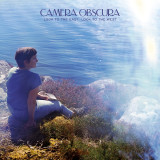
CAMERA OBSCURA - LOOK TO THE EAST, LOOK TO THE WEST

Galaxy Vinyl-
blue + white vinyl pressed galaxy effect in a gatefold jacket with lyrics.

"Look to the East, Look to the West", das neue Album von Camera Obscura, ist eine Offenbarung. Die von Tracyanne Campbell geleitete Band hat sich wieder mit dem Produzenten Jari Haapalainen zusammengetan und ein Album geschaffen, das daran erinnert, warum die langjährigen Fans sie seit Jahrzehnten heiß und innig lieben, und das gleichzeitig ihr bisher anspruchsvollstes Werk ist. Es ist auch das am härtesten umkämpfte Album in der Karriere von Camera Obscura. Nach dem Tod von Gründungsmitglied, Keyboarder und Freund Carey Lander im Jahr 2015 (an den der vorletzte Track "Sugar Almond" gerichtet ist), ging die Band in eine längere Pause. Sie blieben in Kontakt, aber ihr Status war ungewiss. Nachdem sie eingeladen worden waren, im Rahmen von Belle & Sebastians Kreuzfahrtfestival Boaty Weekender 2019 aufzutreten, kündigten sie ihre Rückkehr an. Donna Maciocia (Keyboards und Gesang) stieß bei diesen Shows zu den Gründungsmitgliedern Kenny McKeeve (Gitarre und Gesang), Gavin Dunbar (Bass) und Lee Thomson (Schlagzeug und Perkussion) und ist seitdem Songwriting-Partnerin von Campbell. Aufgenommen im selben Raum, in dem Queen "Bohemian Rhapsody" schrieb, fühlt sich "Look to the East, Look to the West" groß an, eine Breitwand-Neuinterpretation des Camera Obscura-Sounds, bei der die Band paradoxerweise zu den Grundlagen zurückkehrte - es gibt keine Streicher- oder Bläserarrangements, der Schwerpunkt liegt auf Klavier, Synthesizern, Hammond-Orgel und Drumcomputern, und, was vielleicht am auffälligsten ist, die Gruppe hat den Hallschleier fallen lassen, der ihre früheren Alben charakterisierte. Der Hauch von Country und Soul, der Camera Obscuras barocke Interpretation von Popmusik so bittersüß macht, war noch nie so offensichtlich - die Gitarren schimmern in die Ferne, die Tasten spuken, und Campbells Stimme sucht nach dem Herzen, reflektiert über Liebe, Verlust und den Lauf der Zeit. "Look to the East, Look to the West" ist Camera Obscura in seiner besten und eindrucksvollsten Form, ein Album, das den emotionalen Kern des Hörers völlig neu ordnet und ihn gleichzeitig traurig und beschwingt zurücklässt. Der Katalog von Camera Obscura ist voll von Liedern, die Menschen als lebensverändernd bezeichnen, Lieder, die sie ihr ganzes Leben lang begleiten werden. "Look to the East, Look to the West" hat 11 davon zu bieten.

pre-ordina ora03.05.2024

dovrebbe essere pubblicato su 03.05.2024

25,63
CAMERA OBSCURA - LOOK TO THE EAST, LOOK TO THE WEST LP

"Look to the East, Look to the West", das neue Album von Camera Obscura, ist eine Offenbarung. Die von Tracyanne Campbell geleitete Band hat sich wieder mit dem Produzenten Jari Haapalainen zusammengetan und ein Album geschaffen, das daran erinnert, warum die langjährigen Fans sie seit Jahrzehnten heiß und innig lieben, und das gleichzeitig ihr bisher anspruchsvollstes Werk ist. Es ist auch das am härtesten umkämpfte Album in der Karriere von Camera Obscura. Nach dem Tod von Gründungsmitglied, Keyboarder und Freund Carey Lander im Jahr 2015 (an den der vorletzte Track "Sugar Almond" gerichtet ist), ging die Band in eine längere Pause. Sie blieben in Kontakt, aber ihr Status war ungewiss. Nachdem sie eingeladen worden waren, im Rahmen von Belle & Sebastians Kreuzfahrtfestival Boaty Weekender 2019 aufzutreten, kündigten sie ihre Rückkehr an. Donna Maciocia (Keyboards und Gesang) stieß bei diesen Shows zu den Gründungsmitgliedern Kenny McKeeve (Gitarre und Gesang), Gavin Dunbar (Bass) und Lee Thomson (Schlagzeug und Perkussion) und ist seitdem Songwriting-Partnerin von Campbell. Aufgenommen im selben Raum, in dem Queen "Bohemian Rhapsody" schrieb, fühlt sich "Look to the East, Look to the West" groß an, eine Breitwand-Neuinterpretation des Camera Obscura-Sounds, bei der die Band paradoxerweise zu den Grundlagen zurückkehrte - es gibt keine Streicher- oder Bläserarrangements, der Schwerpunkt liegt auf Klavier, Synthesizern, Hammond-Orgel und Drumcomputern, und, was vielleicht am auffälligsten ist, die Gruppe hat den Hallschleier fallen lassen, der ihre früheren Alben charakterisierte. Der Hauch von Country und Soul, der Camera Obscuras barocke Interpretation von Popmusik so bittersüß macht, war noch nie so offensichtlich - die Gitarren schimmern in die Ferne, die Tasten spuken, und Campbells Stimme sucht nach dem Herzen, reflektiert über Liebe, Verlust und den Lauf der Zeit. "Look to the East, Look to the West" ist Camera Obscura in seiner besten und eindrucksvollsten Form, ein Album, das den emotionalen Kern des Hörers völlig neu ordnet und ihn gleichzeitig traurig und beschwingt zurücklässt. Der Katalog von Camera Obscura ist voll von Liedern, die Menschen als lebensverändernd bezeichnen, Lieder, die sie ihr ganzes Leben lang begleiten werden. "Look to the East, Look to the West" hat 11 davon zu bieten.

pre-ordina ora03.05.2024

dovrebbe essere pubblicato su 03.05.2024

27,52
BAHAMA SOUL CLUB - SUNDUB SOCIETY LP

Sundub Society - featuring Josephine Nightingale, Ally Garrido, Tiago Saga, Naomi Falcon, Cutty Wren, Hedvig Larsson. The Bahama Soul Club are a German-based group whose unique blend of soul, jazz, funk, blues, bossa nova, afro and Caribbean influences has firmly put them on the map as one of the most exciting contemporary outfits of the black music scene. Inspired by the blissful energies of the sun drenched coast and the multicultural verve of tattooed wave riders, spiritual seekers, rainbow healers, mystic maidens and dreadlocked beauties, .... and of course the funky smell of sandy flip flops. Lush arrangements painted with sun-soaked brushes, captivating hangout vibes, shuffling bits of Reggae, woven threads of 70s roots, traditional rhythms and beats and sounds of the South Western Algarve. Sincere, artistic, full of spirit and definitely unique. No striving for the worldly charts. An album recorded mainly with the local legends. Stoned troubadoures, poetic pirates, authentic rebels. The songs were born from a vague idea after the release of "Bohemia After Dawn", the last album on which a few artist friends from the Algarve had already contributed. There is always a special magic in the neighborhood when sunny midday jams morph to sundown sessions to party-till-dawn skanks. We then just put those jams on tape. So, ten sundubby love songs to 'Oh, those sandy beaches'!

non in magazzino

Ordina ora e ordineremo l'articolo per te presso il nostro fornitore.

26,47

Last In: 17 months ago
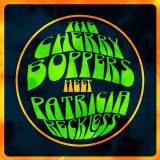
THE CHERRY BOPPERS MEET PATRICIA RECKLESS - THE CHERRY BOPPERS MEET PATRICIA RECKLESS

The Cherry Boppers are back with six fiery artifacts of promiscuous funk recorded in collaboration with the vocalist, also from Bilbao, Patricia Reckless, in this mini-album in 10-inch vinyl format. Pure rhythm from head to toes. As is well known, funk fuses what has historically been labelled soul, rhythm and blues, jazz and rock, and The Cherry Boppers (TCB) have undoubtedly created their own promiscuous formula based on a fine selection of styles that predate hip-hop. Active since 2004 and convinced advocates of jazz-funk and instrumental funk, there are very few examples of vocal tracks in their discography. However, in 2014 they released the EP "TCB meet Dr. Baltz" (Brixton Records-Soul Series) in which they successfully covered three classic rhythm and blues standards with lyrics in Spanish. Now, after five years of publishing drought, they repeat the experience with the stellar collaboration of the vocalist, also from Bilbao, Patricia Reckless, musically formed in the band "Bohemian Soul". The powerful and educated voice of Patricia Reckless blends perfectly, as one more instrument, into the compact rhythmic machinery of TCB, giving the 6 tracks of this mini-album (the 6-track EP thing doesn't quite fit) a structure, perhaps, more familiar to a non-specialized audience. But let's not get carried away, the textures, the silences, the "on the one!" beat, the breaks, the stately Hammond organ, the brilliant brass, the forceful bass lines, the precise percussion, the wah wah... are all 100% Cherry Boppers. "The Cherry Boppers meet Patricia Reckless" remains faithful to that analogue funk sound that makes the band proud of a long and vocational career in the genre. And it is also an album full of details, of paths and instrumental lines to be discovered on multiple listens.

pre-ordina ora23.02.2024

dovrebbe essere pubblicato su 23.02.2024

24,16
MARCOS VALLE & AZYMUTH - FLY CRUZEIRO

2023 REPRESS - Rare Brazilian Bossa Nova - Latin album - Comes with insert/liner notes & packaged in a gatefold jacket - 180g TANGERINE COLORED vinyl limited to 500 copies w/obi strip // Marcos Valle needs little introduction, born in Rio de Janeiro in 1943, Mr. Valle is an award-winning/chart-hitting Brazilian singer, songwriter and record producer. He was raised on a staple diet of classical, Brazilian popular music and North American jazz. Marcos Valle grew up to be one of the most influential & innovating musicians of the Bossa nova period and is regarded as one of the greatest Brazilian artists of all time. He has recorded albums for North American labels such as EMI, Warner Brothers & Verve_cementing his career with a series of tight musical workouts moving seamlessly between funk, samba, soundtracks, soul, jazz, dance and rock. Valle contributed to some of the most important recordings by artists including Sarah Vaughan, Frank Sinatra, Sergio Mendes, Leon Ware, Chicago and Airto Moreira. Mr. Valle's work has been sampled/remixed by major artists from the likes of Jay-Z, Kanye West & Madlib.One of Valle's favorite bands to frequently collaborate with was no doubt Azymuth, who took their name from a Valle song!Azymuth (Bertrami-Malheiros-Conti) started their individual careers in the 1960s in the emergent Bossa nova and jazz scene of Rio, living in the same bohemian block in Copacabana and playing in small bars as session musicians under various other names.It was the early 1970s when Azymuth really began to cause a stir and Marcos Valle invited them to record on a soundtrack LP he was doing. The unique Azymuth sound was now born: a mix of electronic music, samba, funk and jazz that they defined as MPB-jazz (MPB stands for Musica Popular Brasileira). Over the decades Azymuth released extremely successful albums (selling millions of copies) on labels such as Polydor, Som Livre and Atlantic. Hitting the charts on multiple occasions, Azymuth played at the Monterrey and Montreux jazz festivals and at venues around the globe.The band has worked with legendary musicians from Joe Henderson to Stevie Wonder and they've also been remixed/sampled by artists such as Flying Lotus, will.i.am, MF DOOM and Peanut Butter Wolf. Their unique brand of fusion-music has influenced three generations of musicians, DJs, and producers. Music journalists across the spectrum from mainstream to underground, celebrated these raw yet wildly imaginative and musically accomplished tracks that were a revelation of jazz, funk and disco, with some even stating that the roots of EDM were on display in their early recordings.On the album we are presenting you (Brazil by Music - Fly Cruzeiro) the listener is getting yet another fantastic early Valle/Azymuth collaboration. Released in 1972, this rare album was pressed and gifted to customers of the `Cruzeiro' airline company. This promotional record came as no surprise because the connection between Cruzeiro Airlines and Valle was very tight (Valle's father was the manager and his brother was a co-pilot there).Next to the Valle/Azymuth material present, other songs include some of the all-time best Brazilian standards originally written by renowned artists such as Jorge Ben & Antonio Carlos Jobim. Take a flight with us through this fantastic album and into some of the best Jazz, Funk & Bossa Nova the Brazilian musical landscape has to offer.Tidal Waves Music now proudly presents the first ever vinyl reissue of `Fly Cruzeiro' since its release in 1972 (only 500 copies were pressed upon its original release in 1972).

pre-ordina ora01.12.2023

dovrebbe essere pubblicato su 01.12.2023

40,13
Nicola Conte - Umoja LP 2x12"

Renowned Italian spiritual jazz master, DJ, producer, guitarist, and bandleader Nicola Conte proudly presents his new album Umoja via London based label Far Out Recordings.

A joyous exultation across ten tracks, Umoja taps into the abundant well of knowledge Conte has amassed over his career as connoisseuring compiler and archivist of deep jazz, latin, afrofuturist, bossa-nova and soul music from around the world. Expressing unity, oneness and harmony in Swahili, Umoja coalesces universal feelings through the multifaceted global music Conte has spent his life studying and researching.

Having released music with Blue Note, Impulse! and Schema records, Nicola Conte’s relationship with Far Out began over a shared love of hard-edged bossa-nova and swinging samba-jazz. Between 2009-2013 Nicola Conte compiled five volumes of forgotten 60s Brazilian music for his Viagem series. He then released his critically acclaimed Natural album: a collaboration with vocalist Steffania Dippiero, featuring jazz standards alongside covers of lesser known Brazilian gems.

The music of Umoja draws on the deep-dug 70's independent spiritual and free jazz sounds, private-press soul records, and African and Afro Caribbean rhythms in Conte’s collection. But he equally recognises his debt to many of the decade’s more celebrated musical icons, such as North American cosmic jazz masters Lonnie Liston Smith and Gary Bartz, and Afrobeat originators Fela Kuti and Tony Allen.

Since founding the Bari-based bohemian cultural movement and club night Fez at the dawn of the nineties, Conte has proven to be a pillar of the contemporary, international soul-jazz scene. Composed alongside his long time friend, guitarist Alberto Parmegiani, Conte brings together a dazzling host of guests from around the world, including award winning British vocalist Zara Mcfarlane, acclaimed Finnish saxophonist Timo Lassy, french vibes player Simon Mullier, US vocalist Myles Sanko, rising South African drummer Fernando Damon, former Roy Hargrove bassist Ameen Saleem and Serbian flute sensation Milena Jancuric.

Proudly revivalist, Umoja was recorded direct to analog tape, with just two takes for each track. “Searching for an unadulterated, spontaneous, almost improvised feeling”, Nicola made sure that the few overdubs were also transferred to tape in order to retain the colour and warmth of the analog sound. “Very little post production or editing has been added, so what you hear is largely what happened in those magical live sessions”.

non in magazzino

Ordina ora e ordineremo l'articolo per te presso il nostro fornitore.

26,85

Last In: 65 days ago
Dorothy Ashby - With Strings Attached LP 6x12"
 
53

New Land präsentiert mit Stolz das erste Box-Set mit mehreren LPs von Dorothy Ashby - einer der am meisten übersehenen Künstlerinnen der Jazzgeschichte. Die 6 LPs, die in diesem aufwendigen Box-Set enthalten sind, geben einen längst überfälligen Rückblick auf ihre frühen Werke: 'The Jazz Harpist', 'Hip Harp' mit Frank Wess, 'In A Minor Groove' mit Frank Wess, 'Soft Winds: The Swinging Harp Of Dorothy Ashby', 'Dorothy Ashby' und 'The Fantastic Harp Of Dorothy Ashby' wurden mit der vollen Unterstützung des Nachlasses von Dorothy Ashby offiziell lizenziert.

Alle Alben, mit Ausnahme von 'The Jazz Harpist' und 'Dorothy Ashby', wurden von Kevin Gray direkt von den analogen Originalbändern neu gemastert und im Lackschnittverfahren auf schwarze 180g-Vinyle gepresst.

Das Herzstück dieses Box-Sets ist allerdings das umfangreiche 44-seitige Buch mit einem Vorwort der Grammy-nominierten Harfenistin Brandee Younger, ausführlichen Linernotes von Shannon J. Effinger und bisher unveröffentlichten Fotos und Interviews mit denjenigen, die sie am besten kannten. Das Box-Set ist weltweit auf 1000 Stück limitiert.

pre-ordina ora09.06.2023

dovrebbe essere pubblicato su 09.06.2023

229,62
Various - Ghost Riders 2x12"

2023 REpress
A North American road trip of coming of age garage soul mapped by Ivan Liechti, Ghost Riders is Efficient Space’s latest narrative compilation, hovering in a liminal emotional ravine between moonlight melancholy, teenage heartache and unchecked, unrealised ambition. Across seventeen open hearted ballads recorded 1965-1974, the 2LP collects and connects dots between British Invasion fanatics, child prodigies, the loners and the luckless, in a kind of trans-continental survey of those swept up in rock’n’roll mania and buoyed by local newspaper ads promising fame and gold records.

From the tangerine dreams of 8th grade all-girl combo The Mod 4 to the tri-state jukebox aspiring echoes of The Tempters, The Yardley’s poetic Farfisa vamp and lilting folk pop, and The Landlords’ weepy break up b-side blues, these are mostly one shots by dreamers whose experience was brief before being checked back to the reality of suburban normality and realistic career options. Hailing from the regional backwaters of Illnois, Arkansas, Nevada, Massachussets, Ohio, Idaho, Texas and beyond, the licensed artists were scouted by way of local fire departments, spiritualist fellowships and animal welfare centres, often barely a stones throw from where their contributions were originally laid.

A barely teenage Dennis Harte's ‘Summer’s Over’ perhaps best taps the collection’s essence. A gut-wrenching lament of the passing of the season as if it was the last on earth. Flanked by players from The Left Banke, Harte, a now-piano tuner to the stars, is from the minor segment that found longevity in showbiz. Likewise with Michigan icon Lyn Nowicki who cast her ghostly voice over Beatles cover song chameleons The Common People and Jerry McGee, The Ventures member and conduit of Dr. John’s ‘Twilight Zone’.

Ghost Riders simmers with the scent of youthful summers, the pang of schoolyard romance, and the excitement (and disenchantment) of teenage naïveté, delivered via a deceptively simple and frequently wonky garage band set up. The vision of record collector and graphic designer Ivan Liechti, these eternal psych-folk howlers are further crystallised by Colin Young’s fastidious audio restoration, the original artwork of Elise Ganebin-de Bons and an aptly penned forward from Sonic Boom.

non in magazzino

Ordina ora e ordineremo l'articolo per te presso il nostro fornitore.

24,83

Last In: 3 months ago
Crimeapple - El Cantante

Embracing his career path as an emcee/entertainer, CRIMAPPLE returns with his latest solo effort, El Cantante, which serves as an ode to Hector Lavoe and The Fania Era of salsa music's profound storytelling.

Although devoid of any guest appearances, CRIME is joined by a supporting cast of praise-worthy producers throughout the project whom include Bohemia Lynch (Westside Gunn), Michaelangelo (Avenue, Vel the Wonder) as well as his frequent collaborator, Buck Dudley, among others. And while there’s tracks that borrow aesthetics akin to latin music—such as the syncopated rhythm patterns on “Tuesday,” or the looping pan flute heard on “Out the Way”—you’ll still find the archetypal soundscapes that have defined CRIME’s discography. These include the soulful/zone-inducing loops on tracks like the album opener, “My Song,” as well as “Together,” “Encore,” and “Precious.” And then there’s the chest-pounding bangers like “Cosos,” where CRIME lyrically remains in his bag with unrelenting, braggadocious rhymes: “You cheesecake, rappers know I get on this shit and eat great / Get better at any take and drop on anyone’s release date”.

All in all, El Cantante is a self realization of sorts as the New Jersey emcee shares his current life perspectives as he touches on what it’s like to be considered a hip-hop legend by many, while also reflecting on the path that brought him to this point in his career.

pre-ordina ora27.01.2023

dovrebbe essere pubblicato su 27.01.2023

27,52
Lee Tracy & Isaac Manning - Is it What You Want

As the sun sets on a quaint East Nashville house, a young man bares a piece of his soul. Facing the camera, sporting a silky suit jacket/shirt/slacks/fingerless gloves ensemble that announces "singer" before he's even opened his mouth, Lee Tracy Johnson settles onto his stage, the front yard. He sways to the dirge-like drum machine pulse of a synth-soaked slow jam, extends his arms as if gaining his balance, and croons in affecting, fragile earnest, "I need your love… oh baby…"

Dogs in the yard next door begin barking. A mysterious cardboard robot figure, beamed in from galaxies unknown and affixed to a tree, is less vocal. Lee doesn't acknowledge either's presence. He's busy feeling it, arms and hands gesticulating. His voice rises in falsetto over the now-quiet dogs, over the ambient noise from the street that seeps into the handheld camcorder's microphone, over the recording of his own voice played back from a boombox off-camera. After six minutes the single, continuous shot ends. In this intimate creative universe there are no re-takes. There are many more music videos to shoot, and as Lee later puts it, "The first time you do it is actually the best. Because you can never get that again. You expressing yourself from within."

"I Need Your Love" dates from a lost heyday. From some time in the '80s or early '90s, when Lee Tracy (as he was known in performance) and his music partner/producer/manager Isaac Manning committed hours upon hours of their sonic and visual ideas to tape. Embracing drum machines and synthesizers – electronics that made their personal futurism palpable – they recorded exclusively at home, live in a room into a simple cassette deck. Soul, funk, electro and new wave informed their songs, yet Lee and Isaac eschewed the confinement of conventional categories and genres, preferring to let experimentation guide them.

"Anytime somebody put out a new record they had the same instruments or the same sound," explains Isaac. "So I basically wanted to find something that's really gonna stand out away from all of the rest of 'em." Their ethos meant that every idea they came up with was at least worth trying: echoed out half-rapped exhortations over frantic techno-style beats, gospel synth soul, modal electro-funk, oddball pop reinterpretations, emo AOR balladry, nods to Prince and the Fat Boys, or arrangements that might collapse mid-song into a mess of arcade game-ish blips before rallying to reach the finish line. All of it conjoined by consistent tape hiss, and most vitally, Lee's chameleonic voice, which managed to wildly shape shift and still evoke something sincere – whether toggling between falsetto and tenor exalting Jesus's return, or punctuating a melismatic romantic adlib with a succinct, "We all know how it feels to be alone."

"People think we went to a studio," says Isaac derisively. "We never went to no studio. We didn't have the money to go to no studio! We did this stuff at home. I shot videos in my front yard with whatever we could to get things together." Sometimes Isaac would just put on an instrumental record, be it "Planet Rock" or "Don't Cry For Me Argentina" (from Evita), press "record," and let Lee improvise over it, yielding peculiar love songs, would-be patriotic anthems, or Elvis Presley or Marilyn Monroe tributes. Technical limitations and a lack of professional polish never dissuaded them. They believed they were onto something.

"That struggle," Isaac says, "made that sound sound good to me."

In the parlance of modern music criticism Lee and Isaac's dizzying DIY efforts would inevitably be described as "outsider." But "outsider" carries the burden of untold additional layers of meaning if you're Black and from the South, creating on a budget, and trying to get someone, anyone within the country music capital of the world to take your vision seriously. "What category should we put it in?" Isaac asks rhetorically. "I don't know. All I know is feeling. I ain't gonna name it nothing. It's music. If it grabs your soul and touch your heart that's what it basically is supposed to do."

=

Born in 1963, the baby boy of nine siblings, Lee Tracy spent his earliest years living amidst the shotgun houses on Nashville's south side. "We was poor, man!" he says, recalling the outhouse his family used for a bathroom and the blocks of ice they kept in the kitchen to chill perishables. "But I actually don't think I really realized I was in poverty until I got grown and started thinking about it." Lee's mom worked at the Holiday Inn; his dad did whatever he had to do, from selling fruit from a horse drawn cart to bootlegging. "We didn't have much," Lee continues, "but my mother and my father got us the things we needed, the clothes on our back." By the end of the decade with the city's urban renewal programs razing entire neighborhoods to accommodate construction of the Interstate, the family moved to Edgehill Projects. Lee remembers music and art as a constant source of inspiration for he and his brothers and sisters – especially after seeing the Jackson 5 perform on Ed Sullivan. "As a small child I just knew that was what I wanted to do."

His older brother Don began musically mentoring him, introducing Lee to a variety of instruments and sounds. "He would never play one particular type of music, like R&B," says Lee. "I was surrounded by jazz, hard rock and roll, easy listening, gospel, reggae, country music; I mean I was a sponge absorbing all of that." Lee taught himself to play drums by beating on cardboard boxes, gaining a rep around the way for his timekeeping, and his singing voice. Emulating his favorites, Earth Wind & Fire and Cameo, he formed groups with other kids with era-evocative band names like Concept and TNT Connection, and emerged as the leader of disciplined rehearsals. "I made them practice," says Lee. "We practiced and practiced and practiced. Because I wanted that perfection." By high school the most accomplished of these bands would take top prize in a prominent local talent show. It was a big moment for Lee, and he felt ready to take things to the next level. But his band-mates had other ideas.

"I don't know what happened," he says, still miffed at the memory. "It must have blew they mind after we won and people started showing notice, because it's like everybody quit! I was like, where the hell did everybody go?" Lee had always made a point of interrogating prospective musicians about their intentions before joining his groups: were they really serious or just looking for a way to pick up girls? Now he understood even more the importance of finding a collaborator just as committed to the music as he was.

=

Isaac Manning had spent much of his life immersed in music and the arts – singing in the church choir with his family on Nashville's north side, writing, painting, dancing, and working various gigs within the entertainment industry. After serving in the armed forces, in the early '70s he ran The Teenage Place, a music and performance venue that catered to the local youth. But he was forced out of town when word of one of his recreational routines created a stir beyond the safe haven of his bohemian circles.

"I was growing marijuana," Isaac explains. "It wasn't no business, I was smoking it myself… I would put marijuana in scrambled eggs, cornbread and stuff." His weed use originated as a form of self-medication to combat severe tooth pain. But when he began sharing it with some of the other young people he hung out with, some of who just so happened to be the kids of Nashville politicians, the cops came calling. "When I got busted," he remembers, "they were talking about how they were gonna get rid of me because they didn't want me saying nothing about they children because of the politics and stuff. So I got my family, took two raggedy cars, and left Nashville and went to Vegas."

Out in the desert, Isaac happened to meet Chubby Checker of "The Twist" fame while the singer was gigging at The Flamingo. Impressed by Isaac's zeal, Checker invited him to go on the road with him as his tour manager/roadie/valet. The experience gave Isaac a window into a part of the entertainment world he'd never encountered – a glimpse of what a true pop act's audience looked like. "Chubby Checker, none of his shows were played for Black folks," he remembers. "All his gigs were done at high-class white people areas." Returning home after a few years with Chubby, Isaac was properly motivated to make it in Music City. He began writing songs and scouting around Nashville for local talent anywhere he could find it with an expressed goal: "Find someone who can deliver your songs the way you want 'em delivered and make people feel what you want them to feel."

One day while walking through Edgehill Projects Isaac heard someone playing the drums in a way that made him stop and take notice. "The music was so tight, just the drums made me feel like, oh I'm-a find this person," he recalls. "So I circled through the projects until I found who it was.

"That's how I met him – Lee Tracy. When I found him and he started singing and stuff, I said, ohhh, this is somebody different."

=

Theirs was a true complementary partnership: young Lee possessed the raw talent, the older Isaac the belief. "He's really the only one besides my brother and my family that really seen the potential in me," says Lee. "He made me see that I could do it."

Isaac long being a night owl, his house also made for a fertile collaborative environment – a space where there always seemed to be a new piece of his visual art on display: paintings, illustrations, and dolls and figures (including an enigmatic cardboard robot). Lee and Issac would hang out together and talk, listen to music, conjure ideas, and smoke the herb Isaac had resumed growing in his yard. "It got to where I could trust him, he could trust me," Isaac says of their bond. They also worked together for hours on drawings, spreading larges rolls of paper on the walls and sketching faces with abstract patterns and imagery: alien-like beings, tri-horned horse heads, inverted Janus-like characters where one visage blurred into the other.

Soon it became apparent that they didn't need other collaborators; self-sufficiency was the natural way forward. At Isaac's behest Lee, already fed up with dealing with band musicians, began playing around with a poly-sonic Yamaha keyboard at the local music store. "It had everything on it – trumpet, bass, drums, organ," remembers Lee. "And that's when I started recording my own stuff."

The technology afforded Lee the flexibility and independence he craved, setting him on a path other bedroom musicians and producers around the world were simultaneously following through the '80s into the early '90s. Saving up money from day jobs, he eventually supplemented the Yamaha Isaac had gotten him with Roland and Casio drum machines and a Moog. Lee was living in an apartment in Hillside at that point caring for his dad, who'd been partially paralyzed since early in life. In the evenings up in his second floor room, the music put him in a zone where he could tune out everything and lose himself in his ideas.

"Oh I loved it," he recalls. "I would really experiment with the instruments and use a lot of different sound effects. I was looking for something nobody else had. I wanted something totally different. And once I found the sound I was looking for, I would just smoke me a good joint and just let it go, hit the record button." More potent a creative stimulant than even Isaac's weed was the holistic flow and spontaneity of recording. Between sessions at Isaac's place and Lee's apartment, their volume of output quickly ballooned.

"We was always recording," says Lee. "That's why we have so much music. Even when I went to Isaac's and we start creating, I get home, my mind is racing, I gotta start creating, creating, creating. I remember there were times when I took a 90-minute tape from front to back and just filled it up."

"We never practiced," says Isaac. "See, that was just so odd about the whole thing. I could relate to him, and tell him about the songs I had ideas for and everything and stuff. And then he would bring it back or whatever, and we'd get together and put it down." Once the taskmaster hell bent on rehearsing, Lee had flipped a full 180. Perfection was no longer an aspiration, but the enemy of inspiration.

"I seen where practicing and practicing got me," says Lee. "A lot of musicians you get to playing and they gotta stop, they have to analyze the music. But while you analyzing you losing a lot of the greatness of what you creating. Stop analyzing what you play, just play! And it'll all take shape."

=

"I hope you understood the beginning of the record because this was invented from a dream I had today… (You tell me, I'll tell you, we'll figure it out together)" – Lee Tracy and Isaac Manning, "Hope You Understand"

Lee lets loose a maniacal cackle when he acknowledges that the material that he and Isaac recorded was by anyone's estimation pretty out there. It's the same laugh that commences "Hope You Understand" – a chaotic transmission that encapsulates the duality at the heart of their music: a stated desire to reach people and a compulsion to go as leftfield as they saw fit.

"We just did it," says Lee. "We cut the music on and cut loose. I don't sit around and write. I do it by listening, get a feeling, play the music, and the lyrics and stuff just come out of me."

The approach proved adaptable to interpreting other artists' material. While recording a cover of Whitney Houston's pop ballad "Saving All My Love For You," Lee played Whitney's version in his headphones as he laid down his own vocals – partially following the lyrics, partially using them as a departure point. The end result is barely recognizable compared with the original, Lee and Isaac having switched up the time signature and reinvented the melody along the way towards morphing a slick mainstream radio standard into something that sounds solely their own.

"I really used that song to get me started," says Lee. "Then I said, well I need something else, something is missing. Something just came over me. That's when I came up with 'Is It What You Want.'"

The song would become the centerpiece of Lee and Isaac's repertoire. Pushed along by a percolating metronomic Rhythm King style beat somewhere between a military march and a samba, "Is It What You Want" finds Lee pleading the sincerity of his commitment to a potential love interest embellished by vocal tics and hiccups subtlely reminiscent of his childhood hero MJ. Absent chord changes, only synth riffs gliding in and out like apparitions, the song achieves a lingering lo-fi power that leaves you feeling like it's still playing, somewhere, even after the fade out.

"I don't know, it's like a real spiritual song," Lee reflects. "But it's not just spiritual. To me the more I listen to it it's like about everything that you do in your everyday life, period. Is it what you want? Do you want a car or you don't want a car? Do you want Jesus or do you want the Devil? It's basically asking you the question. Can't nobody answer the question but you yourself."

In 1989 Lee won a lawsuit stemming from injuries sustained from a fight he'd gotten into. He took part of the settlement money and with Isaac pressed up "Saving All My Love For You" b/w "Is It What You Want" as a 45 single. Isaac christened the label One Chance Records. "Because that's all we wanted," he says with a laugh, "one chance."

Isaac sent the record out to radio stations and major labels, hoping for it to make enough noise to get picked up nationally. But the response he and Lee were hoping for never materialized. According to Isaac the closest the single got to getting played on the radio is when a disk jock from a local station made a highly unusual announcement on air: "The dude said on the radio, 107.5 – 'We are not gonna play 'Is It What You Want.' We cracked up! Wow, that's deep.

"It was a whole racist thing that was going on," he reflects. "So we just looked over and kept on going. That was it. That was about the way it goes… If you were Black and you were living in Nashville and stuff, that's the way you got treated." Isaac already knew as much from all the times he'd brought he and Lee's tapes (even their cache of country music tunes) over to Music Row to try to drum up interest to no avail.

"Isaac, he really worked his ass off," says Lee. "He probably been to every record place down on Music Row." Nashville's famed recording and music business corridor wasn't but a few blocks from where Lee grew up. Close enough, he remembers, for him to ride his bike along its back alleys and stumble upon the occasional random treasure, like a discarded box of harmonicas. Getting in through the front door, however, still felt a world away.

"I just don't think at the time our music fell into a category for them," he concedes. "It was before its time."

=

Lee stopped making music some time in the latter part of the '90s, around the time his mom passed away and life became increasingly tough to manage. "When my mother died I had a nervous breakdown," he says, "So I shut down for a long time. I was in such a sadness frame of mind. That's why nobody seen me. I had just disappeared off the map." He fell out of touch with Isaac, and in an indication of just how bad things had gotten for him, lost track of all the recordings they'd made together. Music became a distant memory.

Fortunately, Isaac kept the faith. In a self-published collection of his poetry – paeans to some of his favorite entertainment and public figures entitled Friends and Dick Clark – he'd written that he believed "music has a life of its own." But his prescience and presence of mind were truly manifested in the fact that he kept an archive of he and Lee's work. As perfectly imperfect as "Is It What You Want" now sounds in a post-Personal Space world, Lee and Isaac's lone official release was in fact just a taste. The bulk of the Is It What You Want album is culled from the pair's essentially unheard home recordings – complete songs, half-realized experiments, Isaac's blue monologues and pronouncements et al – compiled, mixed and programmed in the loose and impulsive creative spirit of their regular get-togethers from decades ago. The rest of us, it seems, may have finally caught up to them.

On the prospect of at long last reaching a wider audience, Isaac says simply, "I been trying for a long time, it feels good." Ever the survivor, he adds, "The only way I know how to make it to the top is to keep climbing. If one leg break on the ladder, hey, you gotta fix it and keep on going… That's where I be at. I'll kill death to make it out there."

For Lee it all feels akin to a personal resurrection: "It's like I was in a tomb and the tomb was opened and I'm back… Man, it feels so great. I feel like I'm gonna jump out of my skin." Success at this stage of his life, he realizes, probably means something different than what it did back when he was singing and dancing in Isaac's front yard. "What I really mean by 'making it,'" he explains isn't just the music being heard but, "the story being told."

Occasionally Lee will pull up "Is It What You Want" on YouTube on his phone, put on his headphones, and listen. He remembers the first time he heard his recorded voice. How surreal it was, how he thought to himself, "Is that really me?" What would he say to that younger version of himself now?

"I would probably tell myself, hang in there, don't give up. Keep striving for the goal. And everything will work out."

Despite what's printed on the record label, sometimes you do get more than one chance.

non in magazzino

Ordina ora e ordineremo l'articolo per te presso il nostro fornitore.

11,72

Last In: 3 years ago
Lee Tracy & Isaac Manning - Is it What You Want LP

As the sun sets on a quaint East Nashville house, a young man bares a piece of his soul. Facing the camera, sporting a silky suit jacket/shirt/slacks/fingerless gloves ensemble that announces "singer" before he's even opened his mouth, Lee Tracy Johnson settles onto his stage, the front yard. He sways to the dirge-like drum machine pulse of a synth-soaked slow jam, extends his arms as if gaining his balance, and croons in affecting, fragile earnest, "I need your love… oh baby…"

Dogs in the yard next door begin barking. A mysterious cardboard robot figure, beamed in from galaxies unknown and affixed to a tree, is less vocal. Lee doesn't acknowledge either's presence. He's busy feeling it, arms and hands gesticulating. His voice rises in falsetto over the now-quiet dogs, over the ambient noise from the street that seeps into the handheld camcorder's microphone, over the recording of his own voice played back from a boombox off-camera. After six minutes the single, continuous shot ends. In this intimate creative universe there are no re-takes. There are many more music videos to shoot, and as Lee later puts it, "The first time you do it is actually the best. Because you can never get that again. You expressing yourself from within."

"I Need Your Love" dates from a lost heyday. From some time in the '80s or early '90s, when Lee Tracy (as he was known in performance) and his music partner/producer/manager Isaac Manning committed hours upon hours of their sonic and visual ideas to tape. Embracing drum machines and synthesizers – electronics that made their personal futurism palpable – they recorded exclusively at home, live in a room into a simple cassette deck. Soul, funk, electro and new wave informed their songs, yet Lee and Isaac eschewed the confinement of conventional categories and genres, preferring to let experimentation guide them.

"Anytime somebody put out a new record they had the same instruments or the same sound," explains Isaac. "So I basically wanted to find something that's really gonna stand out away from all of the rest of 'em." Their ethos meant that every idea they came up with was at least worth trying: echoed out half-rapped exhortations over frantic techno-style beats, gospel synth soul, modal electro-funk, oddball pop reinterpretations, emo AOR balladry, nods to Prince and the Fat Boys, or arrangements that might collapse mid-song into a mess of arcade game-ish blips before rallying to reach the finish line. All of it conjoined by consistent tape hiss, and most vitally, Lee's chameleonic voice, which managed to wildly shape shift and still evoke something sincere – whether toggling between falsetto and tenor exalting Jesus's return, or punctuating a melismatic romantic adlib with a succinct, "We all know how it feels to be alone."

"People think we went to a studio," says Isaac derisively. "We never went to no studio. We didn't have the money to go to no studio! We did this stuff at home. I shot videos in my front yard with whatever we could to get things together." Sometimes Isaac would just put on an instrumental record, be it "Planet Rock" or "Don't Cry For Me Argentina" (from Evita), press "record," and let Lee improvise over it, yielding peculiar love songs, would-be patriotic anthems, or Elvis Presley or Marilyn Monroe tributes. Technical limitations and a lack of professional polish never dissuaded them. They believed they were onto something.

"That struggle," Isaac says, "made that sound sound good to me."

In the parlance of modern music criticism Lee and Isaac's dizzying DIY efforts would inevitably be described as "outsider." But "outsider" carries the burden of untold additional layers of meaning if you're Black and from the South, creating on a budget, and trying to get someone, anyone within the country music capital of the world to take your vision seriously. "What category should we put it in?" Isaac asks rhetorically. "I don't know. All I know is feeling. I ain't gonna name it nothing. It's music. If it grabs your soul and touch your heart that's what it basically is supposed to do."

=

Born in 1963, the baby boy of nine siblings, Lee Tracy spent his earliest years living amidst the shotgun houses on Nashville's south side. "We was poor, man!" he says, recalling the outhouse his family used for a bathroom and the blocks of ice they kept in the kitchen to chill perishables. "But I actually don't think I really realized I was in poverty until I got grown and started thinking about it." Lee's mom worked at the Holiday Inn; his dad did whatever he had to do, from selling fruit from a horse drawn cart to bootlegging. "We didn't have much," Lee continues, "but my mother and my father got us the things we needed, the clothes on our back." By the end of the decade with the city's urban renewal programs razing entire neighborhoods to accommodate construction of the Interstate, the family moved to Edgehill Projects. Lee remembers music and art as a constant source of inspiration for he and his brothers and sisters – especially after seeing the Jackson 5 perform on Ed Sullivan. "As a small child I just knew that was what I wanted to do."

His older brother Don began musically mentoring him, introducing Lee to a variety of instruments and sounds. "He would never play one particular type of music, like R&B," says Lee. "I was surrounded by jazz, hard rock and roll, easy listening, gospel, reggae, country music; I mean I was a sponge absorbing all of that." Lee taught himself to play drums by beating on cardboard boxes, gaining a rep around the way for his timekeeping, and his singing voice. Emulating his favorites, Earth Wind & Fire and Cameo, he formed groups with other kids with era-evocative band names like Concept and TNT Connection, and emerged as the leader of disciplined rehearsals. "I made them practice," says Lee. "We practiced and practiced and practiced. Because I wanted that perfection." By high school the most accomplished of these bands would take top prize in a prominent local talent show. It was a big moment for Lee, and he felt ready to take things to the next level. But his band-mates had other ideas.

"I don't know what happened," he says, still miffed at the memory. "It must have blew they mind after we won and people started showing notice, because it's like everybody quit! I was like, where the hell did everybody go?" Lee had always made a point of interrogating prospective musicians about their intentions before joining his groups: were they really serious or just looking for a way to pick up girls? Now he understood even more the importance of finding a collaborator just as committed to the music as he was.

=

Isaac Manning had spent much of his life immersed in music and the arts – singing in the church choir with his family on Nashville's north side, writing, painting, dancing, and working various gigs within the entertainment industry. After serving in the armed forces, in the early '70s he ran The Teenage Place, a music and performance venue that catered to the local youth. But he was forced out of town when word of one of his recreational routines created a stir beyond the safe haven of his bohemian circles.

"I was growing marijuana," Isaac explains. "It wasn't no business, I was smoking it myself… I would put marijuana in scrambled eggs, cornbread and stuff." His weed use originated as a form of self-medication to combat severe tooth pain. But when he began sharing it with some of the other young people he hung out with, some of who just so happened to be the kids of Nashville politicians, the cops came calling. "When I got busted," he remembers, "they were talking about how they were gonna get rid of me because they didn't want me saying nothing about they children because of the politics and stuff. So I got my family, took two raggedy cars, and left Nashville and went to Vegas."

Out in the desert, Isaac happened to meet Chubby Checker of "The Twist" fame while the singer was gigging at The Flamingo. Impressed by Isaac's zeal, Checker invited him to go on the road with him as his tour manager/roadie/valet. The experience gave Isaac a window into a part of the entertainment world he'd never encountered – a glimpse of what a true pop act's audience looked like. "Chubby Checker, none of his shows were played for Black folks," he remembers. "All his gigs were done at high-class white people areas." Returning home after a few years with Chubby, Isaac was properly motivated to make it in Music City. He began writing songs and scouting around Nashville for local talent anywhere he could find it with an expressed goal: "Find someone who can deliver your songs the way you want 'em delivered and make people feel what you want them to feel."

One day while walking through Edgehill Projects Isaac heard someone playing the drums in a way that made him stop and take notice. "The music was so tight, just the drums made me feel like, oh I'm-a find this person," he recalls. "So I circled through the projects until I found who it was.

"That's how I met him – Lee Tracy. When I found him and he started singing and stuff, I said, ohhh, this is somebody different."

=

Theirs was a true complementary partnership: young Lee possessed the raw talent, the older Isaac the belief. "He's really the only one besides my brother and my family that really seen the potential in me," says Lee. "He made me see that I could do it."

Isaac long being a night owl, his house also made for a fertile collaborative environment – a space where there always seemed to be a new piece of his visual art on display: paintings, illustrations, and dolls and figures (including an enigmatic cardboard robot). Lee and Issac would hang out together and talk, listen to music, conjure ideas, and smoke the herb Isaac had resumed growing in his yard. "It got to where I could trust him, he could trust me," Isaac says of their bond. They also worked together for hours on drawings, spreading larges rolls of paper on the walls and sketching faces with abstract patterns and imagery: alien-like beings, tri-horned horse heads, inverted Janus-like characters where one visage blurred into the other.

Soon it became apparent that they didn't need other collaborators; self-sufficiency was the natural way forward. At Isaac's behest Lee, already fed up with dealing with band musicians, began playing around with a poly-sonic Yamaha keyboard at the local music store. "It had everything on it – trumpet, bass, drums, organ," remembers Lee. "And that's when I started recording my own stuff."

The technology afforded Lee the flexibility and independence he craved, setting him on a path other bedroom musicians and producers around the world were simultaneously following through the '80s into the early '90s. Saving up money from day jobs, he eventually supplemented the Yamaha Isaac had gotten him with Roland and Casio drum machines and a Moog. Lee was living in an apartment in Hillside at that point caring for his dad, who'd been partially paralyzed since early in life. In the evenings up in his second floor room, the music put him in a zone where he could tune out everything and lose himself in his ideas.

"Oh I loved it," he recalls. "I would really experiment with the instruments and use a lot of different sound effects. I was looking for something nobody else had. I wanted something totally different. And once I found the sound I was looking for, I would just smoke me a good joint and just let it go, hit the record button." More potent a creative stimulant than even Isaac's weed was the holistic flow and spontaneity of recording. Between sessions at Isaac's place and Lee's apartment, their volume of output quickly ballooned.

"We was always recording," says Lee. "That's why we have so much music. Even when I went to Isaac's and we start creating, I get home, my mind is racing, I gotta start creating, creating, creating. I remember there were times when I took a 90-minute tape from front to back and just filled it up."

"We never practiced," says Isaac. "See, that was just so odd about the whole thing. I could relate to him, and tell him about the songs I had ideas for and everything and stuff. And then he would bring it back or whatever, and we'd get together and put it down." Once the taskmaster hell bent on rehearsing, Lee had flipped a full 180. Perfection was no longer an aspiration, but the enemy of inspiration.

"I seen where practicing and practicing got me," says Lee. "A lot of musicians you get to playing and they gotta stop, they have to analyze the music. But while you analyzing you losing a lot of the greatness of what you creating. Stop analyzing what you play, just play! And it'll all take shape."

=

"I hope you understood the beginning of the record because this was invented from a dream I had today… (You tell me, I'll tell you, we'll figure it out together)" – Lee Tracy and Isaac Manning, "Hope You Understand"

Lee lets loose a maniacal cackle when he acknowledges that the material that he and Isaac recorded was by anyone's estimation pretty out there. It's the same laugh that commences "Hope You Understand" – a chaotic transmission that encapsulates the duality at the heart of their music: a stated desire to reach people and a compulsion to go as leftfield as they saw fit.

"We just did it," says Lee. "We cut the music on and cut loose. I don't sit around and write. I do it by listening, get a feeling, play the music, and the lyrics and stuff just come out of me."

The approach proved adaptable to interpreting other artists' material. While recording a cover of Whitney Houston's pop ballad "Saving All My Love For You," Lee played Whitney's version in his headphones as he laid down his own vocals – partially following the lyrics, partially using them as a departure point. The end result is barely recognizable compared with the original, Lee and Isaac having switched up the time signature and reinvented the melody along the way towards morphing a slick mainstream radio standard into something that sounds solely their own.

"I really used that song to get me started," says Lee. "Then I said, well I need something else, something is missing. Something just came over me. That's when I came up with 'Is It What You Want.'"

The song would become the centerpiece of Lee and Isaac's repertoire. Pushed along by a percolating metronomic Rhythm King style beat somewhere between a military march and a samba, "Is It What You Want" finds Lee pleading the sincerity of his commitment to a potential love interest embellished by vocal tics and hiccups subtlely reminiscent of his childhood hero MJ. Absent chord changes, only synth riffs gliding in and out like apparitions, the song achieves a lingering lo-fi power that leaves you feeling like it's still playing, somewhere, even after the fade out.

"I don't know, it's like a real spiritual song," Lee reflects. "But it's not just spiritual. To me the more I listen to it it's like about everything that you do in your everyday life, period. Is it what you want? Do you want a car or you don't want a car? Do you want Jesus or do you want the Devil? It's basically asking you the question. Can't nobody answer the question but you yourself."

In 1989 Lee won a lawsuit stemming from injuries sustained from a fight he'd gotten into. He took part of the settlement money and with Isaac pressed up "Saving All My Love For You" b/w "Is It What You Want" as a 45 single. Isaac christened the label One Chance Records. "Because that's all we wanted," he says with a laugh, "one chance."

Isaac sent the record out to radio stations and major labels, hoping for it to make enough noise to get picked up nationally. But the response he and Lee were hoping for never materialized. According to Isaac the closest the single got to getting played on the radio is when a disk jock from a local station made a highly unusual announcement on air: "The dude said on the radio, 107.5 – 'We are not gonna play 'Is It What You Want.' We cracked up! Wow, that's deep.

"It was a whole racist thing that was going on," he reflects. "So we just looked over and kept on going. That was it. That was about the way it goes… If you were Black and you were living in Nashville and stuff, that's the way you got treated." Isaac already knew as much from all the times he'd brought he and Lee's tapes (even their cache of country music tunes) over to Music Row to try to drum up interest to no avail.

"Isaac, he really worked his ass off," says Lee. "He probably been to every record place down on Music Row." Nashville's famed recording and music business corridor wasn't but a few blocks from where Lee grew up. Close enough, he remembers, for him to ride his bike along its back alleys and stumble upon the occasional random treasure, like a discarded box of harmonicas. Getting in through the front door, however, still felt a world away.

"I just don't think at the time our music fell into a category for them," he concedes. "It was before its time."

=

Lee stopped making music some time in the latter part of the '90s, around the time his mom passed away and life became increasingly tough to manage. "When my mother died I had a nervous breakdown," he says, "So I shut down for a long time. I was in such a sadness frame of mind. That's why nobody seen me. I had just disappeared off the map." He fell out of touch with Isaac, and in an indication of just how bad things had gotten for him, lost track of all the recordings they'd made together. Music became a distant memory.

Fortunately, Isaac kept the faith. In a self-published collection of his poetry – paeans to some of his favorite entertainment and public figures entitled Friends and Dick Clark – he'd written that he believed "music has a life of its own." But his prescience and presence of mind were truly manifested in the fact that he kept an archive of he and Lee's work. As perfectly imperfect as "Is It What You Want" now sounds in a post-Personal Space world, Lee and Isaac's lone official release was in fact just a taste. The bulk of the Is It What You Want album is culled from the pair's essentially unheard home recordings – complete songs, half-realized experiments, Isaac's blue monologues and pronouncements et al – compiled, mixed and programmed in the loose and impulsive creative spirit of their regular get-togethers from decades ago. The rest of us, it seems, may have finally caught up to them.

On the prospect of at long last reaching a wider audience, Isaac says simply, "I been trying for a long time, it feels good." Ever the survivor, he adds, "The only way I know how to make it to the top is to keep climbing. If one leg break on the ladder, hey, you gotta fix it and keep on going… That's where I be at. I'll kill death to make it out there."

For Lee it all feels akin to a personal resurrection: "It's like I was in a tomb and the tomb was opened and I'm back… Man, it feels so great. I feel like I'm gonna jump out of my skin." Success at this stage of his life, he realizes, probably means something different than what it did back when he was singing and dancing in Isaac's front yard. "What I really mean by 'making it,'" he explains isn't just the music being heard but, "the story being told."

Occasionally Lee will pull up "Is It What You Want" on YouTube on his phone, put on his headphones, and listen. He remembers the first time he heard his recorded voice. How surreal it was, how he thought to himself, "Is that really me?" What would he say to that younger version of himself now?

"I would probably tell myself, hang in there, don't give up. Keep striving for the goal. And everything will work out."

Despite what's printed on the record label, sometimes you do get more than one chance.

non in magazzino

Ordina ora e ordineremo l'articolo per te presso il nostro fornitore.

23,49

Last In: 3 years ago
Articoli per pagina:
N/ABPM
Vinyl