Repress!
Matthew Herbert’s Accidental Jnr imprint are back with their second release of the year, this time inviting rising London based star Third Son into the fold. The Polymath label boss has been causing quite a stir in the house music scene with releases for 17 Steps, Skint and Sincopat as well as clocking up remix credits for among others Marc Romboy and Maya Jane Coles (under her Nocturnal Sunshine alias).
‘Bag O’ Bones’ opens up proceedings with its clattering toybox percussion, throbbing kick drums and dissonant lead stabs. The track has a brittle, dry quality to it, but Third Son’s ear for the dance floor is clear as the arrangement smoothly rolls along at firm a pace. More of the same is served up in ‘Chime Salad’, with layers upon layers of wonky, shifting percussion, building up into a tower of sound that feels as though it should come crumbling down, but somehow always stands firm.
The B1 ‘Phase Of Going Through Life’ brings the energy back down to earth with its slightly sparser arrangement and clips of bird songs, while still maintaining the off kilter pace of the previous pieces. The record then closes with the feel-good club work out, ‘The Brain Named Itself’, where we find Third Son administering a last-minute, sharp injection of groove. The dissonant synths that opened the record are replaced by brilliant, euphoric chord sweeps and pounding drums that are sure to move any dancefloor.
Поиск:bone
Все
- A1: Drift On
- A2: Piñata 02 50
- A3: Gunz
- A4: First Among Misfits (Ft The Narrator) 04 28
- B1: La Vacanza (Ft Kidä)
- B2: Sublime
- B3: Exit To Cisco
- B4: Lady (Ft Bbymutha) 03 44
- C1: O Vampiro
- C2: Bonehead Behavior
- C3: Vicious Chambers
- D1: Ultra Scuro
- D2: And There Goes The Challenger
- D3: Less Burners Bigger Hearts (Ft The Narrator, Azekel)
Multidisciplinary artist GAIKA returns with a new track titled “LADY” featuring bbymutha from his forthcoming album, Drift out on September 8th.
Thrashing drums and droned out guitars take immediate effect on “LADY” but it’s the two mavericks' electrifying chemistry that is the driving force of this track. Enlisting KIDÄ (Yves Tumor) on production with additional contributions from Azekel (Gorillaz) and Max Winter, alternative rock and audacious rap come crashing together as GAIKA and bbymutha flex their lyrical prowess, unapologetically expressing their devotion to their lovers on this twisted, feverish affair.
Newly signed to Big Dada Recordings, home to Roots Manuva, Yaya Bey, Kae Tempest, Brian Nasty and more, GAIKA jumps back into music with new invigoration after delving into work as a composer to unveil Drift - his most expansive work to date. The visionary invites listeners on a high-speed journey where love, pain, brutality and beauty collide to produce a vivid and provocative cinematic masterpiece. The sonic universe of Drift is the most stylistically accurate representation of GAIKA’s personal tastes to date, stitching musical influences past and present such as Prince, Wu Tang Clan, Massive Attack, John Coltrane, Pink Siifu and A$AP Rocky to land on a gritty, distorted sound pulsating with an unwavering, formidable energy that’s disruptive yet timeless.
Drift is 14 tracks of nostalgic escapism, a shape-shifting body of work with hip hop and club music cultures at its core, as those simply run through the veins of GAIKA. Analogue and retro in feeling, Drift’s psychedelic feel is formed by incorporating 90s grunge, dark wave, post-punk and alt-rock into its tapestry. It’s a representation of his heritage and environment, featuring calypso steel pans to gospel vocals, reverberating dub to frenetic rap and elements of sound design taken from recordings of the real world. GAIKA’s music transcends borders and his nomadic nature means he simultaneously belongs and doesn’t, his music cannot be confined to just one genre and this unique new record further cements him as one of the most progressive artists of our time, telling the tale of modern day renaissance man driving away from the economic hierarchy he doesn't believe in.
GAIKA endeavoured to create a waking dream by constant participation in communal art making, removing the separation between art and life, his imagination and community and breaking the boundary between real life and any spectacular representation of it. He set up a number of situational arts facilities in the heart of London including shows at ICA, 180 the Strand, Now Gallery and as the world reopened, created pop up galleries, studios, exhibitions and raves with the intention to enhance the experience of real life by dreaming. To achieve this coherently and authentically the process became akin to a form of psychological examination of memories made before music “mattered” to GAIKA - before becoming commodified, individualised and his name capitalised.
Drift became the term used to describe the creative happenings in these spaces and the name for the collective of people who made this record. GAIKA is the central writer and composer working closely with KIDÄ on production and a group of classically trained musicians with contributions from Azekel, Charlie Stacey, Brbko and The Narrator over an extended period of time where they recorded music late into the night, night after night.
“I’m still learning how to experience joy, how to be free, how to be comfortable in my own
skin,” says Jaime Wyatt. “A lot of us grow up feeling like we have to hide who we are just
to be accepted, but that comes from a place of fear and judgment. I wrote these songs as
a way of letting go of all that, as permission to feel good.” Feel Good, Wyatt’s extraordinary
new album, is more than just a permission slip, though: it’s an invitation. Recorded with
Black Pumas’ Adrian Quesada, the record is bold and ecstatic, built on tight, intoxicating
grooves that belie the songs’ substantial emotional stakes. Wyatt’s writing is raw and
intuitive here, tapping into the deep recesses of her subconscious as she reckons with
grief and growth, and her delivery is visceral to match, cutting straight to the bone with
equal parts sensitivity and swagger. Taken as a whole, the collection stands as a radical
act of creative liberation from an artist already known for pushing limits, a genre-defying
work of healing and self-love that tips its cap to everything from Al Green and Otis
Redding to Waylon Jennings and Bobbie Gentry in its relentless pursuit of peace and
pleasure.
The evolution of Swampmeat Family Band continues apace. When the Birmingham outfit released
their incendiary third album, Muck, three years ago, it marked the culmination of the kind of vision that
frontman Dan Finnemore had always had for them; having returned from the U.S. after a spell as a key
member of Philadelphia rockers Low Cut Connie, he was burning with ideas and inspiration,
channeling a renewed creative energy into a new-look version of the garage band he’d formed, as
simply Swampmeat, with drummer T-Bird Jones in 2006. Muck certainly felt like a family affair, one
that saw the group expand to a five-piece and broaden their musical palette, boldening their bolshier
side with brass, lending their forays into country some authenticity with the addition of pedal steel and,
by welcoming vocalist Joni Coyne into the fold, providing Finnemore with a new foil. The new
accoutrements came together to form the basis of Swampmeat 2.0, a slicker, sharper band anchored
by Finnemore’s handsome arrangements and melodic sensibilities. Polish Your Old Halo continues
Finnemore’s hot vein of songwriting form with Muck and capitalises upon that album’s creative
momentum, without being afraid to try new things and remove old ones; the brass and strings that
made it on to Muck have been left to one side, propelling Finnemore’s writing to the fore. The
freewheeling blues rock that came to define their last album is still alive and well. But there’s also
progression, something particularly evident in the album’s bookends; ‘Do It All’ brings the curtain up
with juddering, synth-led punk energy, while closer ‘Plant Your Feet Correctly’ is a swooning acoustic
cut, initially envisioned as having a string section but now presented in vulnerable, bare-bones fashion.
- Number One Ft. Richie Havens & Son Little
- Easy Tiger
- Live In The Moment
- Feel It Still
- Rich Friends
- Keep On
- So Young
- Mr Lonely Feat. Fat Lip
- Tidal Wave
- Noise Pollution (Version A, Vocal Up Mix 1.3) Feat. Mary Elizabeth Winstead & Zoe Manville
Well, we're two full months into 2017 and the world continues to burn like an avalanche of flaming biohazard material sliding down a mountain of used needles into a canyon full of rat feces. But hey, it's not all bad: Portugal. The Man has a new album coming out called Woodstock.
PTM's last album came out over three years ago—a long gap for a band who've dropped roughly an album a year since 2006. And in true, prolific band fashion, they've spent almost every minute since 2013 working on an album called Gloomin + Doomin. They created a shit-ton of individual songs, but as a whole, none of them hung together in a way that felt right. Then John Gourley, PTM's lead singer, made a trip home to Wasilla, Alaska, (Home of Portugal. The Man's biggest fan, Sarah Palin) and two things happened that completely changed the album's trajectory.
First, John got some parental tough love from his old man, who called John on the proverbial carpet or dogsled or whatever you put people on when you want to yell at them in Alaska. What's taking so long to finish the album' John's dad said. Isn't that what bands do Write songs and then put them out' Like fathers and unlicensed therapists tend to do, John's dad cut him deep. The whole thing started John thinking about why the band seemed to be stuck on a musical elliptical machine from hell and, more importantly, about how to get off of it.
Second, fate stuck its wiener in John's ear again when he found his dad's ticket stub from the original 1969 Woodstock music festival. It seems like a small thing, but talking to his dad about Woodstock '69 knocked something loose in John's head. He realized that, in the same tradition of bands from that era, Portugal. The Man needed to speak out about the world crumbling around them. With these two ideas converging, the band made a seemingly bat-shit-crazy decision: they took all of the work they had done for the three years prior and they threw it out.
It wasn't easy and there was the constant threat that the band's record label might have them killed, but the totally insane decision paid off. With new, full-on, musical boners, the band went back to the studio—working with John Hill (In The Mountain In The Cloud), Danger Mouse (Evil Friends), Mike D (Everything Cool), and longtime collaborator Casey Bates (The one consistent producer since the first record). In this new-found creative territory, the album that became Woodstock rolled out naturally from there.
Remember that mountain of burning needles we were talking about Good. Because Woodstock is an album (Including the new single Feel It Still') that—with optimism and heart—points at the giant pile and says, Hey, this pile is fucked up!' And if you think that pile is fucked up too, you owe it to yourself—hell, to all of us—to get out there and do something about it.
Repress!
In the mid-1970s, a force of nature swept across the continental United States, cutting across all strata of race and class, rooting in our minds, our homes, our culture. It wasn’t The Exorcist, Goodbye Yellow Brick Road, or even bell-bottoms, but instead a book called The Secret Life of Plants. The work of occultist/former OSS agent Peter Tompkins and former CIA agent/dowsing enthusiast Christopher Bird, the books shot up the bestseller charts and spread like kudzu across the landscape, becoming a phenomenon. Seemingly overnight, the indoor plant business was in full bloom and photosynthetic eukaryotes of every genus were hanging off walls, lording over bookshelves, and basking on sunny window ledges. The science behind Secret Life was specious: plants can hear our prayers, they’re lie detectors, they’re telepathic, able to predict natural disasters and receive signals from distant galaxies. But that didn’t stop millions from buying and nurturing their new plants.
Perhaps the craziest claim of the book was that plants also dug music. And whether you purchased a snake plant, asparagus fern, peace lily, or what have you from Mother Earth on Melrose Avenue in Los Angeles (or bought a Simmons mattress from Sears), you also took home Plantasia, an album recorded especially for them. Subtitled “warm earth music for plants…and the people that love them,” it was full of bucolic, charming, stoner-friendly, decidedly unscientific tunes enacted on the new-fangled device called the Moog. Plants date back from the dawn of time, but apparently they loved the Moog, never mind that the synthesizer had been on the market for just a few years. Most of all, the plants loved the ditties made by composer Mort Garson.
Few characters in early electronic music can be both fearless pioneers and cheesy trend-chasers, but Garson embraced both extremes, and has been unheralded as a result. When one writer rhetorically asked: “How was Garson’s music so ubiquitous while the man remained so under the radar?” the answer was simple. Well before Brian Eno did it, Garson was making discreet music, both the man and his music as inconspicuous as a Chlorophytumcomosum. Julliard-educated and active as a session player in the post-war era, Garson wrote lounge hits, scored plush arrangements for Doris Day, and garlanded weeping countrypolitan strings around Glen Campbell’s “By the Time I Get to Phoenix.” He could render the Beatles and Simon & Garfunkel alike into easy listening and also dreamed up his own ditties. “An idear” as Garson himself would drawl it out. “I live with it, I walk it, I sing it.”
But as his daughter Day Darmet recalls: “When my dad found the synthesizer, he realized he didn’t want to do pop music anymore.” Garson encountered Robert Moog and his new device at the Audio Engineering Society’s West Coast convention in 1967 and immediately began tinkering with the device. With the Moog, those idears could be transformed. “He constantly had a song he was humming,” Darmet says. “At the table he was constantly tapping.” Which is to say that Mort pulled his melodies out of thin air, just like any household plant would.
The Plantae kingdom grew to its height by 1976, from DC Comics’ mossy superhero Swamp Thing to Stevie Wonder’s own herbal meditation, Journey Through the Secret Life of Plants. Nefarious manifestations of human-plant interaction also abounded, be it the grotesque pods in Invasion of the Body Snatchers or the pothead paranoia of the US Government spraying Mexican marijuana fields with the herbicide paraquat (which led to the rise in homegrown pot by the 1980s). And then there’s the warm, leafy embrace of Plantasia itself.
“My mom had a lot of plants,” Darmet says. “She didn’t believe in organized religion, she believed the earth was the best thing in the whole world. Whatever created us was incredible.” And she also knew when her husband had a good song, shouting from another room when she heard him humming a good idear. Novel as it might seem, Plantasia is simply full of good tunes.
Garson may have given the album away to new plant and bed owners, but a decade later a new generation could hear his music in another surreptitious way. Millions of kids bought The Legend of Zelda for their Nintendo Entertainment System back in 1986 and one distinct 8-bit tune bears more than a passing resemblance to album highlight “Concerto for Philodendron and Pothos.” Garson was never properly credited for it, but he nevertheless subliminally slipped into a new generations’ head, helping kids and plants alike grow.
Hearing Plantasia in the 21st century, it seems less an ode to our photosynthesizing friends by Garson and more an homage to his wife, the one with the green thumb that made everything flower around him. “My dad would be totally pleased to know that people are really interested in this music that had no popularity at the time,” Darmet says of Plantasia’snew renaissance. “He would be fascinated by the fact that people are finally understanding and appreciating this part of his musical career that he got no admiration for back then.” Garson seems to be everywhere again, even if he’s not really noticed, just like a houseplant.
- Rare and Unreleased New Orleans Funk 1968
Tuff City’s Funky Delicacies imprint has issued the 7th volume in its New Orleans Funk series. This edition has a side of vocal tracks and a side of instrumental ones. These tracks have been hard to find and many were CD only bonus tracks on earlier editions of the series now out of print.
Noted guitarist Little Buck Sinegal opens the record with “Little Boy Blue.” This was first issued in 1969 on the Seven B label. Little Buck (as he was credited on the original record) passed in 2019 after a lengthy career dating back to the late 50’s as a session man for Slim Harpo & Lazy Lester. He also was a touring member of various Zydeco legends like Clifton Chenier, Rockin’ Dopsie and Buckwheat Zydeco. Drummer Chuck Conway leads the next track with the Amars, “Get On Up.” Cover feature Deacon John Moore still lives today. “You Don’t Know (How To Turn Me On)” was a 1970 B-side on the Bell label. Brotherhood issued “Suckey Suckey Feeling” as a 2-sided single in 1974. At some point the track was renamed “Sooky Feeling” and we have Part 2 here. Singer and Pianist Tommy Ridgley’s track “Fly In My Pie” was originally issued on our sister imprint Soul-Tay-Shus on The Best of International City compilation as well as a 7” on that imprint in 1968. Lonnie Jones recorded several singles for Jenmark in the early ‘70’s including the B-side “You Got To Do Better” originally released in 1972. Sam Henry of Sam and the Soul Machine closes out the side with “Loving You.” This track was originally a CD-only bonus track on our Po’k Bones and Rice compilation of that group we issued on Funky Delicacies in 2002.
Kicking off the instrumental second side is a recently located master by Anthony Butler and the Invaders covering the Otis Redding classic “Hard To Handle.” A bit of organ Funk here. Larry Jones jams out the “Funky Jaws.” The exact year is unknown, but the J.B.’s label that issued the original record put their releases out primarily from 1974-1976. Tyrone Chestnut’s B-side of 1969’s “The Bump” is called “Bumping.” Hook and Sling piano legend Eddie Bo has two appearances. The first is the second part of the “Getting To The Middle” single that came out on Bo-Sound in 1970. Louisiana Purchase have “Accept What You Expect” before they moved from New Orleans to Detroit. The Scram Band that backed vocalist Mary Jane Hooper on her “Don’t Change Nothin’” single are here in an instrumental version of that song. The album closes with a 5-minute combined version of Eddie Bo’s “If It’s Good To You (It’s Good For You)” single, issued in 1969 on Scram.
Overall, this album contains 14 previously hard-to-find tracks that would take hundreds if not thousands of dollars to track down the original singles on the used market. These tracks have been recently remastered, including tracks that were issued as CD bonus tracks on earlier volumes.
Year of The Knife have announced their new album, No Love Lost, due out October 27th from Pure Noise Records. The album finds Year of The Knife at their most sonically honed with nine lean and vicious songs that clock in at a blistering 20 minutes. Recorded by Kurt Ballou (Nails, The Armed, Code Orange), No Love Lost sounds truly massive, a crushing amalgam of hardcore and death metal influences that demands your attention and stays with you long after its concise runtime. To mark the album's announcement, Year of The Knife have shared two new singles, the 86 second "Wish" and 48 second "Last Laugh," highlighting both the economy of songwriting and the level aggression found on No Love Lost. Both tracks also include guest vocals from some of heavy music's greatest, with the former featuring Devin Swank of Sanguisugabogg and the latter featuring Dylan Walker of Full of Hell. In late June, Year of The Knife were involved in a car accident while on tour. All four members endured serious injuries, especially vocalist Madison Watkins, who suffered many broken bones and a traumatic brain injury. No Love Lost sounds even more urgent and defiant in light of the band's recent circumstances, and profits from the album's sales will be going directly to the members' ongoing recovery efforts.
Musical innovators, Red Snapper, have announced that they will release a new album on Lo Recordings on the 20th of October 2023.
‘Live at The Moth Club’, the follow up to 2022’s acclaimed ‘Everybody Is Somebody’ long player, features nine tracks from a vast and impressive back catalogue on Warp Records and Lo Recordings and captures perfectly the energy of their celebrated sold out London show from May 2022 in Hackney.
With an incredible and genre bursting career that spans nearly thirty years, the new album demonstrates the band’s ability to constantly rework classic and new tracks, keeping them impassioned, experimental and relevant. The collection includes a version of ‘Suckerpunch’ which originally appeared on their 1998 album ‘Making Bones’ and will now be released as a single on the 15th of September 2023.
Notorious for casting convention aside, and remaining one of the UK’s most forward thinking and rule breaking live bands, Red Snapper embrace a unique blend of live, euphoric Afro-Jazz, Future Funk, Dub, Dark Hip-Hop and fragile soundscapes.
Formed in 1994, the original line up of Rich Thair (drums), Ali Friend (double bass) and David Ayers (guitar) released three EPs on Rich Thair and Dean Thatcher’s label Flaw Recordings. The first EP ‘Snapper’ featured Beth Orton on vocals.
Over the initial years the band released the sonically pioneering albums; ‘Reeled and Skinned’, ‘Prince Blimey’, ‘Making Bones’ and ‘Our Aim Is To Satisfy Red Snapper’ (Warp records), touring globally and supporting the likes of Massive Attack, Bjork, The Prodigy, De La Soul and The Fugees. They also acquired a reputation for innovative and expansive remixing – reworking tunes by Trouble Funk, David Holmes, Sabres of Paradise, Garbage, Lamb, S-Express and Edwyn Collins amongst others.
Since then the band have released the eponymous ‘Red Snapper’ and ‘A Pale Blue Dot’ on Lo Recordings followed by ‘Key’ on V2 Records which featured the track ‘Spikey’ which was on the soundtrack for El Camino, the Netflix Breaking Bad film directed by Vince Gilligan in 2019.
In 2013 Red Snapper composed a new soundtrack to the 1970’s Senegalese, psychedelic road movie Touki Bouki which had been restored by Martin Scorsese. The band toured Europe performing the soundtrack live to the film, culminating in the celebrated sell-out show at The Queen Elizabeth Hall on London’s Southbank. In 2014 the album ‘Hyena’ was released on Lo Recordings featuring all the music from their original film score.
- 1: Deranged
- 2: 11414
- 3: Even A Worm Will Turn
- 4: Festering In Squalor
- 5: Code Of Silence
- 6: Gowanus Death Stomp
- 7: Streets Of Destitution
- 8: Make (One’s) Bones
- 9: Crown Of Tar
- 10: Thirty Caliber Pesticide
- 11: The Third Rail
- 12: Mortsafe (Resurrection Men)
- 13: Lupara Bianca
- 14: Carried By Six
- 15: Vermin Victory
- 16: Enraged
Black Vinyl[25,84 €]
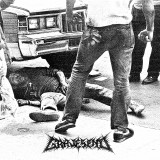
Die dunkle, schäbige Unterwelt von New York City taucht wieder auf, wenn das Stadtbild durch Abwässer, Crackrauch und den Handel mit Fleisch verdorben ist. Die Straßen, die einst voller Leben waren, sind von dem grotesken und schmutzigen Chaos vergangener Zeiten durchdrungen. Inmitten dieser rauen Wirklichkeit, in den Mauern der schwach beleuchteten Gassen, stinkt es nach Körperflüssigkeiten und Rattenkot.
Auf den Bahnsteigen der U-Bahn verüben verzweifelte Seelen wegen ein paar mickriger Dollar wahllos Gewalttaten aneinander. Der East River fließt in einem kränklichen Grün, und der Farbton der Stadt spiegelt die Schatten wider, die diese illegalen Unternehmungen werfen. Inmitten dieser beunruhigenden, düsteren Realität ist nun eine Klanglandschaft entstanden, die das Grauen einfängt - in Form des zweiten Albums von Gravesend.
Das neue Album "Gowanus Death Stomp" verdichtet die Grausamkeit, die auf dem Debüt "Methods of Human Disposal" von 2021 zu hören war, zu einem noch düstereren und ursprünglicheren Trommelfeuer der Gewalt. An der Kreuzung von krimineller Verkommenheit und urbanem Unwohlsein bedienen sich Gravesend vieler Werkzeuge des Handwerks. Black / Death / Grind / War Metal verschmelzen nahtlos zu einer Teergrube aus beißendem Hinterhof-Sadismus und Acid-Zungen-Gesang.
Wie eine frisch geborgeneLeiche unten am Hafen weht der Geruch von Verwesung aus jedem Track auf 'Gowanus Death Stomp'. Und wie bei NYCs Underground-Legenden von Cro-Mags über Swans bis Type O Negative verkörpert Gravesend den Puls der Stadt, selbst wenn dieser Puls auf dem Beton ausblutet.
- 1: Deranged
- 2: 11414
- 3: Even A Worm Will Turn
- 4: Festering In Squalor
- 5: Code Of Silence
- 6: Gowanus Death Stomp
- 7: Streets Of Destitution
- 8: Make (One’s) Bones
- 9: Crown Of Tar
- 10: Thirty Caliber Pesticide
- 11: The Third Rail
- 12: Mortsafe (Resurrection Men)
- 13: Lupara Bianca
- 14: Carried By Six
- 15: Vermin Victory
- 16: Enraged
Neon Green Vinyl[25,84 €]
Die dunkle, schäbige Unterwelt von New York City taucht wieder auf, wenn das Stadtbild durch Abwässer, Crackrauch und den Handel mit Fleisch verdorben ist. Die Straßen, die einst voller Leben waren, sind von dem grotesken und schmutzigen Chaos vergangener Zeiten durchdrungen. Inmitten dieser rauen Wirklichkeit, in den Mauern der schwach beleuchteten Gassen, stinkt es nach Körperflüssigkeiten und Rattenkot.
Auf den Bahnsteigen der U-Bahn verüben verzweifelte Seelen wegen ein paar mickriger Dollar wahllos Gewalttaten aneinander. Der East River fließt in einem kränklichen Grün, und der Farbton der Stadt spiegelt die Schatten wider, die diese illegalen Unternehmungen werfen. Inmitten dieser beunruhigenden, düsteren Realität ist nun eine Klanglandschaft entstanden, die das Grauen einfängt - in Form des zweiten Albums von Gravesend.
Das neue Album "Gowanus Death Stomp" verdichtet die Grausamkeit, die auf dem Debüt "Methods of Human Disposal" von 2021 zu hören war, zu einem noch düstereren und ursprünglicheren Trommelfeuer der Gewalt. An der Kreuzung von krimineller Verkommenheit und urbanem Unwohlsein bedienen sich Gravesend vieler Werkzeuge des Handwerks. Black / Death / Grind / War Metal verschmelzen nahtlos zu einer Teergrube aus beißendem Hinterhof-Sadismus und Acid-Zungen-Gesang.
Wie eine frisch geborgeneLeiche unten am Hafen weht der Geruch von Verwesung aus jedem Track auf 'Gowanus Death Stomp'. Und wie bei NYCs Underground-Legenden von Cro-Mags über Swans bis Type O Negative verkörpert Gravesend den Puls der Stadt, selbst wenn dieser Puls auf dem Beton ausblutet.
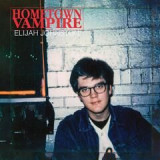
Aesthetically, Hometown Vampire provides a guided tour through 50 years of guitar music, calling out to greats like a prayer, asking for the songs we love to act as guidance through the trouble around us. The characters labeled here as vampires refer to any of the lowlifes we see around us or in ourselves; the punisher at the bar, the chronic failure who's always got a new scheme, the kinds of people who live in the past and stew in bitterness. Hometown Vampire is a farewell to all the good and bad of music scene chicanery, late night shit-talking, and all the failed romances before.
For fans of:
The Beatles, Girls, The Lemonheads, Pavement, Real Estate, Death Cab for Cutie, Hovvdy, Mac Demarco, Vampire Weekend, Billy Joel
Includes a delightfully deranged DVD featuring Monsters Crash the Pajama Party and more bone-chilling freakouts of fright! Plus a zine style liner note insert!
SHADOWSPAWN sind zurück mit ihrer mit Spannung erwarteten vierten Veröffentlichung "Blasphemica - Absolution Carved From Flesh". Das neue Album der Dänen demonstriert das Wachstum und die Entwicklung der Band, während sie ihren charakteristischen schnörkellosen Death-Metal-Sound beibehalten. Blasphemica" geht jedoch noch einen Schritt weiter und verschiebt die Grenzen ihrer Musikalität, indem es Elemente des Grooves, der Dunkelheit und der Brutalität in ein zusammenhängendes Ganzes einbaut. Das Album zeigt die Reife der Band als Songwriter und ihre Fähigkeit, komplizierte, aber dennoch headbangertaugliche Kompositionen zu schaffen.
Mit zehn groovigen Death-Metal-Tracks, die in einer abstrakten lyrischen Welt aus Steampunk und Religionskritik angesiedelt sind, besuchte die Band Tue Madsen in den renommierten Antfarm Studios, um die Drums aufzunehmen und später zu mischen und zu mastern, um den bestmöglichen Sound für ihr neues Werk zu gewährleisten. Dies wird auch das erste Album von Shadowspawn mit ihrem neuen Schlagzeuger Lukas Meier sein, bekannt von The Petulant und Sacrificial.Shadowspawn, die für ihre einzigartige Mischung aus groovigen und intensiven Klanglandschaften bekannt sind, wurden 2013 von erfahrenen Männern aus der frühen dänischen Death-Metal Szene gegründet, darunter bekannte Kräfte von u.a. Sacrificial, The Petulant und Cinerator.
Mit ihrem unverwechselbaren Ansatz für das Genre haben sie sich einen Weg in der extremen Musikszene gebahnt. Nach drei hochgelobten Veröffentlichungen sind Shadowspawn in der dänischen Metalszene und auch im Ausland ein bekannter Act.
Limited red vinyl is for Indies only while stocks last. Feature two tracks taken from the EPs that marked the inauguration of the band Ghost Funk Orchestra, their new 45 highlights two heavy hitters. The A-Side track, 'Brownout,' is the song that officially kicked off Ghost Funk Orchestra as a recording project. Along with 'Boneyard Baile' on the B-side, these two songs have been staples of GFO's live and recorded presence since the very beginning. Adriana Muniz provides stellar vocals for both tracks.
TaxiCab Verses, Is What You Make It, is a project that was created by Athens musician, Jim Wilson. It’s an international collaborative project between TaxiCab Verses (a name inspired by the phrases
covering the backs of taxis Jim observed during his travels in Ghana) and Ghana’s Kofi Atentenben and the Warriors. The 10-track album is named Is What You Make It, and according to Flagpole Magazine it's "aggressive and propulsive, even on tracks lesser musicians would let devolve into simple swing patterns (like the darkly jazz-tinged “Step By Step”)...my only regret is that I didn’t write about it the moment it came out. It’s righteously excellent." Overall, 22 musicians contributed to this between Athens and West Africa. TaxiCab Verses was originally released on CD only in 2012 and became a sort of hidden gem of Athens. The album was mastered by Greg Calbi (Bob Dylan, Drive-By Truckers, Paul Simon, The National) and was produced by Drew Vandenberg (Faye Webster, S.G. Goodman).
Patterson Hood of the Drive-By Truckers also had a big role in the creation of this album. He says that he is "so filled with love and pride for what Jim, Drew and all of those amazing musicians from two continents have created. Kudos to George Fontaine and the Strolling Bones Records folks for spotlighting this amazing chapter of Athens music history (and beyond) and finally making this record available for the whole world to hear."
In the early 1990s, a team of linguists, engineers, anthropologists, and archaeologists were tasked with constructing a type of communication that could transcend time. How might we converse with future civilizations when language may evolve or dissolve entirely? The result yielded the design of spike fields; a strange construction of granite thorns bursting from the earth to alert its viewers to the deadly uninhabitability of nuclear waste disposal sites. For Maria BC (they/them), this state of temporal focus molds the wanderings on their second full length album Spike Field. How do we connect with the weathered shadow of our experience, while envisioning the self a few steps ahead of us? While their debut album Hyaline (2022, Father/Daughter) explored grief and anxiety through a series of character-led accounts, Spike Field recognizes that the past will continue to lurk below the surface until we decide to break through the soil. Spike Field was recorded in the home of a family friend. The home featured an out-of-tune baby Steinway piano, complete with squeaky hammers and strange, sporadic sounds. The piano is sprinkled throughout the album, and features extensively on opener "Amber," showcasing Maria BC's looser, more extensive arrangements. The song flickers with electronic wonder, like a wave seeking out its station, before crashing into the angelic choral introduction of "Watcher". Strings, plucked guitar and buzzing swells accompany their classically-trained mezzo-soprano voice on "Return to Sender," a song that focuses on the frustrations and turmoil of being unable to reach a loved one--both physically and emotionally. Spike Field reminds us that despite our best efforts to bury certain aspects of ourselves, they will always lurk beneath the surface. Instead of ignoring the seeds striving to break through, we can point to these places with a curious grace, concocting a language that transcends words to converse with our previous selves. Maria BC pieces together juxtaposing sonic landscapes and oscillating vocals to represent the thread of miscommunication, or the failure of words, that weaves throughout the album, transforming it into a distinct and ever-evolving sonic tongue. If we listen, we might find something new within ourselves.
Cala Tarida Musica is thrilled to present this summer anthem collaboration by some esteemed Balearic residents. 'Residentes Balearicos' team up with legendary Ibizan DJ Alfredo and include new unreleased vinyl exclusive remixes from Chris Coco and SIRS. 'Sundown' features an infectious vocal that seamlessly fuses dub influences with a nostalgic old-school house groove. This EP is guaranteed to get your dance floor moving.
DJ support: DJ Nova / RodonFM Greece, Luca Averna / Pikes Ibiza, Leo Mas, Chris Coco, SIRS, Adam Warped / STRANGE DAYS radio show, Andy Wilson, Ibiza Sonica, Nancy Noise, Problematic Disko, Tomi Chair.
Los Caneyes was the first ever solo project from Cuban funk master Juan Pablo Torres and now Future Rootz - in collaboration with Canal Sounds and EGREM - is serving up a first-ever vinyl release of his early singles 'No Estabas No estabas Tu' and 'Oye Ven Y Baila Mi Son' on 7". These two superbly funky Afro-Cuban tracks were recorded in 1973 by this influential musical innovator. The first is a flame-hot and percussion-laden groove that is loose-limbed and sure to get those bones shaking and the second is similar - pure Latin heat for the floor.