Buscar:bong ra

Estilos
Todo
Various - With Love: Volume 1 Compiled by Mich 2x12"

Here we are at the dawn of a new compilation series and we’re kicking things off with an absolute gem that features a selection of hard-to-find records (some impossible to find) and some that have been hiding in plain sight all along. They all share common qualities, being that they are beautiful, soul quenched songs that sing of love, peace and unity.

‘With Love: Volume 1’ has been compiled by Miche and presents a curated selection of rare Brazilian, gospel, modern soul and jazz-fusion fire. We have Brazilian rarities by Alcione and Quientaessencia, UFO gospel by Keith Chism & Light, the jazz-funk/AOR sounds of City Lites taken from a Radio Station album, and the anthemic feel-good emotional soul of Belita Woods to name but a few.

Tracking down artists and musicians from the past is an art form. Like a seagull swooping for treats, sometimes the prizes are easily found, and at other times, it’s the result of very late nights trolling through Facebook profiles, message boards, hitting dead ends and following red herrings, and yet still the search goes on. This compilation is a true labour of love with all the artists tracked down and licensed by Miche. It has long been an ambition of the London based musical connoisseur to compile an album, and like anything that requires craft, care, and knowledge - it takes time. There are many twists and turns in the hunt for those records that make your jaw drop.

In 2018, when just 24, Miche became a music programmer for London’s illustrious Spiritland group of venues. From this musical sanctuary, he was able to listen, learn and meet some of the best selectors from around the world. It was a musical education, and he was particularly drawn to the deep sessions by DJs such as Mark Taylor, George Arthur, Kev Beadle, Patrick Forge, Dr. Bob Jones, and Colin Curtis to name a few. He also used this time to begin running his re-issue label Discs of Fun and Love with co-owner and friend Frederika.

Sometimes the cynical knock compilations, there is certain snobbery amongst some about the original pressing, but music shouldn't just be about lucky collectors giving over large sums of money to record dealers. It's also about a bridge to the past, a celebration of the legacy of somebody’s art, and a second chance for initially overlooked work to shine. As with all the best compilations, it has been compiled with love…

Disponible

En el almacen y preparando para el envío

26,85
EPMD - Strictly Business

EPMD

Strictly Business

7"-VinylMRB7199
Mr Bongo
17.01.2022

Few groups arrive as fully formed as EPMD did. This dropped as the third single from the album of the same name, and further cemented their distinctive aesthetic: Slow rhyming, trading lines rather than the rappers being confined to their own verses, and backings that were ruthlessly funky and simple at the same time.

They’d go on to be labelmates with Public Enemy when Def Jam picked up their contract in 1990, and to compare and contrast the two is illuminating. While PE at that time were making waves with the Bomb Squad’s breathless, kitchen sink approach to production, EPMD were equally adored for taking the opposite approach.

Here, there’s a sprinkle of drums from Kool & The Gang’s oft-sampled ‘Jungle Boogie’, paired with a very recognisable portion of Eric Clapton’s ‘I Shot the Sheriff’. And that’s pretty much it – the two samples are linked, looped and left to their own devices. Such was Erick and Parrish’s confidence in their own rhyming ability and strong voices, no further embellishment was needed.

That confidence extends to the subject matter. While their debut album and later projects were heavy with concepts – the ‘Jane’ series – and notable guest verses, this was the third straight single of pure brag rap. Two MC’s, one beat, a whole heap of lyrics about how good they were. It’s something you can’t do unless you truly are special, and this duo most certainly were.

Paired with the classic instrumental version, which didn’t make it to the US 7” releases – it’s only on a hard-to-track-down French 7” pressing from 1989 – this this is a timely reminder of how breathtakingly perfect hip-hop can be.

Disponible

En el almacen y preparando para el envío

13,24
EPMD - I'm Housin

Epmd

I'm Housin

7"-VinylMRB7195
Mr Bongo
07.12.2021

So strong was EPMD’s epochal debut album ‘Strictly Business’ that it spawned three all-time classic singles, providing part of the soundtrack to, arguably, the height of the original Golden Age. When discussing the landmark artists of that era – Public Enemy, Boogie Down Productions, Eric B & Rakim – the duo of Erick Sermon and Parrish Smith are certainly in the conversation. And when it comes to all-time duos, they might be at the head of the table.

The original release of ‘I’m Housin’ came in 1989, and the only previous 7” release was confined to the UK – it now fetches sky-high prices. Hence this reissue couldn’t be more timely, showcasing just how fresh E Double E and PMD sound over even the most rudimentary but feverishly catchy of beats.

That was their genius – trading ‘slow flow’ punchlines over deceptively simple backings – and that’s exactly what you get here. The loop of Aretha Franklin’s indelible 1971 gem ‘Rock Steady’ does all the heavy lifting musically, the only adornment a brief vocal snippet taken from their own ‘It’s My thing’ – EPMD is a world premiere.

At a time when sampling was still in its infancy, and before producers started to pride themselves on obscurity, and on chopping up samples creatively, this was the approach of many a hip-hop song, and rap was none the poorer for it. When you have voices as distinctive and strong as EPMD, less is more.

Disponible

En el almacen y preparando para el envío

16,39
AL “MAN” MUNTZIE AND THE EMBRACEABLES - AL “MAN” MUNTZIE AND THE EMBRACEABLES

We stumbled onto Al Muntzie’s under the radar soul beauty ‘Die Happy’ after conducting an interview with Joe Quarterman for a feature on our website.
It got us salivating about the prospect of further productions, which Joe had recorded, but had perhaps been overlooked. ‘Die Happy’ was originally released in 1976 and was the only release on S.B. Moon Records. The record has a crossover vibe as it sits beautifully between modern soul, funk, and proto-disco.
Initial research didn’t shed much light onto the background of the song. The trail was sparse, other than the record appearing on the sales list of rare-soul collectors and record dealers. So we decided to go back to the source and find out about the record directly from Joe himself.
“I met Al Muntzie through my bass guitar player, Elliot Adams. Elliot informed me that Al was looking for a song that was funky and suitable for a group. At that time, 1976 - 79, I had written the words and melody to ‘Die Happy” and Elliot cranked out a mean bass part that gave the song life. He should be credited as co-writer for his outstanding bass part. At this time my band, FreeSoul, had dis-banded and worked as sideman musicians.
Elliot and I made a demo of the song on a cassette and we let Al Muntzie hear it: he liked it. We set a recording date at the Omega Recording Studio in northern Virginia. We used a combination of two bands; FreeSoul and Experience Unlimited (EU). Al sang lead vocal and me and the Embracebles did the background vocals. Al was very cooperative and did not say much during the session. He followed my direction and got the job done.
The session took all day into the late evening hours where we mixed and mastered the tune to perfection. We had a good time creating this work of art.” We are forever thankful to Joe for giving us the opportunity to present this fantastic production by Al, Elliot, and Joe, and to give it the new lease of life, which it rightfully deserves. Produced by the legendary Joe Quarterman

Disponible

En el almacen y preparando para el envío

12,14
Various - COMMUNITY - 15 Years of Jazz & Milk

2020 sees Jazz & Milk celebrating its 15th anniversary! Since 2005 the label, founded by Dusty, offers an experimental playground for international artists that share a passion for organic and soulful dance music. Many legendary club nights and over 30 releases later, Jazz & Milk has become a household name amongst the eclectic music imprints. The focus has always been to transcend genres, including a broad spectrum of styles ranging from jazz, soul, brazil, afrobeat to house, broken beat and electronic music.

For this very special occasion, the label presents six exclusive tracks by the likes of Steve Spacek, Àbáse, Sam Irl, Feater, Bongani GiveThanks and Moe Fabrik - the club focused collaborative moniker of Wayne Snow, Ziggy Zeitgeist and StyleBoi 92.

With this compilation project, Jazz & Milk is not only celebrating an illustrious 15 years of operation. The label also wants to take the opportunity to highlight the importance of 'community', at a time when racism, greed, injustice and a deadly pandemic are jeopardizing our ability to harmoniously exist with one another.

Peace, Love & (Comm)Unity!

Disponible

En el almacen y preparando para el envío

10,29
Mayday (Derrick May) - Sinister (Clear Vinyl Repress)

LIMITED EDITION CLEAR VINYL REPRESS X 300

The iconic Derrick May on absolutely killer form here, "Sinister" is a must have rare Detroit Techno classic, hands down. Originally released on KMS off-shoot Pheerce Citi well over 20+ years ago.

Every track on this EP is essential, this is the sound of Detroit being beamed back at us from the mists of 1988! This records has long been sought after by Techno fans worldwide and is at the top of many peoples want-lists. Now's the chance to own a piece of history.

Buy on sight.

Re-mastered, re-pressed and re-issued in conjunction with Pheerce Citi.

Disponible

En el almacen y preparando para el envío

10,63
Nico Gomez - Soul Of Samba

Nico Gomez

Soul Of Samba

12inchMRBLP238
Mr Bongo
08.05.2026
  • A1: Aquarela
  • A2: Tristeza
  • A3: Desafinado
  • A4: Agua
  • A5: Orpheu Negro
  • A6: The Girl From Ipanema
  • B1: One Note Samba
  • B2: Saudade Do Rio
  • B3: Rio
  • B4: Little Boat
  • B5: Vôce E Eu
  • B6: Din! Din! Din!

Nico Gomez, a Belgian orchestra leader of Dutch roots, has long been a favourite with Latin fans, record diggers, DJs, and collectors alike. His blend of bossanova, latin jazz, and easy listening always turns up a few choice nuggets and surprises; what is perhaps most remarkable is that it was recorded in Europe.


Back in 2013, Mr Bongo re-issued Nico Gomez's sought-after 'Ritual' album from 1971, and now we follow it up with another jewel from his catalogue his 1972 album 'Soul Of Samba'. For this re-issue, we have opted to present it with the cover art originally used on the Trio Records version released in Japan. In the Netherlands and Belgium, the album was released with different cover art under the title 'Bossa Nova’, on Omega International and International Bestseller Company records, respectively. We loved the beautiful psychedelic design of the Japanese version and wanted to use it for this re-issue.

'Soul Of Samba' features several euro-bossa-jazz favourites such as the catchy 'Rio'; which was a firm DJ choice cut at jazz dance nights, including Brighton's 'Jazz Rooms' in the 90s. It also featured in Rainer Trüby's classic ‘Glücklich' compilation series which explored European-Brazilian-inspired music. The beguiling ‘Aquarela', with its engaging latin shuffle, entices feet to the dancefloor and is not one to miss. 'Agua’ has a lazy-quirky latin-funk feel with breathy-stoned vocals floating in the background. The album additionally features numerous breezy latin, Brazilian, and easy listening joints, some of which are ripe for sampling.

Reservar08.05.2026

debe ser publicado en 08.05.2026

25,42
VARIOUS - LA CONTRA OLA (REISSUE) LP 2x12"
  • 1: Moscú Esta Helado - Esplendor Geométrico
  • 2: Extraños Juegos - Zombies
  • 3: Aprenda Aleman En 7 Dias - Derribos Arias
  • 4: Autogas - Todotodo
  • 5: Himno - El Humano Marrano
  • 6: Gestalt - Aviador Dro
  • 7: Mareâ - La Fura Dels Baus
  • 8: Cangrejos En La Cocina - Línea Vienesa
  • 9: Golpe De Amistad - Diseño Corbusier
  • 10: I Doubt - Tres
  • 1: A Flúor - Derribos Arias
  • 2: La Rebelion De Los Objetos - Zombies
  • 3: Meta Metalic - Diseño Corbusier
  • 4: La Marca De Anubis - Los Iniciados
  • 5: China - Lavabos Iturriaga
  • 6: Nuclear Si - Aviador Dro
  • 7: Mao's Children - Oviformia Sci
  • 8: Jeanette Me Quiere (Party Mix) - De Picnic
  • 9: Dark Fields - T

La Contra Ola, the cult compilation showcasing the treasures of Spain"s 1980s synth wave and post-punk scenes, is finally back in stock on Les Disques Bongo Joe. Originally released in 2018, this anthology quickly became a must-have for fans of analog sounds and avant-garde music, capturing a period of raw creativity and cultural upheaval in post-dictatorship Spain.

Reservar08.05.2026

debe ser publicado en 08.05.2026

26,68
Société Étrange - HEAT LP

Société Étrange

HEAT LP

12inchBJR123LP
Bongo Joe
01.05.2026
  • A1: Coquet
  • A2: Place Saint Bruno
  • A3: Heat
  • A4: Fenêtre Sur Cour
  • B1: Chamber Dress
  • B2: Soleil Lourd
  • B3: Fifth

With Heat, Société Étrange extends its work around repetition, groove and cyclic structures, shaping an instrumental music that is both hypnotic and enveloping. Without any radical shift, the Lyon-based trio subtly moves towards more melodic and more cinematic forms, revealing warmer, more textured and sometimes more luminous atmospheres.

Reservar01.05.2026

debe ser publicado en 01.05.2026

26,85
SOCIÉTÉ ÉTRANGE - HEAT
  • 1: Coquet
  • 2: Place Saint Bruno
  • 3: Heat
  • 4: Fenetre Sur Cour
  • 5: Chamber Dress
  • 6: Soleil Lourd
  • 7: Fifth

With HEAT, Société Étrange extends its work around repetition, groove and cyclic structures, shaping an instrumental music that is both hypnotic and enveloping. Without any radical shift, the Lyon-based trio subtly moves towards more melodic and more cinematic forms, revealing warmer, more textured and sometimes more luminous atmospheres.

Reservar01.05.2026

debe ser publicado en 01.05.2026

22,27
TONS - STONED VILLAINS

TONS

STONED VILLAINS

12inchHPSLP389
HEAVY PSYCH SOUNDS
24.04.2026
  • 1: Shirley Temple Ball
  • 2: Hangover The Top
  • 3: Lost In Plantation
  • 4: Intro (Cabin Fever)
  • 5: The Big Bong Theory
  • 6: Darth Vaper
  • 7: Rollercoaster Diet Bombo
También disponible

Pink vinyl[24,58 €]


Your favorite weed sludgers are ready to come back with their fourth studio album, the aptly titled "Stoned Villains," out in April on your beloved Heavy Psych Sounds Records. The band's distinctive sound emerges immediately after the first listen: seven tracks of heavy, sulfurous doom-sludge, with influences ranging from the '90s to Turin-inspired hardcore punk, the scene in which our "villains" were formed and raised. Heavy and cutting guitars, a seismic rhythm section, and Gingerzilla's voice barking out ungraceful tales of weed abuse and uncontrolled eating. The song titles perfectly describe Tons: a band that doesn't take itself too seriously and uses irony as its strong point.

Reservar24.04.2026

debe ser publicado en 24.04.2026

23,11
TONS - STONED VILLAINS

TONS

STONED VILLAINS

12inchHPSLTD389
HEAVY PSYCH SOUNDS
24.04.2026

Pink vinyl, limited to 350 copies. Your favorite weed sludgers are ready to come back with their fourth studio album, the aptly titled "Stoned Villains," out in April on your beloved Heavy Psych Sounds Records. The band's distinctive sound emerges immediately after the first listen: seven tracks of heavy, sulfurous doom-sludge, with influences ranging from the '90s to Turin-inspired hardcore punk, the scene in which our "villains" were formed and raised. Heavy and cutting guitars, a seismic rhythm section, and Gingerzilla's voice barking out ungraceful tales of weed abuse and uncontrolled eating. The song titles perfectly describe Tons: a band that doesn't take itself too seriously and uses irony as its strong point.

Reservar24.04.2026

debe ser publicado en 24.04.2026

24,58
Various - Tchic Tchic: French Bossa Nova 1963-1974  Colored Edition LP 2x12"
  • A1: Les Masques - Il Faut Tenir (1969)
  • A2: Isabelle Aubret - Casa Forte (1971)
  • A3: Christianne Legrand - Hlm Et Ciné Roman (1972)
  • A4: Jean Constantin - Pas Tant D'chichi Ponpon (1972)
  • A5: Billy Nencioli & Baden Powell - Si Rien Ne Va (1969)
  • B1-: Marpessa Dawn - Le Petit Cuica (1963)
  • B2: Jean-Pierre Sabar - Vai Vai (1974)
  • B3: Sophia Loren - De Jour En Jour (1963)
  • B4: Isabelle - Jusqu’à La Tombée Du Jour (1969)
  • B5: Sylvia Fels - Corto Maltesse (1974)
  • C1: Frank Gérard - Comme Une Samba (1972)
  • C2: Ann Sorel - La Poupée Des Favellas (1971)
  • C3: Charles Level - Un Enfant Café Au Lait (1971)
  • C4: Andrea Parisy - Les Mains Qui Font Du Bien (1970)
  • C5: Audrey Arno - Quand Jean-Paul Rentrera (1969)
  • C6: Aldo Frank - T’as Vu Ce Printemps (1970)
  • D1: Christianne Legrand - Cent Mille Poissons Dans Ton Filet (1972)
  • D2: Clarinha - Lemenja (1970)
  • D3: Hit Parade Des Enfants - Aquarela (1976)
  • D4: Jean-Pierre Lang - Tendresse (1965)
  • D5: Magalie Noël - Une Énorme Samba (1970)
  • D6: Françoise Legrand - La Lune

Ever since the late 1950s bossa-nova revolution, Brazil’s influence on French music has been undeniable. Pierre Barouh, Georges Moustaki and a vast array of lesser known artists, all made the Musica Popular Brasileira (MPB) an axis of promotion at the service of a cool and metaphysical, modern and mixed Brazilian lifestyle. Some were seduced by the poetic languors of the bossa, some were looking for fun, and others just loved the American hybridization of jazz-bossa, jazz-samba.


What is bossa nova? One of its creators, Joao Gilberto said: "Its style, cadence, everything is samba. At the very start, we didn't call it bossa nova, we sang a little samba made up of a single note - Samba de uma nota so .... The discussion around the origins of bossa nova is therefore useless”. It is nevertheless useful to remember that these magnificent Brazilian songs, which the guitarist describes as samba, were shifted and balanced around improbable chords. "I like things that lean, the in-betweens that limp with grace," said Pierre Barrouh, quoting Jean Cocteau.


With emotion, arrangements for violin and supple guitar licks, bossa nova rapidly changed. A transformation that can be heard in the Tchic, tchic, French Bossa Nova 1963-1974 compilation, the result of a cultural reappropriation, which traveled through the United States and supplemented itself in France.

A musical revolution that has remained significant, bossa nova was born in Rio. From 1956 to 1961, Brazil lived through its golden years. In five years, the country had invented its modernist style. Elected president in 1956, Juscelino Kubitschek de Oliveira, an elegant man with a broad forehead, brandished a promising slogan: "Fifty years of progress in five years". He quickly got to work. Not worried about increasing debt, he launched the project for a new federal capital, Brasilia, designed by the communist architect Oscar Niemeyer. Volkswagen opened state-of-the-art factories and created the “fusquinha”, the Beetle. In Rio, the Vespa made its first appearance. The Arpoador Surf Club crew run into the “girl” from Ipanema, Helô Pinheiro - the tanned garota ("chick"), between a flower and mermaid, who at 17 walked by the Veloso bar, where the fiery author and composer, Tom Jobim and Vinicius de Moraes, were getting drunk on whiskey. From then on, bossa symbolized cool.

In 1958, Joao Gilberto recorded Chega de Saudade, which the directors of Philips denied, calling it "music for fagots". The marketing director, who believed in it, secretly pressed 3000 78-inch vinyls and distributed them at schools around Rio, creating a tidal wave.

American jazzmen then took over. In particular, trumpeter Dizzy Gillespie and guitarist Charlie Byrd. In November 1962, the Brazilian Ministry of Foreign Affairs funded a "Bossa-Nova" concert at Carnegie Hall in New York, inviting the genre’s pioneers. Unprepared, the show soon turned to disaster. But the troupe was invited to the White House by Jackie Kennedy. The first lady loved "the new beat" and in particular Maria Ninguem, a song by Carlos Lyra, later covered by Brigitte Bardot.

In Brazil, the 1964 military coup quickly ended this euphoria. The destructive atmosphere that ensued pushed many Brazilian musicians to leave, if not to exile. Thus, Tom Jobim, Sergio Mendes and Joao Gilberto arrived to the United States. In New York, Joao Gilberto met saxophonist Stan Getz. At the time, he was married to the Bahianese Astrud Weinert Gilberto, who had a German father. She had never sung before, but she knew how to speak English. Getz therefore asked her to replace her husband on The Girl From Ipanema. The Getz/Gilberto record with Tom Jobim on piano, was released in March 1964. Phil Ramone, the "pope of pop" was in charge of sound.

Bossa nova arrived in Paris through the classic “guitar-voice” channel (Pierre Barouh, Baden Powell, Moustaki…) But France loved jazz and Paris had already welcomed its American contributors. All these good people were to pass through Saint-Germain-des-Prés. The cabaret l'Escale became the Mecca of Latin American sound where one could find Pierre Barrouh and his friends, such as the Camara Trio, samba-jazz aces, whose only record was published by the Saravah label. With a band strangely called Les Masques (a band that included Nicole Croisille and Pierre Vassiliu, among others), the Camara Trio recorded an interesting Brazilian Sound, including the track Il faut tenir which is present on this tasty compilation of rarities.

Other enlightened musicians can also be found on the compilation, such as Jean-Pierre Sabar (songwriter for Hardy, Auffray, Leforestier ...) and the French pop rock organist Balthazar. In 1975, Sabar recorded Aurinkoinen Musiikkimatka on a Finnish label, which featured the crazy Vai, Vai, included on this record. We are now following the footsteps of Brazilian electronic musicians such as Sergio Mendes, Eumir Deodato or Marcos Valle who created funk and disco sounds on their keyboards and synthesizers. A style that influenced Véronique Sanson when she wrote Jusqu’à la Tombée de la nuit in 1969 for Isabelle de Funès, the niece of Louis and a great friend of Michel Berger - Sanson did end up singing this track on her 1992 Sans Regret record.


The pinnacle of exoticism and travel, Sylvia Fels’ Corto Maltese includes bongos, sea mist and ocean sounds. The title was taken from Jacky Chalard’s concept album written in 1974, Je suis vivant, mais j’ai peur (I am alive, but I am scared), based on Gilbert Deflez’s science fiction novel.


However, bossa nova extended the scope of popularity. "In the 1970s, I was a fan of Sergio Mendes, Getz / Gilberto. I fell in love with this music that I knew because I had been an orchestral singer, " explained Isabelle Aubret, who in 1971 delivered a composite record of covers by the very funky Jorge Ben, Orfeu Negro, Tom Jobim, Vinicius de Morais and Jean Ferrat. "I recorded this album for Meys Records in Paris, far from Brazil, with wonderful musicians, François Raubert, Roland Vincent, Alain Goraguer...". The latter wrote the arrangements for Casa Forte, a very percussive title borrowed from Edu Lobo, one of the initiators of the bossa who spent time in California. "Jazz and bossa came together and produced very rhythmic music. I love singing, it allows me to dream, to have fun, to feel a high on stage, and these songs brought me joy, made me swing, my singing felt like a dance.”


The world tours of French singers and their desire for the tropics, often brought them to Rio with its hills, forests, caipirinhas and tanned bodies. There are surprises though, like this Iemenja (Iemenja is the goddess of the sea in the Afro-Brazilian candomblé religion). Not unlike the composer and musician Jean-Pierre Lang, based in Sao Paulo, Claire Chevalier taught Brazil to Brazil. In 1970, the singer and painter published a 45-inch vinyl, Mon mari et mes amants (My husband and my lovers), under the improbable pseudonym of Clarinha (little Claire). She was then living in Rio, with her husband, Joël Leibovitz, who founded a band called Azimuth, and who owned a record label specialized in "sambas enredos" songs for samba school parades.


For its B side, she asked Pierre Perret to come up with lyrics for a song composed by Carlos Imperial: "Oh goddess of the sea, o goddess Iemenja, I bring a white rose to adorn your long hair ..." . "Perret came to see us, and we had fun, remembers Joël Leibovitz. We wrote Lemenja for fun, we recorded it at the Havaí studio, behind the Central do Brasil the central station. Erlon Chaves, the arranger who worked with Elis Regina, joined us" adding his share of Afro-Brazilian percussions and funky brass to the mix.

There is a common misunderstanding in Franco-Brazilian history: that bossa, admittedly hedonistic, is perceived as funny, even though the poets who wrote the texts are often philosophizing on the human condition. Its French interpreters pull it towards a carnival inspired universe, far removed from its fundamental essence. Thus, Jean Constantin covered the famous Samba da minha terra, an ode to the art of samba written by the classic Bahian composer Dorival Caymmi, renaming it with the enticing title of Pas tant de tchi tchi pompon: "On your pier there is no tchi tchi / when you arch your back, you know everything is alright ”(lyrics by Gérard Calvi). This expedited bossa aims for the absurd, but retains a certain elegance.

Indeed, Jean Constantin was not an idiot, the rather large man had a huge mustache and liked fantasy, (Les pantoufles à papa, Le pacha, inspired by cha-cha-cha-cha, salsa and jazz) but he was also the lyricist of Mon manège à moi interpreted by Edith Piaf, the composer of Mon Truc en plume by Zizi Jeanmaire and the soundtrack of François Truffaut’s 400 Blows. Le Poulpe, published in 1970, from which this bossa is extract, was arranged by Jean-Claude Vannier, an accomplice of Serge Gainsbourg’s Melody Nelson. In short: "There is enough of samba / By looking at the parasol / Because my poor cabeza / Is going to die in the sun".

Even the American actress Marpessa Down, who was at the heart of the bossa nova revolution with her role as Euridyce in Marcel Camus’ film Orfeu Negro, winner of the 1959 Cannes Palme d'or, fed the clichée with Je voudrais parler au petit cuica - "Tell me how you manage to always make people want to dance / It's true, I must admit that I cannot resist your magic" - in consequence, once can hear the cuica, a little drum inherited from the Bantu.


But bossa nova had many angles. Societal, of course, pushing actresses who were symbols of women's liberation like Brigitte Bardot, Jeanne Moreau, or Sophia Loren to engage in the exercise of accelerated bossa. In February of 1963, Sophia Loren made a record in French in Rome, Je ne t'aime plus, featuring the song De jour en jour, a bossa written by two Italians, Armando Trovajoli and Tino Fornai, which was released a little later by Barclay. Bossa accompanied the 1960s, a decade of moral liberation. Ann Sorel, who interpreted La Poupée des favellas, caused a sensation with L’amour à plusieurs, a provocative song written by Frédéric Bottom and Jean-Claude Vannier. As for the actress Andrea Parisy, she displayed her bourgeois cheekiness in Marcel Carné's Les Tricheurs before interpreting Les mains qui font du bien. And Magalie Noël, the friend of Boris Vian, who sung Johnny fais-moi mal, was hired to sing Une énorme Samba, composed by Alain Goraguer (arranger to Gainsbourg, Bobby Lapointe and Jean Ferrat) with lyrics by Frédéric Botton.

But in the end, of what wood is bossa nova made of? The answer is given by Christianne Legrand, daughter of Raymond the conductor, and sister to Michel the composer: "With me, with jà" - jà means "immediately" in Portuguese. In 1972, the singer, an expert in vocal jazz and a member of the Double Six, published Le Brésil de Christianne Legrand. Two songs included on the Tchic Tchic compilation that demonstrate how bossa, jazz, funk, rock, etc. work like a swiss army knife: the music is used to denounce broken systems, or miracles, HLM et ciné roman, Cent mille poissons dans ton filet, two songs from the O Cafona soundtrack, a successful telenovela broadcast, at the time in black and white, on TV Globo. The first was adapted in French by the fighter and friend of the Legrand tribe, Agnès Varda. The second is content with a play on words, jostling them into a summer fun.


Véronique Mortaigne

Reservar17.04.2026

debe ser publicado en 17.04.2026

27,31
Fez The Kid & BRUK - Rum Runna LP

Fez The Kid & BRUK

Rum Runna LP

12inchRUPLDN032
Rupture LDN
14.04.2026

When we were thinking about making an EP for Rupture, the first few tracks happened to already be finished, and fit together really nicely - but getting that final track done ended up being a bit more of a challenge!

The vision was to convey our individual styles in collaboration as best as we could - with dance ready tracks that also carry emotion. Rum Runna, as the A1 of the EP, all started from a break we found that had one of the loudest subs cutting through. Instead of looking for something else, we decided to lean into this and maximise the energy, before finally breaking through with the 808s. Drifting Through The Mist is more of a rolling vibe, focussed on vocals and funk to lift spirits in the dance, all the while teasing an amen drop that leans into a ragga fusion.

Northwest Passage is one of the earliest tunes we got finished - being made quite soon into our first meeting I believe. The result is a darker tip that focusses on dissonance and sub pressure that really thrives in the bassbins. Our final tune on the EP, Original Secret, is the most emotionally charged on the EP, again utilising our love for unique percussion and bongo hits along with rolling breaks, carefully chopped snares, atmospheric pads and emotional vox samples.

We are more than proud to release this body of work on one of our all time favourite labels, and have had the utmost pleasure to work with the team every step of the way.

No en stock

Haga su pedido ahora y le encargaremos el artículo en nuestro proveedor.

18,91

Ültimo hace: 16 Días
HOZAN YAMAMOTO & YU IMAI - AKUMA GA KITARITE FUE WO FUKU
  • 1: Fuenarinu
  • 2: Kaendaiko
  • 3: Tsubakishishaku No Yuigon
  • 4: Tengindoujiken
  • 5: Kindaichikousuke Nishie Yuku
  • 6: Ougonno Furuuto (Flute)
  • 7: Yubi
  • 8: A=X, B=X A=B
  • 9: Chi To Suna
  • 10: Tabiyukumonoyo
  • 11: Akuma Fuewo Fukite Owaru

We've got a bit of an obsession with Hozan Yamamoto here at Mr Bongo! A legend of Japanese jazz, he is rightly regarded as a true master and was recognised as a "living national treasure" by the Japanese government in 2002. Over five decades he pushed the genre into new directions, absorbing fusion, funk, spiritual jazz and many other sounds, resulting in a discography studded with gems of rare beauty. Exploring his back catalogue has taken us on an engrossing journey that now sees us reissuing another work from this ground-breaking musician.

Though not translating perfectly into English 'Akuma Ga Kitarite Fue Wo Fuku', (kitarite has not been a modern expression in Japanese) roughly means 'The Devil Comes Playing The Flute' / 'The Devil Is Coming While Blowing The Whistle' or 'Devils Flute’. It is the original soundtrack to Kôsei Saitô’s 1979 mystery and suspense movie, ‘Devil’s Flute’. The film is based on a story by the famous author, Seishi Yokomizo, and is centred around a much-loved fictional Japanese detective, Kosuke Kindaichi. A Japanese Sherlock Holmes that has been popular for generations.

Hozan Yamamoto was invited to compose the soundtrack directly by the producer of the film, Haruki Kadokawa. Mr Kadokawa also hired keyboard player and producer Yu Imai as assistant producer on the project, resulting in a stunning cosmic, breaks and beats-laden, funk, disco soundtrack extravaganza.

When it comes to the soundtrack and the technology of the time, Hozan Yamamoto and Yu Imai got inventive, tripped out, funked up, and experimented, creating a quirky soundtrack masterpiece that needed to be heard more outside of Japan. Differing from the more traditional Japanese music orientation of some of his other albums such as 'Beautiful Bamboo-Flute' (also released on Mr Bongo) the album showcases a number of genres, from lush atmospheric incidental music to disco and funk grooves, experimental nuggets, drum and flute workouts, to neo-classical and more.

A special record that showcases the further depths of this wonderful musician's talents.

Reservar09.04.2026

debe ser publicado en 09.04.2026

27,31
RADWAN GHAZI MOUMNEH/ FRÉDÉRIC D.  OBERLAND - ETERNAL LIFE NO END
  • Squeal Of Swine
  • Dagger Eyes
  • A Silence With No Ceiling
  • A Shadow With No Silhouette
  • The Serpent
  • A Dream That Never Arrived
  • Walked And Walked

Moumneh (Jerusalem In My Heart) und Oberland (Oiseaux-Tempête) festigen mit diesem Debüt-Studioalbum als Duo ihre langjährige Zusammenarbeit: eine überzeugende Synthese ihrer jeweiligen und gemeinsamen Sensibilität. Durch die Verschmelzung von elektronischen Klängen mit akustischen Instrumenten wie Bouzouki, Rababa, Clarineau und Saxophon, ergänzt durch Moumnehs arabischen Gesang, entsteht ein Album, das von Empörung und Klage über unsere suprematistische und rassistische Gesellschaft geprägt ist. Das Album verbindet vibrierende Elektronik mit akustischen Instrumenten wie Bouzouki, Rababa, Clarineau und Saxophon, gewürzt mit Moumnehs arabischem Gesang, und ist geprägt von Empörung und Klage über unsere supremacistische und genozidale politische Gegenwart. Radwan Ghazi Moumneh und Frédéric D. Oberland wechseln zwischen Sinnlichem und Unterdrücktem und schaffen mit ihrem Debütalbum eine poetische musikalische Verkündigung der verwandelten Realität und sozialen Amnesie. Diese sieben Titel entstanden in zweijähriger Zusammenarbeit und begannen als eine Reihe von Duetten, die Moumneh im Sommer 2023 im Studio Hotel2Tango in Montréal initiierte. Der arabische Titel von Eternal Life No End lässt sich wörtlich mit ,Eine dunkle, verfluchte Nacht, wie die Suchenden selbst" übersetzen. Das Album ist ein Aufschrei inmitten der Ozeane der Ungerechtigkeit, die die SWANA-Region überschwemmen und das Leben und die Visionen der Suchenden selbst heimsuchen. Der arabische Titel von Eternal Life No End lässt sich wörtlich übersetzen mit ,Eine dunkle, verfluchte Nacht, wie die Suchenden selbst" und das Album ist ein Aufschrei inmitten der Ozeane der Ungerechtigkeit, die die SWANA-Region überschwemmen und das Leben und die Visionen großer Bevölkerungsgruppen verfolgen. Wie Dante und Vergil in Dantes ,Inferno" zeichnen die Kompositionen von Oberland und Moumneh einen emotionalen Strudel nach, während Traumzeit in tranceartige Percussion und hypnotische Melodien einfließt und kollektive Dringlichkeiten kanalisiert, die sich durch Radwans Stimme und arabische Texte ziehen. Oberlands Passagen auf dem Saxophon und der Klarinette beschwören schamanische Beschwörungen des Bösen herauf, während Moumnehs Buzuk oft durch elektronische Bearbeitung und Schwärme mit stürmischer Trauer über sich entfaltende Tragödien untermalt wird. Eine Reihe von Instrumenten vervollständigt die Klanglandschaften: Daf (eine Rahmentrommel aus dem Nahen Osten) und Bongos, eine modifizierte elektrische Rababa, bebender Bass und andere synthetische Filigranarbeiten von Oberland. Eine Reihe von Instrumenten vervollständigt die breiteren Klanglandschaften: Daf (eine nahöstliche Rahmentrommel) und Bongos, eine modifizierte elektrische Rababa, bebender Bass und andere synthetische Filigranarbeiten von Oberlands Buchla- und Deckard's Dream-Synthesizern. ,Es ist in gewisser Weise ein Heilungsprozess", sagt Oberland über das Werk. ,Seit Beginn des Völkermords hatte ich eine komplette künstlerische Blockade und war unfähig, das auszudrücken, was die Menschen durchleben", erklärt Moumneh, der schließlich ,die Worte der Opfer" in seine Texte einfließen ließ. ,Es ist in gewisser Weise ein Heilungsprozess", sagt Oberland über das Werk. ,Seit Beginn des Völkermords hatte ich eine völlige künstlerische Blockade und war unfähig, das auszudrücken, was die Menschen durchleben", erklärt Moumneh, der schließlich seine Instrumente und seine Ausrüstung zusammenpackte und im Sommer 2024 nach Paris flog , um mit seinem langjährigen Freund ernsthaft an dem Album zu arbeiten. Die beiden hatten bereits mehrfach zusammengearbeitet, mit Oberlands Hauptband Oiseaux-Tempête und durch Moumnehs Arbeit als Jerusalem In My Heart und als Produzent/Toningenieur bei verschiedenen anderen Projekten. Eternal Life No End baut auf ihrer langjährigen Freundschaft auf, während Oberland und Moumneh auf neue Weise mit Energien und emotionalen Veränderungen umgehen, ihre Sensibilitäten verschmelzen und tiefere Resonanzen entdecken. , Wir haben Tag und Nacht zusammengearbeitet und gemeinsam klare Entscheidungen getroffen", erklärt Oberland. Dennoch übernahm er auch die Führung, um Moumnehs Stimme in diesen Kompositionen zur Geltung zu bringen - vier der sieben Titel des Albums enthalten Gesang. Das Duo tauschte gewissermaßen die Rollen und wagte sich an neue kreative Prozesse, wobei Moumneh offen Anweisungen von Oberland annahm und seine übliche Rolle als Hauptproduzent von Jerusalem In My Heart beiseite ließ. ,Squeal of Swine" und ,Dagger Eyes" eröffnen das Album mit einem doppelten Schlag in die Magengrube, während Handpercussion, tiefe Synth-Klänge und abprallende Buzuq- und Rababa-Klänge die Bühne für Moumnehs klagenden arabischen Gesang bereiten, der ein Meer von Krankheit widerspiegelt, das derzeit den Zustand der Menschheit überschwemmt. Auf dem Instrumentalstück ,A Dream That Never Arrived" verankert ein Lo-Fi-Beat mit Dancehall-Einflüssen überirdische Melodielinien vor dem Hintergrund eines elektroakustischen Sounddesigns in räumlich-zeitlicher Verschiebung. Eternal Life No End wird von einem audiovisuellen Essay zum elektronischen (und vokalen) Song ,The Serpent" begleitet, der von Oberland zusammengestellt und mit einer Super-8-Kamera in Montréal, Paris und Beirut gedreht wurde, einschließlich Aufnahmen von Gaza-Protesten in Paris und von Oberlands Auftritt beim 25-jährigen Jubiläum des Irtijal Festivals in Beirut. Die libanesische Grafikdesignerin, Druckgrafikerin und Kalligraphin Farah Fayyad steuert ein talismanartiges Kunstwerk mit ineinander verschlungenen Schlangen bei, das ebenfalls von diesem zentralen Albumtrack inspiriert ist.

Reservar03.04.2026

debe ser publicado en 03.04.2026

21,43
NEVES E SILVA - LADEIRAS DE SANTA TERESA

Far Out Recordings proudly presents Ladeiras De Santa Teresa, the debut collaboration between Rio-jazz maverick Antonio Neves and carioca percussion master Thiaguinho Silva. In what could well be the first ever Brazilian jazz album centered around two drummers, Ladeiras De Santa Teresa is an uncompromisingly groove-rich recording, steeped in trad-samba roots and brass power.

Since his acclaimed 2021 album A Pegada Agora E Esssa Antonio Neves has remained a mainstay of the international facing Brazilian scene, performing both as a trombonist and drummer. His instrumental contributions to contemporary classics like Ana Frango Eletrico’s Little Electric Chicken Heart, Bruno Berle’s No Reino Dos Afetos 2, and Bala Desejo’s Sim Sim Sim will be marveled upon by future generations. His partner in crime Thiaguinho Silva happens to be the son of percussion icon Robertinho Silva, who has played on more or less every canonical Brazilian record, Arthur Verocai (1972), Clube Da Esquina (Milton Nascimento and Lo Borges, 1972), and India (Gal Costa, 1973) to name barely a few. Thiaguinho himself has worked with Marcelo D2, Gal Costa, Liniker and Alice Caymmi, and upon listening to Ladeiras De Santa Teresa, it’s clear that Thiaguinho is more than a worthy successor to carry the Silva family torch.

Some listeners may already be familiar with “Das Neves,” which appeared on Mr Bongo’s Rio De Janeiro-focused Hidden Waters compilation in 2023. The track showcases the profoundly skilled Neves brothers brass section (Antonio alongside brother Edu, who has performed with Hermeto Pascoal), the fiery elegance of pianist Luiz Otávio (Dora Morelenbaum), and Thiaguinho’s pulsating samba breaks. This synergised combo continues across the album, notably on “Fendas Vocais” with Neves doubling up on drums, exhibiting his inventive and fearless skill as an arranger. The album also features street-artist, musician and rapper Joca, adding vocalised dynamism and swagger to an otherwise entirely instrumental record on “Viagem de Trem”.

The album’s title Ladeiras De Santa Teresa (The hills of Santa Teresa) is named in tribute to Rio De Janeiro’s famed Santa Teresa neighborhood, a bohemian enclave with scenic views of the iconic cityscape. The spirit of Santa Teresa with its expansive city views and bustling energy is embodied in the album which encapsulates the jazz and samba histories felt within the neighborhood’s windy alleyways and cobbled streets.

Ladeiras De Santa Teresa by Neves E Silva is out on vinyl, CD and digital on Friday 20th March 2026.

Reservar30.03.2026

debe ser publicado en 30.03.2026

22,65
Magique - Le Studio Sessions

Russell Paine (Super Disco Edits).

These four tracks simply blew me away when I heard them. Its raw disco funk cosmic energy that you just can't replicate. Sometimes when you get a long disco track that's eight or ten minutes long, mundane thoughts and loss of interest can start to kick in once the dums and bongo's have faded.

This isn't the case with Magique. You just keep joining the rocket ride to the stars.

From the social message disco funk of "Inch By Inch" which is still relevant to today's social problems. "Dancin" and "Disco Nights" epitomise why we love disco.

And finally "Disco Cowboy" has a sound that harks back to those Plainfield NJ P-Funk roots. I think if any of the Dj pioneers from the 1970's stumbled across these they would have been etched in Disco Folklore!

No en stock

Haga su pedido ahora y le encargaremos el artículo en nuestro proveedor.

20,80

Ültimo hace: 47 Días
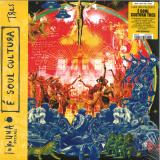
LUKE UNA pres. E SOUL CULTURA - VOL 3 LP

LUKE UNA pres. E SOUL CULTURA

VOL 3 LP

12inchMRBLP328I
Mr Bongo
20.03.2026

With two deeply cherished compilations already in the bag, Luke Una steps up for the third volume in his É Soul Cultura series on Mr Bongo. A love letter to the dancefloor and its power to unite people from all corners of society amid growing division and extremist politics. Genre-spanning in nature, the 15 tracks travel between cosmic soul, boogie, proto-house, slo-mo technoid grooves, drum machine afro, astral bass-bugging futurism, jazz funk, dance, and disco. Each having the ability to move the body as much as the heart.
 
From his formative years in Sheffield to co-founding Manchester’s much-fabled Electric Chair with Justin Crawford, through to helming the iconic LGBTQ institutions of Homoelectric / Homobloc, Luke has spent 40 years immersed in dance music. His latest outlet, É Soul Cultura, has grown from a label to a globe-spanning events series with Luke holding residencies and embarking on tours across the world from Japan and Australia to America and Europe. 
 
“For me, the dancefloor was never about a one-dimensional, thudding, 130 BPM beat only. It's a much more dynamic, broader vision than that. I cut my teeth in an era where a 100 BPM record had as much impact, excitement, and energy as a 134 BPM dancefloor jazz funk or techno record”, Luke mentions. É Soul Cultura Volume 3 is the perfect embodiment of that notion: “It’s about four decades in the trenches playing dance music, the late-night afters, the shebeens, the basements, warehouse parties, the eight-hour journeys in East London, through to festival sets at Houghton and We Out Here. It’s music unconstrained by genre or tempo and more about making your body move”. 

But this isn’t simply a collection of disparate dance tracks; they carry meaning and soul. “It’s less about escapism, more about reconnection. My experience of post-covid has been the coming together of all the clans in various clubs and gatherings. A reaction to a very toxic world out there, where the aggro rhythms of division have sought to divide us, and people don't meet as often. The coming back together face-to-face in clubs has encouraged a real love in the air, there's a real togetherness and collective spirit”.
 
Opening up the compilation is a track that channels that very message, the transcendental, soul-rousing Harris & Orr ‘Spread Love’. Joining the dots from there, to the low-slung deep house closer of Fatdog ‘Remember’, you’ll find electronic drum machine Nigerian funk, sitting side by side with dancefloor Cape Verdean brilliance, a post-punk cover of Fela Kuti, rubbing shoulders with cosmic electro, and an Una-championed, 8-minute, kickless DJ Harvey remix. There’s jazz funk in various guises moving from boogie synth to astral travelling, slo-mo acidic raw techno, and a ‘79 soul stepper, alongside swirling percussive Italo disco and tribal-charged house. All infused with an innate ability to bring people together.
 
As society becomes increasingly fractured, É Soul Cultura Volume 3’s message is more than movement. It’s about dance music’s power to unify people from all walks of life and break down the barriers that divide us.

No en stock

Haga su pedido ahora y le encargaremos el artículo en nuestro proveedor.

28,15

Ültimo hace: 51 Días
Damily - Fanjiry LP

Damily

Fanjiry LP

12inchBJR119LP
Bongo Joe
27.02.2026
  • 1: Fanjiry
  • 2: Alohotsy
  • 3: Sikilony
  • 4: Kalavabitiky
  • 5: Zongoya
  • 6: Zipo Tralala
  • 7: Tsapatsapao
  • 8: Roro Soa
  • 9: Alakarabo

After decades spent shaping the sound of southern Madagascar and becoming one of the defining voices of tsapiky, Damily returns with Fanjiry, his most intimate and focused record to date. Known for electrifying village ceremonies and carrying the fever of Toliara across continents, he takes a sharp turn — not away from trance, but deeper into its core.

Recorded in just three days at Studio Black Box with analog wizard Peter Deimel, Fanjiry strips the tsapiky band down to a single guitar and a single heartbeat. Damily plays alone, yet fills the space completely — bass, rhythm, melody, pulse, and breath merging into a dense and vibrating sound. Every riff is architecture, every harmonic a door opening onto memory, childhood landscapes, and nights where music heals, binds, and exhausts the dark.

There is no nostalgia here, no museum of tradition. Fanjiry is a new frontier for tsapiky: raw, precise, suspended between earth and sky, born from craft and necessity. The title — the last star before dawn — captures its essence: a quiet moment before the world awakens, where a single guitar can hold an entire history and still point forward.

Reservar27.02.2026

debe ser publicado en 27.02.2026

24,79
Artículos por página
N/ABPM
Vinyl