righteous expensive: motohiko hamase's 1986 album "reminiscence" scores a decent prize at online vinyl selling platforms and it is worth each coin!
it's a perfect "refuge from nasty reality", as the glorious british 20jazzfunkgreats blog once said. and it comes from a man that knows his trade: bass play - an artisan on which he also already wrote many theoretical books in his more than four decades long career.
in the 1970's hamase was no stranger to tokyo's vibrant jazz scene. together with jazz pianist tsuyoshi yamamoto and jazz-rock guitar-ist kazumi watanabe he played in the isao suzuki sextet and was part of their classic landmark jazz-funk album "ako's dream" from 1976.
in the following years he also participated on records like mikio masuda's latin-funk-jazz gem "moon stone" or japanese female jazz singer, actress, and essayist minami yasuda's last album "moritato". in the early 1980ees his work shifted from pure jazz to electronic and ambient spheres and he started to compose his own music around his deeply emotional bass play.
from 1985 to 1993, hamase released five solo albums. just recently studio mule dropped his first one, "intaglio", in a new recording that sounds as stunning as the original release from 1986.
now the previously mentioned "reminiscence", his second work for the celebrated defunct japanese new age record label shi zen, follows in a fresh shape on studio mule.
as the original, it features deeply touching moments of sheer pristine perfection and distributes hamase's inner emotional landscape with a bewitching bass performance. a soothingly beauty of an album, that reflects hamase's search for spaces of melancholy.
a rhizome of soundscapes that capture, settle and sound elusive while simultaneously being awe-inspiring. as for "intaglio", the 66-years old artist gathered again some befriended musicians, rented a studio, staged his gear and recorded most of the original "reminis-cence" material new, while keeping the moving musical story arc of the original album alive in a fresh wrapping.
the result is a dazzling, blue mood seething, strongly hypnotic longplayer, full of personality and hybrid ambient electronic jazz spheres that open doors to unheard sound universes and that perfectly work for all those stress-relieved souls that love the disclosure of the mind and seek for a "refuge from nasty reality".
Cerca:books
It's been over 10 years since the release of Gui Boratto's breakthrough full length debut 'Chromophobia'. As to what its title suggests, he shook up the techno game with a contrast of lushly coloured minimal grooves and melody, whilst many will recall that the album included the highlight single Beautiful Life' which became a dance floor anthem for that era. Four albums in and countless EPs and remixes under his belt, the Brazilian producer's unique savoir-faire in carving out a functional album out of diversely routed singles and features is back at it on his fifth studio LP, 'Pentagram'. Here Gui Boratto lays down a nuanced 12-track narrative that reinvigorates his signature sound into a refreshingly different perspective that feels all too familiar - including the return of Beautiful Life' vocalist (and Gui Boratto's wife) Luciana Villanova on the single "Overload".
Through his signature kaleidoscopic approach, Boratto delivers an album built as a far-reaching hub-and-spoke system, broadly inclusive as can be. From the opening cut, 'The Walker' - hot on the trail of Tears For Fears 'Elemental' (one of Boratto's "favourite 80's bands") - to the hi-NRG euphoria of 'Forgotten' and its pounding tech alter ego 'Forgive Me'. "I was going into 2 different directions", Boratto says, "the typical indie- electronic-rock' Boratto kind of production like It's Majik' or Like You' and a much more techno approach." He goes on, "I decided to split them into two twin sister songs. When I play live I always put these two songs together."
The Brazilian Producer further embraces the pop-friendly essence of his past work on tracks like 'The Phoenix', featuring vocalist Nathan Berger, and 'Overload', both melding acidulous synthlines with laser-precise breaks, vox hooks and drops calibrated for extended radio and club use, although sieved through his distinctive rainbow-hued musical prism. For the symbolists out there, the album's pared-down closer '618' duration accidentally happens to equate the proportions of the said pentagram. "Coincidence" Boratto questions, and capsulises, "not so ufanista and supporter of Brazilian neo-concretism, but I guess the brazilian sculptor Lygia Clark also inspired me a lot. Not the meaning of her sculptures, but the shape of the hinge of most of her work. I've wanted to transmit the scientific pentagram's point of view. It's not a religious kind of thing."
Whereas 'Spur' (a field-tested 808 and 909-heavy "purist track", "very, very old school" Boratto insists) and 'Alcazar' are sheer smooth-edged four-to- the-floor epics, the album also shares its lot of startling moments, such as with the John Barry'esque 'Scene 2' (with a hint of Amon Tobin, 'Easy Muffin' style, throw in) and its refined string-laden buildup, 100% fitted for a 007 opening credit sequence, or with 'Hallucination' (feat B.T.) and the further James Holden-ish title-track 'Pentagram' (think 'The Idiots Are Winning'), "one of those exercises I did when I got my Buchla modular synth" Boratto analyses, "I think I've used more then 30 different snares, with different delays and reverbs. The whole song is alive". And so is 'Pentagram' in its entirety: alive and definitely just as manifold and hopeful as its architectonics are the stuff of science and dreams all at once.
Es ist zehn Jahre her seit der Veröffentlichung von Gui Borattos bahnbrechendem Debütalbum - Chromophobia . So wie der Titel vermuten ließ, war das Album mit seinen kontrastreichen Minimalgrooves und den üppig gefärbten Melodien ein Schocker im besten Sinne. Ihr erinnert euch sicher noch an die Hit-Single - Beautiful Life , eine Dancefloor-Hymne aus dieser Zeit. Nach vier Alben und unzähligen EPs und Remixen ist das einmalige Savoir-faire des brasilianischen Produzenten, aus vielfältigen Singles und Features stimmige Alben zu schaffen, auch auf seinem fünften Studioalbum - Pentagram zu hören. Hier legt Gui Boratto ein Zwölf-Track-Narrativ vor, das seine Handschrift auf erquickende Weise wiederbelebt. Wiederbelebt wird auch die Stimme von - Beautiful Life (die der Frau Gui Borattos gehört) auf dem Stück - Overload .
Durch seinen charakteristisch kaleidoskopischen Ansatz liefert Boratto ein Album, das gebaut ist wie die Speichen deines Fahrrads, von dem Opener - The Walker - direkt auf der Spur von Tears For Fears - Elemental (einer von Borattos - favourite 80's bands ) - zur Hi-NRG-Euphorie von - Forgotten und seinem stampfenden Counterpart - Forgive Me . - Ich bin in zwei unterschiedlichen Richtungen gegangen , sagt Boratto: - den typischen ,Indie-Electronic-Rock'-Weg wie in - It's Majik oder - Like You und den Techno-Weg. Er fügt hinzu: - Ich hab mich entschieden jedem Track seinen Zwillings-Track an die Seite zu stellen. Immer wenn ich live spiele lege ich die zwei Stücke zusammen.
Der brasilianische Produzent erschließt weiter die Pop-Essenz seiner vergangenen Arbeit auf Tracks wie - The Phoenix (feat. Nathan Berger) und - Overload . Beide kombinieren zwitschernde Synthi-Melodien mit lasergenauen Breaks, Hooklines, Drops und sind wie gemacht für die Rotation und den Club. Und für die Symbolisten da draußen: die Länge des reduzierten Closers - 618 beträgt zufälliger Weise genau die Proportionen des besagten Pentagramms. - Fügung , fragt Boratto und fasst zusammen: - Ich bin kein Anhänger des brasilianische Neo-Konkretismus , aber ich glaube die brasilianische Künstlerin Lygia Clark hat mich sehr inspiriert. Nicht die Bedeutung ihre Skulpturen aber die Form der meisten ihrer Arbeiten. Ich wollte den wissenschaftlichen Blickwinkel auf das Pentagramm übersetzen. Nicht im religiösen Sinne oder so."
Während - Spur (ein erprobter - purist track auf der Basis von 808 und 909, - sehr, sehr old school , wie Boratto betont) und - Alcazar glatte Vierviertel-Epen sind, hält das Album auch Überraschungsmomente bereit. Z.B. das John Barryschen - Scene 2 (auch eine Spur von Amon Tobins - Easy Muffin ist darin zu hören) und seinem Streicher-Aufbau, der hundertprozentig geeignet wär für eine Eröffnungssequenz in einem Bond-Film. Auch - Hallucination (feat. B.T.) oder der James-Holden-hafte Titeltrack - Pentagram (wir denken da an - The Idiots Are Winning ) wäre da zu nennen. - Einer dieser Übungen, die ich gemacht habe, als ich meinen Buchla-Modular-Synthesizer bekommen habe, war , erinnert sich Boratto, - mehr als 30 verschiedene Snares, Delays und Reverbs zu verwenden. Der ganze Song sollte am Leben sein. Und so ist - Pentagram im Ganzen: lebendig und sicher genau so vielfältig wie sein Bauplan, der auch der Wissenschaft und den Träumen zugrundeliegt.
"Hi again!
It's been a couple years, but I've put together a new record, this time with my neighbor Stu and a few other friends. Stu's been tuning the piano Linda and I were using for our Lejsovka & Freund and Trouble Books recordings, and I've always enjoyed the test scales and vignettes he would run through checking his work.
I floated the idea to collaborate on a sort of 70s/80s ECM kinda vibe, and soon started bringing my laptop and a couple microphones over to his house to collect his improvisations and have him add to pieces I had started. Other friends from the neighborhood dropped by to add parts here and there as well.
The recordings were made primarily in the summers of 2016 & 2017 (with a break in-between to mourn the triumph of neo-fascism as well as the passing of beloved pets). Ultimately I tried to follow the feel of those summer nights and the tranquility they offered. Open air or at least open windows, drifting along, you know"
-KF, Spring 2018.
Aqueduct Ensemble is a collaboration between Ohio based artist Keith Freund - who has previously released music as part of both Lejsovka & Freund and Trouble Books - and his neighbour Stu, who is a piano tuner and professional pianist. Their debut album together, "Improvisations On An Apricot" is the second release from label Last Resort, and follows G.S Schray's "Gabriel" (2017) - the sleeves for which were both designed by Keith, who does does all the art direction for the label. Beginning life in 2013 as an NTS radio show of the same name, Last Resort is run by Tom Cathcart from his home in London.
New to the Stay Underground It Pays gang, the 11h release on the label comes from one of the most elegant japanese producer we've heard in ages : MOTOMITSU ! We get the chance to get 5 cuts on one ep (!) which is almost a mini album introducing you guys to his astonishing sound. Born in 1977 Hamamatsu, Japan
Motomitsu is a Japanese artist, DJ, children's book author, Musician, Poet, Event organizer living in Paris. He crosses freely the border of music and arts, literature. He is publishing his children's books and releasing his music. He plays DJ as a member of DJ team"Cracki" in Paris, also play the keyboards and accordion for some bands. His art work is influenced by Music and Poem. He has released tracks on various labels such as Cracki, soirée records (detroit) & cherry juice. All in all, another wonderful release that feels straight at home in the Stay Underground It Pays catalogue. Skylax always.
"The kind of melancholia I'm talking about, by contrast, consists not in giving up on desire, but in refusing to yield. It consists, that is to say, in a refusal to adjust to what current conditions call 'reality' - even if the cost of that refusal is that you feel like an outcast in your own time." (Mark Fisher, Ghosts Of My Life, Zero Books 2014, p. 24) In Ghosts of My Life: Writings on Depression, Hauntology and Lost Futures', the author Mark Fisher outlines - to put it in a big way - a resistant melancholy. This stands in contrast to leftist melancholy resignation', as well as something which Fisher does not talk about: its common masculine counterpart, habitual post-left cynicism - as in seen it all before'. Fisher calls this hauntological melancholy. Haunting, spooks, ghosts and apparitions are an almost constant presence on I Started Wearing Black', the second album by the Cologne-based artist Sonae (pronounced so-nah'). The term hauntology shares a fate with retro-futurism when it comes to inflationary overuse and abuse. It's a conceptual container that looks good and can hold a lot, indeed, too much. Furthermore, hauntology has its peak season behind it, a term on the threshold of its expiration date. Nevertheless, I would like to rehabilitate hauntology and use it properly to characterize I Started Wearing Black', because the term is rarely as compelling to describe music as is the case here. The most recent other example could be Asiatisch' by Fatma Al Qadiri, but with a completely different frame of reference. What are the ghosts of this music It rustles, crackles, ruffles, crunches, rattles, scrapes, sometimes a beat emerges from the constant noise, sometimes an obscure voice mumbles incomprehensibly, sometimes a melancholy piano figure is prevented by this noise from coming too much to the foreground. It definitely is eerie - to bring into play another term used by Fisher in the title of his latest book, The Weird and the Eerie'. In British pop-jargon, eerie first occurred to me more often when referring to particularly leftfield, spooky and... well... ghostly dub, a bass-heavy, echoing noise, from Augustus Pablo to Creation Rebel to Burial. Unlike the Wald & Wagner records by Wolfgang Voigt, Sonae is not a kind of neo-romantic veiling with a tendency for escapist nebula. It is more a noise of latency. The noise signals a latent - not necessarily acute - threat, a latent uneasiness about... yes... about what About a System Immanent Value Defect' That's the name of a track on I Started Wearing Black' where something that sounds like a French Horn (or a foghorn) battles for attention through or against the background noise. An email from Sonae: The piece 'System Immanent Value Defect' should actually be called 'I See Turkey'. I wrote it for my fellow student Elif - she is a pianist and Gezi Park activist from Istanbul. Through her I witnessed the inner conflict and agitation that political circumstances can create: her feelings of guilt when there was an attack, with her safe in Germany as a student, watching the events from afar. It was horrible. When her mother begged her not to come home because she feared for her safety, I felt a cold shiver run down my spine. I started with the piece from this mood, beginning with the piano, then the noise (modulated sinusoidal curves), which reminded me of waves and the then heatedly discussed Mediterranean sea: atmospheric, melancholy motifs. In contrast is the anger, the pressure, represented in corresponding sounds - hopefully audible! - During this time I started to think about world views as they can be found around the globe, in how far they held by societies and their political representation. I realized that I know of no political system that is actually about the people and what would do them good. It's always about positions, power, money. I thought that was a lot more frightening on a global scale than merely viewing Turkey in isolation. That's why the piece is called "System Immanent Value Defect", because our world suffers from precisely that. Everywhere, it's all about the wrong things.' Between the wrong things there are happy moments. In the title track, after 184 seconds of rattling and hissing, a beat is unleashed, like an arrow released from a spanned bow, a beatific relief, if there is such a thing. White Trash Rouge Noir' first meanders along spookily, then after 144 seconds it transforms itself into a distant cousin of Einstu¨rzende Neubauten's Yu¨ Gung', but there is no Big Male Ego to be fed here, and the black in the album title is a completely different type of black from that of the Neubauten. Furthermore, I Started Wearing Black' was finished long before the black dresses were worn at the Golden Globes as a sign of protest against sexual violence. Sonae writes that she herself started wearing black some time ago. Her reasons are so-called personal ones: ... resulting from an individual situation (lovesickness), I started to wear black (gaining weight and feeling ugly).' The political dimension of gaining weight, feeling ugly and therefore dressing in black in I Started Wearing Black' lurks within the noise and never becomes explicit and only rarely manifest - or a manifesto. Sonae writes about the track We Are Here': A piece for minorities... in this case, considering the current pop-feminist discourse, explicitly for women. Female artists have long been saying loud and clear that 'we are here' and 'electronic music is not a boys club!' But this pop-feminist moment should only be seen as one part of the dedication of the piece. It is for minorities, for the oppressed, who didn't belong enough.'
Klaus Walter
Tommy Mandel's Mello Magic' on Invisible City Editions is a compilation of personal synth-laden pop songs created between 1980-87 in NYC. BIG BIG TIP!
.
His professional work as a keyboardist and vocalist found him on stage and in the studio with many of the 80s greats from the Clash, Todd Rundgren, B-52s, Violent Femmes, The Ramones, Tina Turner, Mark Ronson, Dire Straits and Bryan Adams. While offstage and out of the major studio sessions, Tommy wrote in little books, made animation films and hooked up a massive amount of synthesizers, sequencers,microphones and recorded songs like diary entries. He self released almost 20 CDs, cassettes and one Self Titled 12' Ep. Each song selected here is stunningly simple, lush, desperate, playful, and harmonic, touching on disparate trangents like Brian Wilson, Egyptian Lover, Michael Shrieve,Holger Czukay, Ariel Pink, YMO, AOR FM West Coast Rock, Arthur Russell, Martin Denny, Peter Gordon, Drexciya, Prince and Private Issued New Age Boogie. Tommy recently jokingly coined his music corporate ambient' and and it all shouldn't work, but somehow he manages to effortlessly make each song a Tommy Mandel song - DIY, homespun,personal, stunning, and not too serious. This is perfect pop, charming, sincere, infectious and the work of a humble, good hearted, romantic savant. Tommy Mandel's Mello Magic' will be out on limited LP Vinyl release and available Spring 2018. Be sure to check his ambient new age LP from his cassette Music For Insomniacs'also out soon on ICE/Intelligent Instruments. Designed by Marko Vuleta-Djukanov. - Sesto F
The Berlin based Gel Abril kicks off his new "Closed Circuits" label in a full form presenting a strong record by talented Polish artist Oskar Szafraniec, a crafted producer, known by his latest 12" on Rawax with Ricardo Villalobos, EPs on Murge Recordings, Cyclo or collaborations with Pier Bucci. For the debut release on Closed Circuits, Oskar has collaborated with the Swedish "Very Addictive" duo and has delivered his best work to date, a music piece called "Borderline", filled with lush vocals and hypnotic pads that kicks the label with a proper bang.
On the A side - the label boss himself, Gel Abril, turning "Borderline" into a burner, with his very own distinctive groove and effected vocals, surely to be one of the main tracks for 2018! On the flip side, already mentioned original mix of "Borderline" and another collaboration by Oskar, this time with legendary Chilean master "Pier Bucci", bringing minimalistic experimental goodness, perfect for those special after hour moments we all love. Gel Abril said: "listening to Borderline for the first time it just blew my mind and gave me that goosebumps feeling you rarely get with most of music out there these days, I felt very inspired remixing such an magnificent vocal, it is one for the books!"
Techno Album of the month March 2018 in Mixmag UK!
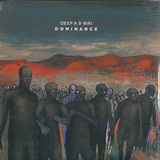
Central to the Israeli club scene, Deep'a & Biri have long been defying expectations even within a community they helped construct. Serving as resident DJs, activists and bookers for Tel Aviv's legendary Barzilay Club, the pair helped build a transcendent club scene. Hugely influential artists such as Robert Hood, Derrick May, Rødhad, Ben Klock and Moritz Von Oswald passed through the club, enjoying legendary crowds and what they could surely sense was a genuine air of anarchy, rebellion and unadulterated rave pleasure.
As the duo held down dozens of parties with dozens of DJs, there was no 'eureka' moment for their emerging sound; just a steady stream of brilliant, inspiring electronic music, much of which left an indelible imprint on the pair. Now based in Berlin, for Deep'a & Biri, things are much the same, even if the landscape and the city is different. Always rooted in the fertile ground between machines and emotion, on their second full-length LP, 'Dominance', the duo demonstrate their unique grasp of the sensitive, unfolding relationship between man and machine. Steadfast in their insistence never to remain in one lane in terms of their sound, 'Dominance' flawlessly segues between forcefulness and weightlessness. From beginning to end, this is not a record afraid to show its teeth with an uncompromising, instantly recognisable techno palette that kicks the foundations of any sound system with menace, anger and determination, particularly on tracks such as the dense 'Voltage' and pulsing throughout the more industrial flourishes of 'Ecole De Nancy' and 'Seeking Solace'.
Beyond these grittier, although never mindless, moments of authority, a sense of escapism and curiosity imbues the album. 'Alpha Cephei' offers the first hint of Deep'a & Biri's more wistful concepts, producing a smoke trail of twinkling electronics out of a smudged but distinctive bassline. That understated sense of emotional catharsis carries throughout, to be found between the complex-yet-familiar bells that drive 'Flow Diverter's' rhythm to a Detroit-indebted landscape that will surely instantly elasticate any keen dancers, while 'False Memories' offers big-room techno fulfillment with none of the character or sincerity removed for cheap thrills. Saving the most remarkable moments for last, the pair sign off 'Dominance' with the poignant and purifying 'Astral Trails', fusing an ethereal, ambient landscape with the more pronounced rhythms of their hardware.
The album's distinctive artwork comes from the studio of Jewish orthodox artist Avraham Guy Barchil, who forged a powerful connection with Deep'a, both was immediately drawn to 'weird atmosphere, amazing technique and emotions involved with his work'. Perhaps one of the most interesting painters from Israel, Avraham is known for his unique perspective, taking his inspiration from the Zohar - the foundational work in the literature of Jewish mystical thought known as Kabbalah. The ambiguous figures represent mystical aspects of the Torah (the five books of Moses), as well as material on mysticism and mythical cosmogony.
Ensuring their natural, conscious touch always remains at the forefront of this unapologetically machine-driven music, Deep'a & Biri have produced an album in the lineage of their heroes and greatest influences. Cerebral yet satisfying, deep yet always engaging, 'Dominance' both reasserts and evolves Deep'a & Biri's forward facing and singular sound.
Khan presents: Jammin Unit - Remote Car Babe
Jammin' Unit is not only my brother but one of the most prolific producer of electronic music since the early days of techno. He is one half of legendary electronic super group Air Liquide and made his way into history books with tracks like 'If The Was No Gravity' and 'Revelation' lately featured on Nina Kraviz - Fabric 91 mix.
'Remore Car Babe' was originally released on clear 10' via Temple Records NYC in 1997 and is now remastered by the man himself for our 2018 ears. Re-issued on 12' black vinyl for more gain and better audio quality.
In his own words he describes the 4 track e.p. as: 'The sound was created for headphone listening during remote car racing. Enhancing the feel of speed and aggressiveness was the goal'.
To me it feels like a manga comic strip eched on vinyl. No headphone necessary to go on this speed racing trip of extacy and pounding bliss.
A re-issue I am especially proud of to hear on dance-floors around the globe.
'Don't eat before going to sleep but Do eat before going out!'
Yours sincerely,
Khan (Of Finland)
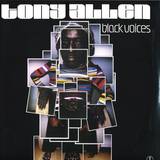
Comet presents the reissue of Black Voices (1999), featuring remastered versions and Ariya (Psyche Juju Mix)' as bonus track, which was not part of the original release.
Tony Allen completely rewrote the books on what was possible within the AfroBeat genre with his stunning 1999 album, Black Voices. When one considers exactly "what" is going on throughout Black Voices, it is quite mind boggling, as it is almost impossible to associate a minimalist, electronic feel with the massive walls of sound which Allen was known to create.
Yet these walls of sound are still very present, yet they gain an entirely new feel due to the presence of the producer, Doctor L. He takes the mesmerizing rhythms that Allen creates and he spins them into a stunningly modern sound. While Doctor L's production work throughout Black Voices is truly fantastic, it is clear that the genius behind the album lies within the mind of Tony Allen. With the absolutely mesmerizing, funky grooves that Allen creates, it comes a little surprise that the vocal collaborations are handled by members of one of the funkiest bands in history: Parliament-Funkadelic.
For almost two decades, Black Voices has remained a stunning example of the fantastic results that can occur when seemingly unrelated genres clash.
Kalakuta Soul Records joins forces with waf80music to proudly present Kai Niggemann's solo debut, an all original album of outrageous poetically abstract music created live and without overdubs on a Buchla 200e Electric Music Box, one of the rarest and most sought after electronic music instruments. Working on the platform since 2013, Kai Niggemann has become one of Germany's leading artists who perform live with a Buchla 200e. His style is an electro-acoustic storytelling, a clubby dreamscape and a poetically-abstract kraut-infused energetic mix of new Elektronische Musik with contemporary club culture. Nerds love the technology and clubbers love the throbbing drive of the basslines. It's all improvised and recorded live in Berlin — yet it sounds meticulously crafted in a dark basement studio throughout the entire last winters. Kai is a member of the 30-piece kraut-noise-jazz collective "The Dorf" and the electronics duo "The Last Books" (with Achim Zepezauer), performs and records with Mia Zabelka (Vienna) as "Redshift Orchestra", cofounded the internet-computermusic "European Bridges Ensemble" (EBE, e-b-e.eu) and the electroacoustic duo "Resonator". His most recent releases were the CD/vinyl "Lux" (feat. the noise drone artist N), "EviL/EvyL" and the cassette "Made in Österreich" with The Dorf (feat. Caspar Brötzmann & FM Einheit (Ex-Einstürzende Neubauten) or "Thinking Light" by Redshift Orchestra (duo with Mia Zabelka). He performed concerts with Mia Zabelka (Wien), Yoshio Machida (JP), Trap & Zoid (BE), Stian Westerhus or Shahzad Ismaily (with The Dorf) among many others.
lvin Toffler was overwhelmed. When in the morning of October 4th, 1988-it was his 60th birthday-he was starring with a still somewhat absent look into a bowl of cornflakes, he thought that in the surface structure of the yellowish shimmering milk which was making an emulsion with the maple syrup and slowly but irreversibly corroding the crunchy crystals on the flakes, he could see through a window into a timeless dimension. Toffler, who at that time had reached the peak of his fames as a future scientist, was sustainably disturbed from his peek into this extra temporary peephole. In none of his books-'Future Shock' had just been released with yet another edition featuring a proud printed note on the book cover stating 'more than 5 million copies in print'-did he ever mention this occurrence. Even after his death in June 2016, no note on this incident could ever be found in his estate. The 'flake dimension' as Toffler called it in notes which were later shredded remains a secret of opaque, hard-to-grasp radiant power.
Maybe it's too simple to describe 'Pneumatics' as a creation coming from this cornflake world Without doubt. Are there any more precise terms or instruments to determine the multifacetedness and beyond-timeliness of the 'Pneumatics' soundscape There are still unknown. 'Pneumatics' is, after releases at Innervisions, Die Orakel und his own label Sound Mirror, the debut album of Orson Wells (as long as you don't count in 'Jupiter' - Wells's first LP which was released in 2014 with 48 copies on cassette-have fun digging for rarities and bargains!).
Perhaps Wells, known in Frankfurt under his real name Lennard Poschmann and as an employee at the record store Tactile, is only a messenger. Or a psychic. The sound manifesto that he apparently transmits from Toffler's secret dimension tells of a city of upside down pyramids ('Tianon'), of passes into the land of the five elements ('Multipass') and dead straight four-to-the-floor lines which appear bended within the spherical dimension (''Geodesic'). These beats are right on the heels of the ones of Intersteller Fugitives; the strings sound like that at any moment a vocal sample edited by Moodyman could warp over through the Cornflake wormhole. Pneumatics is the science of all technological applications powered by condensed and often by quite heated air. It is a matter of mechanics, compression, jackhammer, ramblings, high pressure levels, valves for blowing of steam. On 'Pneumatics' it's all about this. And more. Orson Wells's album gets to the point of the post-retro futuristic state of the dancefloors of the house and techno clubs of this planet. It is like a peek into another dimension, right on the golden cut of spacetime geometry.
- A1: Enei - The Process
- B1: Break - In The Clouds
- B2: Sam Binga Feat. Eva Lazurus - Show U Something
- C1: Mefjus - Mirage
- D1: Kasra - Phases
- D2: Hyroglifics - Swish
- E1: Ivy Lab - Amber
- F1: Upbeats - Grasshopper
- F2: Foreign Concept - Breaking Again
- G1: Emperor - Bad Blood
- H1: Klax - The Mute
- H2: Halogenix Feat. Solh - Flames
- I1: Current Value - Leave Behind
- J1: Signal - Periphery
- J2: Shyun - Unfold
Critical Music reaches its 100th release in its 15th year, celebrating with the landmark album Fifteen Years Of Underground Sonics. Spanning the broad spectrum of drum & bass that the Critical sound represents, the exceptional 15 album is as bold as it is beautiful and looks to serve the test of time in the D&B history books.
>
Kasra Critical
- A1: Hortense Ellis - Sitting In The Park
- A2: The Termites - Rub Up Push Up
- A3: Carlton & The Shoes - Never Let Go
- A4: Alton Ellis - I'm Still In Love With You
- A5: Owen Gray - Give Me A Little Sign
- B1: The Bassies - Big Mistake
- B2: Alton & Hortense Ellis - Breaking Up Is Hard To Do
- B3: Slim Smith - Born To Love
- B4: Cannon & The Soul Vendors - Bad Treatment
- B5: John Holt - Strange Things
- C1: The Actions - Giddy Up
- C2: Larry Marshall - It Makes Me Feel
- C3: The Paragons - Change Your Style
- C4: Jerry Jones - Trying Times
- D1: The Heptones - I Shall Be Released
- D2: The Gaylads - The Soul Beat
- D3: Delroy Wilson - Run Run
- D4: The Soul Two - Puppy Love
- D5: Delroy Wilson - Riding For A Fall
'Soul Jazz Records' new journey into the mighty vaults of Clement Dodd's Studio One steps once more into the fertile musical environment of Jamaican music in the late 1960's and early 1970's, from the sweet harmony vocals of seminal 1960s Rocksteady right up to the nascent birth of Reggae and Roots music at the start of the 1970's. Sleevenotes to this album are by Steve Barrow, author of 'Rough Guide to Reggae' as well as Soul Jazz Records' own 'Reggae Soundsystem Cover Art' books.
While Ska at the start of the 1960's had taken American Rhythm and Blues as its main influence, Rocksteady focused on the emergence of American Soul music - with Jamaican vocal harmony groups such as The Gaylads, John Holt & The Paragons, Carlton & The Shoes showing a particular fascination with the close harmonies of Curtis Mayfield and The Impressions and other US Soul acts. Here The Heptones even feature with a cover of Bob Dylan's 'I Shall Be Released'.
The influence of Soul music on Jamaican Rocksteady and Reggae is almost palpable, so much so that one wonders how much more successful singers like Delroy Wilson, Alton Ellis, Slim Smith and John Holt would have been had they been born in Chicago, Detroit or Memphis. Artists such as Alton Ellis, Delroy Wilson and Owen Gray defined the era - a slowed down beat as Jamaican political and social heat slowly increased when the 1960's progressed into the start of the 1970's - and the music evolved further from Rocksteady into Roots Reggae. This album is released on heavyweight gatefold sleeve double vinyl (plus download code), CD with slipcase and digital album (ex-North America).
- A1: Billy Thorpe - Back On The Street Again
- A2: The Id - Feel Awright
- A3: Ross D. Wyllie - Do The Uptight
- A4: Johnny Rocco Band - Funky Max
- A5: Daly-Wilson Big Band - City Sounds (Featuring Kerrie Biddell)
- B1: Dalvanius & The Fascinations - Voodoo Lady
- B2: Renee Geyer - Be There In The Morning
- B3: John Sangster - Hair
- B4: Ray White Revival - Superstition
- B5: Festival Studio 24 Orchestra - Africa (L'ete Indien)
- B6: Brute Force & His Drum - Weird And Wonderful
- C1: Mcphee - The Wrong Time
- C2: Kahvas Jute - Odyssey
- C3: Tamam Shud - Sea That Swells (From Morning Of The Earth)
- C4: Blackfeather - The Rat Suite Main Title
- D1: Al Styne - Vehicle
- D2: Mcphee - Indian Rope Man
- D3: Hot Source - Oz Bump (Soul Thing)
- D4: Count Copernicus & The Cosmic Fire - Painted Ego
- D5: John Sangster - A Day In A Life
COMPILED BY PETE PASQUAL, ERICA OLSON & DJ KINETIC
Following on from acclaimed compilations like 'Down Under Nuggets' and 'Heavy Soul' (and two other new titles 'Running The Voodoo Down' and 'Dodgy Bossa (& Silly Sambas)' - details below), Festival Records presents another deep dig into the archives, this time shining a light on rare Australian soul-jazz, jazz-funk, and freaked-out groove rock from the late '60s and '70s.
BACK ON THE STREET AGAIN - AUSTRALIAN FUNK, SOUL & PSYCH (MOSTLY) FROM THE FESTIVAL VAULTS is a stunning 20 track CD and 2LP release that highlights a point when the previously disparate styles of rock, jazz and soul all started influencing each other, and exciting new genres were created. To quote the liner notes (by DJ Kinetic):
Australia produced some amazing music during the 60s and 70s that sat outside of the normal rock mould. Avant guard artists like John Sangster pushed boundaries and experimented with the fusion of local and overseas influences, artists like Dalvanius recorded soaring disco music that was lost amongst the popular music of the time, only to be rediscovered by DJs overseas who were searching for unknown sounds, composers like Brute Force and His Drum took risks and recorded left-field funky sounds hidden within their more mainstream compositions, and popular artists like Billy Thorpe occasionally strayed from their A&R directions and took leaves from the books of American artists who were largely unknown in Australia at the time. Beneath the veneer of bland rock and roll lay an unknown multitude of funky sounds hidden from mainstream view.
In addition to the artists that Kinetic mentions (and the compilation features two John Sangster tracks - stunning versions of 'Hair' and the Beatles' 'A Day In The Life'), the collection includes iconic names of the era like the Daly-Wilson Big Band (featuring Kerrie Biddell), Renee Geyer and the Johnny Rocco Band. '60s sides from Ross D Wyllie and The ID (featuring Jeff St John) reveal the various styles' roots in American rhythm & blues, and the unexpected inclusion of some legendary Australian rock outfits like Tamam Shud and Blackfeather reveals the psychedelic and progressive rock influences at play. The full range of the music is highlighted by the inclusion of both cabaret/daytime TV performer Al Styne and outrageous Kings Cross club act Count Copernicus & The Cosmic Fire as well as the in-house studio 'pops' orchestra, Festival Studio 24 Orchestra.
Co-compilers Pete Pasqual, Erica Olson and DJ Kentic to undertake interviews with specialist media around release. Facebook ad's around release.
Another off-the-books mission to the OUTERZONA !
Consistent best-sellers, these little collections of secret weapons have made many friends out there on the floor
No.6 delves once again into the ammo cupboard, but reassembles this devastating array of weaponry into altogether more potent smart-bombs
From a wigged-out Jazz-Rock monster to familiar & timeless symphonic Disco licks, to a hidden mid-Seventies Soul rewire Once again, Outerzona refresh the parts other edits cannot reach !These are never around for long, so you know what to do
Diseño Corbusier is the avant-garde electronics duo of Javier G. Marín and Ani Zinc, formed in Granada, Spain 1981. Like Sheffield's relation to London during the punk explosion in the UK, Granada developed an experimental music scene 400 kilometers south of Madrid. As a child, there were no records in Ani's house, so she grew up listening to the radio and was hypnotized after hearing 'Remember Love', by Yoko Ono. While attending university in Granada she responded to an ad in a music magazine by Javier, If you're into bands like Cabaret Voltaire or Flying Lizards, call me'.
The duo recorded their debut album Stadia' in 1982 and self-released as a limited edition cassette on their label Auxilio de Cientos. They drew influences from contemporaries like SPK, Throbbing Gristle, Esplendor Geométrico and DAF. They employed the 'cut-up' technique William Burroughs used to write his books to splicing their magnetic tape loops. Instruments used included a Korg Lambda, Boss DR-55 drum machine, Roland SH 101, and MFB 501 drum machine. The lack of money to buy more expensive instruments forced the duo to be more creative. Everything was recorded directly to a cassette player that was plugged into a Revox B77 reel to reel tape machine to add echo. Ani manipulated and treated her naive, menacing vocals to match Javier's processed rhythms. These early sketches contain atonal, arhythmic, thick shifting curtains of synth, loops and radio samples. For this reissue we've added 7 bonus tracks taken from various cassette compilations, as well as three previously unreleased songs. Elements of industrial music, primitivistic techno and vocal manipulation are fused with a Dadaist approach utilizing modern technology.
All songs were remastered for vinyl by George Horn at Fantasy Studios in Berkeley. The front cover is an exact replica of the band's original design, restored by Eloise Leigh. Each copy includes a 4 page xeroxed booklet with photos, press clippings and liner notes from Javier. Powerful and evocative, soundtrack music for a rising storm or revolt.' Sound of Pig magazine 1985
Executive Slacks began in the hot, humid summer of 1980 Philadelphia by Matt Marello, John Young and Albert Ganss, three bored, broke, anxious art students. Starting out with performance art in subways, they soon took their angst-ridden act to galleries and night clubs. The band found their moniker in a run-down bookstore after seeing an ad for men
Our sixth release marks the closing of a circle: Lucky Charmz—the man of our first release, Follow Me To Flottbeck Falls'-EP—returns to deliver his second full length effort. LHLT006 is the U Still Coming Over'-EP, a long overdue follow up to his first EP: More than anything else, it's a fresh slice of summer groovers. Opener Faceless Goat' instantly delights with it's majestic opening chords, only to unleash a smashing grandeur of sample fun and lustful grooves. It's a no-vocals-required anthem, rich in texture and yet subtly enchanting. While Faceless Goat is probably best enjoyed blasted out to vast, scenic landscapes on mediterranean costs from the terrace of a ancient estate, it is also tried and tested for Vorzech', houseparties and—of course—any club scenario (it won't fail you). We cannot help but to notice that Latency Jam''s stoic groove recalls the jungle books's march of the elephants, it's spacey synth madness points to outer space and, well, did we mention that It's super funky Yes, it's a funky spacewalk towards jupiter with your awesome, intergalactic elephant friends. Sonically charming with it's rapid fire hi-hat's, bubblegumspongecake melodies and zapping space laser's, that've all trickled out of a Nord Lead Young Lucky once laid hands on, Latency Jam' will also never let you down. On the flip we find Waffle Cut', yet another sun-oozing Lucky Charmz tune. Captivating trickle-down arpeggios radiate warmth, while soft pads sooth you into hypnosis. It's a bit like staring at the big yellow in the sky for too long—you get all frizzy, drizzy and a little silly.
Cadenza Records displays a deft touch in showcasing new talent, just as much as it leans on its core of established producers. The 'Split' EP shines a bright light on the musical endeavors of Enrico Gasperini AKA gAs, and fellow Italian, Lino Pugliese. One side of vinyl each, and gAs opens up Side A with 'Rack Attack', its woody hits and scattering hi-hats holding a solid groove whilst gentle keys entwine a melodic touch with a stuttering synth riff that's designed to circulate around the brain. Splashes of cymbals and white noise provide the all important drama as the track rises to a crescendo. Enrico's second contribution, 'Agogo', keeps up the ante with another slice of exquisite house grooves. The inner-city street ambience opening gives way to an undeniably funky rhythm track, incessant spongy stabs and frenzied percussion that makes this one a sure fire winner. Over on Side B, Lino Pugliese gets to flex his sonic palette after recent releases on Cadenza Lab and Memento. 'Banging On Your Door' takes its time to unfurl; a percussive swing not too dissimilar to the Stones' 'Sympathy For The Devil' sets the tone magnificently, as low frequency synth sweeps and distant vocal effects build, the kick drum jolting the track into life with bursts of furry snares and handclaps. More ambient soaked business on 'Aniwama' as Lino forges melodious piano and clanging ride cymbals with low end sonics as the track deconstructs as quickly as it builds, tearing up the arrangement rule books to create a unique cut that can perform as a mood-setting piece just as well as a peak time genre-shifter.
It takes time for a series of seperate ideas to evolve into a fully concepteptualized album if it wants to have a place in history for Ali and Basti Schwarz, better known as Tiefschwarz. Since 1998 the duo, as both DJ's and producers, have perfected the art of dominating the moments only experienced on a dance floor, deeply immersed in sound. Their music is unique as it is creative. Among the countless extended players and remixes, the three landmark Tiefschwarz albums: 'RAL 9005, 'Eat Books' and 'Chocolate' all have a common thread weaving them together; a historic vision uniting the musical crossroads of past and future. As with the previous albums, Tiefschwarz pause briefly on the subjective localization of artists in the (music) world to create an album which unfolds like a story told by master story tellers. Igniting the dance floor while at the same time giving the listener the opportunity to look beyond themselves and into the journey that is 'Left". With 'Left", Tiefschwarz were able to radicalize the album-specific approach and focus more intently on combining grooves with an introspective perspective. They refrained to bring in an outside co-producer for the album and made sure to forego the cliche variety of guest musicians, concentrating instead on one congenial companion: Khan, who both Ali and Basti have been close friends with since the 90's. Khan, a Frankfurt native of Turkish and Finnish decent, is one of the most prominent and exhilarating German Techno pioneers.
Underwater techno. That could be "leaning over backwards" in just two words. Tobias Freund's debut album for Ostgut Ton also serves as the longplayer introduction for his tobias. moniker, gives a fascinating and profound insight into his special world of music and sound science. Being a part of the music business since 1980, you could easily fill books with his works and creations
“Trash Can Lamb” is a new solo album from Akron, OH-based multi instrumentalist Keith Freund. For the better part of twenty years, Freund has been producing intimate, shape-shifting music on his own and as part of collaborative projects such as Trouble Books, Lemon Quartet, and Aqueduct Ensemble. Here, he concocts a heady, homespun broth of analog synthesis, bit-reduced sampling, piano, standup bass, saxophone, and location recordings, arriving at a loose and evocative set of songs. Throughout the album, we hear 8-bit experimental delays mangling airy acoustic materials, denaturalizing them into primitive loop structures while retaining their golden-hued, melodic cores. The sputters, hisses, and croaks of handmade electronics nuzzle up to wistful piano and saxophone ruminations; the pure pandemonium of chaotic triangle wave patching and filtered noise settles into the serenity of a backyard dusk full of spring peepers (or maybe they’re crickets…). It’s in the space between the ragtag and rough-hewn and the romantic and yearning that Freund situates these compositions; it’s a peek inside a workshop that sits atop the trees, branches scraping on the windows, bluejays who just won’t knock it off, a table fan spinning slower and slower, its cheap blades covered in dust.
All music by Keith Freund, with contributions by Linda Lejsovka, G.S. Schray, Steve Clements, and Corey Farrow.
Mastered by Kassian Troyer at D&M.
Art/design by Alex McCullough and Felix Luke.