A fully licensed, analogue reissue -- sure, on cassette and not on vinyl, that's a
long story -- of the first Index LP, originally released in 1967
The "Black Album" is one of the all-time holy grails of psychedelia, with originals going
for more than $4,000. It is an album "with a really druggie sound, full of feedback and
fuzzy guitars. The vocals, when present, are not easily heard. The cover of 'Eight Miles
High' is very good, probably one of the best cover versions I have ever heard. The
original songs all follow a similar pattern as the covers, with hazy guitar riffs and loud
rhythms. The last track is particularly noisy and unstructured. Hidden in amongst the
echoing canyons of sound there's some really snotty punk attitude wrapped up in
trippy velvet fuzz."
This record is magnificent-- bizarre, atmospheric, amateurish (in the best of all
possible ways). It has a wonderful bleak sound, both droning and murky... the atonal
sound of 1960's rock that would leave the most lasting impression on what would
become future punk, post-punk and indie rock artists.
"Much has been written about this incredible band. Much of it isn't true. Index was
formed in the early spring of 1967 in Grosse Pointe, Michigan. I was 18 years old
when I met a chain-smoking 16-year-old named Gary Francis. Our conversation soon
got around to rock and roll. He told me that he and his friend, John Ford, were forming
a band. I told him that I played drums and we arranged a jam session at John's home
on Lakeshore Drive. Our first meeting was incredible. Our sound was full and
powerful. John's lead guitar techniques were fresh and innovative. After our first
sessions we knew we had something special. Index was born. Soon we hit the local
'sock hop' circuit, playing at high schools and teen clubs in the area. We poured our
unique sound out at The Hideout, Undercroft and G.P. War Memorial every weekend.
One afternoon John pulled out a new album he had been listening to. It was a new
band with a mind-shattering sound called 'The Jimi Hendrix Experience.' John played
some songs he had written inspired by this 'psychedelic' sound. Over the next few
days, 'Fire Eyes,' 'Shock Wave' and 'Feedback' were written. This album was recorded
in December of 1967 at the Ford estate. It is recorded in mono with literally one
microphone and with all instruments and vocals recorded at the same time. The cover
photo is of founders of a singing group John joined at Yale. The stiff, board- like
figures seem to characterize the exact opposite of this musical collection. This
reissue is taken from the original recordings. Nothing has been added and all songs
are in their original length. Over the years various bootleg copies of this album have
surfaced but this is the original work." --Jim Valice
Buscar:bootleg
Hausu Mountain continues the HausLive series of live show recordings that capture some of the headiest moments in Chicago underground music. On HausLive 4, we rewind the clock approximately one year to May 3rd, 2024 at Constellation, where the all-star Bill Orcutt Guitar Quartet (featuring Wendy Eisenberg, Ava Mendoza, and Shane Parish) made their barn-burning Chicago debut. The series channels the spirit of the informal bootlegging and tape trading of audience recordings as pioneered by the community surrounding the Grateful Dead, honing in on the raw live energy and in-the-moment emotions that can make any show stand out in the stream of time. HausLive 4 catches the Bill Orcutt Guitar Quartet in a sublime state of tour-hardened synergy with one another as they tear through the four-string guitar compositions that Orcutt wrote for his album Music for Four Guitars (Palilalia Records, 2022) with dialed-in fingers-on-fretboard precision, while also letting those songs evolve into flights of improvisation and extend into solo and duo passages led by each of the four guitarists. As Orcutt says on tape during one of the show’s interludes, “that record is thirty minutes; this show is an hour, so we’re improvising.” The resulting free-wheeling moments combine with the rigidity of Orcutt’s meticulous four-guitar compositions to form a program of music that draws power in equal measure from the forces of chance and discipline.
- A1: The Impossible Soul
- A2: This Much Remains
- A3: The Collusion Exclusion
- A4: Outside The Box
- A5: Masters Of The Race?
- A6: That Other Song
- A7: Echoes
- A8: Cut The Crap
- A9: Shut The Fuck Up
- B1: Rebellion's In Session (Again)
- B2: A Mother's Milk
- B3: When The Lights Go Out
- B4: Statement Of Intent
- B5: A Message To Them
- B6: Inferno
- B7: Concluded
Conflict formed in 1981 in Eltham, Southeast London, when frontman Colin Jerwood, inspired by early encounters with the Pistols 'Spunk' bootleg and following The Clash on tour, struck up a friendship with Crass and set about crafting a whole new kind of punk that totally upped the ante in terms anger and confrontation. Crass, the renowned anarchist punk collective, having got Conflict started by releasing their debut single 'The House That Man Bult' in 1982 on Crass Records, ended in 1984 as they had always intended. Now it was up to Conflict to pick up the baton and run with it. And they did, charging into the battle lines of authority.
The years that followed saw Conflict go from strength to strength, peaking on the 18th of April in 1987 at the London Brixton Academy for the 'Gathering of the 5,000' concert. A climax and explosion of rage and rebellion that inevitably ended up in a police provoked full-scale riot with police injuries, arrests, and with the band hopelessly in debt and banned from the majority of major London and UK venues.
Undeterred, Conflict continued into the 90s with their acclaimed 'Conclusion' album and remained a mainstay of the live punk circuit throughout. However, after more than two decades since the release of their (2003) 'There's No Power Without Control' album, the band are back with 'This Much Remains'. Featuring sixteen brand new Conflict creations, the album sees the band keeping one eye on their eventful past, and the other firmly on moving forward, both musically and politically. Animal Rights are still at the forefront of Conflict’s collective minds, giving a voice to the voiceless on songs such as 'A Mother's Milk' and 'Shut The Fuck Up', whilst their anger at world governments will never dissipate.
Also featuring an appearance by the late Benjamin Zephaniah on the track 'Cut The Crap', 'This Much Remains' is the sound of a band that continues to surprise and progress, decades after it first began. Conflict are Colin Jerwood - vocals; Fiona Friel - vocals; Gav King - guitars, melodica & Hammond; Fran Fearon - bass; Stoo Meadows - drums. With Benjamin Zephaniah - vocals on 'Cut The Crap'; Mitsuko Sonoda - voice on 'The Impossible Soul'.
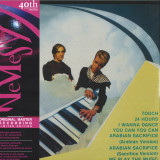
On the occasion of the 40th anniversary of its original release, this limited edition Black vinyl is reissued in an exclusive version, created using the Original Master Tape to ensure an authentic and faithful sound to the original recording. The high-quality mastering process ensures optimal sound performance, enhancing every detail of the production, from the depth of the bass to the clarity of the highs. Pressed on 180g Black vinyl, this product is marked with the SIAE trademark to guarantee authenticity and has been carefully crafted to provide a flawless listening experience.
This limited edition also includes an autographed photo from the band, making it even more personal and collectible.
This limited edition, available in a limited run of only 250 copies, is designed for true collectors and enthusiasts. Each copy of the 40th Anniversary Limited Edition Black Vinyl pays tribute to an album highly appreciated by Italo-Dance music lovers.
Originally released in 1985, the album challenged the conventions of the time with an alternative and innovative sound, standing out in the Italo Disco scene. The album received international praise, especially from the most demanding audiophiles, for its pioneering production and ability to distinguish itself from mainstream sounds. The remastering process from the Original Master preserves the authenticity of the original sound, delivering superior quality.
With the included removable OBI, this special edition gains an additional distinctive touch, completing its design and reinforcing its status as a cult item. Don’t miss the opportunity to own this unique vinyl, perfect for those who appreciate authentic music and wish to enrich their collection with a rare and valuable piece.
We are proud to present the first official reworks of the disco/jazz-funk masterpiece Trip To Your Mind - now available for the first time with a picture cover featuring a classic shot of composer Reginald Hudson on the front.
For decades, Trip To Your Mind was celebrated as a Brit Funk classic, though its true origins remained a mystery. While recorded at London's Advision Studio, Hudson People were neither local nor British - a fact first uncovered with its official 2022 reissue on Backatcha Records. In interviews with label owner DJ Scientist, Reg Hudson revealed that the backing band behind his composition was Body Heat, a GI group based in Germany. The recording, believed to date back to around 1977, remained shelved for some time. By the time it was finally released in 1979, Body Heat was on the verge of disbanding, leading to the track being credited to Hudson People. Since then, Trip To Your Mind has been heavily bootlegged and compiled since the late '90s, cementing its status as an in-demand classic.
For our rework release, the A-side features a brilliant DJ-friendly edit by Delfonic, based on the original Hithouse mix. Unlike the later Ensign Records remix, this version starts with an 8 bar intro crescendo that was missing from subsequent reworks. When we approached Delfonic about reworking the track, he was immediately hooked - especially since he had already started an edit years ago but never completed it. His version builds tension through an extended intro before leading into the beloved vocal line: "Take a trip through your mind, surprises you will find." Delfonic's masterful editing ensures the track keeps listeners engaged until the very end.
The B-side features a rework by Italian DJ and producer Luca Trevisi, aka LTJ Xperience. His version is based on the Ensign remix of "Trip To Your Mind" by Chris Hill and Robbie Vincent. Some may recall a slightly different, clubbier version of this rework, which was released by a UK label in 2010. That version became a sought-after gem - however, Hudson never received any payment from the label. When we reached out to Trevisi about an official re-release, he generously revisited his edit, resulting in a more organic and dynamic mix. His version will appeal not only to disco and funk lovers but also to house and club DJs. The new mix was mastered by Frederic Stader on an EMI TG124 - an iconic mixing desk, famously used at Abbey Road Studios.
Both edits preserve the psychedelic essence of the original while making it more compatible with modern listening habits. Pressed on a high-quality, loud-cut 12", this release is a must-have for any DJ's collection. It follows our label's GI-related releases by Grand Slam and "Shake It - Make It Loose" by J.D. Puma Lewis - another project that composer and keyboardist Reginald Hudson was involved in.
- A1: Raz Fresco– Who Mapped The Earth
- A2: Romderful– Maybe With You
- A3: Dowker– Call Me
- A4: Speak– Sakuraba
- A5: Cookin' Soul, Ovrkast– Flying
- A6: Monster Rally, Demahjiae– Clooney
- A7: Mr Scruff– Flute Boom
- A8: 645Ar– Shooting Star
- B1: Peanut Butter Wolf, Waragainstgod?, Mikah 9– Organic A I
- B2: Chuck Strangers, Graymatter– Marigold
- B3: La Jay, Pigeon John– Thank You
- B4: Dj Harrison– Applechopchutney
- B5: Monster Rally, Homeboy Sandman– I Love You
- B6: Low Leaf– Faerie Function
- B7: Pouya, Boobie Lootaveli– Bitch, Park Backwards
- C1: Eddie Chacon, John Carroll Kirby– Comes And Goes (Live At Isc)
- C2: Devin Morrison– Givin Up
- C3: Suzi Analogue– King
- C4: Lee Perry– Morning Star
- C5: Dayytona Fox– Woooaaah
- C6: Bombay , Rvyo– Kflex
- C7: Crimeapple, Don Leisure– Vic Damone
- C8: Eyebriss– Don't Clap When I Win
- D1: Ncy Milky Band, Quelle Chris– High Speed Clouds
- D4: Swum, Big Lordy– Shinto
- D5: Xavier Wulf– 2 Can Wulf
- D6: Tommy Wright Iii– Chrome Thang
- D7: Tjil– Metta
- D2: Mr Mumblz, Daniel Son – Snake Eyes
- D3: Girl Talk, Freeway, Waka Flocka Flame– Tolerated
Vinyl[22,90 €]
**Gangster Music Vol.3: The Most Gangster Music Trilogy of All Time Comes to a Triumphant Close**
Imagine curating a dream lineup of MCs and producers from every corner of the rap world—sounds impossible, right? Not for artist and illustrator Gangster Doodles, who has been bringing this vision to life for the past decade. Now, with “Gangster Music Vol.3”, the trilogy reaches its grand finale, and it’s bigger, bolder, and more unpredictable than ever before.
Gangster Doodles himself puts it best:
"It’s hard to believe that I’ve been actively working on this Gangster Music series for the past 10 years. The most gangster music trilogy of ALL TIME is almost complete!! And in my humble opinion Vol.3 is the most exciting out of the 3, both from a music standpoint (special shout-out to all my music heroes on Vol.3) and artistically speaking this is the most fun I’ve had in years”
Since launching Volume 1 in 2019 and following up with the second volume in 2022, Gangster Doodles has been shaping the Gangster Music series into a one-of-a-kind sonic universe—an unfiltered mix of underground titans, unsung legends, and rising stars. Volume 3 is the biggest installment yet, boasting a staggering 30 tracks that traverse the entire spectrum of rap and beat culture.
This time around, the lineup is as eclectic as ever. From legendary pioneers like Lee Perry and Tommy Wright III, to veteran producers such as Mr. Scruff and Peanut Butter Wolf, the album pays homage to hip-hop’s roots while pushing forward into fresh territory. The roster also includes established up-and-comers like Devin Morrison, Low Leaf, DJ Harrison, Quelle Chris, Homeboy Sandman, and Suzi Analogue, ensuring a mix of classic flavors and new-school innovation. The bubbling underground is well represented too, with artists like Raz Fresco, Atlanta’s 645AR, and Pro Era’s Chuck Strangers bringing their own distinct heat.
From pioneering SoundCloud rappers like Pouya to genre-bending composer John Carroll Kirby, from Birmingham’s Romderful to Chile’s RVYO, the album encapsulates a truly global soundscape, proving once again that Gangster Doodles’ ear for cutting-edge talent is second to none.
As always, the cover art is a vital piece of the puzzle. This time, Bootleg Garfield & Friends take center stage, bringing the same playful irreverence that has defined Gangster Doodles’ artwork for years. Fans are encouraged to engage, remix, and make the cover their own, staying true to the spirit of interactive creativity that has always fueled the series.
After years of meticulous curation, countless DMs, emails, and behind-the-scenes wrangling, Gangster Music Vol.3 is here to complete the trilogy in legendary fashion. Expect boundary-pushing beats, next-level lyricism, and a lineup that celebrates hip-hop in all its many forms.
“Thanks to everyone who’s actively supported and continues to tap-in. Believe & trust when I say I've got more dope stuff cookin’. STAY TUNED!! GANGSTER DOODLES 4EVER. 1LUV."
Gangster Music Vol.3 is out April 7th on All City. Stay tuned, stay tapped in, and get ready for the most gangster music experience yet.
- A1: Drones
- A2: Swimming
- B1: Manifesto
- B2: Ashley
“On course towards future raucous, beer-soaked headline festival
sets.” - NME
“Screw-you power, relentless motorik rhythms and impressively large
choruses.” - The Guardian
“Unrelenting, gritty energy” - Daily Star
Sprints unearth their frenzied new EP, ‘Manifesto’, out via Nice Swan
Records.
Produced by Daniel Fox of Girl Band - Dublin’s answer to Steve Albini
- the four tracks make for a hard-hitting gloom-punk journey you
can’t miss. Like the Irish guitar acts who have paved the way for
them - Fontaines D.C., Silverbacks and Girl Band - Sprints sound
urgent and vital at every turn.
‘Swimming’ is a confluence of rabble-rousing stadium rock, sleazy
garage rock and Sonic Youth experimentation. Lyrically, there’s a lot
to hang on to too, which is unsurprising given how topical the band
are: ‘Drones’ took on imposter syndrome; ‘Manifesto’ tackled
homophobia.
‘Swimming’ scorns on the increasing lack of opportunity after
following prescribed paths to become society’s idea of a ‘success’.
Sprints singer Karla Chubb explains: “While the homeless crisis
worsens, the city is sinking in debt and everyone can barely keep
their heads above water, you see an article stating that a new €25
million white water rafting centre is being developed after approval
by Dublin City Council. Sometimes you’d just rather drown.”
Sprints have hit a nerve. The velocity of this argument comes from
personal anguish but will chime with a generation. And with such
honesty running through their core it’s no wonder The Guardian,
NME and BBC Radio 1 and 6Music have tipped them for big things.
Tourdates - October 7 Roisin Dubh Galway, 8 Kasbah Limerick, 9 The
Grand Social Dublin, 21 The Waiting Room London, 23 Heartbreakers
Southampton, 26 Sneaky Pete’s Edinburgh, 27 The Attic Glasgow, 28 The
Castle Manchester, 30 The Sunflower Lounge Birmingham, 31 Bootleg Social
Blackpool, November 2 Surf Cafe Newcastle, 3 Sidney & Matilda Sheffield, 6
Mutations Festival Brighton, 7 Festival of Voice Cardiff, 9 The Shipping
Forecast Liverpool, 10 Oporto Leeds.
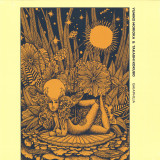
Japanese artists Yumiko Morioka and Takashi Kokubo unite for Gaiaphilia, a journey through ambient soundscapes that seamlessly blends Morioka’s graceful piano compositions with Kokubo’s immersive field recordings and atmospheric synthesisers.
This collaboration brings together two of Japan’s most influential pioneers in ambient and new age music, each with decades of groundbreaking work. Morioka, celebrated for her 1987 album Resonance—reissued to critical acclaim by Métron Records—infuses her introspective playing with Kokubo’s vivid environmental textures, creating a dialogue between nature and melody.
After releasing Resonance, Morioka stepped away from music, moving to America to raise her family. For years, her work was quietly cherished by fans, only gaining wider recognition with its reissue in 2020. A devastating wildfire destroyed her California home seven years ago, prompting her return to Tokyo where she became a chocolatier before rediscovering her passion for the piano in recent years, playing live shows and making new recordings.
Takashi Kokubo’s legendary discography spans over 30 years, and has found wider acclaim in recent years via YouTube algorithms and bootleg uploads, wracking up tens of millions of plays. Yet he is probably best known for his sound design work, specifically the Japanese earthquake alert sound as well as credit card payment jingles - his creations are pervasive in Japanese society.
“From our love and concern for our planet, we both offer a unique sensibility and spirit of inquiry which we express through our music.”
Rooted in shared philosophical interests, Gaiaphilia reflects a profound reverence for nature’s resilience and harmony. Themes of Gaia, Mother Earth’s renewal, and the interconnectedness of life are central, with inspirations drawn from cosmology, sacred geometry, and Japan’s mystical Katakamuna tradition. The album invites listeners into a meditative space where sound mirrors the delicate balance of the natural world.
A master of sound design, Kokubo enhances this vision with his distinctive field recordings, captured using a self-made binaural microphone shaped like a crash test dummy’s head. From the jungles of Borneo to the gentle rhythm of ocean waves, Kokubo’s globe-spanning recordings transform into immersive soundscapes that perfectly complement Morioka’s introspective piano compositions.
“The title, Gaiaphilia, is a newly created word to encompass our love and respect for nature and life, this feeling is the theme we hoped to express.”
Released on Métron Records on 12/03/25 and with artwork from Ventral Is Golden, Gaiaphilia marks a remarkable new chapter for Morioka and Kokubo. Recorded at Kokubo’s log house studio named Studio Ion in Yamanashi, their collaboration offers listeners a deeply emotional and transcendent experience, rooted in the timeless beauty of Japan’s natural landscapes.
Black Vinyl / 350 mcn double white coated paper / Poster sleeve / PVC outers / Original artwork / Exclusive 30x30 cm insert with Q&A by Tony Higgins with Ole Matthiessen printed on on 250 gram Gardamat coated paper. Archive picture from original recording session printed on 350 gram Gardamat paper. Archive pictures printed on 375 gram Vintage Bindakote Monolucido. All papers are acid free an printed with food based inks.
Personnel:
Jesper Nehammer - tenor saxophone
Ole Mathiessen – piano
Jon Finsen – drums
Henrik Hove - bass
Notes:
Danish jazz band founded in 1969. Band line up: Henrik Hove on bass, Ole Mathiessen on piano, Jesper Nehammer (later Thors Hammer, Alrune Rod and Entrance) on tenorsax, and Jon Finsen on drums. Played for a while every Monday in the famous Jazzhouse Montmatre in Copenhagen.
Tordenskjolds Soldater only made this record (1970).
The small record label Spectator Records was founded in 1969 by Jørgen Bornefeldt a former journalist from Danmarks Radio in coorporation with the jazz musician Carsten Meinert. Meinert recorded two albums on the label. He only joined the company in the beginning. Cindarellaistudiet The studio was destroyed august 6th 1972 by a major fire. And that was the end of Spectator Records. From 1969 to the end, the label recorded at least 23 lp albums and 9-11 singles/EP's. The picture shows Henning Kragh Pedersen from Cinderella in Spectators studio. The great Danish rock band Gasolin recorded their first single – Silky Sally - on Spectator Records. It was no success and sold only 155 copies. Silky Sally is now one of the most sought after Gasolin singles among collectors and is of course very expensive.
The music from Spectator Records is mostly jazz, progressive rock and hippie free style. But they also made strange records for children, education etc. Most records were issued in very small numbers (300-500). Some of the best progressive rock in Northern Europe was recorded here.
Quality of vinyl was often poor - even new looking records can have audible problems. Covers and labels are primitive and cheap. On the other hand the creativity could be outstanding - check the Furekaaben cover gallery or the artwork of William Skotte Olsen from Green Grass. Several record from the labels are cult today. A perfect copy of certain records costs a fortune.
Master tapes was never found after the fire in 1972. Unofficial reissues and bootlegs are therefore made on the base of the original records. Recordings that never made it to the vinyl got lost in the fire. Both Cinderella and The Copenhagen based band, Lines lyst, had material readdy for lp's which was never recorded. (Tony Higgins)
- Tout Tremblant De Fièvre (1969, Single "Tout Tremblant De Fièvre")
- Fac,On De Parler (1971, Album "Acte Ii")
- Annie, Christine Ou Patricia (1972, Single "Il Faut Rêver")
- A Bas Tous Les Privilèges (1973, Compilation "La Révolution Française")
- Les Indiens Du Dernier Matin (1974, Album "Acte Iii")
- Mon Premier Hold-Up (1975,Album "N°1 Usa Hits Of The 60'S")
- Disco Circus (François K Edit) (1978, 12" Single)
- Bains Douches (1980, Album "De Sang Froid")
- J't'ai Vu Dans Le Canoe' (1983, Single "Solange")
- Pourquoi Tu M'la^ches Pas? (1985, Single "Trop Sentimental")
As soon as Martin Circus was born in 1969, the band laid foundations for the French "Pop Musique" genre, deliberately turning its back on both French yéyés and rock'n'roll to better embrace psychedelia and the French language. In 1971, they were a pioneering, innovative group moving as fast as a speeding train, building upon everything they found on the way. However, faced with band members changing often, management issues and music evolution, Martin Circus ended up trying to fit in every style: soul, R&B, glam rock, disco, new wave, 80s mainstream music. To follow their journey is to listen to the world shifting along music charts. Behind the scenes, since the very first days of the band, one man had been pulling all the strings. Manager and artistic director Gérard Hugé used to work for both the band and the label - this has never been good news. What he cared about the most was getting records out, no matter who played on them. In the mid-70s, he registered the Martin Circus name, granting himself full power over the band. Deciding that it no longer had either a lyricist or a composer, he made the remaining musicians embark on a series of American 60s hits adaptations. As a result, they made tons of money : "Marylène" was a huge hit and gave them a new impulse. The Martins adopted a new look by wearing shiny Courrèges-style suits and platform boots, and on stage they performed dance moves choreographed by the eccentric Amadeo. They completely fit into the disco craze which was about to take over. Still, their music blended doo-wop and rockabilly with glam rock and funk music. They eventually hit disco with a soundtrack in the mannerof French disco groups such as Space and Voyage. Effortlessly, they released the epic 14- minute "Disco Circus", a track which was to become a real underground gem. DJ and remixer François Kevorkian then released it on the American Prelude label in a self-edited version, shortened to 7 minutes while retaining all the dazzling passages of the original track. It came to be a hit in the clubs of New York and Chicago, making a lasting impression on everyone who heard it. It got sampled on at least 40 tracks over the following decades and featured in dozens of bootlegs and prestigious compilations - by Laurent Garnier, Carl Craig, Juan Atkins, Joey Negro, The Beatnuts, The Rapture, and by Danny Krivit in the DJ culture film Maestro. As the 80s arrived, Martin Circus once again changed the way they looked and their style. Inspired by Devo and their cold dance music, by Buggles' synthpop and Plastic Bertand's postpunk. Throughout their career full of ups and downs, Martin Circus nonetheless managed to keep up with one stable element: contrary to what they seemed, the musicians never took the easy way out. Their playing and arrangements were consistently flawless and polished, they relentlessly dedicated themselves to playing quality music and this can only compel admiration. As Coco Chanel once said, "Fashion goes out of fashion, style never does."
The next release in Now Again's Memphis Rap series is Breakin Da Law presented on vinyl for the first time ever. This is Gangsta Blac's first, a swaggering and drawling gangster rap outing from hot and humid South Memphis. This is part of Now Again Records multiple LP series on the History of Memphis Rap, which attempts to capture Memphis and its underground rap scene as it began to produce some of the most distinctive music of the 90s. This was a unique hip-hop strain - visceral and often vicious. It was a local, low-fi, cassette-tape based movement - yet it went on to change the course of rap music. These albums have never been pressed on vinyl - until now. From Skinny Pimp and Carmike to Gangsta Blac and Shawty Pimp, these albums have been relegated to the proverbial bins of history and bootlegged, with unofficial copies still fetching top dollar on the secondary market. These albums were all licensed directly from their original creators, and come on limited edition colored vinyl with artist-approved imagery for their first LP iterations. You can read the story of the Memphis Rap scene in a 12-page, oversized booklet with notes by Torii MacAdams. It captures the story of Memphis rap starting with the city’s founding and ending with an auto supply shop that sold these albums over the counter, with all points in between.
Ryan Adams’ infamous cult classic album “Blackhole” will be released on classic black vinyl for the very first time.
The album’s contents and final tracklisting have been widely speculated since its conception in the early 00’s. After nearly two decades of anticipation, Adams is now ready to unveil the official release of Blackhole.
Featuring “Catherine”, heard only in live performances, alongside previously unheard material, Blackhole captures the raw, unfiltered emotion that defines Adam’s songwriting. The shelved album, first demoed in 2006, became heavily bootlegged, with fans circulating low-quality recordings and snippets from live performances, fuelling a demand for the album’s official release. This long-awaited, full-length album not only satisfies years of fan speculation, but also reclaims a crucial moment in Ryan Adam’s history.
“My introduction to “noise” came from a record shop in Lake Worth, Florida ran by a musician named Kenny 5. Kenny had left Detroit sometime in the mid nineties and had begun selling used records and CD’s from the downtown strip of this tiny southern Florida city in a humble shop sandwiched between a deli and a dog grooming business. Kenny previously was on labels like Amphetamine Reptile and timeSTEREO, and the records and videotapes that would be on repeat at his shop were a vast sonic expanse that spoke to the eclecticism of his experience as a touring musician participating and adjacent to American noise culture through the early to late 90’s. In 1998, I was eleven years old and I would order a pizza with him and watch VHS tapes of Japanese noise and deathmatch bootlegs, as well as any other sonic and subcultural rarities that far outstripped my age to comprehend (notably the RRR “Journey Into Pain” compilation and various Vanilla Tapes videos). This widecast net of information formed an introduction to a reality that did not fall deaf on me, but it took many years later for me to reorient the specific freedoms of what this dense and cathartic sound culture had imparted on my life and would continue onward to.
What does this have to do with this selection of choice recordings from the Secret Boyfriend catalog for the enmossed label? For the uninitiated, Secret Boyfriend is the long running moniker of Ryan Martin, North Carolina musician and label proprietor of the Hot Releases imprint. For over a decade from this writing I have watched Secret Boyfriend, and Hot Releases by extension as a curatorial and archival effort, embodying the multiplanal capacity that noise loosely functions from as an umbrella ideology and formalist avenue for sound creation. For anecdotal purposes, from (before) 2006 until roughly 2023 the East Coast of the United States showcased a vibrant network of eclectic regional festivals that saw wide swaths of artists addressing and negotiating the notion of what qualified “noise” from a conceptual and ideological perspective. Some festivals honed in on particularities in aesthetics and tropes, and others had a kind of “catch-all” implementation that allowed for a salvation of the sort of alienated and singular artistry that was amassing throughout these territories. While clear guidelines had been set from regional predecessors as to how noise with a capital “N” should maneuver, Secret Boyfriend is emblematic in the spirit of fluidity that was either implicitly coupled to the notion of the genre, or grew to evolve towards or devolve from.
Within Secret Boyfriend performances, I have seen and admired a mirroring from a ravenous appreciator of this culture at large back towards itself. Typical of a Secret Boyfriend set is an interchangeable narrative arc wherein blistering feedback laden scrap metal improvisations are forayed into naive ambient or “pop” songs, or skipping CDs, or mixer feedback play, or delayed Roland 707 drum workouts all at once and in a unique hegemony. Secret Boyfriend's stylistic mastery of each endeavor is at once an homage to a history of loving listening and enacting, while a brave step into the realm of actualizing the unique fluidity of his own practice. In performance and the action of network engagement, Secret Boyfriend operates a survey of that which he sought to hear and that which he cultivates around his work. His operations are mirrors, and the project (alongside his other peers) is a reflection on the ethos of his time.
Conversely his recording practice narrows in on these moments and allows for a different kind of intimacy or alienation for the non live listener. This record of selected “pop songs” (let's call them that) is particularly poignant at a time when the culture Martin mirrors is at a strange crossroads with itself. The aforementioned festival networks necessarily change and shift. The onlookers become the artists, the artists find new horizons, and the spaces for these cycles fade into locales of a distant memory. It seems, from my perspective, that audiences currently yearn for a more bottlenecked experience, searching for some ontologically vetted manifestation of an idea, of a sound and less for an experience that functions in opposition to our collective banalities. This makes sense in the face of general global catastrophism that plagues us. We need certainty of what something is somewhere, don’t we? Noise as an idea has expanded and contracted to so many iterations of itself it is hard to tell what it even is, and it is particularly difficult to identify in the absence of solid network activations a moment to reflect on its own complexities and nuances. In the face of so much change, I argue that the language of noise culture at large has on one hand become increasingly didactic and predictable, and laughably inclusive and non linear on the other. Probably has always been this way, but now we are in the midst of a moment of extreme access and indexicality, which somehow cauterizes expansion and naivety and chance.
This record highlights the Secret Boyfriend that obscures didacticism by highlighting output that opens up for more challenging catharsis and emotive signal processing. It provides an entry to the materialism of a cultural field full of ecstatic complexity and beautiful inconsistency. In these muted moments Secret Boyfriend has given us over his career we have an argument for evolving languages that further challenge our notions of what is supposed to happen and how it is supposed to be presented. In his more song oriented expansiveness, we can punctuate the ability to think in new modalities. Listening to these recordings reminds me of the polarity of sitting in the record store as a kid and understanding that His Name Is Alive is on 4AD and (gasp!) timeSTEREO. This trite early impression that nothing is really as different as our imaginations might want them to be, and that we can do whatever we want mostly within the creative realms we work through is an important filter to look through Secret Boyfriend as a project and a vessel. If we can achieve abandon and vulnerability through our artistic endeavors, then we have a sound model for, maybe, new potentialities. If that’s too much projection, or just complete liberal bullshit, I am fine with that. Secret Boyfriend's oeuvre at best offers us moments of reprieve to ponder these complexities, or at least a moment to zone out on a drive through North Carolina Highway 54.
You have one pocket of life that you must do whatever you want to inside of. Secret Boyfriend does it affectionately, in a variety of forms, and always with deep sentimentality. These recordings are a wonderful set of songs to begin further investigation from. Thank you Ryan for allowing as many avenues as possible to continue a broad cultural exchange and conversation that intersect and refract while being the kind of artist that is brave enough to not phone in the effort.”
- Nick Klein , May 2024
Repress!
Demon Records Singles club are delighted are introduced a reissue of
the club anthem Closer Than Close by Rosie Gaines.
• Beginning her career in 1985 recording and performing with The
Curtis Ohlson Band, Rosie Gaines came to notoriety when she became
a member of Prince & The New Power Generation.
• After the released her fifth album, Closer than Close in 1995 she was
dropped from Motown Records yet two years later, a remix of the
title track from the album was released as a single by Big Bang
Records, after it had appeared on bootlegs.
• It was highly successful in the UK, reaching number four on the UK
Singles Chart in May 1997 and sold over 8 million copies worldwide.
• Newly remastered, this single features mixes from the creator of
house music himself Frankie Knuckles and legendary house & garage
producer Tuff Jams
- 1: Peach Blossom Paradise
- 2: Demon Cicadas In The Night
- 3: The Cold Curve
- 4: Saying Yes To Everything
- 5: Lighthouse
- 6: Revisionist Mystery
- 7: The Meander
- 8: The Wheel Of Persuasion
- 9: Another Tomorrow
- 10: Common Exotic
Prairiewolf make easy listening music for an age of fracture. They almost do it in spite of themselves. No one can seriously question the head music bona fides of the members of this Colorado-based trio.
Guitarist Stefan Beck has already assembled a formidable discography of jewel-toned guitar zone-outs under his Golden Brown moniker. And keyboardist and guitarist Jeremy Erwin and bassist Tyler Wilcox have both made their reputations as chroniclers of the vast world of out-music. Erwin helms the indispensable Heat Warps blog, a performance-by-performance archive of Miles Davis’s labyrinthine electric period. And Wilcox has been covering the ragged edges of psychedelia and experimental rock at Aquarium Drunkard and other publications, not to mention his own virtual basement for heads, the great bootleg blog Doom and Gloom from the Tomb.
These guys come by it honestly. And yet, given their backgrounds, Prairiewolf’s self-titled debut last spring was remarkably free of face-melters, brown acid blowouts, and ascendant spiritual jazz odysseys. Instead, they dropped a record of beautiful, elegant, low-key cosmic groovers that sounded like the piped-in background music to a resort hotel on Jupiter. It was an unlikely psychedelia, brocaded with mid-twentieth century sonic threading from the hi-fi era: vintage synthesizers, smears of spaghetti western, luxe tropical details, the faint schmaltz of space age pop. Imagine something like a Harmonia residency in the airport lounge. And yet somehow it all worked brilliantly. Prairiewolf became last summer’s cool-down standard. After a year woodshedding around Colorado’s Front Range region, the Prairiewolf boys have fired up their trusty Korg SR-120 drum machine for another outstanding collection of suborbital exotica. The appropriately titled Deep Time operates in its own chronology, unspooling at its unhurried pace. All its incongruous period and stylistic references—the new age pulses, Hawaiian steel, shaggy hippie rambles, lysergic guitar spirals, and orchestral synthesizer flourishes—float atop the album’s own singular temporality. Deep Time makes its own time.
From the moment Beck folds his slide guitar, origami-like, into a sound resembling the call of gulls on the tranquil album opener, “Peach Blossom Paradise,” there is a sense of departure from everyday life. The shimmering “Lighthouse” has a similar sunbaked nonchalance, like an afternoon passed day-drinking in a seaside bar. That they named their lush, kaleidoscopic downtempo track “The Meander” pretty much says it all. The ranging, propulsive “Saying Yes to Everything” seems like a nod in the direction of Rose City Band’s brand of wookie krautrock. And the motorik noir of “Demon Cicadas in the Night” also goes hard. Beck and Erwin’s intertwined guitar jam on the eerie album standout “The Cold Curve” evolves into something that sounds like primitive computer music. A genteel bassline from Wilcox on another album highlight, “Revisionist Mystery,” sets the stage for a loopy space jazz turn from guest clarinettist Matt Loewen of Rayonism. The title of post-rock cowboy tune “Another Tomorrow” might refer to the alternative future that so many critics heard in the music of Prairiewolf’s first album. Or it might simply refer to the persistence of time, however deep. Either way,
I’m thankful for the way Prairiewolf make each of their tunes a little oasis or sanctuary, each subsisting according to its own crystalline little logic for a few minutes. It is no simple task to filter out the omnipresent anger and anxiety of everyday life these days. But Prairiewolf are out here making it seem easy.
Brent S. Sirota
Although never released until recently, Jazz Sabbath's music has been finding its way to millions for over 50 years. Through a vicious cycle of personal tragedy and plagiarism the songs intended to change the jazz world ended up giving birth to a much darker sound. Now a third recording from the Sixties has resurfaced, perhaps their most important one.
In 1968 Jazz Sabbath were an instant hit on the UK jazz scene. It wasn’t long until they were offered a record deal. They spent weeks in the studio recording the tracks that got the heaviest reactions at their shows until they captured their live energy on tape. Unfortunately, the label manager told them the album was far too experimental and there was no hit potential. Ordered to play some of their ‘easier’ tracks instead, they reluctantly gave in.
The 2 albums that followed still are classics in their own right, but they were not mistaken in thinking they had recorded their best work in 1968. Like the tracks from their 2 albums, these tracks were also blatantly presented as 'original songs' by that band from Birmingham a few years later. Whether they copied them from live bootlegs or if they got their hands on the mix, it doesn’t really matter. Their lasting popularity, even in the crude way they were covered, only proves just how monumental these songs were and how record labels are often wrong.
With the truth now finally out there and that Birmingham band exposed as the musical charlatans they are, Jazz Sabbath have finally mastered the 1968 tapes to present their best work to the public.
Die Miles Davis Bootleg Series Vol. 8 bietet ein außergewöhnliches Hörerlebnis mit unveröffentlichten Live-Aufnahmen des legendären Second Great Quintet aus den Jahren 1963 und 1964 und dokumentiert die herausragenden Auftritte von Miles Davis und seiner Band, bestehend aus George Coleman (1963) und später Wayne Shorter (1964), Herbie Hancock, Ron Carter und Tony Williams. Erhältlich in drei verschiedenen Formaten - einem 8-LP-Boxset, einem 6-CD-Boxset und einem limitierten 2-LP-Set - bietet diese Kollektion einen tiefen Einblick in eine der kreativsten Phasen von Miles Davis' Karriere. Jedes Format enthält sorgfältig abgemischte und in höchster Qualität gemasterte Aufnahmen, die die intensive musikalische Beziehung zwischen Davis und dem französischen Publikum einfangen. Die 8LP- und 6CD-Boxen enthalten fünf komplette Konzerte, darunter Auftritte vom Festival Mondial du Jazz 1963 in Antibes und zwei bisher unveröffentlichte Konzerte aus Paris 1964. Beide Boxen bieten mehr als vier Stunden unveröffentlichte Live-Musik und enthalten umfangreiche Booklets mit seltenen Fotos und ausführlichen Linernotes des renommierten Journalisten Marcus J. Moore. Das 2-LP-Set konzentriert sich auf den Auftritt des Quintetts am 1. Oktober 1964 in Paris, bei dem Wayne Shorter die Gruppe vervollständigte. Die Aufnahme erscheint auf exklusivem Vinyl in den Farben der französischen Flagge und vermittelt die einzigartige emotionale Tiefe und Energie des Ensembles. Ob als luxuriöses Box-Set oder als limitierte Doppel-LP, diese Kollektion ist ein Muss für alle Fans von Miles Davis und Liebhaber unverfälschter Live-Jazz-Performances.
The two separate double vinyl sets are now available that correlate to the triple CD released earlier this year. TMTCH stumbled into existence onstage at the Alternative Country Festival, Electric Ballroom, Camden on Easter Sunday in 1984; after a long afternoon busking and drinking in a Hammersmith subway. They knew three chords and a hundred songs all of which sounded a bit the same, a frenzied skiffle that was exciting to jump around and drink snakebite to. If they thought about longevity at all, a lifespan of 40 days seemed most likely. It's forty years later and they are still running. Since those early days, and without much of a game plan other than always stepping onward, TMTCH have released around 20 albums plus many side projects, bootlegs, curios and an unknown number of T shirts. They've toured constantly, whether in dingy pub backrooms or Grand Ballrooms and Festival Stages. From Cairo to Reykjavik and all points in between, the TMTCH roadshow has shambled and thrilled through the decades, always passionate, always literate, occasionally dishevelled. Forty years of recording has spawned a vast back catalogue, well represented here by songs from each album, style and era; a tapestry of human stories and vibrant characters. So there are the fast sprints like early folk hoedown 'Ironmasters', the frantic shanty 'Raising Hell' and the amphetamine punk blues of 'Going Back to Coventry'. Then there are the waltzing folk ballads, from their impassioned version of the anti war standard 'Green Fields Of France' to the bitter regret of 'The Bells' and the righteous testimony of 'Our Day'. Elsewhere there are anthems galore; 'The Crest' a swirling gaelic chant, 'Rosettes', a fast marching assault of drums, fiddles and mandolins; historical epics such as 'Ghosts Of Cable Street', 'Shirt of Blue' and 'The Colours'; romantic ballads like the wistful 'Parted From You' and 'Island in The Rain'. All the eras are here; from the wiry lo fi of the first album, through the eighties into full blown MTV ready multi trackers with vast charging drums; the initial simplicity of their recipe deepening and darkening. And then on through the nineties, noughties and tens; always the double pronged vocals drifting between harmony and unison, always the celtic, folk and country tones vying for attention, the emotive fiddle, the top end mandolin above the thundering rhythm section. On through bouffant hair, spiky hair, dyed hair, thin hair and hats; on through Grunge, Baggy, Madchester, Rave, Britpop. On through the Miner's Strike, Poll Tax, New Labour, Iraq and Brexit. On through marriage, children, loss and revival. Forty years at the working end of rock and roll is a feat achieved by very few bands. It requires tremendous chemistry, a deep catalogue; both panoramic and miniature, a vital and irrepressible energy, all of which is on resplendent display in this sprawling 3 disc compilation. But most of all it requires an intense resilience, something that TMTCH possess in spades. Forty years on the run; was ever a band so aptly named?