Hey! Cabrera is back at Bordello. Following on from Italo Void, this time he arrives with two friends and fellow countrymen in tow: Marta Paradise, the duo of Paolo Ancona and Davide Pozzovivo. A shared passion for the analogue riches of the 1980s cements this new partnership, a passion fully captured in the bold synth‑lines and heady grooves of Go By Night. Bodies swirl in the fog of “Stasera No.” Glittering melodies float above clean beats, shifts swooping and tucking before the unmistakable vocals of Fred Ventura smoulder. The mood drops from disco to basement as “Go Ahead” takes hold. Those addictive hooks remain central, but now they’re teased by breathy samples, orchestral rinses and thick basslines.
Whistle blasts and cowbell rumbles introduce the flip. Bright and luminous, vocoder verses carry this late‑night rave straight into sunrise. Tempos fall for the close. Fragile drum patterns form a base from which machined and spoken words intertwine with bubbling 303 lines. A record that captures every moment of the night.

Buscar:bordello
Thessaloniki is a hotbed of electronic talent. Tendts are testament to this. The triumvirate of brothers Christos and Fotis Papadakis, joined by guitarist Elias Smilios, have carved out a truly unique sound. Blending disdainful punk with synth‑pop sheen, the group arrive at the Bordello with Ghost Boys. Cymbals crash in the title piece, a lone key circling percussive precipitation before rich guitar strings bring balance and ballast. The song, an emotion‑stripped story of missed opportunities and narrowing prospects, is sensitive and sharp; an emblazoned anthem to the lost and forgotten. Distilled down to a powerful essence, the radio version focuses on the throaty message, meandering synth melody, and smoky strings.
Lauer steps in for remix duties, dipping the original into a blue acid‑electro syrup before it re‑emerges as a fresh‑faced reimagining, its chorus lanced with vocoders while a minimal melody simmers beneath Chicago‑style knob twists. Taking another direction, Boys’ Shorts melt broken‑beat revelry into their countrymen’s original. Smilios’ guitar riff becomes a central column around which samples spin and house warmth emanates. Sheer quality from needle drop.
For almost two decades, Igor Škafar has honed a own unique sound. Warm and nostalgic, the Slovenian artist melts unctuous analogue tones with subtle percussive patterns. This palette is at the heart of Ichisan’s fifth appearance on Bordello A Parigi. An undulating and understated introduction ushers in “Erotika,” the cosmic gazing sounds of the 1970s and the turquoise waters of Balearic flowing as one. Swirling space synthlines are countered by punchy beats, fudgy basslines balanced by the gently rippling melody. The break offers new directions, drum patterns scatter before regrouping around those sunkissed scaling chords care of Škafar’s impeccable craftsmanship. The beats take on a disco snap for “Midnight House,” a smouldering snaking synthline unfurling itself to glorious heights. Bongos and toms support the sci-fi dipped keys of this seven-minute journey into the musical mind of Ichisan. Two tracks that offer a deep dive into the sounds of a truly singular artist.
Also Playable Mono, the nom de guerre of Rafał Lachmirowicz, channels musical greats and the romance of Italy with the Firenze EP. “Neverland” reimagines Giorgio Moroder’s iconic introduction of “I Feel Love”, undulating arpeggios and clean kicks giving way to an addictive tongue-in-cheek melody of laser futurism and eastern influences. “Firenze” follows. Broad analogue bars call to mind the works of Patrick Cowley, disco funk flirting with a spoken word tribute to Florence in this bright and bold track. Our next stop off is “Bergamo.” Low-slung, this smoky number is primed for the night. Thick thrums of bass are punctured by piano keys and toms, robotic pulses and trills adding a 1970s sci-fi groove to the proceedings. Turning the tables is “Breakfast Date.” Slow and dreamy, this early morning lounge affair lowers the tempo. Considered and thoughtful, meandering melodies border the blurred lines of jazz and funk. The words of “Firenze” are left in the wings for the instrumental close, Lachmirowicz’s synthesizers taking the limelight in this uplifting finale. A 12” that encapsulates the expansive sound of Also Playable Mono.
Panthera is back at the Bordello with his most energy-packed release to date. Synthsizer Hits III is forged in the heat of Hi-NRG, the romance of italo and the daring synthesizer hooks of 1980s Europe. A thick rasping beat pounds above a juddering arpeggiator line before hedonistic surges ignite “Fumare”, an achingly addictive opener. Vocals are toyed with, used to increase the potency of the chosen machines and sounds. A circling chant infects “Lucifera” as a joyous melody takes hold of this modern Summer anthem, euphoric notes ushering in the dawn while speakers and strobe throb. There is a palpable power that permeates the 12”. “The Magic Touch” sends strings sailing skyward as rich percussive textures take root below. From this fertile ground, a sensational ode to the synthesizer flowers. Vocoder lyrics, pulsating rhythms and keys that are truly fantastical. “Toccata” finishes this analogue celebration. Slow burning with disco inflections, this finale soon shows its true colours. Daring counter melodies frolic, from the elegant and refined to the brash and broad, in this mirrorball inspired last dance.
Hyperstellar returns on Bordello A Parigi with a nocturnal and deeply magnetic EP. In For a Flash captures the fleeting beauty of a moment stolen from the night, the tension of a glance that will never return, the sensation of having loved inside a dream. The record carves out a singular aesthetic through new wave, shady atmospheres, and early electronic influences.
The eponymous track, In For a Flash, opens the record like a sudden vision: a burst of light in the dark, propulsive, yet already fading. From its fatalist urgency to the longing of The Dance We Never Had, each piece suggests a different facet of the same mirage. Surrender unfolds like a slow implosion, a toxic war between release and control, while L’Amour sur Saturne drifts endlessly in a suspended space, like a tale where the impossible is still imagined.
Influenced as much by Burial as by New Order, the solitude of classical composers or eccentric glam rock acts, Hyperstellar continues to build his artistry on numbers, and intimate constellations.
Balearic sounds and Mediterranean warmth are the inspirations for Bruno Belissimo’s Bordello A Parigi debut. Drawing on disco, house and funk, Ottimo! is a four tracker of electronic exuberance with Belissimo’s musical ability and range immediately spilling from the speakers. Guitar strings curve around synthlines in the title piece, percussive textures giving way to the mantra-like refrain of “Ottimo!” Thick bass echoes into beaming keys for “Meduse.” Bright notes cascade, grooves melting with vocoder lyrics as classic disco tones are reimagined in this modern mirrorball medley. Organic rhythms introduce the flip. “Mirage” opens to ripples of bongos and toms as a loose structure takes hold. Hedonistic chants rise to a shimmering chord, kicks and snares funnelling the building energy as bold blasts and samples shriek with delight. “Las Piramides De Ibiza” brings the quartet to a close. Clean drum patterns support joyous notes, a machine dipped voice calling time.
Energy Fields is Gus Paterson’s vinyl debut. One of the brains behind Bokhari Records, this four tracker melts disco, italo and house into a creamy funk fondue. Staggered bleeps and crisp percussion introduce the title piece, samples echo as a squelching thick bassline drops. Countering the fudgey strings are sparkling synthlines, bold brassy analogue bursts tethering the track to the floor. Although tempos drop for “Emotive Feel,” the energy remains high. Robust keys are further fortified by blasts from vintage machines, a free flowing groove lifted into astral jazz. Sharp beats open the flip for “Cyborg Dateline.” Soon, Paterson’s melodic skill takes over. Layers of inspiration are held together by ambling notes. Echoes of cosmic and disco are adopted, a contemporary twist delivered through the complex intertwining of elements. Paterson takes us into the stratosphere for the finale. “Jetpack Joyride” maintains the rhythm of its predecessor, pouring on the funk through daring piano lines and rich strings of double bass. A trip into the beyond from this debutant.
What do you get if you put two synthesizer sorcerers in the same room? In the case of Skatebård and Lauer, the answer is Trollkraft. Between them, the Norwegian-German partnership have hundreds of releases, run record labels and have wowed crowds across the globe. In short, the two tracks of Trollkraft are the product of some serious electronic talent. Rich and textured drum layers give way to strings and a vibrating bass for the title piece. Twists and turns abound, elements of disco and house brush shoulders with indie and italo as the pair tear down genre divisions. A 90s heyday influence that runs through both offerings, with “One Night In Geilo” taking its cue from house rhythms and a two-stepping melody adopted from that emblematic decade. Reimagining rave in their own effervescent and playful style, these strobe and fog veterans serve up a fat slice of glow-stick elation. Strings weave high into the dawning sky, bongos and toms reveling next incandescent synthines with just a touch of trance thrown in to add spice to this heady and euphoric mix.
Two tracks from two true masters.
Daniel Monaco and John Noseda join forces for Alektra, a new project born out of a deep love for Hi-NRG and raw 808 sounds. Renowned for their dj sets, trips that delve into tropical obscurities, Chicago jack and Rimini romances, the pair have channelled a unique blend of untamed house and shimmering italo melodies into pure dancefloor euphoria. Their debut release, “Shake Your Body,” drops on Bordello A Parigi. Neon synthwork is punctured by clean punches of percussion, scaling melodies set firmly in the golden analogue era. Key stabs drive the track with Only Bee’s honeyed lyrics pushing the energy levels higher. In true 1980s anthem form, the flip is dedicated to the instrumental with the synthesizers and their hypnotic melodies taking centre stage: Alektra’s machines smouldering with fiery intensity. That same intensity closes, Only Bee’s mellifluous vocals given the limelight for the acapella close. Dancefloor definitions redefined. Welcome to Alektra.
Bordello A Parigi welcome the prolific Kirill Junolainen into the fold. He debuts under his Konerytmi alias with four tracks that join the dots of disco, italo, synth pop and wave.
The title piece, “Super Ekstaasi”, is an analogue rollercoaster of emotive lyrics and sparkling synthlines shot through with distant melancholy. The frosty “Klassikkoelokuva” follows. Contrasting its predecessor, this glacial work of electro cuts crystalline chords with crisp claps and bending basslines. Temperatures rise on the flip. Slow and sci-fi inspired, the thoughtful “Hirvijarvi” explores the cosmos through searching synthlines and probing percussion. The gamut of Konerytmic is on display with the finale being no exception. “Uusiaalto” is both brittle and bold. Refracted computer chirps are draped in soaring strings, pinpricks of drum piercing the stern samples that break the delicacy of the track’s composition. Super Ekstaasi through and through.
Mr. Computer sees two figureheads of Dutch electronics pay homage to the voice of electro disco, the vocoder. Figi and Luca dell’Orso team up to sing praise of a tool that has crossed genres and styles and give the little metal larynx deserved limelight on their own three track theatre. Rumbling bass is shot through with crisp snaps in the title piece, warbling vocals rising as keys dance in this wonderful collaboration.
Production across the 12” is beautifully clean and sharp, allowing the rich analogue sound and robotic lyrics to be fully appreciated. Of course, as happens with the vocoder, those lyrics are just that shade of bittersweet. That brooding quality is used to full effect by Luca dell’Orso in “Fire with Fire”. A bold and daring melody is countered by a tale flecked with sorrow, the brightness and immersion of synths contrasted by the filtered and fractured human voice. Figi flies solo for the finale. “Moonlight (Vocoder Version)” dips words in a thick mechanical syrup, a story of burning love recanted to moonbeam rinses and bending disco bars.
A true celebration of man and machine.
Aimer Perdre is a movie by the Guit Brothers and tells the story of Armande Pigeon; the queen of shenanigans. In Brussels, she struggles to make ends meet because she can’t stop gambling on everything, always ending up on the wrong side of luck. When she teams up with Ronnie one night, everything changes – they win it all. And when you hit a winning streak, you have to know when to stop.
For Aimer Perdre, Brooklyn NY native Simon Hanes travelled to Brussels in order to work directly with the directors, synchronizing the editing of the film with the composition of the soundtrack so that both processes would influence each other. Hanes and the Guits spent 3 months working alongside each other almost every day, passing ideas back and forth and allowing the soundtrack to grow organically. The music is an honest representation of Hanes’ experiences over those months, which he spent couch surfing across Brussels, sharing meals and ideas with new friends in broken refrains of French and English – falling asleep at the Cinémathèque, and occasionally breaking into abandoned buildings…but thats a story for another time.
Throughout all this, Simon hired musicians he met in bars, members of the Brussels experimental/artistic community, singers from a choir that was rehearsing in the squat where the Guits built their editing room…All the while sculpting the soundtrack out of these seemingly dissolute elements and constantly blurring the line between the compositional process and his day to day life.
Finally the process culminated in hiring the FAMES string orchestra for ONE SINGLE HOUR (all they could afford) to achieve the full orchestral sound the film’s climax so clearly needed.
The end result, like the film itself, is a reflection of life – a hodgepodge of sounds, colors and ideas that come together to create a beautiful, unique tapestry, sometimes harmonious, other times less so.
Comes with a limited edition flexidisc with a bonus track.
Antoni Maiovvi is an artist like few others. “Knights of New Haven” summarises his unique ability and unparalleled range. This return to the Bordello reflects the influence of the West Coast Sound of the Netherlands as well as that machine music of his adopted home of the U.S. “Later Not Lately” bends bars above a throbbing kick, hi-hats ruffling the clean arcs of string. Echoes of Chicago and Detroit penetrate the EP. Melting melodies fold and oscillate under the crashing cymbals of “Slack Blabbath”, staggered synthlines jolted by tight percussion patterns. A brother-in-arms opens the flip, Danny Wolfers drafted in under his Legowelt moniker to turn his magic to “Later Not Lately”. Undulating undertones are sliced by serrated snares before a sordid TB303 is unsheathed, Wolfers’ soulful and squalid retelling of the original. “The Madness in the Method” closes. Fizzing static blurs drum patterns, a taut note piercing the dense bass fog. Teetering between the profound and the profane, Maiovvi pivots his horror disco trademark sound with driving house drums and devil-may-care grandeur. An EP of epic proportions.
‘Pearz is the evocative project of Italian-born, LA-based multi-instrumentalist Francesco Perini. His debut album, Pacifico is the culmination of a five-year journey through the cities that shaped him: Florence, London, and Los Angeles. Drawing inspiration from a mix of disco, electro, nu-jazz, and Japanese City Pop, Pacifico, reflects his eclectic musical evolution. The title, Pacifico—meaning “peaceful” or “calm” in Italian—embodies the album’s theme of the closing experience of his travels.
The album features collaborations with a diverse range of artists, including Kuntessa (East London’s DIY queen), Vanbasten (The voice of Roma’s suburbs) Natalie Findlay, Jules Apollinaire, Gimmy El Helou, David Bardon, Oscar Robertson, Ruari Meehan, Luca Landi, Fabio Ricciolo, Andrea Palombi and Jamie Allen.
From the needle drop, the listener is swept away by Moving Still. The Jeddah-born, Dublin-based artist graces Bordello A Parigi with Close to the Shams, four works that summarise his broad range and even broader influences. Pulsating percussion push piano plumes and brass blasts in “Zaman.” A SWANA-inspired scent weaves through the track, with snare rolls adding spice and speed to this heady opener. Tempos drop for “Bang of Luban.” Beats are bolstered, acid squirms lending texture, while the central melody bends and turns from traditional refrains to house reimaginings.
Those traditional undercurrents continue into the B-Side. The title piece is big and bold, kicks split into broken beats while nuanced mizmar notes dip and dive with a swallow-like agility. “Sunday Rollover (Suntop Mix)” calls time on the quartet. A relaxed rhythm gives support and space to low-slung lounge lines, a dreamy and enchanting finish to an EP that illustrates the breadth and depth of Moving Still.
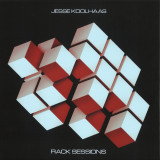
The history of electronic music has been defined by a handful of key synth manufacturers. Iconic brands, like Roland, Yamaha, Sequential Circuits and others, have pushed boundaries and blazed trails. But what gives each synthesizer its own unique sound? What makes one synthesizer sound distinctly different from another? And, what would happen if you only used one synthesizer to create a track? The major players of electronics are the building blocks for this music machine homage.
Rack Sessions takes one synth and gives it the spotlight, the instrument is the star. The style pursued corresponds to the unique sound of the chosen piece of equipment. Looming silver screen grandeur for “The D (Roland D-550)”, stargazing elegance with “Bell Hope (Yamaha TX81Z) or gentle rolling nostalgia for “MiR (Korg M1R)”, each work is the product of the tool selected. Beats take a backseat on the flip. Open highways and burgeoning dawns are conjured in “802 Nights (Yamaha TX802)” as the listener is transported to the expertly crafted tones of the 1980s. Koolhaas chooses his elements with subtlety, adding colour to his palette to create deeply evocative works. Attack ships cruise in the spatial “SOB (Oberheim Matrix-6)” before the stalker hunts the sodden streets of “MC202’s Act Like They Don’t Know (Roland MC-202)”.
The result is an album that is utterly distinctive. An immersive audio journey that guides the listener deep into the sounds of these very special synthsizers and the broad influences of this new talent.
The multi-faceted and multi-talented Alberto Melloni returns once more to Bordello A Parigi to unveil his musical multi-verse. “Lago Lungo”, the title piece, sets the tone for the quartet of tracks. Steady kicks thud next fizzing hi-hats as a rich and full-bodied piano melody takes hold, Melloni’s instrumentation creating sheer peaks and creamy amber plains. “Promised Land” offers a different audio topography. Key stabs are bolstered by incising beats as a late-night italo infused romp undulates from speaker cones. Underscoring the EP are influences from both disco and house, sun-kissed chords countered by textured percussion. These twin inspirations combine in the groove laden “Paradise Pie”. Clean notes are refracted in neon, undercurrents of acid lurking just below the vibrating hardwood floor. The mirrorball takes the limelight for the finale. Breathy, smokey vocals orbit funk dipped lines of “Only You”, warbling vocoders dancing under the glittering beams to the close.