(incl. Franco Cinelli & Dorian Paic remixes)
The first record from keepitgoing. is finally here, a panorama from Switzerland all the way to Chile in our world with no borders. An EP from Camilo Gil & ONE+1 with 2 originals backed up by two contrasting interpretations from Dorian Paic and Franco Cinelli, is how we kick off our labels musical journey in our vinyl only series.
The opening original track "Can Soleietes" offers a minimal, dubby twist with sweeping chords and atmospheric pad work with hints of skippy percussion layered throughout. On the second original "Opera House" this is where things begin to turn around a darker, acidic corner consisting of rolling acid baselines and spooky pad-work. It features various chords and stabs working in the background, while the prominent acid bass moves around creating some dark, trippy vibes on the listener.
Franco Cinelli reworks "Can Soleietes" perfectly with a minimalist approach to the track, offering a more mellow and groovy interpretation of the original. One that will get you lost in the cosmos with an immediate listen. The second remix from Dorian Paic is a more stripped back affair than it's original. It is another minimalist one that represents his sound truly, as a classy remixer for the EP alongside fellow family member Franco.
Join us as we begin our journey from every corner of the world, all connected without any borders between us. Like this, anyone can express themselves freely, and really create the way they want to without any judgement or limitations. We are a forever growing family who share the goal of loving and living music together.
Cerca:border one
CHICAMACOMICO is a record about loss. Over a six-month span at the end of 2019/beginning of 2020, I lost my grandmother, my mother and watched as the world fell into a 2+ year pandemic that decimated businesses, relationships and dreams. This is a record about dealing with those losses. My hope is these songs serve a salve for anyone else experiencing loss. A reminder that you are not the only one that lost a friend this year, or a parent, or a loved one. There's a special kind of hope that comes from that realization. I am not alone. I wrote this record in the February 2020 on the northern coast of Hatteras Island in a small beach town called Rodanthe. In the summer, this area is an extremely popular vacation destination packed with tourists, but in the winter, it was a desolate ghost town. The perfect backdrop for the record I was trying to write. Over the course of two weeks these songs would take shape and come to life, and it quickly became obvious that the overall theme would be dark. During my stay I realized that the town used to be named Chicamacomico until the locals changed it in the name of ease and progress. In that moment, I knew I had the name of my record. We enlisted Brad Cook (Bon Iver, Nathaniel Ratliffe, Waxahatchee) to produce the record and traveled to Sonic Ranch, a world-renowned recording complex tucked in the middle of a 1,700-acre pecan orchard, in the Texas border town of Tornillo. Over the course of ten days, we watched these songs go from simple folk ruminations into fully formed band arrangements. In my sixteen-year career I have never been prouder of a set of songs, lyrically or stylistically. The songs have weight, but they aren’t weighed down. It’s a sad record, that makes you feel good. It's a culmination of nearly two decades of work. Chicamacomico sounds like nothing we've ever done yet it sits comfortably amongst the rest of our catalog. My records are chronological observations and I feel like this record perfectly represents the highs and lows of the last few years. Themes: Loss, Death, Darkness, Suicide, Divorce, Losing A Child, Losing A Parent, Losing A Spouse, Addiction, Recovery
(feat. Claire Davis)
300 copies pressed
The A side was released back digitally in March. "Hope To See You Again" Which is an original song with Claire Davis on lead vocals
Better things is coming out digitally 15th July and it will be on a Ltd edition 45 vinyl. The Pre-Orders for the vinyl will be starting soon.
The B side is a killer version of her classic tune, "Better Things" The soulful vocals of Claire Davis are accompanied by jaunty horns and keyboards, and the cool groovebefits the positive lyrics ("I'm a better woman than I have been")
Introducing The HP's. This talent-studded Hamilton-based funk/soul collective is poised to make major moves with the release of their debut 45. The group is the brainchild of drummer/bandleader 'Parkside' Mike Renaud, the founder/owner of noted Canadian music company Hidden Pony Records & Management. A life-long fervent fan of funk and old school soul, Parkside has assembled a crack team of musicians and vocalists dedicated to his vision of breathing vibrant new life into these classic forms. Drawing inspiration from the likes of James Brown and The J.B.'s and Sharon Jones and The Dap Kings. The title pays tribute to Renaud's hometown, Hamilton, and The H.P.'s sound
honours The Hammer's core characteristics of rugged authenticity. Get ready to get Gritty!
— The HP's have partnered with UK based soul label LRK Records for the release of their latest single "Hope To See You Again", featuring Canadian soul singer and LRK alum Claire Davis
— "Hope To See You Again" arrives digitally March 31st, 2022 with the 45" expected summer 2022
— The 45" single will also include a cover of the Sharon Jones & The Dap Kings classic "Better Things"
The HP's.
To the Canadian music industry, 'Parkside' Mike Renaud is best known as the founder and owner of Hidden Pony
Records & Management, now widely recognized as one of Canada's premiere talent-development labels and artist
management companies. Past and present artists on Renaud's roster include Said The Whale, The Elwins, The Dirty
Nil, Hannah Georgas, Imaginary Cities, Jeremy Fisher, Odds, and many more.
Not many are aware that this popular industry power player actually got his start in music as a drummer in a '90s
Montreal soul/funk band called Parkside Jones (the source of his nickname). When he moved over to the business
side of music, beginning with top indie label Aquarius Records, Mike Renaud packed the kit away, launching himself
into the biz with full passion, commitment, and skill.
Mike has now resurrected his kit (after 20 years), honed his chops, and emerged as the driving force behind The
Renaud recalls the spark that reignited his love of playing drums: "The first time I played them in 20 years was at the
memorial for industry comrade Jon Box at The Opera House in Toronto. I was talked into playing with Chris Murphy
Sloan, Terra Lightfoot, and the Dirty Nil guys on a version of 'Handle With Care.'"
This renewed love affair would lead to Mike's vision for The H.P.'s. From his teenage years, his favourite musical
genre has been classic soul and funk, and he has an encyclopedic knowledge of these styles. Heartened to see the
growing international community building around these sounds, Mike decided to make his own creative contribution to
the form. He recruited musical and vocal collaborators from his hometown (plus a couple of Toronto imports) for the
project, and The H.P.'s were born.
The group name, The H.P.'s, pays homage to James Brown's legendary band, The J.B.'s, with these initials
referencing Hidden Pony. The album title is a tribute to Renaud's hometown, Hamilton, and The H.P.'s sound
honours The Hammer's core characteristics of grit and authenticity. Mike actually spent some time co-managing the
current J.B.'s.
The late Sharon Jones, a key inspiration for Renaud, is honoured via a killer version of her classic tune, "Better
Things." The soulful vocals of Claire Davis are accompanied by jaunty horns and keyboards, and the cool groove
befits the positive lyrics ("I'm a better woman than I have been").
Giving this cover extra resonance are the memorable encounters both Davis and Renaud had with Jones back in
2015. A documentary portrait of the soul great, Miss Sharon Jones!, had its world premiere at the Toronto
International Film Festival (TIFF), and Claire Davis was doing a house concert playing DapKings songs that night.
The band came across the party and jammed along, then, when one of the Dap Kings backup singers couldn't cross
the border, Claire got the call to fill in at Sharon Jones' headlining show at Hamilton's Supercrawl fest.
In a cool twist of fate, Mike Renaud was one of the organizers of that show, and was tasked with looking after
Sharon. The two bonded instantly and deeply, as Mike recalls. "While driving her to soundcheck, Sharon confided in
me that her cancer had returned. She didn't want anyone to know, as the documentary was about her conquering it,
and she didn't want people to be bummed out at the news. It was my 40th birthday that day, and Sharon actually
stopped her show to sing me Happy Birthday in a soulful way!"
Shakethehoof added "Hope To See you Again' to their playlist musicto/shake-a-hoof/the-hps-ft-claire-davis-hope-to-see-you-again-the-hoof-chats/
"BETTER THINGS" has gone straight into the UK Soul chart breakers at No 8
- A1: Black Summer
- A2: Here Ever After
- A3: Aquatic Mouth Dance
- A4: Not The One
- B1: Poster Child
- B2: The Great Apes
- B3: It's Only Natural
- B4: She's A Lover
- C1: These Are The Ways
- C2: Whatchu Thinkin
- C3: Bastards Of Light
- C4: White Braids & Pillow Chair
- C5: One Way Traffic
- D1: Veronica
- D2: Let 'Em Cry
- D3: The Heavy Wing
- D4: Tangelo
Red Hot Chili Peppers will unveil their new album and twelfth full-length offering, Unlimited Love Warner Records, on April 1, 2022. It notably marks their first recording with guitarist John Frusciante since 2006 and first with producer and longtime collaborator Rick Rubin since 2011. To herald Unlimited Love, the Los Angeles band just shared the first single and music video “Black Summer.”
“Our only goal is to get lost in the music. We (John, Anthony, Chad and Flea) spent thousands of hours, collectively and individually, honing our craft and showing up for one another, to make the best album we could. Our antennae attuned to the divine cosmos, we were just so damn grateful for the opportunity to be in a room together, and, once again, try to get better. Days, weeks and months spent listening to each other, composing, jamming freely, and arranging the fruit of those jams with great care and purpose. The sounds, rhythms, vibrations, words and melodies had us enrapt.
We yearn to shine a light in the world, to uplift, connect, and bring people together. Each of the songs on our new album UNLIMITED LOVE, is a facet of us, reflecting our view of the universe. This is our life’s mission. We work, focus, and prepare, so that when the biggest wave comes, we are ready to ride it. The ocean has gifted us a mighty wave and this record is the ride that is the sum of our lives. Thank you for listening, we hope you enjoy it.
ROCK OUT MOTHERFUCKERS!” - Anthony Kiedis, Flea, Chad Smith, John Frusciante
On lead track “Black Summer,” ethereal guitar underlines introspective lyrics as the rhythm unlocks a hypnotic drum groove highlighted by evocative bass. It quietly inhales only to exhale with a massive refrain, “It’s been a long time since I made a new friend, waiting on another black summer to end,” before a guitar solo echoes to the heavens and back.
Unlimited Love resumes a three-decade partnership with Rick Rubin Johnny Cash, Adele. Their creative collaboration spans legendary albums, including the diamond-selling Blood Sugar Sex Magik 1991, Californication 1999, By The Way 2002, and Stadium Arcadium 2006.
The interplay between the band borders on intergalactic once again—yet elevated to another stratosphere altogether. Unlimited Love represents the united spirit of four individual souls still fearlessly exploring the future of their eternal friendship and musical congregation.
This summer, Red Hot Chili Peppers will launch their first tour in support of Unlimited Love. They’ve invited a dynamic cohort of guests along for the ride at select dates, including Anderson.Paak & The Free Nationals and Thundercat and will be playing stadium dates in the UK in June 2022.
Like the many Banded Stilts that spread across the cover of her newest album, ‘Flood’, Stella
Donnelly is wading into uncharted territory. Here, she finds herself discovering who she is as
an artist among the flock, and how abundant one individual can be.
‘Flood’ is Donnelly’s record of this rediscovery: the product of months of risky experimentation,
hard moments of introspection, and a lot of moving around.
Donnelly’s early reflections on the relationship between the individual and the many can be
traced back to her time in the rainforests of Bellingen, where she took to birdwatching as both a
hobby and an escape in a border-restricted world. By paying closer attention to the natural
world around her, Donnelly recalls “I was able to lose that feeling of anyone’s reaction to me. I
forgot who I was as a musician, which was a humbling experience of just being; being my small
self.”
Reconnecting with this ‘small self’ allowed Donnelly to tap into creative wells she didn’t know
existed. Soon songs were coming to her in a way she could not control and over the coming
months, Donnelly accumulated 43 tracks as she moved out of Bellingen and around the
country, often finding herself displaced due to border restrictions and a tough rental market.
Though the writing of ‘Flood’ was an intensely personal undertaking, Donnelly still saw the
recording process as one of her most collaborative projects yet. Along with her band members,
co-producing the record beside Anna Laverty and Methyl Ethyl’s Jake Webb helped to foster
an important spontaneity in the studio. With Webb, Donnelly could “dig in” and discover a
“forward-leaning sound” she’d been searching for, while Laverty’s ability to “capture the piano”
and discern the “perfect take” allowed the songwriter to take risks, many of which have clearly
paid off.
Looking back at the Banded Stilt, Donnelly ultimately appreciates how when “seen in a crowd
they create an optical illusion, but on its own it’s this singular piece of art.” While each song in
‘Flood’ is a singular artwork unto itself, the collective shares all of Stella Donnelly in abundance:
her inner child, her nurturing self, her nightmare self; all of herself has gone into the making of
this record and, although it would take an ocean to fathom everything she feels, it’s well worth
diving in
Like the many Banded Stilts that spread across the cover of her newest album, ‘Flood’, Stella
Donnelly is wading into uncharted territory. Here, she finds herself discovering who she is as
an artist among the flock, and how abundant one individual can be.
‘Flood’ is Donnelly’s record of this rediscovery: the product of months of risky experimentation,
hard moments of introspection, and a lot of moving around.
Donnelly’s early reflections on the relationship between the individual and the many can be
traced back to her time in the rainforests of Bellingen, where she took to birdwatching as both a
hobby and an escape in a border-restricted world. By paying closer attention to the natural
world around her, Donnelly recalls “I was able to lose that feeling of anyone’s reaction to me. I
forgot who I was as a musician, which was a humbling experience of just being; being my small
self.”
Reconnecting with this ‘small self’ allowed Donnelly to tap into creative wells she didn’t know
existed. Soon songs were coming to her in a way she could not control and over the coming
months, Donnelly accumulated 43 tracks as she moved out of Bellingen and around the
country, often finding herself displaced due to border restrictions and a tough rental market.
Though the writing of ‘Flood’ was an intensely personal undertaking, Donnelly still saw the
recording process as one of her most collaborative projects yet. Along with her band members,
co-producing the record beside Anna Laverty and Methyl Ethyl’s Jake Webb helped to foster
an important spontaneity in the studio. With Webb, Donnelly could “dig in” and discover a
“forward-leaning sound” she’d been searching for, while Laverty’s ability to “capture the piano”
and discern the “perfect take” allowed the songwriter to take risks, many of which have clearly
paid off.
Looking back at the Banded Stilt, Donnelly ultimately appreciates how when “seen in a crowd
they create an optical illusion, but on its own it’s this singular piece of art.” While each song in
‘Flood’ is a singular artwork unto itself, the collective shares all of Stella Donnelly in abundance:
her inner child, her nurturing self, her nightmare self; all of herself has gone into the making of
this record and, although it would take an ocean to fathom everything she feels, it’s well worth
diving in
Like the many Banded Stilts that spread across the cover of her newest album, ‘Flood’, Stella
Donnelly is wading into uncharted territory. Here, she finds herself discovering who she is as
an artist among the flock, and how abundant one individual can be.
‘Flood’ is Donnelly’s record of this rediscovery: the product of months of risky experimentation,
hard moments of introspection, and a lot of moving around.
Donnelly’s early reflections on the relationship between the individual and the many can be
traced back to her time in the rainforests of Bellingen, where she took to birdwatching as both a
hobby and an escape in a border-restricted world. By paying closer attention to the natural
world around her, Donnelly recalls “I was able to lose that feeling of anyone’s reaction to me. I
forgot who I was as a musician, which was a humbling experience of just being; being my small
self.”
Reconnecting with this ‘small self’ allowed Donnelly to tap into creative wells she didn’t know
existed. Soon songs were coming to her in a way she could not control and over the coming
months, Donnelly accumulated 43 tracks as she moved out of Bellingen and around the
country, often finding herself displaced due to border restrictions and a tough rental market.
Though the writing of ‘Flood’ was an intensely personal undertaking, Donnelly still saw the
recording process as one of her most collaborative projects yet. Along with her band members,
co-producing the record beside Anna Laverty and Methyl Ethyl’s Jake Webb helped to foster
an important spontaneity in the studio. With Webb, Donnelly could “dig in” and discover a
“forward-leaning sound” she’d been searching for, while Laverty’s ability to “capture the piano”
and discern the “perfect take” allowed the songwriter to take risks, many of which have clearly
paid off.
Looking back at the Banded Stilt, Donnelly ultimately appreciates how when “seen in a crowd
they create an optical illusion, but on its own it’s this singular piece of art.” While each song in
‘Flood’ is a singular artwork unto itself, the collective shares all of Stella Donnelly in abundance:
her inner child, her nurturing self, her nightmare self; all of herself has gone into the making of
this record and, although it would take an ocean to fathom everything she feels, it’s well worth
diving in
Paul Wise aka Placid is the driving force behind ‘We’re Going Deep’ – a thriving online community and record label that’s showing no signs of slowing down as we pop, dip and spin into the spring season. As a label owner, Paul’s mission couldn’t be clearer - releasing new music for heads of all persuasions. Fresh cuts aimed squarely at the dance floor, your front room or even just the headphones. Rather than staying too hung up on the past, he continues to focus on serving up the best in new Acid, Electro, Techno, Deep House alongside scintillating slices of Downtempo music.
Sticking to the trusted format of 4 superlative cuts from equally talented producers, the quality and talent on show does not disappoint on WGD 007. Starting the dance with 303 maestro and label legend Tin Man, A1 “I Said Acid” is a tantalising twist on the classic combination of a Roland TR-707 and SH-101. As a metronomic pulsating kick carves out a squarely hewn path, slow opening filtered lead and hauntingly repetitive “Acid” vocals exert maximal pressure to create a sheer moment of joy. Balanced out by the dreamy atmospherics of A2 “I’ll Meet You On The Dancefloor”. UK Deep House supremo Rai Scott exerts her perfected knowhow: blending organically tinged percussion with profound melodic touches that meander across the borderlines of your consciousness.
On B1 “Necessary Order”, the machine mastery of Sound Synthesis collides in perfect harmony as Keith Farrugia demonstrates his deft turns of the dials that are becoming more in demand. A sprinkle of stargazing soul is woven around light touch acidic tweaks and snappy drums, echoing the twinkling embers of the cosmos. Not to be outdone, Dutch born German bred producer Roger Van Lunteren takes control with the final slice on B2 “Le Dee Trois Trio Prends Trois”. A wince inducing, sawtooth heavy jam that should not be taken lightly. As the saying goes, this one’s only for headstrong.
For genre-bending band Whiskey Myers, 2019’s self-titled and self-produced album offered a watershed moment. With Rolling Stone raving that the “irresistible” album was “the record the band was poised to make” while declaring them “the new torch bearers for Southern music” in a story titled “How Whiskey Myers Won Over Mick Jagger and Made the Album of Their Career;” Billboard and No Depression naming the album to best-of-the-year lists; 41,000 first week album sales; and the project debuting atop both the Country and Americana album charts (as well as at No. 2 on the Rock charts, behind only a re-release of The Beatles’ Abbey Road), the band celebrated mainstream success a decade in the making. Now, after spending 21 days isolated at the 2,300-acre Sonic Ranch studio deep in the heart of their native Texas, just miles from the U.S./Mexico border, the Gold-certified renegades have doubled down on what they do best: sharing honest truths with no-holds-barred instrumentation, letting the self-produced music speak for itself. Yet with Tornillo, named for the border town that is home to the pecan orchard-filled recording complex and set for release on July 29 via their own Wiggy Thump Records with distribution by Thirty Tigers, the six-piece band has taken their solid decade-plus foundation and pushed themself to further explore new sonic landscapes. “It’s going to have a little bit different sound,” lead singer Cody Cannon shared recently with Outsider. “It’s still Whiskey Myers at its core, but it’s kind of fresh… We did a lot of bass and horns on this one, which is something we’ve always wanted to do. Just being fans of all that old music and Motown stuff, and a lot of the stuff coming out of Muscle Shoals, old rock and roll. “We’re going to bend genre even more, I think, with this new record,” he continued. “It’s all over the place. But that’s fun, right? I hate the whole ‘Put it in a box. You gotta be this.’ … That’s not art to me. I love the idea of just doing, really, whatever you feel. It comes out a certain way because that’s just how it comes out. Whiskey Myers never really tried to be a certain way. It’s just how we are. So I think that’s really the whole thing about music, or the beauty about music; it’s just that freedom to create.” Tornillo as a whole does exactly that, drawing as much inspiration from Nirvana as from Waylon Jennings – even adding the legendary McCrary Sisters’ gospel influence to the project on background vocals. With Cannon leading the way on songwriting, the album also features writes from lead guitarist John Jeffers and fellow bandmembers Jamey Gleaves and Tony Kent, as well as rising singer/songwriter Aaron Raitiere (Anderson East, Oak Ridge Boys, A Star is Born).
Montréal singer/songwriter Laroie with an EP of low key radio hits produced by Gene Tellem with Gabriel Rei and Robert Robert.
‘Seductive sadness. Powerful vulnerability. Precise yet irresistible vocals. A few words to describe Laroie as she steps forward in full possession of her means, following up on her debut and namesake EP released in August 2020, and on the recent singles "Can't Let Go" and "One More". Here she is with Speed of Life, an extended play destined to be absorbed and listened to in one sitting. Funny how it sounds both familiar — you feel like you’ve known these songs your whole life — and brand new, all at once. In this nostalgic and emotional territory, standing at the borders of her influences, Laroie's talent shines through.
Skilfully navigating the electro-pop sonic palette, the artist crafts a comfortable, soothing canvas where dance, soul, and R&B from the late 90s and early 2000 also hop into the mix. From the bewitching slow garage "Elevate" to the cathartic and luminous "Can't Let Go", and through the trip-hop infused "One More", the very danceable "A Place on Earth", "Moonlight", reminiscent of the best of TLC, Brandy and Monica, and the title track’s addictive vocal melody, Speed of Life, just like a silky everyday soundtrack, is enjoyable on repeat.’
White & Black Splatter Vinyl[40,04 €]
James 'Perturbator' Kent and Cult of Luna are the masters of their respective worlds. Over the last decade, the French maestro has become the most expectation-breaking name in synthwave, transcending its '80s video game aesthetic with metal and post-punk.
Meanwhile, the Swedish sextet have affirmed themselves as post-metal's biggest stars. Seismic riffs, earth-quaking growls and brave collaborations with everyone from Julie Christmas to Colin Stetson have ensured they're as blistering as they are forward-thinking.
Eclecticism and violence are married in Final Light: Perturbator's team-up with Cult of Luna singer/guitarist Johannes Persson. The pair's self-titled debut album is the perfect conglomerate between seemingly incompatible sounds.
On its opening track, the insidious "Nothing Will Bear Your Name", synths bubble to construct an arresting opening half. Then, release. Johannes' roar strikes and guitar chords boom as computerised beats anchor the chaos.
"It Came with the Water" echoes Cult of Luna's 2013 titan Vertikal, invoking images of an urban dystopia as its deep guitar melody grinds beneath sci-fi electronica. The title track's distorted EDM beats, on the other hand, are all James 'Perturbator' Kent, capable of invigorating the seediest of underground nightclubs. Both parties are clearly playing to their strengths - but for them to do so in such perfect harmony is, in itself, a genre-demolishing feat.
Lyrically, Final Light seethes with anger. "There was so much that I was so fucking pissed about," Johannes explains. "Some of my friends were dealing with a poisonous person: a narcissistic, crazy person. I was walking around full of anger and hate, so I think that came out in those lyrics."
The tandem's story began in 2019. Walter Hoeijmakers, the artistic director of the Netherlands' lauded Roadburn festival, approached James 'Perturbator' Kent with the opportunity of doing a commissioned piece with any musician of his choosing. As soon as the pair began work on their boundary-decimating songs, they knew that they had to be immortalised as an album.
"It was immediate," states Perturbator. "It's a project that I really want to share; it's not only the fruit of a collaboration between me and one of my favourite musicians, but also very unique and once-in-a-lifetime."
They wrote and recorded together in Paris before the start of the pandemic. Covid, which postponed the Roadburn festival at which the band would have debuted, gave them time to perfect what they'd crafted.
Johannes recorded additional vocals at Cult of Luna's resident studio in Umeå, Sweden, fully capturing the rage of his apocalyptically harsh voice.
Borders were built to be shattered. This is the sound of their destruction. Single-handedly, Final Light have birthed a new, bleak breed of experimental metal.
Black Vinyl[34,03 €]
James 'Perturbator' Kent and Cult of Luna are the masters of their respective worlds. Over the last decade, the French maestro has become the most expectation-breaking name in synthwave, transcending its '80s video game aesthetic with metal and post-punk.
Meanwhile, the Swedish sextet have affirmed themselves as post-metal's biggest stars. Seismic riffs, earth-quaking growls and brave collaborations with everyone from Julie Christmas to Colin Stetson have ensured they're as blistering as they are forward-thinking.
Eclecticism and violence are married in Final Light: Perturbator's team-up with Cult of Luna singer/guitarist Johannes Persson. The pair's self-titled debut album is the perfect conglomerate between seemingly incompatible sounds.
On its opening track, the insidious "Nothing Will Bear Your Name", synths bubble to construct an arresting opening half. Then, release. Johannes' roar strikes and guitar chords boom as computerised beats anchor the chaos.
"It Came with the Water" echoes Cult of Luna's 2013 titan Vertikal, invoking images of an urban dystopia as its deep guitar melody grinds beneath sci-fi electronica. The title track's distorted EDM beats, on the other hand, are all James 'Perturbator' Kent, capable of invigorating the seediest of underground nightclubs. Both parties are clearly playing to their strengths - but for them to do so in such perfect harmony is, in itself, a genre-demolishing feat.
Lyrically, Final Light seethes with anger. "There was so much that I was so fucking pissed about," Johannes explains. "Some of my friends were dealing with a poisonous person: a narcissistic, crazy person. I was walking around full of anger and hate, so I think that came out in those lyrics."
The tandem's story began in 2019. Walter Hoeijmakers, the artistic director of the Netherlands' lauded Roadburn festival, approached James 'Perturbator' Kent with the opportunity of doing a commissioned piece with any musician of his choosing. As soon as the pair began work on their boundary-decimating songs, they knew that they had to be immortalised as an album.
"It was immediate," states Perturbator. "It's a project that I really want to share; it's not only the fruit of a collaboration between me and one of my favourite musicians, but also very unique and once-in-a-lifetime."
They wrote and recorded together in Paris before the start of the pandemic. Covid, which postponed the Roadburn festival at which the band would have debuted, gave them time to perfect what they'd crafted.
Johannes recorded additional vocals at Cult of Luna's resident studio in Umeå, Sweden, fully capturing the rage of his apocalyptically harsh voice.
Borders were built to be shattered. This is the sound of their destruction. Single-handedly, Final Light have birthed a new, bleak breed of experimental metal.
8.2[21,64 €]
After releasing her sophomore album Inner Song in the midst of the pandemic, Kelly Lee Owens was faced with the sudden realisation that her world tour could no longer go ahead. Keen to make use of this untapped creative energy, she made the spontaneous decision to go to Oslo instead. There was no overarching plan, it was simply a change of scenery and a chance for some undisturbed studio time. It just so happened that her flight from London was the last before borders were closed once again. The blank page project was underway.
Arriving to snowglobe conditions and sub-zero temperatures, she began spending time in the studio with Lasse Marhaug. An esteemed avant-noise artist, Marhaug envisioned making music that would fall loosely in line with Throbbing Gristle. Kelly, on the other hand, had planned to create something inspired by Enya, an artist who has had an enduring impact on her creative being. They met each other halfway, pairing tough, industrial sounds with ethereal Celtic mysticism, and creating music that ebbs and flows between tension and release.
One month later, Kelly called her label to tell them she had created something of an outlier, her ‘eighth album’.
After releasing her sophomore album Inner Song in the midst of the pandemic, Kelly Lee Owens was faced with the sudden realisation that her world tour could no longer go ahead. Keen to make use of this untapped creative energy, she made the spontaneous decision to go to Oslo instead. There was no overarching plan, it was simply a change of scenery and a chance for some undisturbed studio time. It just so happened that her flight from London was the last before borders were closed once again. The blank page project was underway. Arriving to snowglobe conditions and sub-zero temperatures, she began spending time in the studio with Lasse Marhaug. An esteemed avant-noise artist, Marhaug envisioned making music that would fall loosely in line with Throbbing Gristle. Kelly, on the other hand, had planned to create something inspired by Enya, an artist who has had an enduring impact on her creative being. They met each other halfway, pairing tough, industrial sounds with ethereal celtic mysticism, and creating music that ebbs and flows between tension and release. One month later, Kelly called her label to tell them she had created something of an outlier, her `eighth album'.
"“Music is a borderless language”
This is our gargantuan motto at Fauve Records.
With this mission statement arose a new project called ? WEST & ? EAST.
Born from the desire to link the world of the West & the East. The idea was to ask two artist/band from opposite ends of the world to collaborate on a split EP, with one original track each and finally to remix each others’ work.
For Volume 2, it is with a honour that we present you to the Russian duo Radial Gaze en tête-à-tête with the Japanese Sensei crew called Que Sakamoto+NT. The second edition is filled with sleek baselines and gloomy atmospheres to make dance-floors sweat."
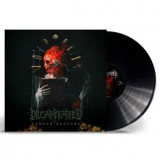
Across eight studio albums, DECAPITATED grew from the adolescent dream of teenagers from a small Central European town to one of the leaders of the metal genre. Each successive album further expands the band’s sound with genre-bending authenticity and integrity. As Metal Injection rightfully observed, “any self-respecting death metalhead knows the name well.”
DECAPITATED’s music is a weapon forged by four young men from a historic medieval-fortified town in Poland, which catapulted them to the top of a worldwide subculture. Like a rose in the devil’s garden, the DECAPITATED story builds triumph from tragedy. The gleeful grotesquery of extreme metal imagery and rifftastic bludgeoning beckons listeners to uncover broader truths.Upon the release of 2017’s Anticult, Metal Hammer declared DECAPITATED “a serious successor to the likes of Pantera and Lamb Of God – a band who can draw new legions into the metal world as its new champions.” Their diverse follow-up, 2022’s Cancer Culture, delivers on that promise.
Instantly recognizable devastation and deceptively sinister hooks abound. Freshly minted DECAPITATED anthems like “Last Supper,” “Hello Death,” “Just Cigarette,” “No Cure,” “Iconoclast,” and “Cancer Culture” shimmer with sonically sharp production and unrelenting bombast. There’s also a newly increased emphasis on melody, even venturing into darkly romantic territory. Wacław "Vogg" Kiełtyka (guitar), Rafał "Rasta" Piotrowski (vocals), Paweł Pasek (bass), and James Stewart (drums) are at the top of their game, delivering the goods at peak performance. Jinjer vocalist Tatiana Shmayluk and Machine Head frontman Robb Flynn make guest appearances.
Set on the descending plains of a mountain range amid a dense forest, Krosno boasts a 14th-century Gothic church, a Subcarpathian museum, and stunning artisan glassware. In this Polish town, teenage music student Wacław "Vogg" Kiełtyka discovered records from bands like Morbid Angel, Cannibal Corpse, Metallica, and Machine Head. The guitarist and his younger brother, drummer Witold “Vitek” Kiełtyka, cofounded DECAPITATED in 1996, inspired by a wide range of technical death, blackened thrash, and local heroes, like KAT and the world-renowned Vader. Death and black metal reigned supreme in the Polish scene of the 1990s, where Behemoth originated as well. In fact, a Vader song called “Decapitated Saints” inspired the band’s moniker.
The organic musical chemistry between the Kiełtykas was akin to the brotherly connectivity and vibe driving Pantera, Gojira, and the classic era of Sepultura. In 2006, Kerrang! praised the first three DECAPITATED albums - Winds of Creation (2000), Nihility (2002), and The Negation (2004) – as “superbly conceived and executed eruptions of technical brilliance and razor-sharp songwriting that turned these youthful Poles into one of the genre’s most widely respected bands.” That year’s Organic Hallucinosis further perfected Vogg’s penchant for blending extremity with catchy hooks.
The rule-breaking ferocity and invention of the first four albums reinvigorated death metal, as DECAPITATED inspired a new generation of bands who followed suit. Sadly, this era came to a shocking end in late 2007. While touring Russia, the band’s bus collided with a large truck near the border with Belarus. Both Vitak and then-singer Adrian “Covan” Kowanek sustained severe head injuries. Tragically, Vitak passed away in a Russian hospital a few days later. He was just 23.Vogg summoned the courage to continue, in honor of his brother and what they created, and returned with a new incarnation of DECAPITATED and the fiercely adventurous comeback album, Carnival is Forever (2011) featuring new vocalist Rafał "Rasta" Piotrowski. Blood Mantra (2014) introduced bassist, Paweł Pasek. Blabbermouth declared it “perhaps the most poised and gutsy” DECAPITATED album, adding “its courageous bends make it a turbulent but pleasurable ride.”
Cancer Culture sounds brilliant, modern, and tasty. “There is no place for any fake, plastic, bullshit drum machine or anything like that,” Vogg insists. “It’s all organic, pure, and clear, showing the true face of the band. Vogg and company entrusted the Cancer Culture mix to David Castillo at Sweden’s Fascination Street Studios / Studio Gröndahl (Sepultura, Carcass, Opeth, Katatonia), and legendary American producer Ted Jensen (Metallica, Slipknot, Pantera, Machine Head, Korn).
The devoted supporters who traveled to see DECAPITATED on international tours with the likes of Lamb Of God, Meshuggah, Soulfly, Fear Factory, and Suffocation over the years will recognize the ever-present pummeling backbone. Longtime fans and newcomers alike will connect to the variety of atmospheric depth throughout Cancer Culture’s ten boundlessly energetic and creative tracks.
“If you told me 25 years ago, in my neighborhood in the South of Poland, that I would be in Machine Head, sharing riffs with Robb Flynn,” Vogg marvels. “It’s simply incredible. It means that everything is possible in your life. That gives me the faith to believe that I can achieve even more in my career. The dreams we have when we are kids, things we can barely imagine, can happen.” Flynn contributes a hauntingly beautiful vocal to the Cancer Culture track “Iconoclast.” “Clean vocal singing is a really new thing in DECAPITATED,” Vogg notes. “It’s really unique and amazing.”
Driven by Vogg’s passion and integrity, the dual emphasis on creative invention and technical prowess maintains DECAPITATED’s stature as genre-leaders in 2022 and beyond. The band’s supporters continually demonstrate confidence and absolute certainty DECAPITATED will deliver.
Across eight studio albums, DECAPITATED grew from the adolescent dream of teenagers from a small Central European town to one of the leaders of the metal genre. Each successive album further expands the band’s sound with genre-bending authenticity and integrity. As Metal Injection rightfully observed, “any self-respecting death metalhead knows the name well.”
DECAPITATED’s music is a weapon forged by four young men from a historic medieval-fortified town in Poland, which catapulted them to the top of a worldwide subculture. Like a rose in the devil’s garden, the DECAPITATED story builds triumph from tragedy. The gleeful grotesquery of extreme metal imagery and rifftastic bludgeoning beckons listeners to uncover broader truths.Upon the release of 2017’s Anticult, Metal Hammer declared DECAPITATED “a serious successor to the likes of Pantera and Lamb Of God – a band who can draw new legions into the metal world as its new champions.” Their diverse follow-up, 2022’s Cancer Culture, delivers on that promise.
Instantly recognizable devastation and deceptively sinister hooks abound. Freshly minted DECAPITATED anthems like “Last Supper,” “Hello Death,” “Just Cigarette,” “No Cure,” “Iconoclast,” and “Cancer Culture” shimmer with sonically sharp production and unrelenting bombast. There’s also a newly increased emphasis on melody, even venturing into darkly romantic territory. Wacław "Vogg" Kiełtyka (guitar), Rafał "Rasta" Piotrowski (vocals), Paweł Pasek (bass), and James Stewart (drums) are at the top of their game, delivering the goods at peak performance. Jinjer vocalist Tatiana Shmayluk and Machine Head frontman Robb Flynn make guest appearances.
Set on the descending plains of a mountain range amid a dense forest, Krosno boasts a 14th-century Gothic church, a Subcarpathian museum, and stunning artisan glassware. In this Polish town, teenage music student Wacław "Vogg" Kiełtyka discovered records from bands like Morbid Angel, Cannibal Corpse, Metallica, and Machine Head. The guitarist and his younger brother, drummer Witold “Vitek” Kiełtyka, cofounded DECAPITATED in 1996, inspired by a wide range of technical death, blackened thrash, and local heroes, like KAT and the world-renowned Vader. Death and black metal reigned supreme in the Polish scene of the 1990s, where Behemoth originated as well. In fact, a Vader song called “Decapitated Saints” inspired the band’s moniker.
The organic musical chemistry between the Kiełtykas was akin to the brotherly connectivity and vibe driving Pantera, Gojira, and the classic era of Sepultura. In 2006, Kerrang! praised the first three DECAPITATED albums - Winds of Creation (2000), Nihility (2002), and The Negation (2004) – as “superbly conceived and executed eruptions of technical brilliance and razor-sharp songwriting that turned these youthful Poles into one of the genre’s most widely respected bands.” That year’s Organic Hallucinosis further perfected Vogg’s penchant for blending extremity with catchy hooks.
The rule-breaking ferocity and invention of the first four albums reinvigorated death metal, as DECAPITATED inspired a new generation of bands who followed suit. Sadly, this era came to a shocking end in late 2007. While touring Russia, the band’s bus collided with a large truck near the border with Belarus. Both Vitak and then-singer Adrian “Covan” Kowanek sustained severe head injuries. Tragically, Vitak passed away in a Russian hospital a few days later. He was just 23.Vogg summoned the courage to continue, in honor of his brother and what they created, and returned with a new incarnation of DECAPITATED and the fiercely adventurous comeback album, Carnival is Forever (2011) featuring new vocalist Rafał "Rasta" Piotrowski. Blood Mantra (2014) introduced bassist, Paweł Pasek. Blabbermouth declared it “perhaps the most poised and gutsy” DECAPITATED album, adding “its courageous bends make it a turbulent but pleasurable ride.”
Cancer Culture sounds brilliant, modern, and tasty. “There is no place for any fake, plastic, bullshit drum machine or anything like that,” Vogg insists. “It’s all organic, pure, and clear, showing the true face of the band. Vogg and company entrusted the Cancer Culture mix to David Castillo at Sweden’s Fascination Street Studios / Studio Gröndahl (Sepultura, Carcass, Opeth, Katatonia), and legendary American producer Ted Jensen (Metallica, Slipknot, Pantera, Machine Head, Korn).
The devoted supporters who traveled to see DECAPITATED on international tours with the likes of Lamb Of God, Meshuggah, Soulfly, Fear Factory, and Suffocation over the years will recognize the ever-present pummeling backbone. Longtime fans and newcomers alike will connect to the variety of atmospheric depth throughout Cancer Culture’s ten boundlessly energetic and creative tracks.
“If you told me 25 years ago, in my neighborhood in the South of Poland, that I would be in Machine Head, sharing riffs with Robb Flynn,” Vogg marvels. “It’s simply incredible. It means that everything is possible in your life. That gives me the faith to believe that I can achieve even more in my career. The dreams we have when we are kids, things we can barely imagine, can happen.” Flynn contributes a hauntingly beautiful vocal to the Cancer Culture track “Iconoclast.” “Clean vocal singing is a really new thing in DECAPITATED,” Vogg notes. “It’s really unique and amazing.”
Driven by Vogg’s passion and integrity, the dual emphasis on creative invention and technical prowess maintains DECAPITATED’s stature as genre-leaders in 2022 and beyond. The band’s supporters continually demonstrate confidence and absolute certainty DECAPITATED will deliver.
- A1: Rise
- A2: Weary
- A3: The Glory Is In You (Interlude)
- A4: Cranes In The Sky
- A5: Dad Was Mad (Interlude)
- B1: Mad (Feat Lil Wayne)
- B2: Don't You Wait
- B3: Tina Taught Me (Interlude)
- B4: Don't Touch My Hair (Feat Sampha)
- C1: This Moment (Interlude)
- C2: Where Do We Go
- C3: For Us By Us (Interlude)
- C4: Fubu (Feat The Dream & Bj The Chicago Kid)
- C5: Borderline (An Ode To Self Care) (An Ode To Self Care)
- D1: I Got So Much Magic, You Can Have It (Feat Kelly Rowland & Nia Andrews - Interlude)
- D2: Junie
- D3: No Limits (Interlude)
- D4: Don't Wish Me Well
- D5: Pedestals (Interlude)
- D6: Scales (Feat Kelela)
- D7: Closing The Chosen Ones
Third studio album by American singer/songwriter/producer. Originally released on September 30th 2016. In a statement Solange described the album as "a project on identity, empowerment, independence, grief and healing." Features the iconic record 'Cranes In The Sky' which won the Grammy for Best R&B Performance. Exploring prejudice and blackness, the record is thankfully the journal we don't get the time to write, the conversations we don’t get to have and the exclamations we’re too tired to repeat.
2022 Repress On Elephantine, Cairo-based Maurice Louca guides a 12-piece ensemble through a 38-minute masterwork that might best be described as panoramic. Elements of free improvisation, Sun Ra's cosmic jazz, gorgeous Arabic melody, trancelike African and Yemeni music and minimalism meet in his wholly unique compositional vision. Louca also makes vital contributions on guitar and piano, and inspires stirring performances from a global lineup.
One of the most gifted, prolific and adventurous figures on Egypt's thriving experimental arts scene, Louca has in recent years garnered a global reputation through two previous solo albums and an expanding, evolving lineup of genre-defying collaborations. The Wire called his 2014 sophomore solo effort, Salute the Parrot, "remarkable music-dense, driven and splashed with colour." In 2017, the self-titled debut by Lekhfa, the trio of Louca and vocalists Maryam Saleh and Tamer Abu Ghazaleh, was praised as an "edgy triumph" in The Guardian and picked by BBC Radio 3's Late Junction as one of the very best 12 albums of 2017.
For Louca, 36, Elephantine serves as both the pinnacle of his wide-ranging experience and a bold next step in his development as a composer, arranger and bandleader. The celebrated Egyptian visual artist Maha Maamoun has created the album cover art, following her contribution to Salute the Parrot. "There was a blessed thing about the process of making this record," Louca says of the sessions, held last year in Stockholm and featuring the leader on guitar and piano. "The dynamic between us musically but also as people ...What these musicians delivered was really more than I could ask for, Everyone played their hearts out on this record."
The music-from its pensive lulls through its stretches of hard-grooving hypnosis and moments of avant-jazz catharsis-testifies to that rapport. Best absorbed as a continuous performance, Elephantine's six individually named tracks nonetheless present striking self-contained landscapes. "The Leper" entrances through a deft use of repetition that Louca gleaned from cosmic jazz, African and Yemeni music and other transcendental modal traditions. (Those who've followed Louca's work might be reminded of the Dwarfs of East Agouza, his mesmeric unit with Shalabi and Sun City Girls' Alan Bishop.)
"Laika" manages to evoke the minimalists, though on the combustible terms of '60s and '70s free jazz; "One More for the Gutter," on which Louca ingeniously pits one half of his ensemble against the other, albeit in a synergistic way, mines similarly fiery terrain. "The Palm of a Ghost" distills the band to a Cairo-rooted core, featuring stirring spontaneous melodies from oud player Natik Awayez, violinist Ayman Asfour and vocalist Nadah El Shazly. The album's title track follows, and it too blurs the border between composition and improvisation with gorgeously atmospheric results. "Al Khawaga," with its colossal ensemble riffs, beautifully dirty swing and impassioned blowing, is an ideal finale.
- 01-01: Hail (Ede _ Vietnam)
- 01-02: Celebrating The Festival (Cham Hroi _ Vietnam)
- 01-03: Funeral Music (Krung _ Punong _ Cambodia)
- 01-04: Buffalo Sacrifice (Jarai _ Cambodia)
- 01-05: Kids Routine After School (Krung _ Cambodia)
- 01-06: Duet Gongs (Coho _ Vietnam)
- 01-07: Funeral Music (Churu _ Cambodia)
- 01-08: Ghet Khil (Ede _ Vietnam)
- 01-09: Offering To The Spirits (Punong _ Cambodia)
- 01-10: Sre Don (Ma _ Vietnam)
- 01-11: Preparation For The Buffalo Sacrifice (Vietnam)
- 01-12: Chasing Birds To Protect The Rice Fields (Bahnar _ Vietnam)
- 01-13: Cutting The Bamboo (Mnong Prang _ Vietnam)
- 01-14: Song For A Dead Man (Ede-Bih _ Vietnam)
- 01-15: Harvesting (Mnong _ Vietnam)
- 01-16: Funeral Music (Se Dang _ Vietnam)
- 01-17: Harvesting (Tampuan _ Cambodia)
- 01-18: Buffalo Sacrifice (Jarai _ Vietnam) 01-19. Melody For Funeral Music By Mouth (Tampuan _ Cambodia)
- 01-19: Melody For Funeral Music By Mouth (Tampuan _ Cambodia)
- 01-20: Threshing (Ede-Bih _ Vietnam)
- 01-21: Hail (Ede _ Vietnam)
- 02-01: Rooster Dance (Isneg Grop _ Luzon Philippines)
- 02-02: Music For Funeral Ceremony (Sumba _ Sumba Island Indonesia)
- 02-03: Hedung Dance (Lamaholot _ Solor Island Indonesia)
- 02-04: Gong Music Ensemble (Kenyah _ Borneo Indonesia)
- 02-05: Manang Sirang Ritual (Iban _ Borneo Indonesia)
- 02-06: Tau Todu (Sumba _ Sumba Island Indonesia)
- 02-07: Soka Dance (Lamaholot _ Solor Island Indonesia)
- 02-08: Harvesting (Pagaddot) (Ifugao _ Luzon Philippines)
- 02-09: Tadok (Kalinga _ Luzon Philippines)
- 02-10: Harvesting (Kandingngang) (Sumba _ Sumba Island Indonesia)
- 02-11: Eagle Dance (Turayan) (Kankanaey _ Luzon Philippines)
- 02-12: Cole Oha Ritual (Lamaholot _ Adonara Island Indonesia)
- 02-13: Ritual For Calling Back Spirits (Bissu _ Saluwesi Indonesia)
- 02-14: Ambience_ Rambu Solo (Toraja _ Saluwesi Indonesia)
Gongs have played an integral role in the mythogeography of Asia. This is not music that aligns with national borders or ideas of homogenous populations, let alone racial stereotypes and exotic clichés. What connects all of these tracks is a simultaneous feeling of entrancement and social cohesion. Communal and collaborative, its form is hypnotically repetitious, melodies and rhythms spread out among the players using the technique of hocketing in which a flowing line is distributed among all the musicians. The effect is mesmerising, immediately intoxicating to anybody who loves Chicago footwork, free improvisation, Sun Ra or young hip hop producer Jetsonmade. The music is simple yet mysterious and enveloping, a sound world in which to disappear. A theory exists but this is not explained. - David Toop (extracts from the liner notes)
This project, Massif and Archipelago, is a field recording project initiated by Japanese sound artist Yasuhiro Morinaga, documenting traditional gong music by different Southeast Asian ethnic groups. The project aimed to examine the impact of the natural and social environment on the gong music culture of Southeast Asia. During the project, he visited over 50 different ethnic groups and made hundreds of recordings. This album presents a selection of the unique gong music from different ethnic minorities. The selected music has been divided into two broad sections: one focussing on the music from the Massif, i.e. mainland Southeast Asia (Central Highland of Vietnam and Northeast Cambodia), the other on music from the Archipelago, maritime Southeast Asia (the Luzon Islands of the Philippines, Borneo, Sulawesi, and the Flores Islands of Indonesia).
After the Bend is the second album from Louisville based Flanger Magazine, and the follow up to FM’s 2018 debut, Breslin. Whereas Breslin was the solo creation of Christopher Bush, an album noted for “an astute synthesis of ‘library music’ and solo acoustic guitar,” and “a seamless blend into the uncluttered and airier side of classic 1970’s giallo,” After the Bend is an ensemble affair. An ecosystem, a perfect mutualism bodies forth—of strings, outdoor recordings, electronics, reeds, and percussion—featuring new FM players Anna Krippenstapel (Frekons (Freakwater + Mekons), The Other Years), Jim Marlowe (Equipment Pointed Ankh, Tropical Trash, Sapat), Eric Lanham and Benjamin Zoeller (both from Caboladies). The various combos perform with both a distinguished efficacy and unhurried Sunday drift—charged and beautiful, pulsating and pleasing. The production is subtle and tasteful. Mutating past the old saws of bounded individualism, a strange form of tentacular life accrues, cyborgian-fungral-tangles of the more-than-human variety.
Robert Beatty’s cover art of otherworldly and interconnected river-scape gradients, coupled with song titles like “Reservoir,” “Falls Fountain Removed,” and “Sympathies for the River,” cue and clue the listener toward a river as a singular multitude analogue for the album. Interstitial gaps, clearings and openings give rise and merge into an accumulated flow from the tributaries of spirited improvisational performance, palimpsestic song cycles, and high fidelity studio production. The composite sound-image of After the Bend refuses to put both oars down into any one of the eddies of the folk, sound, chamber, electronic, or jazz idioms, and instead glides along the currents found within the slipstreams between.
Gathering samples, a River Doctor Limnologist inspecting the properties of After the Bend might note the specter of Leroy Jenkin’s free-violin heat-light deepin the water’s thermal stratification. Or mortgage the late-Maestro’s time with Gruppo di Improvvisazione Nuova Consonanza to pay down the growing river heat budget. Or take one’s dirty buckets to the banks of the 19th laundromat where Walt Dickerson plays his vibraphone parts from Divine Gemini with dowsing rods. Or excavate the bedrock in the drainage basin, noting skeletal remains of a Shostakovich string quartet attempting to tune up a Kentucky Fiddle’s subsequent influence on the chemical composition of the water. Or consult the historical revisionist reenactment troupe’s episode of Fishing with John (Fahey) in which Codona, The Sea Ensemble and Nuno Canavarro guest host as their fleet of paddle boats churn river water into a regal lager, and all the fish get drunk in their quest for the leaner enamel Hosianna Mantra GPS coordinates of the Fattened Herb.
Bush and Marlowe recorded and produced the album at End of an Ear Studios, located in the Portland neighborhood, in the west end of the city of Louisville, bordering the Ohio River, between Kentucky’s Upper South and the Indiana’s Midwest, during the first year of the global pandemic, amidst the planet’s sixth great extinction event. As good a time to be alive as any other. (by Kris Abplanalp)
This acoustic body experiment will intoxicate your ears and veins. “Ectomorphin” by Chris Baumann is a straight confession for athletic acid underground – as the artist himself describes his style: “The border between timeless old school quality and new school upfront innovation in today’s techno music – just call it raw, hypnotic techno.” And this new release on Snork Enterprises presents a full load of proof for this bold hypothesis.
Ironically referring to some curious scientific concepts such as “Ectomorphin”, “Brainwave limiter”, “Neurotraxin”, and “Bioport” one may ask himself how the artist may well hypnotize our body and brain. Listening to the four forward moving techno tracks, you will soon know the answer. Just turn up the volume and get your body cells moving.
Calexico's Joey Burns and John Convertino return in 2022 with their luminous 10th studio album, El Mirador; a hopeful, kaleidoscopic beacon of rock, bluesy ruminations and Latin American sounds, to be released on April 8.
Convening at longtime bandmate Sergio Mendoza's home studio in Tucson, Arizona, the ensemble recorded throughout the summer of 2021, crafting one of their most riveting and whimsical productions to date. Convertino, who now resides in El Paso, and Burns, who relocated to Boise in 2020, channeled cherished memories of Southwestern landscapes and joyful barrio melting pots into an evocative love letter to the desert borderlands that nourished them for over 20 years.
On their third album »Constant Connection«, West Australian-based Erasers create hypnotic compositions of synth, guitar and voice, evoking the vast expanse of their native landscape and the shrouded emotions behind the senses. Comprising of vocalist, synth player Rebecca Orchard and Rupert Thomas on guitar and synths, Erasers have developed their earthly kosmische music into an open language based on drone, variation in repetition and minimal song structures. Based in Perth, regarded one of the most isolated cities in the world, Orchard and Thomas’s music has brewed in the city’s vibrant DIY/Outsider community and evolved into a meditation on landscape, power, the shadow-world of human emotions and stream of consciousness. »Constant Connection«, with its waves of sound and chant-like vocals evokes a trance that suggests an infinity just beyond the senses.
At the heart of each Erasers composition is the interplay between the instrumentation, played with stoic restraint and recorded directly with minimal effects and the transcendental states induced in the listener. It’s a magic that is performed in plain sight and all the more powerful for it. The recognisable vibrato of Fender Rhodes keyboards and simple drum machine loops, the subtle strands of analog synth melodies that snake in and out of the ear, above all the towering encantations of Rebecca Orchard’s undeniably Australian-accented hymns; all of this is presented with minimal ostentation and yet it instantly engenders a dream state, hints at an infinity beyond the material.
Shades of John Cale’s 70s work with Nico, early 70s German synthesists Kluster and even fellow Australians Fabulous Diamonds can be seen as stylistic touchstones for Constant Connection. Where Nico hinted at the macabre and gothic, Rebecca Orchard’s similarly gliding vocal is more zoned in to a kind of oceanic openness, with words becoming chants and spells that suggested themselves to the singer during recording sessions. It’s this hidden hand of improvisatory, automatic writing that lends a sense of expanse to the music. On opener I Understand, while the lyrics might hint at discontent the emotional spectrum it opens up is far more rich and complex, as layered as the waves of droning chords that are the bedrock of each Erasers track. The title track talks of flow, continuum and balance, the protagonist in the song seemingly weightless, gently pulled through a walking reality that borders on dream. In Erasers’ world, it seems, the borders between reality and dream, consciousness and sub-consciousness are blurred and eroded.
On Constant Connection, Erasers’ music might be deeply evocative of landscape but it’s never clear which one. The vast, open terrain that surrounds Perth is dusty, burned by the sun into desert and Constant Connection feels like the product of the heat and relative isolation, the altered states these elements can create. But it’s these altered states of mind that appear to be the real landscape described by Erasers. It’s a landscape that’s hazy, in-and-out of focus, with emotional undertows pushing and pulling you into a weightlessness. On album closer Easy To See the band dispense with percussion all together, field recordings of the water at the edge of their native city ushering in two duetting synths. Orchard’s vocal undulates with the flow, viewing both the geographical and psychological landscape from the perspective of a consciousness not bound by bodies and from a timescale measured in millennia. The album ends as it begins, with field recordings of the real world that the music seeps out from, temporarily, before regressing back into the other realm it feels like it belongs to.
Between these two recorded hints of reality, Erasers manifest a deeply sensual dreamscape that constantly feels like it’s dissolving at its seams. A desert psychedelia emanating from a real world that might not be that real in the first place.
Clear Vinyl
Written and conceived by Stephan Crasneanscki, ‘LOVOTIC’ is a concept album by Soundwalk Collective, composed in collaboration with lauded actress and singer/songwriter Charlotte Gainsbourg. Featuring veteran techno stalwart AtomTM, rising singer/composer/performance artist Lyra Pramuk, celebrated actor Willem Dafoe, and writer/philosopher Paul B. Preciado, the album is released by the new Berlin-based Analogue Foundation.
Inspired by a relatively new field of research that seeks to explore and develop the possibilities of sexual and emotional relationships – and even love – between humans and robots, ‘LOVOTIC’ interrogates the impulses, ideas, and needs underlying this phenomenon. The project ventures into a future where sex, intimacy and desire are reformulated through the connection of humans, robotics, and artificial intelligence.
In an age of such hybrid entanglement with the machine, human identity requires the construction of new forms of intimacy, gender, and sexuality. At present, however, such technologies are primarily used to produce programs of limited sexual iterations that do not question the preformatted categories of gender and sexual orientation. In contrast, on ‘LOVOTIC’, Soundwalk Collective ask whether the future of sex and sexuality could instead be an exponentially expanding kaleidoscope. Where does the impulse of preference come from? What sets of words from our vocabulary can be communicated to the AI mind to generate a new identity for desire? Could the machine be another technology that brings us closer together?
Sonically ‘LOVOTIC’ is unidentifiable, artificial, and genuinely futuristic, occupying an amorphous androgynous netherworld at the borderlands between biotic and android. Traditional musical signposts are virtually non-existent, instead offering a mercurial, formless sound which mirrors the flourishing of gender fluidity it suggests could be on the horizon.
The production tangibly evokes the odd, rubbery textures of faux flesh, the slick virtual glide or glitchy mishaps of software, and the sleek shine of hardware. Gleaming sound design creates shard-like surfaces redolent of Alva Noto and Ryuichi Sakamoto’s ‘Glass’, the slippery stretched sonics Gabor Lazar, and the unsettling dark ambience of TOWERS and Hallmark ‘87.
At turns intimate and inviting, with whispering-in-your-ears ASMR vocals evoking blissful, heightened sexual states, within ‘LOVOTIC’ there’s optimism, but also unease; As well as the positive, it implies the negative ramifications of technology. At points a synthetic siren’s call appears to lure the listener to a darker place, with audio malfunctions suggesting dystopian science. Voices morph from gentle to distorted – a glitch in the system causing the mask to slip, like virtual lizards – ‘They Live’ or ‘V’ (?), for the metaverse age.
Here, Charlotte Gainsbourg invokes a being of unknown identity – an artificial eve, the oracle and the portal – speaking from an unspecified time in the future. The voices of AtomTM, Lyra Pramuk and Willem Dafoe weave in and out of Charlotte’s, often overlapping, merging into one another, expressing the entity of a being that’s ephemeral and in constant flux, oscillating between the natural and artificial. The record’s other bonafide singer, Lyra Pramuk’s delivery alternates between spoken word, operatics and partially- unintelligible language.
A multi-media project, ‘LOVOTIC’ also features the work of writer, philosopher and curator Paul B. Preciado – a leading thinker in the study of gender and body politics. Paul contributes a post-apocalyptic, quasi scientific and fictional text, which adds further fantasy, artistic and intellectual depth, augmenting the listener’s experience. Like all the best Sci Fi, his words seem prescient, describing what could become a likely reality in the future. Paul performs his written texts on the opening and closing tracks of the album; ‘The Age Of Mutation’ (in Spanish) and ‘Primate Love’ (in English).
Soundwalk Collective is an experimental sound collective helmed by Stephan Crasneanscki in collaboration with Simone Merli, which operates in a continuously rotating constellation of sound artists and musicians. The Collective’s approach to composition combines anthropology, ethnography, non-linear narrative, psycho- geography, the observation of nature, and explorations in recording and synthesis.
It's all about hooking up our music to the emotional world of electronic music at the beginning of the Nineties, however, without falling for nostalgic references. We don't want to do cowardly Zeitgeist Techno, we want to have the heart to dare big sounds and more melodies. Sunrise scenarios, energy, revolution and kaput-ness, all these are parts of the Extrawelt.' (Extrawelt, 2008) However, don't panic: even if the aesthetics of the debut album of the two Hamburg born artists Arne Schaffhausen und Wayan Raabe is affected by the attentive observation of electronic dance music over the last fifteen years, the 'Schöne Neue Extrawelt' is above all this: Premium Techno 2008! The Hamburg-based producer team has been unmistakably imprinting the last three years' club sound with widely noticed releases on Border Community ("Sooper Track"), Traum Schallplatten ("Doch Doch") and Cocoon Recordings ("Titelheld") as well as with remixes for Gregor Tresher, Minilogue or Alexander Kowalski - last but not least due to an excellent live presence, that resulted in the second rank in the Groove Live Act Charts, even still without the accompanying long player. The work on 'Schöne Neue Extrawelt' started more than two years ago for Schaffhausen and Raabe. 'The initial idea was to present an album covering all styles of electronic music between Ambient, Breakbeats and Techno. When we had 25 tracks for the album ready, we had to realize that this approach did not work for us. Insofar, we finally decided to use the 4/4 bass drum in all tracks except in the little intermezzo 'Kurt Curtain". We have tested all tracks live over the last three months and constantly re-interpreted them. So, the 'danceability' is clearly in our focus, but the sound spectrum and the dramaturgy of the titles should not be solely functioning in the club. Our intention was definitely not to deliver an album full of superficial peak time hits.' Those nine tracks on 'Schöne Neue Extrawelt", all unreleased, are
- A1: One More Year
- A2: Instant Destiny
- A3: Borderline
- B1: Posthumous Forgiveness
- B2: Breathe Deeper
- B3: Tomorrow's Dust
- C1: On Track
- C2: Lost In Yesterday
- C3: Is It True
- D1: It Might Be Time
- D2: Glimmer
- D3: One More Hour
- E1: One More Year (Nts Extended Version)
- F1: Patience (Maurice Fulton Remix)
- F2: Patience
- G1: Is It True (Four Tet Remix)
- H1: Breathe Deeper (Lil Yachty Remix)
- H2: Borderline (Blood Orange Remix)
- I1: Track 1
- J1: Track 2
”The Slow Rush”, das vierte Album von Kevin Parker als Tame Impala, wurde im Februar 2020 mit großem Erfolg veröffentlicht. Parker erreichte seine zweite Nr. 1 in Australien und sein bisher höchstes Chart-Album sowohl in den USA als auch in Großbritannien sowie 14 Top-10-Chartplatzierungen weltweit.
Die neue Farbversion von ”The Slow Rush” in limitierter Auflage, die zum ersten Mal seit der Erstveröffentlichung neu aufgelegt wurde, erscheint auf 180 Gramm cremeweißem Vinyl.
Mit ”Lost In Yesterday”, ”Borderline”, ”It Might Be Time”, ”Breathe Deeper” und ”Is It True” taucht Parker auf ”The Slow Rush” in die Tiefen des Ozeans der Zeit und beschwört das Gefühl eines Lebens in
einem Blitzmoment herauf, über wichtige Meilensteinen, die vorbeisausen, während man auf sein Handy schaut, ist es ein Loblied auf Schöpfung und Zerstörung und den unendlichen Kreislauf des Lebens.
The disjointed space between personal happiness and global sorrow is
where Smrtdeath's new album it's fine makes its home
Written and recorded during the pandemic, one of the most dramatically isolating
experiences of our lives, the album finds Smrtdeath's Mike Skwark in a
surprisingly contented state, newly coupled up and living in bliss.'It's Fine' was
produced by Matt Malpass, who Skwark calls "fucking incredible." He's a Grammynominated producer who has worked extensively with Blink 182, along with other
artists surfing across similar genre borderlines as Smrtdeath, like Trippie Redd,
Machine Gun Kelly, and 311. His bombastic approach to sound blends perfectly
with Smrtdeath's near-spiritual use of harmony.
it's fine is loaded with amazing featured artists, a who's who in the pop punk
scene. The first song recorded for the album , "Adding Up," features Blink 182's
Mark Hoppus on vocals and guitar, and his presence brings an epicness to the
track. On "Sober," it's clear that falling in love has helped him grow up—but not too
much. Skwark calls the song, which features both Lil Lotus and Lil Aaron, the
result of "an internal conversation I've been having." It balances both the
seriousness of the subject with the fun he wants to leave behind perfectly.
"I like this album the most out of anything I've done, and I want everyone to like it
the most," Skwark says. He hopes to tour the record when the pandemic allows,
with a live band. "I want to do something less familiar to everyone, something
more like, Whoa. Something where I'm larger than myself," he says.
- A1: El Mirador
- A2: Harness The Wind
- A3: Cumbia Peninsula
- A4: Then You Might See
- A5: Cumbia Del Polvo
- A6: El Paso
- B1: The El Burro Song
- B2: Liberada
- B3: Turquoise
- B4: Constellation
- B5: Rancho Azul
- B6: Caldera
Red Vinyl[23,24 €]
Calexico's Joey Burns and John Convertino return in 2022 with their luminous 10th studio album, El Mirador; a hopeful, kaleidoscopic beacon of rock, bluesy ruminations and Latin American sounds, to be released on April 8.
Convening at longtime bandmate Sergio Mendoza's home studio in Tucson, Arizona, the ensemble recorded throughout the summer of 2021, crafting one of their most riveting and whimsical productions to date. Convertino, who now resides in El Paso, and Burns, who relocated to Boise in 2020, channeled cherished memories of Southwestern landscapes and joyful barrio melting pots into an evocative love letter to the desert borderlands that nourished them for over 20 years.
Straight from the melting pot of Berlin, Luca Musto serves up a solid and fresh house dish in his first album on Moodfamily.
The songs stretch the imagination and touch the borders of hip hop and electronic beats. He intertwines his own musical journey with the sounds of his hometown. It is also the attempt at a new genre by blending hip hop elements with electronic music to create something unique.
This funky fusion expresses itself in three original tracks. “What We Witness” introduces us into the rhythmic exploration of the record. It adds some spicy P-Funk vibes and blurs your senses with drowsy horns, served on a velvet platter. "Toledo" - the first single of the EP - gives a thrilling continuation to the EP. This one is sure to cause a ruckus on the dance floor. Finally, “Keep Rollin” further defines the genre-blending character of this project, and gives a slight nod to the West coast of the US.
Xinobi (Lisbon, Portugal / Discotexas) and Mosley Jr. (Gent, Belgium / Moodfamily) deliver some exciting remixes to the EP, both with their unique signature spin.
- “This shit’s gonna break the rules.
Early support from Support Super Flu, Audiofly, Acid Pauli, Florian Rietze, Maxim Lany, Be Svendsen, Maga, Iorie, Stavroz, Paco Osuna, …
Following their critically acclaimed 2016 debut album, ‘Borderlands’, (nominated for ‘Best Album’ in DJ Mag’s annual awards), Conduct’s highly-anticipated second major work drops in 2017 via Blu Mar Ten Music.
‘Oma' is an immense LP, taking its sonic cues from 'Borderlands' while expanding them into far wilder territories. Organic clashes with electronic in a whirlpool of tribal head banging, fragile introspection and beautiful sonic architecture. Skittering rhythms, rock solid basses, angelic vocals and heartbreaking instrumentation are guaranteed to make 'Oma' one of the most notable drum & bass albums of 2017 and Conduct one of its prominent acts.
Striving to show the world what can be achieved at 170 beats per minute, Conduct’s palette is a dramatic juxtaposition between electronic and acoustic instrumentation, with a cinematic approach to composition influenced by the likes of Hans Zimmer and Jesper Kyd. While it’s common for drum & bass producers to concentrate on dance-floor impact, Conduct‘s primary focus is the evocation of an emotional response in the listener, creating a body of work that lasts far beyond the club.
- 01: Through The Timehole
- 02: Distant Reflections
- 03: Tribal Call
- 04: The Turning Point
- 05: Mutated Perception
- 06: Untrodden Pesonance
- 07: Elemental Waveshore
- 08: Glittering Embalming
- 09: Squirlich Stroll
- 10: Return Of The Mystic Channeler
- 11: Chosen Ones
- 12: The Field Of Draflinis
- 13: Forgotten Valley
- 14: Cavern Of Morphing Stones
- 15: Hovering Over The Magnetic Ground
- 16: New Dawn - Return
Following the release of Collision and Coalescence, Slovakian label mappa commits to the duo Grykë Pyje, releasing their third LP "Squirlich Stroll". Maintaining the fabled tone of their debut on the label, Jani Hirvonen (Uton) and Johannes Schebler (Baldruin) dig deeper into the sonic vein of myth and fabric of yonder. The music in "Squirlich Stroll" unravels as a yarn brought back from a wild voyage.
On uncharted areas of medieval maps where potential dangers were thought to exist, the inscription "Here be dragons" was used to warn as much as to tempt explorers willing to cross limits. Myth awaited them as a blank page of dormant territory, yet also to be proved unlike and reinvented. In such pliable borders, wonder had the favorable conditions to blend experience and imagination, crafting creatures with an eye instead of a bellybutton, arms instead of ears and ears instead of fingers, hypnotizing spirals where a mouth should have been. These chimeras, though fictitious, allowed explorers to express their delusions along with their fears. "Here be dreams", we hear nightmares. Here be mushrooms the size of pyramids that sing lullabies for mountains. Here be talking roads that lead to volcanoes throats and spit you back to flight. Here be art of bending trees into braided bridges like in Meghalaya, and the time gap between seed and living ruins.
Let that be the compass, the astrolabe. Yet, the music in Squirlich Stroll comes with these journeys already embraced, unraveling as a story told by wanderers visiting town, nourishing fantasy. The sonic language and diction employed here are crystal clear. Sounds are sharp and pure. Growls, howls, shrieks, tingles, rattles, moans, excretions and even hymns sung by landscape and creatures alike do not run over each other. There is no chaos, but ambience, cohabitation. The duo masters dramaturgy, providing every voice with focused turns and character, guarding their parley with caution and care, convoking them mainly through soothing synth melodies that enable an analgesic, sedative mood. Clusters of sounds gathered are articulated through the album with the inherent luminosity and required stability to accomplish what peaks in, as the title of the final track reads, a new dawn.
On the tribute album Songs for Tres, Psychic Ills band members come together to commemorate the late Tres Warren who passed away just as the world turned upside down in March of 2020. Isolated, feeling helpless and lost by the death of her musical soul mate and collaborator of 18 years, bassist Elizabeth Hart found making music to be her only outlet in a time where people were unable to be physically together to mourn. So, she reached out to Adam Amram, Jon Catfish DeLorme and Brent Cordero, the main players in the Ills line up since the release of their last full length album Inner Journey Out (2016), to ask if they would embark on this cathartic journey with her. This was a different kind of production endeavor for Hart driven solely by “the aching need and urgency” to do something to honor her friend.
Hart, Amram, DeLorme and Cordero reunited for the first time five months after losing Warren at Amram’s loft – the same spot where they’d rehearsed countless times before – although this time with a different objective. In an effort to share, support and create, the old friends joined in the painful and healing experience of making this tribute album to cope with their loss. The band members wrote, arranged, and rehearsed for months and the result of their work culminated in a weekend of recording in the southern Catskill mountains at the end of 2020. This isolated and intimate environment was a perfectly serene and fitting location to finalize their story.
Throughout the album, Hart, Amram and DeLorme take turns as the vocal lead on each of the songs while Cordero showcases his finger-picking guitar skills in addition to his piano and organ playing, which he is known for. Along with the core band members, a number of other musicians played on the album, many of whom had collaborated on prior Psychic Ills releases and wanted to be a part of this last collaboration in memory of Warren. Keeping the project in the Ills family, Hart produced the album alongside Iván Diaz Mathé, the long-time Psychic Ills sound engineer.
The album consists of five original tracks and four cover songs. Initially, learning the covers was just a method for the musicians to “break the ice” and play together again for the first time without their band leader. However, those tracks became just as important to include as the originals because of their essential role in the process of coming together to make the album. The cover songs were chosen because of their unique connections to the band’s memories of Warren. Dennis Wilson’s "Rainbows" and Fleetwood Mac’s "Station Man" come from two of Warren’s favorite albums, Pacific Ocean Blue and Kiln House. The band also recorded Blaze Foley’s "Clay Pigeons" and Powell St. John’s "Right Track Now." The idea for the latter was suggested by Amram. Warren once sent him a clip of Roky Erikson singing a moving rendition of that song in the film Demon Angel and it had stuck with him ever since.
Hart wrote "I’ll Walk With You" on the day of Warrens’ passing, at the time not knowing what it meant. When she got the call with the heartbreaking news, it became clear to her what the song was about. Relying on a gently lilting string arrangement to set the tone, this duet features Mazzy Star vocalist Hope Sandoval alongside Hart. Sandoval previously collaborated with Psychic Ills accompanying Warren on "I Don’t Mind" (2016). The ideas for "Home" and "Walk Around," two other songs on the album by Hart, started simply with an acoustic guitar and lyrics, a hopeful exercise to connect with her lost friend. Brent Cordero’s instrumental "Whole Lotta Piece of Mind" is nothing short of a transcendental experience. By running his pedal steel through a Leslie speaker, Jon Catfish DeLorme crafts the unique tone showcased on Wonderful Feeling, a moving example of studio experimentation combined with old school techniques. DeLorme describes it as “an attempt to highlight the musical experience I shared with Tres both sonically and thematically. What resulted is the unguarded exaltation I feel lucky to have shared with my fellow bandmates.” Adam Amram’s “Into the Sea” was composed spontaneously the week Warren passed. The melodic tune has a hopeful lightness and Amram describes it simply as “a song to my brother”. Their connection shines through.
In fact, the entire album is one that radiates the layers of friendship, love and music that will forever exist between this family of musicians. As the band themselves state: “This album was made out of love and a commitment to honor our dear friend and bandmate.” A portion of the proceeds from the album will be donated to RAICES, a charity who aids children who have been displaced at the Texas/Mexico border.
Limited to 300 copies. Vinyl green bottle
Originally released in 1973 on Philips. One of the best UK Folk albums ever. Highly recommended if you like Heron, Syd Barrett, Nick Drake, Simon & Garfunkel.
Evensong's self-titled album is a high-prized UK folk-pop artifact. The duo's fragile, harmony-drenched songs are given instrumental muscle by seasoned session players Clem Cattini, B. J. Cole and Herbie Flowers, and ornate string arrangements courtesy of former Spencer Davis Group guitarist Ray Fenwick.
"Rock and metal music have always been a haven for those who have bigger stories to tell; who have grander emotions to convey. For more than thirty years, Finnish figureheads Amorphis have done their best to carve their very own niche in heartfelt yet aggressive, melancholic yet soothing tunes. On “Halo”, their staggering fourteenth studio effort, the Fins underline their trailblazing status as one of the most original, culturally relevant and rewarding acts ever to emerge from the land of the thousand lakes. In the past, mythology and legend took the role of today’s pop culture: Stories and a set of values uniting us by giving us a voice and a tapestry on which we can find each other and identify with something. By weaving the tales of Finnish national epos “Kalevala” into their songs and interpreting them in a timeless way, Amorphis combine the role of ancient minstrels and luminaries of the modern world, honouring tradition without getting stuck in the past. The vibrant, lively, and touching beauty that is “Halo” highlights their musical and storytelling mastership on a once again soaring level: It’s a progressive, melodic, and quintessentially melancholic heavy metal masterwork plucked from the fickle void of inspiration by original guitarists Esa Holopainen and Tomi Koivusaari, bassist Olli-Pekka Laine, drummer Jan Rechberger, longtime keyboardist Santeri Kallio and vocalist Tomi Joutsen, the band’s long-standing lyrical consciousness Pekka Kainulainen and a selected group of world class audio professionals led by
renowned Swedish producer Jens Bogren. Considering the band’s prolonged journey in the forefront of innovative metal music, it’s difficult to grasp how Amorphis manages to raise the proverbial bar time and time again, presenting a more than worthy finale to the trilogy begun with 2015’s “Under the Red Cloud” followed by 2018’s “Queen of Time.” “It really is a great feeling that we can still produce very decent music as a band,” says Holopainen, a founding member of the band. “Perhaps a certain kind of self-criticism and long experience culminate in these latest albums.” To the songwriter himself, “Halo” sounds both familiar and different. “It is thoroughly recognizable Amorphis from beginning to end but the general atmosphere is a little bit heavier and more progressive and also organic compared to its predecessor,” he elaborates. Tomi Joutsen, the man with vocal cords capable of unleashing colossal, bear-like growls as well as singing soothing, mesmerising lullabies, adds, “To me, ‘Halo’ sounds a little more stripped down compared to ‘Queen Of Time’ and ‘Under The Red Cloud.’ However, don’t get me wrong: when a certain song needs to sound big, then it sounds very big.” He’s right, of course: By stripping down some of the arrangements, the monumental moments become even more monumental. That’s of course also thanks to producing renaissance man Jens Bogren who harvested the thirteen final tracks from a batch of thirty songs Amorphis offered him. “Jens is very demanding, but I really like to work with him,” says Holopainen. “He takes care of the whole project from start to finish, and he allows the musician to focus on just playing. I may not be able to thank Jens enough. Everything we’ve done together has been really great, and this co-operation has carried Amorphis significantly forward.” Indeed. Setting off with the stormy grandeur of opener “Northwards,” Amorphis take us on an epic journey through the lands of the north, their rich cultural and historical heritage and musical traditions. This is not only an album for fans or metal connoisseurs. It’s a must for every imaginative mind out there with a soft spot for cinematic soundscapes, triumphant melodies and breathtaking dynamics measuring the borderlands of light and dark. However, no Amorphis album would be complete without the imaginative and poetic storytelling of renowned lyricist and “Kalevala” expert Pekka Kainulainen. “From day one, Pekka has always been an enthusiastic and prolific lyricist for Amorphis,” says Joutsen. “It is a slow process of translating archaic Finnish poetry into English and adapting it our progressive rhythms. Fortunately, Pekka does everything on time and with great care.” Since 2007’s “Silent Waters,” Kainulainen has been navigating the mythological waters of his homeland with great skill and respect. For “Halo,” he outdid himself once again. “‘Halo’ is a loose themed record filled with adventurous tales about the mythical North tens of thousands of years ago,” he explains. “The lyrics tell of an ancient time when man wandered to these abandoned boreal frontiers after the ice age. While describing the revival of a seminal culture in a world of new opportunities, I also try to reach the sempiternal forces of the human mind.” Thirty-one years after their inception, with uncounted global tours under their belt and fourteen albums deep in their career, Amorphis still proves to be the musical fountain of youth, an extraordinary band constantly reinventing itself without abandoning its mystical roots. With “Halo”, they deliver an astonishing album that deserves to be played everywhere, transcending the realms of metal and rock by its sheer profoundness and musicality."
"Rock and metal music have always been a haven for those who have bigger stories to tell; who have grander emotions to convey. For more than thirty years, Finnish figureheads Amorphis have done their best to carve their very own niche in heartfelt yet aggressive, melancholic yet soothing tunes. On “Halo”, their staggering fourteenth studio effort, the Fins underline their trailblazing status as one of the most original, culturally relevant and rewarding acts ever to emerge from the land of the thousand lakes. In the past, mythology and legend took the role of today’s pop culture: Stories and a set of values uniting us by giving us a voice and a tapestry on which we can find each other and identify with something. By weaving the tales of Finnish national epos “Kalevala” into their songs and interpreting them in a timeless way, Amorphis combine the role of ancient minstrels and luminaries of the modern world, honouring tradition without getting stuck in the past. The vibrant, lively, and touching beauty that is “Halo” highlights their musical and storytelling mastership on a once again soaring level: It’s a progressive, melodic, and quintessentially melancholic heavy metal masterwork plucked from the fickle void of inspiration by original guitarists Esa Holopainen and Tomi Koivusaari, bassist Olli-Pekka Laine, drummer Jan Rechberger, longtime keyboardist Santeri Kallio and vocalist Tomi Joutsen, the band’s long-standing lyrical consciousness Pekka Kainulainen and a selected group of world class audio professionals led by
renowned Swedish producer Jens Bogren. Considering the band’s prolonged journey in the forefront of innovative metal music, it’s difficult to grasp how Amorphis manages to raise the proverbial bar time and time again, presenting a more than worthy finale to the trilogy begun with 2015’s “Under the Red Cloud” followed by 2018’s “Queen of Time.” “It really is a great feeling that we can still produce very decent music as a band,” says Holopainen, a founding member of the band. “Perhaps a certain kind of self-criticism and long experience culminate in these latest albums.” To the songwriter himself, “Halo” sounds both familiar and different. “It is thoroughly recognizable Amorphis from beginning to end but the general atmosphere is a little bit heavier and more progressive and also organic compared to its predecessor,” he elaborates. Tomi Joutsen, the man with vocal cords capable of unleashing colossal, bear-like growls as well as singing soothing, mesmerising lullabies, adds, “To me, ‘Halo’ sounds a little more stripped down compared to ‘Queen Of Time’ and ‘Under The Red Cloud.’ However, don’t get me wrong: when a certain song needs to sound big, then it sounds very big.” He’s right, of course: By stripping down some of the arrangements, the monumental moments become even more monumental. That’s of course also thanks to producing renaissance man Jens Bogren who harvested the thirteen final tracks from a batch of thirty songs Amorphis offered him. “Jens is very demanding, but I really like to work with him,” says Holopainen. “He takes care of the whole project from start to finish, and he allows the musician to focus on just playing. I may not be able to thank Jens enough. Everything we’ve done together has been really great, and this co-operation has carried Amorphis significantly forward.” Indeed. Setting off with the stormy grandeur of opener “Northwards,” Amorphis take us on an epic journey through the lands of the north, their rich cultural and historical heritage and musical traditions. This is not only an album for fans or metal connoisseurs. It’s a must for every imaginative mind out there with a soft spot for cinematic soundscapes, triumphant melodies and breathtaking dynamics measuring the borderlands of light and dark. However, no Amorphis album would be complete without the imaginative and poetic storytelling of renowned lyricist and “Kalevala” expert Pekka Kainulainen. “From day one, Pekka has always been an enthusiastic and prolific lyricist for Amorphis,” says Joutsen. “It is a slow process of translating archaic Finnish poetry into English and adapting it our progressive rhythms. Fortunately, Pekka does everything on time and with great care.” Since 2007’s “Silent Waters,” Kainulainen has been navigating the mythological waters of his homeland with great skill and respect. For “Halo,” he outdid himself once again. “‘Halo’ is a loose themed record filled with adventurous tales about the mythical North tens of thousands of years ago,” he explains. “The lyrics tell of an ancient time when man wandered to these abandoned boreal frontiers after the ice age. While describing the revival of a seminal culture in a world of new opportunities, I also try to reach the sempiternal forces of the human mind.” Thirty-one years after their inception, with uncounted global tours under their belt and fourteen albums deep in their career, Amorphis still proves to be the musical fountain of youth, an extraordinary band constantly reinventing itself without abandoning its mystical roots. With “Halo”, they deliver an astonishing album that deserves to be played everywhere, transcending the realms of metal and rock by its sheer profoundness and musicality."
Having spent two years rebuilding a Georgian farmhouse in the wild Welsh countryside, Rebecca Rose Harris and Franklin Mockett filled their car with a refined selection of instruments and a tape machine and headed to France for a three-week residency in early 2020. However, the world had different ideas and before the end of the first week they were given a simple choice: head home immediately or stay and ride out the incoming lockdown which would force the closure of all borders indefinitely.
They decided to stay and keep working, a decision which would lead to a new record - the duo’s second full-length album following 2019’s ‘Ascension’ LP, which was richly championed by Elbow’s Guy Garvey. 'All One Breath’, continues Samana’s enthralling musical journey, weaving between various musical styles and influences, from progressive folk to an experimental, transcendental take on soul, blues, and rock.
- A1: Part 1 - Welcome To Coral Island
- A2: Lover Undiscovered
- A3: Change Your Mind
- A4: Mist On The River
- A5: Pavillions Of The Mind
- A6: Vacancy
- B1: My Best Friend
- B2: Arcade Hallucinations
- B3: The Game She Plays
- B4: Autumn Has Come
- B5: End Of The Pier
- C1: The Ghost Of Coral Island
- C2: Golden Age
- C3: Faceless Angel
- C4: The Great Lafayette
- C5: Strange Illusions
- C6: Take Me Back To The Summertime
- D1: Telepathic Waltz
- D2: Old Photographs
- D3: Watch You Disappear
- D4: Late Night At The Borders
- D5: Land Of The Lost
- D6: The Calico Girl
- D7: The Last Entertainer
The wheels rattle into the thrilling unknown on The Coral’s first new music since 2018, finding the unsurpassed, metamorphic gonzo-pop five-piece in the company of crooks, sell-by-date candyfloss and plastic skeletons as they release Faceless Angel. Of misplaced memories from a place and time that might never have been, the track precedes a new and vividly evocative body of work from the legendary Merseyside band in the form of their TENTH and first, ever double-album: Coral Island.
Squinting into the neon-lit penny arcades and draining an after hours glass with the displaced and dispossessed once the power is pulled, The Coral’s latest caper concerns listeners with the light, shade, thrills and profound melancholy of coastal palaces packed with fun and fright. Both now and then, or perhaps never as fiction encroaches on reality, the feverous anticipation of a night amongst the screams, fights and romance of the fair become part of life on the newly-built Coral Island.
Welcoming travellers one trepidous step at a time, Faceless Angel sits amongst a series of promised audio visual portraits of and inspired by the Island’s inhabitants. Conceived and created by artist, Edwin Burdis, the single’s video was filmed ‘on’ Coral Island itself, a sprawling diorama purpose-built inside a deserted Chinese restaurant in Cardiff. It’s the band and fans’ first venture onto the surreal land mass, populated by surreal sculptural forms, charity shop-finds, looming mountains and gathering storm clouds. Filmed in debt to the traditional model-based filmmaking methods of greats like George Lucas or Ray Harryhausen, Burdis navigated Coral Island at waist-height and via camera-friendly pathways to gather 360 degree footage from inside and outside his and The Coral’s fascinating, fabricated world. The expansive and ambitious installation also provides the album artwork for Coral Island as well as designs for Faceless Angel and future singles.
Indebted in part to the classic pre-Beatles rock and roll era of Duane Eddy and Chuck Berry alongside the clattering of a weary ghost train’s rusted wheels on worn steel, Faceless Angel’s title evokes DC Comics ominous occult detective series, Hellblazer and the broken character of the strip’s protagonist, John Constantine.
- A1: Part 1 - Welcome To Coral Island
- A2: Lover Undiscovered
- A3: Change Your Mind
- A4: Mist On The River
- A5: Pavillions Of The Mind
- A6: Vacancy
- B1: My Best Friend
- B2: Arcade Hallucinations
- B3: The Game She Plays
- B4: Autumn Has Come
- B5: End Of The Pier
- C1: The Ghost Of Coral Island
- C2: Golden Age
- C3: Faceless Angel
- C4: The Great Lafayette
- C5: Strange Illusions
- C6: Take Me Back To The Summertime
- D1: Telepathic Waltz
- D2: Old Photographs
- D3: Watch You Disappear
- D4: Late Night At The Borders
- D5: Land Of The Lost
- D6: The Calico Girl
- D7: The Last Entertainer
The wheels rattle into the thrilling unknown on The Coral’s first new music since 2018, finding the unsurpassed, metamorphic gonzo-pop five-piece in the company of crooks, sell-by-date candyfloss and plastic skeletons as they release Faceless Angel. Of misplaced memories from a place and time that might never have been, the track precedes a new and vividly evocative body of work from the legendary Merseyside band in the form of their TENTH and first, ever double-album: Coral Island.
Squinting into the neon-lit penny arcades and draining an after hours glass with the displaced and dispossessed once the power is pulled, The Coral’s latest caper concerns listeners with the light, shade, thrills and profound melancholy of coastal palaces packed with fun and fright. Both now and then, or perhaps never as fiction encroaches on reality, the feverous anticipation of a night amongst the screams, fights and romance of the fair become part of life on the newly-built Coral Island.
Welcoming travellers one trepidous step at a time, Faceless Angel sits amongst a series of promised audio visual portraits of and inspired by the Island’s inhabitants. Conceived and created by artist, Edwin Burdis, the single’s video was filmed ‘on’ Coral Island itself, a sprawling diorama purpose-built inside a deserted Chinese restaurant in Cardiff. It’s the band and fans’ first venture onto the surreal land mass, populated by surreal sculptural forms, charity shop-finds, looming mountains and gathering storm clouds. Filmed in debt to the traditional model-based filmmaking methods of greats like George Lucas or Ray Harryhausen, Burdis navigated Coral Island at waist-height and via camera-friendly pathways to gather 360 degree footage from inside and outside his and The Coral’s fascinating, fabricated world. The expansive and ambitious installation also provides the album artwork for Coral Island as well as designs for Faceless Angel and future singles.
Indebted in part to the classic pre-Beatles rock and roll era of Duane Eddy and Chuck Berry alongside the clattering of a weary ghost train’s rusted wheels on worn steel, Faceless Angel’s title evokes DC Comics ominous occult detective series, Hellblazer and the broken character of the strip’s protagonist, John Constantine.
![Camilo Gil & [ONE+1] - Panorama EP](https://www.deejay.de/images/l/2/3/996323.jpg)