Third and last episode of the Generative Operation series is here. Completing the same style and vision, cinematic, technical and minimal concept trying to push forward a contemporary electro in our days. Evolving synth lines with a generative structure from new massive modular patches. Progressive minimalistic rhythms and sequenced tracks with different results as always elements can change every time they are played back again as a unique listening. A rare topic this time is that two 303 basslines have been addedd in the track GenOp10, they are interlaced with different step lenghts patterns as a tribute to put this classic synth from roland into a spacey environment and not always in the raver side of the music. The limited edition vinyl has been pressed in 180gr. keeping up theanalog character sound in this format, meanwhile the digital version will be a clearer and clinical one.
Cerca:boris
From the rampaging start of the EP, "Eternal Remorse", not a single note, guttural vocal, or fierce drum hit is out of place. The emerging greek artist Boris Barksdale, portraits the overall feeling of militaristic order encompasses music and vocal samples. The musical equivalent of that image, industrial society's restless march to oblivion rendered as an infinite dance track, as aggressively vibrant as it is alienated.
Star Composer of the 1960s (Les Tontons Flingueurs, Fantômas, Angélique marquise des anges), Michel Magne was caught in 1974 in the bankruptcy of his recording studio in Hérouville. He then launches to the lyricist Boris Bergman: “Nothing works, let’s make a great religious record!”
The result will be a mystical-psychedelic bombshell, where Magne amalgamates Jewish, Arad and African music with pop rhythms. A year after their collaboration on Roger Vadim’s Don Juan 73, Bergman offers him texts that function like a modern tale, carried by the abrasive voice of New York bluesman Artie Kaplan, creator of the smashing Bensonhorst Blues. Released in indifference in late 74, Moshe Mouse Crucifixion is resurrected today, remastered up close. Its modernity is more contemporary than ever. “All the current
mergers, from north to south, east to west, already seem to be present” confirms Boris Bergman. Moshe Mouse Crucifixion is more than an album, it’s the missing link in French pop.
Following the first episode, Drivecom presents the second part of the Generative Operations series. It continues with the dark,
technical and minimal concept of music mixed toguether with contemporary, cinematic elements and experimental sounds and textures.
The vision and workflow keeps up the same vibe as with the first ep and you will find more synth lines involved into a generative structure from complex and massive modular patches. The sequencing is always different each time every track is being played back giving us a unique listening.
About the sound design all the tracks have a cinematic vibe as in the first 12”. Always looking for a situation where cinema meets electronic music as being planned as a film sound track. Also constructed from the point of view of a minimalistic vision, you’ll find long progressions and small details focused in electro rhythms as a basic and main structure.
In the other hand all the tracks have a common target: a cinematic vibe. As if they were composed thinking about to fit in any sci-fi thriller movie. Again we can hear massive granular sythesis pads, background noises, experimental compression routines that help to fullfill the Generative Operation series.
The limited edition vinyl has been pressed in 180gr. keeping up the analog character sound in this format, meanwhile the digital version will be a clearer and clinical one.
The third release in Danse Club's Black Series is a collaborative effort between Dutch tech house hero Lauhaus and countryman Rik Woldring with a standout remix from Boris Werner. Lauhaus has long been at the heart of the underground electronic music scene, releasing on go-to imprints like 100% Pure and Area remote as well as his own Soweso and We Dig. labels, whilst Rik Woldring is very much a talent on the rise who has impressed in Amsterdam with his unique after hours DJ sets. Together the pair crafts some infectious and charismatic grooves that fit perfectly with the increasingly essential Danse Club . Opening track 'Context' is a tight arrangement of looping bass, silky and silvery percussion and myriad sonic effects that create intrigue from start to finish. It's the sort of thing that makes you sweat on the floor but has enough detail to keep your mind occupied, too. Boris Werner, another stalwart of the Dutch tech scene, turns in a superb mix of 'Context'. His remix is deeper and more stripped back, with bobbling drums and perfect claps driving the thing along. Subtle pads warm things through and shadowy voices bring a sense of light night mischief to proceedings. Lauhaus & Rik Woldring then turn in 'Aint No Time', a liquid bit of shape shifting tech house funk that is rich with colourful melodies and well placed spoken word musings. It's music for the floor that is fun as well as functional and last track 'Spearmint' is just the same. This ones a bit tougher and more taught with rubbery synth and basslines wrapping round each other for 9 heady minutes as delightful synth patterns slowly smear and spread in the skies up top. Another cultured release from the Danse Club label that proves tech house, when done well, is still a hugely rewarding genre.
Much could be said about German house royalty Boris Dlugosch. From his teen DJ years under the wings of Front's legendary Klaus Stockhausen in Hamburg to his own marvelous tenure there that is pretty much synonymous with the explosion of Acid House in its proto- and post-incarnations. One could examine his role as a herald of US garage and Jersey house or as a remixer of underground gone pop records. But we will leave that and other stories for the Front page soon. The 'Traveller EP' is the result of Dlugosch and Cassara meeting at a mutual friend of theirs, getting excited about their shared love for classic synths (see Sh-101 for the Traveller bass line) and exploiting the latter's extensive synth collection. What you get: classic disco, French house, electro-funk, DJ sound effects (that tractor plowed the Front EVERY night) and most of all fun, fun and a little bit of extra fun. Chin-stroking impossible....
The Europe-centered techno scene might be thinking: Where is techno in a city as vast, dynamic and electric as New York It's alive and well, and keeps growing through aptly-named NEW YORK TRAX. Founded in 2016 and based in Brooklyn, NEW YORK TRAX is an outlet for New York music, by New York artists, in New York city.
New York Trax 02 was written by Boris Brenecki (Ontal, Impulse Controls), who has recently relocated to New York, starting a new chapter in his life and artistic career. This record is the very first material he produced in New York, heavily inspired by the city and its people. 'The Oven', with its continuous filthy groove intensified by metallic percussions, is a serious candidate for an instant classic and a deadly weapon when used on a dancefloor. The grittiness of "The Oven" was depicted through images of the less beaten paths of New York in a well-received official video published recently by the label. Dark yet insanely dynamic "Transit System", based on field recordings of the New York City subway, opens with a bang the B side of the record, followed by "Strictly Hardcore", a sonic manifesto of brutality. Get it while it's hot!
Boris Werner returns with 'Daymare Dreamer EP' featuring collaborations with noisemaker 'Gretz & Rival of Mars' as well as 'Cinema Royale' and two fresh solo tracks 'Dance of the Hump Back Whale' and 'Frustration (No Strings Attached'). This EP by Werner, known for his infamous 23 hour DJ set in Amsterdam, kicks off with the title tune 'Daymare Dreamer' riding it's way in at 7min40secs in total for a breezy welcome of classic Werner style house beats. This opening track bubbles with roots influence that fans will be familiar with as well as some slick vocal slices drifting in and out. Having previously realised mixes and podcasts alongside the likes of beat creators and funky jammers such as Dj Buck, Lazare Hoche & Malin Génie, William Djoko, and Dj Deeon this new release comes after many live shows and events including his live set from an old wine bodega. His summer calendar is booked up with international tour dates at some of the most spot on locales for dance floor showdowns. This wealth of tour experiences, inspiration and excitement can be felt from the jazzy Dance of the Hump Back Whale' through to the funky pulsations of 'Frustration (No Strings Attached). 'King Hassan a track created with 'Cinema Royale' features superb 80s style house/electro cow-bell samples, mysterious murky baselines and forward motion keyboard funk.
Poker Flat Recordings explode back on to the scene with yet another essential release - this time it's the turn of house music legend Boris Dlugosch and his wonderfully titled EP 'Knalldrang'. Sure to be welded to the turntables of the top tastemakers and party starters, the release kicks off with the speaker-troubling sounds of the enormous lead track. Boris's vast experience behind the decks and the mixing board shine through - this is the man who's releases with Mousse T in the 90s - as well as his much in demand remix work for the likes of Moloko - shaped the scene we know and love today. 'Knalldrang' is an insistent, acid-bubbling, floor-slayer of the highest order - this one will set fire to your sets. 'Sweet Talk' keeps up the pressure, cut up vocal layers, insanely funky drums, and a vibe that pays respectful homage to the 90s. Rounding off the release is Show-B's remix of 'Knalldrang' - a straight up deep and dirty groover with a filthy snare designed to work the floor to the max.
Boris Werner is known for producing quality music and filling venues with crowds who can't get enough of his energetic and inspiring sound. These are a couple of the reasons why Boris Werner stands with us here today and proudly presents the Slow Dancin' EP, and we think you are really gonna love it. Strings and a relaxed rhythm user in the title track, complete with ambient vocal samples. Then, all at once the bass hits and the kick fills the void; instant groove. A jumpy synth dances over the track and invites friends to the show. Before you know it you've got a full track on your hands. Don't be fooled by the title, as it is indeed misleading. There will be no slow dancing to this gem. 'Missing Out (Dedicated to Ed & Emma) is a bit deeper, but with a warm feel (e-piano on reverb). Then, like 'Slow Dancin'', it catches you off guard with the beat. This is a feel good track, perfect for evenings, deep nights, and early mornings. Not to mention some of the years last open-air festivals. 'Did It In Miami' opens with caution, an indecisive kick with other percussive elements slowly build into an invigorating tech house beat. Grimy vocal samples creep in and the bass line slips under the beat, holding up the track well on a packed dancefloor.
A song about Colostomy - from the opening bars you might think so. but it gets worse. 'X rated' stuff.
the label say 'Djoko is no stranger to Voyage Direct. Having first appeared on the label way back in 2012, he's returned numerous times since, becoming an integral member of the imprint's growing family of artists. Elsewhere, he's delivered material on Tuskegee, Mobilee and Leftroom, amongst others, developing an approach that takes inspiration from numerous styles of house and techno. However, little he's previously released can match the raw, eyebrow-raising lust and sexually charged funk of Dirty Talk'.
Driven forward by Djoko's sleazy, whispered spoken word vocal, the original version combines the rubbery, bass-heavy rhythms of classic, Dance Mania-style ghetto house, the delay-laden guitar flashes of vintage NYC proto-house, and the kind of darting, funk-fuelled keys - provided by fellow Dutch producer Kid Sublime - that recall the glory days of '80s electrofunk. Djoko provides an alternate version in the shape of the thrusting, stripped-back Club Dub', with his breathy Accapella' rounding off the A-side.
On the flip, two Voyage Direct stalwarts take it in turns to rework the track. First up is label boss Tom Trago, who builds on Djoko's elastic percussion with some dense new drum hits of his own. These are combined with spacey synths and sharp string stabs, giving Dirty Talk' a more classic techno/house fusion flavour. In contrast, Werner uses the opportunity to turn in a triple-X-rated interpretation full of bounding, Chicago-influenced beats, intergalactic pads, sleazy acid lines, and sweaty, surging drum fills. It's a fittingly breathless remix.'
- A1: Ouverture
- A2: Aerodynamic (Daft Punk Remix)
- A3: Harder, Better, Stronger, Faster (Neptunes Remix)
- B1: Face To Face (Cosmo Vitelli Remix)
- B2: Phoenix (Basement Jaxx Remix)
- B3: Digital Love (Boris Dlugosh Remix)
- C1: Harder, Better, Faster Stronger (Jess & Crabbe Remix)
- C2: Face To Face (Demon Remix)
- D1: Crescendolls (Laidback Luke Remix)
- D2: Aerodynamic (Slum Village Remix)
- D3: Too Long (Gonzales Version)
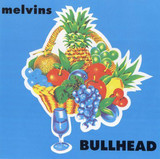
**BACK IN PRINT ON SINGLE LP**After three albums filled for the most part with quick song bursts and the occasional longer track, the eight-song long Bullhead found the Melvins stretching out a bit more at points, this time allowing the heavily stoned tempos plenty of time to really sprawl all over the place. There are fewer sudden shifts between fast and slow moments as well, and a lot more pure lava-flow beat-over-head feedback sludge and noise. It's not all ten mph deliberation, though - "Zodiac" shows the trio at full speed and blasting aside anything that might be so foolish as to get in its way, not to mention one unhinged Osbourne vocal lead. If grunge was achieving breakthrough status in Seattle, it was being perfected in its rawest sense on this album. Opening cut "Boris" does all this in excelsis - the band's longest recorded song at this point, nearly ten minutes long, it practically drips from the bongwater of eight million potheads, with Osbourne invoking his own brand of demons over the deep crawl of the music. Osbourne here really has got the dramatic, theatrical Ozzy Osbourne attitude down, with the occasional double-tracked vocals adding to the off-kilter intensity of the performances. Crover again shows his worth on the drums - he plays things slow most of the time but, crucially, never once sloppily - while Black keeps the bass going, however relatively unheard under Osbourne's guitar attack. "It's Shoved" is the not-so-secret highlight of Bullhead, Crover's brisker drum work and Black's sharp bass playing heralding a wild lead-guitar melody and a great ensemble performance. However, efforts like "Anaconda," with its slowly uncoiling power, and the intense "If I Had an Exorcism," which gets all the more wired and wound up as it goes (Black's bass here is some of her best), are no slouches. (All Music)
A holy grail of European electronic dance music, and a classic at the Italian disco scene and Hamburg's Front club alike (you might have heard it on their recent Mastermix), is finally available again. Produced in 1984 by two mysterious friends during a hazy studio session in the small town of Aschaffenburg, Germany, it is best described by Discogs member goulashdj as 'a funny version of some Imam praying on top of an electronic Groove', .'Kairo' is all you want from an oddball record: fun and funky, weird and wonderful. Featuring original vocals by one of the two friends, it seems to be offensive to religious fanatics and devout Muslims (you better watch, where you play out the original). Therefore, a philosophical advisory or religious warning: 'No religion, god or believer was harmed during the creation of this record. We believe in the right to believe or disbelief in anything and everything that isn't inhuman.' For safety reasons, it includes a persecution-proof instrumental version by Boris Dlugosch as well as the original B-side and completely atheistic 'Kosak 2000'. And to close with Mark Twain: Man was made at the end of the week's work, when God was tired.
Ostgut Ton wiederveröffentlicht Eins von Zehn mit Stücken von Boris, Norman Nodge, Luke Slater und Marcel Dettmann.
In 2015 beging Ostgut Ton das zehnjährige Label-Jubiläum, gefeiert wurde mit einer 30 Stücke starken Compilation, Ostgut Ton Zehn betitelt, verteilt über zehn 12 Vinyl in einem limitierten Boxset. Dieser Sampler war ruckzuck ausverkauft, weshalb diese zehn 12"es nun in 2016 von Ostgut Ton einzeln wiederaufgelegt werden.
Zehn Eins kommt mit zwei raren, exklusiven Tracks der langjährigen Berghain- Residents Norman Nodge und Boris. In Norman Nodges - Beastmode entwickeln sich stoische, trippige Acid-Bleeps um eine gerade 4/4 Hi-hat und ein markantes Zischen - ein eigensinniger und reservierter, dabei sehr wiedererkennbarer und breaklastiger Track. Das 11-minütige - Lock von Boris beginnt langsam mit Ambient Drones - bis man ‚locked' (oder: drin) ist und die Kick ins Spiel kommt. Ab da geht es um knöchernen Techno begleitet von ausgefeilten Synth-Flächen. Das ungewöhnlichste Stück dieser 12 kommt in Form einer Kollaboration zwischen Marcel Dettmann und Luke Slater als S/D, ihr erster Auftritt unter diesem Alias. - The Launderette ist ein recht abstrakter, pulsierender und ‚dubby' Track mit blubbernden Synths und unbehaglichen Klaviertastenschlägen, dazu gibt es auf Deutsch und Englisch Geschichten von der Waschmaschine aus Slaters und Dettmanns Mündern: - Es gibt so vieles, was man hier sehen kann. - - Watching.
Poker Flat is gearing up to celebrate fifteen years strong, with a series of releases that will assure their standing as one of electronic music's best known and most loved imprints. Poker Flat's unwavering dedication to the finest underground house music has unearthed new talent, developed rising stars and welcomed veterans into the fold, and the first of the label's 15th anniversary compilations brings together four of the brightest leading lights of the scene. With four seminal labels - Raw Elements, Dessous, Traffic Signs and Poker Flat - to his credit, Steve Bug has little to prove, but the tireless artist has never been a slouch on the DJ and production front, as he's proven time and again. Tracks like 'A Shot In The Dark' showcased his musical chops, and tied together elements of classic warehouse sounds, deep and sophisticated production and an uncompromising techy edge. The anniversary reworking of the tracks made for 4 Jacks boasts the remix talents of Taylor, whose sleek approach chops up the old school piano chords of the original for a bumping, more streamlined result. Another smashing new remix features in the form of Boris Dlugosch's 2012 acid-disco-house hit 'Sweet Talk". Here The Organ Grinder crafts a bass-heavy monster with a walloping kick drum and syncopated handclaps that enhance Boris' acid melodies and make it rough and ready for underground tastes. Two brand new productions round out the Jacks package.
The Citadel Speaks marks the first recorded statement of ElektrAV as a curatorial imprint.
Rooted in Pamplona’s Citadel —and more specifically within the Arms Hall— this release brings together Alberta Balsam, Boris Divider, Bendiak, Komatssu and µ-Ziq, artists whose practices have resonated within the festival’s ecosystem through a shared sensitivity to space, experimentation and sound as cultural expression. Their contributions are not conceived as documentation of an event, but as part of an ongoing cultural dialogue.
The Citadel is not presented here as a venue, but as an active entity: a space that absorbs, transforms and emits sound. Each contribution responds to that condition, forming a collective statement shaped by place, time and intention.
This first volume initiates a living archive.
What follows is not a catalogue of releases, but a body of work.
DJ Support: Nic Fanciulli, Joe T Vannelli, Danny Tenaglia, Richie Hawtin, Nick Curly, Shiba San, Adam Beyer, Marco Bailey, Boris, Jamie Jones, Markus Schulz, Tom Novy, John Digweed, James Zabiela, Tiesto, Claude VonStroke, Roger Sanchez, Blond:ish, Adriatique, Paul van Dyk, Joris Voorn, Deer Jade, Vintage Culture & Paco Osuna
Few labels can claim true legendary status in dance music - where trends fade as quickly as they emerge and icons are made and broken overnight. Yoshitoshi stands as one of those rare exceptions.
The label makes its return with a statement of intent: a definitive new remix package of Alcatraz’s era-defining “Giv Me Luv”, a dancefloor classic that hasn’t seen fresh interpretations in over a decade. While the original has remained a staple for those who know, it’s now primed for a new generation of club enthusiasts.
“Giv Me Luv” represents everything Yoshitoshi has been standing for: raw energy, unforgettable hooks, and that indefinable magic that makes a track timeless. Bringing it back with new remixes after all these years demanded artists who could match its legacy.
Enter Sébastien Léger, the French maestro whose thirty-year journey has seen him perform everywhere from Coachella to the Great Pyramids of Giza. His interpretation delivers the sophisticated, hypnotic drive that has made him one of electronic music’s most respected tastemakers and the founder of the acclaimed Lost Miracle imprint.
Alongside him, progressive titan Jerome Isma-Ae, whose unique fusion of trance, techno and house has dominated Beatport charts and earned him breakthrough recognition from Armin van Buuren, unleashes his signature sharp, breathtaking power on the classic.
The vinyl also includes the original mix on the B-side, completing a package that marks Yoshitoshi’s triumphant return to form.
- A1: Les Masques - Il Faut Tenir (1969)
- A2: Isabelle Aubret - Casa Forte (1971)
- A3: Christianne Legrand - Hlm Et Ciné Roman (1972)
- A4: Jean Constantin - Pas Tant D'chichi Ponpon (1972)
- A5: Billy Nencioli & Baden Powell - Si Rien Ne Va (1969)
- B1-: Marpessa Dawn - Le Petit Cuica (1963)
- B2: Jean-Pierre Sabar - Vai Vai (1974)
- B3: Sophia Loren - De Jour En Jour (1963)
- B4: Isabelle - Jusqu’à La Tombée Du Jour (1969)
- B5: Sylvia Fels - Corto Maltesse (1974)
- C1: Frank Gérard - Comme Une Samba (1972)
- C2: Ann Sorel - La Poupée Des Favellas (1971)
- C3: Charles Level - Un Enfant Café Au Lait (1971)
- C4: Andrea Parisy - Les Mains Qui Font Du Bien (1970)
- C5: Audrey Arno - Quand Jean-Paul Rentrera (1969)
- C6: Aldo Frank - T’as Vu Ce Printemps (1970)
- D1: Christianne Legrand - Cent Mille Poissons Dans Ton Filet (1972)
- D2: Clarinha - Lemenja (1970)
- D3: Hit Parade Des Enfants - Aquarela (1976)
- D4: Jean-Pierre Lang - Tendresse (1965)
- D5: Magalie Noël - Une Énorme Samba (1970)
- D6: Françoise Legrand - La Lune
Ever since the late 1950s bossa-nova revolution, Brazil’s influence on French music has been undeniable. Pierre Barouh, Georges Moustaki and a vast array of lesser known artists, all made the Musica Popular Brasileira (MPB) an axis of promotion at the service of a cool and metaphysical, modern and mixed Brazilian lifestyle. Some were seduced by the poetic languors of the bossa, some were looking for fun, and others just loved the American hybridization of jazz-bossa, jazz-samba.
What is bossa nova? One of its creators, Joao Gilberto said: "Its style, cadence, everything is samba. At the very start, we didn't call it bossa nova, we sang a little samba made up of a single note - Samba de uma nota so .... The discussion around the origins of bossa nova is therefore useless”. It is nevertheless useful to remember that these magnificent Brazilian songs, which the guitarist describes as samba, were shifted and balanced around improbable chords. "I like things that lean, the in-betweens that limp with grace," said Pierre Barrouh, quoting Jean Cocteau.
With emotion, arrangements for violin and supple guitar licks, bossa nova rapidly changed. A transformation that can be heard in the Tchic, tchic, French Bossa Nova 1963-1974 compilation, the result of a cultural reappropriation, which traveled through the United States and supplemented itself in France.
A musical revolution that has remained significant, bossa nova was born in Rio. From 1956 to 1961, Brazil lived through its golden years. In five years, the country had invented its modernist style. Elected president in 1956, Juscelino Kubitschek de Oliveira, an elegant man with a broad forehead, brandished a promising slogan: "Fifty years of progress in five years". He quickly got to work. Not worried about increasing debt, he launched the project for a new federal capital, Brasilia, designed by the communist architect Oscar Niemeyer. Volkswagen opened state-of-the-art factories and created the “fusquinha”, the Beetle. In Rio, the Vespa made its first appearance. The Arpoador Surf Club crew run into the “girl” from Ipanema, Helô Pinheiro - the tanned garota ("chick"), between a flower and mermaid, who at 17 walked by the Veloso bar, where the fiery author and composer, Tom Jobim and Vinicius de Moraes, were getting drunk on whiskey. From then on, bossa symbolized cool.
In 1958, Joao Gilberto recorded Chega de Saudade, which the directors of Philips denied, calling it "music for fagots". The marketing director, who believed in it, secretly pressed 3000 78-inch vinyls and distributed them at schools around Rio, creating a tidal wave.
American jazzmen then took over. In particular, trumpeter Dizzy Gillespie and guitarist Charlie Byrd. In November 1962, the Brazilian Ministry of Foreign Affairs funded a "Bossa-Nova" concert at Carnegie Hall in New York, inviting the genre’s pioneers. Unprepared, the show soon turned to disaster. But the troupe was invited to the White House by Jackie Kennedy. The first lady loved "the new beat" and in particular Maria Ninguem, a song by Carlos Lyra, later covered by Brigitte Bardot.
In Brazil, the 1964 military coup quickly ended this euphoria. The destructive atmosphere that ensued pushed many Brazilian musicians to leave, if not to exile. Thus, Tom Jobim, Sergio Mendes and Joao Gilberto arrived to the United States. In New York, Joao Gilberto met saxophonist Stan Getz. At the time, he was married to the Bahianese Astrud Weinert Gilberto, who had a German father. She had never sung before, but she knew how to speak English. Getz therefore asked her to replace her husband on The Girl From Ipanema. The Getz/Gilberto record with Tom Jobim on piano, was released in March 1964. Phil Ramone, the "pope of pop" was in charge of sound.
Bossa nova arrived in Paris through the classic “guitar-voice” channel (Pierre Barouh, Baden Powell, Moustaki…) But France loved jazz and Paris had already welcomed its American contributors. All these good people were to pass through Saint-Germain-des-Prés. The cabaret l'Escale became the Mecca of Latin American sound where one could find Pierre Barrouh and his friends, such as the Camara Trio, samba-jazz aces, whose only record was published by the Saravah label. With a band strangely called Les Masques (a band that included Nicole Croisille and Pierre Vassiliu, among others), the Camara Trio recorded an interesting Brazilian Sound, including the track Il faut tenir which is present on this tasty compilation of rarities.
Other enlightened musicians can also be found on the compilation, such as Jean-Pierre Sabar (songwriter for Hardy, Auffray, Leforestier ...) and the French pop rock organist Balthazar. In 1975, Sabar recorded Aurinkoinen Musiikkimatka on a Finnish label, which featured the crazy Vai, Vai, included on this record. We are now following the footsteps of Brazilian electronic musicians such as Sergio Mendes, Eumir Deodato or Marcos Valle who created funk and disco sounds on their keyboards and synthesizers. A style that influenced Véronique Sanson when she wrote Jusqu’à la Tombée de la nuit in 1969 for Isabelle de Funès, the niece of Louis and a great friend of Michel Berger - Sanson did end up singing this track on her 1992 Sans Regret record.
The pinnacle of exoticism and travel, Sylvia Fels’ Corto Maltese includes bongos, sea mist and ocean sounds. The title was taken from Jacky Chalard’s concept album written in 1974, Je suis vivant, mais j’ai peur (I am alive, but I am scared), based on Gilbert Deflez’s science fiction novel.
However, bossa nova extended the scope of popularity. "In the 1970s, I was a fan of Sergio Mendes, Getz / Gilberto. I fell in love with this music that I knew because I had been an orchestral singer, " explained Isabelle Aubret, who in 1971 delivered a composite record of covers by the very funky Jorge Ben, Orfeu Negro, Tom Jobim, Vinicius de Morais and Jean Ferrat. "I recorded this album for Meys Records in Paris, far from Brazil, with wonderful musicians, François Raubert, Roland Vincent, Alain Goraguer...". The latter wrote the arrangements for Casa Forte, a very percussive title borrowed from Edu Lobo, one of the initiators of the bossa who spent time in California. "Jazz and bossa came together and produced very rhythmic music. I love singing, it allows me to dream, to have fun, to feel a high on stage, and these songs brought me joy, made me swing, my singing felt like a dance.”
The world tours of French singers and their desire for the tropics, often brought them to Rio with its hills, forests, caipirinhas and tanned bodies. There are surprises though, like this Iemenja (Iemenja is the goddess of the sea in the Afro-Brazilian candomblé religion). Not unlike the composer and musician Jean-Pierre Lang, based in Sao Paulo, Claire Chevalier taught Brazil to Brazil. In 1970, the singer and painter published a 45-inch vinyl, Mon mari et mes amants (My husband and my lovers), under the improbable pseudonym of Clarinha (little Claire). She was then living in Rio, with her husband, Joël Leibovitz, who founded a band called Azimuth, and who owned a record label specialized in "sambas enredos" songs for samba school parades.
For its B side, she asked Pierre Perret to come up with lyrics for a song composed by Carlos Imperial: "Oh goddess of the sea, o goddess Iemenja, I bring a white rose to adorn your long hair ..." . "Perret came to see us, and we had fun, remembers Joël Leibovitz. We wrote Lemenja for fun, we recorded it at the Havaí studio, behind the Central do Brasil the central station. Erlon Chaves, the arranger who worked with Elis Regina, joined us" adding his share of Afro-Brazilian percussions and funky brass to the mix.
There is a common misunderstanding in Franco-Brazilian history: that bossa, admittedly hedonistic, is perceived as funny, even though the poets who wrote the texts are often philosophizing on the human condition. Its French interpreters pull it towards a carnival inspired universe, far removed from its fundamental essence. Thus, Jean Constantin covered the famous Samba da minha terra, an ode to the art of samba written by the classic Bahian composer Dorival Caymmi, renaming it with the enticing title of Pas tant de tchi tchi pompon: "On your pier there is no tchi tchi / when you arch your back, you know everything is alright ”(lyrics by Gérard Calvi). This expedited bossa aims for the absurd, but retains a certain elegance.
Indeed, Jean Constantin was not an idiot, the rather large man had a huge mustache and liked fantasy, (Les pantoufles à papa, Le pacha, inspired by cha-cha-cha-cha, salsa and jazz) but he was also the lyricist of Mon manège à moi interpreted by Edith Piaf, the composer of Mon Truc en plume by Zizi Jeanmaire and the soundtrack of François Truffaut’s 400 Blows. Le Poulpe, published in 1970, from which this bossa is extract, was arranged by Jean-Claude Vannier, an accomplice of Serge Gainsbourg’s Melody Nelson. In short: "There is enough of samba / By looking at the parasol / Because my poor cabeza / Is going to die in the sun".
Even the American actress Marpessa Down, who was at the heart of the bossa nova revolution with her role as Euridyce in Marcel Camus’ film Orfeu Negro, winner of the 1959 Cannes Palme d'or, fed the clichée with Je voudrais parler au petit cuica - "Tell me how you manage to always make people want to dance / It's true, I must admit that I cannot resist your magic" - in consequence, once can hear the cuica, a little drum inherited from the Bantu.
But bossa nova had many angles. Societal, of course, pushing actresses who were symbols of women's liberation like Brigitte Bardot, Jeanne Moreau, or Sophia Loren to engage in the exercise of accelerated bossa. In February of 1963, Sophia Loren made a record in French in Rome, Je ne t'aime plus, featuring the song De jour en jour, a bossa written by two Italians, Armando Trovajoli and Tino Fornai, which was released a little later by Barclay. Bossa accompanied the 1960s, a decade of moral liberation. Ann Sorel, who interpreted La Poupée des favellas, caused a sensation with L’amour à plusieurs, a provocative song written by Frédéric Bottom and Jean-Claude Vannier. As for the actress Andrea Parisy, she displayed her bourgeois cheekiness in Marcel Carné's Les Tricheurs before interpreting Les mains qui font du bien. And Magalie Noël, the friend of Boris Vian, who sung Johnny fais-moi mal, was hired to sing Une énorme Samba, composed by Alain Goraguer (arranger to Gainsbourg, Bobby Lapointe and Jean Ferrat) with lyrics by Frédéric Botton.
But in the end, of what wood is bossa nova made of? The answer is given by Christianne Legrand, daughter of Raymond the conductor, and sister to Michel the composer: "With me, with jà" - jà means "immediately" in Portuguese. In 1972, the singer, an expert in vocal jazz and a member of the Double Six, published Le Brésil de Christianne Legrand. Two songs included on the Tchic Tchic compilation that demonstrate how bossa, jazz, funk, rock, etc. work like a swiss army knife: the music is used to denounce broken systems, or miracles, HLM et ciné roman, Cent mille poissons dans ton filet, two songs from the O Cafona soundtrack, a successful telenovela broadcast, at the time in black and white, on TV Globo. The first was adapted in French by the fighter and friend of the Legrand tribe, Agnès Varda. The second is content with a play on words, jostling them into a summer fun.
Véronique Mortaigne
- 1: Ground Kiss
- 2: See Thru
- 3: Undefined
- 4: Worship
- 5: Receive
- 6: Fertile Eyes
- 7: Nadia
- 8: Embryonic
- 9: Bad Moon
- 10: Bad Choice
Das dritte Album von Nick Llobet und Micah Prussack, alias youbet, aus Brooklyn ist ein weitläufiges, warmes Gemisch aus Indie-Rock, Pop und experimentellen Klängen. Es zeigt eine Band, die weit über ihre Bedroom-Pop-Wurzeln hinausgewachsen ist und sich zu einer selbstbewussteren, komplexeren und lauteren Kraft entwickelt hat. Das Album, das in Bewegung entstanden ist und zwischen langen Tourneen Gestalt angenommen hat, spiegelt einen Moment ekstatischer Möglichkeiten und Entschlossenheit wider. Sowohl geschärft als auch expansiv, wächst youbet aus den Grenzen des Heimaufnehmens und des ,Bedroom Pop" zu etwas Robusterem, Lauteren und Unverwechselbarem, das ganz der Band eigen ist. Die vielfältigen Einflüsse des Duos - von den Beatles über Bernard Herrmanns schwindelerregenden Vertigo-Soundtrack bis hin zu Flamenco, den japanischen Noise-Rockern Boris und vielem mehr - legen sich in den Hintergrund, während die Band ihre eigene musikalische Sprache entwickelt. Die Co-Produzenten Katie Von Schleicher und Julian Fader runden das Album ab, wobei erstere glitzernde Synthesizer-Klänge und letzterer ein von Prussacks Bass untermaltes Schlagzeug-Fundament beisteuern. youbet zeigt, wie Llobet und Prussack bezaubernde musikalische und lyrische Ausdrucksformen miteinander verweben und das Ergebnis immer wieder neu formen.
In early 2025 Oakland-based Jerod S. Rivera released his second full length Dot-Dash, featuring a collaboration with CST co-founder Cat Lauigan and Jonathan James Carr. From the beginning we were mesmerized with the result, a perfect melding of Cat's processed spoken-word and Jerod's Buchla experimentations.
The thought of remixes presented immediately, the material extra ripe for interpolation. Enlisting friends from geographically and sonically disparate locations to present an ideal remix 12". Something for everyone, something for every setting, a tool with multiple functions...
The mysterious dub/techno/leftfield mastermind behind False Aralia dives further into territory explored on iri.gram, uptempo and dancefloor-ready in a more maximal Perlon-ish way while still embracing a half-time dub feel. Philipp Otterbach (Music from Memory, Offen, RIO) goes deeper into the guitar zone he’s been exploring, channeling Earth 2, Boris, and the like for some heavy drone. Oakland duo DJ ML and Wonja adopt their Motoko & Myers moniker (Future Times, Soda Gong), zeroing in on some choice vocal snippets that mesh perfectly with a live drum break and bassline for a Seefeel-esque version that could have come from a 90’s UK studio. Finally, Slowfoam embraces the more experimental elements of the original with a remix that starts sparse and minimal but builds into a glitchy rhythmic climax.
The 12” includes a 2-sided riso insert and a download code with access to an additional remix by close collaborator Jon Carr that twists the vocals into a throbbing industrial caucaphony.
The label say "Fresh from impressing with the pulsating techno of Boris Werner and the fuzzy live house jams of San Proper, Tom Trago's Voyage Direct label turns to a man who needs little introduction: Dutch legend and man of many pseudonyms Danny Wolfers.
Best known under his Legowelt alias, Wolfers has spent the last two decades flitting between strobe light acid house, 808 electro, fluorescent techno and shimmering space disco. Throughout, he's kept his productions pleasingly analogue-heavy, making great use of classic drum machines and vintage synthesizers. While his music may be steeped in the past, Wolfers' productions always sound like the future.
For this first outing on Voyage Direct, Wolfers resurrects the House of Jezebel alias - a pseudonym previously only used for the twinkling deep house warmth of 2010's 'Love & Happiness' - and delivers two tracks of synth-laden analogue house goodness.
'Back In Dogtown USA' sets the tone, as Wolfers layers rising chords, darting electronics and wide-eyed synthesizer melodies over a clattering analogue house groove. As with much of the legendary Dutch producer's work, the track ripples with rush-inducing melodic intent. It's the soundtrack to a party on Jupiter, and we're all invited.
Wolfers' ups the tempo dramatically on 'I Took A Train In 1979', transplanting us to the far reaches of our galaxy via jackin' techno drums, picturesque organ melodies, drifting chords and intoxicating pads. There are echoes of classic Detroit techno, surging Rotterdam electro and vintage cosmic disco, yet it doesn't really sound like any of these things. Like 'Back In Dogtown USA', 'I Took A Train In 1979' sounds like the past, reconfigured and rearranged for the consumption of future generations. In other words, it's a classic Wolfers production."
Tooflie's shadowy crate-diggers return for their sixth expedition, this time unearthingmelodic relics from the sands and stone of the SWANA region. The A-side opens with acharismatic locally-well-known Boris Timur from Azerbaijan, reshaping his half-crimechanson half folk music into a slinky, percussion-driven anthem that sways betweenmysticism and dancefloor intent. A2 dives deeper into the vaults: a cryptic cut built onearly hip-hop and electro intonations, stitched together from dusty Middle Easterngroove samples, looping like a mirage between past and future.
Turn to the B-side and the spotlight falls on a modern folk icon turned global cult heroOmar Souleyman. The first interpretation is a peak-time techno weapon, packed withfrenetic energy and built for ecstatic release. The closing track shifts gears in a slower,contemplative breakbeat journey that delves more deeply into the dabke tradition,stretching its spiraling melodies and communal pulse into a pre-dawn dreamstate.Once again, Tooflie fuses archival echoes and electronic invention into a spellbindingvinyl-only dispatch for dancers and diggers alike.
The Wire: his most satisfying collection to date Resident Advisor: return to minimalist roots on a noise rock-influenced new live record Support from: Barnt, Ben UFO, Vladimir Ivkovic, Boris, OPTIMO 180 gr. colored vinyl pressing incl. art poster and sleeve - limited edition of 50 copies available via distribution Philipp Gorbachev is back at it with a new conceptual album. KGC Radio is all about returning to music-making roots - choices are raw, minimalist and different from the sonic industry environment. The flow is kept simple but deadly, using only the bare essentials to blow up the rave and festival scenes: analog synths, drum machines, a mic, and some sick percussion. The whole album was recorded in one take, like some kinda secret radio wave you stumble on in the middle of the night. Catch it, and you're diving headfirst into a maze of vibes and meanings you ain't seen coming. On the visual side, KGC Radio is a collab with Zhanna Maliti, this dope Moscow-based artist and photographer. Her one-of-a-kind style and imagery are a perfect match for the music, bringing the whole vibe to life. Sounds Like: Underground Resistance, Daniel Maloso, NIN, Broken English Club Mastering by: Beau Thomas
Protocolo SysEx aka Fabio Vinuesa lanza este EP en su sello con cuatro pelotazos originales y dos remixes de Boris Divider y Heinrich Mueller.
GEOMETRÍA VIRTUAL documents a scenario in which mechanisms of control cease to function as external layers and instead become the very foundation of the system. The album does not propose a future dystopia, but rather a reality in which decision-making is automated and artificial intelligence is established as a structure of social control.Protocolo SysEx, a project by Fabio Vinuesa, is conceived as a narrative and sonic framework from which to examine the political and philosophical implications of a world governed by artificial intelligence. The release includes reinterpretations by Boris Divider and Heinrich Mueller and constitutes the first chapter of a trilogy focused on the progressive normalization of algorithmic control.
Geometría Virtual EP – Distrito 91 15
a A1 - Geometría Virtual [Part I]
[b] A2 - Geometría Virtual [Part II]
- A1: Ultra Naté - Free (Mood Ii Swing Mix)
- A2: Moloko - Sing It Back (Boris Musical Mix)
- B1: Robin S - Show Me Love (Stonebridge Club Mix)
- B2: Silicone Soul - Right On! (Original Instrumental Mix)
- C1: Sueño Latino With Manuel Goettsching Performing E2-E4 - Sueño Latino
- C2: Joe Smooth Inc. (Feat. Anthony Thomas) - The Promised Land (Club Mix)
- D1: Tori Amos - Professional Widow (Armand's Star Trunk Funkin' Mix)
- D2: George Morel (Feat. Heather Wildman) - Let’s Groove (Morel’s Full Club Mix)
- E1: Robert Miles - Children (Dream Mix)
- E2: B.b.e - Seven Days And One Week (Original Mix)
- F1: Energy 52 - Café Del Mar (Three’n’one Mix)
- F2: Three Drives On A Vinyl - Greece 2000 (Original Mix)
- A1: Posh (Ft Juan Atkins)
- A2: Planet In Fever (Ft U96 & Emil Schult)
- A3: Cinema (Ft Fabrice Lig)
- B1: Far Away
- B2: Future One (Ft Newmen)
- B3: Über_All (Ft Peter Hook)
- C1: Magazine (Imppu Rework)
- C2: Property (Ft Anthony Rother)
- C3: Times
- C4: Global Youth (Ft Boris Blank & Emil Schult)
- D1: Sexersizer (Ft U96)
- D2: Hildebrandlied (Ft U96)
- D3: Monday To The Moon (Ft Peter Hook)
'BOSTICH PT.1' – A hot Chicago House flip on this legendary classic by Swiss synthpop band Yello! Some unexpected editing surprises in this one! The groove will have you from the start! 'OPTIMO' – A highly energetic rework of this classic from American dance-punk band Liquid Liquid, with a percussion section that uses the snare drum, bass kick drum, cowbell, and claves that all combine for insane repeated drum rolls! A hot sure shot for the dancefloor!
Cratebug is a Chicago Dj, Producer & Remixer. His remixes and edits are hot gold and have found their way into the mixes and live sets of COUNTLESS djs all over the world. Most notable and well-known among fans & supporters of Cratebug’s work include: Derrick Carter, Jamie 3:26, Honey Dijon, Frankie Knuckles (RIP), Louie Vega, Scott K., Kenny Dope Gonzalez, Dimitri From Paris, Boris Dlugosch, Francois Kevorkian, Danny Krivit, Moodymann (Kenny Dixon Jr.), Theo Parrish, Master Kev, Moon Boots, Jackmaster (Jack Revill), The Martinez Brothers, Doc Martin, Mark farina, KON, Detroit Swindle, Radio Slave, Moodena, Luke Solomon, Jimpster, Alton Miller, Juan McClean, James Murphy, Alton Miller, Horse Meat Disco, Gene Farris, Jack The Box (Tyree Cooper & Bobby Starr), The Black Madonna, Jojo Flores, Marques Wyatt, Terry Hunter, Ricardo Villalobos, Kiko Navarro, Ted Patterson and MANY MORE!…
2024 Repress
top 3 charts in the new groove!
Amotik returns with 3 tracks of raw/heavy/atmospheric techno on the vinyl only label.
Support from: Pfirter, Markus Suckut, Truncate, Ben Sims, DJ Pete, Boris, Oliver Deutschmann, Cleric, Jeroen Search, Francois X, Norman Nodge, Spencer Parker, Slam, Dustin Zahn, Tommy Four Seven, Kwartz, and more.
One of the most prolific electro artists of his generation, Boris Bunnik aka Versalife, returns to TRUST with an exceptional soundtrack for the algorithmic hellscape we live in. As neofeudalist power structures solidify around us, Versalife's tracks remain in constant flux. Subtle tonal shifts and undulating synth currents create tension and beauty while crisp machine beats provide the clockwork rhythm for humanity's march into the singularity.
The Great Joe Lewandowski Is Back on Skylax After the Explosion of His Previous Ep "Here I Am" Played by Just About Everyone From Arnaud Rebotini to the Hacker, Jennifer Cardini, Boris or Dax J and Acclaimed by the International Press (Ransom Note, Faze Magazine +++). This New 12 Inch Is the Logical Continuation With Always This Subtle Mixture to Find the Perfect Balance Between New Wave, Italo, Rock Completed by the Sepulchral Voice of Stolt and a Deafening Remix of the Brilliant Mufti. a Must...
ғᴏʀ ᴛʜᴏsᴇ ᴡʜᴏ ʙᴜʀɴ ᴛʜᴇ ᴄᴀɴᴅʟᴇ ᴀᴛ ʙᴏᴛʜ ᴇɴᴅs. Four prime cuts of summer party techno. Already being played by some of your favourite DJ’s like: MARRØN, Cleric, Daria Kolosova, Funk Assault (Chlär & Alarico), Phil Berg, Yanamaste, Lobster, Faster Horses, Nastia, Bailey Ibbs, Alex Nantaya, Albert Zhirnov, Beste Hira, Seretide, Erik Burka, VSC, Gonzo MDF, Boris, Dax J, Gareth Wild, SLV, Stephanie Sykes, Juri Heidemann, ANNĒ, Chontane, Desroi, Slam
After four years, De Lichting is back with a new double album: Drie Nul Drie!
This fresh addition to the infamous compilation series revolves around a central theme: The 303 Acid Bassline.
The double LP format has always been the weapon of choice for the crew when it comes to implementing diversity in their musical story.
Despite the 303 being a rather limited concept, everyone within the collective finds a unique way to approach this classic element that has been rinsed for decades.
From the typical techno bomb of “MJM002” to the sneaky after hours tech gem “5421”, or the Detroit influenced chill-out cut “Tool”, the album bursts with playfulness and creativity, while coming together logically sound wise.
- A1: Rose (Solomun Remix)
- A2: River (Adriatique Remix)
- B1: Earth (Mind Against Remix)
- B2: Theory Of Everything (Jupiter Jazz Aka Maceo Plex & Avnu Remix)
- C1: River (Fideles Remix)
- C2: Isaac (Denis Horvath & Kevin De Vries Remix)
- D1: Lll (Ben Böhmer Remix)
- D2: Astronautin (Boris Brejcha Remix)
- E1: Earth (Roman Flügel Remix)
- E2: Nothing Like You Ft Luna Semara (Agents Of Time Remix)
- F1: Infinite Monkey (Patrice Bäumel Remix)
- F2: River (Echonomist Remix)
- G1: Astronautin (Hernan Cattaneo & Soundexile Remix)
- G2: Breathe Ft Luna Semara (Dubfire Remix)
- H1: Collider (Anfisa Letyago Remix)
- H2: Isaac (Anna Remix)
- I1: Dune (Wehbba Remix)
- I2: Boavista (Reinier Zonneveld Remix)
- J1: Nothing Like You Ft Luna Semara (Ameloar Remix)
- J2: Trancoso (Christopher Coe Remix)
- K1: Cooper Station (Anii Remix)
- K2: Collider (Hannes Bieger Remix)
- L1: Breathe Ft Luna Semara (Dubfire Dub Remix)
- L2: Boavista (Meute Remix)
(6LP Box Set, 180gr vinyl, 4c print + Glossy varnish). Stephan Bodzin, Luna Semara, Solomun, Adriatique, Mind Against, Maceo Plex, Jupiter Jazz, AVNU, Fideles, Denis Horvat, Kevin de Vries, Ben Böhmer, Boris Brejcha, Roman Flügel, Agents Of Time, Patrice Baumel, Echonomist, Hernan Cattaneo, Soundexile, Dubfire, Anfisa Letyago, ANNA, Wehbba, Reinier Zonneveld, Ameloar, Christopher Coe, ANII, Hannes Bieger, MEUTE, Innellea