
pre-order now06.03.2023
expected to be published on 06.03.2023
10,04 €
expected to be published on 06.03.2023

As one of the most enigmatic figures of the 1970's Italian soundtrack and library music network Emma De Angelis and her short recording career provides thirsty fans of speedball psychedelic rock and drum heavy instrumental funk with a tight discography rivalling many of the long-standing bastions of the otherwise male-orientated business. * Strictly limited to 1000 copies.*
.
Born in Rocca di Papa, near Rome, into a flourishing musical environment Emma was the younger sister of future award-winning composers Guido And Maurizio De Angelis, a duo, who under names like Oliver Onions and Dream Bags, would write chart-topping lyrical theme tunes for a wide range of Italian crime, Giallo and Spaghetti Western films featured alongside full scores by Ennio Morricone and the Magnetic System composers (Bixio Frizzi Tempera).
With encouragement from her brothers, Emma, who would also write music under the pseudonym of Juniper, would record a tight clutch of solo-penned material and seldom credited studio contributions to Guido And Maurizio's film commissions, such as the score for Giuliano Carnimeo's Simone e Matteo: Un gioco da ragazzi (aka Convoy Buddies). While simultaneously pursuing a career as an illustrator and set designer the De Angelis family contacts would lead Emma to the offices of Romano Di Bari, whose up-and-coming Flirt label was finding success providing custom built mood music for use in TV and film. Alongside important composers like Alessandro Alessandroni, Gerardo Iacoucci and A. R. Luciani, the young Emma Di Angelis would record a small number of tracks for a compilation called Underground Mood (credited in the small print to E De Angelis - not to be confused with Italian singer Edoardo De Angelis). It is from this rare LP that the record you are now holding is compiled. Within the Flirt family of labels Emma De Angelis would also share schedules with other important female composers such as Daniela Casa and Giulia Kema' De Mutiis - both of whom have appeared on dedicated Finders Keepers releases.
The tracks on this record provide us with a rare glimpse into Emma De Angelis' short musical career before she became a full-time visual artist. With an unknown personnel or studio date it is easy to speculate a potential family jam in Piero Umiliani's Sound Workshop studio in 1972. One only has to take a listen to Guido And Maurizio's instrumental theme Gangster Story from Enzo G. Castellari's 1973 thriller High Crime (which later appeared on Tarantino's Death Proof soundtrack) or the trippy title theme to Paolo Poeti's kinky 1976 drama Inhibition to spot the family resemblance
Order now and we will order the item for you at our supplier.

Eno Williams, frontwoman of Ibibio Sound Machine, uses both English and the Nigerian language from which her band's name is derived for the dazzling new album Doko Mien. Long lauded for jubilant, explosive live shows, Ibibio Sound Machine fully capture that energy on Doko Mien, the followup to their Merge debut Uyai.
In a glowing piece in the New York Times, those songs were praised for following 'in the tradition of much African music, [making] themselves the conscience of a community.' By pulsing the mystic shapes of Williams' lines through further inventive, glittering collages of genre, Ibibio Sound Machine crack apart the horizon separating cultures, between nature and technology, between joy and pain, between tradition and future. That propensity for duality and paradox seems common in people whose lives span continents.
Williams was born in the UK, but grew up in Nigeria, always steeped in her family heritage. She obsessed over West African electronic music, highlife, and the like, but was equally empowered by Western genres such as post-punk, disco, and funk. The London octet have enveloped themselves in that maximalist quilt proudly since their 2013 formation. Though it can often bring with it news of stress and uncertainty, the modern world further brings all these disparate traditions into connection.
'Everyone has everything now,' says multi-instrumentalist Max Grunhard. 'Everyone has immediate access to every genre, picking things up from everywhere—like magpies.' And while they haven't suddenly left their African roots behind, Doko Mien does find increased representation of English lyrics in the ratio. By sharing more directly with more universal lyrics, the record feels more anthemic, reaching for grander heights.
'We wanted to give people a reason to sing along, to find their soundtrack every day,' Williams says. 'We wanted everyone to feel as if they're part of the music as well.'
Late album highlight 'Guess We Found a Way' addresses the change with a coy smile. 'Guess we found a way to speak to you/ Guess we found a way to say what's true/ To say what's real,' Williams coos over glistening chains of reverberant synth and diamond dust percussion, before returning to Ibibio in the chorus. Perhaps the best example of the group's ability to convey meaning across language and tradition, to blend past and future into a singular present comes on 'She Work Very Hard'. The traditional Ibibio folk tale bobs over the waves of tuned percussion, chunky synth, and pinprick highlife-esque guitar, while Jose Joyette's drums and Derrick McIntyre's bass funk groove bring everyone to the dance floor. 'These stories won't be forgotten. Feel the music: it speaks to everybody,' Williams says. 'We can travel back in time together, while convening on a futuristic, present tense. We hope that we can give people that reason to wake up, that one song to sing and dance and be happy.'
Doko Mien: Tell me everything. On their new album, Ibibio Sound Machine provide the perfect companion, ready to digest as much as possible and then further unfurl beauty and hope. They remember and honor the past and charge forward toward the future, all while intensely expanding the present.
Order now and we will order the item for you at our supplier.

Fully licensed ! Ltd to 500 copies. Singer and guitarist Ram John Holder was born in. 1939 in Georgetown, British Guiana, then moved to Cincinnati
in 1954, and to the East Coast to work as folk blues singer in the early 1960s. In 1963, he took residency in England where he recorded several
albums. Released in 1969 Black London Blues is surely is masterpiece. A socio-political manifesto the album chronicles the trials and tribulations
that were the result of being a black-immigrant in London, and it contains all the pathos and pain one can imagine. Self-conscious, as concept
albums often are, the record is almost like an audio A-Z or pub guide. It’s funky/soul and represents his own black experience. It is a must have
for all the blues revivalist out there, a record to rank along the lines of early Mike Cooper and American stalwarts like Eugene McDaniels or Sixto
Rodriguez!
Tracklist:
SIDE A: 1. Loie - 2. Lloro Tu Despedida - 3. Goin’ Home - 4. Me ‘N You
SIDE B: 1. Liebestraum - 2. Shu Shu - 3. Blue Samba - 4. Favela - 5. Linda Flor
SOULGRA
On Stock and ready to ship

"Cinematic Visionaries Calibro 35 and Noir Master James Ellroy Pay Homage to L.A. with a Pure Crime-Funk Original Soundtrack. Out October 9" There are collaborations that feel inevitable like they were waiting to happen in some shadowed corner of culture. The union between Italian cinematic funk visionaries Calibro 35 and internationally acclaimed master of noir fiction and New York Times bestselling author James Ellroy is undoubtedly one of them. When Calibro 35 were invited to compose the original soundtrack for Francesco Zippel's documentary Ellroy vs L.A., they didn't simply write music for film. They stepped directly into Ellroy's universe the most dangerous corners of American crime fiction and discovered, to no one's surprise, that its darkness felt strangely familiar. The result is Ellroy vs L.A., the band's new album out October 9 on Record Kicks. Twelve brand new tracks of cinematic crime funk, psychedelia, and hypnotic groove that don't accompany Ellroy's world so much as inhabit it. The soundtrack's move through Ellroy's fictional and real-world mythologies with deliberate precision. Stylistically, the album finds Calibro 35 in their most natural yet most cinematic state: crime funk, psychedelia, and hypnotic groove pushed into darker, more narrative-driven territory by the weight of Ellroy's world. From the gloomy, suspense-laden groove of the opener Black Dahlia to the evocative closing piece Moonlight Sonative, the album unfolds as a complete cinematic arc, showcasing Calibro 35 at their very best. L.A. Confidential delivers a super-suspenseful, thrilling tension that feels like a chase through neon-lit streets, while Riots erupts into explosive cinematic funk, capturing chaos and urban unrest in full force. LSD on Sunset Boulevard drifts into a hazy, instrumental soul journey psychedelic, warm, and disorienting, like a late-night hallucination of the city itself. The Big Nowhere (Part I & II) expands the narrative into a slow-burning, atmospheric descent, unfolding like a two-act crime saga. Welcome to the Land of Vacation and Probation hits with kick-ass, uptempo crime-funk madness, urgent and relentless in its propulsion, while White Jazz is a mood of suspended, noir-infused jazz tension cool, shadowy, and unresolved. Together, the tracks map Los Angeles as a fractured yet hypnotic landscape suspended between glamour and violence, beauty and decay, myth and reality Born in Milan in 2007 with the mission of excavating the golden age of Italian film music Morricone, Piccioni, Trovajoli, Calibro 35 have spent nearly two decades transforming that initial obsession into a singular artistic language. Their work bridges vintage Italian soundtracks with contemporary jazz and cinematic funk, earning them a global following rare for an Italian instrumental act. Their music has been sampled by Dr. Dre (Compton, "One Shot One Kill" feat. Snoop Dogg), Jay-Z ("Picasso Baby"), and Damon Albarn's The Child of Lov. Rolling Stone described them as "the most fascinating, retro-maniac and genuine thing that has happened to Italy in the past few years," while Far Out Magazine called them "one of the most skilful and innovative instrumental outfits on the planet right now." The band (Enrico Gabrielli, Massimo Martellotta, Fabio Rondanini, and Tommaso Colliva) continue to evolve without losing their core identity. In 2025 they released the critically acclaimed Exploration, further expanding their sonic universe, and were invited to perform at the closing ceremony of the Winter Olympic Games at the Arena di Verona, confirming their growing international stature. With Ellroy vs L.A., Calibro 35 don't just compose a soundtrack they translate a mythology into rhythm, tension, and groove. Between fiction and reality, they find a city that never truly sleeps, only pulses in darkness. Press play, and Los Angeles begins to unfold in sound.
expected to be published on 09.10.2026

The Return of The Vagabond – Revisited! On The New Way
There are figures that do not belong to any single era. They traverse .me, watch the world evolve, and
con.nue their journey guided by a singular compass: music.
Born from a concept by Use Vinyl Records, The Return of The Vagabond – Revisited! On The New Way is a
compila.on that sets the "Vagabond" back in mo.on—an iconic symbol for those who live music as a
journey without boundaries of .me, genre, or genera.on.
His return takes shape through a curated selec.on of .meless interna.onal disco, funk, and rock classics,
reinterpreted with fresh soundscapes while remaining deeply faithful to the spirit of the originals. This
musical odyssey is helmed by Daniele Baldelli & Marco Dionigi, Marco Fra=y, (Ino)2, DJ Mauri, and
Corrado Pres@, proving that great music can transcend .me, reinvent itself, and con.nue to inspire.
More than just a compila.on, The Return of The Vagabond – Revisited! On The New Way is a sonic voyage
that rediscovers legendary tracks through a modern lens. It is a project that demonstrates how authen.c
music never belongs to the past: it evolves, changes its skin, and con.nues to resonate deeply with the
present.
The item is already on it's way to us and is expected to be shipped from 13.10.2026.

In the spring of 1971, somewhere between Brussels, Paris and a collective pop fever dream, Le Monde Fabuleux Des Yamasuki landed on vinyl. It sounded like nothing else then and it still does not today. More than half a century later, Sdban Records proudly presents a reissue of this singular cult album, available from April 3, 2026 on vinyl.
The album was produced by Jean Kluger and written both by Jean and Daniel Vangarde (aka Bangalter, later the father of Thomas Bangalter of Daft Punk), who were alreadywell ahead of their time, long before electronic music rewrote the rules of pop culture.
Released under the name Yamasuki, also referred to as The Yamasuki Singers, or The Yamasuki's, the project was never intended as a conventional band. It was a studio-born fantasy, a concept album disguised as a pop record. What began as a standalone single quickly expanded into a full-blown pan-cultural pop opera that ignored genres and common sense with joyful abandon.
Musically, the album sits at a delirious crossroads. Psychedelic pop collides with funk rhythms, samba and bubblegum melodies, full of chants and choruses in a phonetic pseudo-Japanese, written with the help of a dictionary. Kluger and Vangarde famously recruited a children's choir to perform the vocals, and for added spectacle, they brought in a Japanese judo grandmaster, whose ritualistic shouts and battle cries erupt throughout the record.
Several singles were released. One of them, Yamasuki, with accompanying dance move, appeared in the United Kingdom and France on John Peel's Dandelion label, a fitting home for a record that thrived on the margins of pop culture. Its B-side, Aieaoa, proved even more potent. In 1975, the song was reborn as A.I.E. (A Mwana) by Black Blood, an African group recording in Belgium, this time sung in Swahili. That melody would travel even further. Aie a Mwana became the debut single of English pop group Bananarama, and in 2010 it resurfaced once more as Helele, an official song of the FIFA World Cup, recorded by South African singer Velile Mchunu with Danish percussion duo Safri Duo. That version became the most widely known incarnation of the song. With Jean Kluger directly involved, it was less a cover than a continuation of the original idea.
The album's afterlife did not stop there. Over the years, Yamasuki has been quietly sampled, covered, and featured across media far beyond the realm of novelty pop. Kono Samourai was sampled in The Healer by Erykah Badu (2007), produced by Madlib, while Yama Yama has found its way into recent pop culture as well: appearing in the television series Fargo, on Angus Stone's project Dope Lemon, and on the 2008 Late Night Tales compilation curated by Arctic Monkeys drummer Matt Helders. Proof, if any were needed, that this strange little record carries a deeper musical DNA than its playful exterior might suggest.
This new reissue of Le Monde Fabuleux Des Yamasuki proves the renewed interest and respect for this cult album, faithful to the original spirit while finally giving it back the physical presence it deserves. In an era obsessed with genres and algorithmic neatness, Yamasuki still laughs, dances and karate-kicks its way past definitions. It reminds us that pop music can be playful without being disposable, strange without being cynical and joyfulwithout explanation. The world of Yamasuki was always fabulous, we are just lucky it found its way back to us!
expected to be published on 16.10.2026
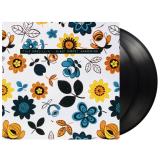
Fila Brazillia is the name of the decidedly singular collaboration between Steve Cobby and David McSherry, born in the coastal town of Hull in the UK. Bending—and often outright breaking—more or less every rule in the book, they've been effortlessly blending deep house, downtempo, breaks, ambient, and wry humour, sampling anything they can get their hands on. Their first outing was the 1990 single-sided white label 12" Mermaids, an airy deep house tune featuring a cheeky sample taken from the theme from Robison Crusoe. Since then, they've released a boat load of singles, seven highly regarded full-lengths, and more than 60 remixes for artists such as Radiohead, Busta Rhymes, and Lamb.
Black Market Gardening is their third full-length and marks a creative high-point for the duo. Over nine tracks, Fila Brazillia guides you through hazy, bass-heavy trip hop, cosmic synth lines, brisk breakbeats, funky guitar riffs, and even touch of drum 'n bass (it's the mid-1990s after all...). There's just so much to take in, leaving the listener wondering where the samples end and the live instrumentation begins. Yes, Fila Brazillia's output fits squarely within the chill-out tradition prevalent in the UK at that point in time, but their unmatched creativity and boundless approach to the studio process makes their music truly timeless.
Black Market Gardening is available as a 30th anniversary edition for the first time since 2001.
expected to be published on 16.10.2026
Repress!
Dan Kye is the mysteriously evoked moniker from multi-instrumentalist, producer, and vocal sensation Jordan Rakei. The New Zealand-born artist - who now resides in London - presents his first long-player from Dan Kye, ‘Small Moments’, on Bradley Zero’s Rhythm Section INTL. An ode to the dancefloor, the musical project was born out of Jordan’s lockdown experience, created from the comfort of his own home. Recorded with just a laptop, extra live instruments and guest musicians, ‘Small Moments’ seamlessly transcends across electronica, jazz and funk, with each genre being effortlessly fused with Jordan’s melancholy vocals. Allowing himself to push the boundaries, Jordan’s Dan Kye moniker draws on the energetic and uplifting elements of house and techno and perfectly mixes it with the sultry vocals and emotion that come with the live elements we know and love from Jordan Rakei. The record offers listeners a journey through more floor-heavy tracks such as ‘Mogeri’ and ‘Raro’ to more groove infused offerings such as ‘Rainbow Road’ (which is named after one of the maps in Mario Kart and inspired by the energy of Prince’s iconic live concert at The Aladdin in Las Vegas), whilst tracks, like ‘Sober’, take on a more lyrical and anthemic feel.
Jordan Rakei: “Rhythm Section INTL was my entry point into dancefloor orientated music, and it was Bradley who asked me whether I could head in that direction so he could play my music out in the clubs. Dan Kye has still got melodies, but the main focus is to keep it high energy.”
After meeting Bradley Zero online whilst living in Australia, Jordan eventually moved to London in 2014. The same day he landed, he went straight to a Rhythm Section party to meet Bradley, and it was here that he first got a taste for house music. He enjoyed Rhythm Section INTL’s ability to draw on both live and electronic talent; and thus, after Bradley asked him for some productions for the parties, the idea for Dan Kye was born. ‘Small Moments’ is a musical masterpiece that can be enjoyed as much on the dancefloor as it can in the comfort of your own home and is a perfect step into Jordan’s landscape and idealism of dance orientated music.
Bradley Zero - “In around 2014 the proprietor of the famous Northside Records in Melbourne handed me a self released 12” from a new, unknown artist based in Brisbane. It was Jordan Rakei - Franklin’s Room. I’d been home almost a year before I actually got round to listening to it and I remember that moment like it was yesterday. I lay down on the sofa, put the record on and was transported! The Dan Kye project is a testament to the experimental and independent ethos Jordan lives by and is a product of an artist reaching full stride but not afraid to still try something new. This ‘Small Moments’ LP was conceived in a record store, born in a club on Rye Lane and is now flying the nest, throwing caution to the wind and making a bold statement.”
expected to be published on 19.10.2026

180g Heavy double vinyl LP with liner notes by Tyran Grillo. Limited Japanese Obi for the first pressing. Original artwork by Russell Mills and photography by Jean-Baptiste Mondino.
The third Time Capsule is a body of dub reinterpretations by celebrated producer Bill Laswell of Ethiopian singer Gigi. Curated by Tokyo record collector, music researcher and seasoned reissue supervisor Ken Hidaka, it is the first time Illuminated Audio is pressed to vinyl after its CD release in 2003.
Ejigayehu Shibabaw was born in 1974 in Chagni, northwestern Ethiopia and by pursuing a career as a singer, went against her father’s strict, traditional gender roles. As Gigi, she embraced the same musical freedom she had strived for in her personal life, incorporating the Ethiopian church, funk, hip-hop, West and South African music into her work. She first settled in Nairobi, then Addis Ababa, where she quickly established herself as one of the city’s leading singers. A move to San Francisco in 1998 led to a long and fruitful creative partnership with bassist and producer Bill Laswell.
Around the same time, Chris Blackwell had stepped away from Island Records to start the art house film company and label Palm Pictures. He took an interest in Gigi and together with Laswell, pulled together an all-star cast of musicians for her self-titled US debut album, including Herbie Hancock, Pharoah Sanders and Wayne Shorter. It won international critical acclaim, not just for its musicianship but for making Gigi a “defining voice for the Ethiopian expatriate community”, as journalist Tyran Grillo praises in his Time Capsule liner notes. From the nation-defining 1896 victory over Italian invaders to the quiet revolutionaries who wear simple shemma garments, Grillo believes the themes in Gigi make it “a shower of sunlight on her homeland for those ignorant of its struggles.”
After its success, Blackwell encouraged them to go back into the studio to rethink the album and Illuminated Audio was born. “Anyone can make a voice sound worldly”, Grillo remarks, “but rare are those who can make one sound inner-worldly.” Gigi was clear with Laswell to give her vocals a minor role “because it’s already been done.” Instead her Amharic verse is fleeting, exhaling through the textures like ghostly fragments; soaring yet muted. Yet the album is still titled under her name, an assertion by Laswell of her central role in the album’s creation. Not only was it a fully endorsed project by Gigi, but she would be present throughout its development, giving feedback on half-finished ideas as Laswell played them back in the studio. “It works perfectly”, she reflected after the album’s release. “We wanted to capture the whole spirit of each track, and Bill’s remixes create a different music language that really puts you in a pleasant place”.
This new vocabulary takes its lead from a technical approach that Laswell had been perfecting during a furtive creative period at the turn of the millennium. Much like his ambient interpretations of Miles Davis (Panthalassa, 1998), Bob Marley (Dreams of Freedom, 1997), and Carlos Santana (Divine Light, 2001), Laswell approached Illuminated Audio by returning to the original multitrack masters. Gigi wasn’t just reworked, but recomposed into an expansive lattice of instruments, submerged in a watery ambience of dub and trance undercurrents.
Sonically, this new language that Gigi refers to, is manifested by the original album’s more understated parts being pushed to the fore. Explaining his contrasting methods, Laswell saw Gigi as being “put together in a way that fits”. Contrastingly, in Illuminated Audio, “a lot of things that I featured in the remix weren’t as audible in the original.” Instrumentation laying near-dormant, deep in the mix, are brought to the fore: the acid rock guitar and Wayne Shorter’s saxophone on ‘Tew Ante Sew’, Graham Haynes’ flugelhorn on ‘Nafekeñ’, Laswell’s bass on ‘Kahn’, the melodica in Mengedegna or the floating synths and talking drums in ‘Gud Fella’.
Brought to his attention by mentor DJ Nori, Hidaka describes Illuminated Audio as a “masterful sonic exploration into ethereal ambience and dub” and made sure this reissue also contained a full remaster to give its “deep musicality” much better dynamics and density in the overall sound. Hidaka admits that Laswell's music “is sometimes so out-there, it is often misunderstood” and, indeed, to dub album non-believers this might seem like a prolific producer imposing himself on another artist’s work; eternally developing rearrangements that never quite get to its destination. But that’s missing its true power and triumph. This is more than the reissue of a remix, but “a wholly unique musical entity”, as Hidaka describes. Illuminated Audio refers to the illuminated manuscripts that comprise the major part of Ethiopian art and its new compositions stand in proud solitude as a rare body of reworks that both informs and enhances their originals.
expected to be published on 19.10.2026

The Nu’rons were a family group consisting of two sets of brothers and cousins, the four young men in question being brothers Daryl Howard and Raymond Gibson (Daryl’s mother registered him under his father’s surname of Howard and Raymond under her maiden name of Gibson) together with Otho Bateman and Charles Bateman. They were all born and raised in Salem, New Jersey and from the age of ten and eleven began singing with a fifth member and Gibson brother Rudolph as a group called The Gospel 5. They eventually decided to crossover to secular music and as a group known for their energetic dance routines they came up with the new performing name of ‘The Nu’rons’ (taken from the word ‘Neuron’ which is a cell that transmits nerve impulses). However Rudolph was soon to leave the group due to physical illness. Also Daryl Howard and Charles Bateman had also been part of a working group known as The Devotions prior to becoming The Nu-Ron’s.Following hours of practice The Nu’rons eventually felt confident enough to put their own shows together and began to perform at local dances and parties around New Jersey and Philadelphia, often being used as a non-paid warm up act for bigger named artists. They moved between several different managers including Jimmy Bishop (Duo Dynamic Productions) until they came under the tutelage of WDAS radio DJ Georgie Woods (his wife Gilda, being the owner of the Philadelphia Gil, Dion and Top & Bottom record Labels). It was Georgie who introduced them to Manny Campbell who in turn invited them to an audition at his and partner Charles Bowen’s Emandolynn Music studio in Chester P.A. The song The Nu’rons chose to audition with was the self penned “I’m A Loner”, the audition went well, as during late January/early February of 1970 Manny and Charles took The Nu’rons into the Sigma Sound Studio’s with Tom Bell and the TSOP musicians to record “I’m A Loner” and “All My Life” which was released on the Nu-Ron label in April of the same year. The two studio takes presente don this release came short after the band moved on from the collaboration with producer Emanuel Campbell to take music matters in their own hands. Beside recording "Disco Hustle" to be part of the disco boom in Philly of the times, they recorded also “You Came Thru”, a rough yet beautiful heavy bassline driven soul funk recording, and the just amazing “Hurry Up Tomorrow”, here presented in one of the original Studio takes.
expected to be published on 19.10.2026

Mutual Rytm's Versus sub-label returns with a dark, absorbing new EP from contemporary techno innovators Kameliia and BLANKA. Kameliia and BLANKA both previously appeared on Federation of Rytm IV and now step forward with their long-awaited debut EPs. It is another standout for Mutual Rytm's Versus series, which has already made an impact with two previous EPs from Regent and Chontane and Klint and Hemka. This third release subtly evolves the sound into more hypnotic and atmospheric worlds that bring fresh perspectives to the series. Bulgarian-born, Norway-based Kameliia’s music is rooted in cinematic, melancholic and hypnotic sounds. She translates deep emotions into immersive sonic landscapes inspired by nature, particularly the moon, the sky and their atmospheric qualities. Along with Berlin-based Spaniard BLANKA, she has released on labels such as SK_Eleven, while BLANKA also co-founded Room Trax and draws heavily on the human voice, which she considers one of the most personal and intimate instruments. She uses it to create an emotional, direct connection with the dance floor, with a clean, minimal, timeless style rich in emotion. Kameliia opens up with the weighty kicks and eerie atmospheres of 'Bird In A Cage' before 'Red Sky' layers taut kicks and icy synths into a hypnotic forward charge full of depth and darkness, then 'Lightness' has an unsettling and paranoid lead hanging in the air next to vocal fragments and haunting pads. BLANKA’s offering begins with tightly wound kicks and bass on the dubby 'Say It With Me'; 'Self Pleasure' is an immersive and rubbery rhythm with cosmic synth work, and 'Rabbit Habits' brings funky synth lines that radiate a sense of subtle light and hope amidst the darkness of the groove. Two digital bonus cuts from each artist follow: Kameliia's unsettling, dystopian soundscape 'No Longer A Desire' and the backlit suspense of 'Vivere', and BLANKA's gritty, loopy 'Dream VST' and the deep-space odyssey that is 'Gone For Good'.
On Stock and ready to ship

PANORAMA Records heads to South Africa for its next release, shining a light on one of the country's great unsung talents, Mpharanyana. Born Jacob Radebe, Mpharanyana was one of the defining voices of South African soul, disco and funk during the 1970s, recording with both The Cannibals and The Peddlers while helping shape a uniquely South African take on dance music. Working alongside future legends including Ray Phiri, his records fused soul, disco, mbaqanga and funk into something entirely his own.
On the A-side, "Get Down" by Mpharanyana And The Cannibals delivers exactly what the title promises. An irresistible blend of modern soul, boogie and disco, it's the kind of record that feels like sunshine from the first bar.
The flip features "Disco" by Mpharanyana And The Peddlers, a super-funky slice of South African Afro-disco that wont leave the record bad.
Despite Mpharanyana's cult status among collectors, "Get Down" has never previously been officially reissued, while the B side was introduced by Kalita Records, both sides remain incredibly rare.
Driven by tight musicianship, infectious hooks and a groove that refuses to quit, this is a genuine dancefloor record for the heads.
Together these two sides tell the story of an artist whose music deserves to be heard far beyond collector circles. As always, PANORAMA Records continues its mission of uncovering rare and essential music from around the world, bringing overlooked gems back into circulation for DJs, collectors and anyone who loves records with real soul.
On Stock and ready to ship
A DJ, producer and significant figure in contemporary electronic music, Marcel Dettmann steps forward to contribute to Running Back’s ongoing Mastermix series. Whereas previous editions of Mastermix have taken an ear to the sound of lapsed, legendary clubs such as Wild Pitch and Front, Dettmann’s curation deftly captures the man himself in ongoing perpetual motion, raiding the vault for his own precision-tooled edits, long-employed on dancefloors to devastating effect. Alongside a continuous mix, this release arrives as a 3LP gatefold, and as a limited edition cassette.
Closely associated with Berlin’s techno landscape, Dettmann was born and raised in the former GDR, then later immersed in the bleary-eyed counter cultural landscape of post-unification Berlin. Initially oriented by post-punk, industrial and new-wave music, Dettmann has been DJing since 1993, always expanding and perfecting his repertoire. He later began working behind the counter at the city’s tastemaking rave boutique Hard Wax, and a decade after he first dropped a needle, became (and remains) resident at notable local nightspot Berghain/Panorama Bar, where his instincts have helped sculpt the signature sound of both main dancefloors.
Of course, you’re probably not asking, “Who is Marcel Dettmann?” More importantly, you might want to know; just what treats has he gifted us here? The trip begins with a simple pitch-shift skywards, transforming Identified Patient’s creeping ‘The Female Medical College of Pennsylvania’ into a peak-time freakout, before an alternate take on Toctronic’s ‘Bis uns das Licht vertreibt’ emerges from the vaults for the first time. Dating from 1995, and one of Dettmann’s all-time favourites, Cristian Vogel’s ‘Untitled’ clambers back into the box with respectable cuts, while John Bender’s ‘Victims of A Victimless Crime’ kicks off the flip sporting a new arrangement, transporting us back to the foundations of a confident, stripped-back sound.
A few subtle edits to Clark’s perilously funky ‘Dirty Pixie’ takes us to Dettmann’s remix of Junior Boys. Produced in 2010, it transposes the Canadian duo’s sophisticated pop with our curator in his minimal prime, and has since become an irresistible prize for high-minded diggers. The same can be said for Experimental Products’ explosive proto-electro anthem ‘Who Is Kip Jones?’, empowered from pricey Discogs purgatory with just the slightest of tweaks. It’s deservedly sandwiched between the guiding influences of Chicago and Detroit in the form of Mutant Beat Dance’s raw ‘The Human Factor’ and a shimmering new version of previous solo production ‘Water’, featuring close friend and Ostgut Ton ally, Ryan Elliot.
The second half of the Mastermix seamlessly connects the mechanical past and digital present of EBM and industrial in the dance, with Dettmann’s instincts as a guiding hand. Severed Heads’ iconic ‘We Have Come To Bless This House’ emerges with mere nips and tucks, while Nitzer Ebb’s ‘Shame’ is significantly reimagined as a highwire act of rhythm and tension, setting up a sensual second take on a 2017 remix of ‘Limbo’ from Swiss synth heroes, Yello.
Core musical memories are shaken and stirred with a context-shifting take on Frank Duval’s emotional classic ‘Ogon’, while Ian North’s ‘Sex Lust You’ and Ford Proco’s notable Coil collaboration ‘Expansion Naranja’ effectively throb with only minor adjustments, respectfully imagined as “shadow versions”. Meanwhile, a simple breakbeat lifts Albert Kuningas’s ‘Astraalprojektio’ in the direction of wide-eyed dancefloors, while a fresh take on K-Alexi Shelby’s ‘Season of The Real’ inexplicably emerges somehow even funkier than before.
The conclusion of the compilation leads back to Das Tier from the prolific experimentalist Conrad Schnitzler, whose swirling synths and hypnotic vocals are duly tightened by Dettmann, but only as he puts it, “in conversation with the original.” Concluding three discs and thirty years of commitment to the dancefloor, this Mastermix not only offers us the opportunity to eavesdrop on this endless exchange, but to gain some sought-after material for our own record collections.
On Stock and ready to ship
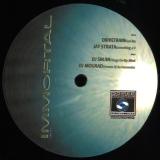
...a sound unbound by time and space
DRIVETRAIN - Feel Me
Mezmurizing in ethereal pads, a beguiling vocal repetion and punchy rhythm
JAY STRATA - Something 4 U
Mondo bass directs spicy pad lines and female vocal drops for something evocative
DJ SINJIN - Things On My Mind
Straightforward, funky and direct, from the fierce bass line to the aggressive dialogue
DJ MOURAD - Dreams Of An Insomniac
When jazz meets acid and a mythical descendant is born clad in muted trumpet and bleeps
On Stock and ready to ship

Bruce Ivery returns to Stilove4music, and we couldn't be happier to welcome him back. A true master of his craft, Bruce has delivered some of the label's most celebrated releases, each one leaving a lasting mark on dancefloors around the world.
Born and raised in Chicago and a key member of the legendary Chuck Brothers collective. Bruce's reputation as both a producer and editor speaks for itself. His latest work, a release on Ryan Elliott's Faith Beat, is further proof of his talent. This new drop is no exception—it will have you questioning your own sanity.
It's disco time once again, and it's Bruce Ivery time on Stilove4music. We're beyond excited to share these tracks, designed to create mayhem on discerning dancefloors.
expected to be published on 31.10.2026
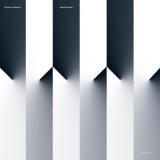
With the stunning Planes In Reverse, Sascha Funke, the Berlin-born producer and DJ, and long-time member of the Kompakt family, releases his first album in almost a decade, since 2017’s Lotos Land. It’s a welcome return for one of the most eloquent and elegant producers in electronic and dance music, someone who’s always been able to say more with less, and the ten tracks here, moving effortlessly between techno, house, minimalism, disco house, and home listening tunes, are all gorgeously sculpted miniatures. With guest appearances from partner Julienne Dessagne (Fantastic Twins), with whom Funke has also worked in Saschienne, there’s something homely and family about it, too; a family of sounds, a home of tone. There’s also something consummate about Planes In Reverse, as though Sascha Funke has perfected the album format. There’s no flab here, no excess – it plays out like a perfectly designed experience, ten tracks, coming in under fifty minutes, an album where every moment matters.
It’s full of variety, but everything has the unmistakable Funke thumbprint, one that was developed during the late ‘90s / early ‘00s minimal techno and microhouse moment, but which was always open to other ideas and other sounds, too. Planes In Reverse came together quickly for Funke: “Last winter, I had two or three new tracks, which gave me a core feeling: ‘Ah, this could be the direction of something like an album.’ Sometimes it can be very easy that you wrap it up and then it becomes something coherent and solid. This happened within two or three months; it was very fast and direct.” Everything fell into place – the ten tracks revealed themselves, the album sat together as a whole, and the final piece of the puzzle was returning home again to Kompakt, who have supported Sascha Funke from the very start, releasing his first single, “Campus”, back in 1999.
Planes In Reverse opens stealthily with “What You See”, where rhythms percolate and bass prowls while gaseous textures fill the sonic spectrum. It’s also the first appearance of Fantastic Twins on the album; here, she speaks a hypnotic mantra, a prelude to the title track, where Dessagne has a pure pop moment, her voice ecstatic and vibrant. Indeed, Planes In Reverse plays out like thesis and antithesis ending in synthesis, the tracks nestling next to each other even as they shuttle between sounds, genres, perspectives. There are some beautiful moments dropped throughout Planes In Reverse – the heavenly textures that make the title track feel so cloud-bound; the glassy and orbital tones that drop from the skies through the disco house inspired “Karat”; the clamour and clatter of hyper-edited voices shuffling through “Splitter”; or the field recordings of Sascha’s son football training session that drop “Zockers” into a different place and space, slowly giving way to a beautifully paced electro-pop mantra. “In Germany,when the kids play a computer game, or when they play football, we describe it as zocken. They’re the players, they’re the Zockers.“ Funke explains.
Planes In Reverse winds down with the beautiful “Kruso”, where ticklish, loving arpeggios careen around the room, and drift-work chords shimmer and shuttle between your ears. It’s a perfect comedown to an album that feels breathes in and out at an organic pace, nothing above 130 BPM, everything sitting together just so. Indeed, that’s the feeling you take away from Planes In Reverse; it sums up the spirit of Sascha Funke productions perfectly, while also existing beautifully as its own world dreamt unto itself. It’s Sascha Funke down to the very essence. Nothing unnecessary, nothing extraneous: Pure Funke.
expected to be published on 06.11.2026

Year 3673. The frequencies have taken hold. What began as scattered transmissions from the underground has become an infection. Across the dead zones, abandoned receivers flicker back to life. Forbidden rhythms bleed through the static. Citizens once numb to the Global Order's neural grip are beginning to move again. But something else has awakened with them. Deep beneath the ruins, an unknown signal has begun answering SHIFT's transmissions. Its origin is untraceable. Its frequency predates the network. Those exposed report visions, lost time and an uncontrollable urge to follow the sound. The Global Order calls it contamination. SHIFT calls it evolution. A new generation has been born into the resistance; raised on distorted circuitry, machine funk and frequencies never meant for human ears. The signal is spreading. Do not adjust your receiver.
expected to be published on 10.11.2026

Copenhagen’s finest,Main Phase, joins theNervous Horizonfamily with his newest EP:‘Chosen One’!
WithChosen One EP, Main Phase sets out to bridge the gap between his earlier work and a new style he has been developing. Drawing on elements of UK garage, techno and house, the EP brings together a varied collection of tracks designed to move comfortably between different sonic worlds.
The EP starts with‘Creep Into My Mind’an anthemic house track which features a soulful earwormy vocal that will live rent free in your head for the rest of your life!
Next up is the title track of the record,‘Chosen One’a bass heavy 4x4 influenced belter.
Last but not least the EP featuresLoganon‘Take Time’,bringing one of London’s most present grime voicesinto Main Phase’s world with a nod to old school UK Funky and amapiano. His delivery gives the track a different energy to the rest of the EP, adding a raw vocal edge to Main Phase’s clinical production.
Main Phaseis a Copenhagen-born DJ and producer known for a versatile, left-of-centre sound shaped by years of digging across house, techno, garage, jungle, dubstep and everything in between. A staple in clubs worldwide - from Fabric across Panorama Bar to Boiler Room, he’s built a reputation for high-energy sets driven by deep crates, unreleased cuts and a love for the darker, heads-down corners of dance music. As a producer, he moves just as freely, releasing across key labels including his own ATW Records imprint with Interplanetary Criminal. His catalogue is always shifting, each release revealing a new side, whether it’s rough-edged bass pressure, hypnotic club tools or genre-bending experiments. It’s a trajectory that keeps him firmly rooted in forward-thinking territory.
Loganknown as MC Logan, or “The Big Sound Boy”, is the Willesden-based MC that has been carving out his own lane through grime’s underground and clash scene since 2017.
expected to be published on 13.11.2026
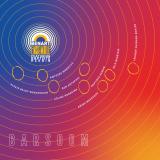
**BenArt Ensemble ft. Baptiste Herbin** unveil a distinctive debut album at the crossroads of jazz, world music and groove. Led by bassist and producer Ben Artuphel, this eight-piece ensemble brings together musicians from diverse backgrounds and with a wide range of influences: Baptiste Herbin (saxophones), Amina Mezaache (flute), Céline Bonacina (baritone saxophone), Ben Artuphel (bass), Antoine Banville (drums), Alexis Bajot-Nercessian (keyboards), Laurent Avenard-Kohler (guitar) and Nils Wekstein (percussion).
Born from a musical encounter in 2023, the band has developed a unique sound in which intricate bop-inspired writing meets 1970s funk, Afro and Creole rhythms, and the vibrant energy of samba. The album features 13 original compositions, the result of a deeply collaborative process and an exceptional musical chemistry between the eight musicians.
At the heart of the project, saxophonist **Baptiste Herbin** brings his virtuosic playing and extensive international experience. Nominated for the Victoires du Jazz in 2013 for his debut album *Brother Stoon*, he went on to receive the Django Reinhardt Prize and was named Musician of the Year by the Académie du Jazz in 2019. He has released four albums under his own name and has appeared on around fifty recordings alongside some of the leading figures in jazz.
With its finely crafted arrangements, rich melodies and irresistibly groove-driven rhythm section, **BenArt Ensemble ft. Baptiste Herbin** delivers a vibrant and generous take on jazz, where each musician's individual voice shines through while serving the collective. Balancing heritage and modernity, this album is an invitation to dance, dream and travel.
expected to be published on 13.11.2026

Perry Louis is a pivotal figure in the UK jazz dance movement. As a dancer and choreographer, producer, DJ, broadcaster, and founder of the internationally respected jazz dance collective JazzCotech Dancers, he is perfectly placed to curate this collection.
Perry has been at the heart of the scene since the early 1980s, from JAFFAS, the Electric Ballroom, Dingwalls, Acid Jazz, Hi Hat, and Messin’ Around, taking its energy and sound as far as Japan, the USA, St. Lucia, India, Canada, and across Europe.
This compilation celebrates 25 years of Shiftless Shuffle, with Perry as its ambassador and driving force. Over the years, he has collaborated with top DJs including Paul Murphy, Gilles Peterson, Snowboy, Colin Curtis, and Shuya Okino, helping shape the UK jazz dance sound into a global phenomenon.
The album blends deep jazz, fusion, Latin, and groove-driven tracks, reflecting both the scene’s rich heritage and its forward momentum.
From the brand-new exclusive track by Kyoto Jazz Massive, Get It Together (Samba Fusion Mix), to Bunny Brunel’s Fickle Funk appearing on vinyl for the very first time, and the hard-hitting Caribbean Fire Dance by Tom Grant, this compilation tells the story of a movement—an underground culture born on UK dancefloors that has now captured a worldwide audience.
On Stock and ready to ship

This release is a homage to the Turbo label.
Turbo was a part of Joe Robinson and Sylvia Robinson’s All-Platinum Records set up in New Jersey which operated from 1967 to 1979. At one stage the fiercely independent and proudly black owned label threatened to become another Motown or Philadelphia International. That never happened, but the Robinson’s dream of worldwide success came later when Sylvia discovered Rap, recorded Rappers Delight by The Sugarhill Gang and Sugar Hill records was born.
Music historian Steve Guarnori describes All Platinum as "probably the most unusual record company there ever was. Dysfunctional, but at the same time wonderful."
The All-Platinum chaos extended to Turbo. But despite anarchy - some superb albums went straight from manufacture to be deleted and sold as cut-outs - sublime music was created. This 10" 6-track release collects together some of the most hallowed Turbo releases which between them have become cherished by collectors.
Brother to Brother "The Bottle" captures the label at its most astute. Gil Scott-Heron and Brian Jackson’s original version was an album only track on Strata-East so Turbo seized the opportunity to quickly make a worthy cover version and rush release it a single which enjoyed success.
"Ton Of Dynamite" by Frankie "Love Man" Crocker was Turbo’s debut release in 1968 (it actually sounds a later recording). At the time Frankie was a DJ on WWRL radio station in New York and the release was essentially a reward for his previous support of All-Platinum releases. The record (a b-side) is actually made Willie & The Mighty Magnificent who went on to re-record it as
"Funky 8 Corners". It took until 1975 for "Ton Of Dynamite" to get recognition when it became an anthem as the UK Northern Soul scene adopted it as part of the movement away from old skool 1960’s Soul. Whatever its’ provenance, "Ton Of Dynamite" is now revered by the Rare Soul and Funk communities.
The Optimistics "Man" from 1971 is another b side single. The group specialised in smooth harmony Soul but "Man" is a funkier affair which won support from Rare Soul aficionados and will cost you £600 plus if you are lucky enough to locate a copy of the hard to find 45.
Willie & West "Attica Massacre", also from 1971, is an even more elusive single. It is a powerful protest against the killing of 29 prisoners, many black, following a riot at a prison - Attica Correctional Facility in New York. The deaths and a subsequently discredited cover up caused outrage. John Lennon was amongst the first musicans to make a recording about the bloodbath, but the most emotional protest is this Willie & West track. Only 300 copies were manufactured of one of the most powerful civil rights recordings ever made. The vocal sounds like anti-War Edwin Starr at his most bristlingly aggressive.
Perhaps the strangeness of All-Platinum is best illustrated by the later success of Lonnie Youngblood "Sweet Sweet Tootie" which is essentially the backing track of "Attica Massacre" plus exquisite sax playing by Lonnie. Despite it selling 100,000 plus copies the label did not see this as a reason to reissue "Attica Massacre". Strange. Or as Marvin asked "What’s Going On"?
The New Sounds "Don’t Take Your Love From Me" was only issued by Turbo as an album track. Despite good music on it the LP was poorly (it at all)/ promoted and flopped. The superb "Don’t Take Your Love From Me" is a long time Northern Soul / X-Over favourite.
Larry Saunders mesmerising "On The Real Side" made no impact when released on Turbo in 1974 but was nevertheless issued in the UK by London Records. The Northern Soul discerning dancers instantly latched on to its combination of uplifting lyrics, heartfelt vocal and clomping beat and since then its’ appeal has extended across the whole of the Soul community. Without doubt an all time classic.
So six treasures from a label that despite frequently advocating cash out of chaos frequently conjured up awesome music.
ANORAX is grateful to have the opportunity to present this very special Soul selection.
On Stock and ready to ship
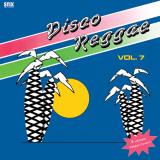
Stix Records, a sub-label of Favorite Recordings, is back with Disco Reggae Vol. 7, continuing a series that goes back more than 20 years, to the success of The Dynamics’ acclaimed album Version Excursions.
Born in Jamaica, reggae has always shared deep roots with Soul, Funk, R&B and Pop. Over the decades, Jamaican musicians have mastered the art of reinterpreting iconic songs through their own unique musical language. With the Disco Reggae series, Stix Records celebrates this rich tradition, bringing together fresh reggae interpretations of timeless classics from across the musical spectrum.
For this seventh volume, Charles Maurice has once again carefully curated a selection packed with gems, featuring reinterpretations of tracks by Hall & Oates, Gloria Estefan, Crystal Waters, Patrice Rushen, Cameo, Joe Smooth, and many more.
Behind the controls, the usual crew of friends is back: Taggy Matcher, Mystic Jungle, Soul Sugar aka Booker Gee, and Mato. This time, they are joined by Dub Shepherds and Slowly from Japan, who each bring their own flavour to the collection with two killer covers.
The result is another feel-good journey through Disco, Funk and Reggae, made for dancing under the stars, cruising with the windows down, or simply vibing with friends.
Disco Reggae Vol. 7 is another chapter in Stix Records’ ongoing celebration of the timeless connection between Jamaican music, classic songs and the dancefloor.
expected to be published on 20.11.2026

2026 Repress
Techno mainstay Gary Beck drops hugely sought-after cut 'Hopper' on SHDW's Mutual Rytm sub-label Spectra, with remixes from KiNK.
Glasgow-born Gary Beck is a primary figure in techno and has been for well over a decade. Dropping seminal
underground classics and cultured full-lengths on an array of leading labels, as well as his own BEK Audio imprint,
he has also led the way as a revered DJ as his legacy continues to build. Now, adding to his standout 'Upside
Criminal' EP as well as his well-received track 'Fold' on the 'Federation Of Rytm III' VA, he returns with a record that
has often featured in both his and Mutual Rytm boss SHDW's sets, stepping out on the label's Spectra series with
a cut that has long been sought-after by those who know.
A spontaneous studio moment turned club weapon, the timeless 'Hopper' merges a syncopated disco bassline with
subtle nods to funk and classic dancefloor energy. It's one of those tracks that lingers in your head long after the
night ends - a pure embodiment of Beck's raw energy and production finesse built on an infectious groove full of
contrast and character.
Bulgarian synth wizard, hardware genius and tireless innovator KiNK delivered Spectra's inaugural release, so he
lands as the perfect person to remix. His first interpretation stays close to his roots with a house-leaning, slowed
down take that channels warmth and groove in equal measure. On the B2, however, he flips the script with a high
octane fusion of techno and UKG. It's a peak-time anthem engineered to ignite dancefloors and closes out a
standout EP with the third release in the Spectra catalogue.
Gary Beck 'Hopper' drops via Mutual Rytm Spectra on 20th June 2025.
On Stock and ready to ship

Highscore is one of the newest-and quite sensational-discoveries in funk of the 1980s out of Germany. Two tracks Breakin' Out and Girls So Fine, both recorded about 40 years ago and shelved ever since, are finally receiving a long-overdue 12" release.
Label founder DJ Scientist tells the story of how the tracks were uncovered:
"Several years ago, while researching the Crea label-after we had already licensed 'You're Not The One For Me' by Peter Patzer-I also wanted to find out more about another band on the label: Nuages, who had released the stunning jazz-funk/fusion album Cumulus.
Interestingly, a Discogs user had uploaded a hand written promo letter from one of the band members along with the LP. In it, drummer Mike Bach mentioned plans for a second album, as well as a single featuring a 'coloured singer'-which caught my attention. (A note on language: the original letter from 1985 uses the term 'coloured.' We've chosen to quote it directly as a historical document, but want to be clear that this reflects the terminology of the era and not language we would use today.)
Digging deeper, more information was found on Bach's own website, where a project called 'High Score' was mentioned. I immediately got in touch and asked if the recordings from that project still existed. Unfortunately, Bach couldn't locate any of the material at the time.
Years passed before we reconnected, when we featured 'Strange Weekend' by Nuages on our recent yacht rock compilation. I still had the Highscore project in mind and asked again. Once more, Mike had to deny-but he made another effort and reached out to former collaborators. A few weeks later, guitarist and composer Hermann Behrens discovered cassette tapes containing tracks from the Highscore project. I couldn't wait to hear them…"
To go back a bit: Nuages were a jazz-rock band from Bremerhaven, originally formed by guitarist Joachim "Fussy" Fuß in 1982. The lineup included Mike Bach (drums and percussion), Klaus Hinners (bass), and Frank Fischer (keyboards). In 1984, John Dillard, a U.S. GI stationed in Germany, joined Nuages for several live performances as a soul singer.
Around 1985/1986, Dillard and Bach then teamed up with Hermann Behrens with a new focus on electro funk and disco: Highscore was born.
When the three demo recordings were finally sent to us, they immediately blew us away. Breakin' Out stood out as an incredible electro-funk boogie gem-exactly what we had been looking for. What's more, it didn't sound like a rough demo at all, Breakin Out was a well-arranged and almost perfectly recorded track, driven by fresh, vibrant synths, drum machines and guitar. The cassette mix wasn't entirely final, but the remaining details could be refined during mastering.
The B-side, Girl So Fine, impressed just as much-equally strong and just as captivating as the A-side. Our reaction was immediate: this had to be released without delay!
Most importantly, there are a few more recordings from Highscore. However, these only exist as multi-track studio reels, which currently cannot be transferred. In the best case, more material from the band may surface soon-hopefully without another long wait.
The 12" release Breakin' Out / Girl So Fine" comes with a newly designed picture sleeve, featuring an original photo of the band members, including background singer Ruben Hopkins who does not appear on these two recordings.
The vinyl edition is limited to 400 copies.
On Stock and ready to ship
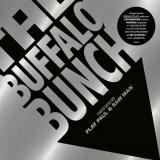
A key name from the golden era of French Touch, The Buffalo Bunch return to the spotlight with a selection of some of their most essential cuts, including their highly sought-after remix of Phoenix’s “If I Ever Feel Better” — a track that has become increasingly elusive on vinyl over the years.
Also featured is We In Music’s “Grandlife”, a cult early-2000s gem born from the same creative circle. Built on addictive disco-funk loops and straight-to-the-floor energy, it sits perfectly alongside The Buffalo Bunch’s signature productions.
Filtered house, disco, funk and raw groove collide throughout the compilation, capturing the unmistakable sound of a duo whose records have become firm favourites among DJs and collectors.
More than twenty-five years after their first releases, TMS Records brings these tracks back into circulation with a vinyl edition made for the dancefloor, the record bag and a new generation digging deeper into the French Touch legacy.
expected to be published on 27.11.2026
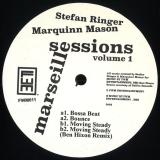
From the A to Marseille, Stefan Ringer and Marquinn Mason return with a four-track collaboration born from rhythm, friendship, and creative exchange. Opening with the intimate, bossa nova-inspired groove of "Bossa Beat," the EP moves effortlessly into the jazz-infused house energy of "Bounce" and the cosmic boogie funk of "Moving Steady." Together, the pair blend soulful vocals, infectious basslines, and dancefloor ready rhythm into a collection that feels both timeless and forward-thinking.
Created during a week-long artist residency in Marseille, France, the project captures the spirit of discovery that fueled the duo's creative process. The release concludes with a stunning remix of "Moving Steady" from Ben Hixon, who reimagines the original through a tropical Latin house lens, adding rolling percussion and hypnotic grooves to an already irresistible composition. From Atlanta to Marseille, this EP is a celebration of movement, connection, and Good Motion & Good Energy.
On Stock and ready to ship

Originally composed by Collage in 1985, Herzschlag returns in a newly recorded cover version by Berlin-based synth-wave duo Bionda e Lupo. Describing themselves as a “boy/girl band like no other,” Lupo recreated the NDW-electro tune from the ground up using an impressive array of vintage instruments and studio equipment, including classic synths such as a Pro-One, a Roland Juno-60, and a Farfisa Syntorchestra. Bionda’s distinctive voice adds a new emotional depth to Katrin A. Kunze’s lyrics while still remaining true to the original spirit of the song.
Lupo of Bionda e Lupo has long been a devoted fan of Mit den Puppen tanzen, Collage's only release at the time, originally issued as a 12" single in 1984. Despite never managing to acquire an original copy, he considers the record unique within the German NDW landscape thanks to its unmistakable "Bravo-breakdance-meets-synth-pop" character. Indeed, Markus Kammann, Jürgen Grah, and Katrin A. Kunze drew significant inspiration from the electro-funk pioneers of the era, particularly Afrika Bambaataa's iconic Planet Rock. When we approached Bionda e Lupo about re-editing a track from the Collage's Motel d'amour release, they instead proposed recording an entirely new cover version.
Work on the project began in spring 2025 in coordination with Markus Kammann, who, together with Jürgen Grah, originally composed the music. Sadly, Kammann, born in 1958, passed away unexpectedly on October 17, 2025. This release is dedicated to his memory.
The liner notes reveal additional details about Kammann's remarkable life and achievements. He was the founder of the legendary Beatbox club in Wuppertal, which was once recognized as the "Best Club in Europe," and a co-founder of the Groove Attack record store. Groove Attack would later grow into one of the world's most influential music distributors, especially for Hip-Hop.
The 12" release is limited to 200 copies. Pressed on transparent red vinyl with black "smoke" effects, it comes housed in a picture-disc sleeve with an accompanying sticker. As an additional highlight, the record includes a previously unreleased NDW bonus track recorded around 1983 by Collage. It features Katrin A. Kunze as well as Thomas Kohl, the vocalist of Schwarze Bewegung.
- Red transparend vinyl with black smoke
- Housed in a picture-disc sleeve with large sticker
- Released in memory of Markus Kammann (1958-2025)
- Contains A4-sheet with liner notes
- 5 tracks, including the vinyl only bonus track "Hallo E.T.",
- Quality lacquer cut by Manmade Mastering
On Stock and ready to ship

SKYLAX RECORDS proudly unveils the final chapter in its monumental 4-part saga — SKYLAX BLACK 4: Enlightenment Theory. This visionary series, bringing together two of France’s most iconic electronic artists — ARNAUD REBOTINI and ACID WASHED — was never just a collection of records. It was a journey through the deepest layers of the underground — a conceptual project where each release was a coded message, each track a fragment of a greater whole. On the A-side, Enlightenment Theory explodes with fierce urgency — an anthem forged in the spirit of Underground Resistance, echoing the soulful intensity of early ’90s Detroit without imitation. It’s bold, emotional, and militantly underground — a future classic cloaked in defiance and elegance. On the B-side: B1. Space Is The Place channels the weightless gravity of dub techno at its purest — all echo chambers and endless delay, a direct line to the Berlin school of Basic Channel, Maurizio, and Deepchord. B2. Beyond Current Biological Constraints closes the chapter in deep space — an electro masterwork evoking Drexciya, full of aquatic melancholy and cybernetic funk. It’s not retro — it’s timeless. With this last installment, the puzzle is complete. The meaning is revealed: R.A.V.E. — four records forming one powerful word. One timeless idea. A tribute to everything this culture stands for: raw energy, emotional truth, sonic innovation, and spiritual depth. This project could only be born on SKYLAX RECORDS — a label that has always stood apart. Uncompromising. Devoted to physical formats. Fiercely loyal to the culture. While others chase trends, SKYLAX continues to chart a different course — one rooted in the sacred codes of house, techno, electro, and beyond. It is no exaggeration to say that SKYLAX is one of the last true purist strongholds of underground music — and this series, with its layered meanings and fearless artistry, is proof. From Redshifts to Blueshifts to Artificial Darwinism then Vision Quest, every chapter has pointed toward this moment. Now, with Enlightenment Theory, the full vision is revealed. RAVE is not just a word — it is the truth. A philosophy. A myth reborn. The circle is complete. The message endures. The legacy lives on.
This item has not yet been released. You can pre-order the product now.
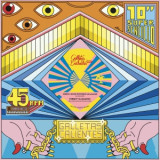
LTD 300 - Printed Sleeve
------------------------
Barranquilla born multi-instrumentalist Pernett is undoubtedly a true pioneer in fusing Colombian folklore with electronic elements. Back in 2003, when he released his first album “Música Para Pick Up”, Humberto was immediately seen as genius by some, crazy and outrageous by others. How dare he incorporate synthesizers into traditional music? What would be called this avant-garde genre where gaitas, traditional drums and keyboards come together? To this date, Pernett has released 6 albums, worked with an impressive number of prestigious artists such as Phil Manzanera, Calle 13, Novalima, or Quantic, and is still influencing whole generations of forward-thinking musicians.
Originally released from is latest album, “Vamos A Hacer” and El Pajarito have been edited for the occasion, by talented recording engineer Benjamin Calais AKA Ben Matik,
A-side “Vamos A Hacer - Ben Matik Instrumental Edit” is a joint collaboration between Pernett and renown British producer Will Holland aka Quantic. A heavy blend of funky breaks and cumbia. A 7-minutes version, exclusive to this 10″, has been especially taken out from the masters vault, and edited by Ben Matik: the original short version takes a unexpected turn to a completely freaked-out “Puya” rhythm, where gaitas and synths perfectly merge together.
B-side “El Pajarito - Ben Matik Instrumental Edit” is a deep downtempo anthem, a perfect fusion of powerful electronic beats, 808 bass, analog synths and gaitas. special attention should be paid to the enchanting voice of Diana Pereira on this one.
Artwork by Mateo Rivano.
This item has not yet been released. You can pre-order the product now.

After the success of Made in the Emirates – Volume 1, which documented a wide spectrum of the UAE’s independent music scene, the series returns with its second installment.
Made in the Emirates – Volume 2 shifts focus to the country’s electronic underground, bringing together 8 original tracks spanning deep house, breaks, techno, and experimental club sounds. A snapshot of a thriving scene, built by artists shaping it on their own terms.
The compilation brings together a cross-section of artists shaping the UAE’s electronic underground today:
- Tarik Omar opens the record with Sample Sunday, reflecting his deep-rooted approach to rhythm and sampling.
- Adam Rahman delivers K Lock, a tightly wound club tool driven by percussive precision.
- Sons Of Rhythm revisit their catalogue through a Rhythm Plate Italo 90 Remix, bridging classic house influences with a forward-facing Italo touch.
- Megadon Betamax - a co-founder of boutique imprint Voyeurhythm Records brings Maha Monastery, an atmospheric funk-infused cut that leans into experimental yet groovy electronics.
- Curator Shadi Megallaa contributes Word Jazz, reflecting his long-standing role in shaping Dubai’s underground through Ark to Ashes and The Flip Side.
- OHFFF a project born from spontaneity, sonic curiosity and sequencer experiments. Dwelling is a club-friendly.
- Tacit presents The Lakritze Suite, a multi-layered, hard beat composition that moves between abstraction and industrial structure.
- Closing the record, Nasrawi’s Intention Dub channels deep, and dubby, grounding the compilation in a reflective, low-end driven finale.
- Curated and compiled by Shadi Megallaa (Ark to Ashes / The Flip Side, Dubai).
On Stock and ready to ship

Chicago funk/soul band South Side Movement, who began their career as the backing band for the renowned pair Shintek & Wiley known for “Bootleggin,”
released their debut album The South Side Movement (Wand, 1973). From this album comes the enduring classic “I’m Been Watching You”, a track that remains
highly popular among hip-hop listeners—sampled by artists such as Erykah Badu (“Woo”), Ghostface Killah (“Camay”), and Jadakiss featuring Nas (“Show Discipline”).
This new 7-inch release features a special edit by producer/MPC player KOENMA, who digs deep into the analog-born groove and brings a fresh edge to this timeless cut.
On Stock and ready to ship

Terrestrial Funk presents a piece of Detroit history. Born and raised in Motor City, Karl Fultz knew at the age of twelve that he wanted to be the most talented and successful DJ in the world. In 1999 he released on Juan Atkins’ Metroplex under the alias People Mover and in 2000 he released as Black Electric on Puzzlebox. Inspired by British synth-pop duo Eurythmics, Fultz says Black Electric was a way to get more women involved in the techno movement. Together alongside vocalists Tiffany Elliott, Kim Glover & Talena Fultz, Black Electric brought sex appeal to the scene. Their first and only release stays in demand and has become inaccessible until now. Terrestrial Funk’s reissue provides two fresh cuts on the new 12”; ‘Purple’ a chugging Detroit acid track describing soul modification to enhance intimacy and a proper bassed out club mix of the nasty electro sex song ‘Work That’, which was only featured as an acapella on the original release. The release also features updated mixes of both the title track and the half-time anthem 'Come To Me' alongside the original y2k mix of 'Colors'. Black Electric stands as a testament to turn of the millennia Detroit and the city’s undying devotion to expand our connection to music.
On Stock and ready to ship

First Word Records proudly present ‘One 4 Detroit’; the third single from Above The Clouds (aka kidkanevil & Magic Manfred), complete with a remix by 14KT.
This 7" vinyl release follows on from last Summer's MF DOOM cover 'Arrow Root', which received strong support from the likes of Japan's DJ Koco and Philadelphia's DJ Jazzy Jeff, and their recent cover of ‘Change’ which was originally by Shadez of Brooklyn, most notably appearing on DJ Premier's 1997 mix album 'New York Reality Check 101.
One of the original First Word roster, UK Producer/DJ and all-round laptop music geek kidkanevil has developed a distinctive and progressive sound over the years, gleefully exploring the beats and bleeps of the electronic music universe to international recognition. Leeds born, sound system bred and raised on a (un)healthy diet of video games and anime, his solo work inhabits the curious space between bass frequencies and otaku culture. But as a devoted teenage backpack rap nerd, somewhere in the back of kid's mind was a lingering desire to reconnect with his first love, hip hop.
Not long after moving to Berlin he joined a studio space in graffiti plastered Kreuzberg, where he met multi instrumentalist wizard Magic Manfred; a disciple of all things boogie, disco, funk and soul. Born and raised in Berlin, and currently a touring musician for many an act, Manfred's musical map joins the dots from piano lessons at four, to starting a band with his teenage friends, leading him to his true calling - the bass - via the club vibrations of his hometown, which introduced him to the world of DJing and production, and a stint studying in the explosive London jazz scene to finalise his Jedi training.
Bonding over their mutual love of '90s hip hop, a friendship and musical kinship developed, coupled with a desire to honour past eras but push things forward, Above The Clouds was born; named after their joint favourite Primo beat, with a touch of irony regarding their basement based studio of a windowless variety.
kidkanevil explains that “after we made a bunch of piano joints it felt like time for a switch up, I had these raw drums looped and Manfred started playing this simple synth line on the Prophet - it kind of happened in an instant. This one was really a case of capture a moment and let it be. It had this cold, industrial bounce to it that really felt ‘Detroit’ somehow, so it became something of a tribute to that sound. Obviously there’s a rich musical history there that’s beyond anything we could encapsulate, but I hope the respect comes across. From Berlin to the D with love!
We felt pretty strongly that if we’re gonna nod to Detroit, we needed a remix from someone who reps there directly. I’ve been a fan of 14KT since the early 2000s beat scene, and as he’d previously released music on First Word, it made perfect sense to approach him. We asked and did he oblige!! I’m very comfortable saying we got schooled! He really blessed us with an amazing remix that brought a life and soul to what was originally a pretty stark beat, we’re super honoured to have this as our first ever remix.
‘U3P1’ (named after a synth preset so we didn’t forget!) is on the flip - this also came about pretty fast. I was thinking Ummah-era Tribe with the drums, and Manfred once again put down this super nice riff and it grew from there. It kinda felt like it needed some trumpet and it's always nice to highlight some of the amazing musicianship lurking beyond the club systems here in Berlin, so we called up Berlin based trumpeter and composer Paolo de Jesus, who blessed us with a beautiful performance and arrangement. And that was that; we hope you enjoy!”
‘One 4 Detroit / U3P1’ is released on limited 7" vinyl & digital platforms, June 12th 2026.
b 02: One For Detroit (14KT Remix) feat. 14KT
b 02: One For Detroit (14KT Remix) feat. 14KT
[b] 02: One For Detroit (14KT Remix) [feat. 14KT]
[b] 02: One For Detroit (14KT Remix) [feat. 14KT]
[b] A2 | One For Detroit (14KT Remix) [feat 14KT]
On Stock and ready to ship

ABOUT PHONE ME TONIGHT
Phone Me Tonight was recorded in 1981 at Studio Maïa in Bondy, just outside Paris - a creative hub where many artists of the African diaspora shaped their sound. On this track, Eko Roosevelt collaborates with producer Gabriel Nahas, known for his work with artists such as Pasteur Lappe, Marthe Zambo, Toto Guillaume, and Manu Dibango. The result is a shimmering blend of synth-driven groove and Eko’s signature ‘Funky Disco Music’ sound, capturing a moment where analogue warmth met futuristic ambition.
For this 2026 reissue, Phone Me Tonight has been carefully restored and remastered, breathing new life into Eko’s iconic Yamaha DX7 synth lines. The track has been subtly tightened to the grid, making it perfectly suited for contemporary dancefloors & dj’s while preserving its original spirit and charm.
This EP also offers a glimpse into Eko’s creative world: rare photographs of his home studio in Lobé, featuring the very DX7 synth used during the original recording. In addition, you’ll discover exclusive footage from the Phone Me Tonight video shoot, filmed at the breath-taking Lobé Waterfalls, documented together with Lobé’s community throughout 2025 and 2026.
ABOUT LOBE MON AMI
Lobé Mon Ami was written by Eko Roosevelt in 1981 as a heartfelt tribute to his home community of Lobé in Cameroon. Two versions of the song exist; this EP presents the rare and original version, restored and remastered here for the very first time. Using the download code, listeners can also access an exclusive alternate version of Lobé Mon Ami and the full EP in digital formats.
The song weaves together multiple languages, including Batanga and French, reflecting the rich cultural fabric of the region. Through its lyrics, Eko tells the story of his life - born and raised in Lobé, venturing abroad in pursuit of music, yet always drawn back home. Each return rekindles his deep connection to Lobé. In a poetic gesture, he names surrounding villages in various languages such as Batanga throughout the song, turning it into both a personal memoir and a cultural map.
ABOUT EKO ROOSEVELT
Born on November 13, 1946, to princess Kethy Mbenyo and William Roosevelt, Eko Roosevelt has led a life filled with mythical appeal and musical excellence. Local lore recalls how, at the age of ten, he bravely fought off and killed a serpent near the waterfalls of Lobé. An event that became part of his local legend prior to his enduring legacy as a musician and traditional chief.
Eko Roosevelt discovered his passion for music in church before furthering his studies in Dakar, where he met his wife, Nicole. Together they moved to France, where Eko launched his recording career - first with the Dikalo Group, and later as a solo artist. His discography includes standout releases such as Kilimandjaro My Home, Funky Disco Music, and the hit single Nalandi. In 2020 he renewed his status as hitmaker through his work with Disclosure on the revised version of his single ‘Tondoho Mba’, originally released in 1982. His enduring legacy and pioneership within Makossa and Funky Disco music helped shape the sound of many DJ’s and producers such as Gilles Peterson, Disclosure, Folamour, Diplo, ANOTR, Jax Jones, Sonny Fodera and Daphni.
Over the years, he shared stages and collaborations with renowned artists including Claude François, Nino Ferrer, Manu Dibango, and Miriam Makeba. As a producer and arranger, he became a respected figure across the African diaspora, working with talents such as Toto Guillaume, Marthe Zambo, M'Pongo Love, and experimenting in the studio with visionary artist Francis Bebey.
In 1998, Eko returned to Kribi, where he continues to live, create, and perform. Alongside his musical career, he has composed three albums of Catholic music, still awaiting release, and is currently working on new material. Today, he remains a beloved figure both locally and internationally.
Since 1996, he formally assumed his role as traditional chief of Lobé (usually reffered to as 'Chef Traditionnel'), following in the footsteps of his grandfather; his majesty ‘Bevigna Eko Louis’ - an enduring source of inspiration throughout Eko Roosevelt’s life. Despite his royal duties, he continues to perform regularly across Cameroon. When he takes the stage, entire crowds sing along to Lobé Mon Ami and classics like Nalandi and Attend-Moi, celebrating a legacy that bridges generations.
Balancing tradition and music, his majesty Eko Roosevelt Louis remains deeply committed to both his community and his art. This reissue of Phone Me Tonight / Lobé Mon Ami marks a renewed chapter in sharing his rich musical legacy, and his musical future with the world.
On Stock and ready to ship

Who, or, what, exactly is a Matured Sinner? In this case it's the result of a meeting of both minds and bodies between Swedish producer Johan Blende, freshly relocated to Athens, and fellow Eskimo artist and native Athenian NTEIBINT. Between the decidedly weak minds of succumbing to night time activities and day time regret an idea was born to create the best Greco-Norse creation since ABBA stole a bouzouki and used it shamefully for the best part of Mamma Mia (OST ?).
"I took one of my half-baked beats to George (aka NTEIBINT) to see what he could add to it and voilà - Mist 9000 was born!" explained Johan. Now complete with pulsating analogue arpeggios, a throbbing bass line and increasinglydistressed synths all writhing together in composed ecstasy that dance floors are made for, the track that emerged from George's studio left them hungry for more.
Returning to the studio, it isn't long before the song that would give this new project its name emerged. Created with the help of a friend Olga on backing vocals and an unnamed, equally sinning, young lad, Matured Sinner paired hypnotic disco beats, sinuous synths, squawking sine waves and almost queasily blissful sighs with a cautionary tale of drugs, flying saucer cults and a spiral deeper and deeper into sin and moral ruin.
Was it enough? It was. But then the third one came around, mainly by sheer want to continue, lingering like the third child of a marriage running out of ideas. Shall we keep going? "Of course we shall, this is our gift to the world!" Like a modern day cult, Bright Bum was conceived in a non-sexual context from leftover sounds after a nightof confusing creations and not necessarily tender compliments in an equal manner, chugging synths squelching their way over a mesmerising guitar loop as bright stabs cut through the humid funk of the track's insistent rhythm which, like all good nights out, increasingly fray at the edges as it rolls towards oblivion. Nobody requested it but like the nature of humanity itself, it must keep going.
On Stock and ready to ship

Mary Mundy born in 1944 is an underground soul and disco singer best known for her rare 1980 album Mother Nature.
Often referred to as "Dr. Mary Mundy," she is a cult figure among record collectors and DJs due to the scarcity and high quality of her work which blends heavy disco-soul grooves with powerful, soulful vocals.
Llewellyn "Lew" Hanson (1925–1984)
was a Jamaican-born writer, producer, and performer primarily active in Hartford, Connecticut. After serving in the Royal Air Force during the 1940s, he moved to the USA and established himself as a versatile figure in the Caribbean and soul music scenes.
Musical Career and Production
Hanson transitioned from performing traditional calypso with local bands to writing and producing more mainstream sounds in the 1960s.
The Islanders: In 1974, he released the LP Just For You... From Home And Abroad with his group, Lew Hanson and The Islanders. The album featured a mix of styles, including the flute-funk track "Soul Safari".
Record Labels: He founded Insurance City Records and Big Street Records to release his productions.
Key Collaborations:
Mary Mundy: Hanson worked closely with Mundy throughout the 1970s and 80s, producing her singles and her LP Mother Nature.
On Stock and ready to ship
Originally released by Time Capsule in 2021 and long out of print, Stories From Another Time 1982-1988 returns in an upgraded edition following years of demand and rising collector prices on the secondhand market. Widely regarded as a modern cult classic, Mário Rui Silva’s visionary recordings blend acoustic folk, cinematic soul, spiritual jazz and saudade-filled Lusophone rhythm into a deeply timeless and universal work that transcends genre and geography.
This new edition features half-speed mastering cut at Metropolis alongside an expanded 4-page insert with a tribute essay and unseen photographs following Silva’s passing in 2024.
Double LP + 4-page insert
==========================================================
The roots of Angolan popular music explored in the meticulous guitar studies of Mário Rui Silva. For fans of Naná Vasconcelos, John Hassell’s Fourth World ambient, Eduardo Mateo’s psychedelic folk and Cameroonian electronic music visionary Francis Bebey.
Whether on mesmerising acoustic ballads or hypnotic groove-led tracks, the music of Angolan guitarist, researcher and intellectual Mário Rui Silva has a beguiling, melancholy quality, woven into the dynamics of his deft guitar playing.Rhythmically complex yet supremely effortless, the music collected here stems from three albums Mário released in Luanda in the 1980s that reflect his diverse range of influences, from traditional Angolan and West African rhythms to European jazz and classical instrumentation. It is united by a sense of low-key beauty, whether on the chugging opener ‘Kazum-zum-zum’, the jazz-funk keys of ‘Lembrança Dum Velho’, or the twinkling, late-night poly-rhythms of ‘Kizomba Kya Kisanji’.
Born in Luanda, Angola in 1953, Mário dedicated his life to Angolan popular music. His fifty-year career has seen him live between Angola and Europe, rub shoulders with Cameroonian musicians Francis Bebey and Ewanjé, record the seminal album Angola ’72 with fellow Angolan musician Bonga, and draw influence from Brazilian guitarist Baden Powell.
It was the teaching of Angolan legend and Ngola Ritmos co-founder Liceu Vieira Dias that Mário gained a technical, political and spiritual understanding of Angolan musical culture. In the hands of Liceu, the traditional Angolan semba and kazukuta rhythms of the 1940s and ‘50s helped create an emancipatory sense of national pride and collective agency that awakened its listeners to the racism and tyranny of colonial rule, underpinning the country’s push for independence in the process.
What might sound like the intonations of Brazilian influence are what Mário attributes to the “African rhythms taken by the slaves which gave rise to other musical cultures” around the globe. Instead, this music emerged from a collective instinct to assert a cosmopolitan Angolan identity free from the patronising falsehoods of Lusotropicalism.
“There was a need within me to contribute in doing new things,” Mário describes. “In the sense of solidifying the music of Angola that was the result of the meeting of two cultures, and wanting to value the Angolan part whenever possible.”A selection from Mário’s three 1980s albums, Sung’Ali (1982), Tunapenda Afrika (1985) and Koizas dum Outru Tempu (1988) have been compiled here as a 2xLP release by Time Capsule’s Sam Jacob and Kay Suzuki. Together, they provide a snapshot of one man’s journey to the core of his nation’s music, charged with the search for a culture uprooted by colonialism
On Stock and ready to ship

Born from a demo session originally recorded in 2011, “I Like” finally came to life when Daniele “Shield” Contrini and Piero Pirupa reunited in late 2025 to complete the track, transforming an early idea into a powerful new collaboration featuring two legendary voices of house music: The Egyptian Lover and Paris Brightledge.
Daniele “Shield” Contrini, founder and creative force behind Rebirth Records, joins forces with globally respected DJ and producer Piero Pirupa to deliver a record designed to fire any dancefloor.
Blending Italo disco influences, classic house grooves and a powerful bassline, “I Like” carries a warm, uplifting energy while paying tribute to the golden era of club music. The track is driven by the unmistakable vocal presence of The Egyptian Lover, the pioneering American artist, producer and DJ Greg Broussard. Widely recognized as one of the architects of West Coast electro and early hip-hop, he helped shape the sound of 1980s Los Angeles electronic music through his groundbreaking use of the Roland TR-808.
Adding further depth to the record is the distinctive voice of Chicago house legend Paris Brightledge, whose haunting and melodic tone became iconic through classics such as “It’s Alright” and “Paris Dub 1”. Over the years he has collaborated with some of the most important names in house music including Joe Smooth, Frankie Knuckles, Marshall Jefferson, Ron Hardy, Mike Dunn, Farley “Jackmaster” Funk and Byron Stingily, while also appearing on projects with Pet Shop Boys, Paranoid London and Groove Armada.
With its blend of electro heritage, Chicago house soul and contemporary club production, “I Like”connects different generations of dance music in a single record, a collaboration that bridges eras, styles and scenes. Set for an official release on 22nd May, the track marks another chapter in the label’s ongoing story and its commitment to celebrating the roots of club culture while pushing it forward.
On Stock and ready to ship

New Zealand–born, Melbourne-based guitarist, producer, songwriter, DJ and recording artist Lance Ferguson returns with a killer follow-up: two new 7" releases from his third instalment of the acclaimed Rare Groove Spectrum series, offering a fresh set of reimagined and reworked classics. From '70s Australian jazz-funk and Latin-fusion to big-band soul and golden-era funk, Ferguson blends crate-digger sensibilities with modern studio craft.
The "Dominoes / Cold Bear" 7" features the exclusive track "Cold Bear", a fiery reinterpretation of The Gaturs' New Orleans funk classic. Sitting alongside it is a fan favourite among modern funk and soul lovers: Jungle's "Dominoes", stripped back, amped up and played live with an unpolished, authentic feel that pays homage to the essence of the original.
On Stock and ready to ship