Atemberaubende Energie und traditionsreicher Folk, gehüllt in ein modernes Punkgewand, ergeben eine einzigartige Bandsymbiose, die sich von der ersten Sekunde an auf"s Publikum überträgt: Irish Folk Punk eben. Die siebenköpfige Band aus Gevelsberg exportiert seit 2011 die leidenschaftliche Liebe zur irischen Musik in die Welt. Mit ihrem Irish Folk Punk liefern The O"Reillys and the Paddyhats einen außergewöhnlichen Bandsound, der überall für perfekte Stimmung sorgt. Ob Clubshow oder Festival - eine Riesenparty ist garantiert. Ihre Reichweite spricht dabei für sich: In ganz Europa bringt die Band ihre Show vor einem begeisterten Publikum auf die Bühne! Und das spiegelt sich auch in dem neuen Album "Wake The Rebels" wieder. "Wake the Rebels" entfacht das Feuer der Unabhängigkeit und ist eine kraftvolle Mischung aus berauschendem Sound und unerschrockenem Geist. "Wake the Rebels" stellt für die Band einen musikalischen Ausbruch aus der Routine und einen Aufruf dar, die Stimmen zu erheben. Mit der kraftvollen Botschaft ist das Album ein echter "Wach-Macher". "Wake the Rebels" ist nicht nur eine musikalische Veröffentlichung, sondern auch ein Statement, das die Dringlichkeit des Wandels und die Bedeutung, für seine Überzeugungen einzustehen, unterstreicht.
Поиск:bot
Все
- Scrapple From The Apple
- Willow Weep For Me
- Broadway
- Stairway To The Stars
- A Night In Tunisia
In 1962, Gordon relocated to Paris, where he became part of a vibrant jazz community
He was already a well-established figure in the jazz world due to his groundbreaking work in the 1940s and 1950s. His decision to live in Europe revitalized his career, allowing him to continue evolving as a musician away from the struggles in the USA: he enjoyed enormous respect in Europe, which allowed him to perform freely, often in clubs and on tours, without the burdens of American racism. Paris had long been a haven for jazz musicians: artists like Miles Davis, Thelonious Monk, and John Coltrane were celebrated in Europe, and the French jazz scene, in particular, became a hotspot for both American expatriates and European musicians. Dexter Gordon quickly became one of the leading figures in that scene. Our Man in Paris is a celebrated jazz album and it is widely regarded as one of Gordon's best works. It is considered one of Gordon's finest albums due to its blend of bebop virtuosity, lyrical improvisation, and the tight interplay between world-class musicians: a classic jazz record, beloved for its authenticity and the inspired performances of Dexter Gordon and his ensemble. This album is now considered a classic in the jazz canon that's not only a remarkable album because of its flawless execution and historical significance, but it also captures a pivotal moment in jazz history where American jazz musicians were embracing new experiences and sounds in Europe and captures the essence of Gordon's bebop roots while showcasing the influence of his time in Europe.
- Workout
- Uh Huh
- Smokin
- The Best Things In Life Are Free
- Greasin' Easy
Black[26,85 €]
Workout features a mix of original compositions and jazz standards, highlighting Mobley's ability to blend sophisticated harmonies with rhythmic complexity and received critical acclaim upon release and is regarded as one of Mobley's finest works
The album has been praised for its engaging arrangements and the strong interplay between the musicians, the tracks often feature rhythmic grooves and vibrant solos, which became characteristic of the hard bop movement. Released in 1962, it is considered a classic in the jazz genre, particularly within the hard bop substyle and it's often recommended for both jazz enthusiasts and newcomers to the genre and showcases Hank Mobley's lyrical approach to the saxophone and is frequently included in lists of essential jazz albums. The album continues to influence contemporary jazz musicians celebrated for its artistry and innovation, making it a significant contribution to the jazz landscape of the 1960s. So Workout stands as a significant milestone in jazz history, exemplifying the creativity and musicianship of its time: with its engaging compositions and stellar performances, the album remains a beloved classic, inviting listeners to explore the depth and beauty of hard bop jazz, a treasure that continues to resonate within the jazz community.
- Palo Alto
- Darn That Dream
- When Your Lover Has Gone
- Cork 'N' Bib
- Somp'm Outa' Nothin
- Someone To Watch Over Me
- Uncharted
- Moonlight In Vermont
- The Song Is You
This album is often recommended for fans of modern jazz and is considered a notable addition to the discography of Lee Konitz and Jimmy Giuffre
It exemplifies the ethos of jazz as a medium for exploration and innovation, with a focus on personal expression and artistic dialogue. Released in 1959, featuring two influential figures in the genre this album captures a significant moment in jazz history, showcasing a unique collaboration that emphasizes improvisation and melodic exploration. In the late 1950s, jazz was undergoing significant transformations, with movements such as cool jazz, hard bop, and avantgarde emerging. Lee Konitz and Jimmy Giuffre were both pivotal figures in the cool jazz scene, and their collaboration was a meeting of two innovative minds. Known for his smooth tone and lyrical improvisation, Konitz was influenced by the bebop movement and studied under legendary figures like Lennie Tristano. He often pushed the boundaries of traditional jazz through his emphasis on melody and harmony. Jimmy Giuffre was notable for his unique approach to composition and improvisation, often incorporating elements of classical music and folk traditions. He was a key figure in the West Coast jazz scene and known for his use of space and silence in music. The album features a mix of standards and original compositions, highlighting the artists' ability to reinterpret familiar melodies with Giuffre's arrangements often incorporate complex harmonies, while Konitz's playing brings a sense of lyricism and warmth: an essential listen for fans of jazz.
- A1: The Wind (Talking To The Pines)
- A2: Mississippi Queen - Samsum
- A3: Road To Kingdon Come
- A4: Sunshine
- A5: Kentucky Pearl
- B1: I Am A New Orleans (Genevieve)
- B2: Bringing It All Back Home
- B3: Only For The Summer
- B4: Take Me Back To The Water
- B5: Heartbeat
Kevin Parrot, Brian McGladdery, Roger Tweedale, Gary McDougall and Tony Bamforth formed Samsun at the beginning of 1969. After several tours abroad they came to the attention of Geoff Gill (ex-The Smoke), Wil Malone (ex-Orange Bicycle) and Cliff Wade (ex-Fickle Pickle). They spent a week at Morgan Studios recording an entire album but only three songs were released for the Dutch and UK markets. A few years later, the band rebranded as Oscar.
Buried until now in the vaults, Samsun's self titled album finally emerges blinking into the daylight a mere 52 years after it was recorded to provide yet another missing piece of the seemingly forever incomplete Morgan jigsaw. Taken from the original master-tapes, it provides yet more evidence that, during a five-year period in the late Sixties/early Seventies, the in-house Morgan team was as productive as any similar-sized British pop collective. Available on both vinyl and CD with comprehensive sleeve notes.
'Den Helder is the northernmost city of the province of Holland in the Netherlands. It is largely surrounded by water and seems to edge into the North Sea. It has had a military function since the 16th century, but few know that it is the most heavily bombed city in the Netherlands. Seventy years ago it was almost completely wiped off the map. The following is a story imagined in Den Helder...'
'the third of may' was written and recorded in 2020 over the course of six days spent in an old pumping station in the dunes of Huisduinen near Den Helder.
Cosmic Breeze Records is happy to announce “The Long Way Up”, the second record from our label, featuring a split format showcasing the latest works of Toolate Groove and Bass Toast. As purveyors of soulful music, we pour love into every release, cohesively blending different genres such as House and Broken Beat creating music that speaks to our souls.”The Long Way Up” shows our belief and curiosity in blending both club-oriented and laid-back soulful music. We believe that through music, we can unite and express ourselves in the most true and transparent way, while revealing the depths of our souls.
“A lot of people run to see who’s fastest. I merely run to feel the breeze.”
Greetings from Brussels,
Alex & Seb
"Long sought-after by those in know, this essential Irish jazz album finally gets a vinyl reissue on Outernational Sounds! Fully licensed from producer John D’Ardis, remastered at Abbey Road from the original tapes, and with lacquers cut at Dubplates and Mastering, the Noel Kelehan Quintet’s stunning 1979 Ozone is presented with unseen photographs of the band and commentary from original band members.
Featuring moody, modal jazz of the first order, subtle and original composing and world- class playing, Ozone was the creation of Ireland’s most respected jazz composer and musician, pianist Noel Kelehan (1935-2012). The only small-group album under his name, and arguably the first ever Irish jazz LP, Ozone was a landmark recording, but it was far from Kelehan’s only achievement. Born in Dublin, Kelehan had studied music from an early age. From the mid-1950s he worked at state-broadcaster Radio Éireann (RÉ, later RTÉ – Radio Telefis Éireann), and from the early 1960s he fronted Dublin’s first be-bop unit, the Jazz Heralds. A busy professional career saw him compose for numerous Irish pop stars, arrange and conduct many of Ireland’s Eurovision entries, and even contribute string arrangements to U2’s Unforgettable Fire LP.
But jazz was Kelehan’s first passion, and he never stopped playing in both small modernist units and composing for his own big band. The late 1970s saw him fronting the Noel Kelehan Quintet, alongside drummer John Wadham, saxophonist Keith Donald, bassist Frank Hess and trumpeter Mick Nolan. Playing weekly in Dublin for several years, they opened for visiting stars including Dollar Brand and the Ronnie Scott Orchestra, and eventually played a two-week residency at Ronnie Scotts in London. Though Kelehan had recorded a big-band LP of traditional Irish songs arranged as easy jazz in 1970, Ozone was his first album of modern jazz. Released on John D’Ardis’s independent Cargo imprint and press on blue vinyl, it featured original compositions such as the deep collectors cut ‘Spon Song’, subtle Latin flavours on ‘Spacer’s Delight’ and a beautiful modal arrangement of the traditional Irish air ‘Castle of Dromore’. A legendary recording in Ireland, Ozone reflected Kelehan’s keen appreciation of classic quintet-era Miles, with touches of the cerebral fusion of Ian Carr and the arranging genius of Neil Ardley. Not just a landmark Irish jazz set, Ozone is a lost classic of European jazz more widely."
- 01: Magnificent (She Says)
- 02: Gentle Storm
- 03: Trust The Sun
- 04: All Disco
- 05: Head For Supplies
- 06: Firebrand & Angel
- 07: K2
- 08: Montparnasse
- 09: Little Fictions
- 10: Kindling
elbow return with their seventh studio album on 3rd February 2017. 'Little Fictions' was recorded in Scotland and Manchester and sees the band collaborate with the string players of The Hallé Orchestra, the Hallé Ancoats Community Choir, members of London Contemporary Voices and session drummer Alex Reeves. As with the previous three elbow albums it was produced by Craig Potter.
'Little Fictions' is emphatically a band album. Having written individually for its chart-topping predecessor, 'The Take Off and Landing of Everything', sessions this time were collective affairs, with all four members gathered initially in a house in Scotland before moving to Guy's attic in Prestwich and finalising recordings in the familiar setting of Blueprint studios, Salford.
'Little Fictions' is an upbeat album. All the band talk of the sessions being 'joyful', Mark summarises it as 'the sound of four people who love what they do and each other', of an album that came into being naturally and, at times even unconsciously. Lead single 'Magnificent (She Says)' was embraced for the joyous, thrilling piece of music it is, positive and outward looking. Mark never even considered his audible switch towards electric guitars, most notable on the psychedelic lushness of 'All Disco', until the very end of the process.
The departure of drummer Richard Jupp prior to commencing the writing and recording process in earnest saw early sessions characterised by new approaches to rhythm, with the band utilising percussive noises, sampling and loops to build tracks. The grooves that run through much of the album, from the go-go beats of 'Gentle Storm' through the jagged trip hop of 'Kindling' to the soulful 'Firebrand & Angel' represent both the band's widest musical palette and a newfound sense of experimentation borne from both necessity and desire. That desire fuelled the title track, an eight minute piece that is epic without at any point feeling excessive. As a shorthand for the album it is perfect, crossing musical genres and experimenting with sound in ways that demonstrate the confidence and enthusiasm of the band throughout the recording process.
'Little Fictions' is, therefore, more than just yet another brilliant elbow album. In many ways it marks the start of a new chapter for the band, characterised by a rediscovery of shared purpose in doing the thing that has always brought them together, the place that Mark describes as 'the creative space where we all meet'.
Moods & Grooves taps into South Africa’s plentiful talent pool and welcomes the prolific and talented deep house producer Myazisto to the stable.
Known for his lush, soulful soundscapes and hypnotic beats, Myazisto’s unique fusion of minimalistic rhythms and immersive grooves now hits the analog world, offering fans a rich auditory experience.
Myazisto’s first-ever vinyl release and US label debut features two immersive deep house tracks, Centuries and The Grove. Both releases showcase Myazisto’s unparalleled ability to blend soulful house rhythms with hypnotic beats and rich melodies. Centuries dives into timeless grooves, while The Grove takes listeners on a melodic journey through lush soundscapes, solidifying his place in the deep house scene
Introducing Wishy, a brand new band from celebrated Indiana songwriters Kevin Krauter and Nina Pitchkites. Wishy came to life as a musical partnership between the two Indianapolis musicians when Pitchkites moved back home from Philadelphia in 2021. The two bonded over their love for 90s alternative bands like The Sundays and My Bloody Valentine and soon began crafting their own brand of swirling pop-rock with an introspective, grungy flair. By day Krauter works as a music teacher, giving drum and guitar lessons to students, while Pitchkites is a seamstress by trade and often makes embroidered merch for the band. While Krauter spent the better part of the last decade cementing his place as a torchbearer of Midwestern dream pop with 2018's Toss Up and 2020's Full Hand, Pitchkites delved into her own indie electro-pop project Push Pop, writing songs like "Spinning" that would later be reworked for Wishy. To round out the live band, Pitchkites and Krauter enlisted guitarist Dimitri Morris, bassist Mitch Collins, and drummer Conner Host. Across two trips to Los Angeles in late 2022 and early 2023, Krauter and Pitchkites linked up with friend and producer Ben Lumsdaine, who had some spare time between Durand Jones tours to record the pair's newly written songs. The result of their fruitful time in sunny California is the aptly named Paradise, a breezy and melodic EP that puts on full display the songwriter's musical fluency. Tastefully blending shoegaze, dreampop, and alt-rock into a heavenly haze, Wishy delivers a strong 5-song introduction that's dense with melodic earworms and stirring sentiment. Wishy's debut single for new label home Winspear, the driving and distorted "Donut," showcases Pitchkites' hypnotic vocal and Krauter's melancholic wash of guitars. Written after a period when Pitchkites was driving on a spare, "Donut" laments the cynical capitalism of Midwest living and the reliance on a car to get around. Of the song Pitchkites says "When you've got the possibility of the open road plus the limitations of your shitty car-and you're stuck driving on a donut spare tire- it's a Catch 22." Throughout Paradise, the band laments on American loneliness and idealism as it relates to our everyday lives. Across the EP's five tracks, Pitchkites and Krauter trade bittersweet reflections on love and self actualization over vast, scrappy guitar chords. The whole thing feels equally indebted to early aughts alt-rock and '90s jangle pop. Wishy's music is cathartic, yet underlined by a subtle brooding energy-sitting nicely alongside the work of their contemporaries like Momma or Tanukichan, both of whom Wishy will have shared the stage with. Wishy will be touring this Fall supporting Tanukichan, and the band will make their first festival appearance at LEVITATION in Austin, TX. After that, they have their eyes set on finishing their debut album, slated for release via Winspear in 2024
"With just a handful of teasing plays, the ID requests for this tune here have been snowballing out of control. And rightly so. The track is a coproduction of Keinemusik's own Adam Port and California based producer Stryv. Both met in Kreuzberg, exchanged some ideas and came up with „Move" - the undeniably most sensual and well… moving club anthem of the season."
The Invisible Road: Original Recordings, 1985–1990 compiles an unheard, previously unreleased body of recordings by Sussan Deyhim and Richard Horowitz, dissidents from diametric backgrounds who met during the heady days of Downtown New York in the 1980s. This collection reveals the creative and life partners’ radical shared vision of avant-garde pop in all of its boundary pushing freedom, combining Deyhim’s singular approach to vocalization, Horowitz’s invention of new musical languages, and touchstones of traditional music from around the world, creating a new music that ultimately retains a voice entirely its own. Despite their difference in backgrounds and respective journeys, at the time of their meeting in the early 1980s in New York City, Sussan Deyhim and Richard Horowitz were both products of the search for freedom and understanding (and resultant awakenings) that swept the globe and helped culturally define the late 1960s and 70s. Deyhim, born and raised in Tehran, spent her teens dancing with Iran’s Pars National Ballet company, performing weekly on Iranian national television, and travelling her home country studying with master folk musicians and dancers, before relocating to Belgium and joining Maurice Béjart’s prestigious Béjart Ballet of the 20th Century. Horowitz, born and raised in Buffalo, New York, had spent much of the decade before abroad, first departing for Paris under the shadows of the Vietnam War, where he studied piano, Eastern philosophy, and became entrenched the city’s free jazz scene, playing with the likes of Steve Lacy, Anthony Braxton, and Alan Silva, before embarking south to Morocco where his friendship with Paul Bowles helped cultivate a deep passion for the country’s musical traditions and a shift in his musical practice.
The pair met by chance sometime in 1981 at Noise New York, a small studio on West 34th Street founded by the musician and recording engineer, Frank Eaton, as a utopian creative laboratory that beckoned artists and bands like Arthur Russell, Christian Marclay, Liquid Liquid and Butthole Surfers into its orbit. Both artists had recently relocated to the city, Horowitz having recently released his debut album, Oblique Sequences (Solo Nai Improvisations), on the legendary Paris based imprint Shandar, and fallen in with members of New York avant-garde like La Monte Young, Jon Hassell, David Byrne, and Brian Eno, and Deyhim having begun to more actively incorporate singing into her practice, notably recording a vocal score for choreography she was doing at La MaMa Experimental Theatre.
Initially bonding over a cassette tape of field recordings made by Paul Bowles that had been given to mutual friend and writer Brian Cullman (seeking answers for Ornette Coleman’s question “what is the sound of sound”), their earliest collaboration was documented on Horowitz’s 1981 album, Eros In Arabia, with Deyhim contributing vocals to the track “Queen Of Saba.” Over the coming years, their deep connection would routinely gravitate them into the studio, culminating in the body of recordings that would appear on their 1986 album for Crammed Discs, Desert Equations: Azax Attra. Unknown to nearly all but the artists, laying in wait over the decades on numerous multi-track and stereo reels, DAT tapes, and reference cassettes, were a vast array of recordings made by Deyhim and Horowitz bookending Desert Equations. The 13 pieces represented on The Invisible Road: Original Recordings, 1985–1990 were recorded largely between Noise New York and Daylight Studio in Brussels, during a period that Deyhim describes the partnership between herself and Horowitz’s as seeking a music “free of any specific cultural reference, with a personal musical signature,” blossoming into a body of sonority that embraced the energy of contemporary boundary pushing pop and the avant garde, filtered through their mutual love and study of various musical traditions from across the globe and deep engagement with the ideas and tactics of experimental music.
Undeniably rooted in Horowitz’s study of the North Africa ney and the music of the Berber and Gnawa cultures during his time in Morocco, Deyhim’s deep engagement with the folk traditions of Iran, and the couple’s immersion in the interconnected Downtown underground music scenes, each piece on The Invisible Road offers its own vision creative and cultural hybridity. Deyhim sings in both English and Farsi, as well as a composite tongue that she developed by drawing upon numerous indigenous vocal techniques from around the world, intuitively responding to Horowitz’s simultaneous sound syntax forming and combining a wide range synthetic and acoustic instrumentation, and experimental tape techniques, within a visionary series of free-standing expressions.
Sweet Music Volume II is the long awaited follow up compilation from one of Nigeria’s most adored 80's artists, Dizzy K. Falola. Featuring the most sought after tracks from his last three albums this double LP has both the dance floor feet movers he was known for and some more experimental African pieces but it's all glazed with that 80's Nigerian boogie sound we've come to love. With restoration by Colin Young, and Vinyl Mastering by Frank Merritt at The Carvery the pressing is a beauty. Only pressed in a small quantities. This is one you don't want to miss!
After the reissues of The Beloved’s indie–facing compilation of early singles Where It Is and their first studio album Happiness, next up is their second studio album, Conscience.
Conscience was originally released in 1993, reaching no.2 in the UK album chart hitting 100,000 selling BPI Gold status. It contains their biggest hit to date, the BPI Silver disc awarded Sweet Harmony, a top 10 in the UK and across Europe. Other singles include double A-side of Celebrate Your Life and You've Got Me Thinking, Outerspace Girl, which both hit the UK top 40 and Rock To The Rhythm Of Love, which was released in the United States only.
Available as a 180g heavyweight double vinyl package for the first time, Conscience has been remastered from the original analogue studio masters (by John Davis at Metropolis Studios) boasting louder and clearer audio than the original release. Original pressings of the album are currently selling on Discogs for over £100.
This is a limited run of white heavyweight vinyl, with a standard heavyweight black vinyl release with extra artwork + liner notes following in 2025.
Conscience is a timelessly classic album, still sounding fresh 30 years after its original release.
- A1: I Scream This In The Mirror Before I Interact With Anyone
- A2: Sin Miedo
- A3: I'll Be Right There
- A4: It's Dark And Hell Is Hot
- A5: New Black History Feat Vince Staples
- A6: Don't Rely On Other Men (Album)
- A7: Vulgar Display Of Power
- B1: Exmilitary
- B2: Jihad Joe
- B3: Jpegultra! Feat Denzel Curry
- B4: Either On Or Off The Drugs
- B5: Loop It And Leave It
- B6: Don't Put Anything On The Bible Feat Buzzy Lee
- B7: I Recovered From This
"JPEGMAFIA, a trailblazing force in experimental hip hop, releases his latest solo project, I LAY DOWN MY LIFE FOR YOU. This album, his first since 2021, is a complex and innovative work that showcases his meticulous production skills. Featuring collaborations with Denzel Curry, Vince Staples, and Buzzy Lee, the album explores themes like capitalism, conscription, and propaganda through some of JPEGMAFIA’s most anarchic raps to date. The release is accompanied by an extensive global tour, reinforcing his status as one of the genre’s most incendiary talents. Since his last solo release, JPEGMAFIA has continued to push boundaries in the music industry, most notably with his 2023 collaboration with Danny Brown on Scaring the Hoes, which garnered critical acclaim and chart success. With I Lay Down My Life for You, JPEGMAFIA cements his reputation as a visionary artist, delivering a powerful commentary on the world through his unique lens. The album’s release is set to make a significant impact, both in stores and on stages worldwide."
"‘One of the most exciting composers alive.’ – Daily Telegraph
Nonesuch will release the original score for Ken Burns’s new two-part documentary, LEONARDO da VINCI, with new compositions by Caroline Shaw; the documentary airs on November 18 and 19 on PBS. The album features performances by the composer’s longtime collaborators Attacca Quartet, Sō Percussion, and Roomful of Teeth as well as John Patitucci. Shaw wrote and recorded new music for LEONARDO da VINCI, marking the first time a Ken Burns film has featured an entirely original score.
In celebration of LEONARDO da VINCI, New York City’s historic venue The Town Hall presents an evening of performances from Shaw’s score by Attacca Quartet, Sō Percussion, and Roomful of Teeth on October 29. The filmmakers will also preview excerpts from the four-hour film..
LEONARDO da VINCI is directed by Ken Burns, Sarah Burns, and David McMahon. The film, which explores the life and work of the fifteenth century polymath Leonardo da Vinci, is Burns’s first non-American subject. It also marks a significant change in the team’s filmmaking style, which includes using split screens with images, video, and sound from different periods to further contextualize Leonardo’s art and scientific explorations. LEONARDO da VINCI looks at how the artist influenced and inspired future generations, and it finds in his soaring imagination and profound intellect the foundation for a conversation we are still having today: what is our relationship with nature and what does it mean to be human?
“No single person can speak to our collective effort to understand the world and ourselves,” said Ken Burns. “But Leonardo had a unique genius for inquiry, aided by his extraordinary skills as an artist and scientist, that helps us better understand the natural world that we are part of and to appreciate more fully what it means to be alive and human.”
“To help give depth and dimension to Leonardo’s inner life, and to carry our viewers on his personal journey, we enlisted the composer Caroline Shaw,” McMahon says in the album’s liner note. “Caroline’s existing body of music—joyful, daring, at times transcendent, and wholly unique—seemed to speak directly to Leonardo, a seeking soul who, 500 years after his death, can come across as strikingly modern. A fully original score, we believed, would add crucial connective tissue to areas where the record of Leonardo’s life is thin and it’s possible to briefly lose his trail. The music Caroline created is dynamic, enthralling and filled with wonder.
“This soundtrack is a testament to the inspired efforts of Jennifer Dunnington, who marshaled it into being, the brilliant musicians and vocalists who, with the help of Alex Venguer, Neal Shaw, Colton Dodd and Tim Marchiafava, made it soar, and most of all Caroline Shaw, who might be Leonardo’s soulmate from across time,” he continues. “With her help, the Leonardo who emerges is no wizard shrouded in mystery, but a prideful, obsessive, at times lonely or flustered, occasionally ecstatic, and, in the end, content man who is in ways both modern and thoroughly of his time.”
“As we set out to explore Leonardo’s life, we realized that while he was very much a man of his time, he was also interested in something more universal,” said Sarah Burns. “Leonardo was uniquely focused on finding connections throughout nature, something that strikes us as very modern today, but which of course has a long history.”
Caroline Shaw is a musician who moves among roles, genres, and mediums, trying to imagine a world of sound that has never been heard before but has always existed. She is the recipient of the 2013 Pulitzer Prize in Music, several Grammy awards, an honorary doctorate from Yale, and a Thomas J. Watson Fellowship. She has worked with a range of artists including Rosalía, Renée Fleming, and Yo-Yo Ma, and she has contributed music to films and TV series including Fleishman Is in Trouble, Bombshell, Yellowjackets, Maid, Dark, and Beyoncé’s Homecoming. In addition to three albums with Sō Percussion, Narrow Sea, Let the Soil Play Its Simple Part, and Rectangles and Circumstance, Nonesuch has released her two Grammy-winning albums Orange and Evergreen, both of which feature Attacca Quartet. “Two-Step” and “Ghost,” Shaw’s songs with Ringdown, her duo with Danni Lee Parpan, are available now on Nonesuch. Caroline Shaw is Wigmore Hall’s 2024-25 Composer in Residence."
With a little bit of old and a little bit of new, Chicago's enigmatic Rudy De Anda is back with two tracks out on a super-limited 45. The A-side, 'Take Me For A Little While' is a cover of the Royal Jester's version of the track, taken from the Numero Group catalog. It's an up-tempo, irresistible tune in both Spanish and English. The B-side, '83,' is a brand new Rudy original recorded in his current home of Chicago. It's a collaborative effort that came naturally from building on grooves and jamming with his band. It's a taste of what's on the horizon for Rudy, something fresh, moody, and intriguing. It's an ode to 70s funk, with just the right amount of groove and low-fi charm. The two tracks compliment each other and make for a well rounded 45, while demonstrating the breadth of Rudy's sound.
Mustapha Skandrani, a luminary of Algerian music, possessed a unique musical sense, able to transcend the borders of musical cultures to create a distinctive fusion of Arabic-Andalusian and European styles.
"Istikhbars and Improvisations", recorded in 1965 in Paris, is a solo piano album presenting a trans-Mediterranean crossover based on traditional Algerian vocal pieces known as istikhbars. Playing these istikhbars (which have roots in the Islamic Arab-Andalusian culture which flourished in Spain) on the piano - that quintessentially European instrument - Skandrani was greeted with derision by some purists. His powerful musical vision, however, perceives the European element involved in Arabic-Andalusian musical culture, a world of exchange and co-existence.
Skandrani's modus operandi on this release is to present each istikhbar, modal in nature, then to play an improvisation based on it, and its attendant mode. This A/B alternation continues throughout. The pellucid clarity of Skandrani's playing on this album may remind the listener of a modal Goldberg Variations, Bach and Glenn Gould transplanted to Andalucia. Other ears will hear the Arabic/Maghreb elements more strongly. Skandrani's precise touch and clear, symmetrical rhythmic sense links both worlds, assuring us that the Mediterranean is not a barrier, but a unifier, and that the differences between the cultures are not so vast. This is an admirable achievement, resulting in beautiful music of a rare charm.
Mustapha Skandrani was born in Algiers in 1920, and died there in 2005. He mastered a number of instruments at an early age, and his musical prowess led him to work with the great singers and ensembles of his day, in live performances, recordings, and radio broadcasts. Later in his life, he devoted much energy to education.
Originally reissued by Em Records as a limited edition of 200 in 2012, now available once again, in offset printed sleeve, with insert of Japanese and English sleeve-notes and rare photosMustapha Skandrani, a luminary of Algerian music, possessed a unique musical sense, able to transcend the borders of musical cultures to create a distinctive fusion of Arabic-Andalusian and European styles.
"Istikhbars and Improvisations", recorded in 1965 in Paris, is a solo piano album presenting a trans-Mediterranean crossover based on traditional Algerian vocal pieces known as istikhbars. Playing these istikhbars (which have roots in the Islamic Arab-Andalusian culture which flourished in Spain) on the piano - that quintessentially European instrument - Skandrani was greeted with derision by some purists. His powerful musical vision, however, perceives the European element involved in Arabic-Andalusian musical culture, a world of exchange and co-existence.
Skandrani's modus operandi on this release is to present each istikhbar, modal in nature, then to play an improvisation based on it, and its attendant mode. This A/B alternation continues throughout. The pellucid clarity of Skandrani's playing on this album may remind the listener of a modal Goldberg Variations, Bach and Glenn Gould transplanted to Andalucia. Other ears will hear the Arabic/Maghreb elements more strongly. Skandrani's precise touch and clear, symmetrical rhythmic sense links both worlds, assuring us that the Mediterranean is not a barrier, but a unifier, and that the differences between the cultures are not so vast. This is an admirable achievement, resulting in beautiful music of a rare charm.
Mustapha Skandrani was born in Algiers in 1920, and died there in 2005. He mastered a number of instruments at an early age, and his musical prowess led him to work with the great singers and ensembles of his day, in live performances, recordings, and radio broadcasts. Later in his life, he devoted much energy to education.
Originally reissued by Em Records as a limited edition of 200 in 2012, now available once again, in offset printed sleeve, with insert of Japanese and English sleeve-notes and rare photos
High Hopes - New album from the Mole.
High Hopes is 17 songs across 40 minutes on one slice of wax that, as advertised, sounds nothing like last month’s Ep, High Dreams. Here, rather than the long form dance form, is a continuation of the beat tape pacing from the last album, a collection of moments posing as ideas posing as a narrative stuffed with oddities and surprises that reward the close listen.
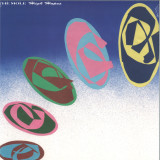
What’s heard on High Hopes is the Mole’s exploration of a love letter, from one person to a family, from the northern Pacific to the southern Atlantic, from a boy to a painted bird. Vancouver Island to Manantiales. The songs range from ambient sound bath and hip hop sludge, up to micro boogie and almost House before tumbling back down and forth again. Bubbling synths, MPCs swung out, samples chopped and chewed, bass and violins from Rick and Sophie, field recordings of birds and frogs and beaches, friends and family and fiestas. Did we mention the love ?! This album has got it all! Original collages from Antonio Carrau envelope this wax: jacket, sleeve and cookie. Antonio’s work is typified by playful combinations and bold statements about living in a embrace of analog and digital health. His co lages marry the corporeal world with an updated, digitalized age of reproduction, inducing feelings of gratitude for the simple everyday scenes we sometimes lose touch with when we forget to slow down. Good living, like breathing, requires inhaling as well as exhaling.
We can’t always produce content, make art, we must also pause, and listen. And enjoy. The Mole is joined by friends and colleagues on several songs included on High Hopes. Rick May plays bass on both Que Rico and album stand out GoinF4er. Sophie Trudeau (Godspeed You Black Emperor) plays and arranges violins on GoinF4er and Danuel Tate (Cobblestone Jazz) and Julz Chaz (Wagon Repair) both play Vibes and Emaxx throughout the album. Working with these incredible talents not only enriched this album, but fulfilled a long standing goal of the Mole’s; to work again with the musicians from whom he learned so much. People who helped inform the shape of Mole to come.
The Mole who was As High As The Sky. The Mole has been ‘recognized’ by the ‘global underground’ since his critically celebrated premiere album, As High As The Sky, but his earlier Eps (Wagon Repair, Philpot, Musique Risquee) got the attention of Top DJs, clubs, and festivals around the world first. His sound remains unique, fresh and deep: enjoying plays in a wide variety of spaces and places.
High Hopes is the Mole’s 5th solo album and his 2nd album for Circus Company (The River Widens) who have also proudly released two eps of Mole magic (Little Sunshine, High Dreams).
*Isn’t that too much time for one record? Short answer - No. Long answer - depends on the material. Due to the many quiet passages in the album, the groove spacing can be modulated and the needle can slow it’s progress towards the center/end resulting in longer sides with continued high gain and low distortion.