
Search:bot

First release from the EXPERIMENTAL BEAT RECORDS label, two tracks that blend techno with melodic-house produced by Disco Infinity, pioneer of Italian Techno-Progressive in the early nineties, suitable for both the most sophisticated underground club tracks and the main dancefloors.

C.A.R. (Choosing Acronyms Randomly) is the musical project of Chloé Raunet, a Canadian-born, London-based artist known for her icy synths, warm vocals, and left-field pop sensibility. Drawing from post-punk, electro, and experimental songwriting, she creates music that’s both emotionally charged and sonically adventurous.
Following a five-year hiatus, C.A.R. returns with Shyana, the first single from her long-awaited fourth album, Dance at Oscar’s. Produced by Nathan Ridley, the release marks a creative rebirth: a new label, a new live formation with Joni Green, and a sound pulsing with revitalised energy. After a pandemic-induced break to focus on filmmaking — and a period of burnout and disillusionment — Raunet was ready to walk away from music altogether. But a pair of carried-over festival dates and an impromptu onstage reunion with longtime friend Joni Green unexpectedly reignited the spark. What was meant to be a farewell became the start of something new.
Shyana is a shimmering slice of machine-funk — a warped and groovy tribute to Paul Anka, filtered through C.A.R.’s surreal pop lens. A meditation on teen hysteria, pop manufacture, and the strange alchemy of early fame, the track pulses with wonky elegance and strutting confidence. One of the most playful cuts from Dance at Oscar’s, it showcases Nathan Ridley’s tight, swaggering production while capturing the album’s embrace of movement, humour, and the weirdness of cultural nostalgia.
On the B-side, Cecilia Road offers a more reflective counterpoint — a nostalgic, synth-drenched ballad built around a call-and-response vocal, throbbing melodies, and emotional tension. Intimate yet expansive, it hints at vulnerability without losing the pulse.
Artwork by Chloé Raunet, Craig Richards and Oliver Hupfau.

Black Truffle is pleased to announce Melopea, presenting two new pieces highlighting the incredible voice of Amelia Cuni (1958-2024), the great Italian singer, based in Berlin in later life, whose mastery of the classical Indian dhrupad developed in parallel with a commitment to contemporary experimental approaches. After two stunning archival releases documenting traditional dhrupad performances in India in the 1990s (BT079 and BT092), the two side-long pieces here embody the freedom with which Cuni explored new contexts and settings for her singing.
Both make use of a long recording of Cuni singing the pentatonic Raag Bhoop (or Bhopali) made in 2012 by her partner Werner Durand in Berlin. ‘Melopea’ began from Cuni and Durand’s superimposition of this recording with violinist Silvia Tarozzi and cellist Deborah Walker’s performance of Éliane Radigue’s ‘Occam River II’. Inspired by the beauty of this chance encounter (and other experiments with non-synchronous collaboration during the pandemic years), Tarozzi and Walker recorded independently, without hearing Cuni’s voice but ‘having her present in memory’. Tarozzi and Walker’s bowed strings places Cuni’s magisterial performance in a new context, emphasising, as Radigue commented upon hearing the initial layering of her piece with Cuni’s voice, a shared ‘searching toward the partials, overtones, these natural constituents of acoustical sounds in their richness’. Beginning with whispered bowed harmonics, the violin and cello swap the stability of dhrupad’s traditional tanpura drone for a slowly evolving, uneasy web of harmonic interactions recalling some of Harley Gaber’s work, sometimes sitting on dissonances for long periods or allowing changing interference patterns to come to the fore. Primarily focusing on her lower register, Cuni’s performance demonstrates her mastery of microtonal pitch subtleties, elegant sweeping glissandi and meditatively unhurried pacing.
The continuation of the same recording by Cuni forms the foundation of ‘Bhoop-Murchana’, with Anthea Caddy on cello and Werner Durand on soprano saxophone. In contrast to the randomised layering of the first piece, here Durand and Caddy have carefully selected pitches based on the raag Cuni sings, using the ‘Murchana’ form, which uses the constituent notes of the raag as tonics of new raags, retaining the same interval structure. Both players who have developed tones of striking depth and harmonic purity on their instruments, Caddy and Durand’s patient long tones are simultaneously rigorously grounded in the physical properties of sound and possessed of an immaterial, floating quality. Combined with Cuni’s voice and, near the piece’s end, her contributions on hammered and plucked tanpura, the effect borders on miraculous. To surrender to this music is like slipping into an onsen pool, feeling the instantaneous release of every tension. Accompanied by liner notes from Durand, Tarozzi and Walker, Melopea is both a moving tribute to the profound art of Amelia Cuni and, for the uninitiated, a perfect introduction to it.
4
also available
Blue Album[22,65 €]
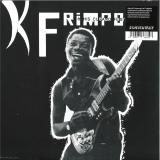
Two Seminal albums from cult Ghanaian musician Alhaji K. Frimpong and his group the Cubano Fiestas, recorded in 1976 and 1977 respectively and considered to be some of the best highlife albums ever recorded, at the pinnacle of West African musical tradition and innovation.
Both originally self titled, they have become known by the colour of the covers - Blue and Black respectively. The Blue Album brings new arrangements to traditional Ghanaian melodies and features the masterpiece Kyenkyen Bi Adi M’awu (come back my love) - universally known in Ghana, covered and sampled by artists such as Chronnix, Gnarls Barkley and many more. The Black Album expands the electronic elements and features the equally visionary Hwehwe Mu Na Yi Wo Mpena, although the real gem is hiding on the B side: the extended groove of “Adam Nana”. Sinuously evolving guitar lines, clavinet vamps, harmonised vocal snatches and otherworldly percussion expand and contract over a full quarter of an hour - a Ghanaian repost to the Afro Jazz experiments going on at the same time on the other side of the Atlantic. Although popular in Ghana at the time of the release, the albums were never distributed internationally and original copies of the album are extremely rare.
The albums got a limited reissue in 2011 and have been unavailable since - even reissue copies sell for high prices on the second hand market

10
An elusive cult gem resurfaces through Glossy Mistakes. Originally released in 1986, L'Empire Des Sons is an otherworldly blend of synth pop, folk experimentation, and cinematic percussive layers-dreamlike, poetic, and wildly ahead of its time. L'Empire Des Sons was a fleeting yet powerful transmission from the fringes of the French underground-an album that blurred genre lines and evaded easy classification. Fusing experimental folk, lo-fi synth pop, and avant-garde textures, the record exists in its own sonic universe: poetic, layered, and fiercely independent. Formed in Saint-Étienne by percussionist and composer Dominique Lentin (Dagon, Fille Qui Mousse) and first-time vocalist Bipé Redon, L'Empire Des Sons emerged from the vibrant DIY spirit of the early 1980s. Their paths crossed during the interdisciplinary project L'Opéra Quotidien, and what followed was an intuitive, deeply collaborative process. "I would bring in lyrics and my voice," Bipé recalled, "and Dominique would shape the music around the atmosphere or rhythm suggested by the words." The result is a collection of songs that feel both meticulously constructed and completely free. Ethnic percussion, marimbas, xylophones, and synthesizers dance around Bipé's surreal, fragmented lyrics-little sonic postcards from imagined worlds. There's a theatricality here, but it never feels forced; rather, it's playful, intimate, and raw. Despite their inventiveness, L'Empire Des Sons remained a well-kept secret-circulating only in select avant-garde circles and eventually becoming an extremely sought-after collector's item. Now, thanks to Glossy Mistakes, this lost artifact returns to the world with new life: remastered from the original tapes, pressed on vinyl for the first time with extended liner notes. L'Empire Des Sons was never meant to be boxed in. Like the quote from Brian Eno that opens their liner notes-"For the world to be interesting, you have to be manipulating it all the time"-their music resists stasis. It evolves, shifts, surprises. And now, it finally gets the audience it always deserved.

- A1: Intro
- A2: Les Bourgeons
- A3: Ecoule Les Larmes
- A4: La Mer Pleure Ft. Oliver Foster
- A5: La Nuit Dorages
- A6: Nausee
- A7: Por Que Te Vas
- A8: Le Bruit Des Vagues
- B1: Dans Le Noir
- B2: Le Saut De Lange
- B3: El Corazon De Poeta
- B4: La Fin Du Tunnel
- B5: Interlude
- B6: Hear You Say
- B7: Dans Le Vent
- B8: Une Berceuse Pour Avril
16
‘LE DON DES LARMES’, and was conceived and recorded during the artist's pregnancy — a time of deep transformation. It is a poetic offering to her newborn child, where the cycle of the seasons becomes a metaphor for birth, vulnerability, and renewal.
Her sound draws from the lullabies of her Kabyle childhood and the gentle melancholy of Algerian chaabi, carrying their echoes into a world entirely her own. LÉO LA NUIT is a Franco-Algerian writer and composer who weaves music as one might weave dreams — with tenderness, intuition, and a reverence for nature.
Through field recordings, intimate textures, and delicate pop melodies, LÉO LA NUIT invites us into her inner landscape. Her music breathes closely to the skin — fragile yet luminous — a collage of fleeting moments, stitched together with care. It is a world both grounded and dreamlike, where emotion flows freely, like tears given as a gift

A favourite selector for many within the underground, UK-born, Ibiza-based Miller has built a reputation for his hypnotic, low-end-led productions and seamless ability to weave obscure rhythmic patterns into immersive DJ sets. Founder of the Real Gang collective, he honed his craft as a resident at Ibiza institutions The Zoo Project and Ibiza Underground, where his dynamic, vinyl-focused style earned him recognition as a key player in the island’s grassroots scene. This natural progression has since led to the launch of Tomodachi, his new club, an intimate space that refl ects his artistic ethos and evolving infl uence on the island.
Harley Maxwell, meanwhile, brings a raw energy to the project, blending his sharp vocal delivery and lyrical edge with Miller’s meticulous production style. Their collaborative debut at fabric, during Miller’s all-night set, showcased a shared ability to push conventional boundaries, as they provided a fi rst glimpse into the music that would in turn become ‘Caviar’.
The EP opens with the title cut, a stripped-back yet infectious roller that glides between deep basslines, textured percussion, and subtle melodic fl ourishes. ‘How It Runs’ follows with its sharp drum work, zippy synths, and a playful groove built for the dancefl oor. Rounding off the release, the vinyl-only ‘Dreaming Experience’ sees Miller step out solo as he delves into deeper territories with hazy atmospherics, creating a tripped-out late-night journey. Arriving at a pivotal moment for both artists, their ‘Caviar’ EP signals a bold debut on FUSE – a label celebrated for its commitment to forward-thinking club music.

Ahead of the release of Hollie Cook’s fifth studio album, Shy Girl, the anthemic, feel-good title track and rootsy chugging ‘Frontline’ take either side of a 7” single.
Woven with tight grooves, beautiful vocals and catchy melodies, Hollie’s forthcoming album hears her more confident and open to vulnerability than ever before. The title track of the album ‘Shy Girl’ is a buoyant and elastic slice of lovers rock. It was written in a moment of spontaneous intuition, and bubbles with a charisma and positivity that Cook radiates. “I’m not a natural show-off,” Cook explains. “The Shy Girl theme is me. It’s just about being my most vulnerable self and being as true to the music that love as possible.” Doused in Hollie’s signature “tropical pop” sound, ‘Shy Girl’ is grounded in a vibrant bassline and classic off-beat reggae guitar struts. Hollie’s dreamy vocals radiate warmth and tenderness in equal measure, adding to the song’s soft-hued embrace.
The deep roots flavour of ‘Frontline’ takes the B side. Complete with raking electric guitar lines, a dubby bassline and weighty horn section, it’s a powerful cut that’s both ethereal and empowering. Wearing her heart on her sleeve with this beautifully melancholic piece of songwriting, Hollie opens up through her lyrics with an emotional depth and striking honesty.

8
After a much acclaimed series opener, the creators of The Hidden Beauty Of Dutch House ’94-’98 are back! They’re bringing us this second batch of eight carefully selected masterpieces from The Netherlands’ blossoming scene of the day.
Just like volume I, its sequel is filled with thought-to-be-lost tracks from Dutch producers whose names you rarely come across. It took another deep and long dive into the "Atlantis" of Dutch House to gather this collection. Most of the original master tapes literally had to be dusted off before playing…
Suitable for any true House afficionado, you’ll find a panoramic range of styles and flavours on this second selection, as there was on the first. A truly representative flashback has to show the versatility and broadness of both the music and culture of the nineties. The days of open minds and dancing-like-nobody’s-watching. When we went to the club to discover new sounds and dimensions. The time when this attractively fresh music was the hero of every successful night.
Lovingly compiled for your listening pleasure. So, sit back, open up, and surrender to the beauty of Dutch House!

“Magic Happens” is the very first release by Fabrizio Fattore on his new label Life Cycle.
Life Cycle embodies the sacred union between Life and Music, both flowing within an eternal cycle of experiences, adventures, and dimensions — a boundless musical journey beyond time and space.
This debut release, Magic Happens, marks the moment when, within the act of creation, the unseen unveils itself — when magic arises and everything reconnects with the Universe through the language of music.
A true journey to be listened to and danced to, with three unique tracks, each one carrying its own vibration, inviting you to lose yourself in the infinite shades of sound.
- A1: The Utopia Strong - Old Mathers
- A2: A Certain Ratio - Faster But Slower
- A3: Lena C - Pelago
- A4: Low Pulse - Pillow Talk
- A5: Psychederek - Hope & Dreams
- B1: Massey & Supernature - Walk...now Walk
- B2: Gina Breeze - Acid Strings
- B3: The Thief Of Time & Lindstrom - Escape Into Neon Feat. Lady Lady
- B4: Pbr Streetgang - Chasin' Perry
9
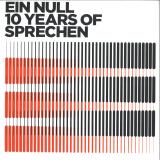
10 years ago in 2015, The Golden Lion in Todmorden opened its doors under the guidance of Gig & Waka, Cloudwater brewed their first ever beers, the dance floors of Manchester got introduced to the world of Supernature Disco and from his spare room at home in Bolton Chris Massey started Sprechen.
What followed over the next decade has been a wild ride of amazing people, memorable (though fuzzy!) parties, creativity, art, expression, performance and at the centre of it all of course, the music.
Sprechen has never been one style or sound. A reflection of varied musical tastes without any limitations of style or genres, just a passion to share good music.
Over the last decade, Sprechen has been lucky enough to both work with and meet many like-minded cosmic creatives that share this mindset and that have all played a major role in the story.
Ein Null is a collection of original tracks from some of Sprechen's nearest & dearest who, for the last 10 years, have helped shaped the label via releases, remixes or performing at events.
It's wonky & weird, banging & beautiful, cosmic & consciousness-expanding and it continues to connect the invisible dots of club music and more abstract listening experiences.
From basements & beyond to sunsets & psychedelic socials...we are pleased to present this electronically charged selection of soundscapes courtesy of like-minded musical humans including; The Utopia Strong, A Certain Ratio, Lena C., Gina Breeze, Low Pulse, Psychederek, Lindstrøm, Supernature Disco, PBR Streetgang and of course Chris Massey.
Limited to a run of 300 vinyl with double-sided screen-printed sleeve.

8
Today, Manchester’s Maruja announce their highly anticipated debut album ‘Pain to Power’, due for release by Music For Nations on 12th September and produced by Samuel W Jones, who the band worked with on their three EPs to date. The extraordinary eight track collection not only confirms the four piece as a creative force of nature but finds a deeply emotional and empathetic band concerned primarily with the power of community, both in the nuclear sense, as a tight knit creative unit, but also as a wider force for social and political change in the age of the individual.
Maruja believe passionately in the ability of art to empower, heal and unite and have created a body of work with ‘Pain to Power’ that they hope will offer both strength and an emotional release to anyone who is struggling with the impact of years of political turmoil and social isolation.

Grey Matter - Lost In Thought, originally released in November 1996 on Axia Records as a 5 track EP is now back on vinyl.
Dave Mothersole had this to say in his review of it for Muzik magazine in February 1997.
"Acid Techno, slo-mo Hip Hop breaks, right through to old school, bottom heavy warehouse grooves and Depeche Mode-meets-Juan Atkins purism. The real surprise, here, though, is how thoroughly listenable the whole thing is. Innovative, imaginative, and pretty bloody good."
This release includes all 5 tracks from the original AX001 release which has been selling for over £60 a copy on Discogs, spread over two 12"s with 3 extra unreleased tracks 'Never Die Just Multiply', 'Musical Electronic Poetry', and the 'Melt Into The Floor Mix' of 'Gloomy Encounters'.
All tracks are remastered from the orignal DAT tapes by Paul Mac & Simon @ The Exchange.

Melody Of the Soul returns with a stunning vinyl release, showcasing deep sonic artistry on both sides. The A-Side features two brilliant tracks by M.O.S., known for their emotive and immersive soundscapes. On the flip side, the B-Side delivers two captivating cuts by Newman (I Love), offering his signature blend of melody and groove. A must-have for collectors and connoisseurs of timeless electronic music.

- A1: Eu Dei - Ary Barroso
- A2: A Briga - César Costa Filho-Walter Queiroz
- A3: Bom Conselho - Chico Buarque De Holanda
- A4: Mais Cedo Ou Mais Tarde - Osmar Milito-Lilian Knapp
- A5: Morre O Burro, Fica O Homem - Jorge Ben
- A6: Um Jeito Novo De Viver - Mauricio Duboc-Carlos Colla
- B1: Nem Paletó, Nem Gravata - Marcos E Paulo Sérgio Valle
- B2: Dose Prá Leão - César Costa Filho-Walter Queiroz
- B3: Tem Dendê - Reginaldo Bessa-Nei Lopes
- B4: Regra Tres - Toquinho-Vinicius
- B5: Quem Mandou (Pé Na Tábua) - Jorge Ben
- B6: Minhas Razoes - Antonio Carlos E Jocafi
- B7: Chiclete Com Banana - Gordurinha-Almira Castilho
13
Originally issued on the ATCO/Continental label in 1973, Paleto, Nem Gravata (1973)constitutes a hidden gem from Brazil's golden era of samba-jazz.
Osmar Milito, a master of piano and rhythm, blends breezy Bossa Nova with soulful samba and rich MPB textures.
Backed by lush arrangements and a laid-back vibe, this album captures the effortless cool of 1970s Rio.
Featuring standout tracks like Jorge Ben's "Morre o burro, fica o homem" and
"Quem mandou (Pé na tábua)," Milito's work is both sophisticated and deeply groovy.
A must-listen for fans of Marcos Valle, Azymuth, or Arthur Verocai.

Exit were a five-piece ensemble of journeymen musicians from the lone star state of Texas who came together in the early 1980’s to record a handful of popular local 45’s including two Football-mania songs. The groups line-up consisted of lead guitarist and vocalist Clennis High, rhythm guitarist Lonnie Jones, his brother Johnny K. Jones the groups keyboardist, bassist Frank Houston Jr and George Oliver on Drums.
Clennis High, a promising Football player with a flair for playing the guitar began his early musical career while attending Wheatley High school. Aged 17, Clennis played on several Crazy Cajun, Huey P Meaux’s recording sessions for Eugene Gamble and Barbara Lynn. Further recording sessions on Roy Head followed before he accepted an invitation by his neighborhood friend Willie Parnell to play alongside a group of fellow students in a band called ‘The Drells’. ‘The Drells’ had been founded by Archie Bell in 1966 pulling together neighborhood friends James Wise, base singer Cornelius Fuller, Billy Butler, Willie Parnell joined later by Archie’s brother Lee Bell. Clennis would play with ‘Archie & The Drells’ through their time on Skipper Lee Frazier’s Ovide label often accompanied by the ‘Texas Southern University Toronadoes’ where they scored a hit with the dance instruction song “Tighten Up” which on the strength of Atlantic Records picked the group up. Clennis played on all 3 of the Drells studio albums “Tighten Up”, “I Can’t Stop Dancing” and There’s Gonna Be A Showdown” under Gamble and Huff’s tutelage before quitting to return home to complete his degree. He continued to play with several local Houston bands including the Cold Four who recorded the sort after “Love And Care/Low Riden” (Drells).
Clennis later formed ‘The Reality Band’ with his friend Jerald Grey which introduced him to George Oliver and Frank Houston Jr. Occasionally ‘The Reality Band’ played with other groups, one group in particular (which Jerald previously knew) being an outfit from Conroe, Texas called the ’58 Engineers.
‘The 58 Engineers’ were founded by Johnny and Lonnie Jones, taking their name from the Army unit Johnny served with during his time in the service. By 1973 having grown to 8 members the group entered the studio to record the highly collectable and popular funk outing “The Funky Fly (Part1 & 2)” on their own Bryant Records label (Bryant being the Jones brother’s mother’s maiden name).
As members of the ‘58 Engineers’ moved on, the Jones brothers found themselves working more and more with the ‘Reality Band’ so when Jerald Grey too later moved on the remaining ‘Reality Band’ members Clennis, George and Frank having grown fond of the two “Country Brothers from Conroe” as they affectionally called the Jones’s made the decision to continue working with them, which led to the foundation of the group, Exit.
During 1980 the recently formed Exit recorded the first of their two Football -mania songs but it is from the groups 1981 release “Success/One More Hour” (Dat-Tex 105) that Soul Junction have taken the splendid ballad “One More Hour” to pair with the flipside of the groups third release “The Little Green Monster” (Dal-Tex 106) which is now highly regarded and sort after by sweet soul/lowrider connoisseurs alike. Both of these songs have been put back-to-back to feature on Soul Junction’s forthcoming September 45 release.

Out during the pandemic, the first Dora Exp 12″ has built a steady and strong cult since then, even exploding in house music’s birthplace Chicago when the slo-mo acidic house of “Hi Power” caused a little storm thanks to Darryn Jones, Mark Grusane and Nosha Luv playing it.
Now Andrea Passenger is back with more uncompromising excursions in outer house, leftfield acid and crunchy sampledelia.
Side A brings “The Blues”, a serious house stomper both spacey and melancholic and “Clapper”, a fierce and alien boogie slapper. B Side introduces “Diamonds”, a rolling sci-fi / jazz hybrid with freeform live sax and keys, and closes with “Black and Green”, a driving house groove featuring an addicting acid bassline and precise drum programming.
All tracks were mastered by José Rico who brings some extra fattiness to the tunes.
Needless to say, these are serious grooves for the most demanding djs out there!
Limited to 300 copies.

Eclectic and genre-fluid, Whoosh is a masterful showcase of the expansive musical sensibilities of Vik Srinivasan—known as Vikmatic—and the finely tuned ear of co-producer and TSoNYC label head Danilo Braca. Drawing from a rich tapestry of sonic influences, the EP unfolds with effortless depth and elegance. Its title track opens with wistful spaciousness, unhurried in its approach, as layers of ambient texture float into view. Around the three-minute mark, a freeform trumpet—played by multi- instrumentalist, producer, and songwriter COULOU—enters like a gentle breeze, pairing seamlessly with a humblingly gorgeous vocal from indie pop artist Rén with the Mane. Her voice, set cool and weightless amid the atmospheric array, anchors the track in emotional resonance
In contrast, “Dream” quickens the pulse. It opens with a crisp hand drum before giving way to a forceful Italo rhythm and driving synths. The return of the meandering trumpet offers a warm counterbalance—a humanizing thread weaving through the escalating sonic tension.
“Jungle” follows with a playful sense of experimentation, placing the trumpet at center stage. It’s accompanied by a whimsically off-kilter selection of textures: crisp, deliberate percussion; a brooding electric guitar line courtesy of the ever-versatile Alvise Marino (aka Al-Veez); lush retro synth glides; and
The EP closes with “We Should Go,” where Rén with the Mane returns in more earthly form. Her vocals drift in and out between acid burbles and Italo arpeggiations, both intoxicating and charged with quiet urgency. It’s a fitting finale—elevated yet grounded, dreamy yet directive.
Across four free-flowing yet meticulously crafted tracks, Whoosh captures the essence of collaboration and creative freedom. It’s a transportive listen that resists genre boundaries, inviting the listener to drift, dance, and discover within its lush and unpredictable terrain.
Words by Mira Fahrenheit

8
Harap-Alb is the first full-length album by Articulat, following a trilogy of EPs (two released on vinyl) and previous appearances on Rotterdam’s Afrobotic Musicology label. This new project deepens Articulat’s commitment to narrative-rich electronic music — blending structure, rhythm, and texture to evoke both dancefloor tension and cinematic storytelling.
“This album began as a personal exploration—an attempt to deconstruct a story that has been familiar to me since childhood and reimagine it through sound. I first encountered Harap Alb as a crackling, timeworn radio play on vinyl, and its atmosphere has lingered with me ever since. This is my way of keeping that story alive—not by preserving it in amber but by passing it forward in a different form, hoping it resonates in a new way.”
Perhaps, years from now, someone will discover this record the same way I found the original. And in doing so, they too will add their own craft and love to the tale.
Based on the 1964 radio play adaptation by Vasile Mănuceanu
Original story: Povestea lui Harap Alb, written by Ion Creangă in 1877
