An album of our times, Newcastle band Maximo Park return with
their seventh full length, ‘Nature Always Wins’.
The album arrives as something of an examination, zeroing in on the
notion of the self, identity as a band and that of humanity as a
whole. The album’s title nods to the famous Nature vs Nurture
debate. Discussing whether change is capable under the influence of
time, perspective, environment or if we are destined to be bound by
our own genetics, it asks, “who are we, and who do we want to be,
and do we have any control over it?”
“I’m so happy we were able to make this album during lockdown, as
it’s been a challenging time for everyone. After almost 4 years since
‘Risk To Exist’, we wanted to explore new musical territory (for us)
without sacrificing our trademark melodic twists and heartfelt lyrics.
As always, the passing of time looms large, although the songs
contain more affection for the past than before, and there are
occasional hints of the fractious, divided time that we live in.” -
frontman Paul Smith
Produced by Atlanta-based Grammy-winning producer Ben Allen
(Animal Collective, Deerhunter), who afforded the band freedom to
play and create. What wasn’t anticipated was how that freedom
would be soon be stripped, as lockdown restrictions left the band
recording remotely across Newcastle, Liverpool and Atlanta with
audio files bounced back and forth, 4000 miles across the world.
Поиск:bound
Все
An album of our times, Newcastle band Maximo Park return with
their seventh full length, ‘Nature Always Wins’.
The album arrives as something of an examination, zeroing in on the
notion of the self, identity as a band and that of humanity as a
whole. The album’s title nods to the famous Nature vs Nurture
debate. Discussing whether change is capable under the influence of
time, perspective, environment or if we are destined to be bound by
our own genetics, it asks, “who are we, and who do we want to be,
and do we have any control over it?”
“I’m so happy we were able to make this album during lockdown, as
it’s been a challenging time for everyone. After almost 4 years since
‘Risk To Exist’, we wanted to explore new musical territory (for us)
without sacrificing our trademark melodic twists and heartfelt lyrics.
As always, the passing of time looms large, although the songs
contain more affection for the past than before, and there are
occasional hints of the fractious, divided time that we live in.” -
frontman Paul Smith
Produced by Atlanta-based Grammy-winning producer Ben Allen
(Animal Collective, Deerhunter), who afforded the band freedom to
play and create. What wasn’t anticipated was how that freedom
would be soon be stripped, as lockdown restrictions left the band
recording remotely across Newcastle, Liverpool and Atlanta with
audio files bounced back and forth, 4000 miles across the world.
A deluxe vinyl reissue of Demigod's 2002 album Shadow Mechanics. This version comes with a gatefold sleeve and is limited to 500 hand-numbered copies on violet splatter vinyl. Demigod’s criminally underrated second album of cult Finnish Death Metal from 2002 released on vinyl for the first time! Melodic, brooding and doom-laden death metal, punctuated with full-fledged scorchers such as the fierce and blasting "Gates of Lamentation", makes Shadow Mechanics an unpredictable treat, way ahead of its time. This seven-Finn act's potent, driving obscure death metal dispenses pure surges of metal-laced adrenaline thanks to the gruesome vocals and a monstrous Finnvox production. Layering the album with more solemn and atmospheric cuts, Shadow Mechanics shows Demigod pushing at the boundaries of their sound and the conventions of the scene at the time. Pressed in a limited quantity of 500 hand-numbered copies on violet splatter vinyl, with a gatefold sleeve and old-school classic Demigod logo replacing the typeface of the original CD issue, this highly collectible new Svart Records pressing is a treasure for any self-respecting Finnish Death Metal connoisseur to complete their collection.
- A1: Deep Moaning Blues (Feat. Maxayn Lewis)
- A2: El Train
- A3: Lazy Mama
- A4: Chicago Sun
- A5: Those Dogs Of Mine (Feat. Viola Davis)
- A6: Hear Me Talking To You (Instrumental)
- B1: The Story Of Memphis Green
- B2: Jump Song
- B3: Leftovers
- B4: Shoe Shopping
- B5: Deep Henderson
- C1: Reverend Gates
- C2: Ma Rainey’s Black Bottom (Feat. Maxayn Lewis)
- C3: Levee’s Song
- C4: Sweet Lil’ Baby Of Mine (Feat. Clint Johnson)
- C5: In The Shadow Of Joe Oliver
- C6: Hear Me Talking To You (Feat. Maxayn Lewis)
- D1: Levee And Dussie
- D2: Levee Confronts God
- D3: Sandman
- D4: Baby, Let Me Have It All (Feat. Clint Johnson)
- D5: Toledo’s Song
- D6: Chicago At Sunset
- D7: Skip, Skat, Doodle-Do (Feat. Cedric Watson)
Ma Rainey’s Black Bottom is the official soundtrack to the 2020 Netflix original film of the same name about “Mother of the Blues” Ma Rainey. The album features score music by critically-acclaimed saxophonist, instrumentalist, composer, bandleader and educator Branford Marsalis, as well as newly-recorded covers of both popular Ma Rainey tracks and blues and jazz standards from the era. The multi-GRAMMY Award® winner brings over four decades of experience across stylistic boundaries to the project, imbuing the film with an authentic 1920s Chicago soundscape. The film was directed by George C. Wolfe and stars Viola Davis and Chadwick Boseman. It is lauded by critics and moviegoers alike, and it is expected that Ma Rainey’s Black Bottom will be a favorite at many 2021 award ceremonies. Ma Rainey’s Black Bottom is available to watch on Netflix now.
DJ Durbin is back with his second release on Row Records.
Four boundary-pushing tracks for your inner journey to
unknown spheres and a (¦ngers crossed) better future.
Beyond Colossal is the fulfillment of the promise 2005's excellent Through the Eyes of Heathens began to see through. The sound is that of the band pushing itself harder, writing stronger songs and compromising none of their edge or aural passion. You can hear it on "Exoskeleton (Part II)," truncated here from its appearance with "Part I" on a 2007 split with Iceland's Brain Police, at the 1:39-mark launching of "The Ventriloquist," on the more traditionally stoner "Grand Inquisitor" and even the quiet "Bound for Greatness" which closes out the album. Dozer are not only on top of their game, they're well beyond it. The Obelisk
Tape / Cassette
Dust Editions presents Evan Caminiti’s original score for the short film Autoscopy from London based director Claes Nordwall. The film premiered at the Nevada City Film Festival in August 2020 and is featured in the 2021 edition of the Slamdance Film Festival.
Autoscopy follows a young man who escapes to the Swedish wilderness for a period of creativity and introspection. The tranquility and isolation he finds there morphs into something more sinister when he discovers an abandoned flotation tank in the forest, leading him on a hallucinatory voyage deep into the heart of nature and his own psyche.
Caminiti’s score channels the beauty, desolation, and dread Nordwall captures in the film’s disorienting arc. Boundaries are dissolved between the organic and the unnatural, the imagined and the experienced; electric guitar dissolves into spectral whispers, blurring into rippling synthesizers and heaving drones. Caminiti explores dissonance and space, veering into realms of extreme digital deconstruction before plunging into amplifier sizzling abandon.
This OST release features three additional pieces not heard in the film.
Serge Synthesizer Recorded at EMS Stockholm, September 2017
Electric guitar, vocals, additional synthesizers recorded at Spider House, Los Angeles 2020.
Arranged and produced at Spider House, Los Angeles, 2020
Mastered by Stephan Mathieu at Schwebung Mastering
Hunt & Gather’s debut vinyl release comes by way of Pezzner’s cryptic moniker “The Native Language”. Written as a quasi-homeless man living off the rich in the San Juan Islands who writes music once per year to suffice his own delusions.
Walking the streets in these damp, anxious days that all run together lately, I was approached by a man who would blend right into the neighborhood, layered in flannel and sweatshirts for sleeping.
Rough, but for his shoes. (Never cheap out on anything that separates you from the ground.) “Pezzner,” he called out, from a safe distance. “What did the mangrove say to the marauding hordes.” My soul left my body for a moment and my voice responded on its own. “Petrichor.”
He caught my eye, nodded, left a padded envelope on the ground and vanished. The envelope had passed through many hands, slipped into the bed of a ferry-bound truck, passed from one fellow traveler to another, stashed under the counters of anarchist bookstores, left tucked between books at Little Free Libraries. The greenish stains suggested that at one point it had been swum across a lake. Another DAT, contents encoded here unabridged, and a letter from someone who called himself The Sentinel.
The Vessel lived out his days on Shaw Island, under a canopy of trees that gets smaller and smaller every season. His condition the same, any electricity lit his brain on fire, could only bring himself to compose one day a year, only at night, out of sight. Until he met The Angel, an eccentric with means, who built for him a device.
A Faraday Cage to block all electromagnetic emissions. Burlap walls, for atmosphere. A system of pulleys and levers, wood and rope, all running into a box that sat outside. An entirely mechanical control surface. No electrons in here. The Vessel lit fires, watched the shadows dance, closed his eyes and disappeared into the motion for hours at a time. The Sentinel came every morning to change the tapes. The Angel watched and pondered, his plans unknown.
The box sat sealed, bare except for another set of ideograms, scratched in day by day over time. Inside, the usual bedroom-producer shit. Outside, the ideograms told a story, passed from the Vessel to the Sentinel and drawn by the Angel, of a man who became another creature. Alert to the lowest frequencies, feeling music deep in the soil below their feet. Music that brings messages, from distant friends, warning of new creatures and the danger they brought. Skin alive to the world, so sensitive it can detect the landing of a single fly. A mind capable of keeping a map of the world inside. A mind that can look in a mirror and see a soul it knows well. A mind that can grieve.
After processing its contents, I filled the envelope with granola bars and walked it down to the market. The clerk gave me a knowing look as I placed it on the counter behind a stack of pork rinds from the previous century. As I walked out, a young man carrying a plastic bag and wearing impeccable shoes walked in.
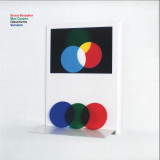
Laurel Halo, Donato Dozzy and Teheran sound artist Tegh give us their "Glassforms Versions"alongside a new edit by Max Cooper. The works of Philip Glass are reflected and refracted in a myriad of ways by some of the most renowned electronic artists alive, making for a blissful, multi-dimensional listening experience.
Textextext - (add your write up)
With "Glassforms", Max Cooper and Bruce Brubaker set out on an intimate, nuanced exploration of the works of Philip Glass. The resulting recordings, developed in a fluctuating exchange between the American pianist and the Irish scientist-artist, are an astounding testament to the innovation that artistic collaboration can achieve and what depths are yet to discover in Philip Glass' compositions. The two artists did not just rework, but fundamentally rewired the original songs using algorithmic software to process and augment the musical data it received from Brubaker's piano live on stage.
When approaching his remix, Donato Dozzy also tapped into that inspiration to create something new rather than just reworking it, which is one of the core motives that emanates from "Glassforms". The Italian producer and label owner is known for his drive to explore: he develops installations for public spaces and museums, uses obscure musical instruments and collaborates with classical singers or visual artists. "I chose "Two Pages" for it's hypnotic feel in the notes repetition", he says, "but I did not want to merely sample the piano, but instead ask someone I trust and admire to carve it from scratch and even go further." So he followed the lead of Brubaker and Cooper and teamed up with the renowned Italian percussionist and jazz musician Daniele Di Gregorio to completely rewire "Two Pages" into a gorgeous piece of endlessly modulating ambient electronica.
Laurel Halo, the second remixer on "Glassforms Versions", does not need a long introduction either: the American musician is at the forefront of electronic music in 2020, a bright star today after releasing her debut "Quarantine" on Hyperdub in 2012. Her remix of "Opening" brings to mind the string section of an orchestra tuning their violins before the performance - forever. They glide in and out of tune, sometimes individually, then together, then are accompanied by keys that are most likely a ghostly representation of Brubaker's piano, sampled and pitched down, but sound almost jazzy in the context of Halo's remix. It's a blissful listening experience, calling to mind her recent collaboration with cellist Oliver Coates on "Raw Silk Uncut Wood" and showing a deep understanding of Philip Glass' work.
Sound artist Tegh is the third on the remix bill - the electronic musician from Teheran delivers his take on "ƒTwo Pages", once again showcasing how versatile, how inherently complex the works of Philip Glass are. They can be interpreted in a myriad of ways - Tegh's version is a bounding, brooding piece filled with raw energy that feels like it is performed live, just for you, every single time you listen. His version is, at first, much more focused on the underlying moods, electronic undercurrents of the original than Dozzy's version, and yet, when the piano finally does break through, it becomes clear that we are listening to Philip Glass, reflected manifold: through the piano of Bruce Brubaker, the synths of Max Cooper, and then again through the mind of the artist Tegh.
Concluding the new "Glassforms Versions" is a previously unheard edit of "Two Pages". It's difficult to edit a piece of minimalistic beauty without losing it's essence, but Max Cooper - after many efforts and close conversations with Bruce Brubaker - managed to bring these shorter edit into a satisfying, conclusive form.
In the summer of 1978, an ambitious twelve-day experimental jazz project was undertaken at the ancient amphitheatre, Tasso della Quercia, on the slopes of Rome’s Gianicolo hill.
The idea was to assemble the leading players from Italy’s avante-garde jazz scene, revolving around members of Grande Elenco Musicisti (or GEM), such as saxophonists Tommaso Vittorini, Eugenio Colombo and Maurizio Giammarco, trumpeter Alberto Corvini and trombonist/composer Danilo Terenzi, together with visiting American players such as saxophonists Steve Lacy, Steve Potts and Evan Parker, trombonist Roswell Rudd, pianist Frederick Rzewski and drummer Noel McGhee, among others.
Different group configurations were enacted each day and the final gala concert formed the basis of this super rare and highly playful double album, which captures the delightfully messy proceedings. In keeping with the openness of the Roman jazz scene of the day, the project sought to push the boundaries, aiming to break big-band traditions whilst still emphasizing the collective nature of the experience.
Enrico Rava’s opening “Tromblues” emphasizes the disparate approaches of these trans-Atlantic teams and Terenzi’s “Dialogando” uses dual trombones to heighten musical discord; in mutated big-band mode, Giammarco’s thrillingly complex “Vortex Waltz” and Vittorini’s “La Legge E Uguale Per Tutti” both speak to the limitless
potential that the project was aiming for.
The band that became Nightshift formed in 2019 in the ecosystem of Glasgow's current indie scene. The city's fertile & creative group of musicians have been committed to pushing the boundaries of and blurring the lines between DIY, punk, experimentalism and indie pop for decades now; a home to bands like Shopping, Vital Idles, Current Affairs, Still House Plants, and Happy Meals as well as forebears like Orange Juice, Teenage Fanclub and Yummy Fur. Nightshift slot right in with all mentioned, featuring members from current indie stalwarts Spinning Coin, 2 Ply and Robert Sotelo. Initially formed by guitarist David Campbell and bassist Andrew Doig as a "No Wave/No New York/ early Sonic Youth/This Heat-esque" group, the addition of Eothen Stern (keyboards/vocals) and Chris White (drums) instantaneously transformed their approach (guitarist/vocalist/clarinetist Georgia Harris joined as the band was writing "Zöe"). The band self-released a full-length tape on CUSP Recordings in early 2020, laying the foundation of their sound; hypnotic, melodic, understated indie post-punk with hooks that stick around long after you've heard them. "Zöe" is the band's newest effort, and first for Trouble In Mind. Unlike the band's previous album, the songs on "Zöe" weren't conceived live in the band's practice space, but rather pieced together and recorded remotely during quarantine lockdown, with each member composing or improvising their parts in homes/home studios, layering ideas over loops someone made and passing it on. The isolation actually allowed for an openness and creativity to flow and many of the songs took on radically different forms from when they were originally envisioned. Vocalist & primary lyricist Eothen Stern says "The process of writing these songs separately during lockdown was a kind of exquisite corpse - I liked this gesticulation of reaching out to one another and responding. Building up the next layer and passing it on." Stern says "poetic restraints" to writing & Eno's Oblique Strategies concepts were on their mind when composing the words to the songs on "Zöe" and lists the influence of author Rosi Bradiotti's book "The Posthuman". "Zöe" means "live drive", derived from the word conatus. Bradiotti defines conatus as "an effort or striving, endeavour, impulse, inclination, tendency, undertaking, serving is an innate inclination of a thing to continue to exist and enhance itself." and Stern views it as "...a kind of feminist re-claiming of communal public, anti- privatisation, looking to strive for social and environmental justice. Zöe kind of became a character of striving for me when writing.". "Zöe" kicks off with "Piece Together", a hypnotic song anchored by the band's chanted vocals and serpentine guitar licks. "Spraypaint the Bridge" showcases Harris' clarinet in an unexpected & delightful melodic shift during the song's anti-chorus. Elsewhere tunes like the swooning "Infinity Winner" and "Outta Space"s minimalist, slinky rhythm swirl in a late-night vibe, while "Make Kin" ruminates on "Looking to kinship as a way of engaging with entangled environmental and reproductive issues... how a band is a bond" and lurches forward with kinetic guitar strangling and staccato rhythmic percussion from White and Doig. "Power Cut" is the album's centerpiece, kicking off side two and lures the listener into its world over it's 7-minute runtime. Lulling them into involuntary movement with its waves of melodic harmonies, synth drones and metronomic pulse, until they all come crashing down in the song's dissonant midsection. The band acknowledges the whiffs of nostalgia prevalent in "Zöe"s songs (the title track in particular), and the nature of writing and recording the album is soaked in the self-work, reflection and reevaluations involved not only personally but creatively in each member's lives. Consequently, the album becomes a collection of sketches of hope, growth, awareness of the power of the world and the power of self, kith, kinship, friendship, resistance, and possibility.
Tala Vala combine experimental recording methods bridging marginalised genres, synths, brass and strings, jagged guitars and primal percussion.
John Roffe-Ridgard is a producer and former touring musician and Ben Locket is a composer for TV and Film.
The pair began making music in 2017 and self-released their first EP on a limited vinyl run. Mixed by Jake Jackson at Masterchord studios, the records were sold exclusively through Sounds of the Universe and Bandcamp.
Enthused by the interest in the record and selling out the run, the pair set about recording a full-length album expanding on the ideas of the fist ep. The album was again performed and produced by Ben and John using mainly analogue processes, where possible utilising 24 track tape and mixed by Jake. The self-titled record was self-released on vinyl and made it into the Stranger Than Paradise top 10 albums of the year.
Album number two began as a soundtrack project in early 2019, it was abandoned as they became disillusioned with the boundaries the film was imposing. The only remaining music from the soundtrack session is the opening cue which can be heard as the last track of what became Modern Hysteric, album two.
The new album was worked on throughout 2019 and mixed in early 2020 again sticking to mainly analogue processes, avoiding any audio plugins and computer editing. Jim White (Dirty Three, Xylouris White) guest drums on two of the tracks ( Reoccurring Weather & Haxen ) bringing his instantly recognisable style to the Tala Vala sound. In addition to the string quartet and brass sections, a kora player and the manipulated voice of soprano singer, Grace Davidson can also be heard throughout the album.
Modern Hysteric will be released in early 2021 on the bands’ newly set up Number Witch Records distributed via Forte music.
What is a shlundee is probably the first thing you’ll ask yourself when you hear this.
In short, it’s a mixture of every music genre that you could imagine, brought to you by Indy Erens. The one-man project Shlundee finds the balance between house, hip-hop & electro. "Himawari" explains that Asia always had a big influence on Shlundee, it's a classic samurai anime. Influenced by club music and the Baltimore / Jersey culture, Shlundee made this EP during lockdown. He had this idea of making something really vibey and different than what people usually expect of him. 'Wait, What?' perfectly represents how Shlundee can expand his boundaries and trying out other stuff. Shlundee is massively influenced by Anz, Lefto, Young Marco, Park Hye Jin, Jamz Supernova & Acemo...
“You’re trouble” is an avant-garde electronic pop album about questioning and locating a sense of self in a disorienting, breaking environment of dissolving certainity which grows increasingly chaotic, about dysmorphic dissatisfaction, becoming disillusioned and alienated. It seeks to juxtapose beauty, serenity and vigour with instability, ugliness, chaos and crisis, expressing itself fluidly without genre or otherwise boundaries. A kind of sinister, anxious but still forward-pushing and at times positive and hot-blooded empowering energy can be felt that wants to urge the listener not to give up but to try and take courage and take control of the troubles and fears in their life. The tone is sometimes reflective, sometimes confronting. The album navigates fairly abstract musical territory, cathartic abrasiveness, heavy and unrelenting sounds of post-club music and noise fused with stretches of pop music, never settling down or resting for long, constantly breaking up and re-assembling itself. Between chaos and form, it’s finding relief in imperfection and the in-between. As such the music is ambivalent and is equal parts some kind of crisis club music as well as introspective reflection.
Downloads
- A1: Noriko Miyamoto - Arrows & Eyes
- A2: Mishio Ogawa - Hikari No Ito Kin No Ito
- A3: Yoshio Ojima - Days Man
- B1: Mkwaju Ensemble - Tira-Rin
- B2: Rna-Organism - Weimar 22
- B3: Naoki Asai - Yakan Hikou
- B4: Takami Hasegawa - Koneko To Watashi
- C1: Mammy - Mizu No Naka No Himitsu
- C2: Dip In The Pool - Hasu No Enishi
- C3: Wha Ha Ha - Akatere
- D1: D-Day - Sweet Sultan
- D2: Perfect Mother - Dark Disco-Da Da Da Da Run
- D3: Neo Museum - Area
- D4: Sonoko - Wedding With God (A Nijinski) (A Nijinski)
Somewhere Between: Mutant Pop, Electronic Minimalism & Shadow Sounds of Japan 1980–1988 hovers vibe–wise between two distinct poles within Light In The Attic’s acclaimed Japan Archival Series—Kankyō Ongaku: Japanese Ambient, Environmental & New Age Music 1980–1990 and Pacific Breeze: Japanese City Pop, AOR & Boogie 1976–1986. All three albums showcase recordings produced during Japan’s soaring bubble economy of the 1980s, an era in which aesthetic visions and consumerism merged. Music echoed the nation’s prosperity and with financial abundance came the luxury to dream.
Sonically, Somewhere Between mines the midpoint between Kankyō Ongaku’s sparkling atmospherics and Pacific Breeze’s metropolitan boogie. The compilation encompasses ambient pop, underground electronics, liminal minimalism and shadow sounds—all descriptors emphasizing the hazy nature of the nebula. Out–of–focus rhythms wear ethereal accoutrements, ballads are shrouded in static, and angular drums snake skyward on transcendent tones. From the Avant–minimalism of Mkwaju Ensemble and Yoshio Ojima, to the leftfield techno-pop of Mishio Ogawa and Noriko Miyamoto (featuring members of YMO), and highlights from the groundbreaking Osaka underground label Vanity Records, these are blurry constellations defying collective categorization.
These tracks also exist in a space of transition when the major label grip on the Japanese recording market began to give way to the escalation of independents. Thanks to the idyllic economic climate and innovations in domestically–manufactured music gear, creators on the edges were empowered to focus on satisfying their artistic visions in the open headspace of home studios. While labels like Warner Music and Nippon Columbia explored new sounds through traditional channels, it was possible for Vanity, Balcony and other indie labels, not to mention self–released artists like Ojima and Naoki Asai, to publish their work via affordable media such as cassettes, 7" vinyl, and flexi–discs.
Expertly curated by Yosuke Kitazawa and Mark “Frosty” McNeill (dublab), Somewhere Between is a collection of music, much of it released for the first time outside Japan, that is bound more by energetic vibration than shared history, genre or scene. They are the sounds of transition and searching—a celebration of the freedom found in floating.
Note: The track “Days Man” by Yoshio Ojima is only available on the LP and Cassette versions.
Over the course of two decades The Body - Lee Buford and Chip
King - have consistently challenged assumptions and defied
categorization, redefining what it means to be a heavy band.
On ‘I’ve Seen All I Need To See’, they test the boundaries of the
studio to explore the extremes and microtonality of distortion to
find its maximal impact.
Their most incisively bleak album to date, a towering monolith of
noise, Buford’s booming, resolute drums paired with King’s
obliterated guitar and howl.
Course, bristling distortion contorts every instrument, with
samples of spoken word, cymbals, toms and King’s already
noxious tone emerging from layers of feedback.
Features guests Ben Eberle (Sandworm) and Chrissy Wolpert
(Assembly of Light Choir).
Recorded with long time engineer Seth Manchester at Machines
with Magnets (Lightning Bolt, Battles, Daughters) and mastered by
Matt Colton (Sumac, Brian Eno, Uniform, Sunn O)))).
Available on CD, metallic silver vinyl and black vinyl. LP formats
include digital download code.
The Body have collaborated with many, including Full Of Hell,
Thou, Uniform and Bummer.
“The distortion has this ability to envelope you, and not push you
away. It has this strange kind of beautiful timbre... once you give
into the sheer power of it, and let it take you on a ride then it
becomes this whole other kind of sonic experience.” - Matt Colton
The Body have continued to mould their sound into something
even more devastating, gorgeous and terrifying... As a whole, The
Body’s discography is, and will continue to be, without peer.” -
Metal Injection “Some of the most captivating heavy music around right now.” - Rolling Stone
Alkisah is the new album by Indonesian duo Senyawa. Alkisah is co-released by a multitude of independent record labels from all over the globe each with different packaging and design, with multiple version of remixes by various artists.
Senyawa is an experimental music duo made up of Rully Shabara (extended vocal technique) and Wukir Suryadi (homemade instrument). The music that they create is a combination of extended vocal technique and a homemade instrument. The instrument was handcrafted by master instrument builder Wukir out of one long piece of bamboo, it is a string instrument with guitar pick-ups—it is amplified and processed through several effects pedals but at times is played as an acoustic instrument, percussion and string instrument.
They are located in the ancient city of Jogjakarta, Central Java, Indonesia and their music is a reflection of their traditional Javanese heritage filtered through a framework of contemporary experimental music practices. Senyawa try to push the boundaries of both traditions in an attempt to mix the musics’ of the east and the west to create a new sound.
As a duo they have been performing and playing together extensively for the last 3 years and we have toured Indonesia several times over. Last year they were invited to perform internationally for the first time at the Melbourne International Jazz Festival sharing the stage with many great musicians such as Faust, Yoshida Tatsuya, Tony Conrad and Charlemagne Palestine.