Love International launch new vinyl-focused imprint with a 12" from Adam Curtain including a remix from Mr. Ho.
Revered party crew Love International expand their enterprise, channeling the buzz from another stellar year into a freshly minted sub-label: the 'Love International Floor Series'.
As the name suggestions, the series zeroes in on the dance floor, giving some form and shape to misty memories forged across protracted sessions at Barbarellas, The Olive Grove and The Beach in Tisno.
In to inaugurate the project is London based Adam Curtain - an artist focused on flexing the boundaries of UK club music who has been gathering steam as a nifty selector and a talented producer. A familiar face on both sides of the booth at Lion & Lamb, Fabric, Gottwood and of course - Love International - Adam nails the brief in delivering a record that is sharp, direct and eminently playable.
Musically - the tunes bridge old and new, nestling in that sweet spot between Breaks, Electro, UKG, Acid and Minimal. Stepped grooves, crisp snares, angular synths and oozey bass lines all unify to render a sound that's simultaneously psychotropic and crystal clear.
The cherry on the cake comes as a remix from the venerated Mr. Ho of Klasse Wrecks fame. Often paired with Luca Lozano, Mr. Ho is a master of organising chaos and here he does exactly that - rousing his machines and churning the original into a sludgy, fractal brain scrambler.
Buscar:bound
Modularz 93: UHFVHF – A Sonic Exploration of Analog and Digital Frequencies
Modularz is proud to present Modularz 93, a groundbreaking collaborative project between two heavyweights in the techno scene: Developer, the visionary producer and label head, and Stanislav Tolkachev, the Ukrainian techno ambassador known for his raw and experimental approach to sound. Their new release, UHFVHF, is a deep and immersive journey into the sonic interplay of analog and digital frequencies, a love letter to the mystique of over-the-air signals and the grey areas where the known meets the unknown. This project marks the culmination of countless hours spent in the studio in Berlin, where Developer and Stanislav have fused their unique creative processes. By blending analog hardware with cutting-edge digital techniques, the duo has crafted a sound that is both timeless and forward-thinking. The result is a series of tracks that explore rhythm and texture in their rawest form, pushing the boundaries of techno’s narrative and embracing the unfiltered power of sound. Through UHFVHF, Developer and Stanislav continue to redefine the parameters of contemporary techno, offering an uncompromising experience that speaks to both the mind and the body. This release is a testament to their dedication to the art of sound, offering a sonic landscape that pushes the boundaries of what techno can be. Modularz 93 – UHFVHF is a must-listen for anyone who seeks the raw energy and unapologetic power that defines the heart of true techno.
Amonita, the ethereal musician known for her enchanting compositions and captivating live performances, is set to release her latest body of work, the Rainbow EP, under Lee Burridge’s esteemed record label All Day I Dream.
Since her debut in 2017, Amonita has been on a steadfast mission to craft iconic melodies that resonate deeply with listeners, evoking emotions that linger long after the music fades. She seamlessly blends live instrumentation with electronic elements, creating an immersive sonic experience that transports audiences to a world of serenity and wonder. Amonita is no stranger to All Day I Dream; In addition to her Secret of Happiness EP in 2019 and Aura EP in 2021, Amonita has contributed tracks on two A Winter Samplercompilations, and was featured on Gorje Hewek’s 2021 Collages album released on the label.
Drawing inspiration from her time spent in Turkey surrounded by nature, Amonita infuses the Rainbow EP with the essence of the awe-inspiring beauty she experienced: sun-kissed landscapes, tranquil seas, and the vibrant hues of a majestic rainbow. Her music speaks to the hearts of true dreamers – those who believe in love, walk barefoot in the rain, watch sunsets, admire the stars, and are impressed by the mystery and beauty of the moon.
In her own words, Amonita shares, "No matter how difficult your path through storms and thunder is, after that you will see a rainbow!"
This sentiment encapsulates the overarching theme of resilience and hope that resonates throughout the EP, serving as a beacon of light in challenging times. The Rainbow EP is a testament to Amonita's boundless creativity and passion for storytelling through music. From the shimmering melodies of title track ‘Rainbow’ to the hypnotic rhythms of ‘Amulet’ to the dark and mysterious ‘Moon Dust’, each track invites listeners on a transcendent voyage of discovery.
Prepare to be spellbound as Amonita unveils the Rainbow EP on March 29th. Experience the magic for yourself and let the music transport you to a world where you can dream while awake and rainbows reign supreme.
RYC presents a four-track journey at the junction of their respective universes, teleporting us straight to a propulsive, mind-expanding headspace as we're invited to explore sonic territories still uncharted and harmonics yet unravelled. The collaborative A-side begins with the dynamic title-track, 'Cross Passage', a proactively future-facing number packing the kind of utopian drive that used to define the original techno sound. A highly cinematic narrative boasting Detroit-style vision and epic breath, 'Cross Passage' builds bridges between hi-tech elation and organic integration, transcending mere functionality to push back and expand the limits of techno as a deep communication vessel between the individual and the mass. Firing off like a binary script gone astray, 'Fibre Axis' takes us on a further bumpy ride across shape-shifting interfaces and blurred-out digital scapes, via abrupt pixel landslides and fractured 3D renderings. Side-B finds each producer dishing out a slice of his/her own musical idiom. Polygonia strikes first with the pulsating 'Voltage Blues' - a mesmeric roller cut from pure eerie synth algebra, boundary-pushing abstraction and surgical but experimental-leaning rhythmic assault. The result is a piece of cutting-edge techno hoodoo, ready to take on clubs with utmost abrasive swagger. Sniping a hail of rainbow-like analogue synth outpour, Wata Igarashi's solo contribution 'The Tunnel Dreams' rounds off the journey on a fiercely nonconformist note. Merging a hard-hitting main swing with 8-bit-esque audio pointillism and brooding bass undertones, the Japanese producer cuts a path of antigravitational abandon and relentless rush towards absolving euphoria, which shall leave all in the room levitating somewhere between sheer daze and love-thirsty XTC. *Clad in the sleekest cover art courtesy of designer Atact, RYCL024 is pressed to red & white marbled vinyl for you, fancy platter collectors and picky audio-visual aesthetes alike.
Valerie is not just a name. She is a bridge connecting two boundless realms: music and the cosmos. She is like a vibration of an otherworldly frequency, transmitting to humanity the elusive revelations of the Universe. Through Valerie, music ceases to be mere sound - it becomes the breath of galaxies, the pulse of distant stars, the whisper of infinity. In her presence, time loses its linearity, and space fills with mystery. Valerie is the moment when notes flare like supernovae, and melodies unfold like spirals of the Milky Way. She is living proof that music is the language of the Universe, and the human soul will always strive to be part of it.
- A1: Etude No. 1
- A2: Etude No. 2
- A3: Etude No. 3
- B1: Etude No. 4
- B2: Etude No. 5
- B3: Etude No. 6
- C1: Etude No. 7
- C2: Etude No. 8
- D1: Etude No. 9
- D2: Etude No. 10
- D3: Etude No. 11
- E1: Etude No. 12
- E2: Etude No. 13
- E3: Etude No. 14
- F1: Etude No. 15
- F2: Etude No. 16
- G1: Etude No. 17
- G2: Etude No. 18
- H1: Etude No. 19
- H2: Etude No. 20
The Complete Piano Etudes of Philip Glass available for the first time on vinyl, housed in a 4LP Box set (also available as a 2CD format).
After more than thirty years of working with and performing the great repertoire, the music of Philip Glass has, in a way, almost revolutionized my life as a musician,” confides Vanessa Wagner.
An emblematic artist on the French music scene, winner of a Victoire de la musique award and director of the Chambord and Giverny festivals, Vanessa Wagner is as inspired in her interpretation of Mozart, Debussy, Tchaikovsky and Dusapin as she is alongside Murcof and Rone.
With her innovative and daring approach, she has established herself as a major influence on the classical music landscape, crossing boundaries and blazing inspiring trails.
A tireless pioneer of new repertoires, she has been exploring the repertoire of minimalist composers for several years. For InFiné, she has dedicated 4 albums to the major figures of this movement, John Adams, Meredith Monk, Brian Eno, Ryūichi Sakamoto, as well as to the new generation Caroline Shaw, Bryce Dessner and Nico Muhly.
After giving numerous concerts based on these works, she felt the need to record in their entirety this essential monument in the history of music, which bridges the gap between the 20th and 21st centuries: Philip Glass's 20 Etudes for piano
by Philip Glass.
His approach helps to place these two books in the great repertoire, alongside the great cycles of studies by Ligeti, Debussy, Dusapin, and before them, Chopin and Liszt.
Philip Glass was born in 1937 and grew up in Baltimore. He studied at the University of Chicago, the Juilliard School and in Aspen with Darius Milhaud. Dissatisfied with much of what was then considered modern music, he moved to Europe, where he studied with the legendary pedagogue Nadia Boulanger (who also taught Aaron Copland, Virgil Thomson and Quincy Jones) and worked closely with sitar virtuoso and composer Ravi Shankar.
The thread linking Philip Glass to Vanessa Wagner may be as simple as a detail: a moment, a pedagogy, a way of looking at the piano. In Words Without Music, Glass recalls his apprenticeship with Nadia Boulanger in Paris - a lesson in rigorous received just as the Nouvelle Vague was about to shatter the conventions of cinema the conventions of cinema, just as the composers of the minimalist movement had done with with the language of music. Nurtured by Ravel and Debussy, the great French pedagogue disciplined yet inquisitive minds, capable of embracing modernity without denying modernity without denying their heritage.
Returning with its final instalments, Die Schachtel's Decay Music series extends its explorations of inspired contemporary experimental efforts of the ambient, ethereal, and emotively abstract with Luigi Turra and Elio Martusciello’s “Liminale” and Sergio Armaroli and David Toop’s “And I Entered Into Sleep”, two astounding electroacoustic gestures of blurred space and time, plumbing complexity of meaning bound to sonority. Creatively groundbreaking and inspired, radically rethinking the terms of what ambient music can be perceived to be, they stand among the most striking efforts to appear within the series to date.
An aural bridge between two distinct generations of Italian experimental musicians, “Liminale” is the debut collaborative outing from the creative partnership of Luigi Turra and Elio Martusciello. Active within the context for roughly two decades, Turra (b. 1975) is a reductionist/electroacoustic composer, noted from his tense deployment of concrete and acoustic sources — particularly small sounds and noises — whose work threads the balance between silence, tactile auditory perception, and aleatoric music. Martusciello (b. 1959), on the other hand, is a musician and composer working across the fields of acousmatic and electroacoustic composition, sound installation, multi-media and audiovisual art, and computer music improvisation, who is widely celebrated for both his solo efforts and his collaborations with Eugene Chadbourne, Mike Cooper, Alvin Curran, Chris Cutler, Rhodri Davies, Iancu Dumitrescu, Michel Godard, Tim Hodgkinson, Lawrence D. "Butch" Morris, Jérôme Noetinger, Tony Oxley, Evan Parker, Z'EV, and others.
A single, nearly 40 minute work, extending across the two sides of the LP, “Liminale” — as its title eludes — is an exploration of the liminal through sonic means: “places that exist on the threshold, transitional spaces suspended between a before and an after, between the real and the evanescent” conceiving the soundscape as “a liminal place, a space to be inhabited without the certainty of where it leads.” Unfurling like a labyrinth navigated in darkness, the piece’s first half is marked by sparseness and restraint, as slow-paced guitar tones and harmonics thread silences and resonant ambience within a sprawling sense of space, delicately populated by tiny sounds, fleeting punctuations drawn from undeterminable sources, vocal utterances, and the unexpected appearance of intoxicating piano tones.
As “Liminale” progresses into its second half, Turra and Martusciello enter a more densely populated notion of the in between. No less defined by the presence of space and mystery, discreet textures rustle and writhe within passages of pure concrete abstraction and a fragmented, stretched sense of musicality: long-tones, metallic pulses, minimal vibrations, processed vocalizations, guitar harmonics, and deconstructed piano melodies, buried in spectral, gauzy hazes drifting from beyond arm’s reach within an imagistic and immersive landscape of profoundly meditative scope, where each sonic element flirts the line between emergence and disappearance.
Intimate, fragile, and achingly beautiful, “Liminale”, Luigi Turra and Elio Martusciello’s debut collaboration, is a masterstroke in sound-craft and composition, revealing the potency of meaning locked within transitional spaces and the undefined, and imbuing silence with monumental gravity and weight. Mastered for vinyl by Giuseppe Ielasi, and taking electroacoustic minimalism to an etherial extreme, “Liminale” is issued as the ninth entry in Die Schachtel’s Decay Music series, highlighting inspired contemporary experimental efforts of the ambient, ethereal, and emotively abstract.
Returning with its final instalments, Die Schachtel's Decay Music series extends its explorations of inspired contemporary experimental efforts of the ambient, ethereal, and emotively abstract with Luigi Turra and Elio Martusciello’s “Liminale” and Sergio Armaroli and David Toop’s “And I Entered Into Sleep”, two astounding electroacoustic gestures of blurred space and time, plumbing complexity of meaning bound to sonority. Creatively groundbreaking and inspired, radically rethinking the terms of what ambient music can be perceived to be, they stand among the most striking efforts to appear within the series to date.
Reconfiguring the notion of bridge building on a multitude of terms, it feels fitting that the tenth and final installment of Die Schachtel’s Decay Music series, Sergio Armaroli and David Toop’s “And I Entered Into Sleep”, was co-created by an artist whose work featured in the first suite of LPs issued by Brian Eno’s Obscure Records in 1975, the groundwork toward which Decay Music’s own efforts nod. Since that auspicious debut, “New and Rediscovered Musical Instruments” — his split with Max Eastley — David Toop has been regarded as a pioneer in British experimental and improvised music: a sonic voyager who has continuously challenged the sources and materiality of sound through rigorously thoughtful performances, a vast catalog of recordings, and a steady flow of highly influential texts. Be it as a member of Alterations, his group breaking group with Peter Cusack, Terry Day, and Steve Beresford that ran between 1977 to 1986, or through is noteworthy work with artists like Rie Nakajima, Thurston Moore, Paul Burwell, Rhodri Davies, Lee Patterson, Ryuichi Sakamoto, Akio Suzuki, Elaine Mitchener, and numerous others, collaboration has always played a central role within Toop’s singular practice, but few can claim the sprawling sense of beauty and intimacy that’s achieved by “And I Entered Into Sleep”, his first recorded outing with Sergio Armaroli.
A composer, percussionist, vibraphonist, and multidisciplinary artist, Armaroli has been issuing radical and forward-thinking musical gestures for decades, working as one of Italy’s most noteworthy interpreters of composer’s like Giacinto Scelsi, John Cage, Franco Evangelisti, Giancarlo Schiaffini, and Walter Branchi, as both a solo performer and member of the highly regarded Rib Trio, as well as forging a singular practice as a composer, intertwining his efforts as a painter, concrete percussionist, fragmentary poet and sound artist, within a total art, rooted “within the language of jazz and improvisation” as an “extension of the concept of art”. Like Toop, Armaroli’s career has been populated by many collaborators, notably with Riccardo Sinigaglia, Alvin Curran, and Walter Prati, among others, setting the stage for a remarkable meeting between the pair.
Featuring Armaroli on vibraphone and prepared vibraphone and Toop on electronics, “And I Entered Into Sleep” is “a sonic journey, a Proustian suggestion à la Recherche, into the unconscious between electronic and acoustic sounds”. Using a bell that sounds at the beginning of Proust’s “À la Recherché du Temps Perdu”, which reappears more than 3,000 pages later — signaling a transition of phases, as well an auditory trigger of memory — as a departure point, as an association to the percussive vibraphone pulses that thread the album’s two sides, the pair weave a striking interior world of immersive psychological depth. Feeling almost subaquatic at times, like captured glimpses of rumbling, shadowy ecosystems lost within murky ambiences, before washing ashore in a series of pointillistic, highly detailed alien landscapes of the mind, each artist’s markedly different sound-sources, and treatment of the subsequent material elements, dance in abstract grace, incorporating subtle nods to minimalism, free jazz, and musique concrète within its seamless total form of sparse texture and tone.
Easily one of the most striking and memorable releases by either artist to appear in recent years, Sergio Armaroli and David Toop’s “And I Entered Into Sleep” traverses uncharted realms at the borders of literary reference, sound art, ambience and abstraction through delicately musical sounds, revealing new depths at every turn. Issued as the tenth and final album in Die Schachtel’s Decay Music series, highlighting inspired contemporary experimental efforts of the ambient, ethereal, and emotively abstract.
After bending boundaries on the acclaimed labels Optimo Music and Höga Nord, Rudolf Abramov resurfaces with a fierce new statement – inaugurating Aquasonic Records, the freshly minted label founded by one half of the duo.
They unveil a sweeping collection of rare recordings, drawn from the shadows of their enigmatic Berlin studio.
This debut full-length album unfolds like a sonic tapestry, threading krautrock, new wave, dub, psychedelia, experimental electronics, ambient, and jazz into a singular, genre-bending experience.
True to form, the duo assembles a diverse ensemble of guest collaborators, fusing layered musical worlds into a cohesive, concept-driven whole.
At its core, the album captures a dynamic interplay: acoustic instruments recorded with raw intimacy and spatial breath meet the hypnotic churn of modular synths, samplers, and analog machines. A vivid document of process, presence, and unfiltered sound, resisting definition, yet wholly their own.
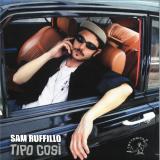
Italian producer, musician, DJ, and groove architect Sam Ruffillo drops his long-awaited debut album Tipo Così on Toy Tonics – a sun-drenched, genre-blurring statement that blends classic house with Mediterranean flair, romantic funk, and tongue-in-cheek Italo vibes. Over 11 expertly crafted tracks, Ruffillo delivers a dancefloor-ready, emotionally rich LP that connects deep musicality with irresistible rhythm and light-hearted elegance.
After three acclaimed EPs and collaborations with revered artists such as Barbara Boeing, Kapote, and Fimiani, Ruffillo has firmly cemented himself as a core artist on the Berlin-based label. Known for his unmistakable signature sound — a warm mix of vintage disco, 90s house, and Italian vocals — Sam’s music has garnered widespread DJ support from tastemakers like Gerd Janson, Palms Trax, Seth Troxler, and DJ Tennis, while becoming a staple on Italian airwaves. His infectious summer anthems like Danza Organica and Perfetta Così have soundtracked countless club nights and festivals, creating a loyal following that eagerly awaited this full-length debut.
Tipo Così is the natural culmination of a musical journey that’s both playful and profound — a travel diary written in grooves, synth stabs, and melodies that feel like postcards from a parallel Mediterranean universe. The album expands and deepens Ruffillo’s world into a fully immersive experience: lush emotional chords meet tight syncopated grooves, vintage synth textures collide with irresistibly catchy pop refrains, and the boundary between sincerity and playful irony is exquisitely blurred.
Entirely written, produced, and recorded in Italy, in his beloved hometown of Bologna, the album finds Ruffillo at the helm on keys, drum machines, and production, supported by a talented cast of musicians contributing live bass, guitar, and other organic elements — further enriching his trademark fusion of electronic grooves and natural instrumentation. There’s a tactile warmth in these tracks, a hands-on feel that adds soul and depth to every beat.
This album also marks Ruffillo’s heartfelt return to singing in Italian, with standout tracks like House Tipo Così, Mi Fa Volare, Ancora, and Dentro Di Me, where romantic naïveté meets pulsing club energy in a way that feels both timeless and refreshingly new. The vocal performances add an intimate, human touch to the music, reinforcing the personal stories woven into each song. There’s poetry in the casual, a bittersweet elegance in the way the lyrics float over groove-heavy production.
Having toured extensively across Europe, Australia, Indonesia, New Zealand, and Mexico — with sets at iconic venues like Panorama Bar and festivals such as Sónar Barcelona — Ruffillo has fine-tuned much of this album in front of live audiences. The real-world testing ground infused the record with a dynamic energy and immediacy that only comes from genuine crowd interaction. These songs weren’t just made in the studio — they were lived on dancefloors around the world.
Tipo Così is not just a collection of tracks. It’s a philosophy — playful, stylish and unmistakably personal. A modern club album bursting with heartfelt emotion and sophistication. Music for dancers with taste; for lovers of beauty, rhythm, and the little imperfections that make things feel real.
But what exactly is Tipo Così? More than just a phrase, it’s a way of being. It’s about embracing elegance without effort, mixing irony with sincerity, and letting nostalgia slip into the room without taking over the party. It’s Sam Ruffillo’s signature language: relaxed, confident, meticulous yet never rigid — where a chord progression can say as much as a lyric, and every beat carries intention.
The album’s visual identity complements this vision perfectly. The artwork and promotional materials lovingly reference Italian design from the ’80s and ’90s, combining bold graphic elements with playful pop culture nods. This aesthetic mirrors Ruffillo’s music — a fusion of vintage warmth and contemporary freshness, delivered with authenticity and charm.
Sam Ruffillo belongs to a new generation of European artists who are reshaping electronic music by blending past and present, analog and digital, groove and emotion — without nostalgia or pose. His artistic universe is coherent, vibrant, and alive; a rich tapestry of sound, images, and stories that coexist with lightness, precision, and a distinctive voice.
Reflecting on his artistic journey, Sam describes music as a vital, deeply human impulse — a tribal connection to rhythm and body that has driven him since he was a teenager. His creative process balances meticulous planning with room for spontaneity, usually sparked by clear melodic ideas that evolve naturally. Collaborations with close friends, especially vocalists like Ninfa, add warmth and authenticity, exemplified in tracks like “House Tipo Così.” For Sam, music is honest self-expression — crafted for listeners who crave memorable melodies and rhythms imbued with genuine feeling.
While technical perfection is tempting, Sam prioritizes emotion, knowing that what truly resonates is the soul behind the sounds. His long-standing partnership with Toy Tonics has been key in nurturing his vision, offering a blend of creative freedom and professional support. Looking ahead, Sam Ruffillo is excited to broaden his live performances, and release new projects that continue to blend electronic grooves with organic, heartfelt sounds — maintaining the delicate balance between playful irony and sincere emotion that defines Tipo Così.
Kurzversion:
Italian DJ, producer and musician Sam Ruffillo drops his debut album Tipo Così on Toy Tonics - a sunny blend of house, funk, Italo and pop, full of groove and emotion. Written and recorded in Bologna with live instruments and Italian vocals, it’s a playful, elegant journey shaped on dancefloors worldwide. A stylish, sincere club album where nostalgia, irony and rhythm meet in perfect harmony.
- Mi Fa Volare
Road-tested across continents and now finally released, “Mi Fa Volare” channels 90s uplifting euphoria with big breakbeats, lush chords, and Italian vocals built to stick. Somewhere between balearic bliss and piano house nostalgia, it’s a feel-good club weapon made for peak-time moments - already sung back by crowds after just one listen.
- Ancora
“Ancora” is a vibrant hi-NRG track inspired by 80s Italo disco, sung entirely in Italian. It blends driving rhythms with dreamy melodies, capturing the radiant spirit of the decade. This fresh yet nostalgic song delivers euphoric vibes and timeless energy, making it a perfect fit for both dancefloors and reflective listening moments worldwide.
- Dentro Di Me
“Dentro Di Me” channels ‘90s sensuality through a fast-paced, UK house-inspired lens. Entirely in Italian, it’s a bold and contemporary dance track where hypnotic vocals meet high-energy grooves. Blending nostalgic textures with forward-thinking production, the result is a seductive and euphoric trip - equal parts emotional and club-ready.
- Amigo
“Amigo” blends Latin groove, acoustic guitar-driven rhythm, and Mediterranean flair into a warm, magnetic, cross-cultural dance anthem. Sung in Spanish and Italian, it celebrates connection, inclusivity, and the joy of moving together - whether stranger or friend. With its unstoppable rhythm and vibrant energy, it’s a feel-good track with a unifying spirit.
- Ma Sei Fuori
“Ma Sei Fuori” is a tongue-in-cheek dancefloor bomb blending raw house energy with catchy vocal phrases and a nod to classic French touch. Driven by hypnotic vocal lines and a playful attitude, it doesn’t take itself too seriously - while still proving serious club impact. Built for late-night moments, it’s bold, bouncy, and impossible to ignore.
Fetter’s Body of Noise erupts at the threshold between ravey hypnosis and avant-pop experiment, slithering through the hinterlands of unconscious desire. Nine shape-shifting tracks conjure haunted landscapes where beauty refuses clarity and dancefloor logic warps underfoot. Vocals swoon, drift, and demand—stacking into fragments that multiply and weave through saturated pulses and shimmering, snarling synths.
Opening track "Like a Rose" traces a dreamer’s transition into the unstable physics of a perplexing but familiar dream world, where they gradually become lucid. “Beast” follows up humming with shadowed urgency, threading a path through self-sabotage and metamorphosis. “Spathiphyllums” drifts a while in a lush lostness, aching for something new before fracturing into wild, cathartic collapse. Side B’s “Do I Exist? (D.I.E)” and “The Longing” spiral into existential wonder, searching for a human origin story—both personal and collective—against a backdrop of uncertainty, while “Headache” thrusts forward as an absurd and insistent manifesto to stay the course and harness one’s own power within the madness.
Body of Noise is crafted not only for sweating bodies in motion, but for distorting time and opening psychic portals, where surrender becomes strategy and uncertainty transforms into ecstatic navigation. Rooted in all-hardware improvised production and shaped by Fetter’s years of boundary-blurring visual and performance art, their debut LP feels alive and in flux. Reminiscent of a spectral pop chorus trapped in a loop of broken machinery, or a lost broadcast from a dancefloor in a parallel realm, Body of Noise is a journey into chaos, transformation, and a bold refusal to be contained.
About Fetter:
Fetter makes clubby self-destructing noise pop to dance and weep to. Oscillating between ethereal and pounding, their all-hardware, largely improvised live sets take listeners through a foggy wilderness of saturated rhythms and menacing synth lines, a golden voice guiding the way through. Fetter is the stage moniker of multimedia artist Jess Tucker. Their performances take place in clubs as well as galleries, often incorporating video, installation, and interactive performance art elements to create other-worldly surrounds of mesmerizingly unhinged bodies and faces.
- Manasi Devi
- Ghunghru
- Veil Of Illusion
- Vighnaharta
- Jamuniya
- Bound
- Shankara
- Fading Light
RED VINYL[23,11 €]
Litania is a doom/hindustan psych band from Italy and Serbia. The sound is based on drones, heavy riffing and inspired by ancient hindustan singing and playing (with instruments such as Sitar, Dilruba and Harmonium). Litania is also the title of our first album, eight tracks of evocative, hypnotic doom, where the raw power of guitars merges with the spiritual depth of Indian classical music. The songs, intense and dark, are interspersed with instrumental passages featuring sitar, dilruba, harmonium, and tanpura. The vocals, deep and ritualistic, draw inspiration from ancient Indian Ragas, evoking a sonic journey suspended between abyss and transcendence.
Black Vinyl[21,81 €]
Red vinyl. Litania is a doom/hindustan psych band from Italy and Serbia. The sound is based on drones, heavy riffing and inspired by ancient hindustan singing and playing (with instruments such as Sitar, Dilruba and Harmonium). Litania is also the title of our first album, eight tracks of evocative, hypnotic doom, where the raw power of guitars merges with the spiritual depth of Indian classical music. The songs, intense and dark, are interspersed with instrumental passages featuring sitar, dilruba, harmonium, and tanpura. The vocals, deep and ritualistic, draw inspiration from ancient Indian Ragas, evoking a sonic journey suspended between abyss and transcendence.
- A1: Always Lost
- A2: We Will
- A3: Insular
- B1: Aretha
- B2: Woollen Women
- B3: Breaking
Belgian singer-songwriter Emma Hessels releases her debut EP 'Constant Distance' on October 24 via Unday Records. With a voice that lingers long after the song has ended and lyrics that feel like pages torn from a diary, Hessels has quickly carved out her place in the Belgian scene. She was named laureate of Sound Track in 2023, went on to play intimate yet arresting sets at Ancienne Belgique, Botanique, and the prestigious Cirque Royal, and appeared at Best Kept Secret this summer.
Milestones that signaled the arrival of a singular new voice in folk and soul.
'Constant Distance' gathers six songs bound by a recurring undercurrent: the presence of distance in its many forms - absence, longing, loneliness, the fear of loss, but also the desire for belonging. The songs weren't conceived around a single theme, but when brought together, a pattern revealed itself. Loss implies distance, longing implies distance, even love can. Yet the EP closes on 'Breaking', a gospel-tinged anthem of connection and alignment, written during a women's writer's retreat where community and music became inseparable.
Musically, 'Constant Distance' moves between folk and soul, carrying the feel of modern blues and occasionally leaning into gospel's call-and-response. The atmosphere is warm and nostalgic, drawing inspiration from Laura Marling, Damien Rice and Big Thief as much as from Aretha Franklin, Nina Simone and Richie Havens. Emma's voice remains the constant thread: soulful, unforced, quietly commanding. "I hope my songs can be like a warm blanket, something that keeps you company, that makes you feel a little less alone."
Though written solo on guitar, often during long train rides, the songs expanded into layered productions through collaboration with Aram Santy, Nard Houdmeyers and Fender Mackenson Rooms, with additional contributions such as Marthe van Droogenbroeck's evocative trumpet. Recorded over two intense days at Studio Beertje, the EP captures both intimacy and expansiveness. The result is music that carries the weight of Emma's fears and questions, but also the joy of collective creation.
With 'Constant Distance', Emma Hessels doesn't just deliver a debut - she opens a world where fragility and strength coexist, and where music becomes a way of closing the gap between people.
- Skyfall (Reg+Fast)
- Sk Web Web Sk Feat Nofuturesk
- Disheveled
- Pleading
- Goin Pro
- Txts Red On Imessage (Reg+Fast)
- Crochet - I Swear Feat Tnotsobad
- Offwrld
- Playboy (Reg+Fast)
- Enough
- Is That Watchu See In Mysele (Reg+Slowed)
- Vip (Reg+Slowed)
- Otr Feat Tnotsobad
- Fantasize (Reg+Fast)
- Crazy Keepyaclose (Fast+Reg)
- Whattitdo
- 007: (Reg+Slowed)
- Yw Sa
- Phone
In syrupy slow pursuit of a strong 2023 debut, Yungwebster's somnolent sequel is bolstered by pitch-perfect production from Space Afrika and Nathan Melja, who vaporise the rapper's auto-tuned post-Future drawl with euphoric orchestral drones, brittle micro-trap beats and weightless pads.
Over a decade ago at this point, Future released 'Codeine Crazy', the decelerated finale of 'Monster', one of his best-loved mixtapes. The track neatly summarised themes the Atlanta rapper had been circling for years at that point, layering his slurred, lean-dizzy rhymes over producer TM88's rubbery, melancholy synths. "Take all my problems and drink out the bottle," he moaned robotically, using the track's minor key bounce to represent the crushing delirium that followed fame and its tasting menu of intoxicants. It's still Future's high water mark creatively, and its traces can be observed in a full spectrum of contemporary sounds, from 6LACK's downtrodden, self-aware R&B to Lil Uzi Vert's feverish trap. But it's Yungwebster who's taken the haze to its logical conclusion, reimagining the Magic City-sculpted bumps as hypnagogic Actavis- 'n Xanax-hued ambient music. You could argue it was bound to happen - the more you sip, the slower it gets - and plays as a cracked mirror to cloud rap's long-smoked hybrid of Southern psychedelia and post-OutKast eccentricity.
Webster's opiated POV is clearer than ever before on 'II'. Just peep the cracks in his voice on the Space Afrika-produced opener 'Skyfall' as he coughs and splutters over watery samples, booming subs and SA's patented collage of soundtrack-ready strings and sirens. Presented at regular speed and in chipmunked form, it sets the pace for an album that, like its predecessor, constantly fucks with the timeline, pitching the whole master into doubletime or slowing it down to a crawl to present a curved, inebriated narrative rather than a straight line. Even without the tempo switches, Webster singles out beats that accent his warbled rhymes that sound as if they'll fall apart at any moment. French DJ and producer Nathan Melja backs 'Disheveled' with Black Ark-styled oscillations and airlock'd echoes, filtering the bassline until it almost disappears entirely; with room to breathe, Webster's able to take the lead - you might not be able to pick out the words, not entirely at least, but you get the message.
In fact it's Webster's voice that's the revelation on 'II' - with a coherent mix from producer tnotsobad, the nuances and fluttering tonalities emerge more vividly than they have before. It makes the flip between the regular speed and fast on 'Txts Red on iMessage' a textural decision, the different pace shifting the warbled cadences so Webster's voice becomes far more important than the additional elements. And on the album's Space Afrika-produced eight-minute centerpiece 'Crochet / I Swear', Webster's mumbled bio-mechanical whines create a much-needed foil for the decelerated boom-clack and suspended save room ambience. We get to encounter a personality here, not just an aesthetic, so as the album moves into its twilit fourth side, the beatless, voice-led somniferousness of 'YA SA' and ululating 'Phone' come off like a descent into tranquillised sedation. Rap has rarely sounded so chimeric.
Jackie Mittoo’s ‘Reggae Magic’ is a new collection from the great Jackie Mittoo. The album features a mixture of classic tunes and rarities from the period 1967-74, when Mittoo was at the height of his musical powers. Mittoo’s solo career began after the end of The Skatalites in 1965. He began pushing new musical boundaries, creating a uniquely identifiable organ-led funky reggae sound that owed as much to Booker T and The MGs, Jimmy Smith, Stax and Motown as to the post-ska and emergent rocksteady island rhythms of Kingston, Jamaica. His solo work at the legendary Studio One spanned seven albums and hundreds of singles.
Aside from producer and founder Clement ‘Sir Coxsone’ Dodd, it’s hard to think of anyone more central to the sound and success of Studio One than Mittoo; keyboard player extraordinaire, songwriter, arranger, musician, truly the Keyboard King at Studio One. Jackie Mittoo had been the youngest founding member of The Skatalites (at age 16), probably the most important group in Jamaican music. After they split, he became leader of the three pivotal groups at Studio One – The Soul Brothers, The Soul Vendors and Sound Dimension. He also became musical director for Studio One, helping create countless hits for singers Ken Boothe, Bob Andy, The Wailers, John Holt, Delroy Wilson and more – unforgettable tunes like Alton Ellis’ ‘I’m Still in Love with You’, Marcia Griffiths’ ‘Feel Like Jumping’, The Heptones’ ‘Baby Why’ and others. Between 1965 and 1968, many of the tunes created at Studio One can be attributed to Mittoo – timeless instrumental tracks, recorded either under his own name or those of The Soul Brothers, Soul Vendors and Sound Dimension, that have become the basis for literally 1000s and 1000s of Jamaican songs over many decades, giving the music an unsurpassed longevity.
The endurance of his music was as a direct result of significant developments in Jamaican music in the 1970s, namely the creation of three important new styles: Dub, Deejay and Dancehall. In the early 1970s Mittoo’s instrumental tracks were used as the musical source for a series of classic Studio One dub albums. At the same time Deejays at Studio One, including Dillinger, Prince Jazzbo and Dennis Alcapone, began toasting over these same popular rhythms to create their own new songs. In the mid-70s, a new generation of Studio One singers and deejays, including Sugar Minott, Freddie McGregor, Johnny Osbourne, Michigan & Smiley and others, began once again creating new melodies over these original instrumentals, signalling the birth of a new Jamaican style that became known as ‘dancehall’.
As dancehall swept across the island, rival producers copied these now classic rhythms. These original Jackie Mittoo-driven tunes spread like a virus throughout Jamaican music; be they the instrumental cuts to tunes such as Alton Ellis’ ‘Mad Mad’ , ‘I’m Just A Guy’, Larry Marshall’s ‘Mean Girl’, Slim Smith’s ‘Rougher Yet’, and instrumentals such as Mittoo’s classic ‘Hot Milk’ or ‘One Step Beyond’, The Sound Dimension’s ‘Real Rock’, ‘Heavy Rock’, ‘Full Up’, ‘Drum Song’, ‘Rockfort Rock’ … and the list goes on. These tracks became a constant soundtrack to the island, emitting from the ever-present sound of speaker boxes strung up around dancehalls. This recycling travelled even farther afield; The Sound Dimension’s instrumental ‘Real Rock’, updated by Willie Williams on his classic ‘Armageddon Time’ was in turn covered by The Clash. Lily Allen sampled Mittoo’s debut solo single ‘Free Soul’ for number one hit ‘Smile’; Dawn Penn’s ‘You Don’t Love Me (No, No, No)’, accompanied by The Soul Vendors, was revived by Penn and producers Steely & Cleevie in 1994, since covered by Rihanna, Ghostface Killah, Stephen Marley, Damian Marley and Beyonce. And so it goes; an endless time-leaping, continent-hopping diasporic musical map of the world with all roads essentially leading back to one man – Jackie Mittoo.
The Criminal Minds return with the superb Smoove Criminal, a collection of criminally good tracks, the title track, Smoove Criminal, shows off the clean and sharp sound of the latest TCM workout, with heavy drums, rolling grooves and devastating bass.
Meanwhile, The Criminal Part 2 is a proper authentic old skool work out, a follow on from the classic Criminal Minds track, The Criminal.
And lastly, the Swankout Remix is a ruff jungle workout of a classic track, and this is the mix that has already been played on national radio, so its bound to hit in all the right places...
Brussels-based guitarist Benjamin Sauzereau is one of the most respected figures in Belgian jazz, working across the full spectrum-from elegant jazz to adventurous improvisation. You may know him from projects such as Les Chroniques de l'Inutile, Hendrik Lasure Warm Bad, Book of Air, and Fur. Over the past few years, he has written a large number of compositions under the umbrella of 'REMORQUE', performed in various line-ups-a concept somewhat reminiscent of John Zorn's Masada compositions.
These pieces share a clever and imaginative approach to composition, improvisation, and arrangement. Typically short but vibrant, they shimmer with color and atmosphere-sometimes lyrical and contemplative, other times playful, whimsical, or slightly prickly. Each piece opens up a small, self-contained universe full of nuance, refinement, and space, interpreted by musicians who navigate fluidly between classical discipline and free improvisation.
Following the first release Un on W.E.R.F. Records, Sauzereau now presents the highly anticipated follow-up: DEUX. This second chapter dives even deeper into the sonic world of REMORQUE-further refining its playful contrasts, rich textures, and poetic unpredictability. With DEUX, Sauzereau cements his reputation as a composer who continuously reshapes the boundaries between structure and freedom, offering a listening experience that is as intimate as it is exploratory.
Ostinato as resistance: Rafael Anton Irisarri’s landmark work reimagined. Marking the tenth anniversary of the American composer’s critically acclaimed album 'A Fragile Geography', this new edition arrives renewed, both sonically and visually.
First released in 2015 (Room40) during a period of personal upheaval and creative reinvention, it endures as a testament to resilience, transformation, and the connection we hold with the places that shape us.
Written in the aftermath of a devastating theft, A Fragile Geography was born out of loss. Just days before a cross-country move to New York, Irisarri’s entire Seattle-based studio was wiped out. Instruments. Recordings. Archives. Gone without a trace. He arrived on the East Coast to an empty room and the daunting task of starting over.
“This album wasn’t just a record; it was a lifeline,” Irisarri reflects. “It became a way to process the emotional chaos that followed: uprooting, instability, and ultimately, the slow, intuitive rebuilding of a life.”
Composed and recorded in the rural woods of the Hudson Valley, the album took shape in seclusion, surrounded by nature, and through a process guided by improvisation. Embracing limitations, Irisarri wove textural layers of field recordings with half-remembered melodies from his Seattle years, piecing them together like fragments of memory. Tracks like “Displacement,” “Hiatus,” and “Persistence” juxtaposed haunting stillness with restless momentum, mapping an inner terrain of grief, catharsis, and rebirth.
Among its defining sounds is “Empire Systems,” a monumental centerpiece built around a simple four-chord progression, organ textures, and guitar drones. Gradually, the track expands into layers of immersive loops and thick, enveloping distortion that wash over the listener like a rolling wave. Often cited as the album’s most majestic passage, it captures Irisarri at his most sonically ambitious. With a harmonically saturated structure crafted from restraint and repetition, it remains one of his most recognizable compositions: an exercise in the art of maximal minimalism.
From the outset, “Reprisal” received praise from BBC’s Mary Anne Hobbs, who championed the track on her radio show. Her support played a key role in introducing Irisarri’s work to wider audiences and solidifying his place within the lineage of electronic, drone, and experimental sound artists. A slow-burning elegy, the piece emerges from a haze of distortion and sub-bass, with dense, unrelenting drones carrying a sense of mounting tension. Just as it seems to collapse under its own weight, flickers of guitar emerge like distant light through fog. It’s a meditation on dissonance, resolve, and the elusive possibility of release.
The closing track, “Secretly Wishing for Rain,” is steeped in saudade: a longing for Seattle’s dour grey skies, lush green landscapes, and desaturated sunsets. Through it, Irisarri mourns a vanished chapter of life bound to the city, a time documented in scattered mementos and cherished collections, now permanently gone. A reflection on what could never be recovered: an era lost to time. Julia Kent’s looped cello motifs added a melancholic warmth to the track, marking the first collaboration between the two artists and sparking a musical dialogue that would keep growing in the years that followed.
More than a career highlight, A Fragile Geography has laid the foundation for Black Knoll studio, which Irisarri rebuilt from the ground up. The studio has since grown into a creative hub for countless projects, with Irisarri engineering records for iconic music figures like Terry Riley, Ryuichi Sakamoto, William Basinski, MONO, Devendra Banhart, Grouper, Emeralds, Steve Hauschildt, Julianna Barwick, and many others. Carried by its lasting influence, the album has quietly captured the ear of a younger generation, its sound and emotional arc finding new listeners in unexpected corners.
The album’s new visual language was reimagined in collaboration with Mexico City–based designer Daniel Castrejón. Irisarri captured ghostly images at Gaztelugatxeko Doniene, a historic coastal site in Bermeo, Euskal Herria. Castrejón then treated the photographs with distressed textures and spectral overlays. The final artwork channels the rugged, elemental forces that shaped both the music and Irisarri’s aesthetic, renewing his ties to ancestral ground inspired by the Basque homeland of his bloodline.
Mastered by Stephan Mathieu with exceptional attention to detail, this anniversary edition uncovers every nuance in the sound design, enhancing clarity and presence. With each listen, new elements emerge, inviting discovery and reconnection.
“I don’t experience this album as a document of grief anymore,” says Irisarri. “I hear adaptation and I'm reminded that when everything falls apart, something meaningful, maybe even beautiful, can emerge.”
Ostinato as resistance: Rafael Anton Irisarri’s landmark work reimagined. Marking the tenth anniversary of the American composer’s critically acclaimed album 'A Fragile Geography', this new edition arrives renewed, both sonically and visually.
First released in 2015 (Room40) during a period of personal upheaval and creative reinvention, it endures as a testament to resilience, transformation, and the connection we hold with the places that shape us.
Written in the aftermath of a devastating theft, A Fragile Geography was born out of loss. Just days before a cross-country move to New York, Irisarri’s entire Seattle-based studio was wiped out. Instruments. Recordings. Archives. Gone without a trace. He arrived on the East Coast to an empty room and the daunting task of starting over.
“This album wasn’t just a record; it was a lifeline,” Irisarri reflects. “It became a way to process the emotional chaos that followed: uprooting, instability, and ultimately, the slow, intuitive rebuilding of a life.”
Composed and recorded in the rural woods of the Hudson Valley, the album took shape in seclusion, surrounded by nature, and through a process guided by improvisation. Embracing limitations, Irisarri wove textural layers of field recordings with half-remembered melodies from his Seattle years, piecing them together like fragments of memory. Tracks like “Displacement,” “Hiatus,” and “Persistence” juxtaposed haunting stillness with restless momentum, mapping an inner terrain of grief, catharsis, and rebirth.
Among its defining sounds is “Empire Systems,” a monumental centerpiece built around a simple four-chord progression, organ textures, and guitar drones. Gradually, the track expands into layers of immersive loops and thick, enveloping distortion that wash over the listener like a rolling wave. Often cited as the album’s most majestic passage, it captures Irisarri at his most sonically ambitious. With a harmonically saturated structure crafted from restraint and repetition, it remains one of his most recognizable compositions: an exercise in the art of maximal minimalism.
From the outset, “Reprisal” received praise from BBC’s Mary Anne Hobbs, who championed the track on her radio show. Her support played a key role in introducing Irisarri’s work to wider audiences and solidifying his place within the lineage of electronic, drone, and experimental sound artists. A slow-burning elegy, the piece emerges from a haze of distortion and sub-bass, with dense, unrelenting drones carrying a sense of mounting tension. Just as it seems to collapse under its own weight, flickers of guitar emerge like distant light through fog. It’s a meditation on dissonance, resolve, and the elusive possibility of release.
The closing track, “Secretly Wishing for Rain,” is steeped in saudade: a longing for Seattle’s dour grey skies, lush green landscapes, and desaturated sunsets. Through it, Irisarri mourns a vanished chapter of life bound to the city, a time documented in scattered mementos and cherished collections, now permanently gone. A reflection on what could never be recovered: an era lost to time. Julia Kent’s looped cello motifs added a melancholic warmth to the track, marking the first collaboration between the two artists and sparking a musical dialogue that would keep growing in the years that followed.
More than a career highlight, A Fragile Geography has laid the foundation for Black Knoll studio, which Irisarri rebuilt from the ground up. The studio has since grown into a creative hub for countless projects, with Irisarri engineering records for iconic music figures like Terry Riley, Ryuichi Sakamoto, William Basinski, MONO, Devendra Banhart, Grouper, Emeralds, Steve Hauschildt, Julianna Barwick, and many others. Carried by its lasting influence, the album has quietly captured the ear of a younger generation, its sound and emotional arc finding new listeners in unexpected corners.
The album’s new visual language was reimagined in collaboration with Mexico City–based designer Daniel Castrejón. Irisarri captured ghostly images at Gaztelugatxeko Doniene, a historic coastal site in Bermeo, Euskal Herria. Castrejón then treated the photographs with distressed textures and spectral overlays. The final artwork channels the rugged, elemental forces that shaped both the music and Irisarri’s aesthetic, renewing his ties to ancestral ground inspired by the Basque homeland of his bloodline.
Mastered by Stephan Mathieu with exceptional attention to detail, this anniversary edition uncovers every nuance in the sound design, enhancing clarity and presence. With each listen, new elements emerge, inviting discovery and reconnection.
“I don’t experience this album as a document of grief anymore,” says Irisarri. “I hear adaptation and I'm reminded that when everything falls apart, something meaningful, maybe even beautiful, can emerge.”