Nummer Music are proud to present the first reissue of Paul Mahoux’s seminal BùLù project.
The Parisian (now Okinawa-based) producer released “Silicon-Shepherd / Senegalese-Sharpshooter” 30 years ago today on the french label Virtual.
Both cuts give a unique insight into the sound of the early Trance scene and travel beyond the boundaries of Techno & House. Whether you’re revisiting the past or experiencing them for the first time, they still stand as a testament to the free spirit of the early ‘90s.
On side A, the bouncy Silicon-Shepherd shows off BùLù’s singular sampling techniques: chopped up vocals, tripped out synths and a touch of M1 slap bass take you into unexpected peak-time territories, where euphoria meets deep mind-travelling (i.e. DMT).
On the flip, Senegalese-Sharpshooter unveils another facet of BùLù’s buoyant universe. The french producer slows down the pace and invites the listener on a magical meditative journey, the lullaby-like theme tune shacks up with ancient traditional instruments and mystical choirs, again freed from any sort of constraint of style or genre.
On remix duties, Nummer’s very own E-Talking gives Silicon-Shepherd a club lift while our beloved Caldera injects Senegalese-Sharpshooter with a heavy dose of his signature swampiness.
Cerca:bound
- A1: Heaven, Or Paradise; And Hell (Ft Adrien Soleiman)
- A2: Our Dead Can’t Rest (Old Jugha Flute Dance)
- A3: Miracle
- A4: The Crane Has Lost Its Way Across The Heaven
- A5: Unraveling (Interlude)
- B1: Zephyr
- B2: Far From The Eye, Far From The Heart
- B3: What Solace Can I Give (Ft Adrien Soleiman)
- B4: …Nothing Matters More Than Touching You Although I Haven’t Touched You Yet
Lara Sarkissian’s long-awaited debut full-length, ‘Remnants’ is an ornate patchwork of ancient and modern sonic shapes that uses the vernacular of electronic music to reformulate Armenian traditions and memories. Taking digitally modeled instruments (such as the kanun, a large zither, and the duduk, an ancient double reed woodwind instrument), vocals, davul and dhol drums, tenor saxophone (from acclaimed Paris-based player Adrien Soleiman) and myriad electronic elements and techniques, Sarkissian tangles the old and the new, creating an immersive, narrative-driven experience that’s powered by history, mythology and her own familial connection to the West Asian landscape. It’s an album that’s best absorbed like a film; only multiple encounters can reveal its layered themes and references to industrial music, noise, various club styles, ambient and traditional folk.
Born and raised in San Francisco and currently based in Los Angeles, Sarkissian has developed her unique approach to composition over years of relentless experimentation across various disciplines. Her interest in music production initially stemmed from her filmmaking and video editing work, when she began to sculpt her own sound collages and scores to accompany the visuals. Since then, she’s constantly blurred the boundary between dance and experimental music, DJing around the world, producing AV installations and scoring film and video projects that have been exhibited in Berlin’s Gropius Bau, Montréal’s Musée d’art contemporain, the Music Center Los Angeles and other prestigious institutions, and releasing music with labels such as Tresor, Knekelhuis, All Centre, Silva Electronics and CLUB CHAI, the label and event series she co-founded. In recent years, she’s also been able to advance the theory behind her art, publishing a conversation with ethnomusicologist Sylvia Alajaji in the Journal of the Society of Armenian Studies in 2021, and unveiling her methodology in Norient’s ‘This Track Contains Politics – The Culture of Sampling in Experimental Electronica’ a year later.
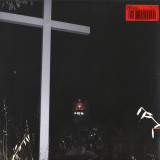
‘Remnants’ is a new stage in Sarkissian’s evolution as an artist; not only is it her first proper album, but it’s the inaugural release on her new platform btwn Earth+Sky. She sees the label as a place to encourage collaborations between musicians and producers and prioritize sound in visual arts realms, and ‘Remnants’ is the ideal proof of concept. It opens with ‘Heaven, or Paradise; and Hell’, a track that’s inspired by the layout of the Armenian sharakan (or hymn) ‘Aravot Luso’. Sarkissian imagines the original piece’s harmonies and melodies as parts of a dreamy electronic opera, using digital kanun sounds to punctuate her woozy, evocative synths. Soleimen joins on tenor sax in the third act, while Sarkissian repeats the chant and Jace Akira adds ghostly traces of electric guitar and bass. And on the rousing ‘Our Dead Can’t Rest (Old Jugha Flute Dance)’, Sarkissian chops urgent davul and dhol drum rhythms with spine-chilling shvi woodwind sounds lifted from a documentary about Old Jugha. The title is a reference to the moving of graves by Armenian families; the area initially housed over 10,000 elaborately carved khachkars (cross stones), one of which is pictured on the album’s cover, provided by historian Argam Aivazian’s archive.
On ‘Miracle’, Sarkissian samples atmospheres from the post-Soviet Armenian comedy film ‘Կիսանդրի’ (Kisandri). She takes this opportunity to lighten the mood a little, powdering her smudged samples with tightly edited breaks and bass thumps. It’s not until the album’s middle section that the duduk, perhaps Armenia’s best-known instrument, makes its appearance. Its familiar reedy tones, popularized by Djivan Gasparyan on his many Hollywood soundtrack appearances, emerge on ‘Unraveling (Interlude)’, weaving through the acidic ‘Zephyr’ and ‘Far from the eye far from the Heart’, a post-punk inspired stomper. Sarkissian mutates the instrument almost beyond recognition, pitching and layering it into a voice-like wail that creeps between her woody, dancefloor-primed percussion on the former, and turning it into a gentle, ghostly moan on the latter. And she brings ‘Remnants’ to a close with two of her most cryptic tracks, marrying digital kanun strings with Soleiman’s resonant tenor hums on ‘What Solace Can I Give’, and looping the same saxophone sounds until they dissolve into the air on the beatless closer ‘…nothing matters more than touching you although i haven’t touched you yet’.
It’s an album that ties up Sarkissian’s various interests and experiences, finding a romantic, poetic glimmer of light in history’s darkness. But most of all, ‘Remnants’ is about the optimism of starting anew, and rebuilding a life from the pieces of everything that’s been left behind.
* Limited to 500 copies, Double Neon green Vinyl LPs in a 5mm Album sleeve printed with colour on the front and tracklist on the back is printed in glossy ink, 2 x printed inner sleeves
"KCT 3" marks a new chapter for The Hempolics, showcasing their growth as musicians and their commitment to pushing musical boundaries. With each track carefully crafted to perfection, the album offers a mix of infectious rhythms and soulful melodies that are sure to get you grooving.
From upbeat anthems to introspective ballads, "KCT 3" takes listeners on a musical journey through a variety of sounds and styles. Drawing inspiration from a diverse range of influences, the album invites listeners to explore new sonic landscapes and embrace the unexpected.
For Moxy Muzik’s 6th birthday, we’re excited to present Moxy Editions 008—a collection of tracks that perfectly encapsulates the label’s signature sound.
The first track comes from none other than Detroit techno pioneer Stacey Pullen. Darius Syrossian, Moxy's founder, has been a fan of Stacey since the '90s, and this track captures the essence of Moxy’s vibe: techno energy infused with disco and house influences. This track was a peak-time staple in Darius’s sets all summer, igniting dance floors from DC10 and Amnesia to festivals across the UK and Europe. The buzz is palpable, with daily requests flooding in for the track ID whenever a clip surfaces on Darius’s social media.
Next, Darius brings his own twist to Audiojack’s “Get Down,” capturing the spirit of DC10’s late 2000s terrace sound. Tribal percussion, a deep groove, and a massive drop make this remix a dance floor weapon. Videos of this track’s electric energy have surfaced from epic nights at KOKO London, Space Miami, and Solid Grooves DC10, showcasing its undeniable impact.
Kicking off the B side Vincent Caira contributes a refined US house and garage track that’s bound to resonate with purist house heads. This sophisticated production by the Canadian producer is as smooth as it is engaging—a true gem for those who appreciate the finer details of house music.
Rounding out the release is a track by Buckley, the legendary Back to Basics DJ from Leeds. This one’s a tribute to the old-school Todd Terry sound, perfect for fans of classic, raw house beats. If you’re into that vibe, this track is sure to hit the mark.
This collection brings together iconic artists and authentic sounds that will resonate with Moxy’s long-time fans and newcomers alike. Enjoy the journey!
With his latest release "Precious Skin", Amsterdam based Hitam initiates the launch of "Rhiza Semar"- a label, focused on combining dynamic dance floor oriented productions with a left field approach to electronic music. Driven by a strong attraction to artistic innovation, it aims to develop a catalogue of sonic structures which transcend boundaries and traditionalism, immersing the audience in landscapes that are both familiar and otherworldly.. The essence resonates through it's first instalment. A four-track EP offering a dense and muddy trip into the fields of abstract techno. Besides some minor changes to the overall mixdown each track is recorded live. No arrangements, just the primal and impetuous necessity to create. All tracks, just like living organisms, evolve and progress, from the soft tones of 'Precious Skin' to the ominous yet soft allure of 'Chanu Akan'. Words by Costanza Acernese
Moondog's jovial H'art Songs was the first release not to incorporate his name in the title, but the record that forever proved his genius. A rare vocal album recorded by Moondog when he was in his sixties, these ten art songs blur the boundaries between classical and pop music. Moondog called this series of art songs "H'art songs" - Hardin's art songs. The musical content is on a higher level than most popular music, but has an appeal to a wide range of tastes, from the pop to the classical listener. This collection of piano pop songs written and recorded in 1977 made Moondogs' stunningly eclectic discography even more chaotic musically. It also featured some of his most mesmerizing wordplay. Telling tales that can be interpreted as metaphors for how to live - sometimes political, sometimes autobiographical, sometimes nature loving - they are always intriguingly poetic, and helped push this album to the very top of all Moondog'sreleases. "My singing style is without vibrato, as is the singing style of most of the people in the world. The voice part I have kept simple, intentionally, so that I and many others who like to sing such songs, including the barbershop quartet people, would be able to sing them. As I did on the record, the voice part should be sung by one voice or in unison, but not in harmony, because the harmony is exclusively in the piano parts, which are more complicated than the voice parts, especially in the canons and the obligati, which carry the main melodic burden." "Moondog singing Moondog? Really! even goodness knows, Moondog doesn't sing a song; he shows you how it goes." - Louis T Hardin aka Moondog. First time on Vinyl since 1978. Inner sleeve with lyrics to sing along to. Album liner notes by Moondog.
Brilliant Corners is an exceptional example of Monk's distinctive approach to jazz, which was characterized by angular melodies, unusual chord progressions, complex rhythms, and an idiosyncratic sense of timing
The title track, "Brilliant Corners," for example, was so intricate that it took multiple takes to complete, and the musicians found it challenging to follow its unconventional structure. This difficulty speaks to Monk's originality and his pushing the boundaries of what jazz could be at the time. The LP is one of Thelonious Monk's most acclaimed and influential albums, recorded in 1956 and released in 1957. It stands as a cornerstone in Monk's discography, showcasing his innovative approach to jazz composition and performance, and is often regarded as one of his finest works. Upon its release, Brilliant Corners was met with widespread critical acclaim and remains a significant album in jazz history and helped solidify Monk's status as one of the great innovators of modern jazz. It was a breakthrough album for Monk commercially as well, attracting attention from jazz critics and listeners who were beginning to appreciate his genius more widely. Today, Brilliant Corners is considered an essential jazz record, often cited as one of the greatest jazz albums of all time: musicians like Ornette Coleman, Cecil Taylor, and Eric Dolphy were influenced by Monk's ability to push the boundaries of jazz without losing its essence. The album is not just a masterwork in Thelonious Monk's discography but a pivotal moment in the evolution of modern jazz.
Over the course of her trailblazing career, Charli XCX has earned critical acclaim for her forward-thinking musical output and refreshing entrepreneurial spirit that has seen her carve her own lane on the global pop circuit. A singer, songwriter, video director, documentary maker, radio host and record label boss, Charli’s story is one of an artist continuing to succeed without compromise.
Now in 2020, Charli is already breaking boundaries - this year has seen her first BRIT nomination for British Female Solo Artist, marking a huge moment of validation from a mainstream audience that Charli has built on her own terms. In reaction to the global COVID-19 pandemic of 2020, Charli has proven herself to be one of the most adaptable artists working today; initially providing programs of Instagram live sessions that invited various guests to spark conversation, share insight, or simply entertain fans across the world who are currently practicing social distancing. Charli’s vision then expanded further, leading her to announce ‘how i’m feeling now’ - a new album to be written, recorded and released in 39 days, completely in self-isolation. The creative process was also to push her collaborative stream in a unique way; opening up the recording, writing, artwork, music videos and more to fans for feedback and contribution - she also further inspired her fans’ creativity, allowing them access to song stems to create remixes and greenscreen footage to be edited using their own imagination.
‘how i’m feeling now’ has given further spotlight to Charli’s status as one of the most adaptable, exciting pop artists working today, and through it’s uniquely collaborative approach, provided a shared space for those who listen to feel safe enough to express themselves however they wish at a time when they need it most.
- A1: Apt A (1) 06 29
- A2: Apt A (2) 05 52
- B1: And All You Can Do Is Laugh (1) 05 35
- B2: And All You Can Do Is Laugh (2) 05 51
- C1: I Promise Never To Get Paint On My Glasses Again (1) 05 46
- C2: I Promise Never To Get Paint On My Glasses Again (2) 06 02
- D1: Jimmybreeze (1) 07 01
- D2: Jimmybreeze (2) 05 33
- E1: (Cloud Dead Number Five) (1) 05 23
- E2: (Cloud Dead Number Five) (2) 06 00
- F1: Bike (1) 07 13
- F2: Bike (2) 06 54
US version[44,33 €]
cLOUDDEAD's debut album, compiling six 10" EPs that appeared between 2000-2001, is aurally dense and obscured. A sprawling mass of miniature beat-suites and Dadaist lyrics, this strange and beautiful 3xLP would influence a myriad of sub-genres (cloud rap, hauntology, lo-fi hip-hop, etc.) in the two decades since its initial release.
Only the three members of cLOUDDEAD – Why?, Doseone and Odd Nosdam – can speak to the group's origins, but in the context of underground hip-hop towards the end of the 20th century, their arrival makes perfect sense. Cincinnati had a vital scene; home to Scribble Jam, an annual confluence of MCs, DJs, B-boys and graffiti artists. While the trio soon relocated to the Bay Area where they co-founded the Anticon collective, their Midwestern roots – in ramshackle basements of off-campus hovels, as the "cerberus of Southern Ohio" – would remain the atomic heart of their early recordings.
As Chris Martins writes in the liner notes, "The only reason we know their names today is because of how loudly and curiously they aired their insularity. They rewrote the entire world as they knew it through their own fucked perspective, and when those mysterious 10-inches started popping up in record shops, it wasn't just a puzzle to investigate: there seemed to be a whole cosmology hidden in those grooves."
Each side of the album represents one of those elusive 10-inches, each embodying a universe unto itself. Opening salvo "Apt. A" and "And All You Can Do Is Laugh" are perhaps most emblematic of the cLOUDDEAD experience. Why? and Dose create a new language through boundless non-sequiturs, sing-song non-choruses and call-and-response hooks, while Nosdam's dexterous production shifts from crackling ambience of Flying Saucer Attack to tight Ohio Players drum breaks and oblique film samples.
Taken all together, cLOUDDEAD is an original interpretation of hip-hop in the surreal Y2K glow – a bizarre meeting point between William Basinski's Disintegration Loops and MF DOOM's Operation: Doomsday. All it took was a Dr. Sample SP-202, Tascam cassette eight-track and cheap RadioShack mic. There's truly nothing like it.
This edition has been faithfully restored by Nosdam. European exclusive version comes on clear vinyl, incl. fold-out poster and liner notes insert.
Cosmic Tribe is excited to release CALAGAD 13’s latest EP, “Bio-Synthetic,” a compelling exploration of a dystopian future where biology and technology intersect. This limited edition white vinyl release, with only 150 copies available, features the original tracks “Biomantics” and “Synthogerm,” alongside standout remixes by CREASOL, C-SYSTEM, 5ZYL, and EC13.
“Biomantics” immerses listeners in a dark sci-fi realm where scientific advancements manipulate memory and energy, introducing a biotechnological entity that defies natural boundaries. The track explores the fusion of biology and technology in a dystopian world.
“Synthogerm” continues this theme with its depiction of hybrid beings created from the combination of synthetic and biological elements. It offers a glimpse into a future where scientific frontiers are continuously evolving and life is constantly reshaped.
The EP’s remixes add diverse stylistic interpretations from leading names in the European underground electronic scene:
CREASOL and EC13 offer unique takes on “Biomantics,” with CREASOL providing an 80s synth wave flair and EC13 delivering an Electro-techno twist.
5ZYL and C-SYSTEM reimagine “Synthogerm,” with 5ZYL infusing it with an Electro/Breaks vibe and C-SYSTEM adding a techno edge.
The “Bio-Synthetic” EP is a must-have for collectors and enthusiasts, available in a limited edition white vinyl format.
Serbian powerhouse KATRAN, the mastermind behind Jezgro label and one half of Ontal, unleashes four colossal, rhythm driven, noise infused industrial techno anthems accompanied by nasty remix from talented 6SISS. This meticulously crafted dystopian soundscapes are engineered to obliterate any dancefloor, heralding the chaos. Handle with caution this is dangerous material.
The album ignites with intricate drum patterns that thunder like tanks across a barren, icy wasteland, while haunting atmospheric elements loom, setting a menacing tone for the journey ahead.
Next, a feverish descent into robots nightmare ensues, where mechanical drum liturgies weave relentless tension, immersing listeners in a post human auditory realm.
As the odyssey progresses, doom laden horns and mechanized drums merge to unleash subversive, devastating frequencies.
Just when the intensity seems to peak, filthy analog sine waves bubble through obscurity, pushing the boundaries of industrial techno music to its limits. Annihilation is the word that resonates here.
Almost exactly a year since since ‘Felt Cute’ debuted on Kalahari and Blu:sh is back in the building. But this time around, it’s with a record evoking the muggy closeness of a dancefloor suspended somewhere between peak-time elation and wide-eyed vision quest.
Tweaking the blueprint to rapturous ends, the latest offering from this Blu:sh project propels itself forward with a muscle-bound groove. Six robust, deadly club trax replicate the breathy seduction of its predecessor, but this time, with added velocity.
Pinky Promise is full frontal and deadly while channelled through the same explorative prism characterising Benoit’s best work. Probably the toughest material the prolific shapeshifter has put out to date.
Nods to Eurocentric styles shine through with particular emphasis on the sexy and trance-inducing. It goes straight out the traps with a big dose of fractal fuel and stays murkily psychedelic to the very end.
- 1: I Am Dog Now
- 2: Shame
- 3: Frownland
- 4: Funny Man
- 5: Camcorder
- 6: Tape
- 7: The New World
- 8: Masc
- 9: Milk Of Human Kindness
- 10: No Way Out
Direct follow up to OKC noise rock band’s 2022’s breakthrough album God’s Country. Mixed by Benjamin Green (Uniform, Portrayal of Guilt, Drab Majesty). Mastered by Matt Coloton (The Rolling Stones, Blur, Nick Cave, Sunn O)). Full US tour in 2024, EU early 2025, with more dates to come. Like the towering mounds of toxic waste from which it gets its namesake, the music of Oklahoma City noise rock quartet Chat Pile is a suffocating, grotesque embodiment of the existential anguish that has defined the 21st Century. It figures that a band with this abrasive, unrelenting, and outlandish of a sound has stuck as strong of a chord as it has. Dread has replaced the American dream, and Chat Pile’s music is a poignant reminder of that shift—a portrait of an American rock band molded by a society defined by its cold and cruel power systems. Though very much on-brand with Chat Pile’s signature flavor of cacophonous, sludgy noise rock, the band’s shift to a global thematic focus on Cool World not only compliments the broader experimentations it employs with their songwriting but also how they dissect the album’s core theme of violence. Melded into the band’s twisted foundational sound are traces of other eclectic genre stylings, with examples of gazy, goth-tinged dirges to abrasive yet anthemic alt/indie-esque hooks and off-kilter metal grooves only scratching the surface of what can be heard in the album’s ten tracks. Besides stylistically stretching the boundaries of the Chat Pile sound, Cool World is also the band’s first record to have someone else handle mixing duties, with Ben Greenberg (Uniform) capturing and further amplifying the quartet’s unmistakably outsider and folk-art edge. While Chat Pile’s debut album was plenty disturbing with its B-movie-inspired interpretation of a “real American horror story”, what the band depicts on Cool World is unsettling not just from its visceral noise rock onslaught, but from depicting how all sorts of atrocities are pretty much standard parts of modern existence. In film terms, think something like a Criterion arthouse film by way of schlocky grindhouse splatterfest: undeniably gratuitous and thrilling in the moment but leaving a looming dread in the back of one’s mind for how close the horrors depicted mirror reality.
- Wednesday Night Prayer Meeting
- Cryin' Blues
- Moanin
- Tensions
- My Jelly
- Roll Soul
- E's Flat Ah's Flat Too
Blues & Roots is not only a cornerstone in Charles Mingus' body of work but also a testament to the enduring power of the blues as a foundation for jazz
Mingus managed to both honor tradition and push the boundaries of jazz, all while making a deeply personal and politically charged musical statement. The album remains one of the most vital and influential recordings in the history of jazz music. Released in 1960 this album stands out in Mingus' discography as a raw, vibrant homage to the roots of blues and gospel traditions in jazz. Mingus sought to return to his musical roots, drawing from blues and gospel traditions he grew up with, particularly from the African American church music of his youth. The album is a powerful statement of how deeply the blues tradition influenced modern jazz. It combines the unfiltered emotional intensity of the blues with Mingus' forward-thinking and often unconventional compositional techniques. The album's tracks are imbued with a strong sense of the blues, which is especially apparent in songs like "Wednesday Night Prayer Meeting" and "Moanin'." The album carries a loose, jamsession feel, reflecting the church and street-based roots of blues music. The use of call- and- response patterns in several tracks also hints at gospel traditions. Blues & Roots is often cited as a critical album in the development of jazz as a genre that embraced both its past and future. Mingus' ability to integrate traditional musical forms (such as blues and gospel) with more modern, experimental elements opened up new possibilities for jazz. His compositional style, which juxtaposed tightly arranged sections with freewheeling solos, influenced generations of musicians, from avant-garde jazz artists to rock musicians and composers in other genres
- Palo Alto
- Darn That Dream
- When Your Lover Has Gone
- Cork 'N' Bib
- Somp'm Outa' Nothin
- Someone To Watch Over Me
- Uncharted
- Moonlight In Vermont
- The Song Is You
This album is often recommended for fans of modern jazz and is considered a notable addition to the discography of Lee Konitz and Jimmy Giuffre
It exemplifies the ethos of jazz as a medium for exploration and innovation, with a focus on personal expression and artistic dialogue. Released in 1959, featuring two influential figures in the genre this album captures a significant moment in jazz history, showcasing a unique collaboration that emphasizes improvisation and melodic exploration. In the late 1950s, jazz was undergoing significant transformations, with movements such as cool jazz, hard bop, and avantgarde emerging. Lee Konitz and Jimmy Giuffre were both pivotal figures in the cool jazz scene, and their collaboration was a meeting of two innovative minds. Known for his smooth tone and lyrical improvisation, Konitz was influenced by the bebop movement and studied under legendary figures like Lennie Tristano. He often pushed the boundaries of traditional jazz through his emphasis on melody and harmony. Jimmy Giuffre was notable for his unique approach to composition and improvisation, often incorporating elements of classical music and folk traditions. He was a key figure in the West Coast jazz scene and known for his use of space and silence in music. The album features a mix of standards and original compositions, highlighting the artists' ability to reinterpret familiar melodies with Giuffre's arrangements often incorporate complex harmonies, while Konitz's playing brings a sense of lyricism and warmth: an essential listen for fans of jazz.
- Stolen Moments
- Hoe Down
- Cascades
- Yearnin
- Butch And Butch
- Teenie's Blues
The Blues and the Abstract Truth is not just a landmark album in Oliver Nelson's career but in the history of jazz itself
The album features an incredible ensemble of top-tier jazz musicians, often referred to as a "supergroup": Oliver Nelson (alto saxophone, tenor saxophone), Freddie Hubbard (trumpet), Eric Dolphy (alto saxophone, flute), George Barrow (baritone saxophone), Bill Evans (piano), Paul Chambers (bass), Roy Haynes (drums). The early 1960s were marked by a shift from the hard bop of the 1950s to more experimental forms, including modal jazz, free jazz, and the incorporation of avant-garde elements. Musicians like John Coltrane, Ornette Coleman, and Charles Mingus were all pushing the boundaries of jazz, and Oliver Nelson's work fits within this broader movement: in this album there's a perfect combination of modern compositional techniques, virtuosic performances, and emotional depth make it an essential listening experience for any jazz fan. It captures the moment when jazz was evolving into new, exciting directions while staying connected to its roots in the blues. The Blues and the Abstract Truth is considered one of the essential albums in modern jazz where Oliver Nelson's compositional style blends hard bop, modal jazz, and blues influences with sophisticated harmonic structures and striking arrangements. The album is noted for ts rich orchestration despite having a relatively small ensemble with use of textures and colours, particularly in tracks like "Stolen Moments," created a new standard in azz arranging.
The Invisible Road: Original Recordings, 1985–1990 compiles an unheard, previously unreleased body of recordings by Sussan Deyhim and Richard Horowitz, dissidents from diametric backgrounds who met during the heady days of Downtown New York in the 1980s. This collection reveals the creative and life partners’ radical shared vision of avant-garde pop in all of its boundary pushing freedom, combining Deyhim’s singular approach to vocalization, Horowitz’s invention of new musical languages, and touchstones of traditional music from around the world, creating a new music that ultimately retains a voice entirely its own. Despite their difference in backgrounds and respective journeys, at the time of their meeting in the early 1980s in New York City, Sussan Deyhim and Richard Horowitz were both products of the search for freedom and understanding (and resultant awakenings) that swept the globe and helped culturally define the late 1960s and 70s. Deyhim, born and raised in Tehran, spent her teens dancing with Iran’s Pars National Ballet company, performing weekly on Iranian national television, and travelling her home country studying with master folk musicians and dancers, before relocating to Belgium and joining Maurice Béjart’s prestigious Béjart Ballet of the 20th Century. Horowitz, born and raised in Buffalo, New York, had spent much of the decade before abroad, first departing for Paris under the shadows of the Vietnam War, where he studied piano, Eastern philosophy, and became entrenched the city’s free jazz scene, playing with the likes of Steve Lacy, Anthony Braxton, and Alan Silva, before embarking south to Morocco where his friendship with Paul Bowles helped cultivate a deep passion for the country’s musical traditions and a shift in his musical practice.
The pair met by chance sometime in 1981 at Noise New York, a small studio on West 34th Street founded by the musician and recording engineer, Frank Eaton, as a utopian creative laboratory that beckoned artists and bands like Arthur Russell, Christian Marclay, Liquid Liquid and Butthole Surfers into its orbit. Both artists had recently relocated to the city, Horowitz having recently released his debut album, Oblique Sequences (Solo Nai Improvisations), on the legendary Paris based imprint Shandar, and fallen in with members of New York avant-garde like La Monte Young, Jon Hassell, David Byrne, and Brian Eno, and Deyhim having begun to more actively incorporate singing into her practice, notably recording a vocal score for choreography she was doing at La MaMa Experimental Theatre.
Initially bonding over a cassette tape of field recordings made by Paul Bowles that had been given to mutual friend and writer Brian Cullman (seeking answers for Ornette Coleman’s question “what is the sound of sound”), their earliest collaboration was documented on Horowitz’s 1981 album, Eros In Arabia, with Deyhim contributing vocals to the track “Queen Of Saba.” Over the coming years, their deep connection would routinely gravitate them into the studio, culminating in the body of recordings that would appear on their 1986 album for Crammed Discs, Desert Equations: Azax Attra. Unknown to nearly all but the artists, laying in wait over the decades on numerous multi-track and stereo reels, DAT tapes, and reference cassettes, were a vast array of recordings made by Deyhim and Horowitz bookending Desert Equations. The 13 pieces represented on The Invisible Road: Original Recordings, 1985–1990 were recorded largely between Noise New York and Daylight Studio in Brussels, during a period that Deyhim describes the partnership between herself and Horowitz’s as seeking a music “free of any specific cultural reference, with a personal musical signature,” blossoming into a body of sonority that embraced the energy of contemporary boundary pushing pop and the avant garde, filtered through their mutual love and study of various musical traditions from across the globe and deep engagement with the ideas and tactics of experimental music.
Undeniably rooted in Horowitz’s study of the North Africa ney and the music of the Berber and Gnawa cultures during his time in Morocco, Deyhim’s deep engagement with the folk traditions of Iran, and the couple’s immersion in the interconnected Downtown underground music scenes, each piece on The Invisible Road offers its own vision creative and cultural hybridity. Deyhim sings in both English and Farsi, as well as a composite tongue that she developed by drawing upon numerous indigenous vocal techniques from around the world, intuitively responding to Horowitz’s simultaneous sound syntax forming and combining a wide range synthetic and acoustic instrumentation, and experimental tape techniques, within a visionary series of free-standing expressions.
Ben Klock & Fadi Mohem announce debut collaborative album featuring Coby Sey and Flowdan on new label LAYER
Ben Klock and Fadi Mohem present their first collaborative album on their new label LAYER. The ten-track full length project titled Layer One follows the hypnotic EP Klockworks 34 that set the stage in 2022. In a bold departure from the techno roots that have defined and nurtured their careers, Klock and Mohem are now pushing genre boundaries, exploring IDM, ambient and experimental electronic music while still retaining the brilliance that characterised their earlier work.
The conceptual direction of Layer One delves into a post-human world, where humans are close to extinction on Earth, leaving only imprints, traces, and relics behind—digital fossils and machine-generated images capturing fleeting moments of non-human photography, as Artificial Intelligence remains in a world that quietly thrives without us. We do not perceive this as a bleak apocalyptic dystopia, but more a sober and serene reflection of a world that continues to exist and flourish, indifferent to the absence of humanity. Despite this unremitting setting, through this journey we find survivors who signal a remembrance of the human sensibilities.
Elevating this project are two very human and dynamic collaborations featuring the charismatic Coby Sey and the legendary grime MC Flowdan. Sey, a prominent figure in the British music scene known for his work with artists like Tirzah and Mica Levi, injects his music with a mesmerizing emotional depth. Opening the album with the powerful track ‘Ultimately,’ Sey offers spoken-word musings on creativity and life over experimental landscapes meticulously crafted by Klock and Mohem. Nostalgia permeates this opening track, and track 7 ‘Clean Slate’ reinforces this sentiment with Sey’s stream-of-consciousness wordplay.
Flowdan, the gritty MC whose verses have become anthems of the UK grime movement, made headlines in 2023 with two songs that reached the top 20 of the UK singles chart. In 2024, he was awarded his first Grammy for the Skrillex and Fred Again collaboration Rumble, becoming the first grime artist to win in any category. On track ‘Our Sector,’ Flowdan unleashes his raw energy and dynamic flow, adding a thrilling vocal dimension to the album’s narrative. The fluid delivery of his lyrics and rhythmic timing are enhanced by the staccato beats and abstract synths. These collaborations are not mere features; they are pivotal moments that crystallize the album’s vision—an experimental re-imagining of electronic music’s possibilities.
Immediately offering an impressive entry to Klock and Mohem’s changing sonic universe ‘Escape Velocity’ shows the collaboration at its strongest. Deftly juggling between ambient chords and more densely intricate rhythmic moments. These tightly layered textures and intense clashing moments are continued through most of the album. On other tracks the duo are just as innovative ‘Rest Assured’ rips open the sound palette Klock and Mohem are known for, synths dart around flickering through into unexpected areas. Penultimate track ‘The Machine’ feels like the internal innards of a PC or synthesizer brought to life. Electricity flows through the track like an auditory exploration of the digital world's hidden mechanical and electrical processes. In contrast, final track ‘Melatonin’ does exactly what the name suggests; its soothing melodic ambience cradles the listener as the album draws to a close.
Alongside the album’s release, the duo will release two singles. This album represents the work of two artists at the peak of their creative powers, inviting listeners to step outside the familiar and explore a different musical perspective.
- A1: I Scream This In The Mirror Before I Interact With Anyone
- A2: Sin Miedo
- A3: I'll Be Right There
- A4: It's Dark And Hell Is Hot
- A5: New Black History Feat Vince Staples
- A6: Don't Rely On Other Men (Album)
- A7: Vulgar Display Of Power
- B1: Exmilitary
- B2: Jihad Joe
- B3: Jpegultra! Feat Denzel Curry
- B4: Either On Or Off The Drugs
- B5: Loop It And Leave It
- B6: Don't Put Anything On The Bible Feat Buzzy Lee
- B7: I Recovered From This
"JPEGMAFIA, a trailblazing force in experimental hip hop, releases his latest solo project, I LAY DOWN MY LIFE FOR YOU. This album, his first since 2021, is a complex and innovative work that showcases his meticulous production skills. Featuring collaborations with Denzel Curry, Vince Staples, and Buzzy Lee, the album explores themes like capitalism, conscription, and propaganda through some of JPEGMAFIA’s most anarchic raps to date. The release is accompanied by an extensive global tour, reinforcing his status as one of the genre’s most incendiary talents. Since his last solo release, JPEGMAFIA has continued to push boundaries in the music industry, most notably with his 2023 collaboration with Danny Brown on Scaring the Hoes, which garnered critical acclaim and chart success. With I Lay Down My Life for You, JPEGMAFIA cements his reputation as a visionary artist, delivering a powerful commentary on the world through his unique lens. The album’s release is set to make a significant impact, both in stores and on stages worldwide."
Woven together from home studio recordings that span two decades, and with some notable guest appearances including; The Bug, Douglas Leal of Deafkids, Wayne Adams of Petbrick, Dave French of Yob and Sanford Parker, this final part of the Harvestman Triptych seeks once again for a lost world, with the voice of poet Ezra Pound extolling the virtues of "gathering from the air a live tradition".
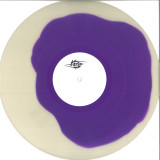
Cloudy Clear plus Black Galaxy effect vinyl in dub style jacket. Limited and Non-Returnable.
At its heart, music has always been a questioning of inheritance – a dialogue with predecessors and forebears, the forging of one’s own perspective in relation to what has come before, and for some, a plunge into the boundless realms between. For Steve Von Till, that process has always taken on an added dimension to become the most sacred of tasks. Whether through the apocalyptic uprising of Neurosis, the sonic deconstructions of their sister project, Tribes of Neurot, the invocatory intimacy of his eponymous solo albums or his instrumental psychedelic reveries in the guise of Harvestman, that dialogue has never just been with musical influences, but with what underpins them: the primordial, elemental forces now banished to the peripheries of our contemporary consciousness, yet still broadcasting a signal for all who will listen.
Drawn to the megaliths, ruins and ancient sites mapped out along the British and European mainland’s geographical and psychic landscapes, the folklore and apocrypha forever resurfacing as portals from a rational world, Triptych is a meditation forged from traces and residues, and an hallucinatory recollection of artists who have tapped into that enduring otherworldliness embedded within us all. It’s a dream diary narrating a passage through Summer Isle where Flying Saucer Attack are wafting out of a window, a distant Fairport Convention are being remixed by dub master Adrian Sherwood, celestial scanners Tangerine Dream are trying to drown out Bert Jansch and Hawkwind are playing Steeleye Span covers, all prised out of time yet bound to its singularity.
"Herne's Oak" provides seismic bass waves that physically halt the track in its steps - giant footfalls as Herne's antlers themselves are dragged along a corridor. Another curious and mysterious piece of British folklore brought to life by Harvestman.
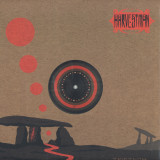
If Triptych is a multi- and extra-sensory experience, it extends to the remarkable glyph-style artwork of Henry Hablak, a map of correspondences from a long-forgotten ancient and advanced civilization. As with Triptych itself, it’s an echo from another time, an act of binding, a guide to be endlessly reinterpreted, and a signpost to the sacred that might not indicate where to look, but how.
Cover art is by Henry Hablak, who also designed the art for Part One and Part Two.