Dicks’ debut LP has been acknowledged as a foundational statement in Punk ever since its initial 1983 release. Following their first single, 1980’s “Dicks Hate The Police,” and a live split with fellow Austinites the Big Boys, Kill From The Heart does not disappoint. Originally released on SST, the album stands apart from the mass of generic thrash-hardcore contemporaries— fueled by the manic, but controlled power of singer Gary Floyd along with the original lineup of guitarist Glen Taylor, bassist Buxf Parrot and drummer Pat Deason. Dicks were operating at an absolute peak at this point, alternating damaged workouts that suggest Flipper or No Trend on one end and highly charged tracks in the vein of Minutemen or Tales of Terror on the other. Straight out of the gate on “Anti Klan,” the band trades blues-grounded guitar with squealing feedback and intensely political lyrics. The raw emotional sincerity of Floyd, who was openly gay in Reagan-era Texas, provides unmistakeable urgency to songs such as “No Nazi’s Friend,” “Rich Daddy” and the title track, which remains one of the stone-cold classic punk anthems. Forty years on, Kill From The Heart continues to smolder—an arresting testament to the possibilities embodied in creative rage. It is no surprise that Dicks have been covered by Mudhoney, Jesus Lizard and more. Superior Viaduct is honored to present this truly essential reissue. Comes with original tracklist, insert and download card.
Поиск:bourgeois
Все
- 1: Gehe Zähle
- 1: 2 Einer Packt
- 1: 3 Louie, Louie
- 1: 4 Party
- 1: 5 Wohnung
- 1: 6 Dünne Finger
- 1: 7 Jahahihi
- 1: 8 Bessere Zeiten
- 1: 9 Mein Ernst
- 1: 0 Vater Kruses Fahrt Ins Glück
- 1: Bastard
- 1: 2 Heaven
- 2: 1 Kinderlied
- 2: Maul
- 2: 3 Alle Feind
- 2: 4 Osten War Rot
- 2: 5 Grüße Und Lügen
- 2: 6 Auf Dass Die Anderen
- 2: 7 Fertig, Raus
- 2: 8 Hund
- 2: 9 In Der Nähe
- 2: 10 Bitterwald
- 2: 11 Von Hier Zur Wand
- 2: 1 Lage Wie Laune
- 2: 13 Andersen
- 3: 1 Zurück In Den Usa
- 3: 2 Bang Bang
- 3: Kein Schulterklopfen
- 3: 4 Grüße Und Lügen
- 3: 5 Klump
- 3: 6 Stück Für Stück
- 3: 7 Bessere Zeiten
- 3: 8 Bang Bang
- 3: 9 Gehe Zähle
- 3: 10 Einer Packt
- 3: 11 Zurück In Den Usa
- 3: 12 Bastard
1988 in Hamburg gegründet (und 1991 wieder aufgelöst), war die Kolossale Jugend neben OZSWMK und Cpt. Kirk eine der ersten maßgeblichen Bands, die der so genannten "Hamburger Schule" zugeordnet wurden. 1989 erschien beim Label L'age d'or die erste LP "Heile Heile Boches" und 1990 folgte das zweite Album "Leopard II". Die dritte LP des Boxsets enthält Raritäten (Sampler-Beiträge, Single-Versionen) und Aufnahmen eines bislang unveröffentlichten Live-Konzerts aus dem Forum Enger (22.9.1989). "Heile Heile Boches" erschien 1989, im Jahr des Mauerfalls. International gab es zwar Hip Hop, Crossover, Hardcore und Alternative-Punk; in Deutschland lediglich deren Simulation oder Imitation, und außer einem inzwischen längst redundanten, wenn auch unverwüstlichen Deutsch-Punk nur wenig, das in der Musik als Bollwerk gegen den neu aufkeimenden Nationalstolz hätte dienen können. Aber es gab die Kolossale Jugend. Seit jeher am reingrätschen, nerven, ständig sich austauschend, vorantreibend und völlig immun gegen Versuche der Politik, Wirtschaft und Volksgemeinschaft sie für die heraufbeschworene Pop Nation Deutschland zu vereinnahmen. Schicksalsjahre einer Kaiserin: die Wendezeit. Das zweite Album, 1990, wurde folgerichtig "Leopard II" betitelt. Mithin sind Musik und Text auch denkbar schlecht für eine groß angelegte Verwertung geeignet; sie passieren in einem irrwitzigen Tempo. Die Texte sind maßlos, schwer zu fassen und immer einen Schritt voraus. Scheinbar ohne Anfang und Ende prasseln und hämmern sie so gewaltig drauflos, wie die Band auf ihre Instrumente drischt. Wir hören, wie jemand denkt und seine Kollegen verschaffen ihm den musikalischen Nach- und Ausdruck, den das Denken in so intellektfeindlichen Zeiten damals wie heute verdient. Aber das hat mehr mit Rockmusik zu tun, als das eingangs erwähnte, auch wenn man damit glaubte, nah am Original zu sein, denn die Reduktion und die Leerstellen sind kolossal. Und doch stand die Kolossale Jugend - die Band, die vom Himmel fiel, weil sie aus keiner klar definierbaren Tradition kam - am Anfang von etwas Neuem. Als sie sich 1992 auflöste, konnten sich weitere Akteure in und außerhalb Hamburgs an neuen Referenzrahmen mit Überschriften wie "Halt's Maul Deutschland"* oder "What's so funny about L'Age Poly d'Or" ** orientieren. Pascal Fuhlbrügge gründete und verließ L'Age d'Or, machte danach Musik mit Erneuerbare Energien, Sand 11 oder 8, sowie für Theaterproduktionen. Heute entwickelt er neben der Musik eigene Theaterstücke und spielt sie auch. Christoph Leich war dann lange Schlagzeuger bei Die Sterne und ist heute in der Musikbranche im Bereich Logistik tätig. Klaus Meinhardt zeichnete das L'Age d'Or Logo, gestaltete die Jugend-Cover, war Gitarrist beim Heinz Krämer-Werner Hornig Sextett und arbeitet als Illustrator. Kristof Schreuf starb völlig überraschend am 9. November 2022, er war Bourgeois with Guitar, Autor, Sänger und Texter der Band Brüllen. Seine Texte u.a. für taz, Jungle World und die Süddeutsche Zeitung waren Ereignisse. Die vorliegende Wieder- und teilweise Neuveröffentlichung ist ihm gewidmet.
Tucked in the heart of Koreatown, Los Angeles, lies The Libra Hotel—the titular architecture of Nick Malkin's new album and site of his musical and psychogeographic exploration. Unlike most musical "site-specific" studies, Malkin remains wholly ambivalent to the documentarian approach, instead sharpening an auteur-like focus on the site as a conceptual and highly expressive backdrop. The Libra is musically explored as a space that houses a noir fragmentation of identity—the exhausted trope of a complicated protagonist walking through rain-soaked street corners and fumy neon lights—where an inner monologue is rendered in both miniature and at a cosmic scale. Casting aside stifling tropes around field recording, ambient, and improvised music, Malkin's work finds its own unique fidelity and emotional core through the assembly and reassembly of memory. Nearly every sound on the album—from frayed saxophones, lambent pianos, and dissected jazz drum kits—are multiplied, shattered, and reconstituted into shapes that adorn The Libra in a motion-blurred fog. The narrative of the Hotel suddenly appears as if out of the mist, with intersecting characters interacting within its walls by happenstance. Adminst the languid set pieces, wraith-like sonic grains gravitate around wide subbass beams that give structural form to The Libra, a narrative tension like when a scene is shot from hundreds of different perspectives: an image both luminous and veiled.
Much like Frank Sinatra's own spatial residency immortalized on "Live at The Sands," "At The Libra Hotel" showcases an exuberant view of entertainment, hospitality, and a form of masculinity, one that can quickly detourn into darkness. Knowing this, Malkin extracts a melancholic core out of The Libra locale. The flickering shadows of American decadence are shown in their ephemeral honesty, lines that trace how even in everyday life virtue is tested, sanity is tested, even reality is tested within the confines of desire, within the night. The album is draped in fleeting textures, carefully arranged with a trance-like microtonality, the faint inflections and articulations of a jazz band cascading into dissipated stillness. Voicemails about changed locations and covert eavesdropping on guests' whispered conversations provide an atmosphere of missed connection and voyeurism—a purloined letter of desire receding into a vanishing point. Like the music itself, The Hotel, a chapel perilous at the intersection of desolation row, the center of it all, yet simultaneously at the edge of town, becomes a structure between libidinous virtuality and actuality—our inevitable half-light.
Ultimately, the pensive atmosphere of "At The Libra Hotel," powerfully asserts a plea for the kinds of intimacy only possible in transient spaces. Here, memory cascades into a force that feels like something supernatural, perhaps even religious, yet always subject to the infidelity of our imagination. Here, the album opens into its primary psychodrama, the transient nature of subjectivity itself and how this becomes fractured in the tumult between our commitments and desires. Within this nocturnal space, to quote Louise Bourgeois, "you pile up associations the way you pile up bricks. Memory itself is a form of architecture."
- A1: West End Girls
- A2: Love Comes Quickly
- A3: Opportunities (Let's Make Lots Of Money) (Let's Make Lots Of Money)
- A4: Suburbia
- B1: It's A Sin
- B2: What Have I Dont To Deserve This? (With Dusty Springfield)
- B3: Rent
- B4: Always On My Mind
- B5: Heart
- C1: Domino Dancing
- C2: Left To My Own Devices
- C3: It's Alright
- C4: So Hard
- D1: Being Boring
- D2: Where The Streets Have No Name/I Can't Take My Eyes Off You
- D3: Jealousy
- D4: Dj Culture
- D5: Was It Worth It?
- E1: Can You Forgive Her?
- E2: Go West
- E3: I Wouldn't Normally Do This Kind Of Thing
- E4: Liberation
- F1: Yesterday, When I Was Mad
- F2: Paninaro 95
- G4: New York City Boy (Usa Radio Edit)
- H1: You Only Tell Me You Love Me When You're Drunk
- H2: Home & Dry
- H3: I Get Along
- H4: Miracles
- H5: Flamboyant
- I1: I'm With Stupid
- I2: Minimal
- I3: Numb
- I4: Love Etc
- I5: Did You See Me Coming?
- J1: It Doesn't Often Snow At Christmas
- J2: Together
- J3: Winner
- J4: Leaving
- J5: Memory Of The Future
- K1: Vocal
- K2: Love Is A Bourgeois Construct
- K3: Thursday (Feat Example)
- K4: The Pop Kids
- L1: Twenty-Something
- L2: Say It To Me
- F3: Before
- L3: Dreamland (Feat Years & Years)
- F5: Single-Bilingual
- L4: Monkey Business
- G2: Somewhere
- L5: I Don't Wanna
- F4: Se A Vida E (That's The Way Life Is) (That's The Way Life Is)
- G1: A Red Letter Day
- G3: I Don't Know What You Want But I Can't Give It Any More
Die Benjamins ist ein intergenerationelles Projekt mit Wahnsinnsmelodien. Max Gruber aka Drangsal, Charlotte Brandi, Julian Knoth (Die Nerven) und Thomas Götz (Beatsteaks) haben gemeinsam mit der legendären Hans-A-Plast-Sängerin Annette Benjamin eine erste EP aufgenommen, sie erscheint am 2. Juni 2023. "Ich habe hier so eine Supergroup für dich zusammengestellt", sagte Drangsal eines Tages am Telefon zu Annette Benjamin, nachdem sie jahrzehntelang - nach Hans-A-Plast - ein bürgerliches Leben geführt hatte. Als erstes fragte Drangsal Julian Knoth von der Gruppe Die Nerven. "Ich wusste, dass Julian Hans-A-Plast-Fan ist", sagt Gruber. Knoth wiederum trifft kurz darauf auf einem Konzert den Beatsteaks-Schlagzeuger Thomas Götz. Schließlich kam die Songwriterin, Pianistin und Sängerin Charlotte Brandi dazu, die Gruber bei einem Tristan-Brusch-Konzert getroffen hatte. 2022 nahmen DIE BENJAMINS die fünf Songs der Benjamins-EP in drei Tagen in Thomas Götz' Studio auf. Produziert hat Max Rieger von Die Nerven, das "Mastermind des deutschen Indie-Rock" ("Der Spiegel") hat unter anderem mit Casper und Stella Sommer gearbeitet. Wie gesagt: Supergroup.(Torsten Gross) Die Benjamins is an intergenerational project with insane melodies. Max Gruber aka Drangsal, Charlotte Brandi, Julian Knoth (Die Nerven) and Thomas Götz (Beatsteaks) have recorded a first EP together with the legendary Hans-A-Plast singer Annette Benjamin, it will be released on June 2, 2023. "I've put together such a supergroup for you here," Drangsal said one day on the phone to Annette Benjamin, after she had led a bourgeois life - after Hans-A-Plast - for decades. The first person Drangsal asked was Julian Knoth of the group Die Nerven. "I knew Julian was a Hans-A-Plast fan," Gruber says. Knoth, in turn, meets Beatsteaks drummer Thomas Götz at a concert shortly thereafter. Eventually, they were joined by songwriter, pianist and singer Charlotte Brandi, whom Gruber had met at a Tristan Brusch concert. In 2022 DIE BENJAMINS recorded the five songs of the Benjamins EP in three days in Thomas Götz's studio. Max Rieger from Die Nerven produced, the "mastermind of German indie rock" ("Der Spiegel") has worked with Casper and Stella Sommer, among others. As I said: Supergroup.(Torsten Gross)
- A1: L'assoluto Naturale
- A2: Sempre Più Verità
- A3: E Facile
- A4: Calde Occhiate
- A5: Studio Di Colori
- A6: Il Profumo Della Tua Pelle
- A7: Laboriosamente
- A8: Sembravi Desiderare
- B1: Amare Assolutamente
- B2: È La Solita Storia
- B3: Imparare A Conoscere
- B4: L'estate È Vicina
- B5: Assalito Dalle Rondini
- B6: Il Profumo Della Tua Pelle (Ballata Per Organo)
Gui La Testa[41,13 €]
For a few dollars more[41,13 €]
Il Mio Nome à Nessuno[41,13 €]
Gamma[41,13 €]
Cosi' come sei[41,13 €]
Green Vinyl[33,57 €]
"L'assoluto naturale" is a 1969 film based on the eponymous novel by
Goffredo Parise and directed by Mauro Bolognini
Many of his films have been scored by Ennio Morricone. The two leading actors are Sylva Koscina and Laurence Harvey.
The film is a bourgeois sentimental drama which was very popular in that era - lead by the well known theme "Metti, una sera a cena"; it's a soundtrack that blends classical, jazz, pop and lounge music in various reworkings of the main theme, a typical Morriconne trademark..
Among the orchestrations directed by
Bruno Nicolai, the track "Assalito dalle rondini" stands out, an abstract composition for strings characterized by tension-laden dissonances and dramatic orchestrations.
Originally released in 1969 and reissued in a few subsequent editions, the soundtrack of "L'assoluto naturale" has not been on vinyl for 40 years. This new release with remastered audio and a new sleeve layout delivers this excellent soundtrack in a classy layout.
180gr. solid pink vinyl edition.
Italian, French-speaking and blessed with a Belgian accent Christophe Clébard brings a coherence that prevails both for his person and for his music: a wobbly mound, which sometimes resembles a series of explosions, sometimes a pile of layers cut by a flood of words from which parts can be distinguished. Relying on the amplified intonation of a saturated microphone, a pounding rhythm box and a synthesizer, his performances absorb the hearing to spit it out in a universe where nothing has any meaning, except "we're going to die". A punchline that he chants far from the cliché darkness of the dark wave, since for him death is jubilant and colorful, with the grim reaper as the owner of the nightclub. A nightclub well anchored in his head, without a future, with the upcoming emptiness and the hazy memory of his Christian upbringing.
All tracks composed and recorded by Christophe Clébard at les ateliers claus. The album was recorded during a residency at Les Ateliers Claus during the month of April 2021, mixed by Piccolo Bruno and Christophe Clebard, mastered by Elvin Vanzeebroeck at Rare Sound Studio. Photos and Cover projects by Jonas Meier.
Felix Laband’s The Soft White Hand is the masterwork of an artist who expresses himself through musical and artistic collage acting together to reinterpret his sources and to express significant elements of his own personal story.
Released by Munich-based Compost Records, the 14-track album is Laband’s first full-length offering since the critically acclaimed Deaf Safari in 2015. It is heralded by the single “Derek and Me”, and is being pressed on vinyl for distribution globally.
In The Soft White Hand Laband works with source materials that will be familiar to those who know his previous four records – Thin Shoes in June (2001), 4/4 Down the Stairs (2002), Dark Days Exit (2005) and especially Deaf Safari which reached deep into the South Africa scene and its political culture to inspire its vocal and music sampling. However, the disengagement he felt from his homeland during his latest album’s creation – an abiding sense of untethered-ness to place and space, exquisitely rendered in tracks like “Death of a Migrant” – is perceptible in Laband’s desire to illuminate instead aspects of his own life.
“For this album, my source material became almost autobiographical as opposed to African statements I’ve worked with previously,” says the artist. “I have sampled a lot from documentaries from the 80s crack epidemic in impoverished African American communities and believe my work speaks unapologetically for the lost and marginalised, for those who are the forgotten casualties of the war on drugs. In the past, I have had my issues with substance abuse, and I know first-hand about the nightmares and fears, what it feels like to be isolated and abandoned.”
Few artists have managed to air these intimate aspects of their life so luminously as Laband does in tracks like “5 Seconds Ago”, “They Call Me Shorty” and in the strange and meditative “Dreams of Loneliness”. “I’ve been building this weird, autobiographical story using other people talking. It’s kind of humorous but it is also sad and beautiful,” says Laband.
Yet, as in all of Laband’s recorded output, the delineations between emotions are never starkly drawn and The Soft White Hand is also shot through with beauty. Nature appears in recordings made in his garden in the intimate early morning hours, whether as in the calls of the Hadada Ibis and other birdsong in “Prelude” or of the vertical-tail-cocking bird in “Derek and Me”. The last is a wonderful track with Derek Gripper, the South African experimental classical guitarist of international renown, whose 2020 song “Fanta and Felix” imagines a meeting between Fanta Sacko and Laband.
Laband’s eloquence in reinterpreting classical composers such as Beethoven in “We Know Major Tom’s a Junkie” is another thrilling aspect of the new record. “I’ve been properly exploring classical music on this album,” explains Laband, “taking melodies from classical compositions and reinterpreting them”. A fresh quality comes to his work through this sonic adventuring: the tender manipulation of the mundaneness of the computer’s AI voice to reimagine and reinvent iconic lyrics and melodies in strange and unexpected configurations.
The Soft White Hand is Laband’s most cohesive body of work to date. Yet it remains, in its sheer artistic scope, impossible to describe fully. Darkness abuts the gossamer light. A song that summons the sunrise and all the hope of a new day could also be about the final dipping down of the sun that portends a troubled night ahead. Interludes are invitations to expand outwards or shift inwards. Mistakes and “weird fuckups” in the sound are cherished as convincing statements against what Laband calls the “grossness” of perfect sound in modern music.
For this world-leading electronic artist, the boundaries are unfixed. He is inspired by the German Dada artist, Hannah Höch, who memorably declared: “I wish to blur the firm boundaries which we self-certain people tend to delineate around all we can achieve.” His music consequently reflects a primal artistic impulse that is also visible in Laband’s considerable visual art output as seen recently in several solo exhibitions such as that held in the No End Gallery in Johannesburg in 2019 and in the works he produced during his 2018 Nirox Foundation Artists Residency. “My music is always about collage, as is my art,’’ he affirms. “Everything I do is collage. It is a medium I find very interesting because you are taking history and distorting it and changing its meaning and turning it upside down and back to front.” In her book Recollections of My Non-Existence, Rebecca Solnit calls collage “literally a border art”; it is “an art of what happens when two things confront each other or spill onto each other”.
With The Soft White Hand, Laband is confirming his singular ability to achieve this in both art and music, melting the divisions between the two creative disciplines until they become one. He is also affirming his belief that an album of music should be more than a collection of unrelated tracks, but should unfold a fully integrated, cohesive story as in the song cycles of the great classical composers. In doing so, he claims his position as one of the most significant artists working today.
Artist Statement – Felix Laband – August 2022
When the Khmer Rouge took their captives for processing, they identified their class enemies by looking at their hands. If they were sunburned, rough and calloused, they were those of a peasant, a proletarian to be spared. But if they were soft and white, then they were those of a city-dweller, an intellectual or bourgeois, an adversary to be liquidated.
In calling this album The Soft White Hand, I was reflecting on the Cambodian genocide and how it resonates in contemporary South Africa. The apartheid era is over, and gone with it is white political domination. Yet economic and social privilege is still held in soft white hands. But those who grasp it know just how tenuous is their hold, how it singles them out, and my music reflects their subconscious fears, the stress and guilt of clinging on to what others envy and desire.
The soft white hand of the title suggests to me a further image, one that relates to all of postcolonial Africa. In my mind’s eye, I see the soft, duplicitous handshake of the smooth representatives of the superpowers making deals and promising gifts that benefit only them, and not their African dupes.
Yet, soaring above the wailing of sirens sampled from the first day of the invasion of Ukraine, my music is also about love gained and passion lost. It is about the tender caress of a soft white hand that conducts you into a place of dreams to be enfolded by nocturnal melodies.
- A1: Berlin Morning Calm
- A2: Something Wonderful
- A3: Warning Signs (With Lawrence Hart)
- B1: Waistd (Feat Kele)
- B2: Bourgeois Imagery (With High Contrast)
- B3: A Call Out For Love (Feat Lowes)
- C1: The Sweeper
- C2: Acid Changes Everything
- C3: Cosmic Waves
- D1: Came Home (Feat Catrin Vincent)
- D2: Closing In (With Lawrence Hart)
- D3: Unite
- A1: Boy Meets Girl So What
- A2: Governing Takes Brains
- A3: An Address To The Better Off
- A4: Hands Off Or Die
- A5: What Our Boys Are Fighting For
- B1: Keep An Open Mind Or Else
- B2: We Are All Born Creeps
- B3: The Home Secretary Briefs The Forces Of Law And Order
- B4: I’m Not A Patriot But
- B5: Throw Him Out He’s Breaking My Heart
- A1: Should The Bible Be Banned
- A2: St Francis Among The Mortals
- A3: The Myth Of The North-South Divide
- A4: We Are All Bourgeois Now
- A5: Two Criminal Points Of View
- B1: This Nelson Rockefeller
- B2: The New Left Review #1
- B3: The Lion Will Lie Down With The Lamb
- B4: All Your Questions Answered
- B5: The New Left Review #2
- A1: Who Will Rid Me Of These Turbulent Proles? 7
- B1: You Had To Go And Open Your Big Mouth 7
2LP + 7'' 2022 Repress
This limited edition set contains the original LP plus a 10 track bonus LP and a bonus 7” with 2 previously unreleased tracks.
Remastered and pressed on colour vinyl with a reworked sleeve by original designer Andy Royston.
Including the singles Boy Meets Girl, So What; Should The Bible Be Banned; Keep An Open Mind Or Else & This Nelson Rockerfeller.
Originally released in 1989. The Enraged Will Inherit the Earth is a musical molotov cocktail that’s a mixture of power chords and virile, virtuous lyrics.
The songwriting is tightly forged and their knack for producing raw pop is at its finest here. The Enraged Will Inherit The Earth is a powerful weapon that didn’t get enough of a user base to make its intended impact. If the question was ever proposed, “can art be a weapon?” I think this album answers with a bold and resounding “yes.”
- 01: Mister Don Cherry Comprit Que Leur Esprit Etait Abattu Et Repeta Dune Voix Musicale Quelques Blagues Reservees Pour Les Temps De Detresse
- 02: Sunny, Archie, Clifford, Meme Combat
- 03: Que 100 Fleurs Sepanouissent
- 04: La Revolution Est Une Transfusion Sanguine Voila La Mer, Voila La Vie
- 05: La Bourgeoisie Perira Noyee Dans Les Eaux Glacees Du Calcul Egoiste
- 06: Liberez Michel Le Bris_
- 07: Vie Et Mort De Lalexandrin
To avoid the “Quésaco?” on the sleeve of Piano Dazibao, François Tusques explains everything: A wall mural on which the Red Guard expressed their opinions during the Chinese proletarian cultural revolution. So much for the “Dazibao”, very good; but the piano in all that?
The piano, François Tusques was self-taught and his work was influenced by Jelly Roll Morton and Earl Hines before discovering Thelonious Monk, Bud Powell and then... free jazz. In Paris in 1965, Tusques mixed with Michel Portal, François Jeanneau, Jean-François Jenny-Clark, Aldo Romano or Jacques Thollot. He also met Don Cherry and above all recorded, with other like-minded Frenchmen (Portal and Jeanneau alongside Bernard Vitet, Beb Guérin and Charles Saudrais), the first album of free jazz in France, named... Free Jazz.
In 1967, Tusques again served up Le Nouveau Jazz, this time in the company of Barney Wilen (and Guérin, Jenny-Clark, Romano). Three years later his thirst for freedom led him to isolation; between May and September 1970, the pianist recorded, at his home, the first of two albums that he would release on Futura Records: Piano Dazibao and Dazibao N°2.
Under the influence of Mao and Lewis Carroll, the free spirit roamed and composed seven tracks which are not so much free as libertarian. As an homage to some friends (Don Cherry, Sunny Murray, Archie Shepp, Clifford Thornton but also Colette Magny, Michel Le Bris or the Théâtre du Chêne Noir), the pianist played cascading bouquets of notes, free-form wanderings, blues-ambushed dances, growls, discords, a fatal requiem... A cherished freedom, songs of hope and demands, François Tusques offers the most unrelenting of independent records.
Legendary American musician Ry Cooder played together with the world's greatest artists, such as John Lee Hooker, The Rolling Stones, Van Morrison, Neil Young, and Eric Clapton. Cooder is known for his slide guitar work, and was ranked eighth on Rolling Stone magazine's 2003 list of “The 100 Greatest Guitarists of All Time”.
Chicken Skin Music was his fifth studio album. The title serves as a direct, simple description of the album's emotional appeal. For this record, Cooder decided to ignore traditional boundaries and instigated lasting cross-cultural communication through music, which was unusual for 1976. Chicken Skin Music blends gospel, folk, blues and Hawaiian with the help of his backing band (Jim Keltner, Milt Holland, Chris Ethridge, and George Bohannon) and two eminent Hawaiian musicians, Gabby Pahinui and Atta Isaacs. In addition, to throw in some Mexican styles, Ry Cooder is assisted by Norteño musician Flaco Jimenez.
Chicken Skin Music is available on black vinyl and includes an insert.
A musical journey with Emile Parisien is an adventure, something way out of the
ordinary. The soprano saxophonist’s sound is instantly recognisable - as is the way
with the greats - and you know that you are in the best possible company to set off
for a destination shrouded in uncertainty.
For the past twenty years, the one-time child prodigy of Marciac has found ways to
astonish, to shake up and to enchant listeners with colourful and productive
experiments. His driving force is a passion which seems physically to take hold of
him as he plays.
Anyone who has seen his development as a performer knows what he’s about; there
is an element of the dance but also the tension of a coiled spring. And among the
musicians who seek him out are not only the very best of his own generation but also
the jazz masters, such is his reputation both as a leader and as an inspirational
partner.
As a musician he is one of a kind, with a power to be evocative and to bring
convincing shape to the unpredictable. His musical language can express sudden
frenzy, keeping the listener completely on tenterhooks, but there are also outbursts of
tenderness and a palpable emotional honesty.
‘Louise’ takes its title from Louise Bourgeois and more specifically her sculpture of a
spider, ‘Maman’. Her monumental work has motherhood as its theme, also conveyed
through the metaphor of weaving, an underlying thread that runs through Emile
Parisien’s creation.
He has assembled a group of musicians who bridge the two sides of the Atlantic. The
saxophonist has set out to combine the essence of jazz with his own purposes; so,
what shines through here are both his kaleidoscopic imagination and his appetite for
breaking down barriers. Three American musicians are in the group, all of them
friends whom he has got to know over time.
Their eagerness to engage in fruitful conversations with a trio consisting of Parisien
himself and two of his closest colleagues from France is miraculous. All kinds of
nuances and a confluence of influences are to be heard here. We find variations of
pace from skittering syncopations to the softly majestic.
Textures are meticulously calibrated, with a broad palette of instrumental colours
both in the original compositions and in a burning cover of Joe Zawinul’s
‘Madagascar’. This collective endeavour leaves plenty of room for individual
inventiveness, yet there is a happy balance between the different personalities as
well. Emile Parisien, always hyperalert, knows when to step back and to leave the
initiative to his partners, but will then re-enter authoritatively and be the catalyst who
completely re-energise them.
‘Louise’ is just magnificent in its twists and turns, and in the way it celebrates the
sheer joy of the groove. ACT have taken a path towards intoxicating freedom with a
team of artists in complete balance both individually and collectively. Through its
subtle amalgamation of diffidence and affirmation, this pellucid music tells us the
truth about life.
- A1: Converted
- A2: Speed Of The Sound Of Loneliness
- A3: Woke Up This Morning
- B1: U Don't Dans 2 Tekno
- B2: Bourgeoisie Blues
- B3: Aint Goin' To Goa
- C1: Mao Tse Tung Said
- C2: Hypo Full Of Love (The 12-Step Plan)
- C3: Old Purple Tin (9% Of Pure Heaven)
- D1: The Night We Nearly Got Busted
- D2: Sister Rosetta
- D3: Peace In The Valley
They have been called, amongst other things, "the best live band in Britain." Their music has graced everything from The Sopranos to The Simpsons, and celebrity fans include Irvine Welsh and the world's biggest selling author, Stephen King. They are undoubtedly the greatest American act the UK ever did produce, and their heady combination of techno and C&W, alongside a proclivity for rock 'n' roll decadence and an acute social conscience means that they are effectively a unique entity in modern music. Exile on Coldharbour Lane is the debut album by Alabama 3, originally released in 1997. The name and cover are references to Exile on Main St. by The Rolling Stones and Coldharbour Lane a major street in Brixton, South London best known for containing several after-hours clubs. Upon its release, the album received favourable reviews, including an 8.9 review from Pitchfork Media. The song "Sister Rosetta" was featured in the film "Barnyard". "Woke Up This Morning" is best known as the opening theme music for the television series, The Sopranos, which used the "Chosen One Mix" of that song.
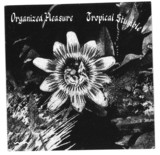
"In popular imagination, the early 80s were dreadful. Thatcher and Reagan led the world on a diet of austerity, unemployment and depression. The Berlin Wall separated East from West. The Sex Pistols had broken up. In sum, the future was unsure. Belgium was no exception. While Punk had been declared dead by some, its spirit was still roaming in country parishes and city alleyways. As the Catholic bourgeoisie provided young people with few opportunities, music was an obvious pastime. Teenage hopes of starting a band and putting out a record were everywhere. Organized Pleasure and Satin Wall were two bands living the dream. In contrast to a thousand others, they left us sounding evidence. This split 7” gathers two tracks originally recorded in 1981. It was the first and only studio excursion for both groups. After some local gigs, the people involved moved on to other projects. While their music is illustrative for the era, their story is distinct. Same but different."
Bigwax Records is proud to launch its label, Les Masques, with the reissue of the only album of the obscure band from Marseille, The Students. Released in 1985 in relative confidentiality, "Students In Summer" reflects the carelessness of a bourgeois youth cradled in FM hits, new wave, Sade and Stranglers, and the way of life of these medical students who left regularly Mediterranean shores to surf the Basque coast. Lo-fi, sunny and ultra-cool, this rarity of French pop eighties is here remastered from the original tapes.